Classic Garlic Confit
Balsamic and Sea Salt
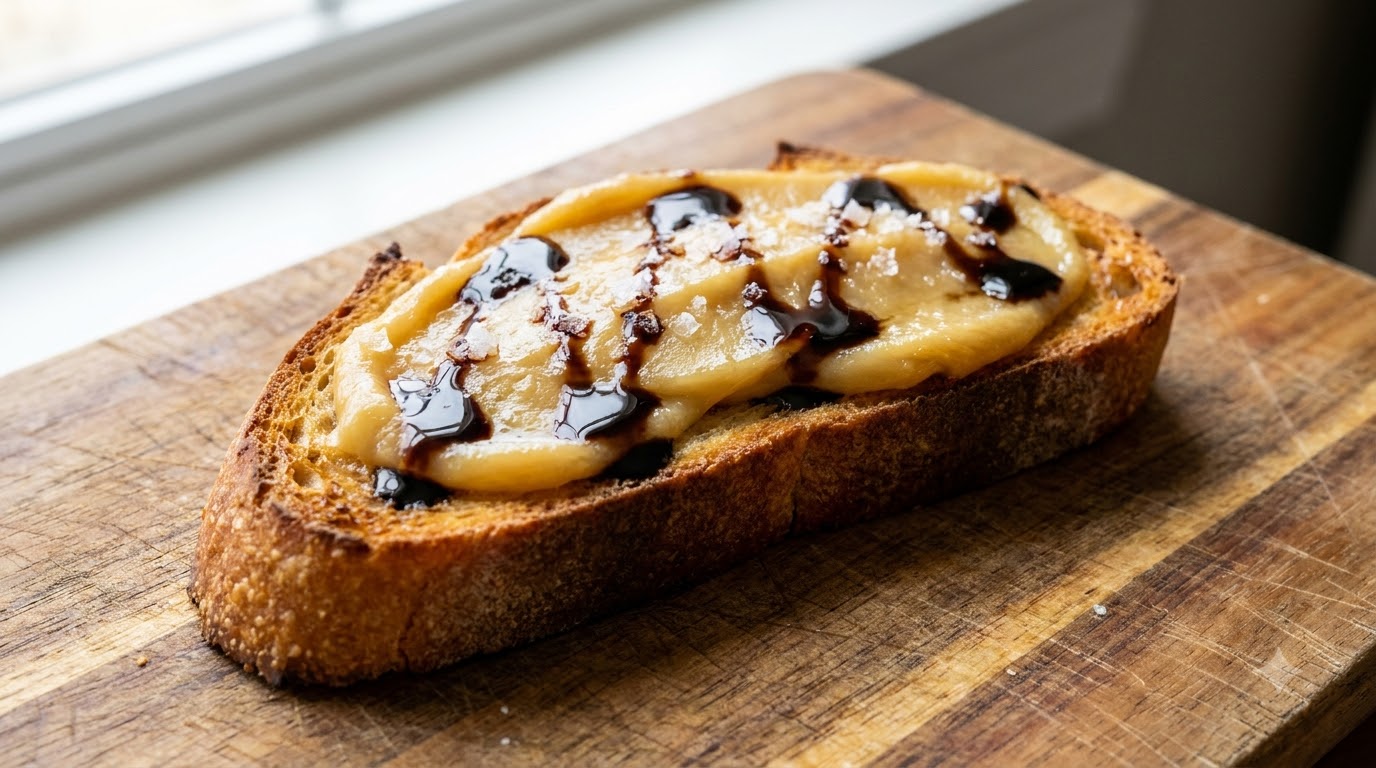
Master the art of garlic confit — slow-roasted in olive oil until tender and golden, then spread over toasted baguette with balsamic glaze and sea salt.
Garlic confit is an essential foundational technique in Western cooking, transforming pungent raw garlic into buttery, mellow cloves through slow low-temperature roasting. The long simmering process entirely removes the sharp bite and bitterness of the garlic, leaving behind a rich, spreadable paste infused with sweet herbal notes.
Ingredients
- 6 heads garlic
- to submerge olive oil
- a few sprigs fresh thyme
- 1 loaf baguette
- 1 tbsp Italian balsamic vinegar
- to taste coarse sea salt
Instructions
- 1Peel and Trim the Garlic
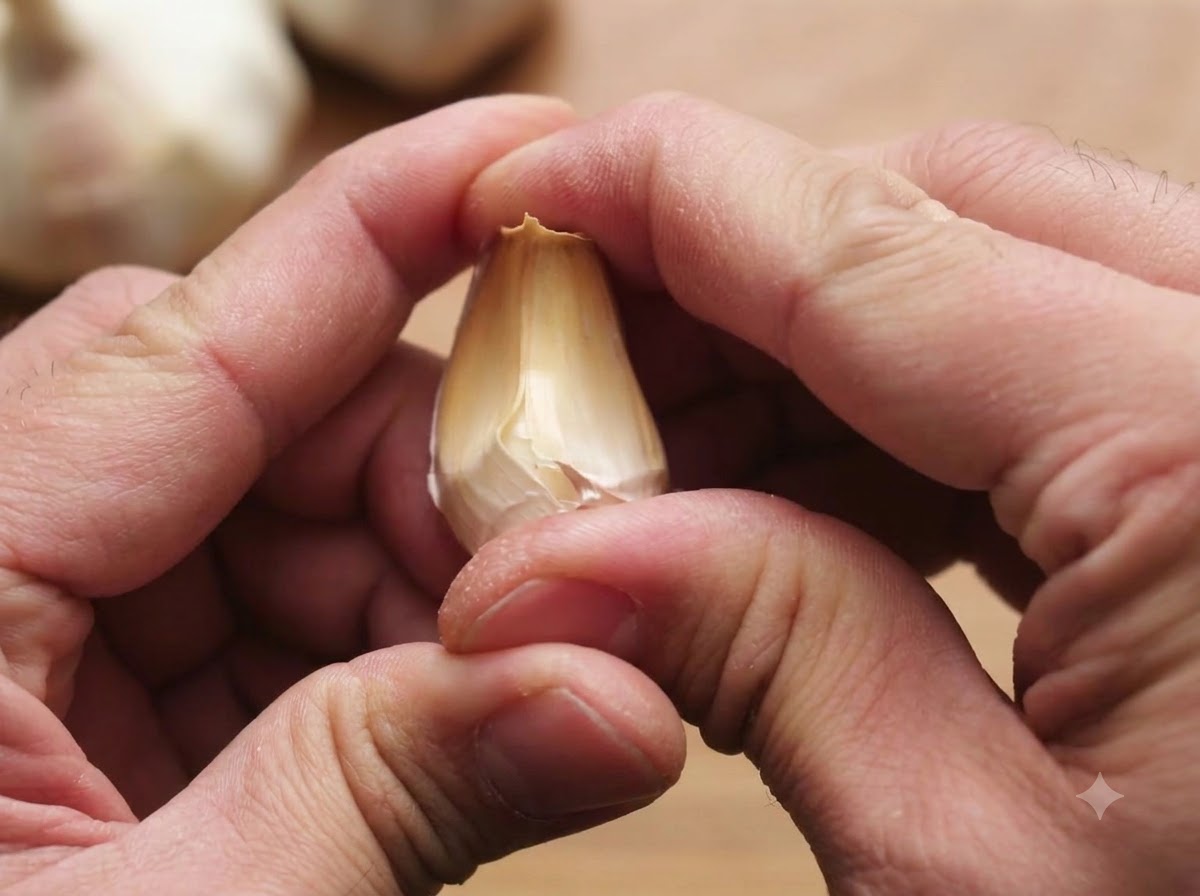
Take 6 heads of garlic, peel off the outer papery skin, and carefully cut off the root ends of each clove on a wooden board.
Tip: Removing the roots ensures clean garlic cloves that absorb the oil evenly. - 2Transfer to Baking Pan
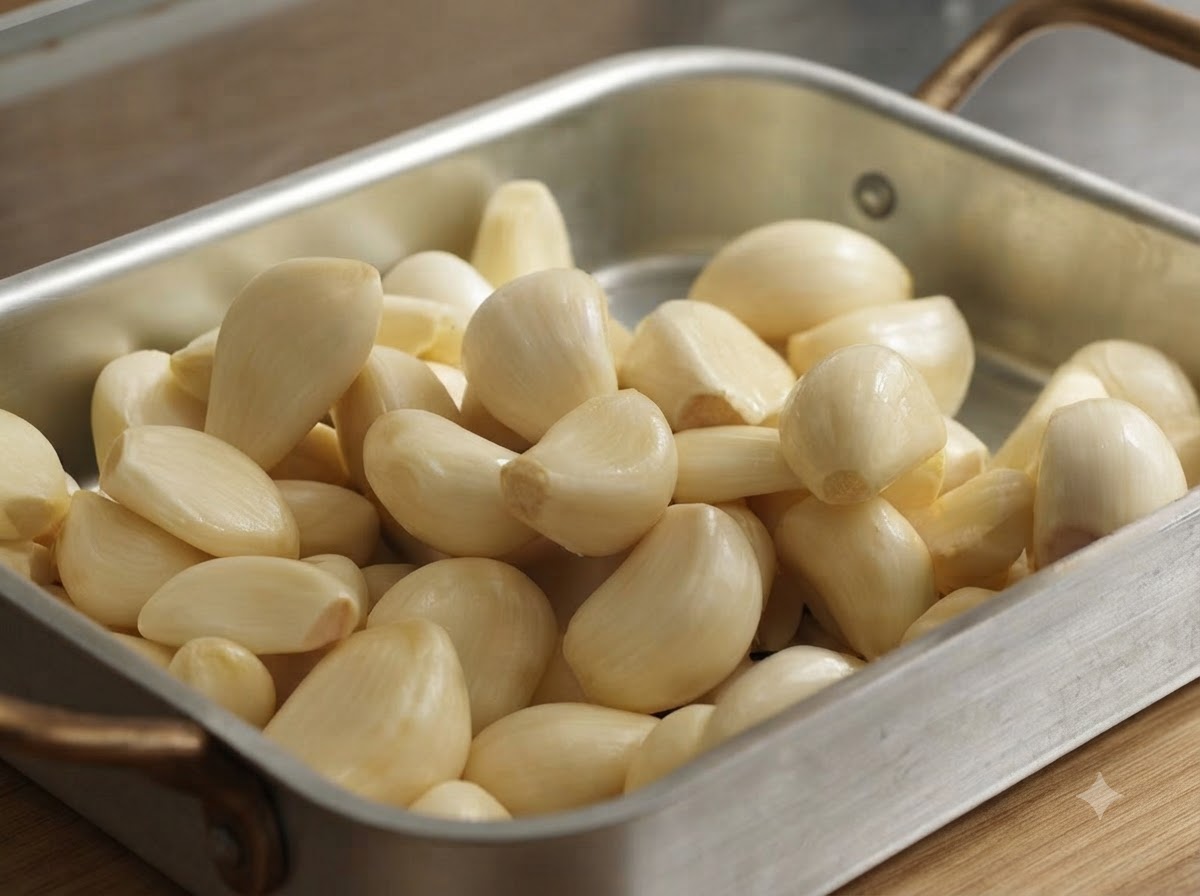
Place all of the peeled garlic cloves directly into a metal baking pan, distributing them evenly across the bottom.
Tip: Make sure the pan is deep enough to hold both the garlic and enough oil to submerge them completely. - 3Submerge with Olive Oil
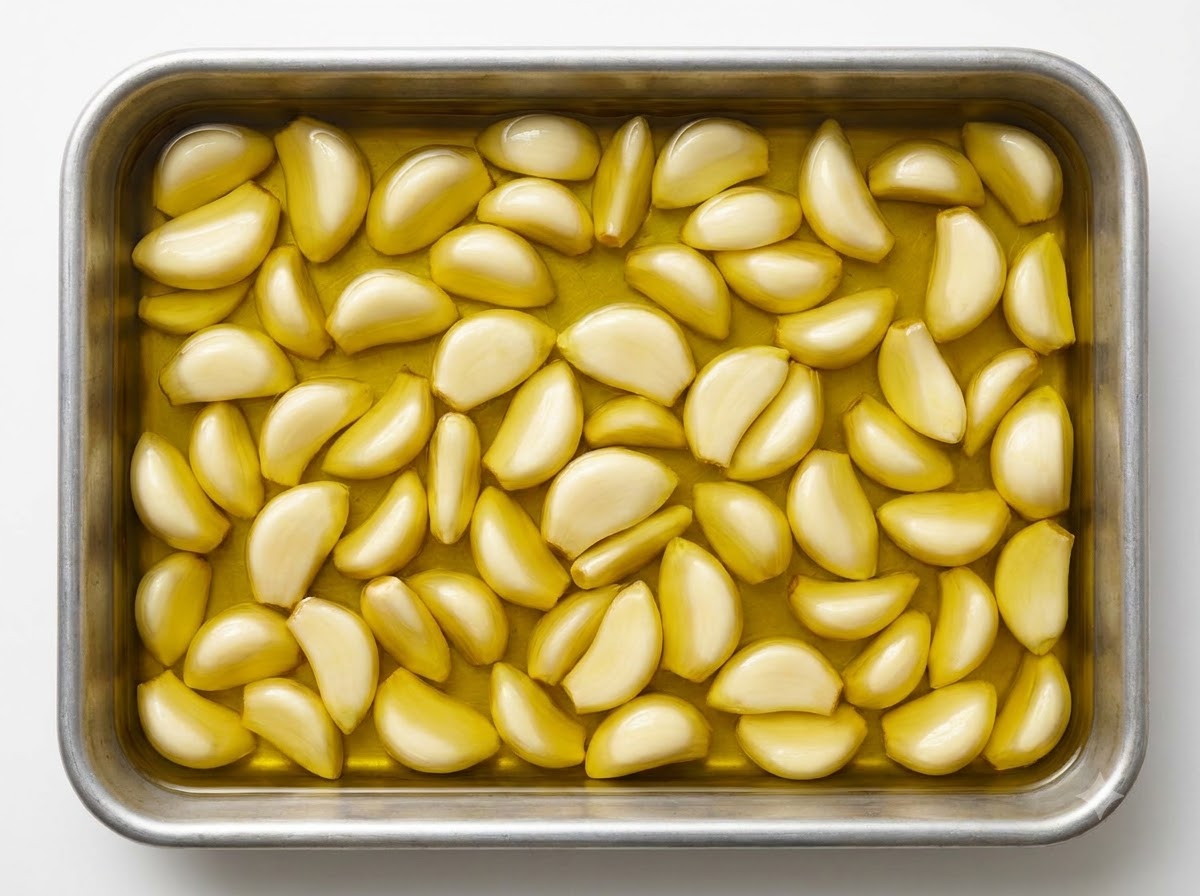
Pour olive oil from a bottle directly over the garlic cloves until they are completely submerged in the liquid.
Tip: The garlic must be entirely covered by oil to prevent burning and ensure a proper confit texture. - 4Add Fresh Thyme
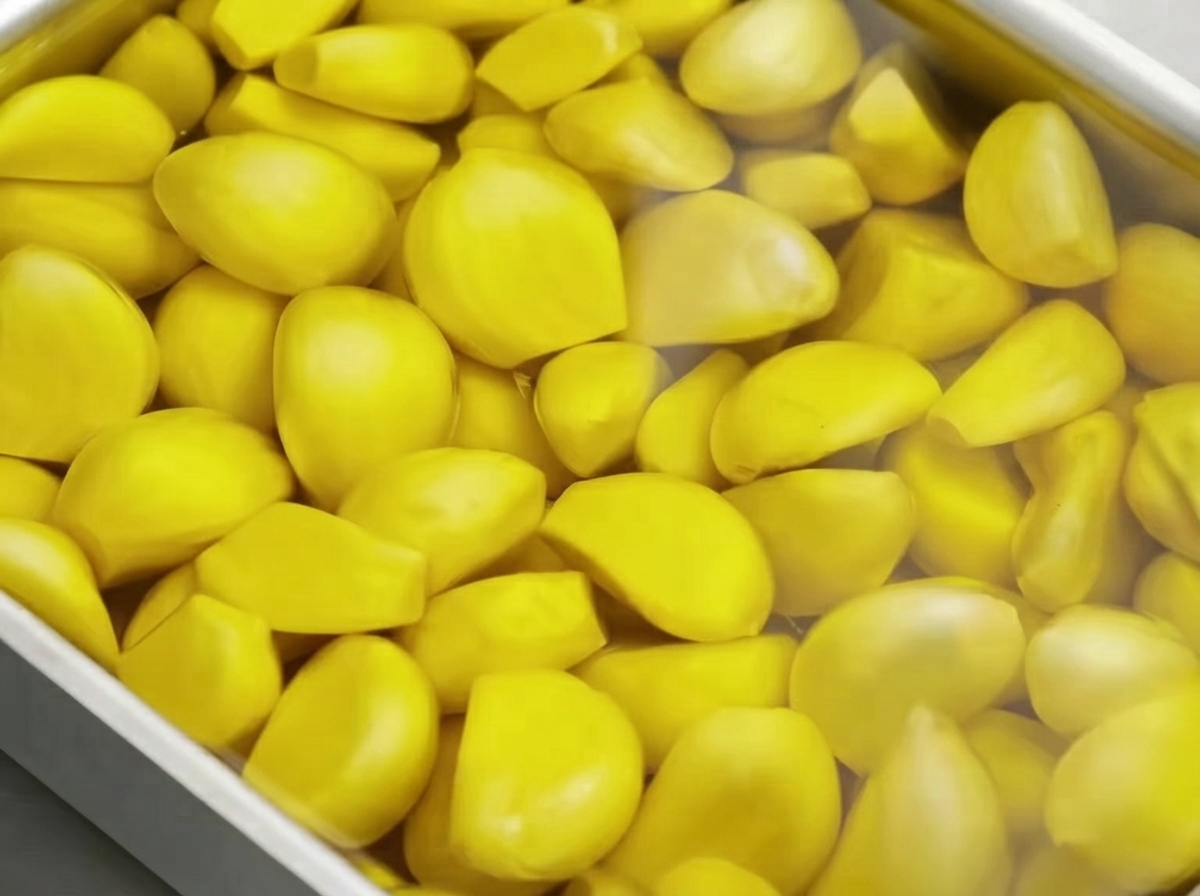
Place a few sprigs of fresh thyme right on top of the oil-submerged garlic cloves to infuse an herbal fragrance during baking.
Tip: Fresh herbs add a wonderful aromatic depth to both the garlic and the resulting infused olive oil. - 5Bake in the Oven
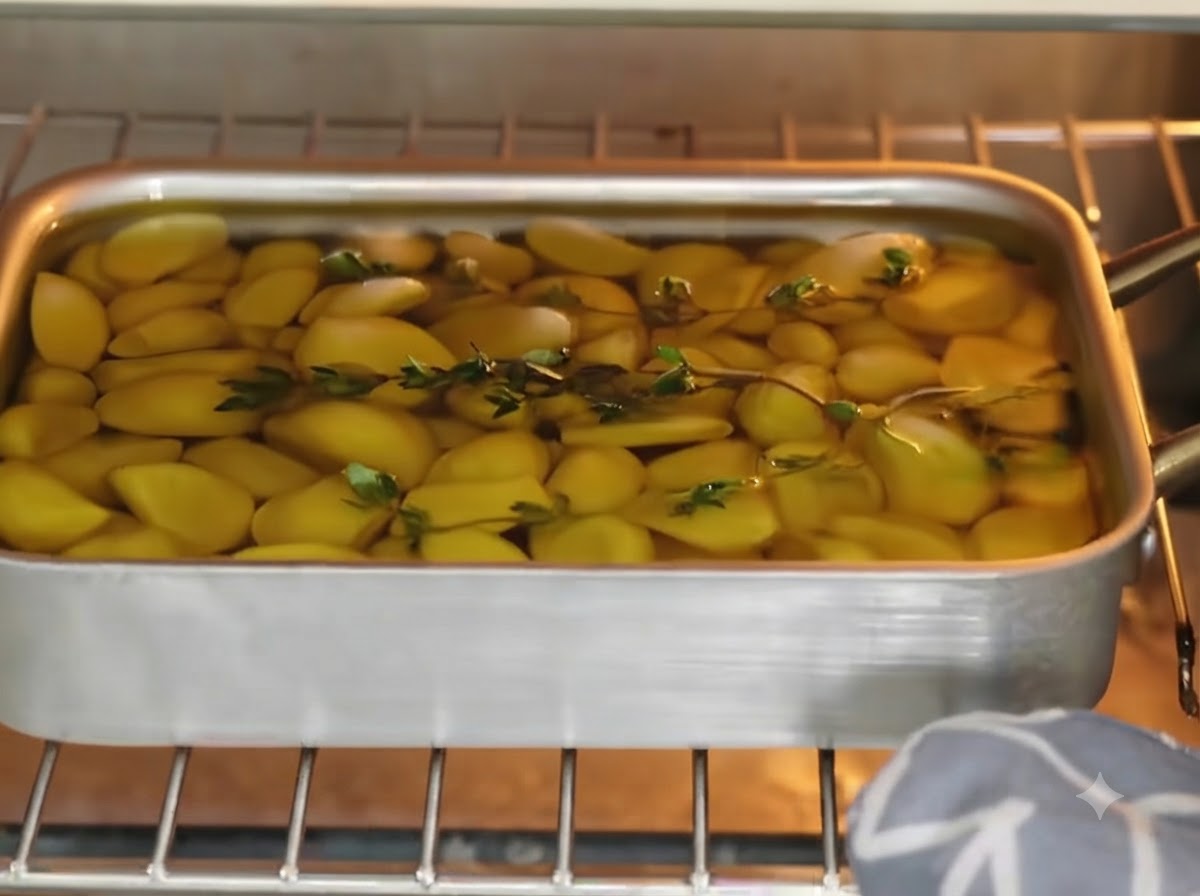
Place the baking pan filled with garlic, oil, and thyme into the oven, baking at 120 degrees Celsius for 2 hours or 150 degrees for 30 minutes.
Tip: Low and slow roasting allows the harsh spice and bitterness of raw garlic to completely disappear. - 6Remove and Cool
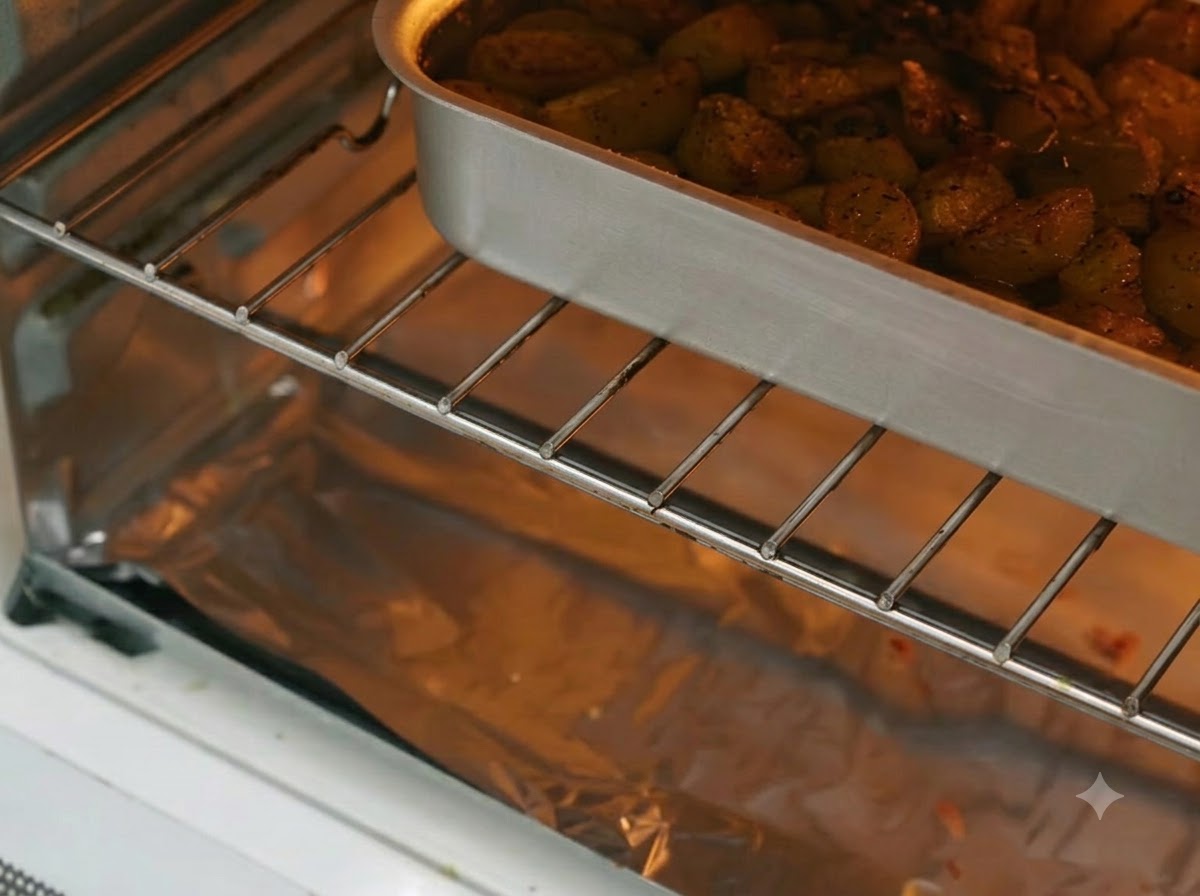
Carefully take the baking pan out of the oven once the time is up, revealing golden brown, tender garlic cloves ready for use or storage.
Tip: Let them cool slightly before packing them into jars or pressing into a smooth paste. - 7Mash the garlic into a soft paste
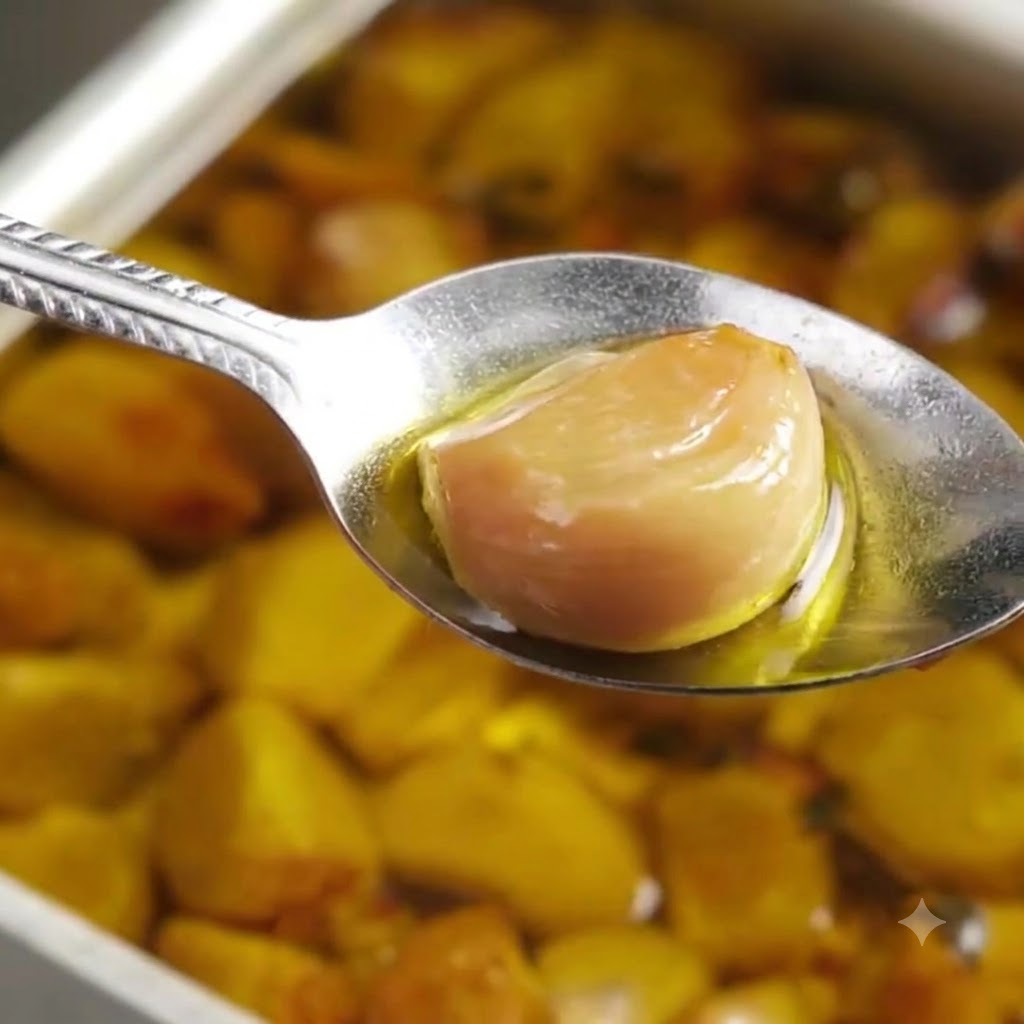
Take a roasted garlic clove and use a spoon to gently press and mash it into a soft, smooth pastecite: 1. The long, slow-temperature baking process allows the garlic to become completely tender and golden yellowcite: 1.
Tip: Gently pressing the cloves makes it effortless to achieve a cheese-like texturecite: 1. - 8Transfer the roasted garlic into a jar
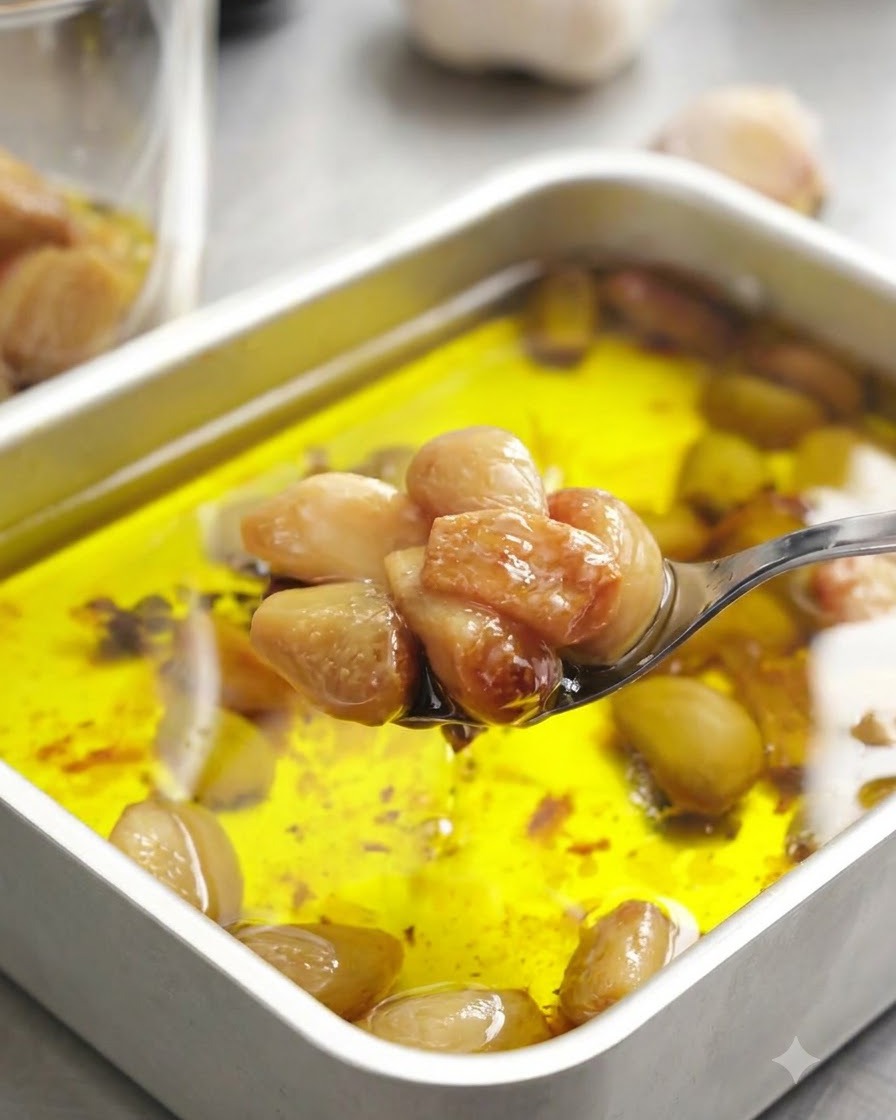
Carefully transfer the baked garlic cloves from the baking pan into a clean, sealed glass jarcite: 1. Transferring them while keeping them intact or slightly broken ensures easy storagecite: 1.
Tip: Using a sterilized glass jar helps extend the storage time significantlycite: 1. - 9Submerge the garlic in olive oil
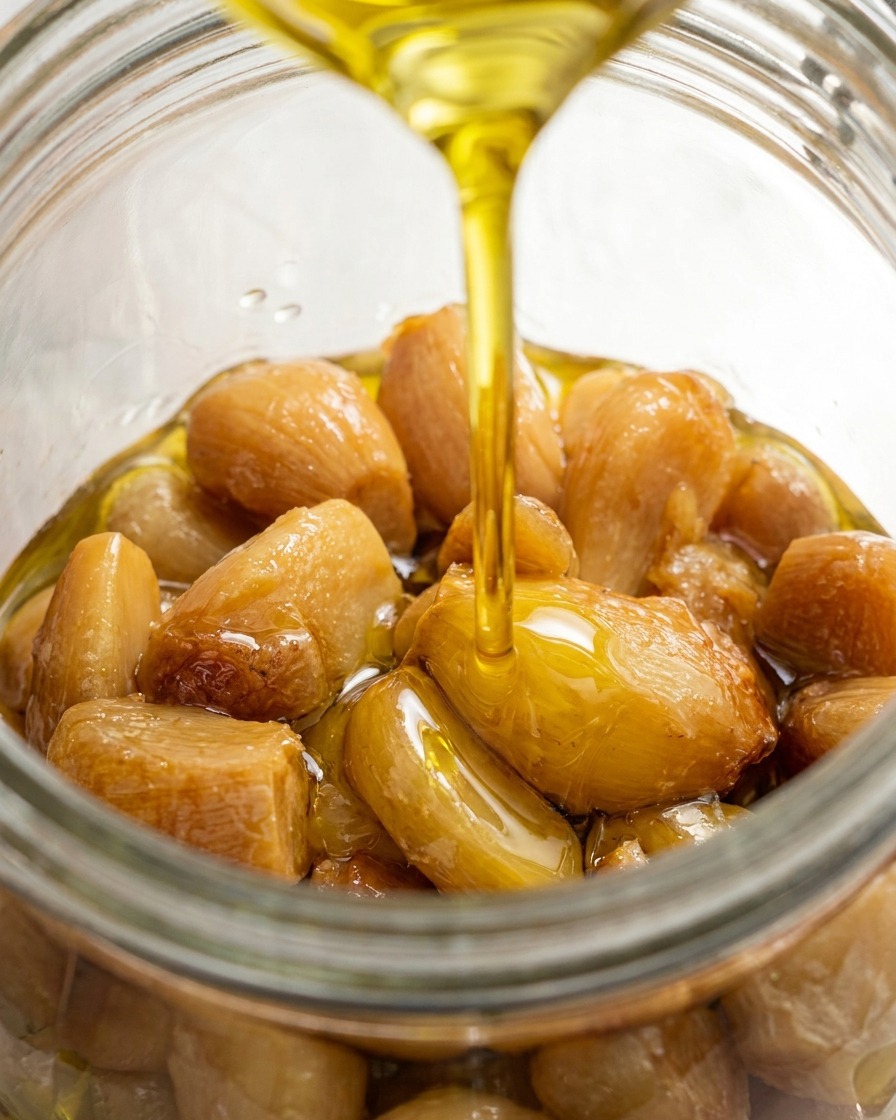
Pour fresh olive oil directly into the glass jar over the roasted garlic clovescite: 1. Ensure that the garlic cloves are completely submerged in the oil to preserve them properly and prevent spoilagecite: 1.
Tip: Make sure no garlic pieces are exposed above the oil line to guarantee safe long-term storagecite: 1. - 10Seal and store the garlic confit
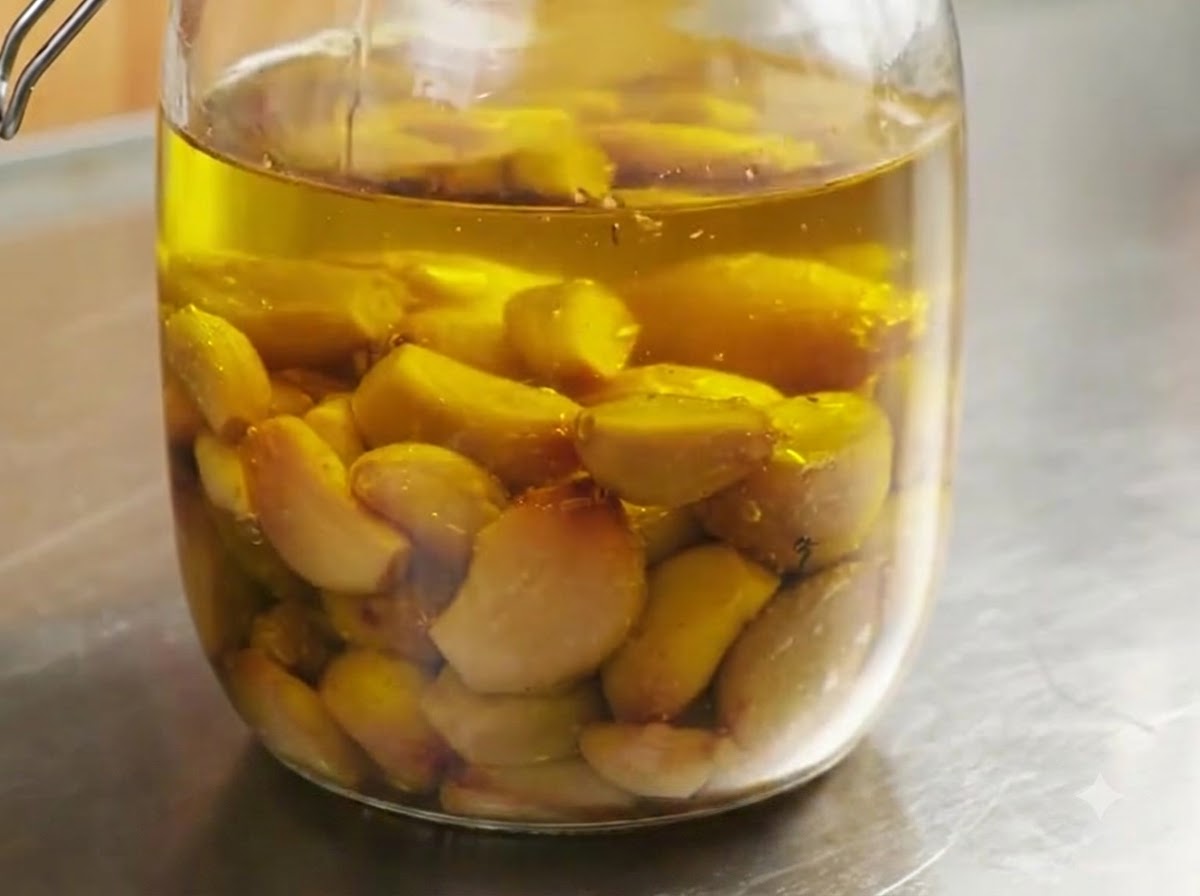
Seal the glass jar tightly and store it, preferably in the refrigeratorcite: 1. This garlic confit can be directly used for stir-frying, making pasta, or preparing various saucescite: 1.
Tip: Always keep the jar refrigerated and ensure the garlic remains submerged in olive oil during usecite: 1. - 11Spread garlic paste on a baguette slice

Take a freshly sliced baguette and use a fork to spread the soft garlic confit paste thickly over the surfacecite: 1. The texture of the spread is rich and similar to cheesecite: 1.
Tip: Spread a generous amount onto the baguette slice for the ultimate rich flavorcite: 1. - 12Season with Sea Salt
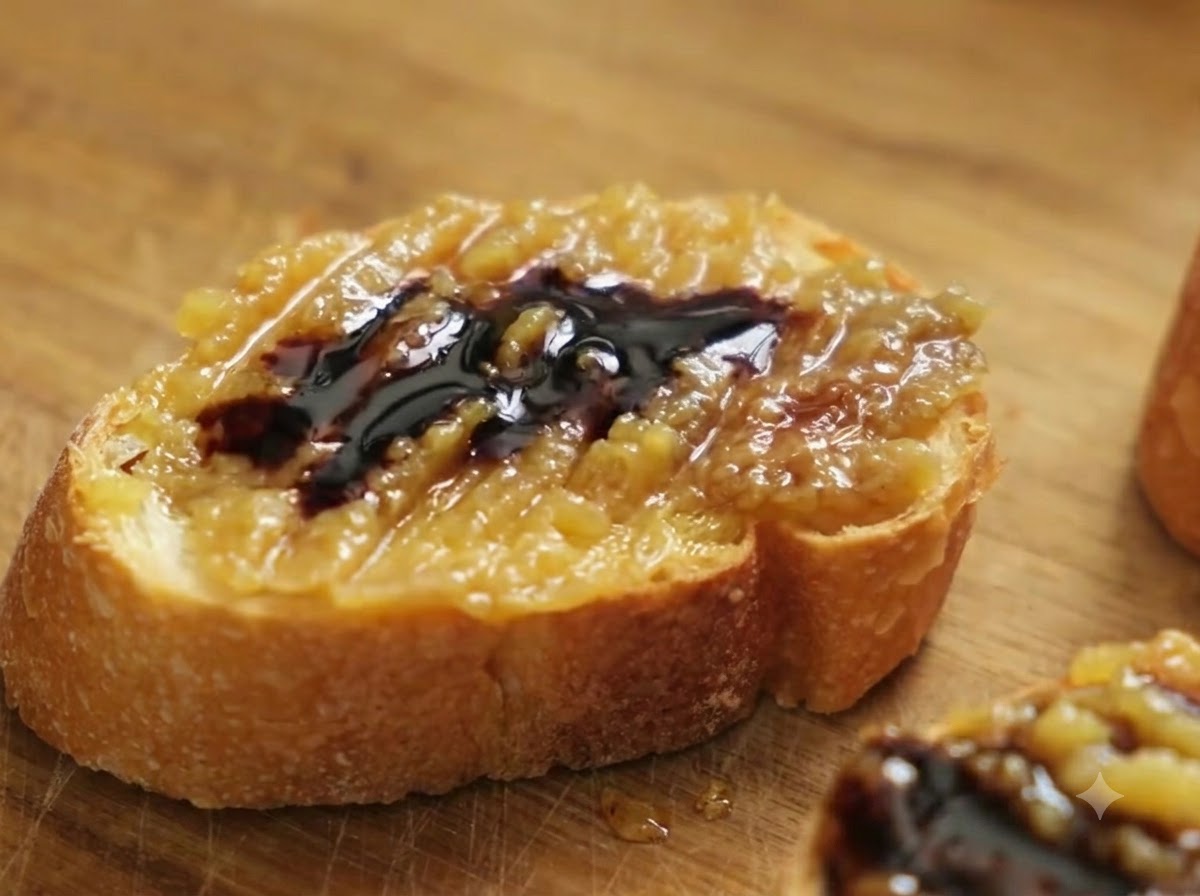
Take the baguette slices spread generously with garlic confit paste, drizzle with a spoonful of balsamic vinegar, and then sprinkle coarse sea salt evenly over the top.
Tip: A touch of coarse sea salt highlights the sweet, mellow flavor of the roasted garlic and balances the acidity of the vinegar. - 13Pour Olive Oil over Garlic
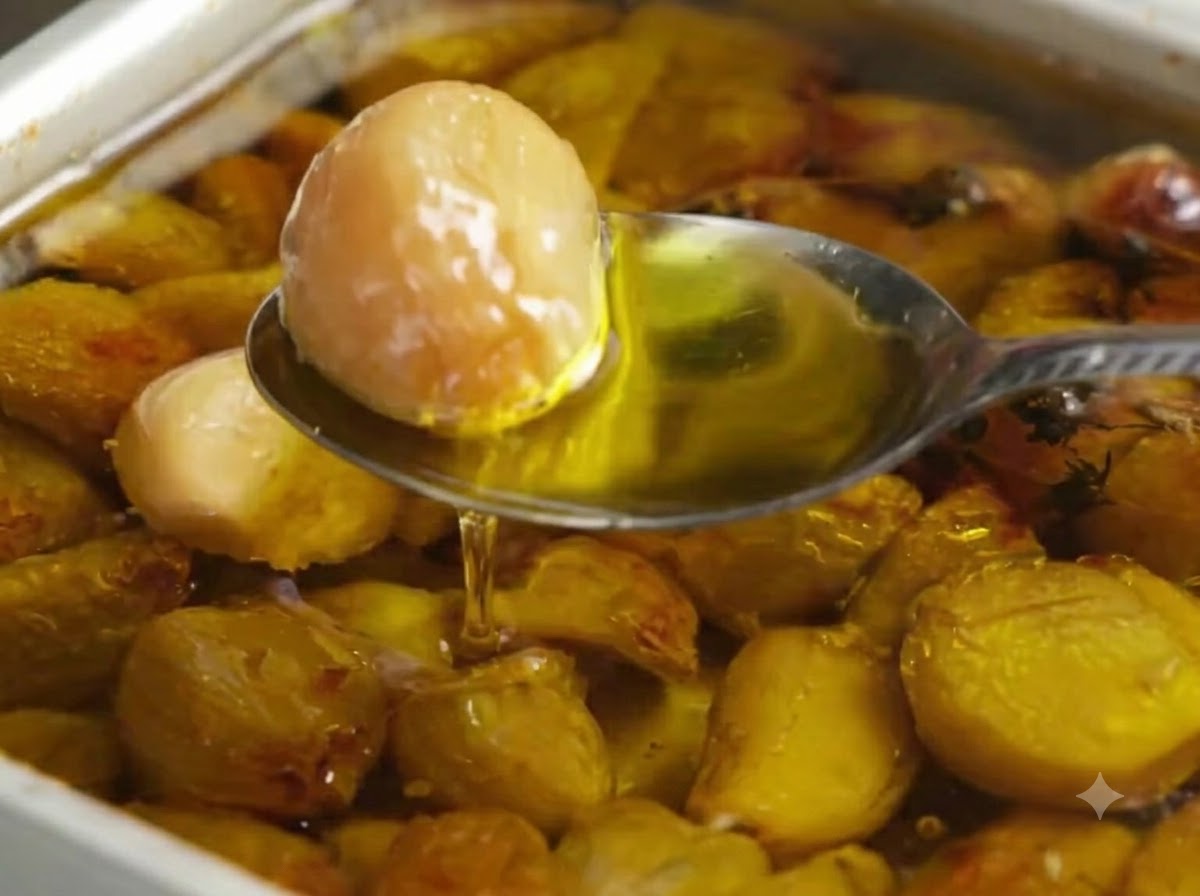
Place the peeled garlic cloves into a baking pan and pour in olive oil until the cloves are completely submerged before baking.
Tip: Ensure the garlic is completely covered with oil to prevent burning during the low-temperature slow roasting process.