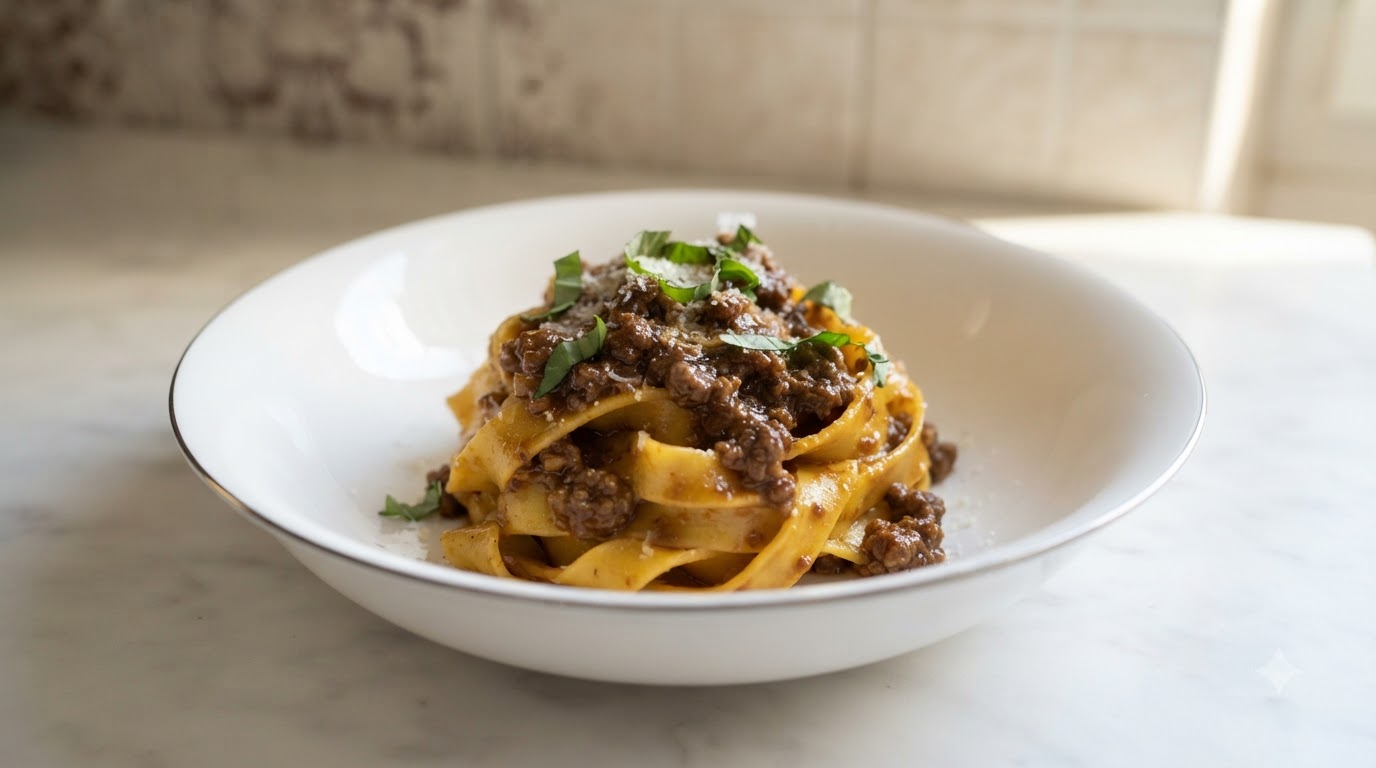
Handmade Tagliatelle al Ragù
Beef Cheek and Shank
Elevate classic Italian comfort food with slow-braised beef cheek and shank, paired with rich homemade egg pasta and a glossy, deep-flavored ragù.
Tagliatelle al ragù is a cornerstone of Italian culinary tradition, traditionally hailing from Emilia-Romagna. This elevated version swaps standard ground beef for melt-in-your-mouth braised beef cheek and shank enriched with bone marrow, creating a luscious sauce that clings perfectly to hand-rolled egg tagliatelle.
Ingredients
- 400 g 00 flour
- 4 egg yolks
- 500 g beef cheek
- 500 g beef shank with bone marrow
- 200 g Italian sausage meat
- 2 carrots
- 2 celery stalks
- 1 onion
- 300 ml red wine
- 400 g tomato passata
- 500 ml chicken broth
- 2 sprigs fresh rosemary
- 4 leaves fresh sage
- 2 bay leaves
- to taste salt and black pepper
- to taste olive oil
Instructions
- 1Finely Chop Carrots
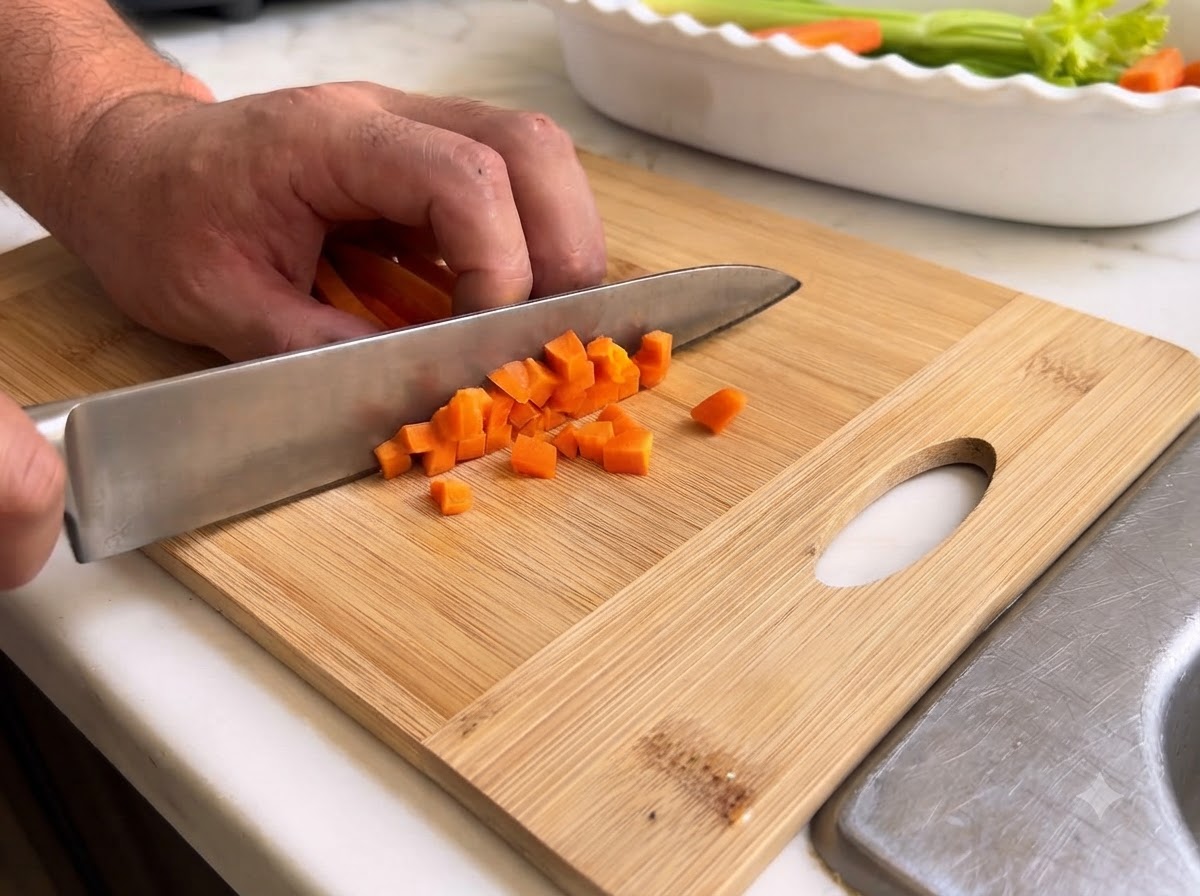
Place peeled carrots on a wooden cutting board and use a sharp kitchen knife to finely chop them into uniform, small cubes for the soffritto base.
Tip: Keep your fingers curled inward like a claw to protect them while using the knife blade against your knuckles. - 2Chop Celery
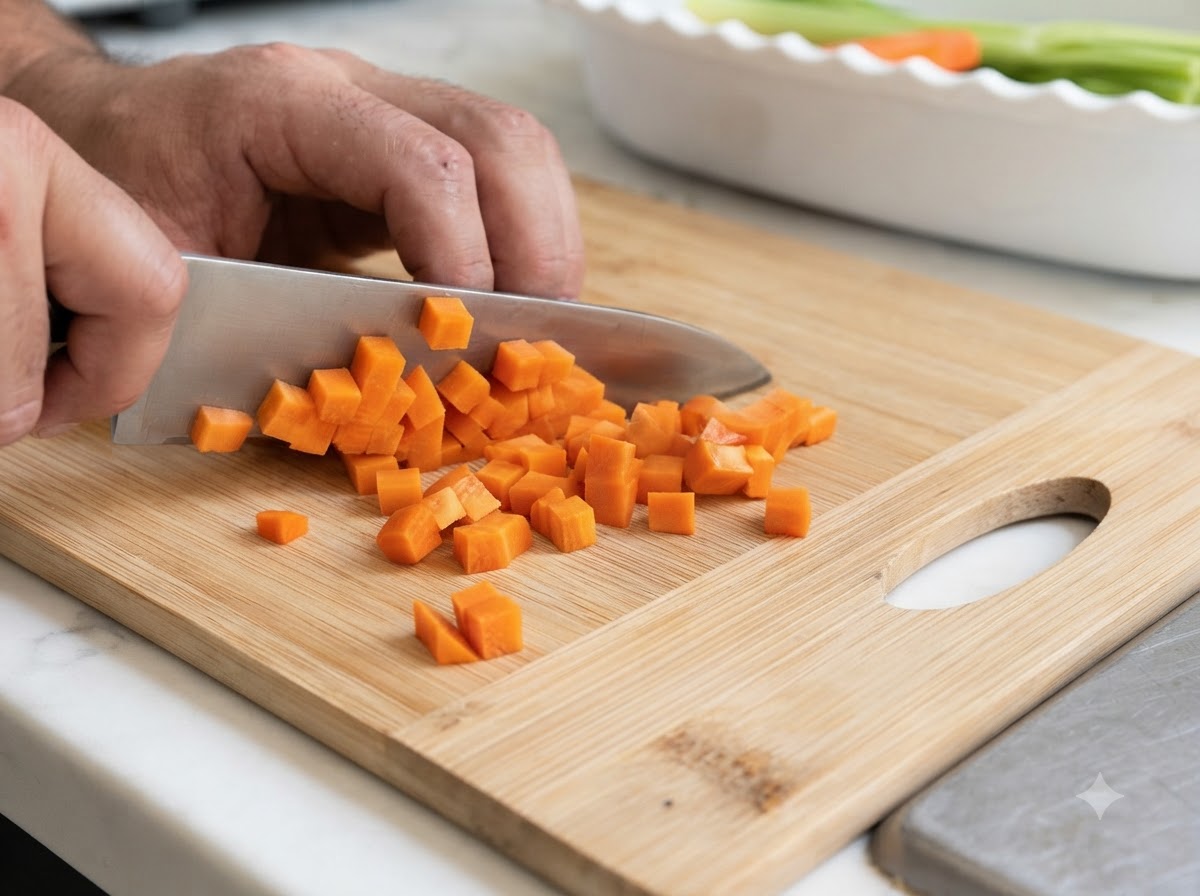
Take fresh celery stalks and finely chop them on the wooden cutting board to match the size of the previously diced carrots.
Tip: Uniform sizing ensures that all the aromatic vegetables cook evenly together in the pot. - 3Dice the Onion
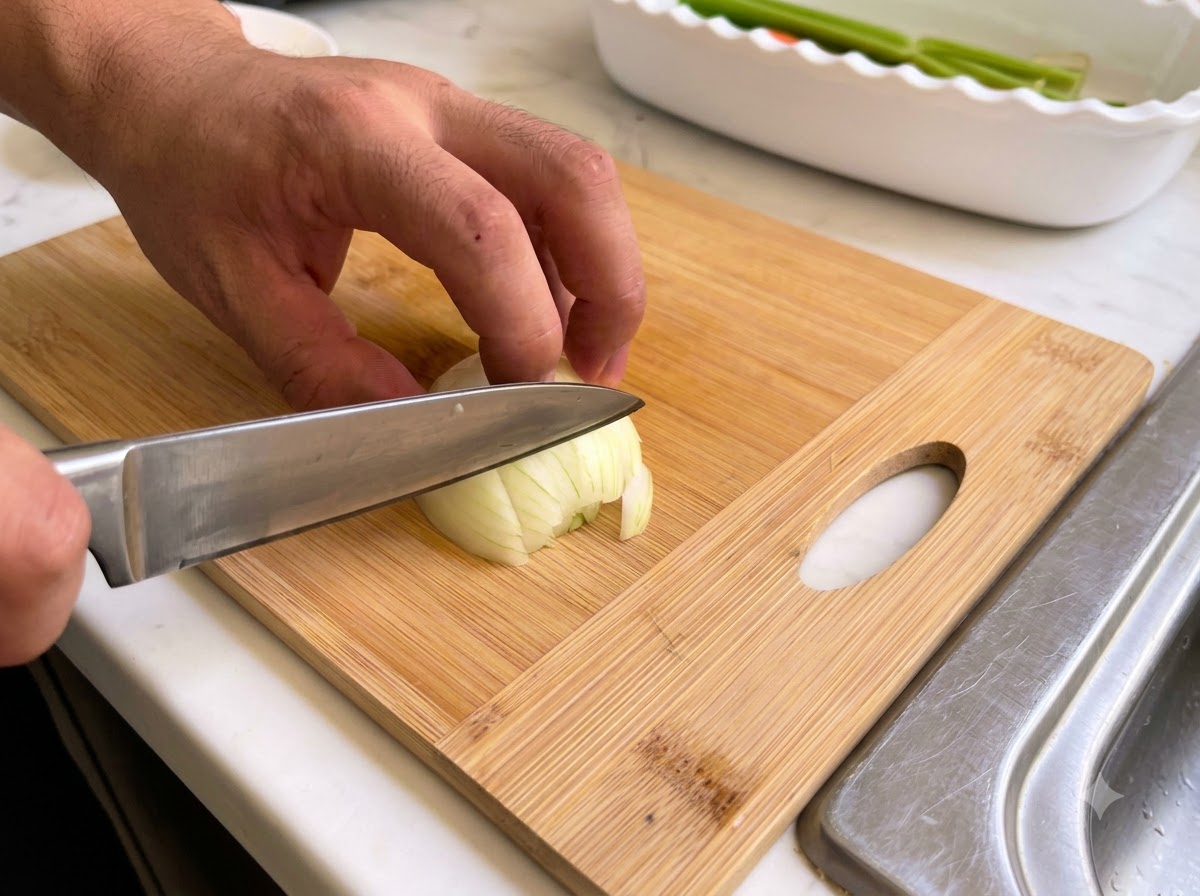
Cut an onion in half and make horizontal and vertical incisions before finely dicing it on the wooden cutting board to complete the soffritto trio.
Tip: Leaving the root intact while dicing helps hold the layers together for easier cutting. - 4Cut the Beef Cheek
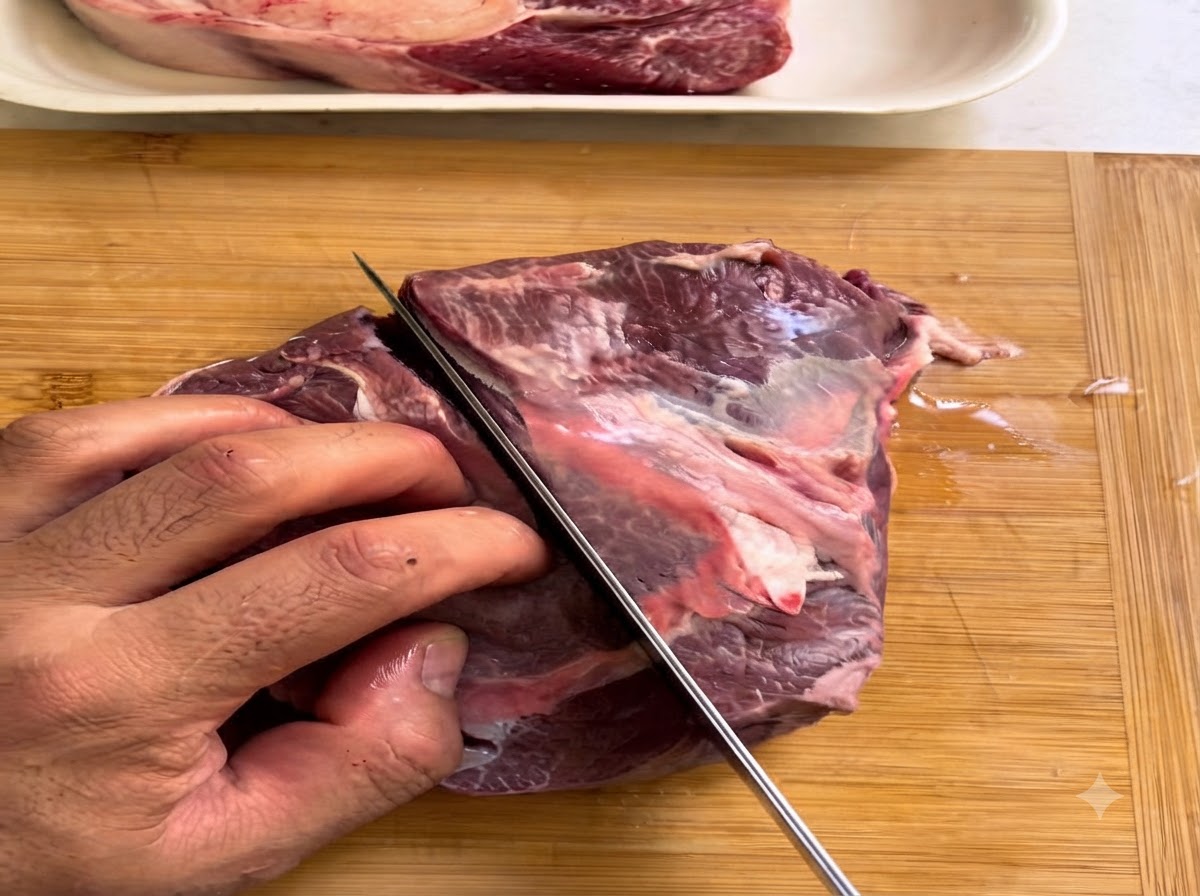
Place the raw beef cheek on the wooden cutting board and slice it into manageable portions using a sharp kitchen knife.
Tip: Trimming excess silver skin can help achieve a more tender texture during long braising. - 5Prepare Beef Shank and Bone Marrow
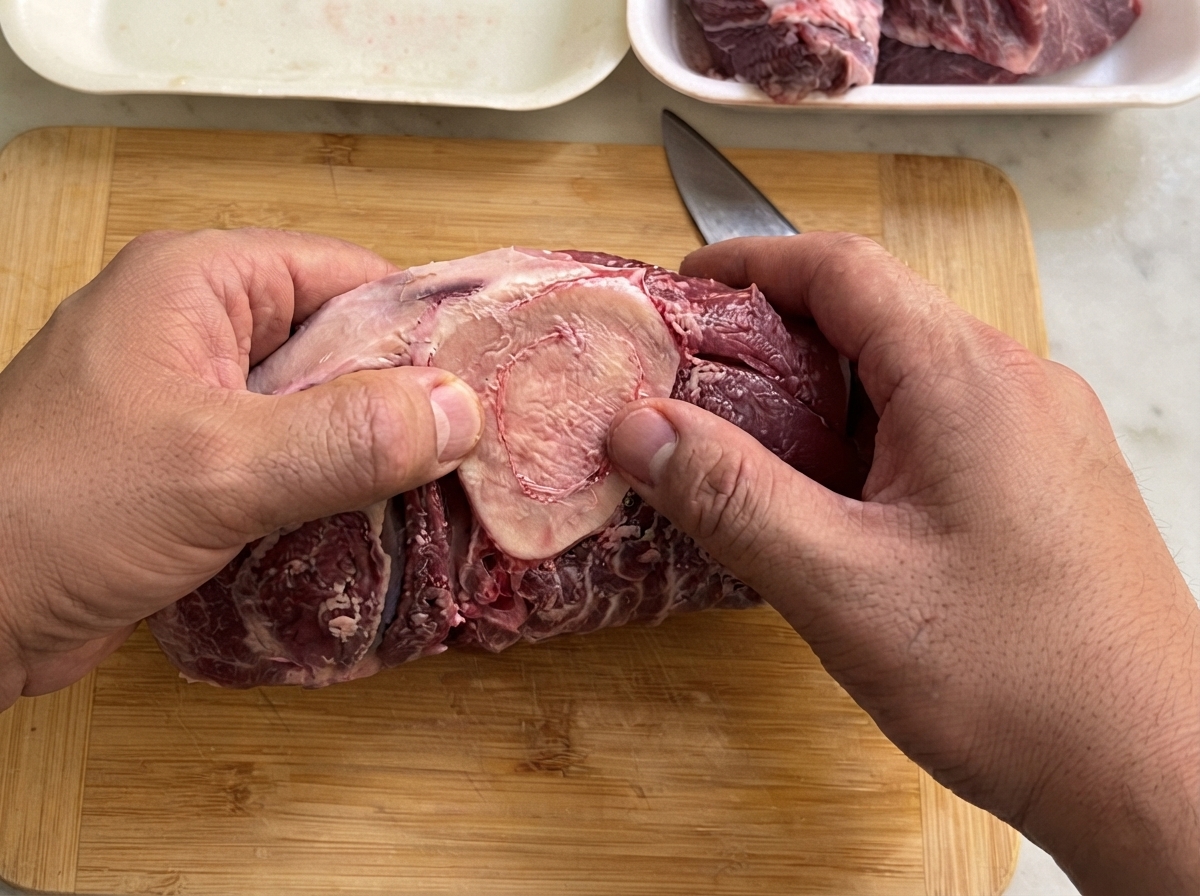
Arrange the raw beef shank cut and the bone marrow section together on the wooden cutting board in preparation for seasoning.
Tip: Bone marrow adds a rich, gelatinous depth to the ragù sauce as it breaks down during simmering. - 6Season the Beef Cuts
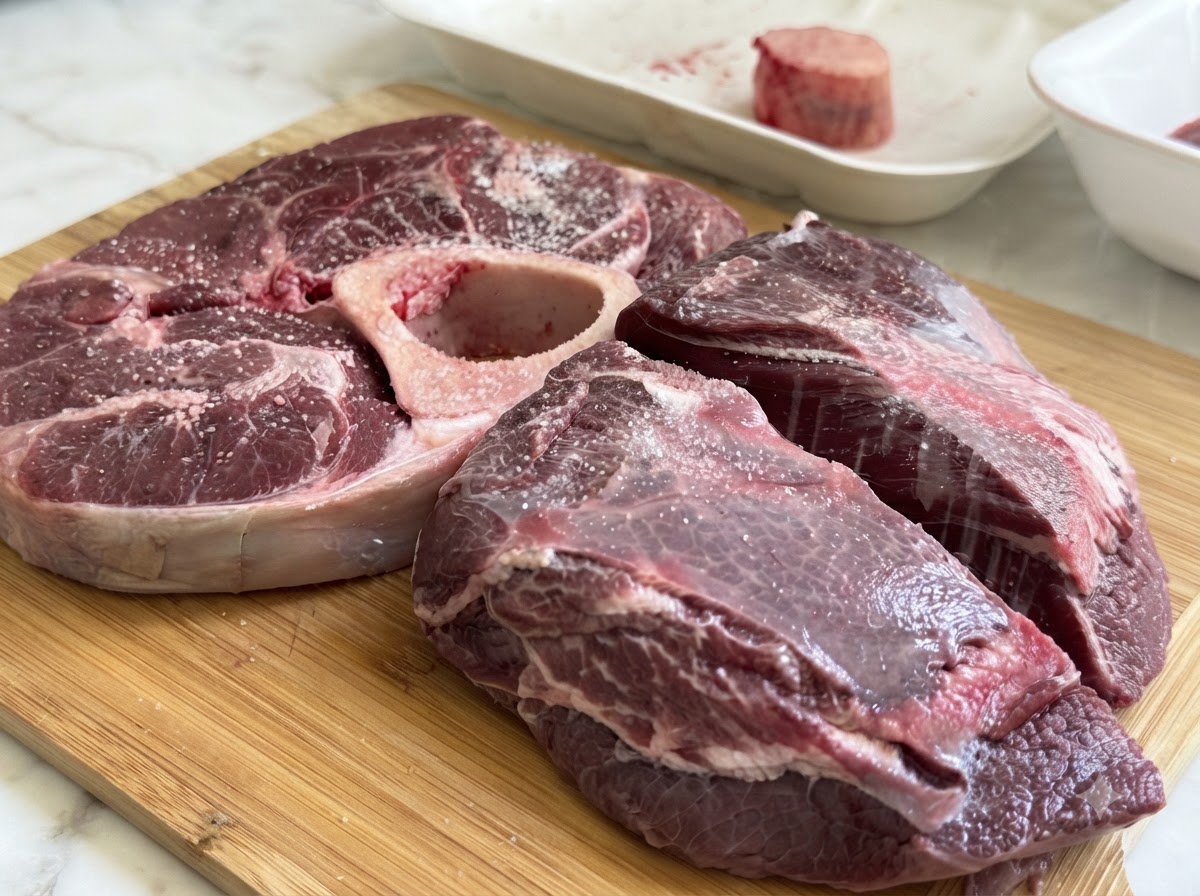
Generously sprinkle salt and cracked black pepper over the raw beef cheek and shank cuts laid out on the wooden board.
Tip: Seasoning the meat directly before cooking enhances the foundational savory notes of the braise. - 7Cook the Soffritto
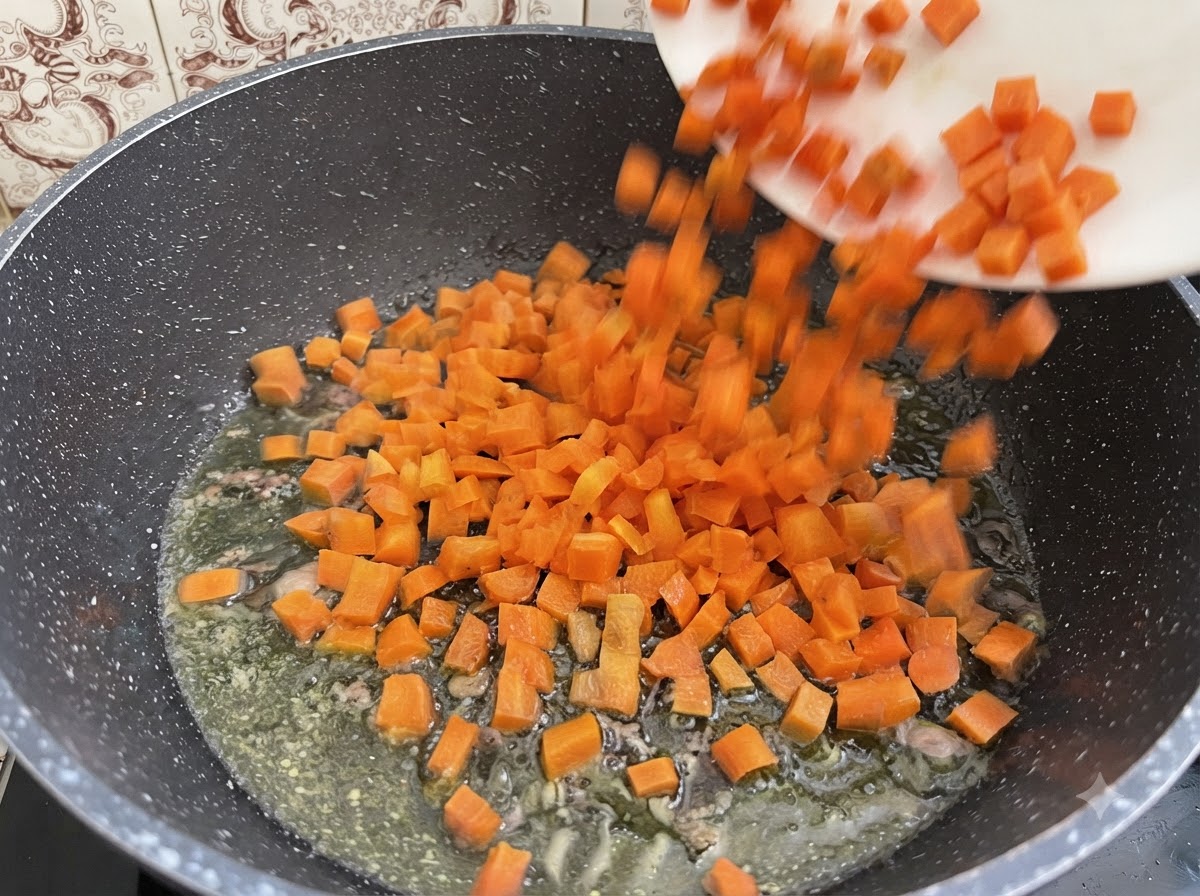
Add the diced carrots, celery, and onions into a pot with a little olive oil and bone marrow. Cook the vegetables over medium heat until they soften and begin to caramelize.
Tip: Stir frequently to ensure the vegetables cook evenly without burning. - 8Add sausage meat to the pan
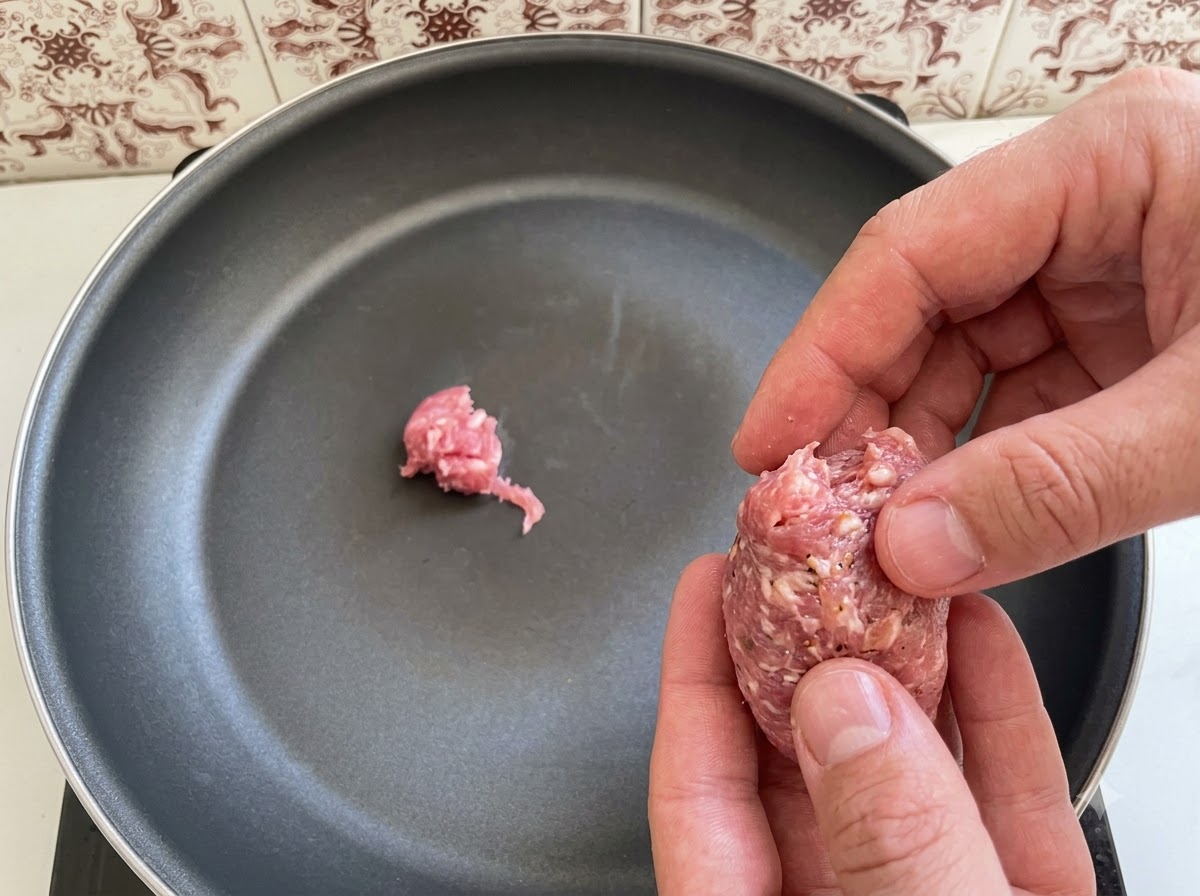
Take pieces of Italian sausage meat and place them directly into a hot frying pan to begin the browning process.
Tip: Break the sausage meat into smaller pieces so they brown evenly across the pan surface. - 9Pan-fry the sausage meat
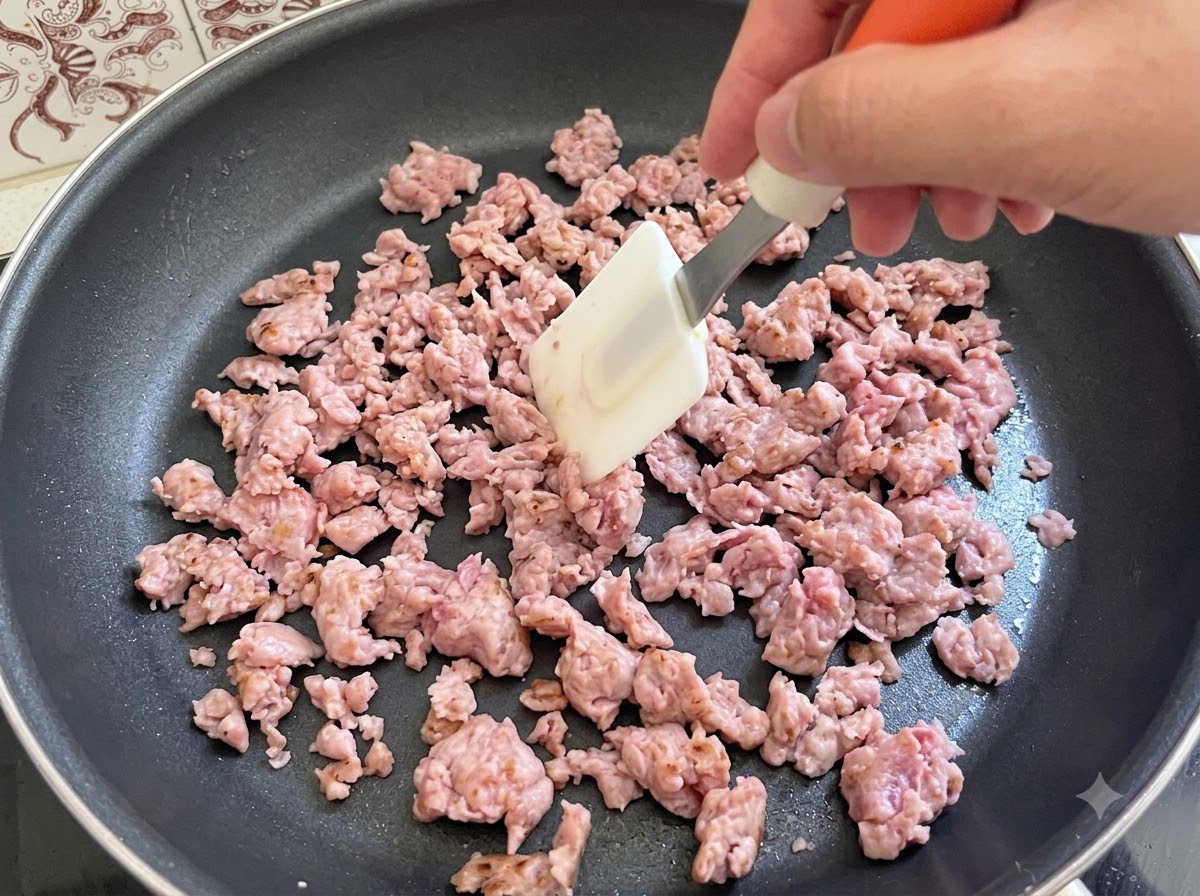
Use a spatula to stir and break up the Italian sausage meat as it pan-fries, ensuring it cooks thoroughly and achieves a lightly browned texture.
Tip: Keep stirring frequently to prevent burning and ensure even cooking. - 10Combine sausage with vegetables
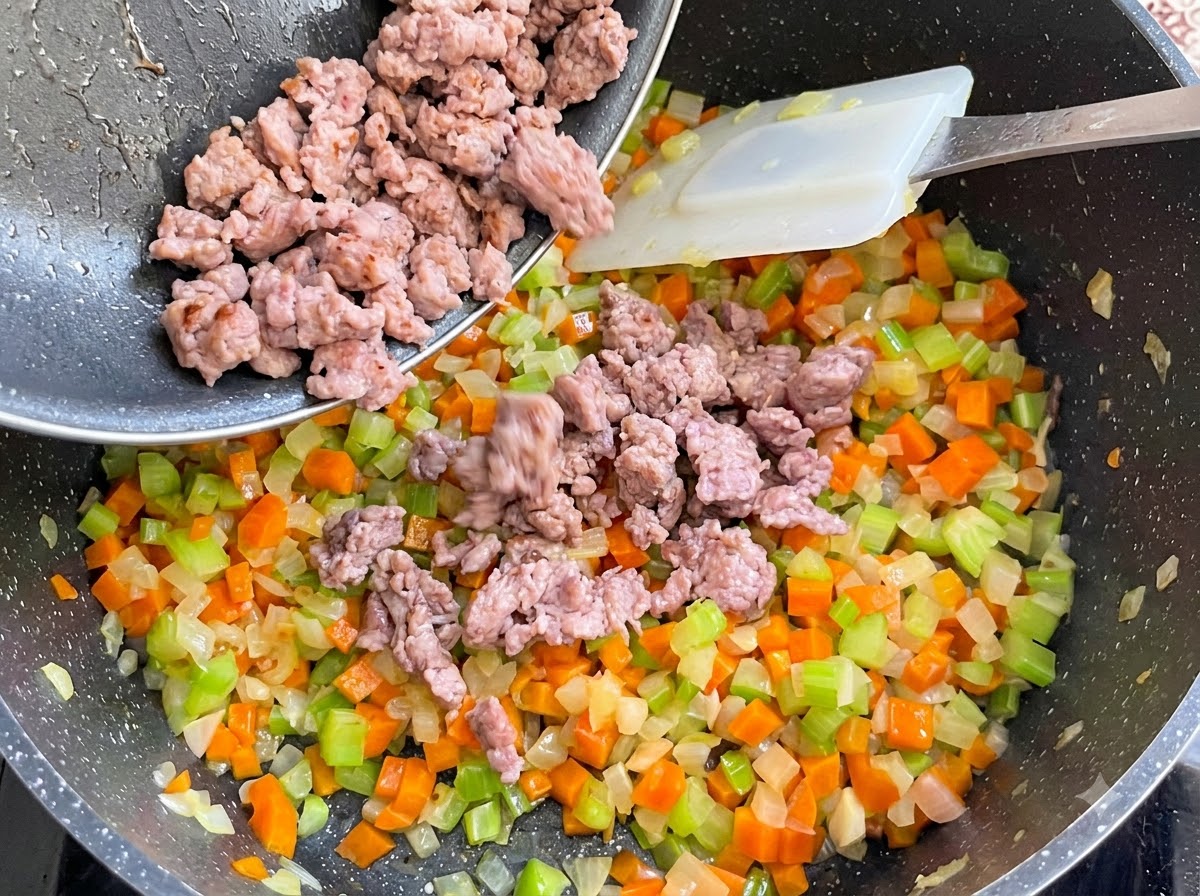
Transfer the pan-fried Italian sausage meat into the pot containing the cooked vegetables, then stir them together to combine the flavors.
Tip: Scrape all the savory bits from the pan into the vegetable pot so no flavor is wasted. - 11Deglaze with red wine
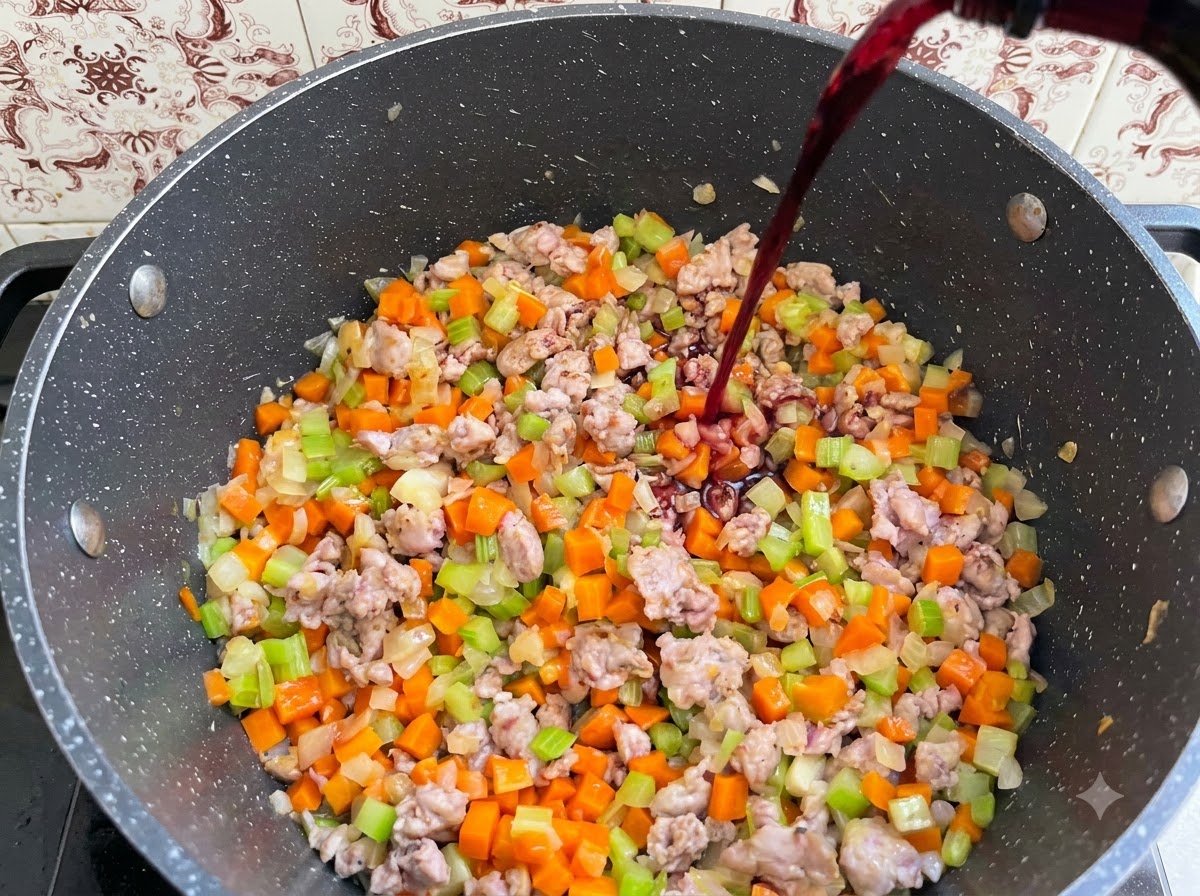
Pour red wine into the pot containing the vegetables and sausage meat, allowing it to simmer and infuse the mixture with rich depth.
Tip: Let the wine simmer until the alcohol aroma reduces before moving on to the next liquid addition. - 12Sear the beef cuts
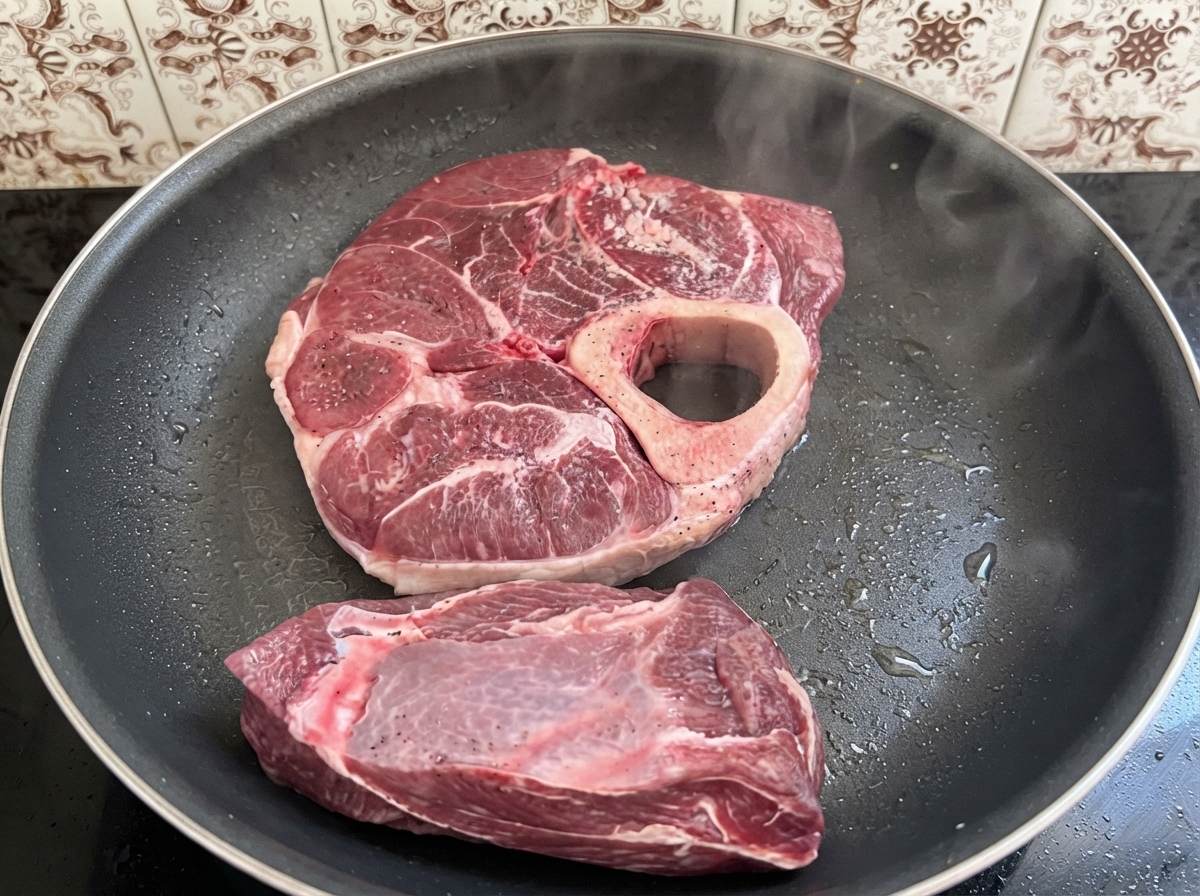
Place the seasoned beef cuts into a hot frying pan to sear them at a high temperature until a rich crust forms on the surface.
Tip: Ensure the pan is sufficiently hot before adding the beef to achieve a deep, flavorful sear. - 13Pour red wine over seared beef
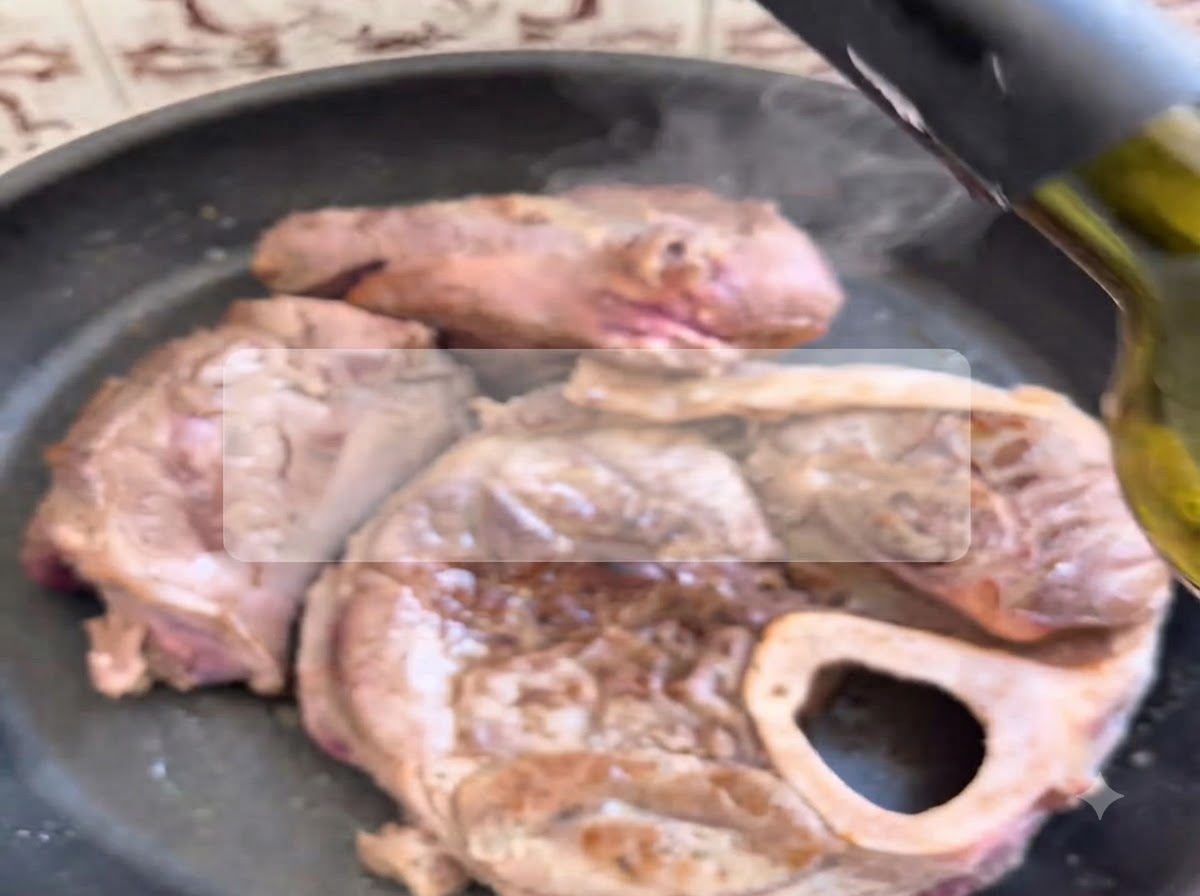
Pour red wine directly over the seared beef cuts in the pan at a high temperature to deglaze and build deep flavor.
Tip: Make sure the pan is very hot so the wine sizzles and alcohol evaporates quickly. - 14Transfer seared beef to the vegetable pot
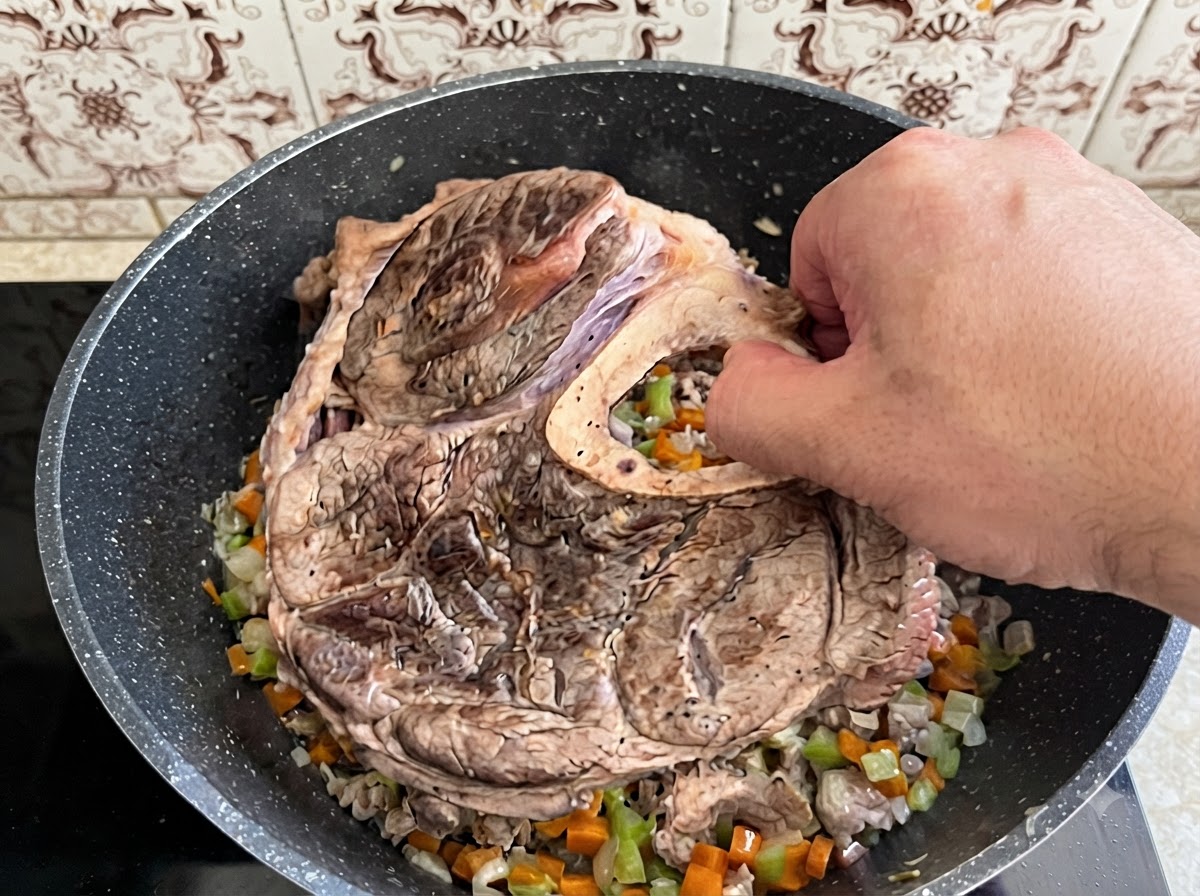
Carefully pick up the seared beef pieces and transfer them directly into the pot containing the cooked vegetables.
Tip: Do this gently to retain all the flavorful juices and rendered fat. - 15Add passata and aromatics
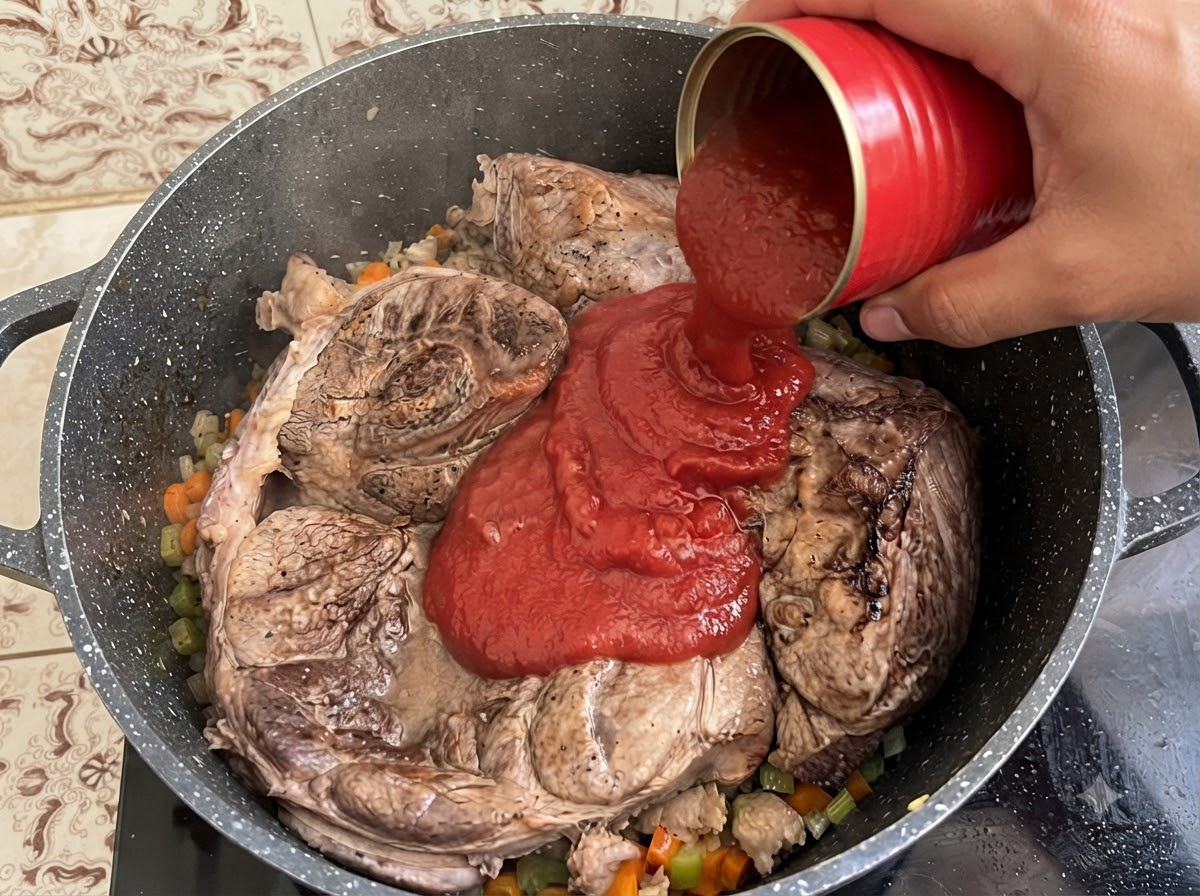
Pour tomato puree (passata) and chicken broth into the pot over the meat and vegetables, then add fresh rosemary, sage, and bay leaves.
Tip: Tie the fresh herbs together with kitchen twine if you want to easily remove them later before blending. - 16Make fresh pasta dough
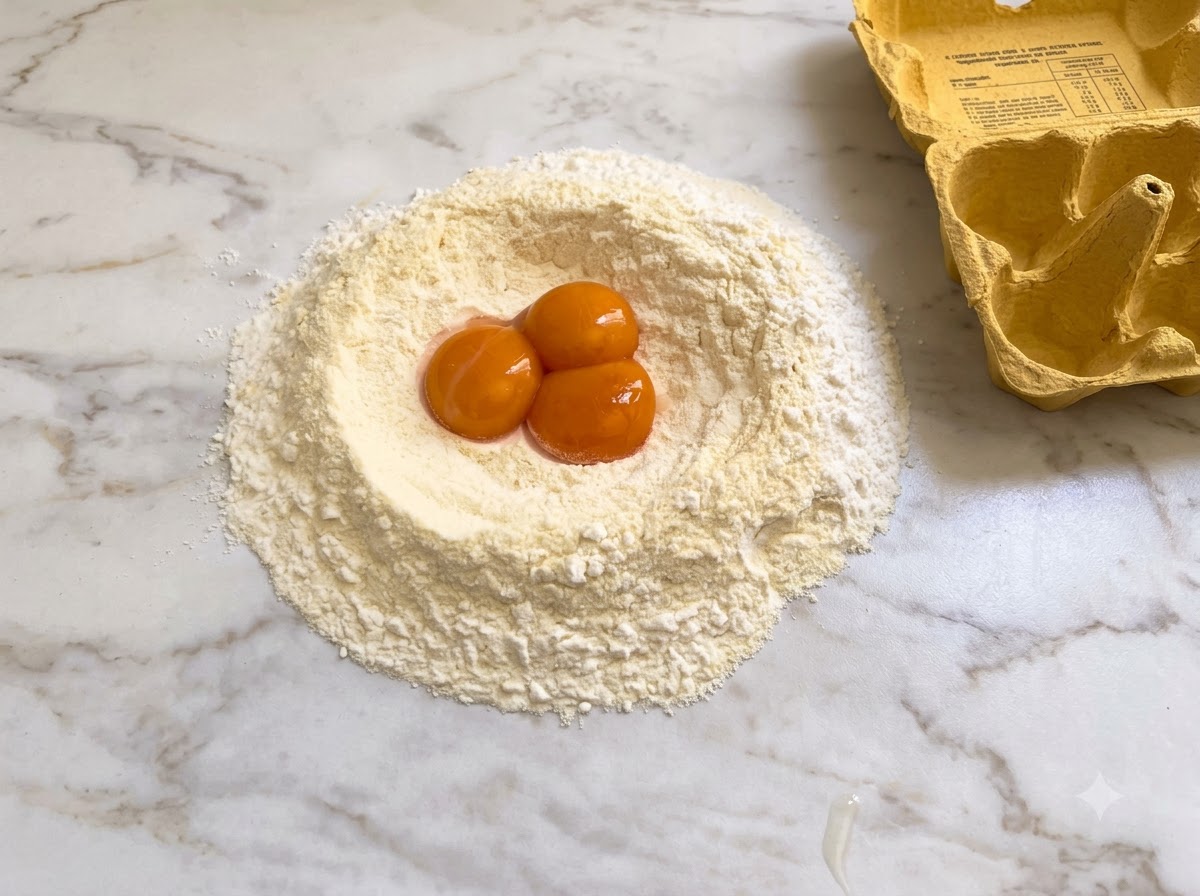
Create a well in the center of a mound of flour on a white marble surface and carefully add the egg yolks inside.
Tip: Ensure the flour walls are high enough so the egg yolks do not spill out before mixing. - 17Knead the pasta dough
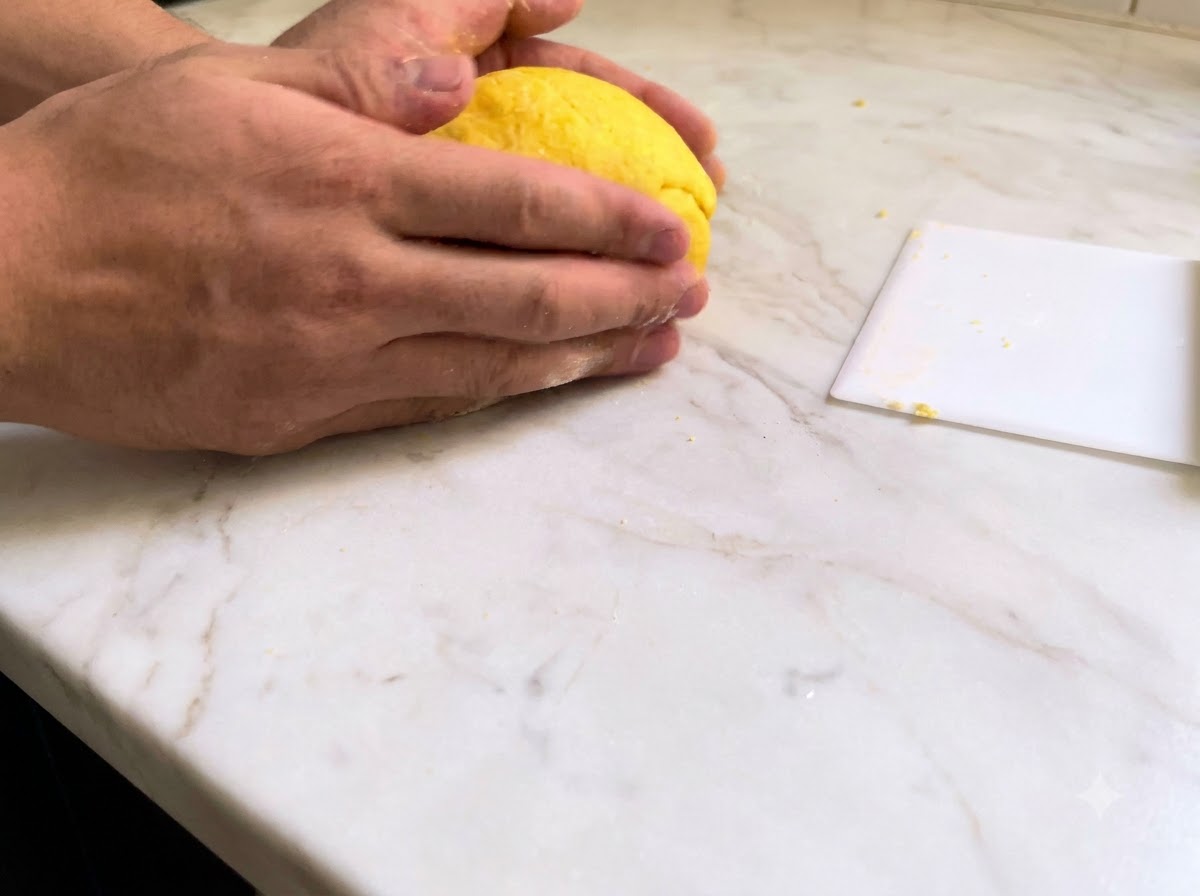
Knead the mixture thoroughly until it comes together into a smooth, cohesive ball of fresh pasta dough on the marble countertop.
Tip: Knead firmly using the palms of your hands to develop the gluten for a smooth texture. - 18Roll Out the Pasta Dough
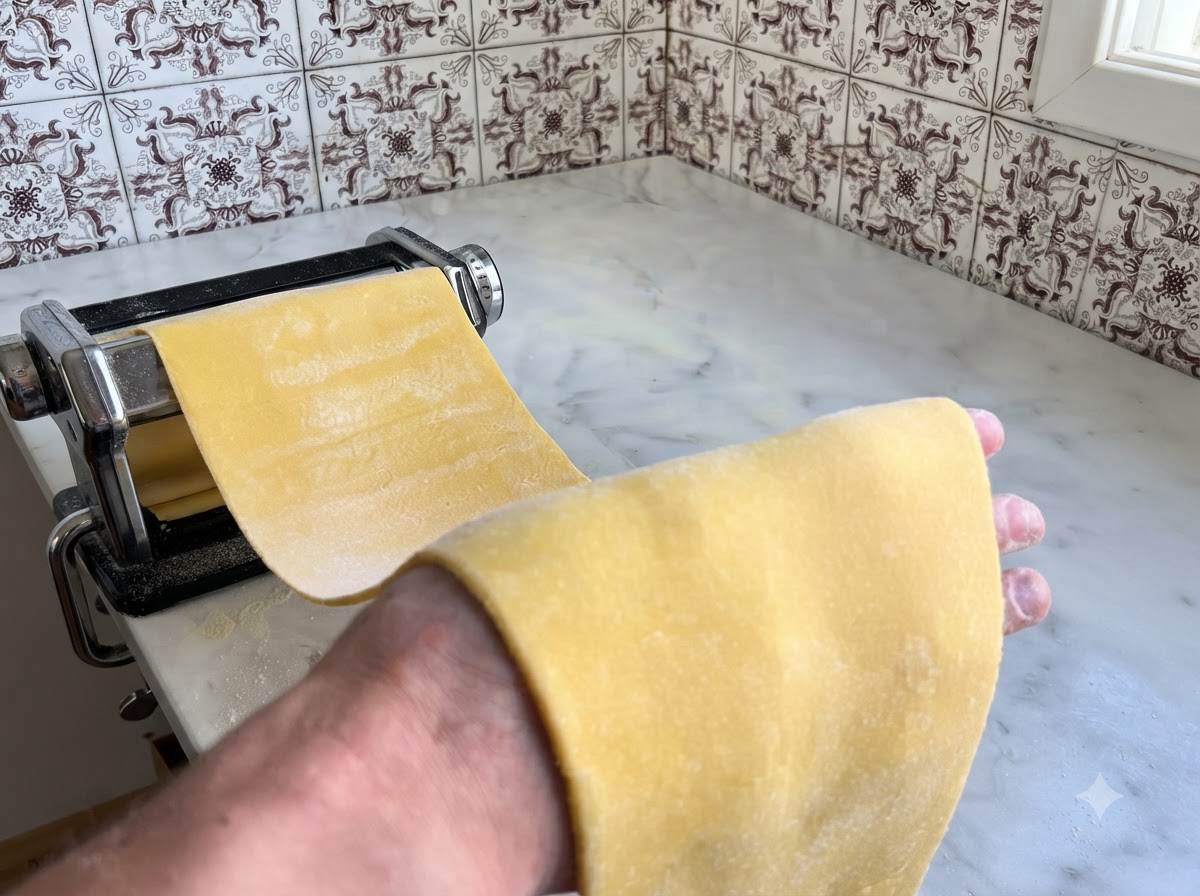
Pass the rested fresh pasta dough through a pasta machine, gradually reducing the thickness settings until you have long, smooth sheets of pasta.
Tip: Lightly dust the dough sheets with flour to prevent them from sticking to the machine rollers. - 19Cut into Tagliatelle
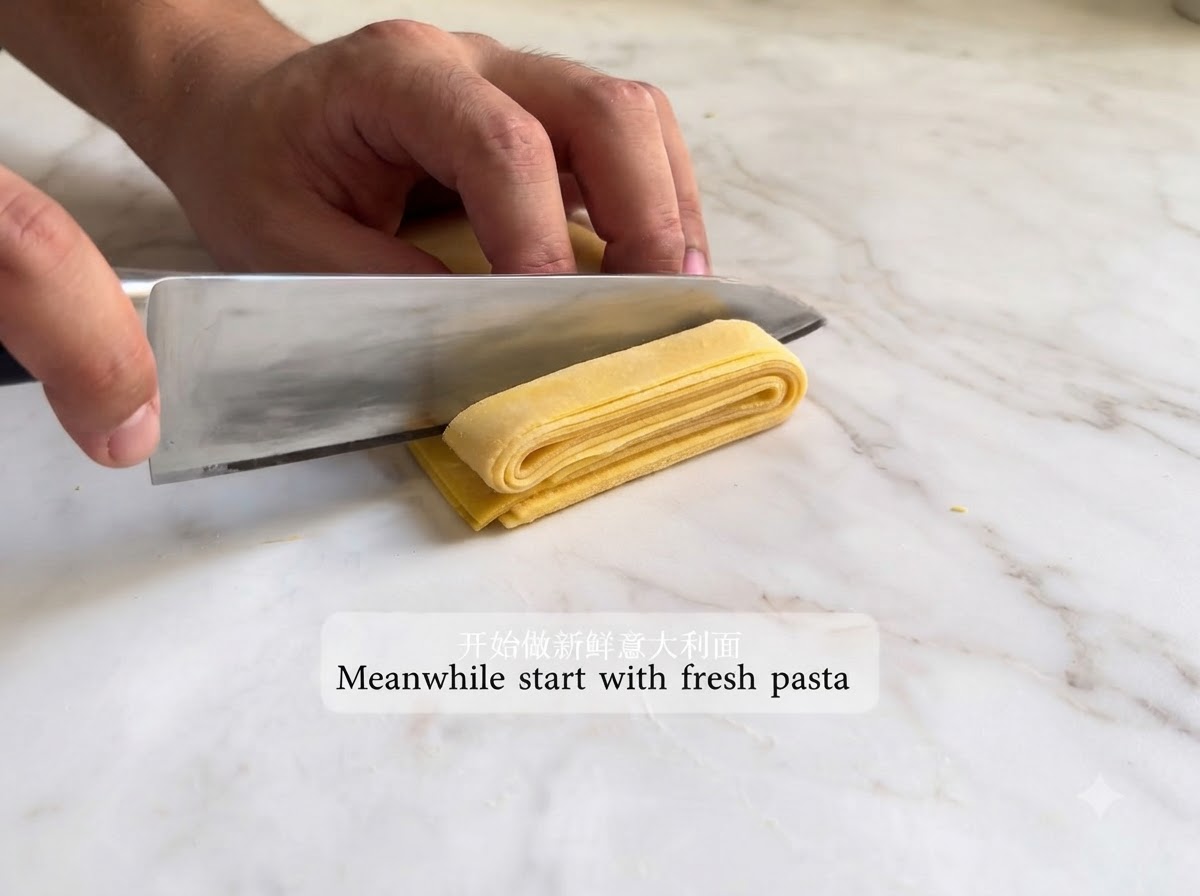
Lightly dust the rolled pasta sheet, fold it loosely, and use a sharp chefs knife to cut it crosswise into uniform strips to form tagliatelle.
Tip: Make sure not to press down too hard while cutting so the folded layers remain separated. - 20Shape Pasta Nests
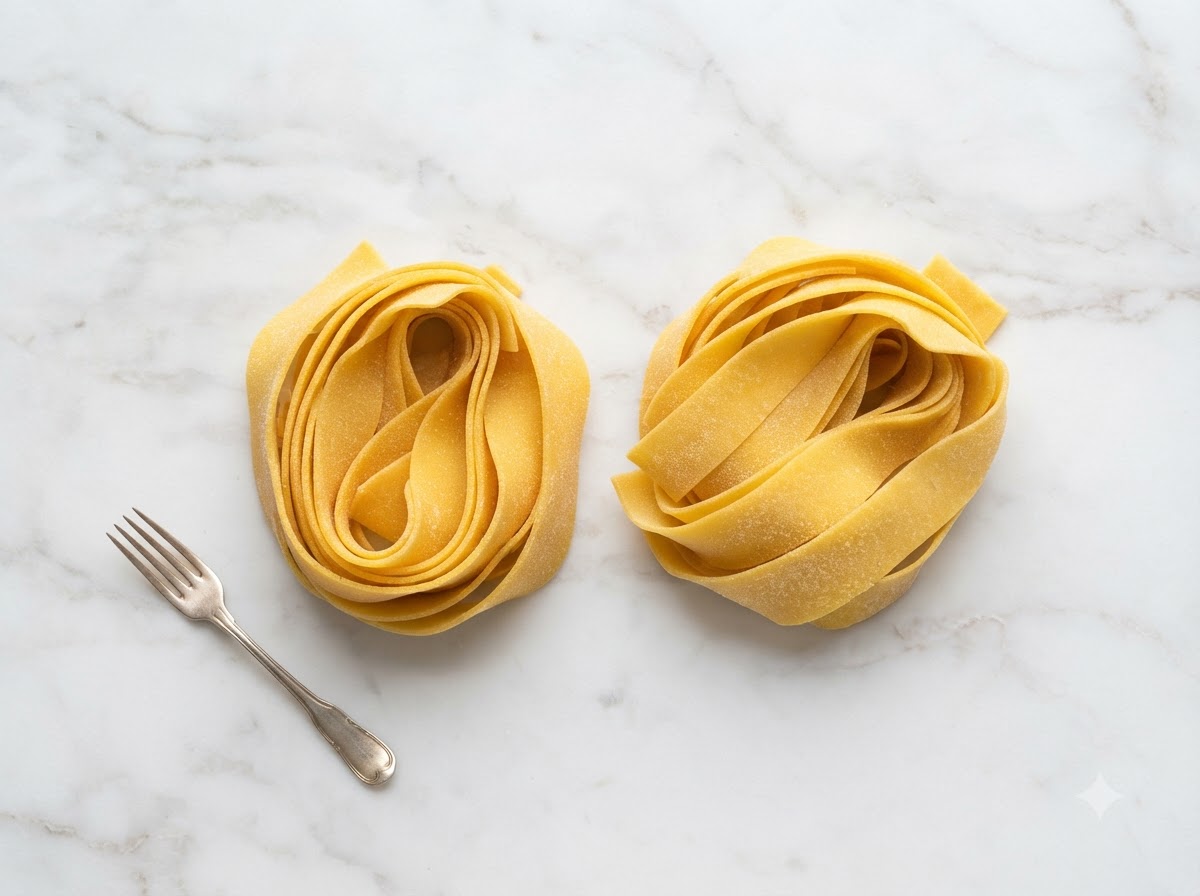
Gather the freshly cut tagliatelle strands and shape them into loose nests on a floured surface to dry slightly before cooking.
Tip: Dust with a little semolina flour to keep the nests from sticking together. - 21Remove the Braised Beef
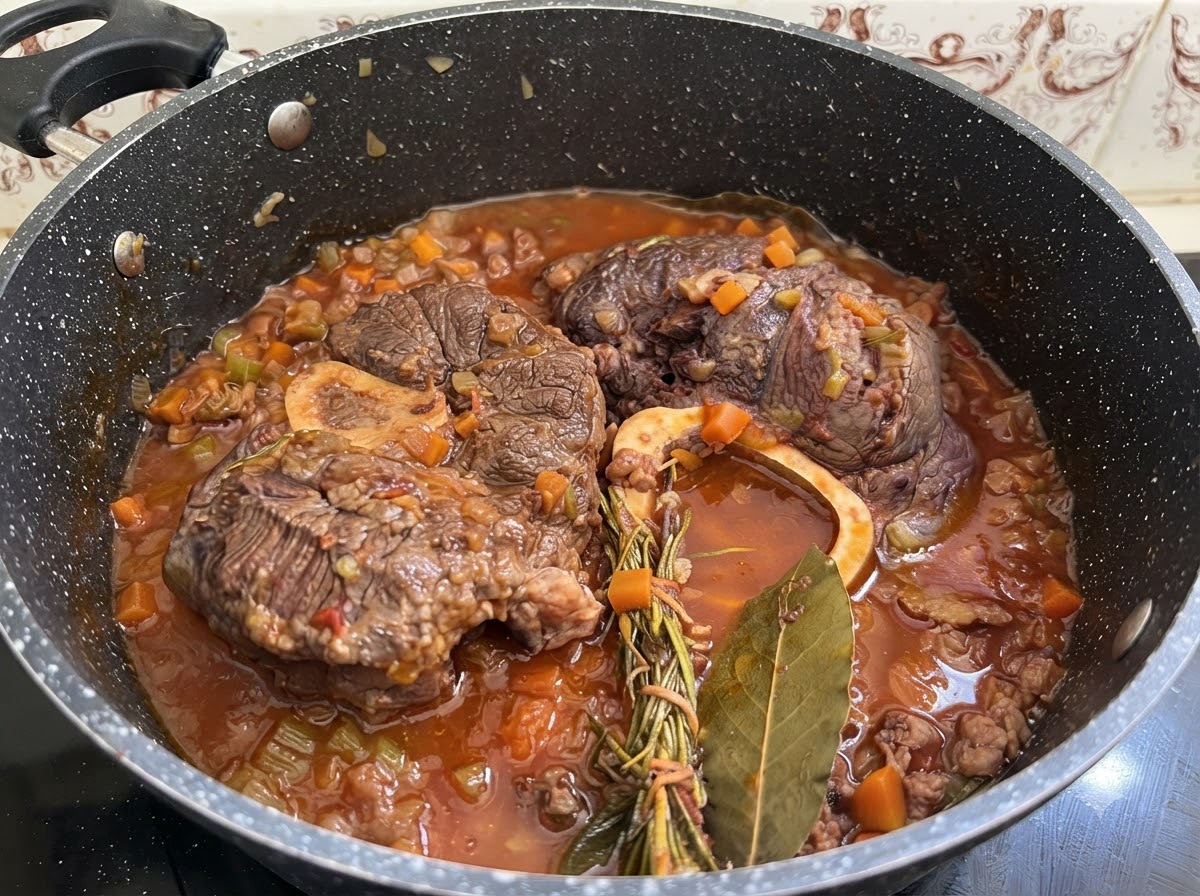
Once the beef cuts are fully tender after simmering, carefully lift them out of the pot using a utensil and set them aside to cool down before chopping.
Tip: Allow the meat to cool slightly so it is easier to handle and chop finely.