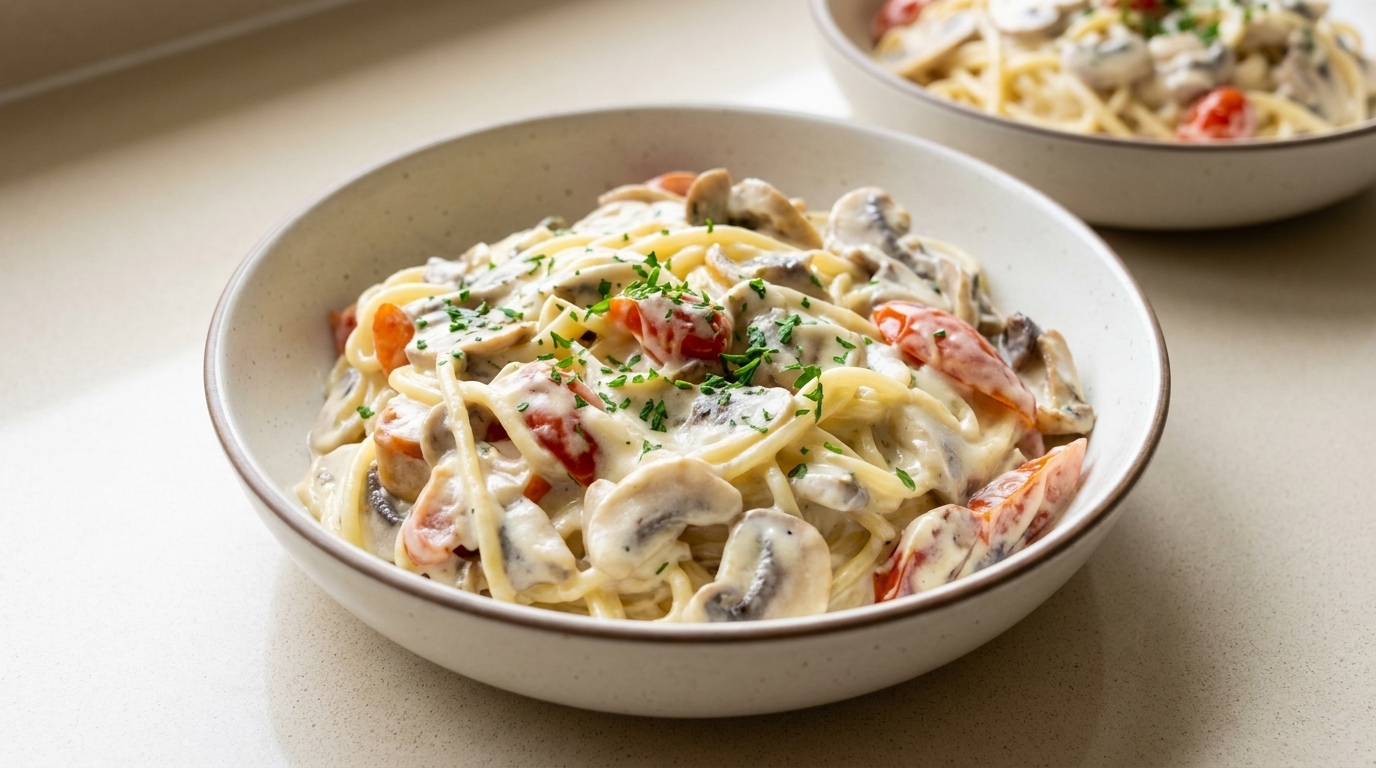
Classic Spaghetti Bolognese
Rich Homemade Meat Sauce
A hearty, family-style Bolognese featuring a slow-simmered blend of beef and pork, fresh aromatics, and a secret touch of butter for a velvety finish.
Bolognese is more than just a meat sauce; it is a labor of love that relies on the slow caramelization of vegetables and the deep browning of quality meats. This version uses a classic soffritto base and a long simmer to ensure the flavors meld into a rich, complex ragù. It is the ultimate comfort food, perfected for the home kitchen.
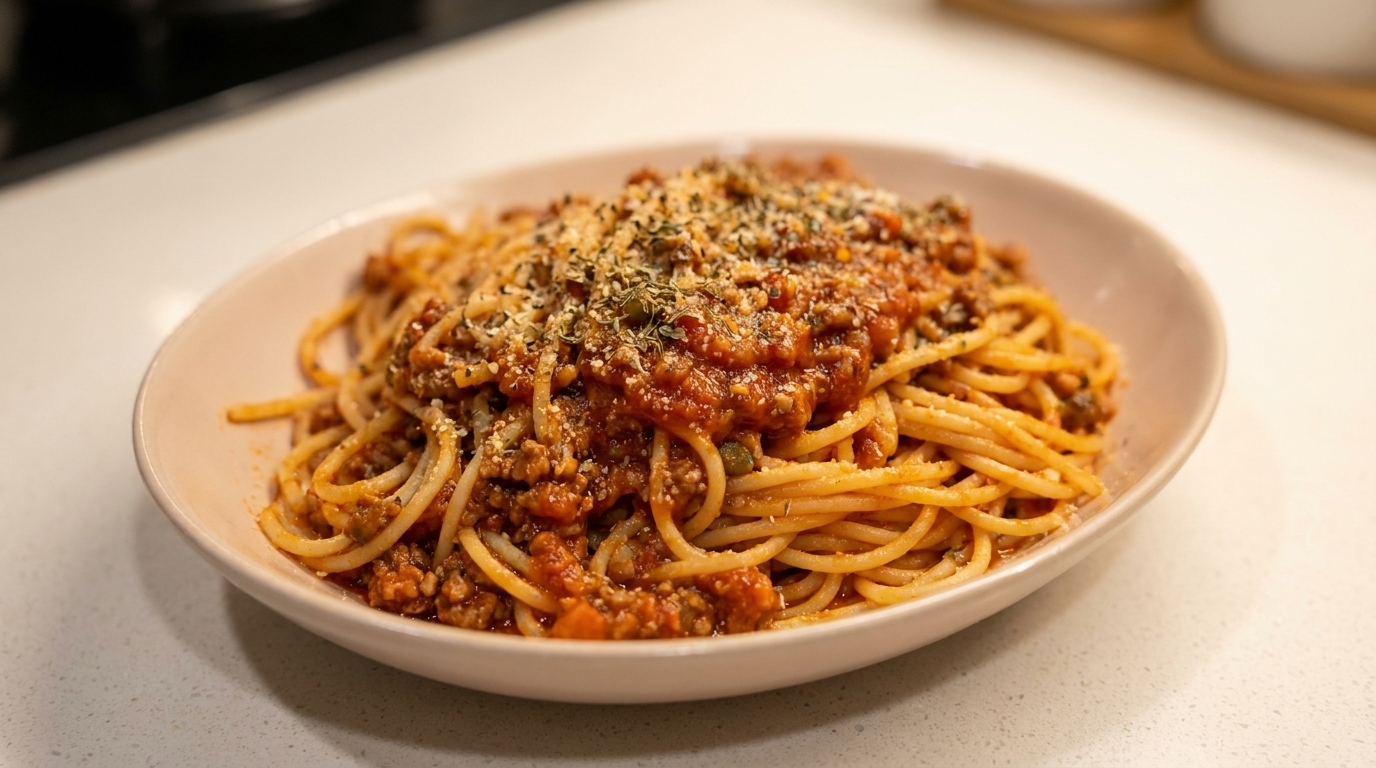
Ingredients
- 1 tbsp cooking oil
- 1 medium onion, finely chopped
- 1 carrot, diced
- 1 stalk celery, diced
- 3 cloves garlic, minced
- 250 g minced beef
- 250 g minced pork
- 2 large tomatoes, chopped into chunks
- 150 g tomato paste
- 2 cans water (measured from tomato paste can)
- 1 tbsp black pepper
- 1 tbsp butter
- 400 g spaghetti
- to taste salt
- optional grated Parmesan cheese
- optional dried herbs
Instructions
- 1Prep the vegetable base
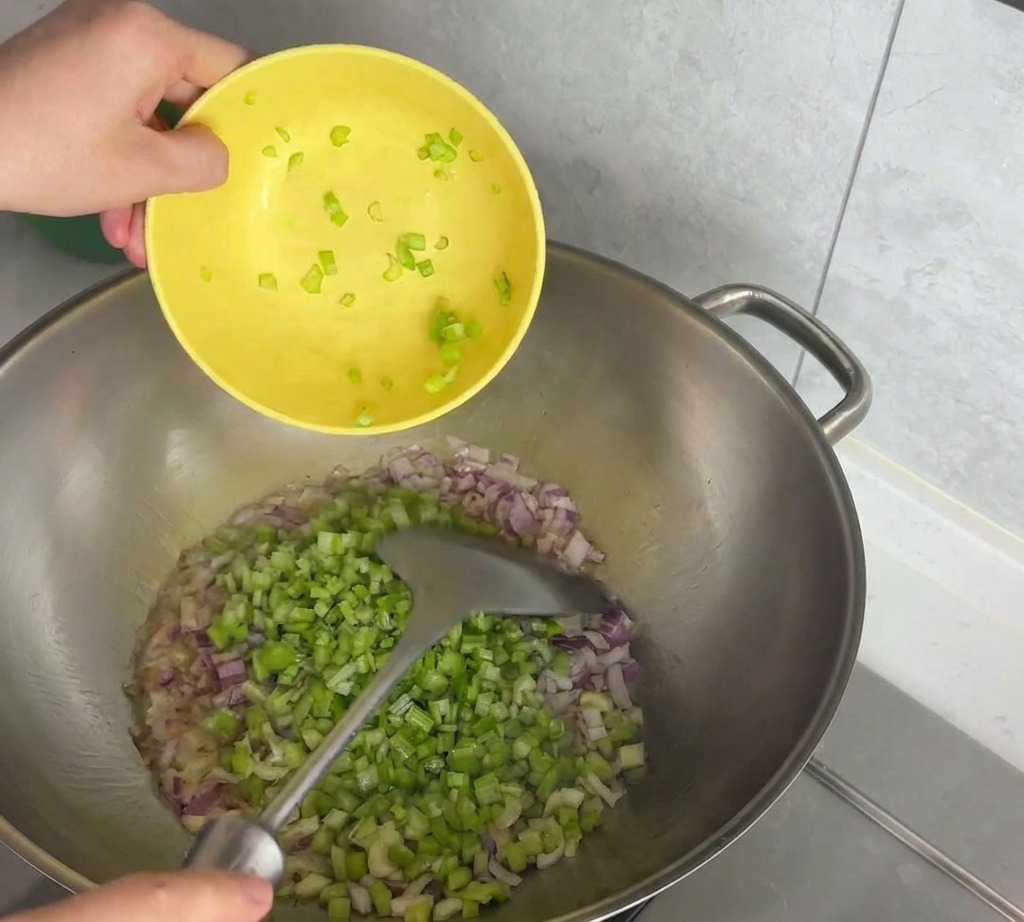
Heat oil in a pan and sauté the onions until they become translucent. Add the diced celery and carrots to the mixture. Cook over medium heat, stirring frequently until the vegetables soften and begin to release their juices. This creates the essential flavor base known as a soffritto.
Tip: Ensure the onions are fragrant before adding the carrots and celery to achieve even cooking throughout the base. - 2Add the garlic
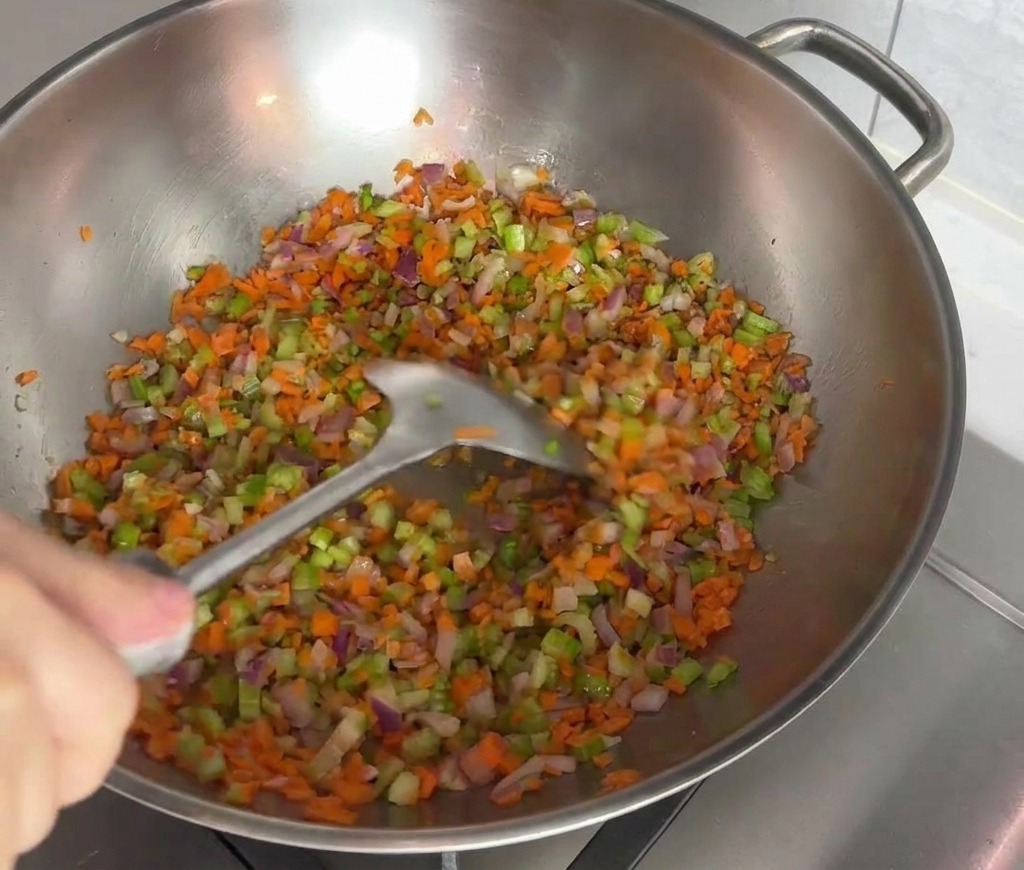
Once the onions, celery, and carrots have softened and become fragrant, add the minced garlic to the pan. Sauté for just a minute until the garlic releases its aroma, being careful not to let it brown too much.
Tip: Stir the vegetables frequently to ensure they cook evenly and dont stick to the bottom of the pan. - 3Brown the minced meat
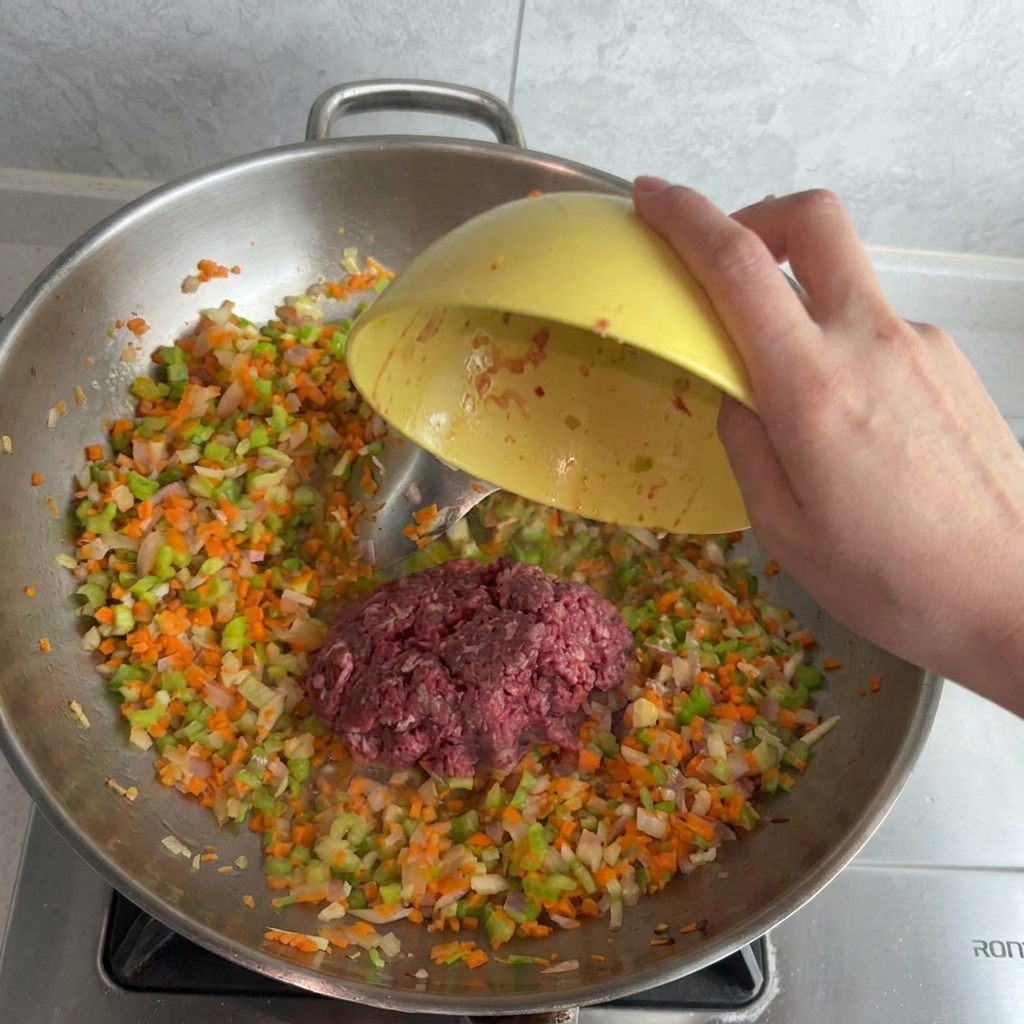
Add the raw minced beef and minced pork to the sautéed vegetables. Use a spatula to break up the meat into small pieces, stirring constantly for about 10 minutes. Continue cooking until the meat is thoroughly browned and any liquid released has reduced to intensify the savory flavor.
Tip: Using a mix of beef and pork adds fat and moisture while providing a robust and balanced taste. - 4Add fresh tomatoes
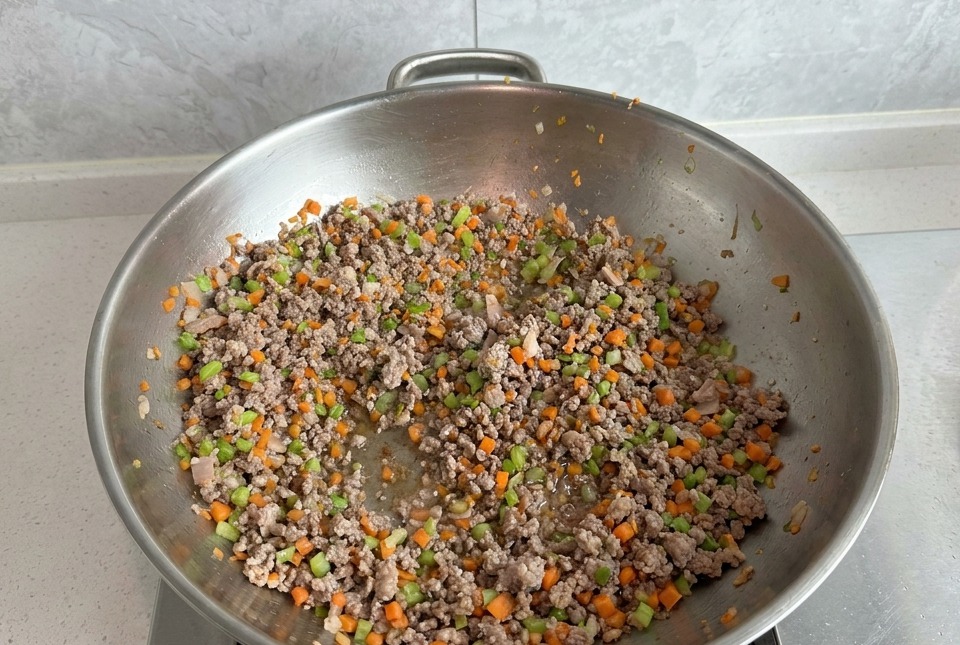
Stir in the fresh tomato chunks with the browned meat. The tomatoes will begin to break down, releasing juices that help deglaze the pan and add a bright, natural acidity to the sauce base.
Tip: Browning the meat well is crucial for a rich flavor; avoid rushing this step as the caramelized surface adds complexity to the final sauce. - 5Season with black pepper
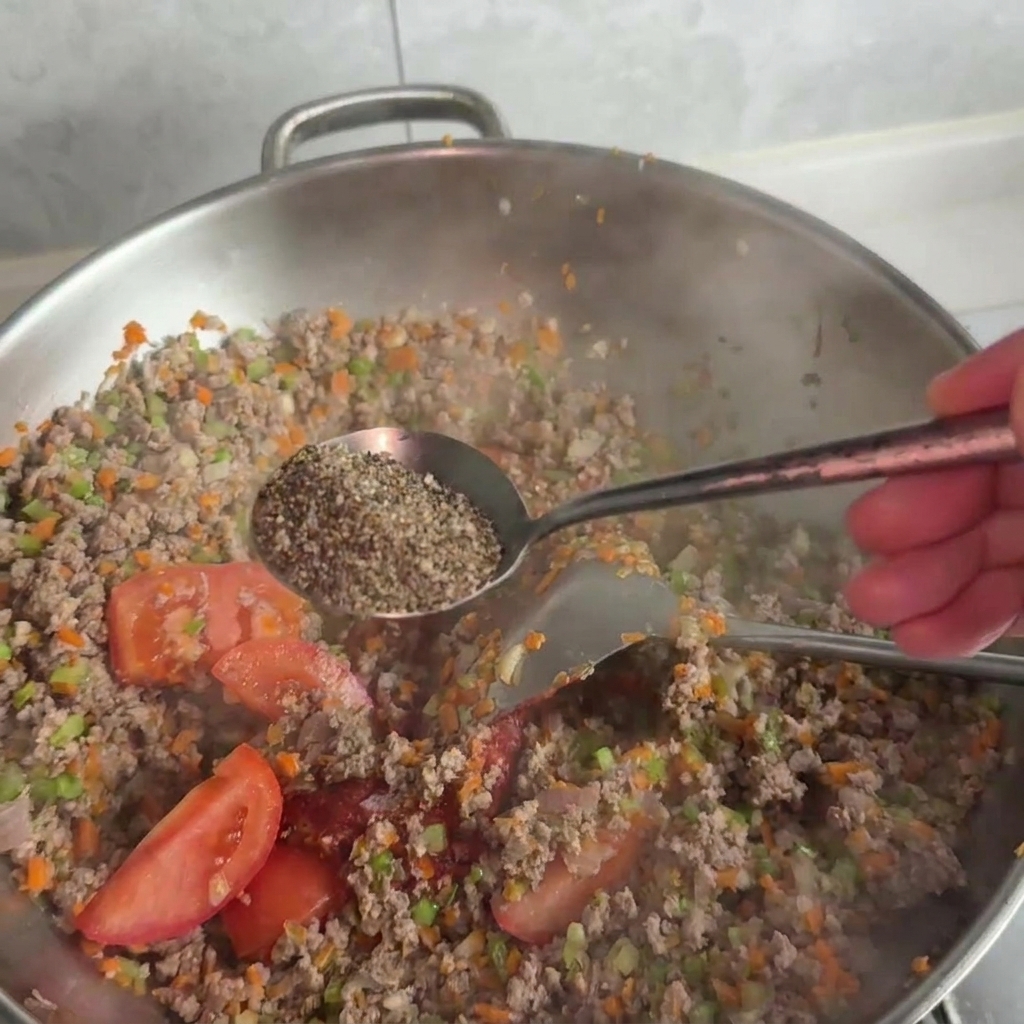
Add a large, generous spoonful of ground black pepper to the meat and tomato mixture. The black pepper adds a subtle heat and a sharp aroma that cuts through the richness of the meat and balances the sweetness of the vegetables and tomatoes.
Tip: Freshly ground black pepper has a much more vibrant aroma than pre-ground pepper — use it if available. - 6Add tomato paste and water
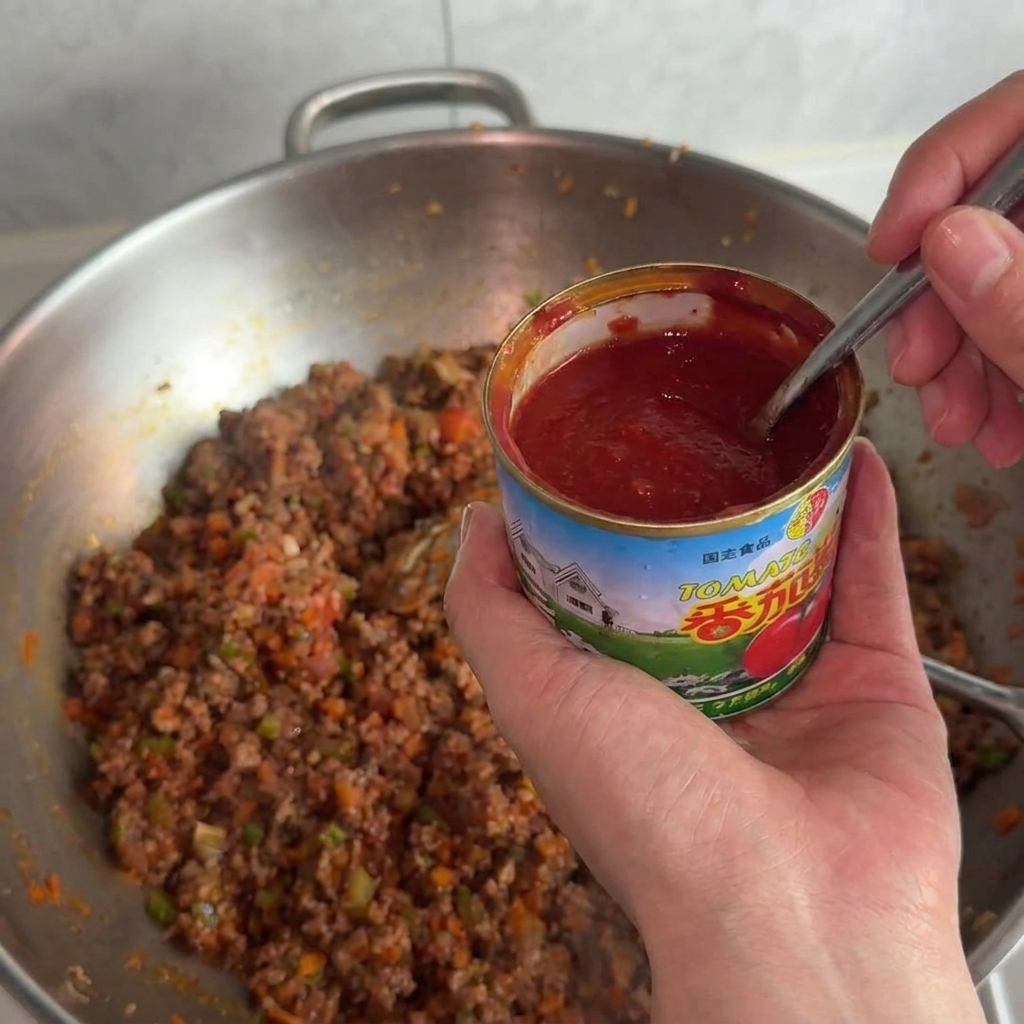
Stir in a full can of thick tomato paste followed by two cans of water, using the empty paste tin as a measure. This provides the necessary liquid for the sauce to simmer and develop a deep, concentrated flavor.
Tip: Cooking the tomato paste for a minute or two with the meat before adding any liquid helps remove the metallic canned taste and deepens the flavor. - 7Cover and simmer
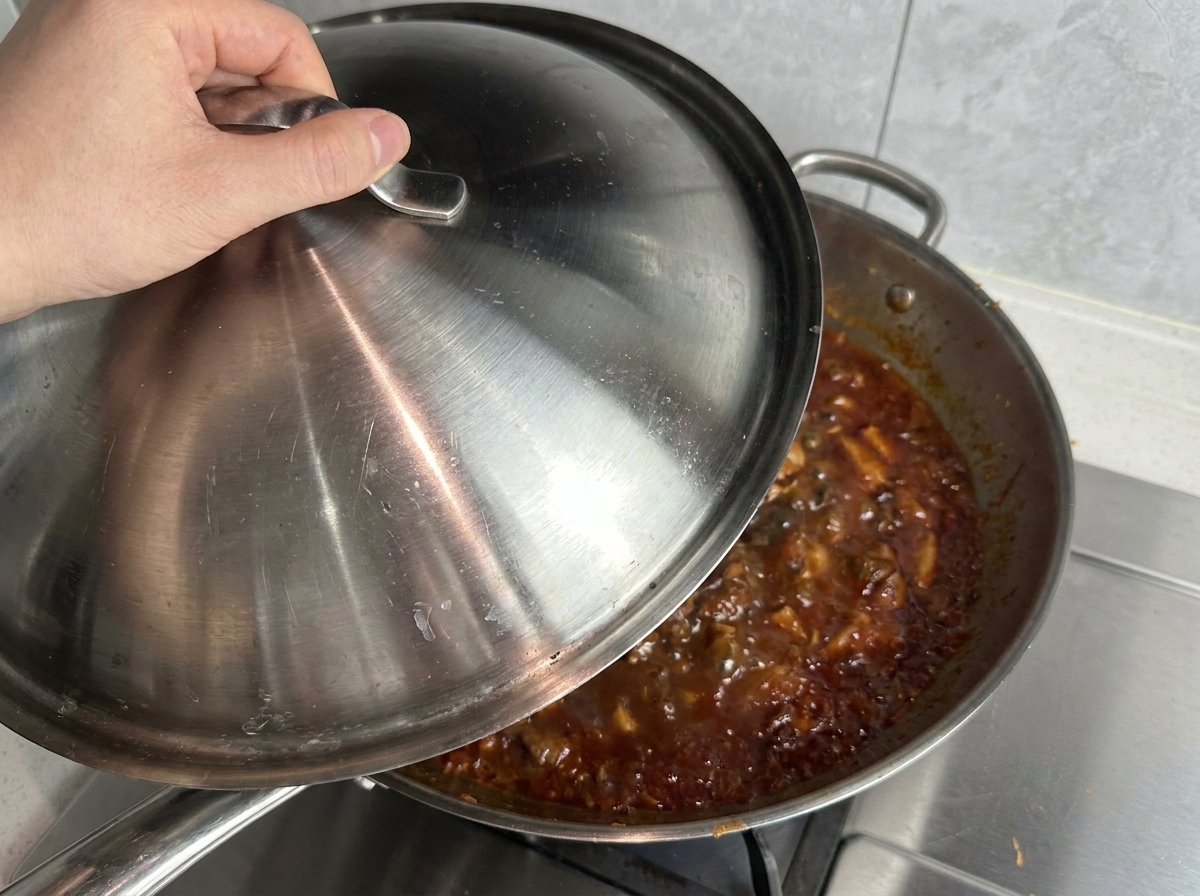
Place a lid on the pan and reduce the heat to low. Allow the sauce to simmer slowly for 40 to 60 minutes. This long, slow cooking time is essential for the flavors to meld together and for the sauce to reach its final thick and velvety consistency.
Tip: Make sure to stir the sauce every 15 minutes to prevent the bottom from scorching as it thickens. - 8Simmer until thick
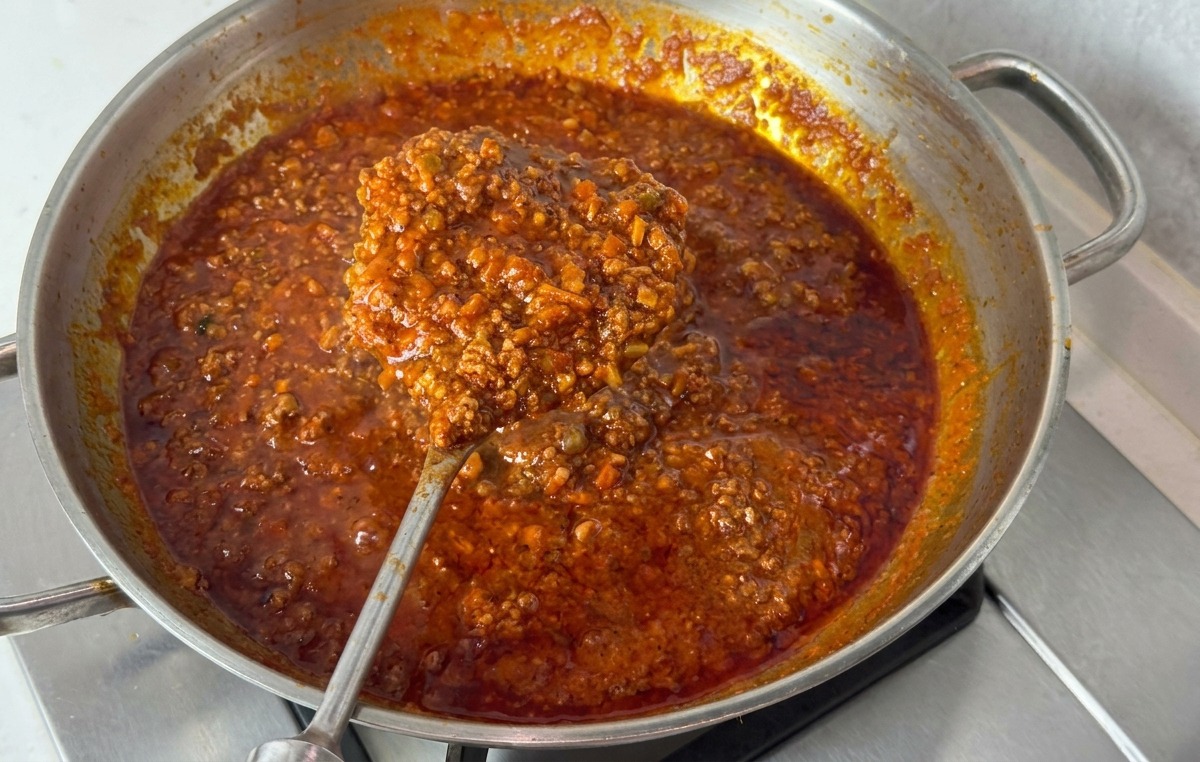
After simmering on low heat for nearly an hour, the sauce should be significantly reduced and thickened. The tomato chunks will have broken down into a rich, meaty texture that coats a spoon easily. Stir occasionally during this process to ensure the bottom remains clear while the flavors concentrate.
Tip: Patience is key as low and slow simmering is what allows the flavors of the meat and vegetables to meld together perfectly into a deep sauce. - 9Season with salt
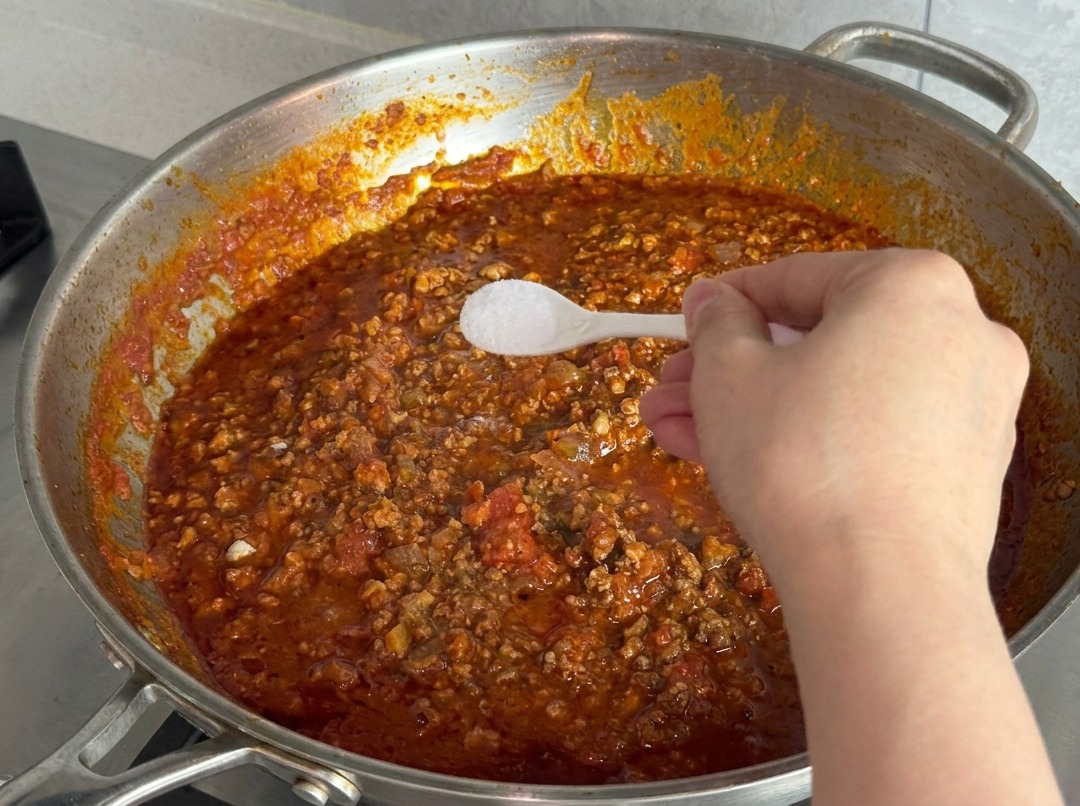
Once the sauce has thickened to your desired consistency, adjust the seasoning. Add a spoonful of salt to enhance the savory notes of the beef and pork. Taste the sauce before adding salt, as the tomato paste and canned tomatoes can vary in sodium content.
Tip: Always season toward the end of simmering; as the liquid reduces, the saltiness will naturally concentrate, and it is easier to add more than to fix an over-salted sauce. - 10Add butter for richness
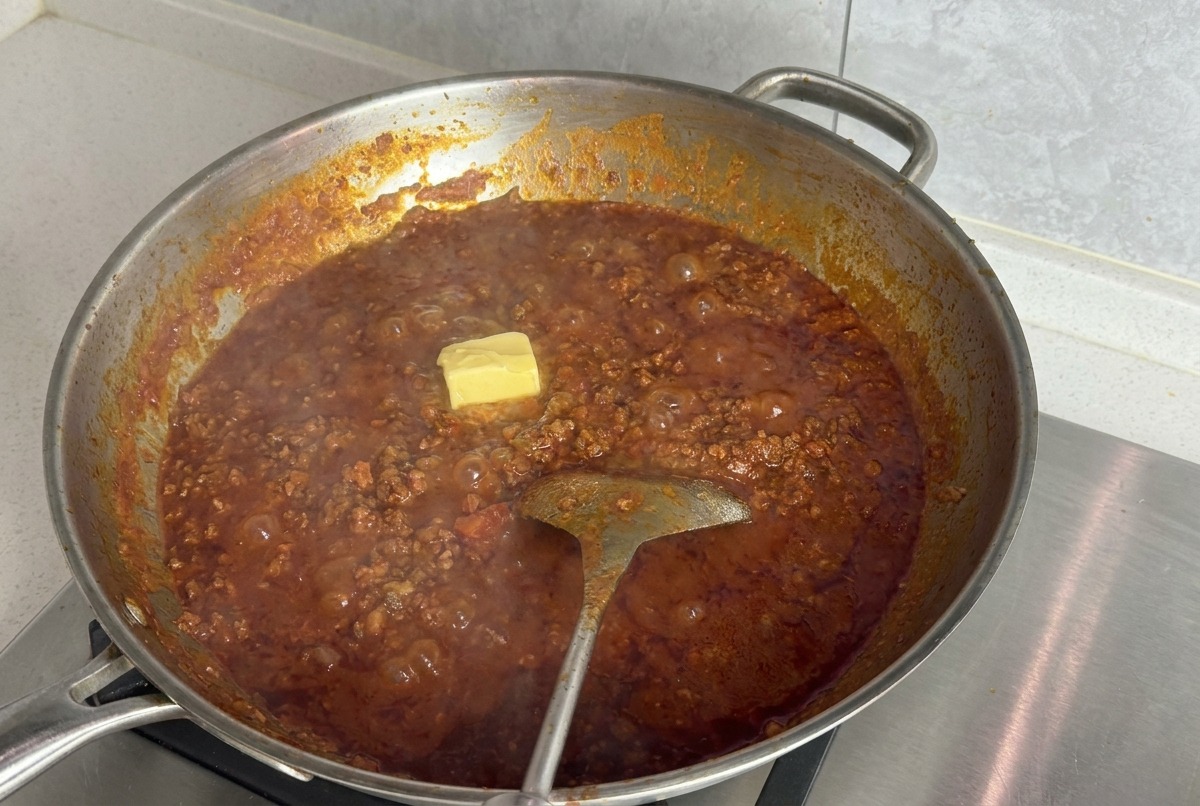
For a professional, restaurant-quality finish, add a square block of butter to the simmering sauce. Butter adds a silky mouthfeel and a subtle creamy depth that balances the acidity of the tomatoes and the richness of the meat.
Tip: Use cold butter for a glossier finish, and stir it in just before youre ready to serve for the best flavor impact. - 11Stir until melted
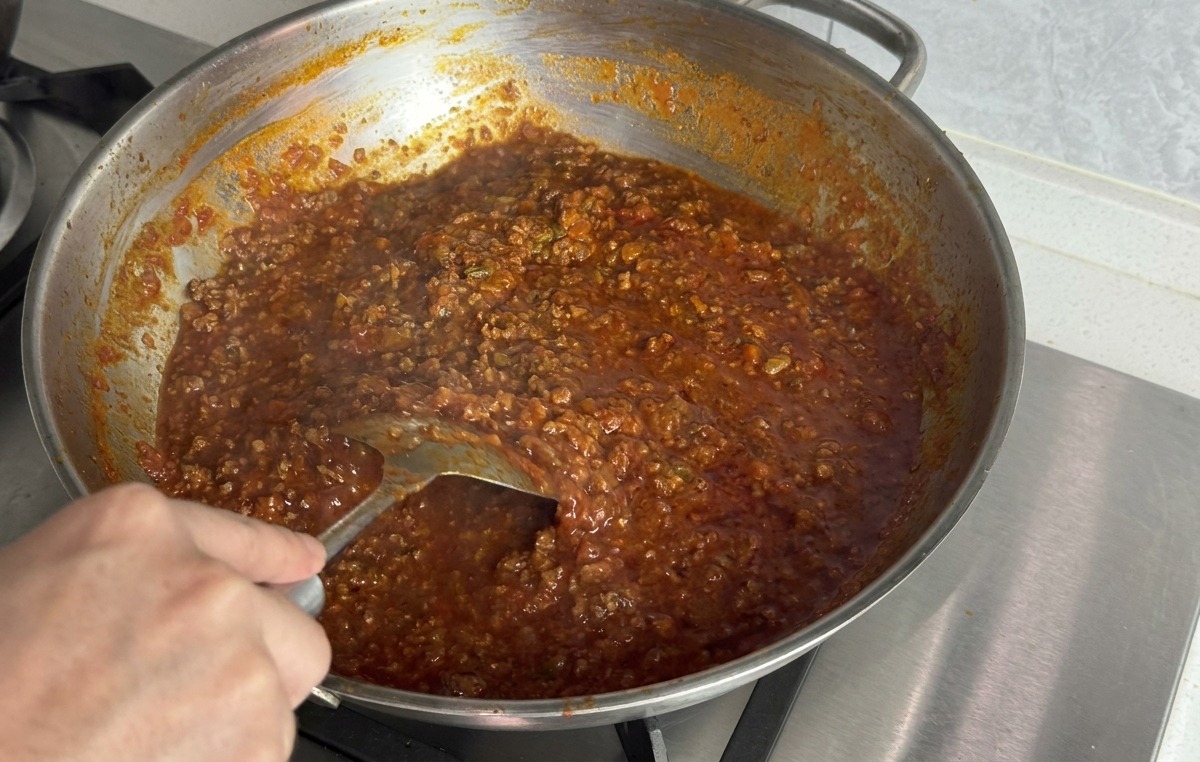
Gently stir the butter into the hot sauce until it is completely melted and incorporated. You will notice the sauce taking on a glossier, more velvety appearance as the fat emulsifies with the tomato base, creating a luxurious texture.
Tip: Turn off the heat just as the butter melts to preserve its delicate flavor and prevent the fat from separating. - 12Serve over pasta
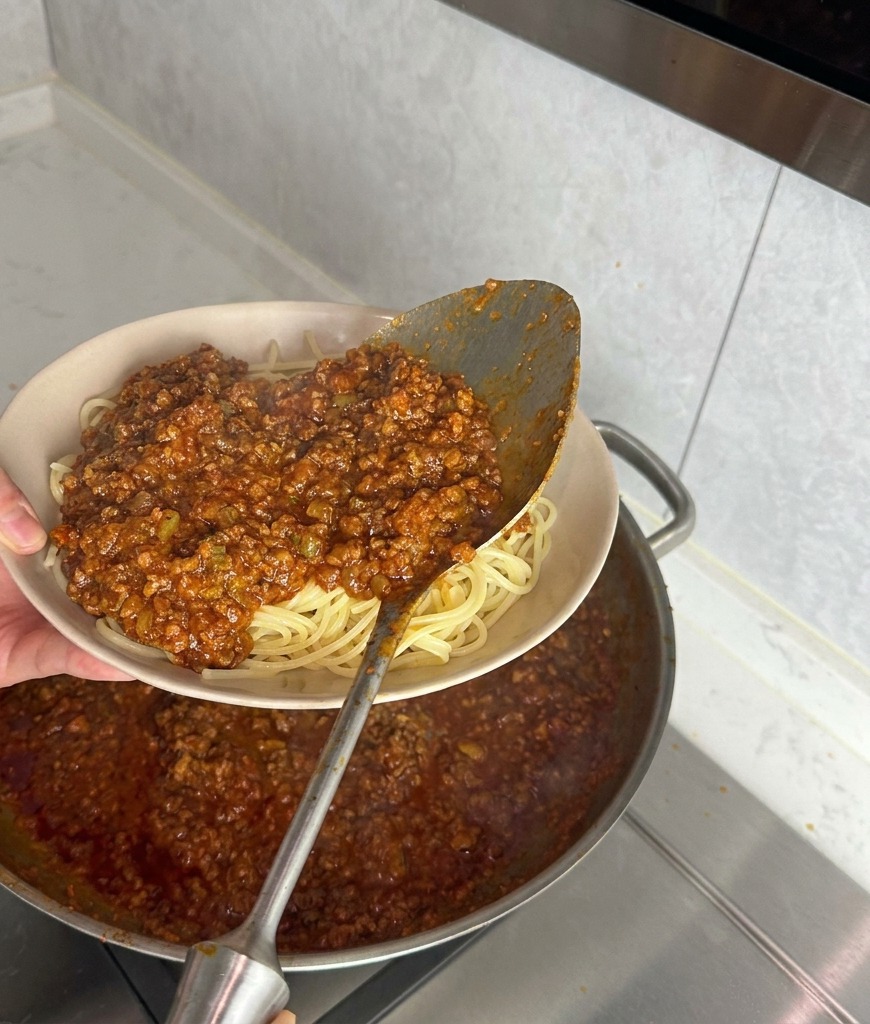
Your homemade tomato meat sauce is now ready. Ladle a generous amount of the thick, flavorful sauce over a plate of freshly cooked spaghetti. This rich sauce is also perfect for lasagna or even as a hearty topping for pizza.
Tip: For the best result, toss the pasta directly in the pan with a bit of the sauce and a splash of pasta water to ensure every strand is perfectly coated.