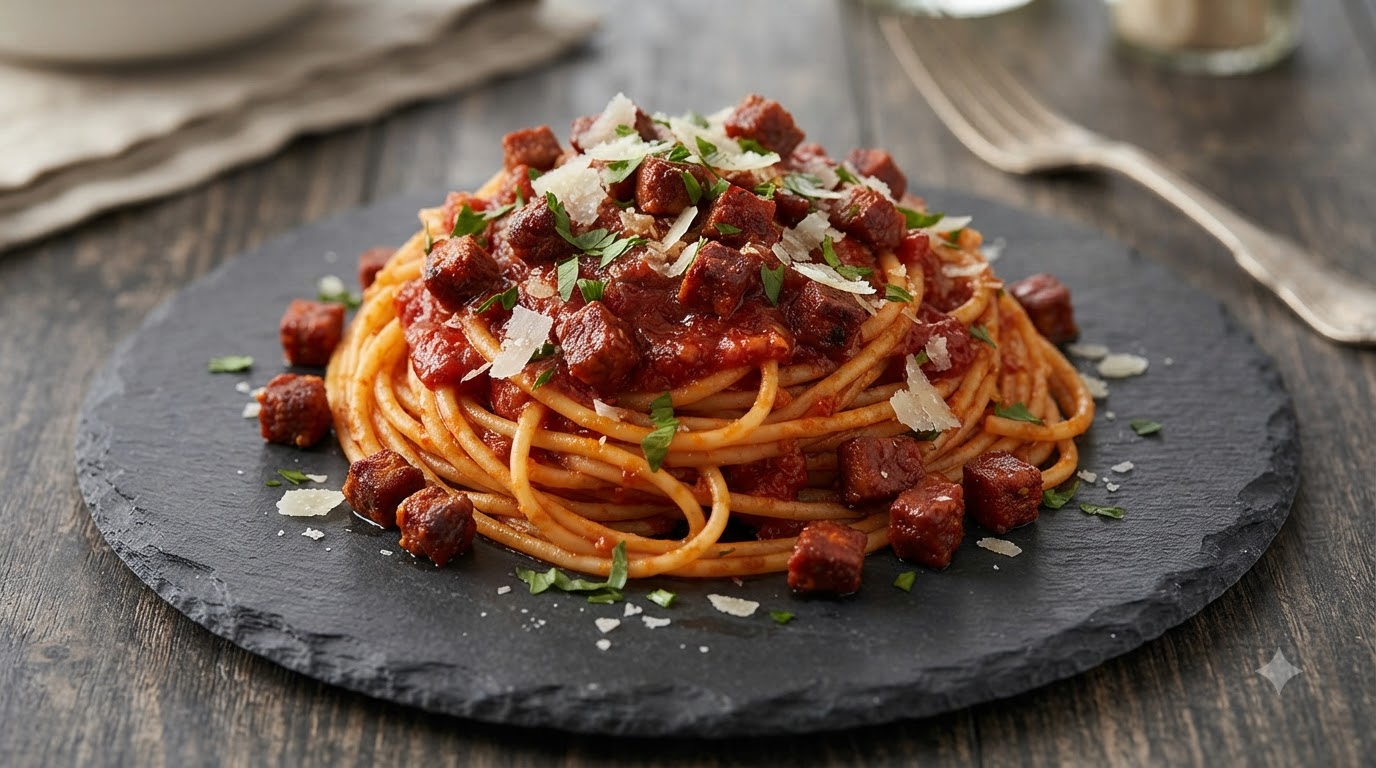
Classic Tomato Sauce
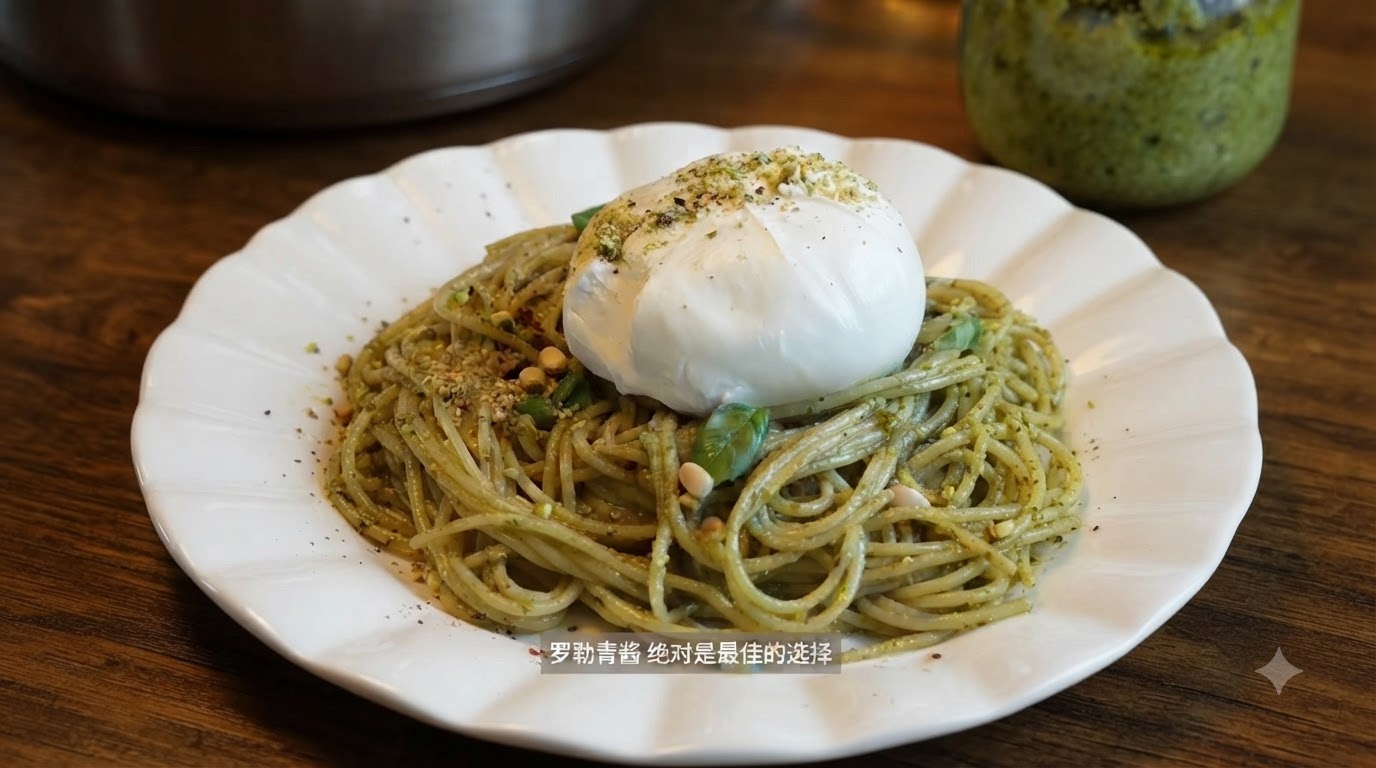
Italian Pesto Spaghetti
Master two essential restaurant-style pasta sauces at home — a vibrant, thick tomato meat sauce infused with basil and oregano, and a rich, fragrant Italian pesto made with toasted pine nuts.
Pasta sauce is the soul of any great Italian meal, transforming simple strands of spaghetti into a restaurant-quality experience. This tutorial guides you through two timeless favorites: a savory, slow-simmered tomato meat sauce that relies on fresh tomatoes, onions, and aromatic herbs, and a vibrant pesto built on toasted pine nuts and fragrant basil. By learning these foundational methods, you can easily replicate authentic Italian flavors right in your own kitchen.
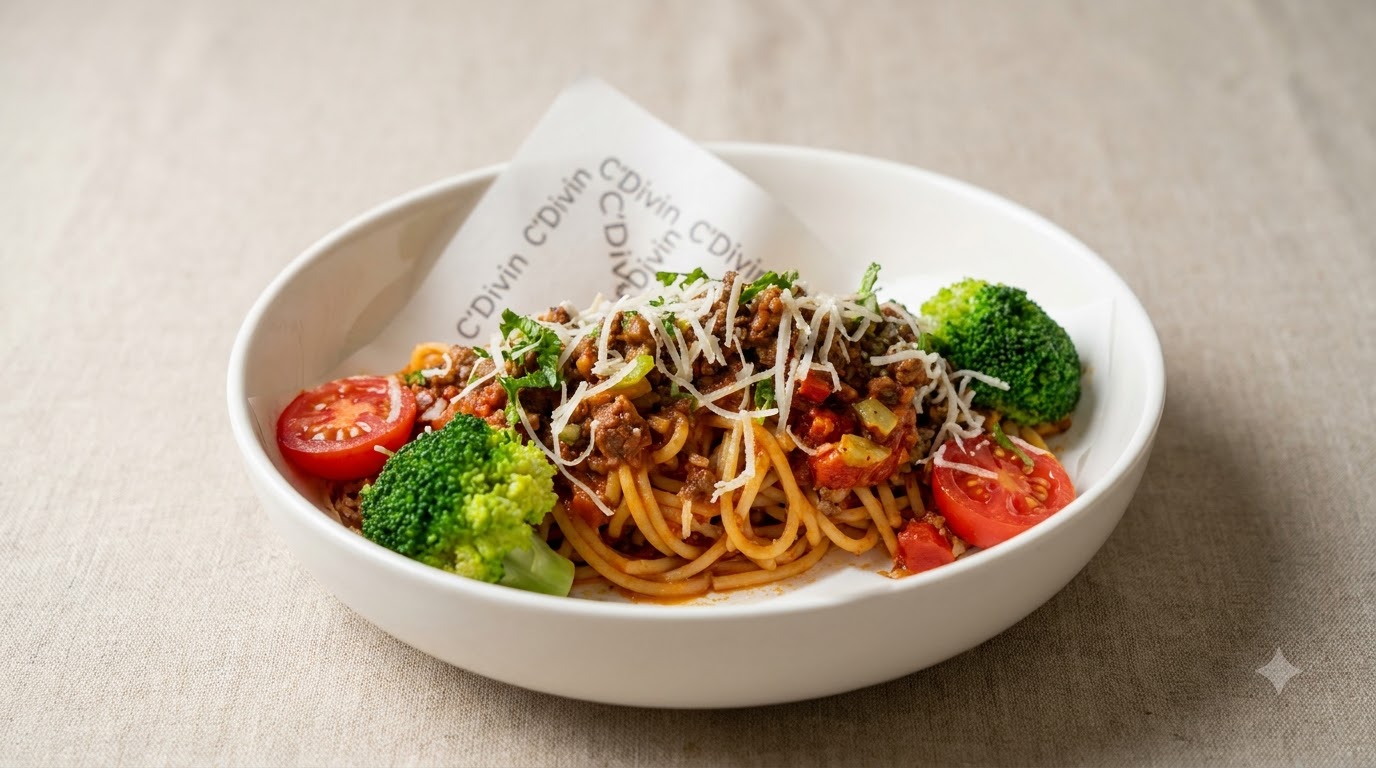
Ingredients
- 200 g spaghetti
- 400 g ripe tomatoes
- 2 tbsp tomato paste
- 100 g minced meat
- 3 cloves garlic
- 1 white onion
- 10 g fresh basil leaves
- 30 g pine nuts
- 50 g cheese
- 1 pinch oregano
- to taste salt
- to taste black pepper
- to taste cooking oil
- optional broccoli florets
- optional cherry tomatoes
Instructions
- 1Stir-fry the tomatoes
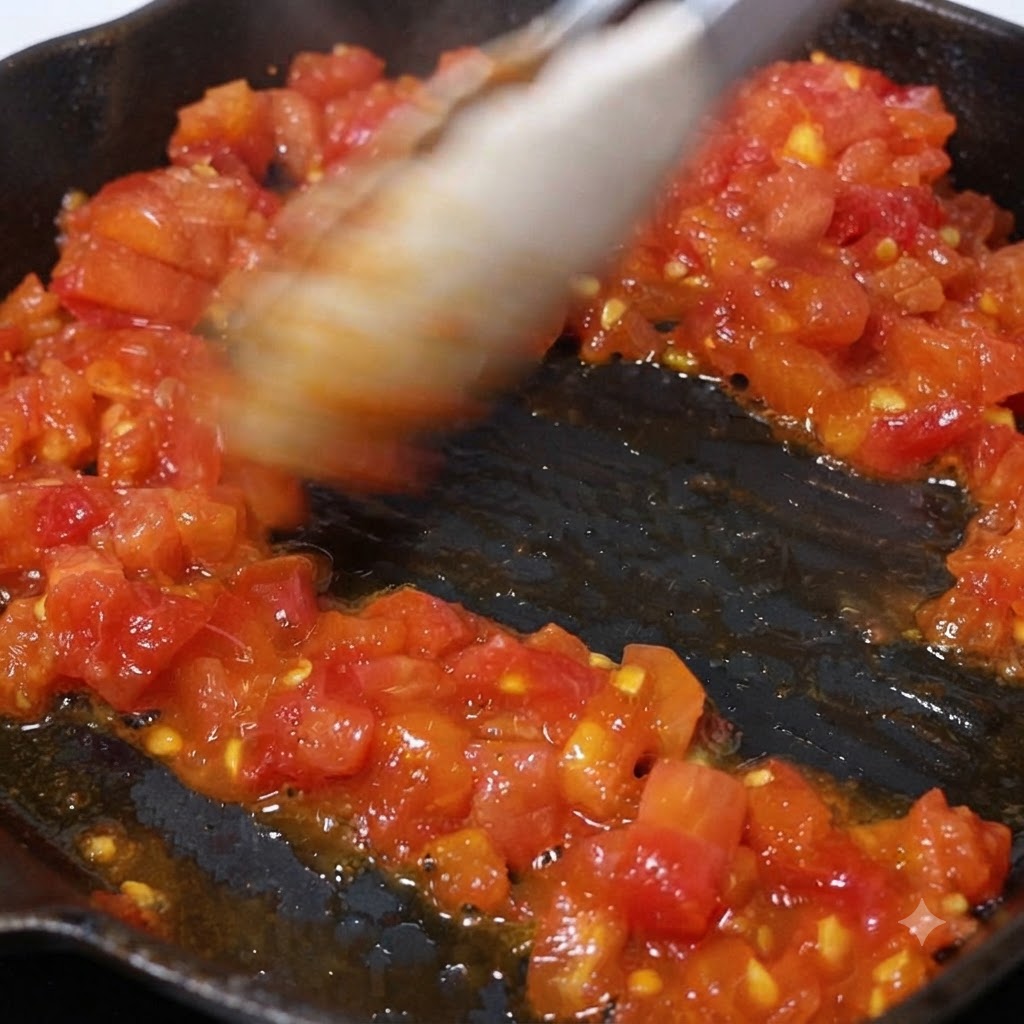
Add finely diced tomatoes to a hot oiled pan and immediately add salt to draw out the moisture. Stir-fry continuously until the tomatoes become soft and mushy.
Tip: Adding salt right away helps release the juices quickly to form a thick base. - 2Add garlic and onion
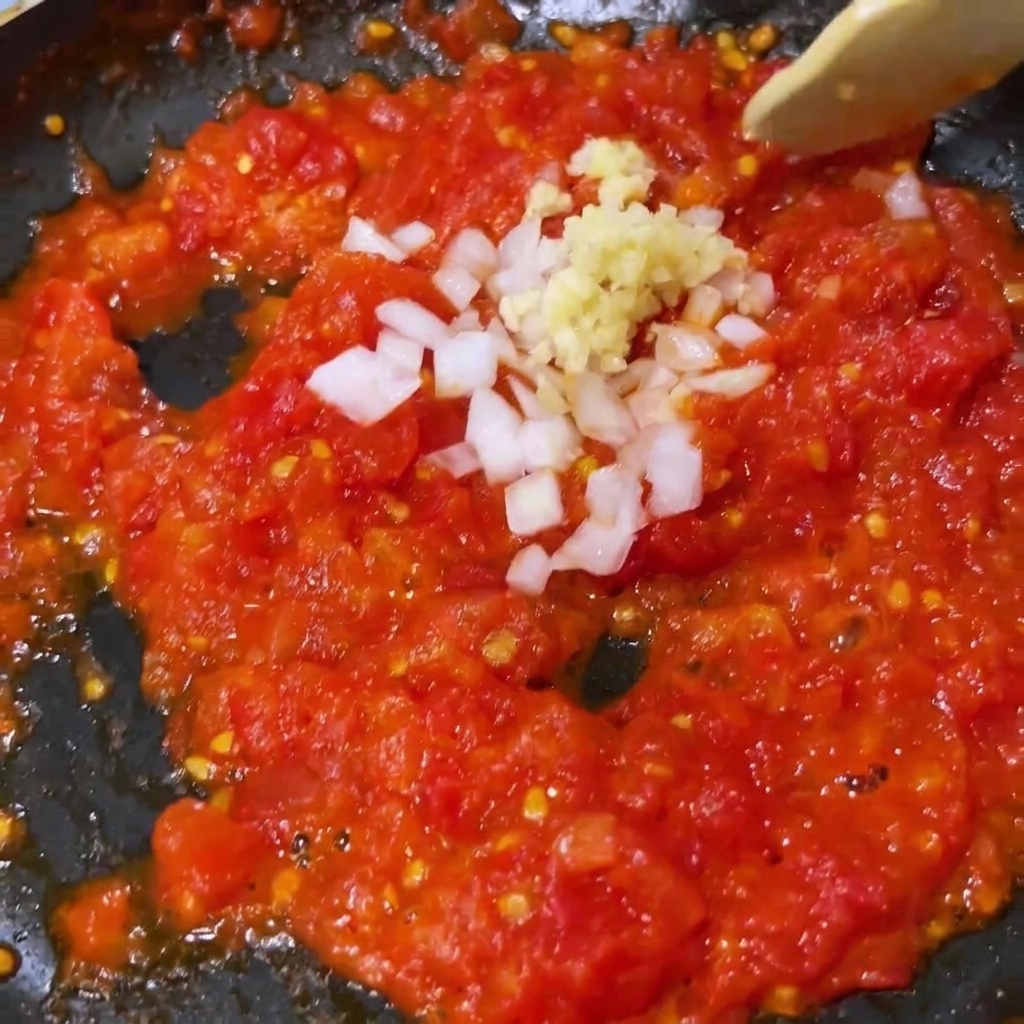
Add minced garlic and white onion into the softened tomatoes in the pan, stirring until the onion is fully softened.
Tip: Sauteing the garlic and onion with the tomatoes builds the aromatic foundation of the sauce. - 3Mix in fresh basil leaves
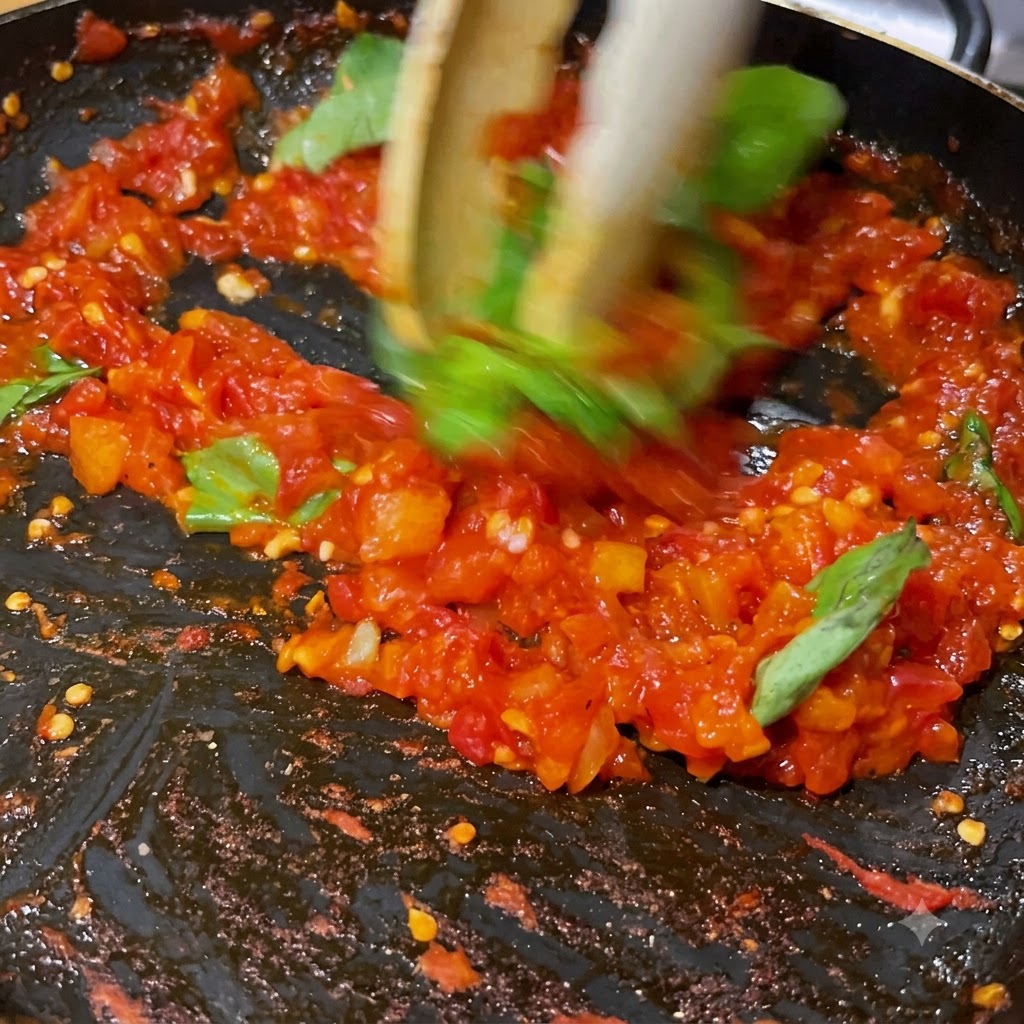
Add about 10g of fresh basil leaves directly into the simmering tomato sauce. Stir them in gently to infuse the sauce with an aromatic herbal layer before finishing.
Tip: Fresh basil should be added towards the end of cooking so it retains its vibrant color and essential oils without turning bitter. - 4Coat spaghetti in tomato sauce
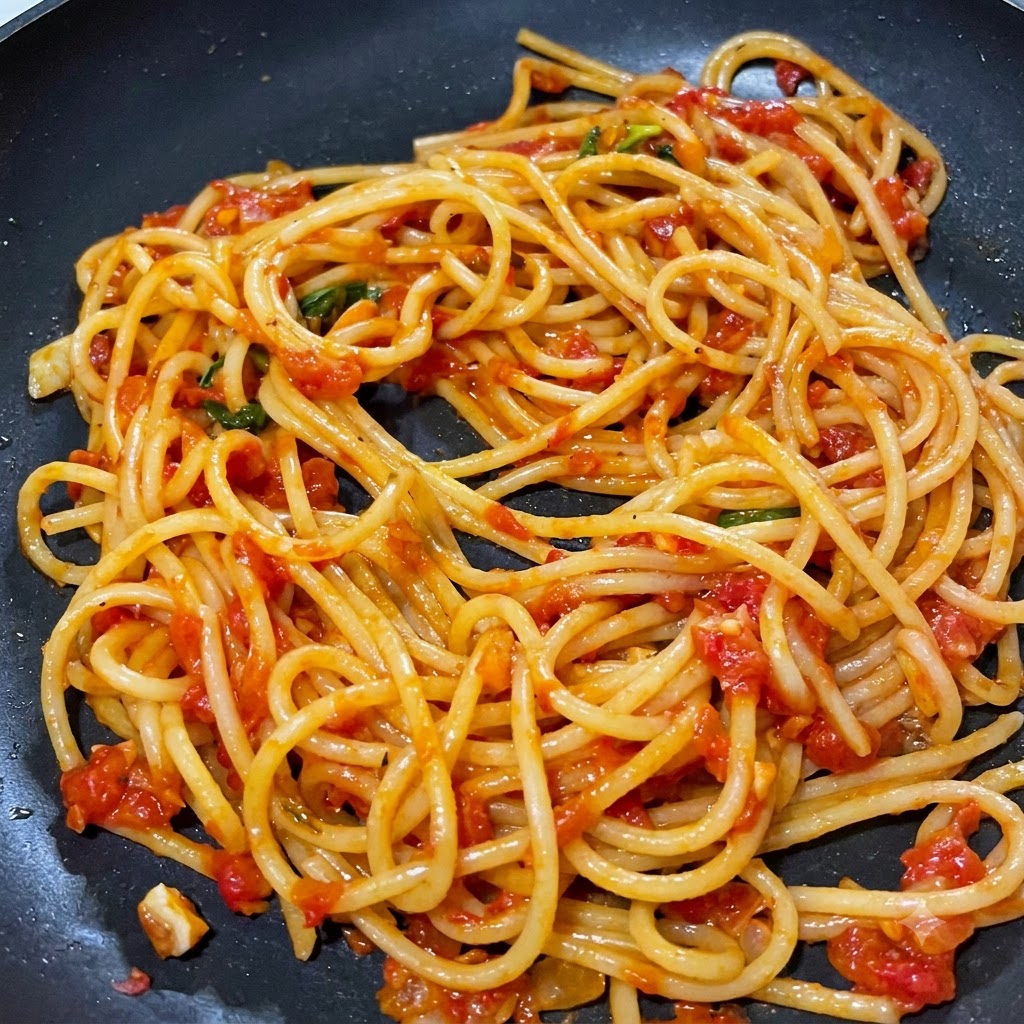
Add cooked spaghetti noodles directly into the thick tomato sauce in the pan. Toss and mix them thoroughly so that every strand of pasta is evenly coated with the rich sauce.
Tip: Coating the pasta directly in the pan allows the starches to bind with the sauce for a restaurant-quality consistency. - 5Toast the pine nuts
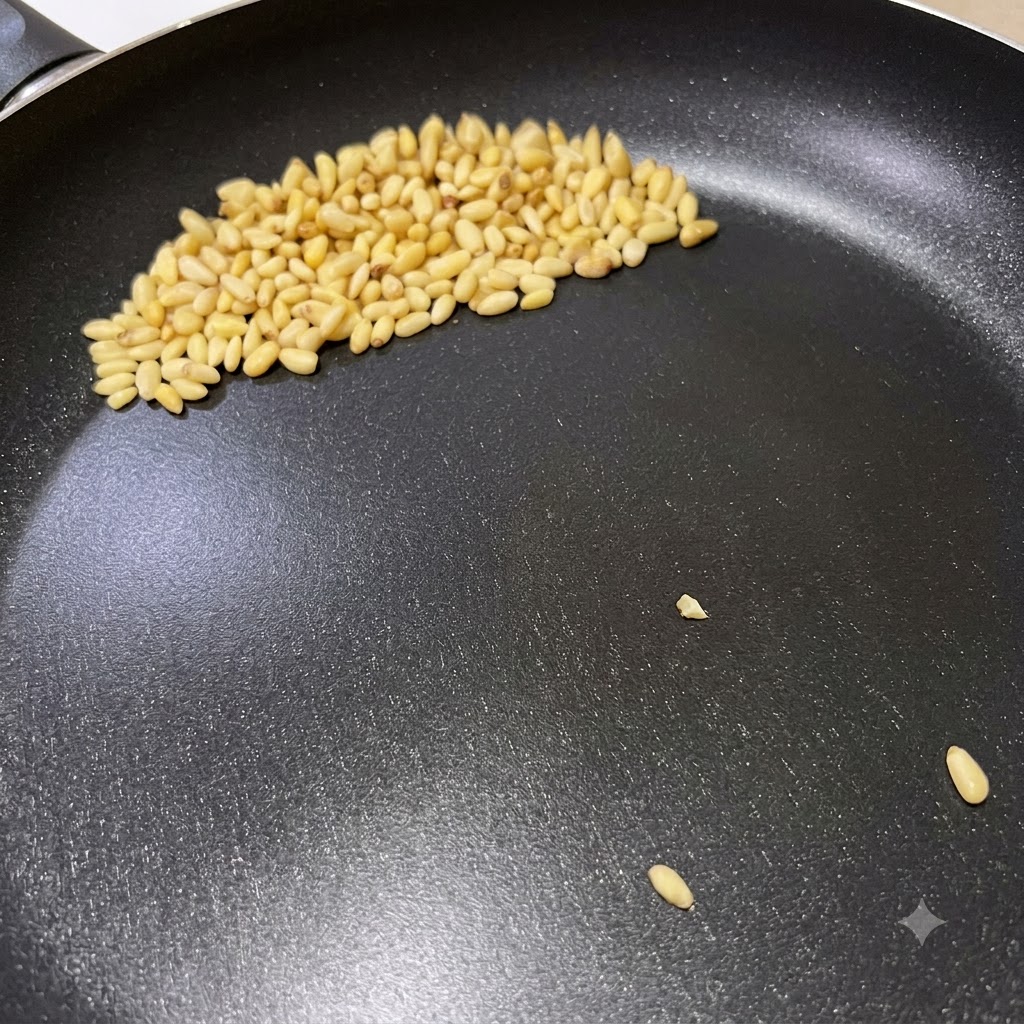
Place pine nuts into a dry frying pan without any oil. Toast them over medium-low heat until golden and fragrant to intensify the nutty flavor of the pesto.
Tip: Stir or toss the pine nuts frequently while toasting, as they burn very quickly due to their high oil content.