Creamy Buldak Steak Pasta
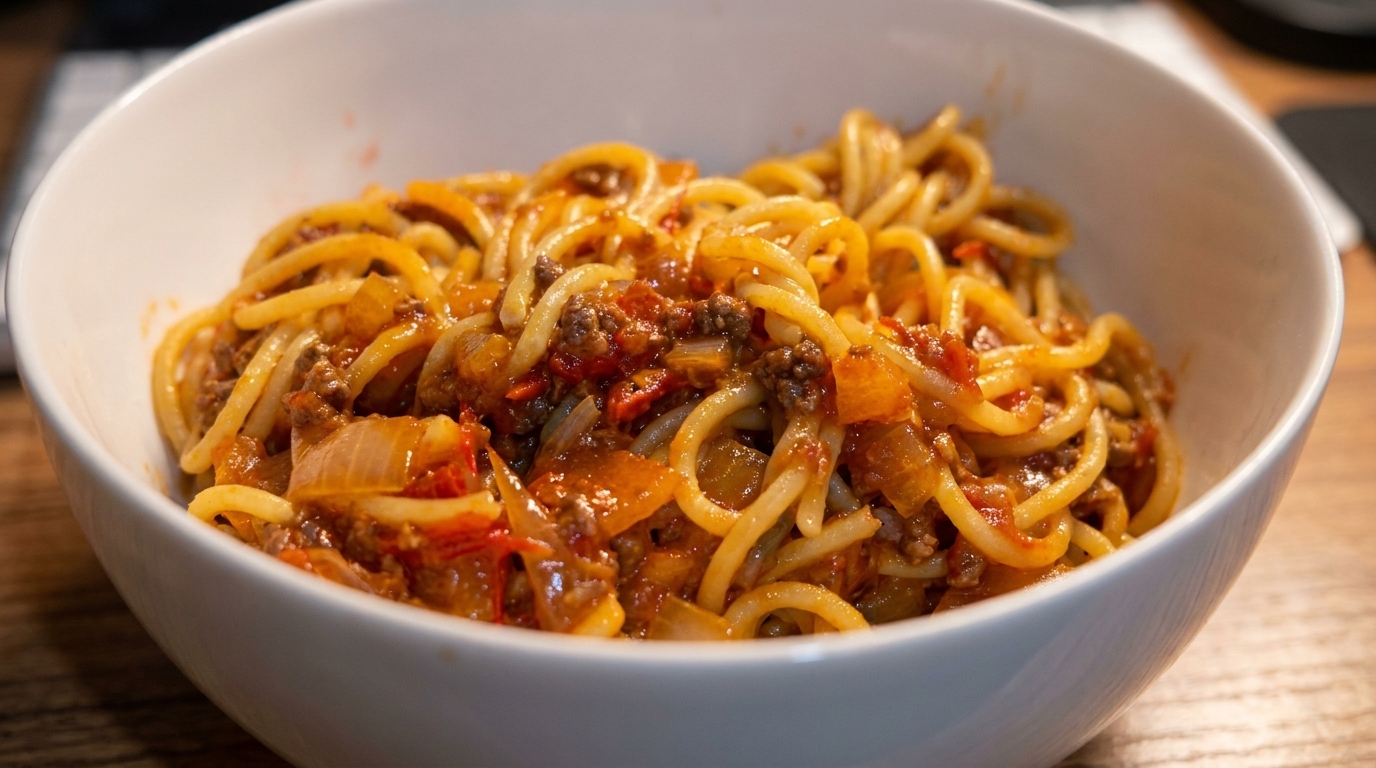
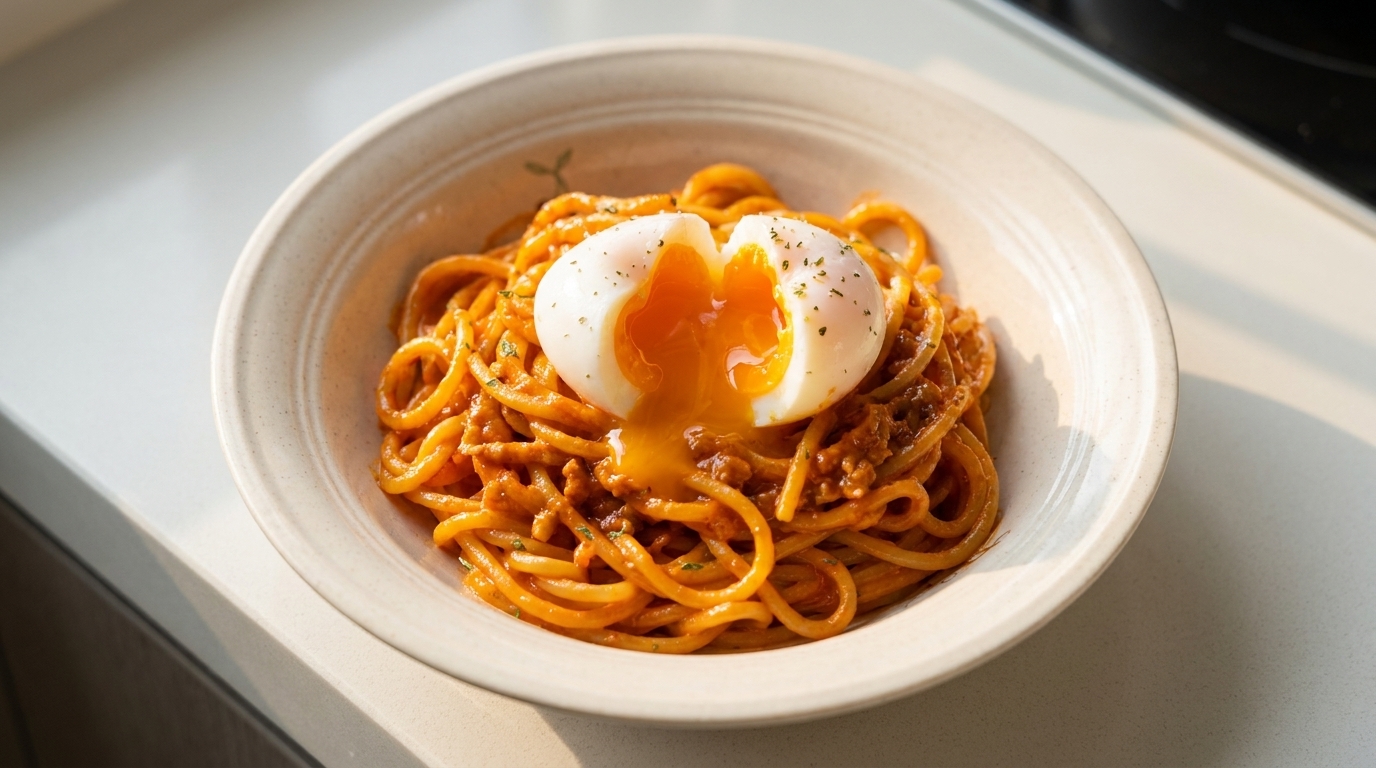
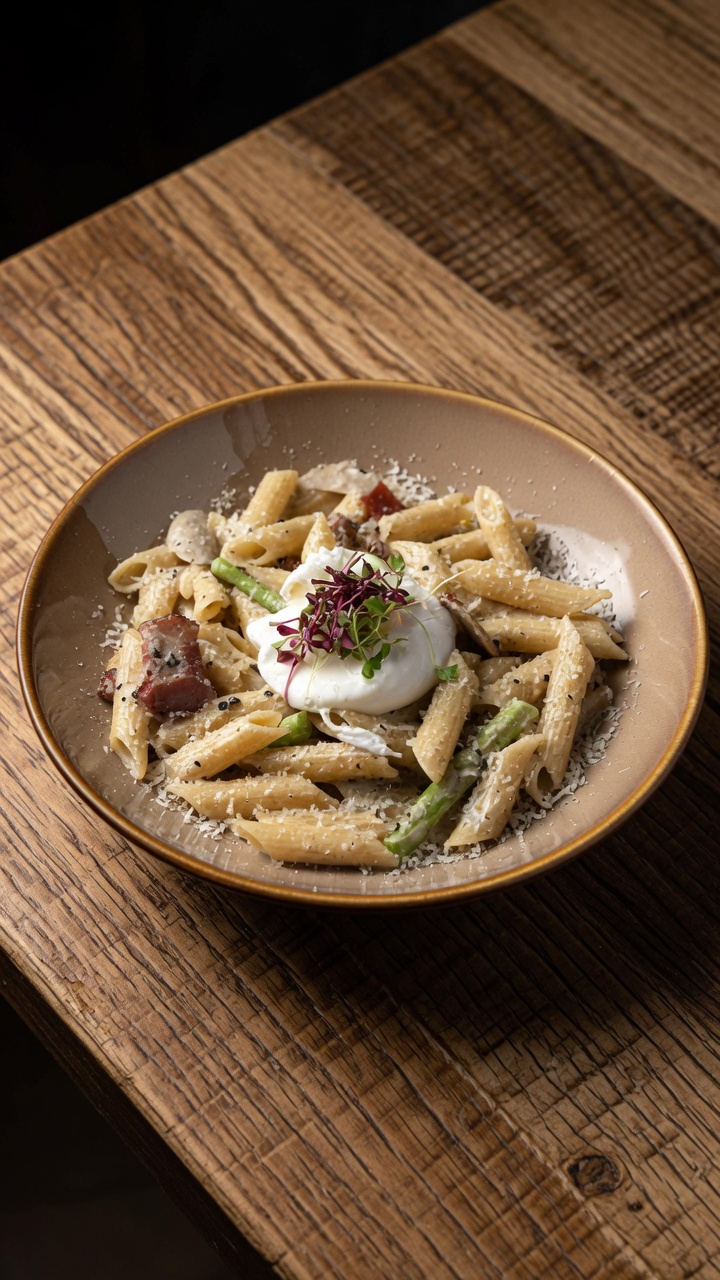
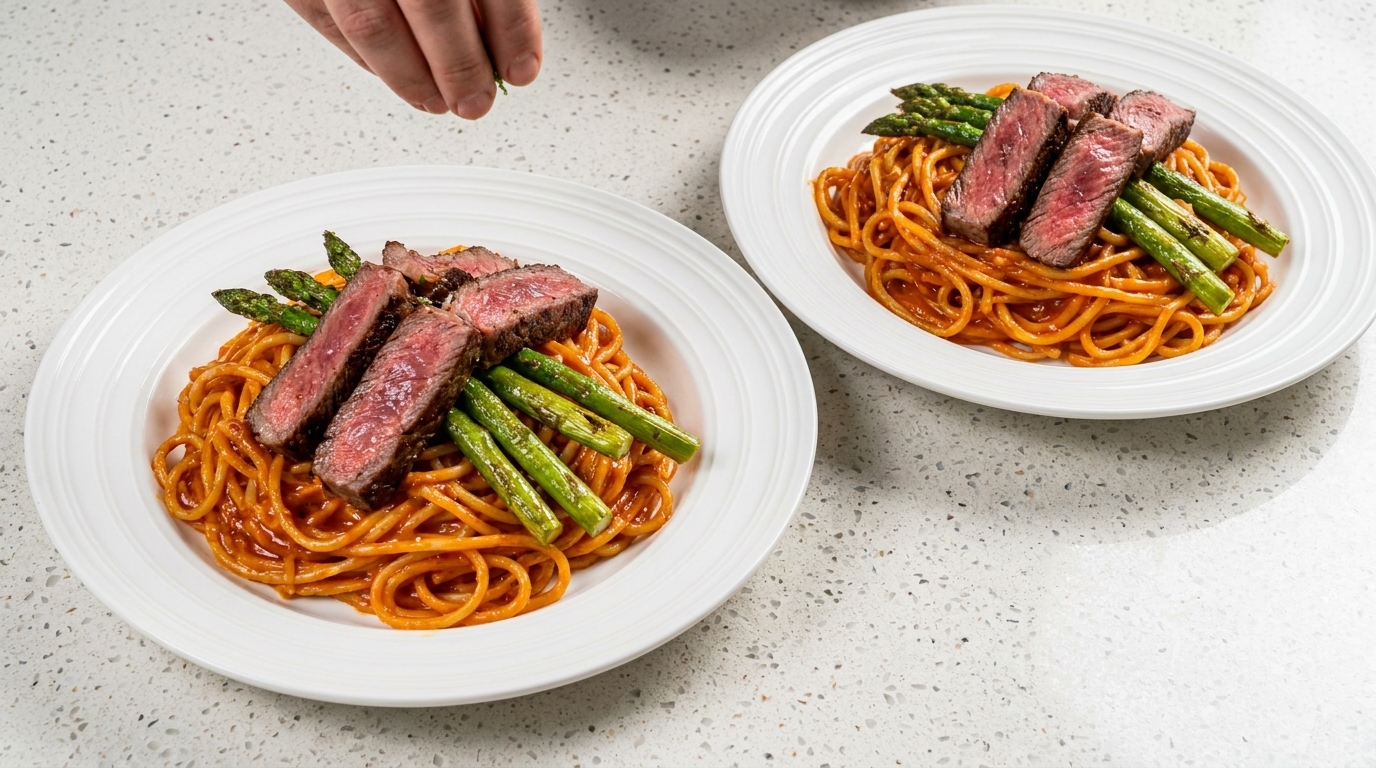
Experience the ultimate fusion of fiery heat and comfort with this creamy buldak steak pasta. Pre-soaked spaghetti is tossed in rendered bacon fat, coated in a cheese-infused cream sauce, and topped with perfectly seared steak.
This dish takes the viral, intense heat of Korean buldak sauce and balances it with a luxurious, velvety cheese and cream base. By rendering bacon fat to coat the noodles and pan-searing tender steak alongside fresh asparagus, it transforms a simple spicy pasta into a gourmet, restaurant-quality meal. Soaking the pasta ahead of time allows it to cook directly in the savory pan juices, absorbing maximum flavor without the need for boiling.
Ingredients
- 4 slices bacon
- 2 small steaks
- 1 bunch green asparagus spears
- 200 g spaghetti (pre-soaked)
- 1/2 cup water
- 1/2 cup thick cheese and cream sauce
- 2-3 tbsp buldak spicy sauce
- to taste black pepper
Instructions
- 1Render the bacon
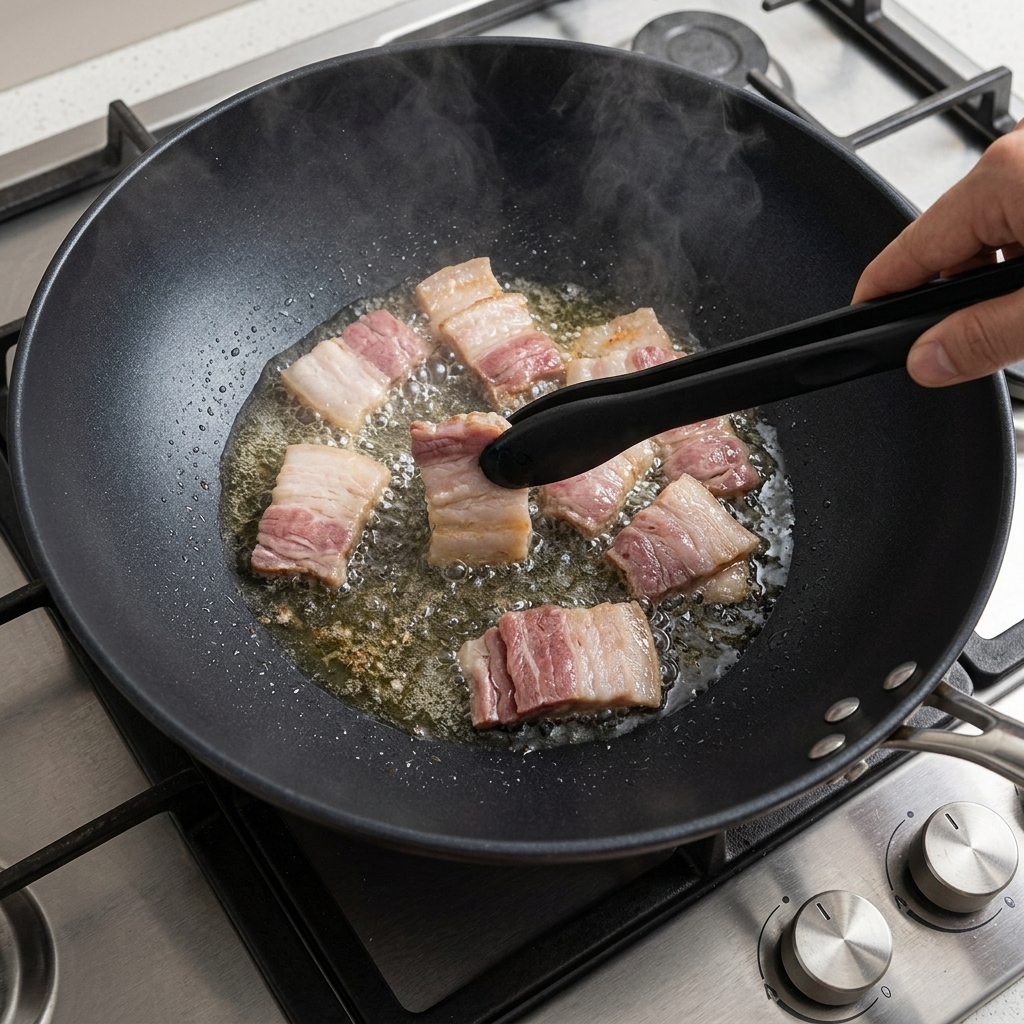
Place the bacon pieces into a wok over heat. Fry them steadily until the fat is rendered out and the bacon begins to brown, creating a flavorful base for the sauce.
Tip: Rendering the fat slowly over medium heat ensures the best flavor extraction. - 2Sear the steaks
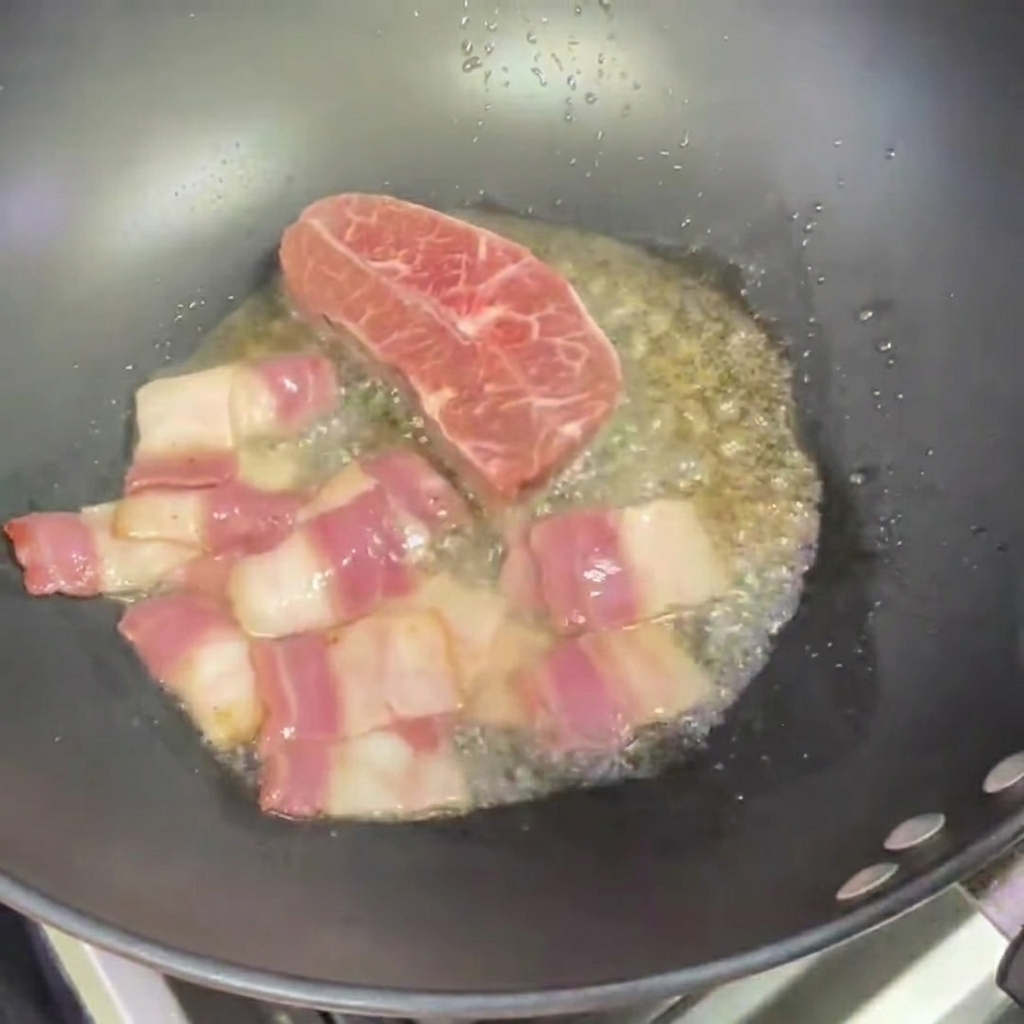
Add the two steaks to the wok with the bacon. Sear each side for one minute to lock in the juices and develop a crust while cooking in the rendered fat.
Tip: Keep the heat high to ensure a quick sear without overcooking the inside. - 3Sauté the asparagus
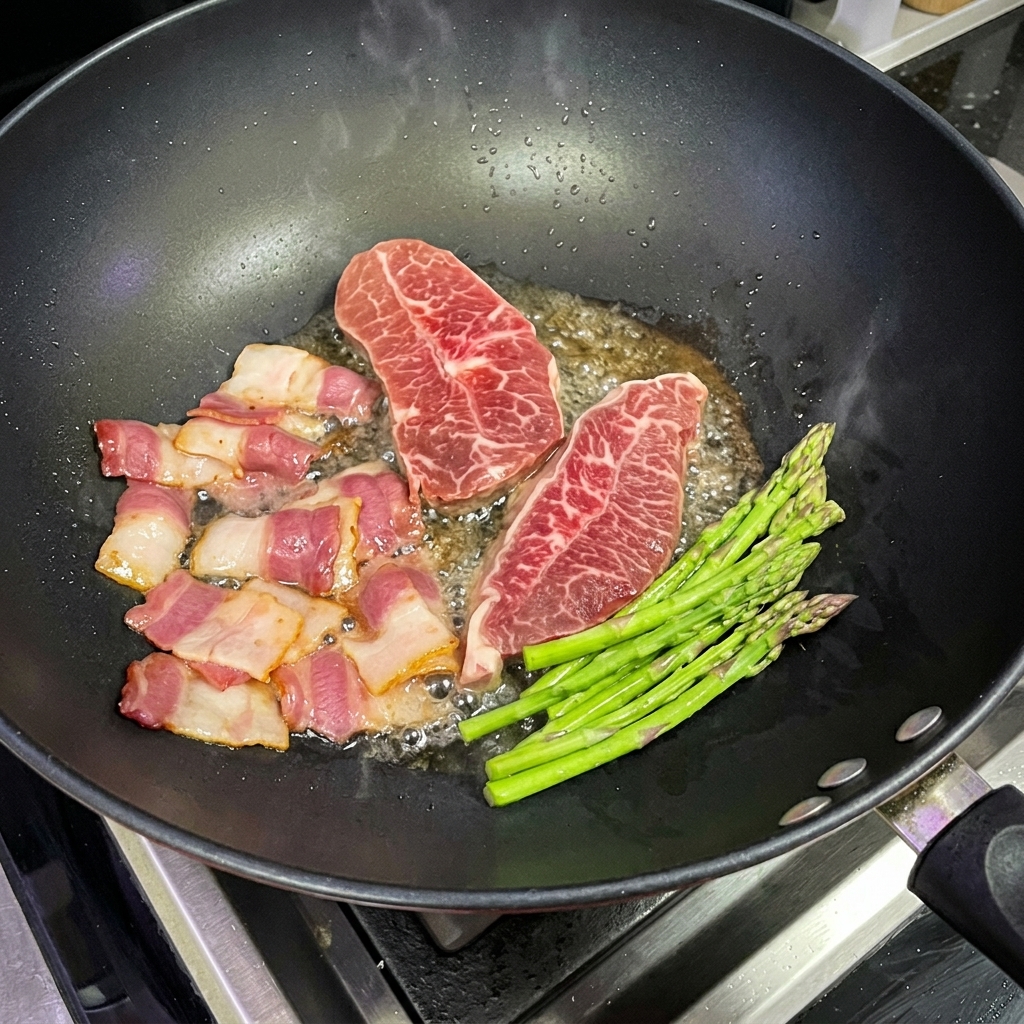
Toss the fresh green asparagus spears into the wok with the steak and bacon. Pan-fry them briefly until they are tender-crisp and coated in the flavorful oils.
Tip: Do not overcook the asparagus; it should retain its bright green color and a slight crunch. - 4Remove the meat and asparagus
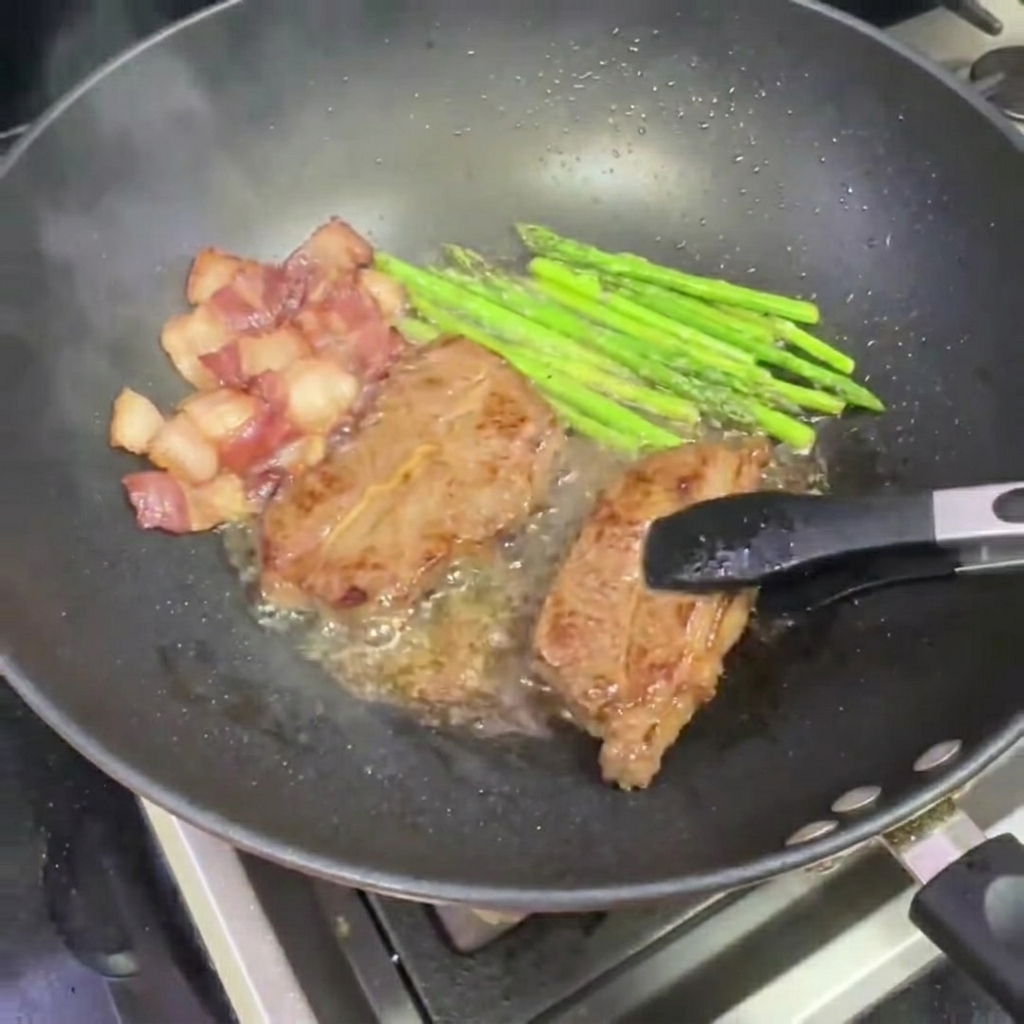
Once the steak and asparagus have finished cooking, use tongs to remove them from the wok. Set the meat and vegetables aside to prepare the pan for the noodles.
Tip: Resting the meat briefly after removal helps keep it juicy. - 5Add the noodles
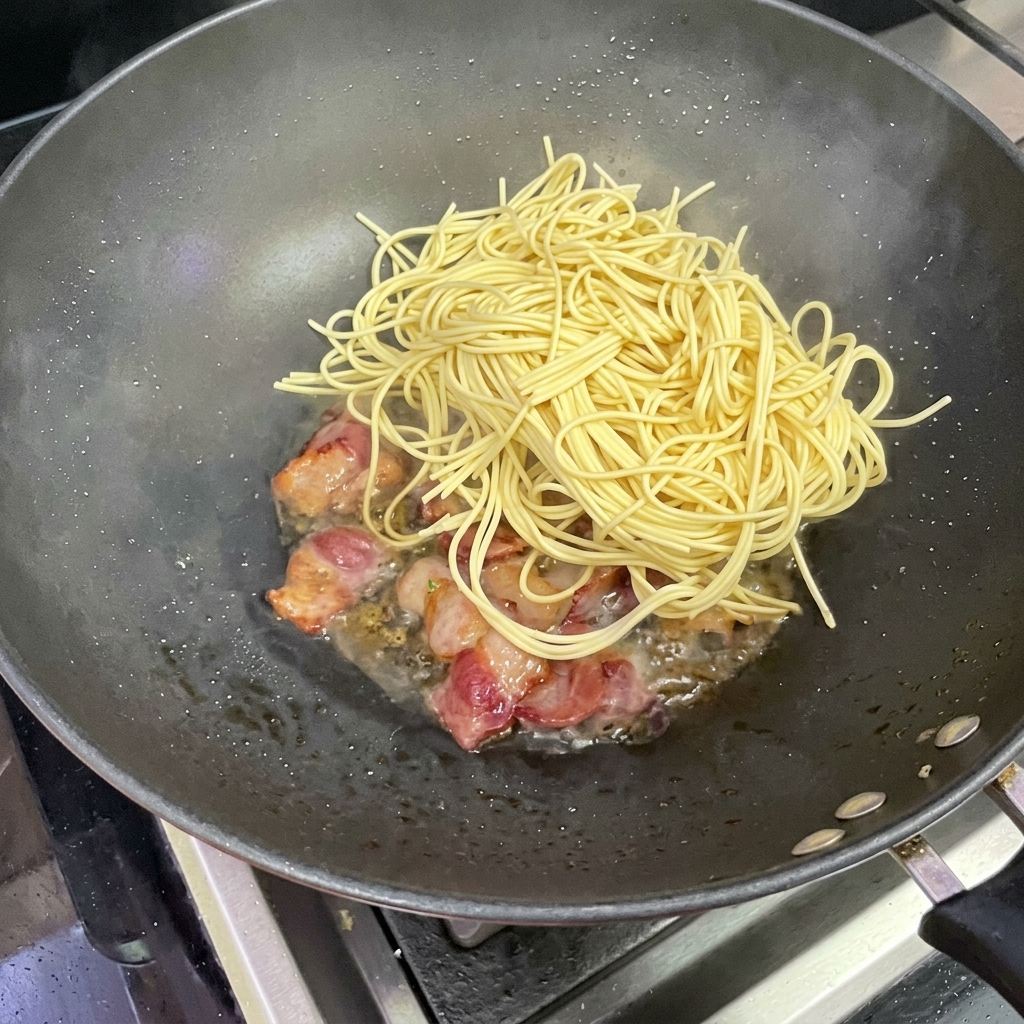
Place the pre-soaked spaghetti directly into the wok with the bacon and remaining fat. Stir quickly to coat the noodles evenly in the fat and combine everything.
Tip: Using pre-soaked noodles allows for a faster cooking process directly in the sauce pan. - 6Incorporate the cheese sauce
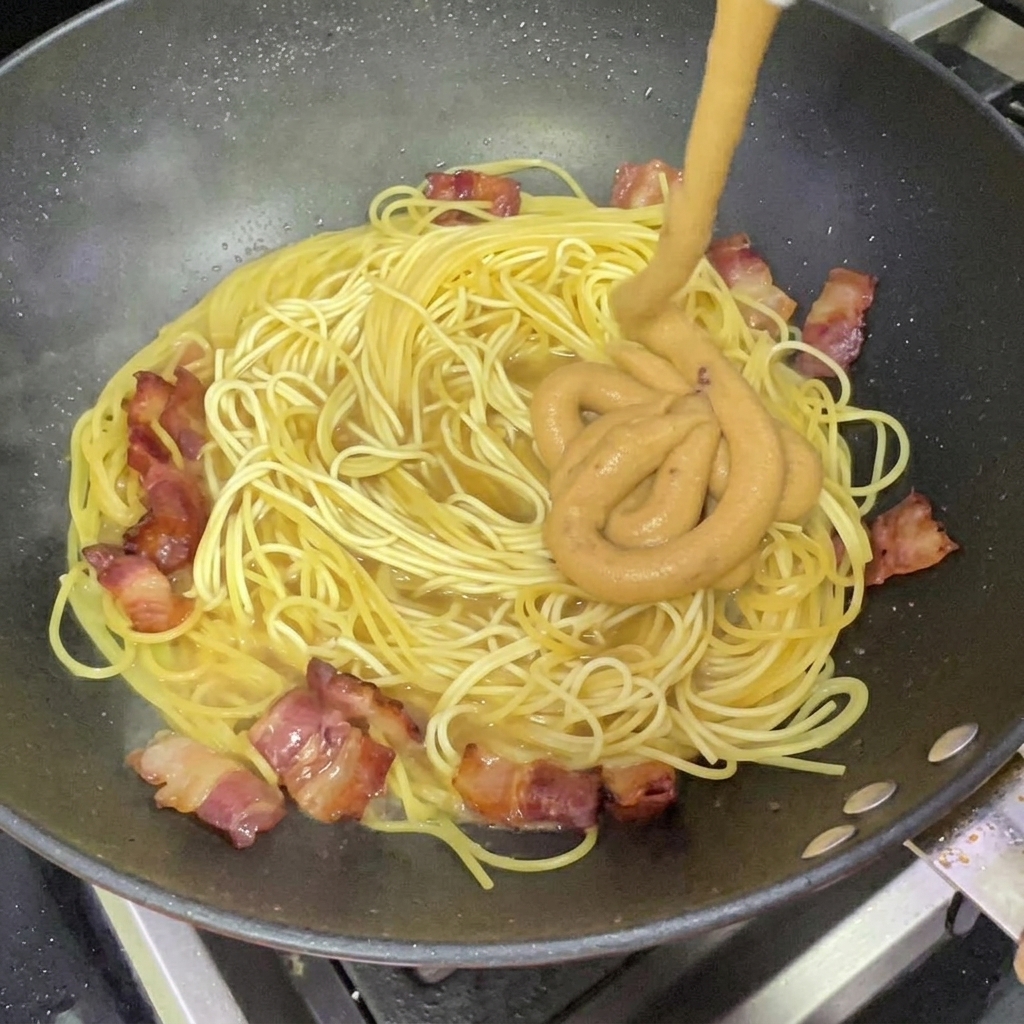
Squeeze the thick cheese and cream sauce directly onto the spaghetti in the wok. Add a splash of water and stir continuously to create a smooth, creamy consistency as it simmers.
Tip: Add water gradually to adjust the thickness of the sauce to your preference. - 7Add the fiery sauce
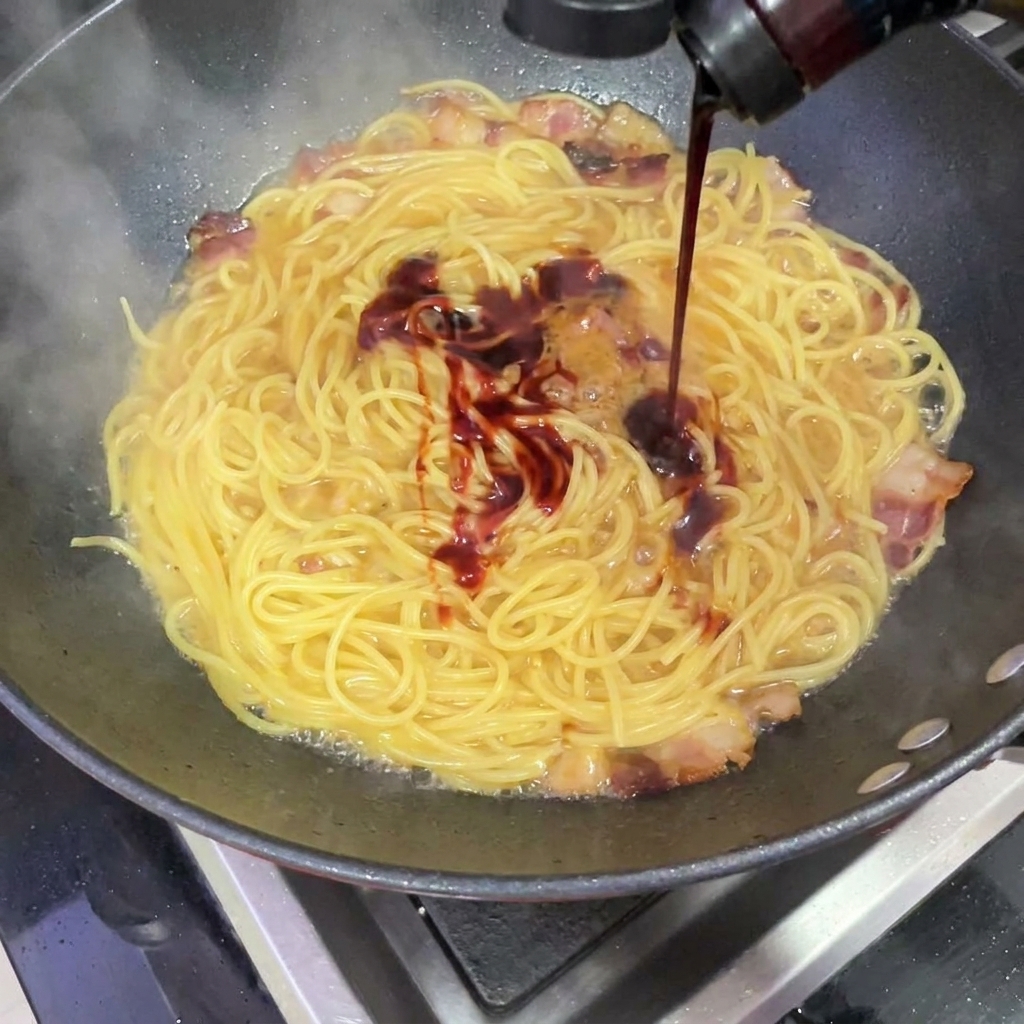
Pour the spicy buldak sauce directly over the simmering spaghetti and bacon mixture. Stir thoroughly to ensure the fiery sauce evenly coats every strand of pasta, incorporating its intense heat into the creamy base.
Tip: The cream and cheese help balance the heat, so adjust the amount of sauce based on your personal spice preference. - 8Mix into a creamy finish
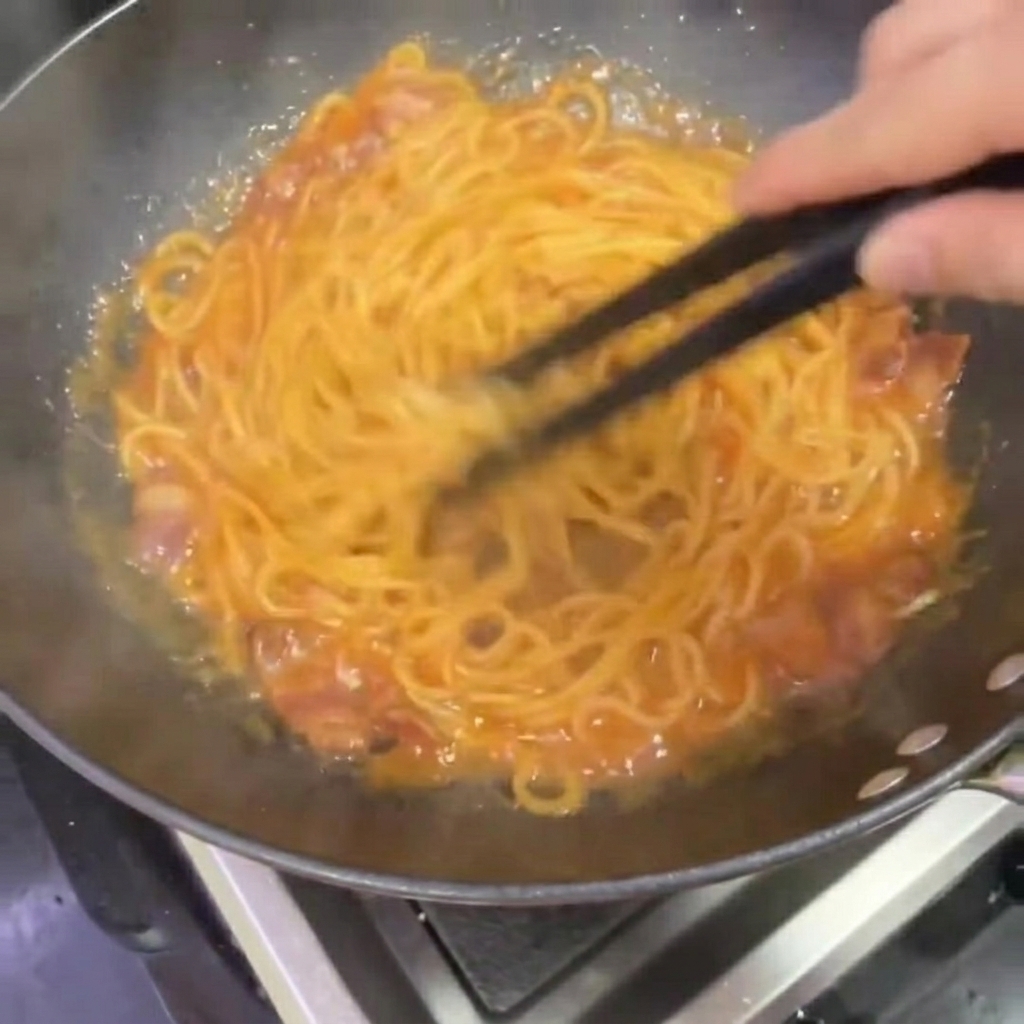
Continue stirring the spaghetti continuously in the pan to ensure the spicy sauce, cheese, and cream are perfectly emulsified. This technique creates a luxurious, glossy coating on the pasta that holds the spicy and savory flavors together.
Tip: If the sauce looks too thick, add a small splash of water to reach the perfect creamy consistency. - 9Plate the pasta
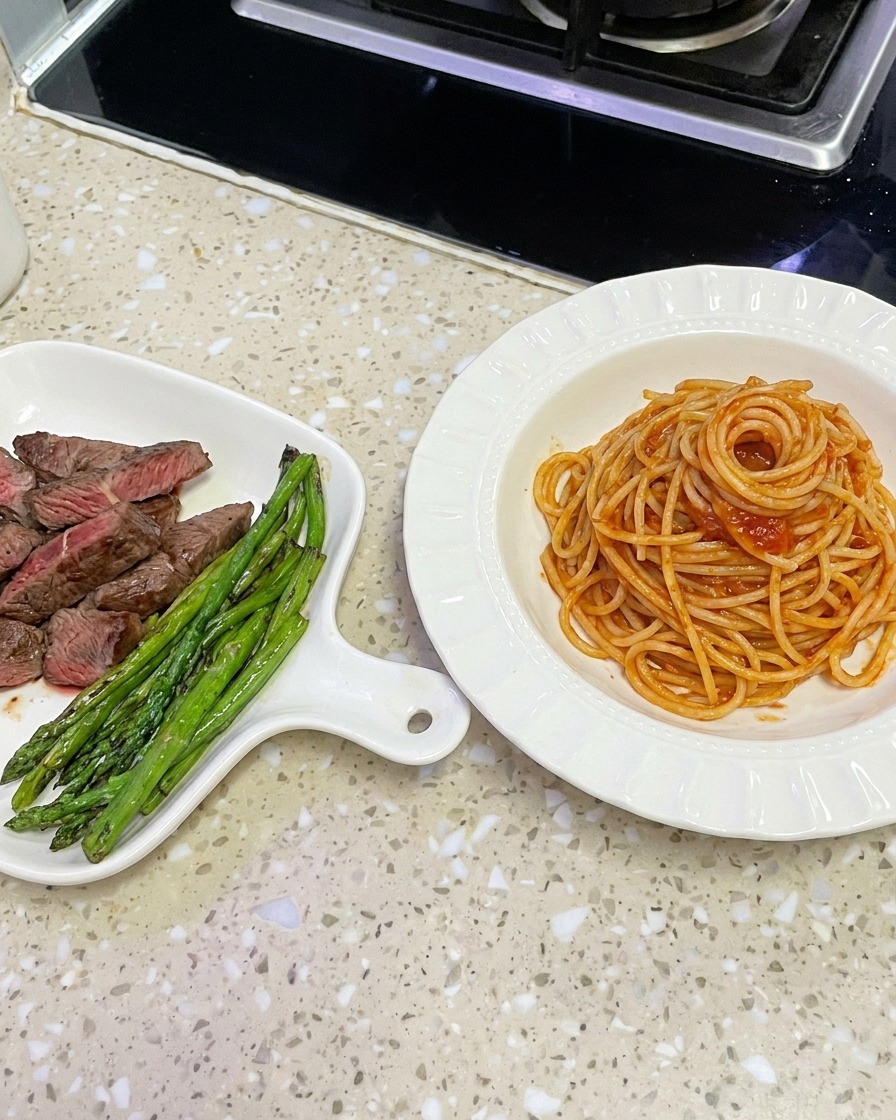
Carefully transfer the perfectly saucy spaghetti from the wok into shallow white serving bowls. Use tongs to twirl the pasta into a neat mound for an appetizing presentation.
Tip: Wipe the rims of the bowls with a clean cloth after plating for a professional restaurant-style look. - 10Top with steak and asparagus
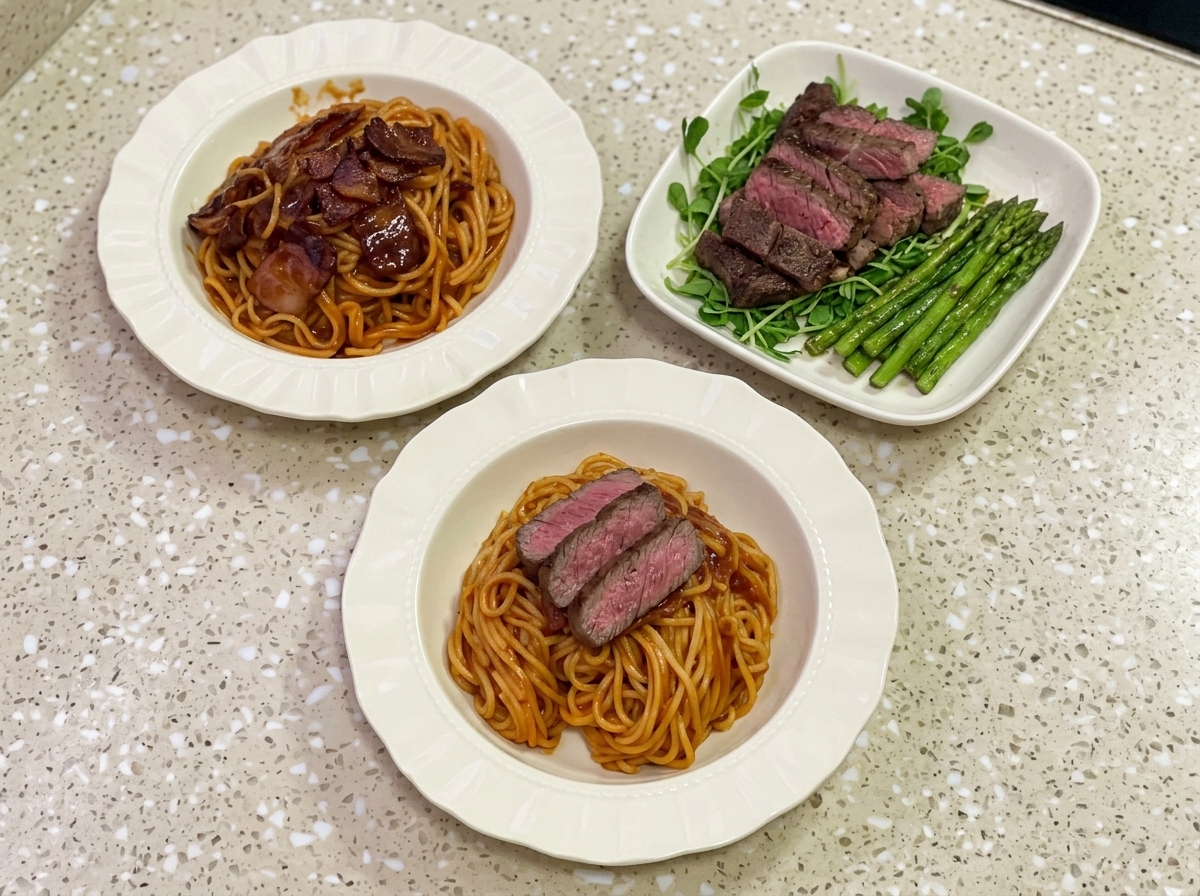
Place the prepared, sliced steak and roasted asparagus spears neatly on top of the plated spaghetti. This adds a hearty, savory protein component and fresh crunch that perfectly complements the fiery pasta.
Tip: Slice the steak against the grain to ensure every bite is tender and easy to eat.