Three-Dice Noodle Stir-Fry (San Ding Laomian)
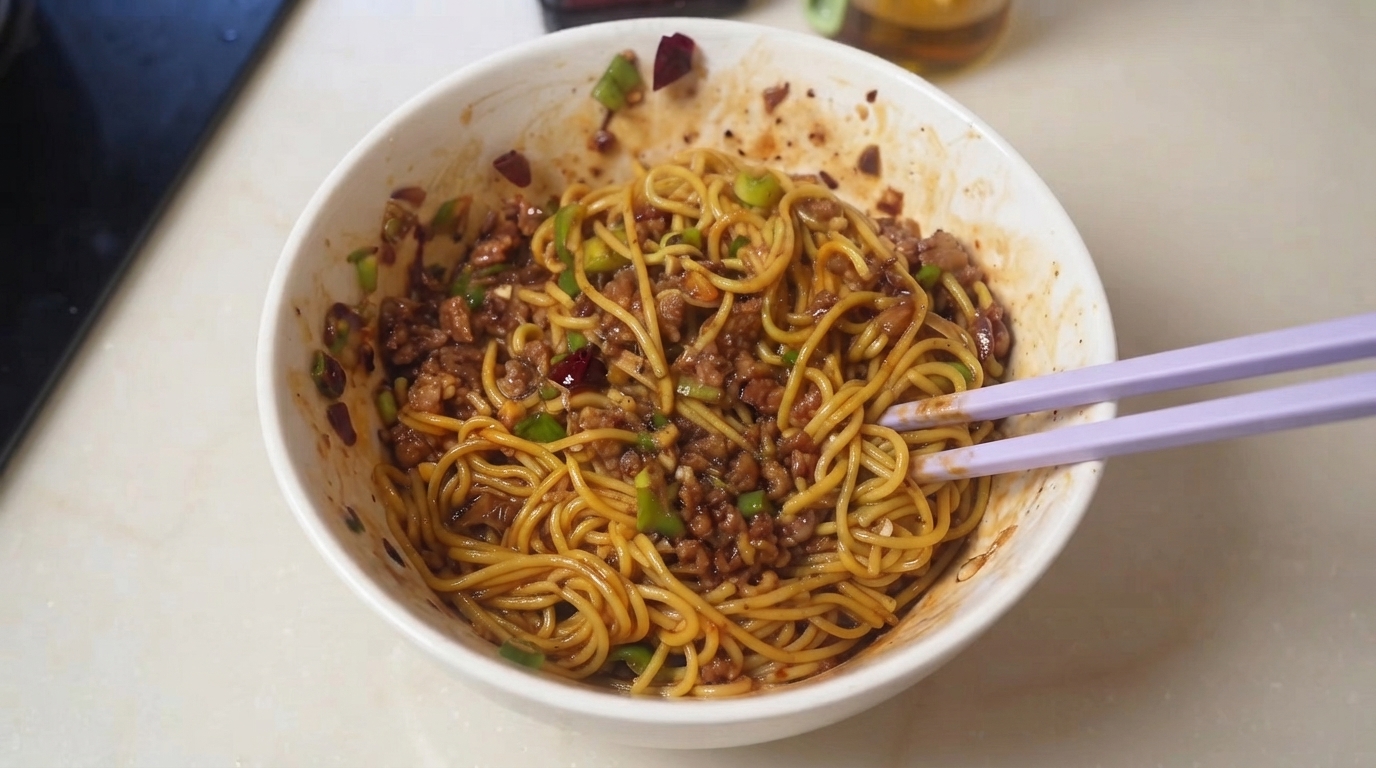
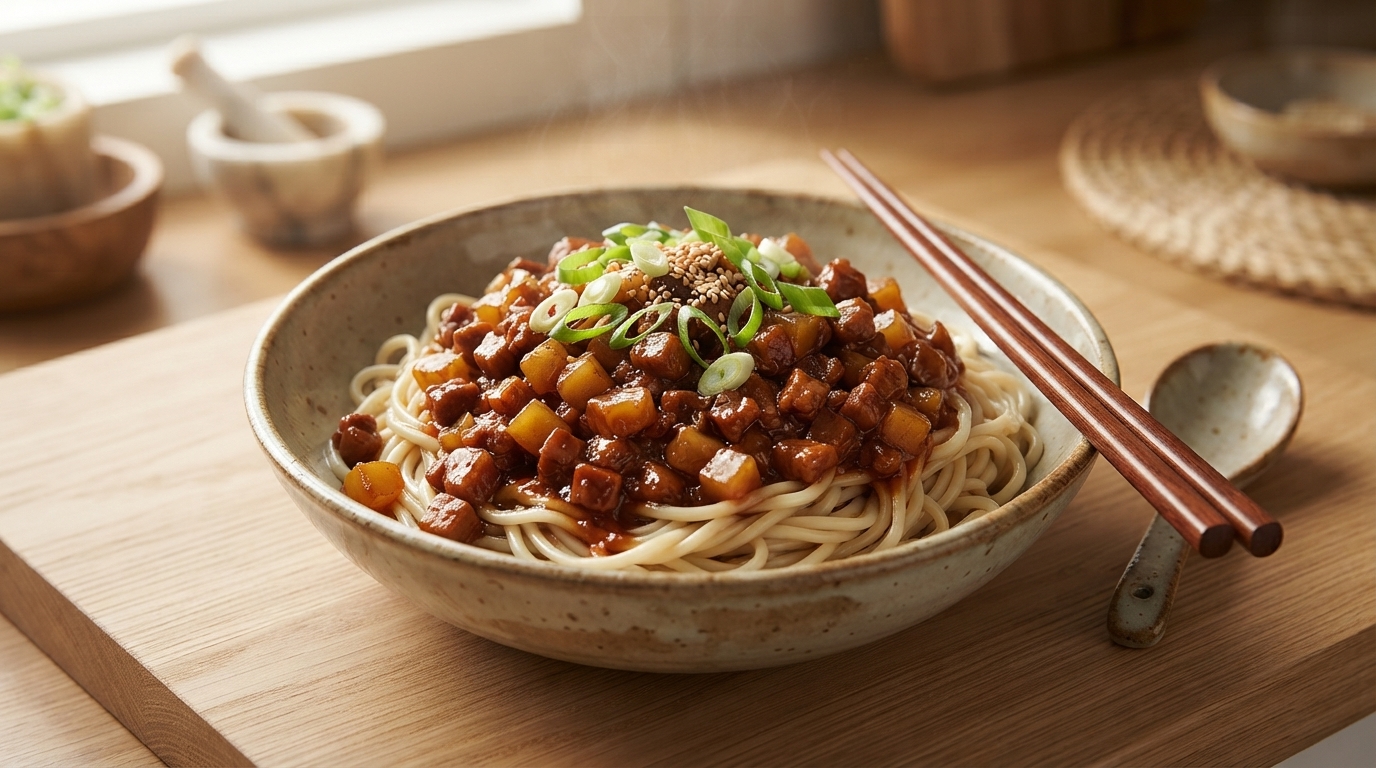
San Ding Laomian is a rich, savory Chinese noodle dish topped with a hearty stir-fry of diced tofu, potatoes, carrots, and minced meat, simmered in a complex three-paste sauce.
This comforting bowl balances incredible textures and deep umami flavors. Combining Pixian doubanjiang, sweet bean sauce, and yellow soybean paste creates a robust, deeply savory gravy that perfectly coats the chewy noodles. The addition of melted cheese offers a modern, delightful fusion twist to a deeply traditional flavor profile.
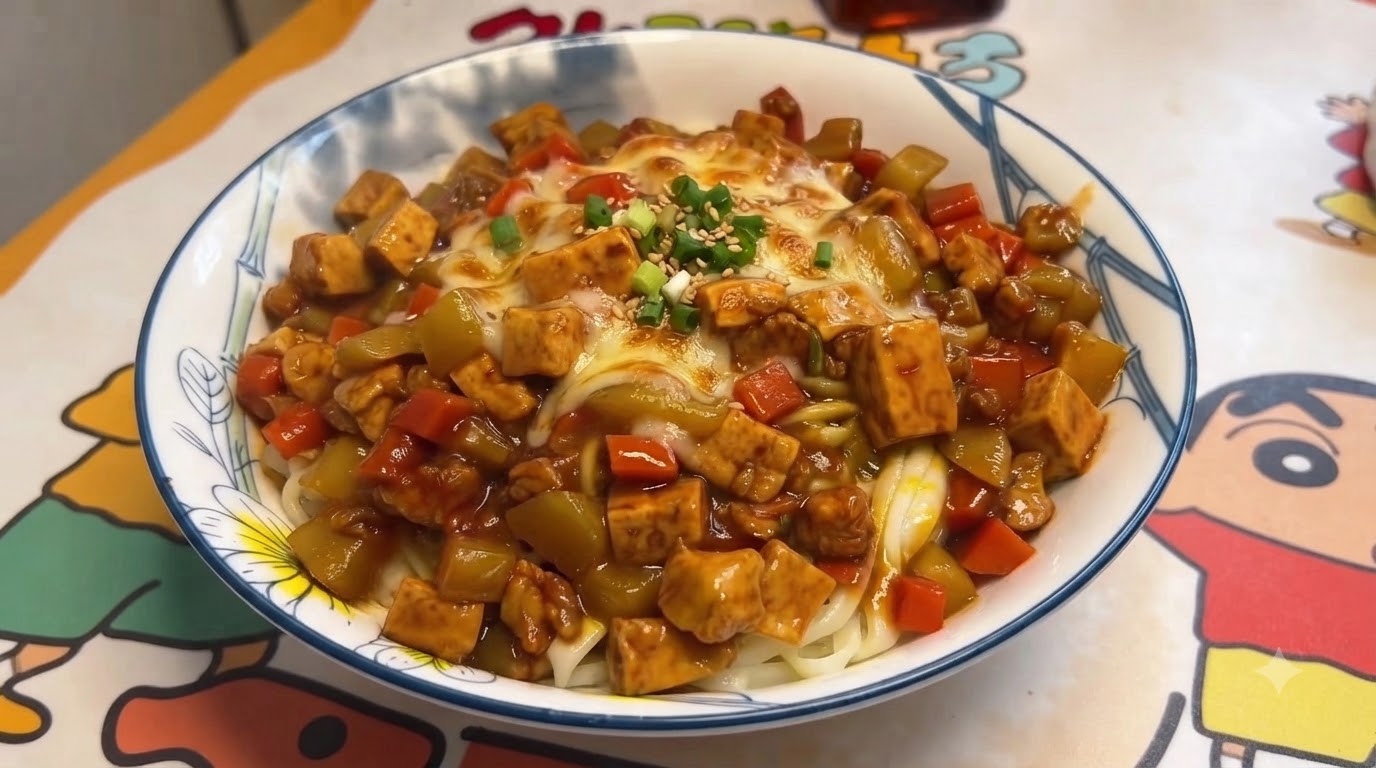
Ingredients
- 200 g fresh wheat noodles
- 150 g firm tofu, cubed
- 150 g minced meat (pork or beef)
- 1 medium potato, diced
- 1 medium carrot, diced
- 1 tbsp Pixian doubanjiang
- 1 tbsp sweet bean sauce (tianmianjiang)
- 1 tbsp yellow soybean paste
- 1 tbsp dark soy sauce
- 1 tbsp oyster sauce
- 2 cloves garlic, minced
- 1 stalk green onion, chopped
- 1/2 tsp thirteen-spice seasoning
- 2 tbsp water starch
- 2 tbsp cooking oil
- to taste salt, MSG, and chicken powder
- optional shredded mozzarella cheese
Instructions
- 1Pan-fry the tofu cubes
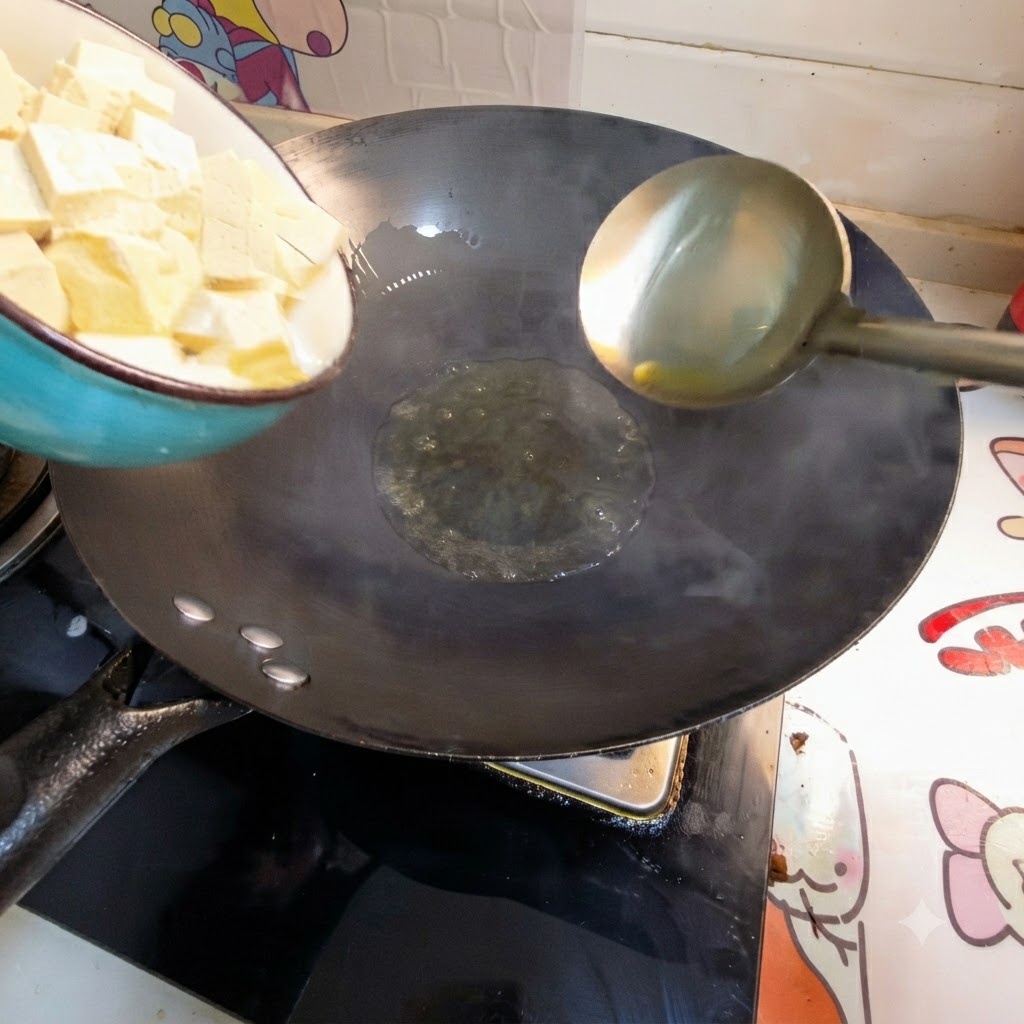
Heat oil in a wok over medium-high heat, then pour in the cubed tofu. Pan-fry them until all sides turn a golden yellow color, then remove and set aside.
Tip: Make sure the oil is hot before adding the tofu to prevent sticking and achieve an even golden crust. - 2Stir-fry the minced meat and aromatics
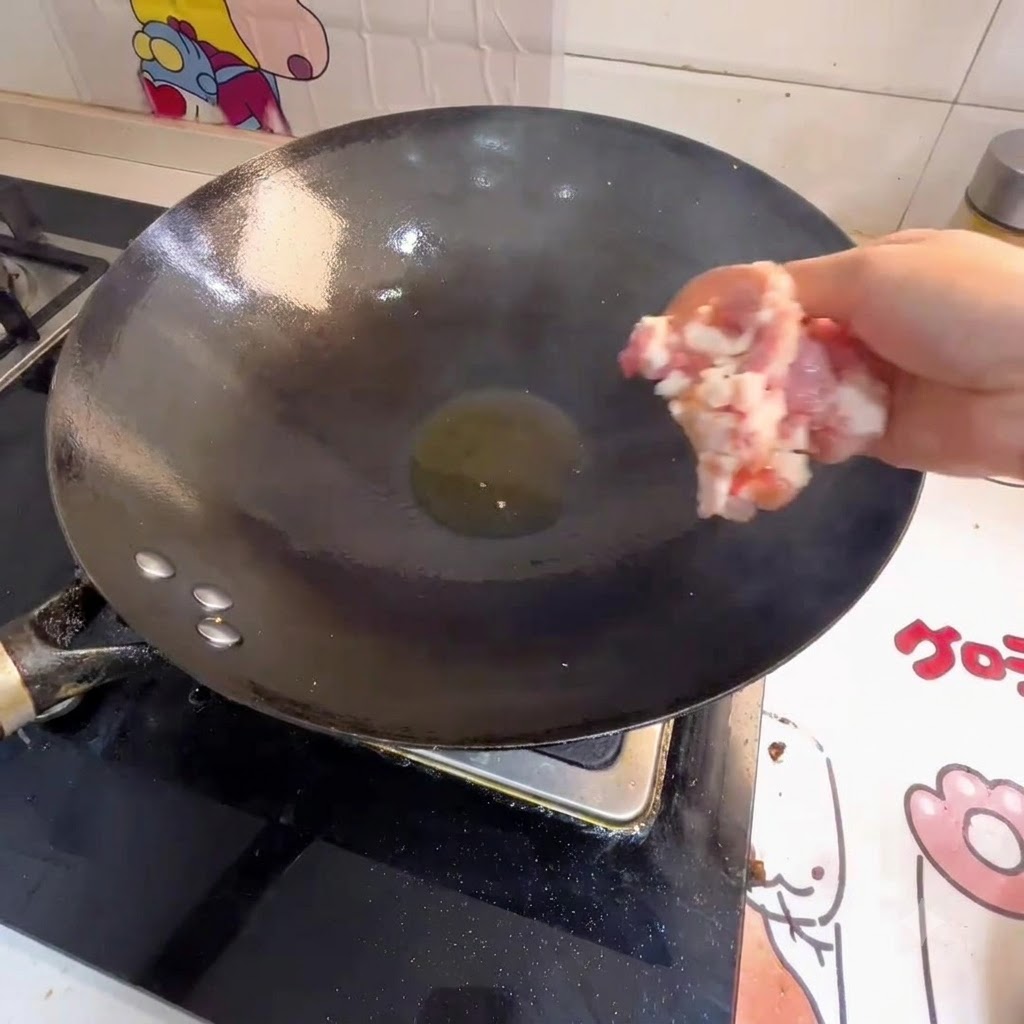
Add the minced meat into the remaining hot oil in the wok, stir-frying until fragrant. Toss in the chopped green onions and minced garlic to release their aromas.
Tip: Stir continuously to brown the minced meat evenly without burning the garlic and onions. - 3Season with dark soy sauce
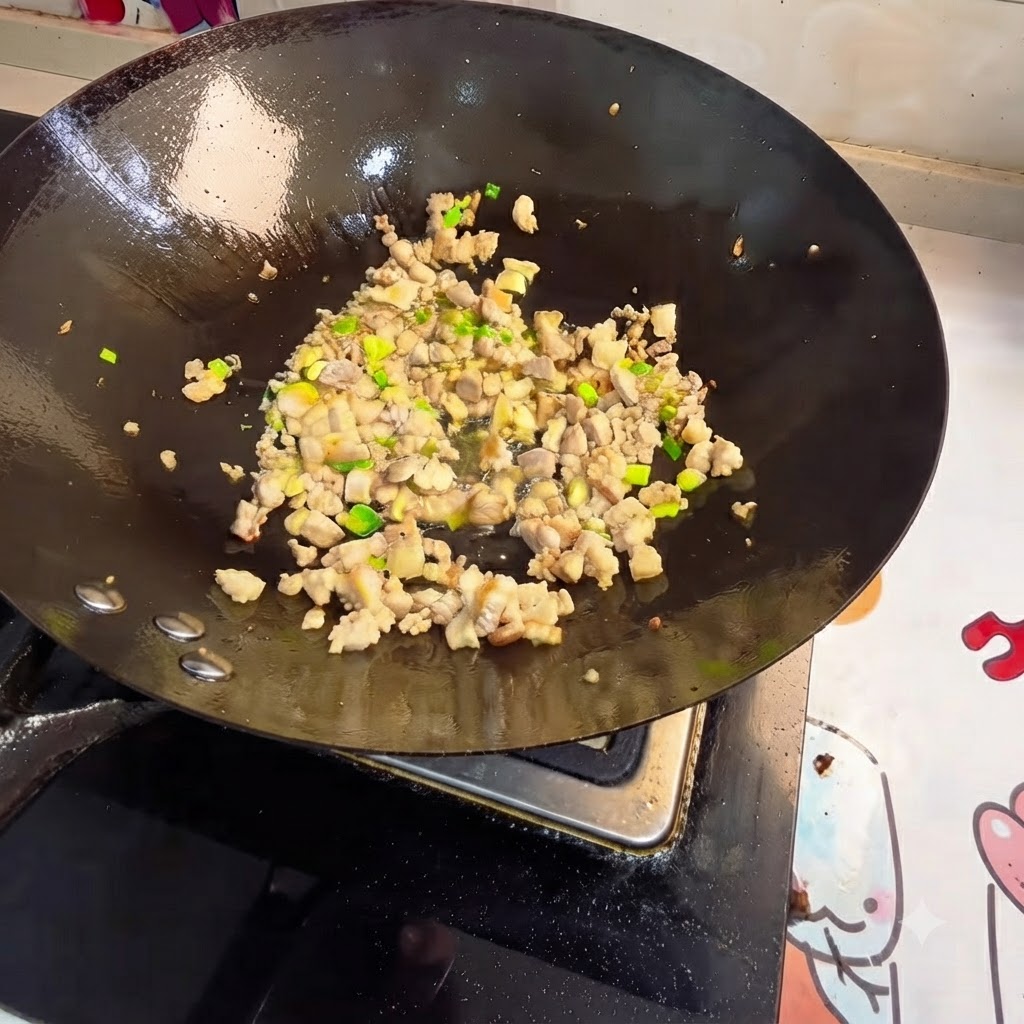
Pour dark soy sauce over the stir-fried minced meat and aromatics in the wok, stirring well to coat the meat and release a savory aroma.
Tip: Add the dark soy sauce directly into the hot oil/meat mixture to enhance the caramelization and color. - 4Add savory bean pastes
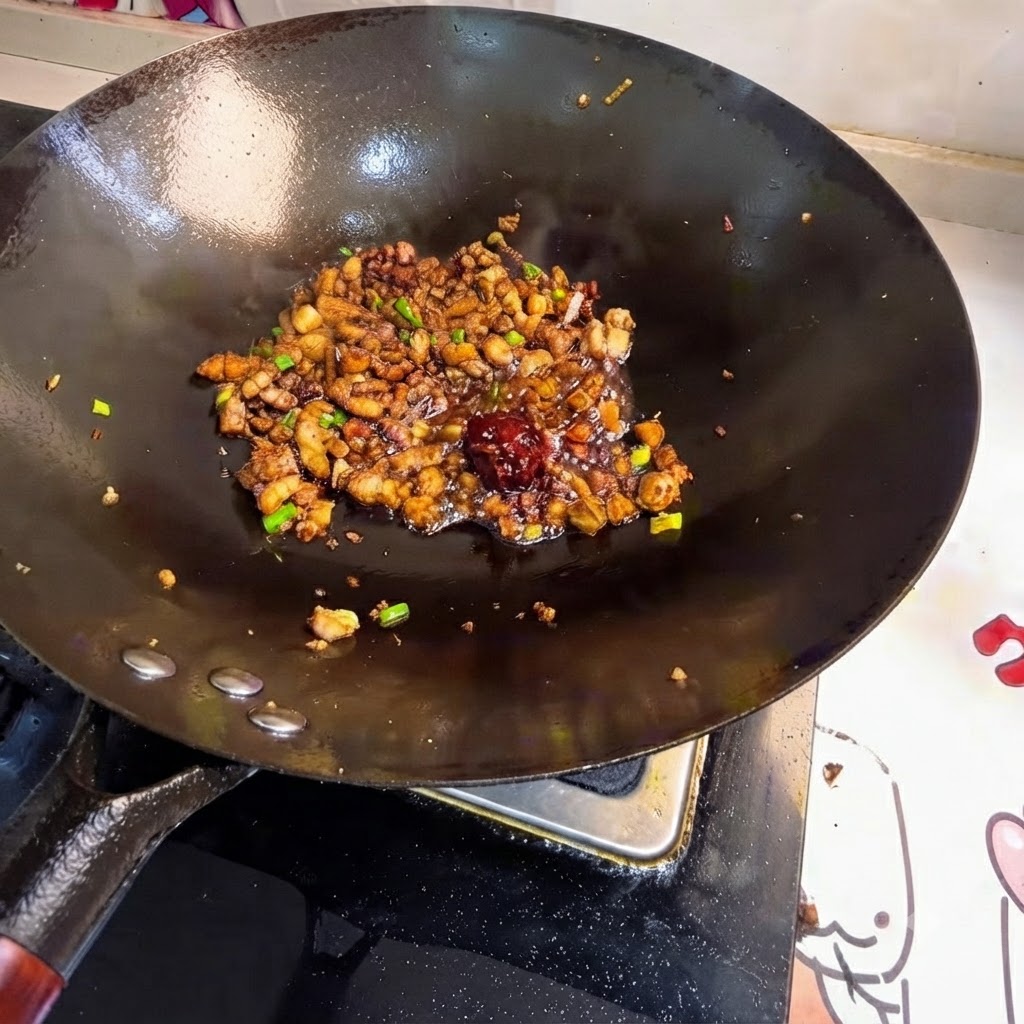
Add Pixian doubanjiang, sweet bean sauce, and yellow soybean paste into the wok with the meat. Stir-fry thoroughly until well combined and fragrant.
Tip: Fry the doubanjiang well to release its signature red oil and rich flavor before mixing in the other pastes. - 5Add vegetables and tofu
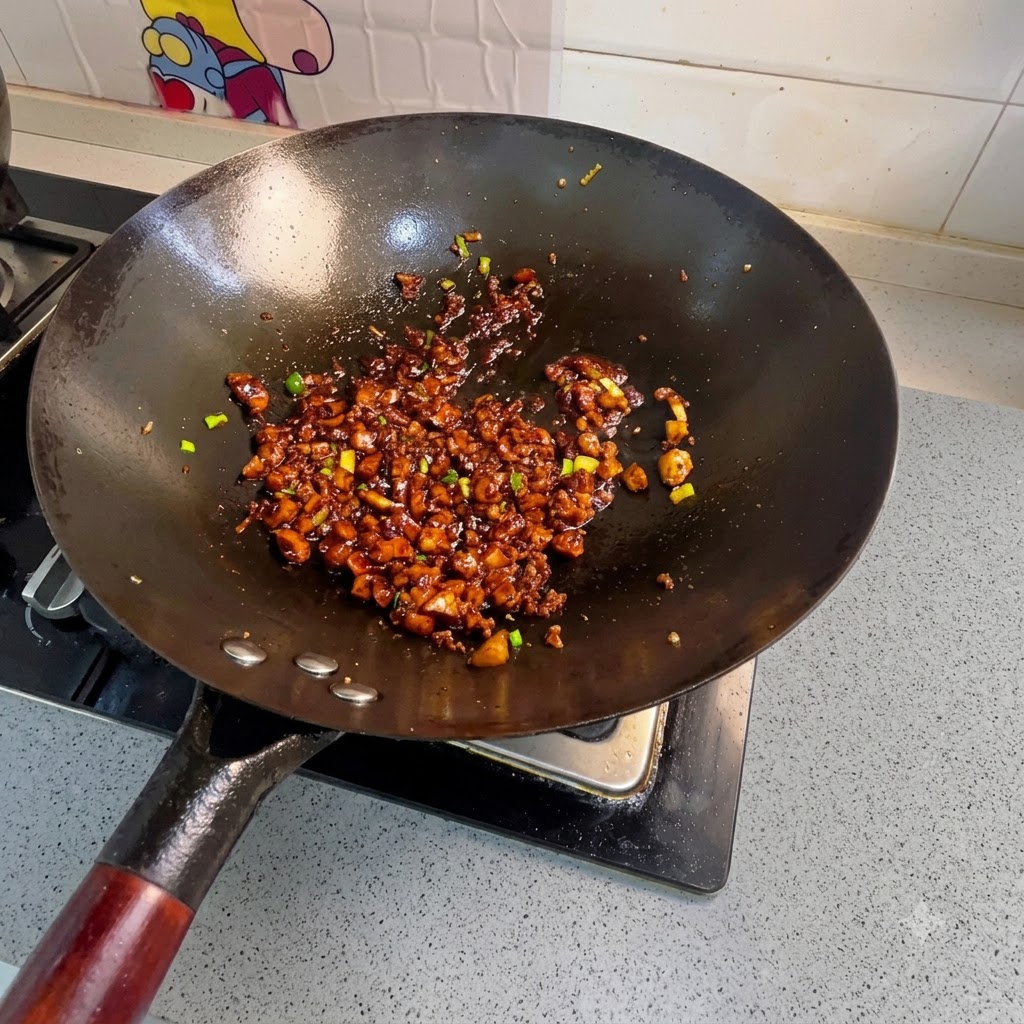
Pour the diced carrots, diced potatoes, and previously fried tofu cubes into the wok with the seasoned minced meat, tossing everything together thoroughly.
Tip: Ensure the vegetables are cut into uniform small dice so they cook evenly during the simmering phase. - 6Add water and simmer
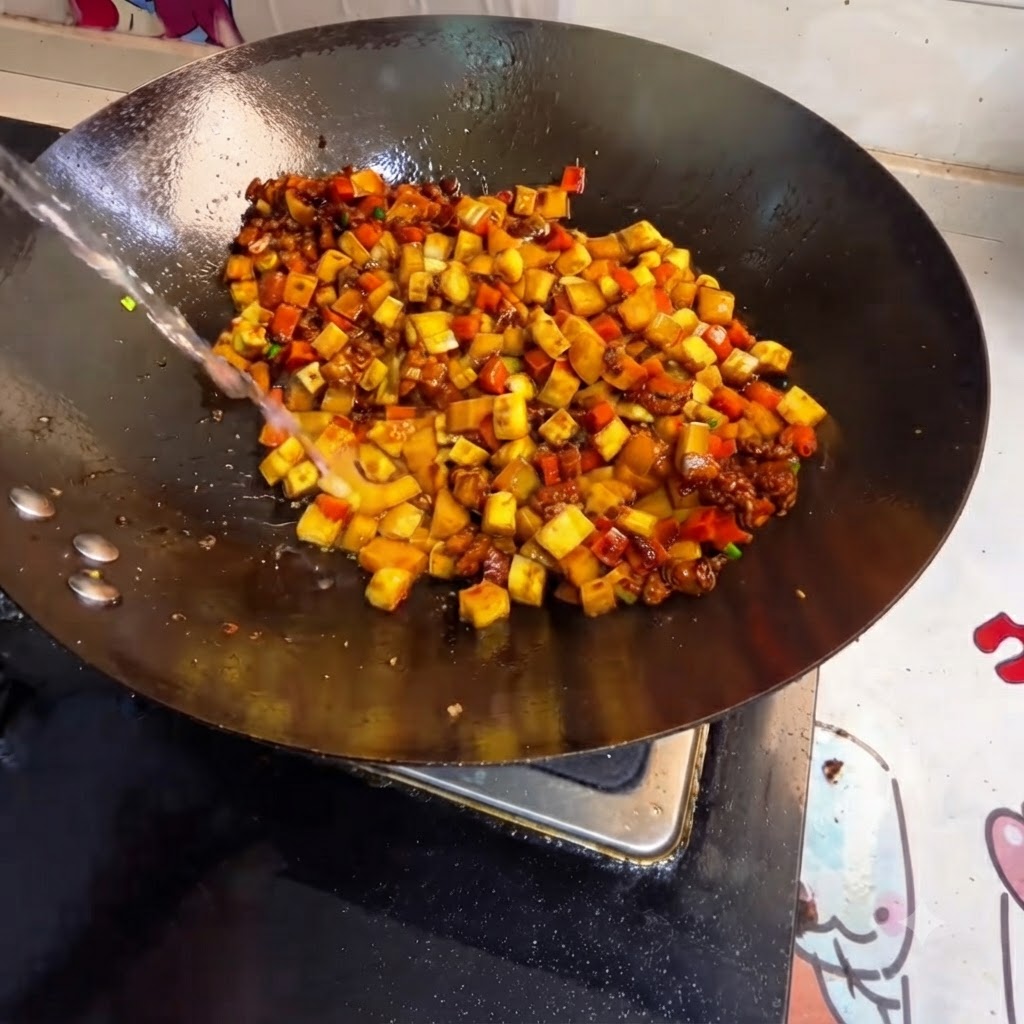
Pour boiling water into the wok over the cooked mixture of meat, vegetables, and tofu, creating the liquid base for the sauce.
Tip: Always use boiling water instead of cold water when simmering stews or sauces to keep ingredient textures tender. - 7Season the mixture
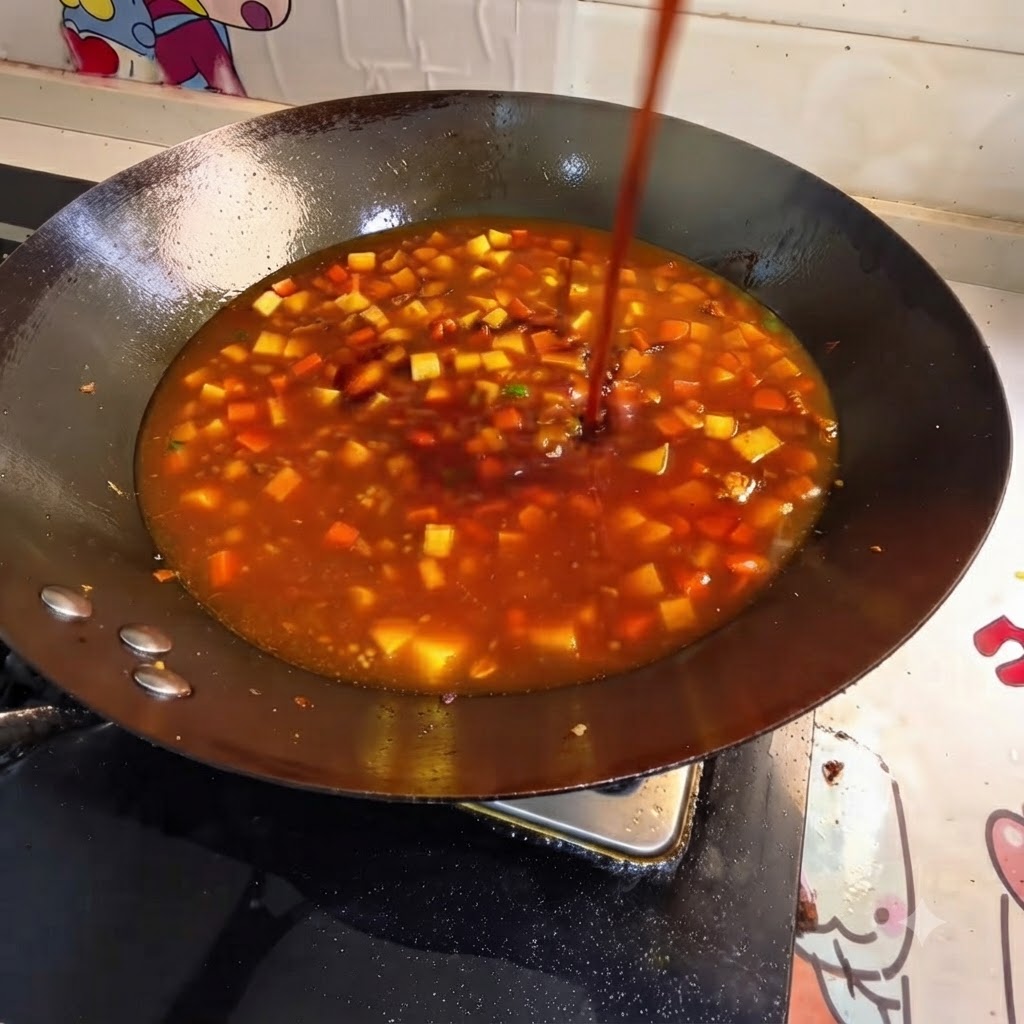
Stir in the oyster sauce, salt, monosodium glutamate, chicken powder, and thirteen-spice seasoning to build the rich, savory flavor profile of the dish.
Tip: Taste before adding too much salt, as the bean pastes and dark soy sauce already provide significant sodium and umami. - 8Simmer the ingredients
Cover the wok securely with a lid and let the mixture simmer for 10 minutes, allowing the potatoes and carrots to soften and absorb all the savory flavors.
Tip: Keep the heat at a medium-low level while covered to prevent scorching at the bottom of the wok. - 9Thicken the sauce
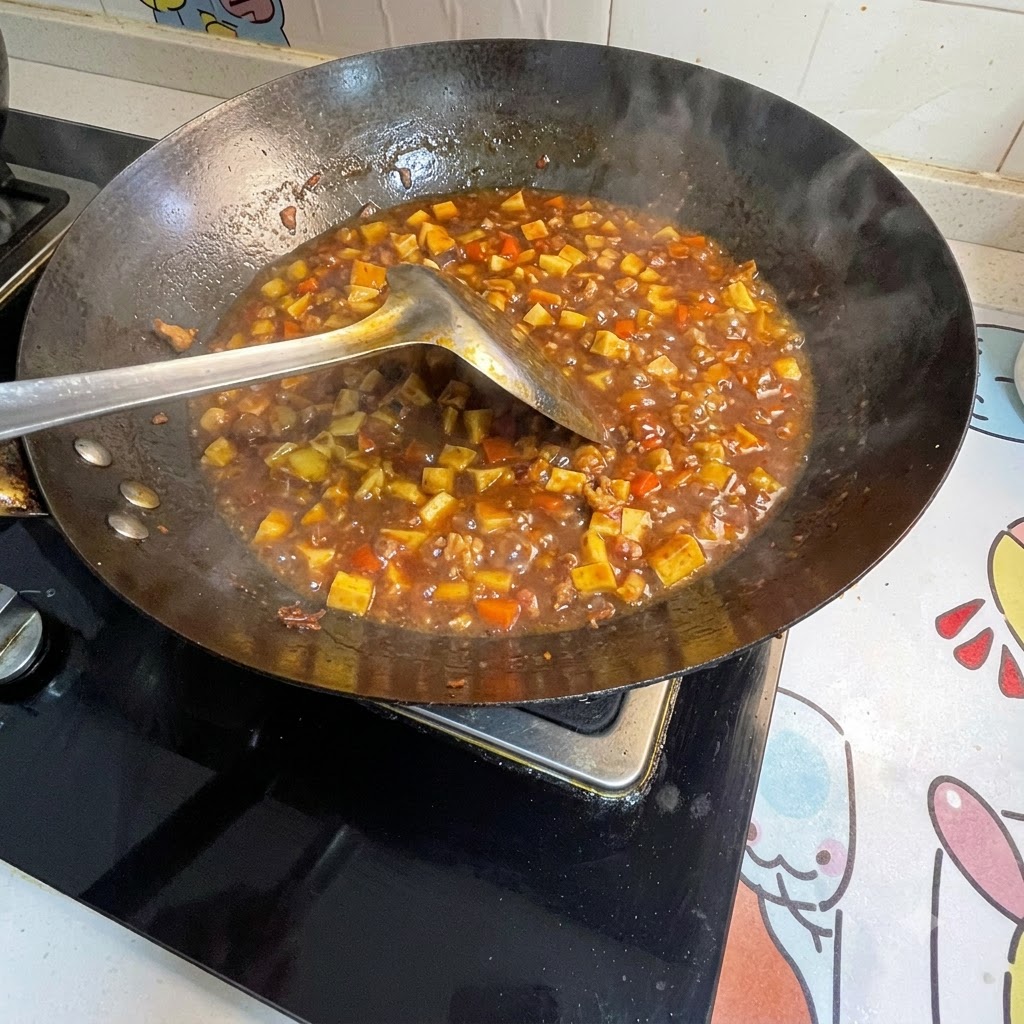
Stir in water starch to thicken the simmering sauce, creating a glossy, rich coating that will cling perfectly to the noodles.
Tip: Pour the water starch in gradually while stirring continuously to avoid lumps and achieve a smooth consistency.