Korean Spicy Kimchi Tofu Soup (Kimchi-jjigae)
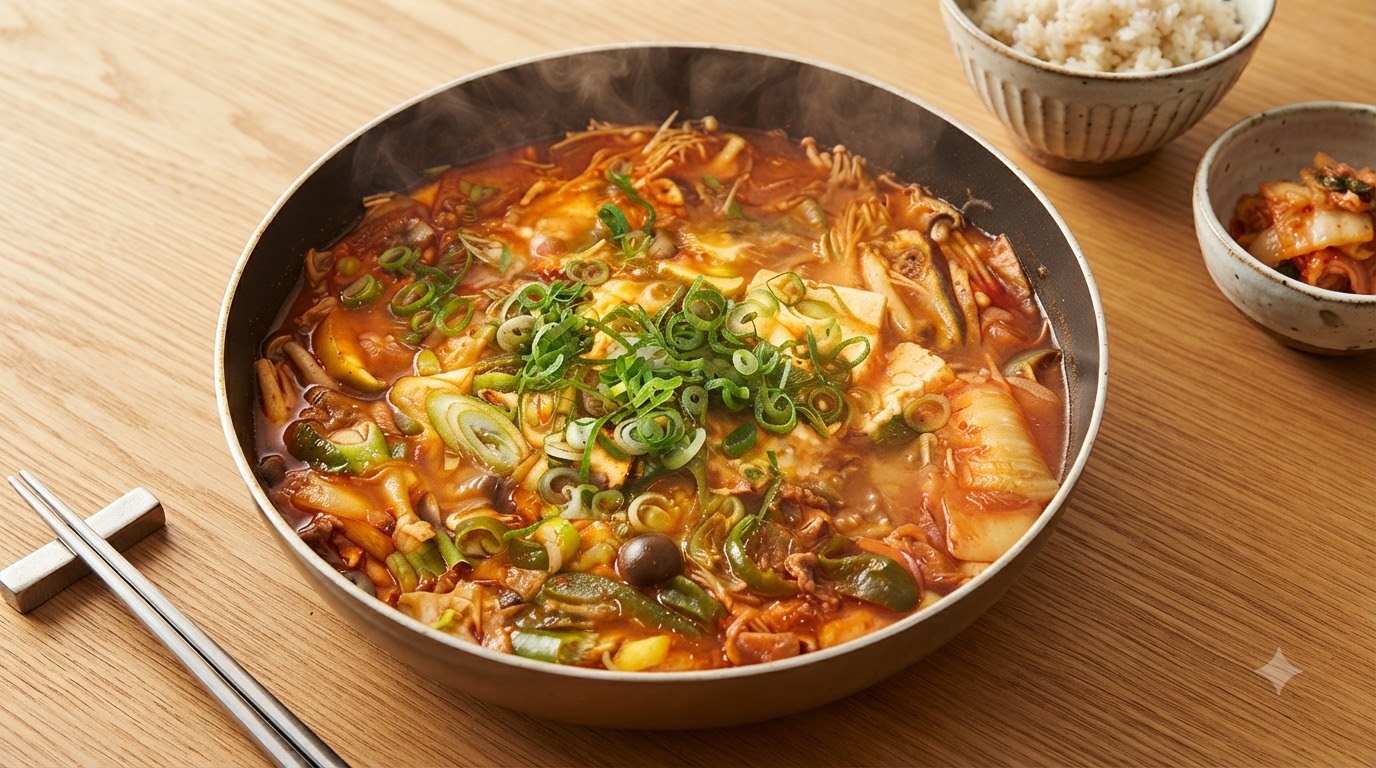
A comforting, bubbling Korean kimchi-jjigae packed with tender beef, silken tofu, potatoes, and mushrooms, simmered in a rich and spicy broth.
Kimchi-jjigae is a staple of Korean home cooking, prized for its fiery depth and comforting warmth. Using well-fermented kimchi is the secret to building its signature tangy broth, which deepens in flavor as it simmers with beef, vegetables, and tofu.
Ingredients
- 200 g beef slices
- 1 portion well-fermented kimchi
- 1 block firm tofu
- 1 potato
- 1 onion
- 1 bunch enoki mushrooms
- 1 assortment assorted mushrooms
- 2 green peppers
- 3 stalks green onions
- 3 cloves garlic
- 1 tbsp cooking wine
- 1 tbsp chili powder
- 1 tbsp chili paste
- 2 tbsp light soy sauce
- 500 ml rice water
Instructions
- 1Stir-fry the beef
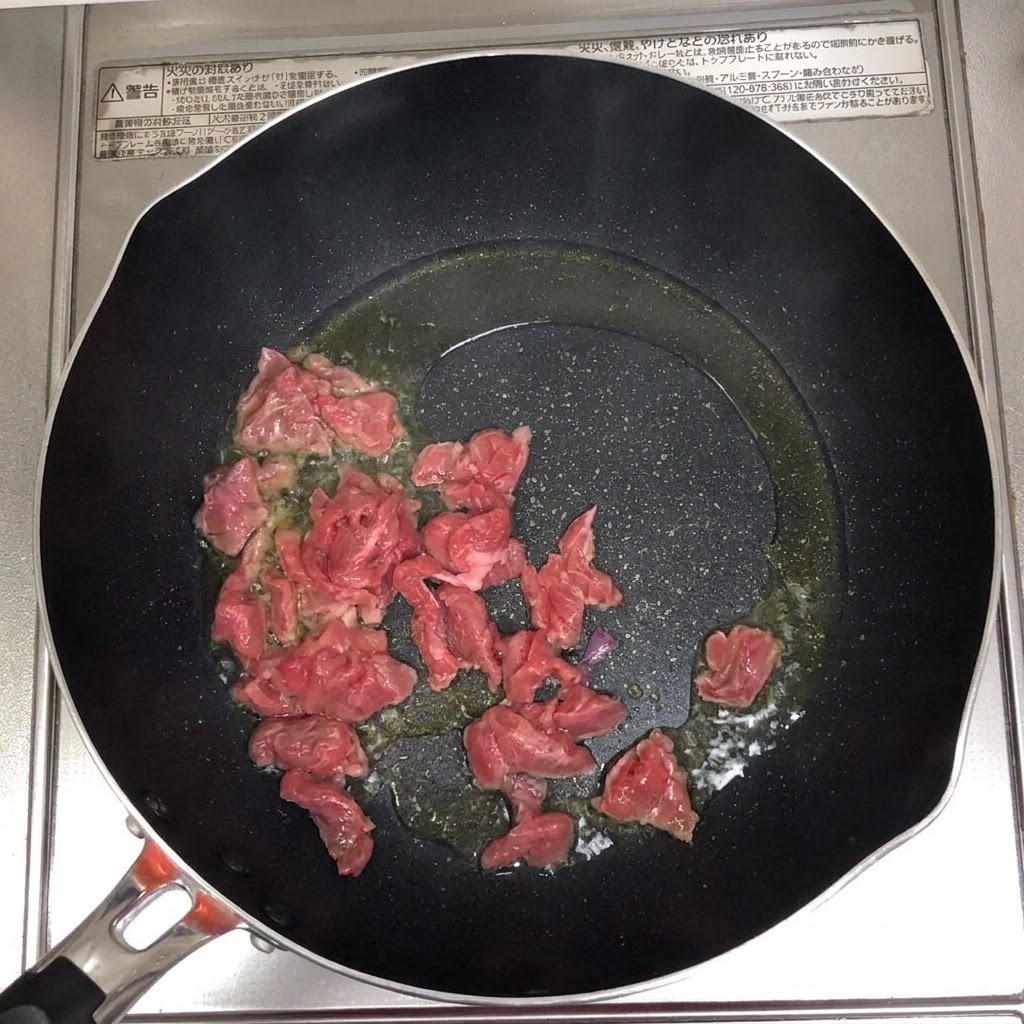
Place beef slices into a hot pan with oil and stir-fry them until they start to brown.
Tip: Make sure the pan is sufficiently hot before adding the beef to sear it properly. - 2Season the beef
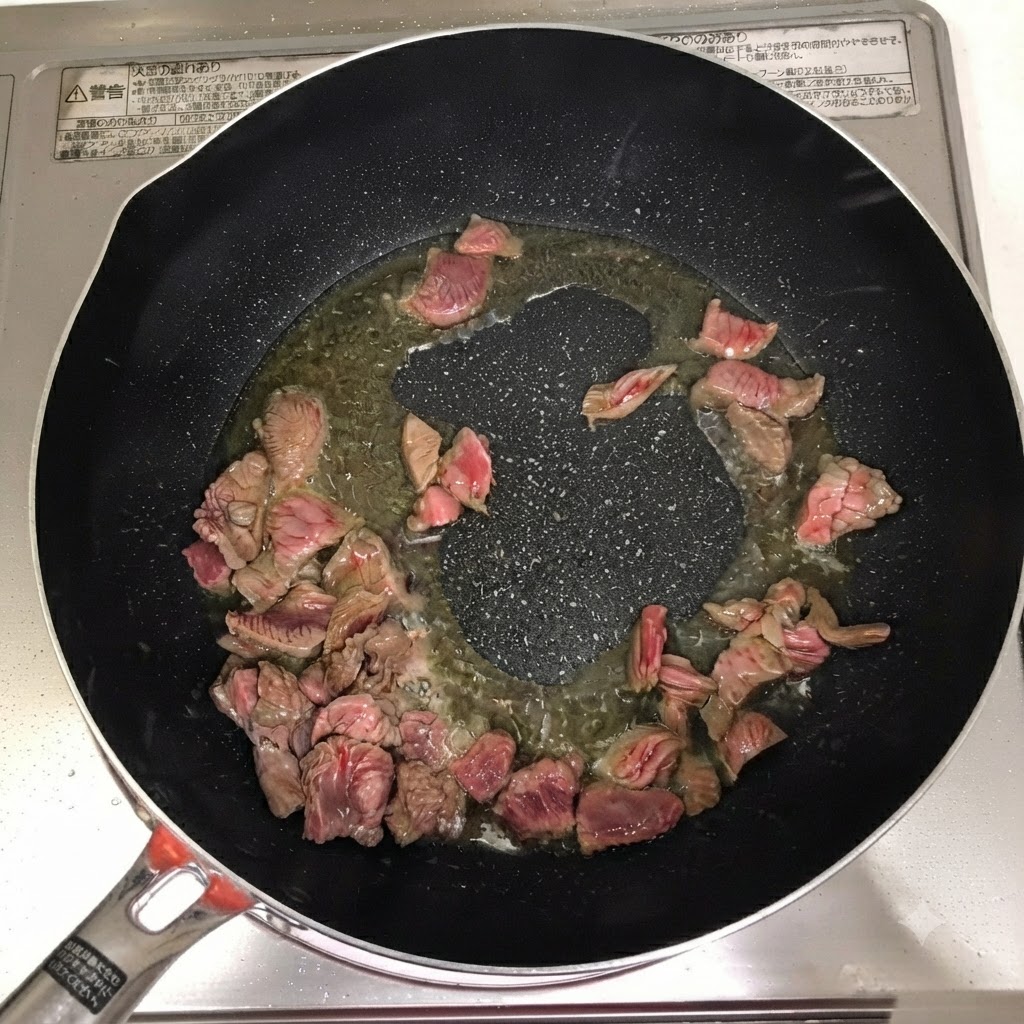
Add cooking wine, chili powder, and chili paste directly to the stir-fried beef in the pan.
Tip: Mix the spices evenly into the meat to build a flavorful base. - 3Add potatoes and onions
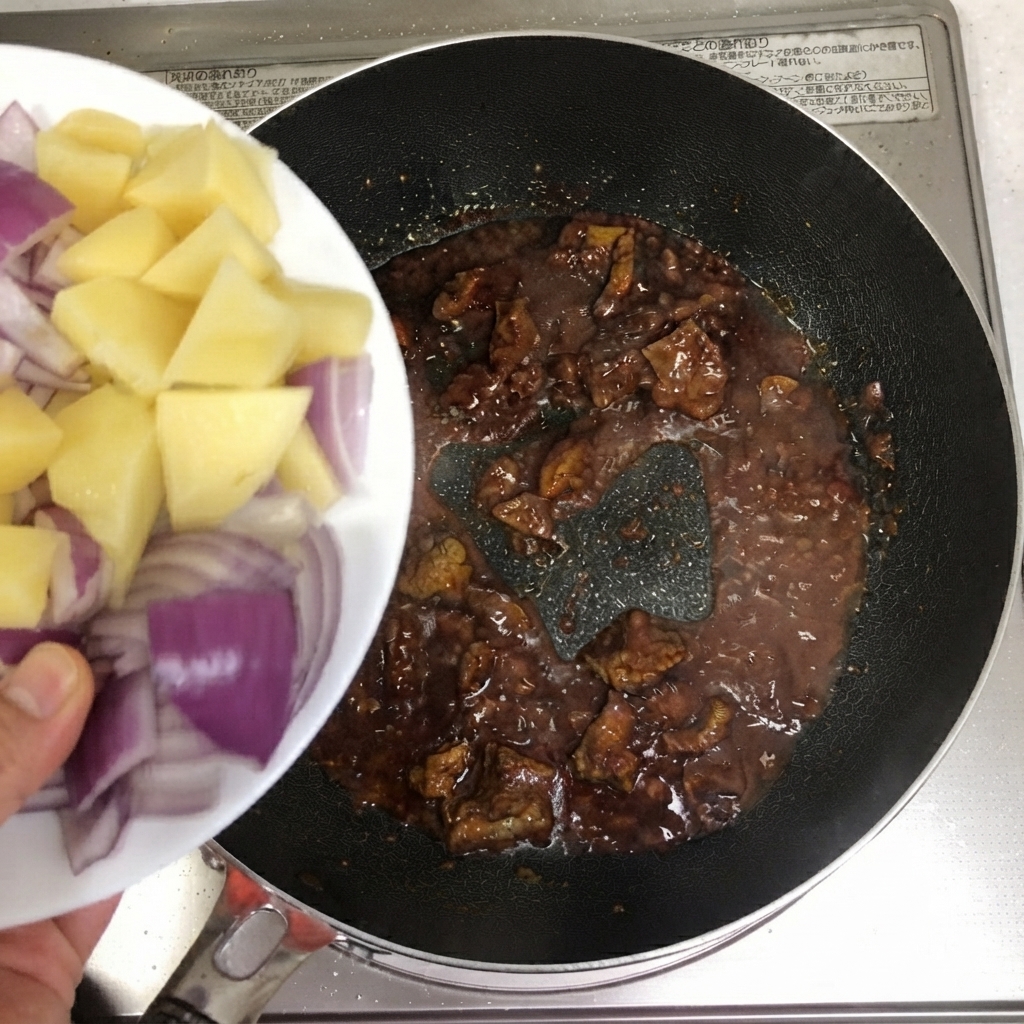
Tip sliced potatoes and red onions from a plate into the pan containing the seasoned beef.
Tip: Cut potatoes into even sizes so they cook at a consistent rate. - 4Add kimchi
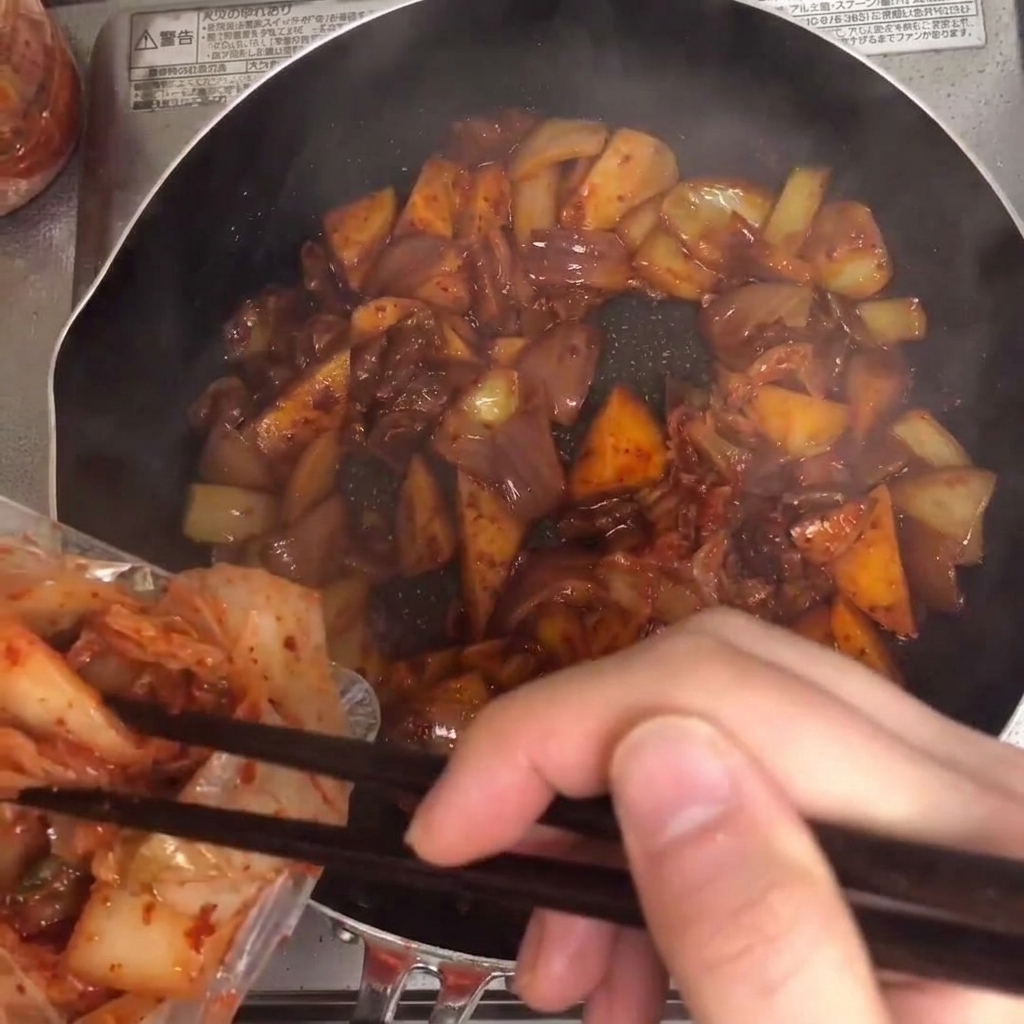
Add a portion of kimchi into the pan with the beef, potatoes, and onions, then stir everything together.
Tip: Stir-frying the kimchi briefly with the ingredients enhances its flavor. - 5Pour in rice water
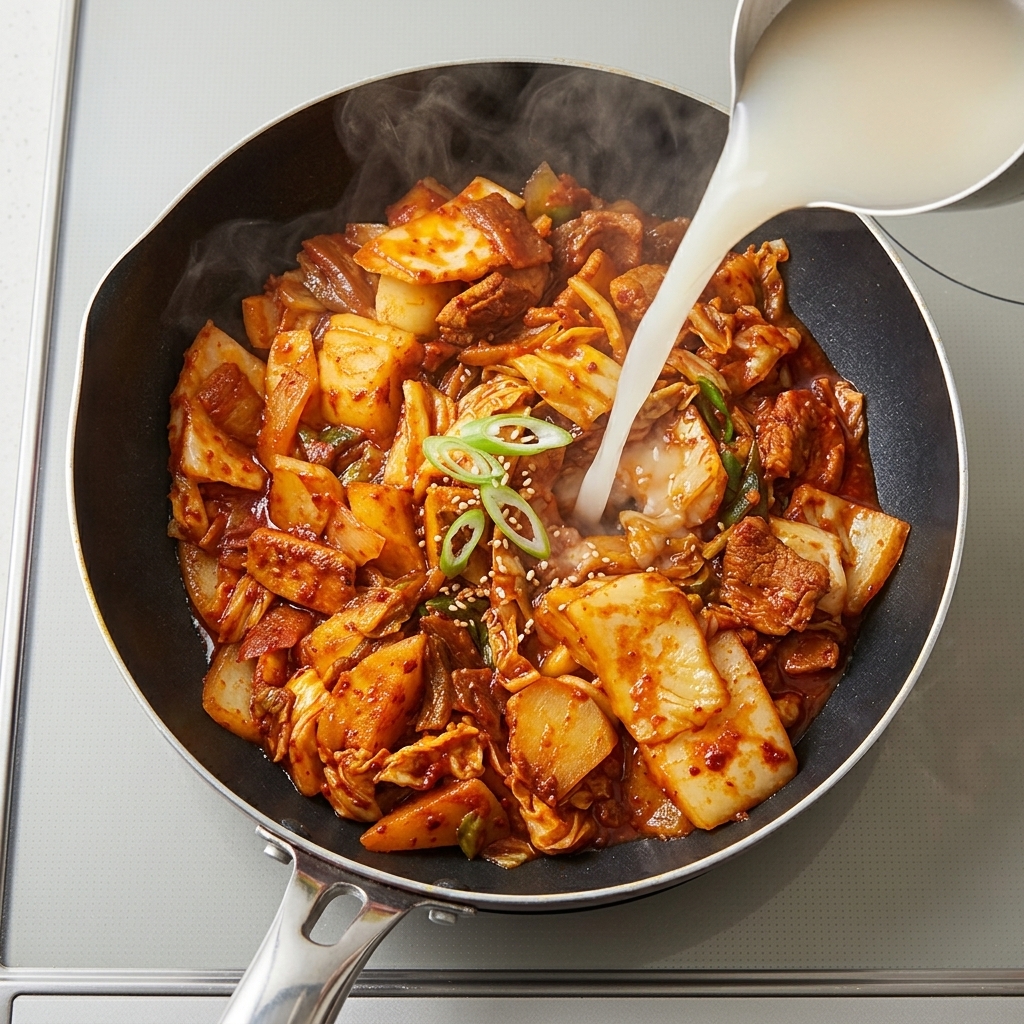
Pour rice water into the pan over the cooked kimchi and beef mixture to create the soup base.
Tip: Rice water adds a slightly cloudy body and a nice depth to the soup broth. - 6Add assorted mushrooms
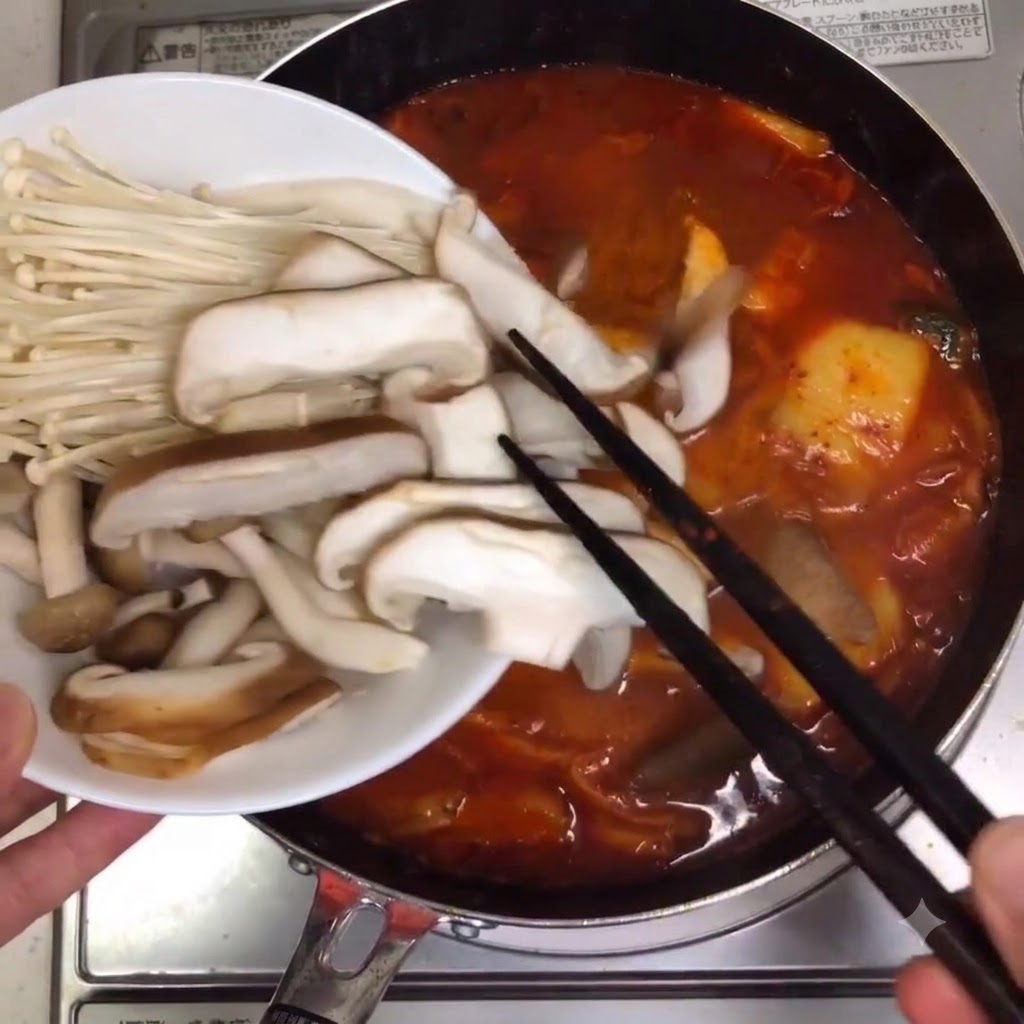
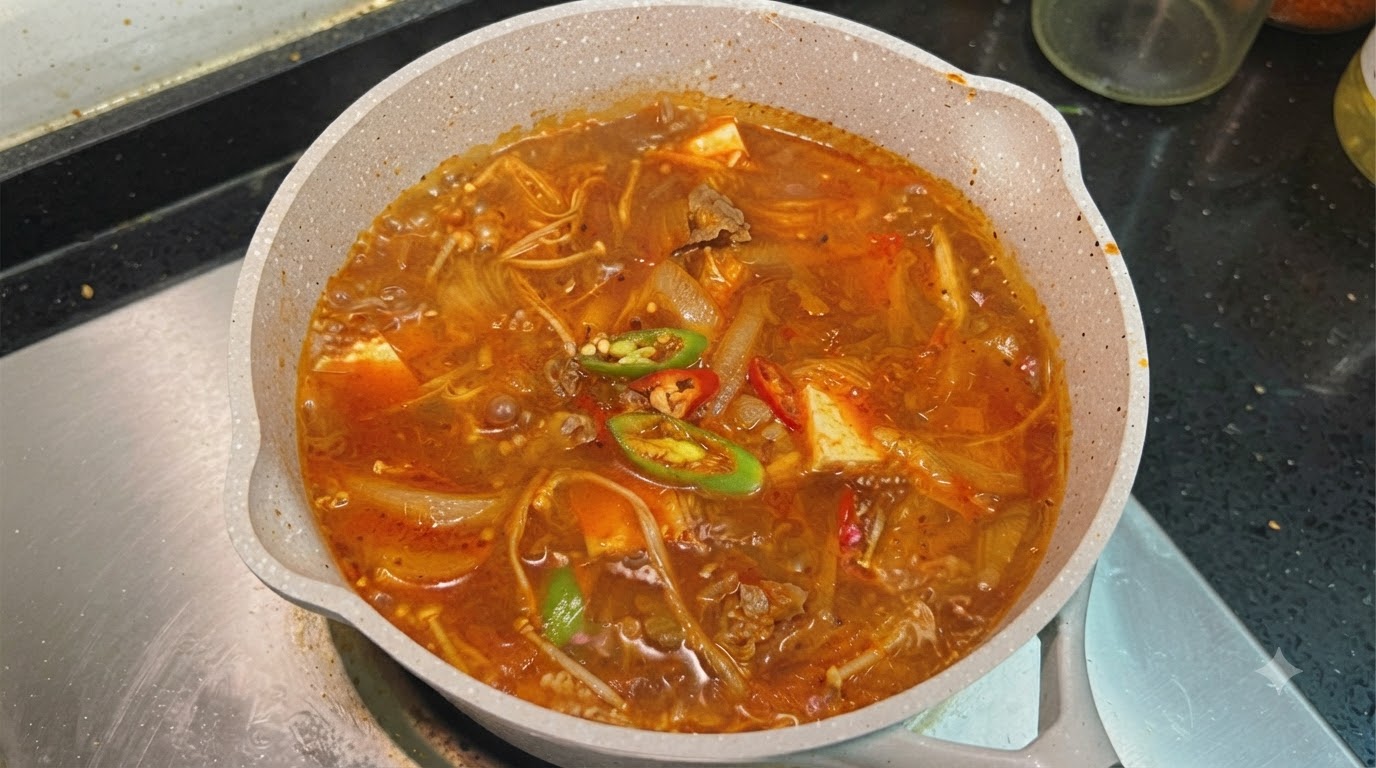
Add a variety of mushrooms and enoki mushrooms into the simmering soup using chopsticks.
Tip: Add delicate mushrooms like enoki towards the end so they retain a tender texture. - 7Add sliced green peppers
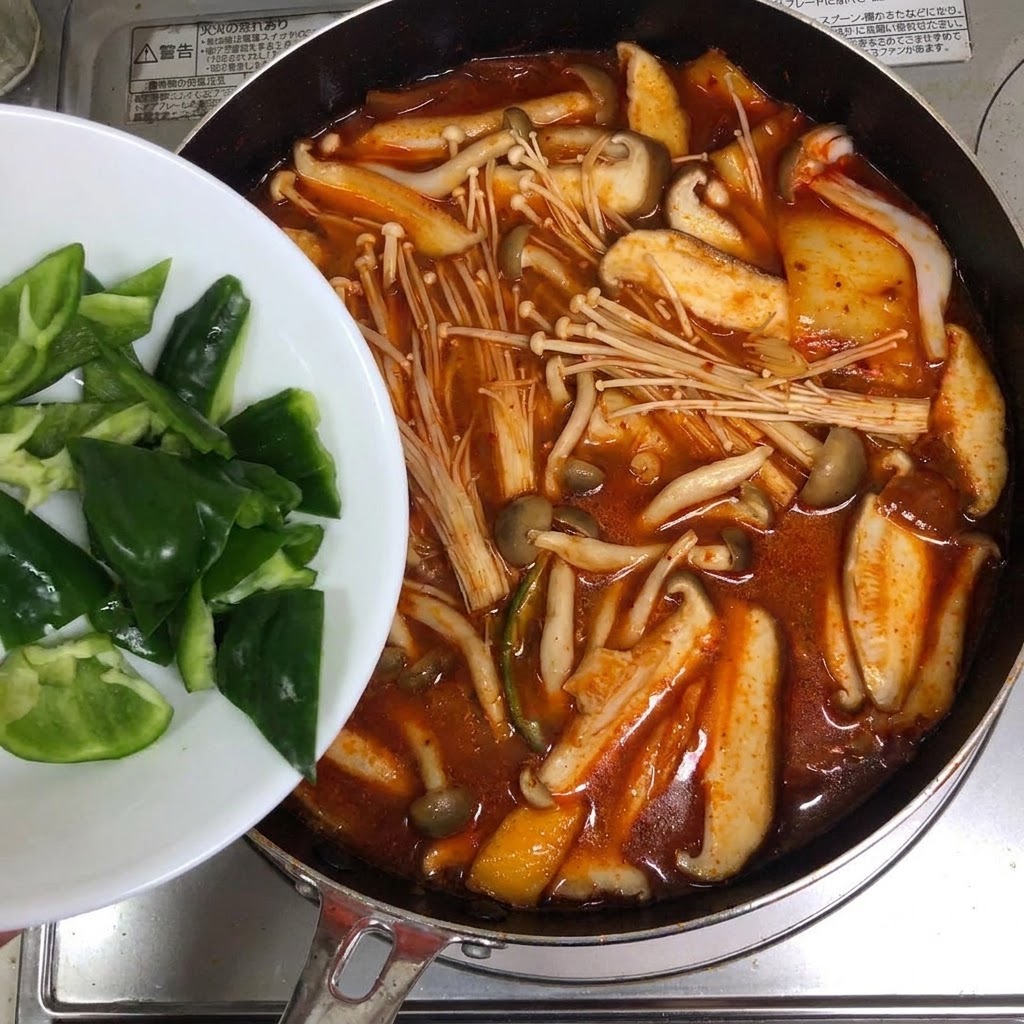
Add the freshly sliced green peppers into the bubbling soup base, allowing them to infuse their distinct flavor and slight crunch into the broth.
Tip: Add peppers towards the latter half of cooking so they retain their vibrant green color and crisp texture. - 8Add chopped garlic and green onions
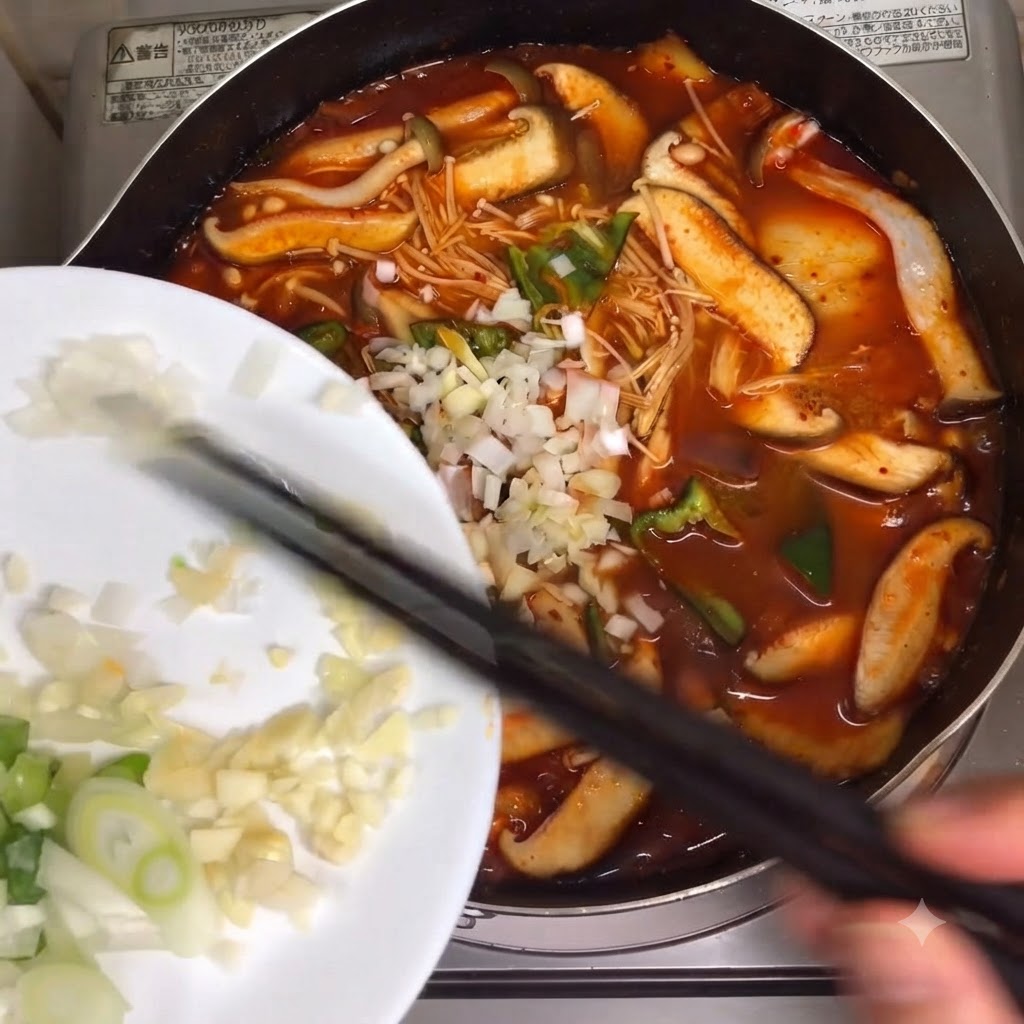
Add finely chopped garlic and green onions directly into the bubbling pot to elevate the aromatic depth of the soup.
Tip: Adding fresh aromatics towards the end preserves their pungent, fresh flavor rather than letting it cook away. - 9Add firm tofu slices
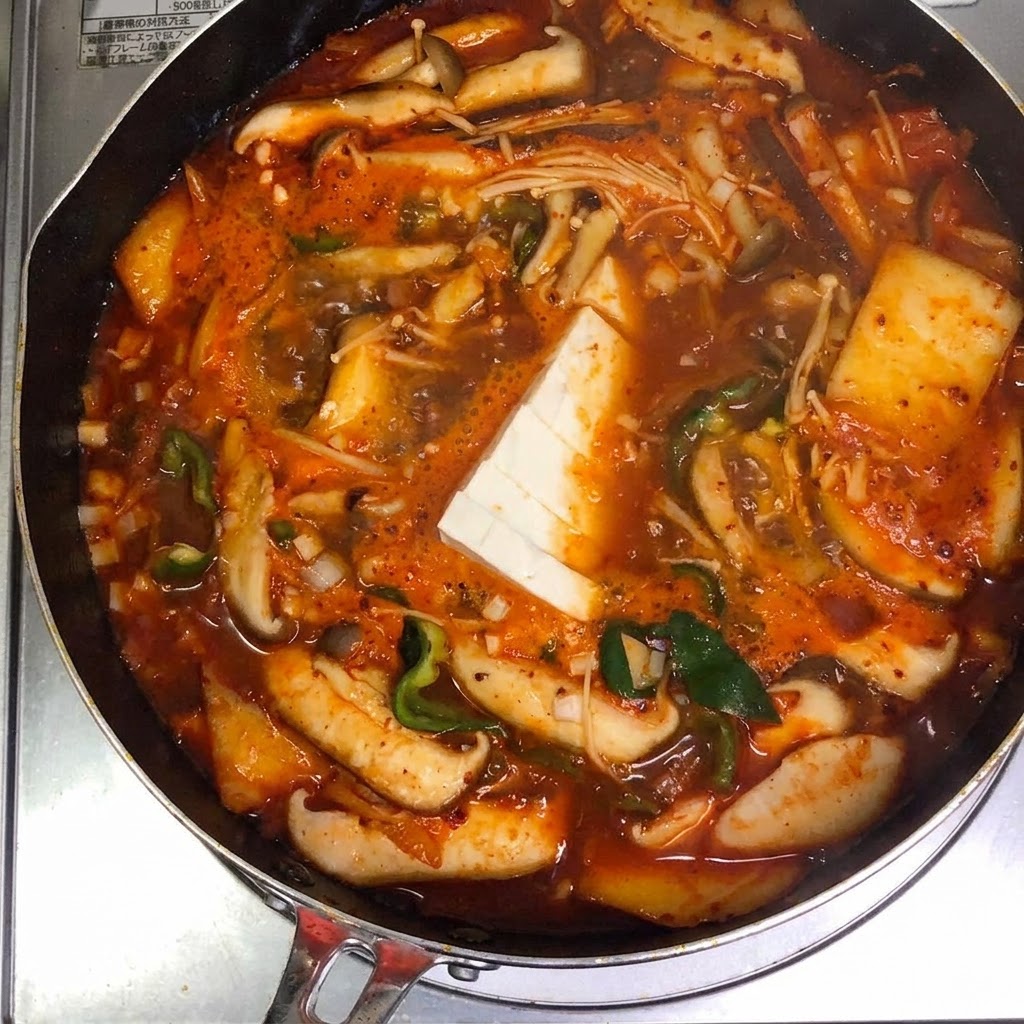
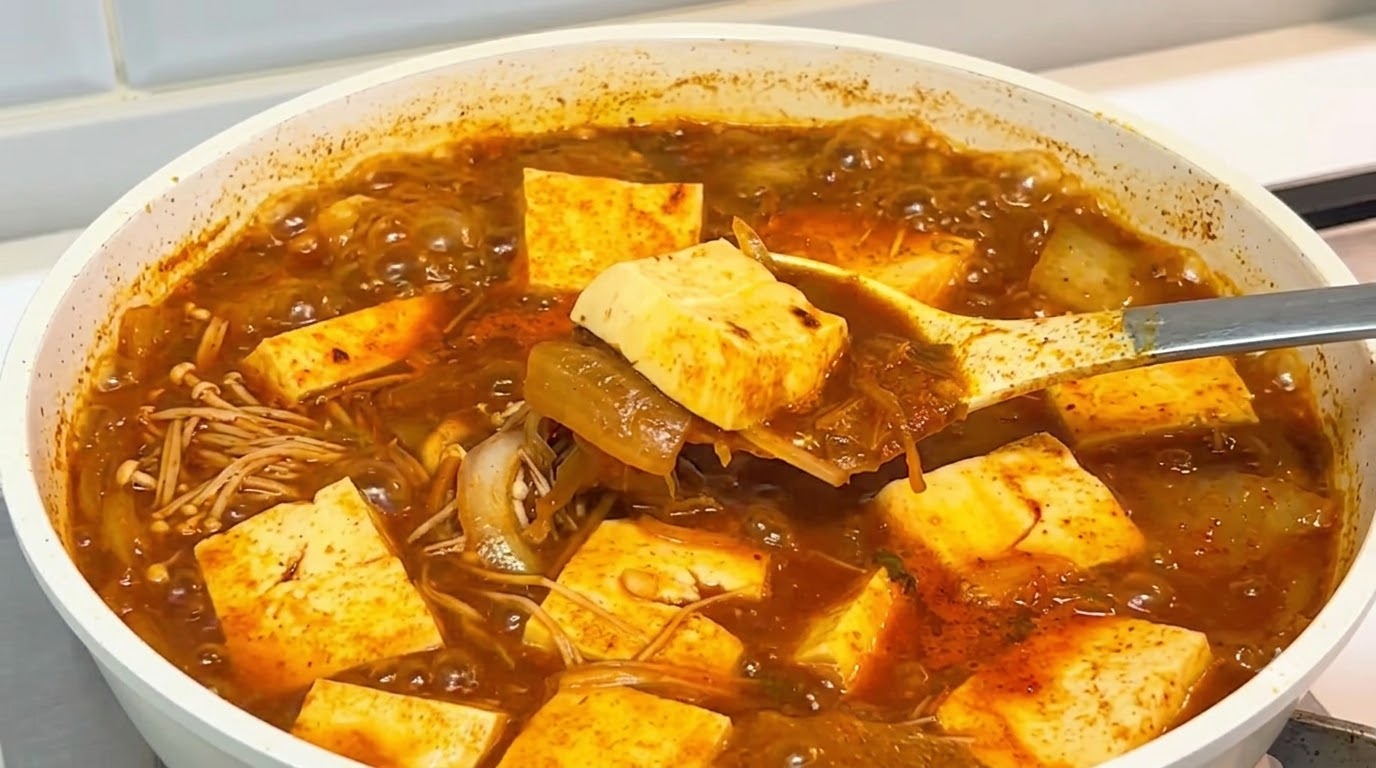
Carefully arrange and place slices of firm tofu into the simmering pot, allowing them to soak up the rich, spicy broth.
Tip: Slice the tofu evenly so each piece absorbs an equal amount of flavor without breaking apart easily.