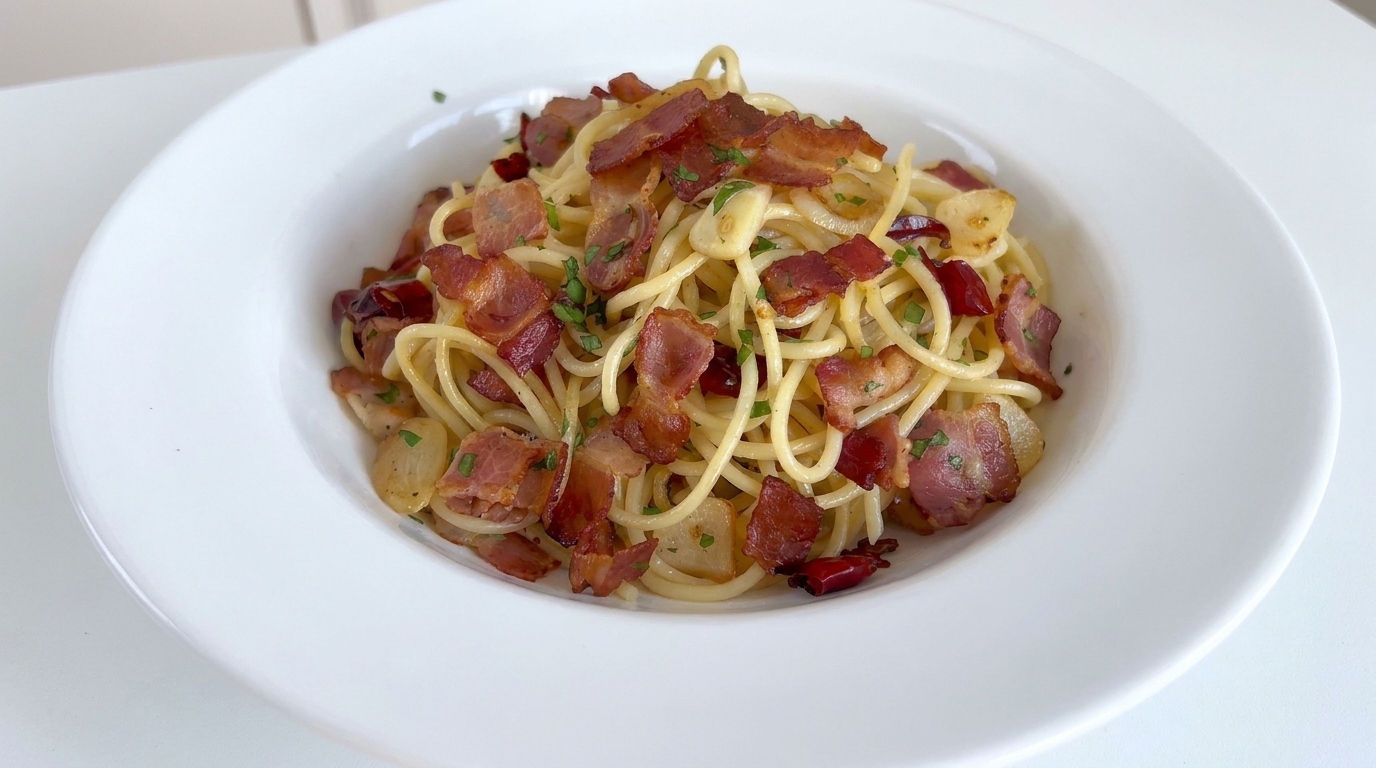
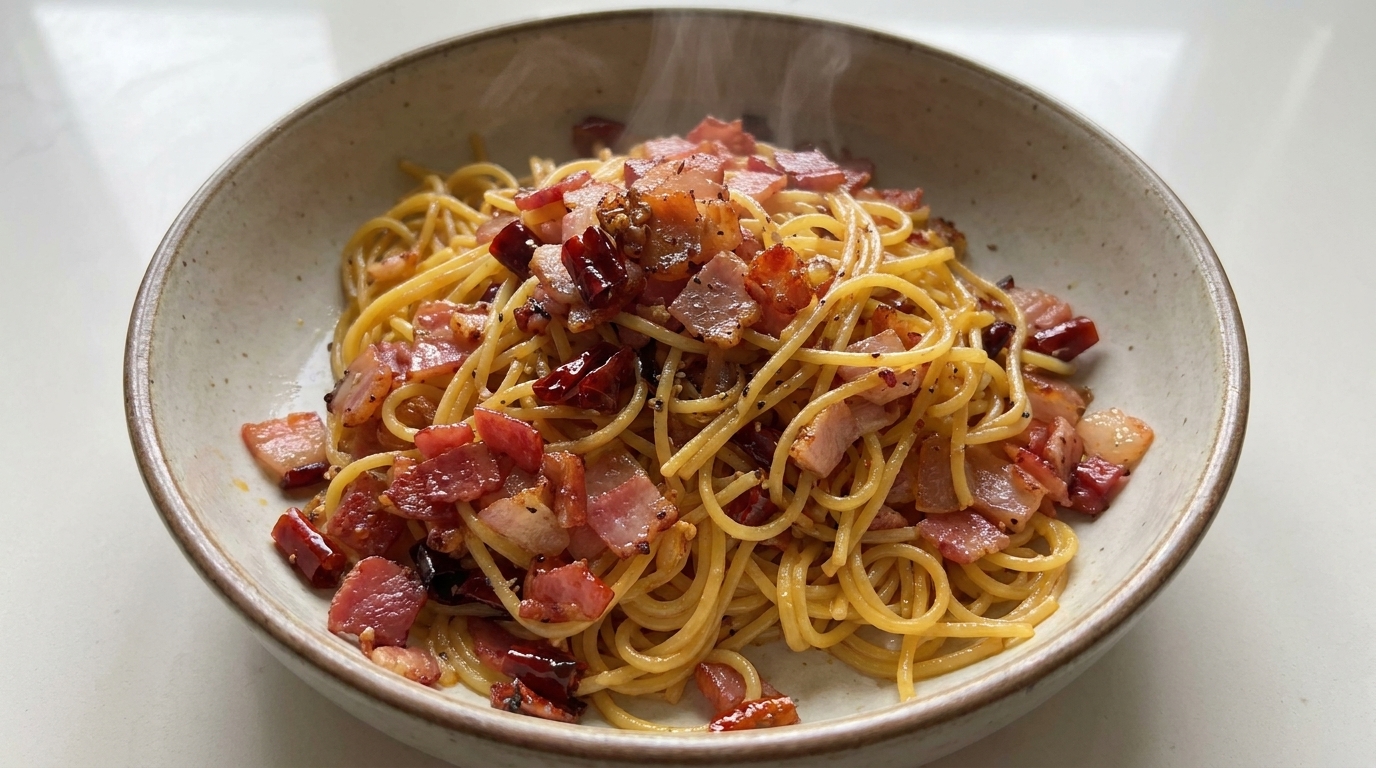
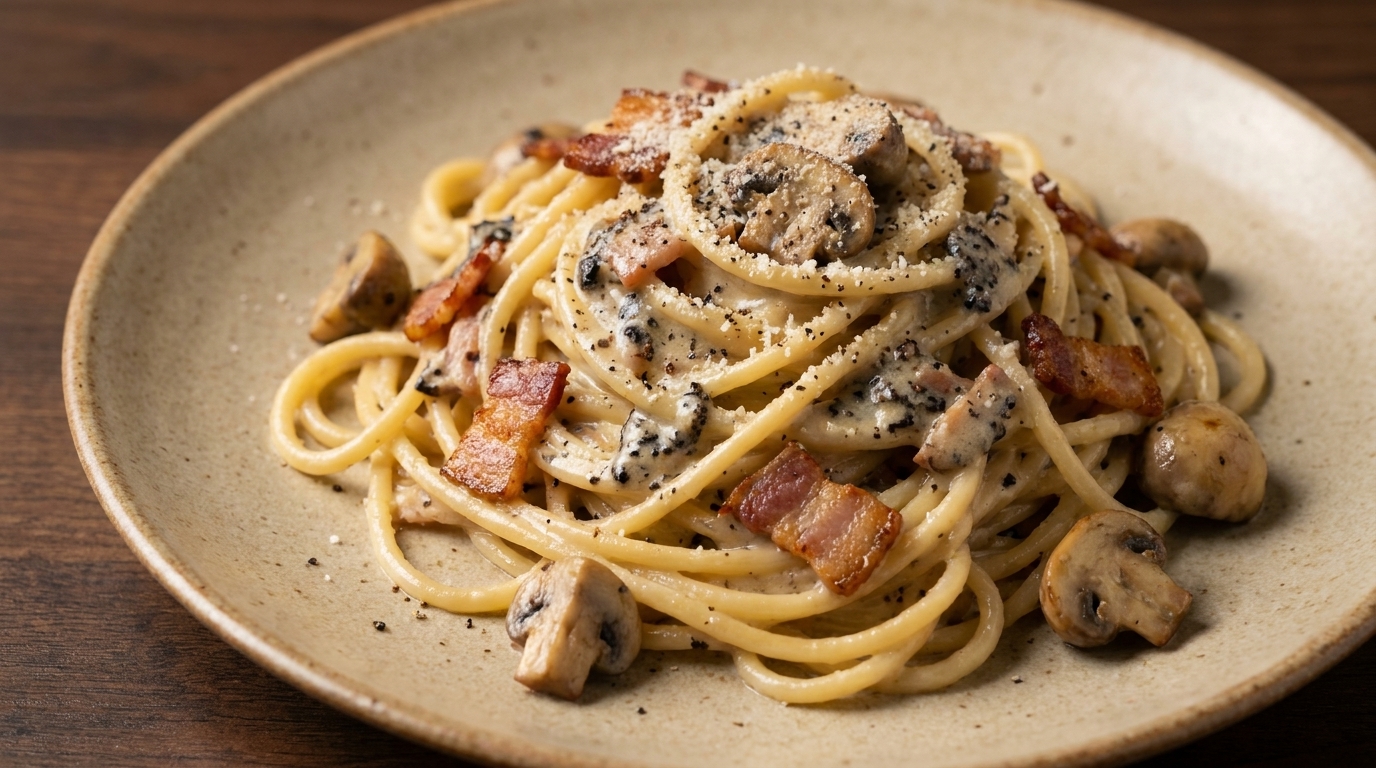
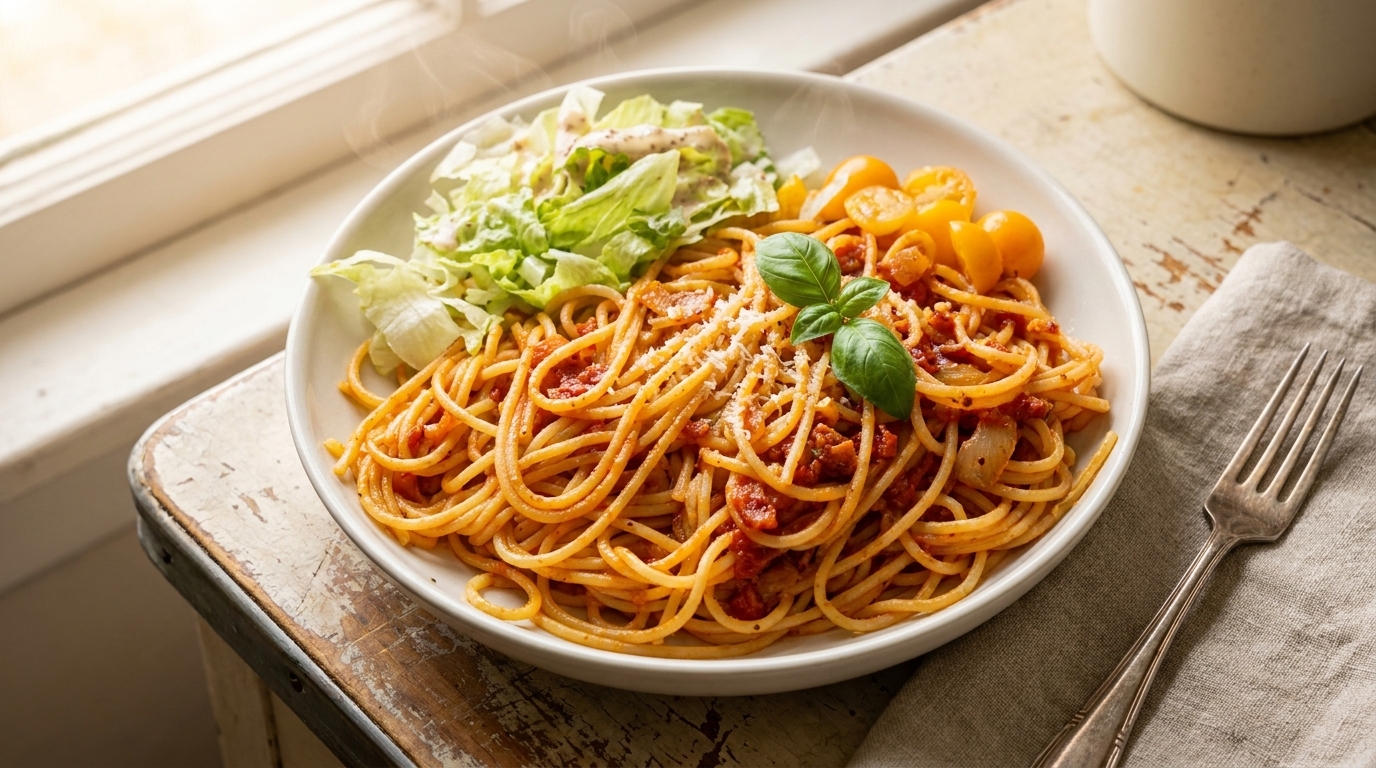
Classic Bacon Tomato Spaghetti
A quick and savory Italian-inspired pasta dish featuring crispy bacon and a rich, slow-simmered tomato sauce, perfectly emulsified with starchy pasta water.
There is a quiet perfection in the marriage of salty, rendered bacon fat and the acidity of sun-ripened tomatoes. This classic spaghetti dish relies on the foundational technique of emulsifying the sauce with the pastas own cooking water, creating a glossy, restaurant-quality finish right in your own kitchen. It is the ultimate testament to the idea that the simplest ingredients, when treated with care, create the most memorable meals.
Ingredients
- 200 g spaghetti
- 100 g bacon
- 400 g canned diced tomatoes
- 2 cloves garlic
- 1 shallot
- 1 stalk celery
- 2 tbsp olive oil
- to taste salt
- to taste black pepper
- optional lettuce
- optional yellow cherry tomatoes
Instructions
- 1Heat the olive oil
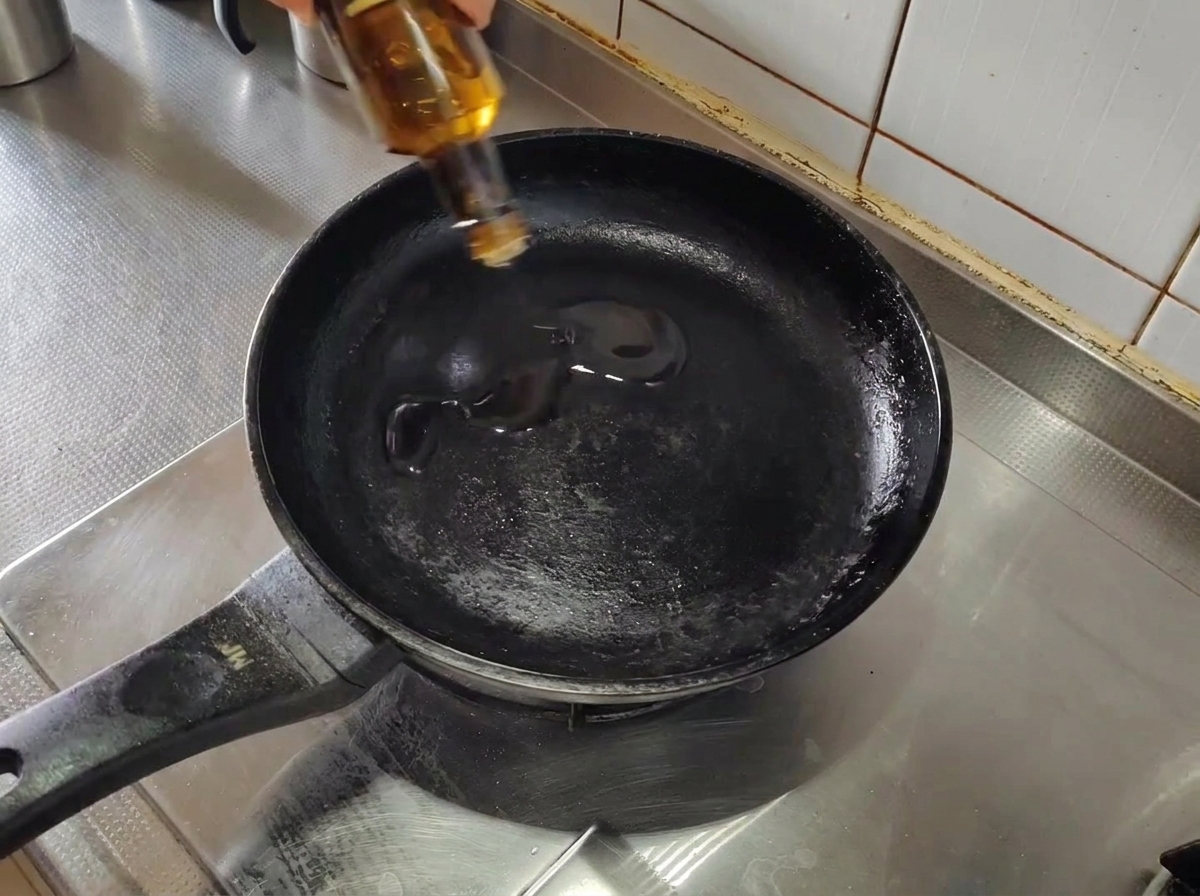
Place a black skillet on the stove and heat it over medium heat. Pour in a generous drizzle of olive oil, allowing it to coat the base of the pan evenly, preparing it for frying.
Tip: Ensure the oil is shimmering slightly before adding your ingredients to achieve an even sear. - 2Fry the bacon
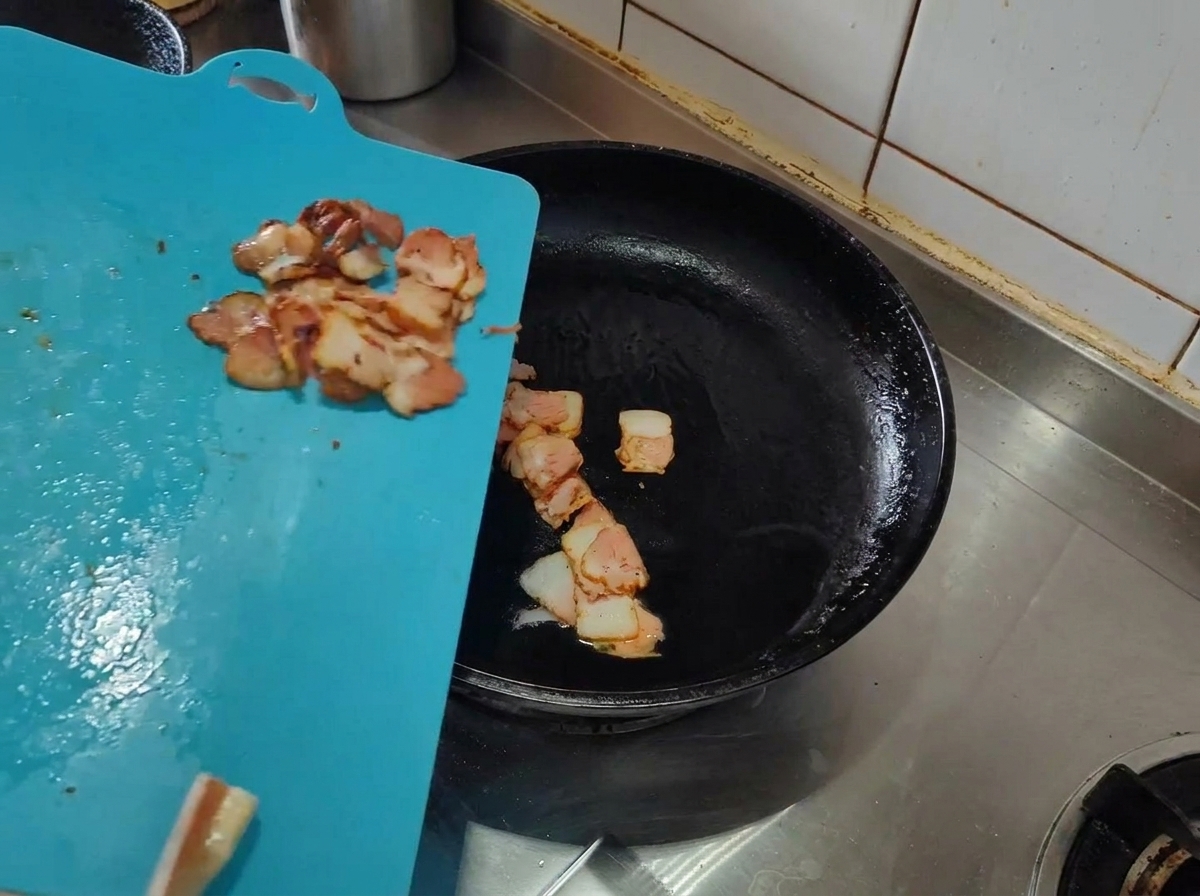
Add the sliced bacon strips into the hot olive oil in the skillet. Fry them over medium heat until they turn golden brown and begin to release their flavorful fat.
Tip: Keep the heat steady to render the fat slowly without burning the bacon edges. - 3Sauté the aromatics
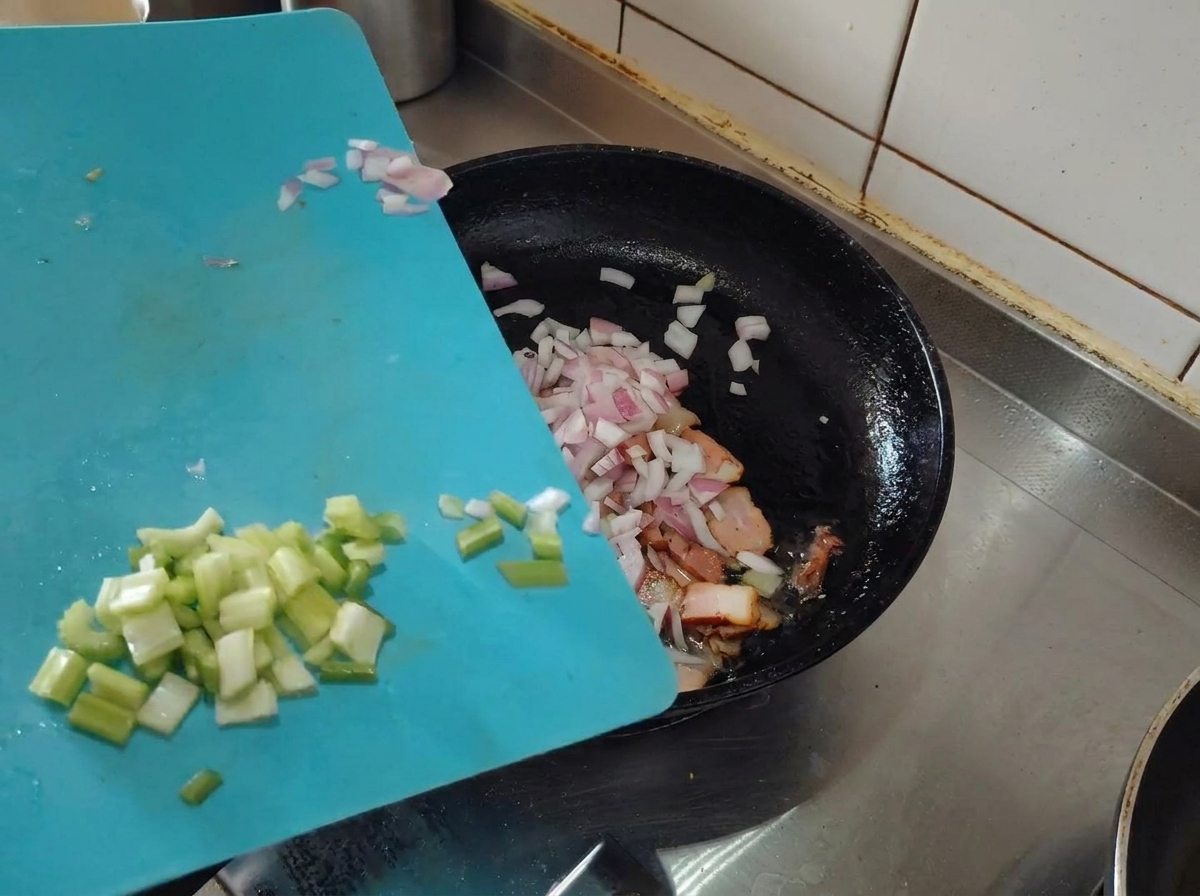
Add the minced shallots and diced celery to the skillet with the frying bacon. Sauté the mixture together until the vegetables are softened and fragrant.
Tip: Adding the aromatics after the bacon allows them to cook in the rendered bacon fat, boosting the flavor profile. - 4Add the tomatoes
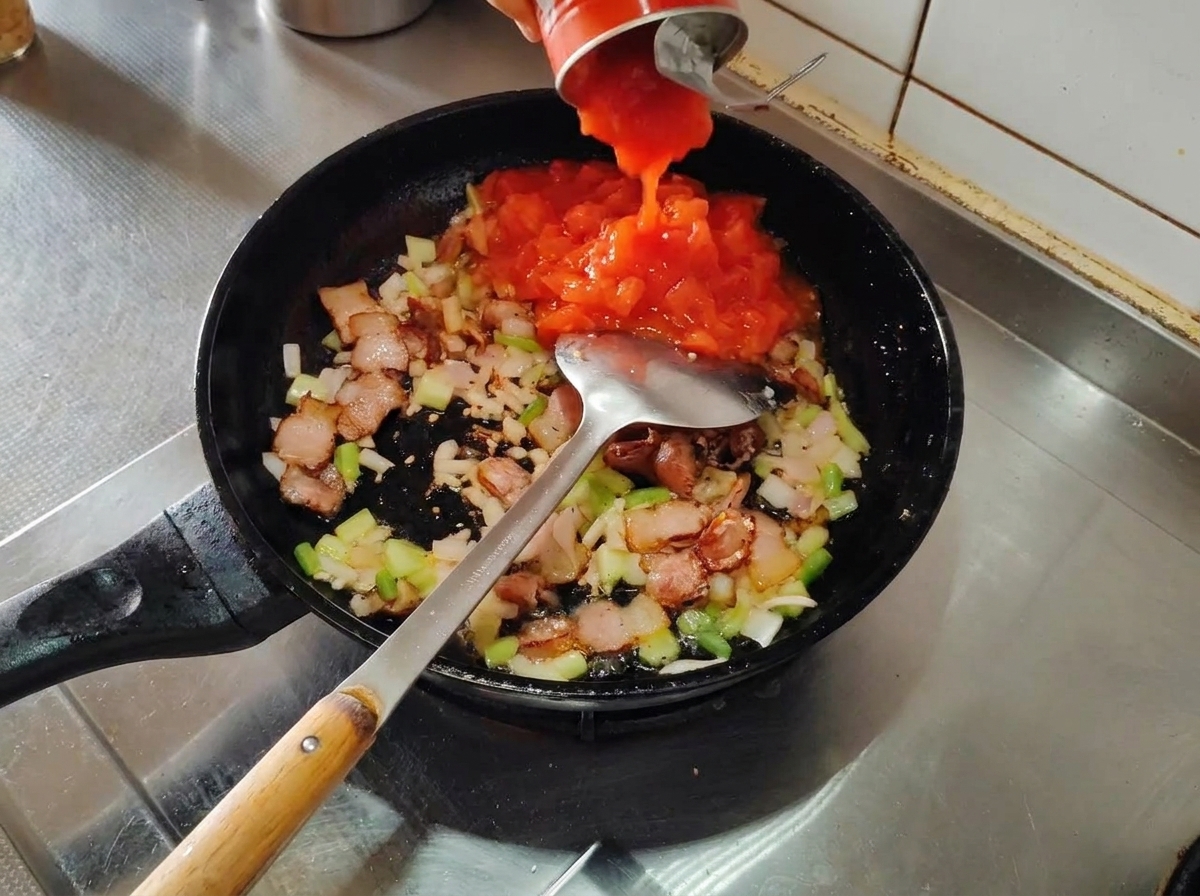
Pour a can of diced tomatoes into the skillet with the bacon and aromatics. The liquid from the tomatoes will begin to deglaze the pan and form the base of your sauce.
Tip: Be careful when pouring, as the tomatoes may cause some sputtering when hitting the hot fat. - 5Simmer the sauce
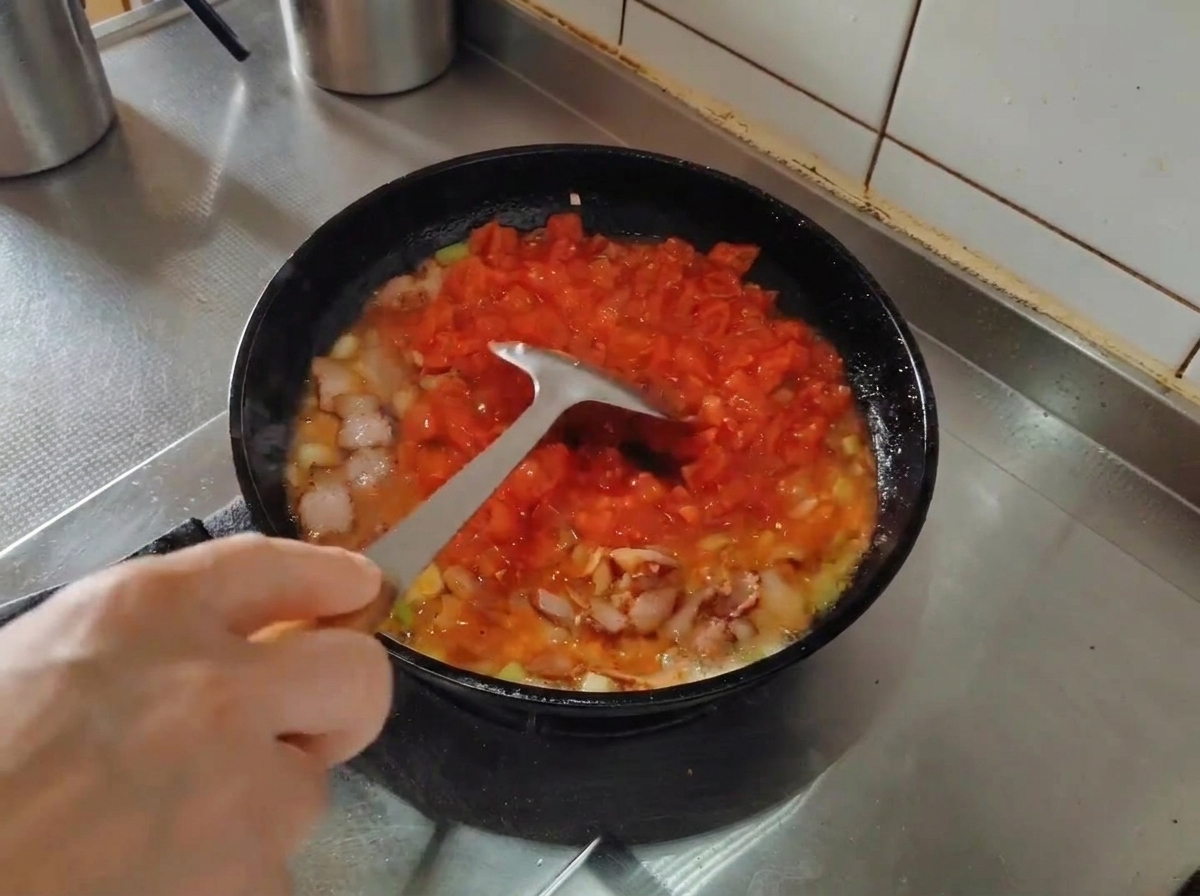
Use a spatula to mash the diced tomatoes as they cook in the skillet. This helps break them down to create a thicker, more uniform sauce consistency, then simmer over low heat.
Tip: Mashing the tomatoes releases more juices, which will later help coat the spaghetti perfectly. - 6Season the sauce
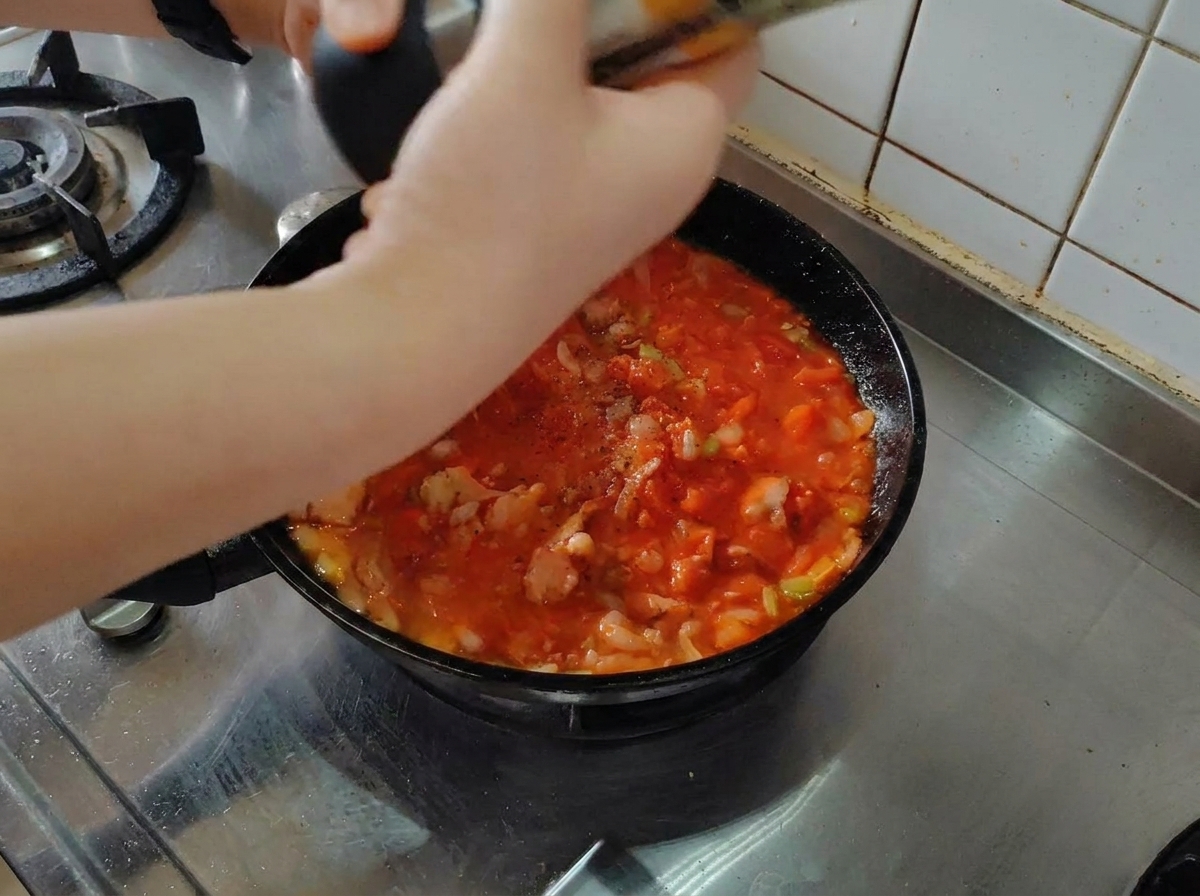
Season the simmering tomato sauce with salt and freshly ground black pepper to taste. Continue to simmer over low heat to allow the flavors to meld into a rich, savory sauce.
Tip: Freshly ground pepper provides a much more aromatic and spicy punch than pre-ground pepper. - 7Boil the spaghetti
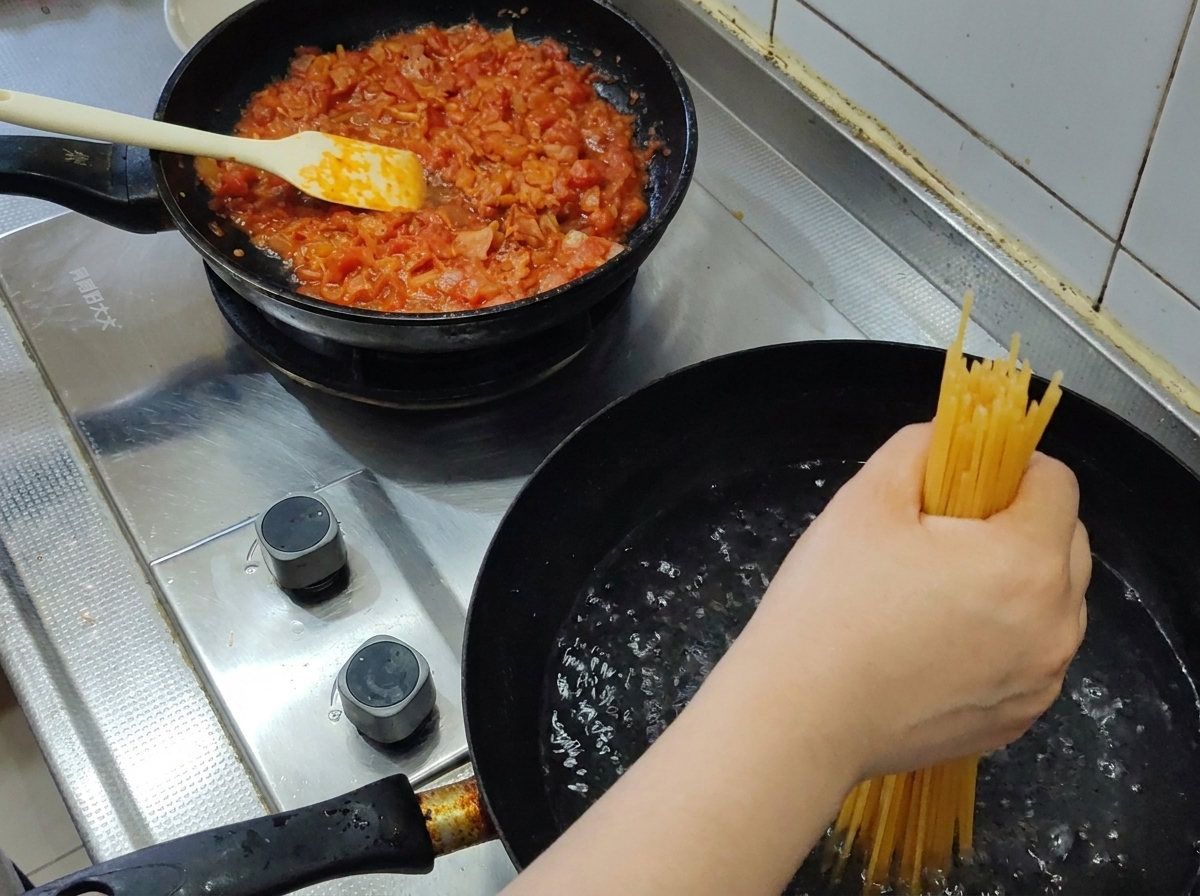
Add a pinch of salt to a pot of boiling water and submerge the spaghetti. Cook according to the package instructions until al dente, ensuring you do not rinse the pasta afterward to maintain the starch needed for the sauce.
Tip: Do not rinse the pasta after draining; the starchy water helps the sauce cling to the noodles. - 8Combine pasta and sauce
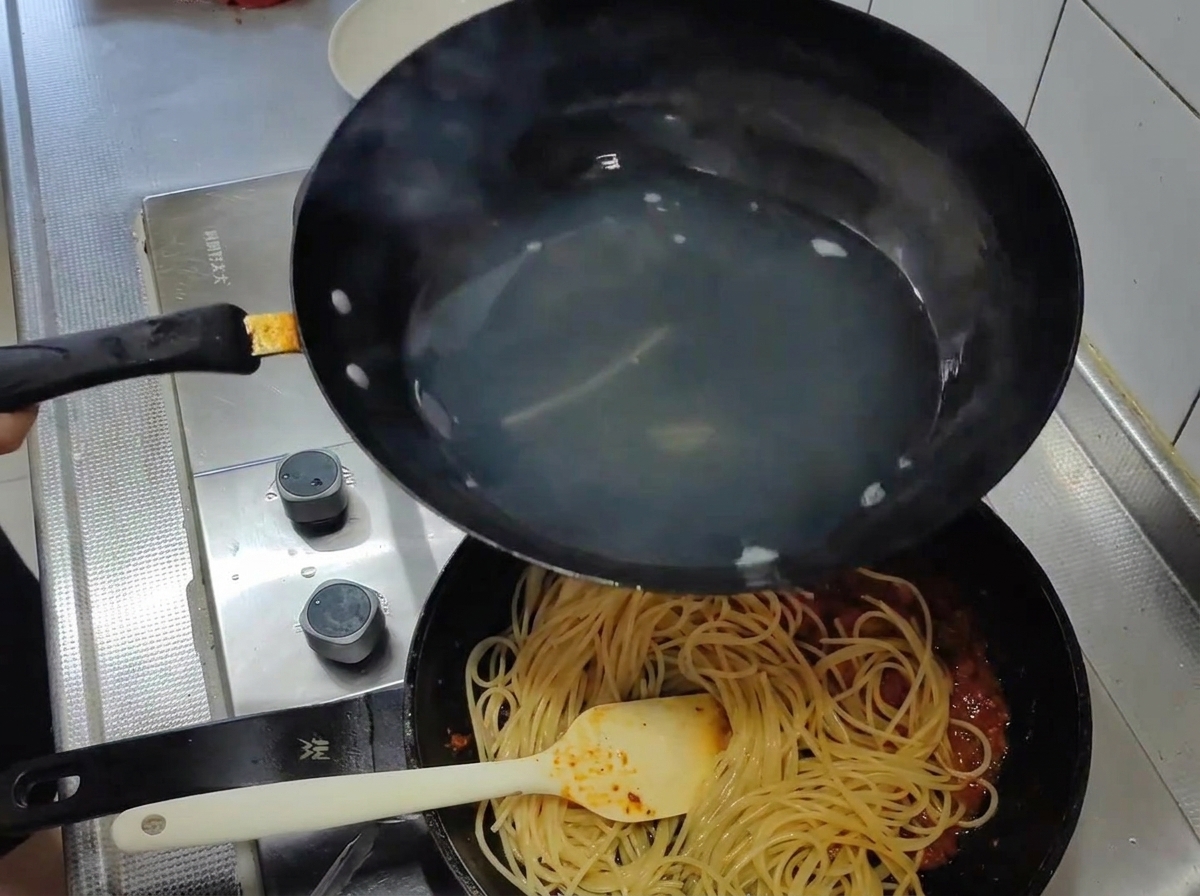
Once the spaghetti is cooked, transfer the noodles directly into the pan containing the prepared tomato and bacon sauce.
Tip: Transferring the pasta directly helps integrate the flavors immediately. - 9Add pasta water
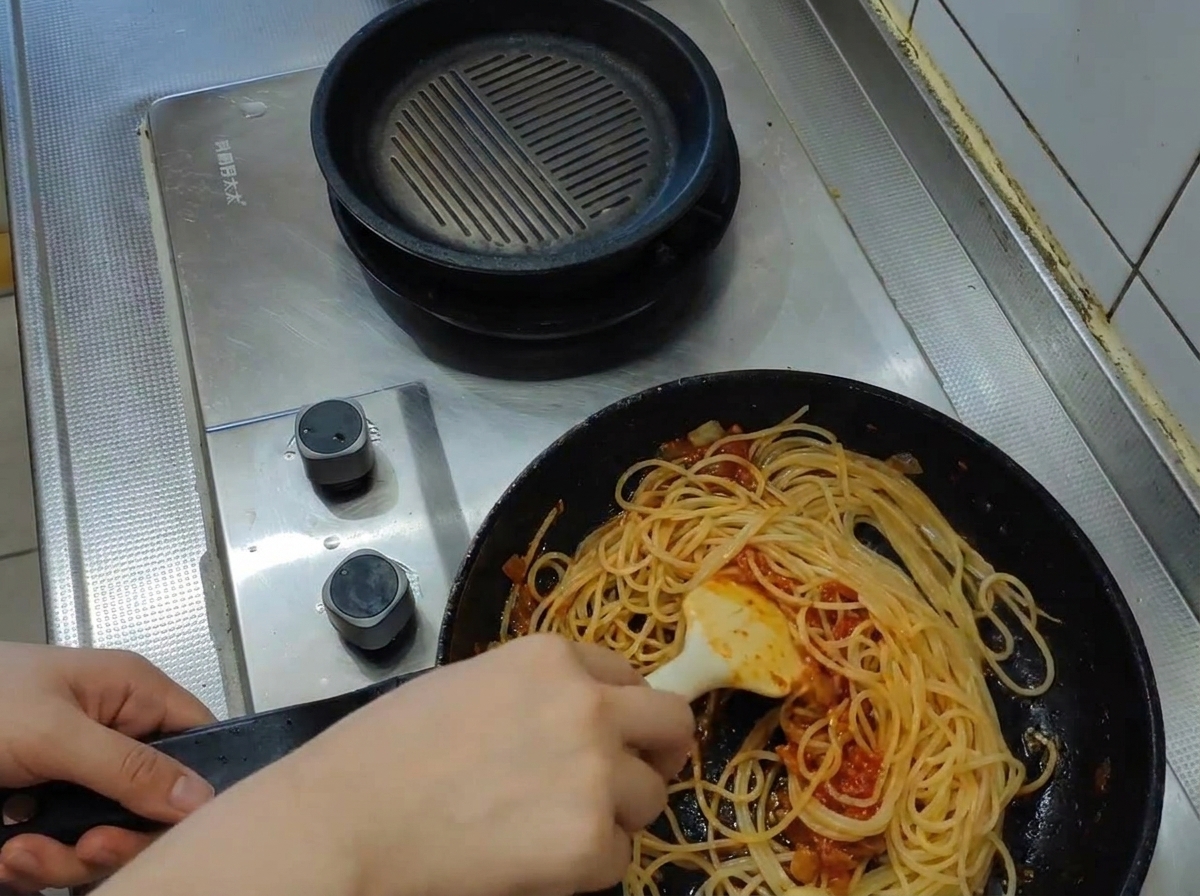
Pour two ladles of the starchy pasta water into the pan with the spaghetti and tomato sauce. This will help emulsify the sauce and create a creamy texture.
Tip: The starchy water is the secret to a perfectly emulsified, restaurant-quality pasta sauce. - 10Toss and finish
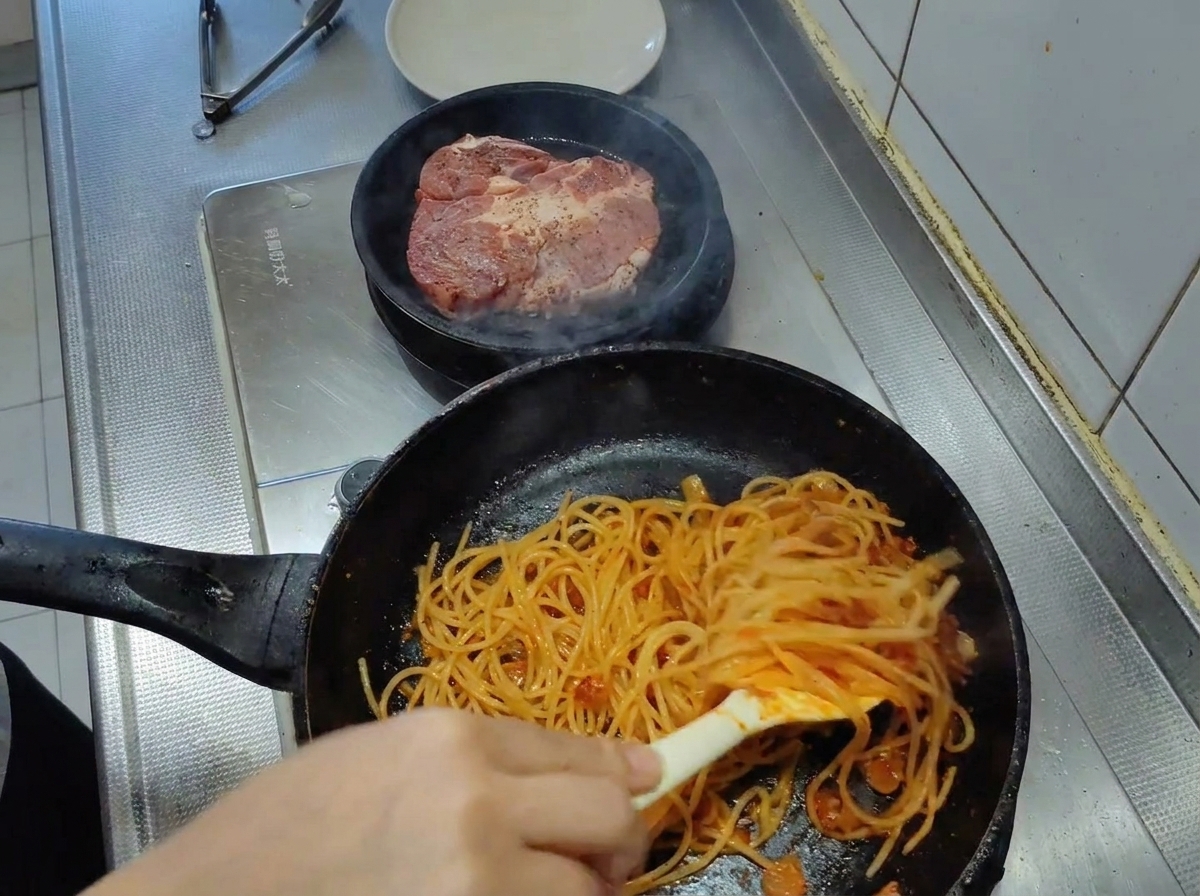
Simmer the pasta over low heat while tossing it continuously in the sauce. Continue until the liquid has reduced and the spaghetti is thoroughly coated in the rich, thick tomato sauce.
Tip: Toss the pasta gently to ensure every strand is evenly coated without breaking the noodles.