Golden Chicken Soup Noodles
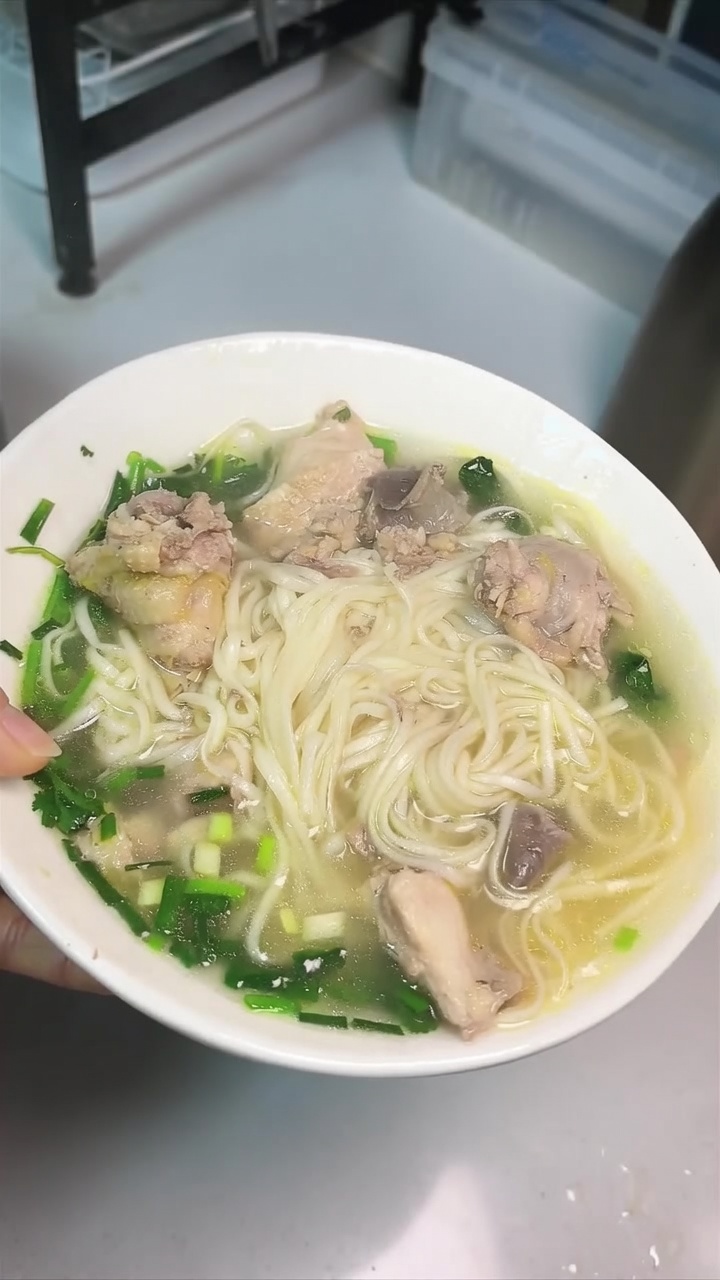
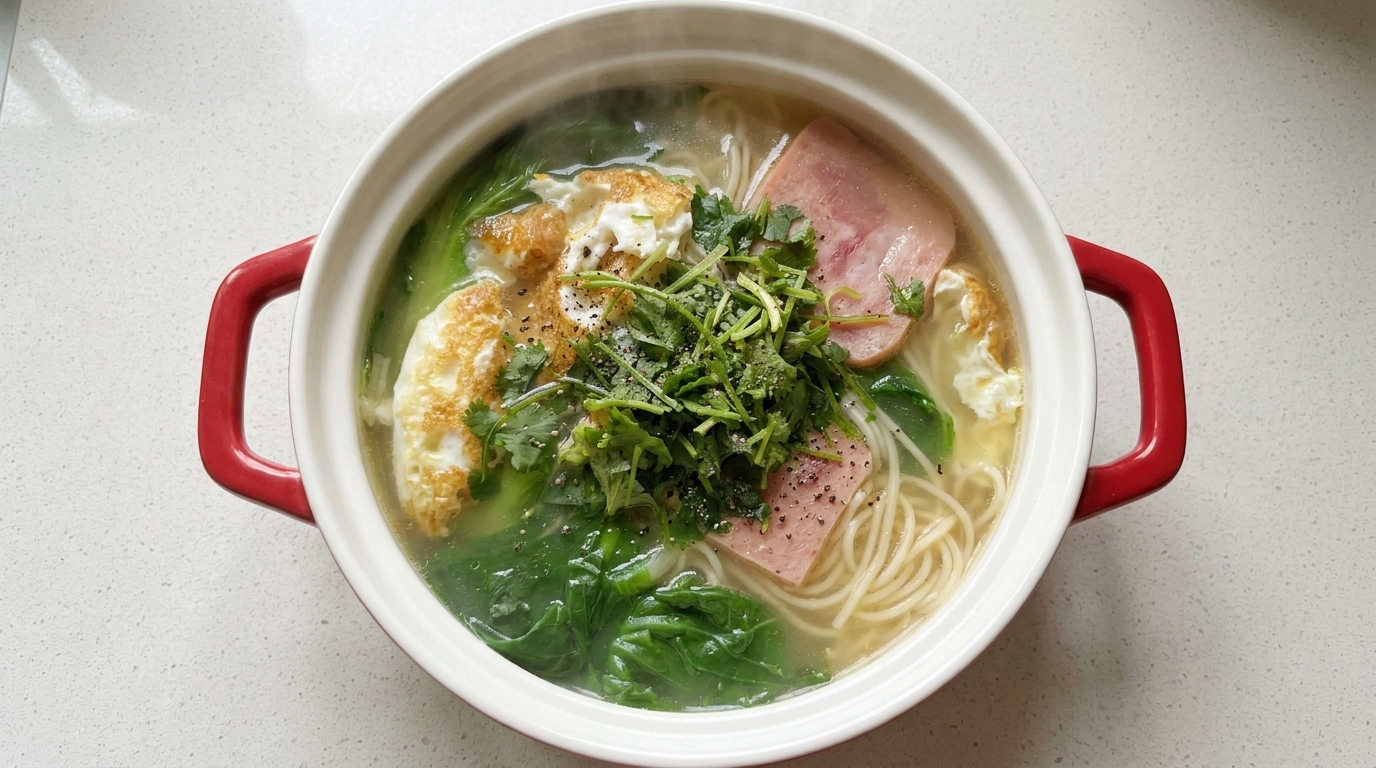
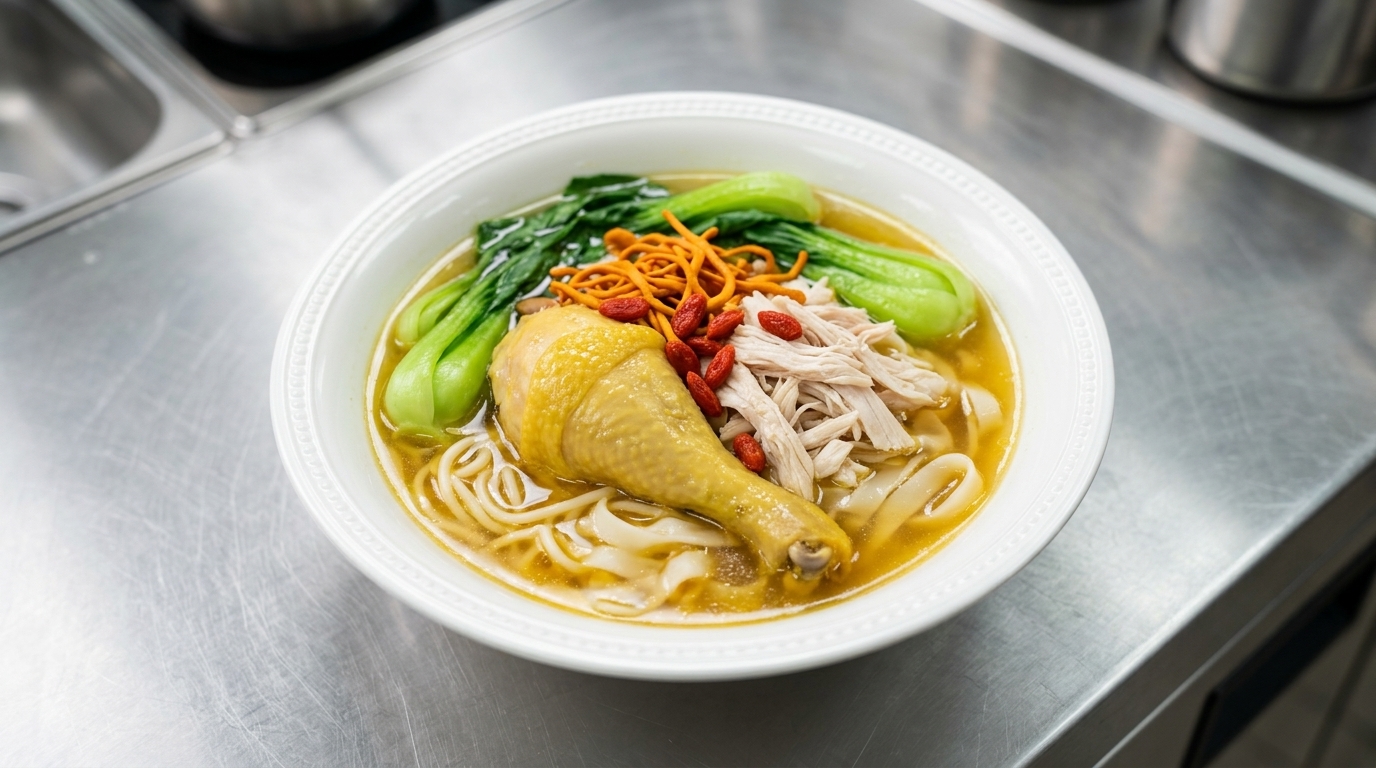
A nourishing bowl of golden chicken soup noodles featuring tender, yellow-skinned chicken, delicate greens, and a clear, flavorful broth.
This dish celebrates the pure, restorative power of a well-crafted chicken broth. By using mature red-feathered hens and a precise multi-stage cooking process, you achieve a deep, savory flavor profile and a remarkably clear golden hue that forms the perfect base for these classic soup noodles.
Ingredients
- 1 red-feathered hen
- 40g ginger
- 60g salt
- 60g chicken bouillon
- 1g alkali
- to taste noodles
- to taste bok choy
- to taste goji berries
Instructions
- 1Wash the chicken
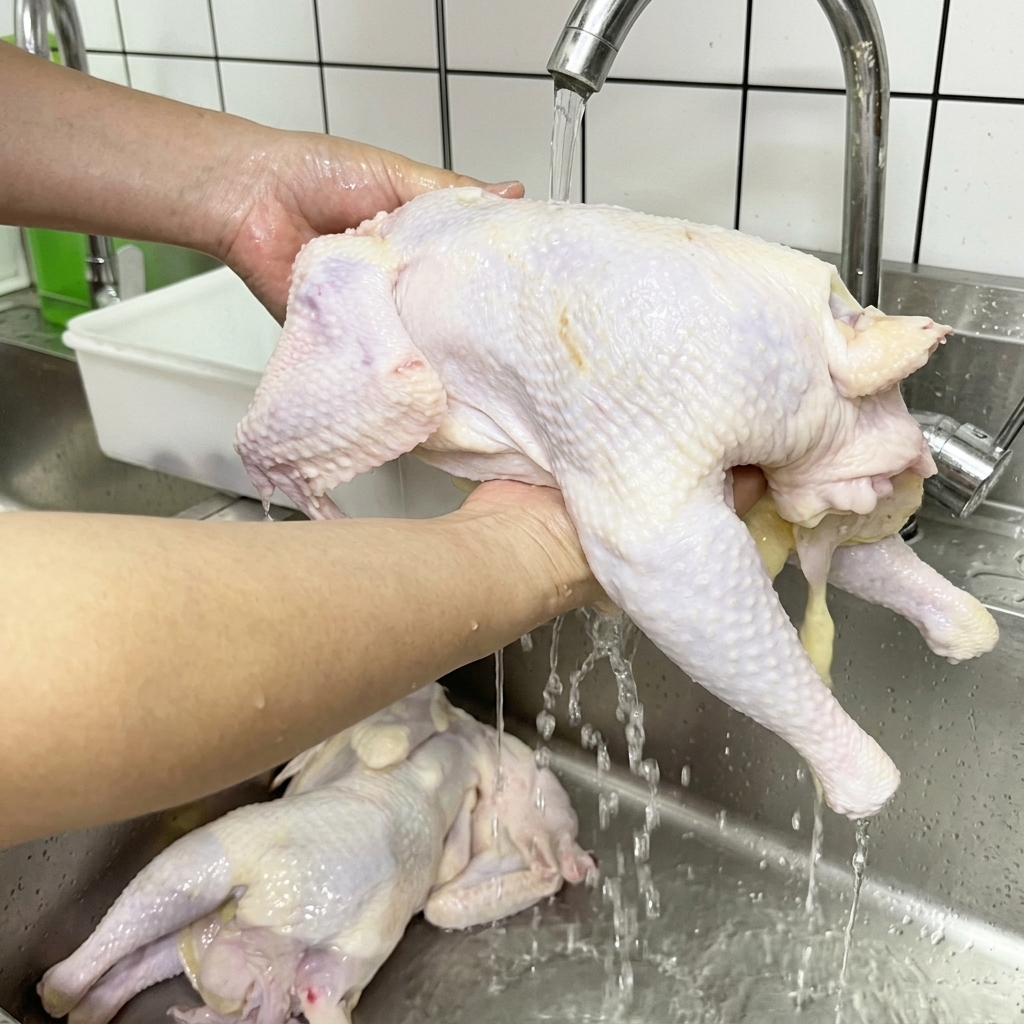
Thoroughly wash the red-feathered hens under cold running water. Ensure all surfaces are clean to prepare them for the blanching process, which will help achieve a crispier skin texture.
Tip: Use cold water for washing to maintain hygiene and freshness before cooking. - 2Blanch the chicken
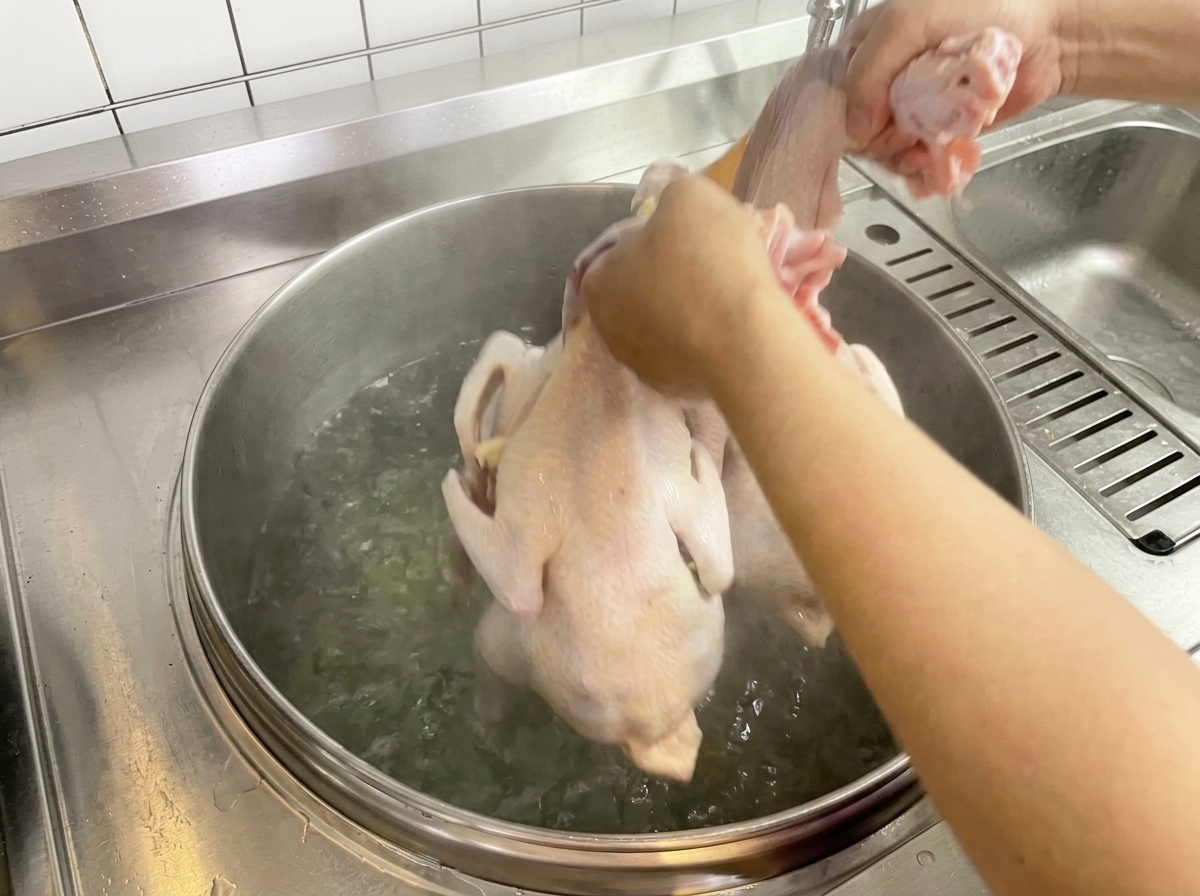
Carefully dip the washed whole chicken into a pot of boiling water. Repeat this dipping process three times; this technique is essential for tightening the skin and ensuring it becomes crispy during the subsequent cooking steps.
Tip: Handle the chicken carefully when dipping into the boiling water to avoid splashes. - 3Add ginger to the broth
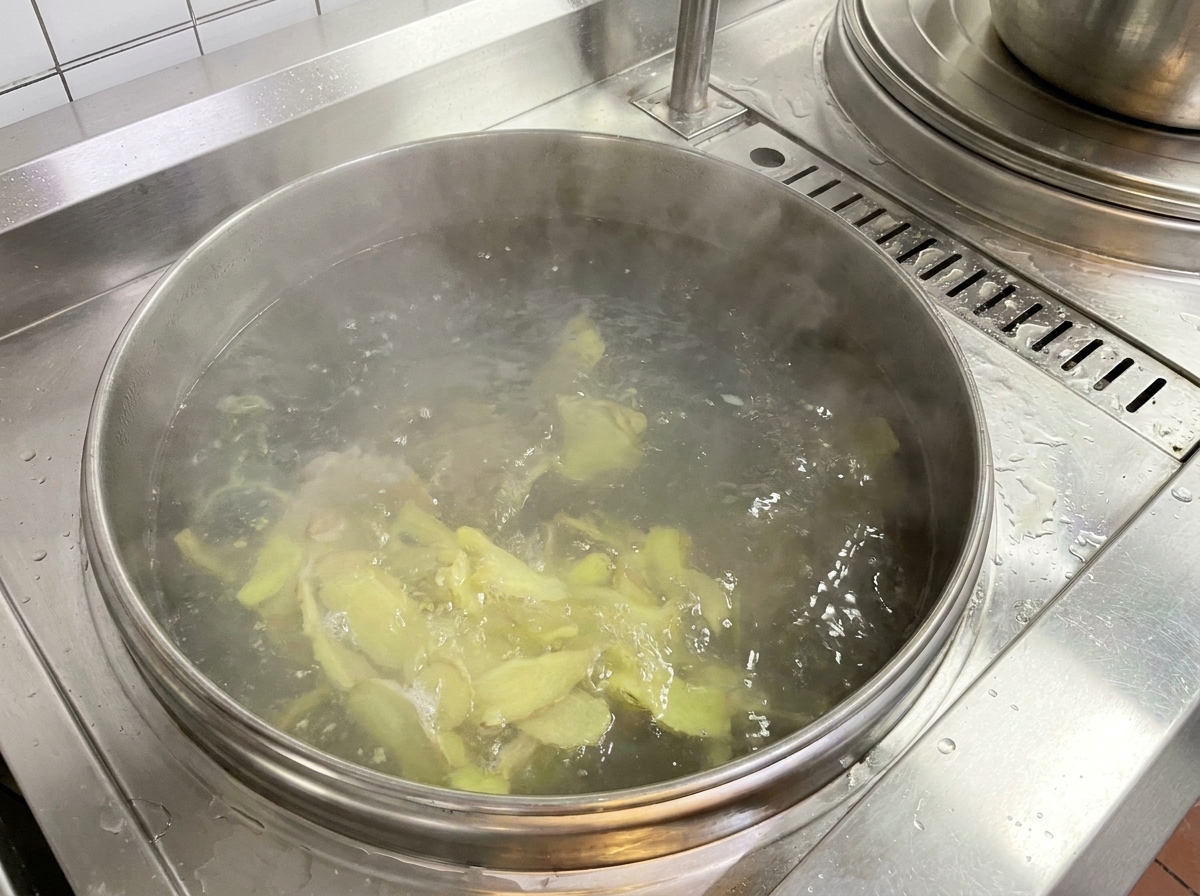
Add 40g of sliced ginger into the pot with the chicken and 8 catties of water. Bring the mixture to a boil and maintain medium heat for about 40 minutes.
Tip: Keep the pot uncovered throughout the simmering process to ensure the resulting chicken broth remains clear. - 4Skim the broth
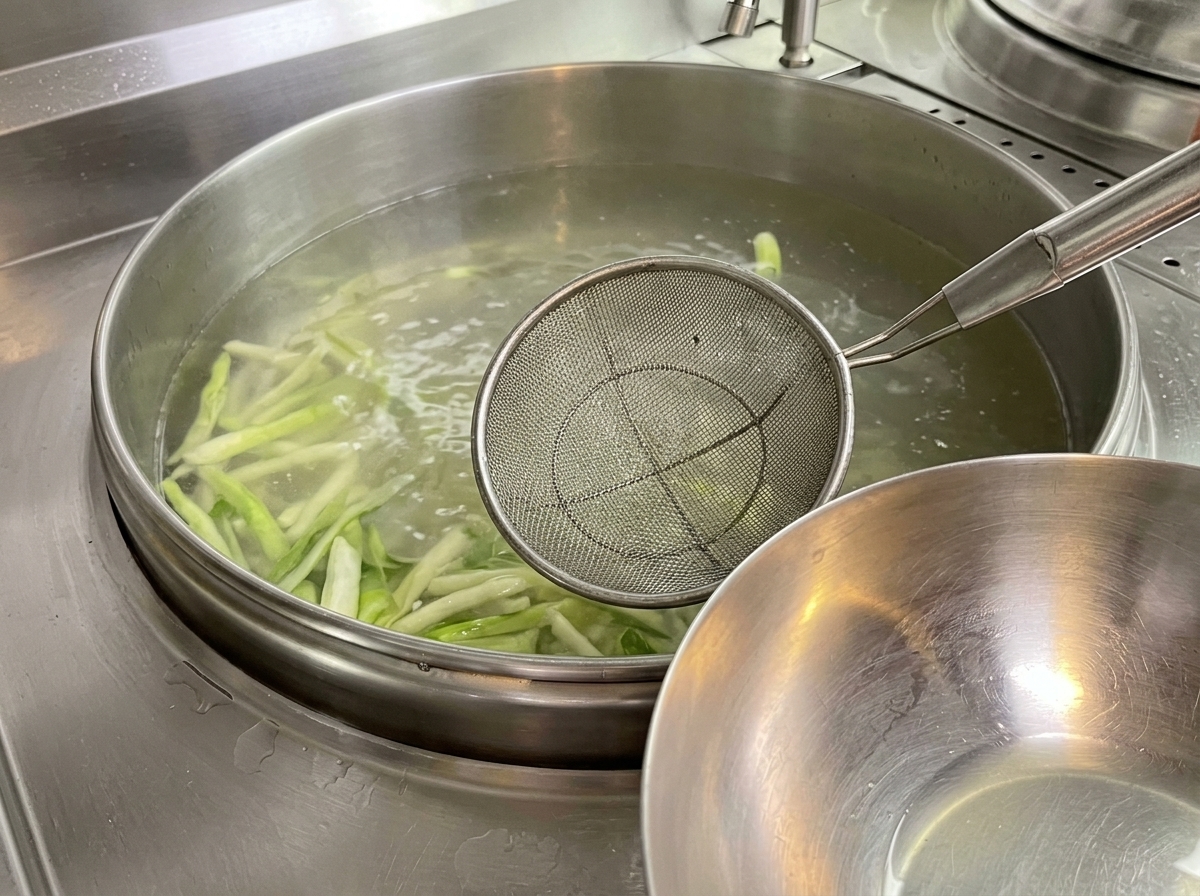
As the chicken and ginger simmer, white foam will rise to the surface. Use a fine-mesh skimmer to carefully remove this foam, which helps in keeping the broth clear and clean.
Tip: Skimming regularly during the simmering process is key to a professional-looking, clear broth. - 5Remove the cooked chicken
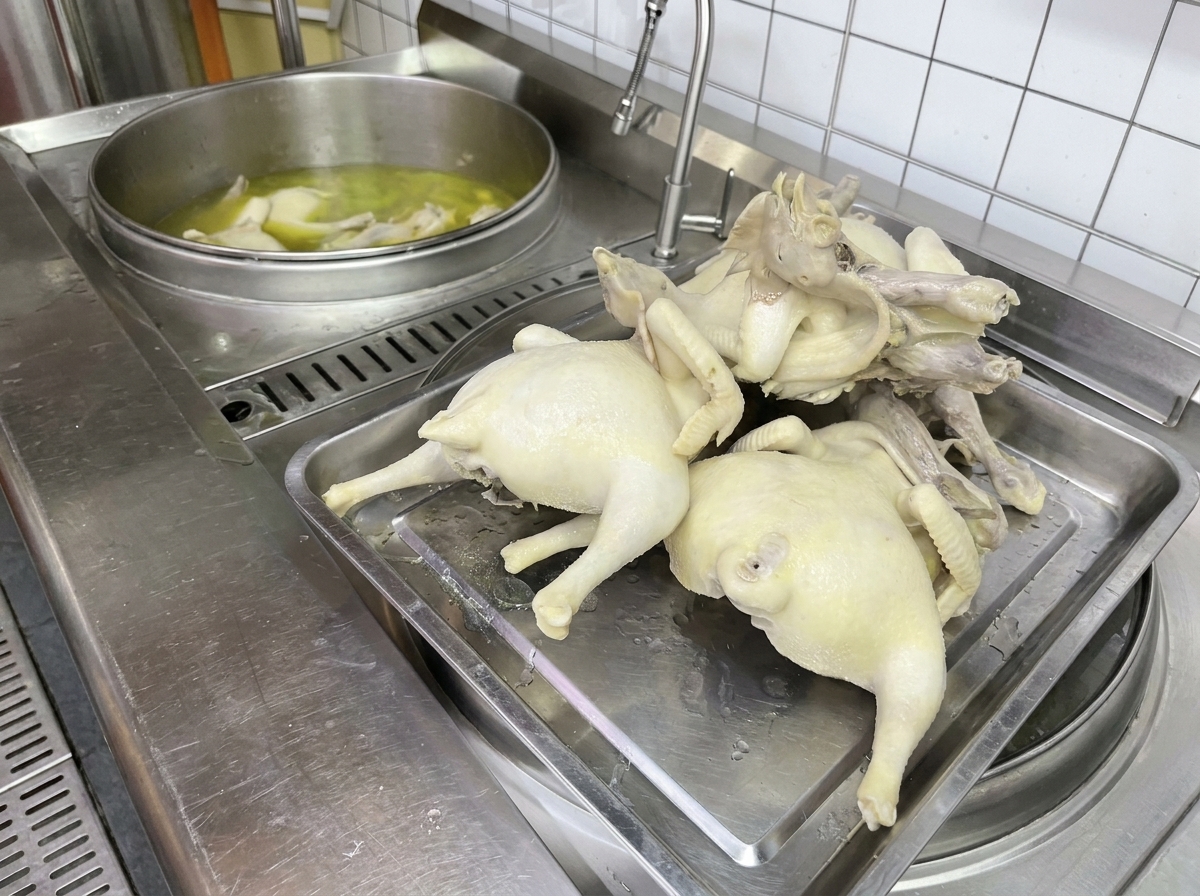
After 40 minutes of simmering, remove the cooked chickens from the broth. Place them on a tray to cool down sufficiently before you begin the process of cutting and shredding the meat.
Tip: Let the chicken cool completely to make it easier and safer to handle when carving. - 6Carve the chicken
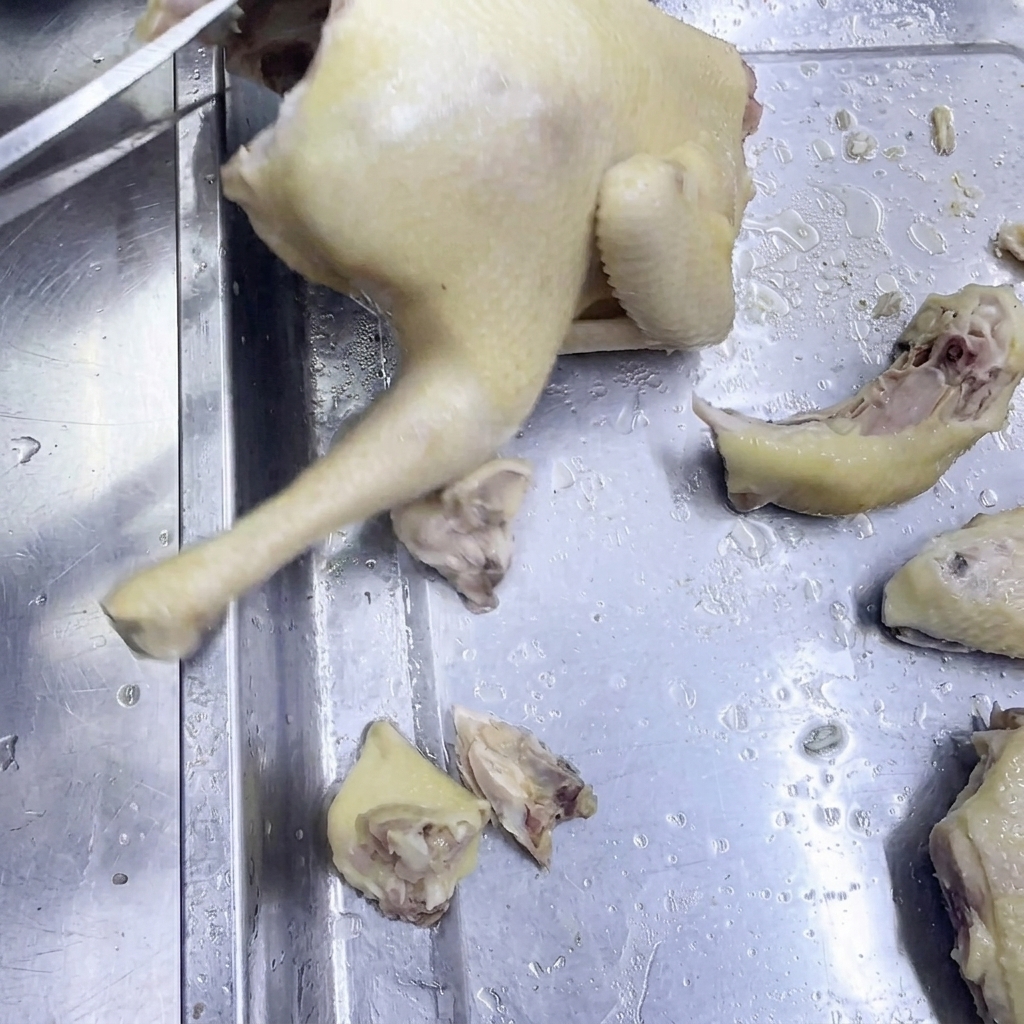
Once cooled, use kitchen scissors to carefully break down the chicken. Separate the legs, wings, and remove the meat to be shredded or served as pieces.
Tip: Scissors are often more precise and easier to maneuver than a knife when breaking down a cooked chicken. - 7Boil the chicken pieces
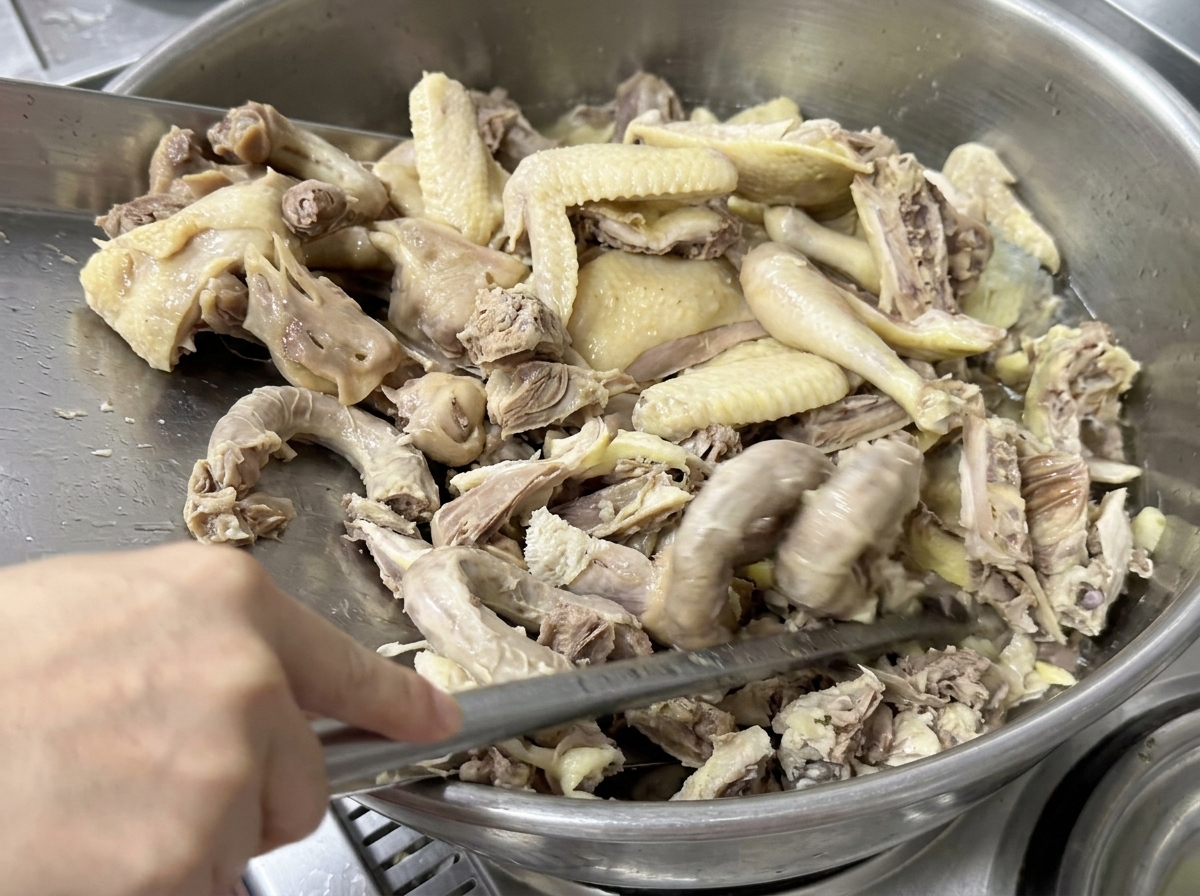
Take the cooled, cut chicken parts and return them to a fresh pot with 4 catties of water. Bring to a boil to continue developing the rich flavor for the broth.
Tip: Ensure the chicken parts are fully submerged to cook evenly. - 8Season the broth
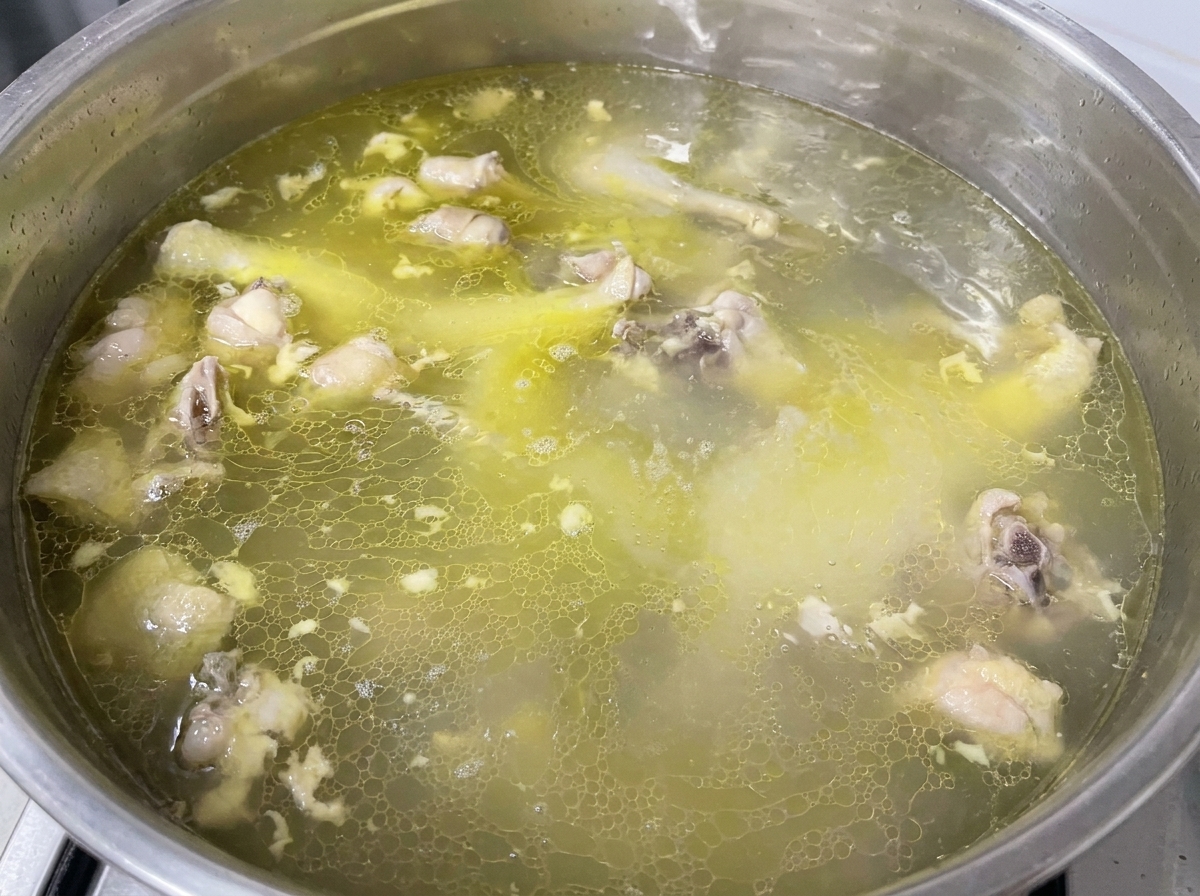
Add 60g of salt, 60g of chicken bouillon, and 1g of alkali to the boiling water with the chicken pieces. Simmer for an hour to create a deeply flavorful, salty base broth.
Tip: Adding the alkali helps achieve the signature texture and color for this specific broth style. - 9Blanch the giblets
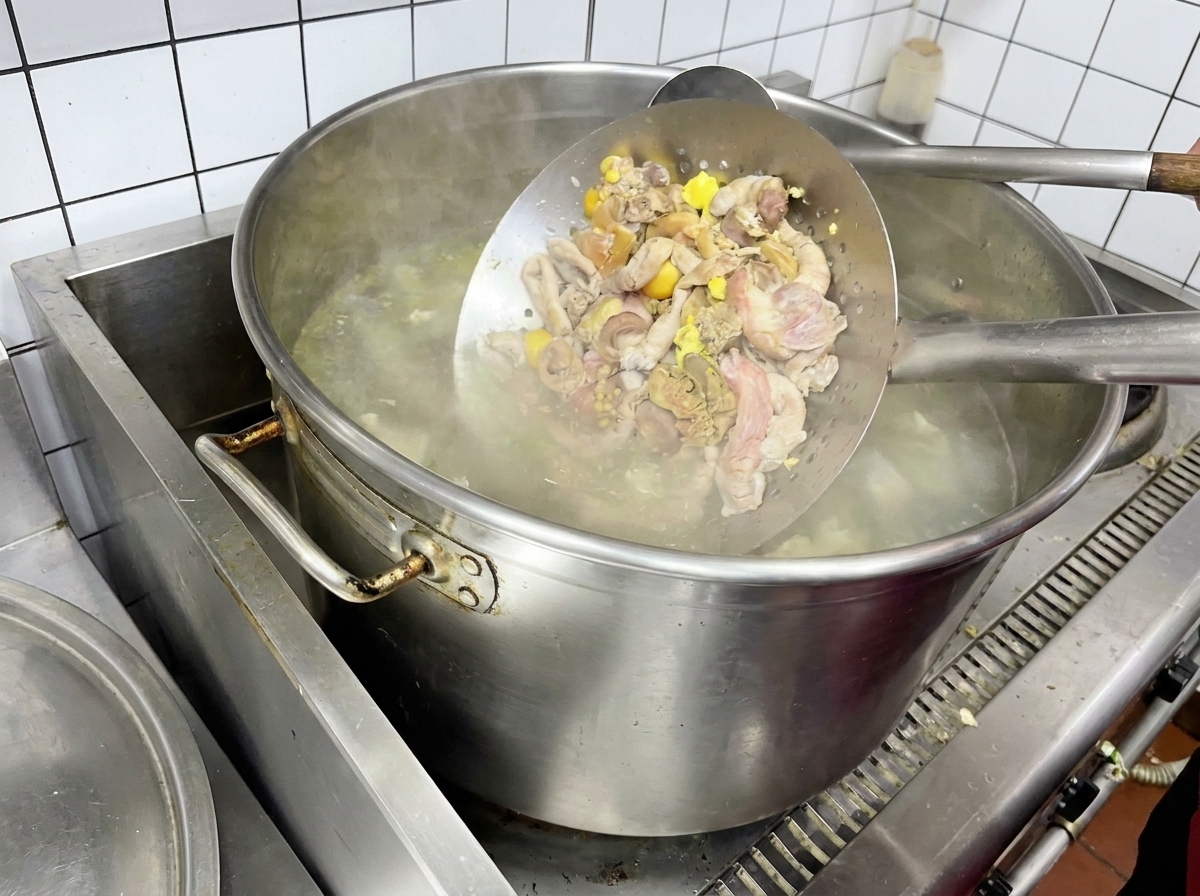
Separately blanch the chicken giblets in boiling water using a metal mesh strainer to ensure they are clean before being added to the main pot.
Tip: Blanching separately keeps the main broth clear and free of impurities. - 10Skim the broth
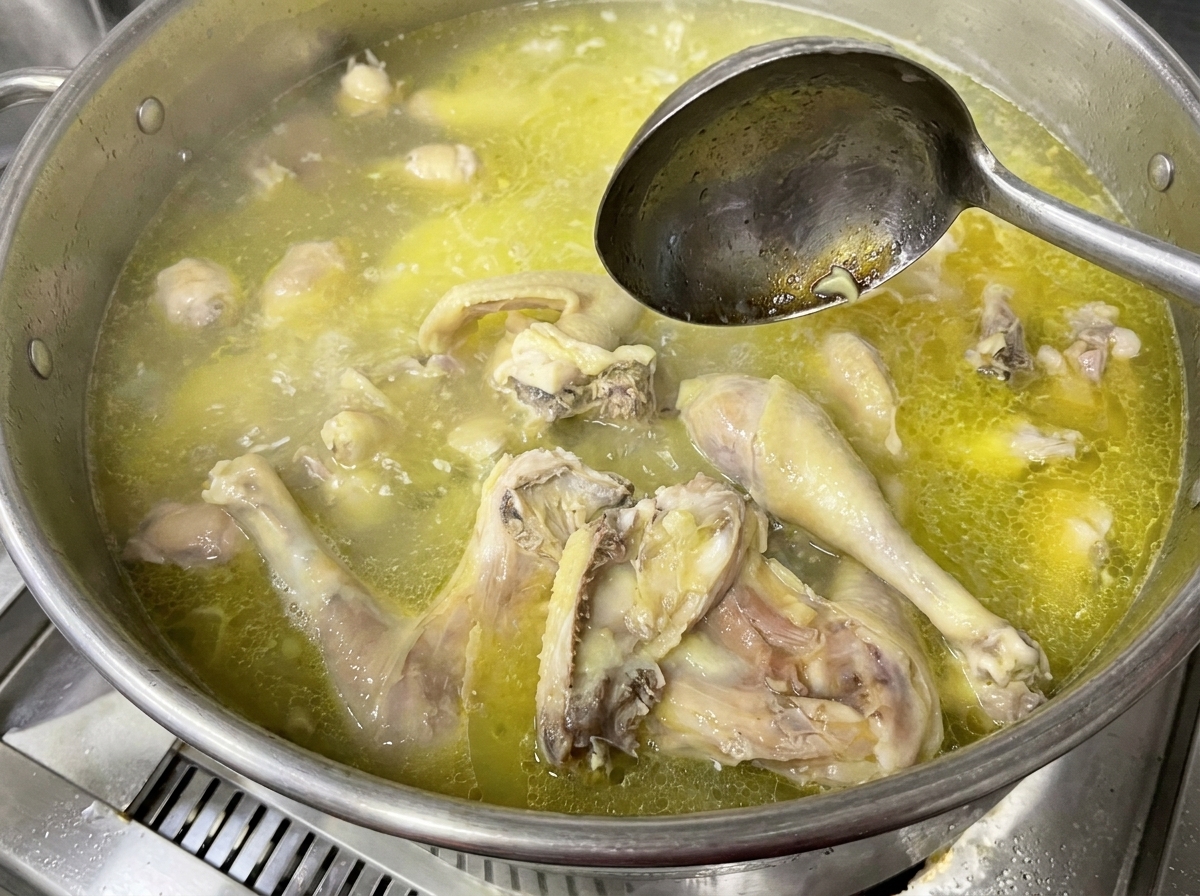
Carefully skim the foam that rises to the surface while the chicken pieces are simmering. Removing this ensures the final broth remains clear and clean.
Tip: Keep the pot uncovered during this stage to maintain clarity in the broth. - 11Remove the chicken
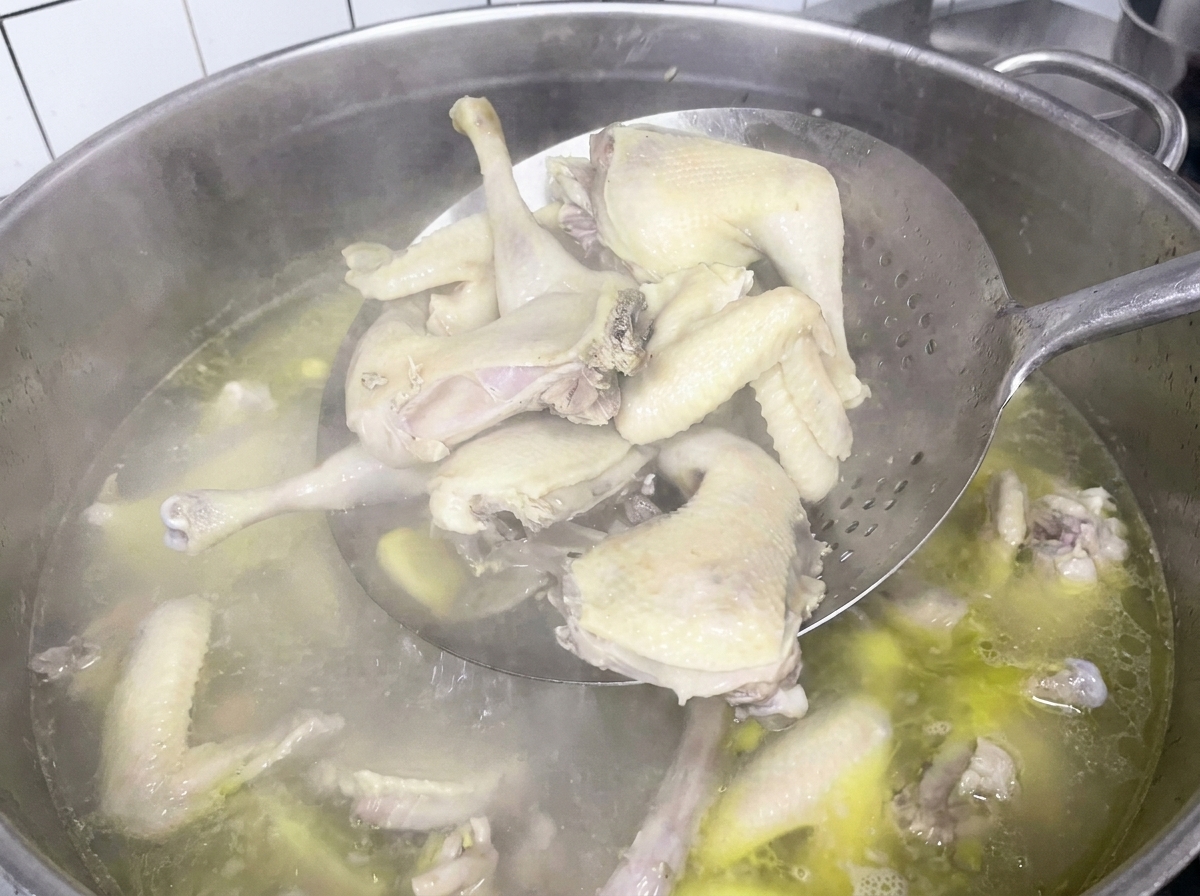
Once the chicken is fully cooked and the broth is flavorful, use a spider strainer to remove the chicken pieces from the pot, setting them aside for serving.
Tip: Handle the pieces gently so they remain intact for plating. - 12Assemble the soup
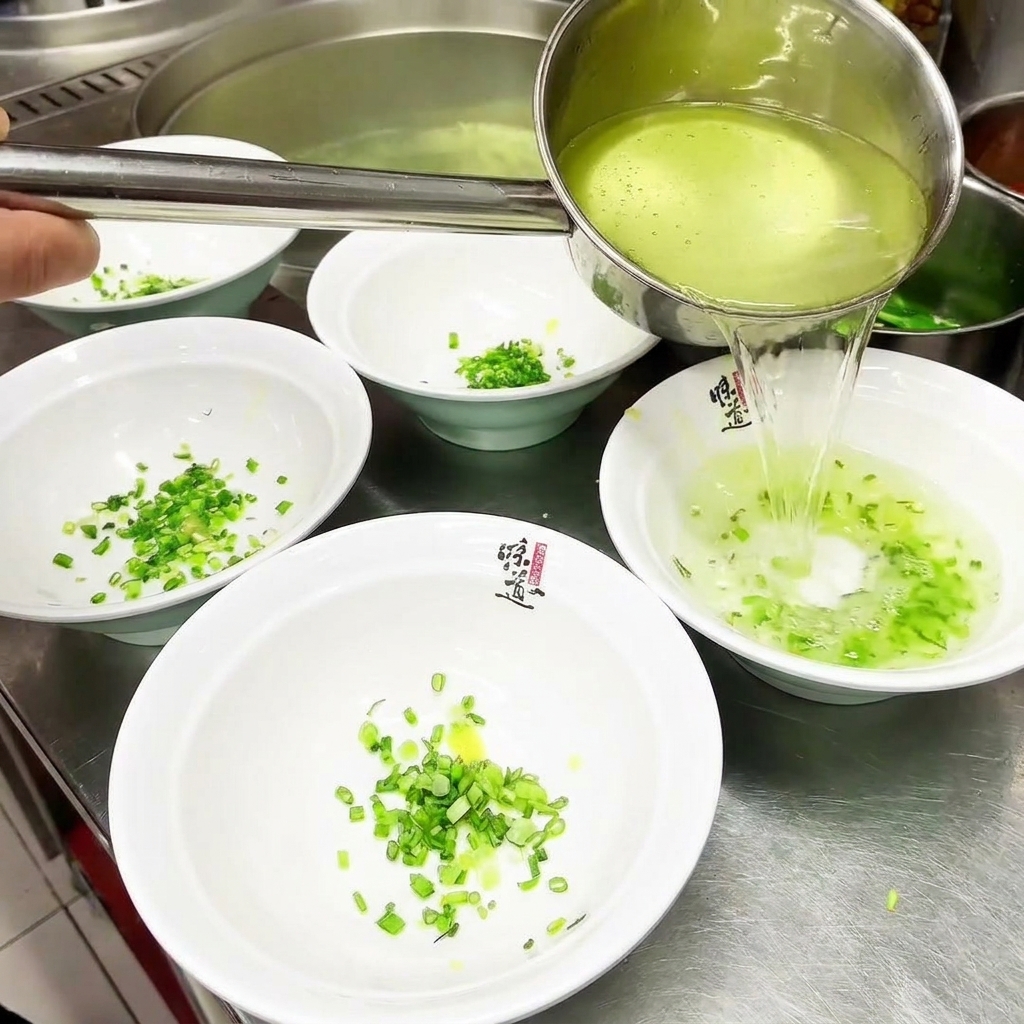
Ladle the hot, golden chicken broth into individual serving bowls containing chopped greens. Top each bowl with the reserved cooked chicken pieces.
Tip: Make sure the broth is piping hot when poured to ensure the greens are perfectly wilted. - 13Assemble the chicken noodle bowl
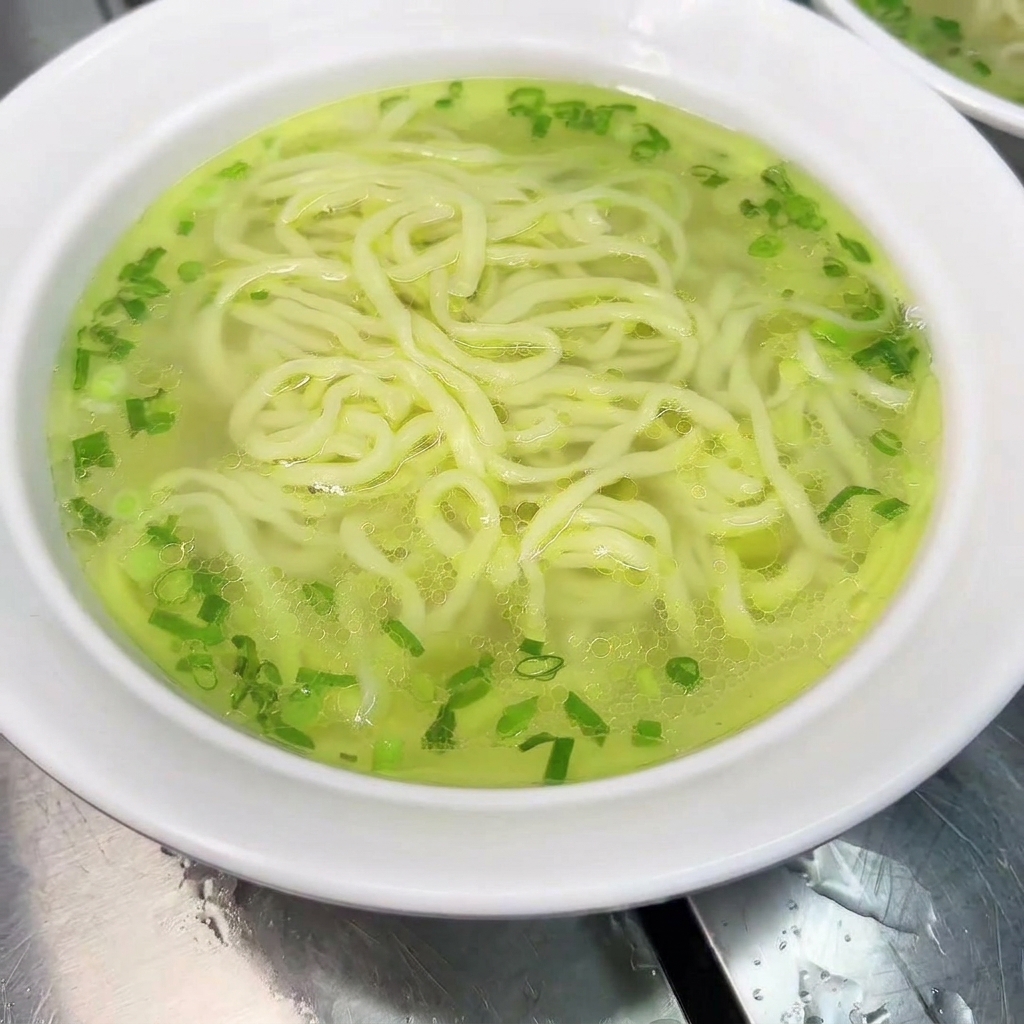
Take the prepared chicken leg and carefully place it into a bowl of freshly cooked noodles. Ladle the hot, flavorful chicken broth over the noodles and chicken to bring all the components together for serving.
Tip: For the best presentation, nestle the chicken leg on top of the noodles so it is partially submerged in the hot broth.