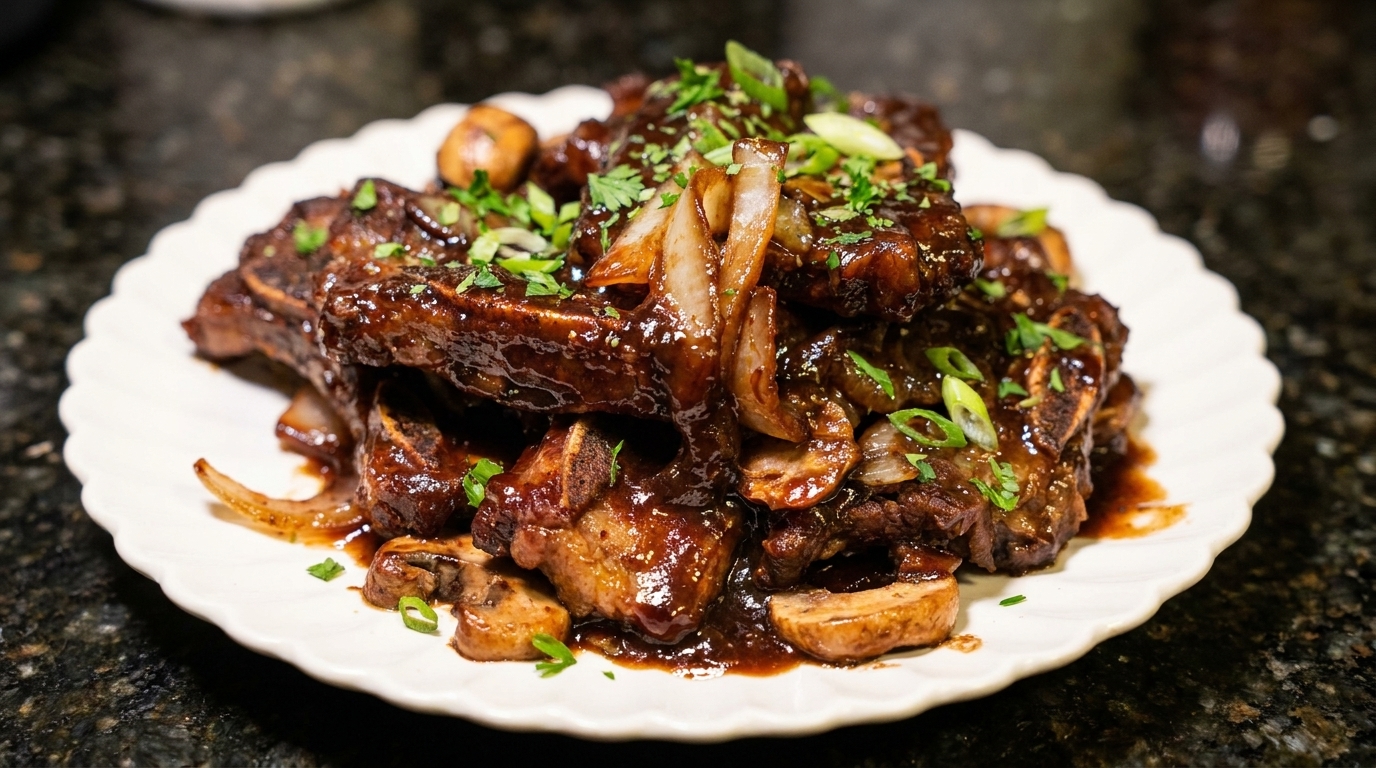
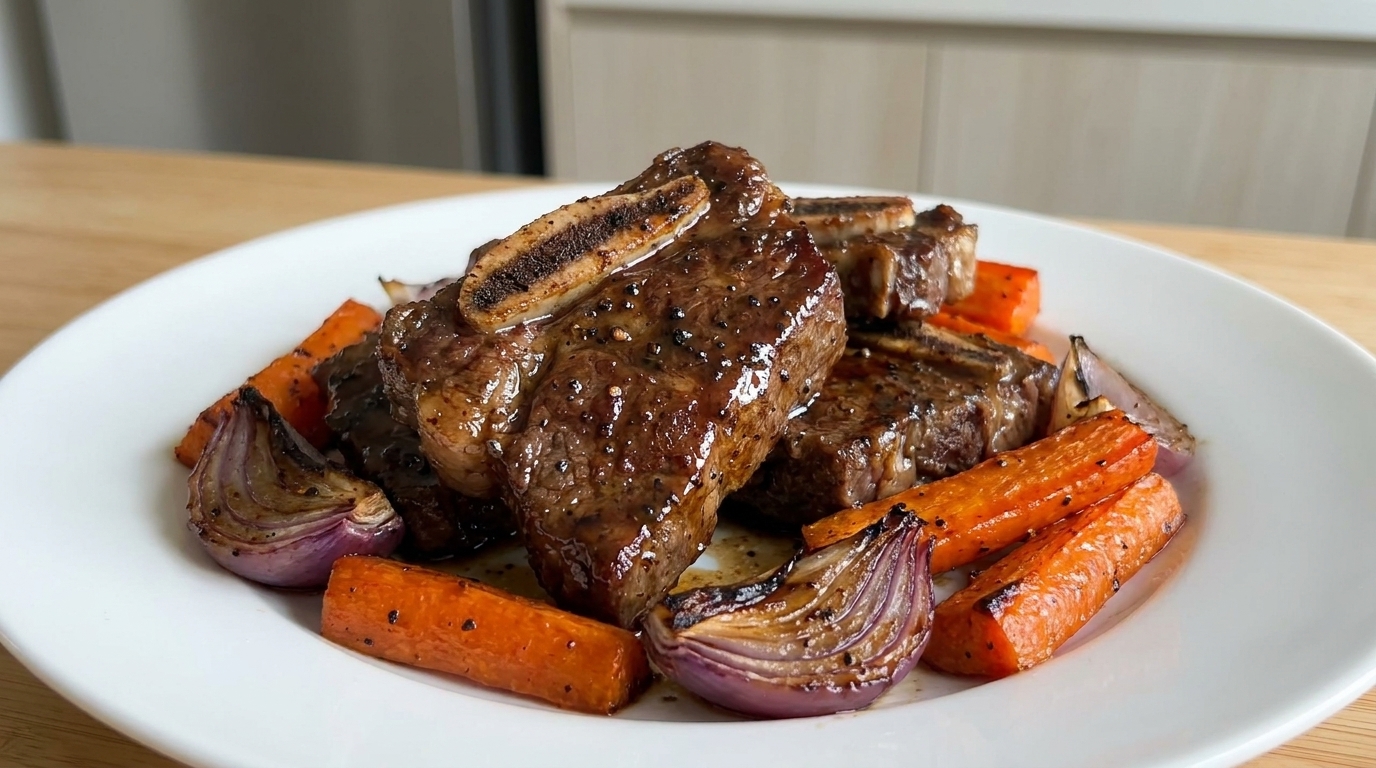
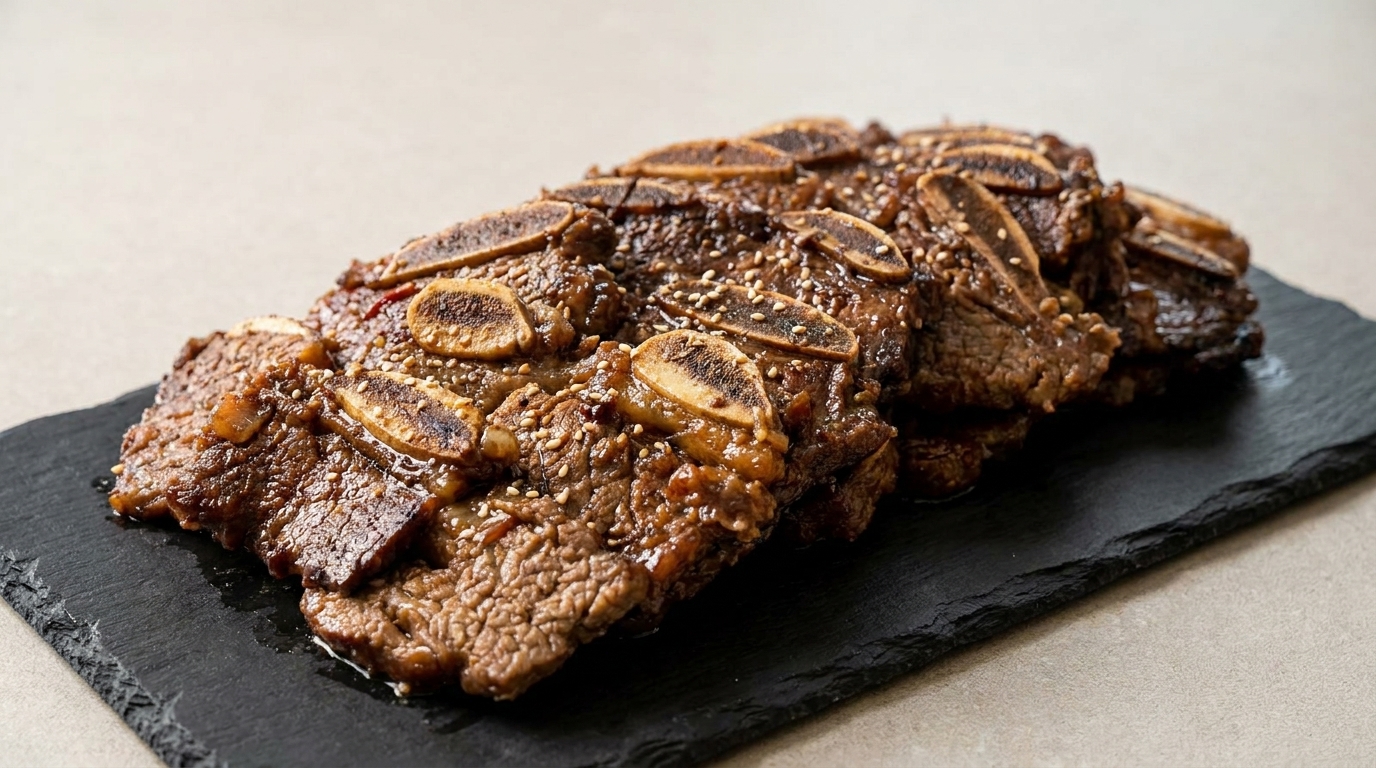
Authentic Korean LA Galbi (Marinated Bone-in Short Ribs)
Master the art of LA-style short ribs: succulent bone-in beef glazed in a signature sweet-savory soy marinade with notes of garlic, ginger, and toasted sesame.
LA Galbi is a beloved Korean-American fusion classic, featuring thinly sliced lateral-cut short ribs. Developed by the Korean community in Los Angeles, this version is marinated in a balanced blend of soy, sugar, and aromatics to ensure tender meat that caramelizes beautifully over heat. It is traditionally enjoyed with steamed white rice and kimchi for the ultimate comfort meal.
Ingredients
- 1 kg beef short ribs (bone-in)
- 200 g soy sauce
- 80 g white sugar
- 100 g mirin
- 40 g minced garlic
- 8 g minced ginger
- 80 g chopped green onions
- 15 g sesame oil
- 540 g water
- to taste black pepper
- 1 pinch MSG
- optional grated pear or pineapple
- optional toasted sesame seeds
Instructions
- 1Wash and soak the ribs
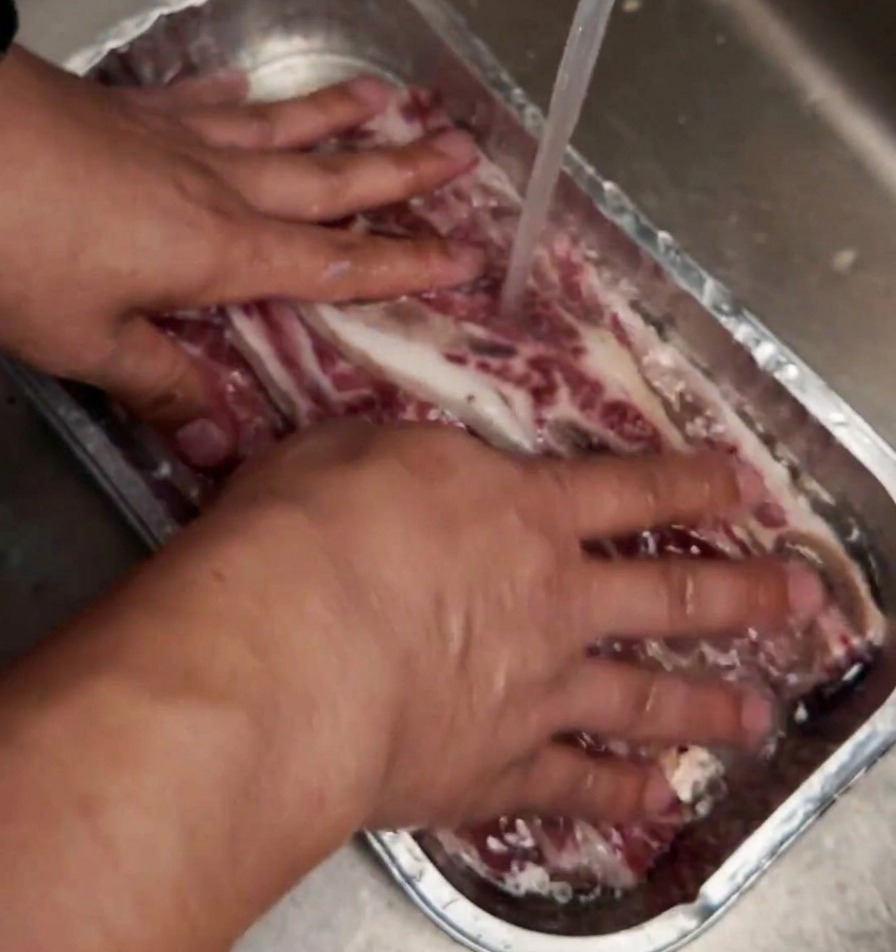
Begin by washing one kilogram of bone-in beef short ribs thoroughly under cold running water. After rinsing, soak the ribs in a bowl of cold water for about 30 minutes to remove any excess blood and impurities, ensuring the meat has a clean flavor before marinating.
Tip: Soaking the ribs is a crucial step in Korean BBQ prep because it helps remove the strong meaty smell and results in a much clearer marinade and better final taste. - 2Add the soy sauce base
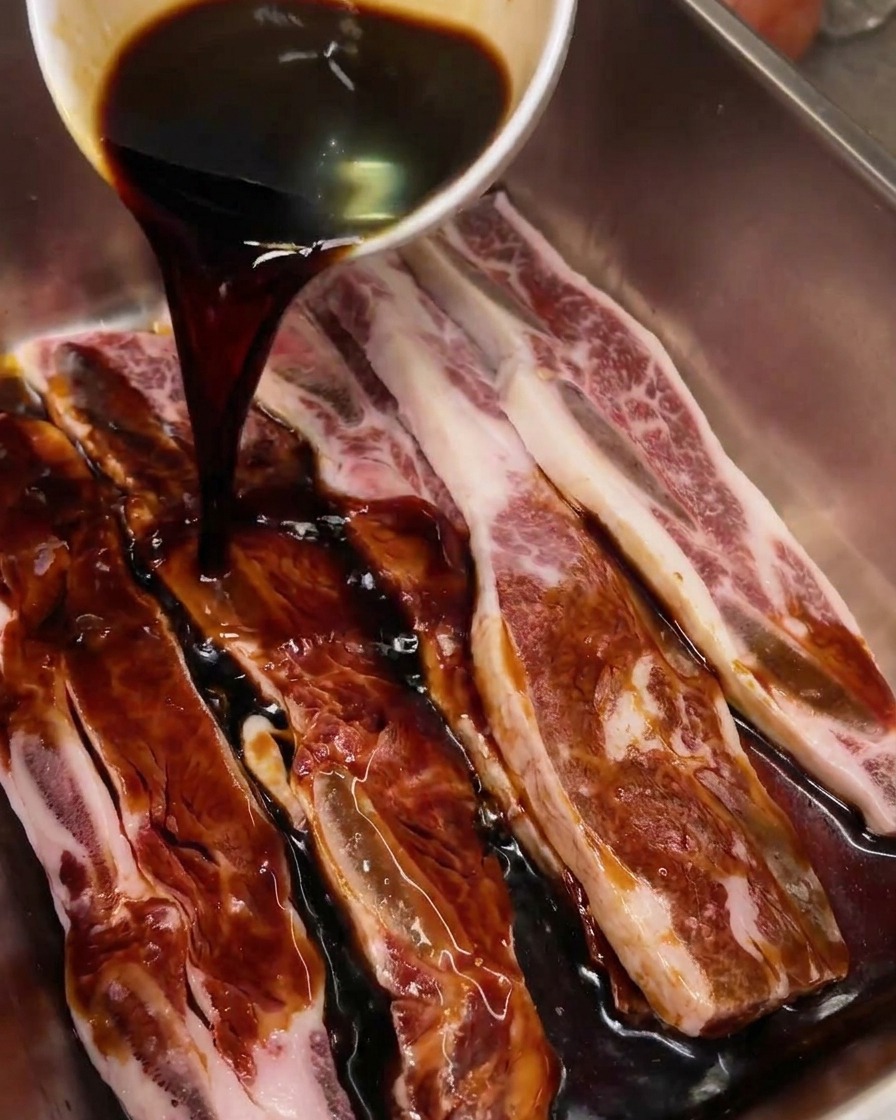
Place the prepared short ribs into a clean container and pour in 200 grams of dark soy sauce. This savory liquid forms the base of the LA Galbi marinade and provides the signature deep, rich color to the meat.
Tip: Make sure the ribs are laid out as flat as possible so the soy sauce can coat each piece evenly. - 3Sweeten the marinade
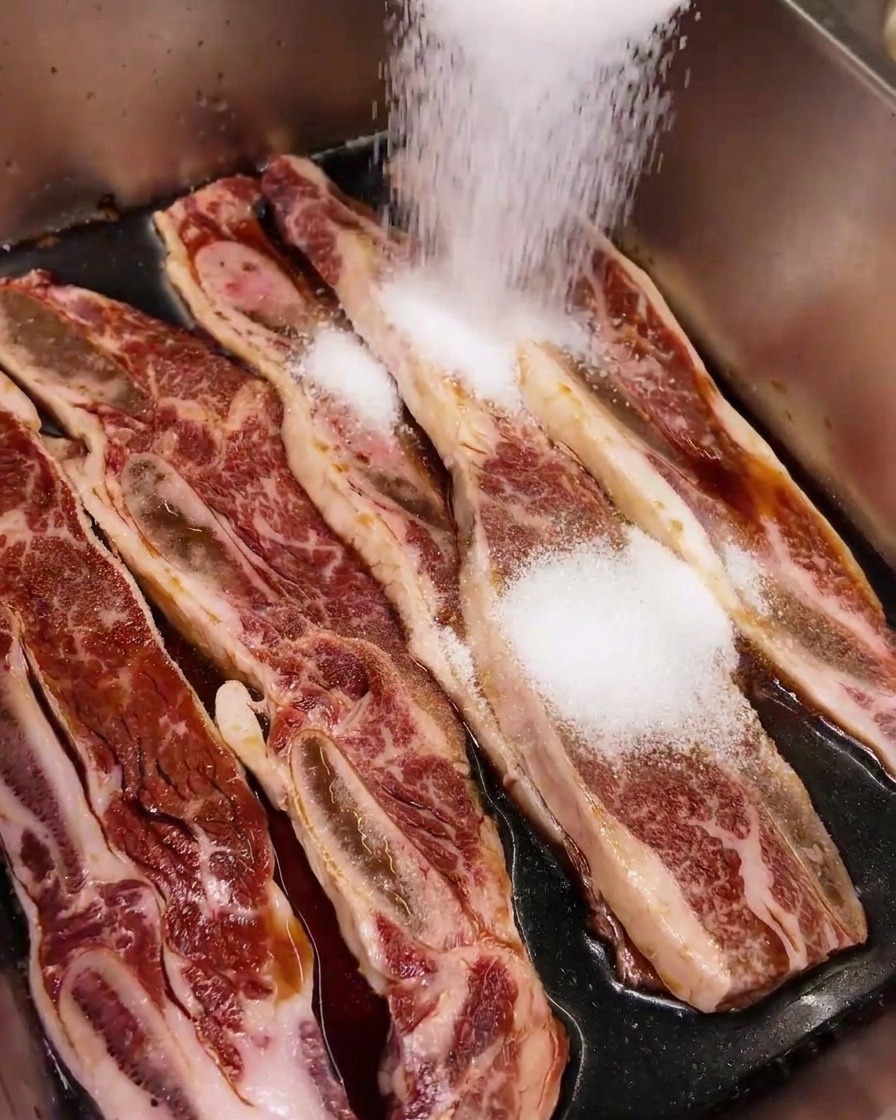
Sprinkle 80 grams of white sugar directly onto the soy-coated ribs. The sugar balances the saltiness of the soy sauce and will help create a beautiful caramelized crust on the beef when it hits the hot pan.
Tip: If you prefer a more natural sweetness, you can slightly reduce the granulated sugar and add extra grated pear later in the process. - 4Incorporate the mirin
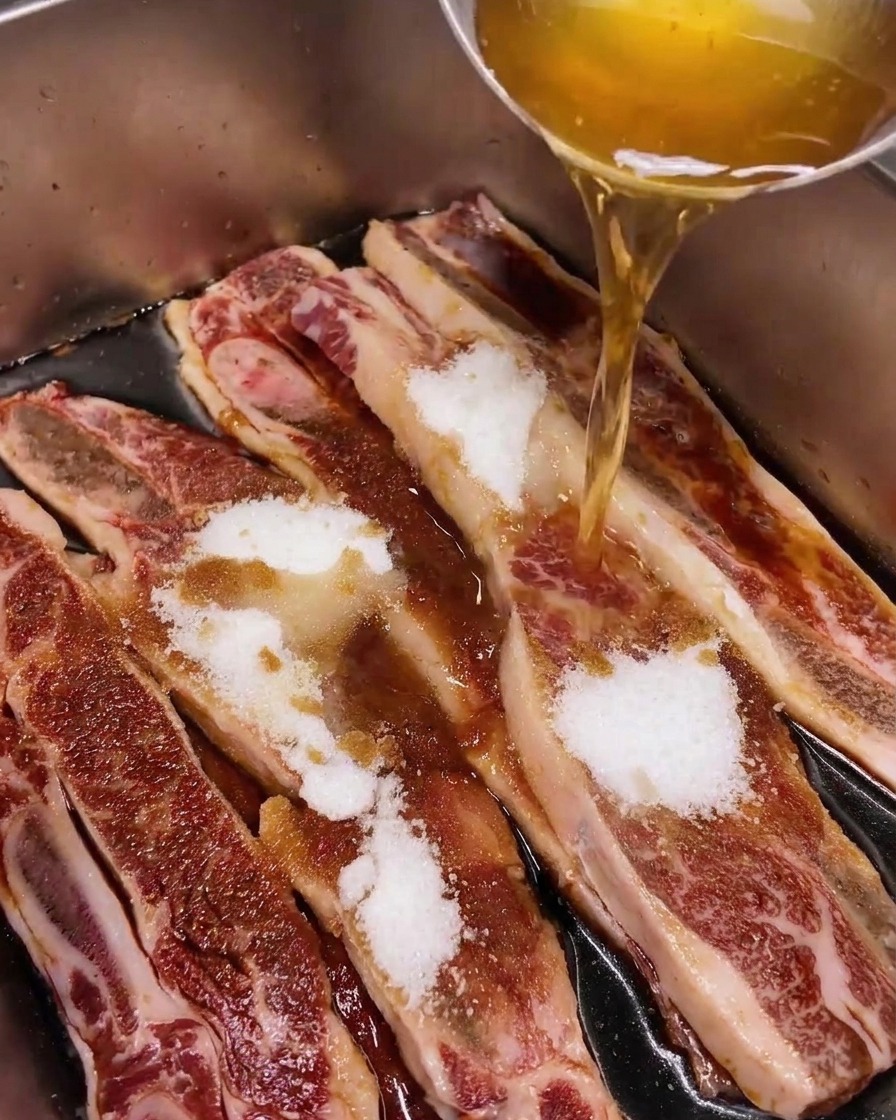
Add 100 grams of mirin or cooking wine to the tray. The alcohol in the mirin helps tenderize the beef fibers and neutralizes any remaining gamey odors, while contributing a subtle, refined sweetness to the dish.
Tip: If you dont have mirin, you can substitute it with dry white wine or a splash of rice vinegar mixed with an extra pinch of sugar. - 5Add minced garlic
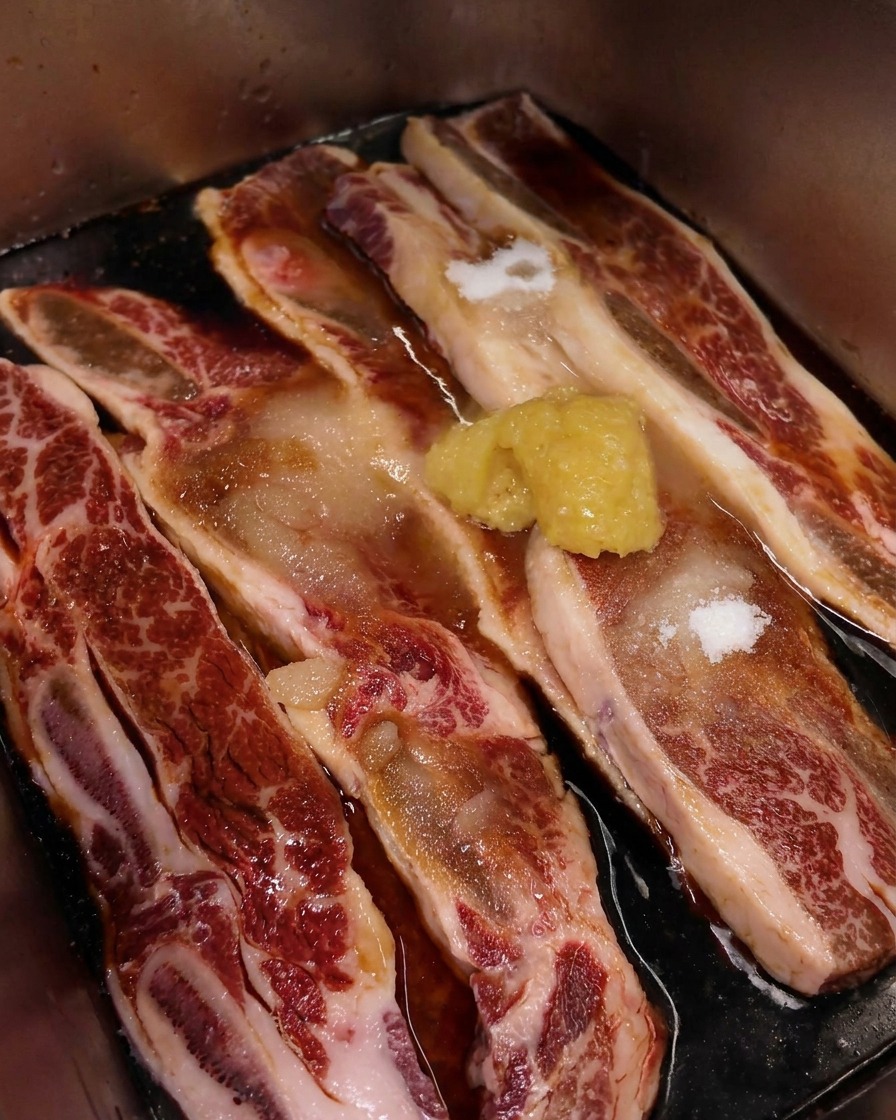
Add about 40 grams of minced garlic directly onto the short ribs in the marinade tray. Garlic is a foundational aromatic in Korean marinades, providing a sharp, savory depth that balances the sweetness of the sugar and fruit.
Tip: For the best flavor, use freshly minced garlic rather than the pre-jarred variety, which can sometimes have a bitter aftertaste. - 6Incorporate ginger and green onions
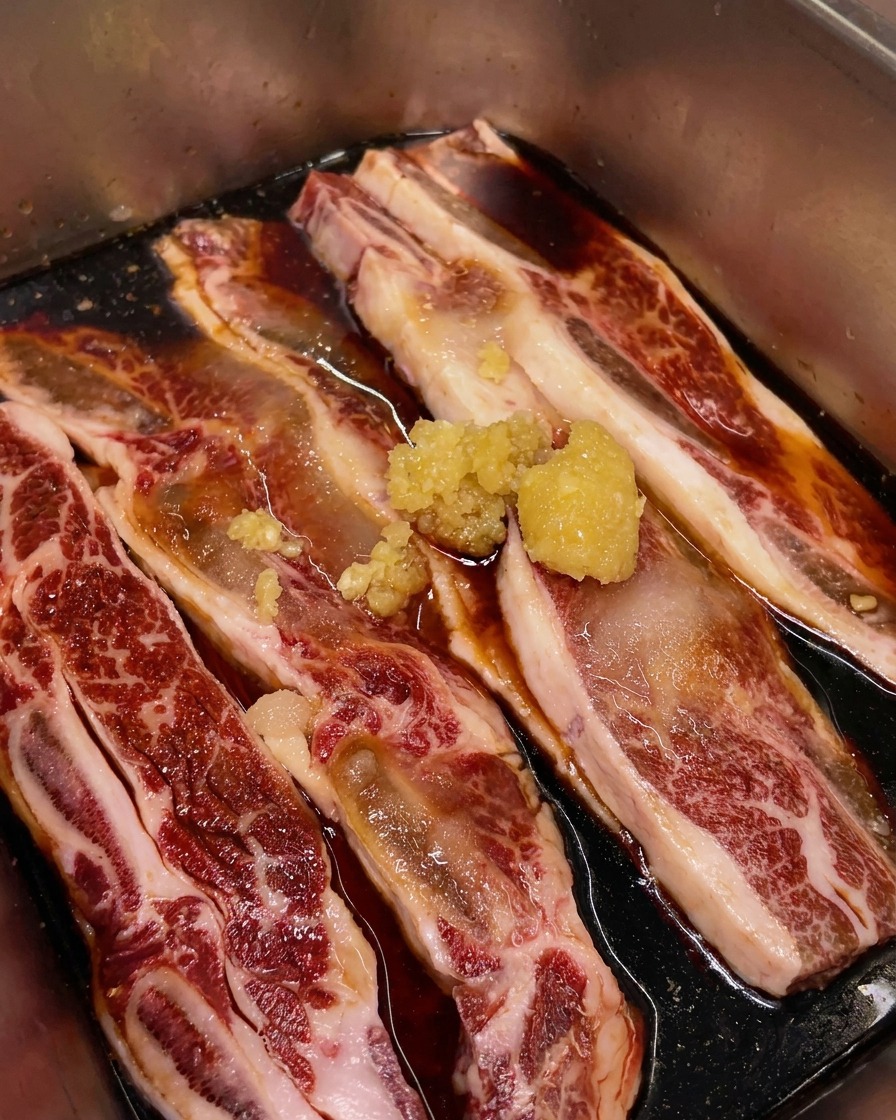
Add 8 grams of minced ginger and 80 grams of freshly chopped green onions to the marinade. The ginger cuts through the richness of the beef fat, while the green onions add a mild, fresh bite and vibrant color to the mixture.
Tip: Finely mince the ginger so it distributes evenly and doesnt leave large, spicy chunks in the final dish. - 7Finish with sesame oil
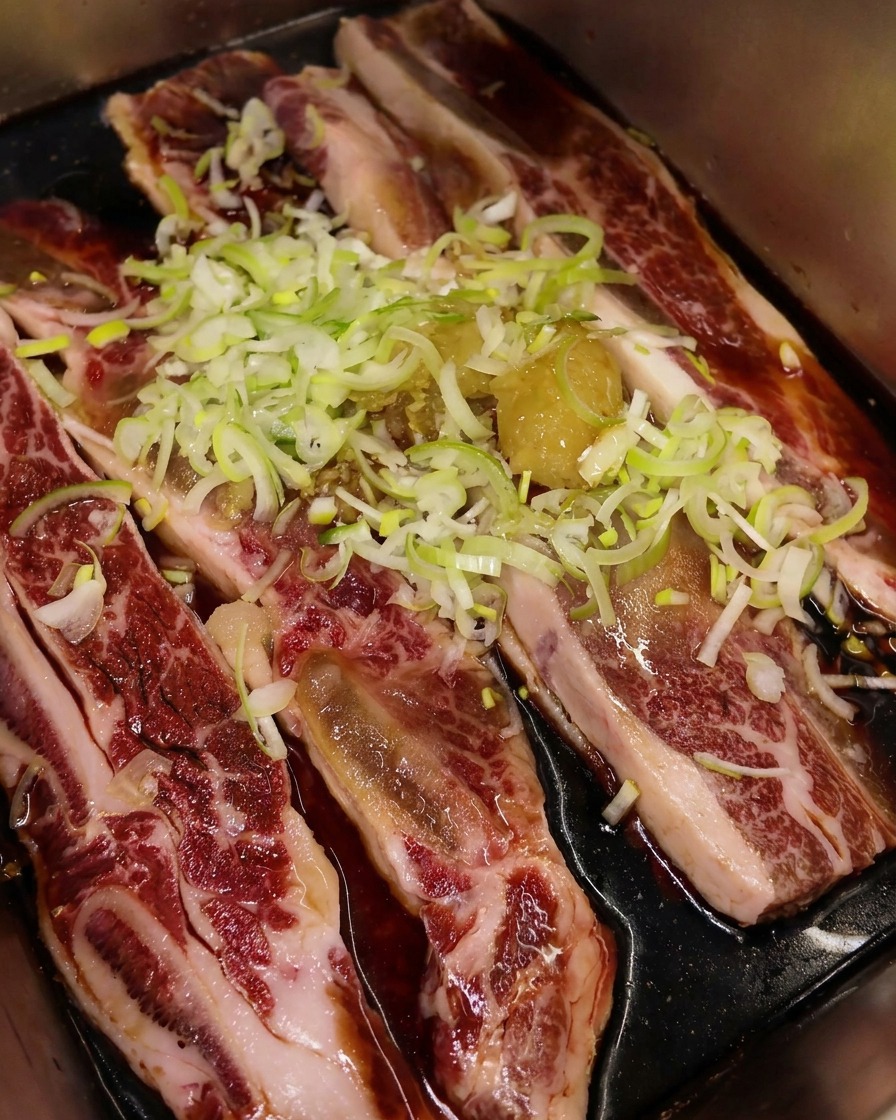
Drizzle 15 grams of toasted sesame oil over the ribs and aromatics. This adds a distinctive nutty aroma and a glossy sheen to the marinade, helping the flavors cling to the meat as it sits.
Tip: Always add sesame oil last in marinades; its strong aroma can dissipate if its mixed too vigorously with watery ingredients early on. - 8Pour in the water
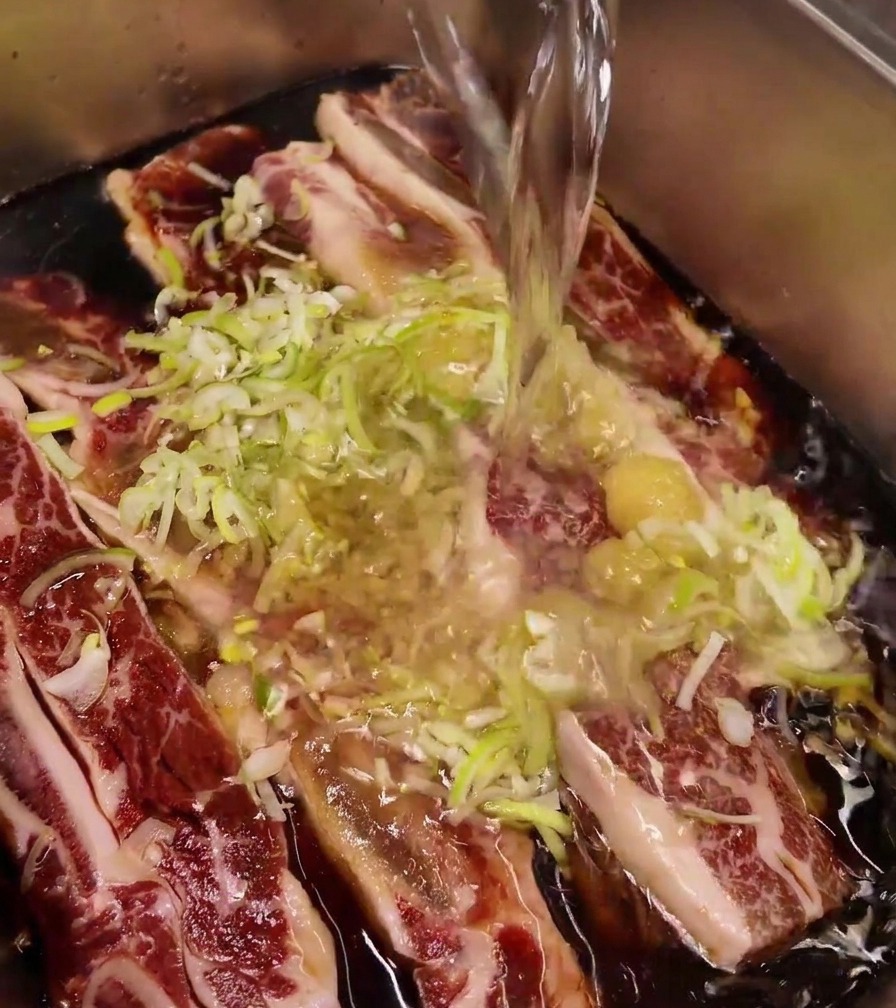
Add 540 grams of water to the marinade tray. This increases the total volume of the liquid to ensure the bone-in short ribs are completely submerged, allowing them to absorb all the flavors evenly during the marination process.
Tip: Adding a generous amount of water helps balance the saltiness of the soy sauce and allows the marinade to penetrate more deeply into the thick meat. - 9Mix the marinade
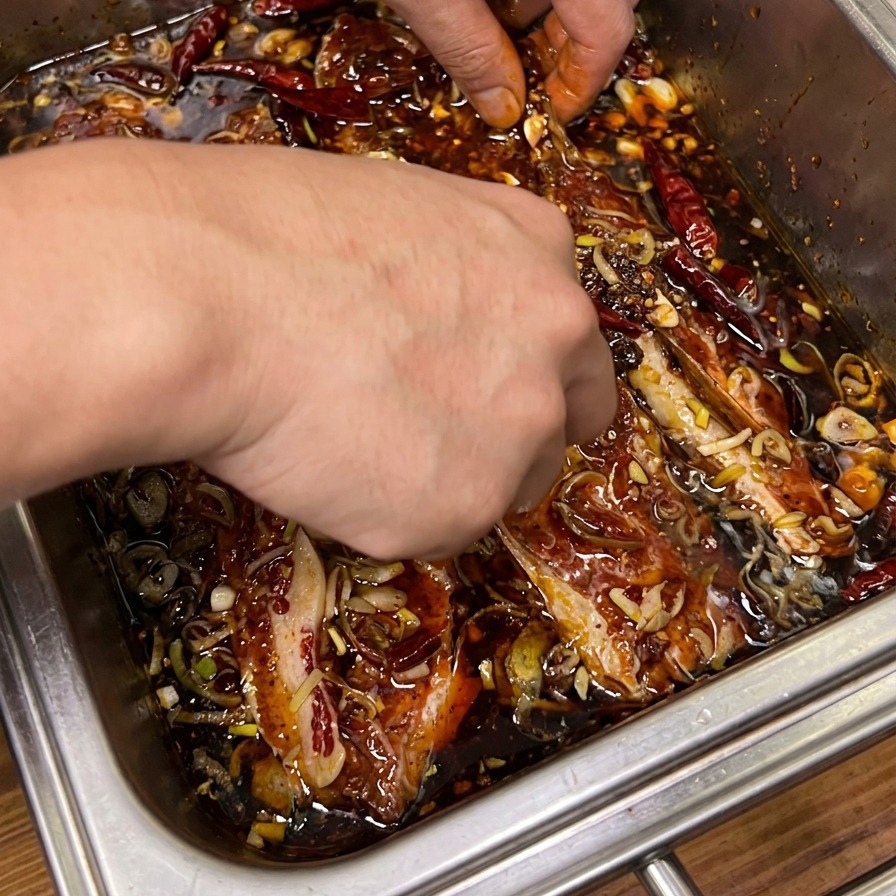
Use your hands to thoroughly mix the ribs with the marinade liquid and aromatics. Be sure to stir well to dissolve any remaining sugar at the bottom of the tray and ensure every piece of meat is fully coated in the sauce.
Tip: Mixing by hand is the best way to ensure the sugar has completely dissolved and allows you to massage the flavors into the meat fibers. - 10Fry the ribs
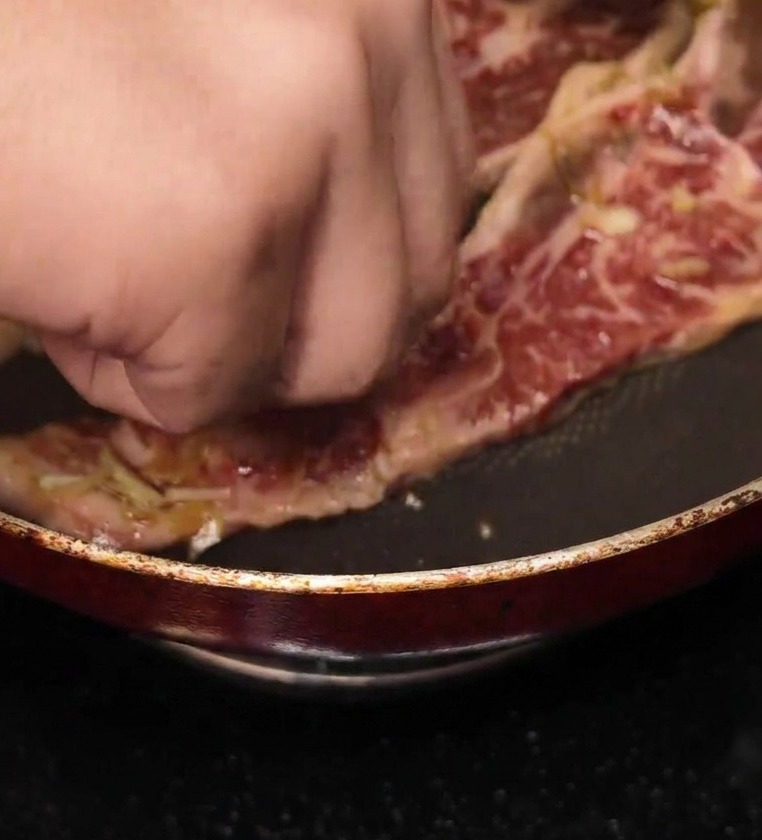
Heat a flat pan or skillet over medium-high heat and carefully place the marinated ribs inside to begin frying. Since the marinade contains sugar, the meat will caramelize beautifully, developing a rich, savory crust as it cooks.
Tip: Do not overcrowd the pan; fry in batches if necessary to maintain a high temperature for a better sear and to prevent the meat from steaming. - 11Sear and flip
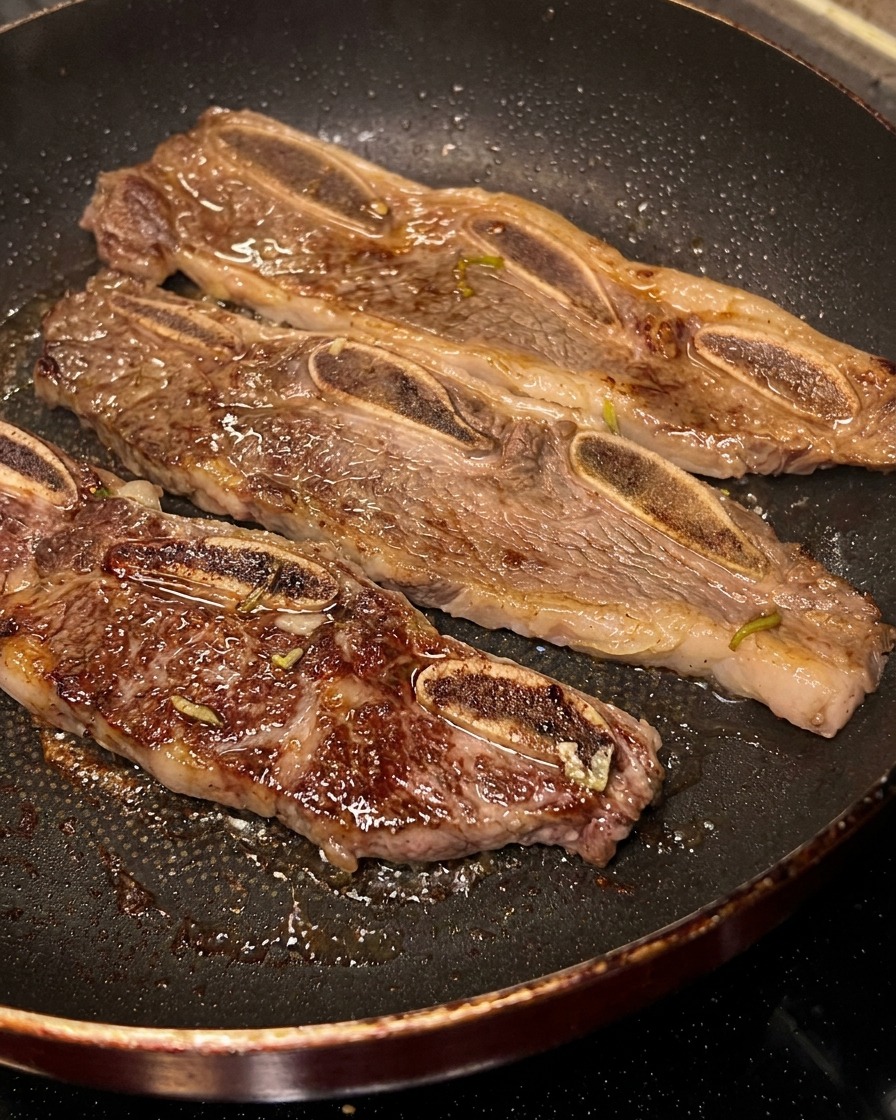
Once the ribs are in the pan, cook until the bottom side is deeply browned and caramelized. Use tongs to flip each piece, ensuring the sugar-rich marinade creates a dark, savory crust on both sides without burning.
Tip: Do not overcrowd the pan. If you cook too many at once the temperature will drop and the meat will steam instead of searing. - 12Cut into bite-sized pieces
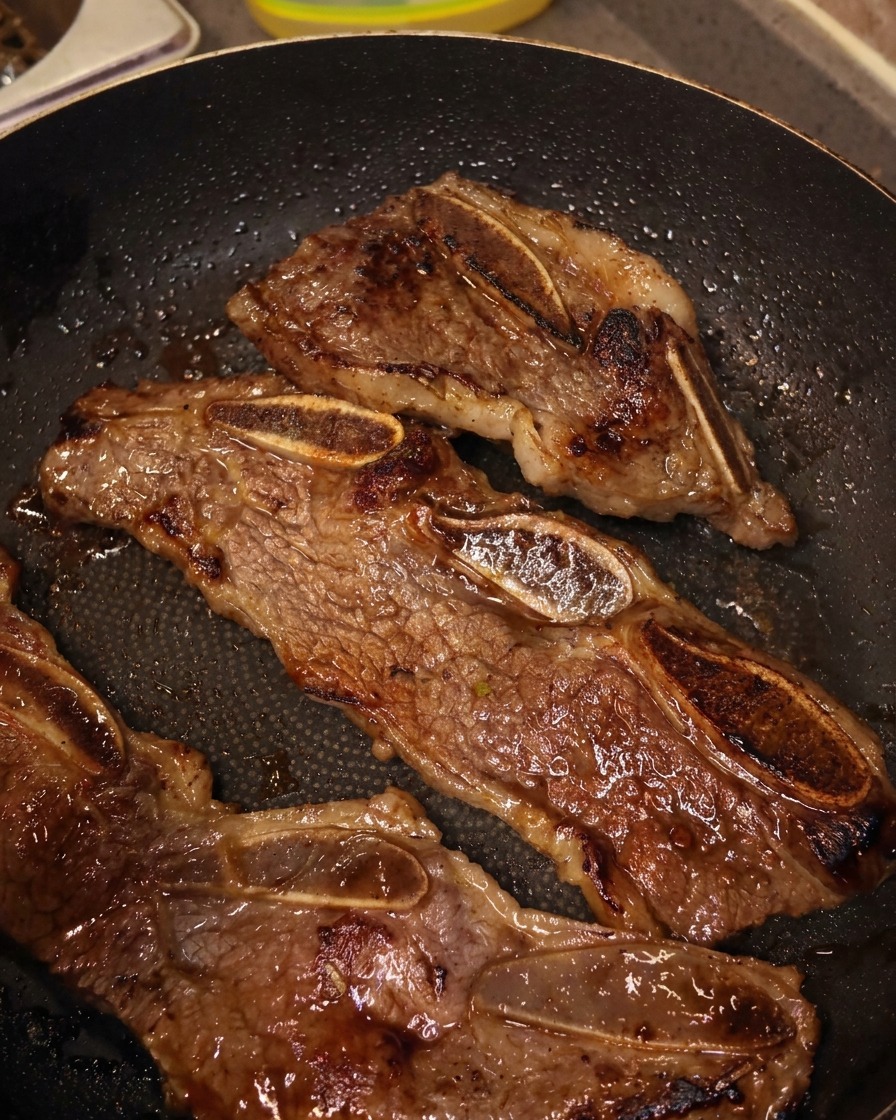
Once the ribs are nearly cooked through, use kitchen scissors to snip the long strips into smaller, individual pieces by cutting between the bones. This is the traditional way to serve LA-style ribs, making them easy to handle at the table.
Tip: Using scissors directly in the pan is a classic Korean technique that saves time and keeps the juices on the meat rather than the cutting board. - 13Garnish and serve
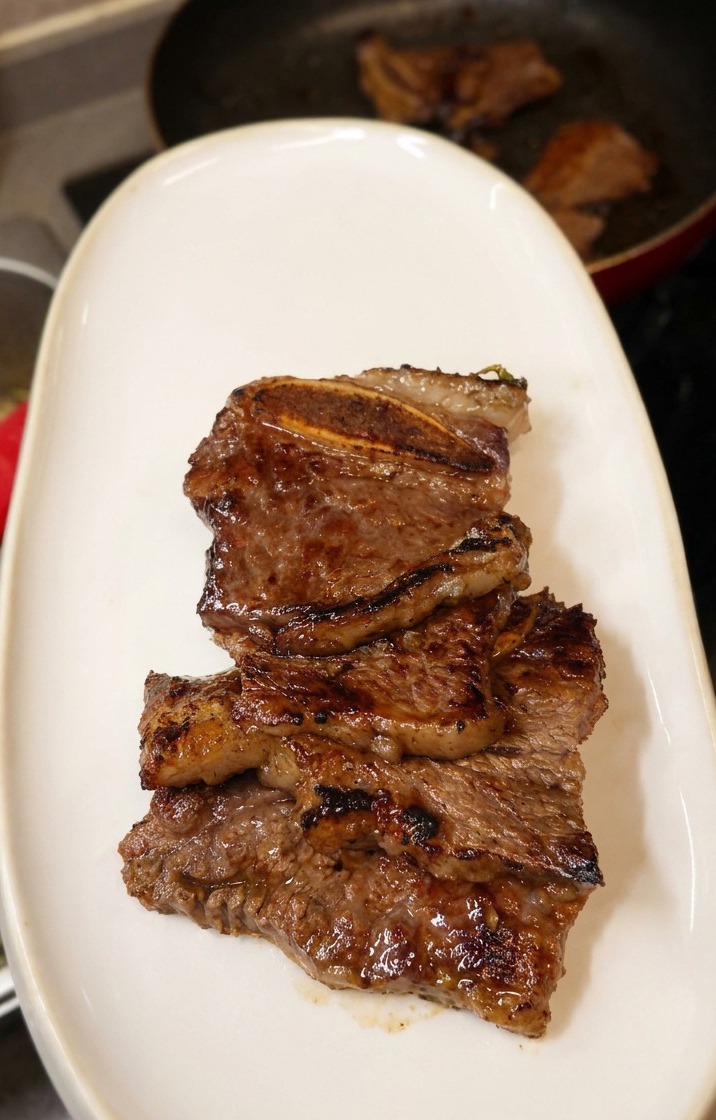
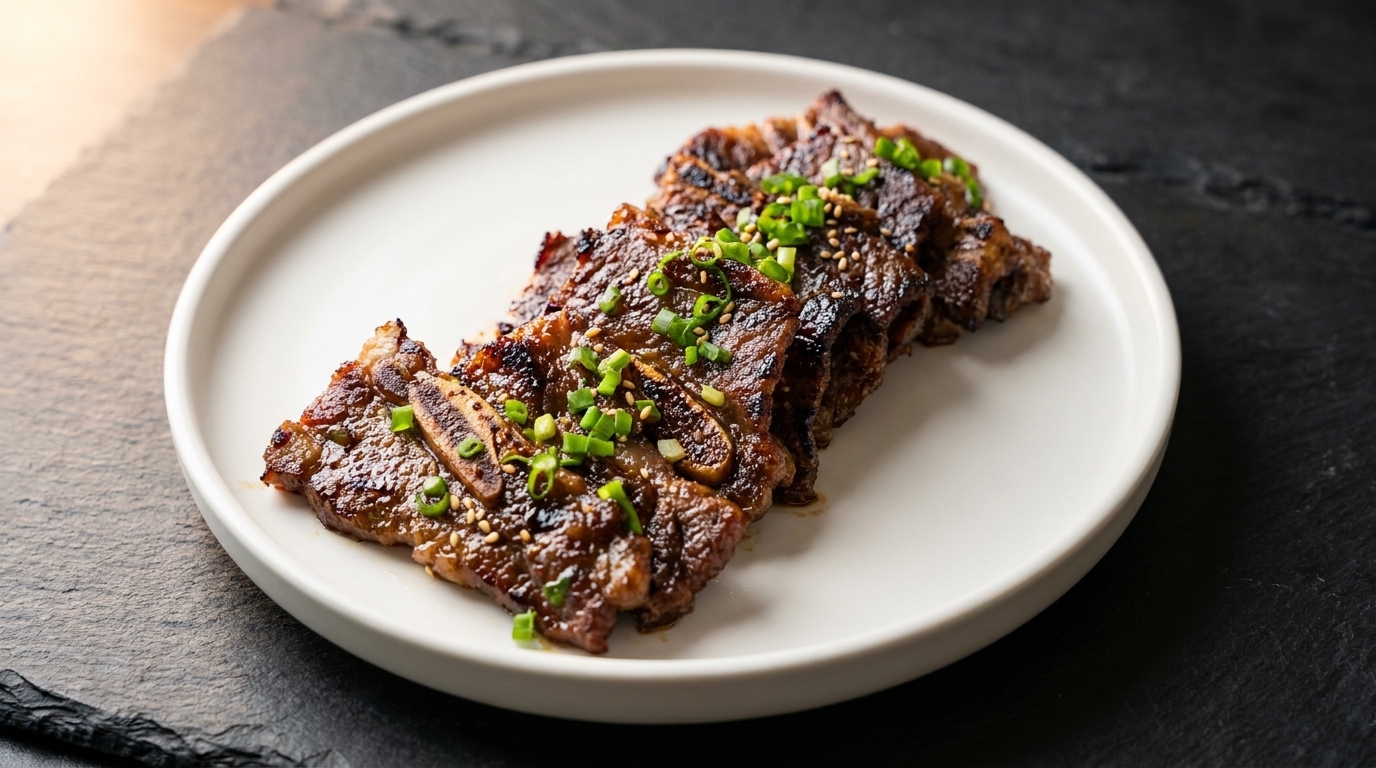
Transfer the hot, glistening ribs to a serving plate. Garnish with a final sprinkle of toasted sesame seeds and fresh green onions to add a pop of color and extra crunch. Serve immediately with hot rice.
Tip: Serve these ribs with a side of steamed white rice; the salty-sweet marinade is the perfect seasoning for the grains.