Premium Uni
Ikura Donburi (Sea Urchin and Salmon Roe Rice Bowl)
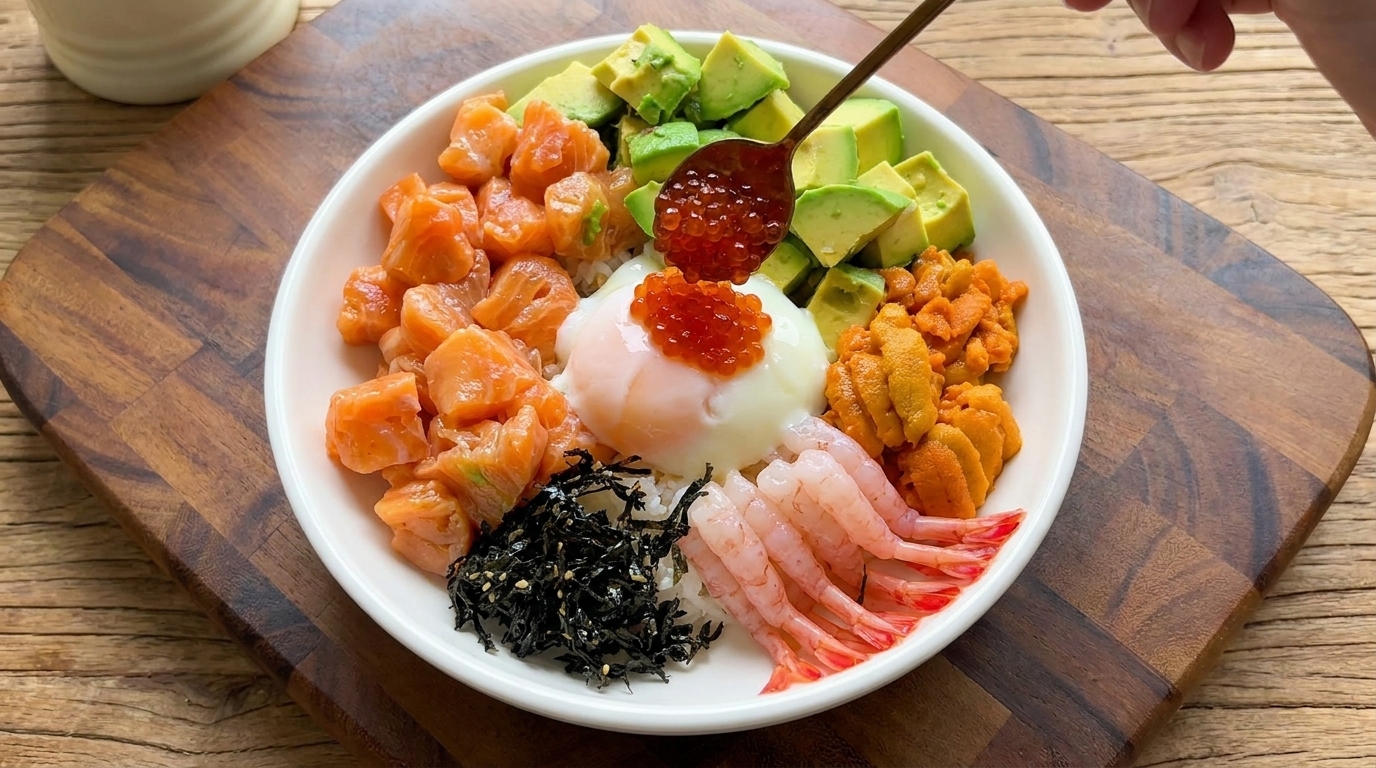
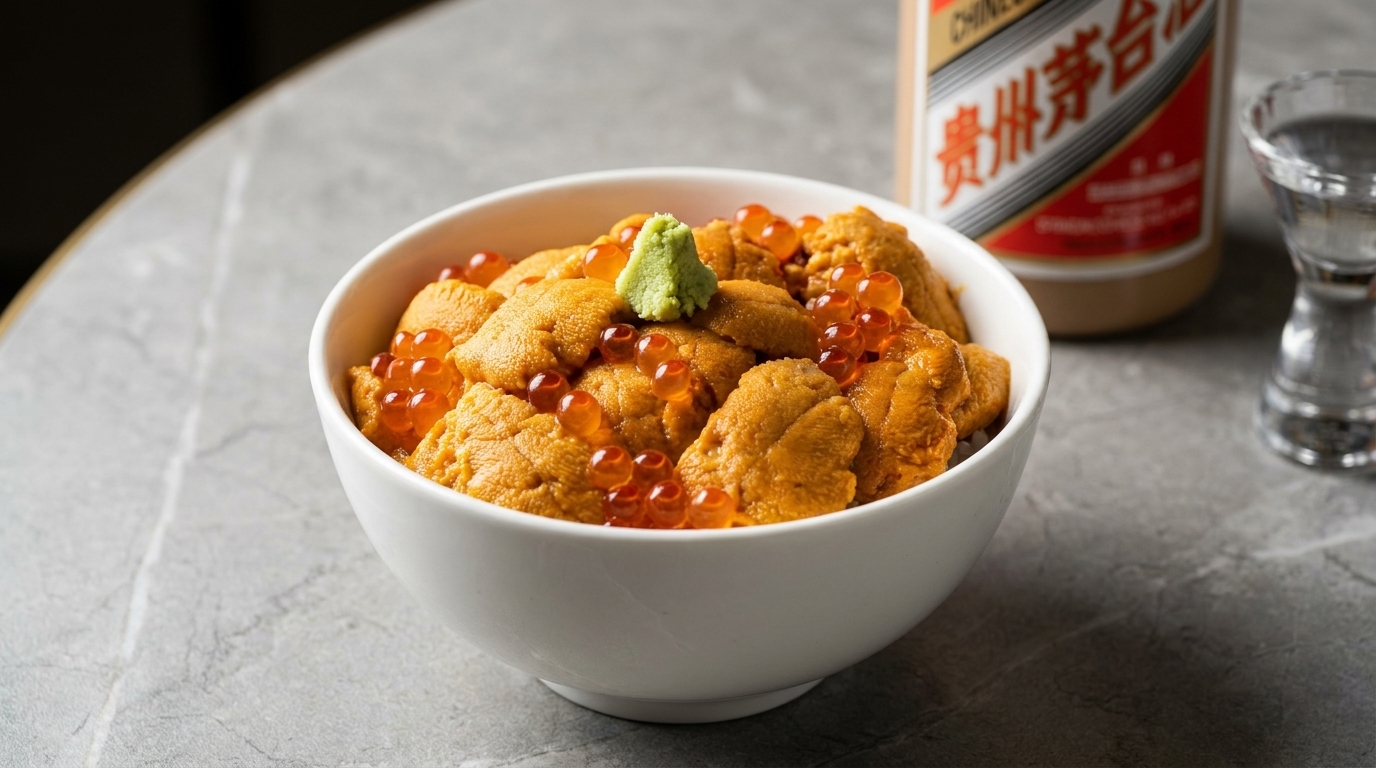
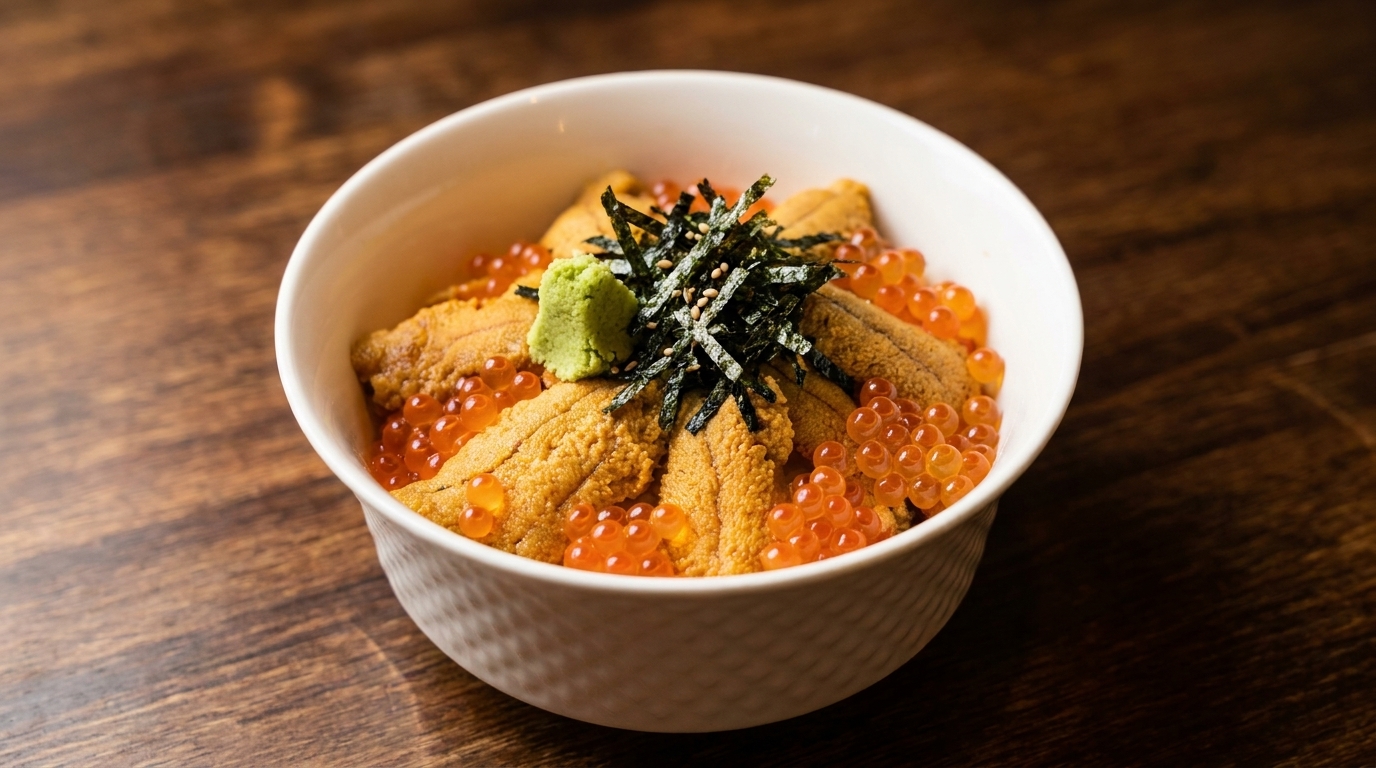
Indulge in the ultimate taste of the ocean with this premium Uni-don. Silky sea urchin and bursting salmon roe rest atop perfectly seasoned kombu-infused sushi rice.
Uni-don represents the pinnacle of Japanese seafood comfort, celebrating the natural sweetness of premium marine ingredients. This dish highlights the contrast between the buttery, mineral depth of sea urchin and the salty, jewel-like pop of fresh salmon roe. While simple to assemble, the secret to a professional-grade bowl lies in the quality of the seafood and the careful preparation of the vinegar-seasoned sushi rice base.
Ingredients
- 300 g Japanese short-grain rice
- 400 ml water
- 1 piece dried kombu (kelp)
- 60 ml rice vinegar
- 1 tbsp brown sugar
- 12 tsp salt
- 100 g fresh sea urchin (uni)
- 50 g salmon roe (ikura)
- 1 tsp wasabi
- 1 lime wedge
Instructions
- 1Wash the rice
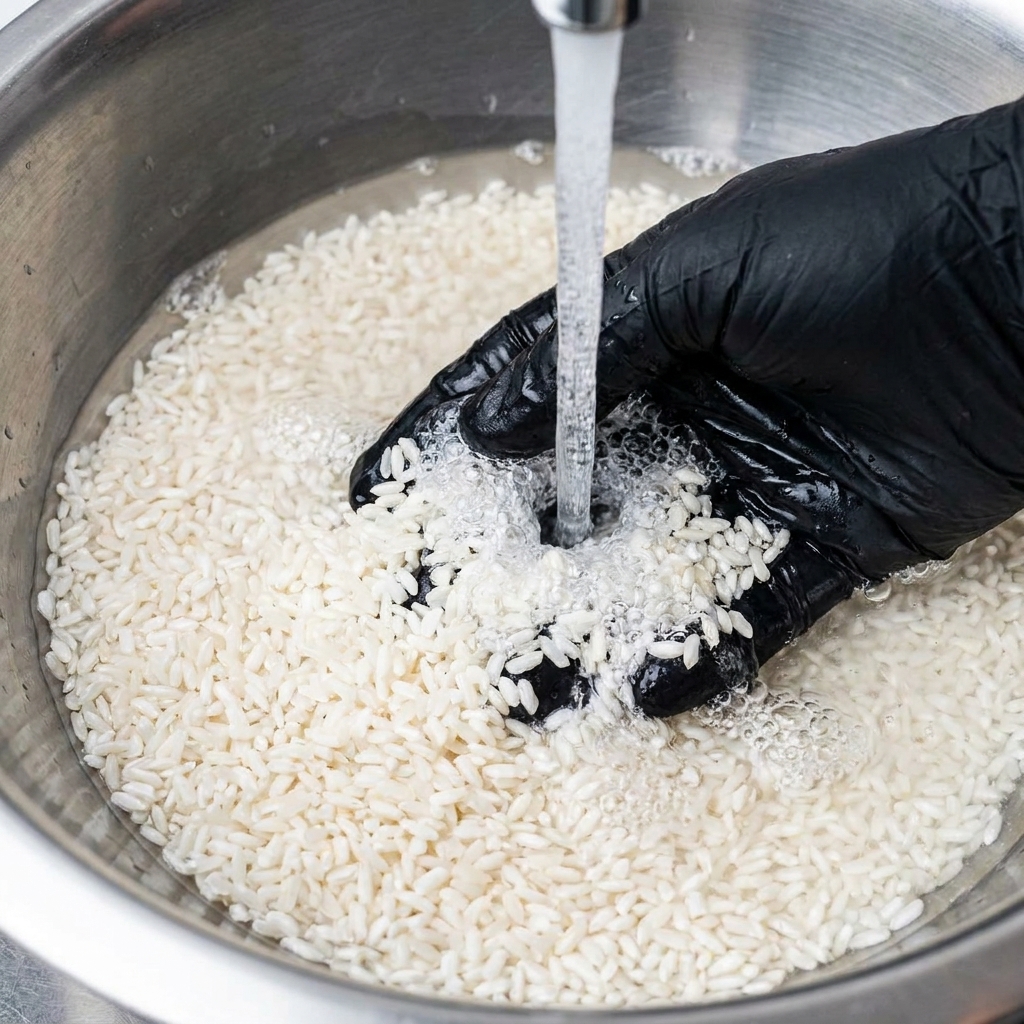
Place the Japanese rice in a large metal bowl and gently wash it under cold running water. Use your hands to carefully swirl the grains, pouring off the cloudy starch water and repeating the process until the water runs mostly clear. This ensures the cooked rice will be fluffy and not overly sticky.
Tip: Be gentle while washing to prevent the delicate rice grains from cracking or breaking. - 2Drain the rice
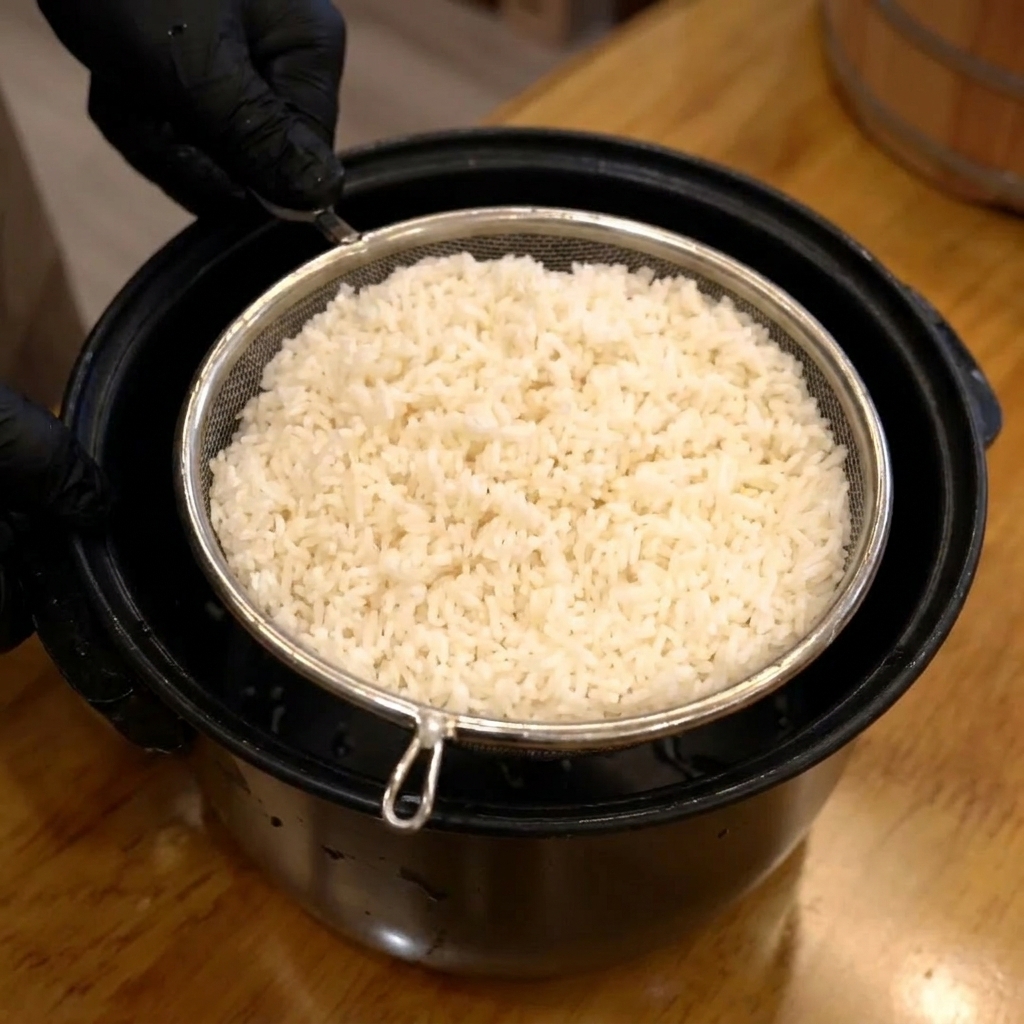
Transfer the thoroughly washed rice into a fine metal mesh strainer and allow it to sit and drain. Removing the excess washing water is a crucial step to ensure you get the perfect water-to-rice ratio when cooking.
Tip: Give the strainer a gentle tap or shake to help the excess water drip away more quickly. - 3Add kombu to the rice
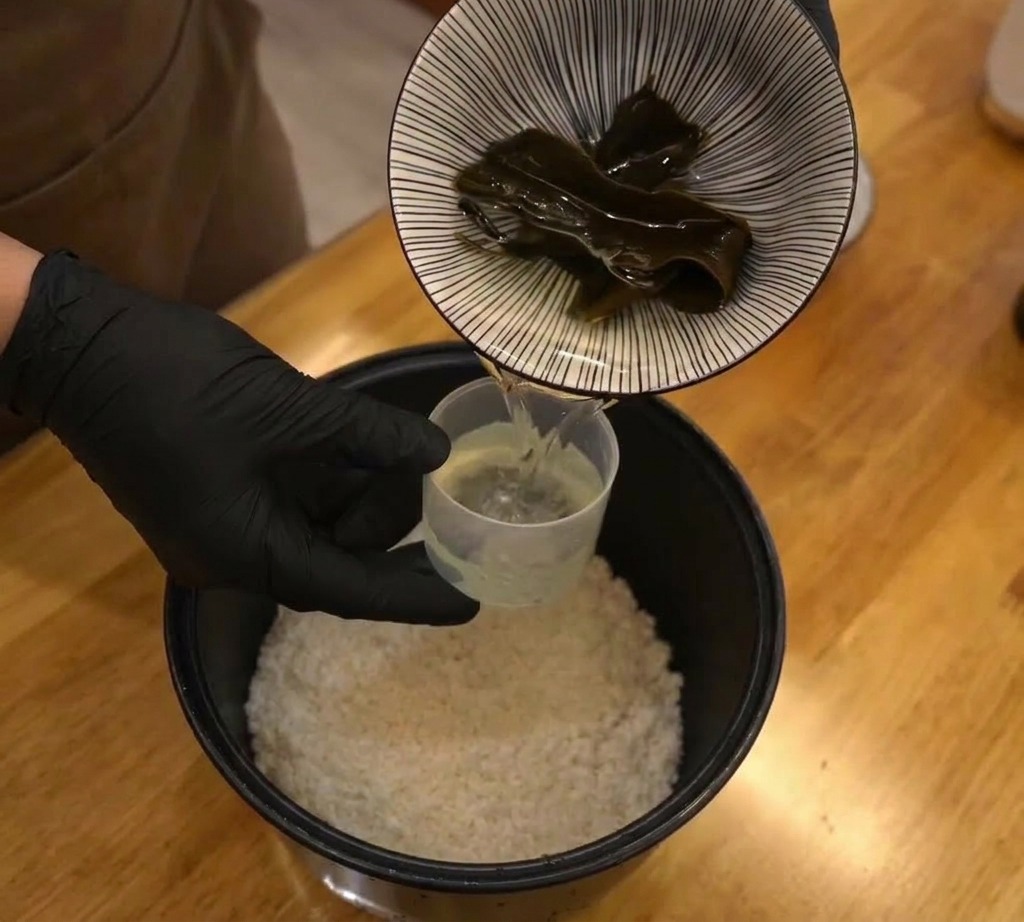
Place a piece of dried kombu into the rice cooker pot along with the washed rice and measured water. This kelp releases a subtle, savory umami depth as the rice cooks, which is essential for creating an authentic and flavorful sushi rice base for your donburi.
Tip: Avoid washing the white powdery substance off the surface of the kombu; this is natural mannitol, which contains most of the ingredients savory umami flavor. - 4Add water to soak
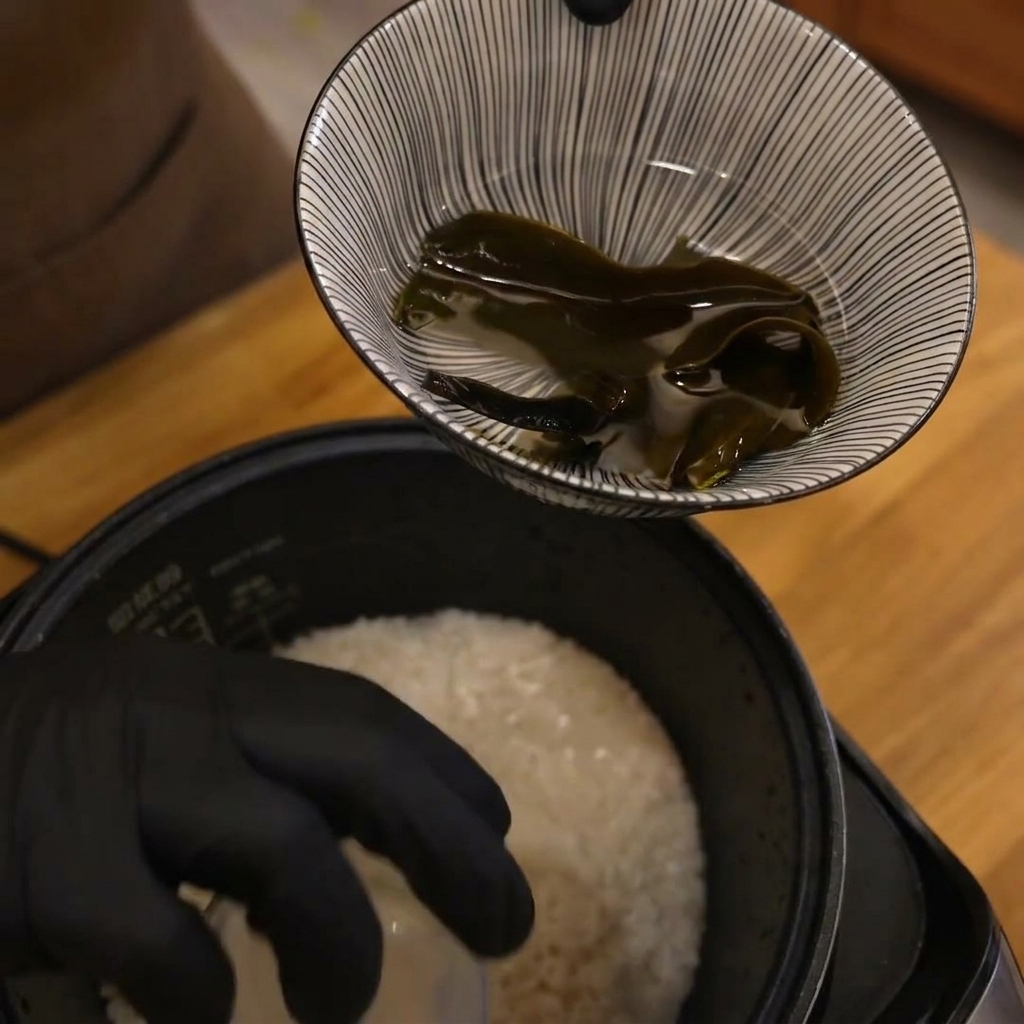
Pour the precisely measured amount of water into the rice cooker pot with the washed rice and kombu. Allow the rice to soak in the liquid for about 10 minutes before starting the cooking cycle. This resting period ensures the grains hydrate evenly for a plumper texture.
Tip: Soaking the rice before cooking yields a plumper, more evenly cooked grain for your sushi base. - 5Prepare the sushi vinegar
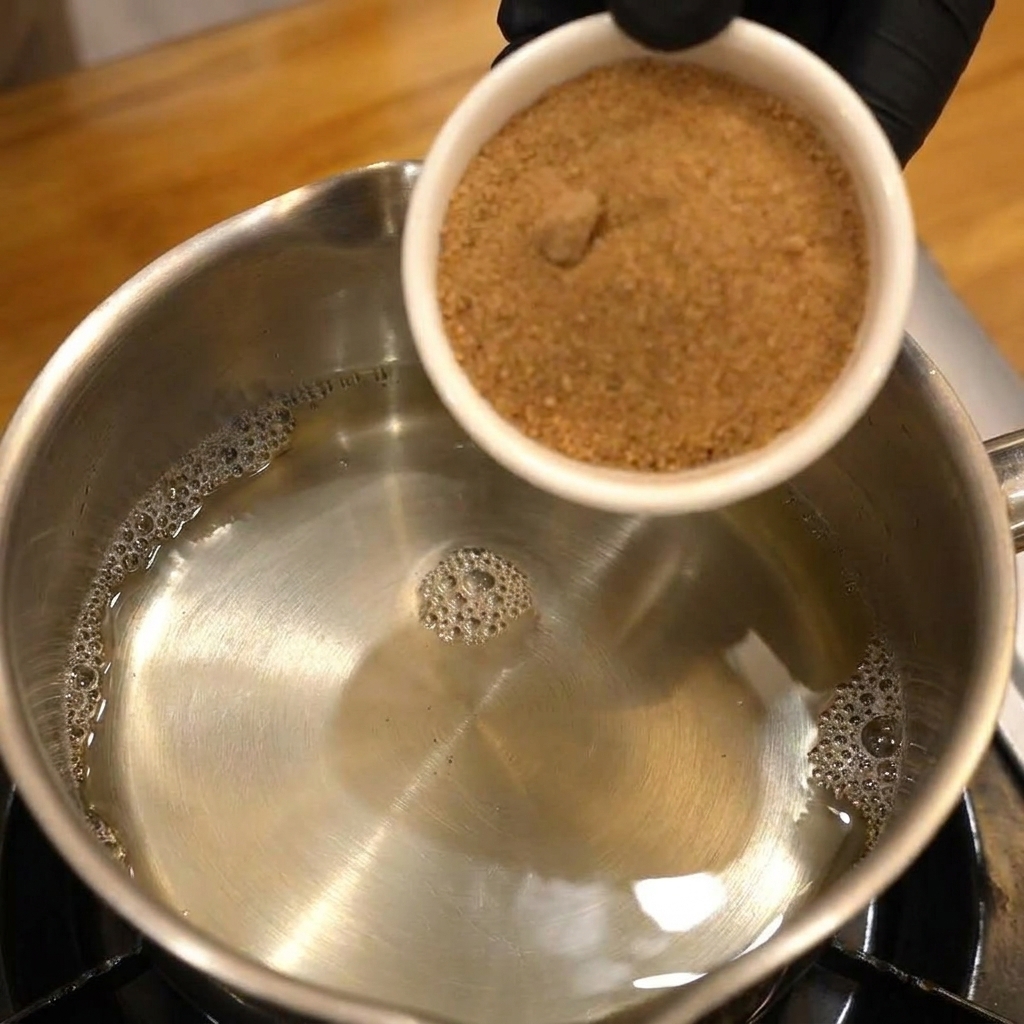
While the rice is cooking, begin preparing the sushi vinegar seasoning. In a small metal saucepan, combine the rice vinegar, brown sugar, and a pinch of salt. The brown sugar adds a nice depth of flavor and a slightly richer color to the vinegar mixture.
Tip: You can adjust the amount of sugar to your personal preference for a sweeter or sharper sushi vinegar. - 6Dissolve the sugar
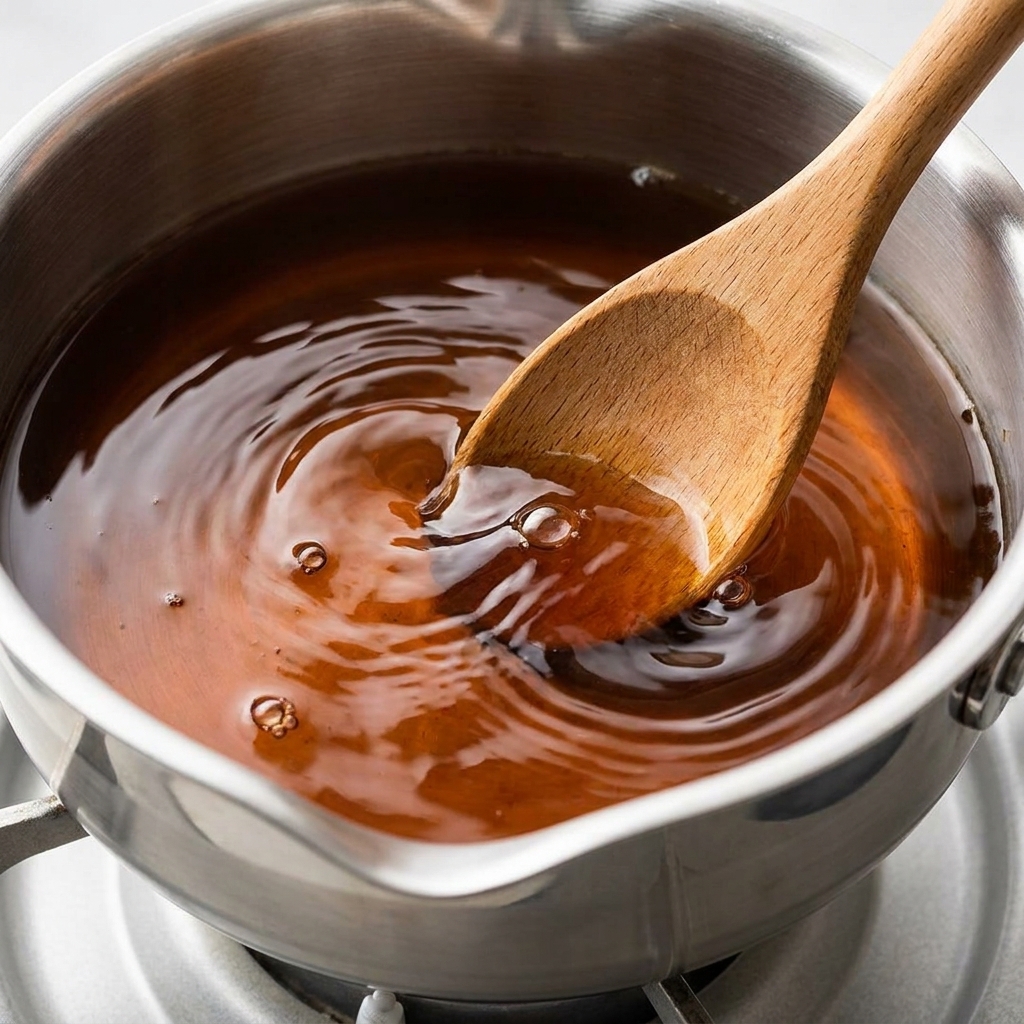
Place the saucepan over low heat to warm the mixture gently. Use a wooden spoon to stir continuously until the brown sugar and salt are completely dissolved into the vinegar. Once smooth and dissolved, remove from heat and let it cool slightly before mixing it into the cooked rice.
Tip: Do not let the vinegar come to a boil, as high heat will evaporate its delicate acidity and flavor. - 7Transfer rice to the wooden bucket
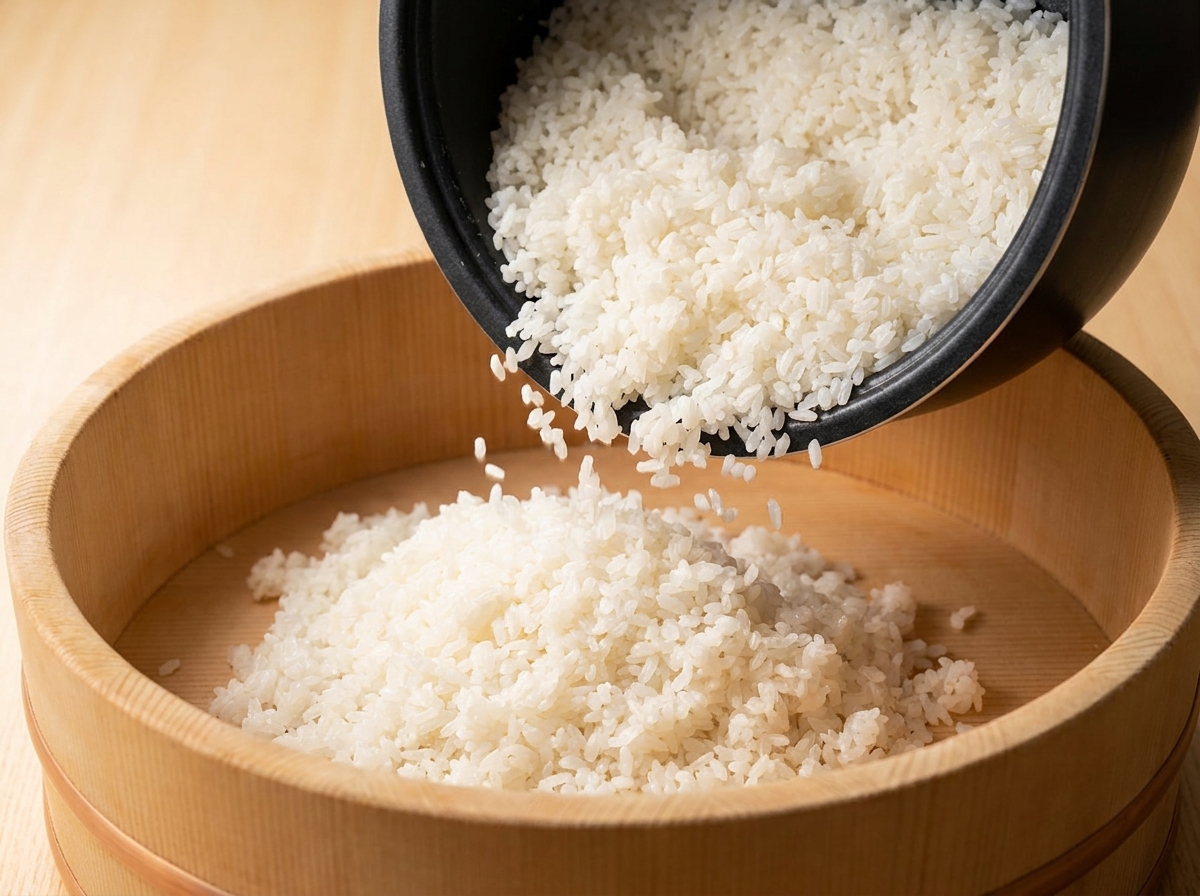
Once the rice is fully cooked, immediately transfer it from the cooker into a moistened wooden sushi bucket (hangiri). The wood helps absorb excess moisture, ensuring the rice remains fluffy and doesnt become mushy.
Tip: Make sure the wooden bucket is damp before adding the rice to prevent the grains from sticking to the wood. - 8Season with sushi vinegar
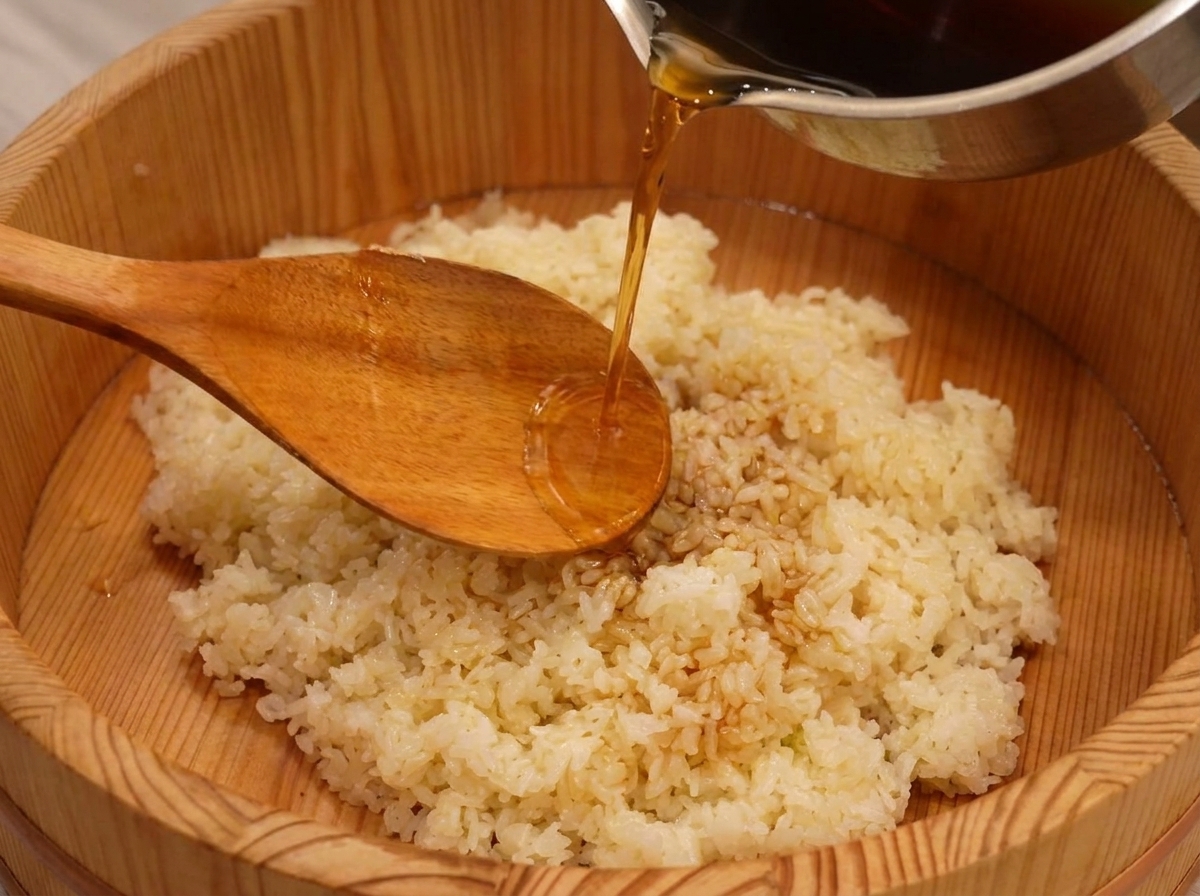
While the rice is still hot, evenly pour the prepared mixture of rice vinegar, brown sugar, and salt over the surface. Seasoning the rice while hot allows the grains to better absorb the vinegar mixture.
Tip: Pour the vinegar over a rice paddle to help distribute it more evenly across the rice and prevent clumps. - 9Mix the sushi rice
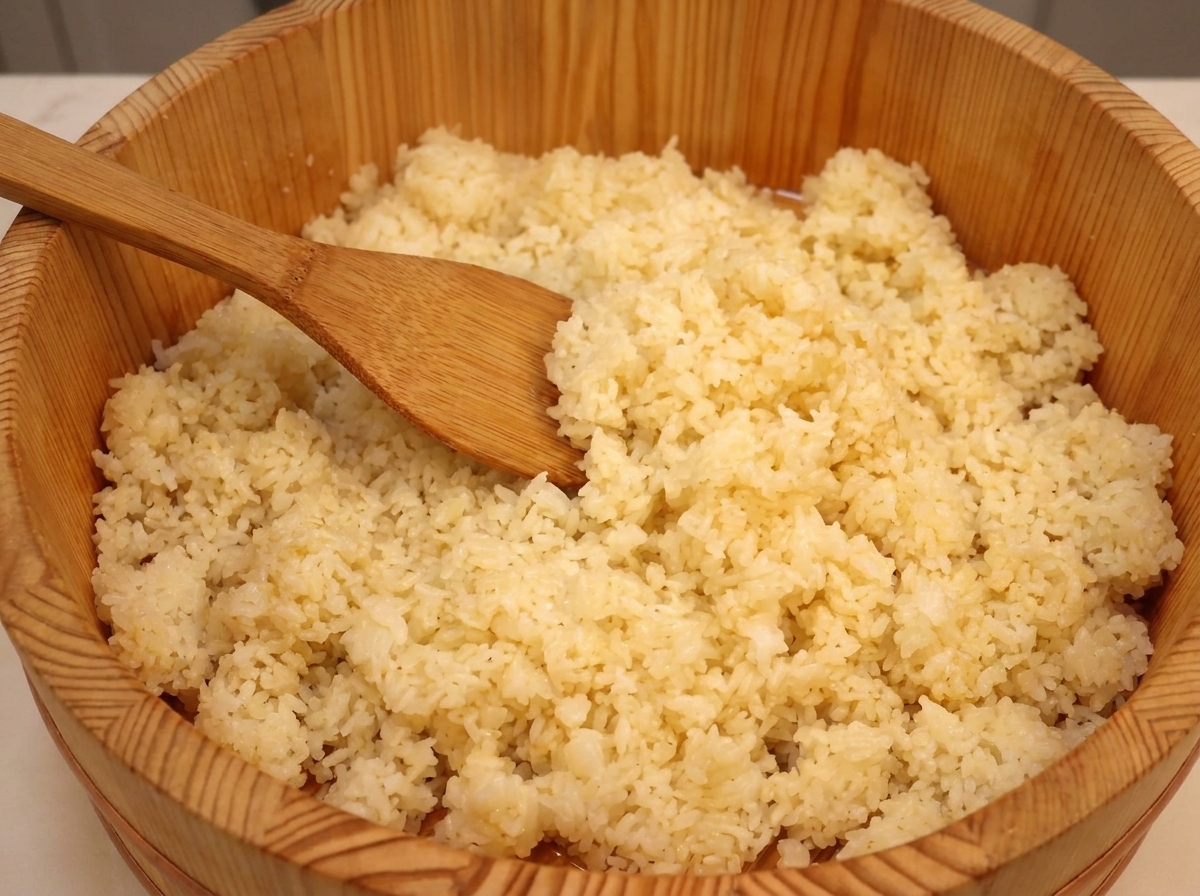
Use a wooden paddle to gently mix the rice using a slicing motion. This prevents the grains from being crushed while ensuring every grain is coated with the vinegar mixture for a consistent flavor.
Tip: Fanning the rice while mixing helps it cool quickly and gives the grains a beautiful, glossy shine. - 10Add the sea urchin and roe
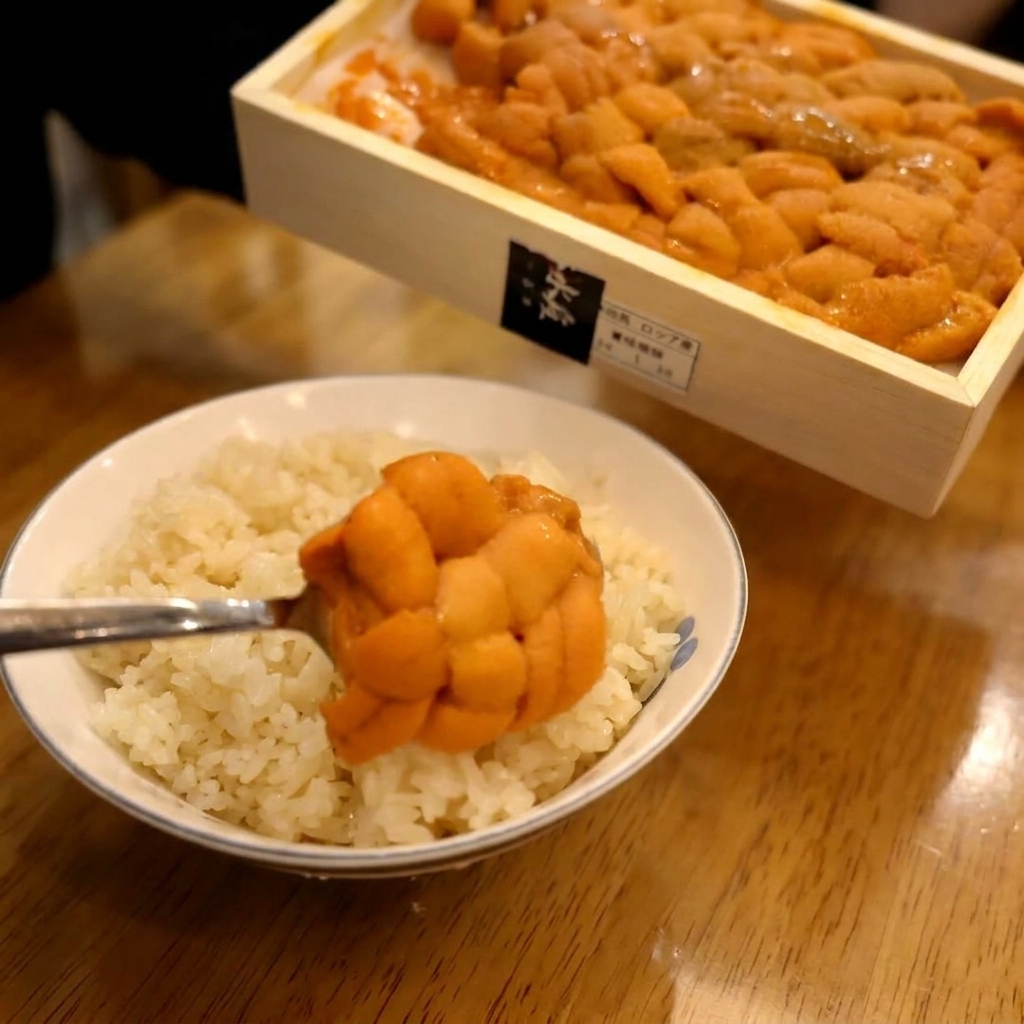
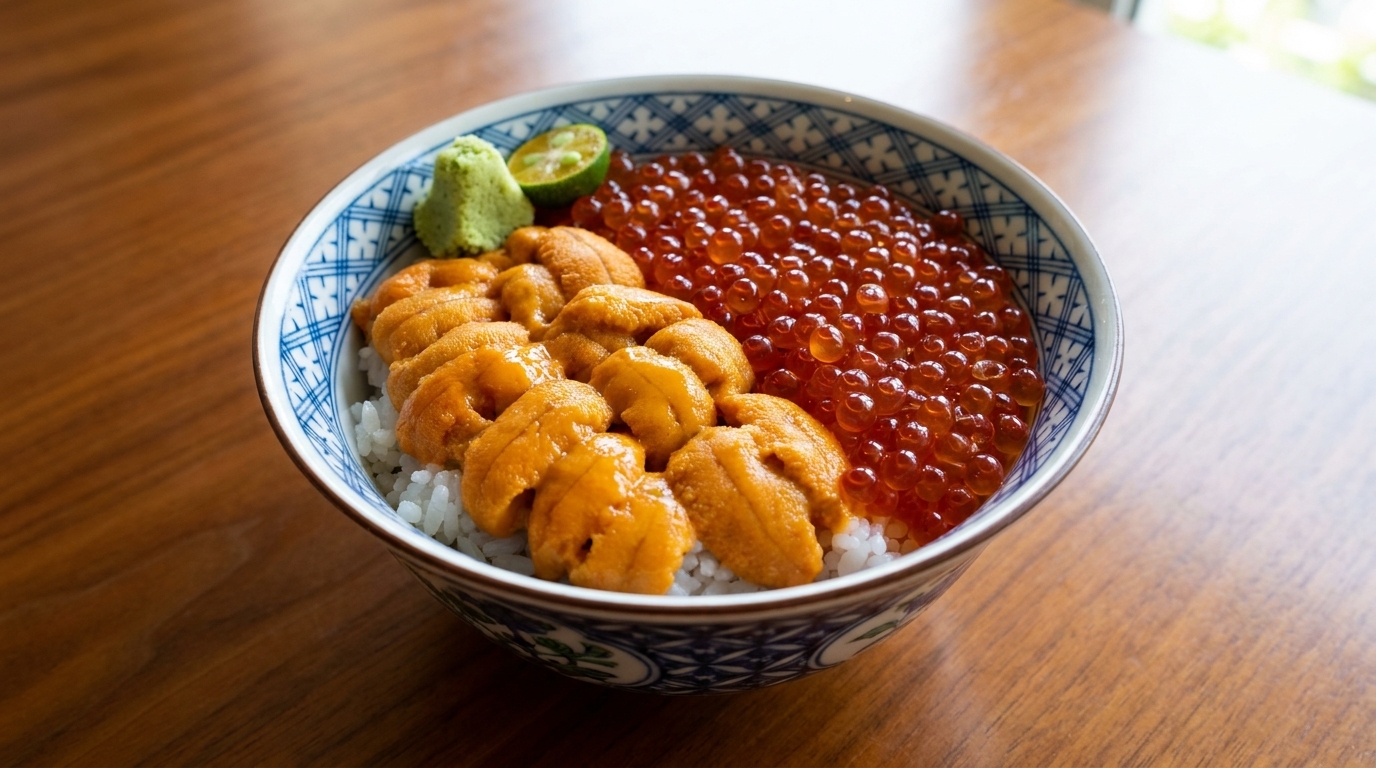
Arrange the chilled sea urchin lobes atop the rice then spoon the glistening salmon roe alongside. Garnish the bowl with a touch of wasabi and the lime wedge to complete the presentation before serving.
Tip: Handle the sea urchin very gently as it is extremely delicate and can break apart easily.