Classic Soy Sauce Braised Pork Belly (Hong Shao Rou)
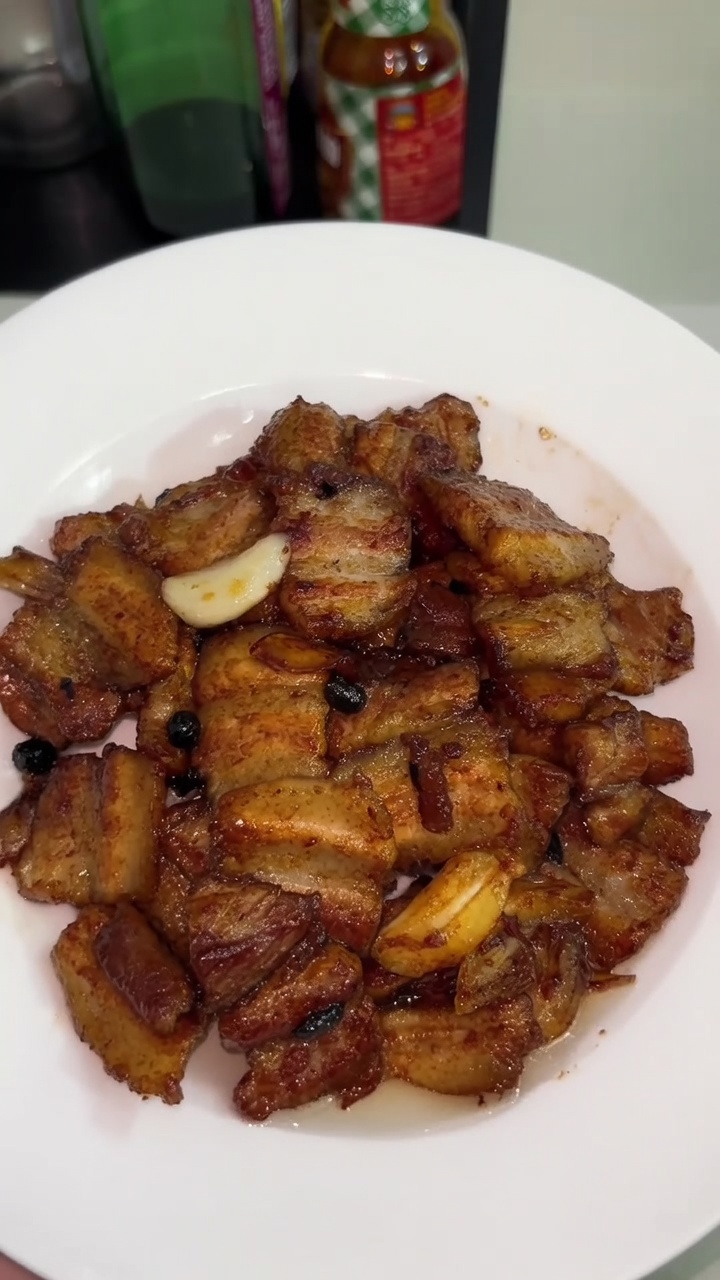
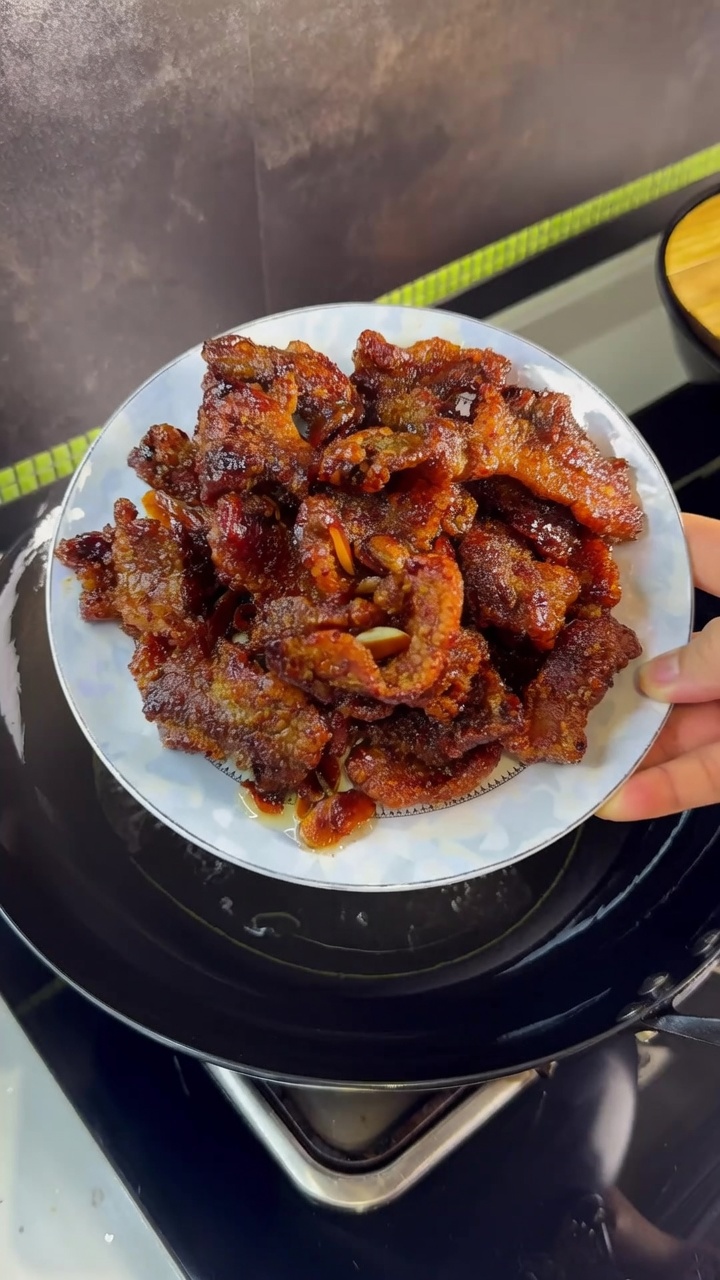
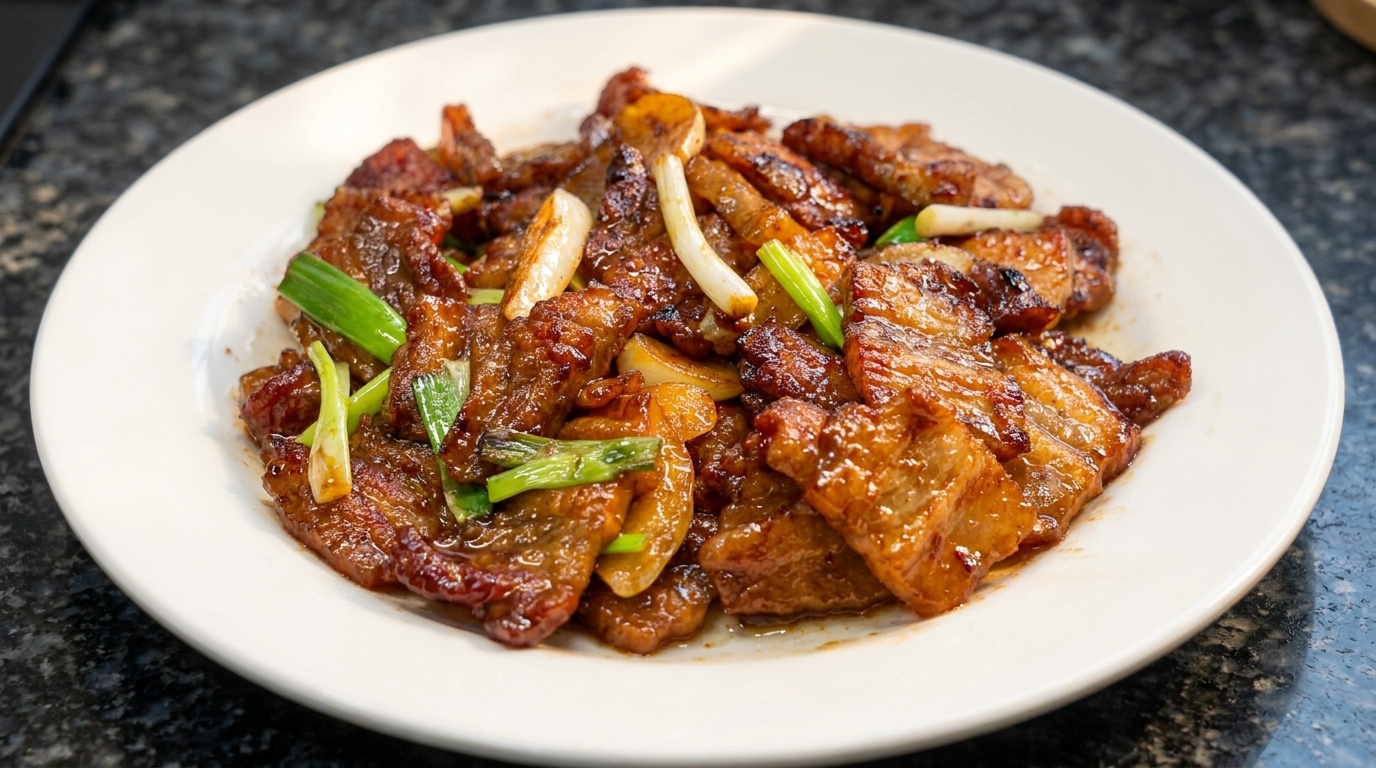
A masterclass in Chinese comfort food, this melt-in-the-mouth pork belly features a deep, savory-sweet glaze achieved through a slow, aromatic clay pot simmer.
Hong Shao Rou, or Red Braised Pork Belly, is an iconic dish that turns a humble cut of meat into a centerpiece. By first blanching the pork to ensure purity and then braising it with rock sugar and traditional aromatics, the fat transforms into a silky, succulent delicacy that practically melts on the tongue. This version utilizes a clay pot to maximize heat retention, ensuring every bite is infused with the complex flavors of soy and spice.
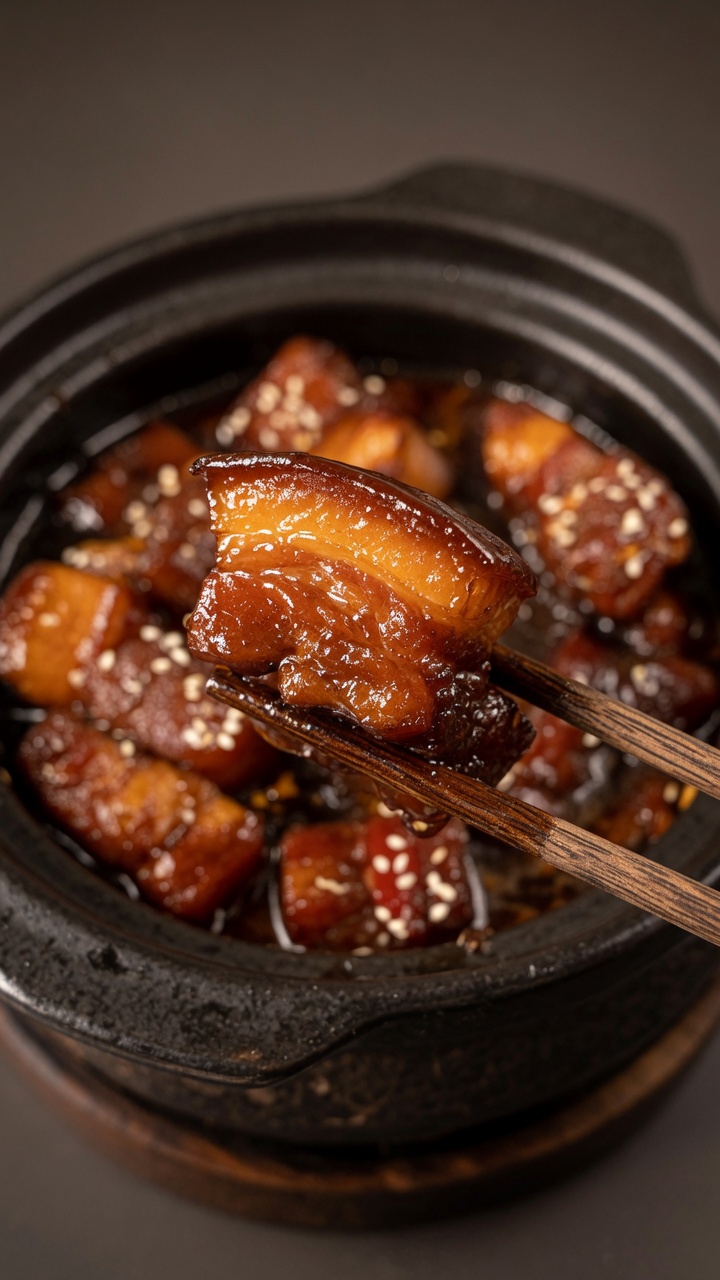
Ingredients
- 500 g pork belly
- 2 slices ginger
- 2 tbsp cooking wine
- 1 ladle light soy sauce
- 1 ladle dark soy sauce
- 30 g rock sugar
- 2 pieces star anise
- 2 leaves bay leaves
- 1 piece dried citrus peel
- 2 stalks green onions
- to taste white sesame seeds
Instructions
- 1Cut the pork belly
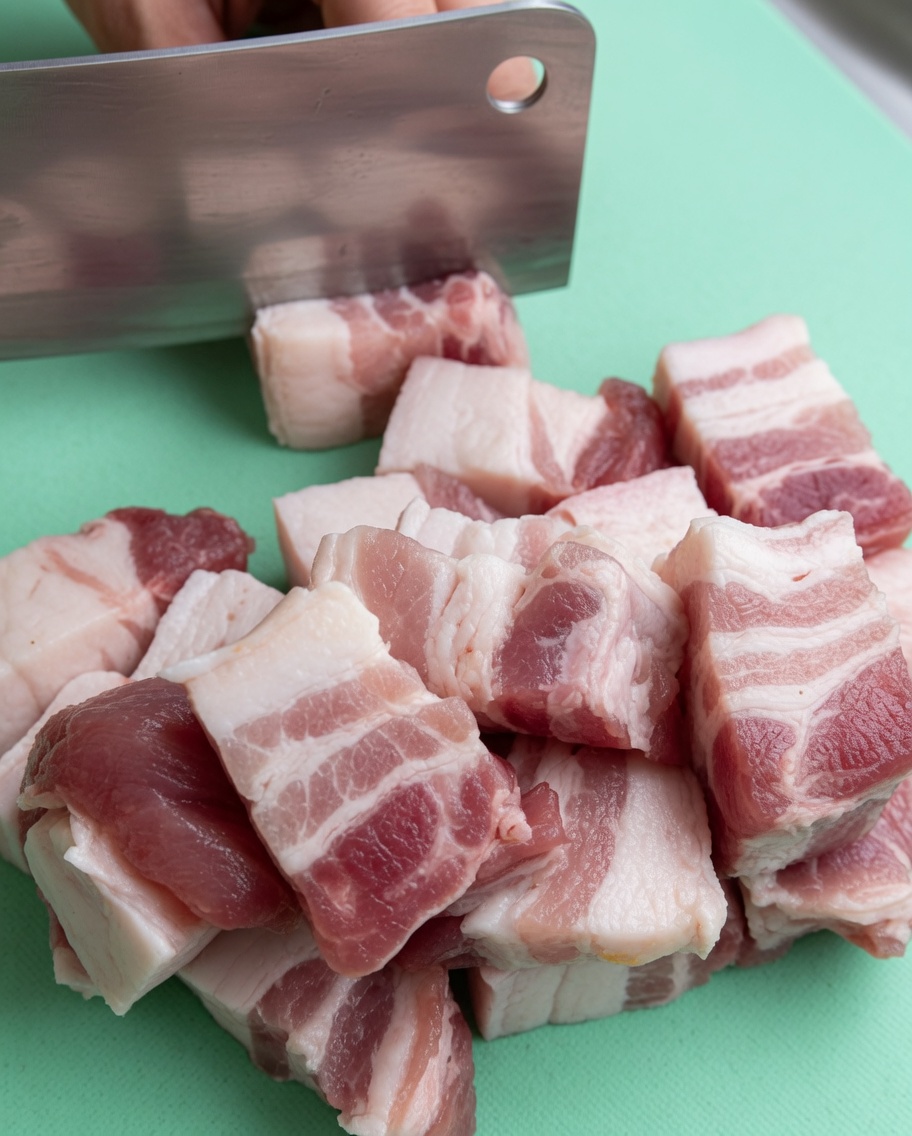
Place the pork belly slab on a cutting board and cut it into even, bite-sized square chunks. Preparing uniform pieces ensures even cooking.
Tip: Keep the chunks consistent in size so the meat cooks at the same rate. - 2Blanch the pork belly
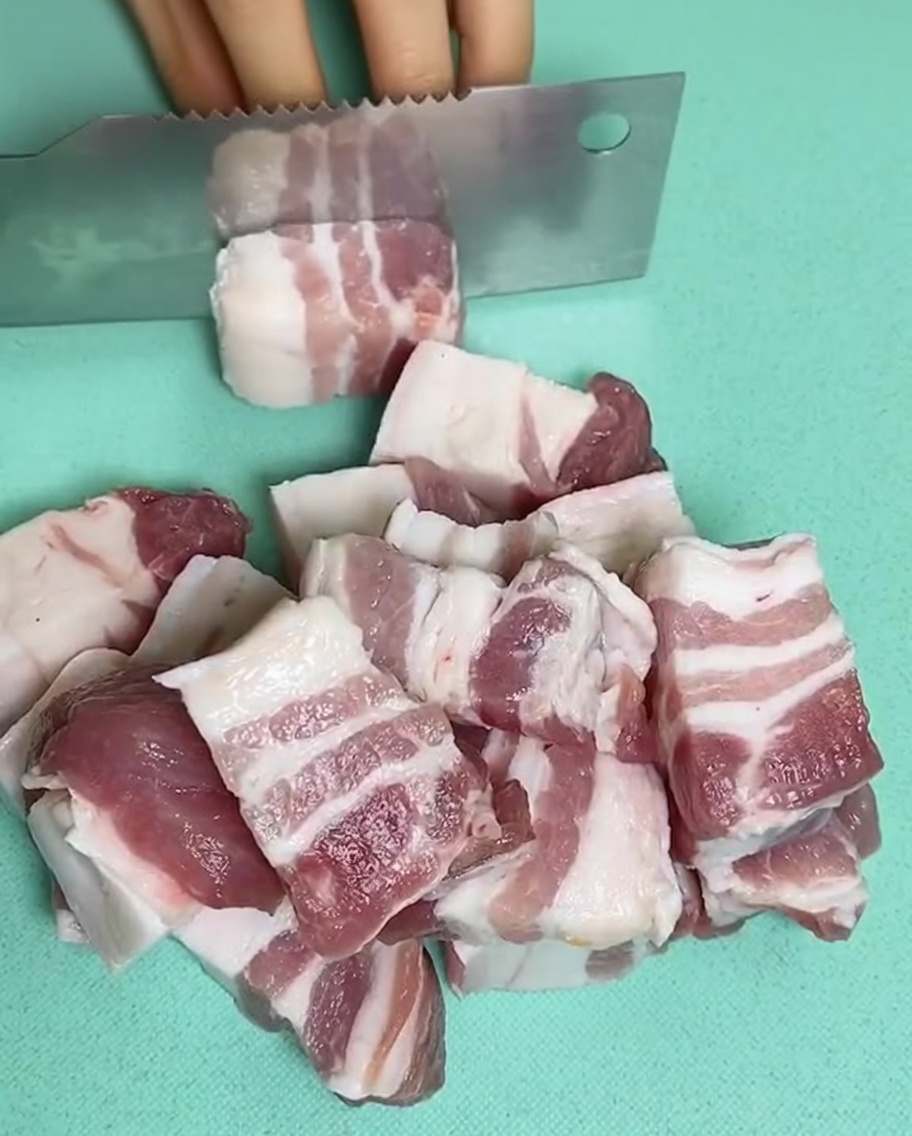
Place the pork belly chunks into a pan with cold water. Add ginger slices and cooking wine to help remove any gamey smell.
Tip: Always use cold water to draw out impurities from the meat while it slowly comes to a boil. - 3Remove blanched pork
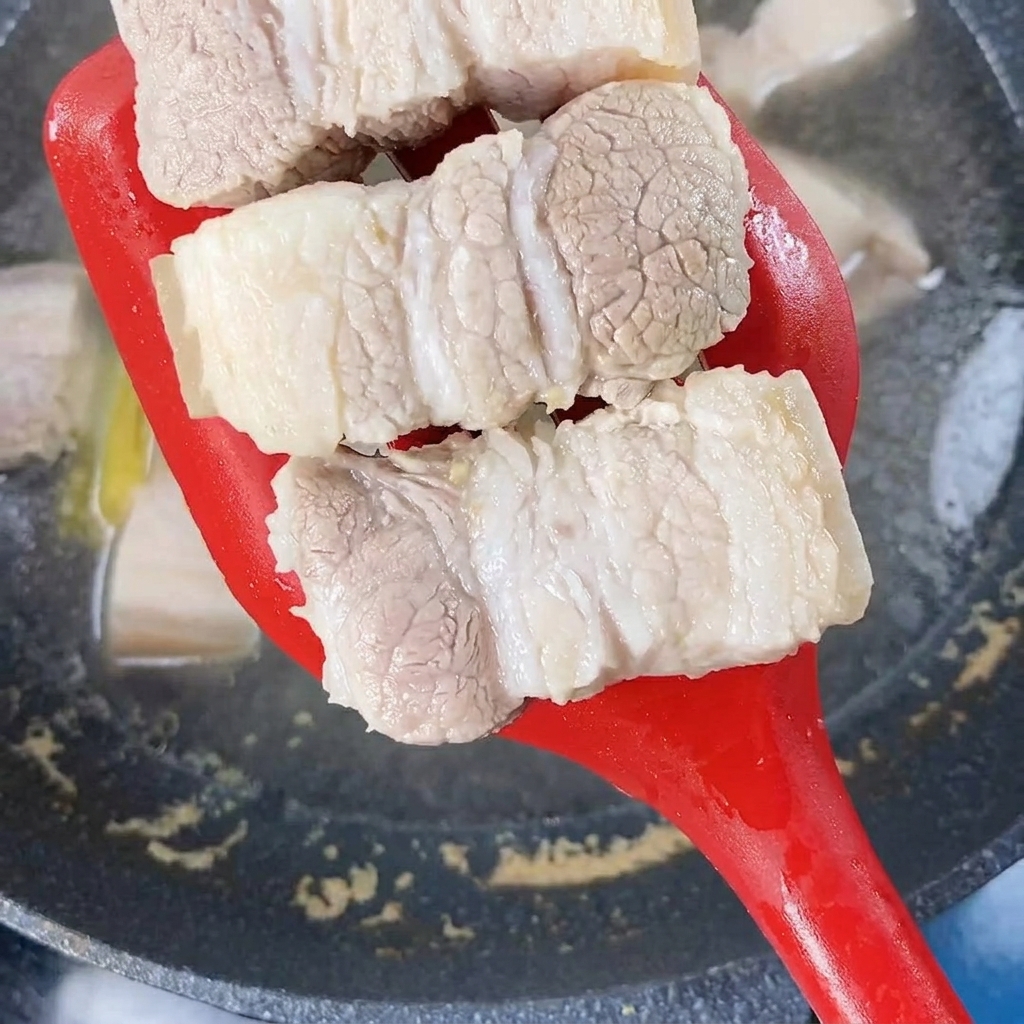
Once the water reaches a boil, remove the blanched pork belly chunks from the pan using a spatula.
Tip: Rinse the meat with clean water after removing it from the pot to wash away any remaining foam. - 4Transfer to clay pot
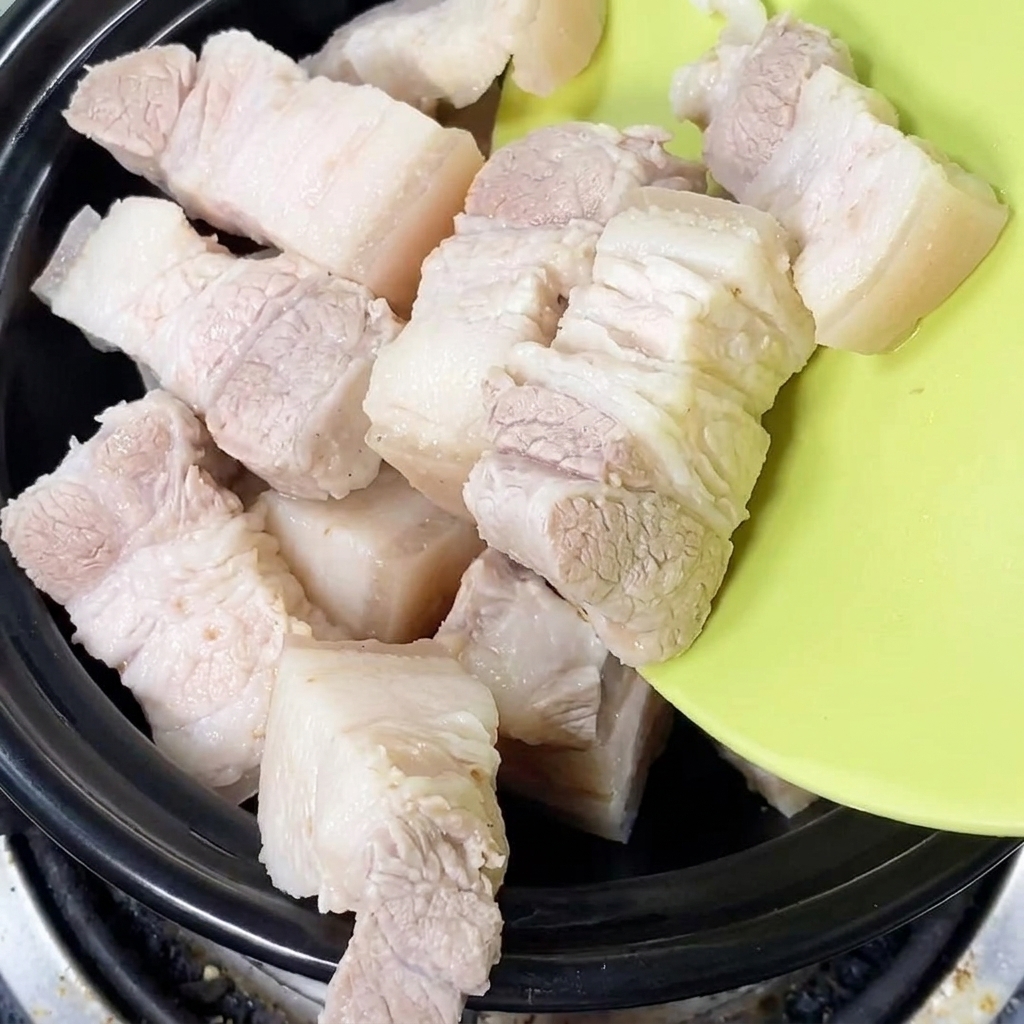
Transfer the cleaned, blanched pork belly pieces into a clay pot, which is ideal for slow-cooking and heat retention.
Tip: Arrange the pieces evenly in the pot to allow the sauce to coat every piece thoroughly. - 5Add seasoning
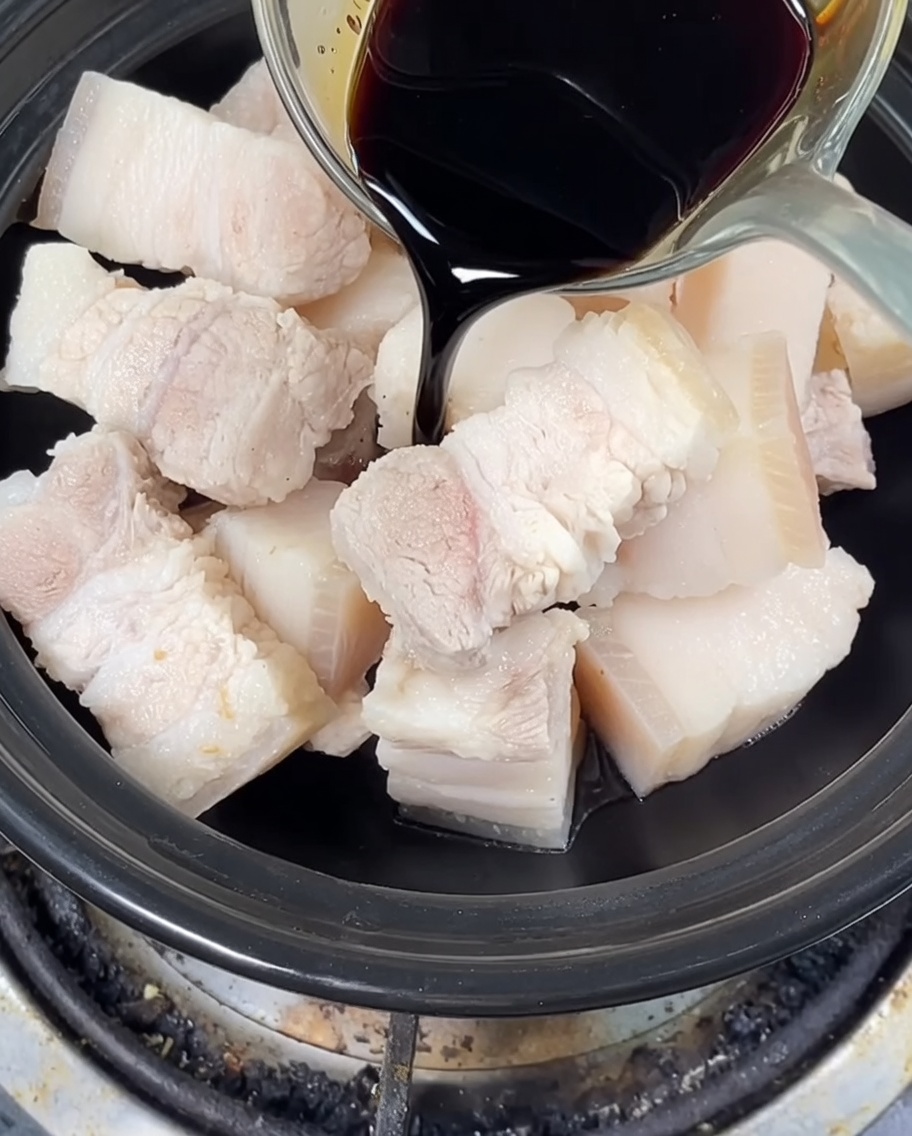
Pour in one ladle of light soy sauce for savory depth, one ladle of dark soy sauce for rich color, and add a few pieces of rock sugar.
Tip: Rock sugar adds a nice sheen and a subtle sweetness to the braise. - 6Add aromatics
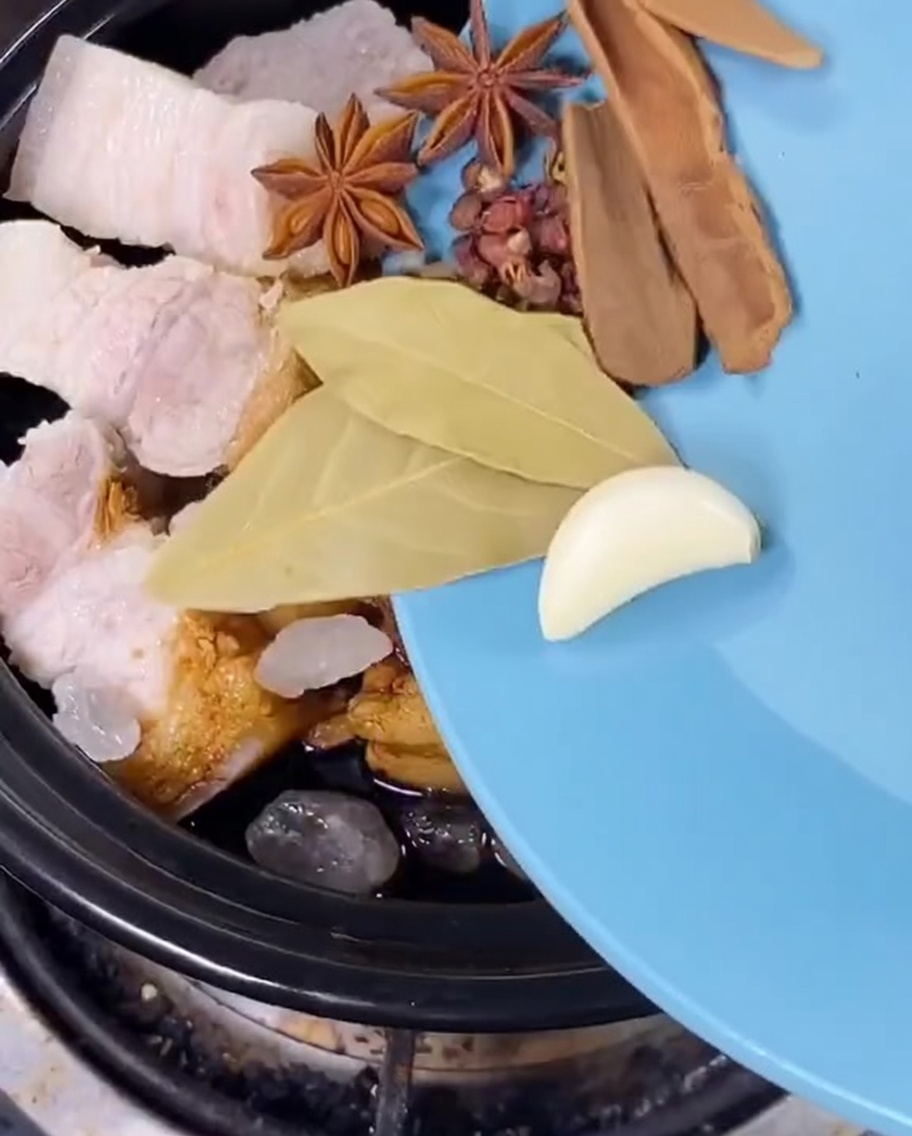
Add aromatic spices including star anise, bay leaves, and dried citrus peel, along with fresh green onions, to the clay pot. Add water, cover, and simmer on low heat for 20 minutes.
Tip: Simmering on low heat allows the flavors to penetrate the pork belly slowly. - 7Simmer the braised pork
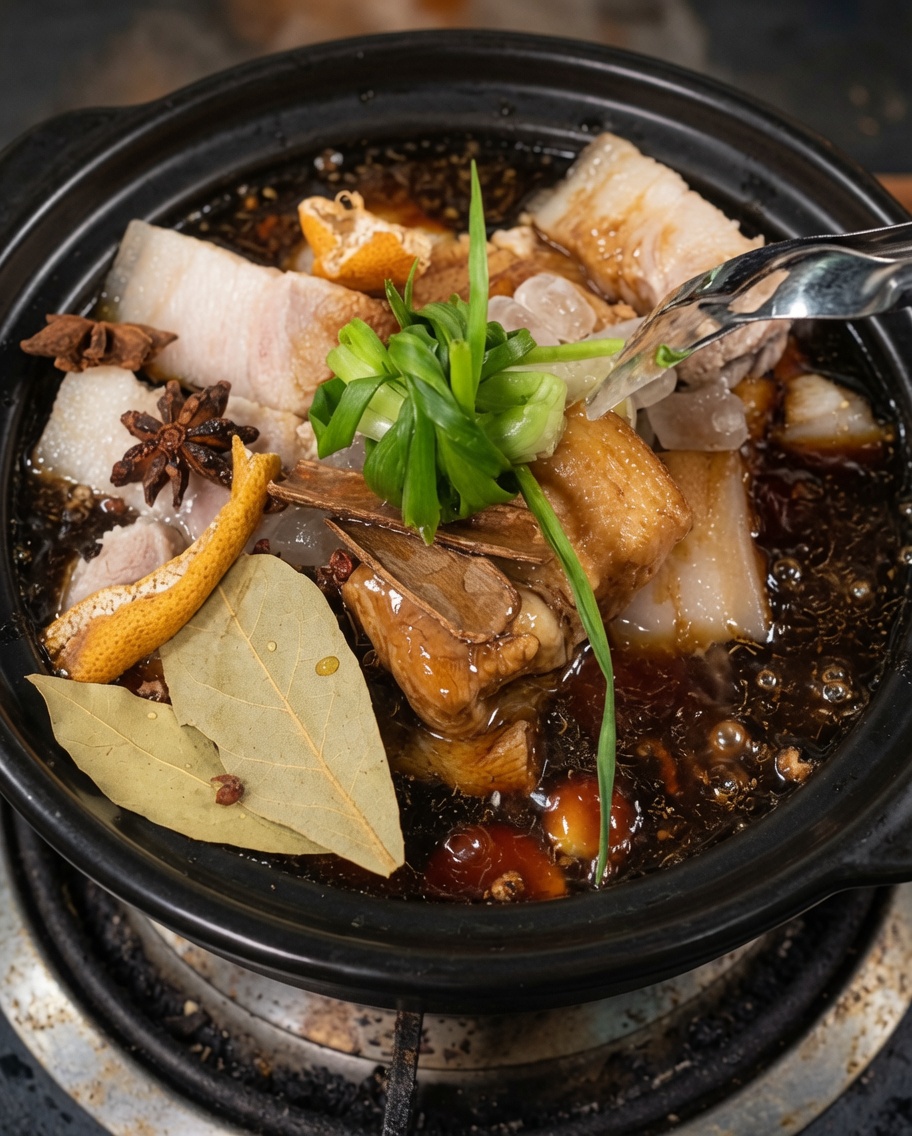
Place the lid on the clay pot and simmer the pork belly on low heat for 20 minutes. This allows the meat to absorb the flavors of the soy sauce, rock sugar, and aromatic spices, resulting in tender pork that is flavorful without being greasy.
Tip: Simmering on low heat is the key to ensuring the pork belly becomes melt-in-the-mouth tender while the sauce thickens to the perfect consistency.