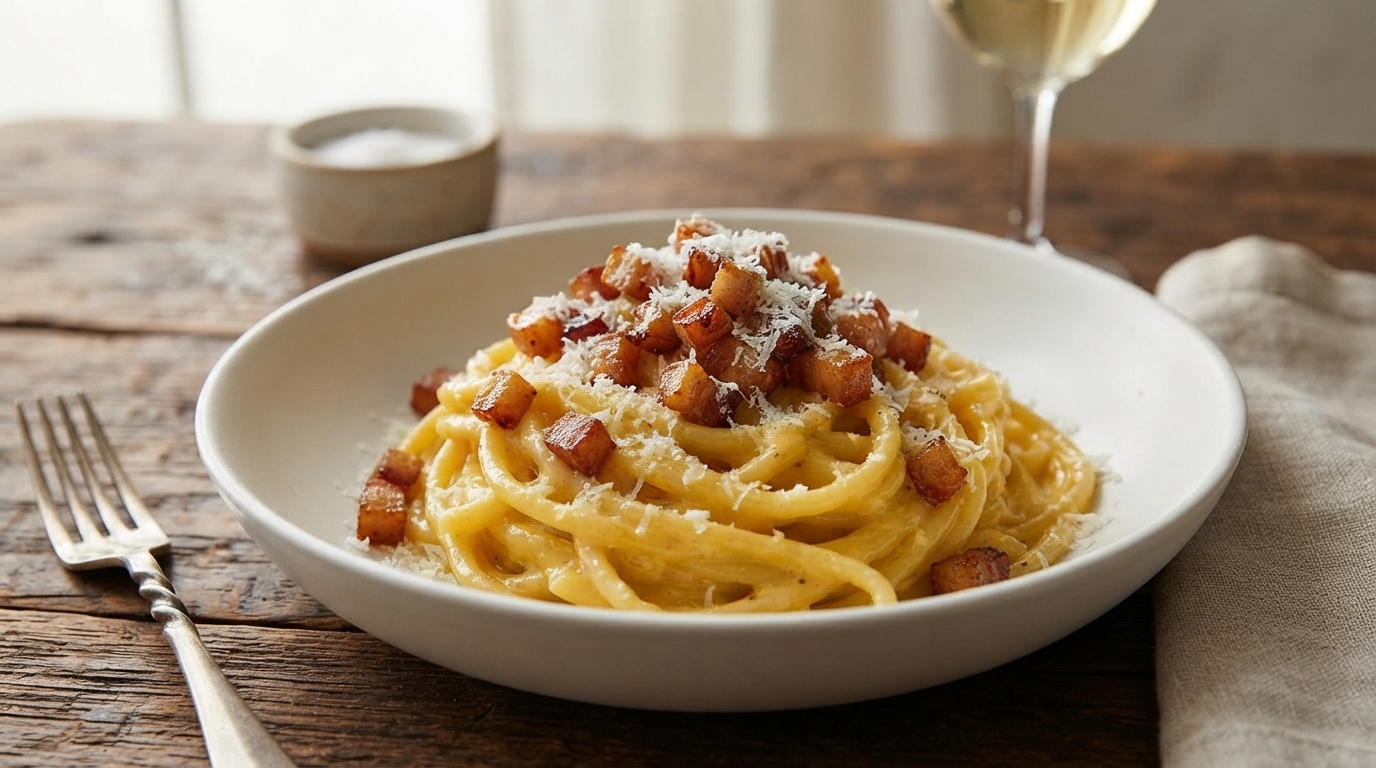
Authentic Homemade Spaghetti Carbonara
Master authentic Roman spaghetti carbonara from scratch — featuring handmade fresh pasta, crispy guanciale, and a glossy, creamy egg and Pecorino Romano sauce without any cream.
Traditional Roman carbonara relies entirely on the magical emulsion of cured pork fat, starchy pasta water, and fresh eggs and cheese. Making your own fresh pasta elevates this classic comfort dish into an extraordinary culinary experience.
Ingredients
- 300 g type 00 flour
- 100 g semolina flour
- 6 eggs
- 5 egg yolks
- 400 g guanciale
- 150 g Pecorino Romano cheese
- to taste freshly ground black pepper
- to taste fine sea salt
Instructions
- 1Pour eggs into flour well
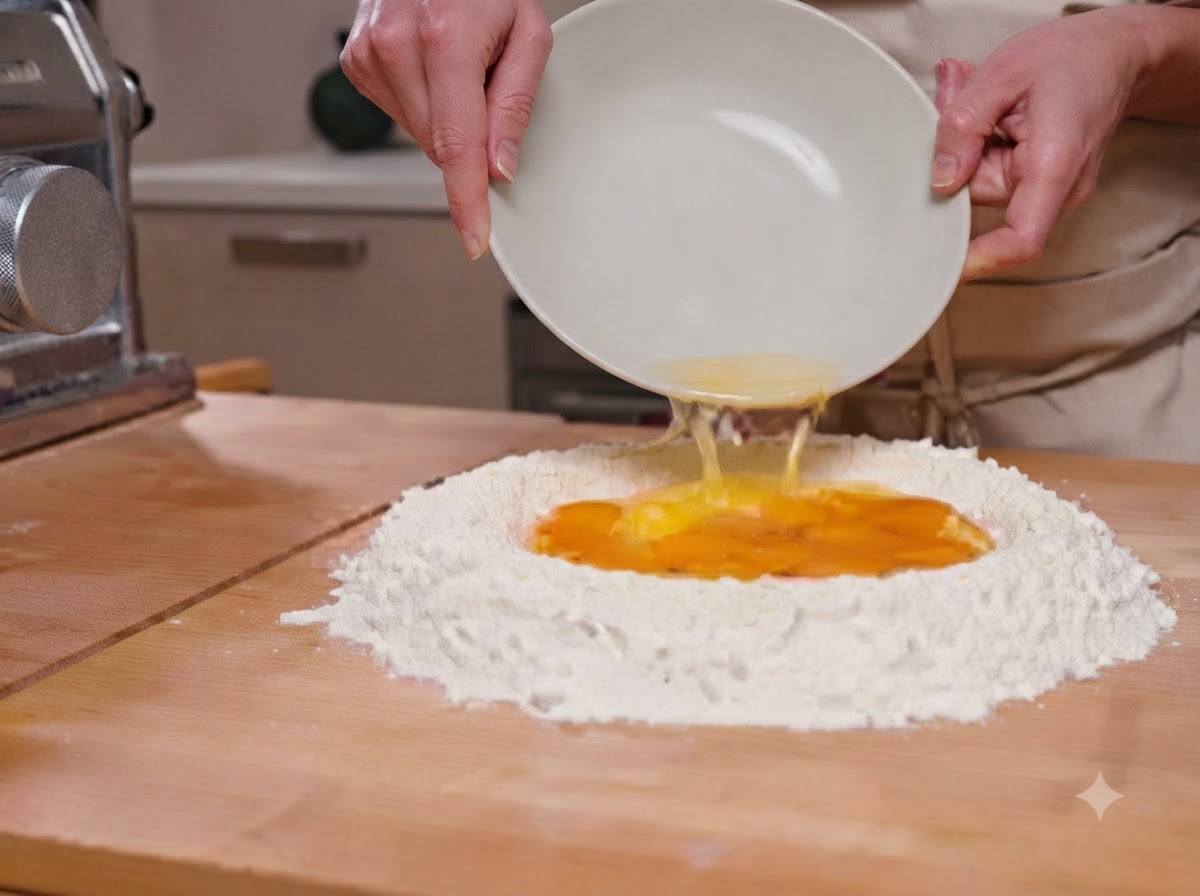
Create a well in the center of the mound of flour and semolina mixture, then pour the whole eggs and egg yolk directly into the center from a bowl.
Tip: Make sure the walls of the flour well are high enough to prevent the eggs from spilling out. - 2Knead the pasta dough
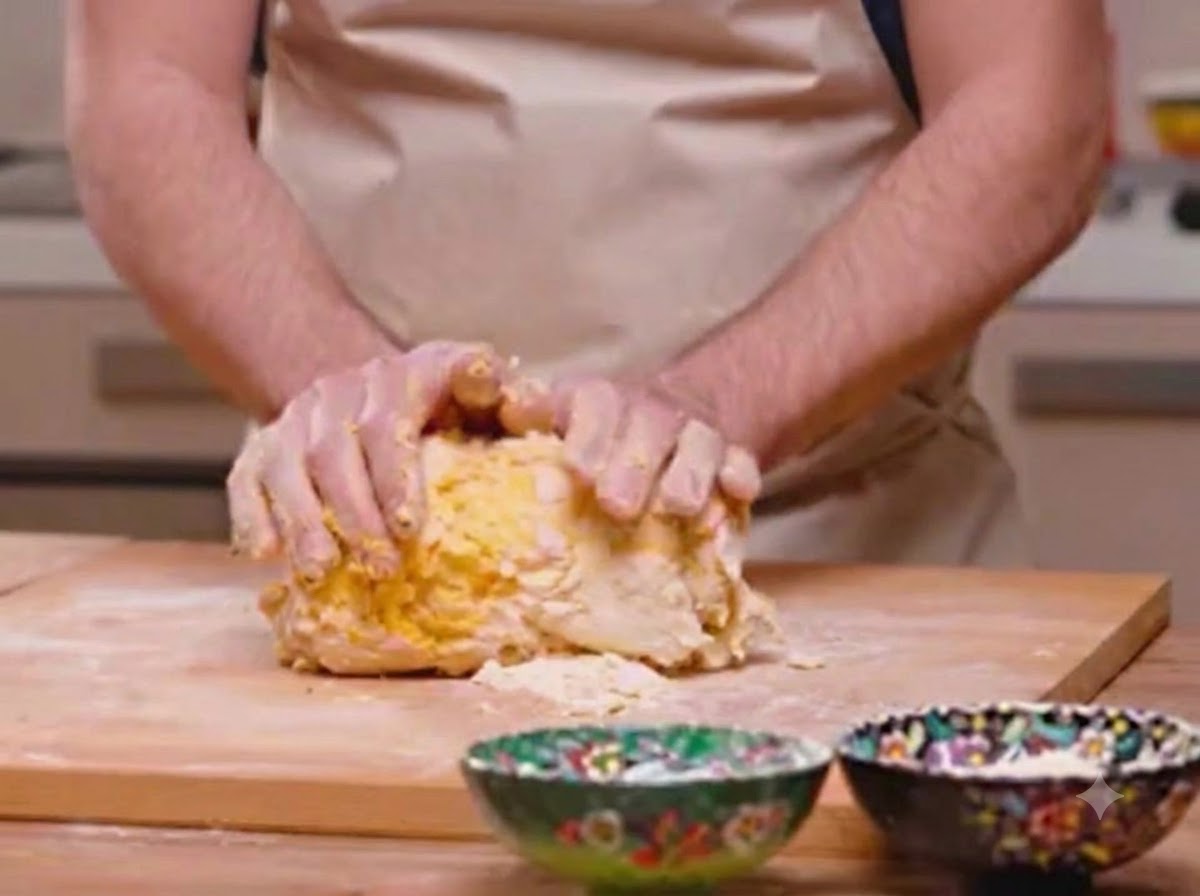
Bring the flour and eggs together by hand, then knead the mixture on the wooden board until the dough becomes smooth and elastic.
Tip: Knead firmly using the heels of your hands to develop the gluten properly. - 3Wrap and rest the dough
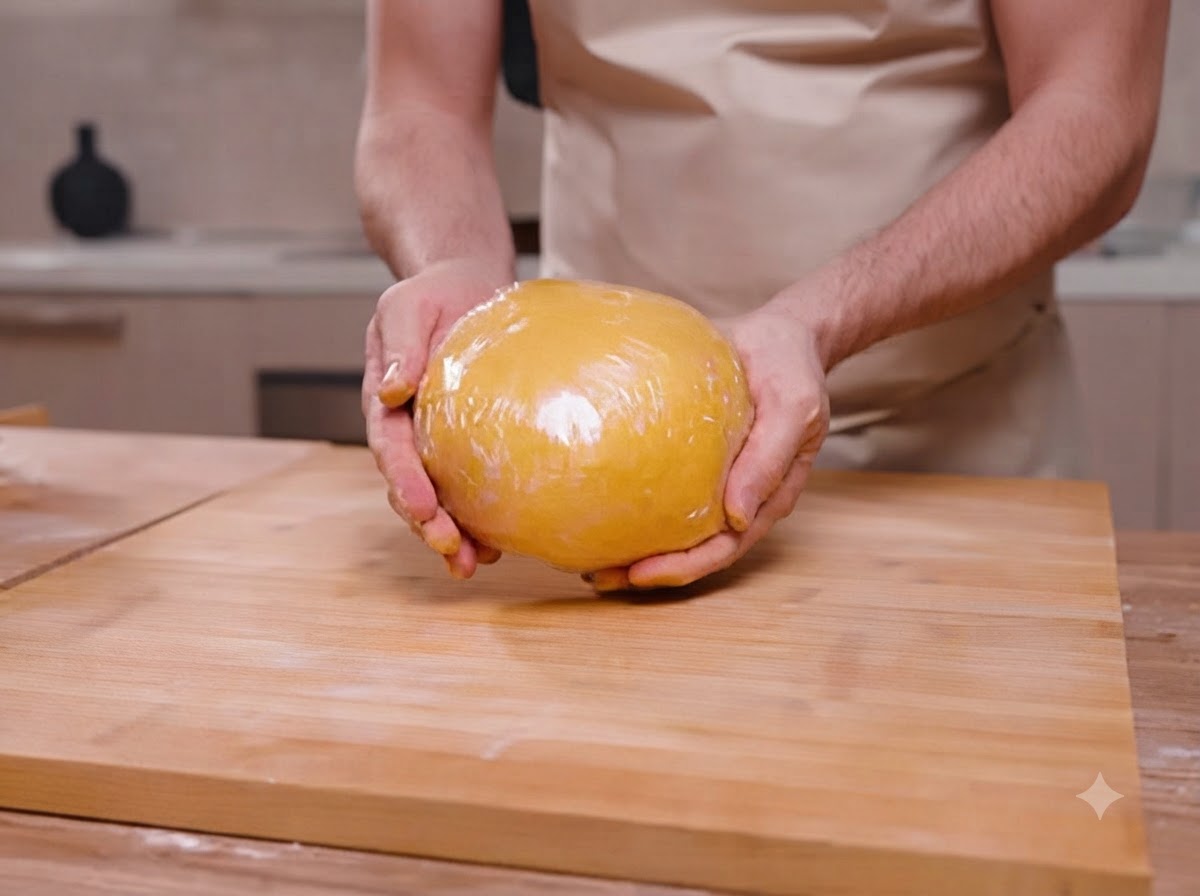
Wrap the ball of yellow pasta dough tightly in plastic wrap to prevent it from drying out and let it rest.
Tip: Resting allows the gluten to relax, making the dough much easier to roll out later. - 4Roll out the pasta sheets
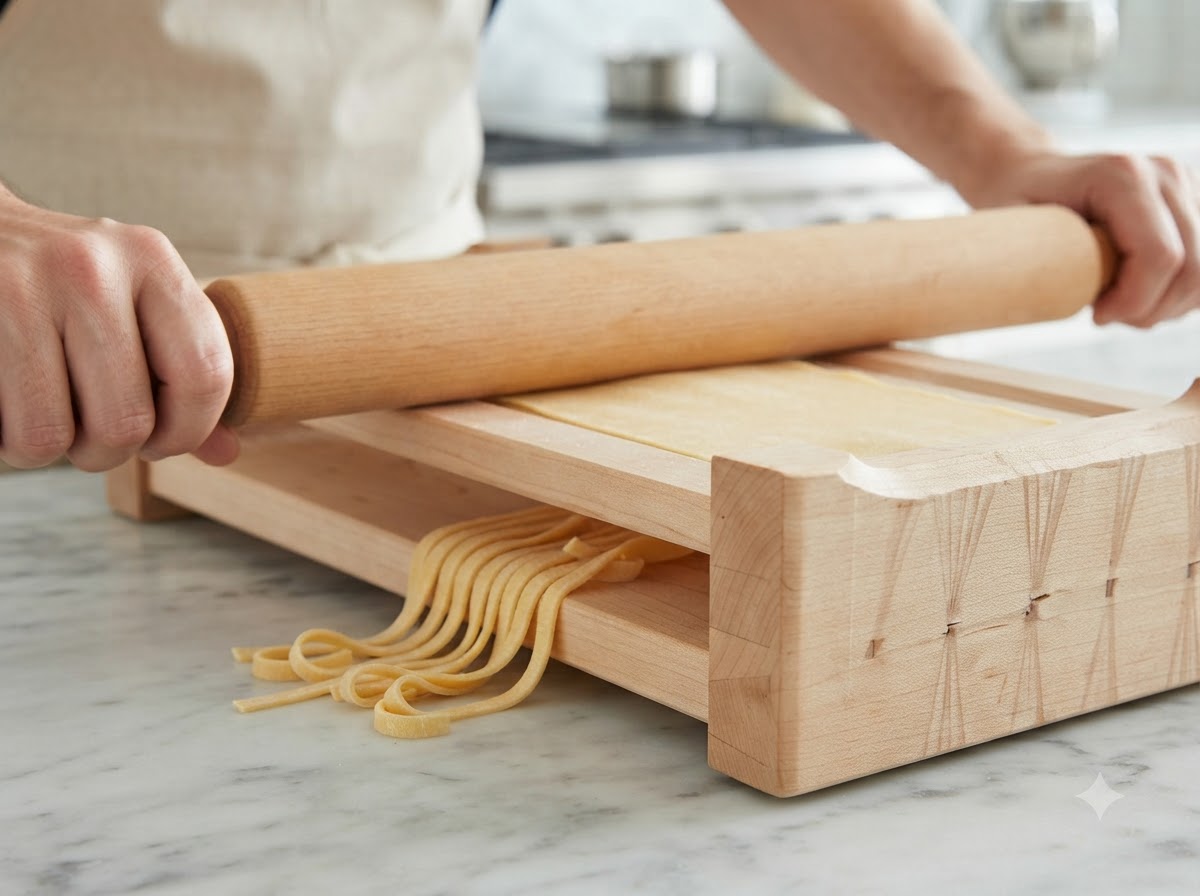
Use a wooden rolling pin to flatten and roll out the pasta dough into thin sheets using the specialized wooden cutting board device.
Tip: Roll evenly from the center outwards to maintain a consistent thickness. - 5Cut into spaghetti
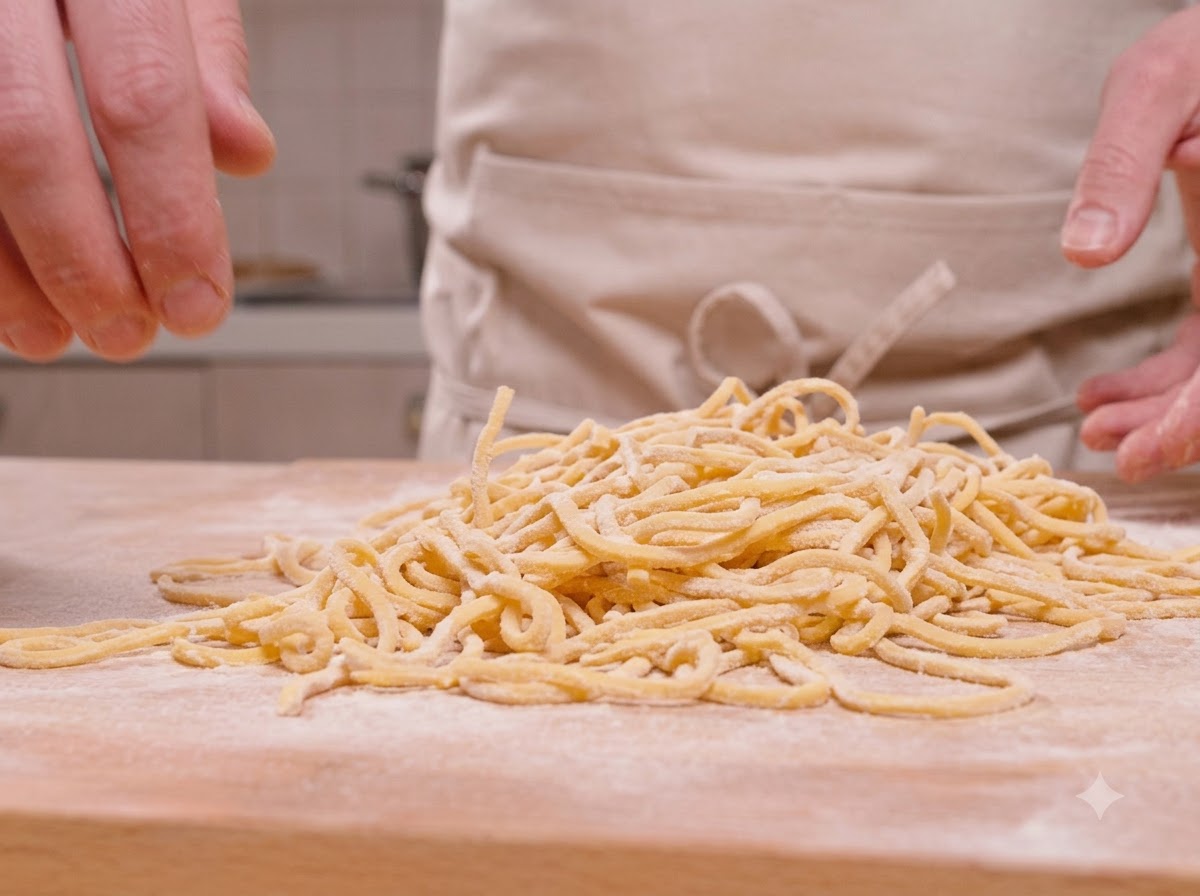
Take the rolled pasta sheets and cut them into strands of fresh yellow spaghetti noodles, gathering them into a neat pile on the wooden board.
Tip: Dust the noodles lightly with flour after cutting to prevent them from sticking together. - 6Whisk the sauce mixture
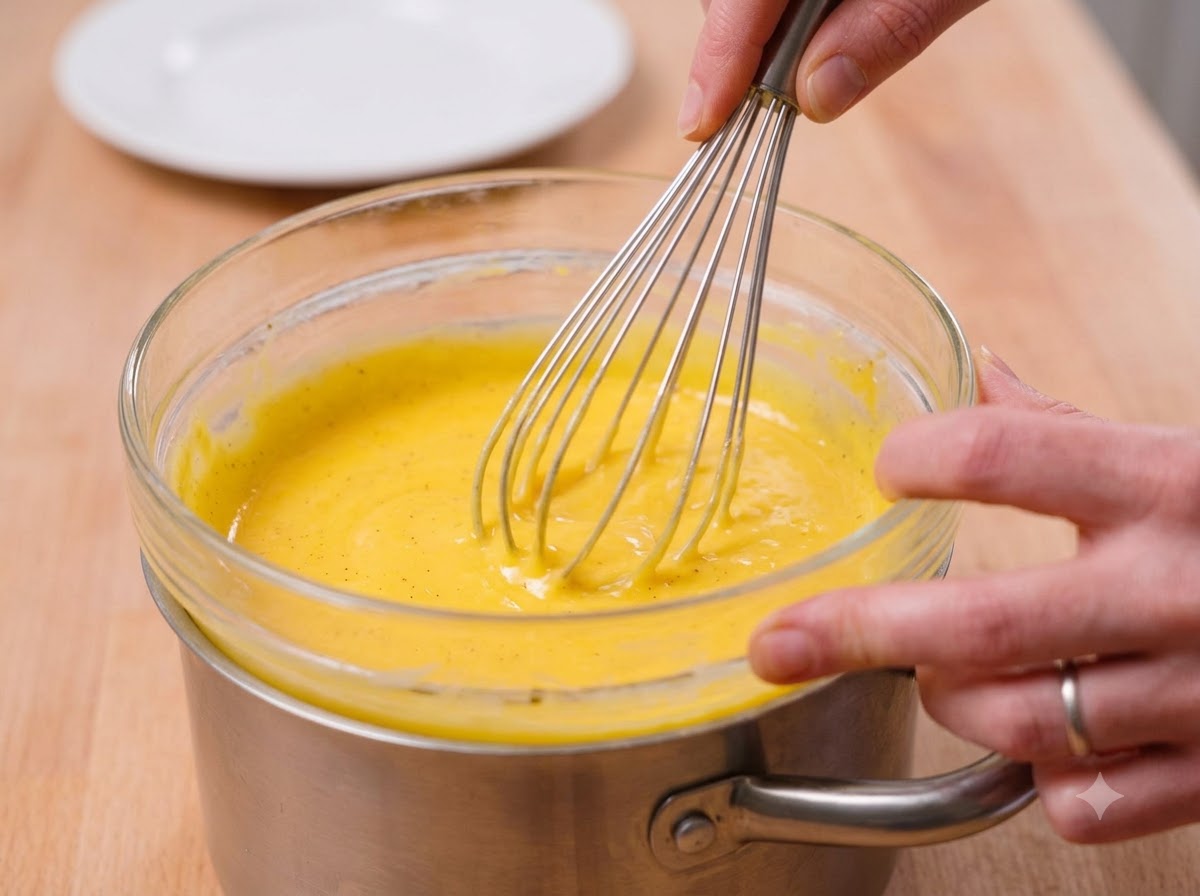
Whisk together the eggs, egg yolks, and grated Pecorino Romano cheese in a glass bowl placed over a pot to create the rich carbonara sauce base.
Tip: Ensure the bowl does not touch boiling water directly if using a double boiler setup to avoid scrambling the eggs. - 7Add pasta water to the pan
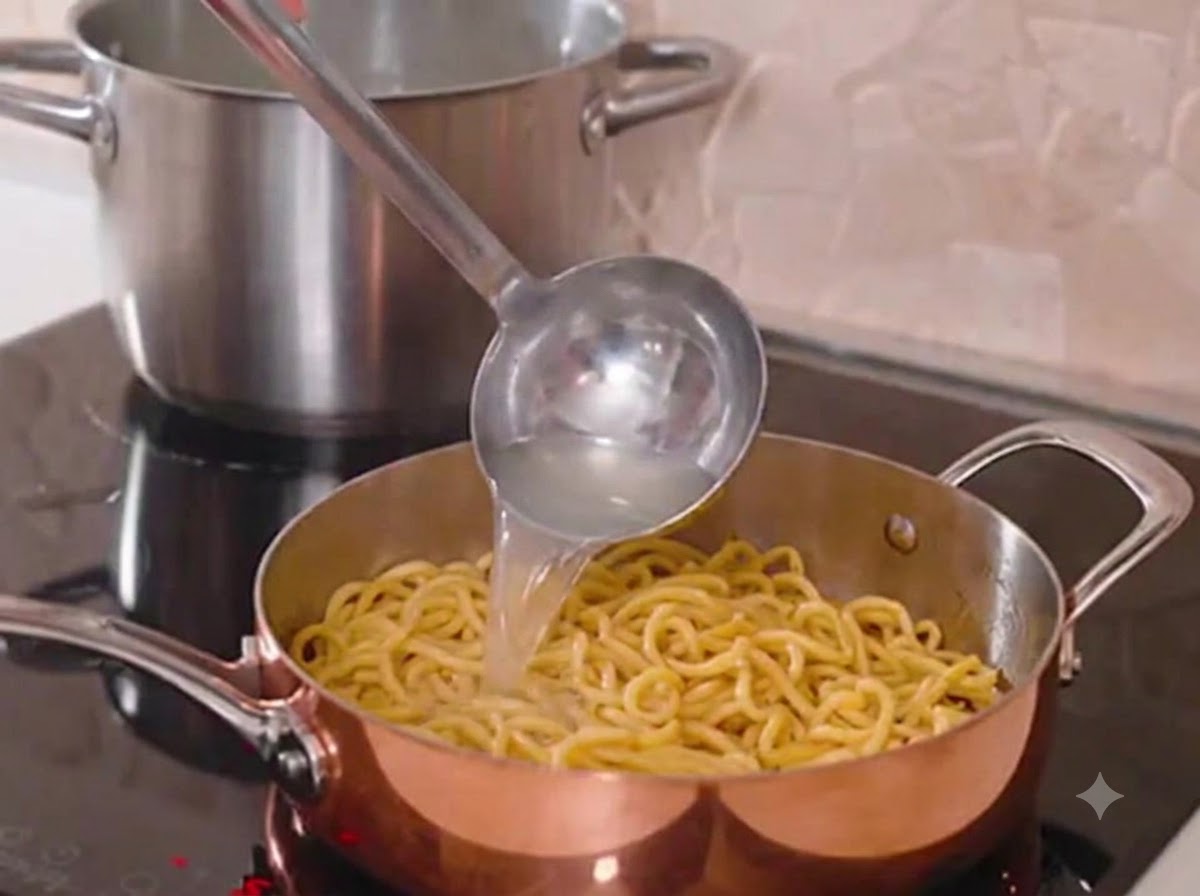
Scoop a ladleful of starchy cooking water from the pot and pour it directly into the copper pan containing the cooked spaghetti noodles. This helps loosen the mixture and provides the necessary starch to bind the sauce together later.
Tip: Always reserve a little extra pasta water; it is the secret weapon to achieving a glossy, cohesive emulsion. - 8Pour the creamy egg and cheese sauce
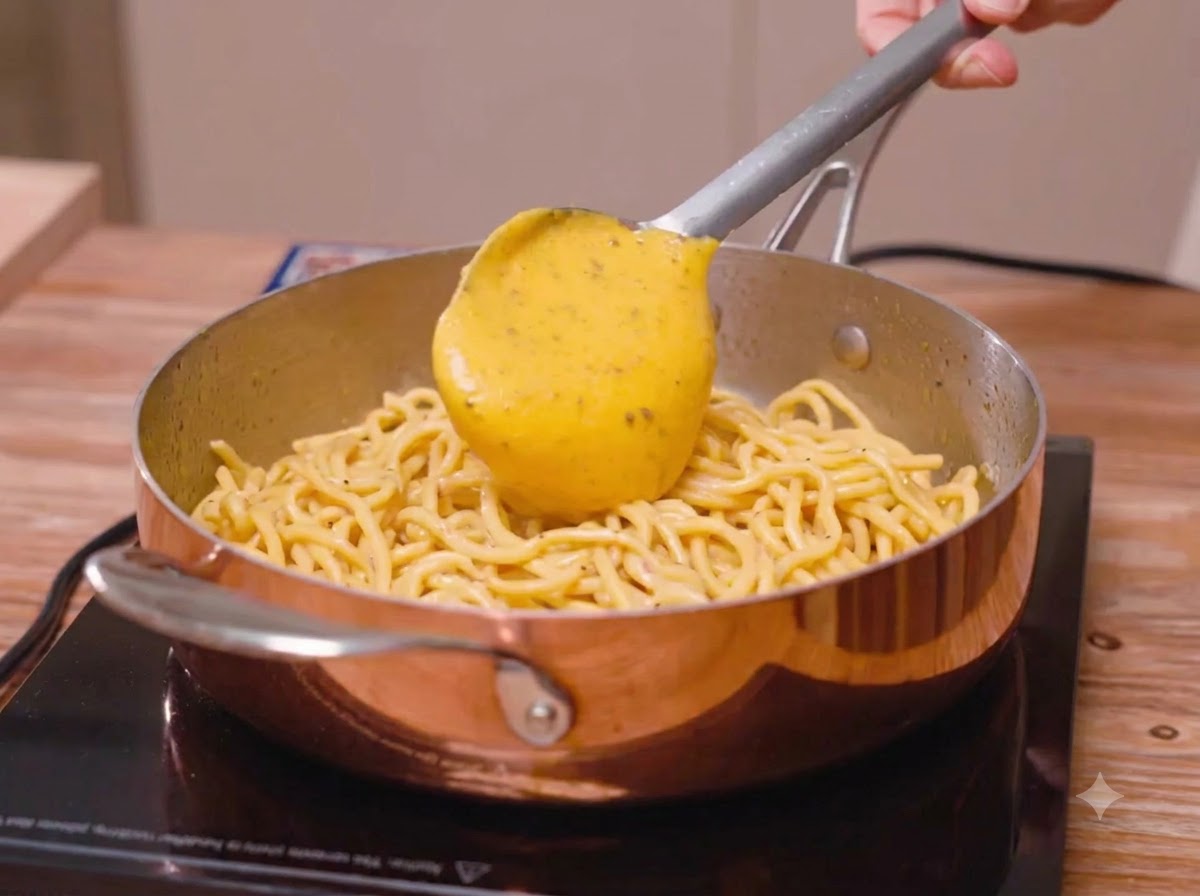
Pour the rich, yellow creamy egg and cheese mixture from a container or pan over the cooked spaghetti noodles resting in the copper pan. Toss and stir vigorously off the heat to prevent scrambling the eggs, creating a smooth and velvety coating over the pasta.
Tip: Turn off the heat before adding the egg mixture so the residual warmth thickens the sauce without cooking the eggs into chunks.