Creamy Salmon White Sauce Pasta
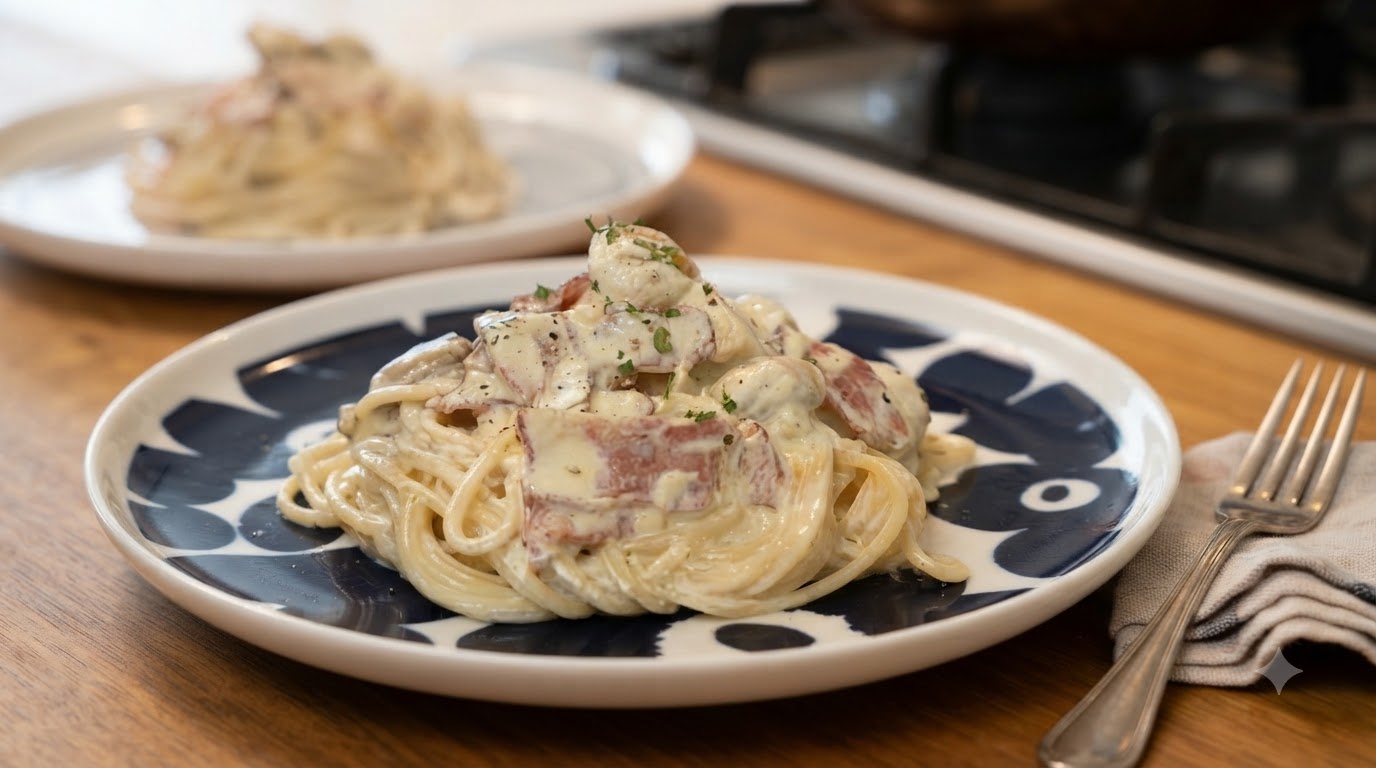
A rich and comforting white sauce pasta featuring tender salmon chunks, earthy mushrooms, and vibrant asparagus, built from a classic scratch-made roux.
White sauce pasta is a versatile comfort food favorite, and mastering the foundational roux opens up endless culinary possibilities. This version pairs a smooth, creamy milk sauce with fresh salmon, earthy mushrooms, and crisp asparagus for a balanced and satisfying meal.
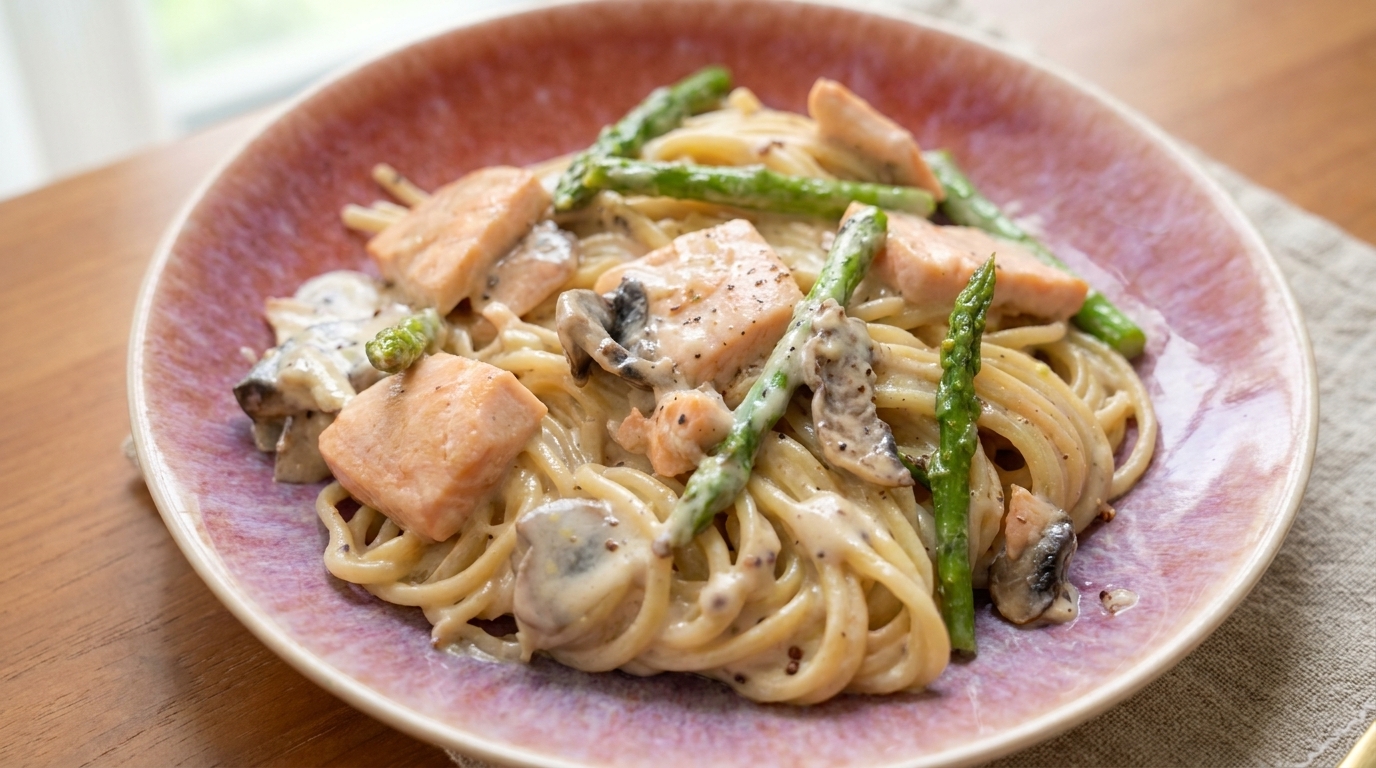
Ingredients
- 200 g spaghetti pasta
- 150 g fresh salmon fillet
- 50 g white mushrooms
- 4-5 spears asparagus
- 1/2 onion
- 30 g butter
- 30 g all-purpose flour
- 300 ml cold milk
- 1 tsp mustard sauce
- to taste salt
- to taste freshly ground black pepper
Instructions
- 1Slice the onion
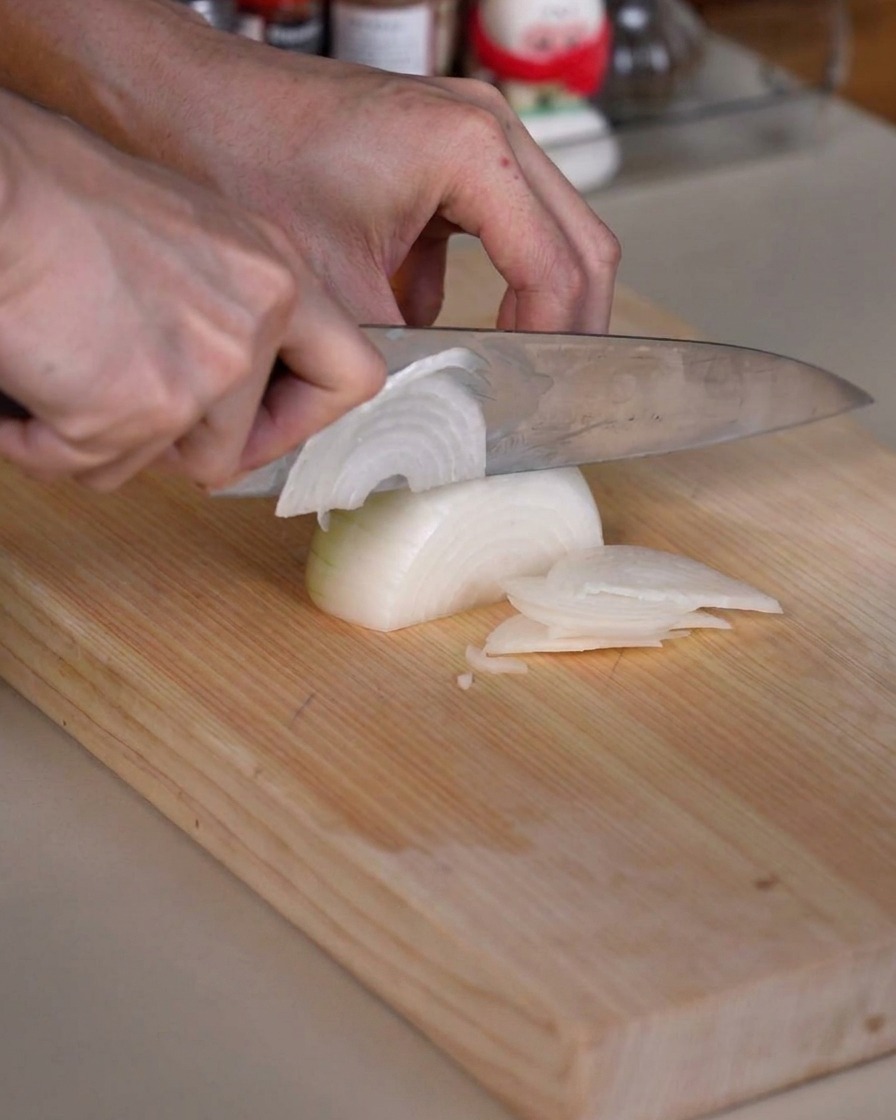
Place the peeled onion on a wooden cutting board and use a sharp chefs knife to slice it into thin strips. These sliced onions will serve as the aromatic base for the pasta sauce.
Tip: Keep your fingertips curled inward to protect them while slicing. - 2Slice the white mushrooms
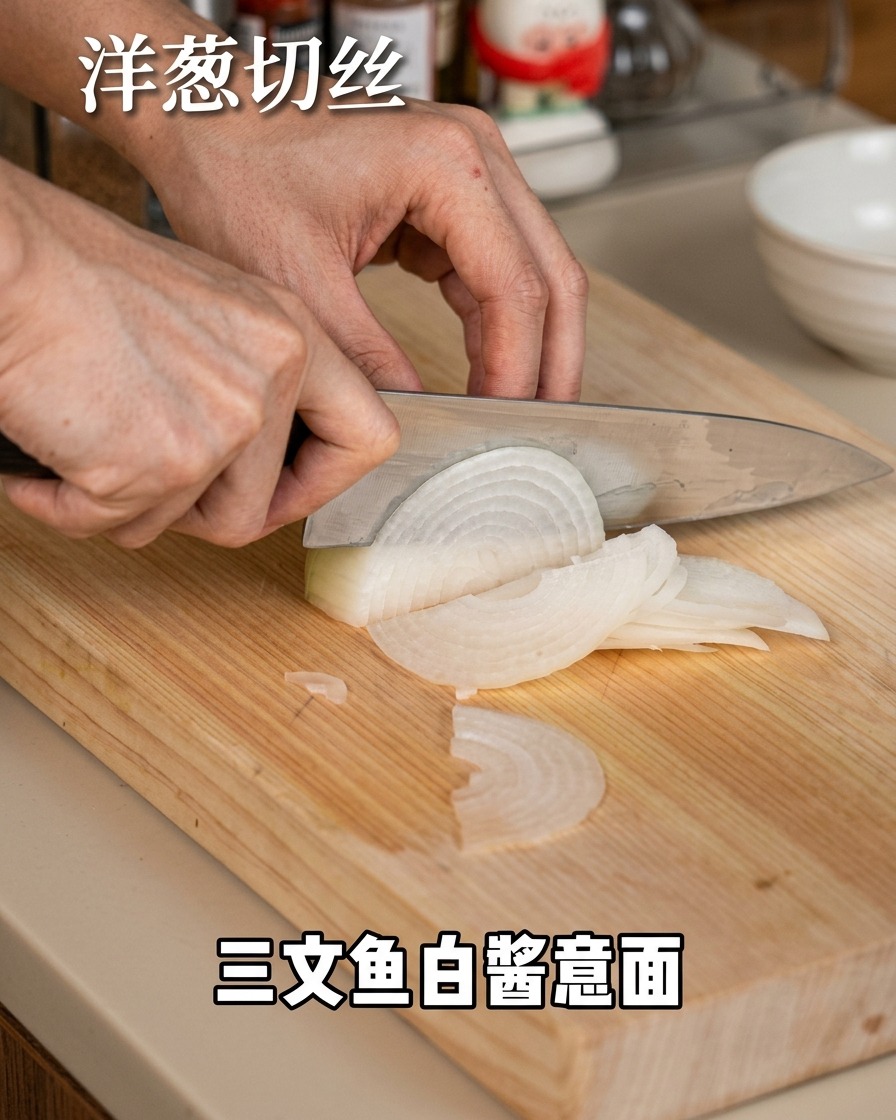
Take the cleaned white mushrooms and carefully slice them into uniform thin pieces on a wooden cutting board using a sharp kitchen knife.
Tip: Slice the mushrooms to an even thickness so they cook uniformly when added to the pan later. - 3Cut the salmon into bite-sized blocks
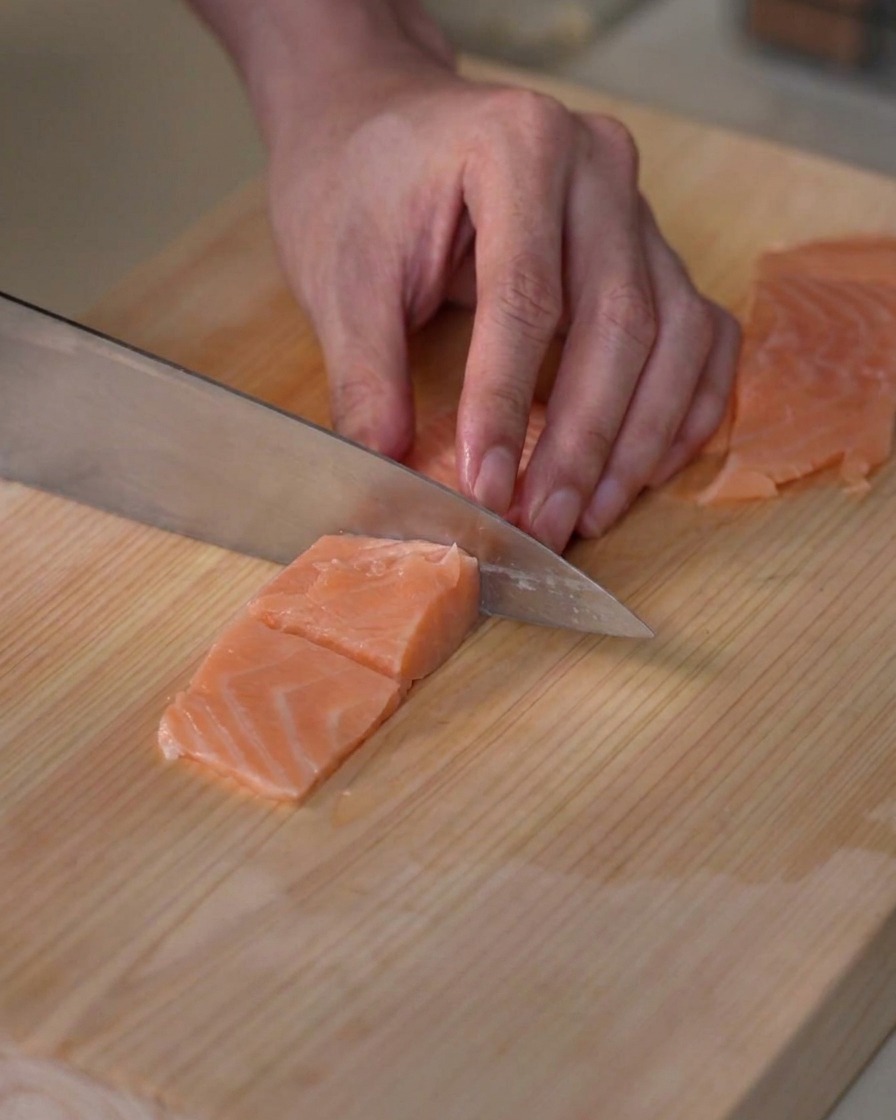
Place the fresh salmon fillet on the wooden cutting board and slice it cleanly into uniform bite-sized blocks.
Tip: Pat the salmon dry with a paper towel before cutting to prevent it from slipping on the board. - 4Add butter to the pot
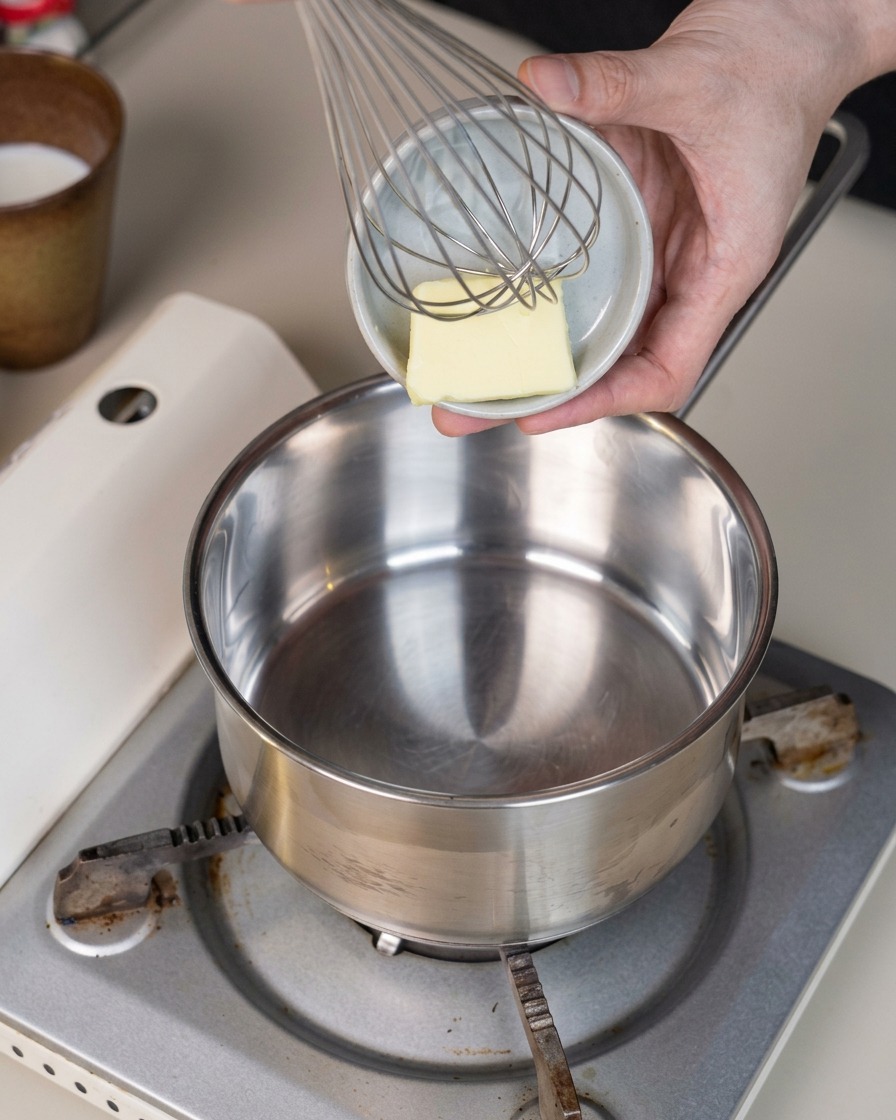
Place a measured block of butter into a small metal saucepan set over low heat on the stove, allowing it to melt gently.
Tip: Keep the heat low so the butter melts completely without browning or burning. - 5Mix flour into the melted butter
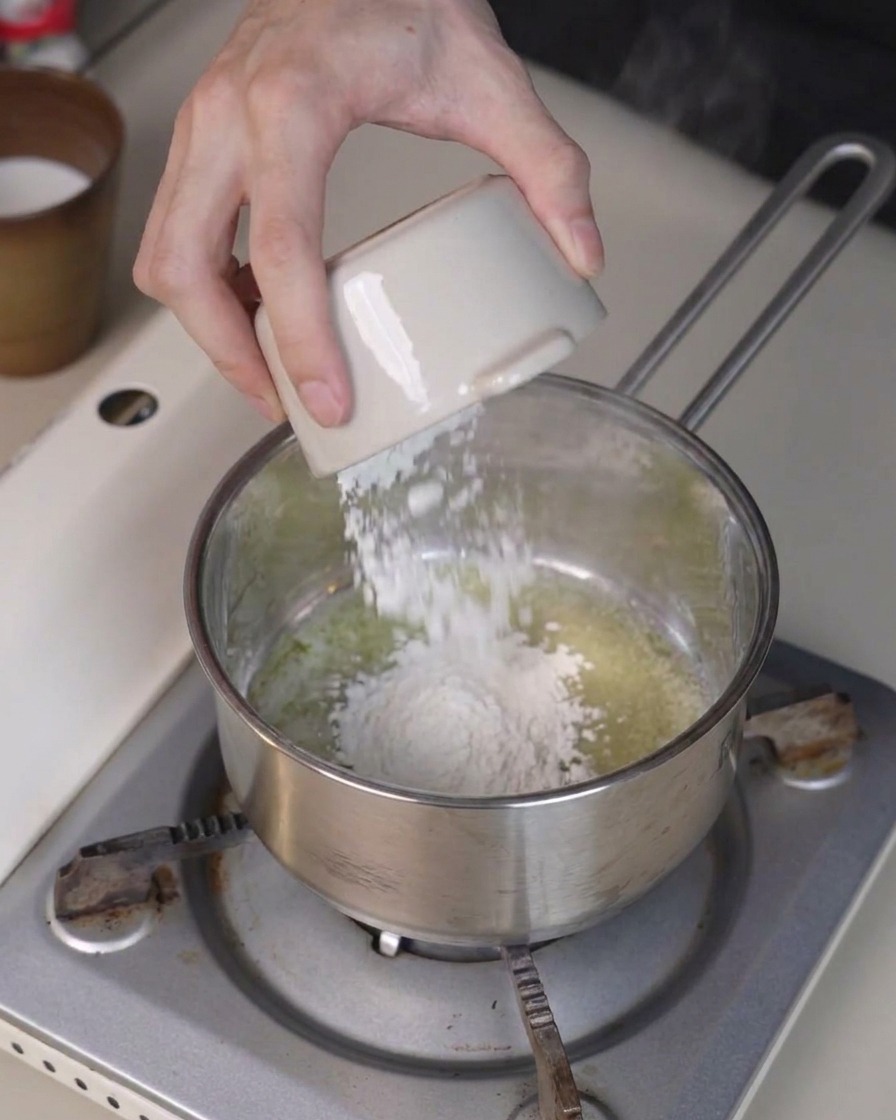
Pour all-purpose flour directly into the melted butter and stir continuously with a spatula to combine them thoroughly into a paste.
Tip: Cook the flour and butter mixture properly over low heat without letting it brown to avoid any raw flour taste. - 6Pour cold milk into the mixture
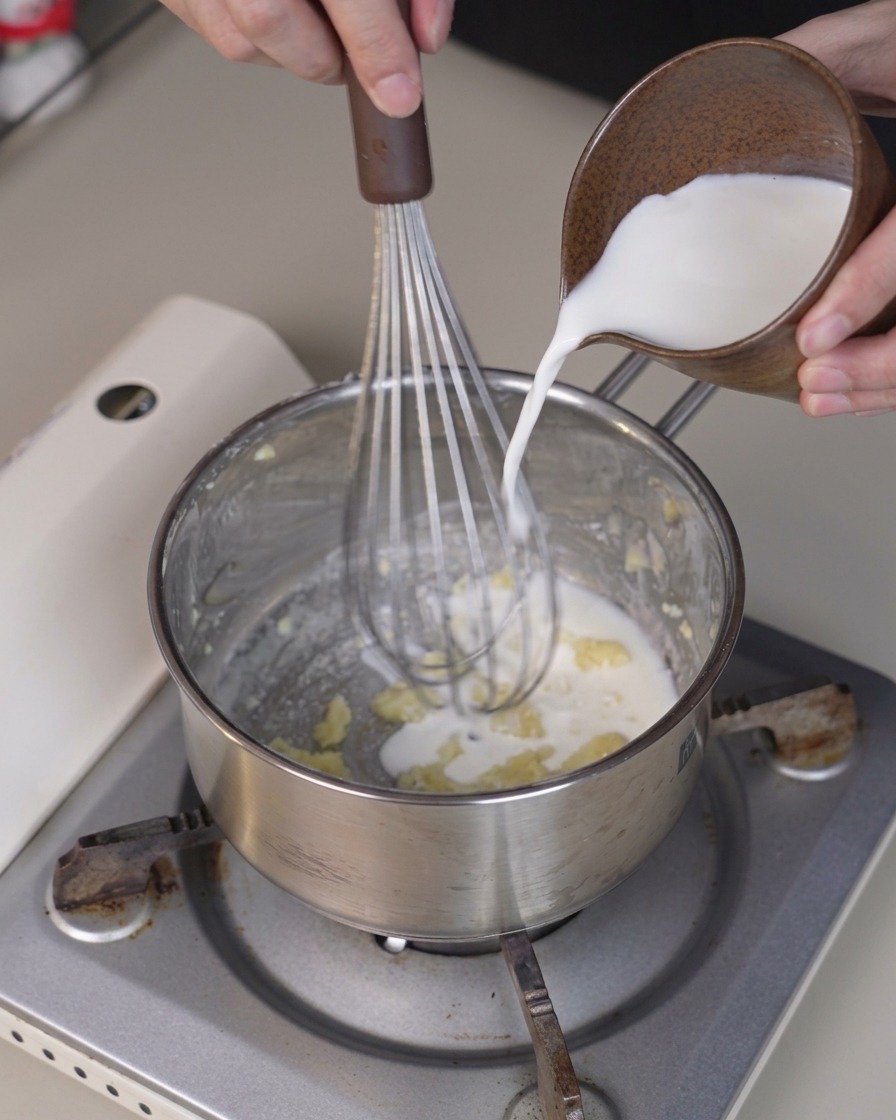
Slowly pour cold milk into the pot while whisking the mixture continuously to incorporate it smoothly without forming lumps.
Tip: Alternating the addition of cold milk and controlling the heat helps prevent the white sauce from clumping. - 7Sauté and season the onions
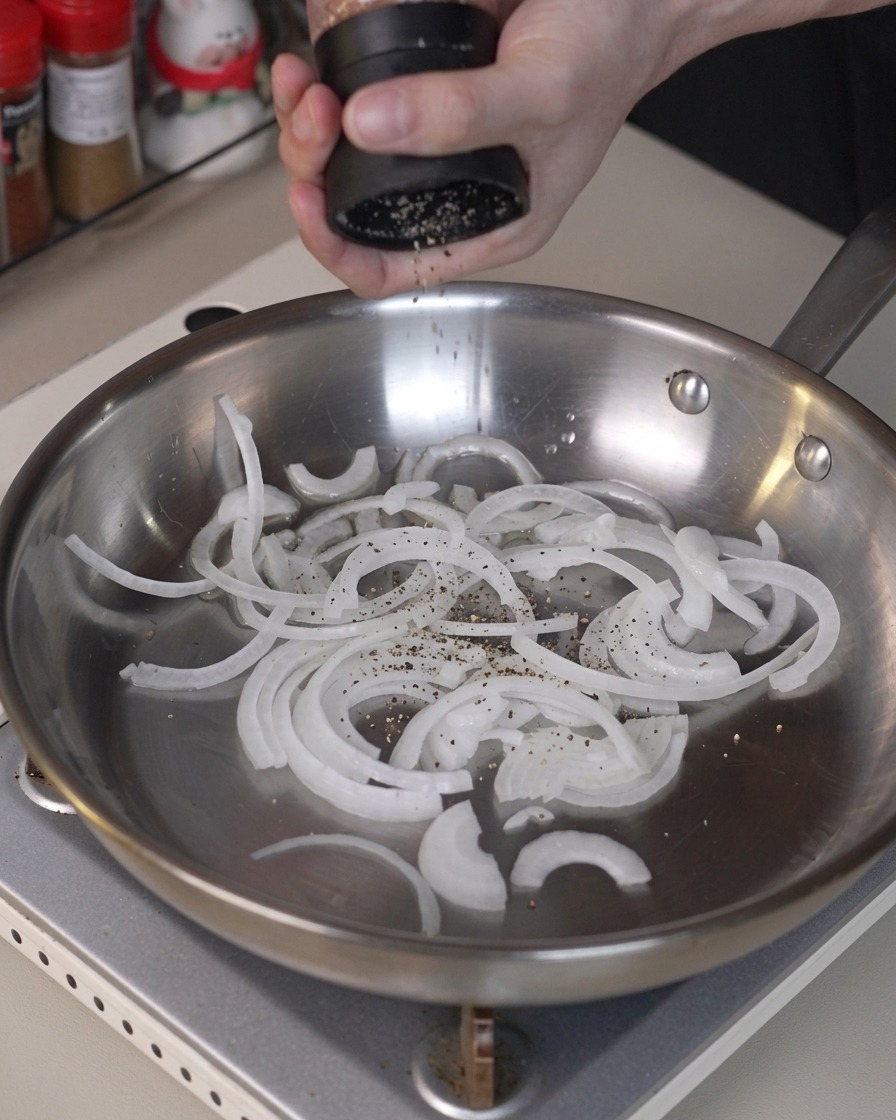
Place the sliced onions into a metal pan with heated oil and season with freshly ground black pepper. Sauté the onions over medium heat until they become translucent and soften.
Tip: Seasoning the onions early while sautéing helps draw out their natural sweetness. - 8Add sliced mushrooms
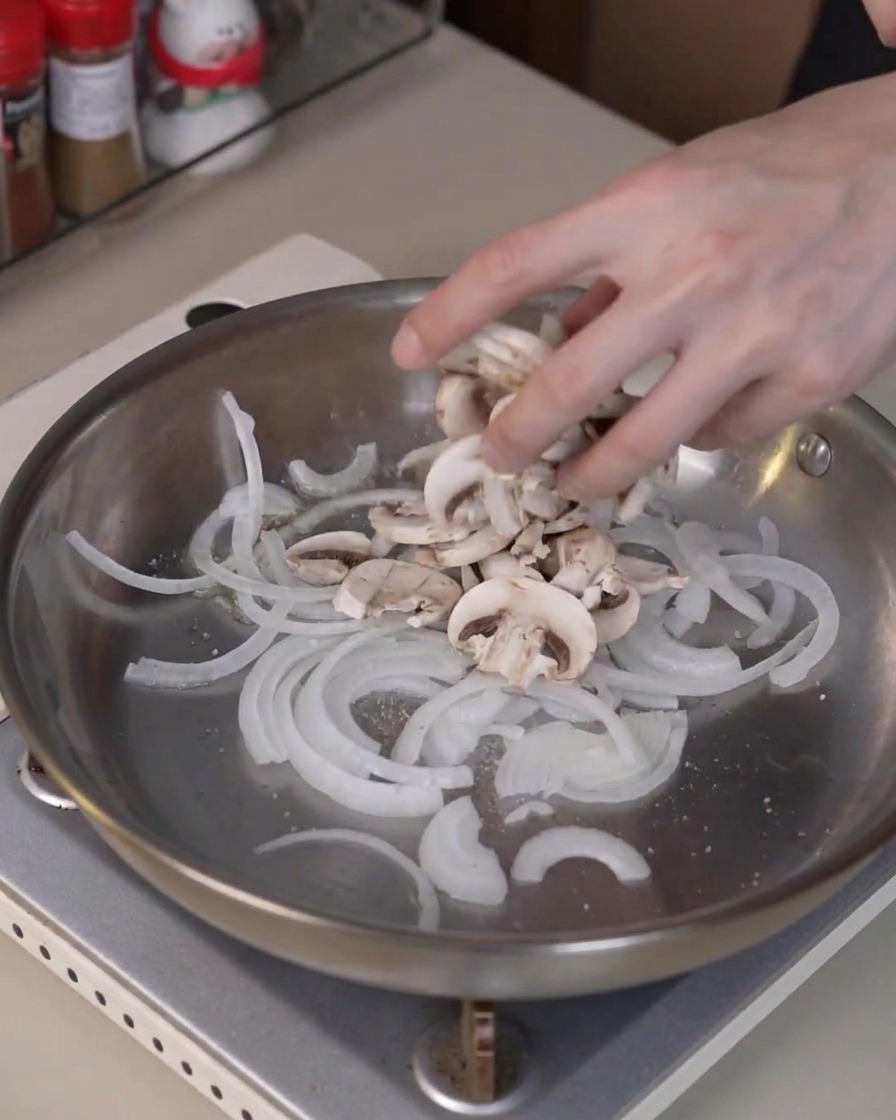
Add the sliced mushrooms into the pan with the sautéed onions. Continue to sauté over medium heat to allow the mushrooms to release their moisture and brown nicely.
Tip: Do not crowd the pan too quickly so the mushrooms can brown rather than steam. - 9Toss in asparagus pieces
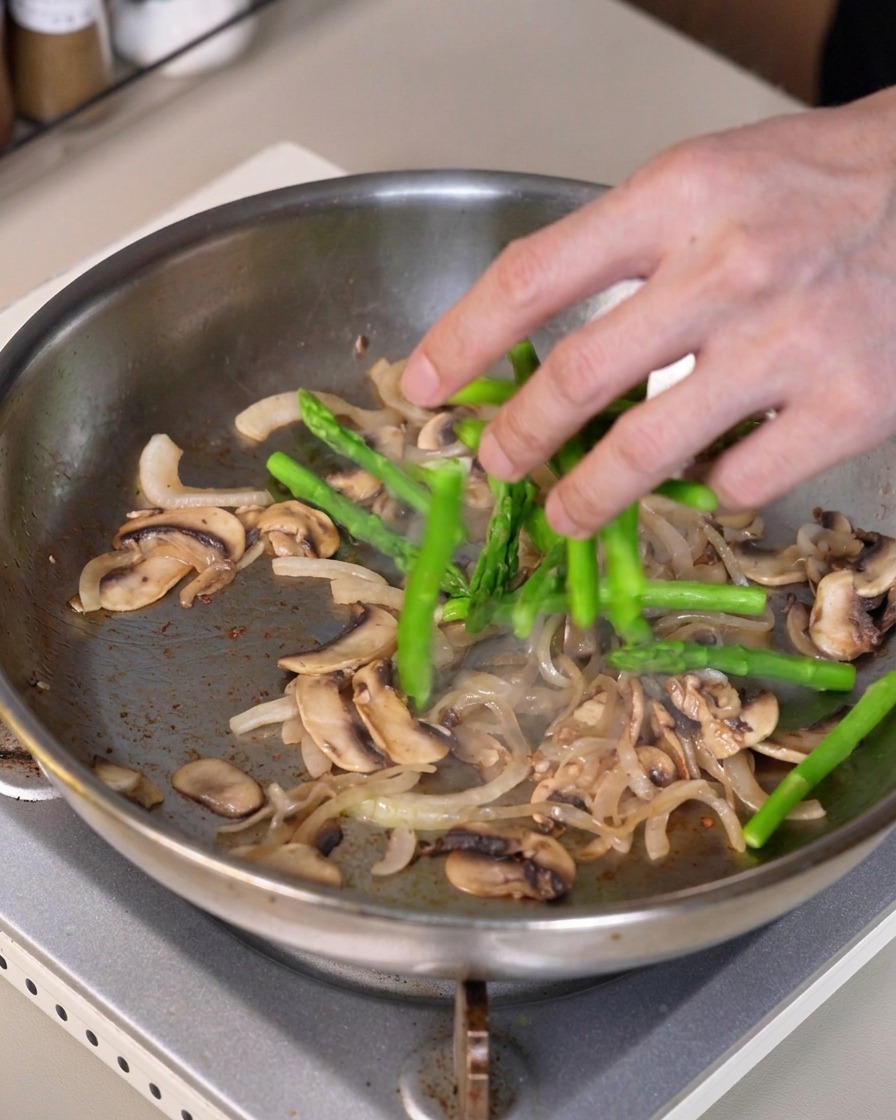
Add the cut asparagus pieces directly into the pan with the onions and mushrooms. Stir and toss everything together to cook the vegetables evenly.
Tip: Adding asparagus later in the cooking process keeps them vibrant green and tender-crisp. - 10Pour in the white sauce
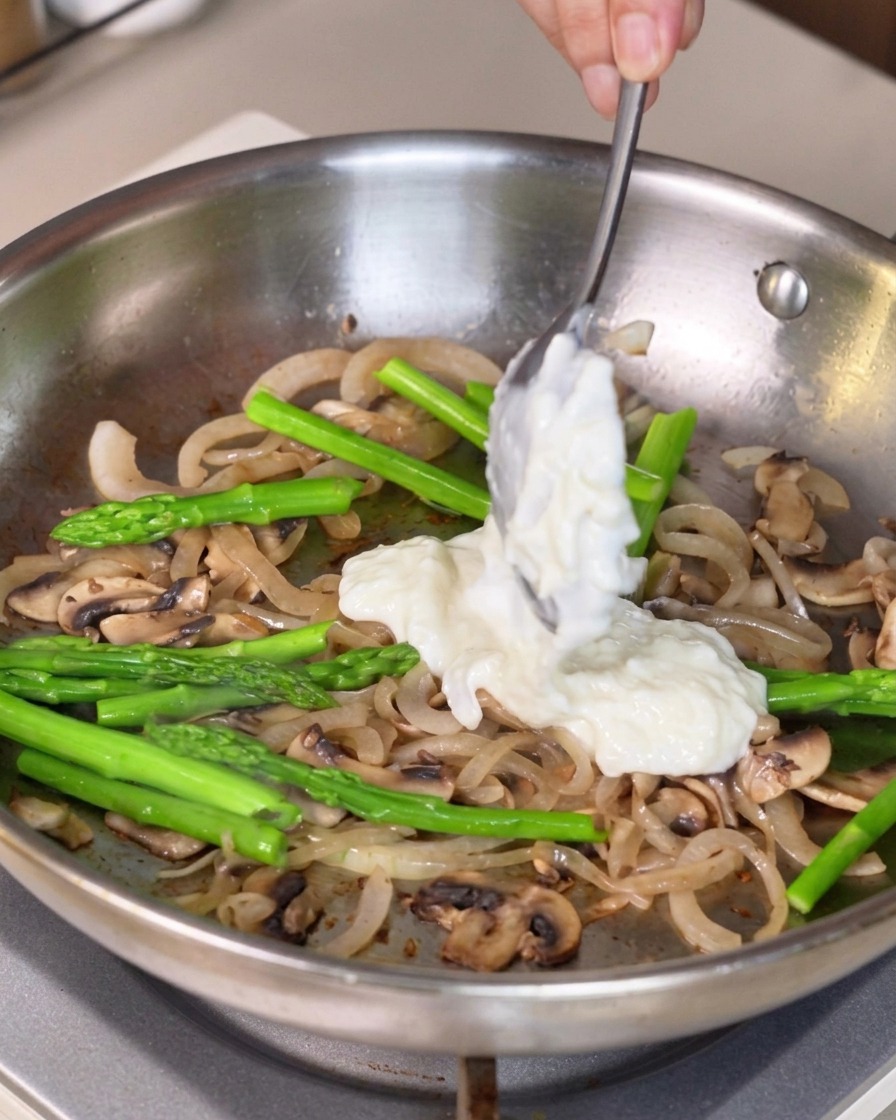
Spoon the prepared white sauce into the pan containing the cooked vegetables. Mix the sauce thoroughly with the onions, mushrooms, and asparagus to coat them evenly.
Tip: Ensure your white sauce is smooth and lump-free before mixing it into the vegetables. - 11Combine cooked pasta with sauce
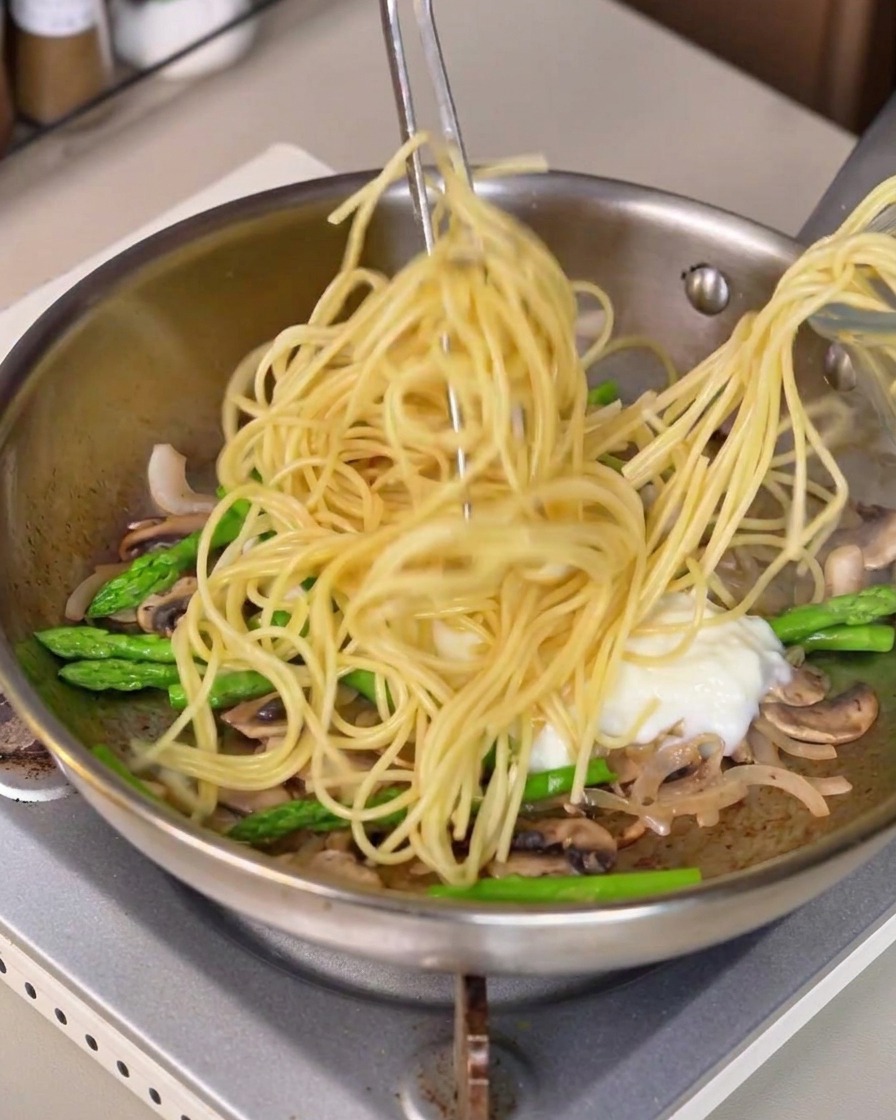
Transfer the cooked pasta directly into the pan with the white sauce and vegetables. Use tongs to toss and coat the noodles completely in the creamy sauce.
Tip: Reserve a small splash of pasta cooking water to loosen the sauce if it becomes too thick. - 12Add salmon chunks to the pasta
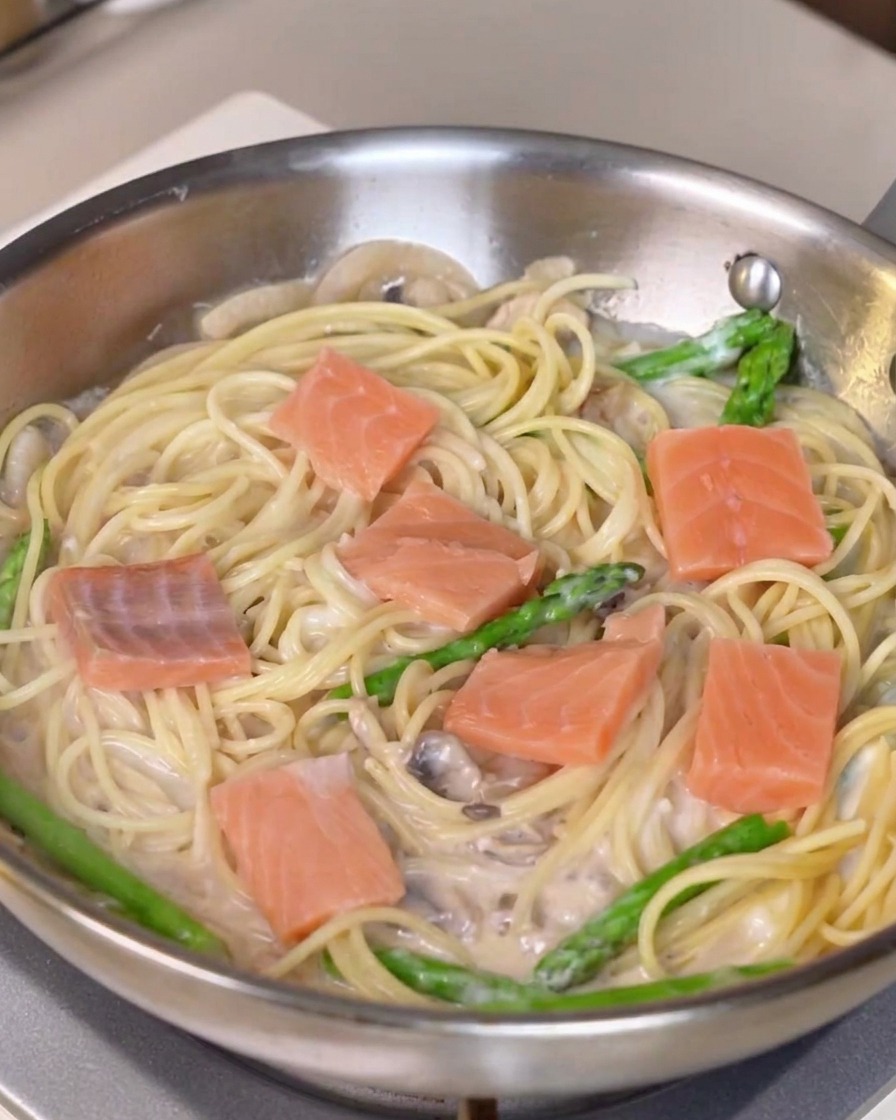
Arrange fresh salmon chunks evenly across the cooked pasta and vegetable mixture in the pan. They will gently cook in the creamy sauce.
Tip: Cut the salmon into uniform bite-sized pieces so they cook evenly. - 13Season the pasta
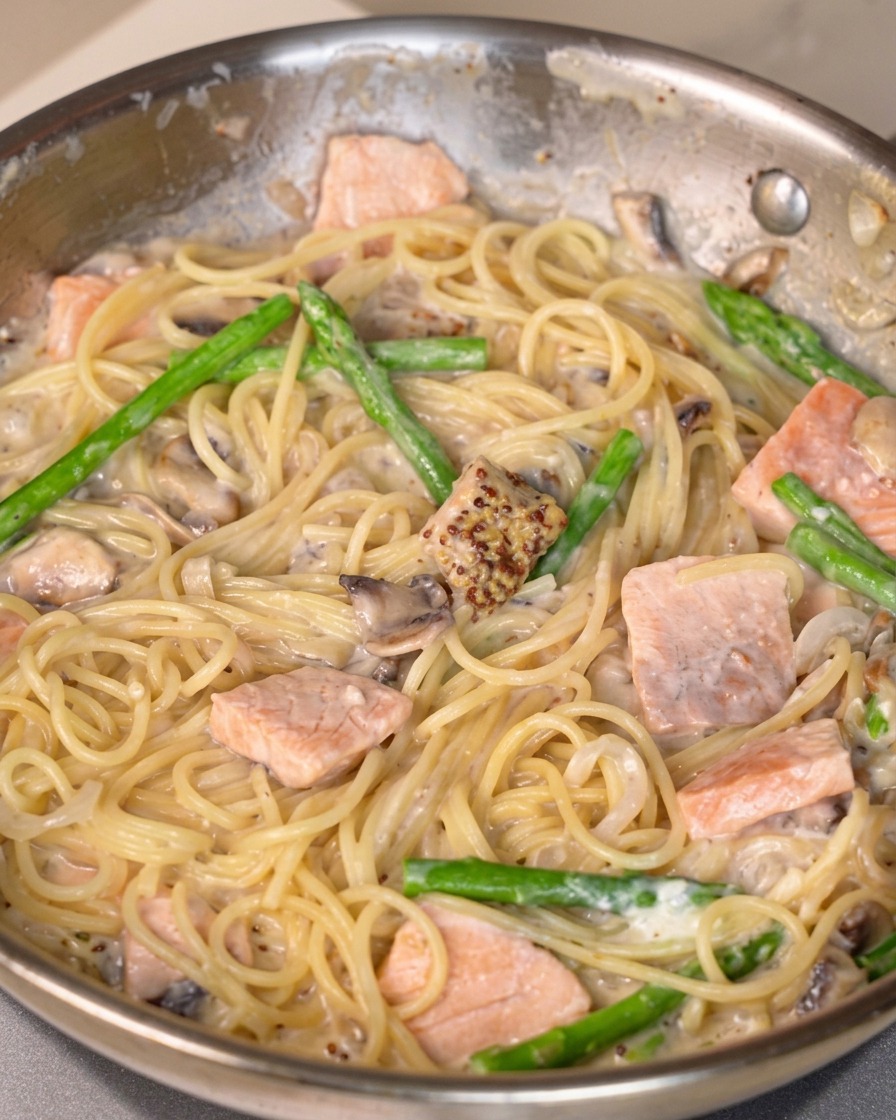
Add a dollop of mustard sauce, along with salt and pepper, directly into the pasta mixture in the pan. Stir well to incorporate the flavors into the sauce.
Tip: Add the mustard gradually and taste the sauce to balance the tanginess.