Authentic Japanese Tonkotsu Miso Ramen
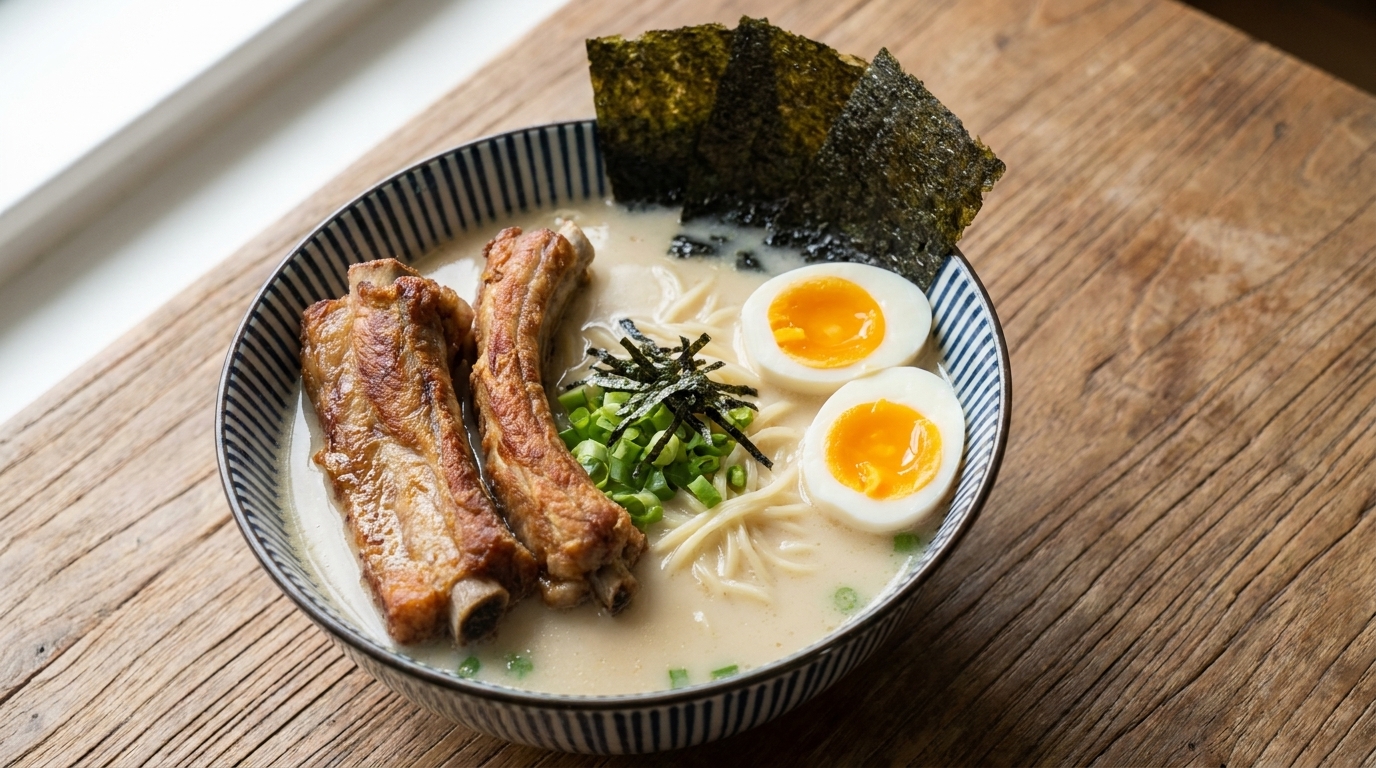
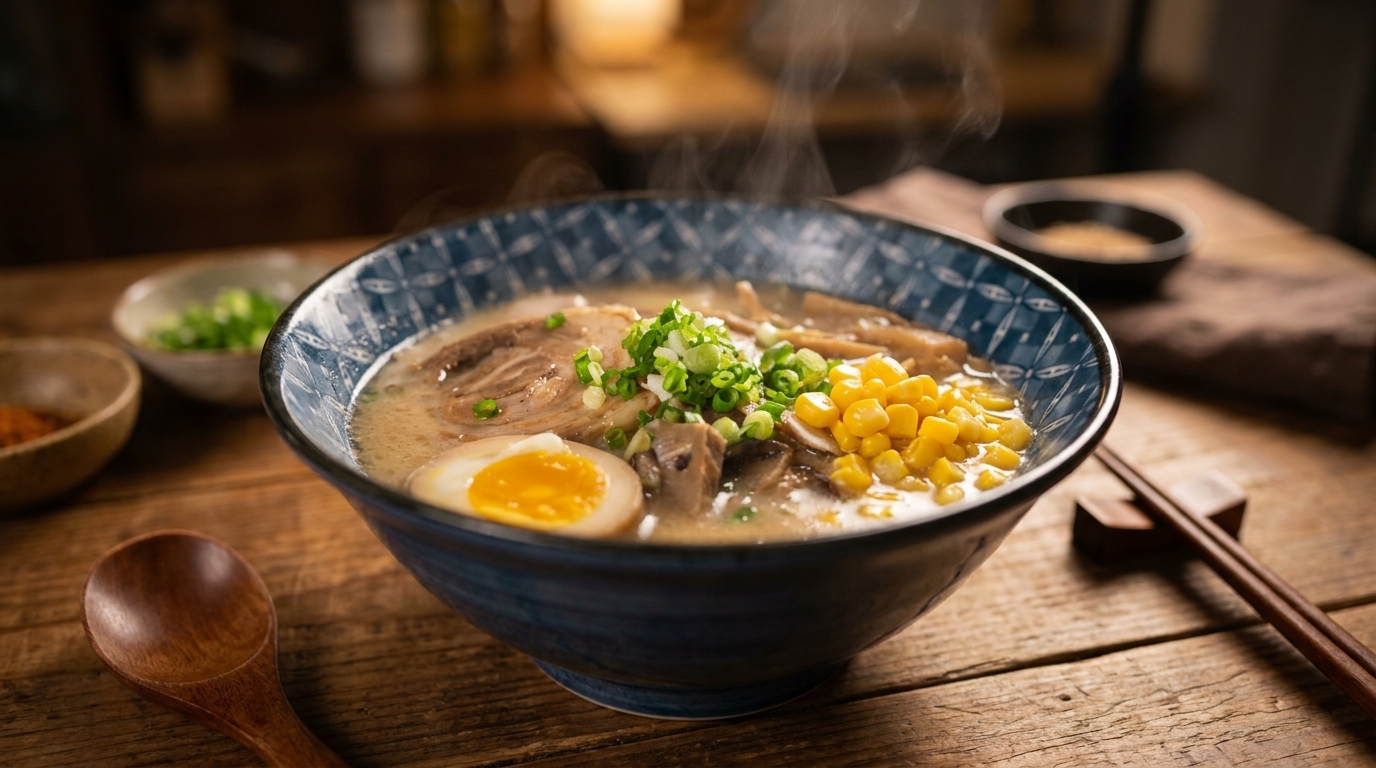
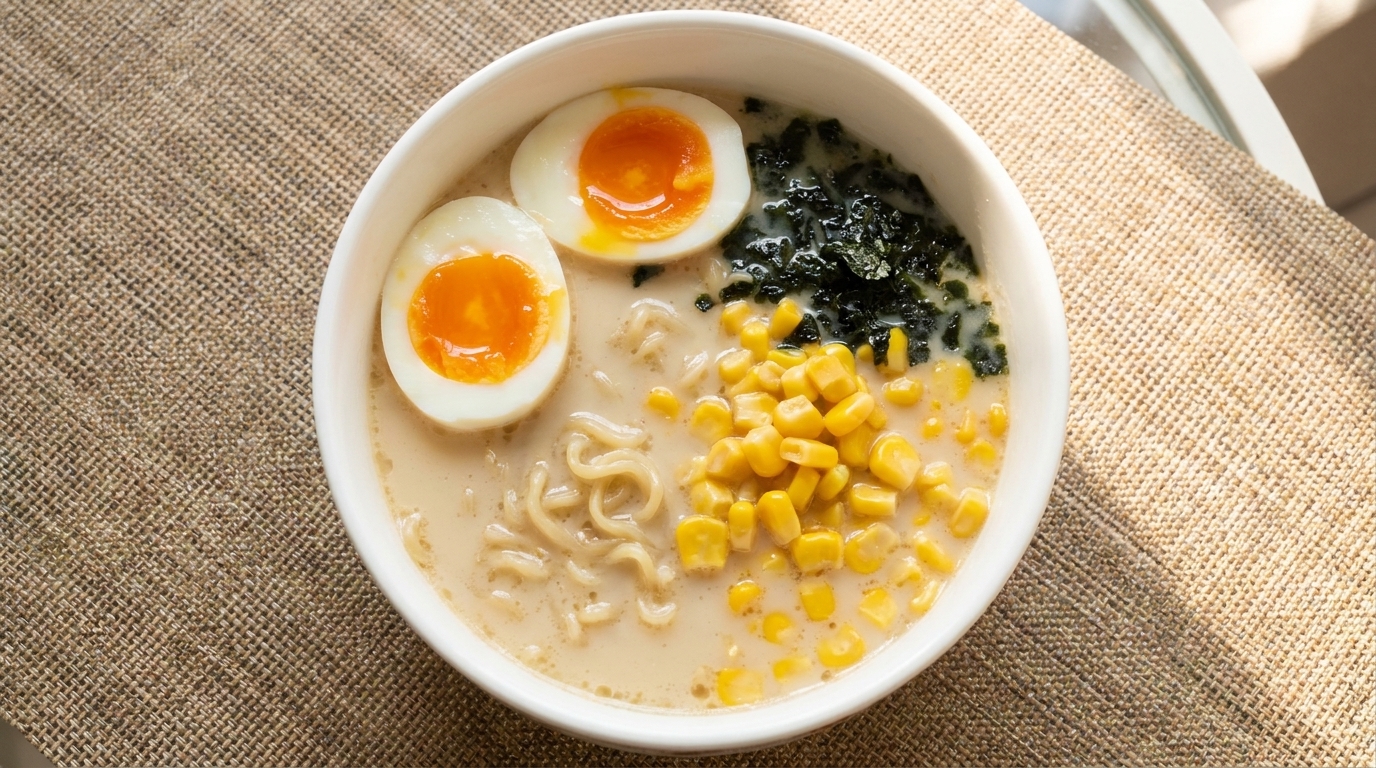
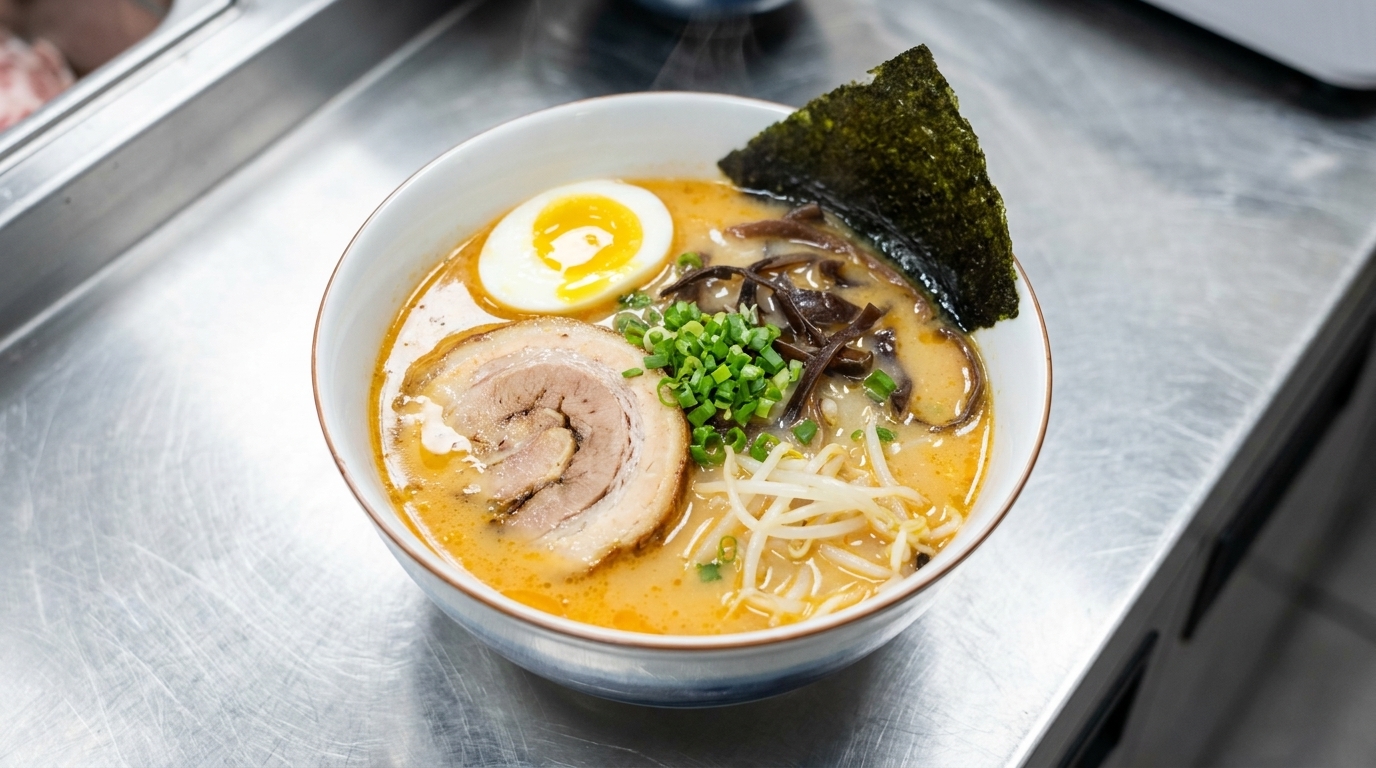
Experience ultimate comfort with this Tonkotsu Miso Ramen. Rich pork bone broth blends with savory miso, topped with tender chashu and fresh noodles.
Tonkotsu miso ramen is a masterful collision of two beloved regional styles: the rich, creamy pork bone broths of Kyushu and the savory, fermented miso bases of Hokkaido. By whisking miso paste directly into the hot, opaque broth, the soup achieves an incredibly deep, complex umami profile. Perfectly timed fresh noodles and classic toppings like tender chashu, wood ear mushrooms, and nori complete this satisfying bowl.
Ingredients
- 1 serving fresh ramen noodles
- 400 ml tonkotsu pork broth
- 2 tbsp miso paste
- 1-2 slices rolled chashu pork
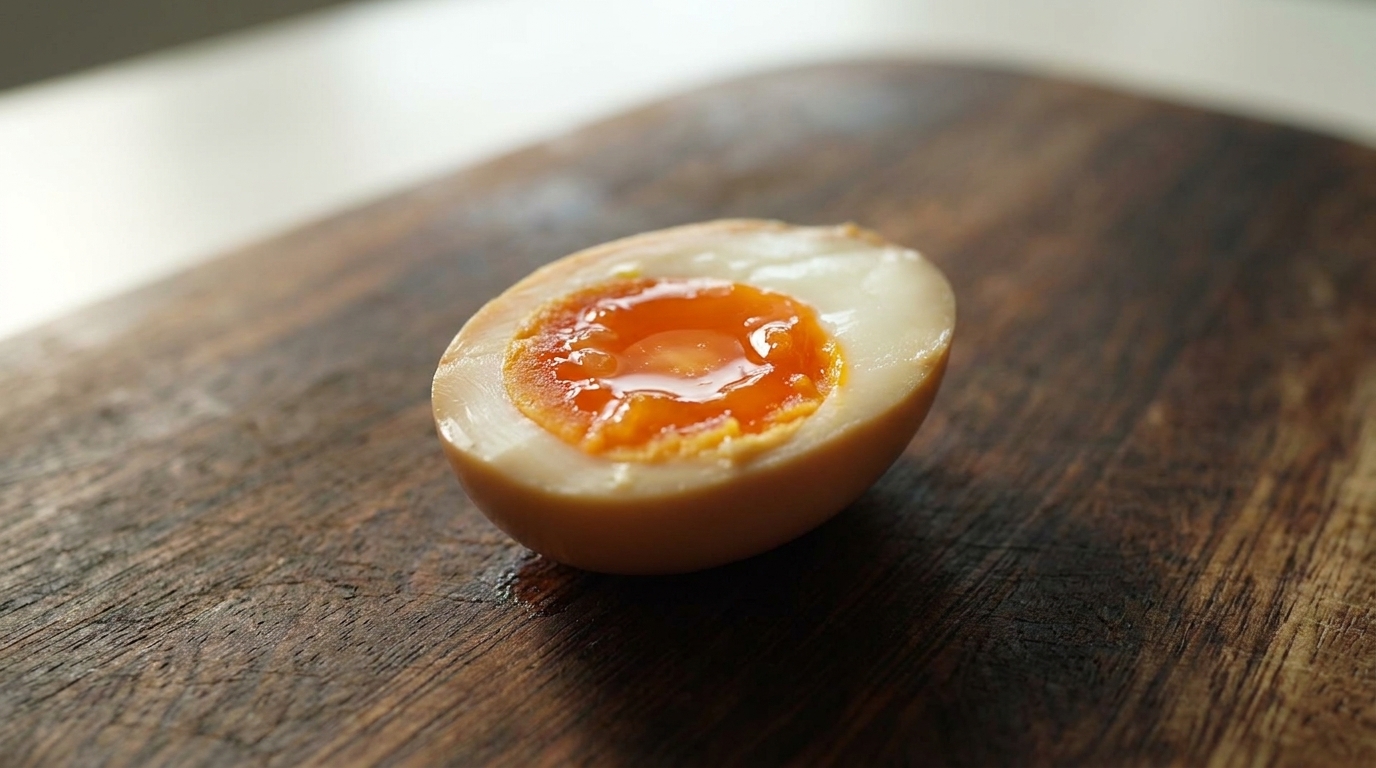
- 0.5 soft-boiled egg
- 1/4 cup sliced wood ear mushrooms
- 1 handful bean sprouts
- 1 sheet nori seaweed
- to taste chopped green onions
Instructions
- 1Prepare the toppings
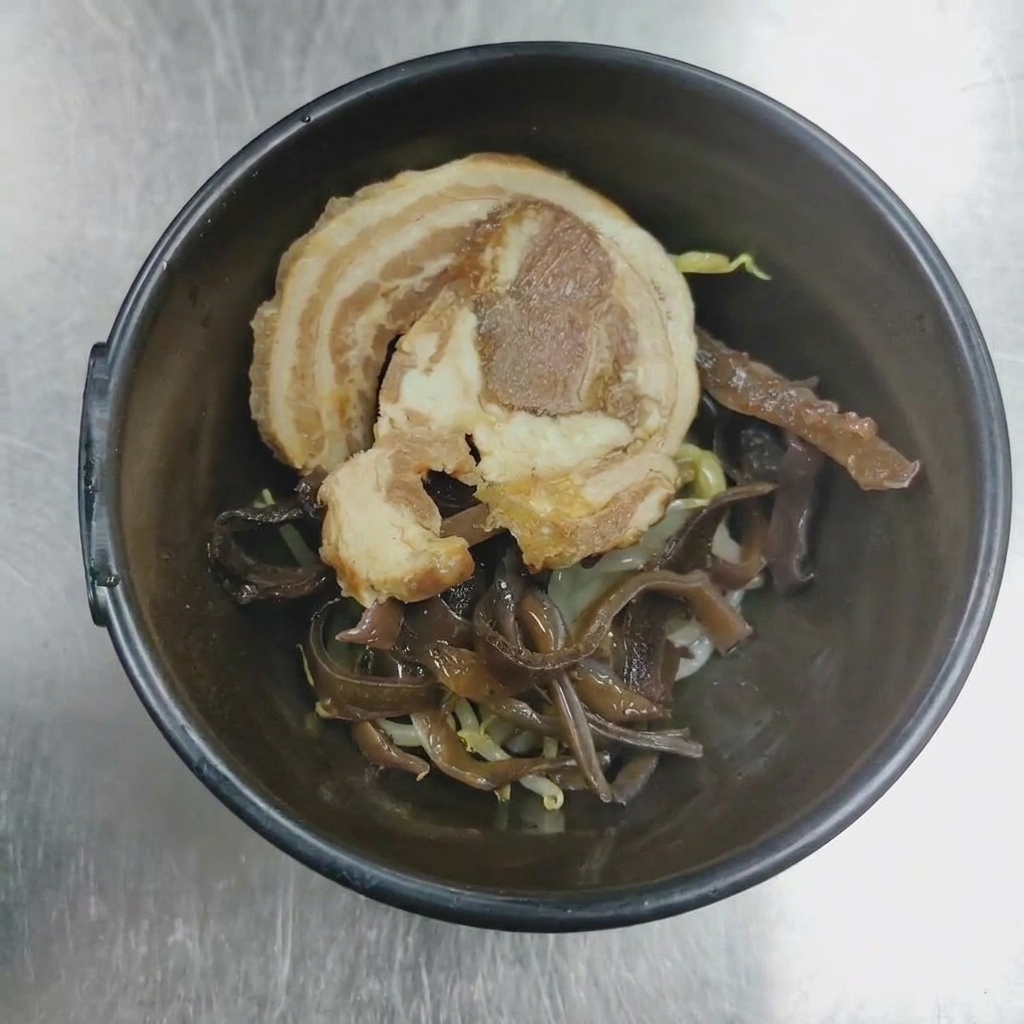
Assemble the prepared topping ingredients, featuring a slice of tender rolled chashu pork and wood ear mushrooms, in a serving bowl. These elements add essential texture and savory depth to the finished ramen.
Tip: Ensure your wood ear mushrooms are sliced thinly for the best bite-to-noodle ratio. - 2Blend the soup base
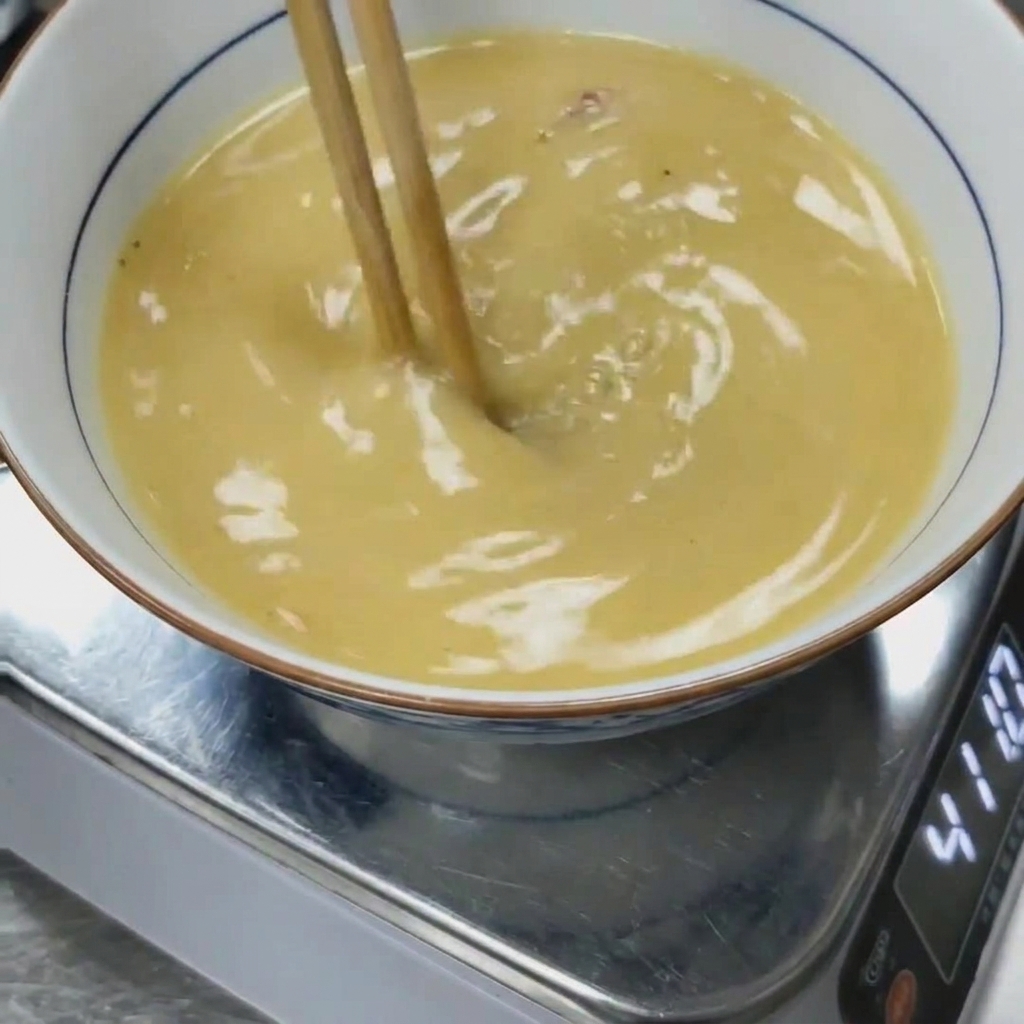
Combine the miso paste with the rich, opaque pork bone broth directly in your serving bowl. Use wooden chopsticks to stir vigorously until the miso is fully incorporated and smooth, creating a uniform, flavorful base.
Tip: Stirring the miso directly into the broth in the bowl ensures no clumps remain and the flavor is evenly distributed. - 3Boil the ramen noodles
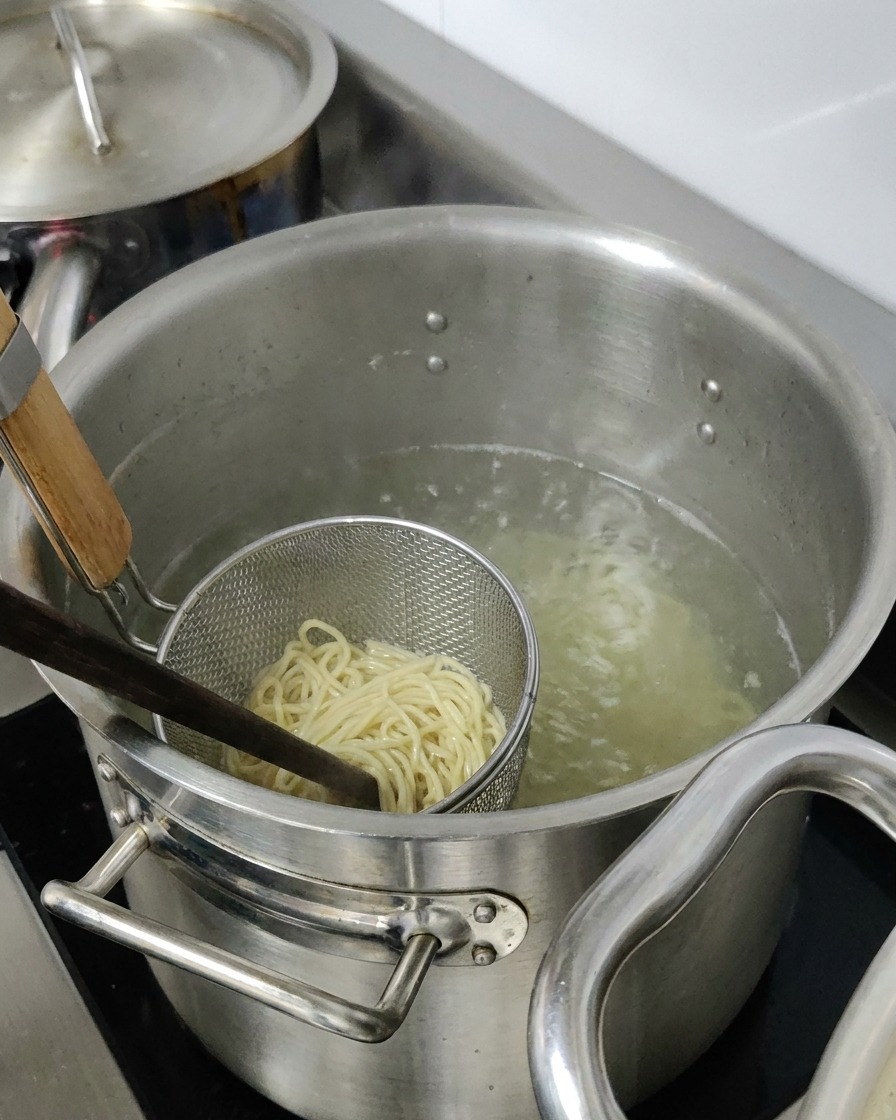
Place your ramen noodles into a long-handled metal strainer and submerge them in a pot of boiling water. Cook for exactly 1 minute and 30 seconds to achieve the perfect al dente texture.
Tip: Keep a close eye on the timer; ramen noodles cook very quickly and can easily become mushy. - 4Drain the noodles
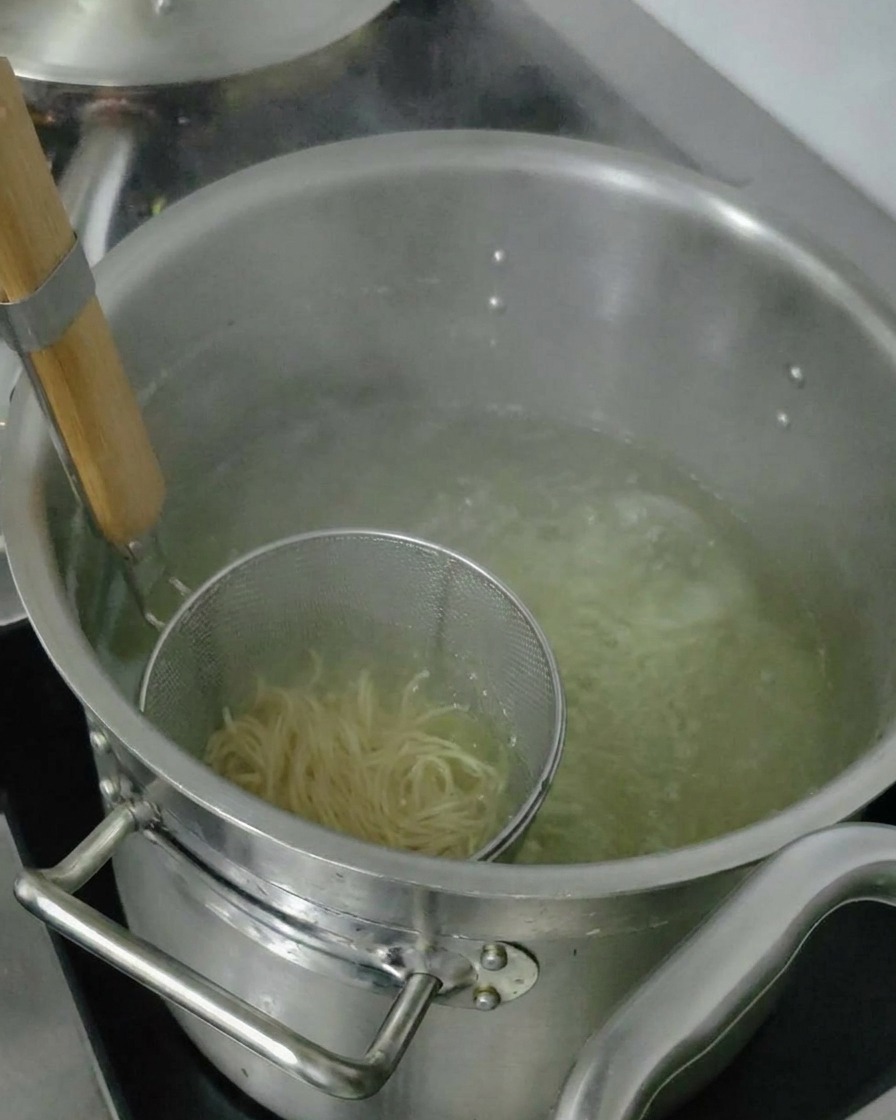
Once the timer is up, lift the metal strainer from the boiling water. Shake gently to drain all excess water from the noodles before transferring them directly into the prepared miso soup base.
Tip: Draining thoroughly is crucial to avoid diluting your carefully seasoned broth.