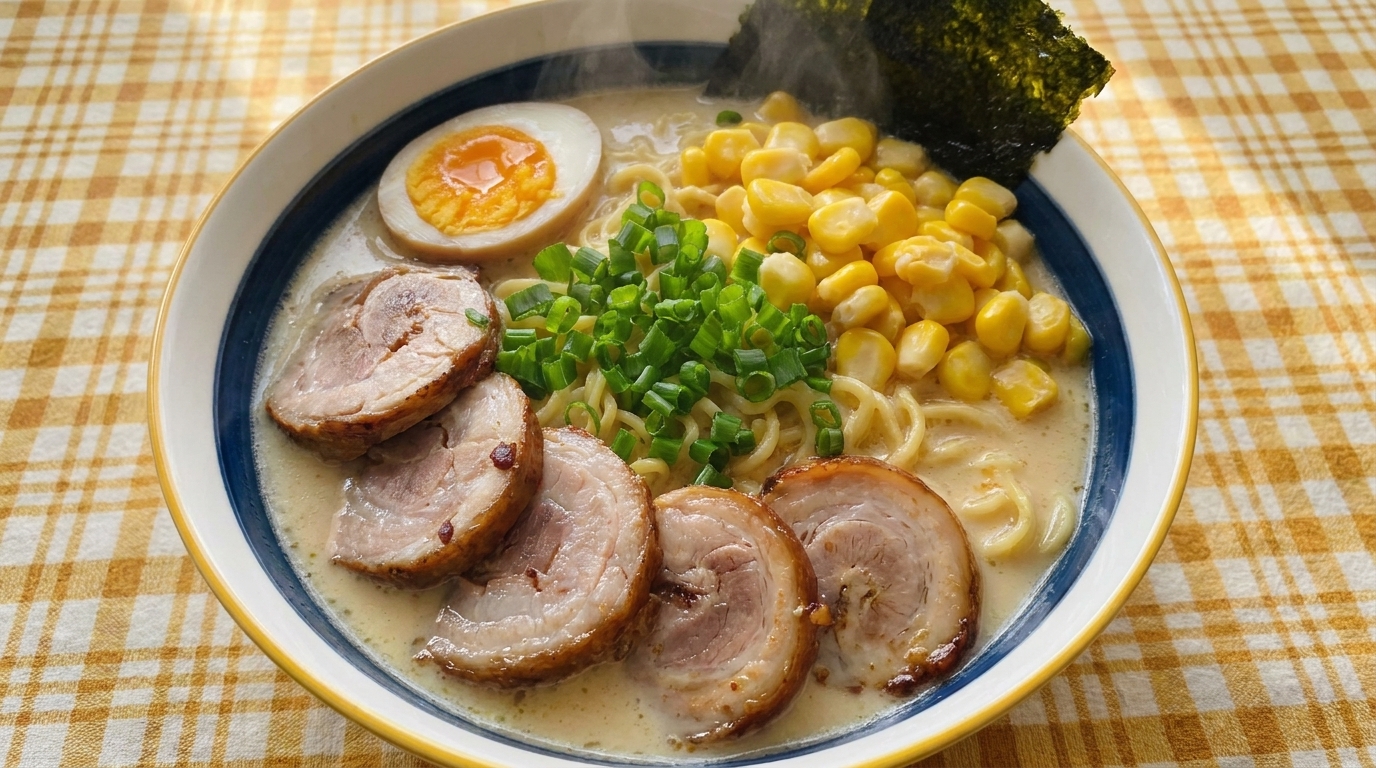
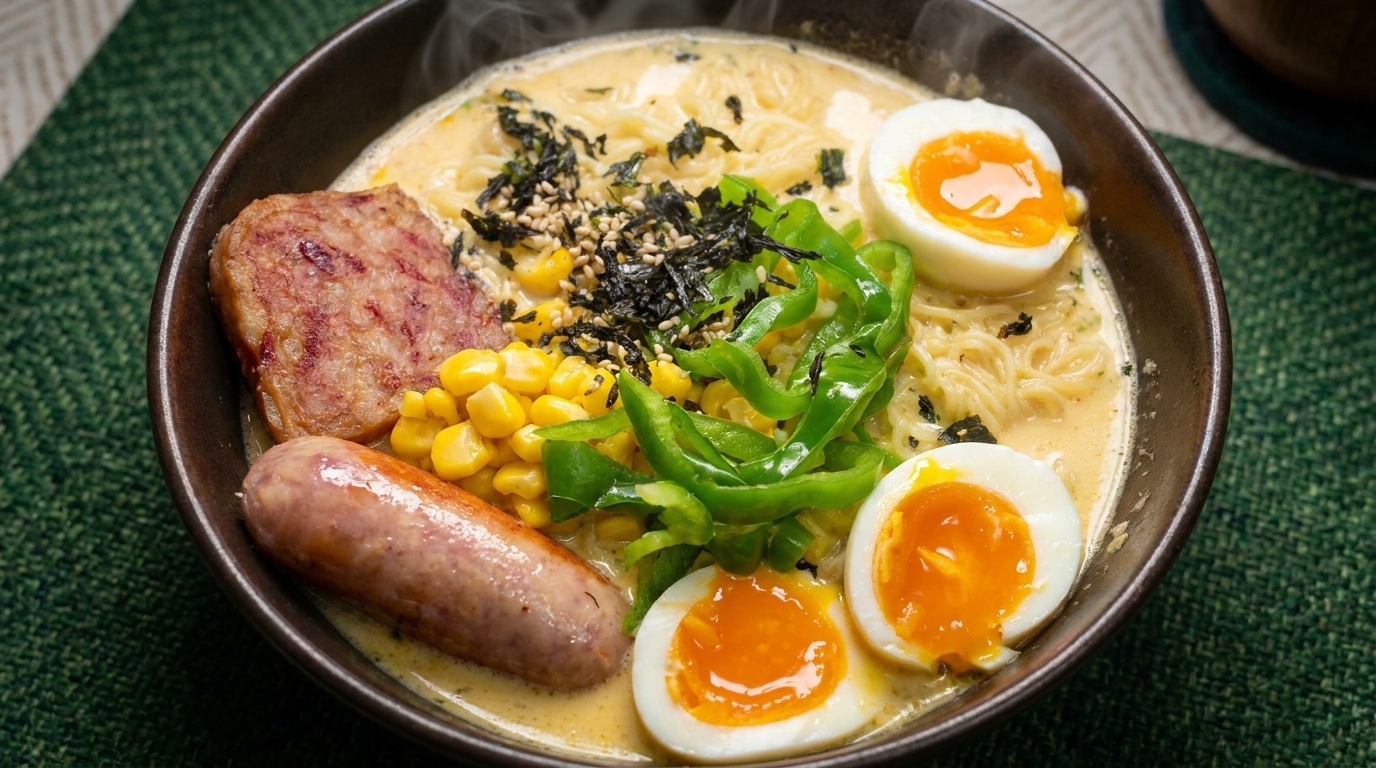
Rich & Creamy Japanese Tonkotsu Ramen
Satisfy your ramen cravings at home with this rich, creamy tonkotsu. A blended miso-bonito base and hot pork bone broth create an unforgettably savory bowl.
Inspired by a trip to Japan, this recipe brings the authentic, soul-warming experience of a classic ramen shop straight to your kitchen. The secret to its signature creamy texture lies in blending the aromatic seasonings—miso, garlic, and bonito flakes—before combining them with hot pork bone broth. This emulsification technique ensures a silky-smooth, intensely flavorful soup base that beautifully coats every noodle.
Ingredients
- 1 tbsp miso paste
- 1 tbsp sesame oil
- 1 tbsp light soy sauce
- 1 tbsp mirin
- 1 tbsp sugar
- 1 tbsp roasted sesame seeds
- 1 tbsp minced garlic
- 1 handful dry bonito flakes
- 180 ml hot pork bone broth (for blending)
- 2 ladles hot pork bone broth (for serving)
- 1 portion fresh yellow ramen noodles
- 3-4 slices chashu pork belly
- 1 soft-boiled egg (Ajitsuke Tamago)
- 1 small handful shredded wood ear mushrooms
- to taste sliced bamboo shoots (menma)
- 1 slice narutomaki (fish cake)
- 1 tbsp chopped green onions
- 2 sheets nori seaweed
Instructions
- 1Prepare the Base Seasonings
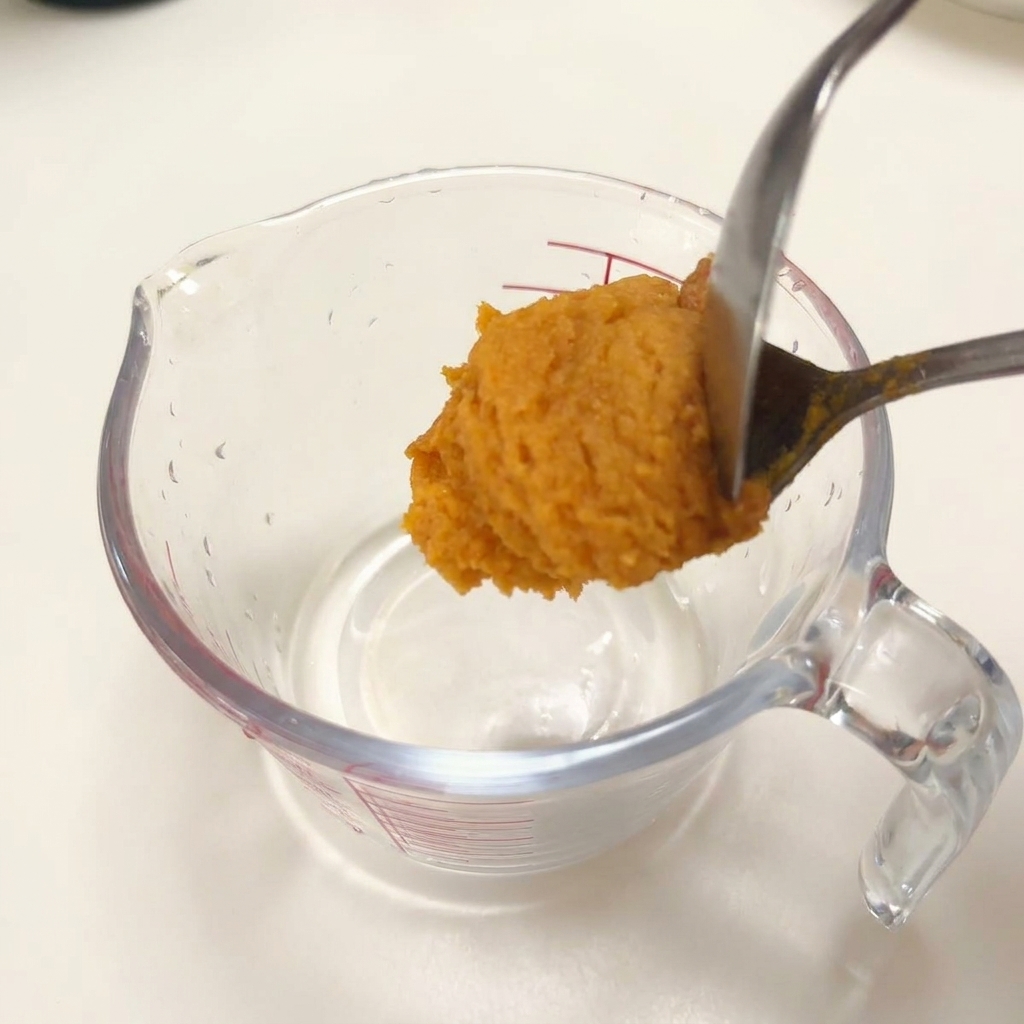
Begin making the tonkotsu soup base by adding one spoonful of miso paste into a clear glass measuring cup. Follow this with equal parts of sesame oil, light soy sauce, mirin, and sugar. These core ingredients provide the deep, savory umami profile characteristic of the ramen broth.
Tip: Mixing the base in a measuring cup with a pouring spout will make it much easier to transfer the liquids into the blender later. - 2Mix the Flavor Base
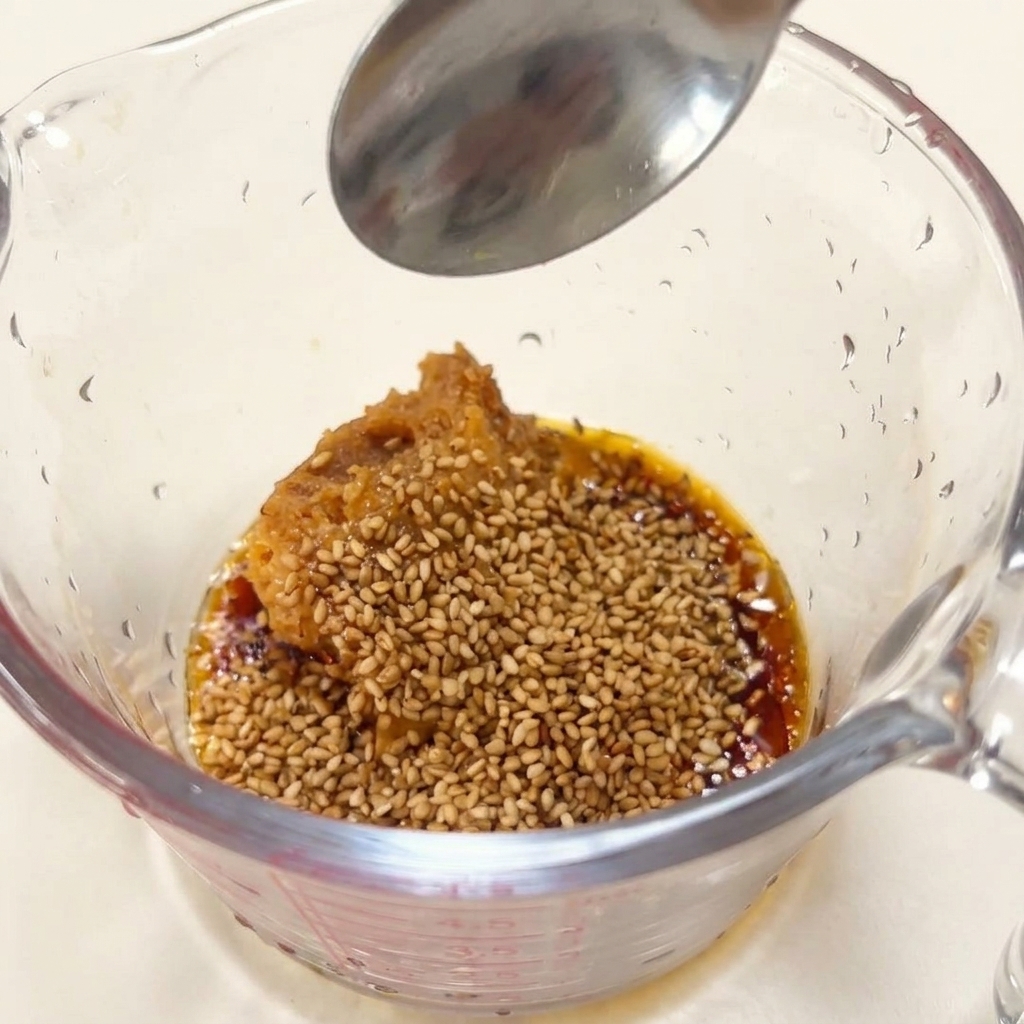
Add a spoonful of roasted sesame seeds to your miso paste, along with sesame oil, light soy sauce, mirin, sugar, minced garlic, and a handful of dry bonito flakes. This combination creates a rich, umami-packed seasoning blend for your broth.
Tip: Toasting your sesame seeds right before adding them will release maximum fragrance into the soup base. - 3Add the Pork Bone Broth
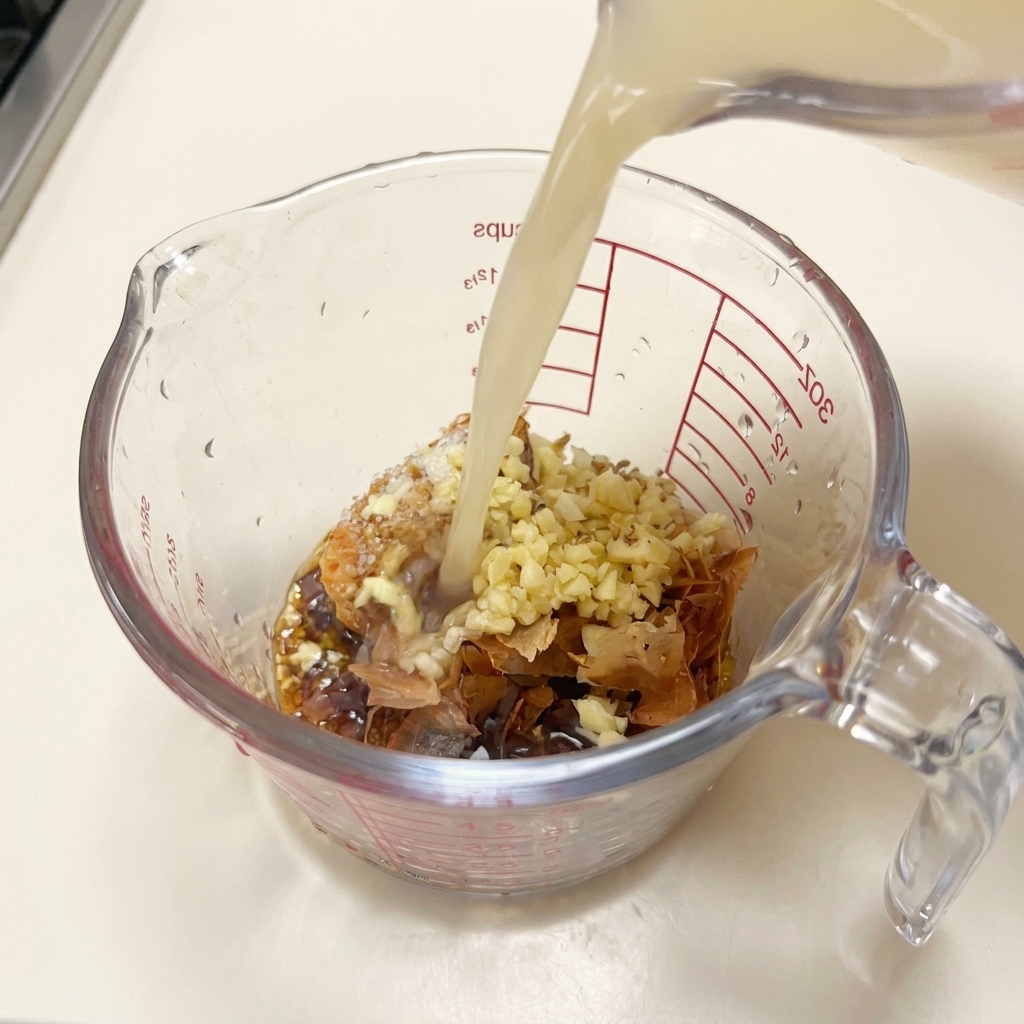
With all the seasonings in the measuring cup—including minced garlic, roasted sesame seeds, and a handful of bonito flakes—pour in 180 milliliters of hot pork bone broth. The heat from the broth will help dissolve the miso paste and sugar, while activating the aromatic flavors of the garlic and bonito.
Tip: Ensure the pork bone broth is hot before pouring; cold broth will make it difficult to completely break down the thick miso paste. - 4Stir the Soup Base
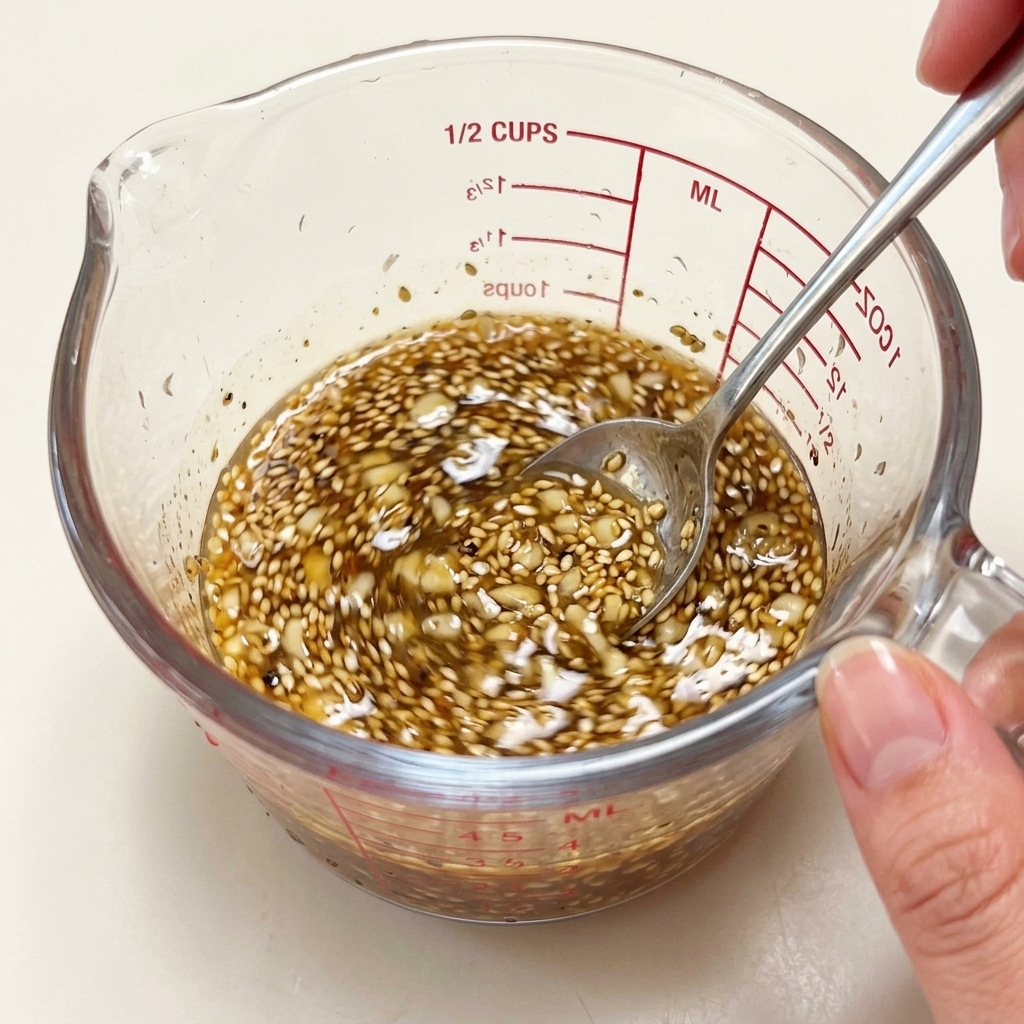
Using a metal spoon, vigorously stir the hot pork bone broth and the seasoning mixture together. Make sure the miso paste is completely broken down into the liquid, and that the sesame seeds and bonito flakes are evenly distributed throughout the cup.
Tip: Stirring thoroughly prevents solid clumps of miso from getting stuck under the blender blades in the next step. - 5Blend Until Smooth
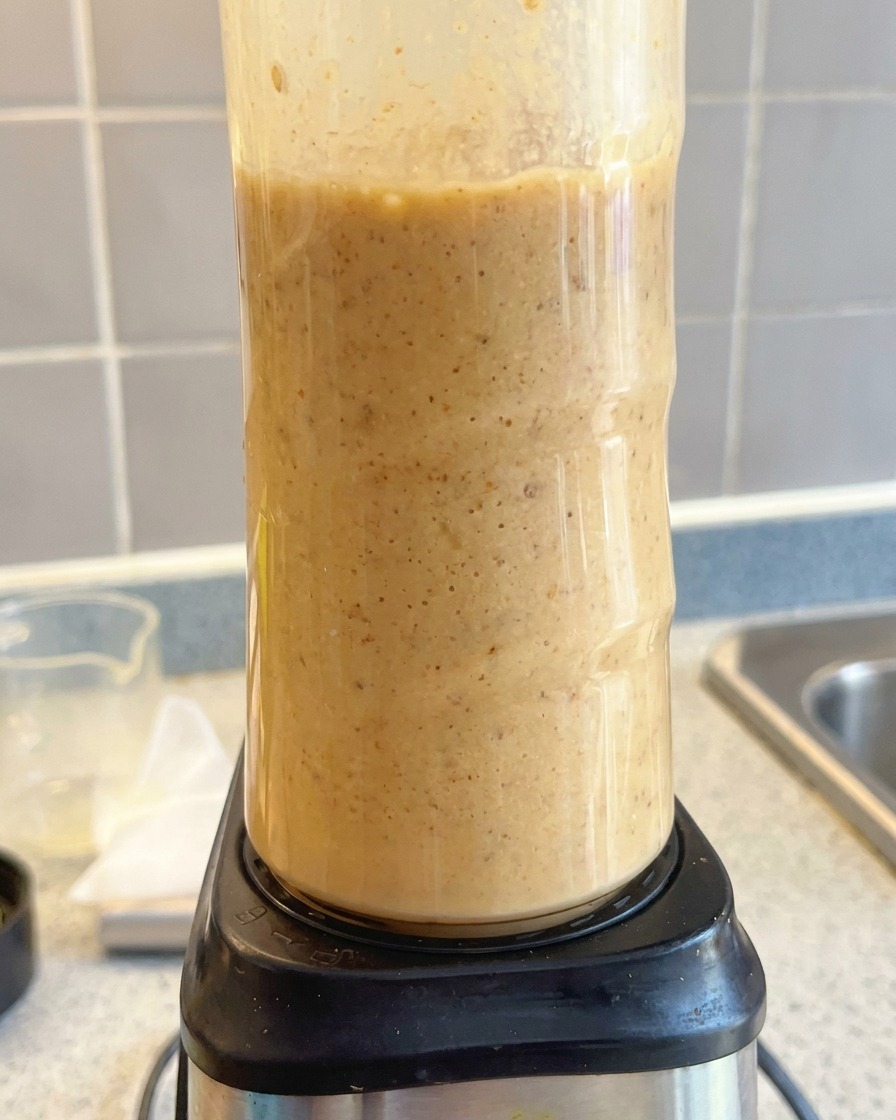
Carefully transfer the stirred soup base mixture into a tall food processor or blender. Blend the mixture on high speed until the bonito flakes, garlic, and sesame seeds are completely pulverized. This technique emulsifies the liquids, creating a rich, smooth, and creamy tonkotsu soup base.
Tip: Blending is the secret to achieving a professional, restaurant-quality broth—it extracts maximum flavor from the bonito flakes while naturally thickening the soup. - 6Boil the Ramen Noodles
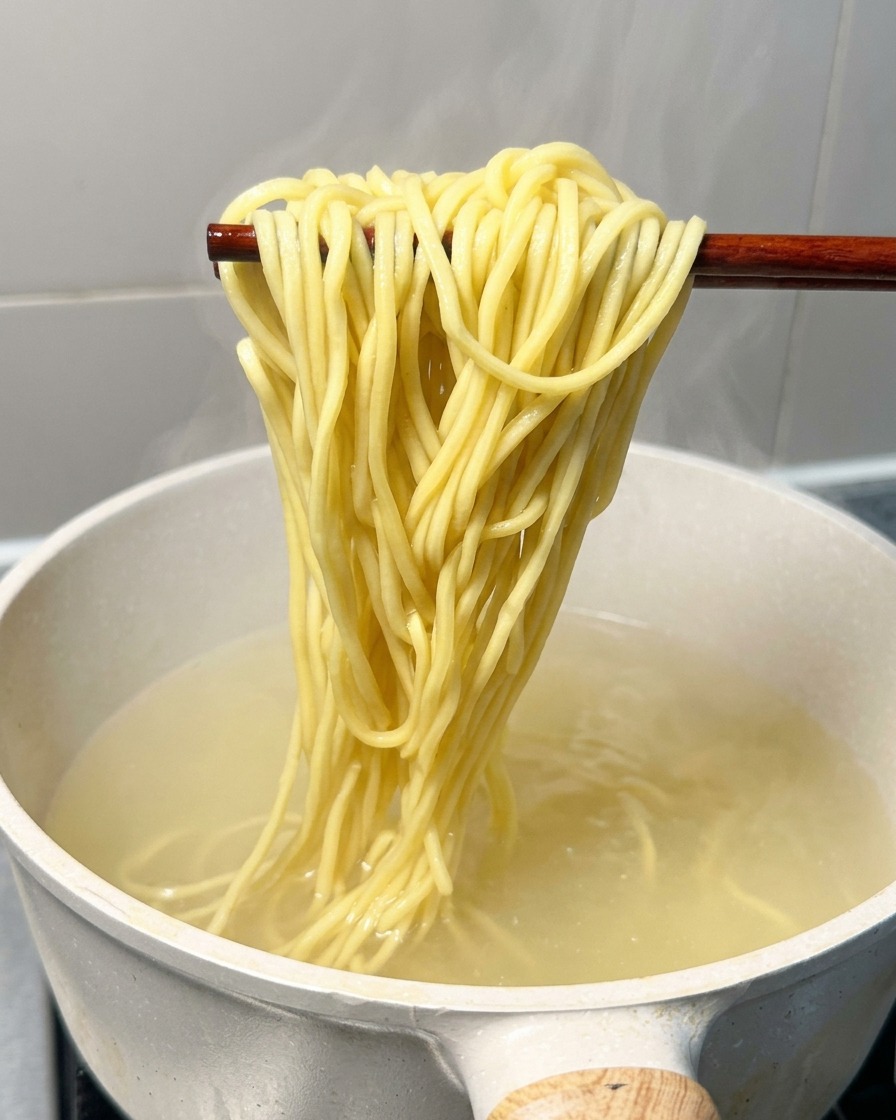
In a separate pot, bring water to a rolling boil and cook the fresh yellow ramen noodles according to their package instructions. Once they reach a bouncy, al dente texture, lift them out of the boiling water using wooden chopsticks.
Tip: Shake the noodles vigorously as you lift them out to remove excess starch and cooking water, which could otherwise dilute your rich broth. - 7Pour the Base
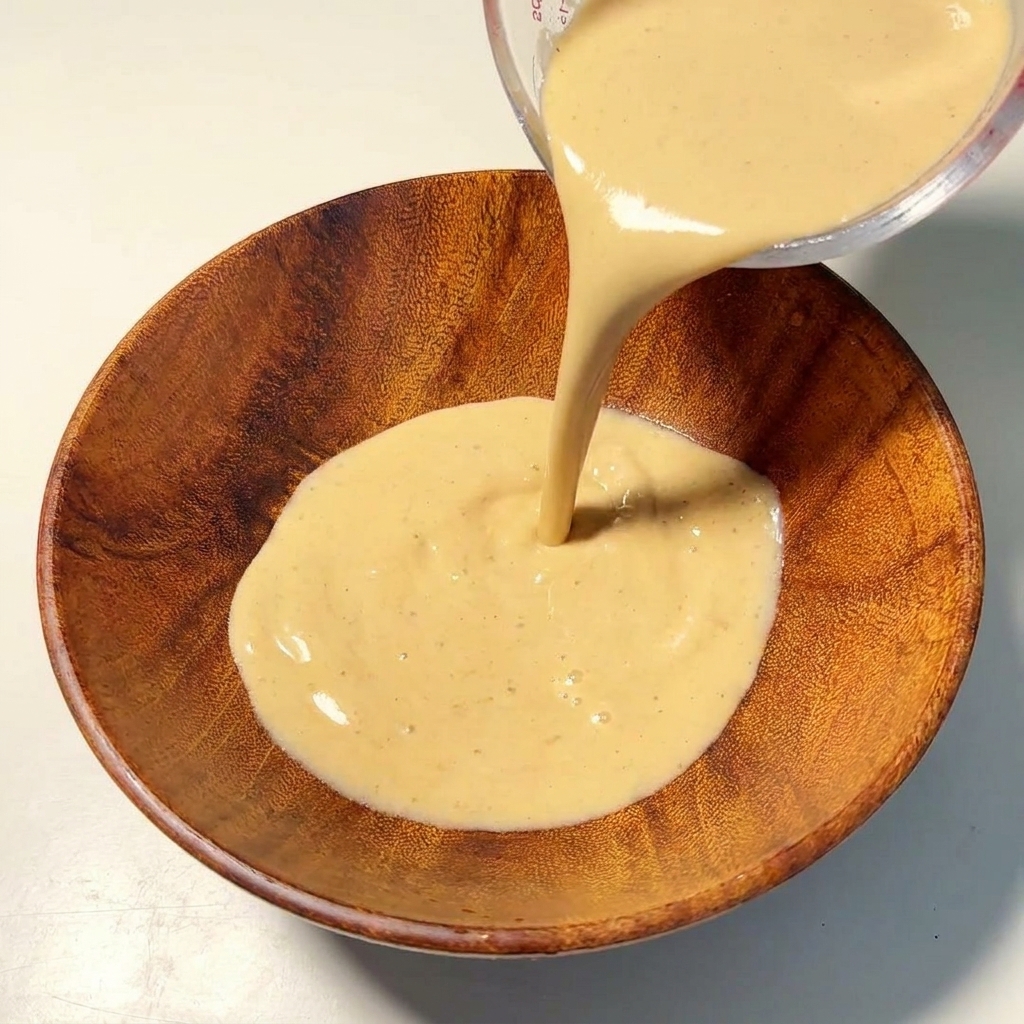
Once your seasoning mixture is smoothly blended with a little pork bone broth, pour this thick, creamy base directly into your serving bowl. This rich foundation will give your ramen its authentic tonkotsu flavor profile.
Tip: Blending the aromatics and seasonings ensures a silky-smooth broth without any grainy bits in the final bowl. - 8Pour the Broth
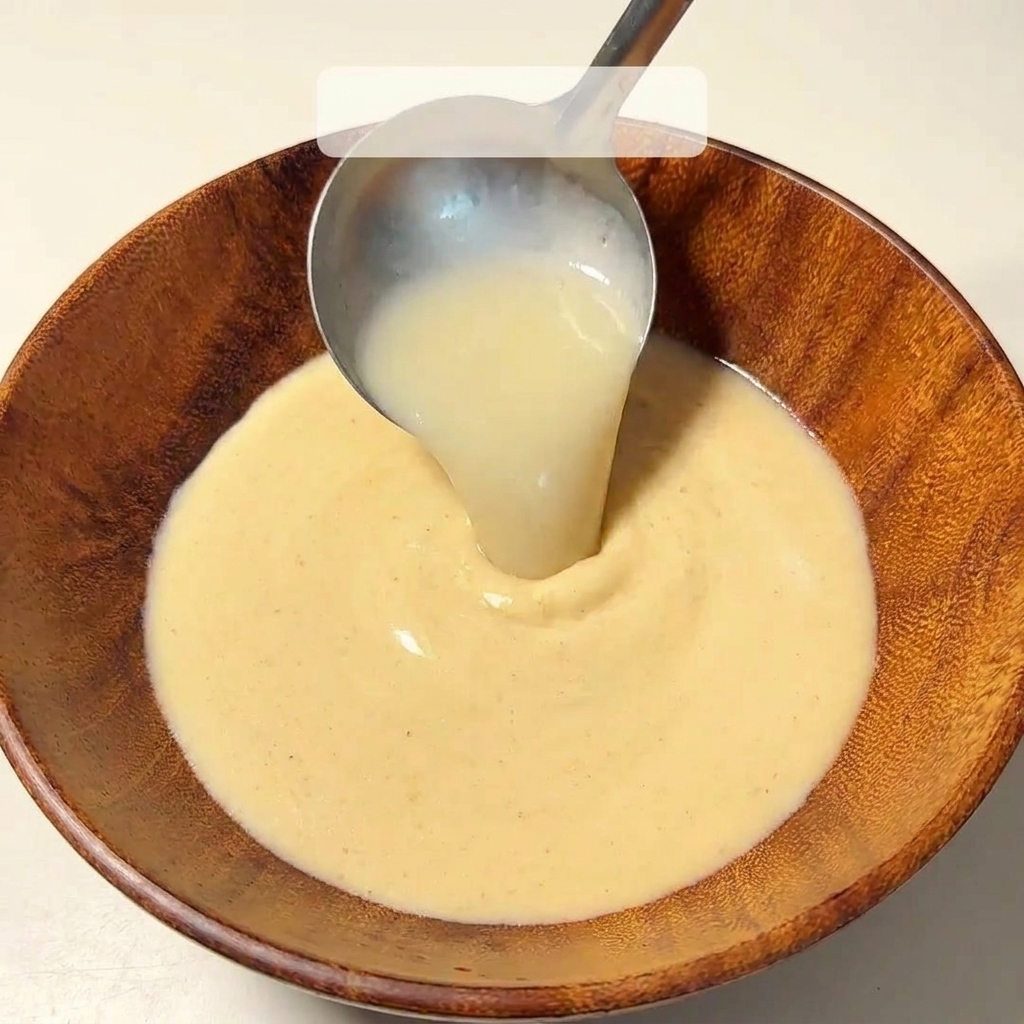
Ladle the hot, milky pork bone broth into the wooden bowl over the blended miso base. Mix gently to combine the flavors and create a rich, creamy soup base for the ramen.
Tip: Ensure the broth is piping hot to slightly cook the aromatics in the base and keep the noodles warm. - 9Add the Noodles
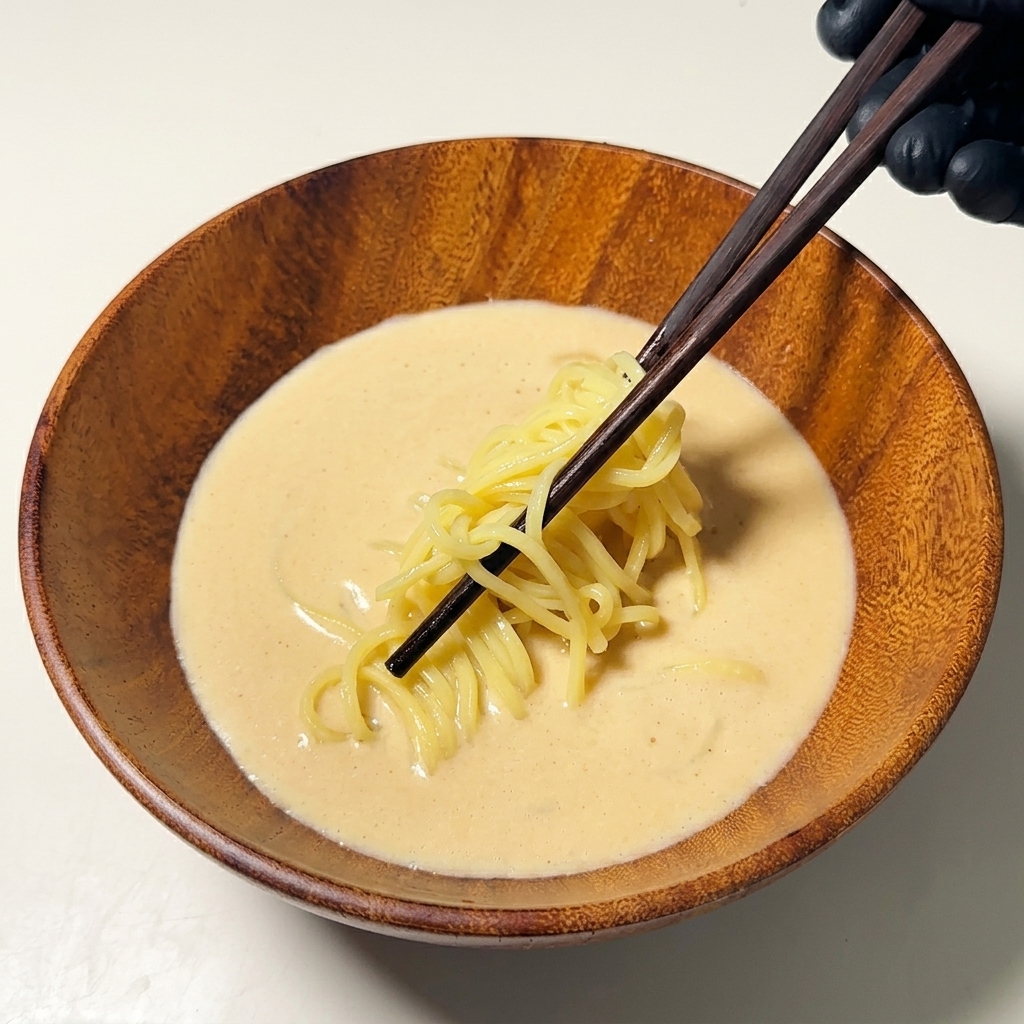
Carefully place your freshly boiled ramen noodles into the hot, creamy broth. Use chopsticks to fold and arrange the strands neatly in the bowl, ensuring they are well-coated with the rich soup base.
Tip: Drain your noodles thoroughly before adding them to the bowl so the excess water doesnt dilute your flavorful broth. - 10Top with Chashu
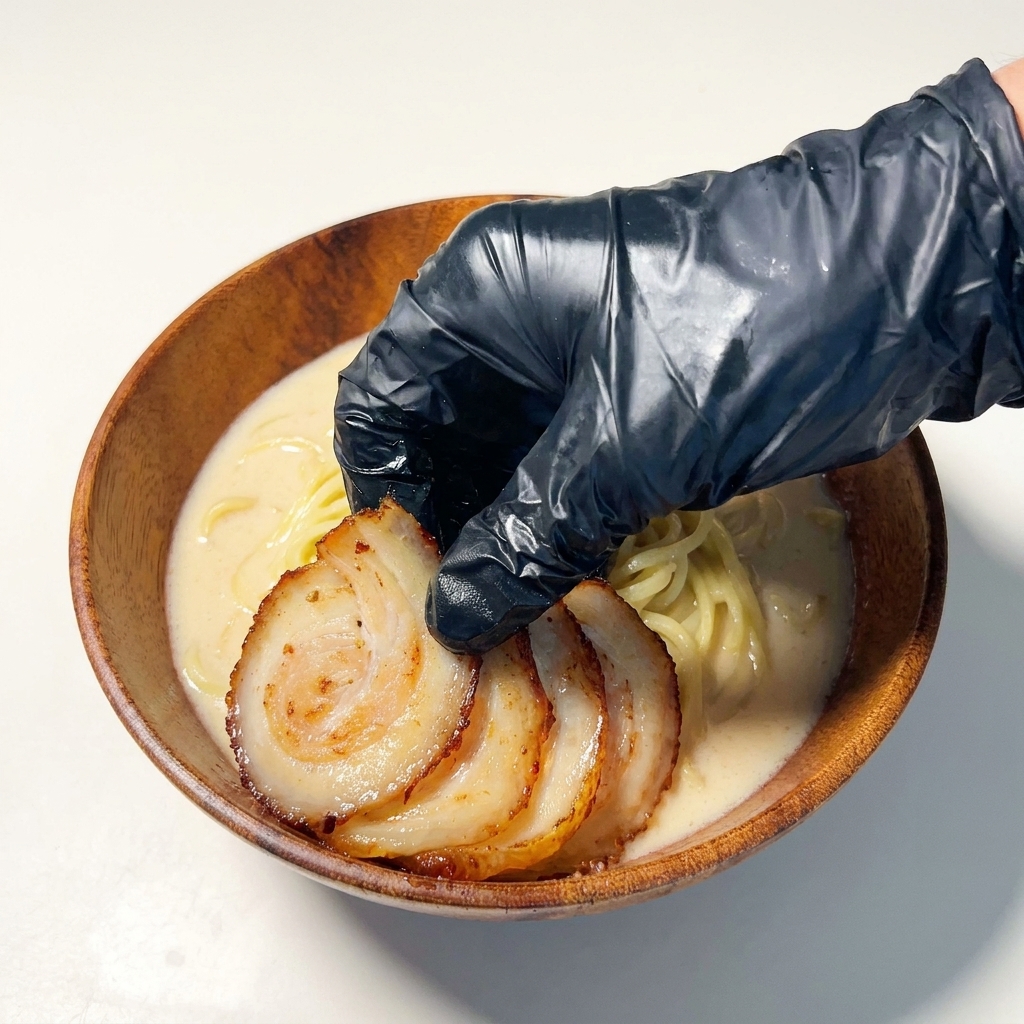
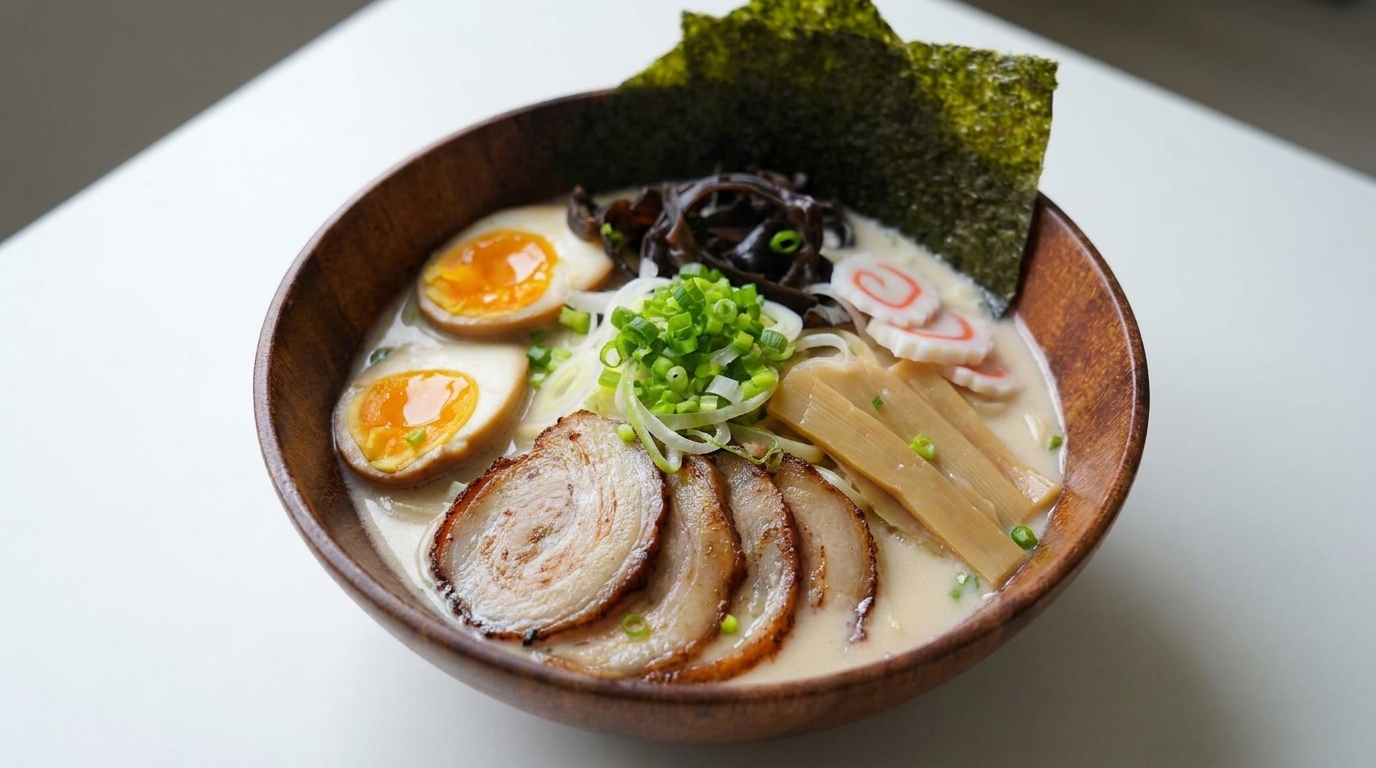
Arrange several overlapping slices of rolled, seared chashu pork belly gently on top of the noodles. The heat from the broth will slightly warm the pork, making it meltingly tender when you take your first bite.
Tip: Give your chashu slices a quick sear with a blowtorch or in a hot pan right before serving to wake up the rendered fat and add smoky flavor. - 11Add the Soft-Boiled Egg
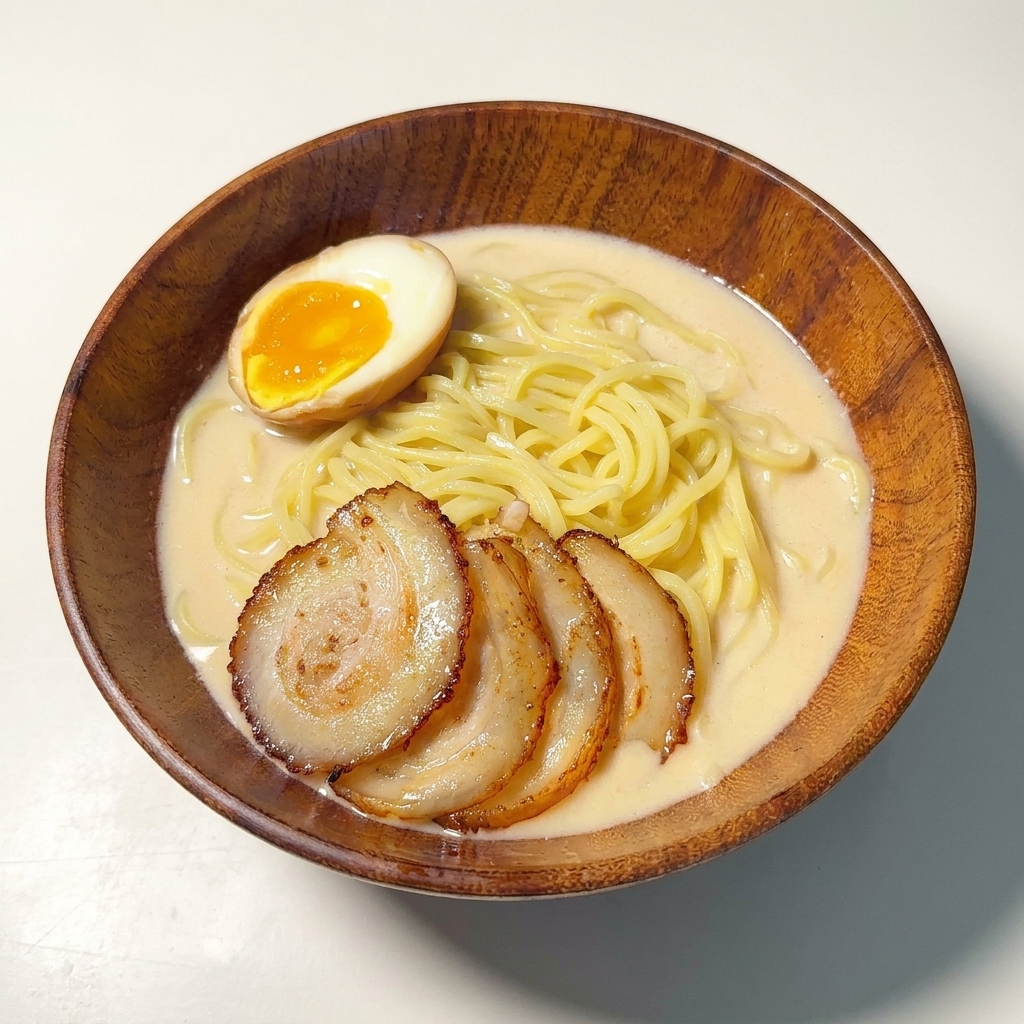
Place a perfectly cooked, halved soft-boiled egg into the bowl alongside your chashu pork. The rich, runny golden yolk adds another layer of creaminess and visual appeal to your ramen bowl.
Tip: Marinating your soft-boiled eggs in a soy sauce and mirin mixture beforehand (Ajitsuke Tamago) will elevate the flavor immensely. - 12Add Wood Ear Mushrooms
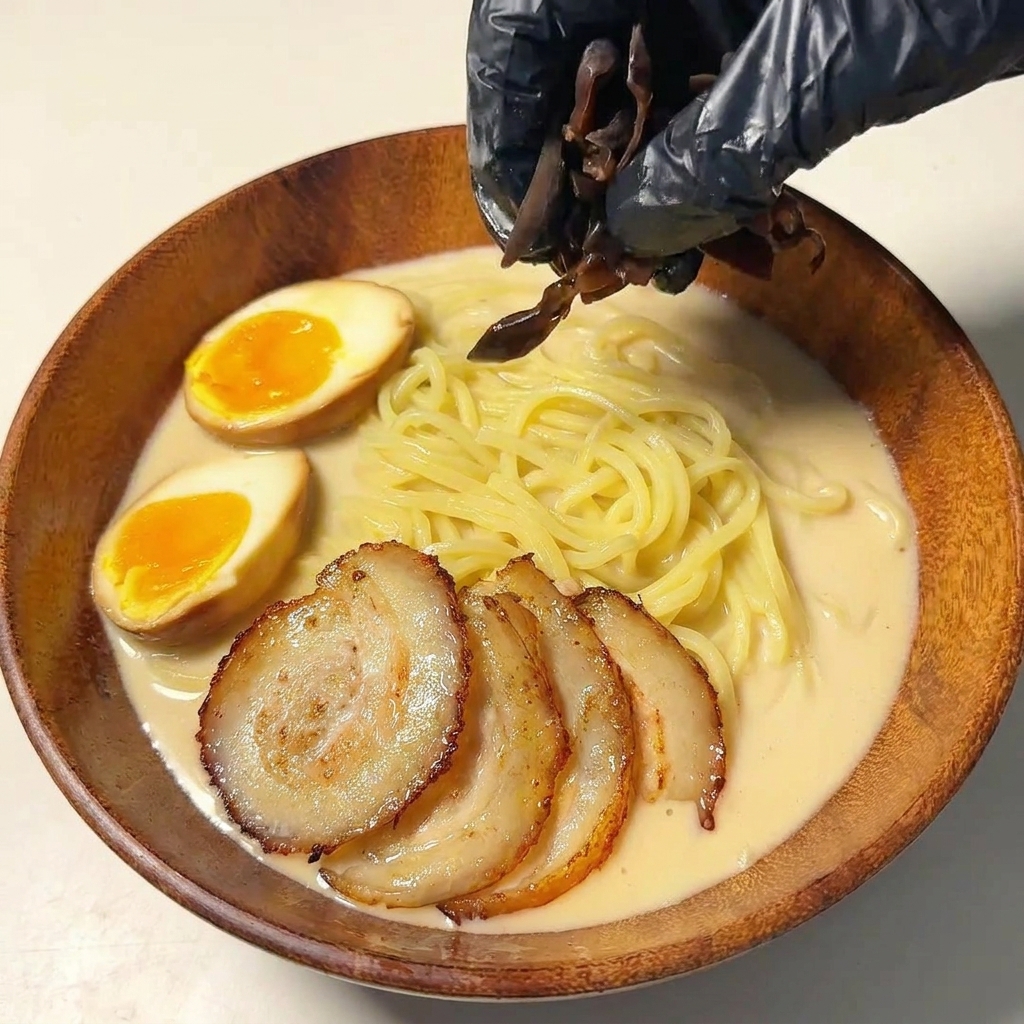
Gently drop a small handful of shredded wood ear mushrooms into the bowl. This classic topping adds a delightful crunch and earthy texture that contrasts beautifully with the rich, creamy tonkotsu broth and the tender slices of chashu.
Tip: If using dried wood ear mushrooms, rehydrate them in warm water for about 15 to 20 minutes before slicing them thinly. - 13Add Bamboo Shoots
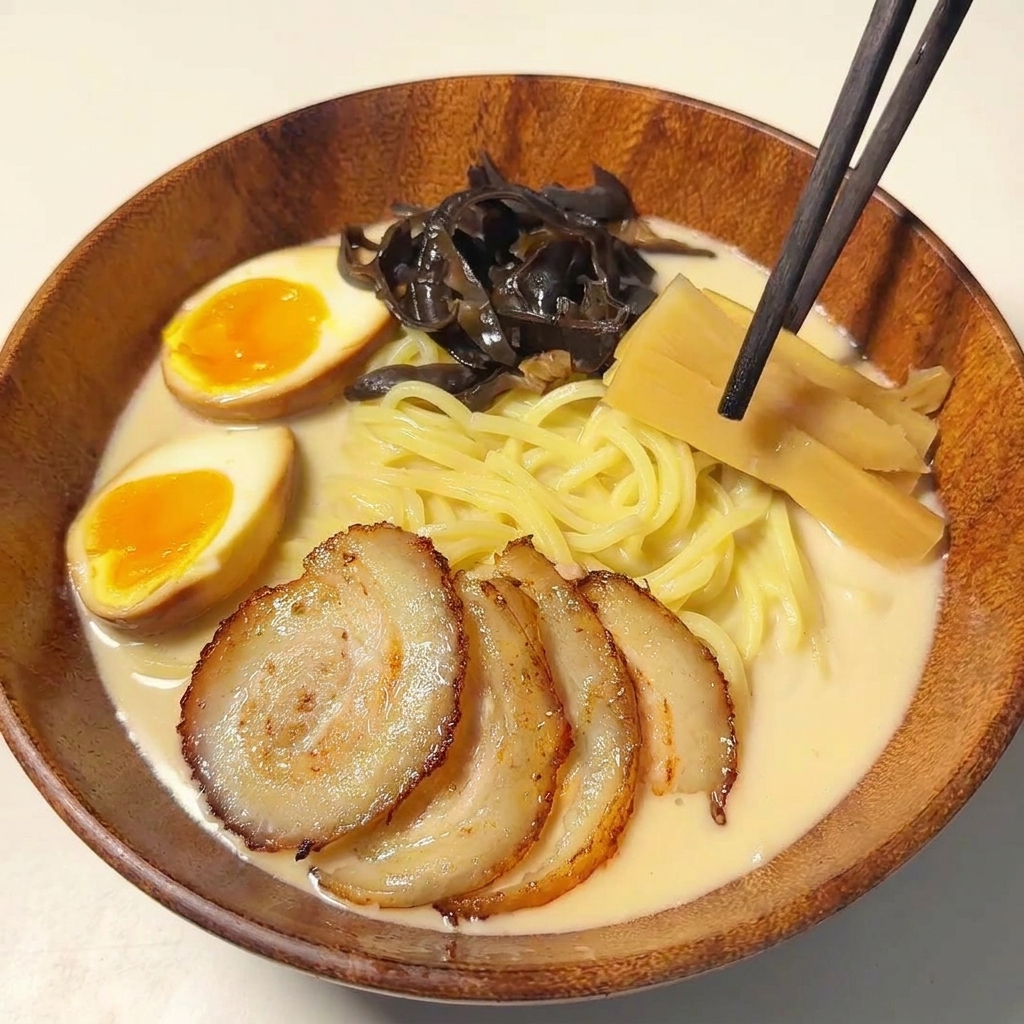
Use chopsticks to carefully place sliced bamboo shoots on top of the noodles, positioning them neatly alongside the soft-boiled egg, chashu pork, and wood ear mushrooms.
Tip: Arranging toppings in distinct sections makes the final bowl look professional and appetizing. - 14Add the Fish Cake
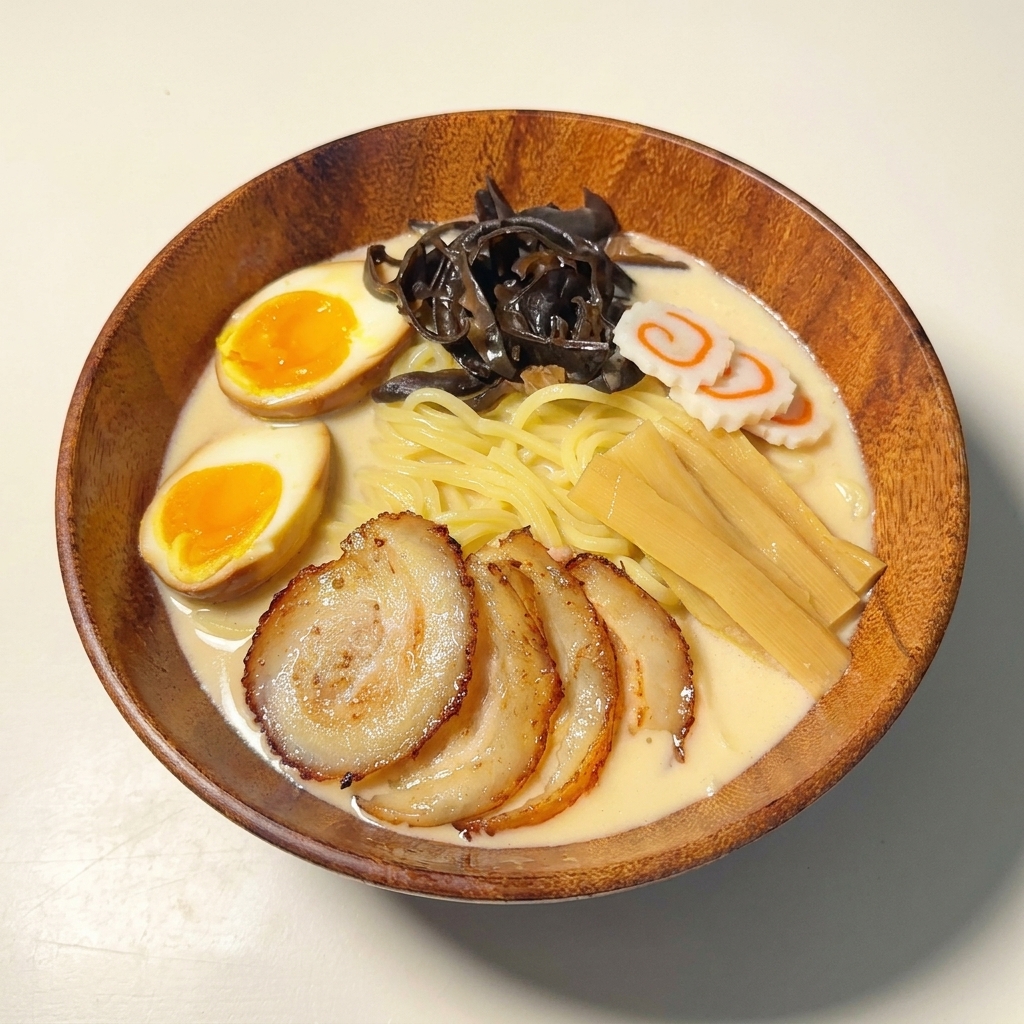
Drop a single slice of narutomaki fish cake into the bowl. Its bright pink swirl pattern adds a classic visual pop and an authentic touch to the ramen presentation.
Tip: Pre-slice the fish cake into uniform pieces for a cleaner presentation. - 15Top With Green Onions
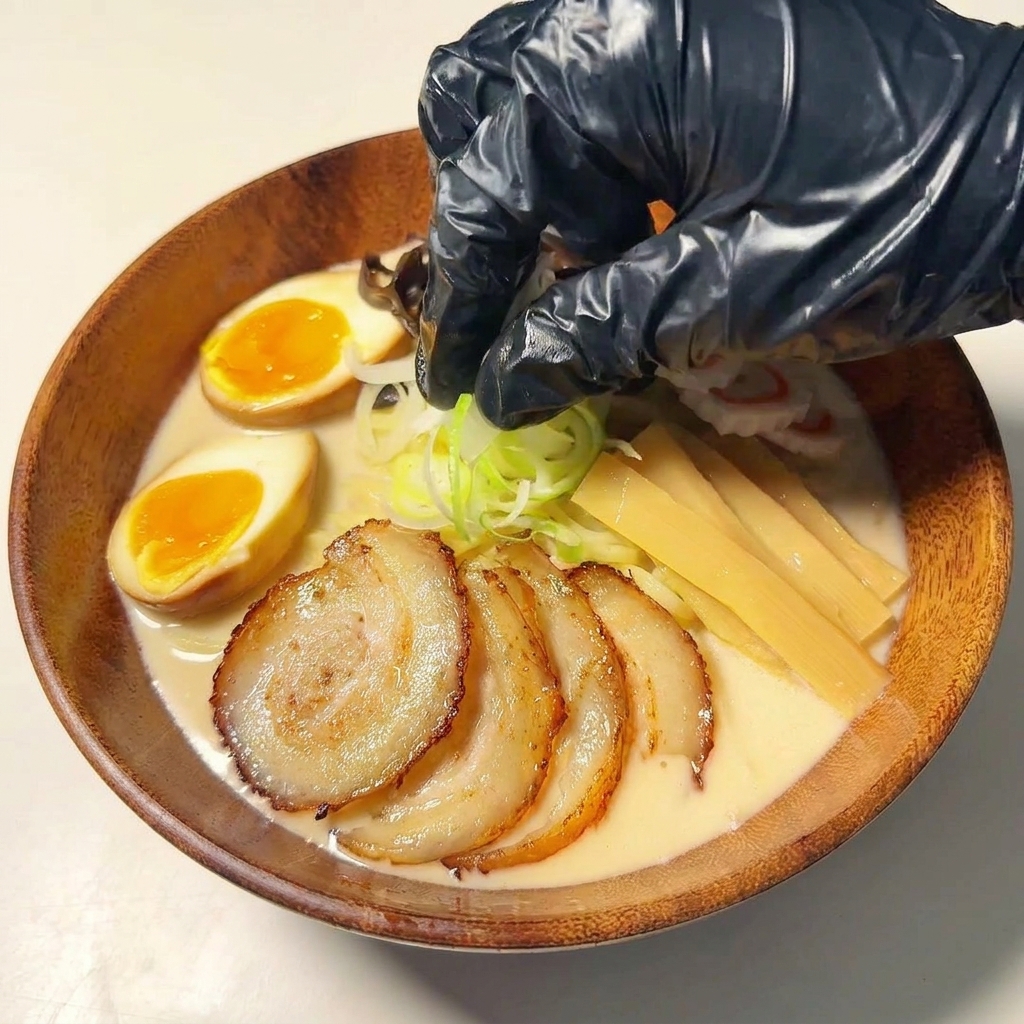
Sprinkle a generous pinch of freshly chopped green onions right in the center of the bowl. The sharp, fresh bite of the scallions cuts through the richness of the tonkotsu broth.
Tip: Using a mix of both the white and green parts of the scallion provides a better balance of flavor and color. - 16Add the Nori Seaweed
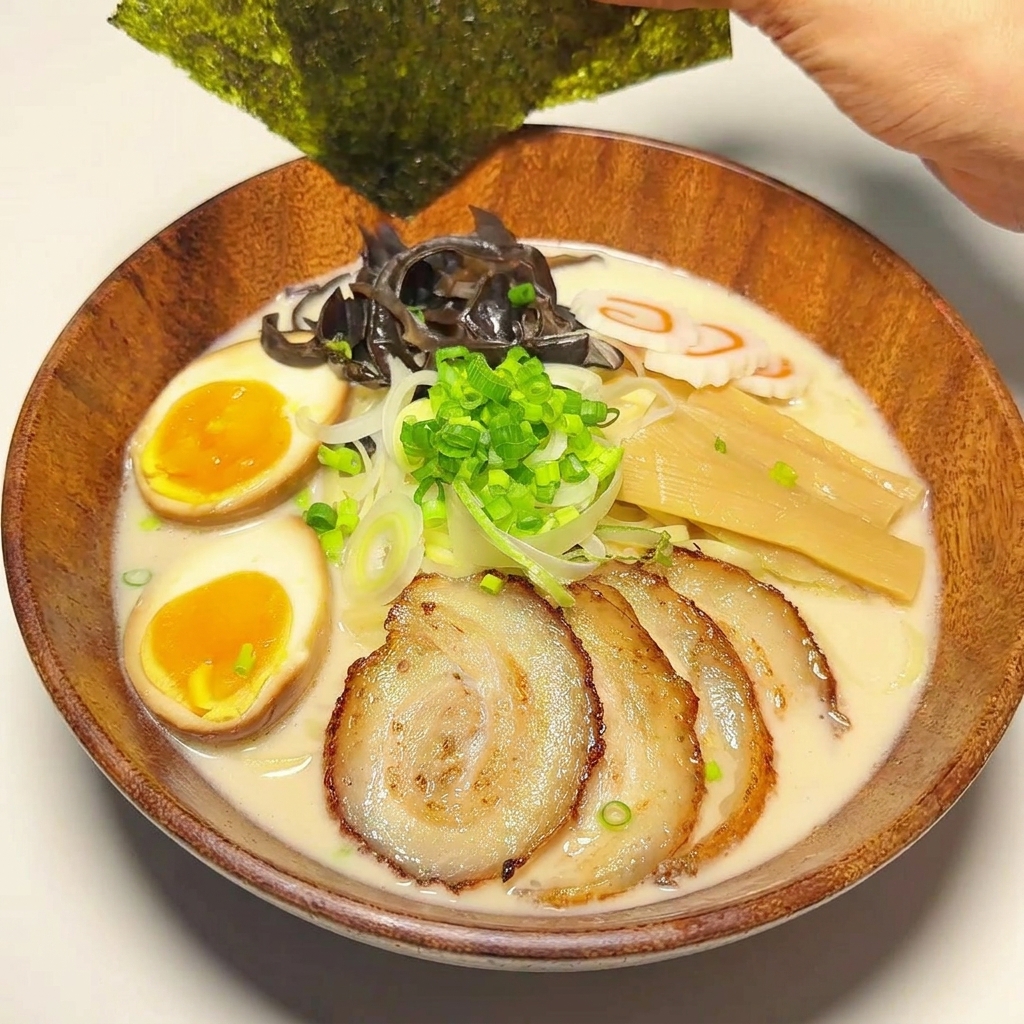
Finish the dish by tucking rectangular sheets of dry nori seaweed into the back edge of the bowl, just behind the toppings. Serve the ramen immediately.
Tip: Add the nori at the very last second before serving so it stays crisp and doesnt dissolve into the hot broth.