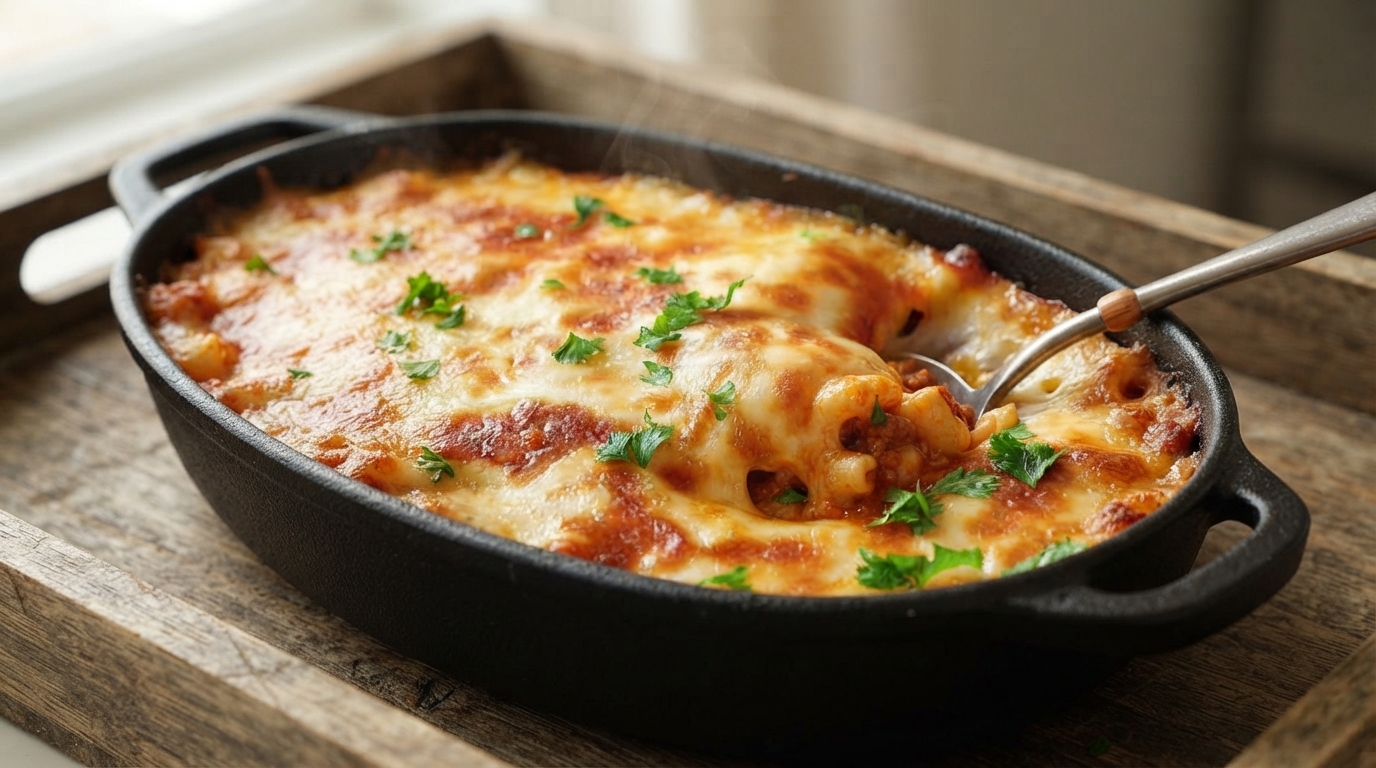
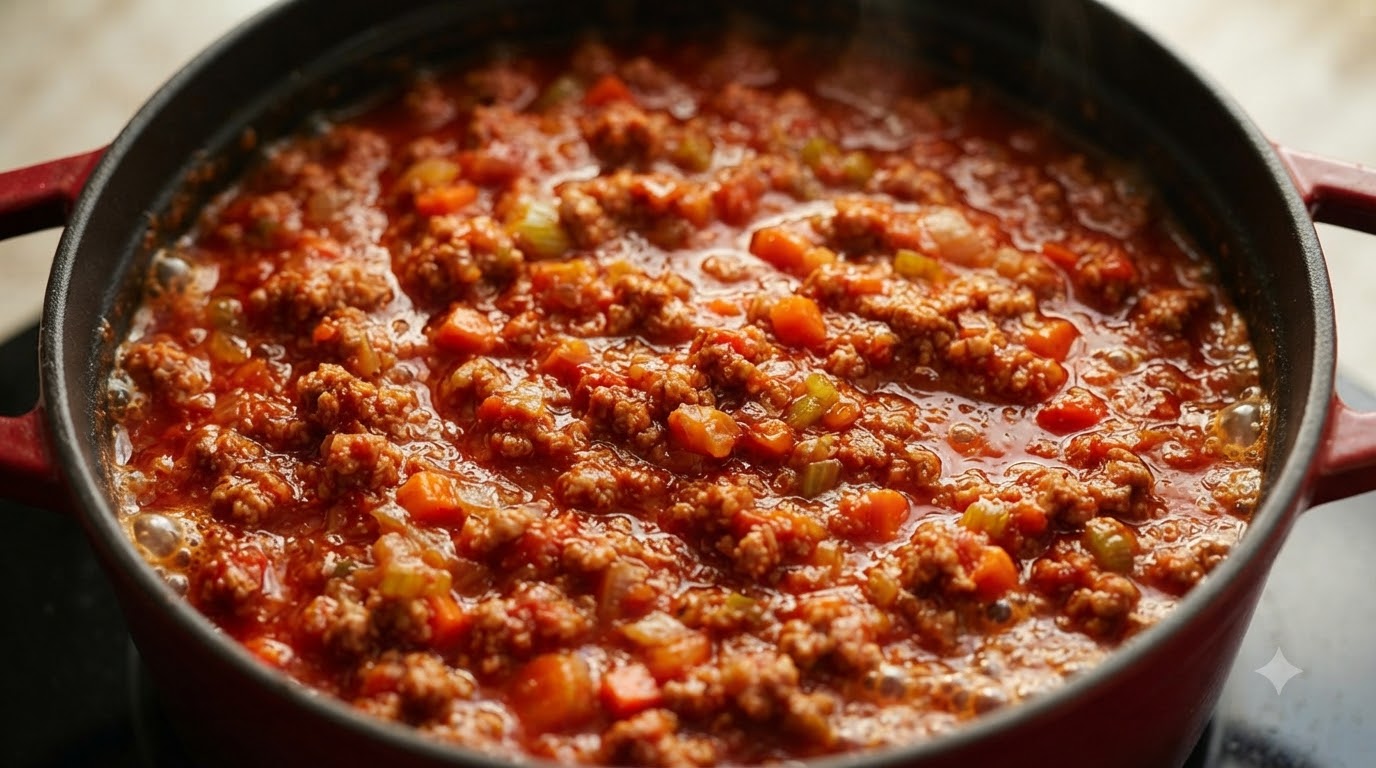
Classic Italian Bolognese Sauce (Ragù alla Bolognese)
A rich, slow-simmered Italian Bolognese sauce featuring a blend of pork and beef, fragrant aromatics, red wine, and tomatoes, perfectly baked to deep, hearty perfection.
Rooted in traditional Italian culinary techniques, this authentic Bolognese sauce relies on patience and depth of flavor. By slowly rendering the meats with a mirepoix base and deglazing with dry red wine, the sauce develops an intensely savory profile that pairs wonderfully with your favorite pasta, rice, or pizza.
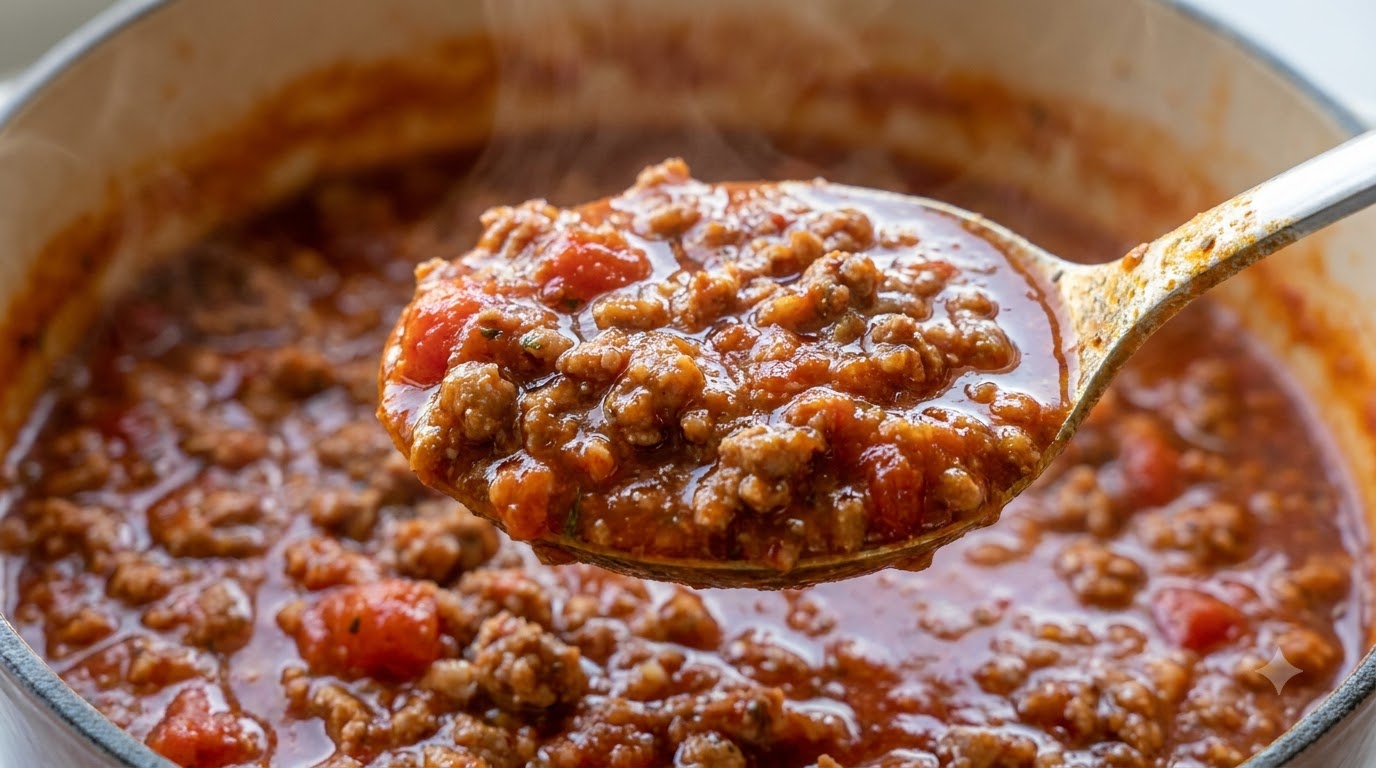
Ingredients
- 500 g pork
- 500 g beef
- 0.5 head garlic
- 1 onion
- 1 stalk celery
- 1 carrot
- 1 piece butter
- 500 g fresh tomatoes
- 400 g tomato paste
- 150 ml dry red wine
- to taste salt
- to taste black pepper
- to taste basil leaves
- 0.5 tbsp sugar
- as needed water
- as needed oil
Instructions
- 1Cut the pork into smaller chunks
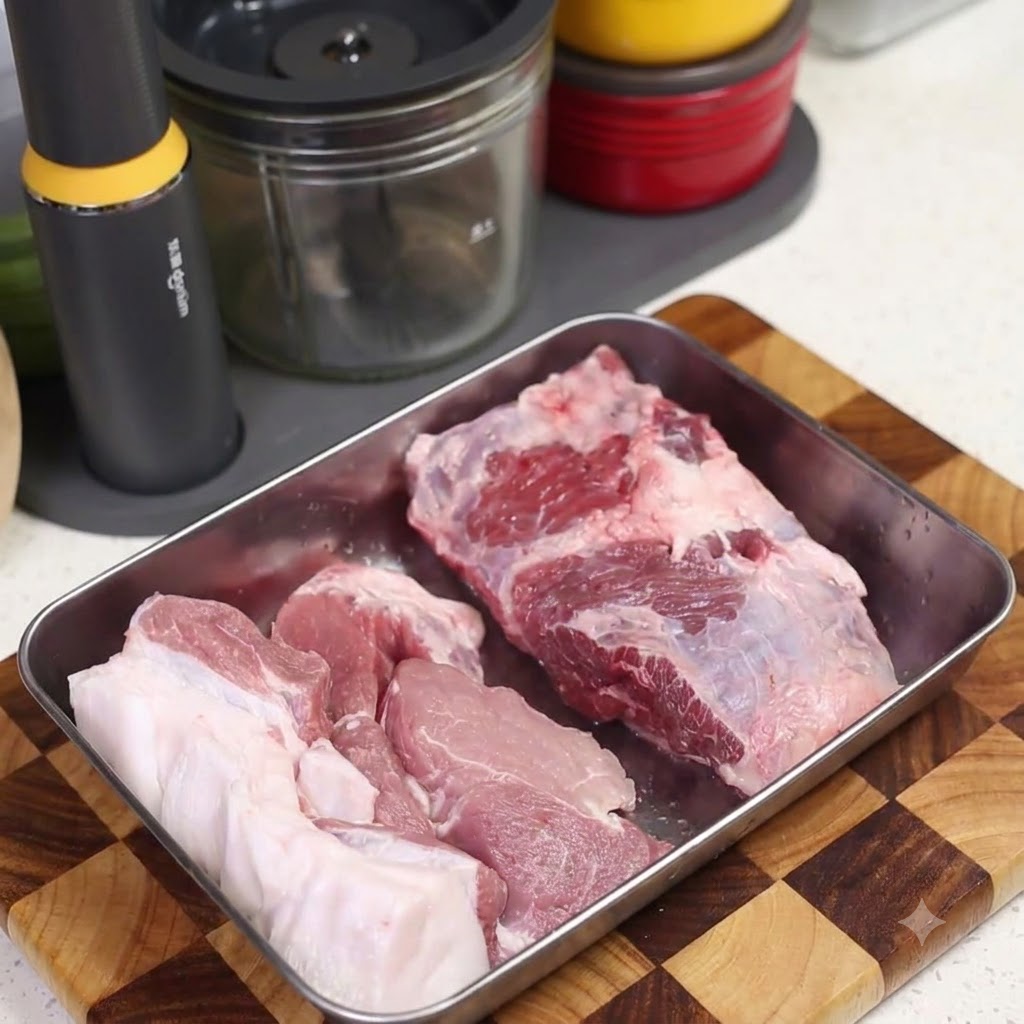
Place the raw pork on a wooden cutting board and use a knife to cut it into smaller pieces, preparing it for the electric food processor.
Tip: Cut the meat into uniform chunks to ensure even processing later. - 2Mince the meat in a food processor
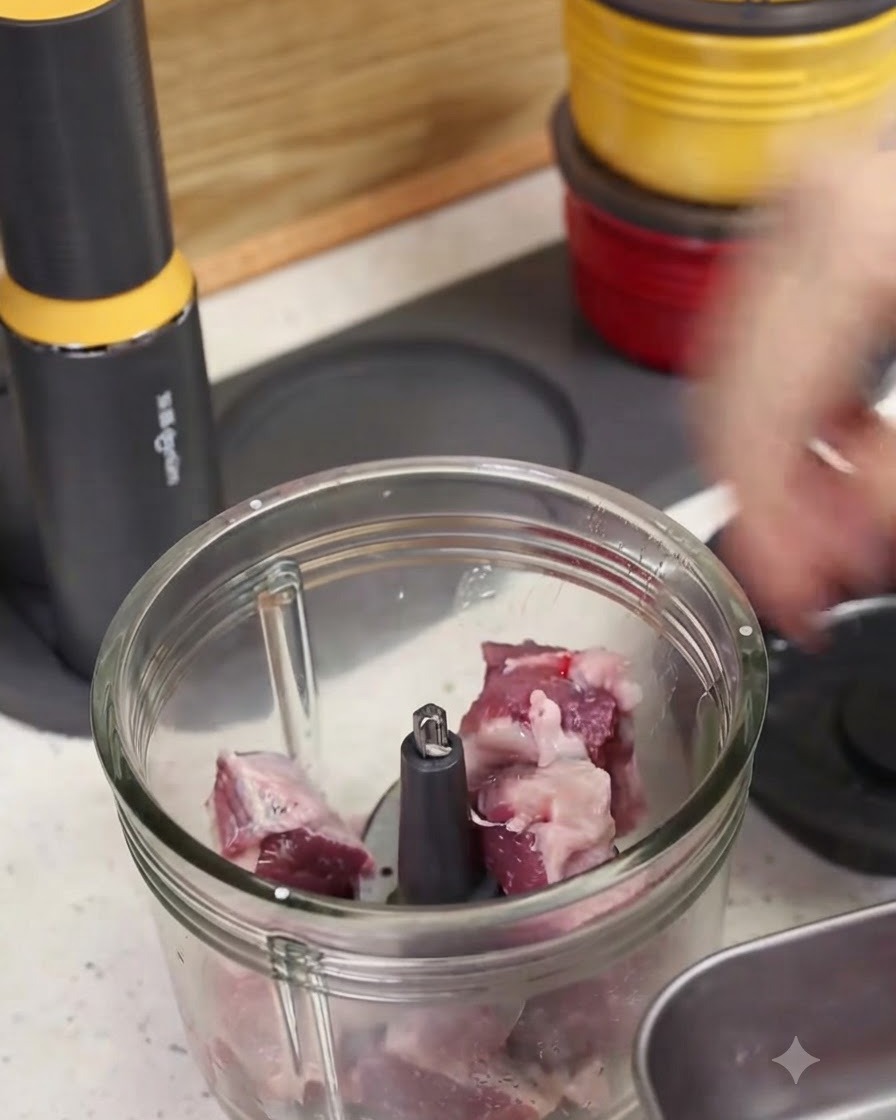
Place the meat chunks into the glass container of an electric food processor and process them until they reach a coarse, granular texture.
Tip: Do not over-process into a paste; keep a coarse texture for a better bite in the sauce. - 3Stir-fry the minced meat
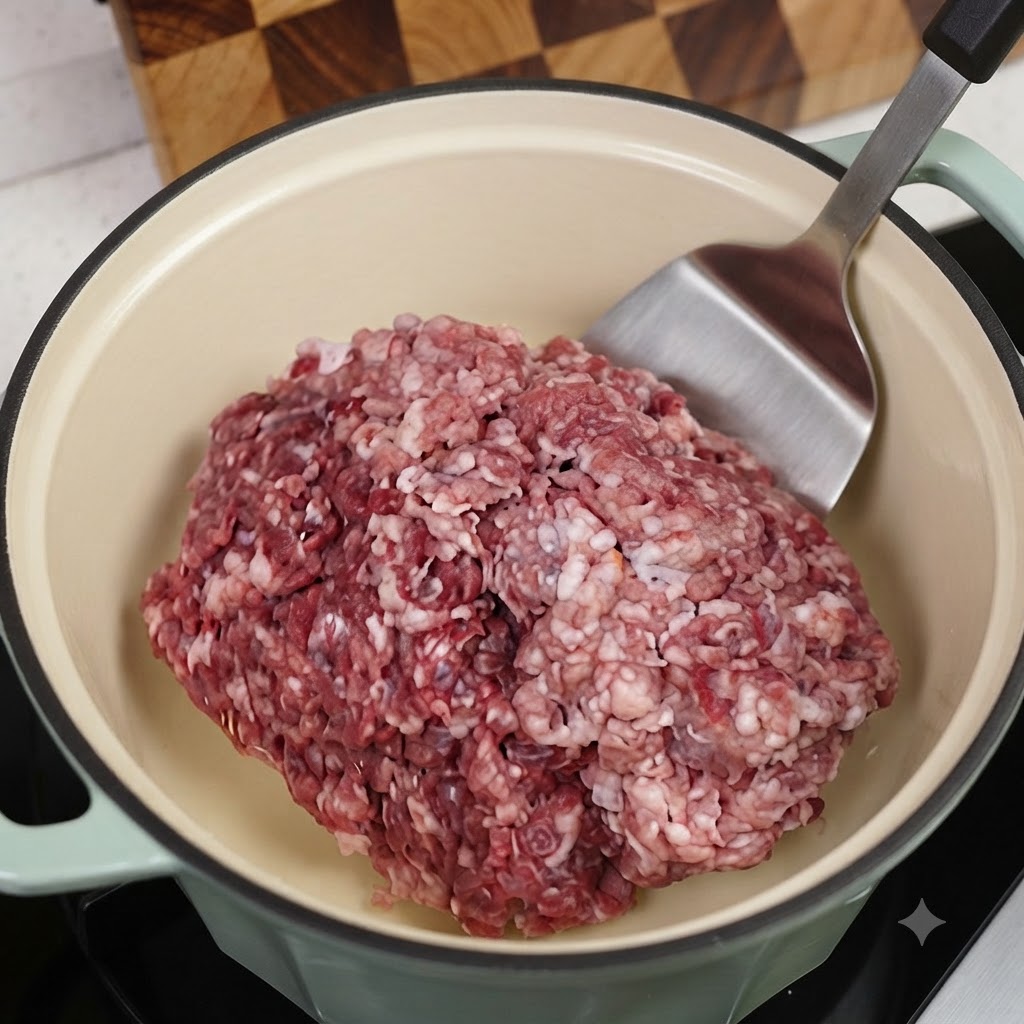
Add some oil to a light green pot, place the minced meat in, and stir-fry over medium-high heat until all the moisture completely cooks out.
Tip: Patiently fry until the liquid evaporates completely to make the meat fragrant and remove any gamey taste. - 4Prepare and mince the aromatics
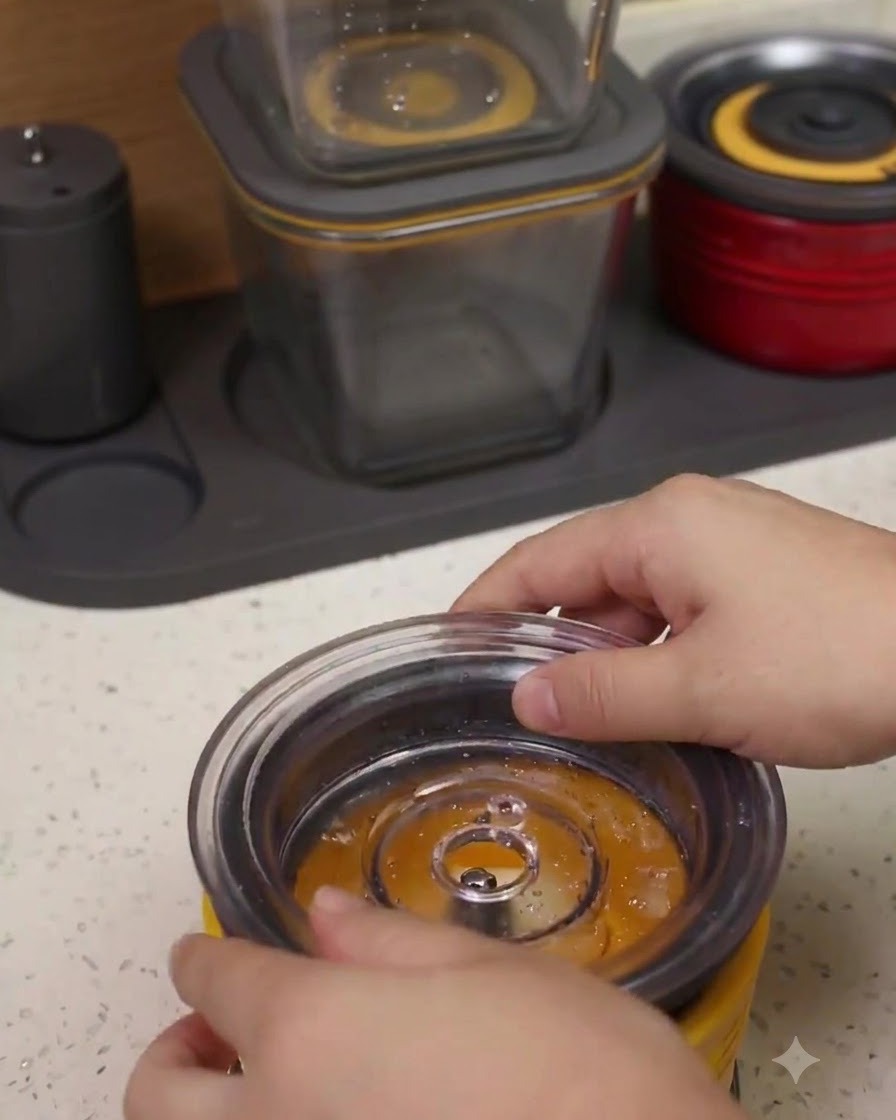
Mince or blend half a head of garlic, one onion, one celery stalk, and a carrot. These aromatic vegetables form the flavor foundation for the Bolognese sauce.
Tip: Finely mincing the vegetables allows them to melt into the sauce during the long simmer, creating a smooth, rich texture. - 5Remove the browned minced meat
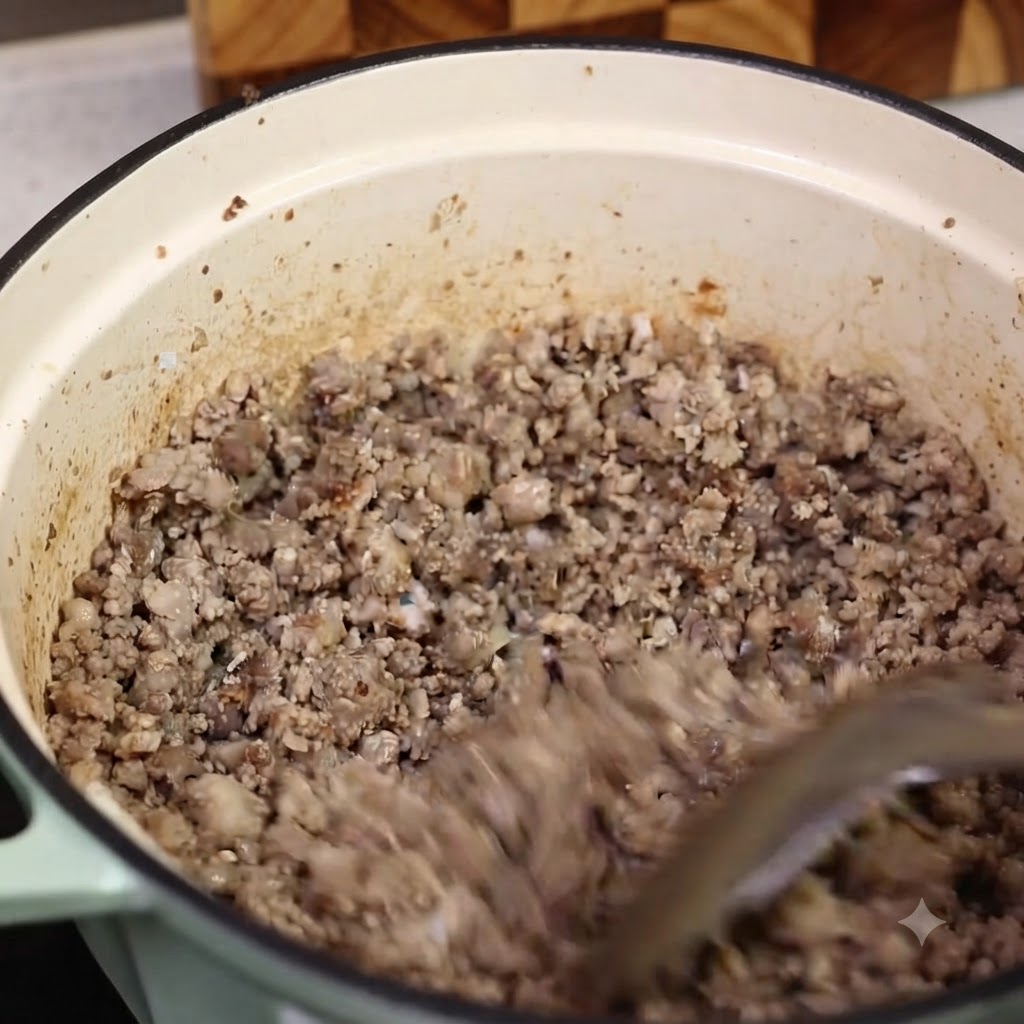
Once the meat makes a crackling sound from the oil and is fully browned, scoop it out of the pot, leaving behind the flavorful oil and caramelized layer.
Tip: Keep the flavorful residues in the pot to impart deep savory flavors to the aromatics. - 6Sauté the aromatics
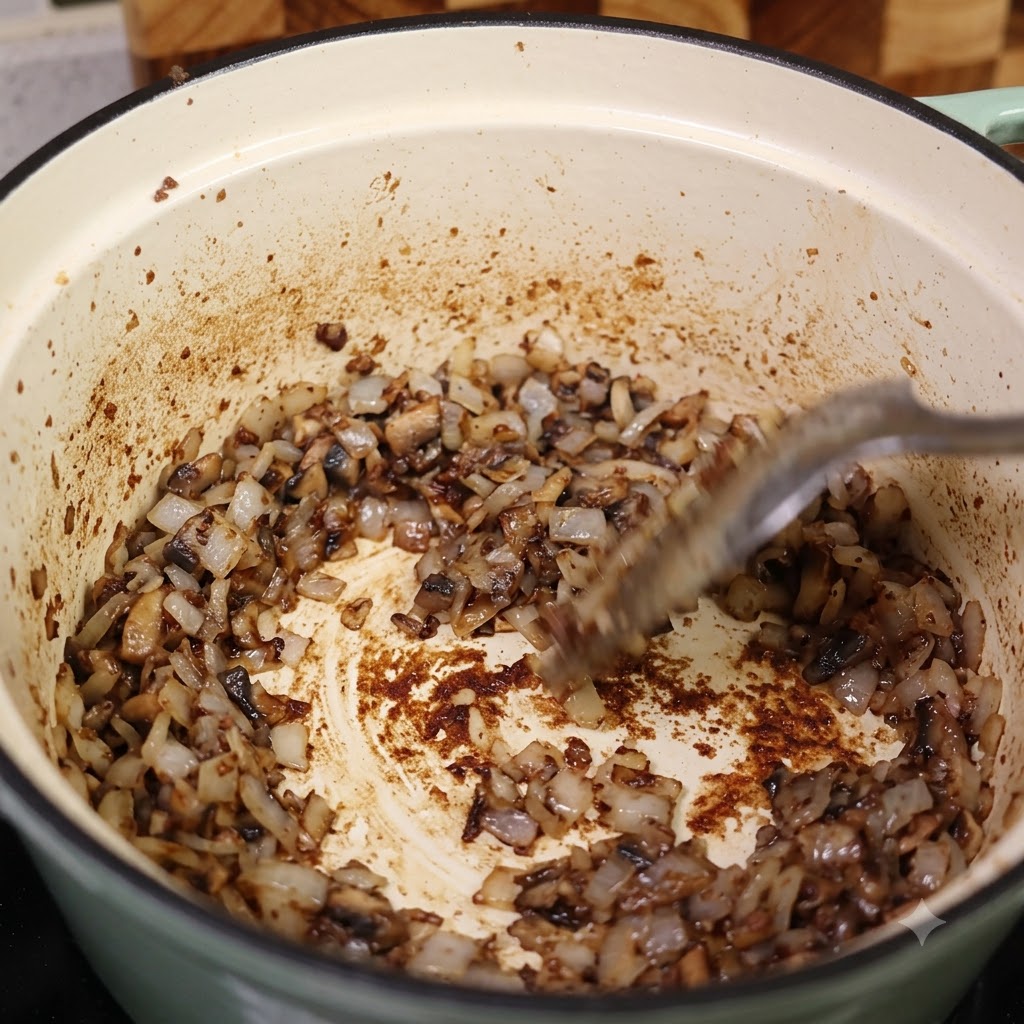
Utilizing the flavorful caramelized layer and oil left in the pot, add the minced garlic, onion, celery, and carrot mixture, and stir-fry until fragrant.
Tip: Sautéing over the leftover fond will build a rich flavor base for the sauce. - 7Add Tomatoes and Paste
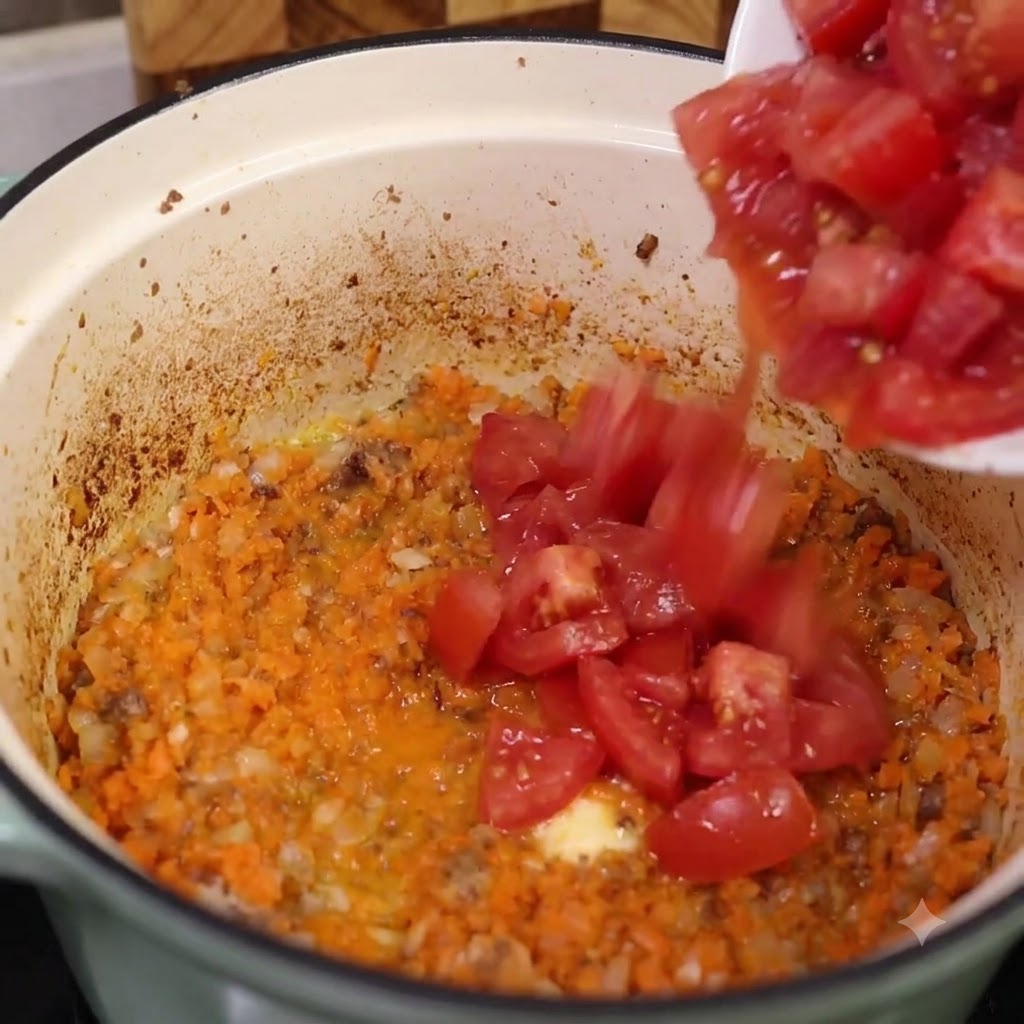
Add 500g of fresh tomato chunks and 400g of tomato paste into the pot with the sautéed aromatics to significantly enhance the rich flavor profile.
Tip: Make sure to incorporate tomato paste thoroughly with the caramelized aromatics before adding liquids. - 8Pour in Dry Red Wine
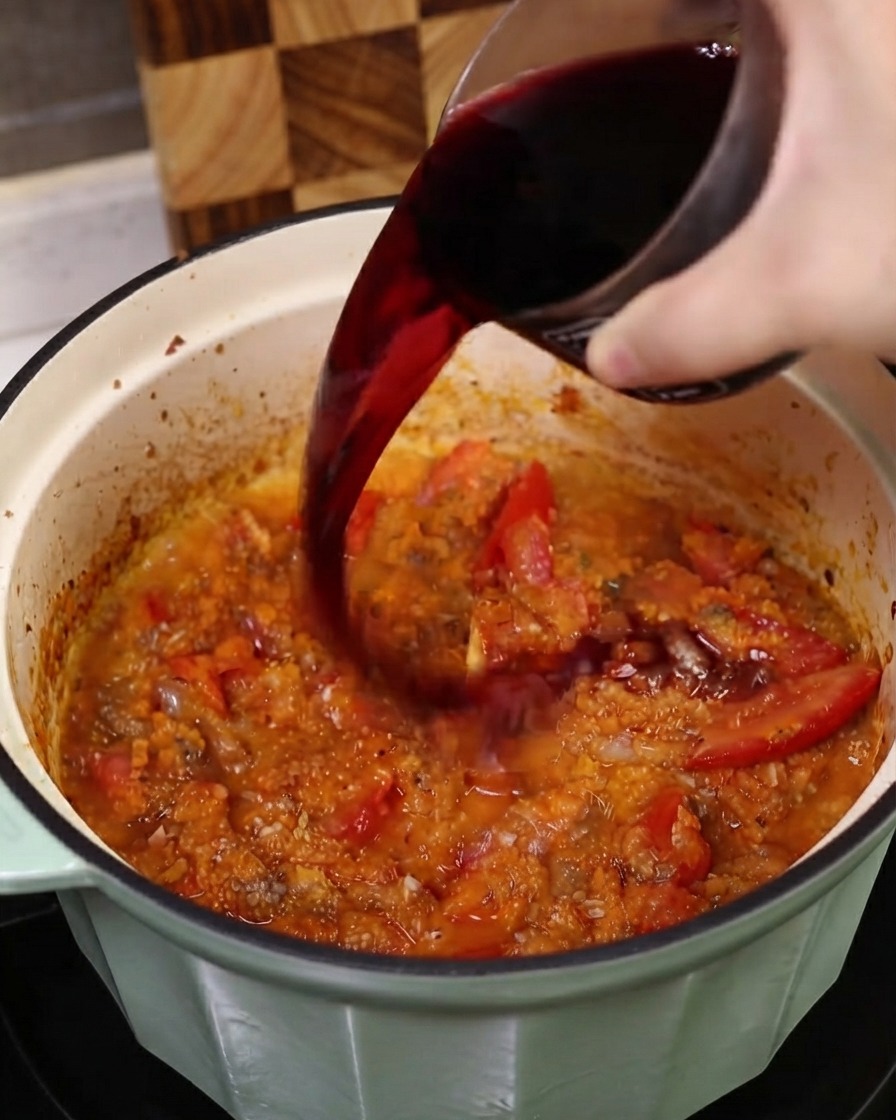
Pour 150ml of dry red wine into the pot with the simmering tomato and vegetable mixture, allowing the alcohol to cook down and add deep complexity to the sauce.
Tip: Use a dry red wine that you would also enjoy drinking; avoid cooking wines with added sodium. - 9Return Minced Meat to Pot
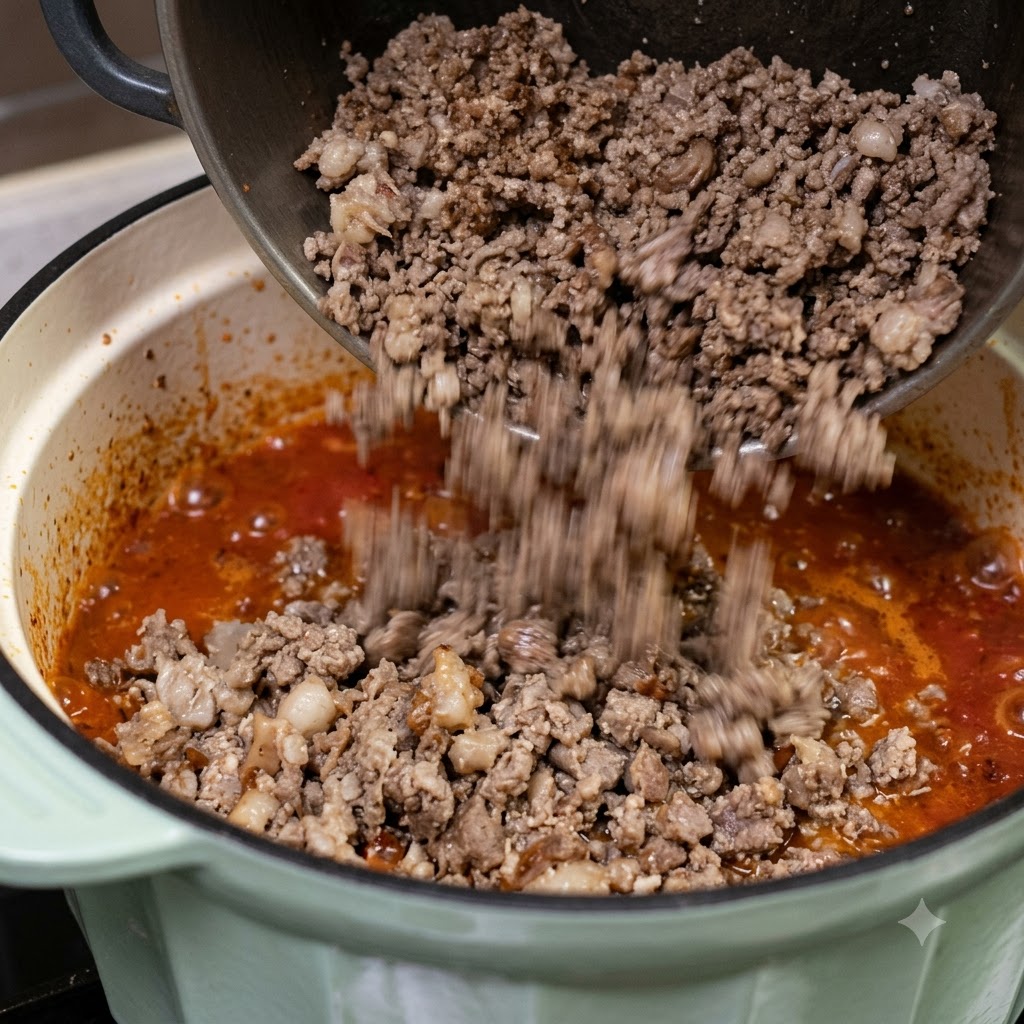
Add the previously browned minced pork and beef mixture back into the pot with the developing tomato sauce, combining all the components together.
Tip: Ensure any flavorful juices left on the plate from resting the meat are also poured back into the pot. - 10Season the Sauce
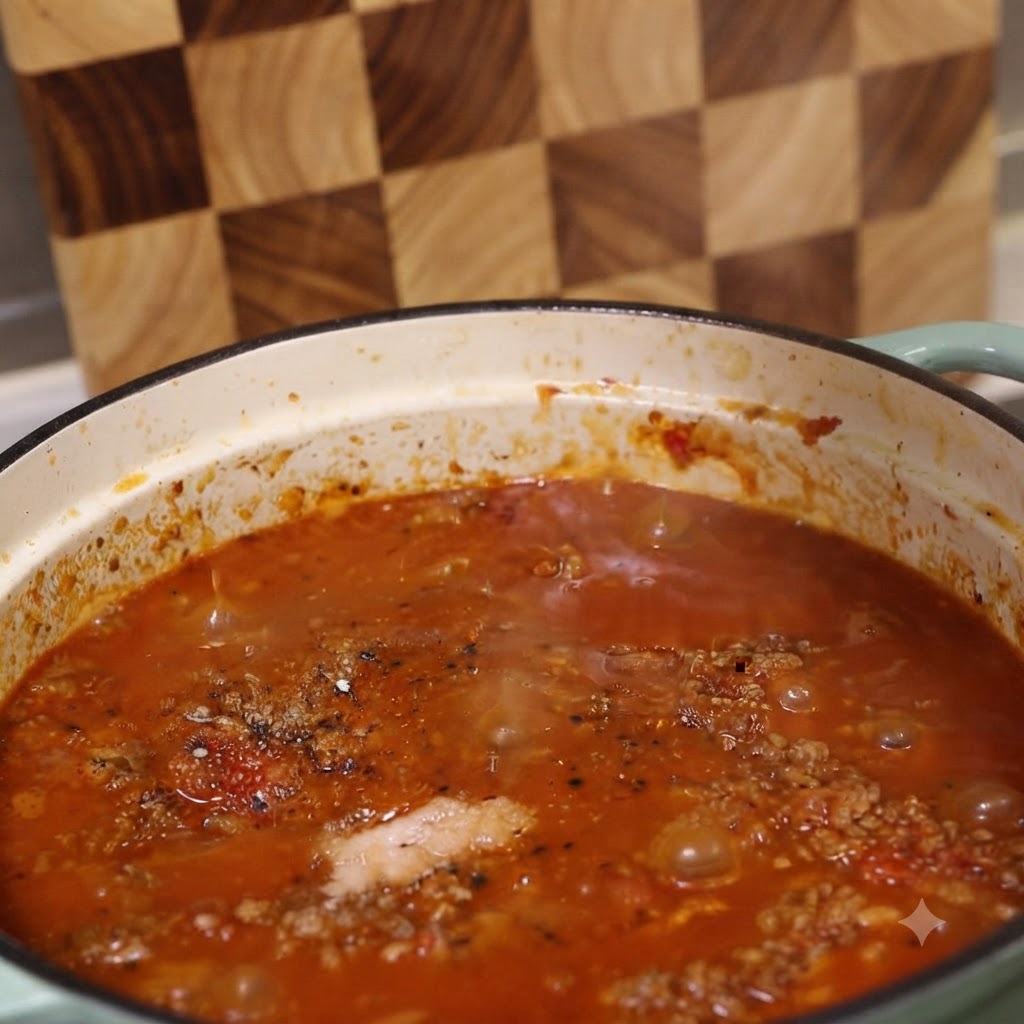
Season the meat sauce with simple salt, black pepper, basil leaves, and half a spoonful of sugar to balance out the natural acidity of the tomatoes.
Tip: Adjust the amount of sugar depending on the natural sweetness and ripeness of the tomatoes you used. - 11Simmer and Stir the Sauce
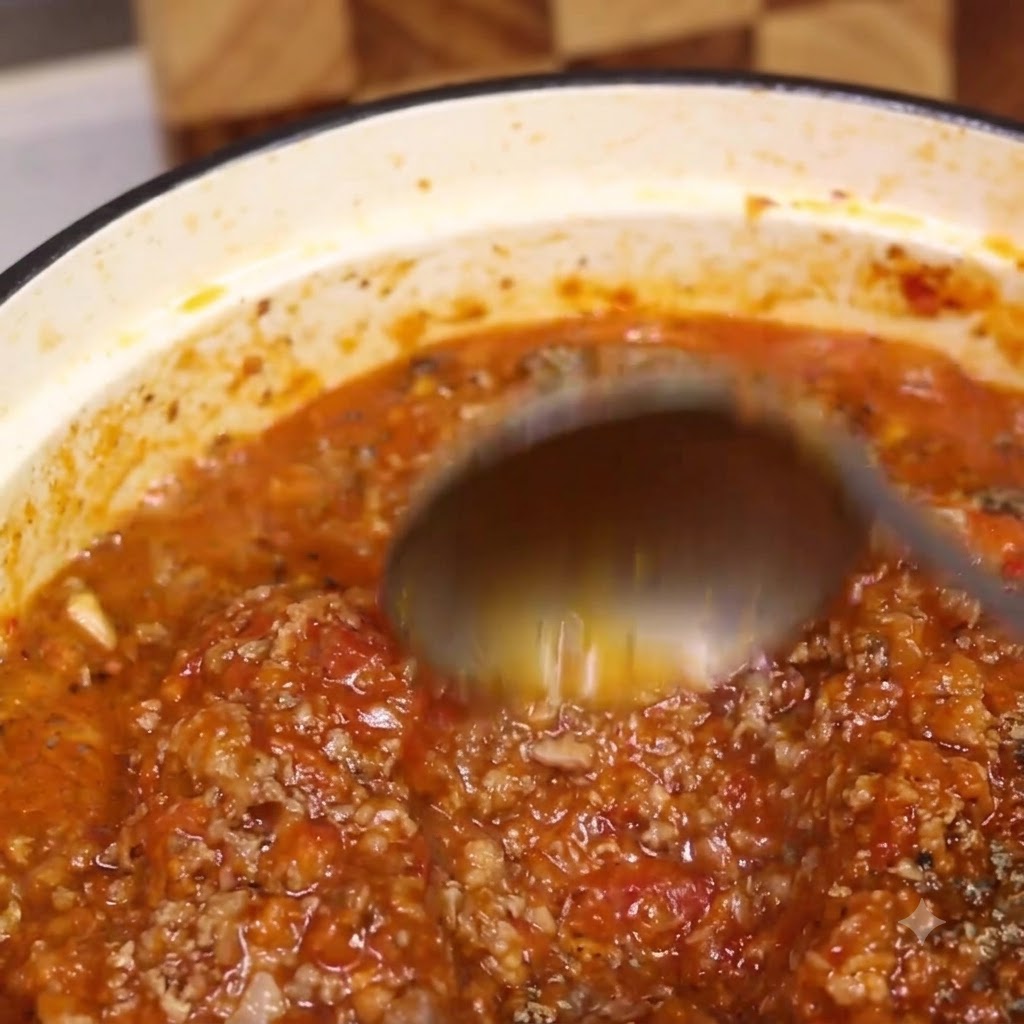
Stir the rich meat sauce well as it simmers together on the stove over the lowest heat, ensuring everything blends harmoniously.
Tip: Stir frequently when simmering on the stove to prevent the thick sauce from burning at the bottom of the pot. - 12Bake the Bolognese sauce
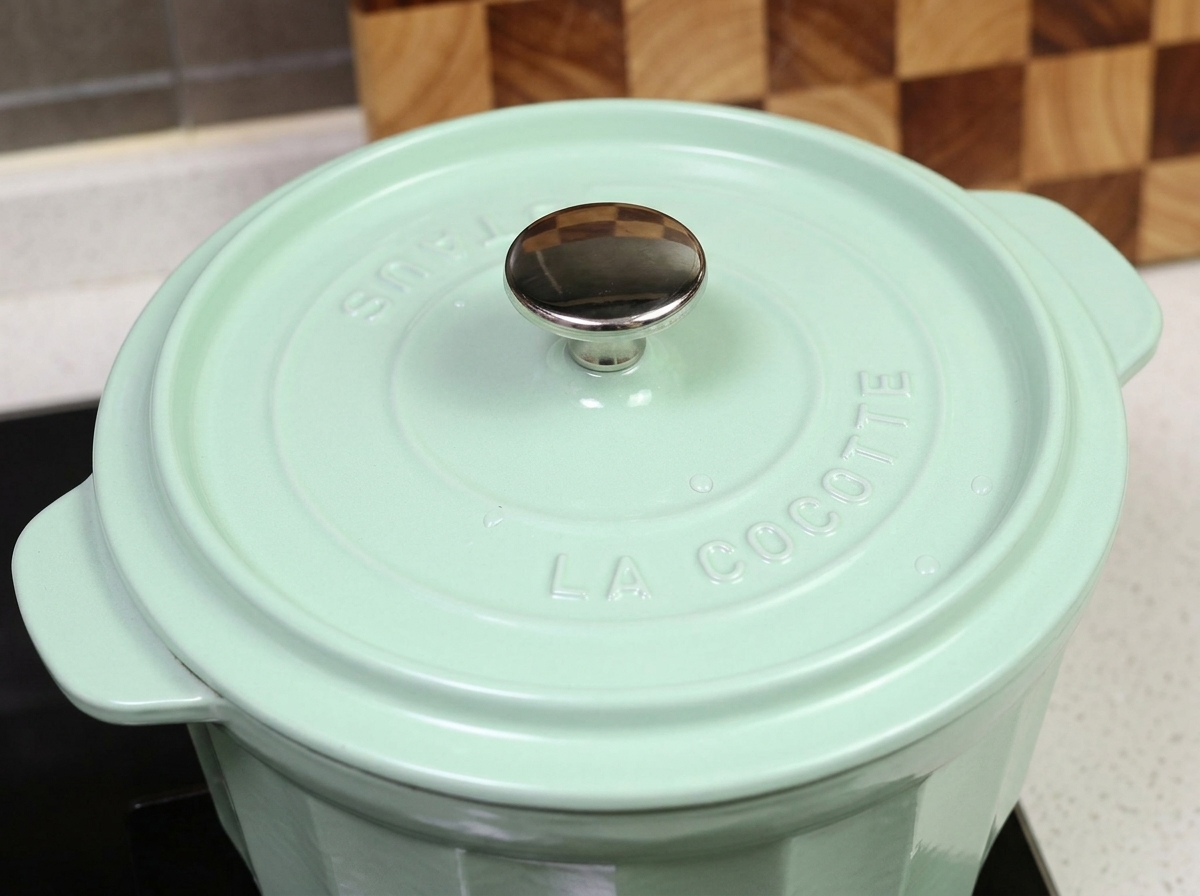
Cover the Dutch oven with its lid and place it into the preheated oven at 160 degrees Celsius to bake for one and a half hours.
Tip: Baking at a low, steady temperature in a Dutch oven allows the heat to circulate evenly, slowly developing deep and concentrated flavors. - 13Check and stir the finished sauce
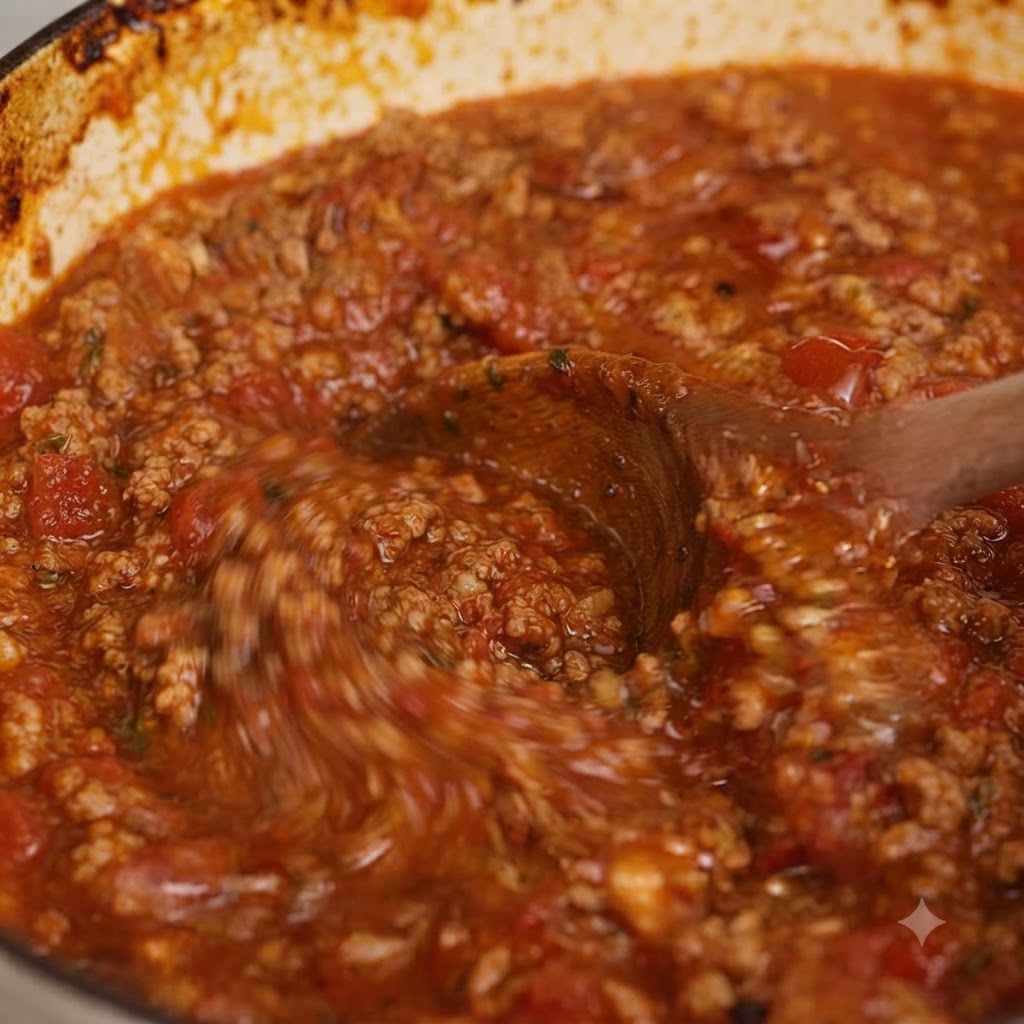
Remove the pot from the oven and use a wooden spoon to stir the finished, thick Bolognese sauce. Perform a quick taste test to check if additional salt is needed.
Tip: Stirring helps evenly distribute the rich flavors and natural oils that have concentrated during the baking process. - 14Portion and store the meat sauce
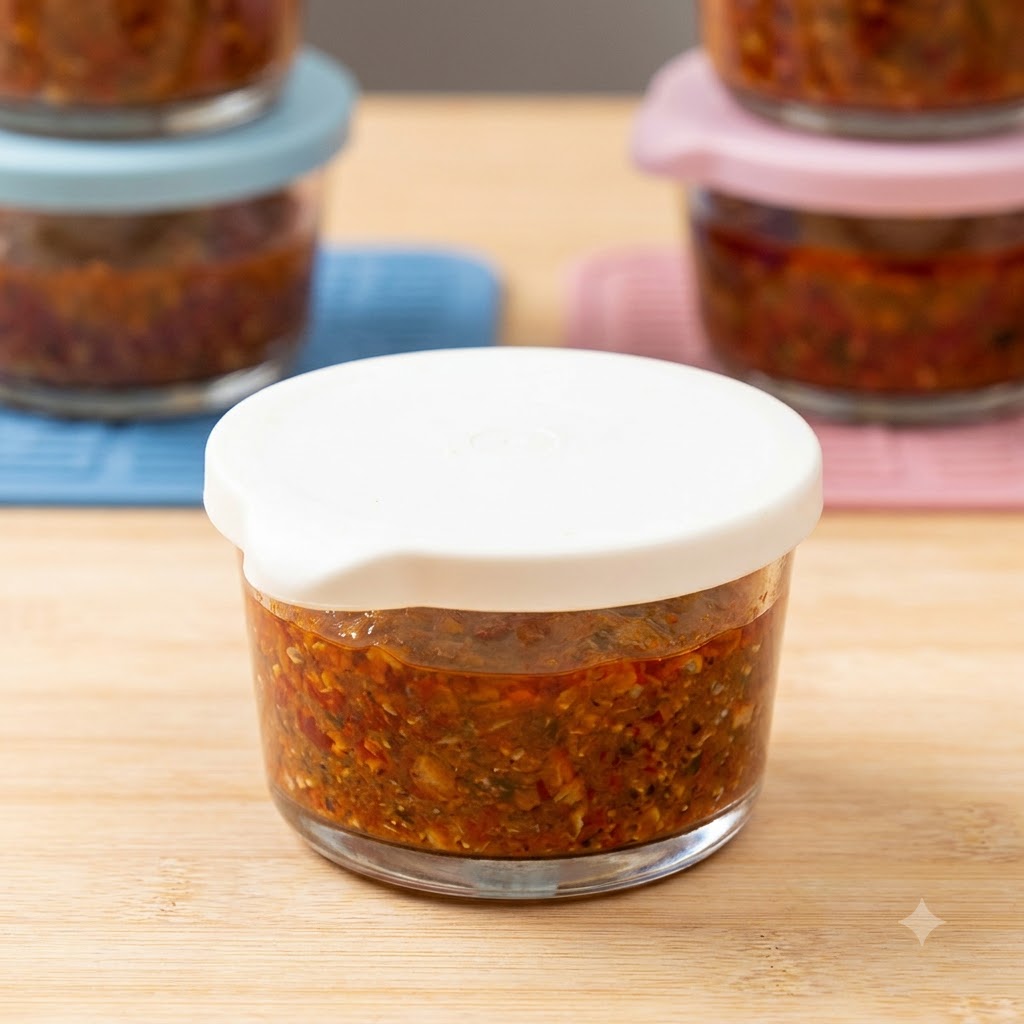
Portion the finished meat sauce into small containers and seal them securely with lids. Store these containers in the freezer so you can enjoy them anytime.
Tip: Portioning into individual servings makes it easy to thaw and reheat only what you need for a quick meal.