Smoked St. Louis Style Ribs
Apple Cider Mop Sauce
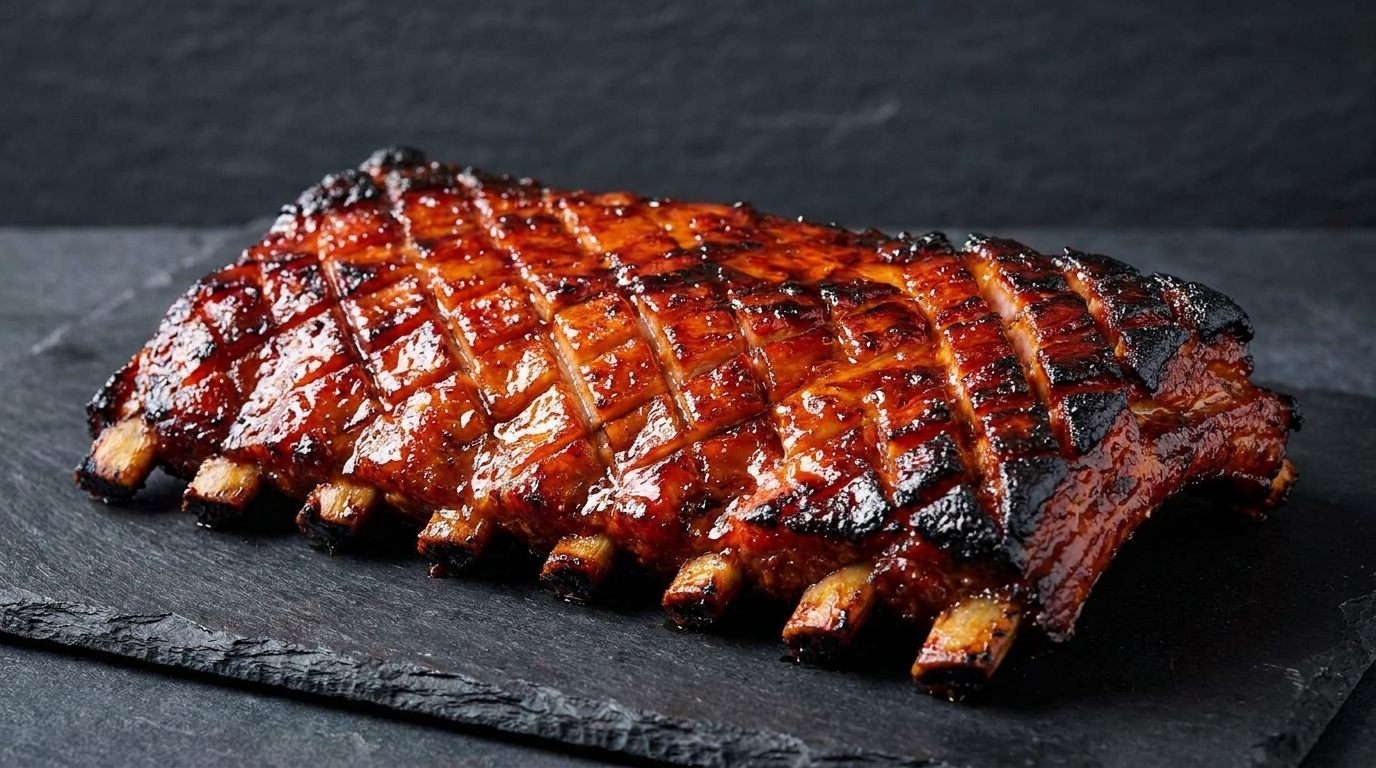
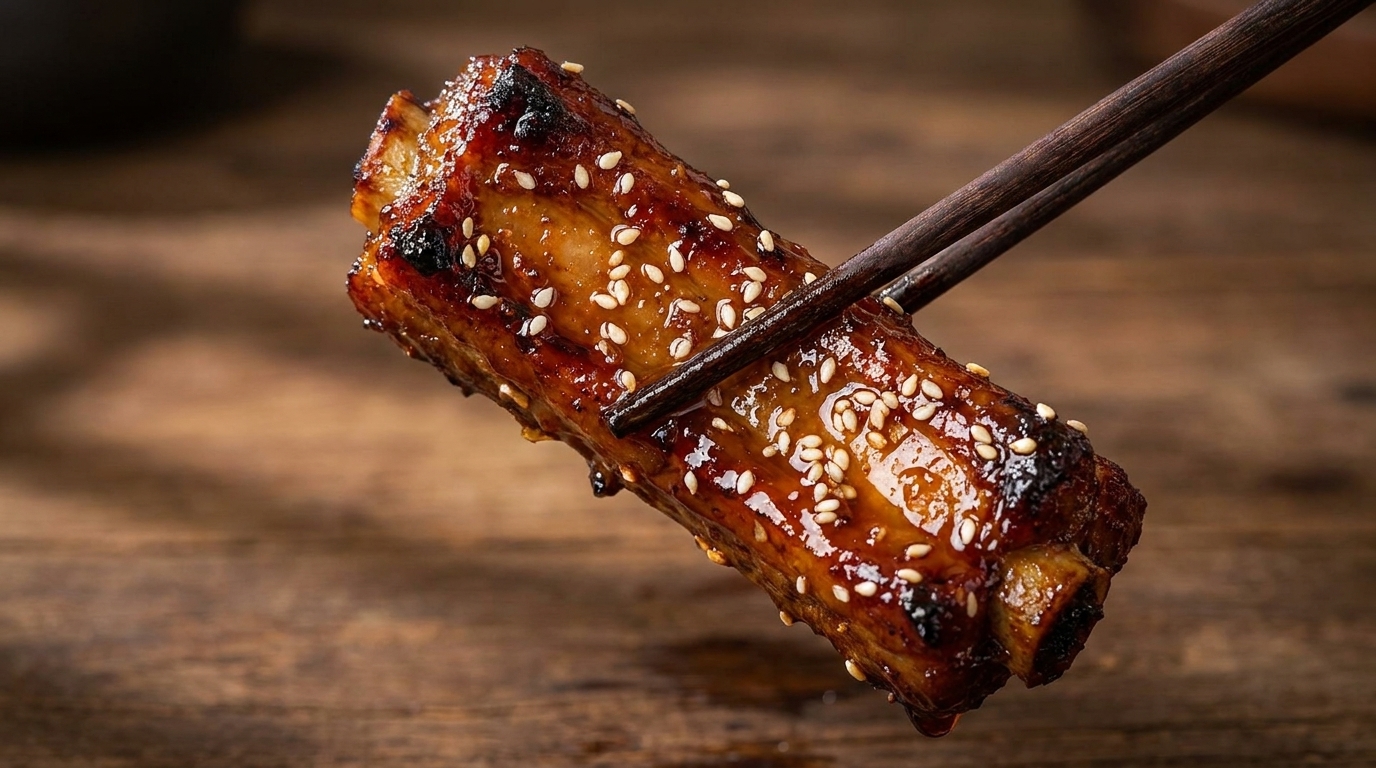
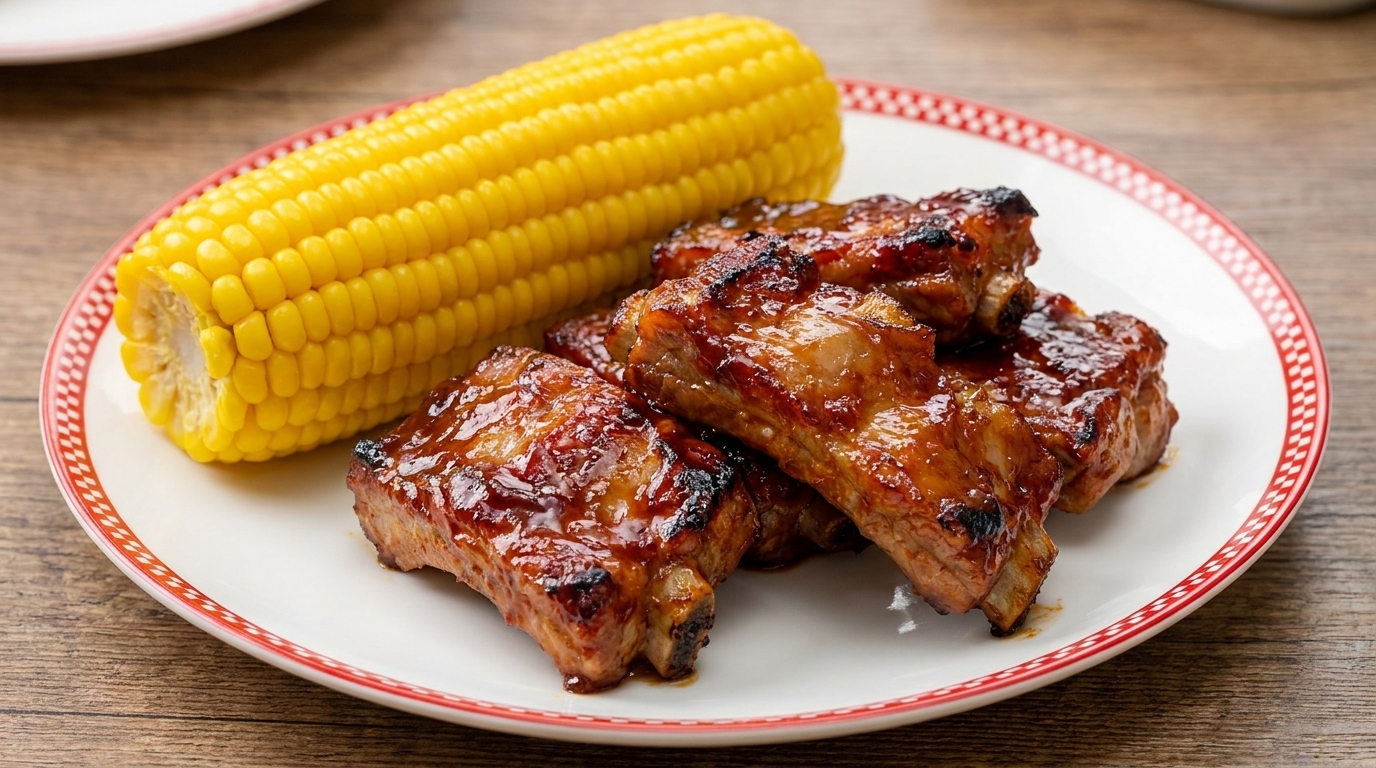
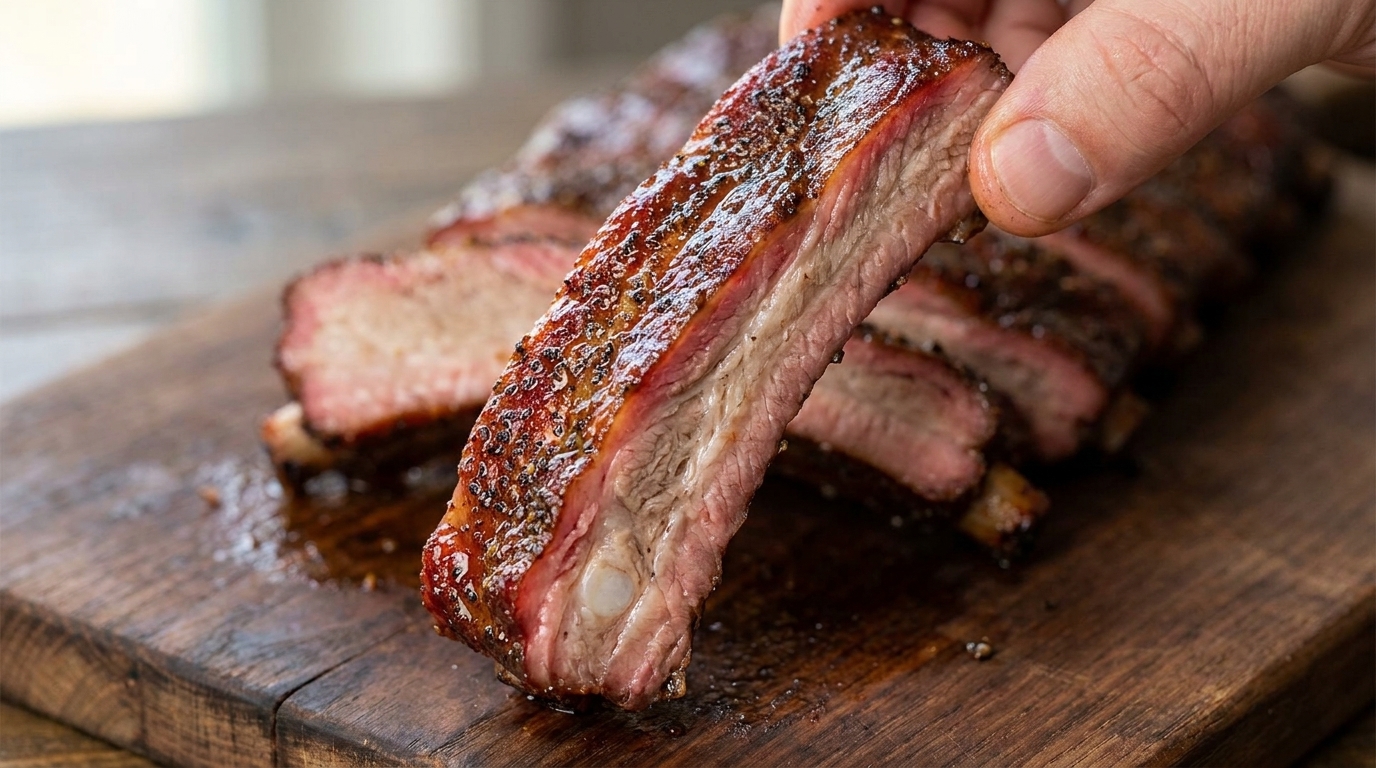
Pitmaster-style St. Louis ribs smoked low and slow over post oak, basted with a tangy apple cider vinegar mop sauce, and finished with a perfect pink smoke ring.
St. Louis cut ribs are prized for their uniform rectangular shape, allowing for an incredibly even cook in the pit. The secret to this recipe lies in the traditional mop sauce—a thin, vinegar-based glaze applied throughout the smoke that builds a beautifully caramelized bark without overpowering the natural wood flavor.
Ingredients
- 1 slab St. Louis style pork ribs
- 2 tbsp coarse salt
- 2 tbsp coarse black pepper
- 1 tbsp garlic powder
- 1 cup apple cider vinegar
- 0.5 cup brown sugar
- 0.5 cup ketchup
- optional post oak firewood logs
Instructions
- 1Trim the rib slab
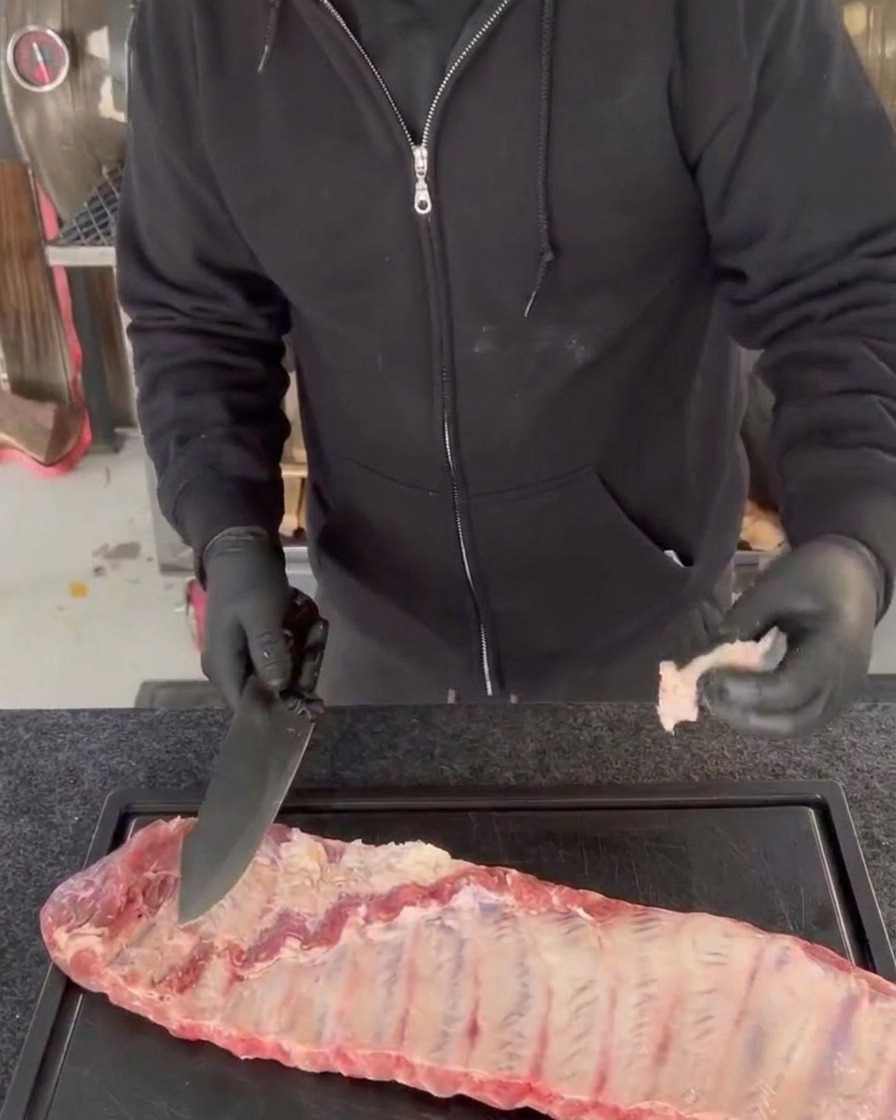
Place the raw St. Louis style rib slab on a cutting board bone-side up. Use a sharp chefs knife to trim away any loose, uneven edges, dangling bits of meat, or excess fat deposits from the ends. This ensures the rack is uniform in shape so that it cooks evenly throughout the smoking process.
Tip: Trimming the thin, uneven ends prevents them from drying out or burning while the thickest sections of the rib rack finish smoking. - 2Remove the membrane
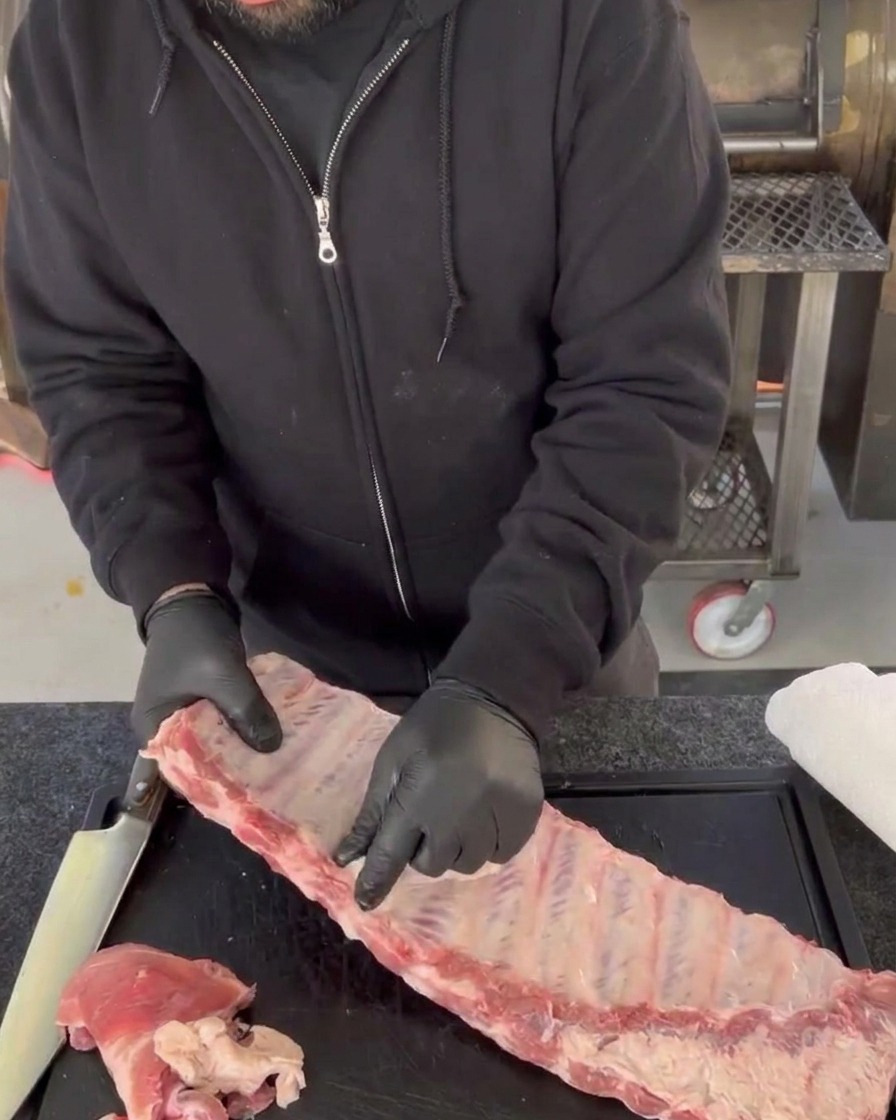
Locate the thin, tough membrane (the silverskin) covering the bone side of the ribs. Use your fingers or the tip of a butter knife to pry it loose from one of the center bones, then grip it firmly with your hands and peel it completely away from the entire rack.
Tip: If the membrane is slippery and hard to grip, use a piece of paper towel to hold onto it for a secure, non-slip purchase. - 3Season the bone side
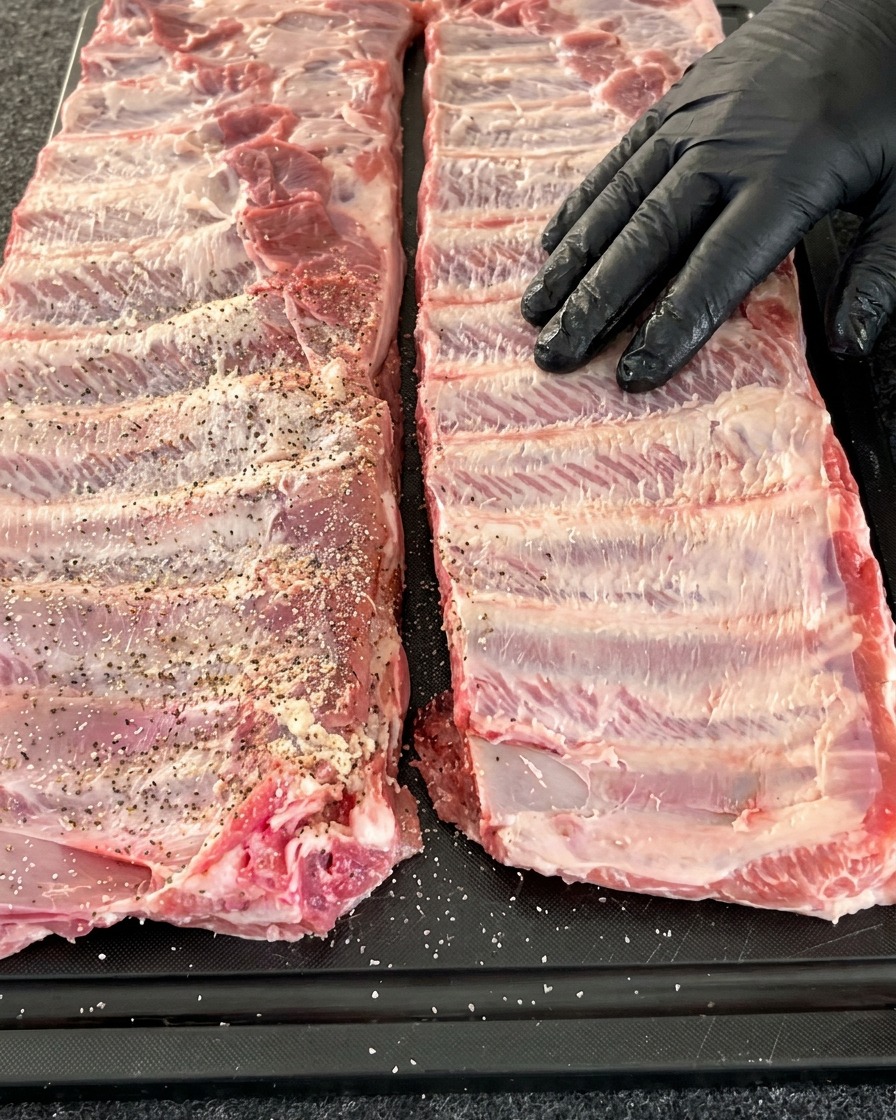
With the ribs positioned bone-side up, begin seasoning by evenly sprinkling a simple blend of salt, coarse black pepper, and garlic powder across the entire surface. Ensure uniform coverage over all the exposed meat and bones so that every bite is well-seasoned.
Tip: Keep your seasoning hand about 8 to 12 inches above the meat to achieve a wider, more consistent distribution without heavy clumps. - 4Season the meat side
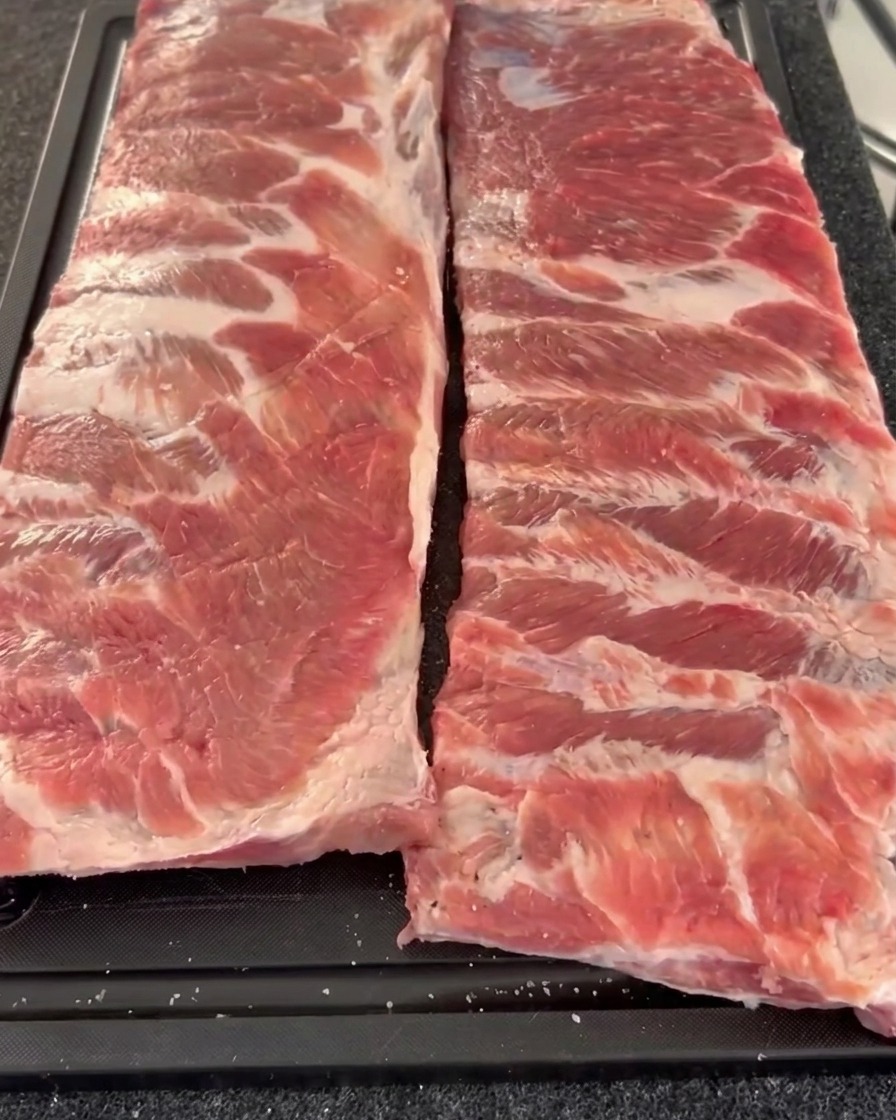
Flip the rib racks over so that the thick, meaty side faces upward. Apply a generous, even coating of the identical salt, black pepper, and garlic powder mixture across the top and sides, pressing lightly if needed so the rub adheres firmly to the damp meat surface.
Tip: Let the seasoned meat sit at room temperature for 15 minutes before smoking; the salt will draw out moisture, dissolve, and create a perfect binder. - 5Fire up the smoker
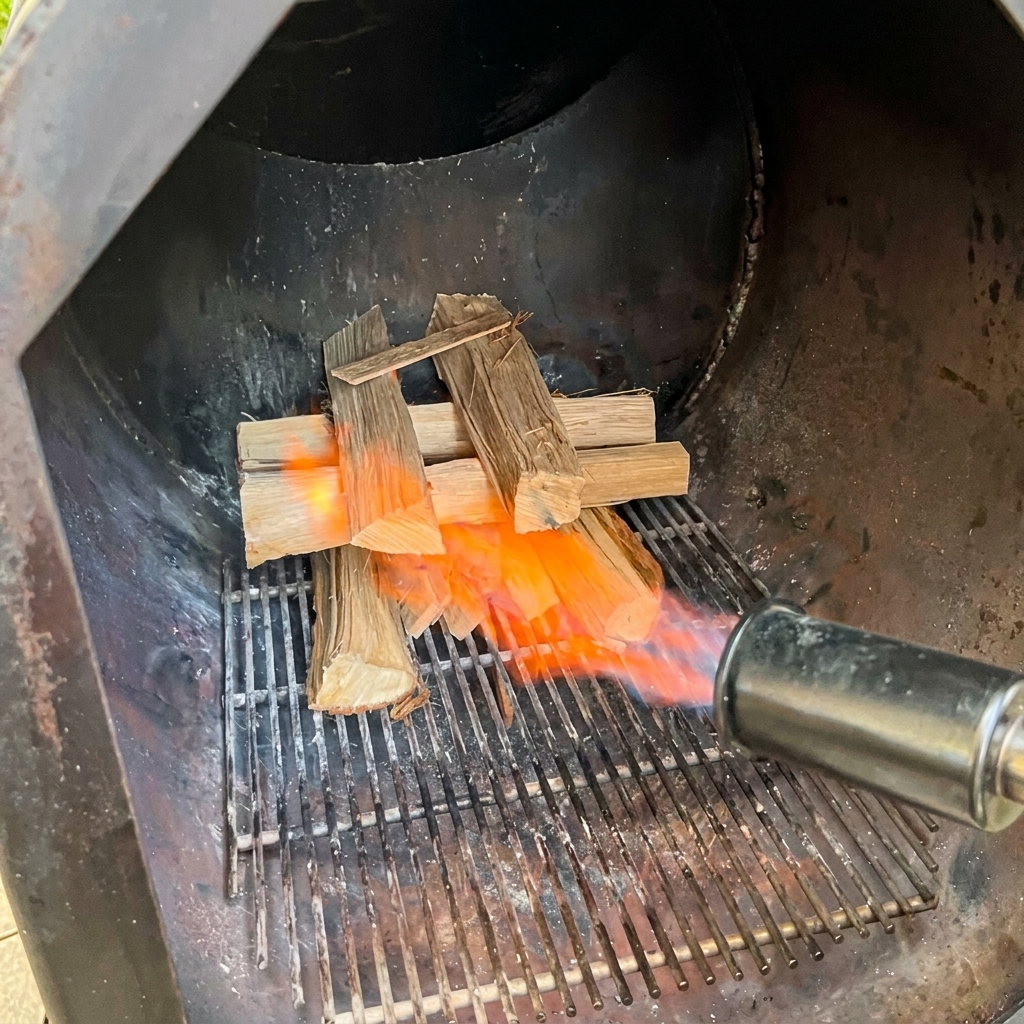
Arrange a small stack of post oak firewood logs inside the firebox of your offset smoker, layering them to allow proper airflow. Direct the flame of a high-output propane torch into the center of the wood pile until the logs catch fire, producing a steady flame to preheat the cooking chamber.
Tip: Use well-seasoned, dry split logs to ensure a clean, hot ignition that avoids heavy, bitter black smoke at the start. - 6Load ribs into smoker
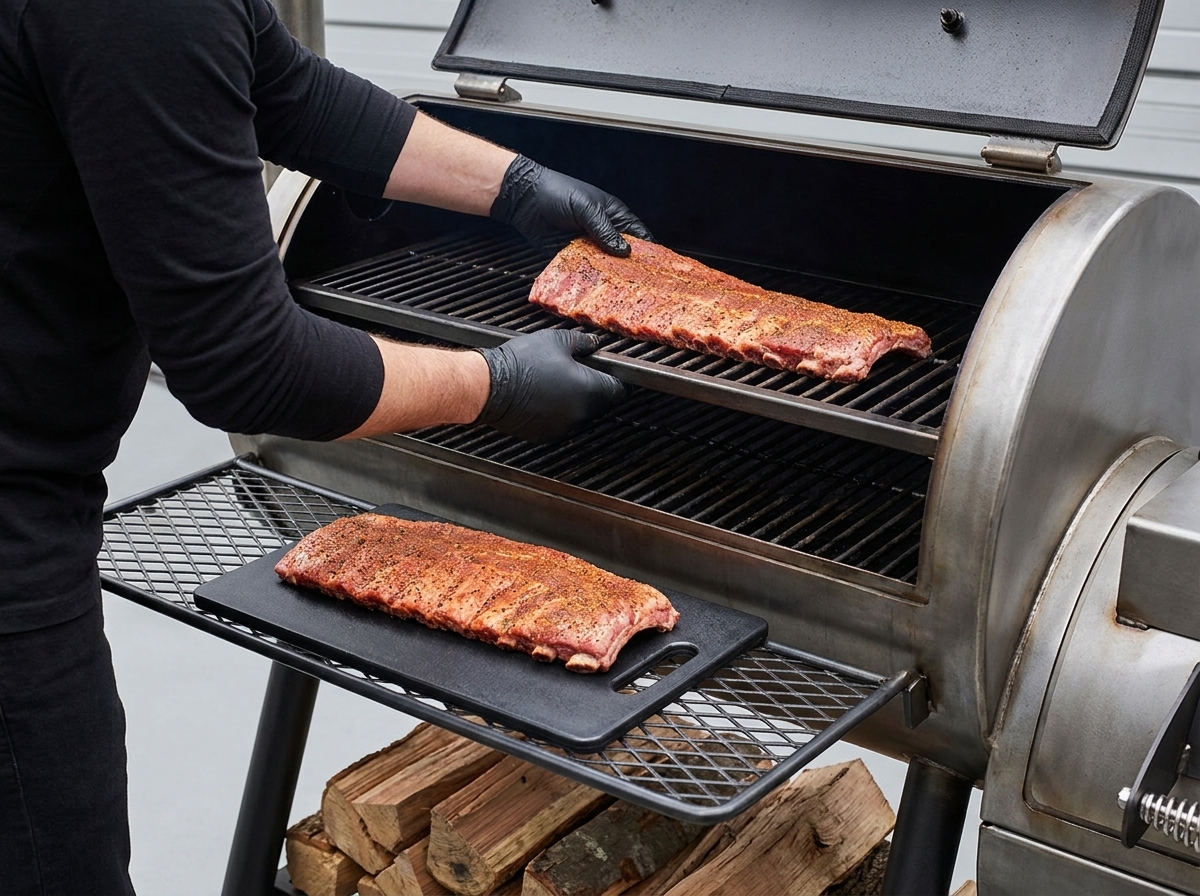
Once the smoker has stabilized at a target temperature of 275°F with clean, blue smoke, open the cooking chamber lid. Carefully transfer the fully seasoned, raw pork rib racks and lay them out flat across the upper grates, ensuring they do not overlap or crowd each other.
Tip: Position the thicker end of the rib racks closer to the firebox side of the chamber, as that area naturally receives slightly higher heat. - 7Check and flip the ribs
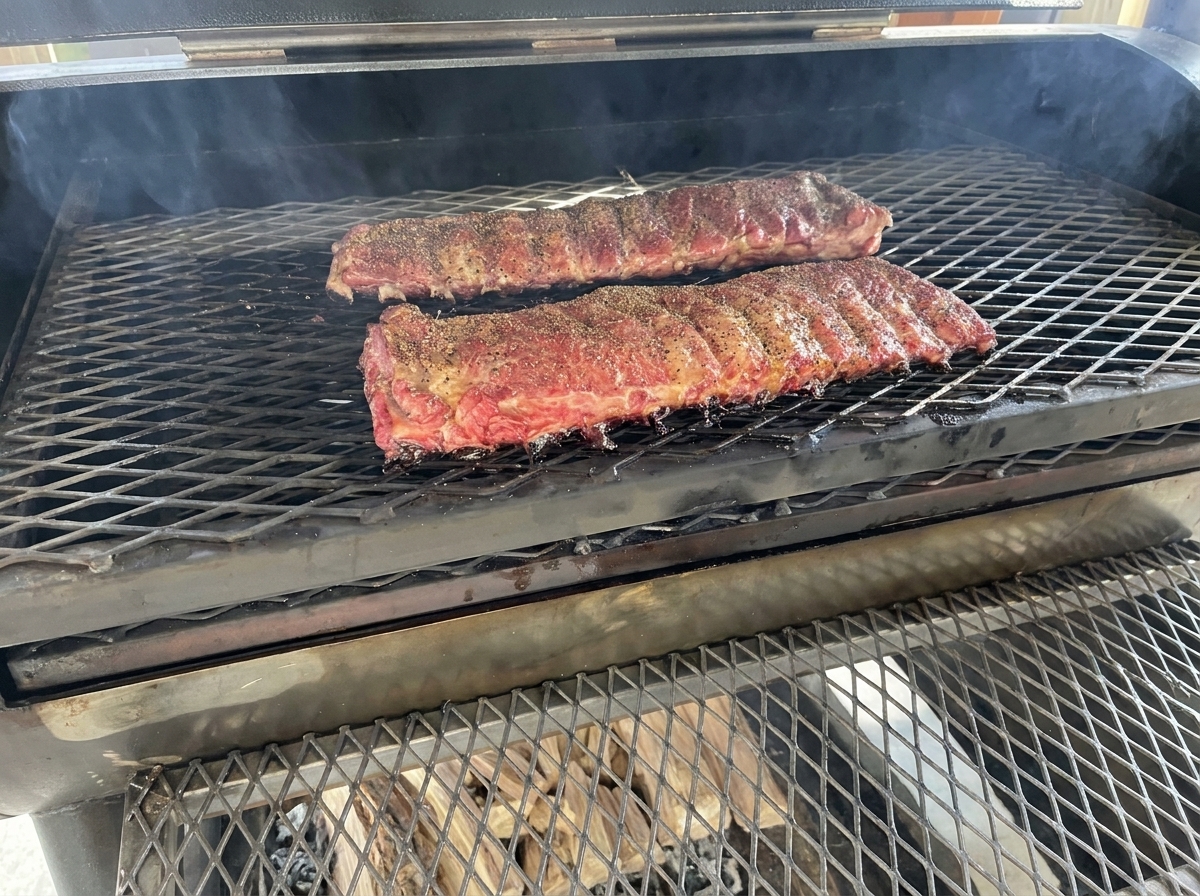
After about three hours of smoking, open the lid to check on the progress of the St. Louis style ribs. Carefully flip the slabs over on the grates to encourage even heat absorption, smoke penetration, and consistent rendering of fat across both sides.
Tip: Keep the smoker lid closed as much as possible to maintain a steady cooking temperature of 275°F. - 8Combine the mop sauce base
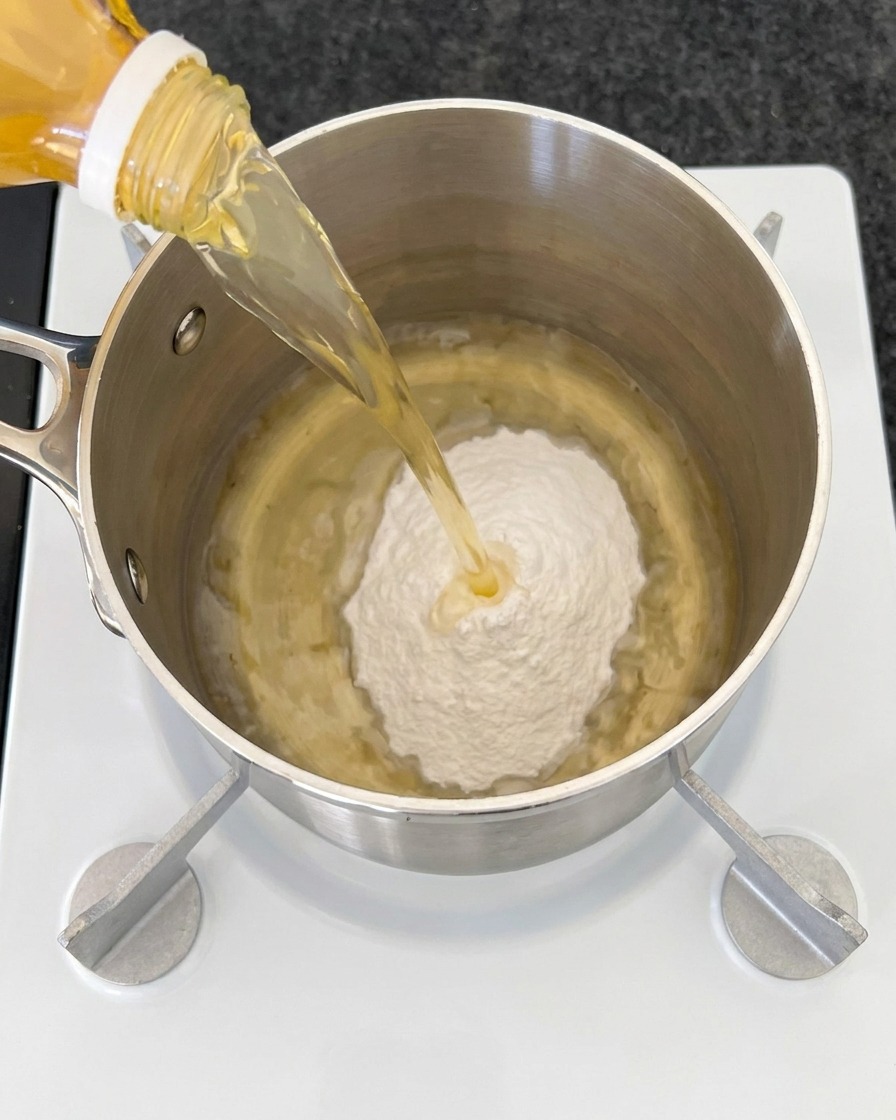
Start preparing the mop sauce by pouring apple cider vinegar into a small stainless steel saucepan over a pile of brown sugar. This tangy liquid forms the flavor base that will balance the rich, smoky profile of the pork.
Tip: Apple cider vinegar adds a bright acidity that tenderizes the meat surface and cuts through the heavy fat during smoking. - 9Add ketchup to the sauce base
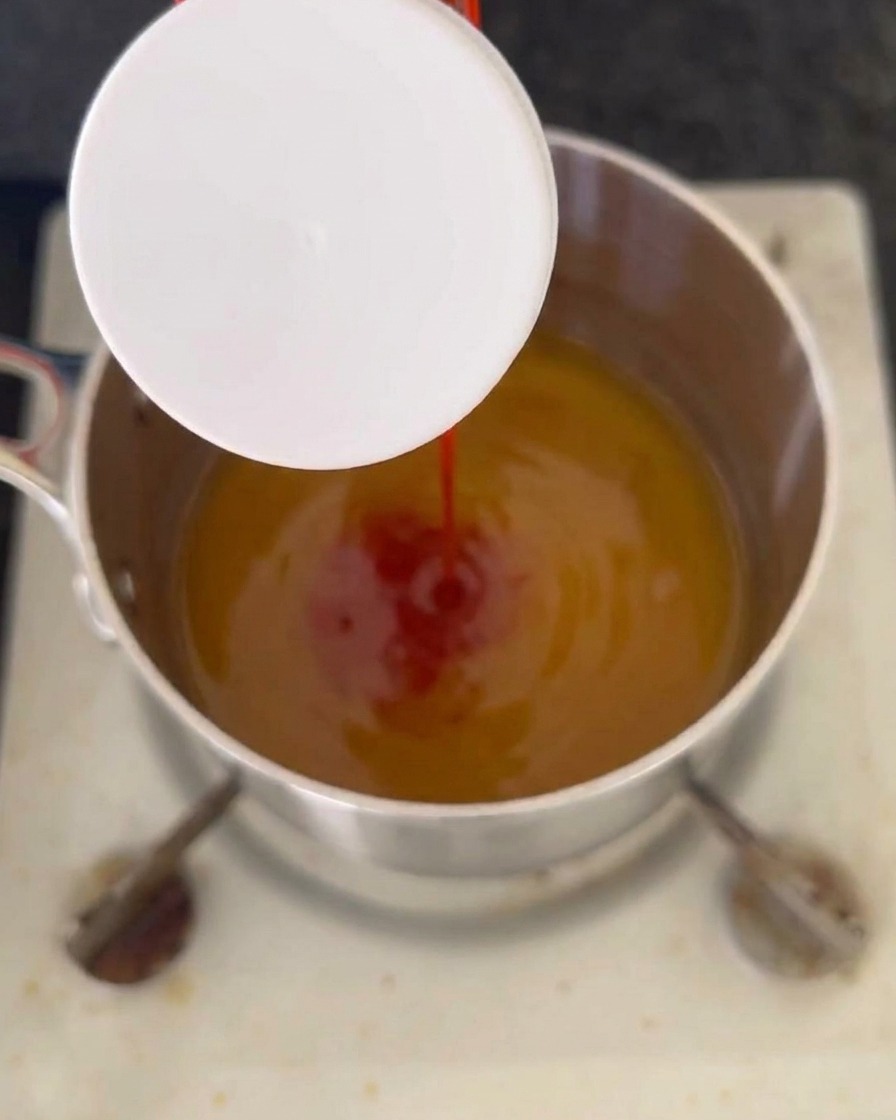
Pour the ketchup into the saucepan with the simmering apple cider vinegar and brown sugar mixture. Stir thoroughly over medium heat to incorporate all the ingredients evenly into a smooth, cohesive mop sauce base.
Tip: Keep the heat at a steady simmer and stir frequently to ensure the brown sugar dissolves fully without sticking or burning on the bottom. - 10Simmer and stir the sauce
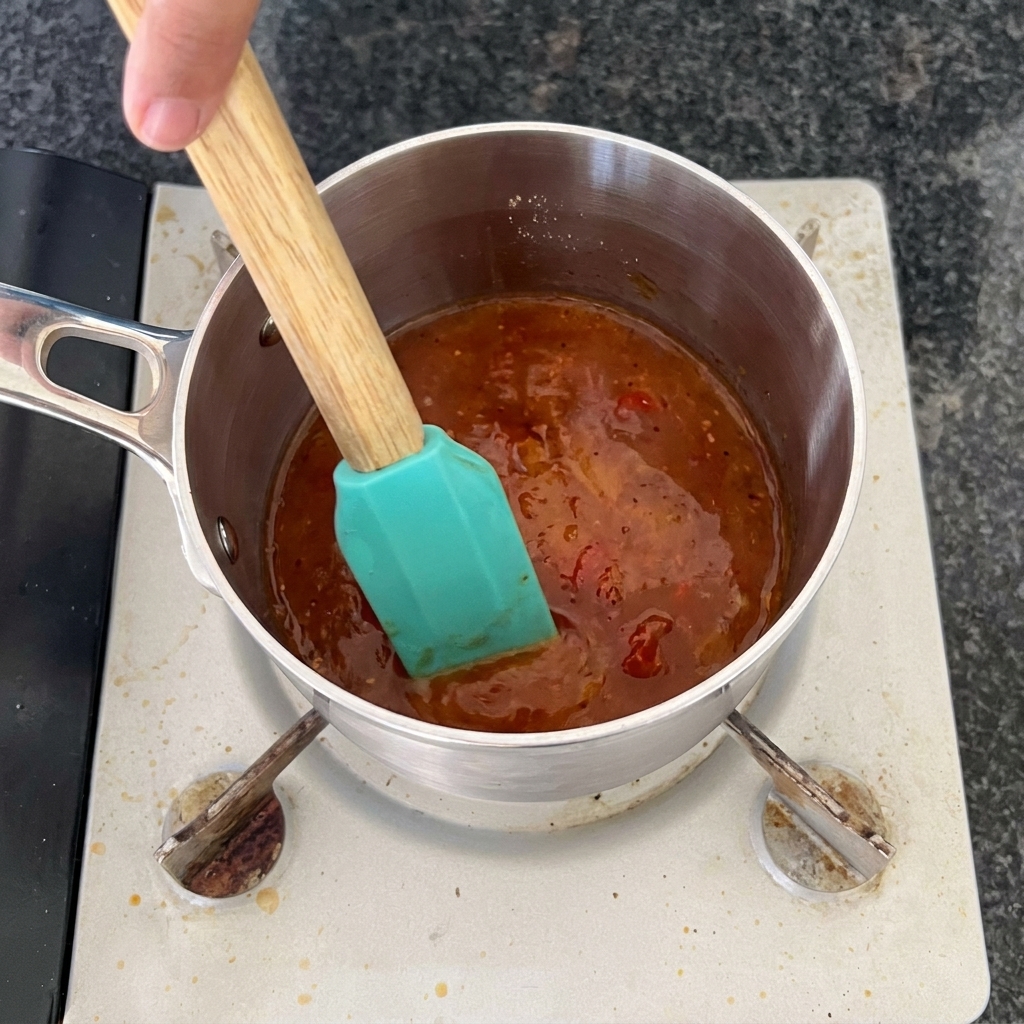
Stir the combined mop sauce ingredients together in the saucepan using a turquoise silicone spatula. Bring the mixture to a gentle simmer over medium heat for about 10 minutes, ensuring all the sugars dissolve completely and the flavors meld into a cohesive blend.
Tip: Keep the heat at a low simmer so the sugars in the sauce caramelize smoothly without burning against the bottom of the pan. - 11Mop the ribs during smoking
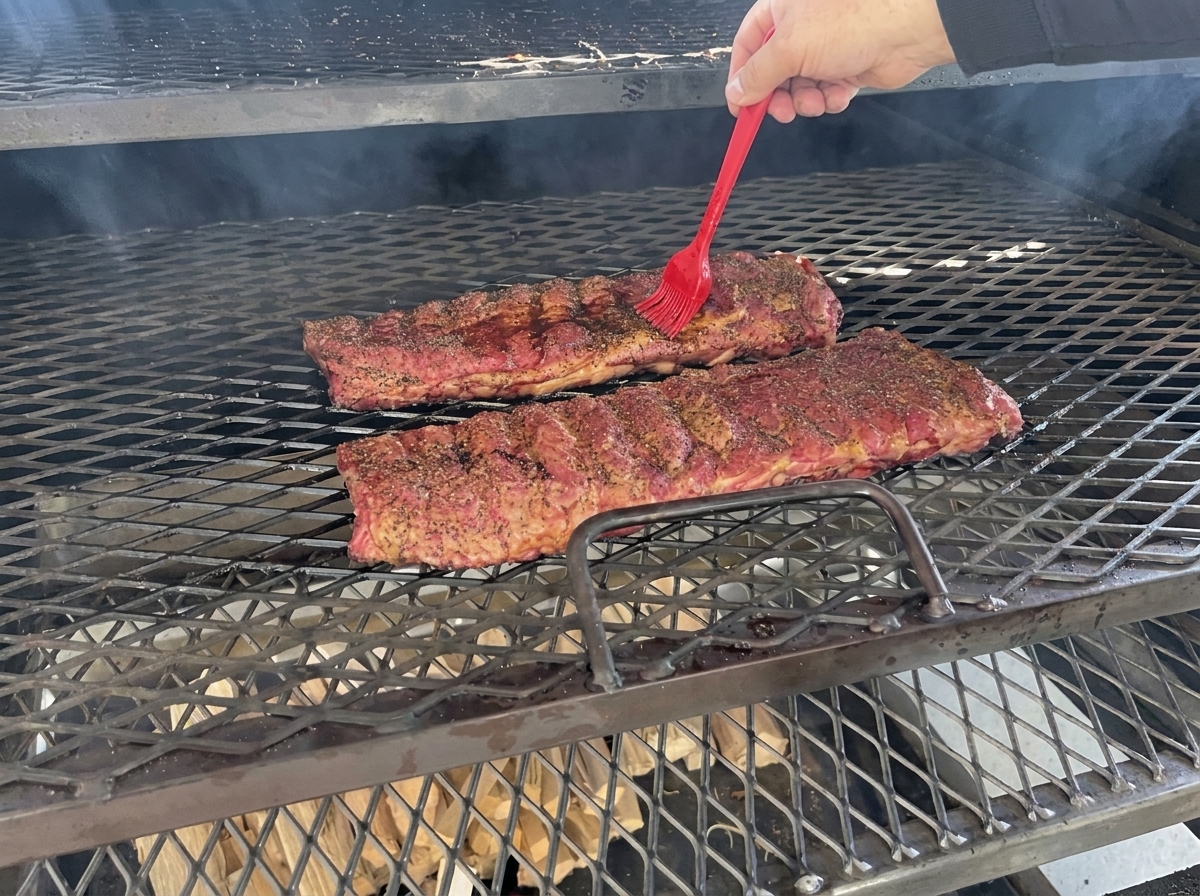
Open the smoker and use a silicone basting brush to apply a generous layer of the simmered mop sauce over the top of the seasoned ribs. Repeat this process every 30 minutes to keep the meat moist and build up a flavorful glaze.
Tip: Work quickly while brushing on the sauce to minimize the amount of heat and smoke that escapes from the smoker chamber. - 12Slice and serve the ribs
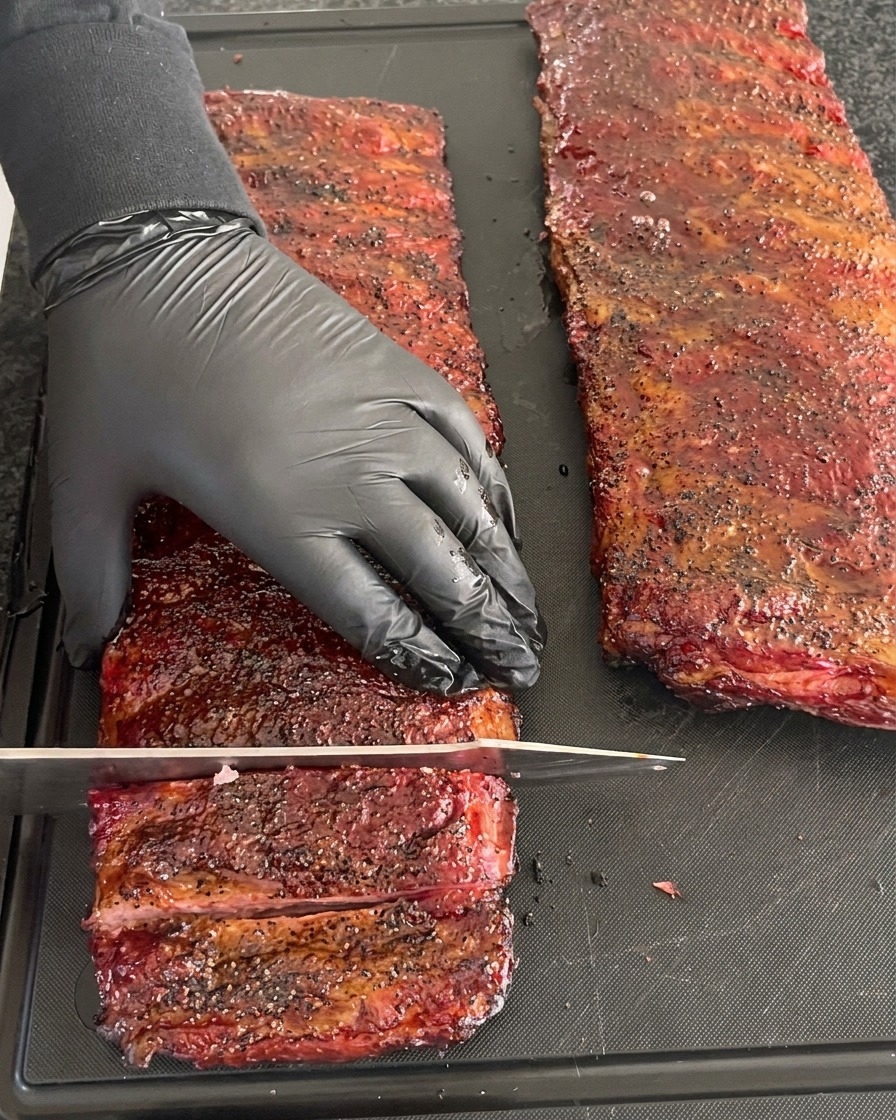
Transfer the fully cooked ribs to a clean black cutting board once they reach an internal temperature of 203°F. Using a sharp chefs knife, carefully slice downward between the bones of the deeply caramelized, glossy rack to separate them into individual portions.
Tip: Let the ribs rest for 10 to 15 minutes before carving to allow the juices to redistribute, keeping the meat incredibly moist.