Texas-style Smoked Beef Ribs (Dinosaur Ribs)
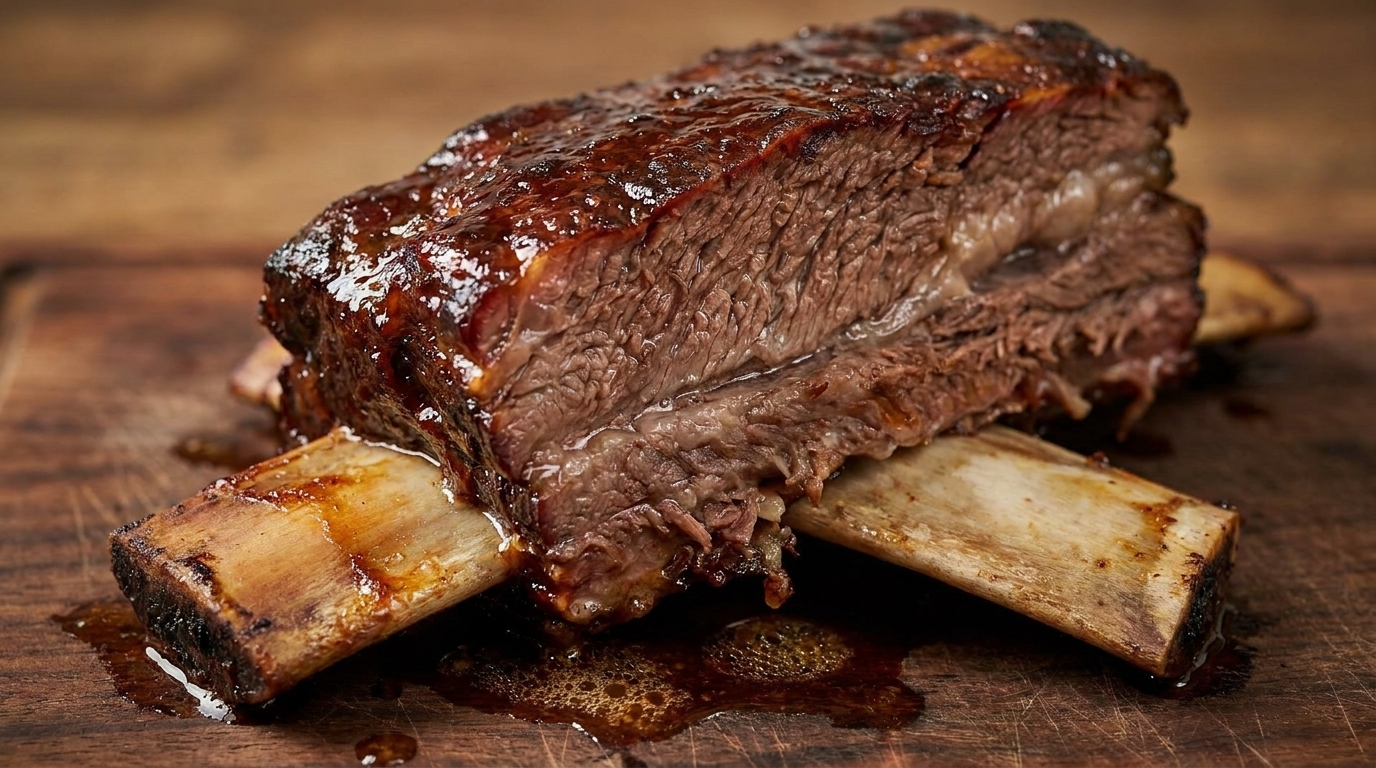
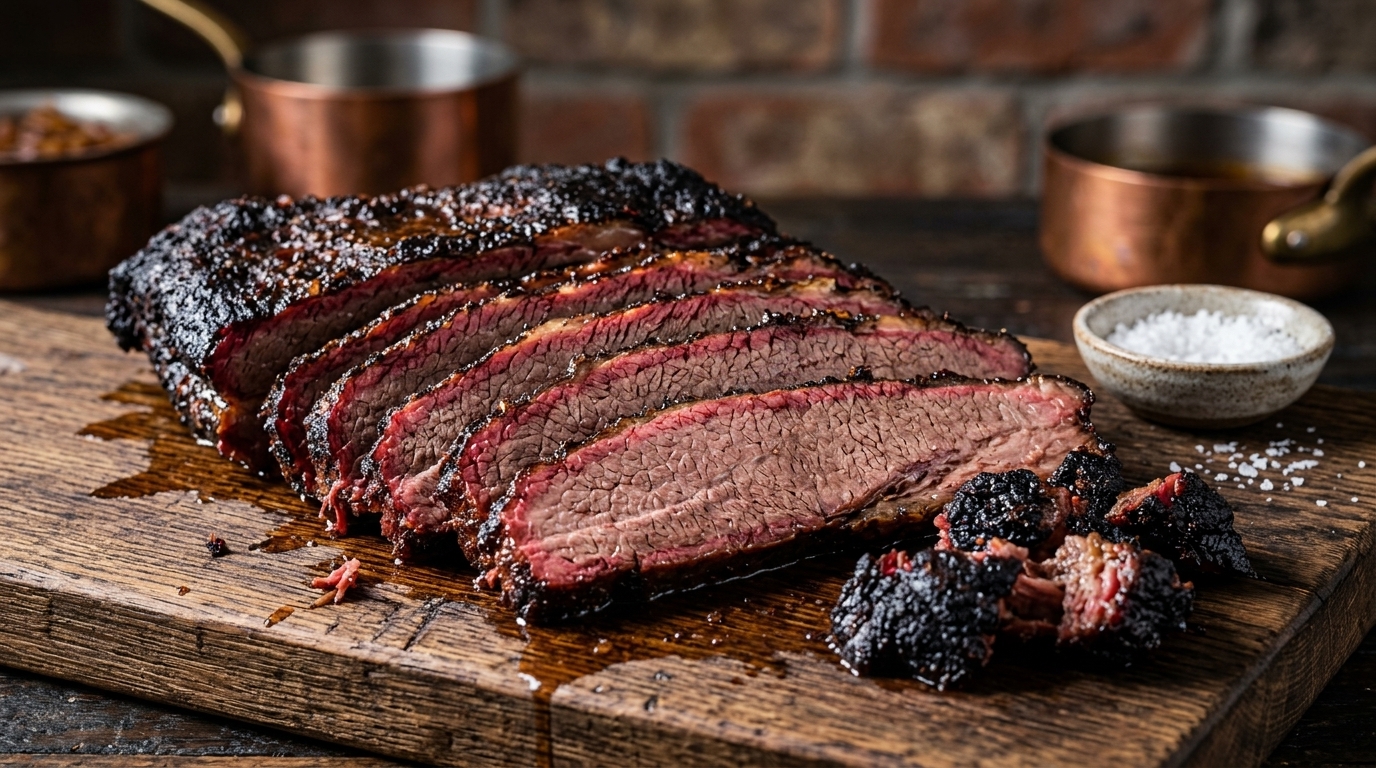
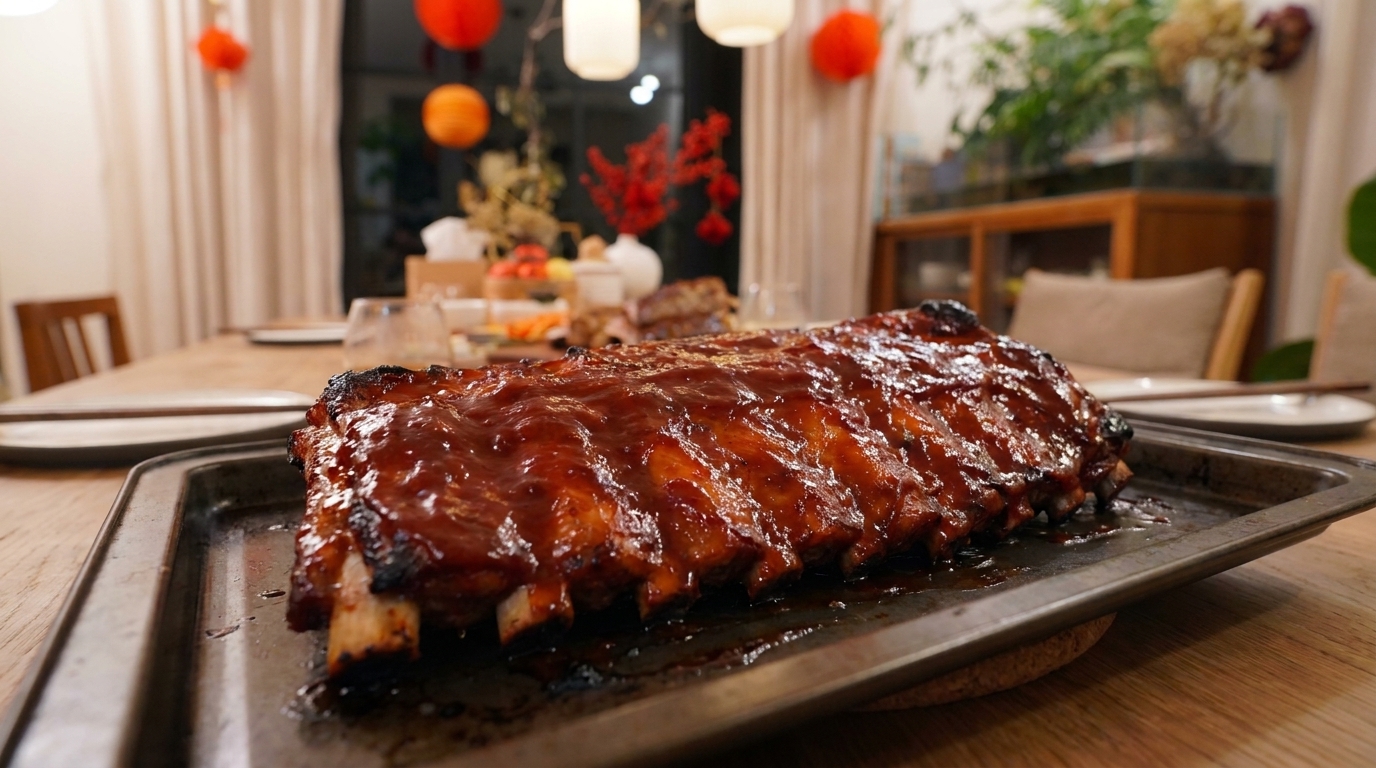
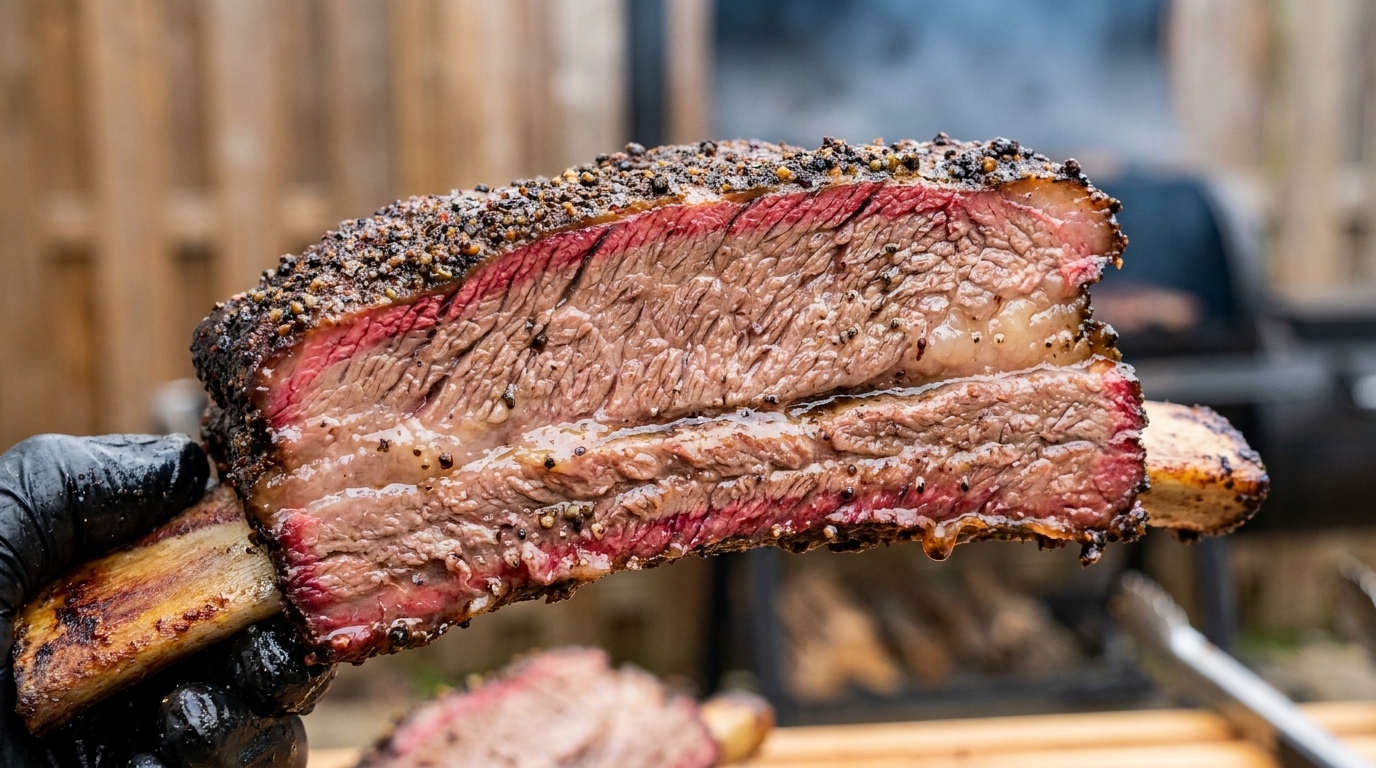
Master the art of Central Texas BBQ with these massive, tender Dinosaur Ribs, featuring a peppery bark and a deep smoke ring achieved through a patient 9 hour process.
Often referred to as Dinosaur Ribs due to their impressive size, smoked beef plate ribs are a cornerstone of Texas barbecue. This recipe relies on the simple holy trinity of low heat, fruit wood smoke, and a heavy coat of salt and pepper to transform tough muscle into succulent, melt-in-your-mouth beef.
Ingredients
- 1 rack beef plate ribs (3-bone rack)
- 2 tbsp yellow mustard
- 14 cup kosher salt
- 14 cup coarse black pepper (16-mesh)
- as needed litchi or other fruit wood
Instructions
- 1Trim the rib rack
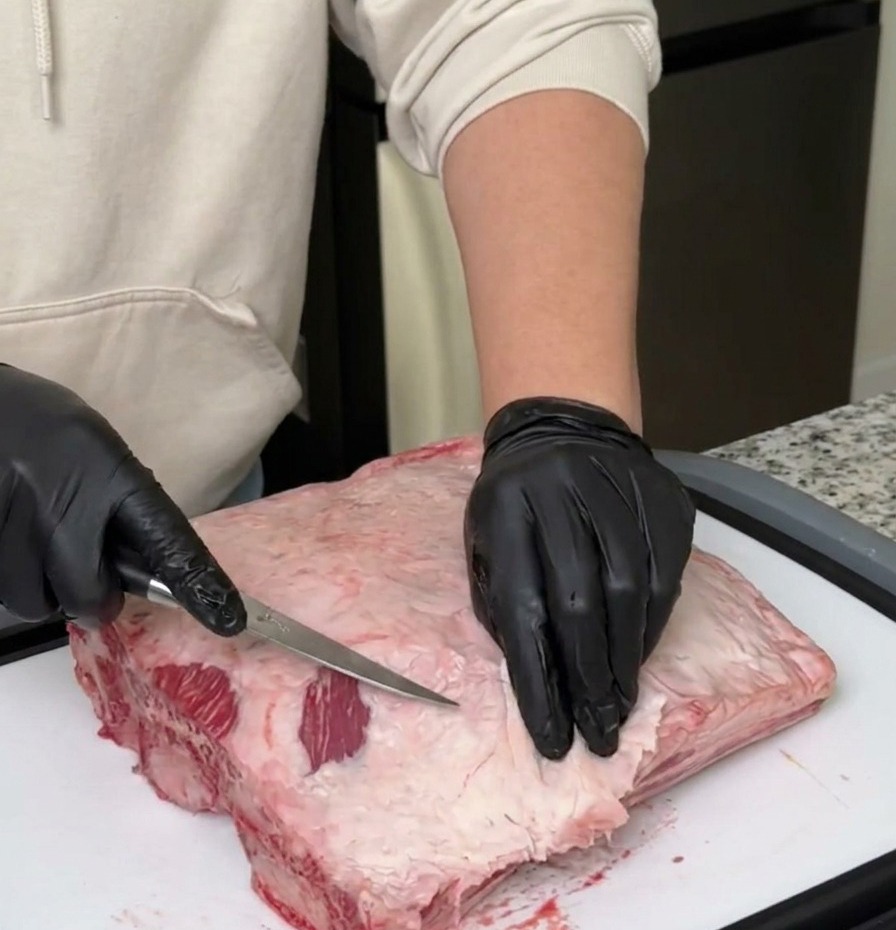
Begin by prepping the large raw beef rib rack. Use a sharp boning knife to carefully trim away excess surface fat and the tough silver skin membrane. Removing the membrane is essential for ensuring that the smoke and seasoning can penetrate deep into the meat fibers.
Tip: To remove the membrane easily, slide the knife under one corner to loosen it, then use a paper towel to get a firm grip and pull it off in one piece. - 2Apply the mustard binder
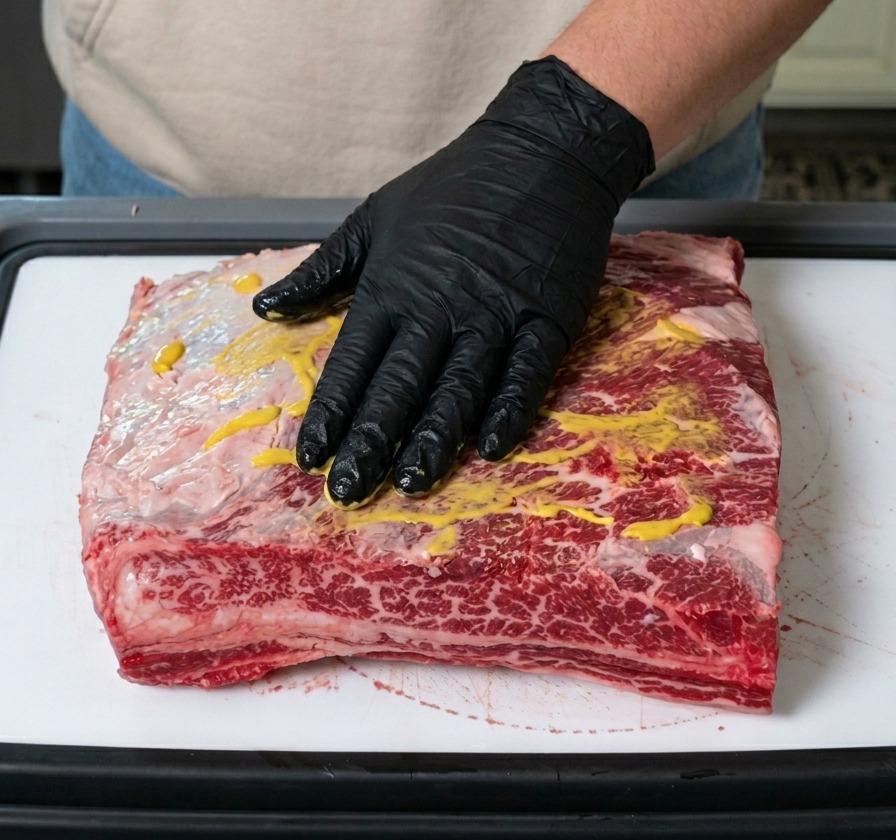
Apply an even layer of yellow mustard across the entire surface of the trimmed ribs. This acts as a binder which helps the dry seasoning stick to the meat during the long smoking process. Do not worry about the taste; the mustard flavor will dissipate as the meat cooks.
Tip: You only need a thin coating—just enough to make the surface of the meat tacky. - 3Season the meat
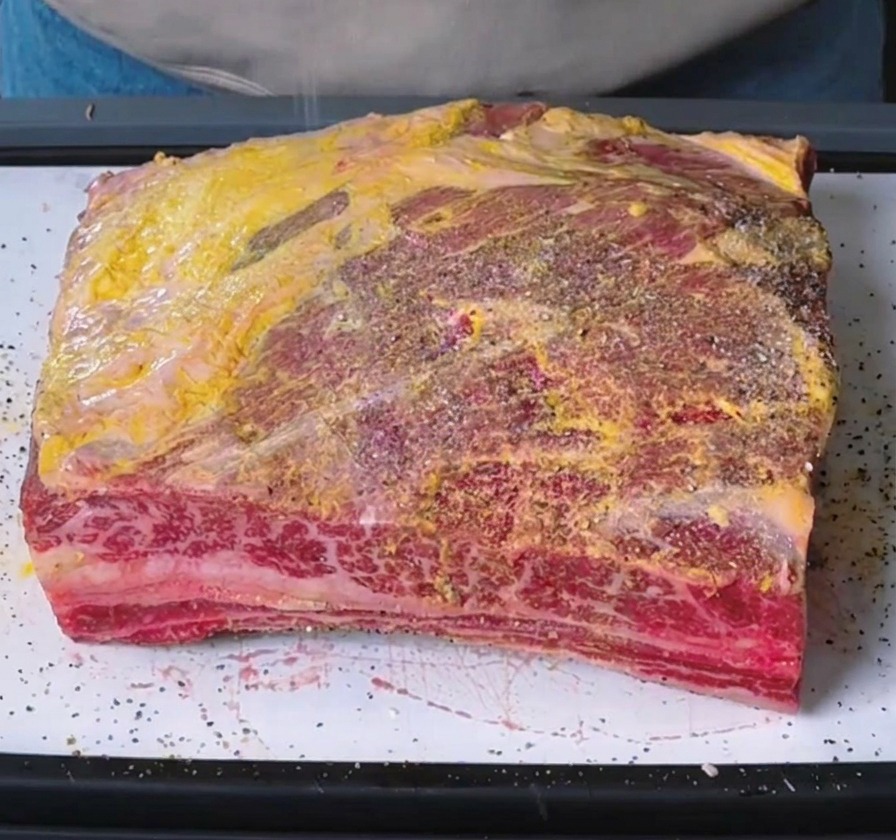
Generously season the mustard-coated ribs with a mixture of salt and coarse black pepper. Cover all sides, including the edges. Once seasoned, gently pat the spices into the meat to ensure they are well-adhered rather than rubbing them, which can smear the binder.
Tip: For an authentic Texas BBQ bark, use a 5050 mix of kosher salt and 16-mesh coarse ground black pepper. - 4Load the smoker
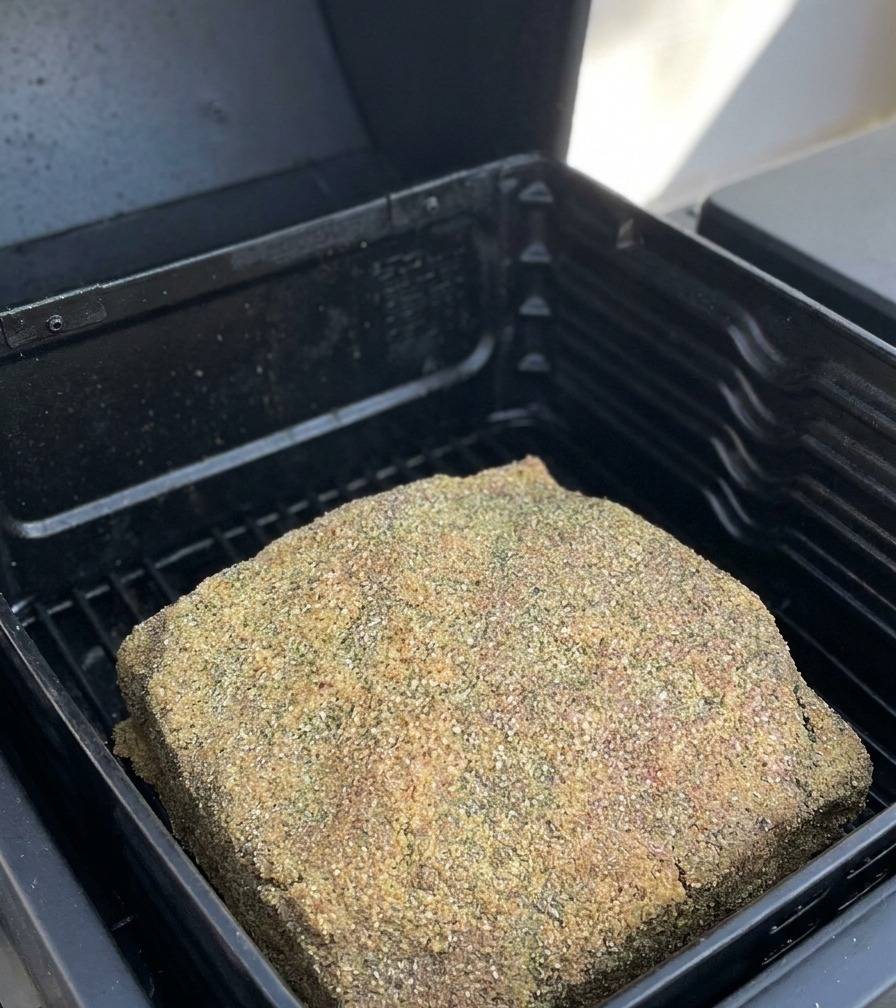
Place the seasoned beef ribs onto the metal grates of your preheated smoker. Ensure the smoker is stable at 135 degrees Celsius or 275 degrees Fahrenheit using fruit wood such as litchi wood to provide a clean sweet smoke. Close the lid to begin the long slow smoking process which will take approximately 5 hours.
Tip: Position the ribs with the thickest part towards the heat source for even cooking and ensure there is enough airflow around the meat. - 5Develop the bark
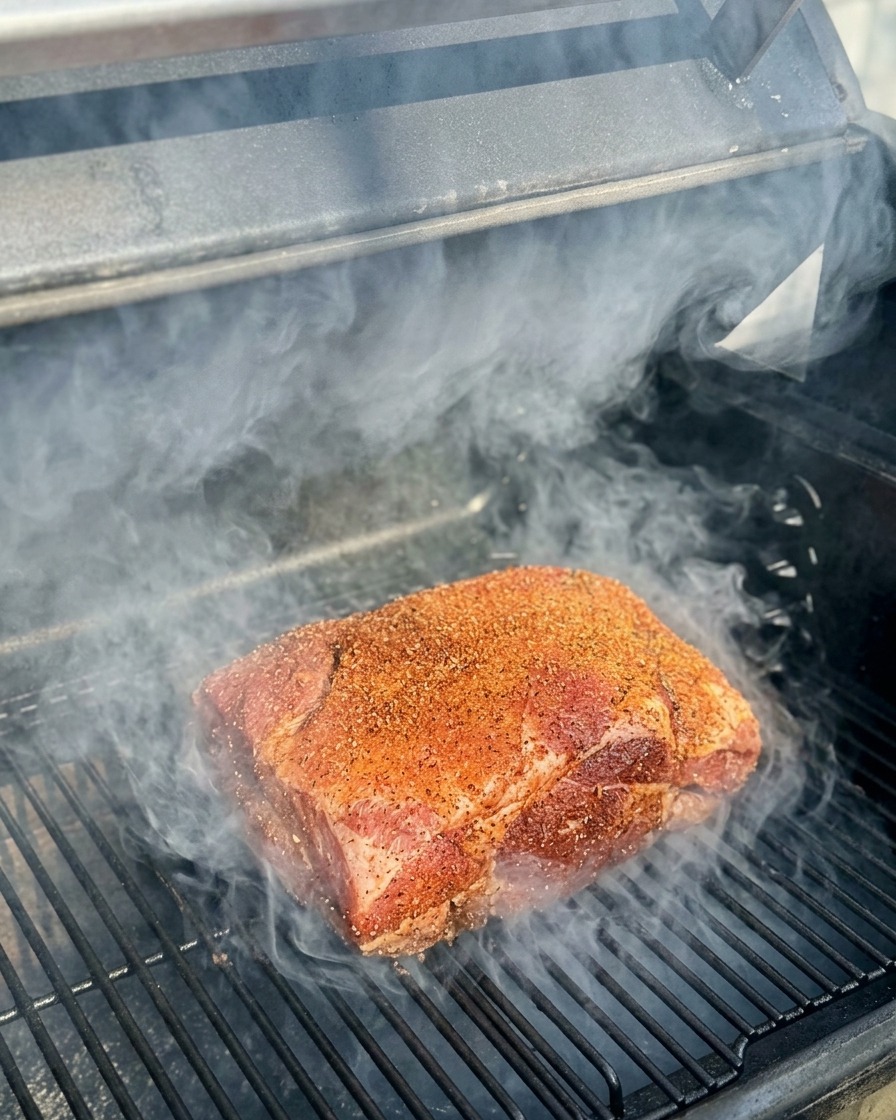
Smoke the meat using litchi wood or another fruit wood for approximately 5 hours. During this stage, the exterior of the ribs will begin to develop a dark crusty bark. Monitor the internal temperature of the meat until it reaches roughly 75 degrees Celsius or 167 degrees Fahrenheit.
Tip: Keep the smoker lid closed as much as possible. Every time you open it, you lose heat and consistent smoke flow. - 6Wrap in butcher paper
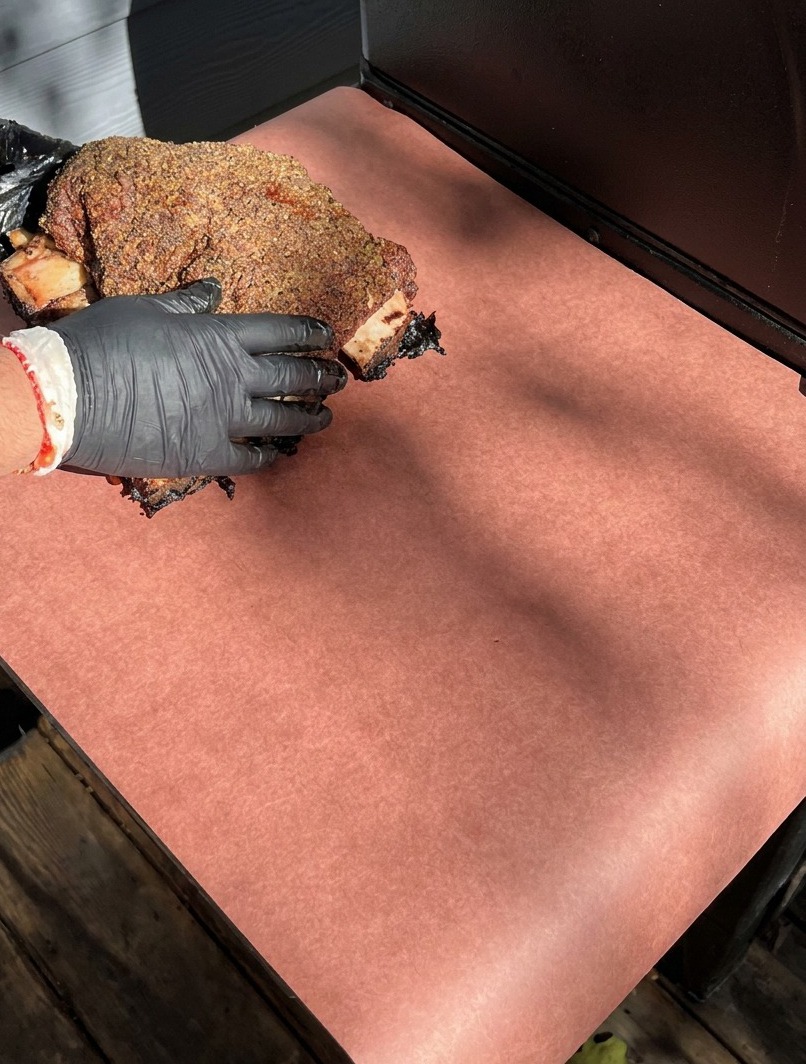
Once the ribs have developed a deep bark and hit the target internal temperature, remove them and wrap them tightly in pink butcher paper. This technique, known as the Texas Crutch, helps the meat retain moisture and tenderize while still allowing the bark to remain firm.
Tip: Avoid using aluminum foil if you want a crunchy bark; foil traps too much steam and can make the exterior soggy. - 7Final braise and rest
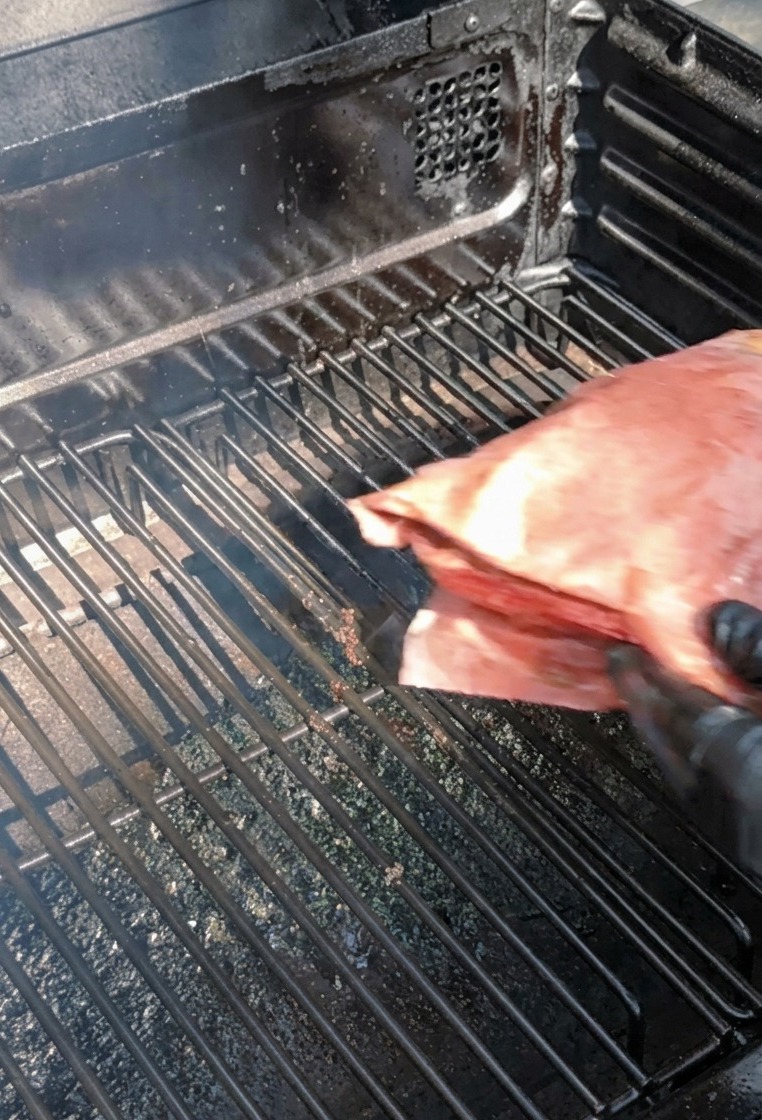
Return the wrapped ribs to the smoker and continue cooking for another 3 hours until the internal temperature reaches 95°C (203°F). Once reached, remove the ribs from the heat and let them rest inside the butcher paper for at least one hour before slicing.
Tip: Wrap the meat as tightly as possible to avoid air pockets, which can cause the meat to steam rather than braise.