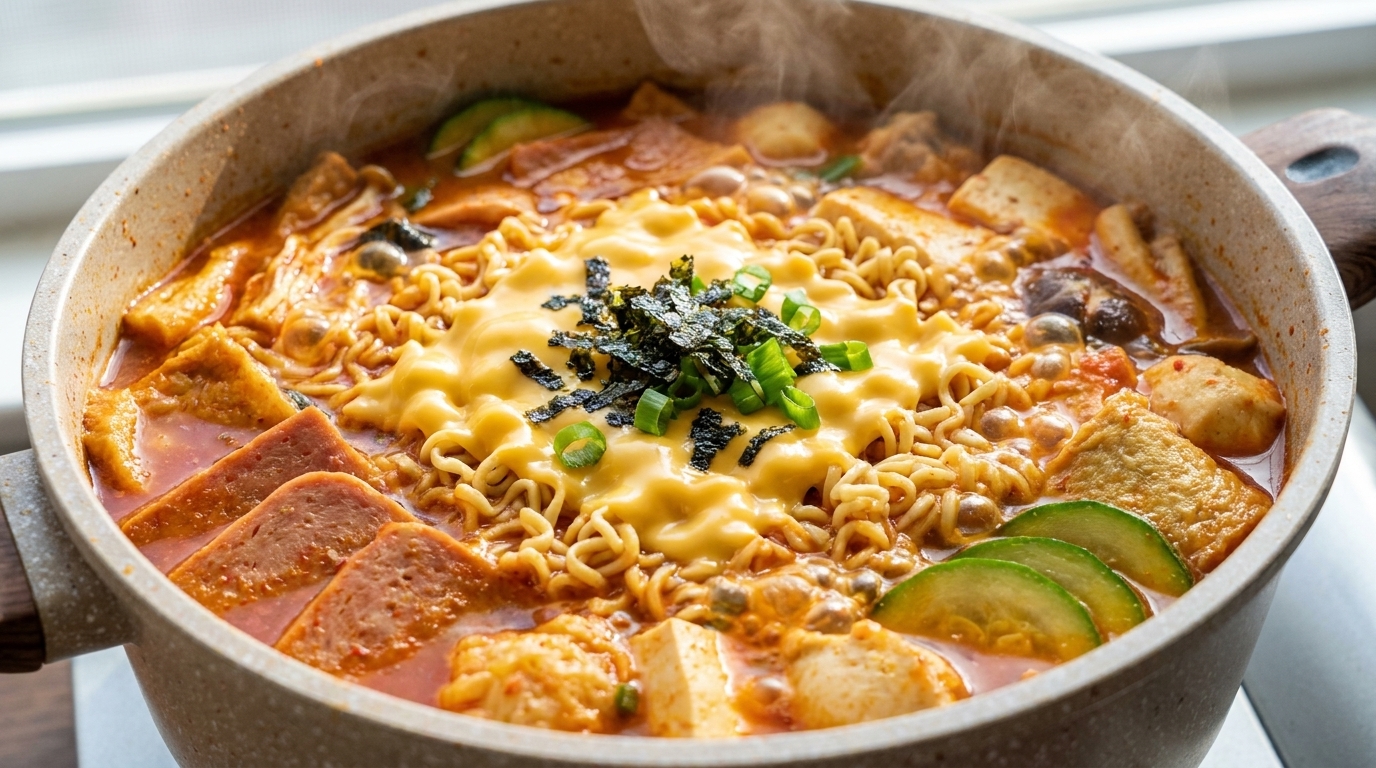
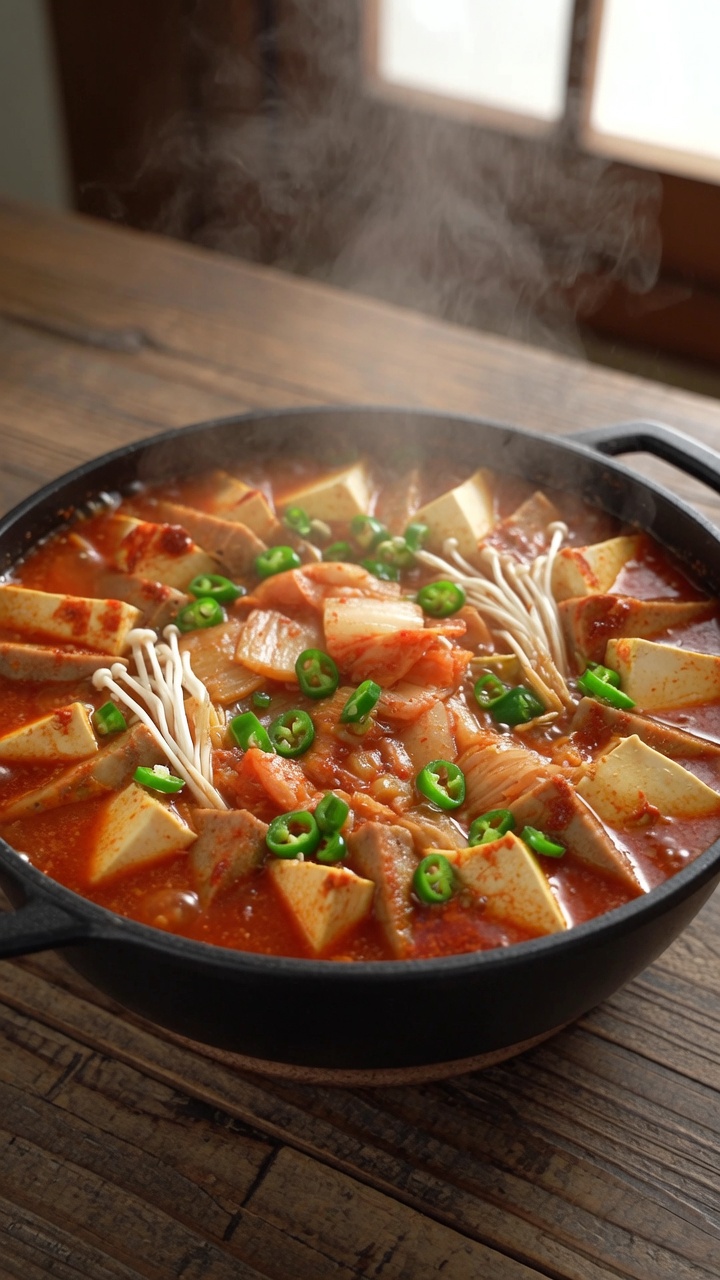
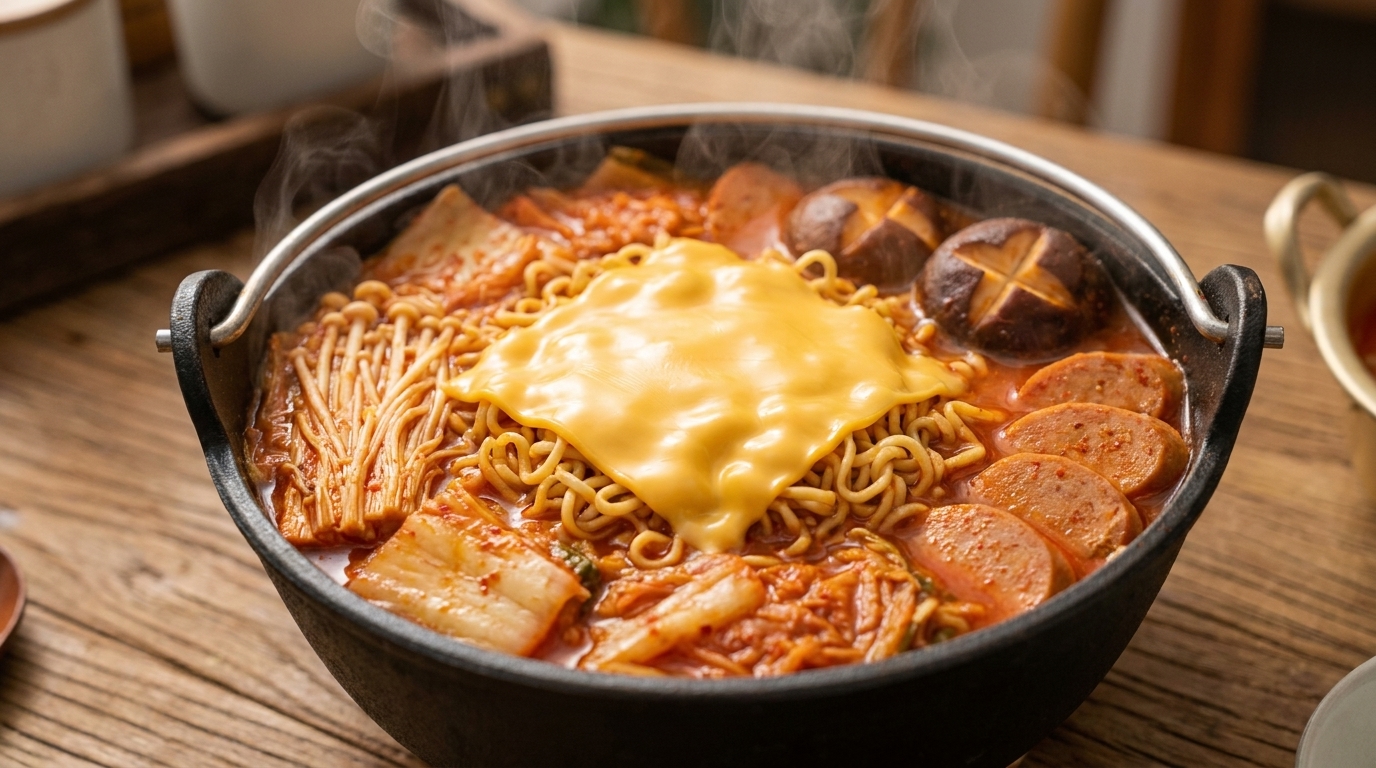
Classic Korean Army Stew (Budae Jjigae)
A soul-warming, spicy Korean fusion stew featuring ramen, savory sausages, tofu, and kimchi. This iconic comfort food is perfect for chilly evenings at home.
Budae Jjigae, or Korean army stew, is a beloved example of culinary creativity born from necessity. Originating after the Korean War, this hearty dish combines traditional Korean ingredients like kimchi and gochujang with accessible staples like luncheon meat and sausages. It is a communal, comforting meal that brings people together, especially when enjoyed while watching a classic Korean drama.

Ingredients
- 150 g ramen noodles
- 100 g luncheon meat
- 100 g sausages
- 100 g firm tofu
- 50 g imitation crab sticks
- 100 g kimchi
- 50 g onion
- 50 g cabbage
- 1 lotus root
- 1 potato
- 50 g enoki mushrooms
- 50 g white beech mushrooms
- 50 g shiitake mushrooms
- 1 egg
- 1 slice processed cheese
- 2 tbsp gochujang
- 1 tbsp soy sauce
- 1 tbsp oyster sauce
- 1 tsp white sugar
- 1 packet instant noodle seasoning
Instructions
- 1Prepare the lotus root
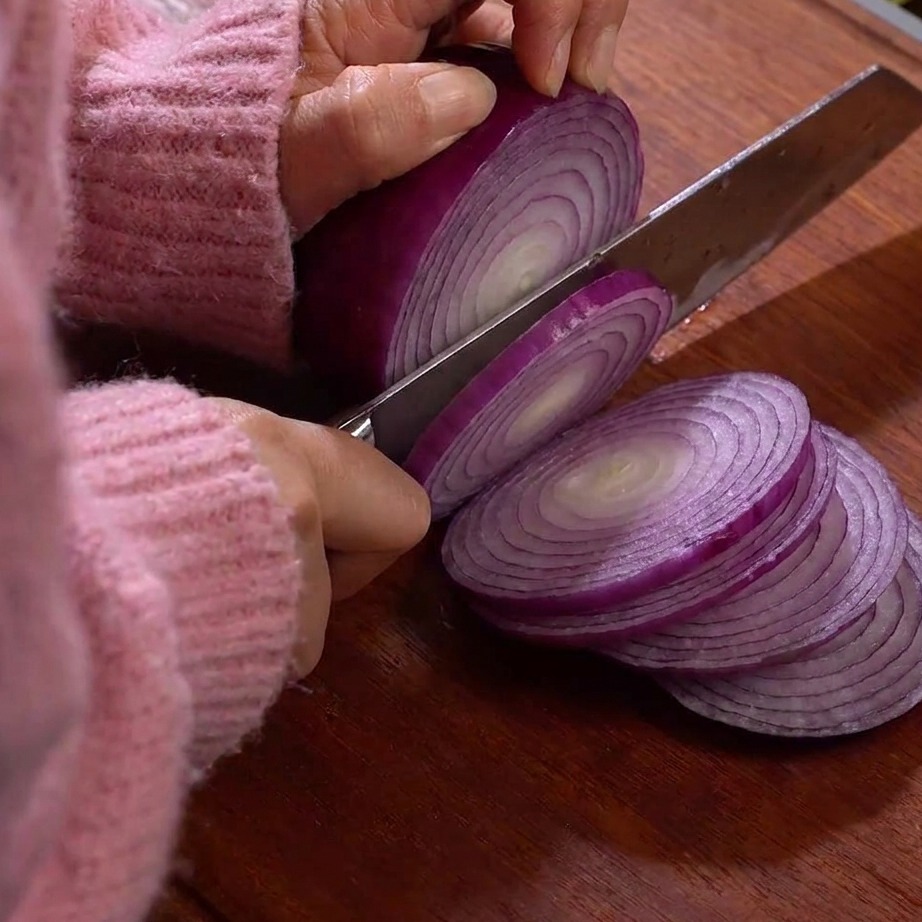
Peel the lotus root, then use a sharp knife to slice it into thin, uniform pieces. Place the slices on a cutting board, ready to be added as a base for your army stew.
Tip: Keep the lotus root slices in a bowl of water with a little vinegar to prevent browning before cooking. - 2Trim the enoki mushrooms
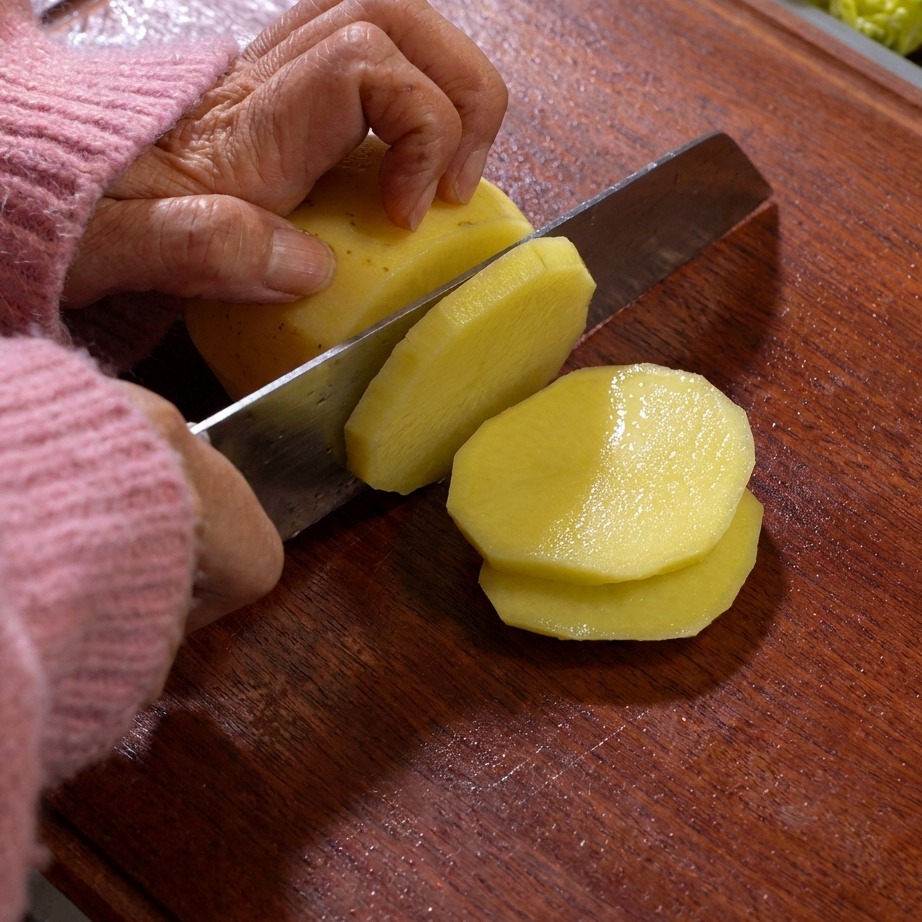
Take the bundle of enoki mushrooms and trim off the tough, root-like base with a kitchen knife. Separate the mushrooms slightly so they can cook evenly in the broth.
Tip: Do not wash the mushrooms until you are ready to cook, as they absorb water easily. - 3Build the vegetable base
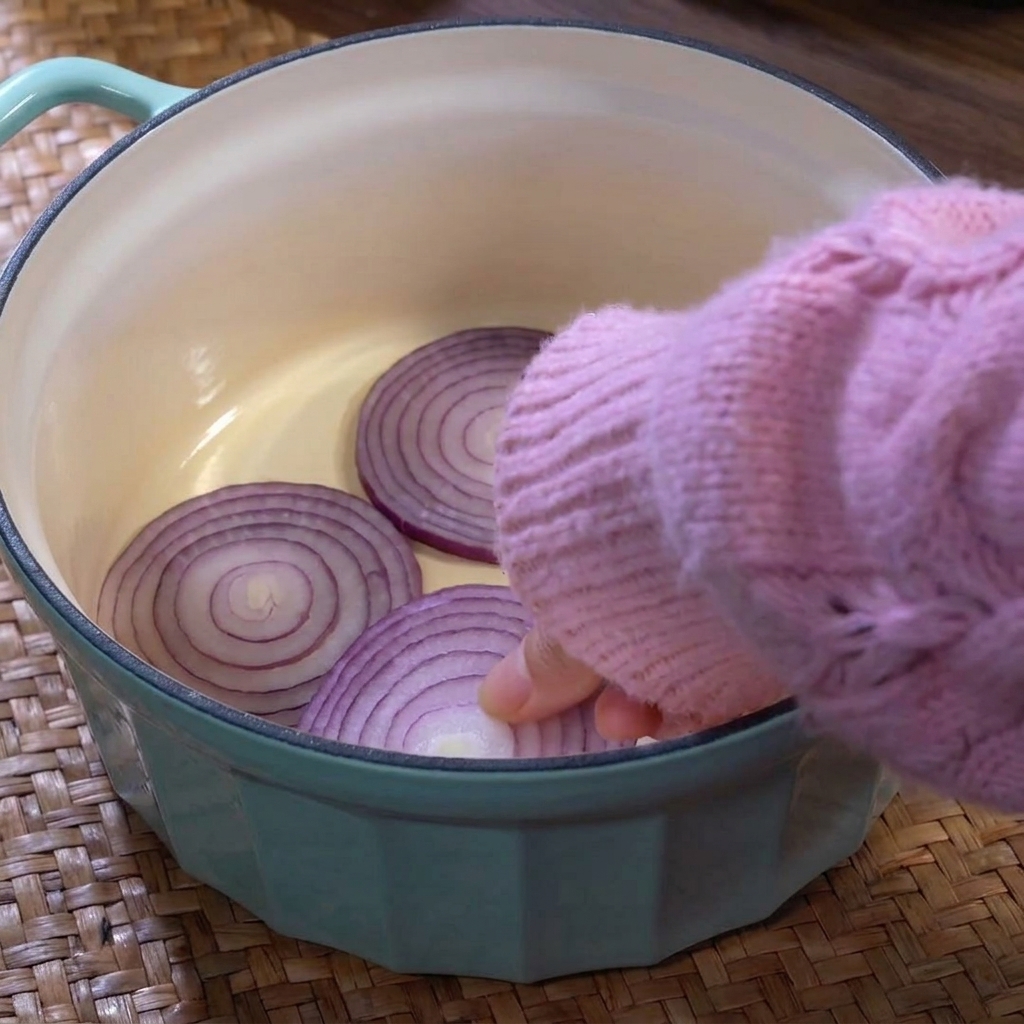
Arrange a layer of sliced onions, cabbage, and the prepared lotus root at the bottom of your light blue pot. This foundation provides natural sweetness to the stew.
Tip: Cabbage softens quickly, so layering it at the bottom helps it absorb the savory broth flavors. - 4Add the mushrooms and potatoes
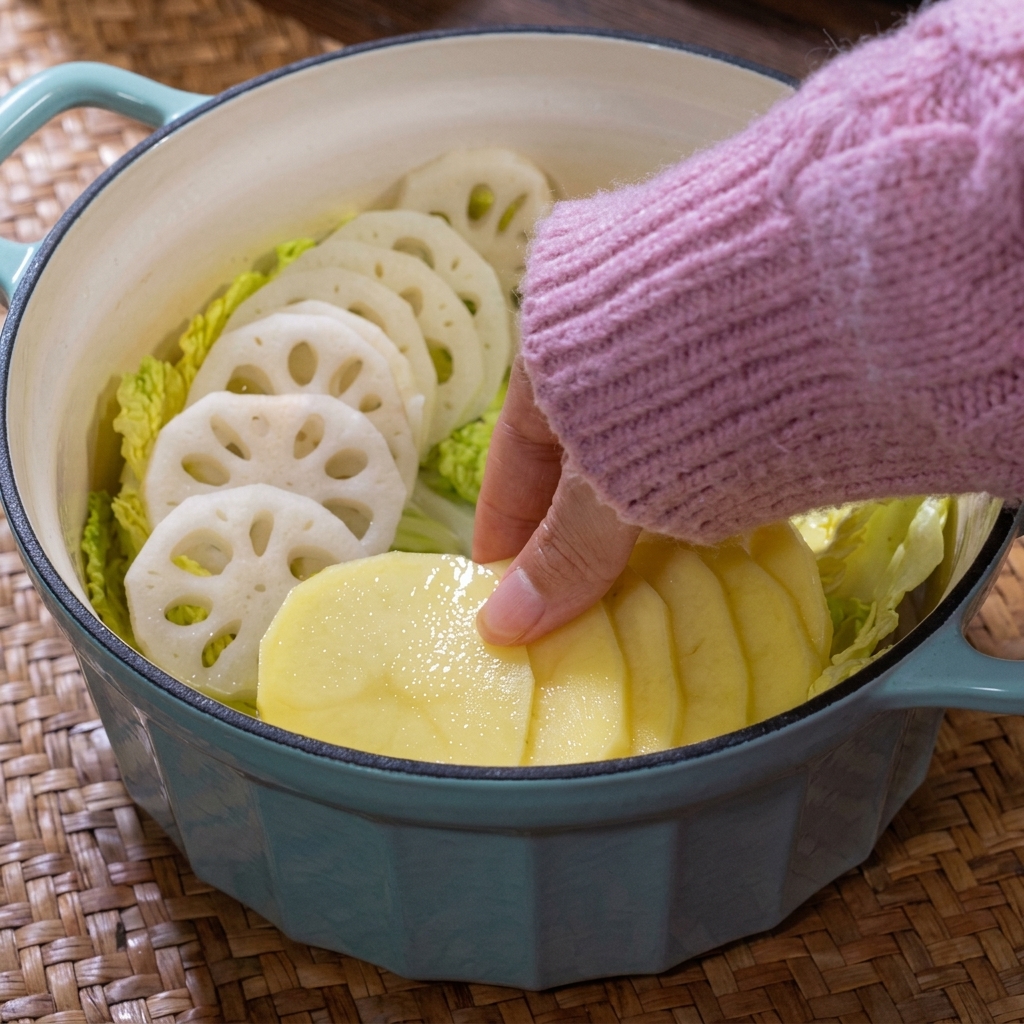
Continue layering by arranging sliced potatoes, enoki mushrooms, white beech mushrooms, and shiitake mushrooms on top of the initial vegetable layer in the pot.
Tip: Cut potatoes into even thicknesses so they cook through at the same rate as the mushrooms. - 5Add protein ingredients
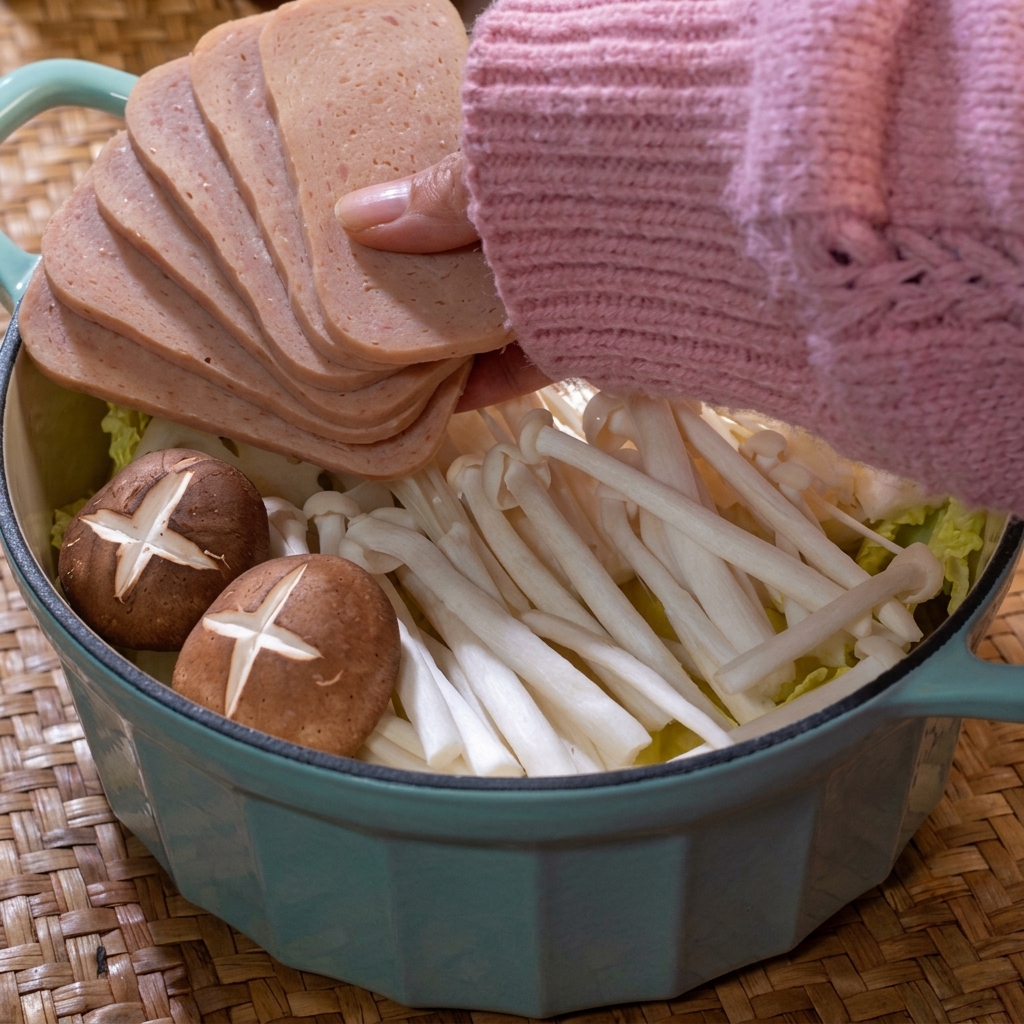
Place slices of luncheon meat, firm tofu blocks, crab sticks, and sliced sausages into the pot alongside the vegetables and mushrooms. These ingredients are classic staples for a hearty army stew.
Tip: Slice the luncheon meat into uniform rectangles for a neat and professional appearance. - 6Incorporate the kimchi
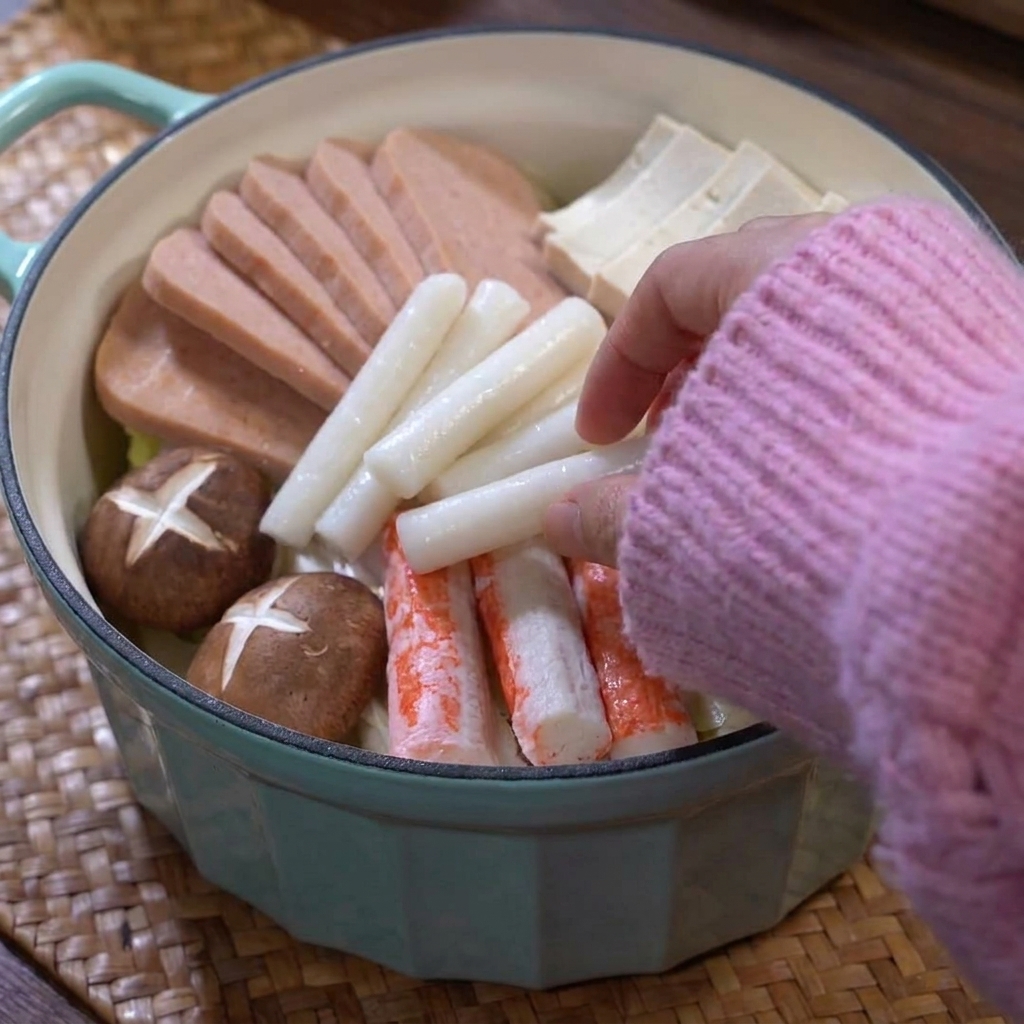
Use chopsticks to add a generous portion of kimchi into the center of the pot. The fermented spice from the kimchi is essential for the authentic flavor of the stew.
Tip: Choose well-fermented, aged kimchi for a deeper, more pungent flavor in your broth. - 7Prepare the sauce mixture

In a small bowl, combine the Korean chili paste (gochujang), instant noodle seasoning packet, white sugar, soy sauce, and oyster sauce. Mix these ingredients thoroughly until you achieve a smooth, consistent red sauce that will form the flavor base of your army stew.
Tip: Adjust the amount of chili paste based on your spice tolerance. - 8Add sauce to the pot

Once your sauce is well-mixed, pour it directly over the layered ingredients in your pot. Ensure the sauce is distributed over the various meats, rice cakes, and vegetables so the flavors can permeate the entire dish as it heats up.
Tip: Drizzle the sauce slowly to ensure even coverage across all ingredients. - 9Add water and simmer
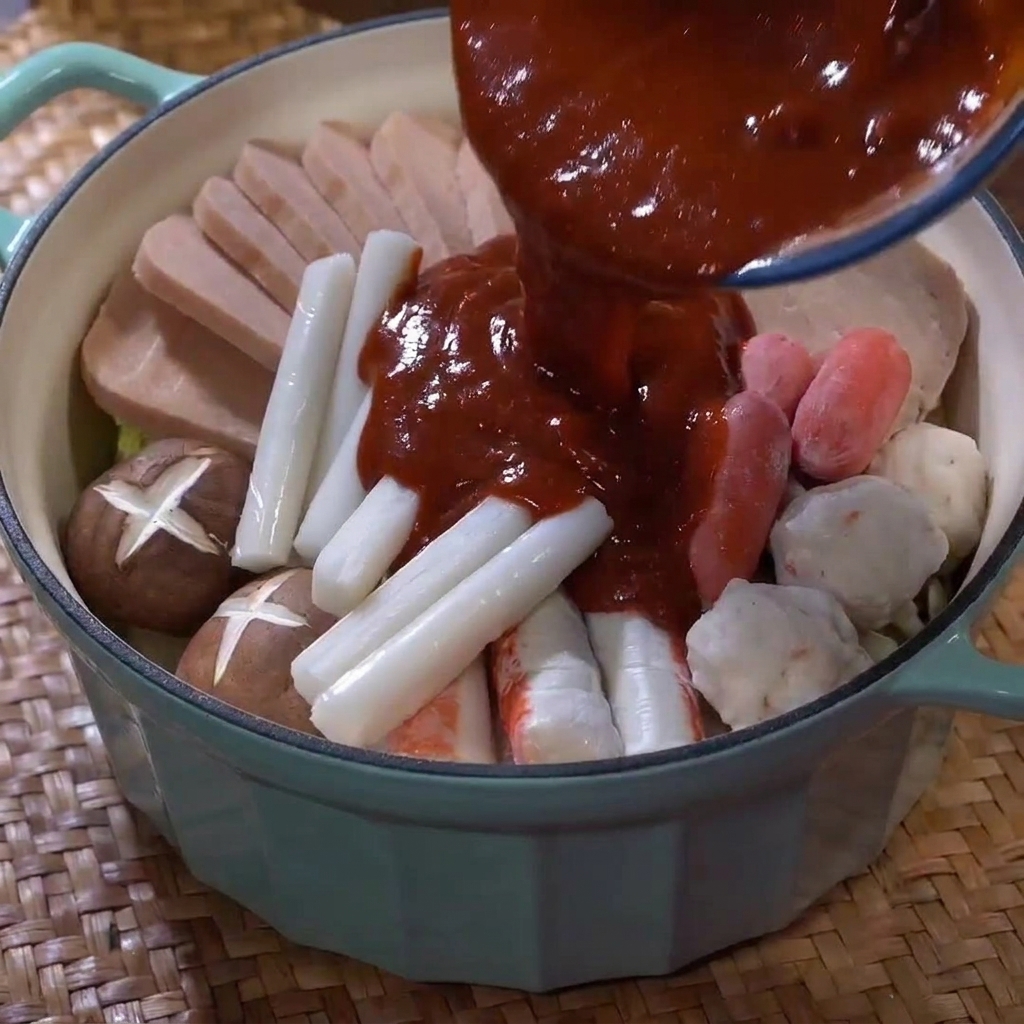
Pour fresh water into the pot until it reaches a level that covers the ingredients. Place the lid on the pot and allow the broth to come to a boil, which will cook the ingredients and create a rich, flavorful stew base.
Tip: Dont overfill the pot; just enough water to submerge the ingredients is ideal for a flavorful broth. - 10Add ramen noodles
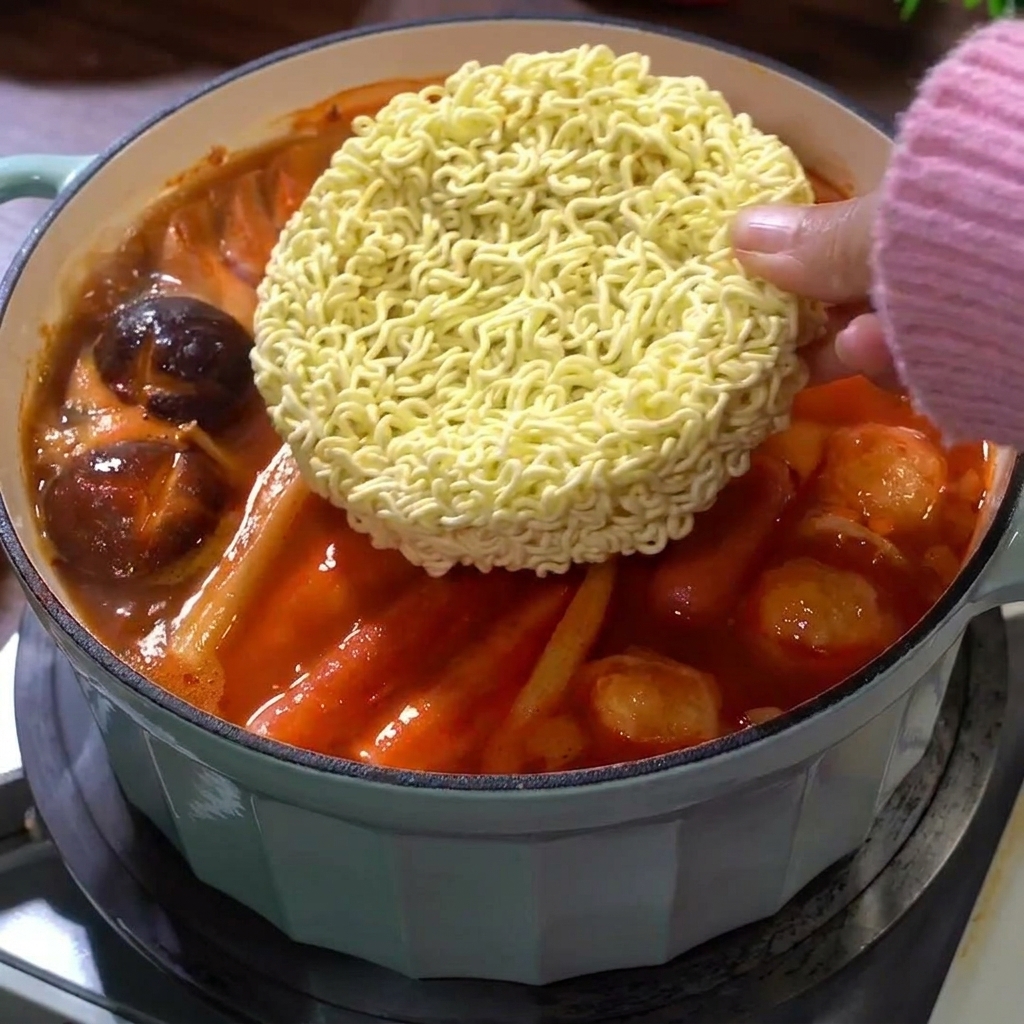
Once the broth is boiling, carefully place a block of instant ramen noodles into the center of the pot. Press the noodles down slightly so they are submerged in the hot, seasoned broth, allowing them to soften and absorb the flavors.
Tip: Keep the noodles in a solid block initially so they cook evenly throughout. - 11Add the egg
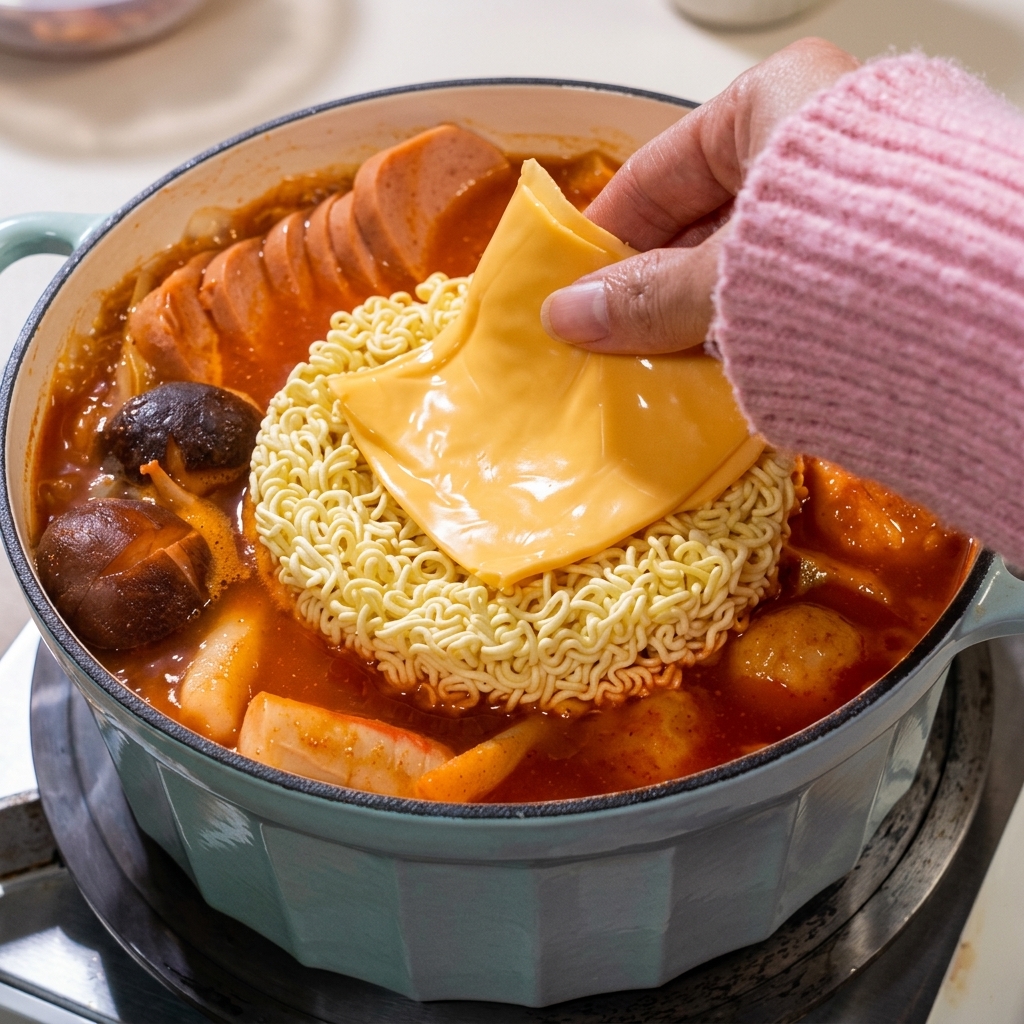
Gently crack an egg directly onto the center of the ramen noodles. Let it poach in the bubbling broth until the white is set but the yolk remains slightly runny, adding a rich, creamy element to the finished stew.
Tip: Use a fresh egg for the best texture when poaching in the stew.