Classic Korean Army Stew (Budae Jjigae)
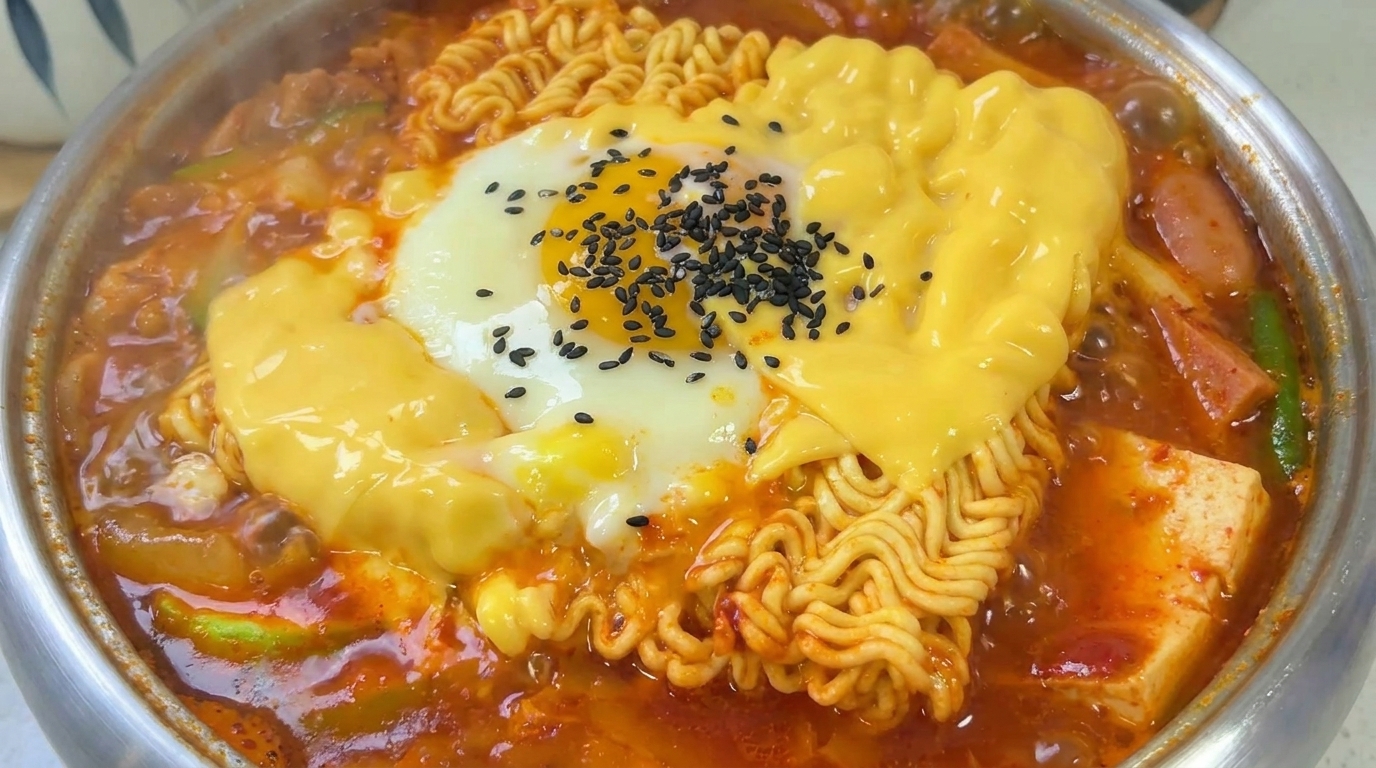
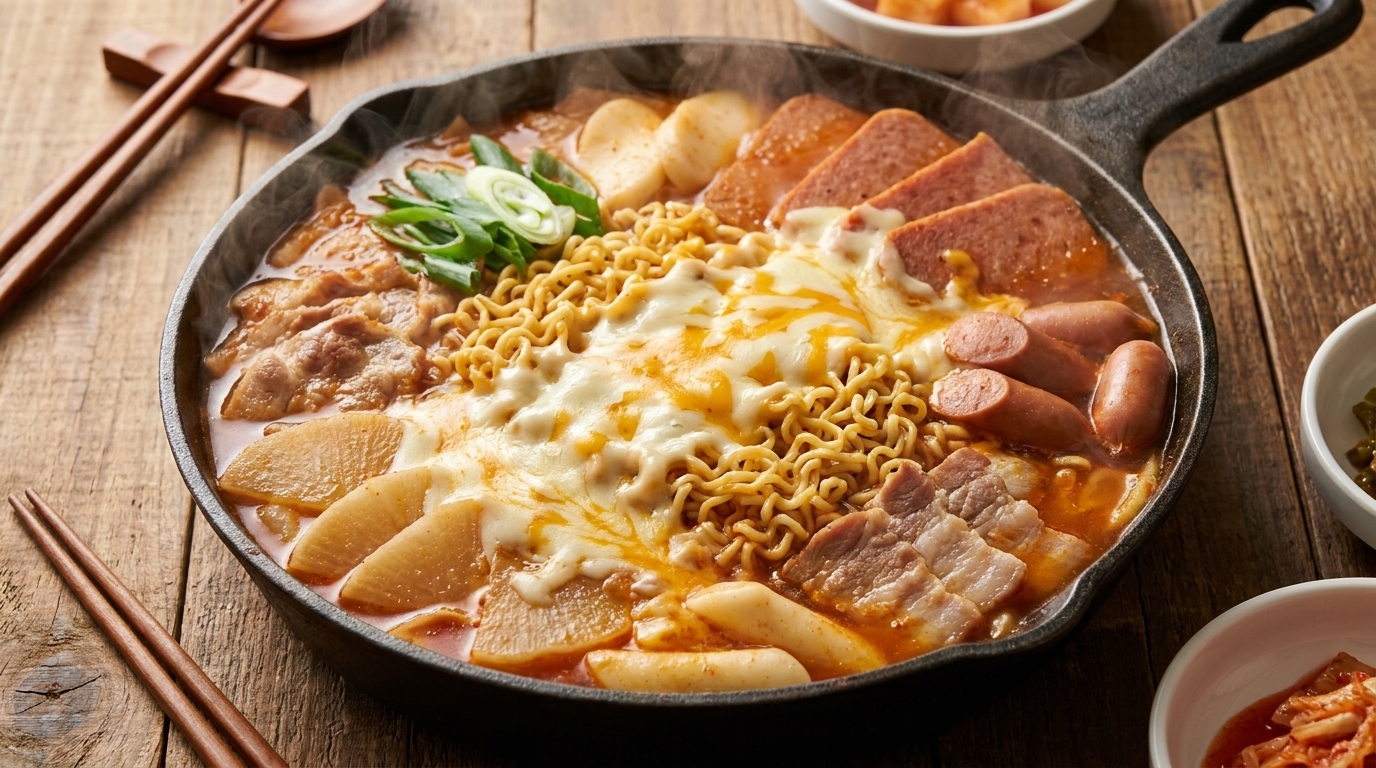
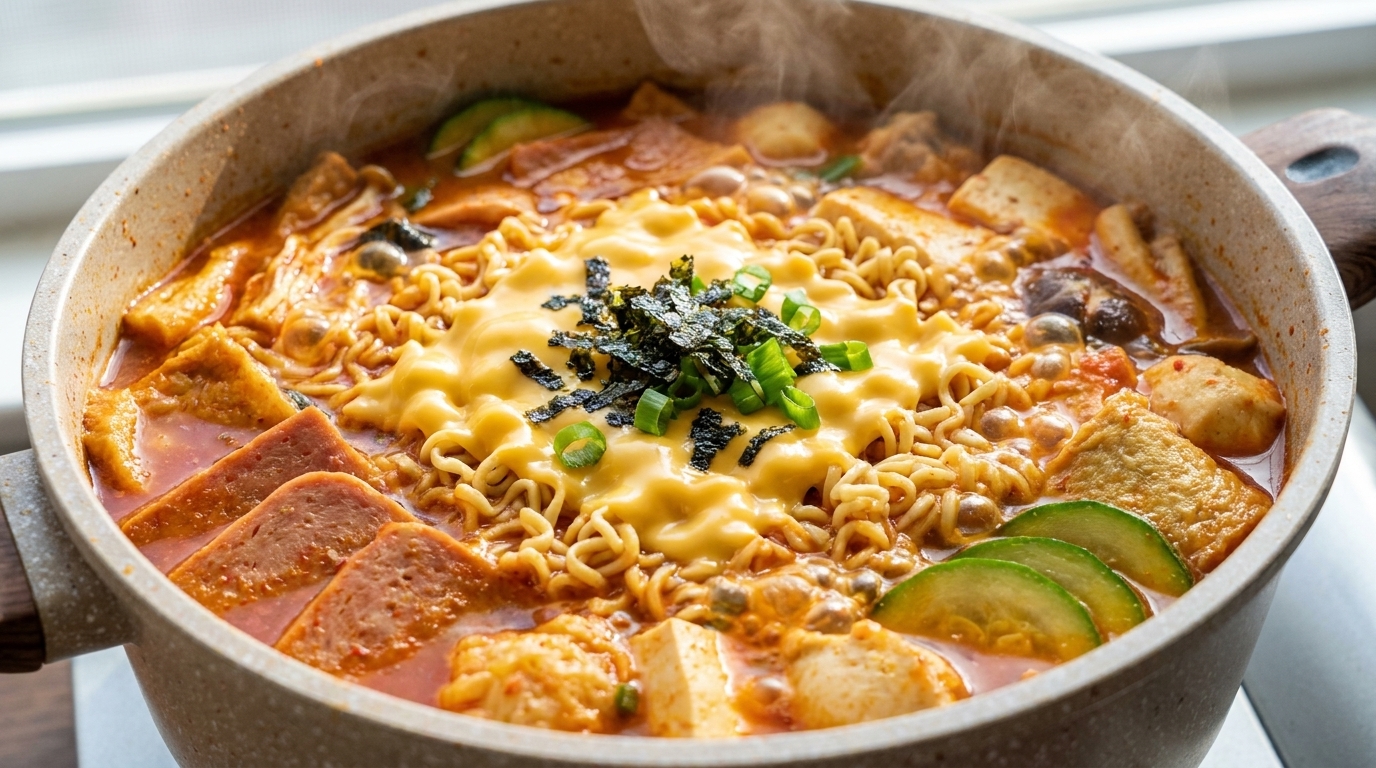
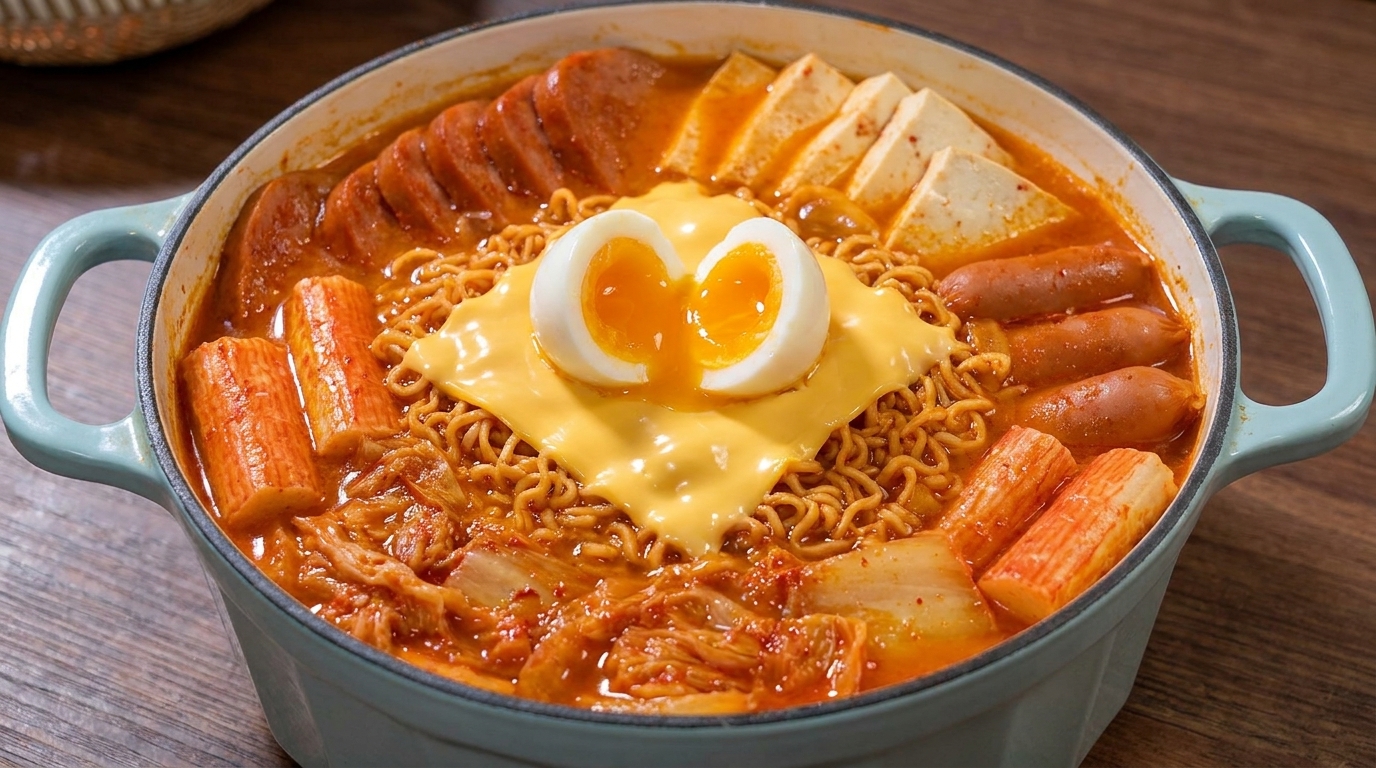
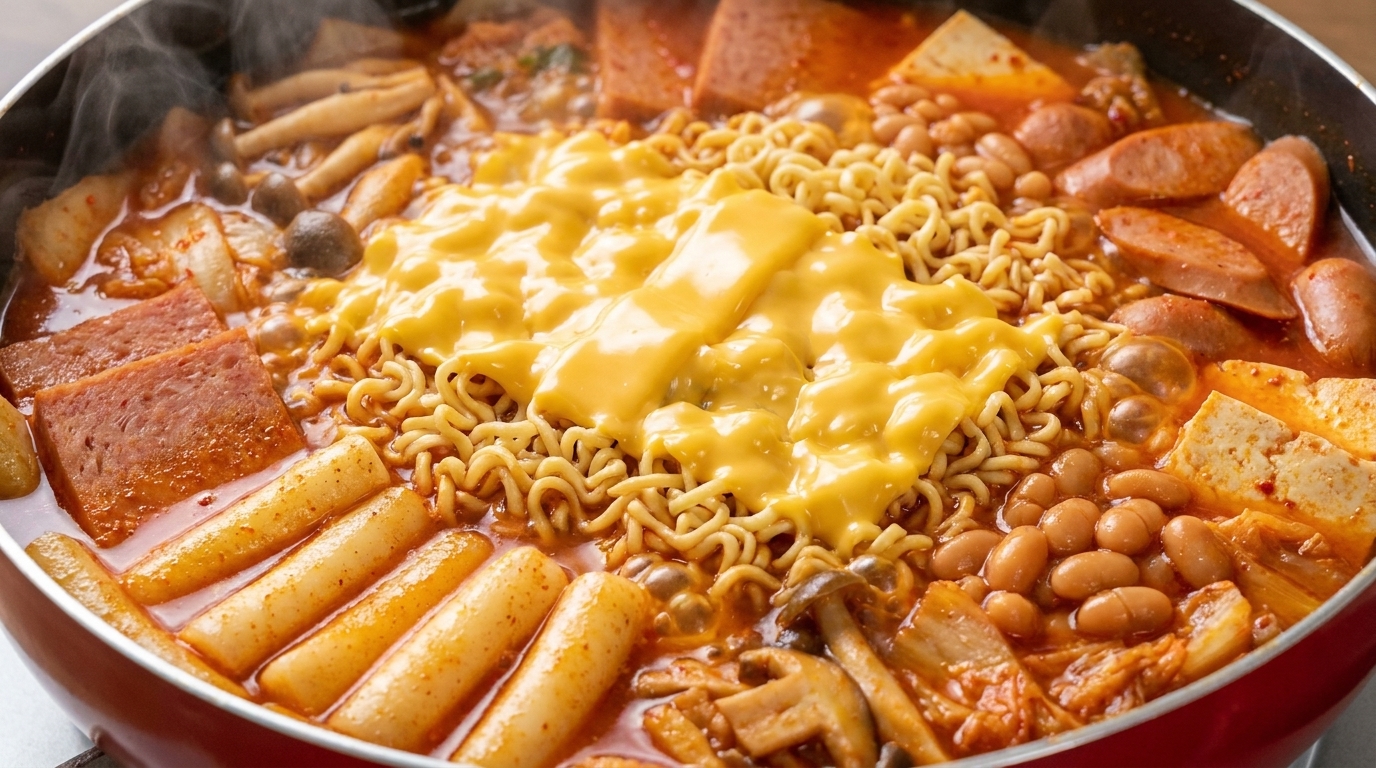
A beloved fusion comfort food, this hearty stew combines savory luncheon meat, snappy sausages, and chewy noodles in a bold, spicy, and tangy kimchi-based broth.
Budae Jjigae, or army stew, is a fascinating piece of Korean culinary history born out of scarcity following the war. By combining readily available surplus items like canned luncheon meat and baked beans with traditional Korean staples like kimchi and gochujang, it evolved into a deeply satisfying, communal meal that is now a staple of Korean comfort food culture.
Ingredients
- 200 g luncheon meat, sliced
- 100 g sausages, sliced
- 150 g kimchi, chopped
- 1 pack instant noodles
- 2 slices yellow cheese
- 100 g Napa cabbage, torn
- 50 g enoki mushrooms
- 50 g fish cakes, sliced
- 4 sticks crab sticks
- 1 cup carbonated beverage (lemon-lime soda)
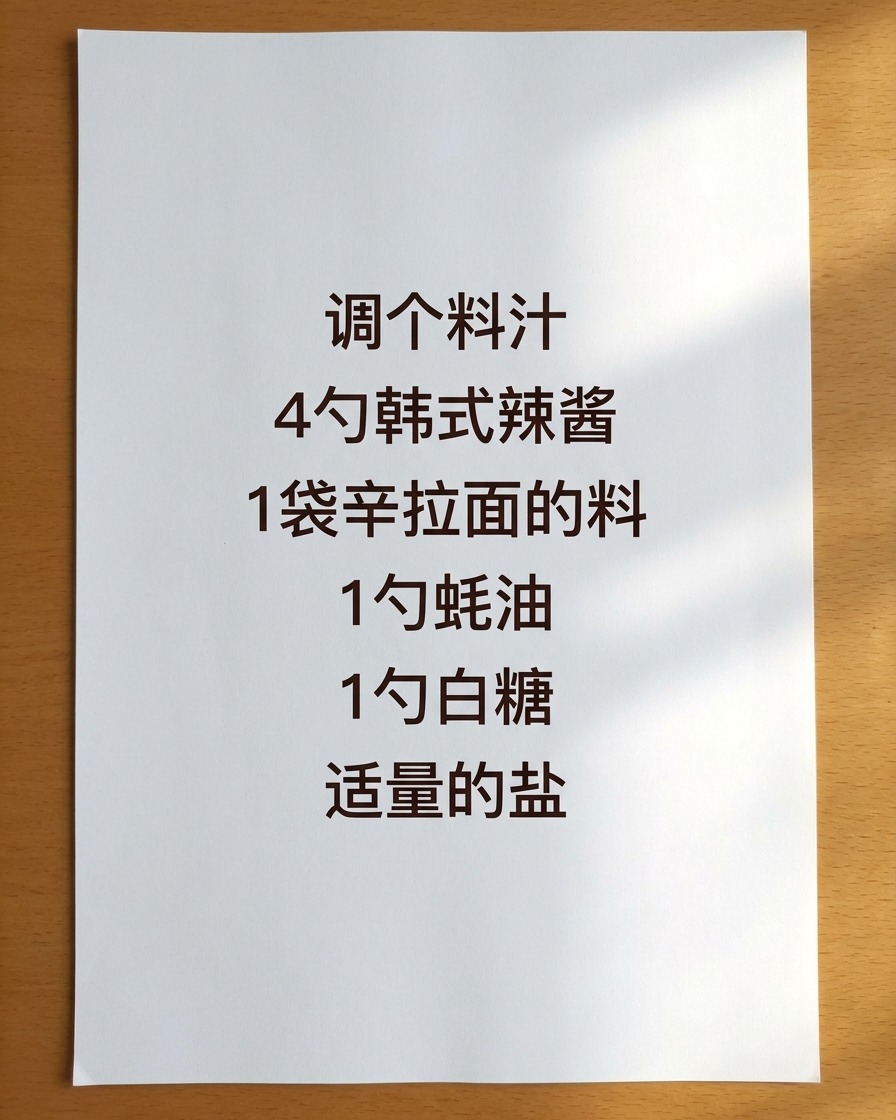
- 2 tbsp Korean chili paste (gochujang)
- 1 tbsp oyster sauce
- 1 tsp sugar
- 1 tsp seasoning powder
- to taste salt
- as needed water
Instructions
- 1Sauté the aromatics
Place slices of purple onion into a frying pan. Sauté them over medium heat until they become soft and fragrant, providing a sweet foundation for the army stew broth.
Tip: Caramelizing the onions slightly adds more depth to the final soup flavor. - 2Layer the cabbage
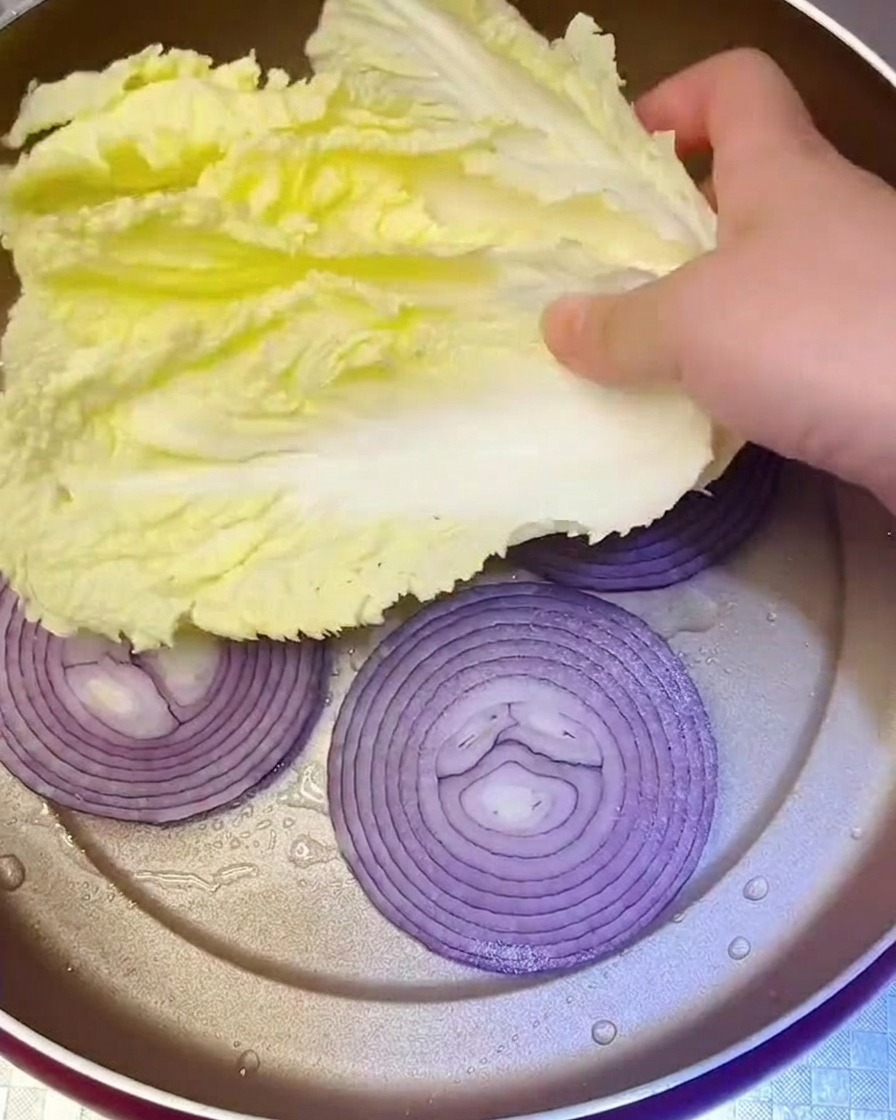
Add fresh Napa cabbage leaves into the pan on top of the sautéed onions. The cabbage will wilt as it cooks, releasing its own moisture and natural sweetness into the pot.
Tip: Tear the cabbage into large pieces to ensure they hold their shape throughout the boiling process. - 3Assemble the main ingredients
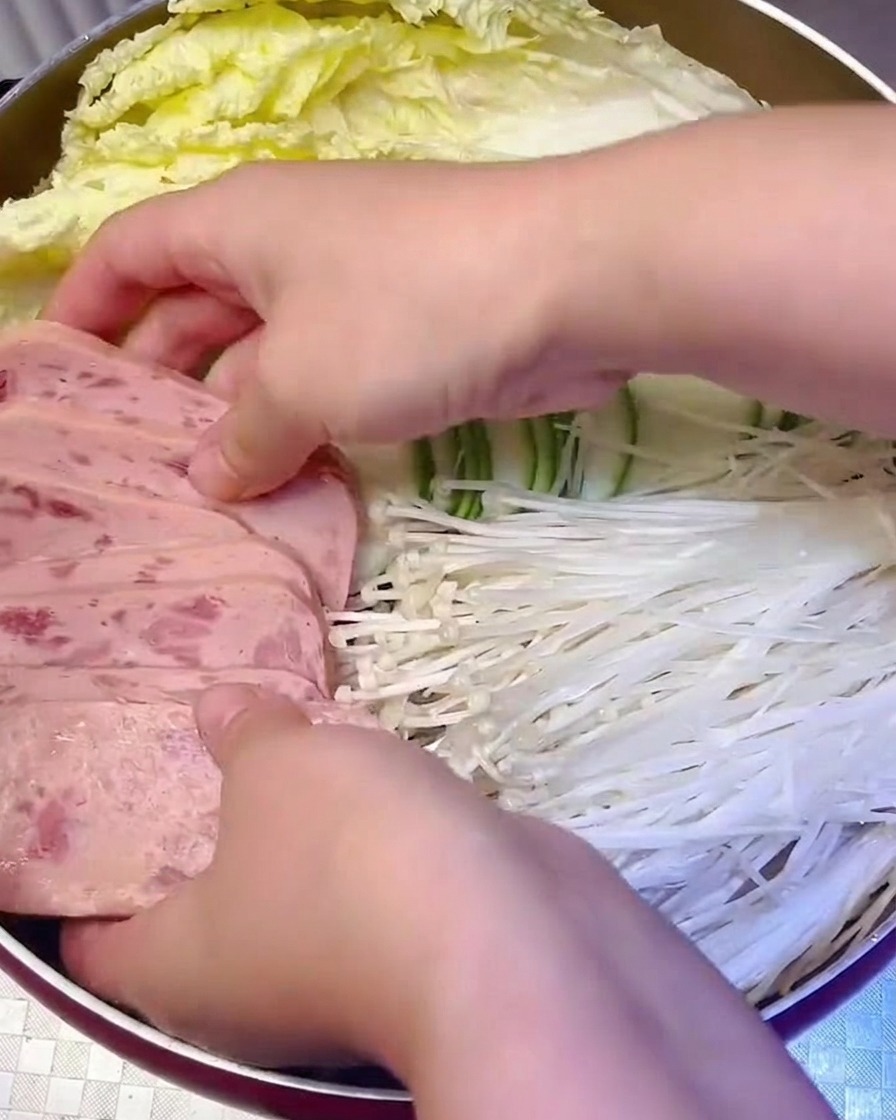
Arrange slices of luncheon meat and a cluster of enoki mushrooms into the pot with the cabbage. Arrange them neatly to create a visually appealing base for the stew.
Tip: Grouping ingredients by type makes it easier to serve individual portions later. - 4Add seafood elements
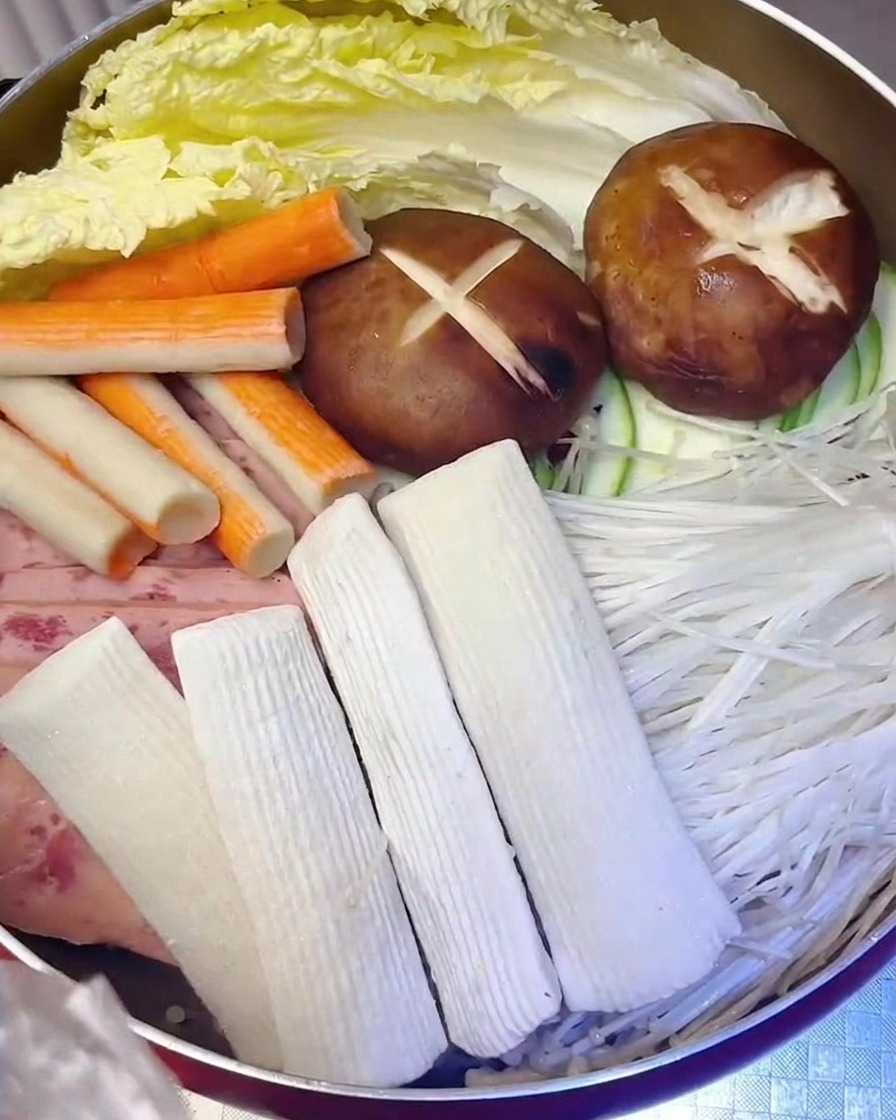
Add the fish cakes and crab sticks into the pot with the other ingredients. These will absorb the savory broth while the stew simmers.
Tip: Arrange the crab sticks evenly to ensure they cook through without breaking apart. - 5Prepare the seasoning sauce
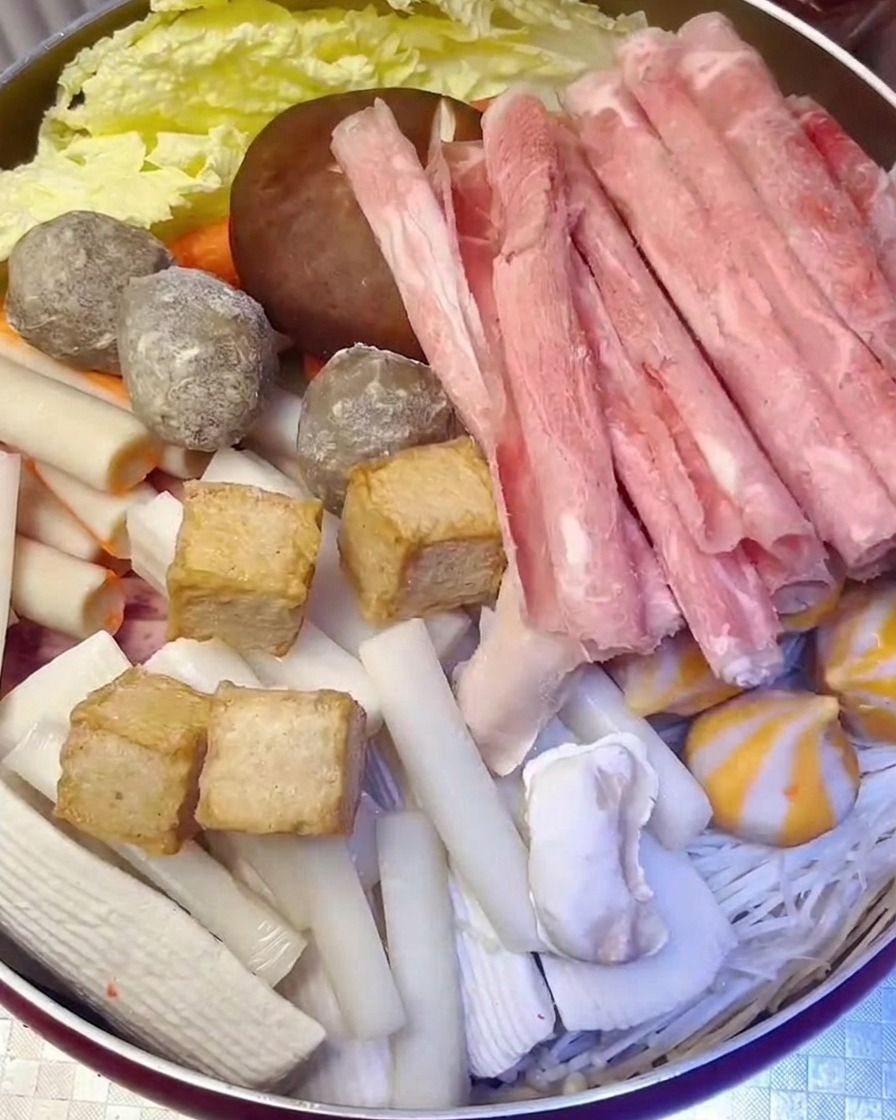
In a glass bowl, combine Korean chili paste (gochujang), seasoning powder, oyster sauce, sugar, and a pinch of salt. Whisk until the paste is fully dissolved into a smooth, thick sauce.
Tip: Ensure the sugar is completely dissolved for a balanced, rich flavor profile. - 6Dilute the sauce
Pour a clear carbonated beverage into the bowl with the prepared sauce mixture. Stir well to integrate, which will thin the sauce slightly and add a unique light sweetness to the broth base.
Tip: The carbonation helps incorporate the thick chili paste into the liquid more efficiently. - 7Add the sauce base
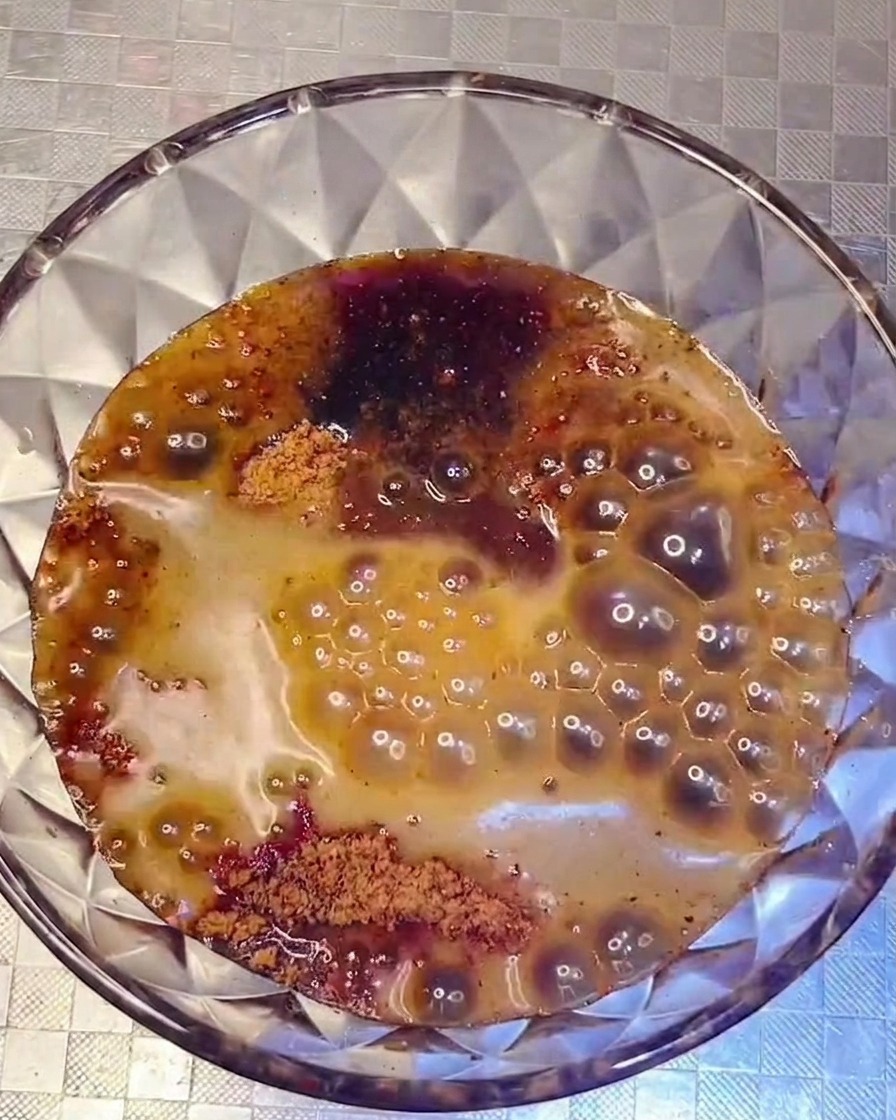
Pour the prepared liquid sauce mixture evenly over the arranged ingredients in the pot. This sauce, which contains the seasoning and spices, will infuse the ingredients as the broth comes to a boil and simmers.
Tip: Pour slowly over the center to ensure even distribution of the seasonings. - 8Add kimchi and water
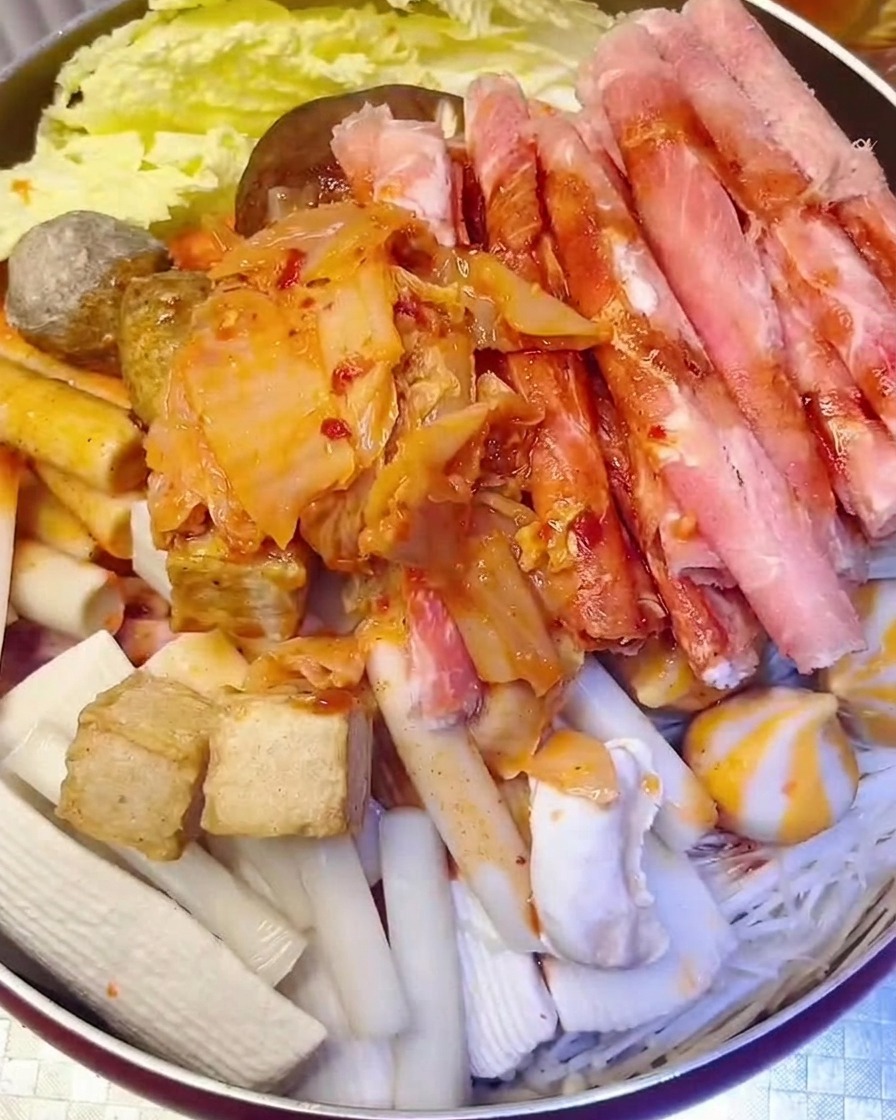
Add a generous amount of kimchi on top of the other ingredients, then pour in enough water to cover the base. The kimchi will provide the signature tangy, spicy base for the army stew.
Tip: Using aged, sour kimchi provides the best depth of flavor for the stew. - 9Top with noodles and cheese

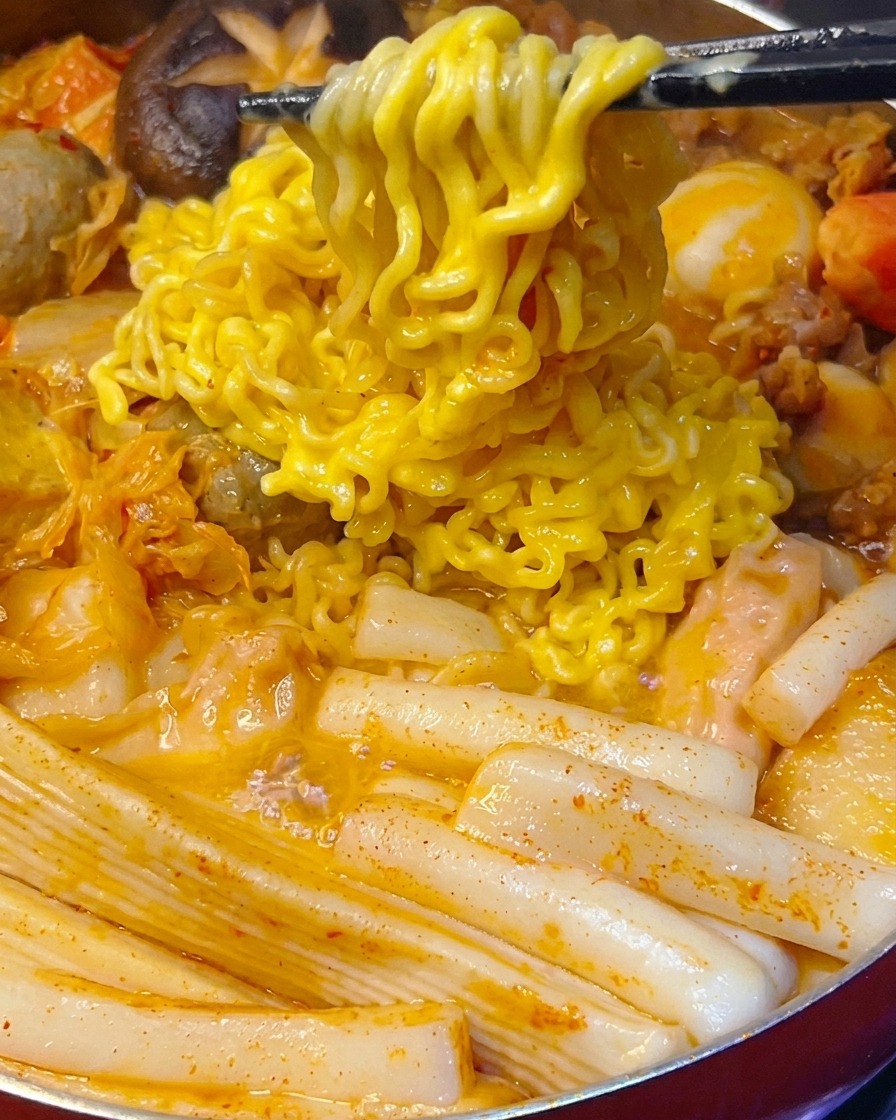
Place an instant noodle block in the center of the pot and arrange cheese slices directly on top of the noodles. Cover the pot with a lid and bring to a boil to allow the cheese to melt into the noodles as they cook.
Tip: Add the cheese right before covering so it melts perfectly into the hot noodles.