Classic Korean Seaweed Rice Roll (Gimbap)
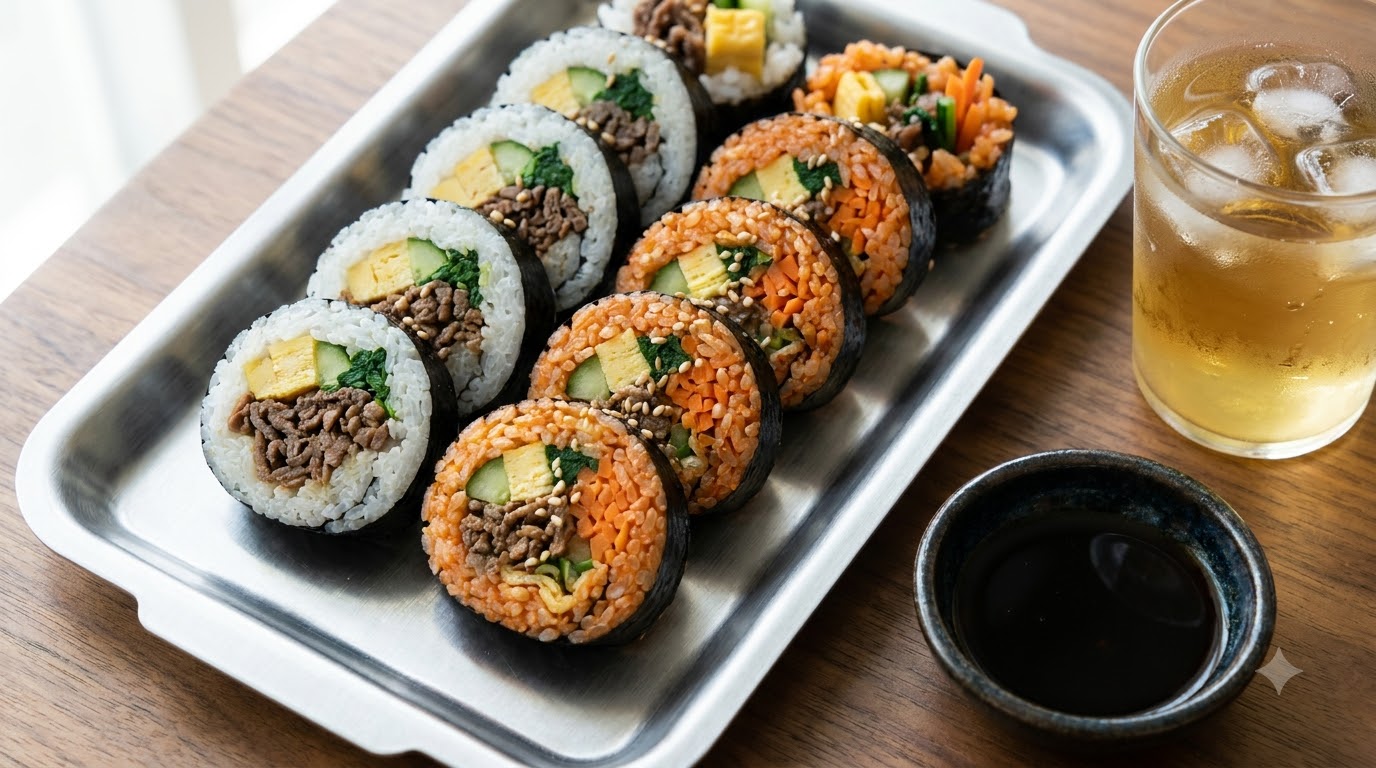
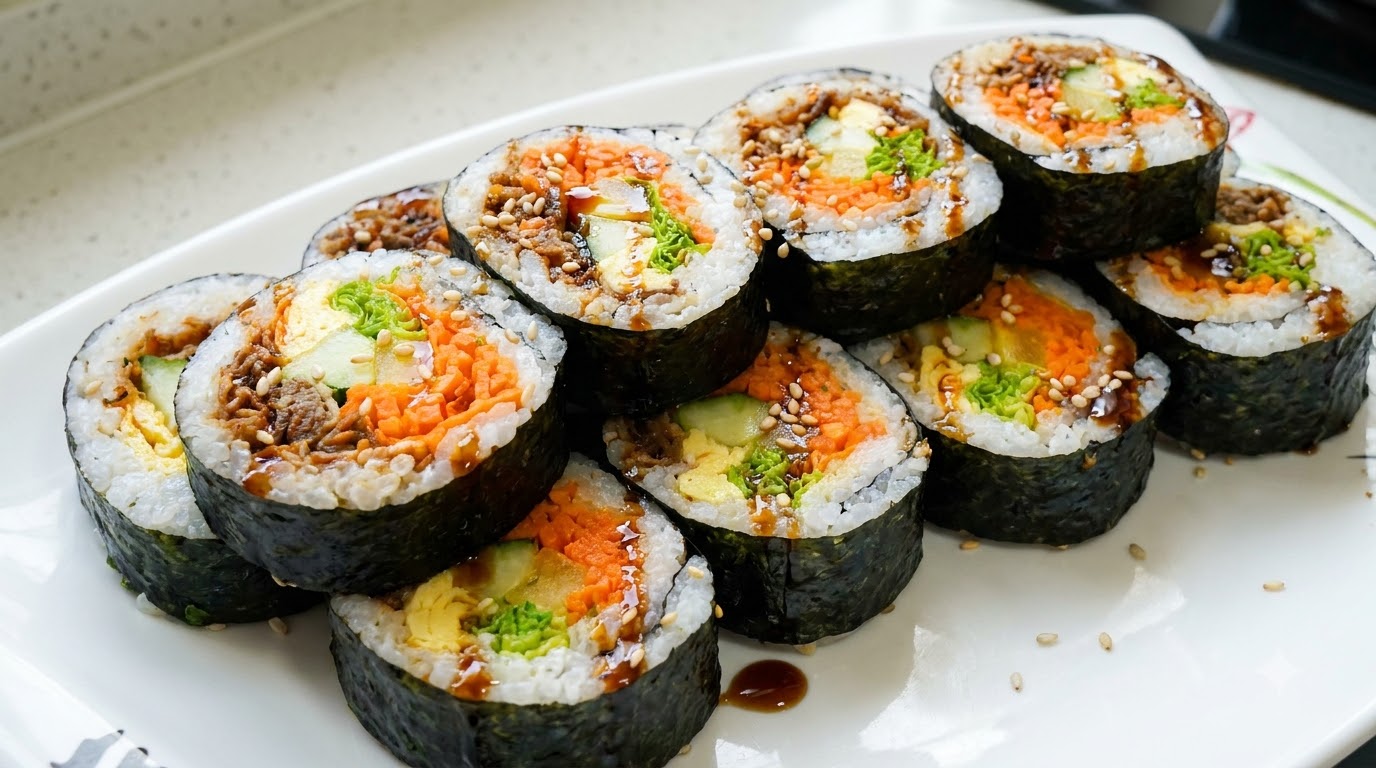
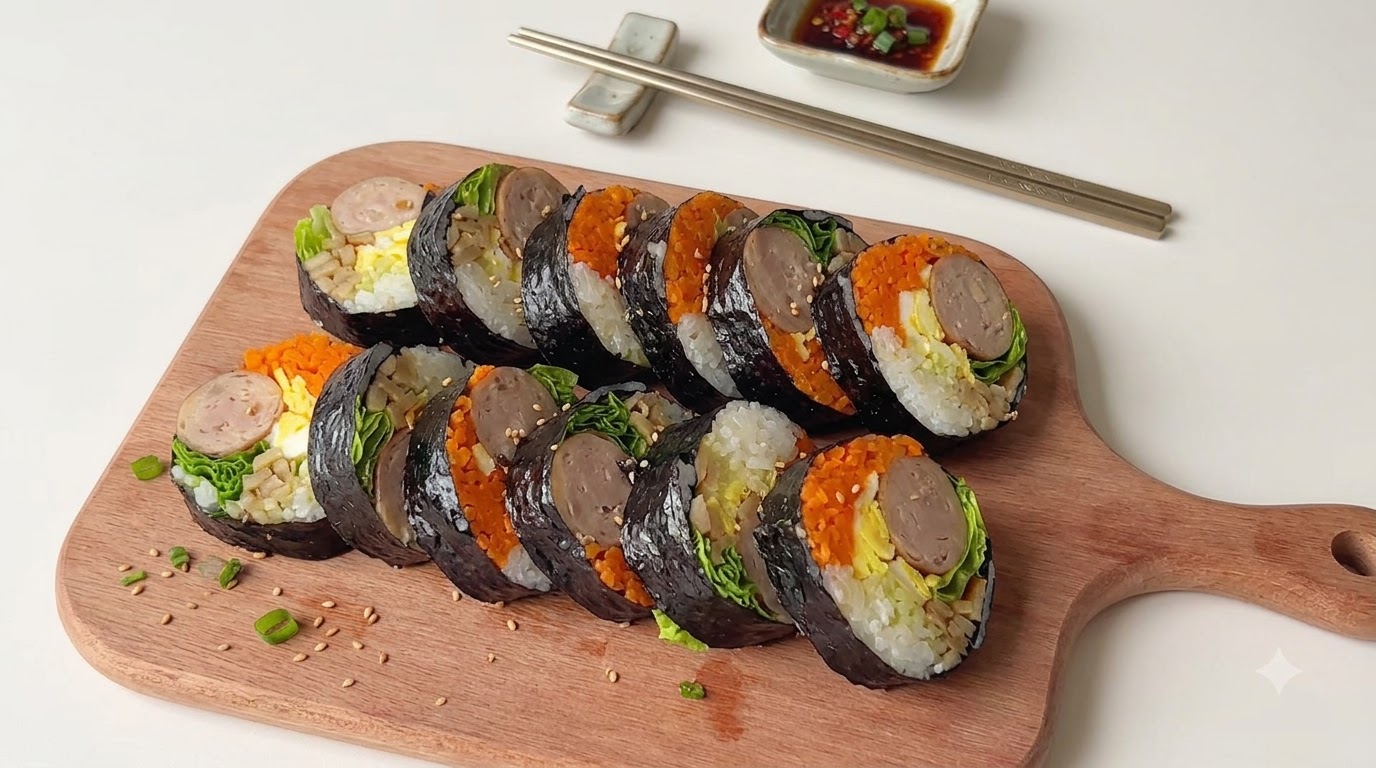
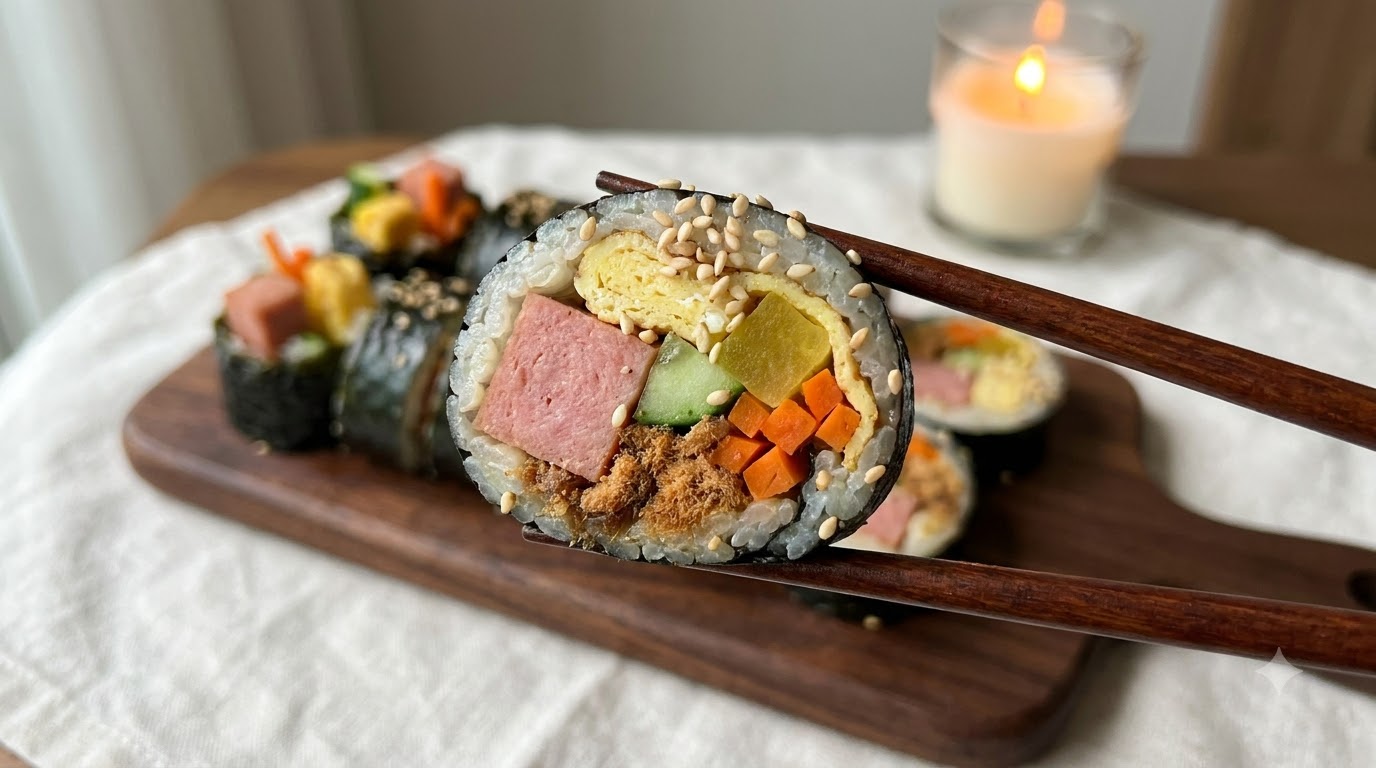
A beloved Korean classic featuring seasoned rice, savory luncheon meat, fluffy egg, and crunchy vegetables wrapped snugly in toasted nori seaweed.
Gimbap is a staple of Korean cuisine, cherished for its incredible versatility, portability, and balanced flavors. Unlike Japanese sushi, traditional gimbap rice is seasoned with sesame oil rather than vinegar, and it famously incorporates cooked or cured ingredients like savory luncheon meat, egg sheets, pickled radish, and crisp vegetables.
Ingredients
- 3 cups cooked white rice
- 2 sheets nori seaweed
- 150 g luncheon meat
- 2 eggs
- 1 cucumber
- 1 carrot
- 50 g yellow pickled radish
- 30 g meat floss
- 2 tbsp mayonnaise
- 1 tbsp sesame oil
- 1 tsp sushi vinegar
- 1 tbsp white sesame seeds
- to taste salt
- 1 tbsp cooking oil
Instructions
- 1Slice the cucumber
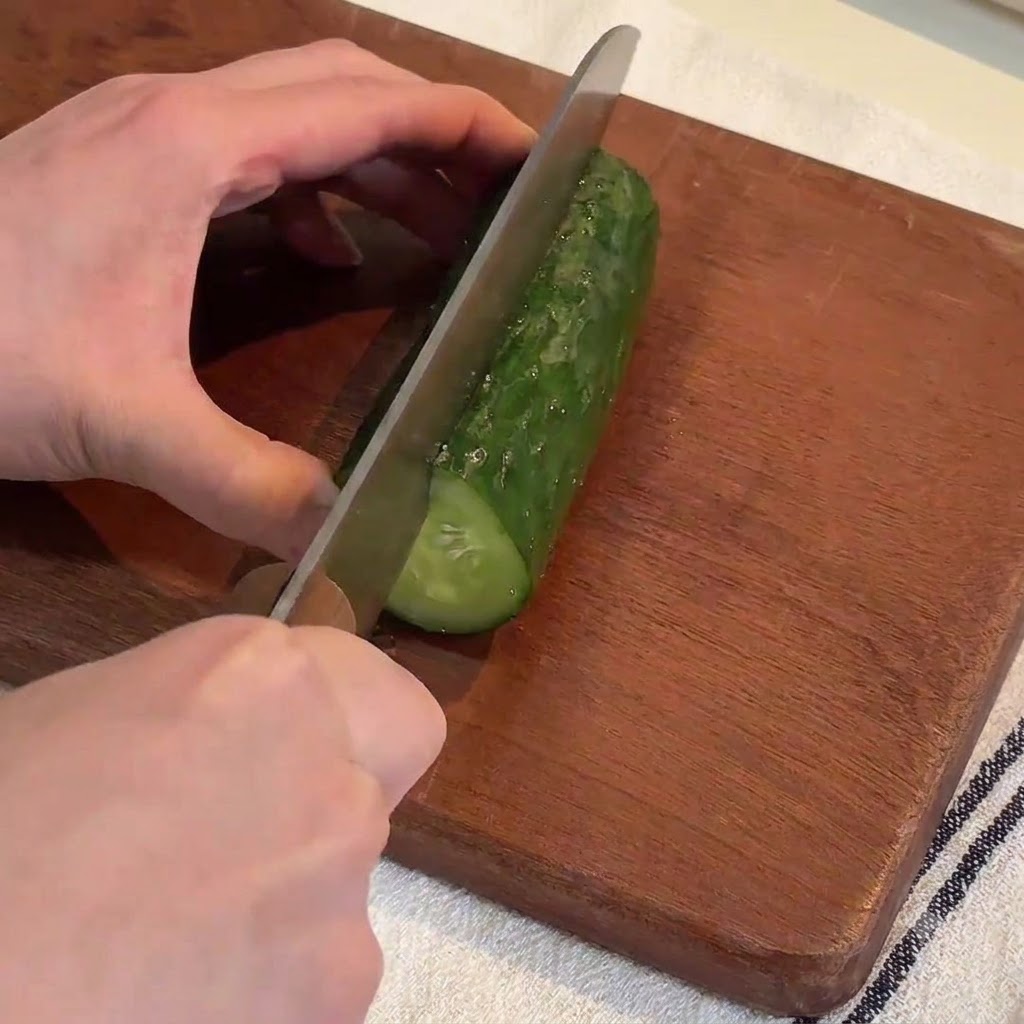
Place a fresh green cucumber on a wooden cutting board. Using a sharp knife, carefully slice the cucumber in half, then continue to cut it lengthwise into long, even strips.
Tip: Ensure the cucumber strips are uniform in thickness so your final roll looks neat and is easy to bite. - 2Shred the carrots
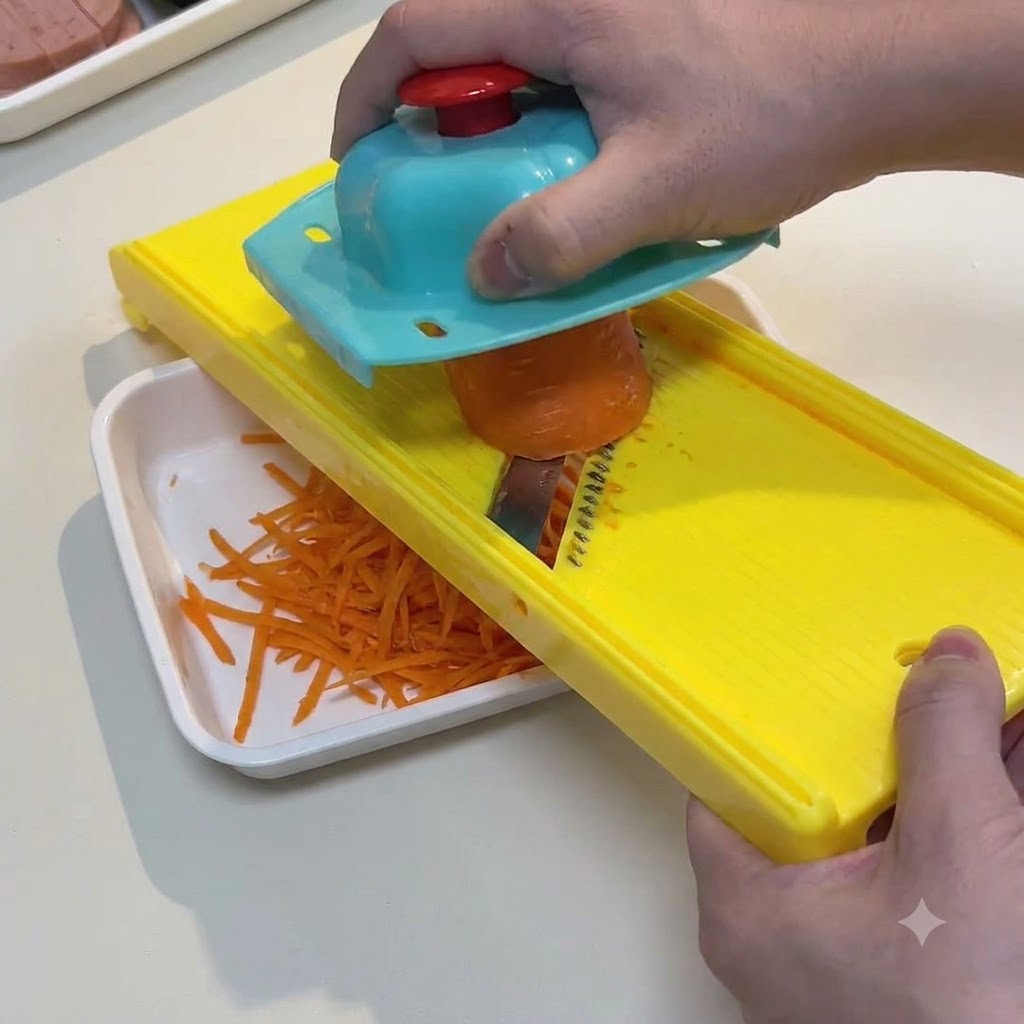
Using a yellow plastic mandoline slicer, carefully shred the raw orange carrots into thin, uniform strips.
Tip: Keep your fingers clear of the sharp blade by using the safety holder provided with the slicer. - 3Season and cook the carrots
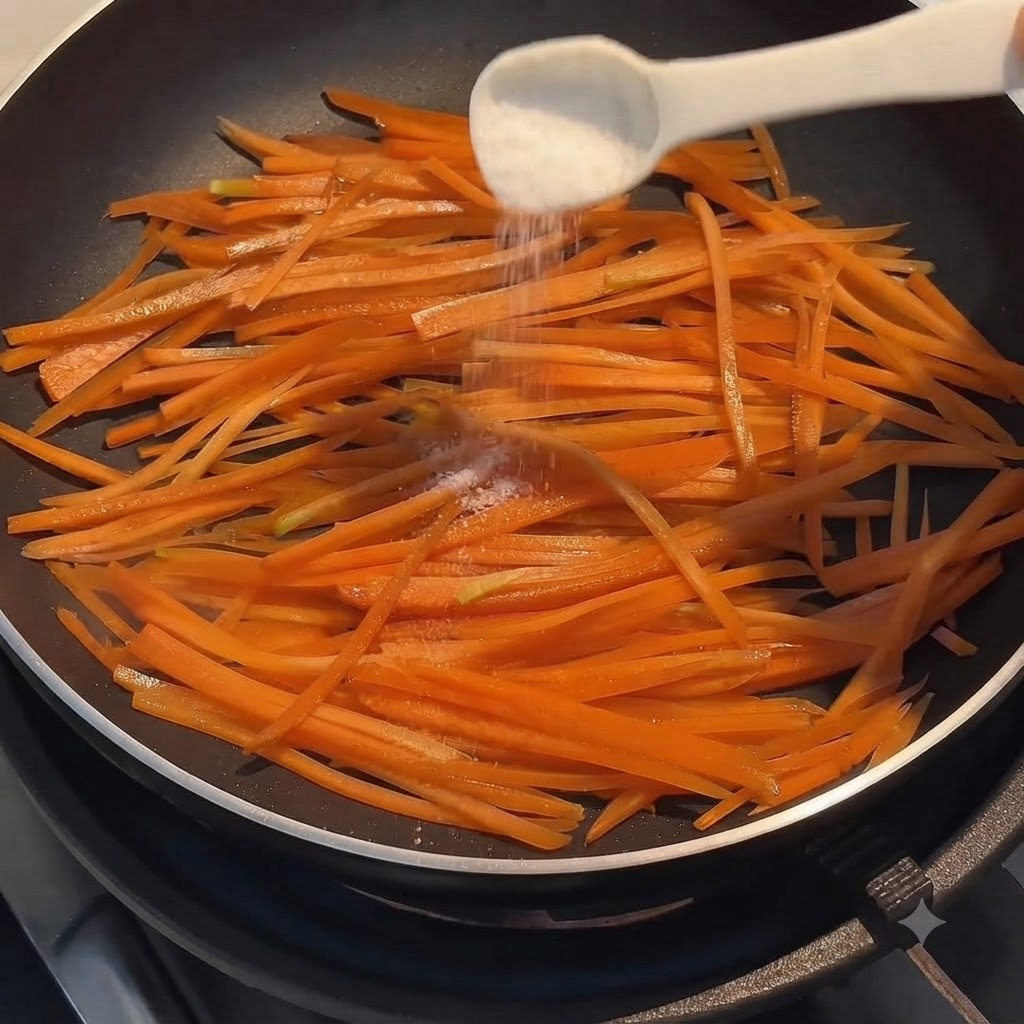
Add a small amount of cooking oil to a heated pan. Toss in the shredded carrots and sprinkle them with a pinch of salt. Stir-fry the carrots until they are fully softened and cooked through, then remove them from the pan and set them aside.
Tip: Adding a pinch of salt while stir-frying helps draw out the moisture and enhances the natural sweetness of the carrots. - 4Cook the egg sheet
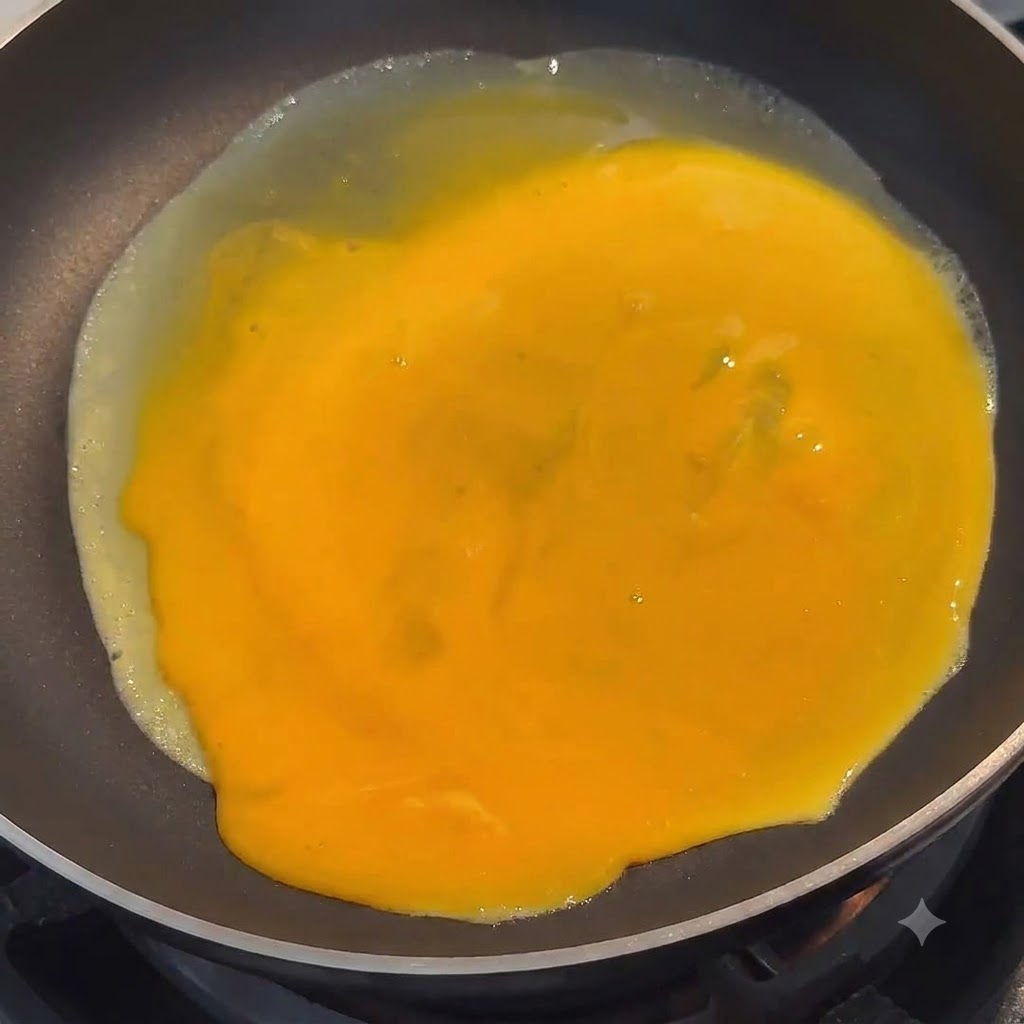
Pour the beaten egg mixture into the heated pan. Swirl the pan or spread the egg evenly across the bottom to form a wide, thin circular sheet.
Tip: Keep the heat low so the thin egg sheet cooks gently without browning too fast. - 5Roll up the egg
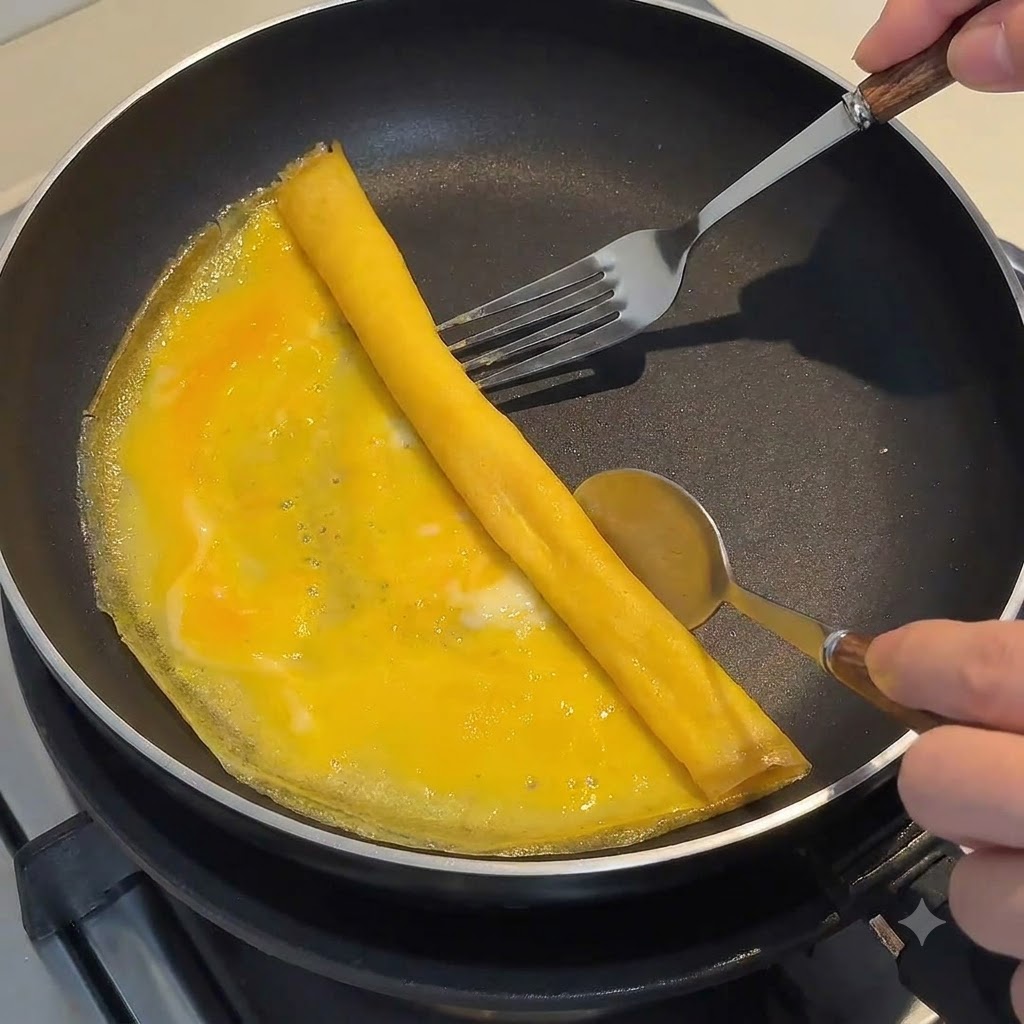
While the top surface of the egg sheet is still slightly wet, carefully use a fork and spoon to lift one edge and roll it tightly inward to create a small egg roll.
Tip: Rolling the egg while it is still slightly wet ensures the inner layers stick together securely. - 6Fry luncheon meat strips
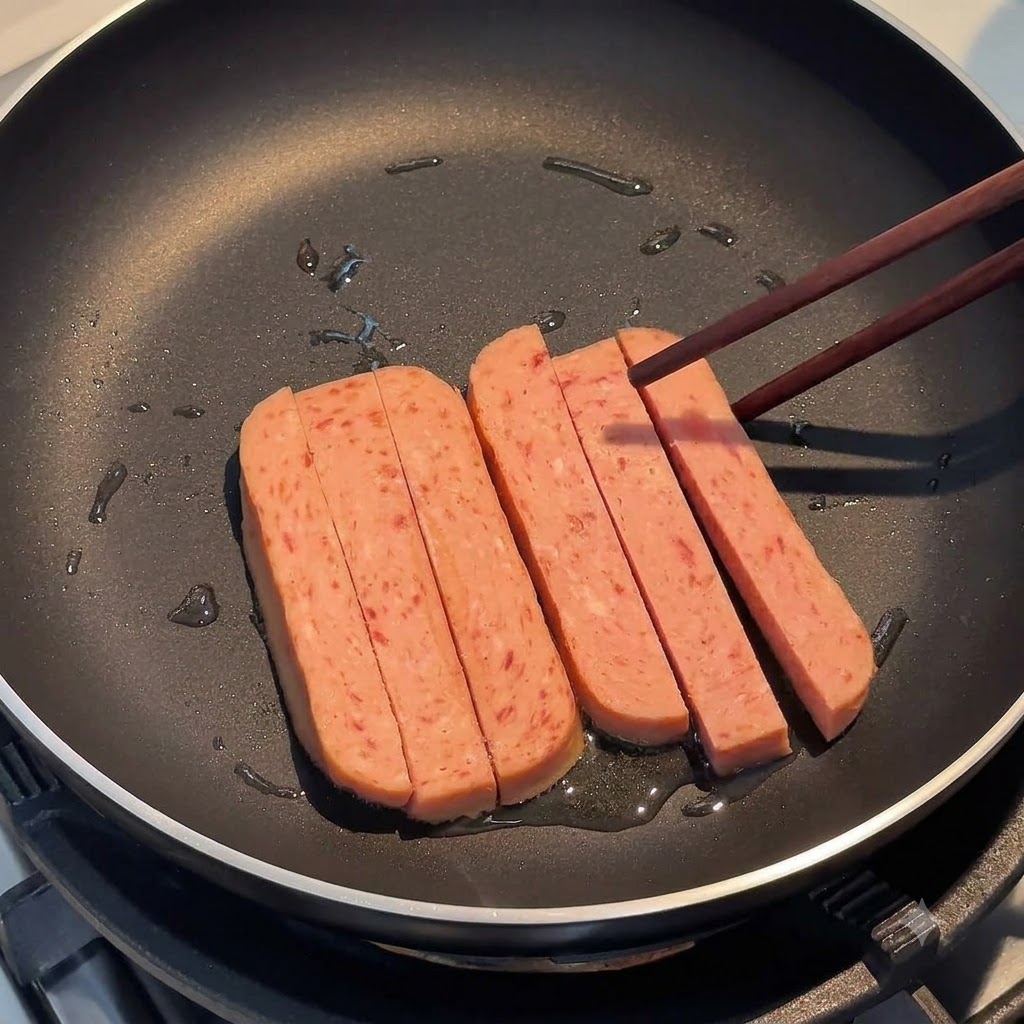
Add a little oil to a hot pan and fry the luncheon meat strips until both sides are golden brown and slightly crispy.
Tip: Flip the strips carefully with chopsticks to ensure even browning on all sides. - 7Season the rice
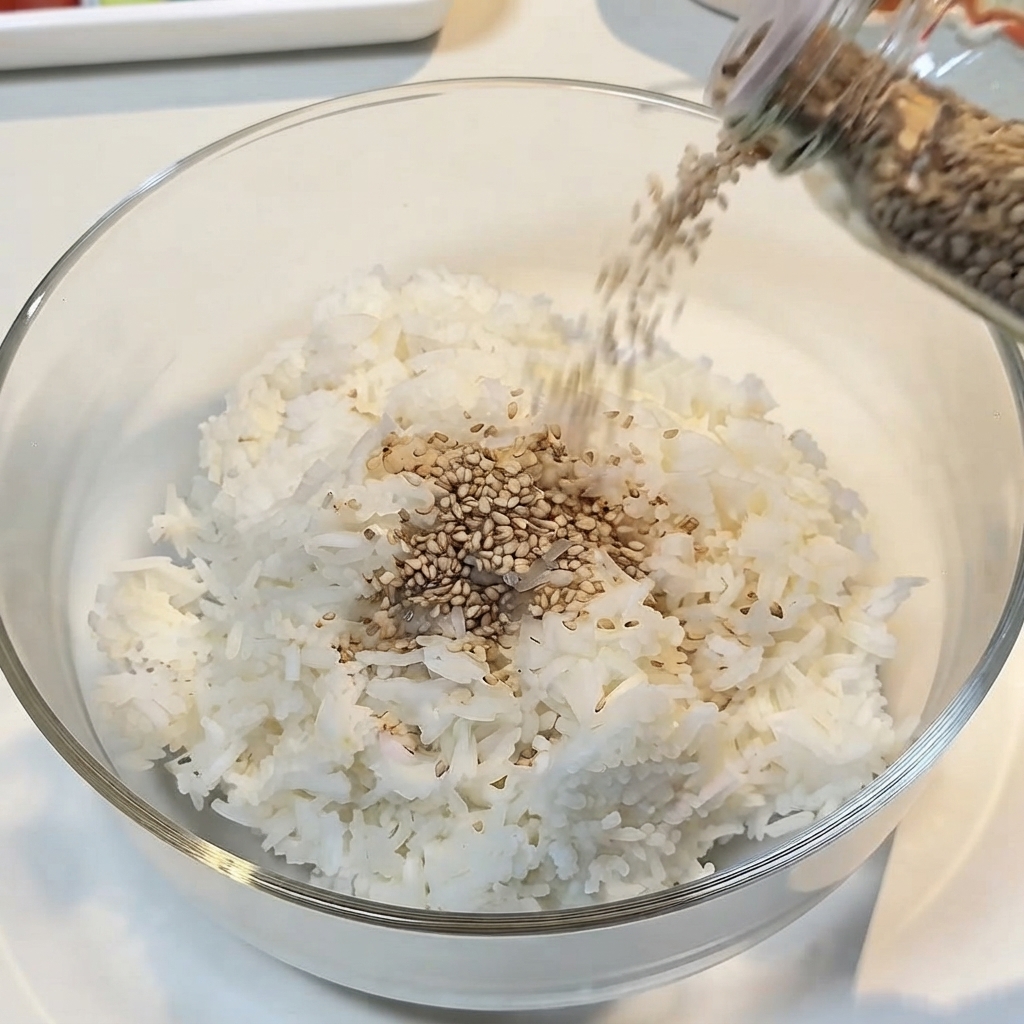
In a glass bowl, combine cooked white rice with a pinch of salt, sesame oil, sushi vinegar, and white sesame seeds.
Tip: Mix gently using a rice paddle so the grains do not become mushy. - 8Prepare the seaweed wrapper
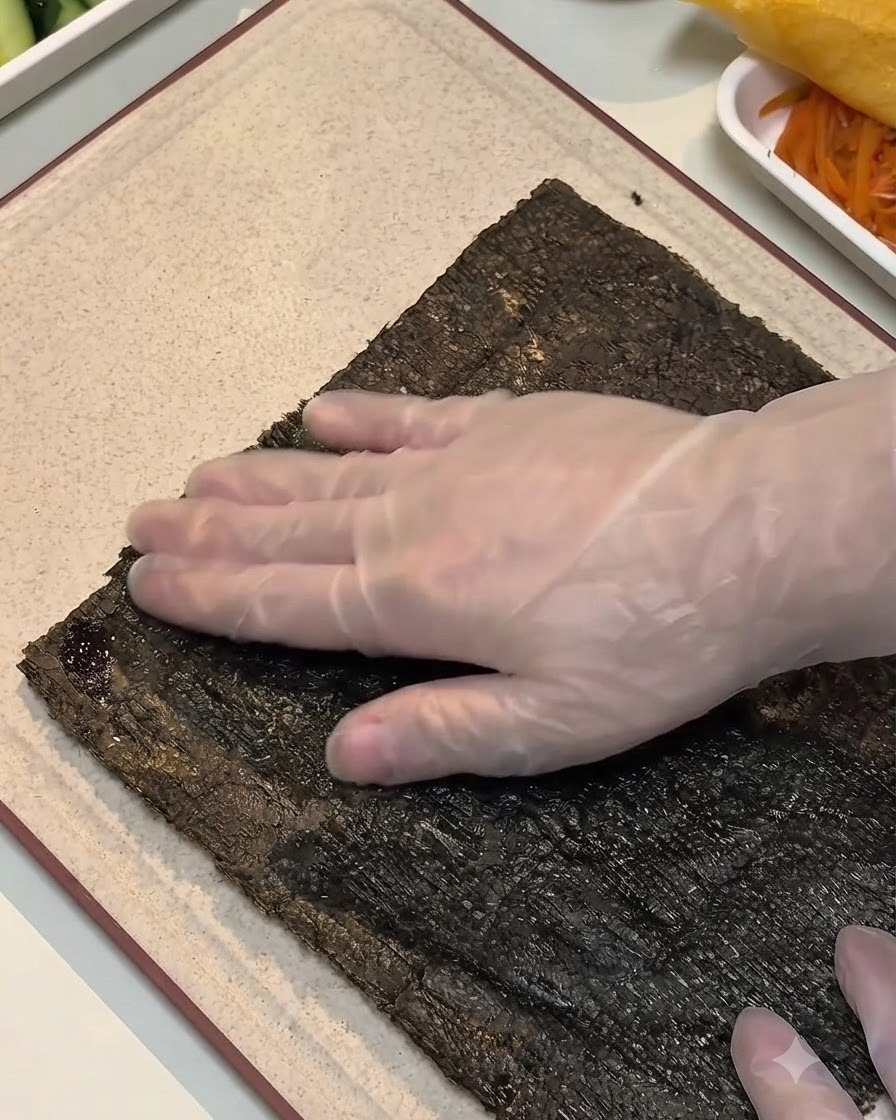
Take a sheet of dark green seaweed, brush a small amount of water along the top edge, and attach another half-sheet to make it longer.
Tip: Use just enough water to seal the sheets together without dissolving the seaweed. - 9Spread the rice
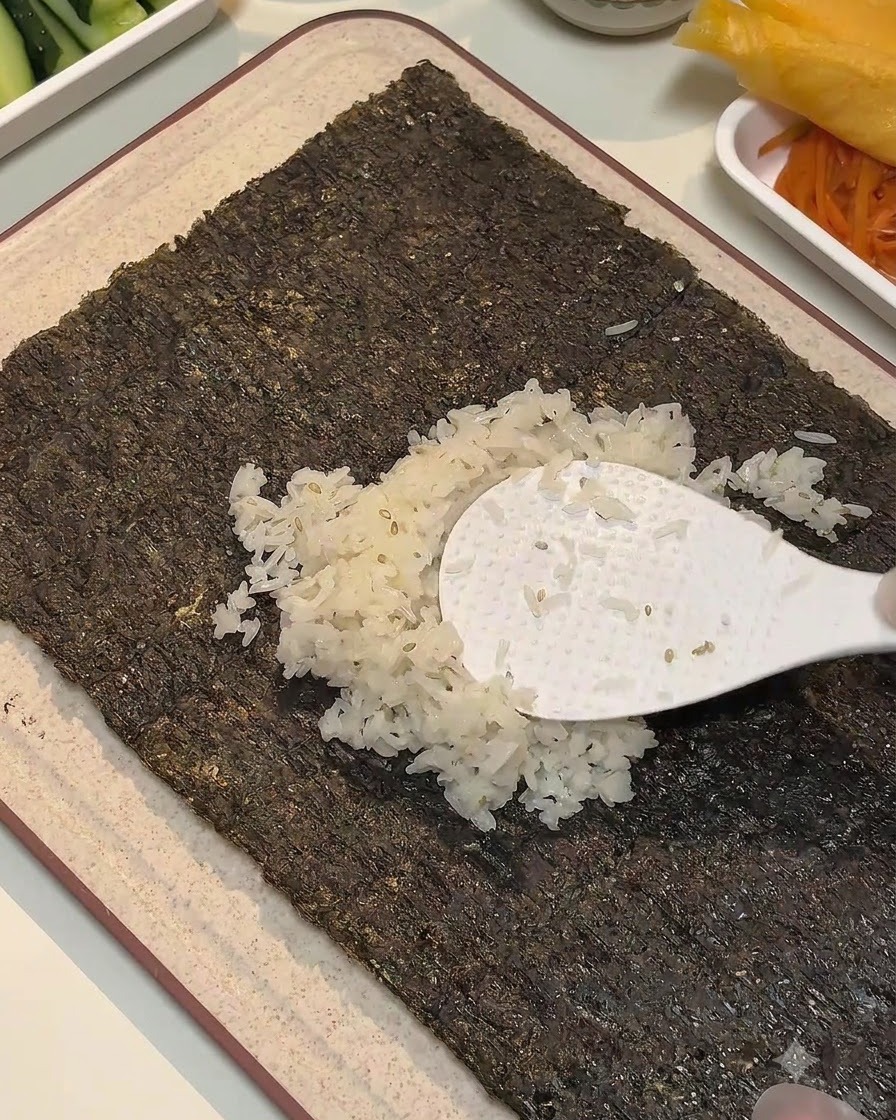
Use a white rice paddle to evenly spread a layer of the seasoned white rice across the center portion of the seaweed wrapper.
Tip: Leave the top and bottom edges of the seaweed clear to make rolling easier later. - 10Add fillings
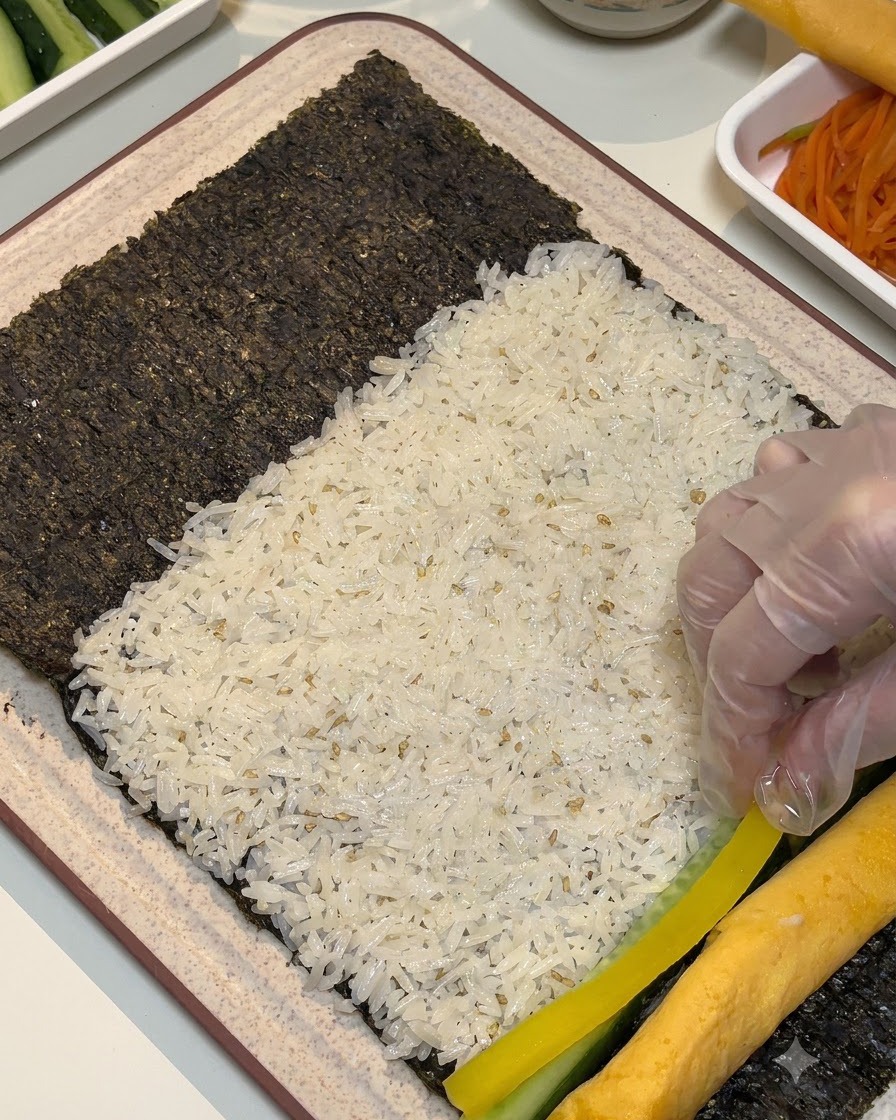
Place the cooked egg roll, fresh cucumber strips, yellow pickled radish, and cooked shredded carrots sequentially onto the bed of rice.
Tip: Arrange the ingredients tightly together to keep the final roll compact and easy to slice. - 11Add Mayonnaise
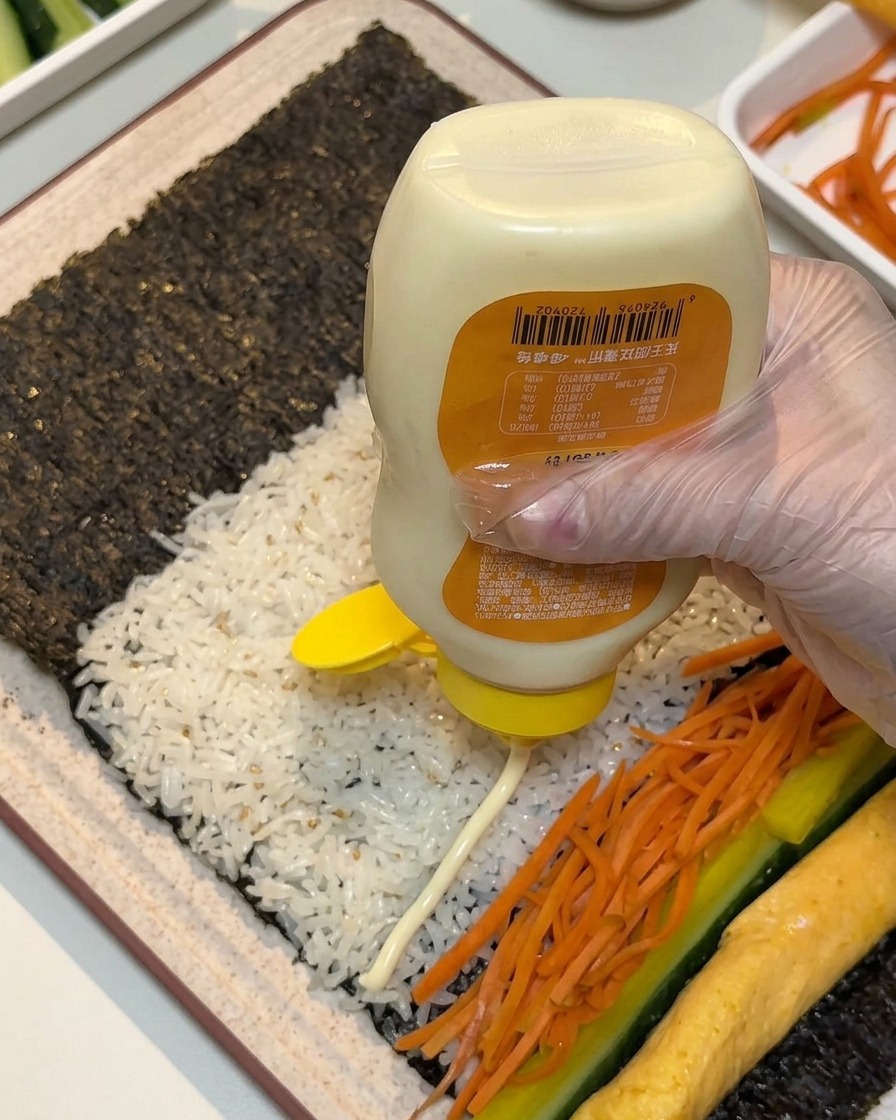
Squeeze thick lines of white mayonnaise from a bottle horizontally across the vegetable and egg fillings to add creamy flavor and texture.
Tip: Apply an even drizzle so every bite gets a balanced amount of creaminess. - 12Add Luncheon Meat and Meat Floss
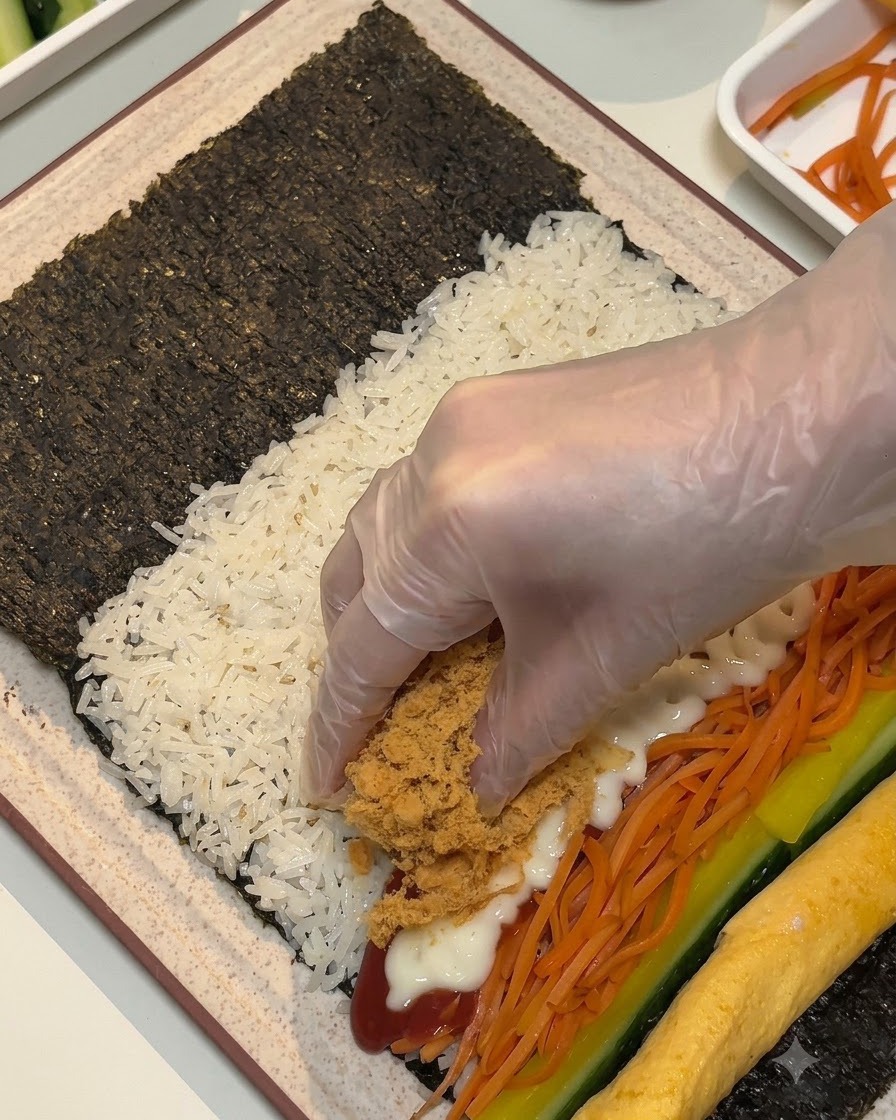
Place the fried luncheon meat strips and a layer of fluffy brown meat floss onto the pile of fillings to enhance the savory taste.
Tip: Distribute the meat floss evenly across the fillings for a consistent texture in every slice. - 13Roll the Kimbap
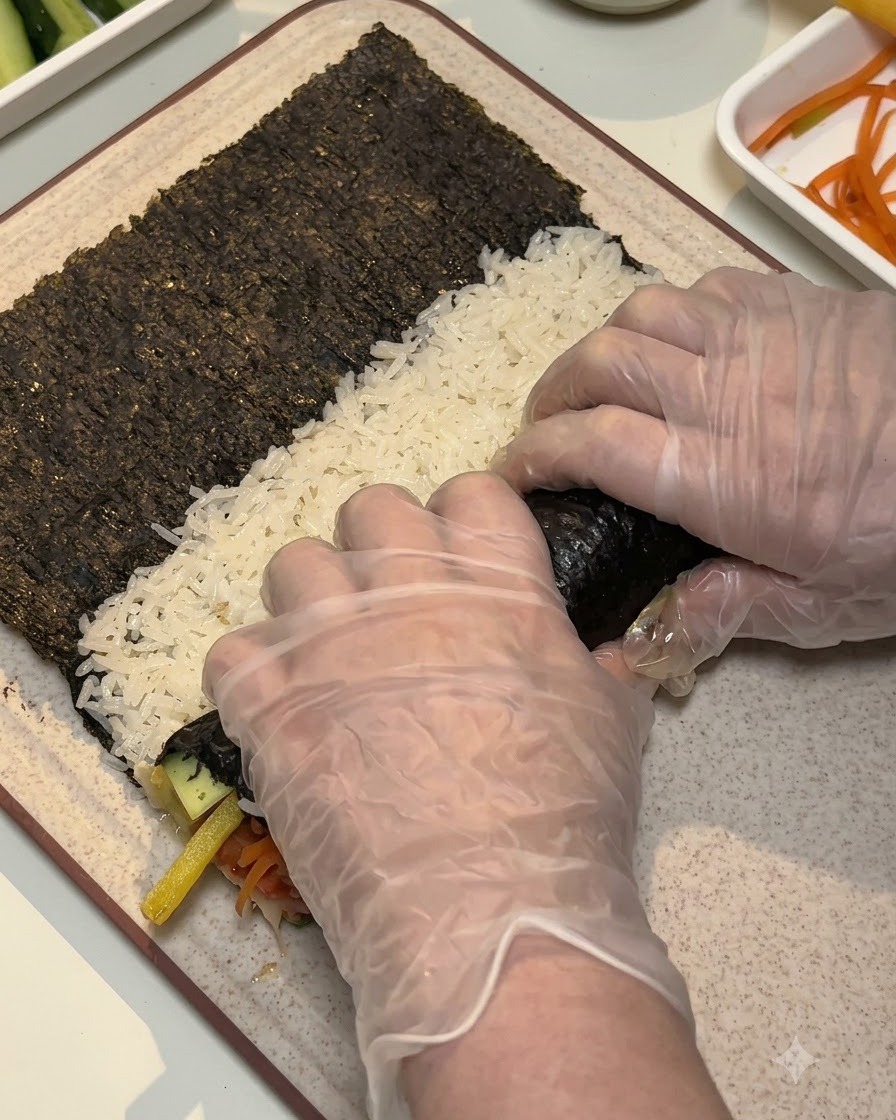
Use both hands to carefully and tightly roll the seaweed wrapper, rice, and all fillings forward into a thick, cylindrical shape.
Tip: Keep the roll firm and tight to prevent the ingredients from spilling out when sliced. - 14Brush with Sesame Oil
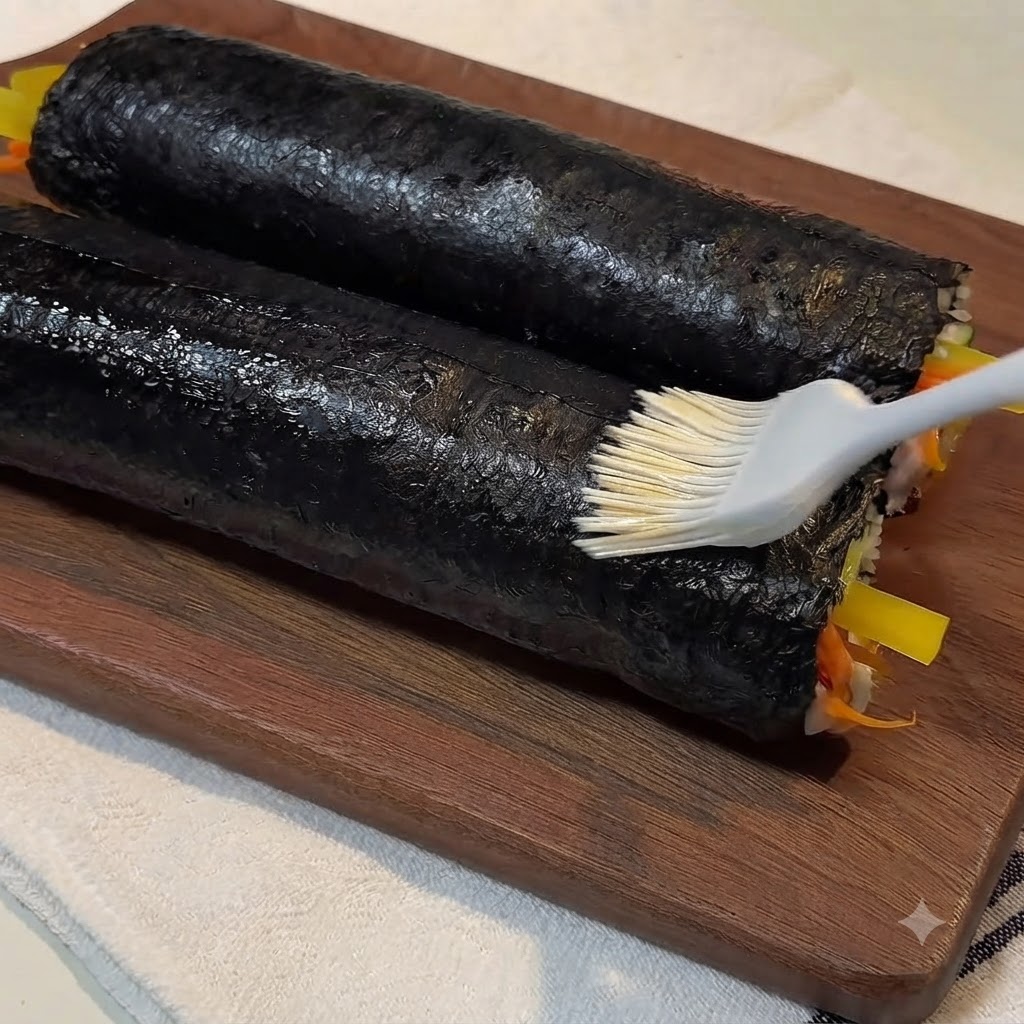
Use a silicone brush to spread a thin layer of sesame oil over the shiny surface of the finished seaweed roll to enhance fragrance.
Tip: Brushing with sesame oil adds a rich aroma and makes the roll easier to cut cleanly. - 15Slice the Roll
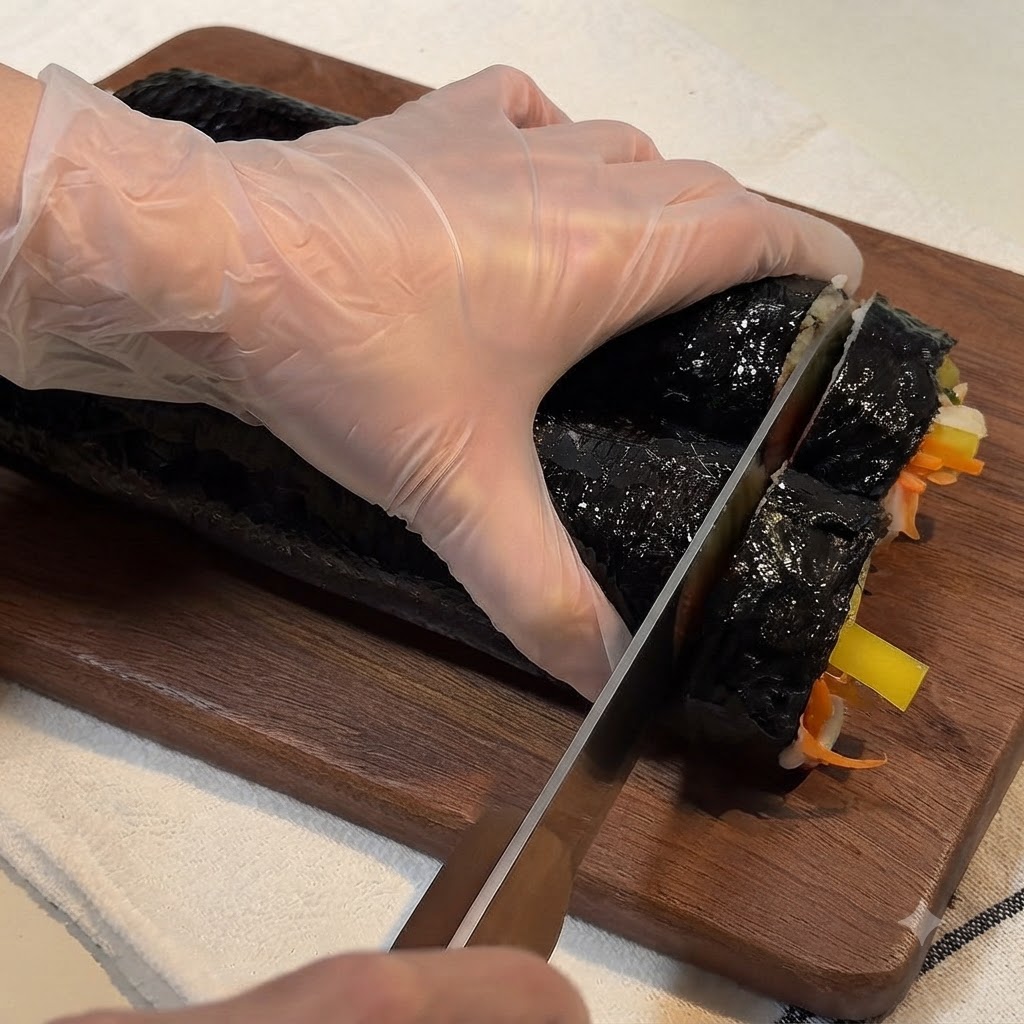
Use a sharp knife to cleanly slice the long seaweed roll into individual bite-sized pieces on the cutting board.
Tip: Wipe the knife blade with a damp cloth between cuts to keep the slices clean and prevent sticking.