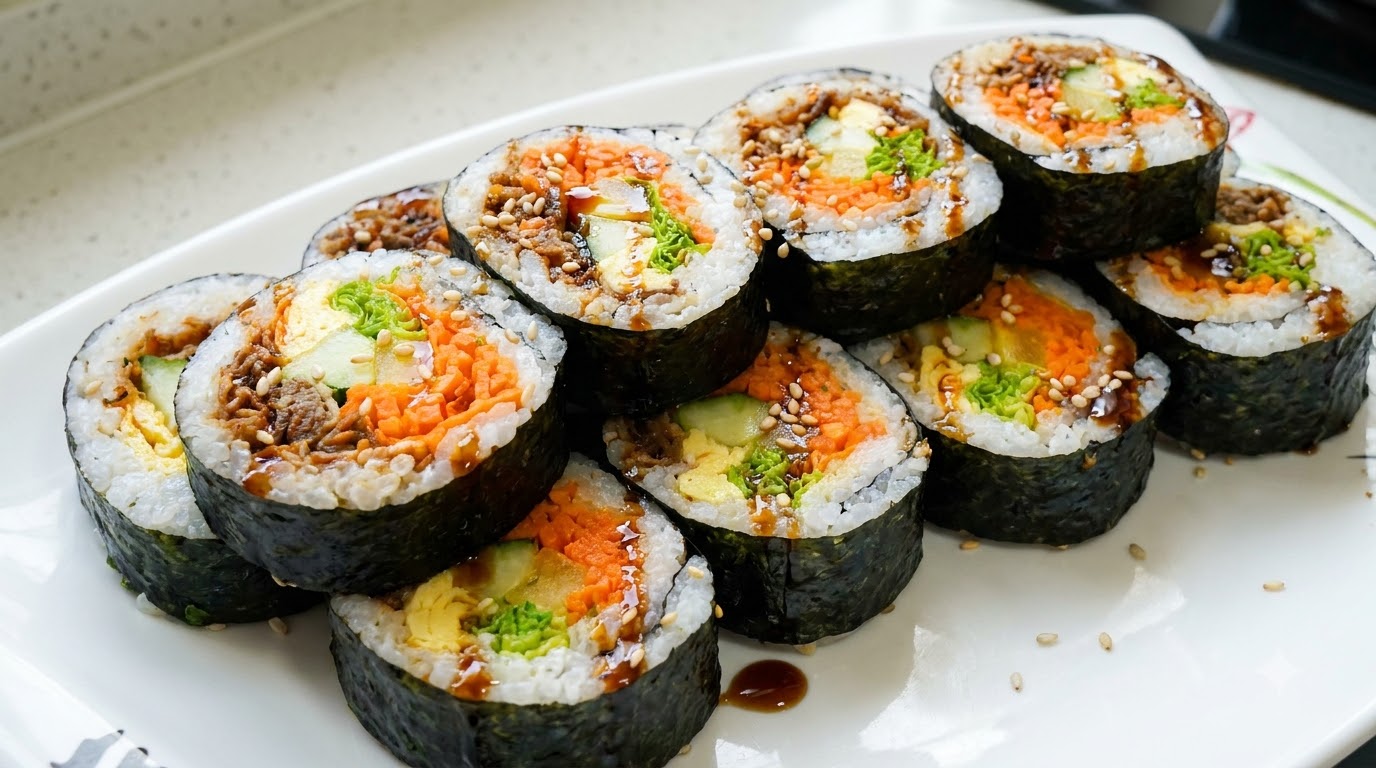
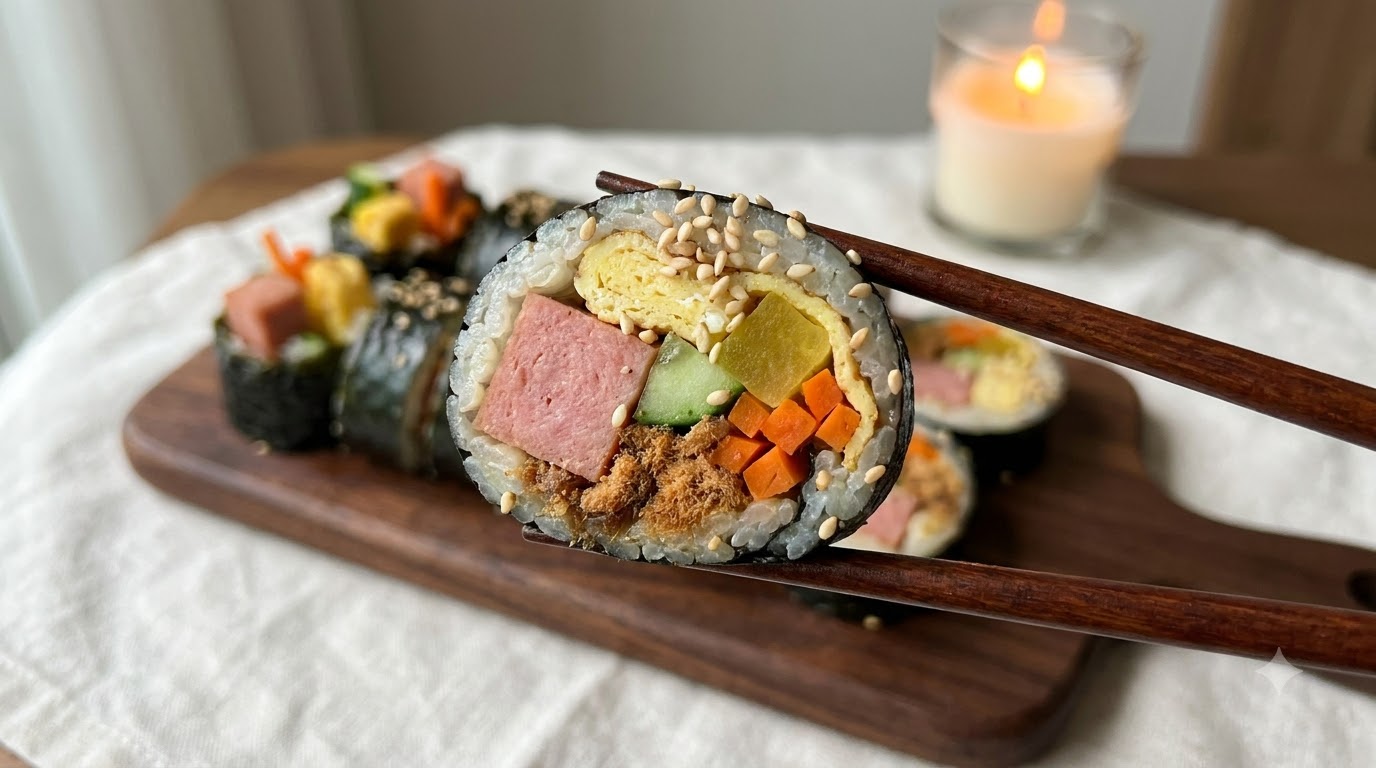
Low-Calorie Sausage Kimbap
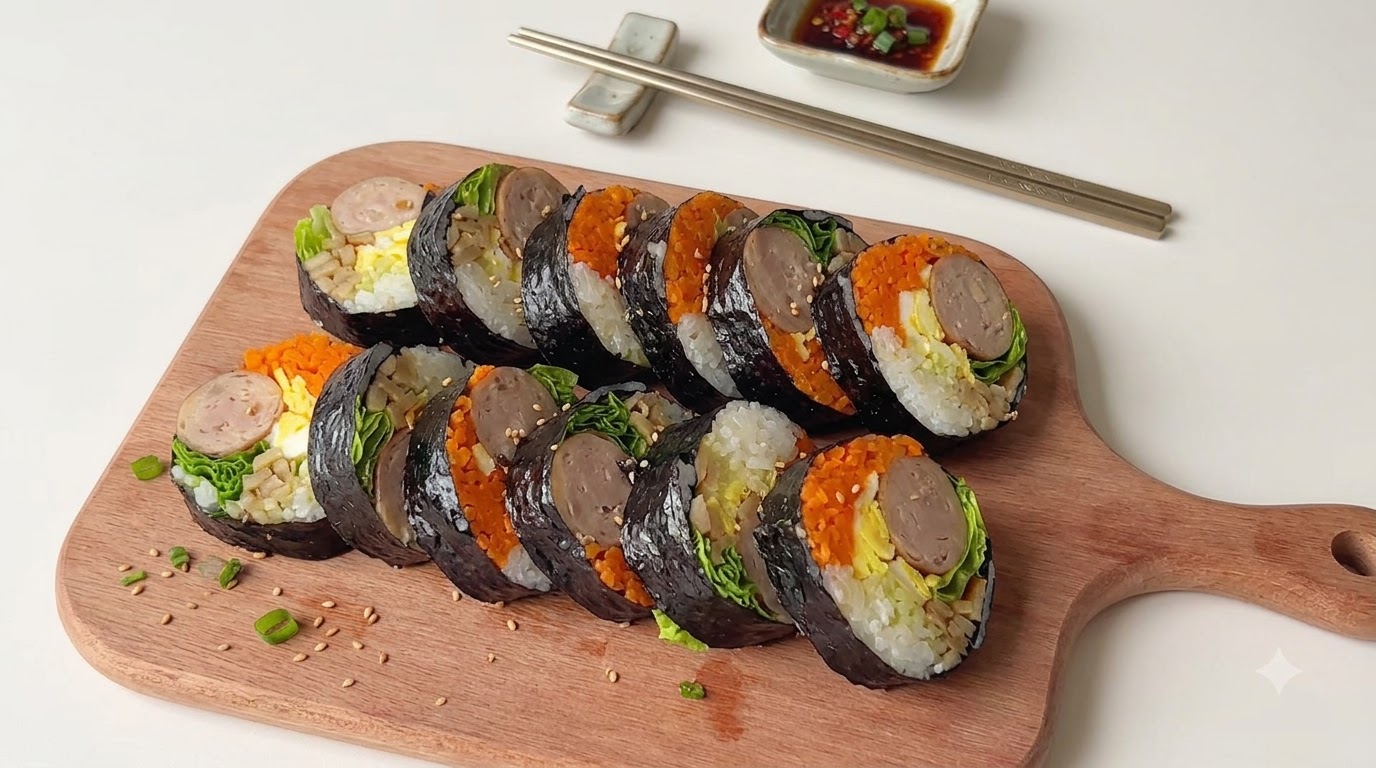
A light and guilt-free twist on classic Korean kimbap, featuring pan-fried sausage, crisp vegetables, and a minimal layer of rice wrapped in savory seaweed.
Inspired by the exciting culinary challenges of television cooking competitions, this low-calorie kimbap packs all the rich layers and satisfying flavors of traditional rolls while keeping things light. By replacing the heavy rice volume with crisp lettuce, carrots, and egg strips, it delivers maximum flavor and crunch without the extra weight.
Ingredients
- 200 g sausages
- 3 eggs
- 1 carrot
- 100 g fish cakes
- 1 head green lettuce
- 1 cucumber
- 1 bowl cooked white rice
- 3 sheets seaweed sheets
- to taste salt
- 1 tbsp sesame oil
- 1 tsp sesame seeds
Instructions
- 1Pan-fry the sausages
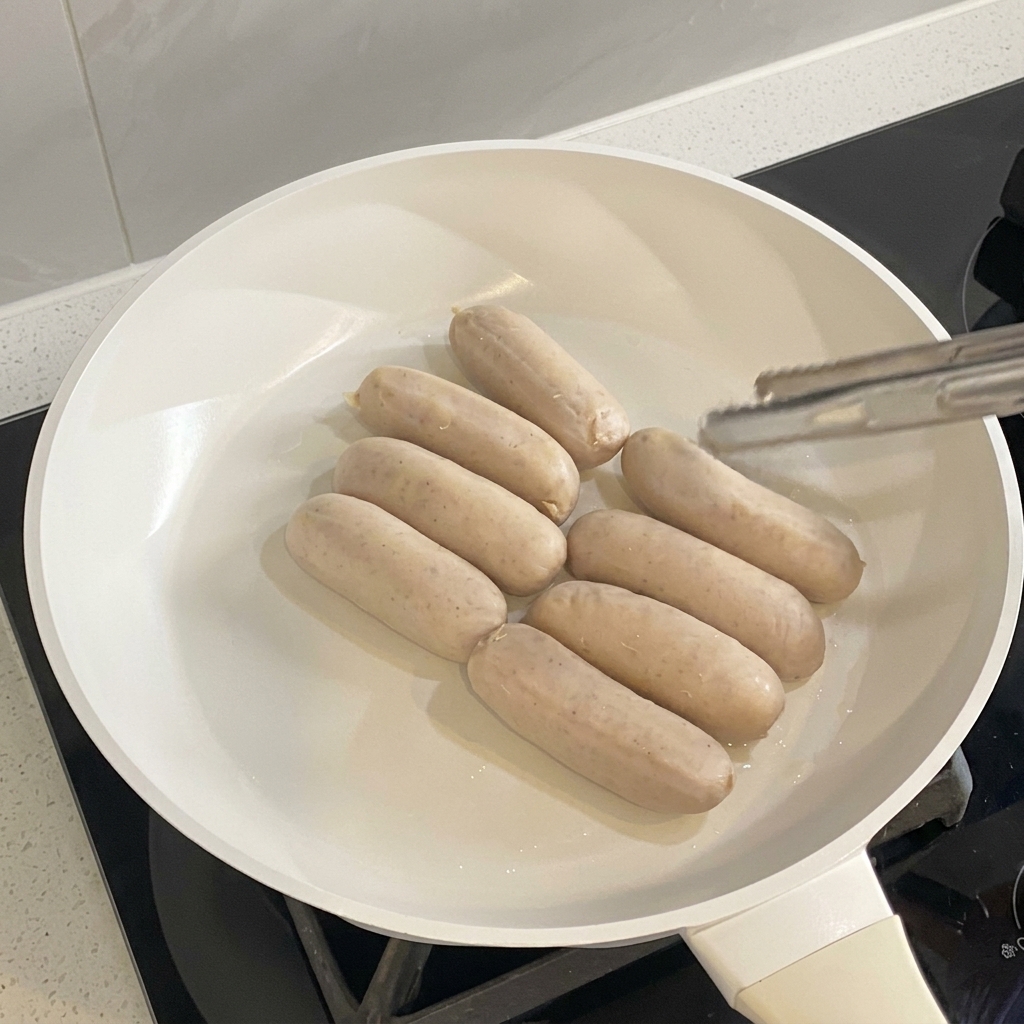
Place the sausages into a white non-stick pan and pan-fry them over medium heat until they are thoroughly cooked and lightly browned on all sides.
Tip: Turn the sausages frequently to ensure even browning and prevent burning. - 2Pour beaten eggs into the pan
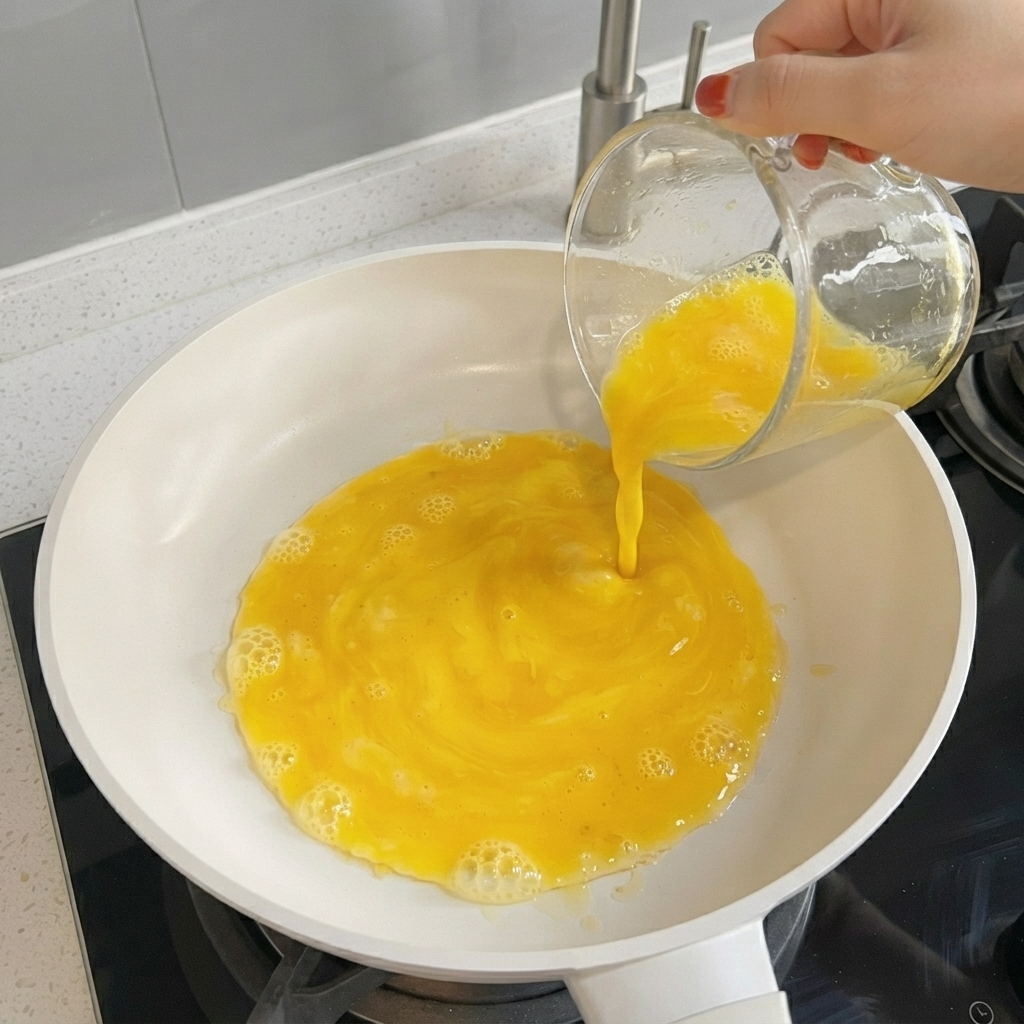
Pour seasoned beaten eggs into a heated pan, swirling it around to form a thin, even egg crepe.
Tip: Keep the heat low so the egg cooks smoothly without bubbling or burning too quickly. - 3Slice the egg crepe
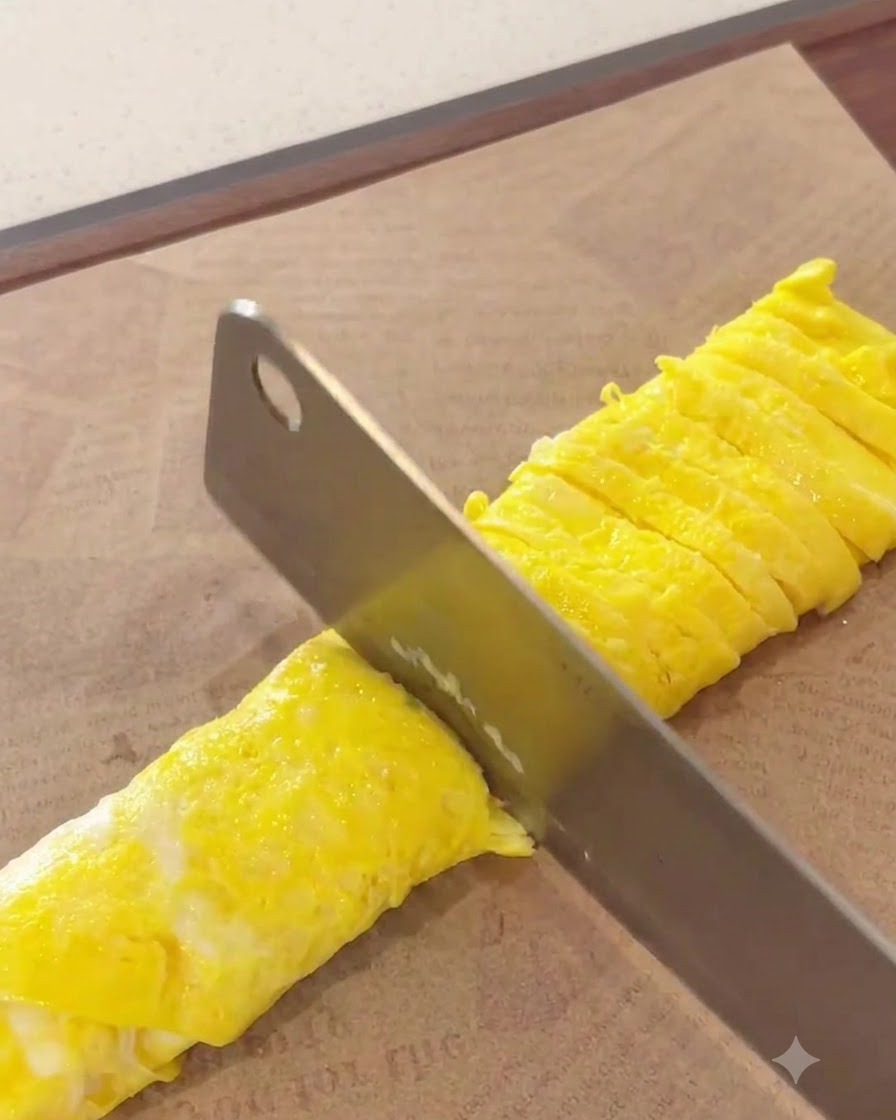
Roll up the cooked egg crepe and place it on a cutting board, then slice it uniformly into thin strips.
Tip: Use a sharp knife to make clean cuts without tearing the soft egg roll. - 4Stir-fry shredded carrots
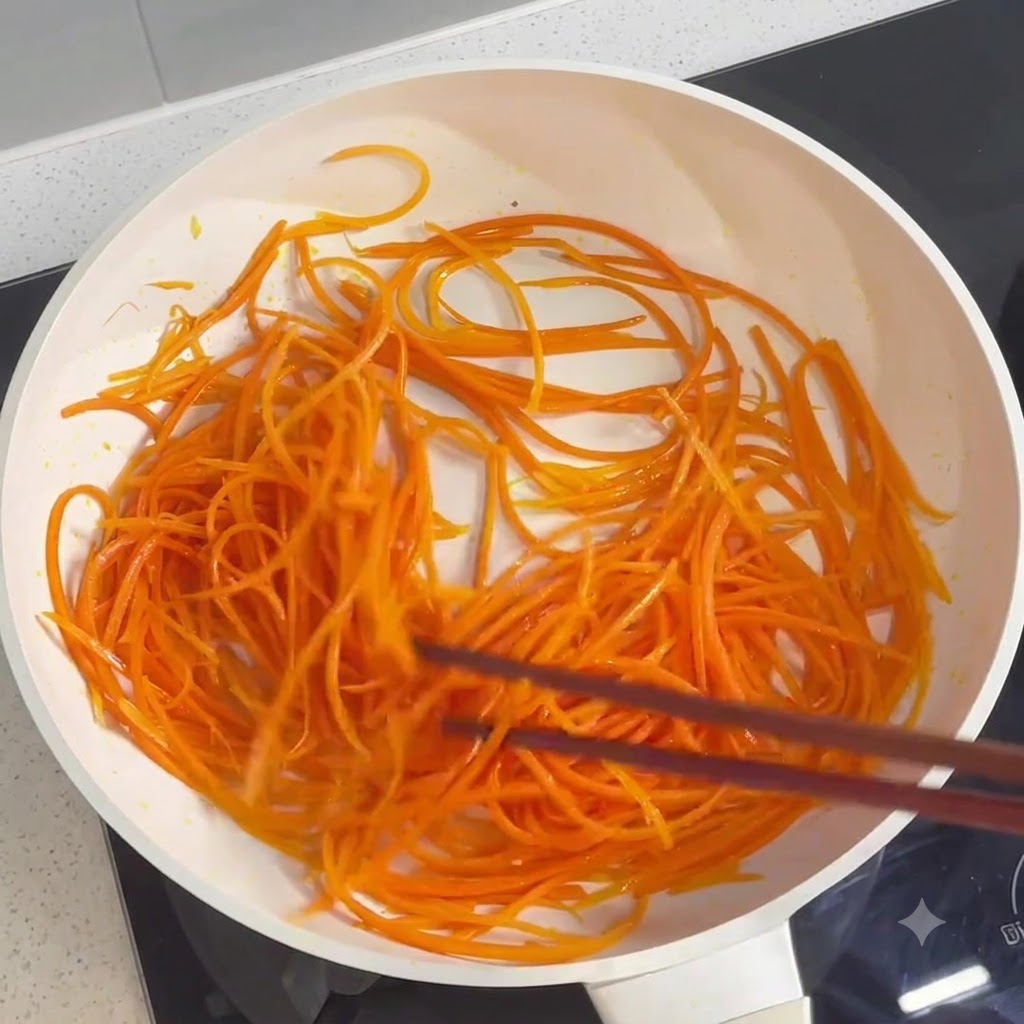
Add shredded carrots to a white pan with a little salt and stir-fry until they are tender and cooked through.
Tip: Cook until just softened so they retain a slight crunch and vibrant color. - 5Stir-fry fish cake strips
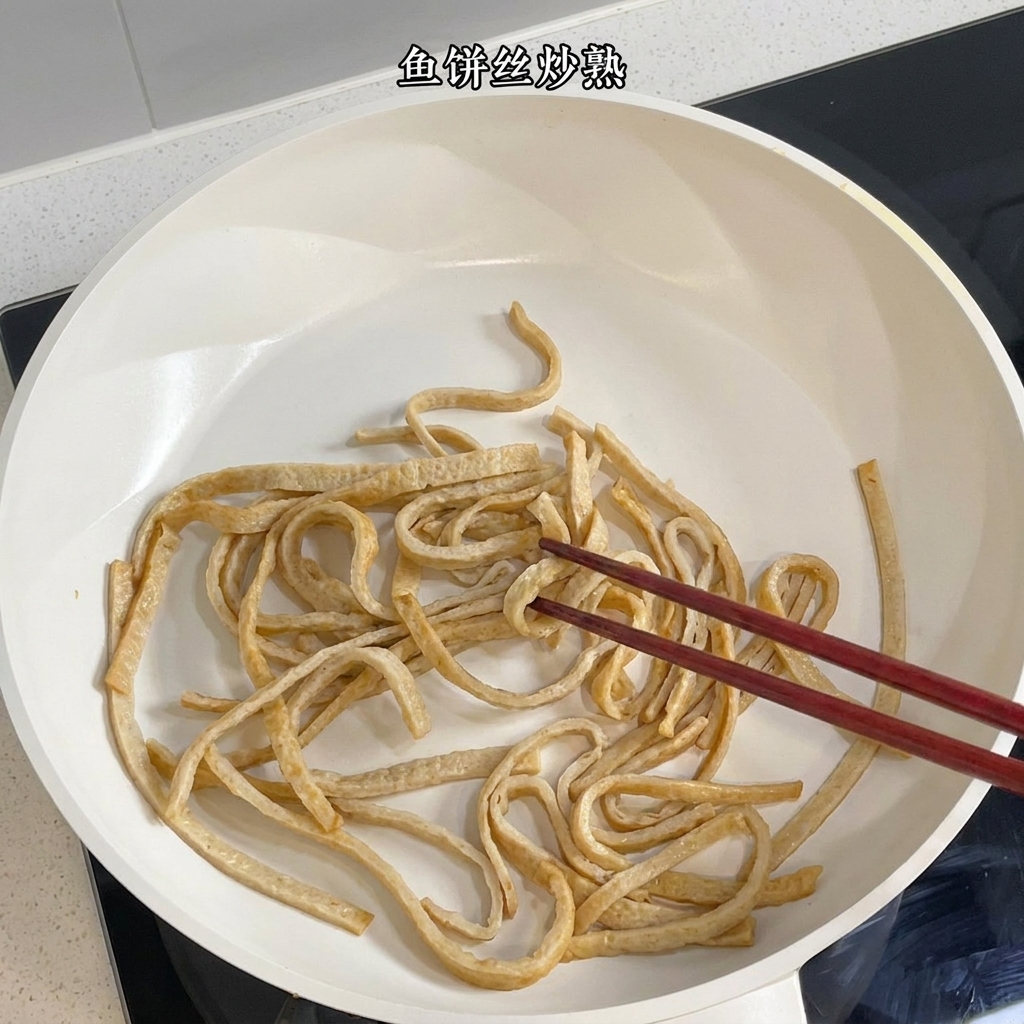
Place the fish cake strips into the pan and stir-fry them until fully cooked and warm.
Tip: A quick sauté enhances the savory flavor of the fish cakes before rolling them into the kimbap. - 6Season the rice
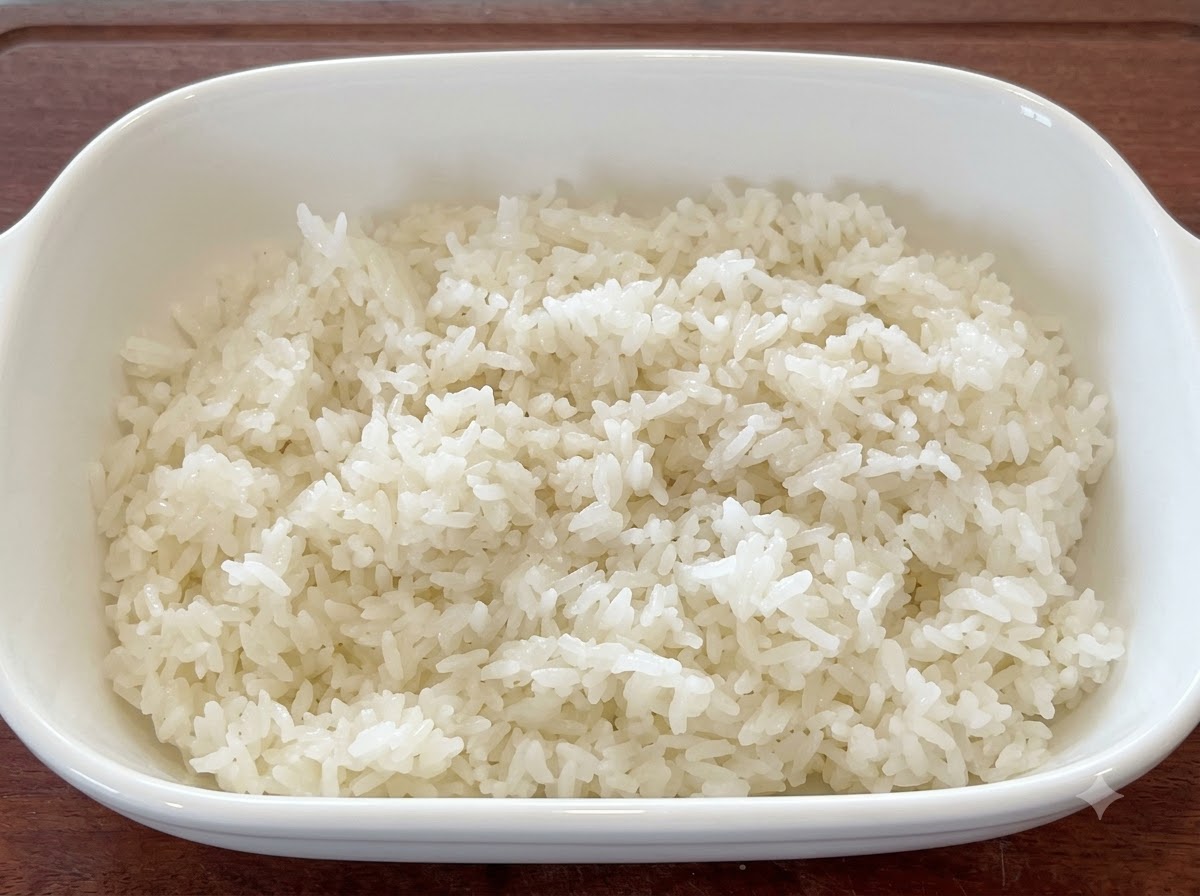
Transfer cooked white rice into a rectangular dish, then season it with salt, sesame oil, and sesame seeds, mixing everything well.
Tip: Mix gently while the rice is still warm so it absorbs the seasonings evenly. - 7Extend the seaweed sheet
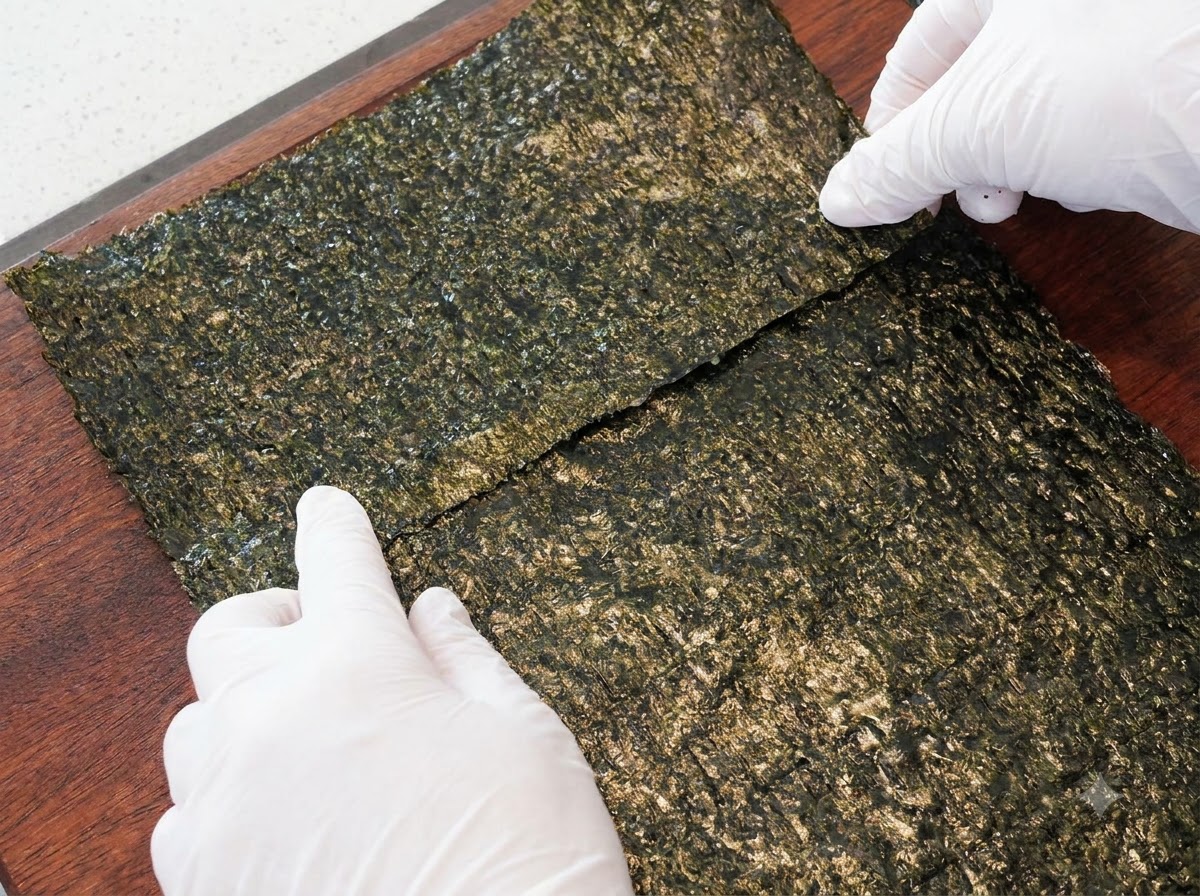
Take a full sheet of seaweed and spread a small amount of rice along the edge, then attach a half sheet of seaweed to it to extend its overall length for rolling.
Tip: Use just a thin smear of rice so the seam holds together without becoming bulky. - 8Layer the fillings and rice
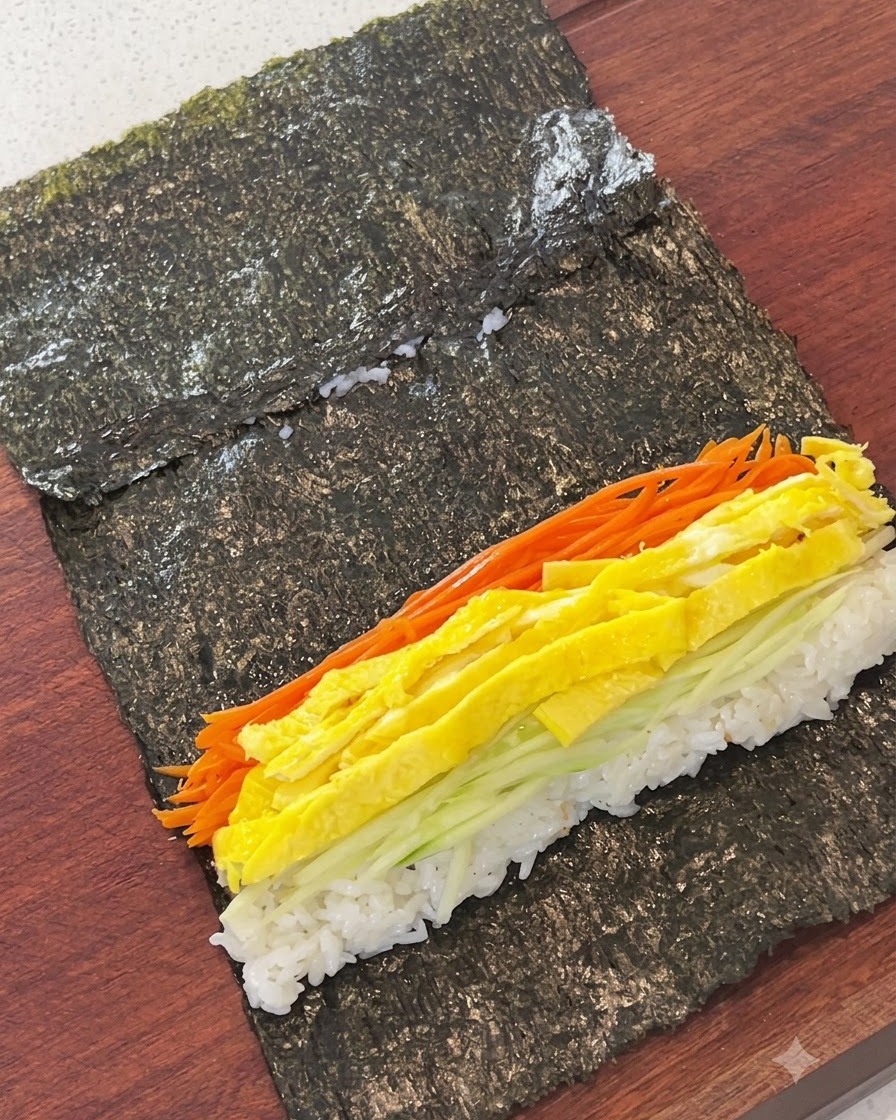
Spread a thin line of rice across the extended seaweed, then arrange the shredded carrots, yellow egg strips, cucumber, and fish cake horizontally in neat rows.
Tip: Keep the layer of rice thin to maintain a healthy and low-carb profile for the kimbap. - 9Add sausage and lettuce
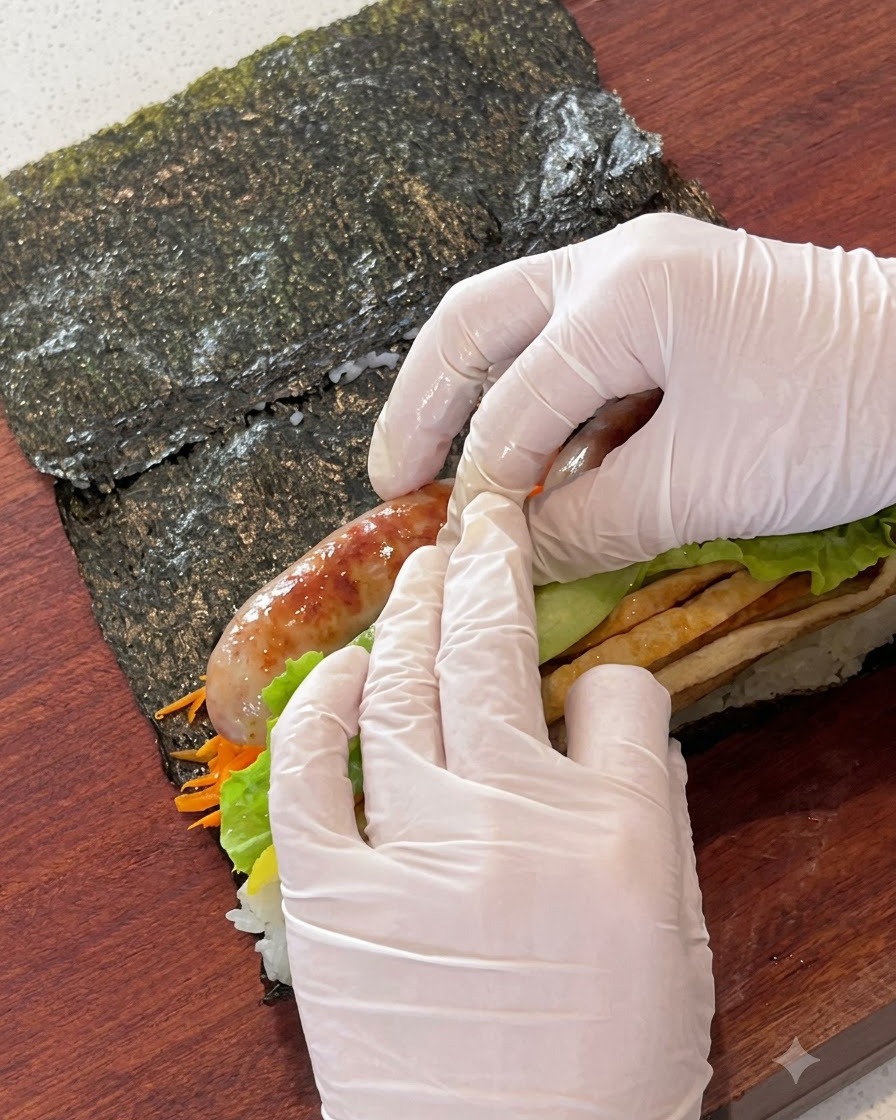
Place the pan-fried sausages and fresh green lettuce directly over the stacked vegetable fillings before rolling.
Tip: Ensure the sausage is fully cooled or patted dry so the moisture does not make the seaweed soggy. - 10Roll the kimbap tightly
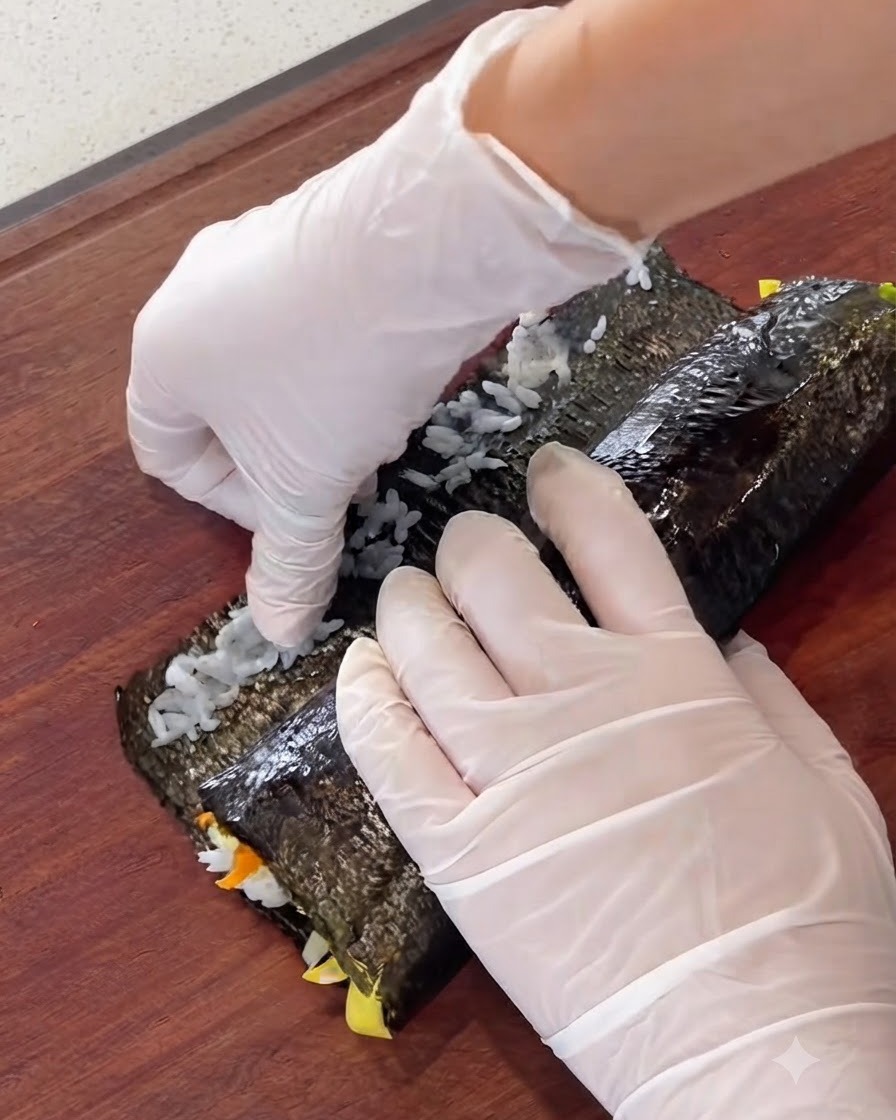
Tightly roll the seaweed and all the stacked ingredients by hand into a thick, uniform cylindrical shape.
Tip: Roll firmly as you go to ensure all the internal ingredients stay compact and secure. - 11Shape with a bamboo mat
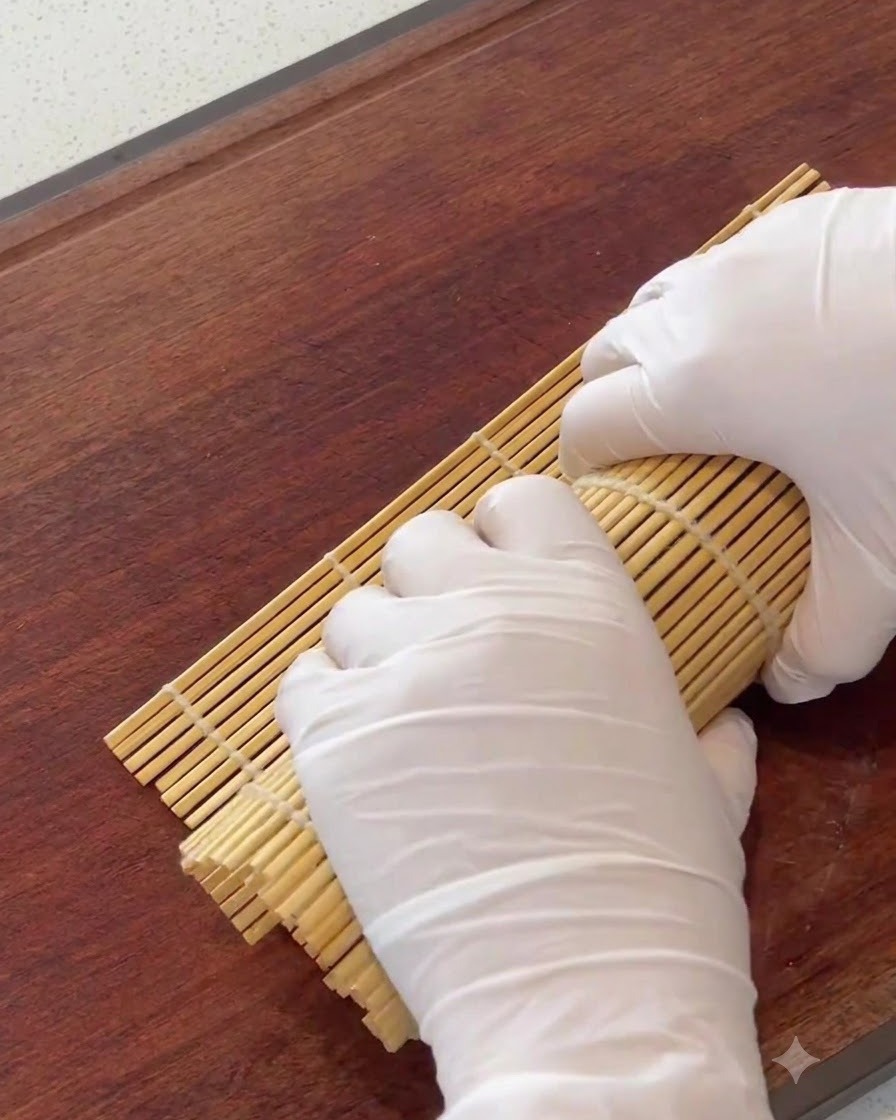
Use a bamboo rolling mat to gently press and shape the assembled kimbap roll, ensuring it is firm and evenly cylindrical.
Tip: Squeeze gently and evenly across the length of the bamboo mat to set the shape. - 12Brush with oil and slice
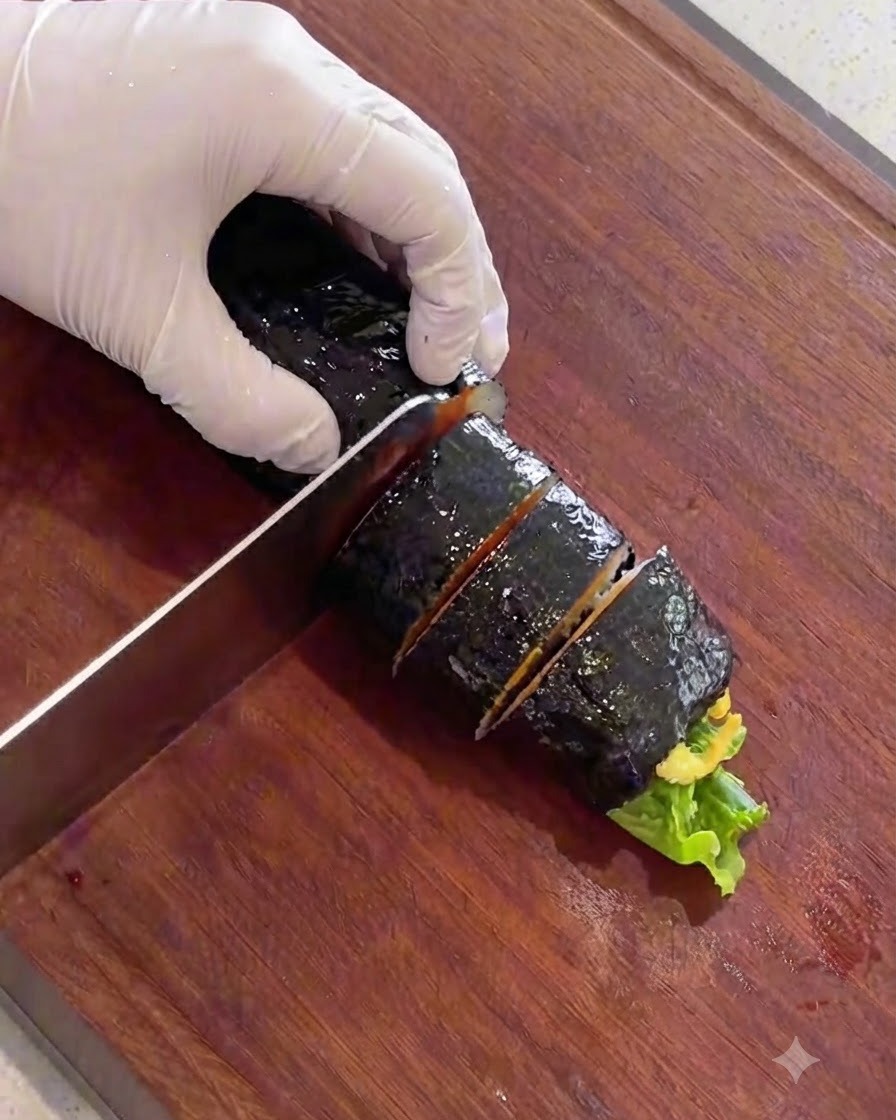
Brush the surface of the kimbap roll with fragrant sesame oil, then use a sharp knife to slice it cleanly into bite-sized pieces.
Tip: Wipe the knife blade with a damp cloth between cuts to prevent the rice from sticking and tearing the seaweed.