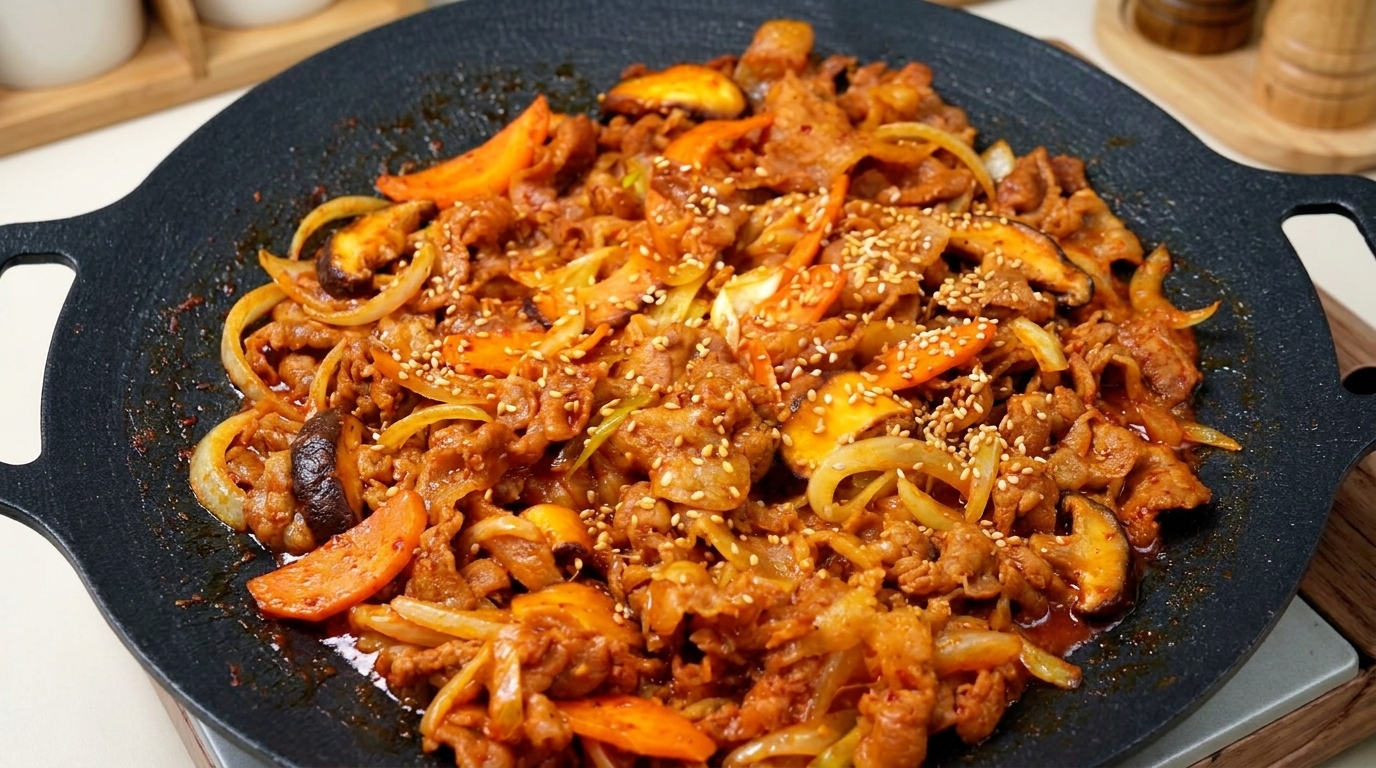
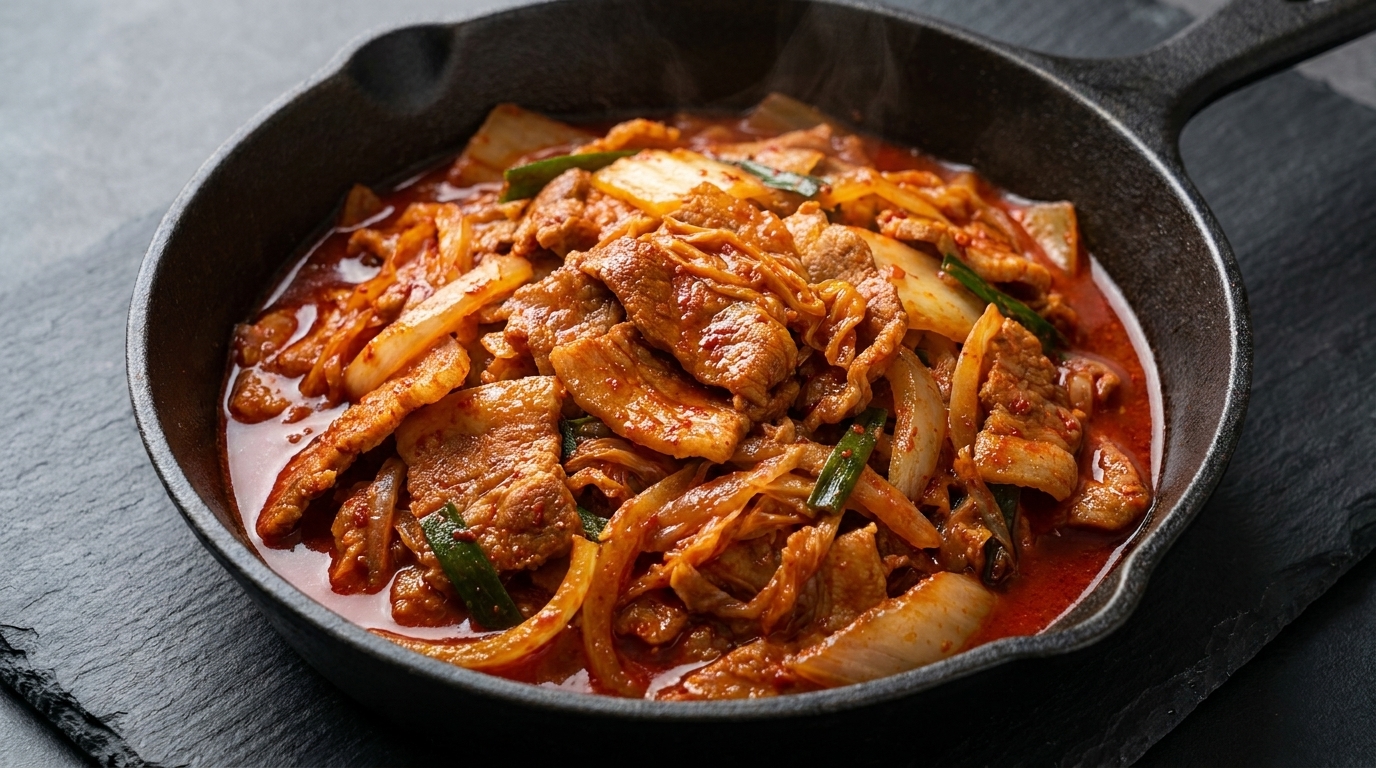
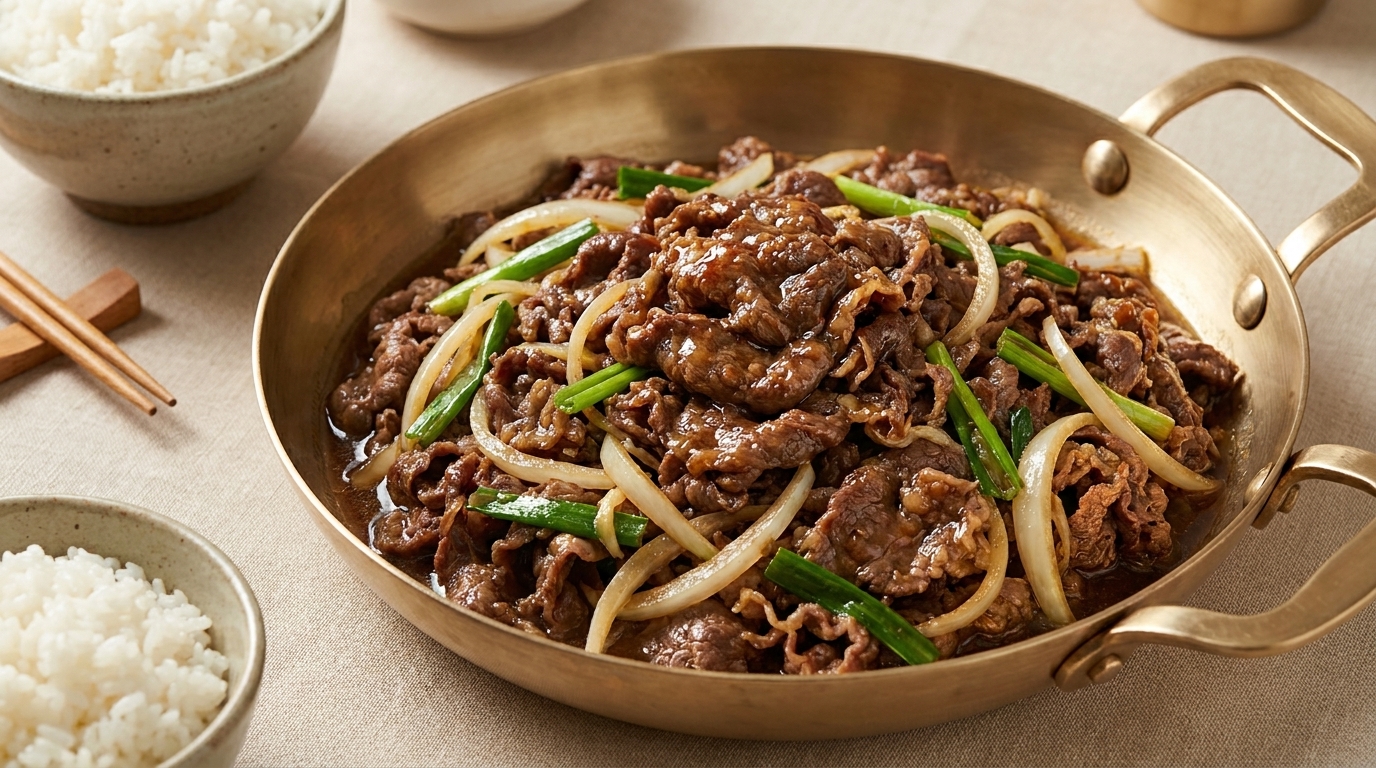
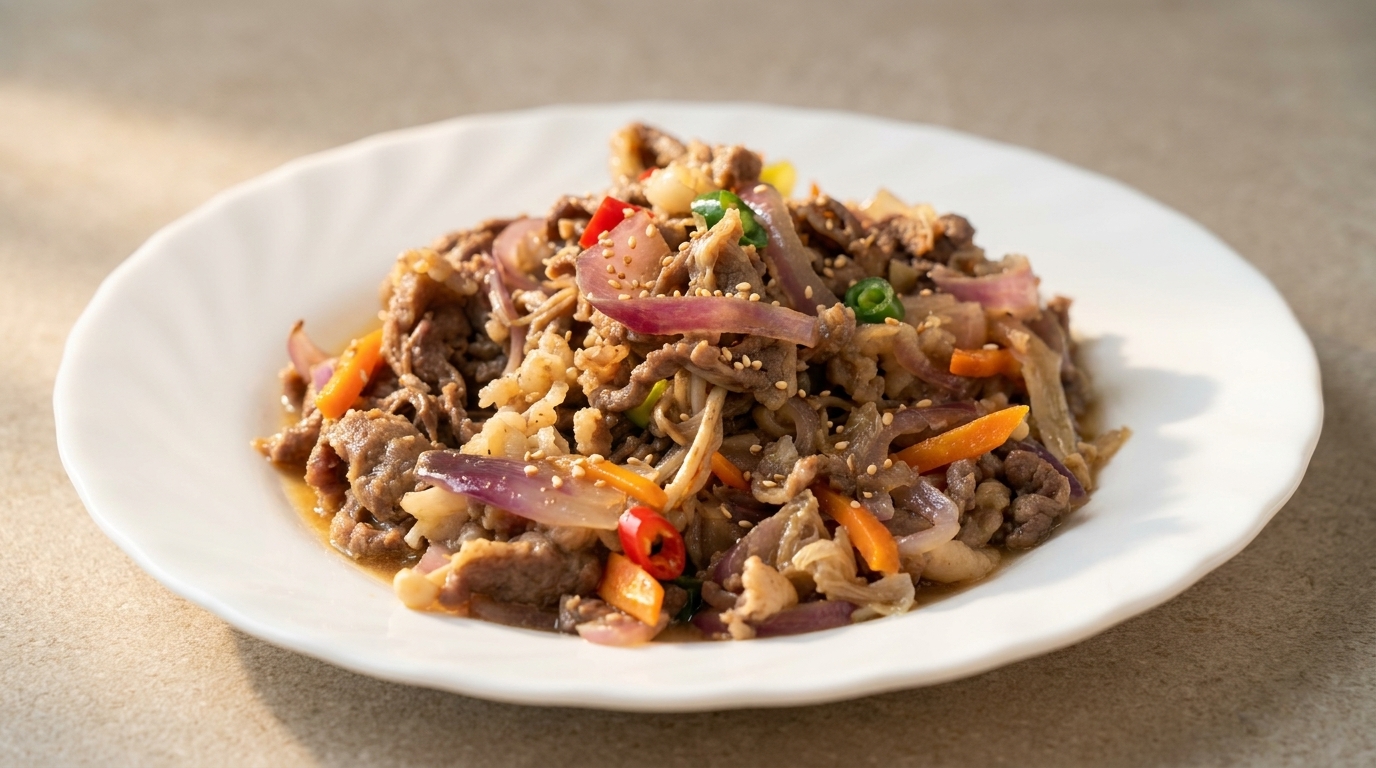
Traditional Korean Grilled Beef (Bulgogi)
A traditional Korean Bulgogi recipe featuring thin beef tenderloin marinated in a sweet fruit-based sauce, stir-fried with glass noodles and fresh vegetables.
Commonly known as fire meat Bulgogi is a beloved staple of Korean BBQ. This recipe utilizes a traditional marinade of blended apple and onion to naturally tenderize the beef and create a complex sweet-savory profile. Served with chewy sweet potato starch noodles it offers a perfect balance of textures and authentic flavors.
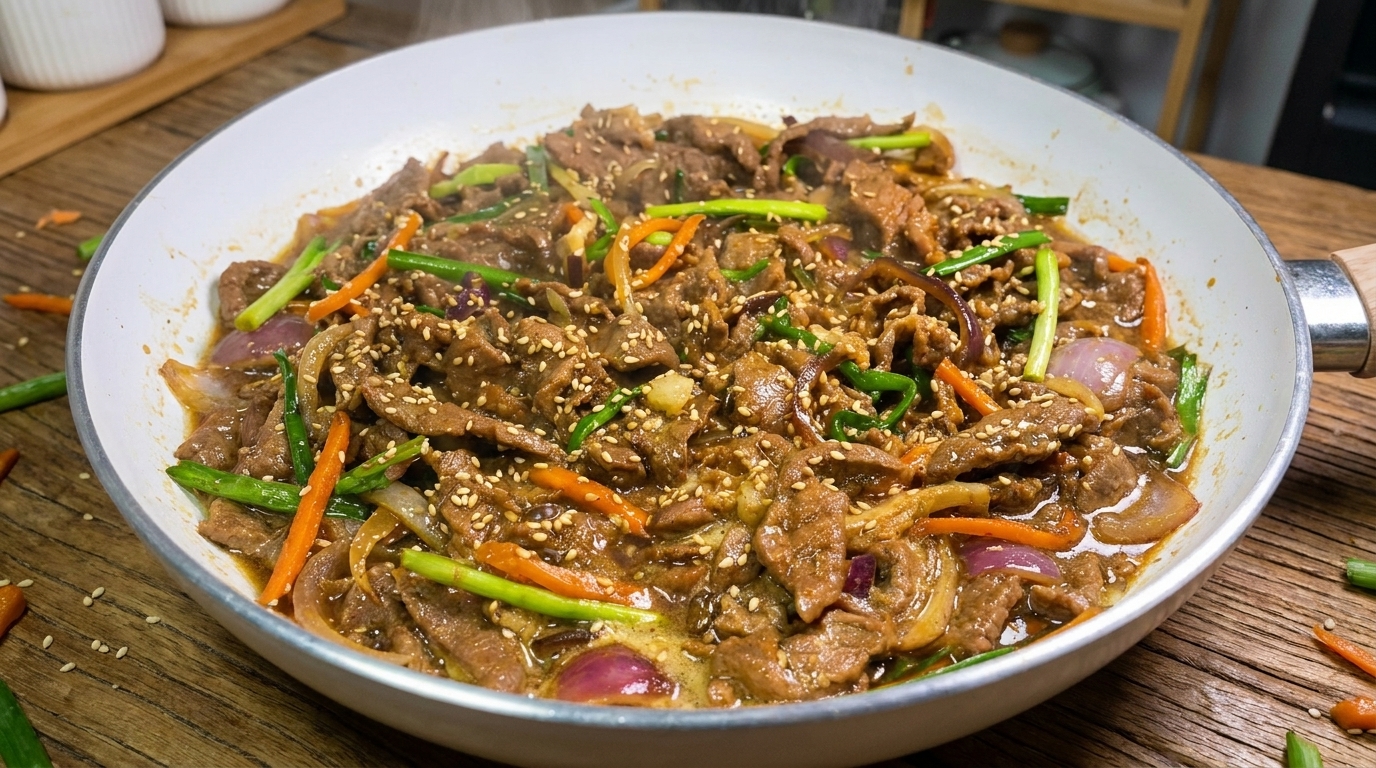
Ingredients
- 300 g beef tenderloin
- 3 shiitake mushrooms
- 12 carrot
- 12 red onion
- 1 bunch green onions
- 20 g garlic
- 30 g apple
- 30 g onion
- 12 cup cola
- 12 cup soy sauce
- 50 g sweet potato starch noodles
- 1 bunch Chinese chives
- to taste toasted sesame seeds
Instructions
- 1Prepare noodles and beef
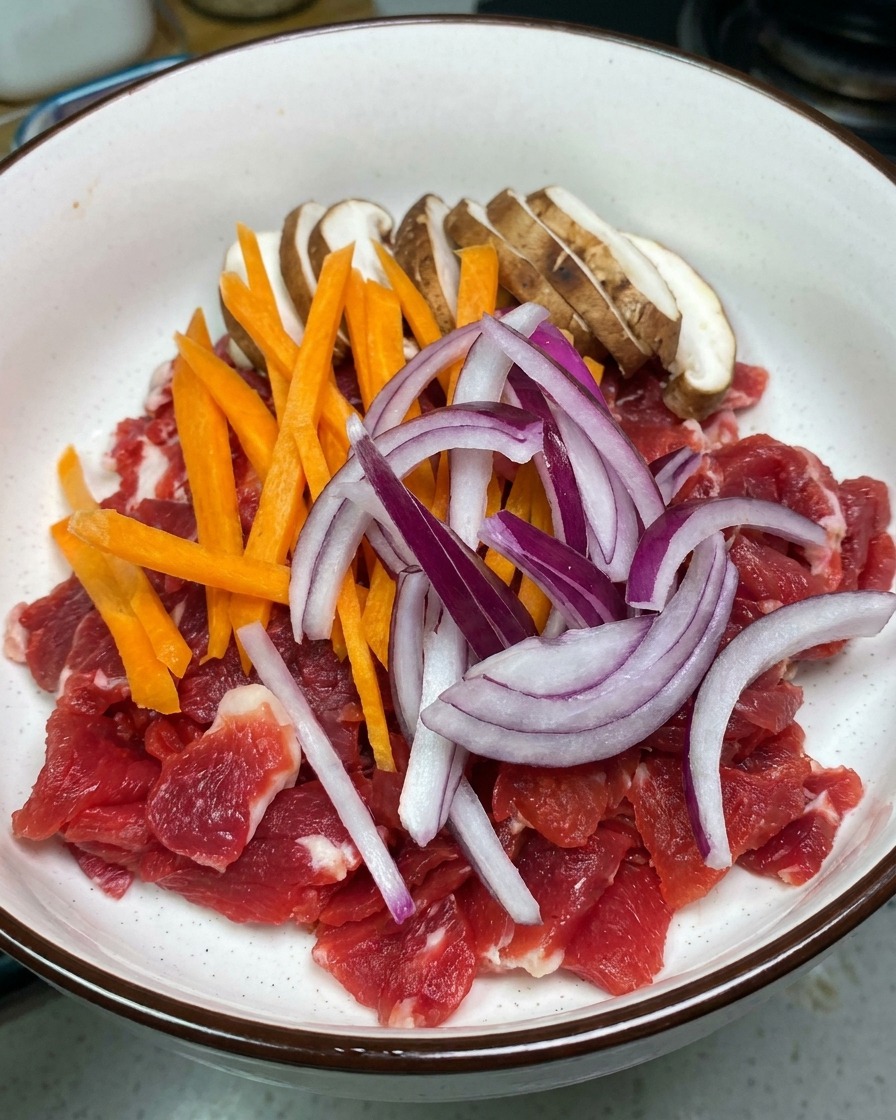
Begin by soaking the glass noodles in water. Next place the thinly sliced beef tenderloin into a large mixing bowl. Add the sliced shiitake mushrooms julienned carrot strips and red onion segments on top of the meat. These fresh vegetables will marinate alongside the beef to absorb the flavors and add texture to the final dish.
Tip: Try to slice the vegetables into uniform strips so they cook at the same rate as the thin beef slices. - 2Prep the marinade base
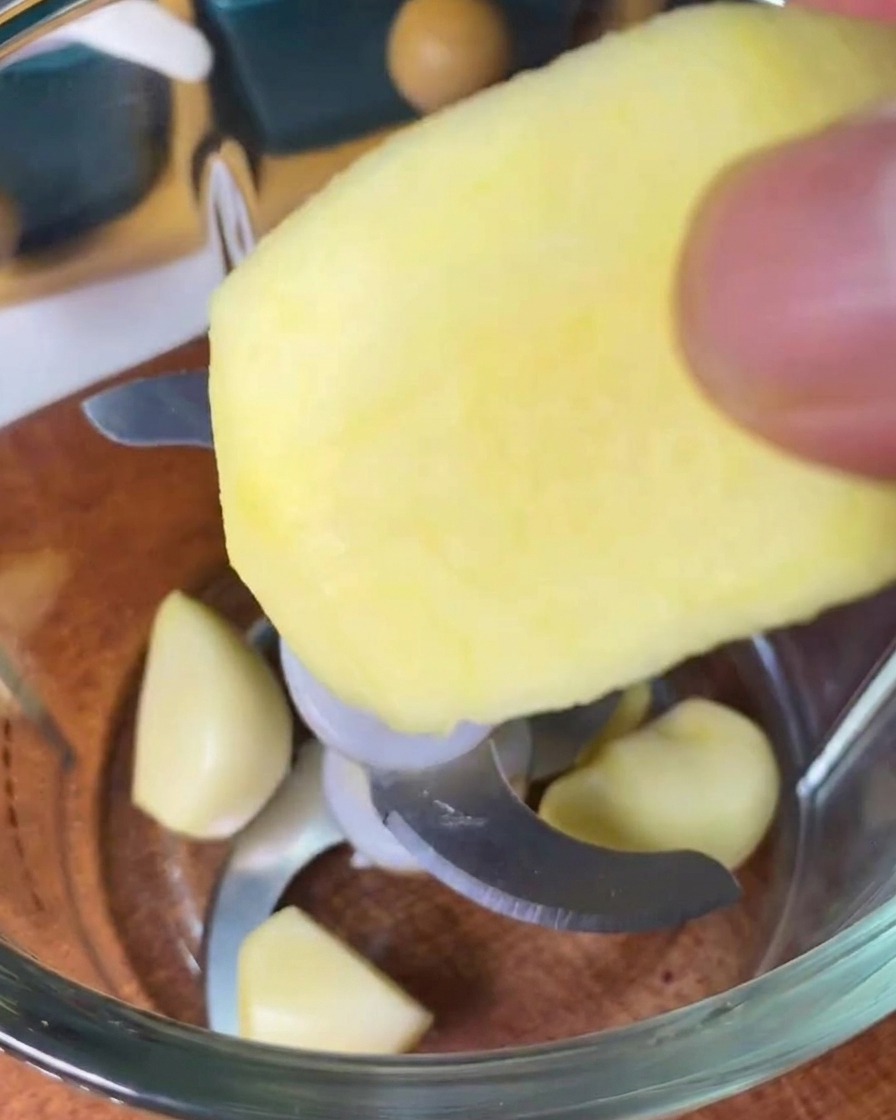
Add fresh garlic cloves, apple chunks, and onion pieces into a blender. This combination of aromatics and fruit will create a flavorful puree that acts as a natural tenderizer for the beef tenderloin.
Tip: Using Korean pears is traditional, but a sweet, crisp apple like Fuji works as an excellent substitute for tenderizing meat. - 3Add the liquid marinade
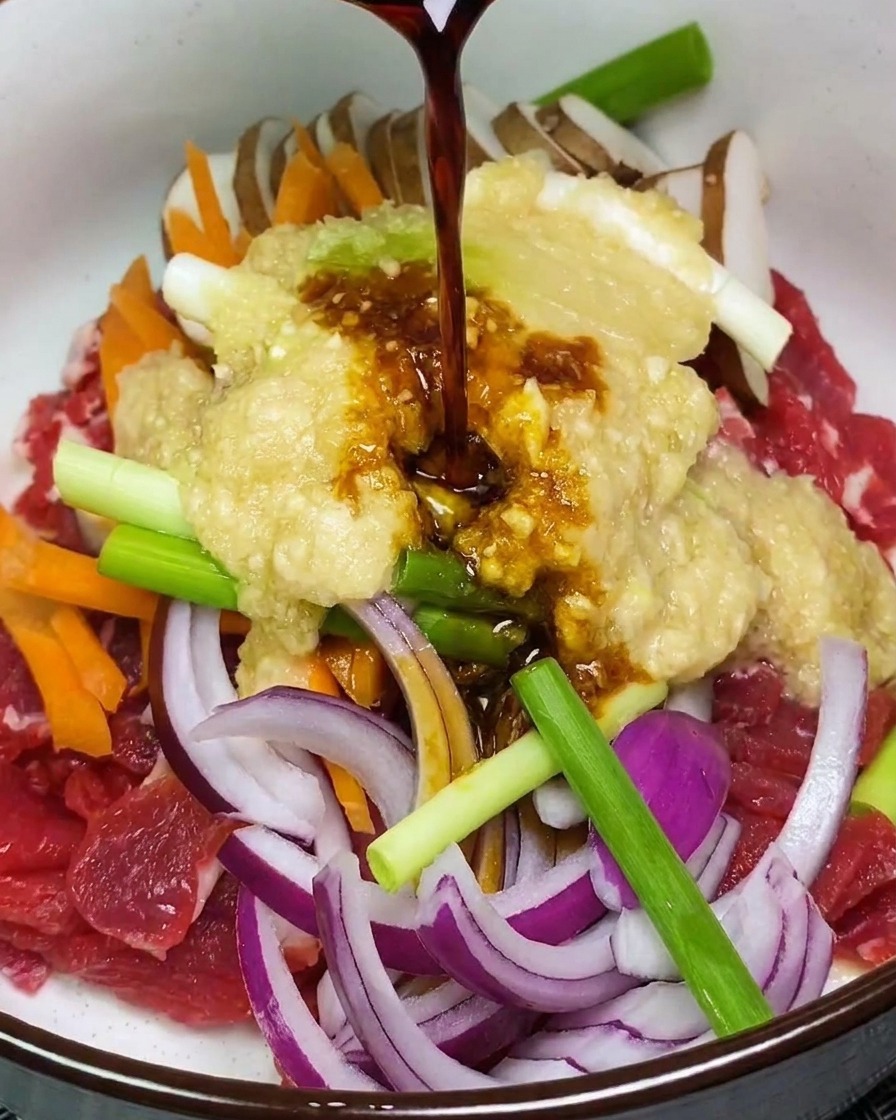
Pour the blended fruit and aromatic puree over the beef and vegetables in the mixing bowl. Follow this by adding the soy sauce-based marinade mixture. The combination of sweet fruit and savory soy sauce creates a balanced, traditional Korean flavor profile.
Tip: Pour the liquids slowly over the center of the ingredients to ensure the seasonings are distributed evenly before mixing. - 4Mix and marinate the beef
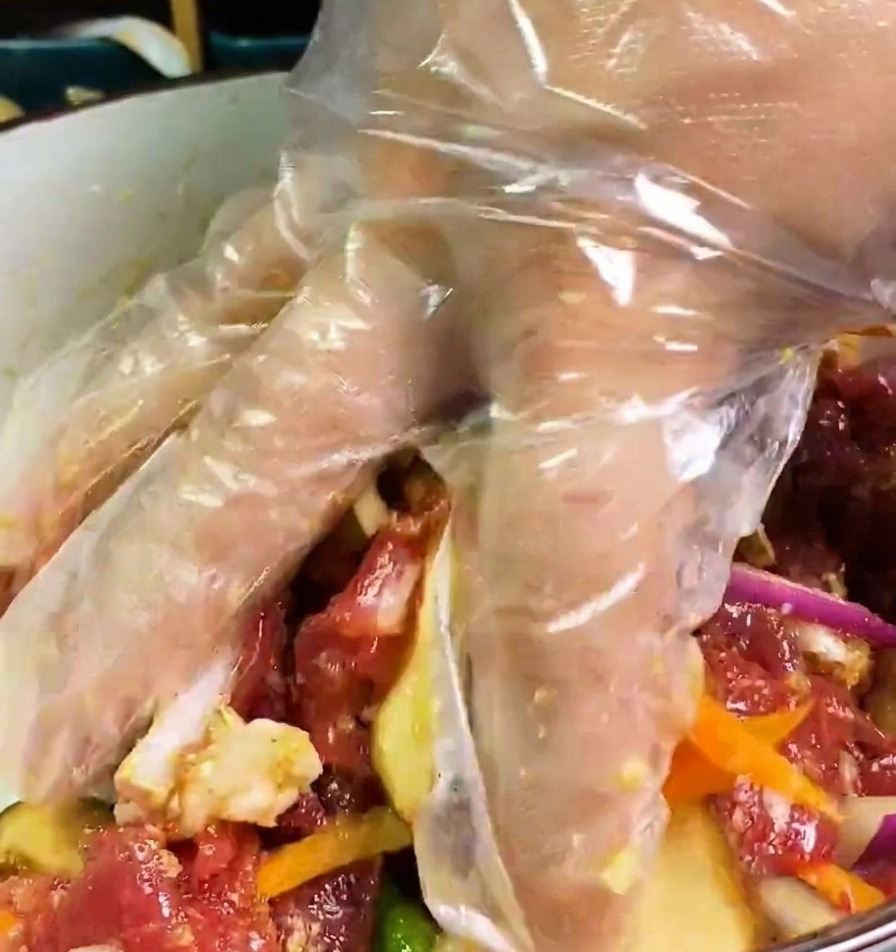
Using a gloved hand, mix the beef, vegetables, and marinade thoroughly until every piece of meat is well-coated. Once mixed, let the bowl sit for at least one hour. This marination period allows the fruit enzymes to tenderize the beef and the flavors to fully develop.
Tip: Mixing by hand ensures the marinade is worked into the fibers of the meat more effectively than just stirring with a spoon. - 5Sear the marinated beef
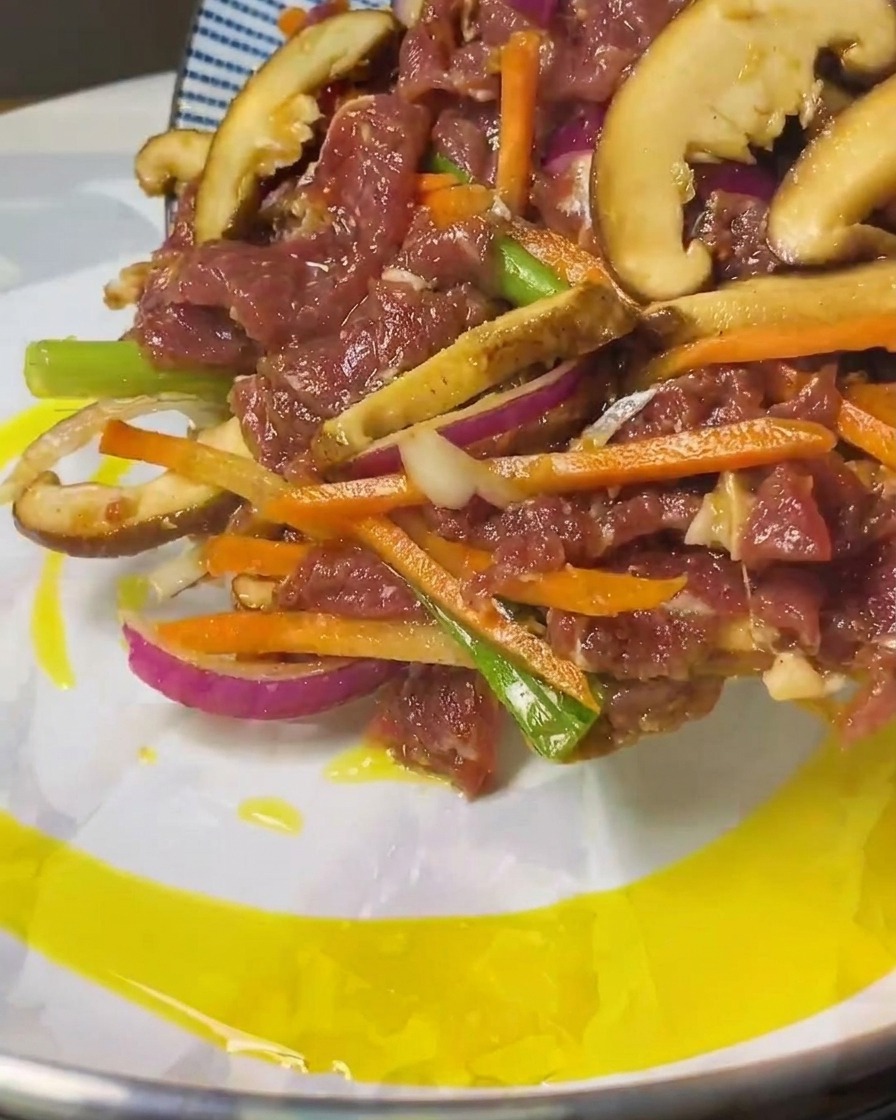
Heat a small amount of oil in a pan over medium heat. Carefully transfer the marinated beef and vegetable mixture from the plate into the hot pan. You should hear a gentle sizzle as the meat makes contact with the heat.
Tip: Wait until the oil is shimmering before adding the beef to ensure you get a good initial sear without the meat sticking. - 6Stir-fry until browned
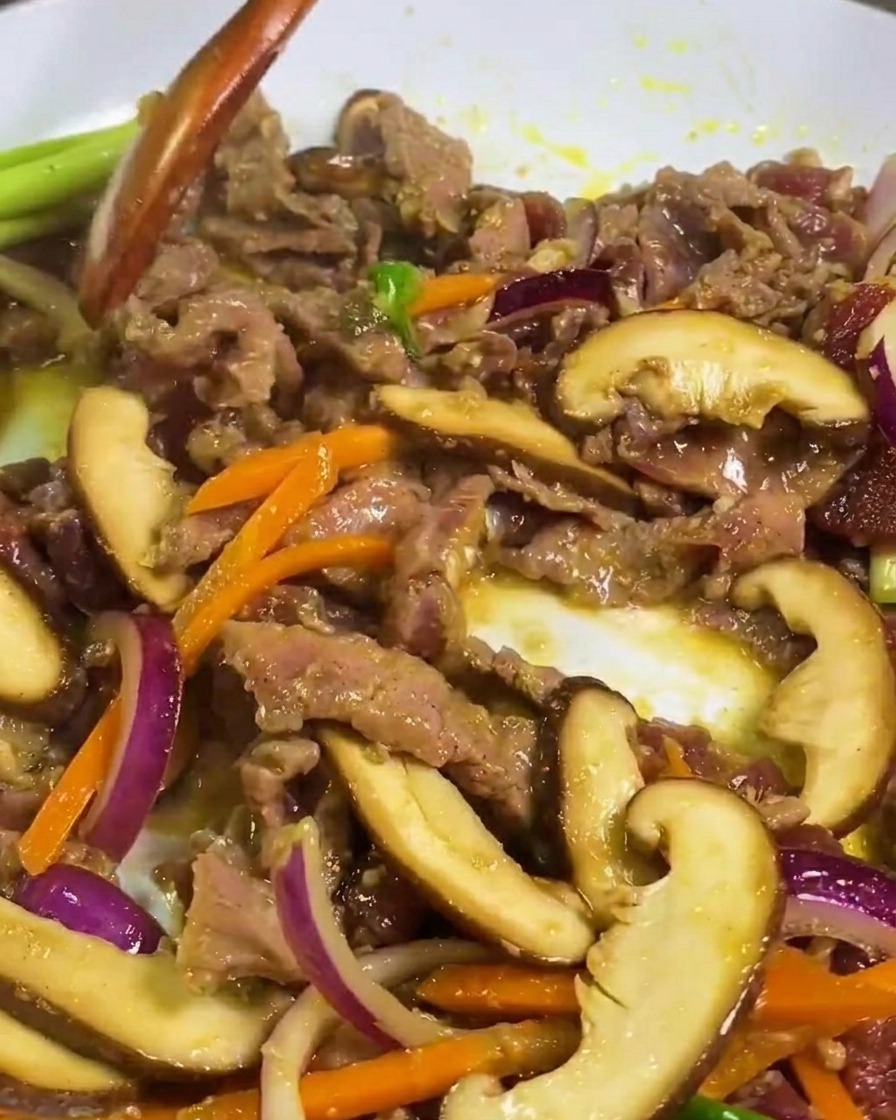
Stir-fry the beef and vegetables over low heat. Move the ingredients constantly so the meat browns evenly without sticking, and continue until the vegetables begin to soften and the marinade reduces into a glossy sauce.
Tip: Keep the heat low during this stage to prevent the beef from toughening and to ensure the vegetables cook through without burning. - 7Add the starch noodles
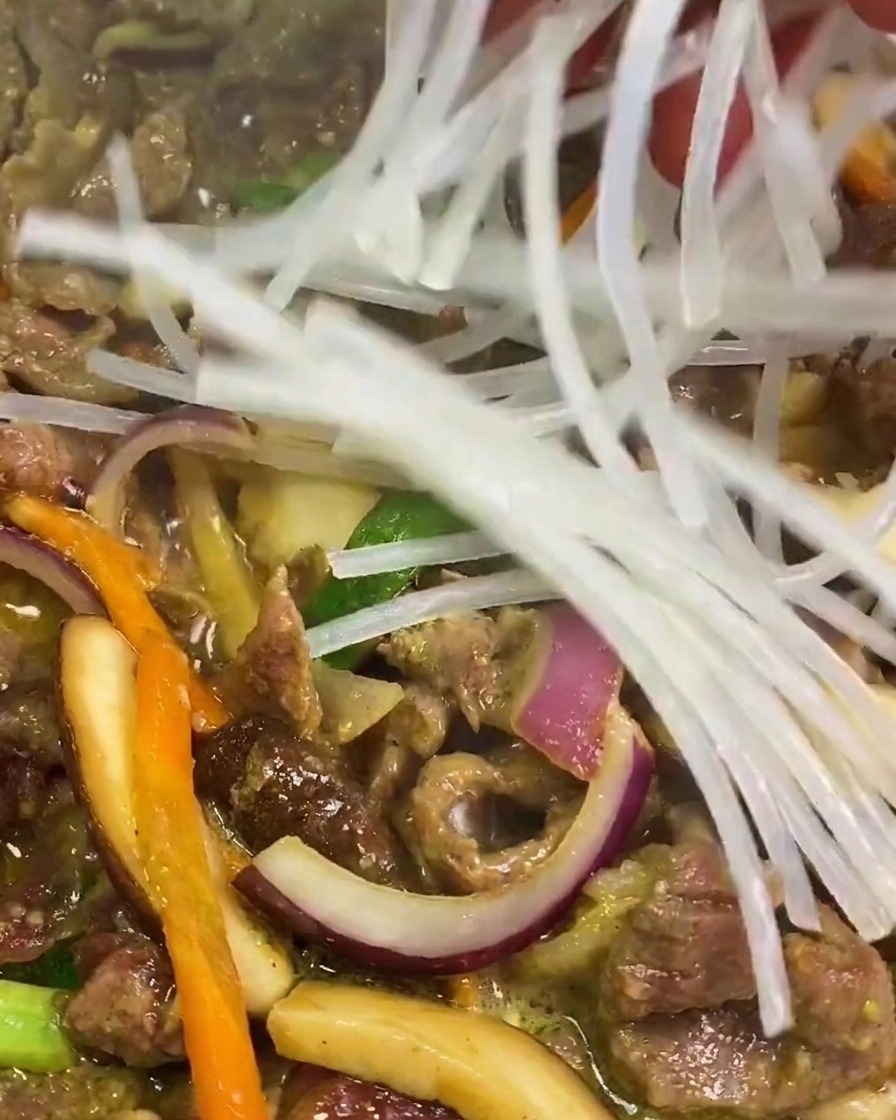
Add the pre-soaked sweet potato starch noodles to the pan with the browning beef and vegetables. These noodles are essential for absorbing the savory juices and sauce, which will give them a delicious flavor and a perfectly chewy texture.
Tip: Ensure the noodles are well-soaked before adding them to the pan so they cook quickly and evenly without clumping. - 8Add the Chinese chives
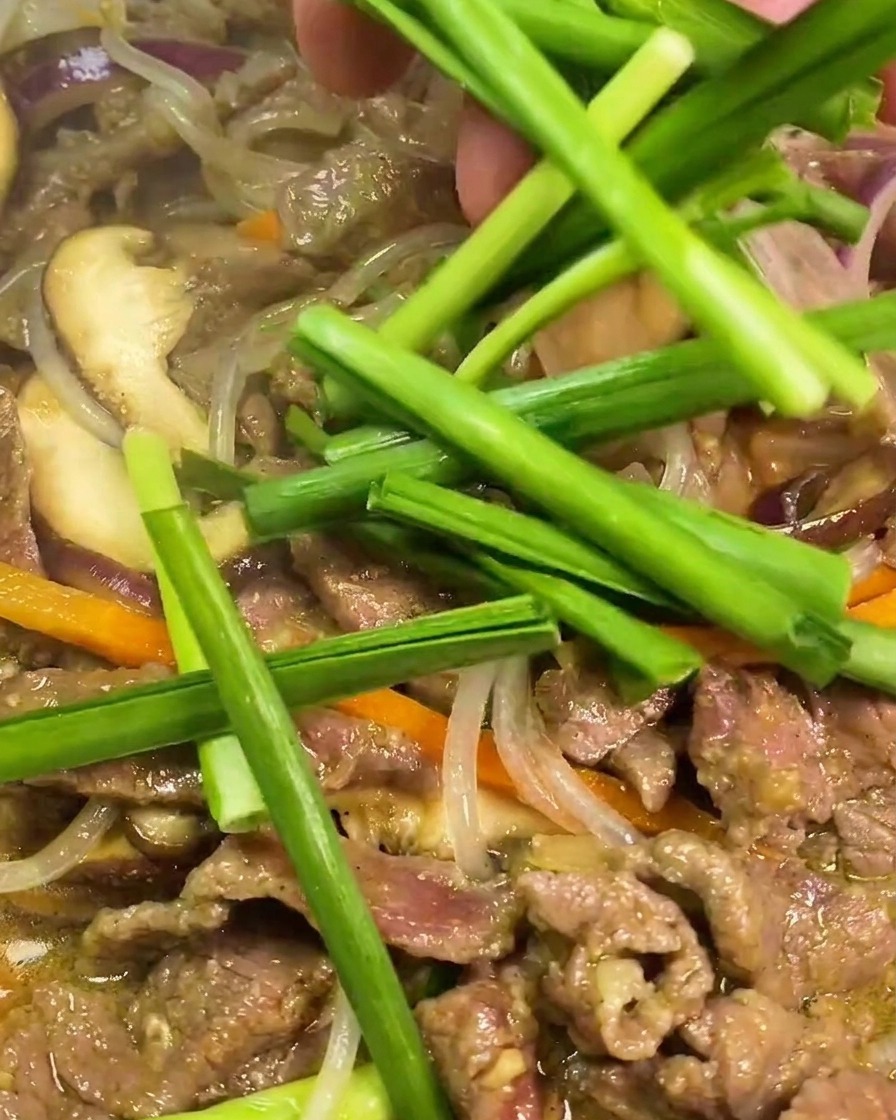
Once the beef is stir-fried and the sweet potato starch noodles are incorporated, add a generous handful of fresh Chinese chive segments to the pan. These aromatics provide a bright, peppery contrast to the savory marinated beef and chewy noodles, enhancing both the flavor and visual appeal of the dish.
Tip: Chinese chives wilt very quickly, so add them at the very end of the cooking process to ensure they retain their vibrant color and fresh crunch. - 9Combine and simmer
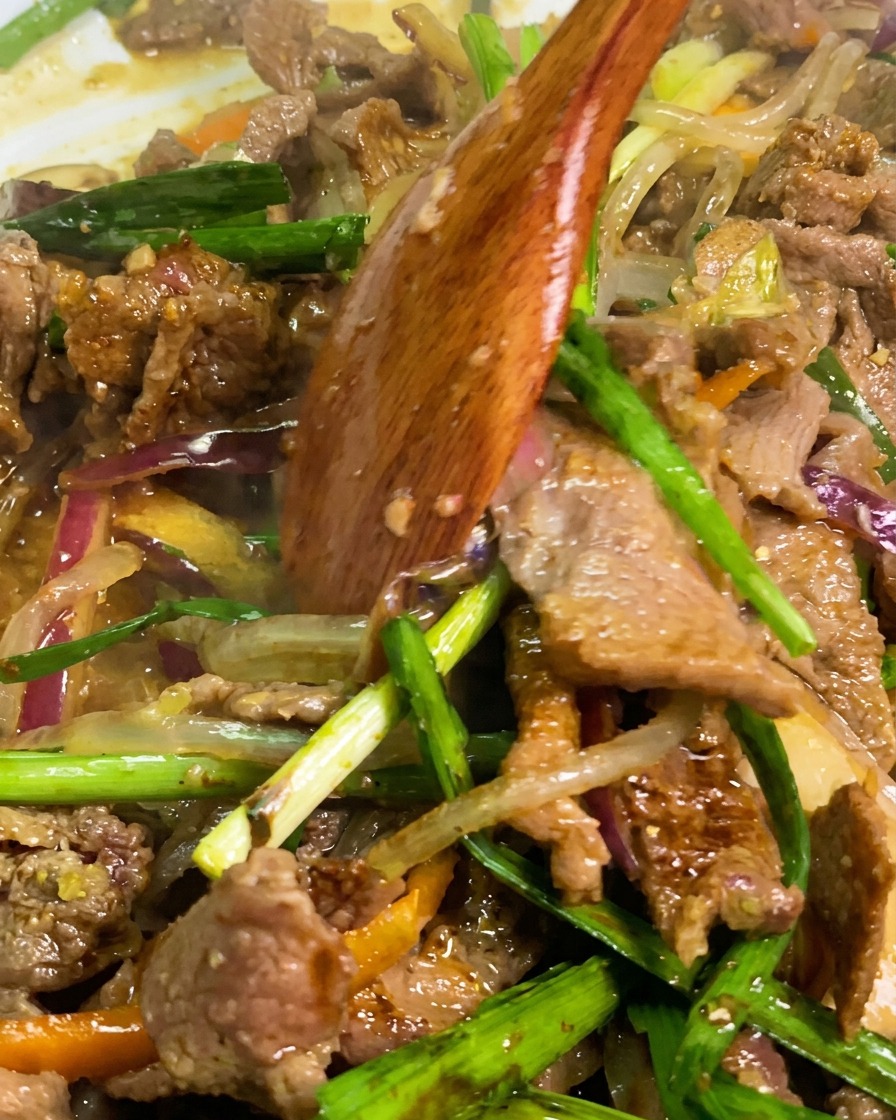
Incorporate the fresh Chinese chives into the pan. Use a wooden spatula to stir all the ingredients together thoroughly so the noodles and chives are evenly distributed and coated in the simmering sauce. Let the dish simmer for another three minutes to finish.
Tip: Stir gently to avoid breaking the long starch noodles while ensuring the chives are just wilted but still vibrant green.