Korean Spicy Stir-fried Pork
Kimchi (Jeyuk Bokkeum)
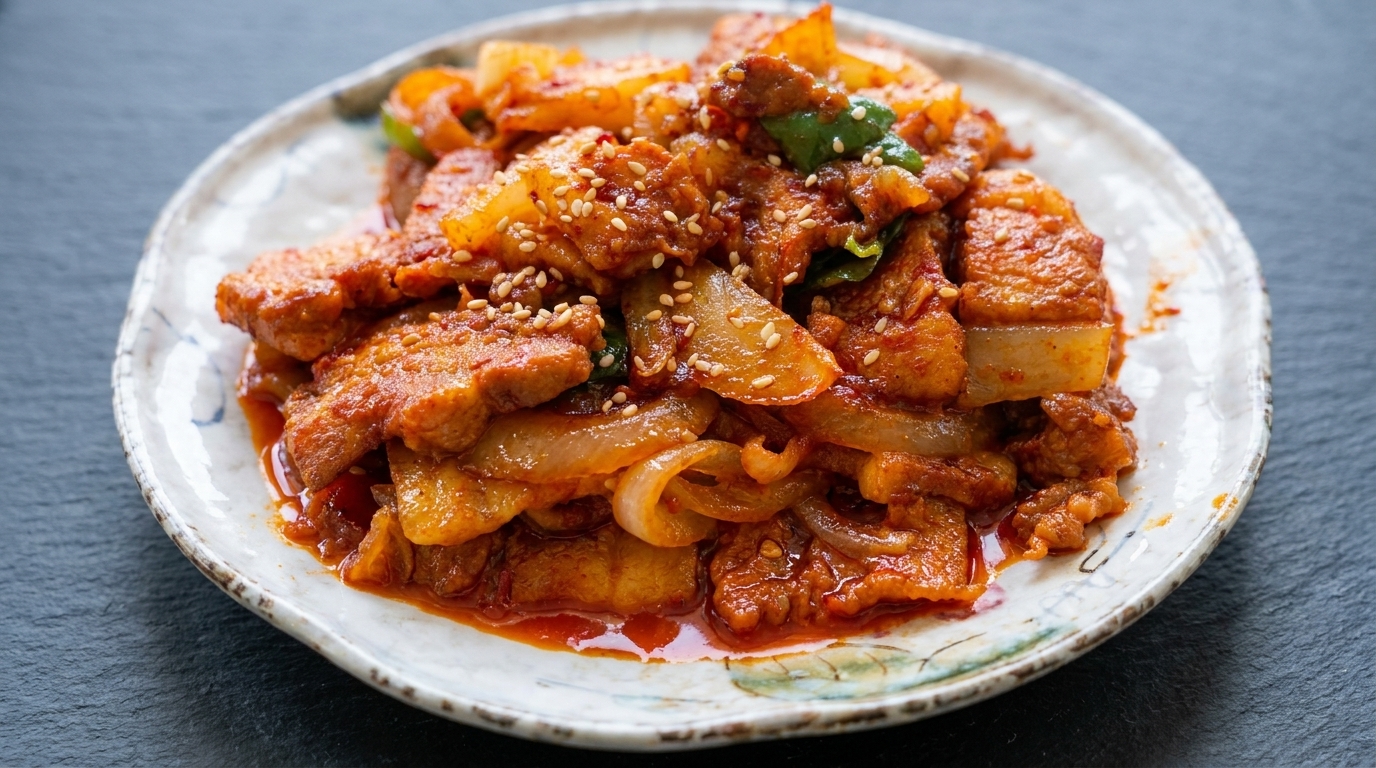
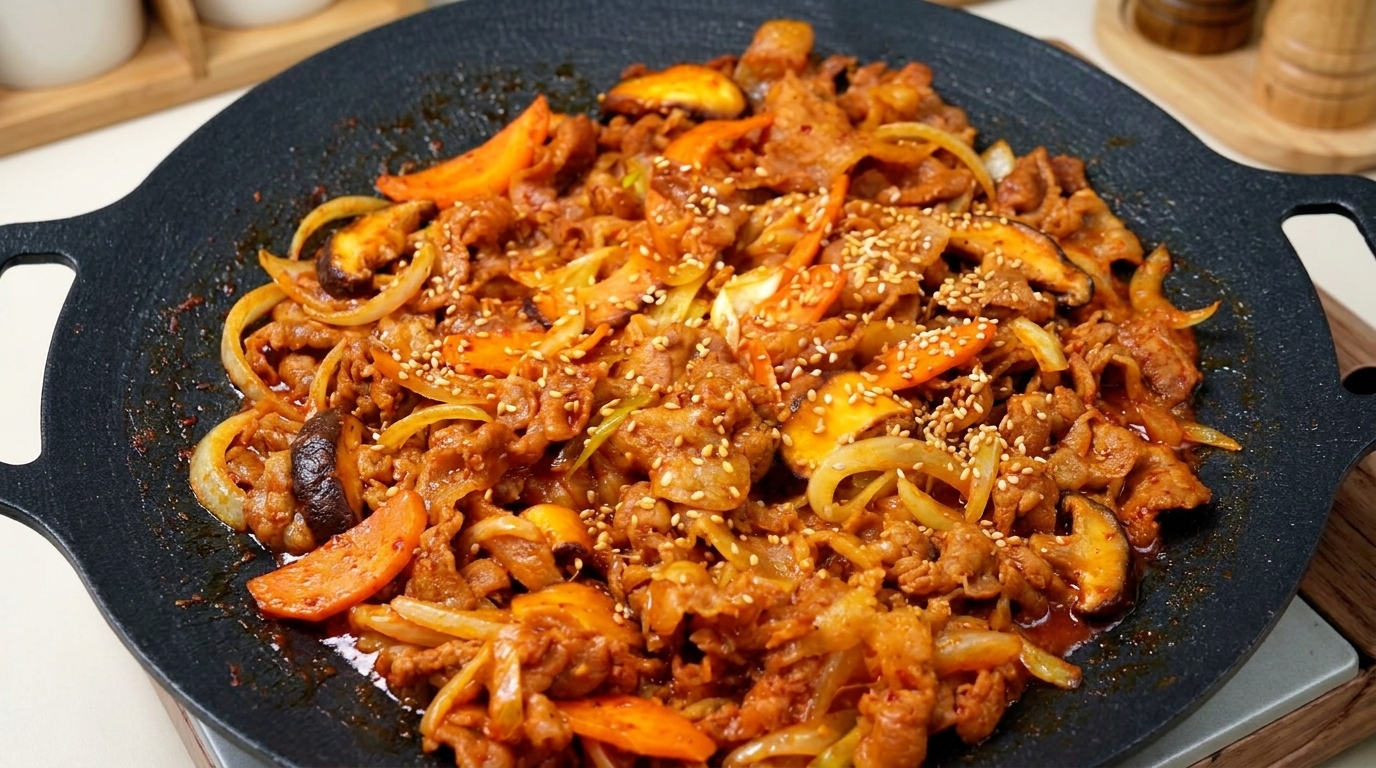
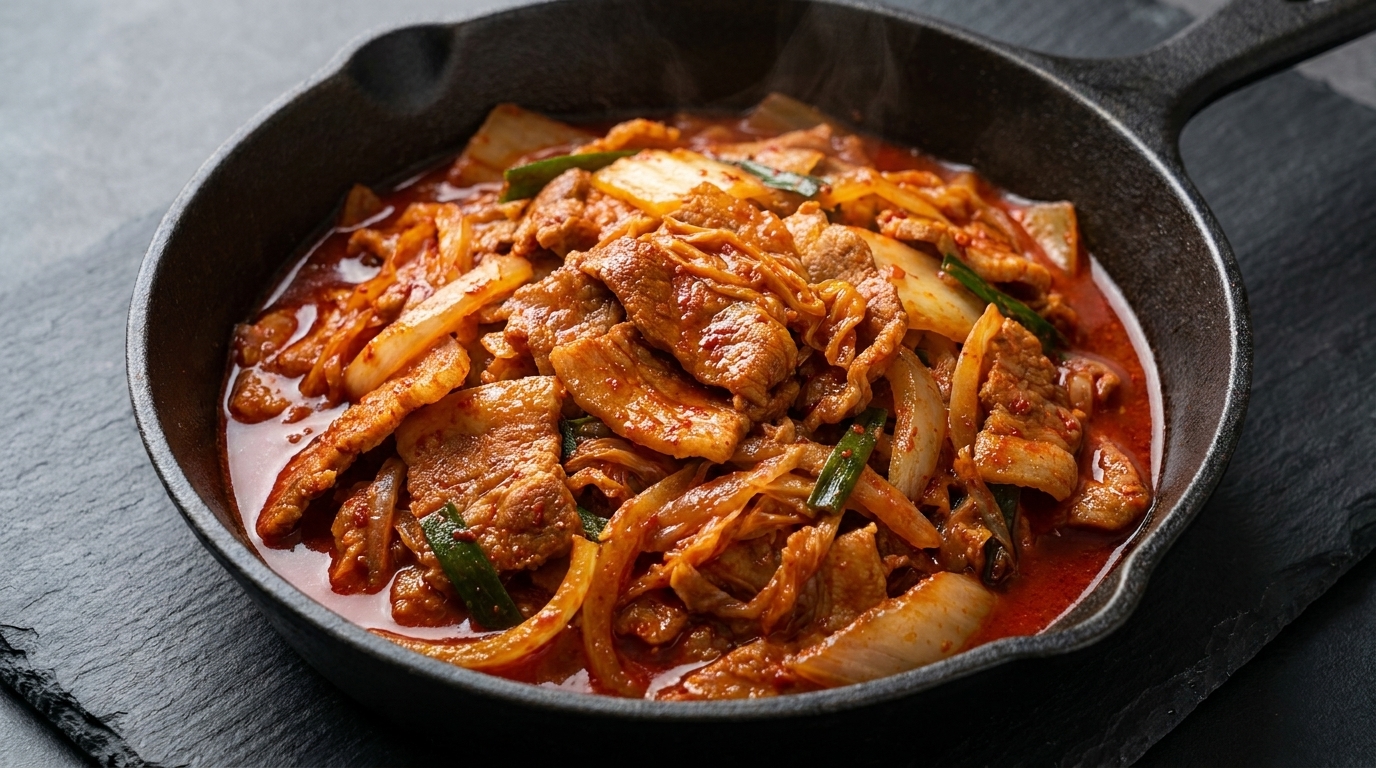
Master the art of Korean stir-fried pork with kimchi featuring tender pork shoulder and a bold gochujang sauce for the ultimate balance of spicy and savory flavors.
Jeyuk Bokkeum with kimchi is a staple of Korean home cooking and restaurant menus alike. By searing the pork first and using the rendered fats to saute aged kimchi you develop a depth of flavor that defines the dish. It is traditionally served with steamed rice to balance the intense heat and savory richness.
Ingredients
- 500 g pork shoulder, thinly sliced
- 200 g fermented kimchi, chopped
- 1 medium white onion, sliced
- 2 stalks green onions, chopped
- 3 cloves garlic, sliced
- 1 tbsp light soy sauce
- 2 tbsp white sugar
- 1 tbsp gochujang (Korean red chili paste)
- 2 tbsp gochugaru (fine red chili flakes)
- 1 tsp sesame oil
- 2 tbsp water
Instructions
- 1Add the sliced pork
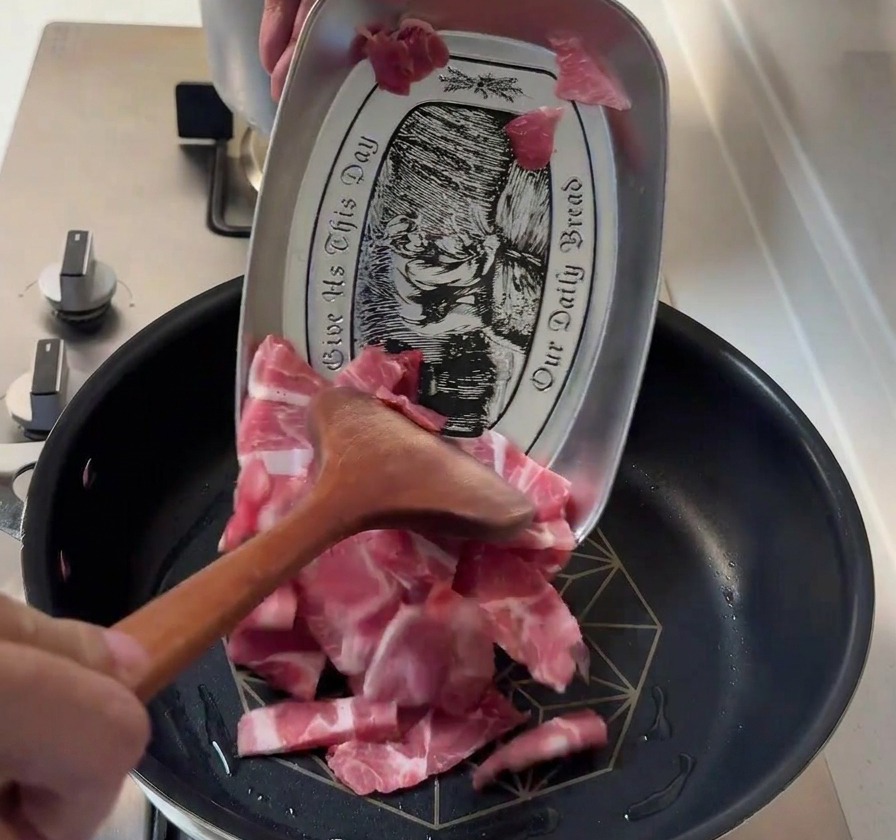
Begin by placing thinly sliced pork shoulder into a preheated pan. Use a wooden spatula to slide the meat from the tray and spread the pieces out evenly. This cut of meat is ideal for stir-frying as it remains tender and juicy when cooked quickly over high heat.
Tip: For easier slicing, place the pork in the freezer for about 30 minutes until firm before cutting it into thin strips. - 2Sear the meat
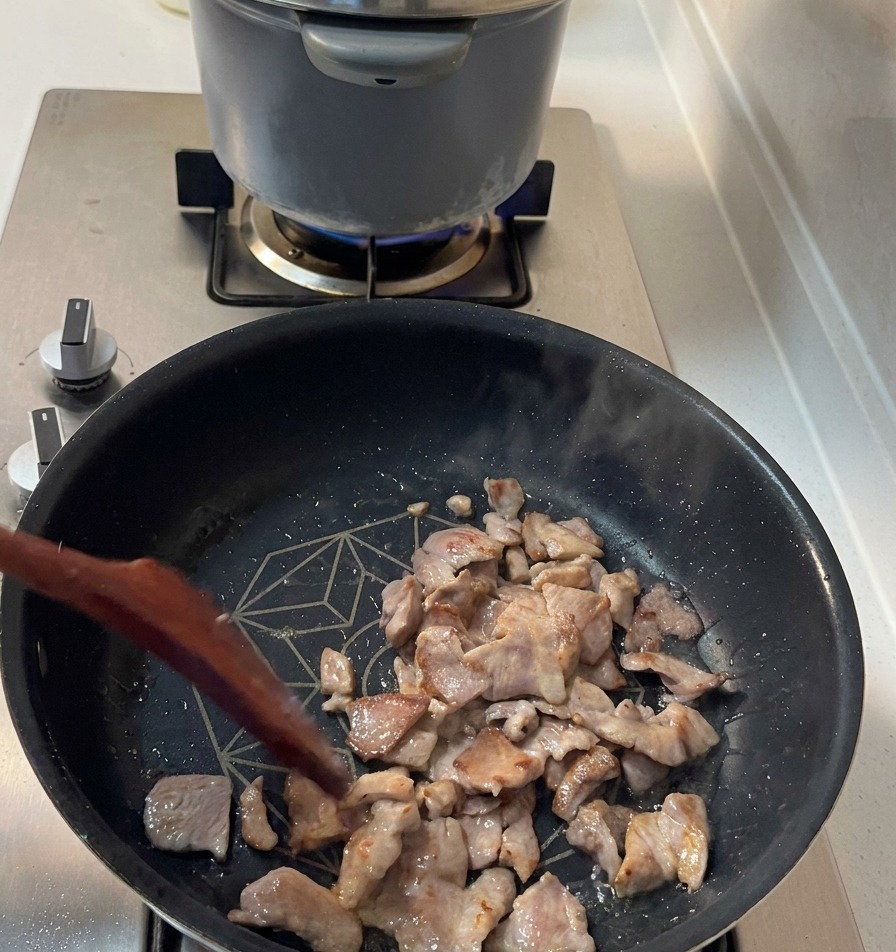
Stir-fry the pork slices over medium-high heat. Continue cooking until the surfaces are beautifully browned and have developed a slight char, which adds a deep smoky flavor. Once seared, remove the pork from the pan and set it aside to prevent it from becoming tough.
Tip: Do not wash the pan after removing the meat; the rendered fat and browned bits left behind will flavor the vegetables and sauce in the next steps. - 3Sauté the aromatics
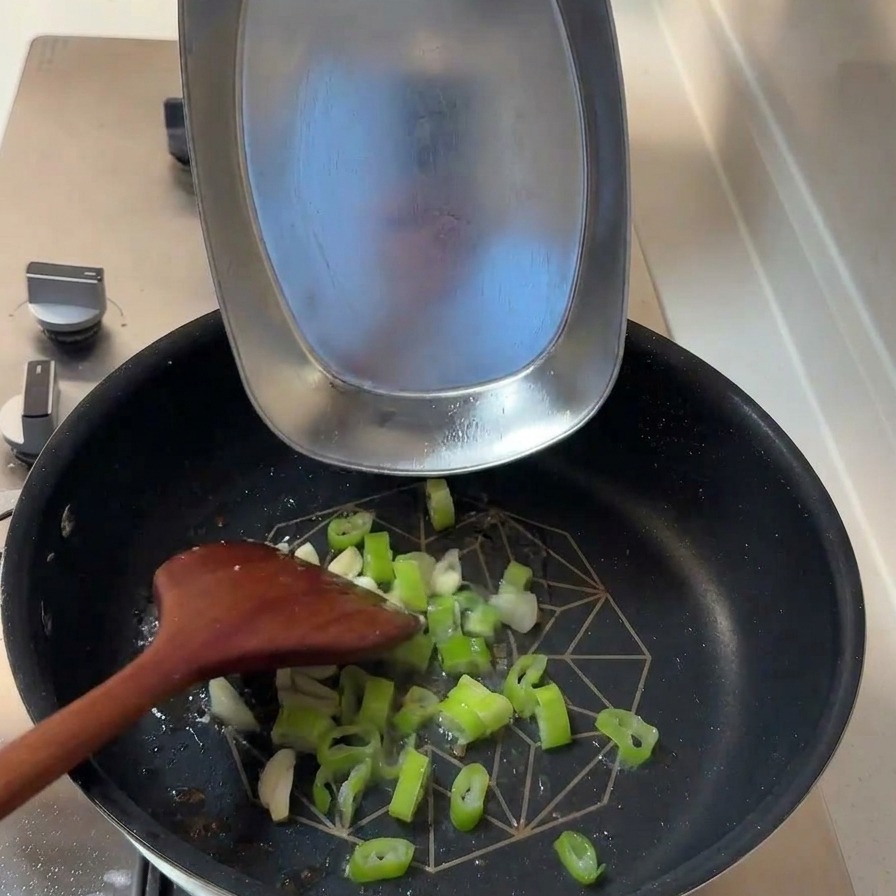
In the same pan used for the pork, add the chopped green onions and sliced garlic. Sauté them in the residual oil until they become fragrant and slightly translucent. This creates a savory, aromatic base that defines the dishs flavor profile.
Tip: Watch the garlic closely as it can burn quickly; keep the ingredients moving in the pan to ensure they brown evenly without turning bitter. - 4Add kimchi and onions
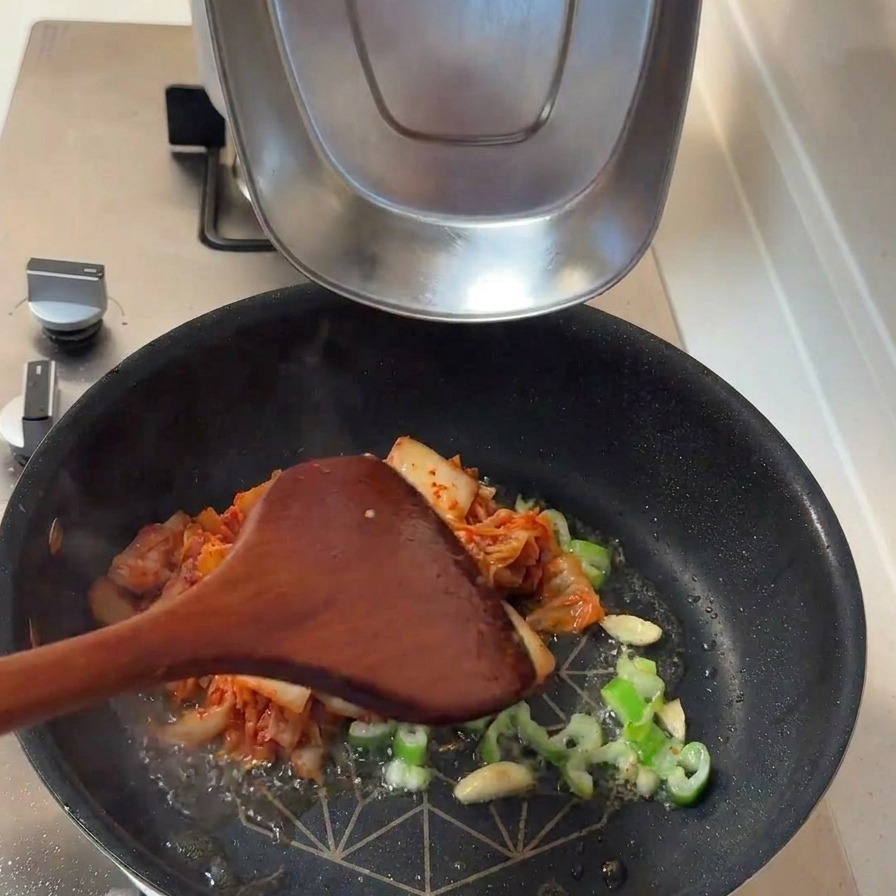
Add a generous amount of spicy fermented kimchi and large slices of white onion to the pan. Stir-fry the mixture over high heat until the onions begin to soften and become slightly translucent, absorbing the flavors of the garlic and scallions.
Tip: Using well-aged, sour kimchi provides a much deeper flavor and better texture for stir-frying than fresh kimchi. - 5Season with soy sauce and sugar
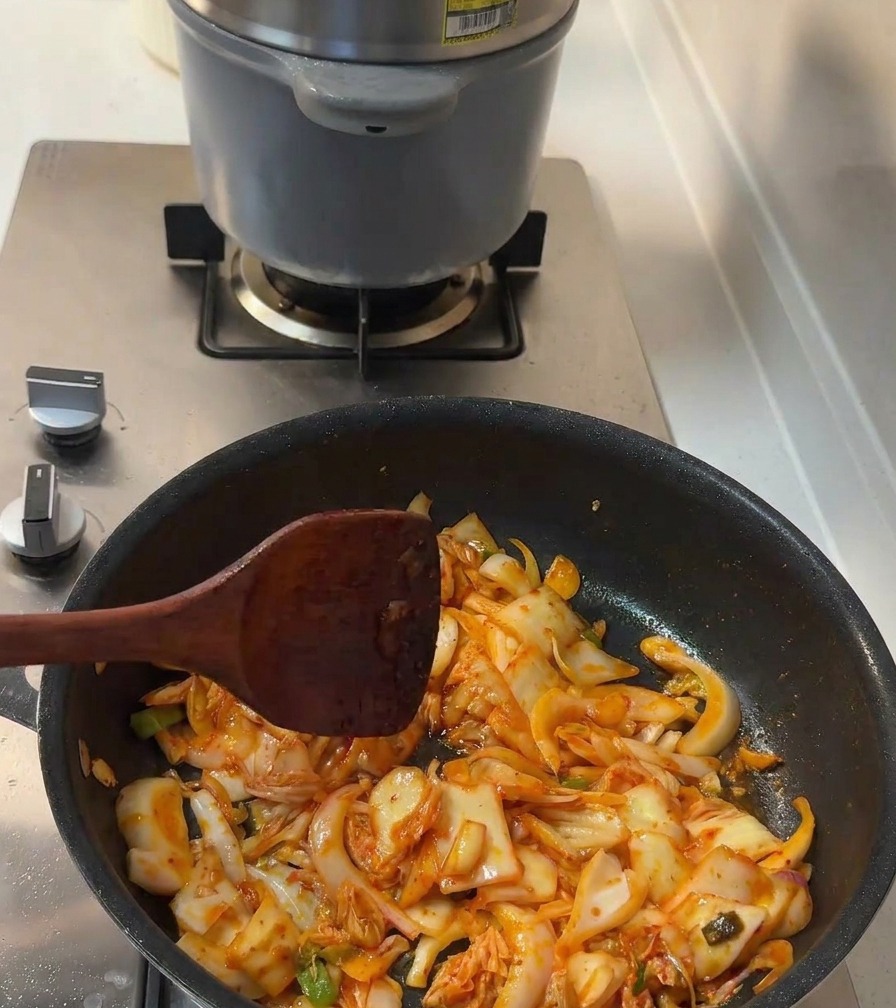
Pour in one spoonful of light soy sauce and two spoonfuls of white sugar over the kimchi and onion mixture. The sugar helps to balance the intense acidity of the fermented kimchi while the soy sauce adds a necessary savory depth.
Tip: Adjust the amount of sugar depending on the sourness of your kimchi; older kimchi may require a bit more sweetness to balance the flavor. - 6Incorporate chili paste and powder
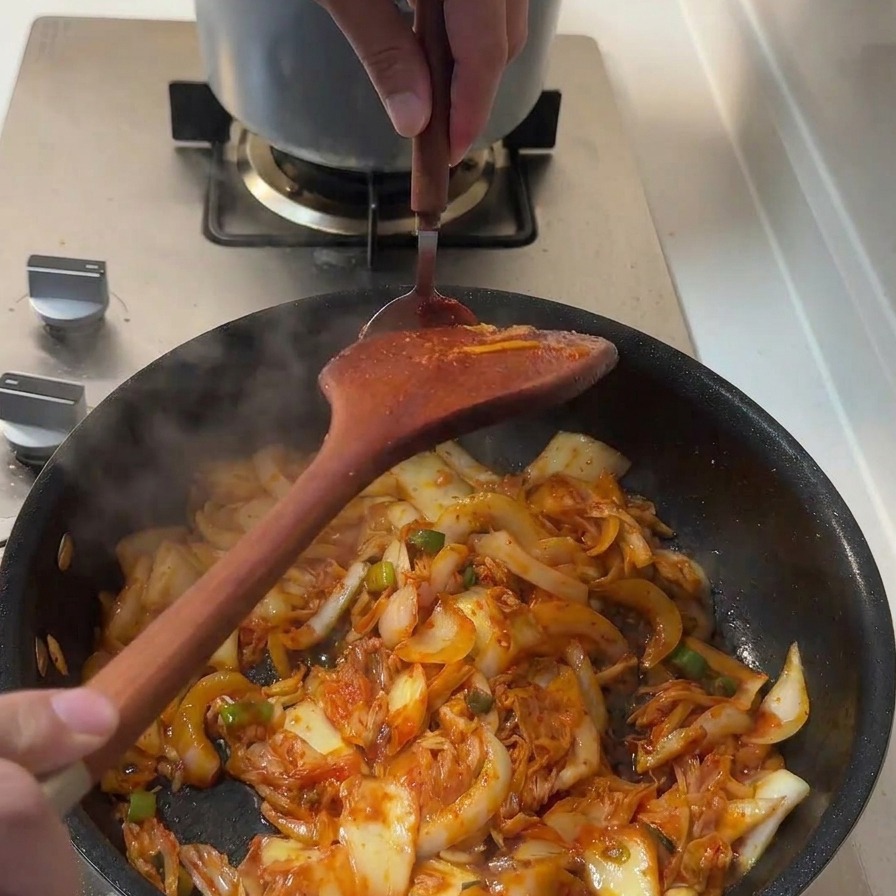
Add one spoonful of thick Korean spicy bean paste (gochujang) and two spoonfuls of fine red chili flakes (gochugaru). Stir everything together until the ingredients are thoroughly coated in a vibrant, thick red sauce and the spices release their aroma.
Tip: If the sauce seems too thick or dry, add a small splash of water or kimchi juice to help the paste emulsify and coat the ingredients evenly. - 7Return the pork to the pan
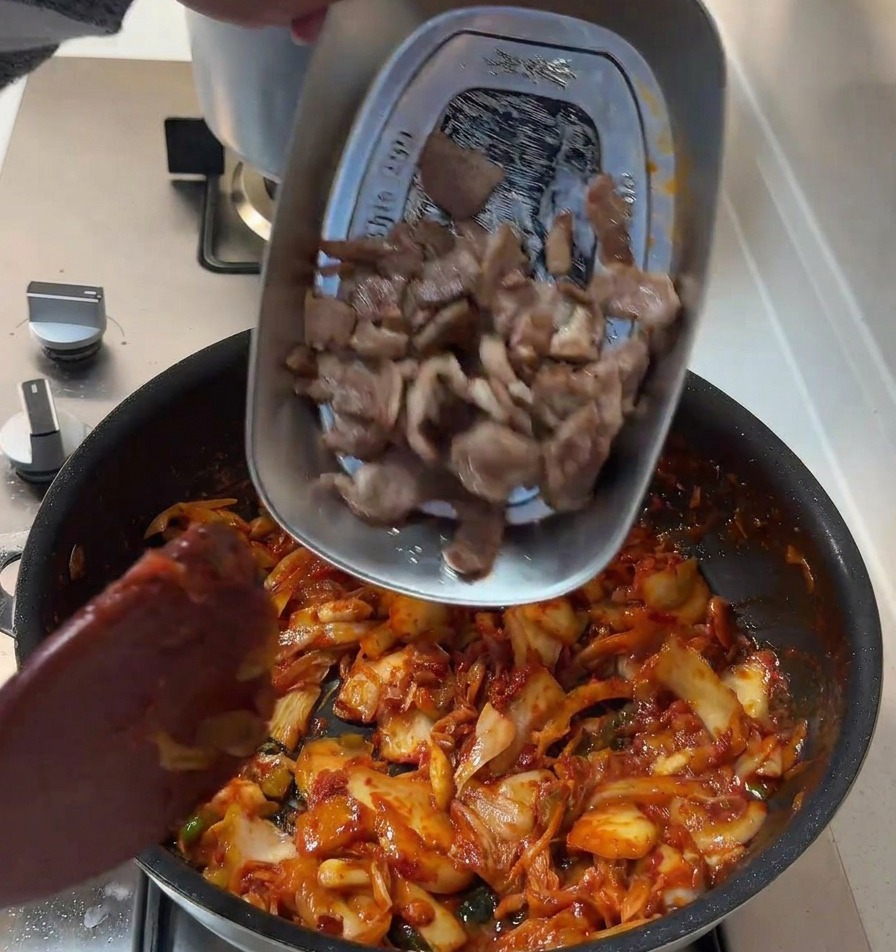
Add the previously seared pork shoulder slices back into the pan with the stir-fried kimchi and onions. Stir-fry the mixture briefly over medium-high heat so the pork begins to absorb the spicy, savory flavors from the kimchi base.
Tip: Since the pork was already seared, you only need to stir-fry long enough to heat it through and combine the flavors with the vegetables. - 8Finish with sesame oil
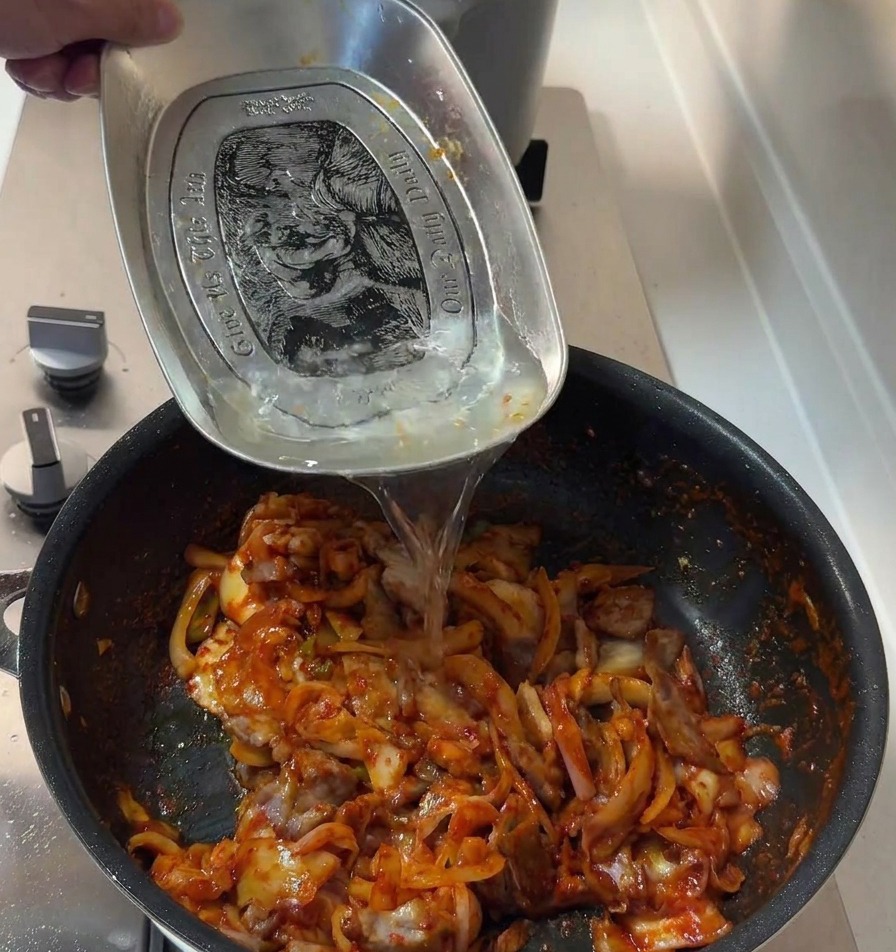
Pour in a small amount of water along with a dash of sesame oil. Stir everything thoroughly over high heat; the water helps the sauce emulsify and coat the ingredients evenly, while the sesame oil provides a glossy finish and a rich, nutty aroma.
Tip: The addition of a little water ensures the thick bean paste and chili flakes turn into a smooth sauce that clings perfectly to the meat.