Cheese Baked Spiny Lobster
E-fu Noodles
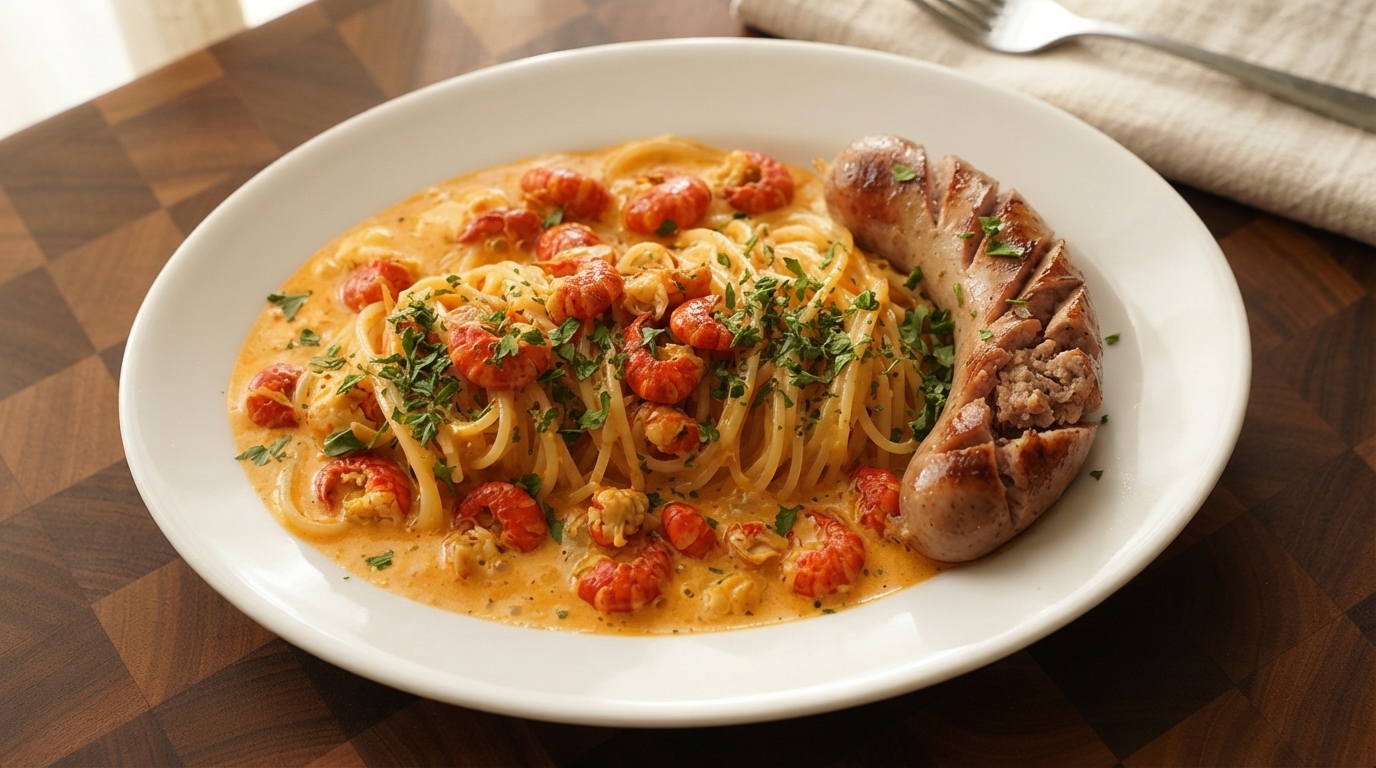
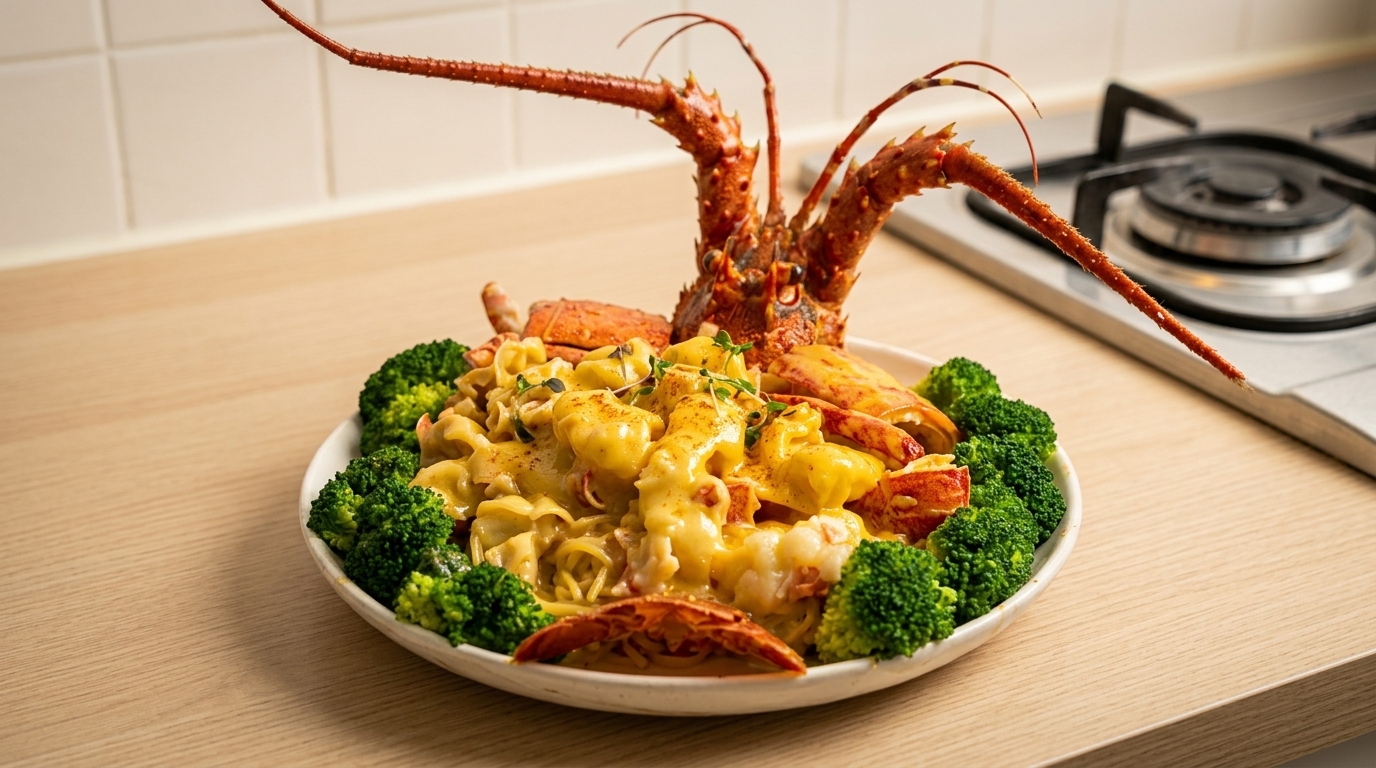
A luxurious Cantonese banquet dish featuring succulent spiny lobster pieces layered over golden E-fu noodles, blanketed in a rich, velvety cheese sauce.
Cheese baked spiny lobster served over E-fu noodles is a magnificent fusion of traditional Cantonese banquet cooking and rich, creamy modern flavors. The dish showcases premium seafood fried with a light cornstarch crust to lock in juices, then brought together with a decadent garlic, butter, and cheese sauce that infuses every single strand of noodle with umami goodness.
Ingredients
- 1 whole spiny lobster
- 300 g E-fu noodles
- 200 g broccoli florets
- 3 slices cheese
- 50 ml fresh milk
- 200 ml pork bone broth
- 30 g butter
- 30 g cornstarch
- 15 g ginger
- 3 cloves garlic
- 2 stalks scallion
- 2 shallots
- to taste salt and sugar
- as needed cooking oil
Instructions
- 1Clean the spiny lobster
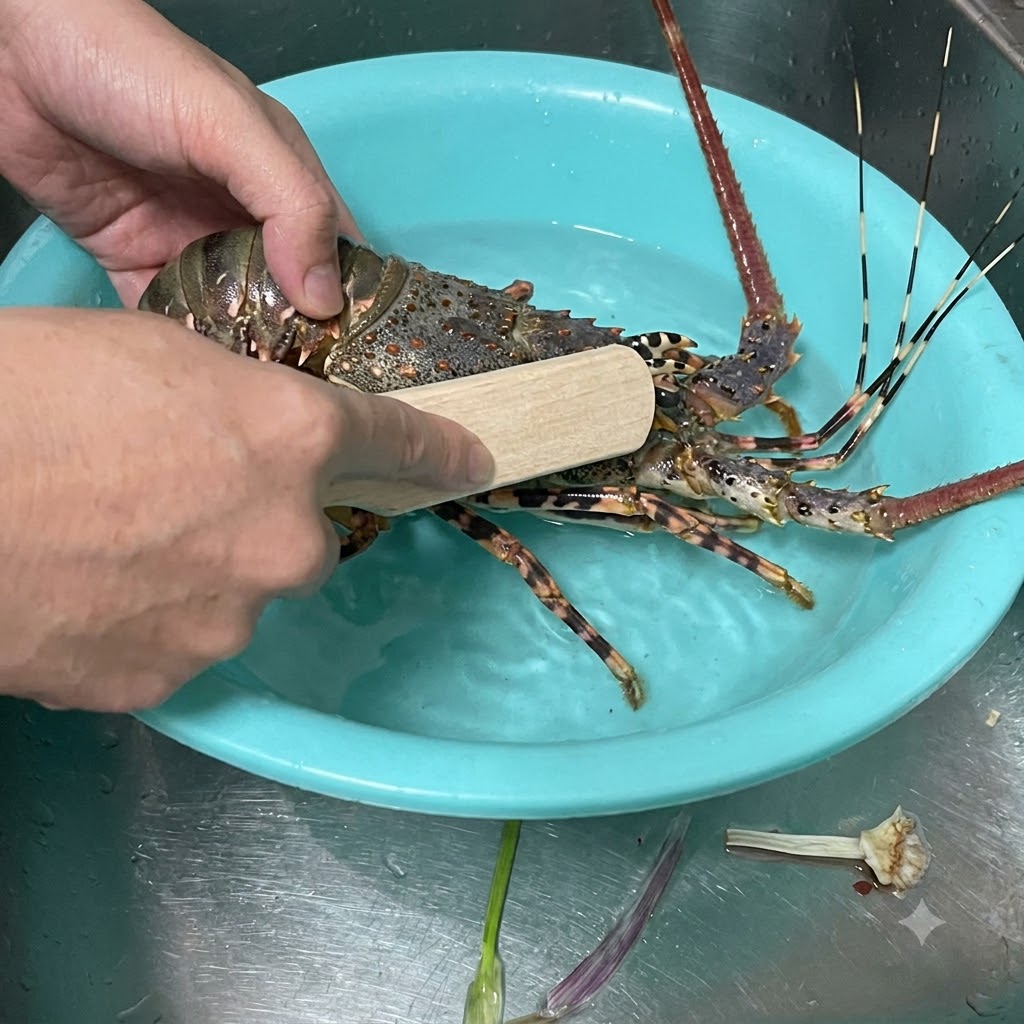
Place the fresh spiny lobster into a basin under cold running water. Use a clean, small brush to thoroughly scrub the entire shell to remove any dirt or impurities.
Tip: Hold the lobster securely near its head while scrubbing to safely avoid its sharp spines. - 2Snip the tail membrane
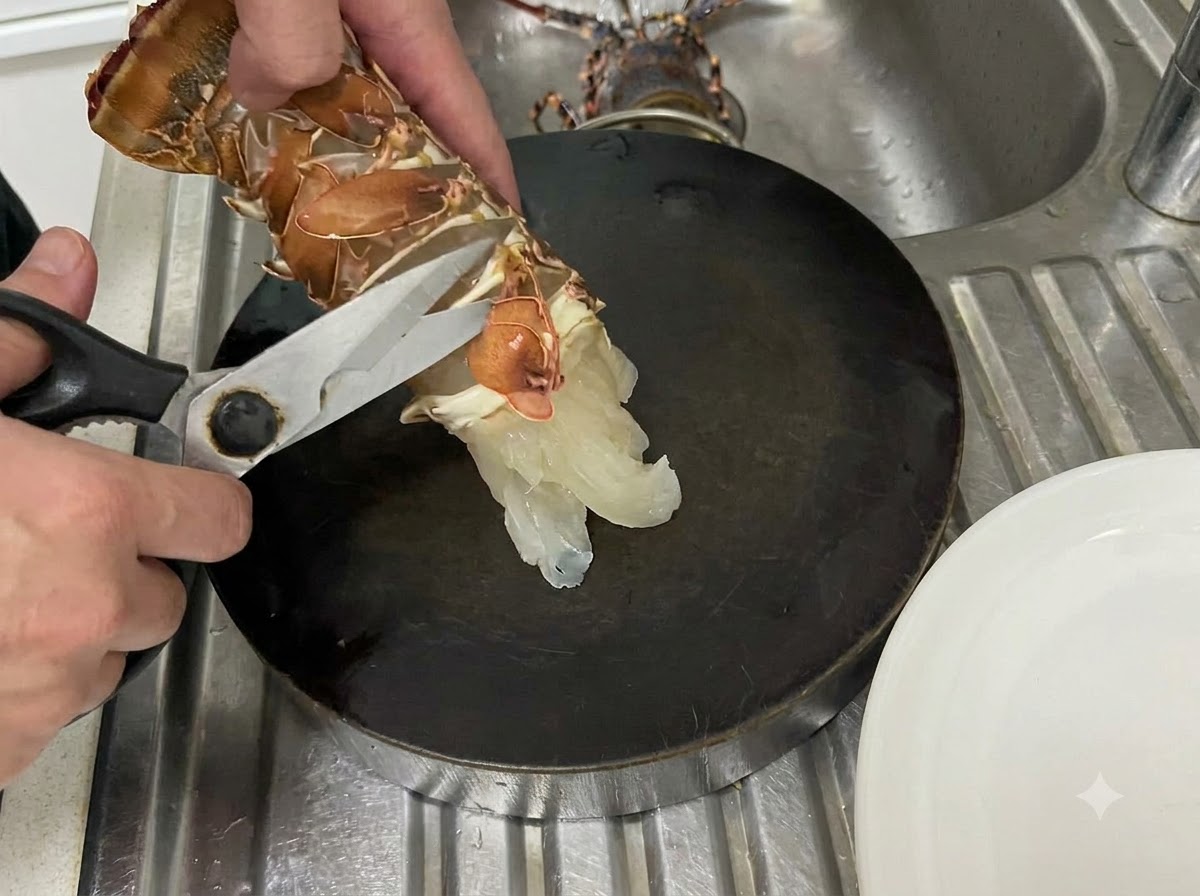
After draining the lobster and separating the tail from the head, use a pair of sturdy kitchen shears to carefully cut straight down the soft membrane on the underside of the tail. This makes opening the shell much easier.
Tip: Cut cleanly through the soft membrane without snipping too deeply into the delicate translucent meat beneath it. - 3Chop into portions
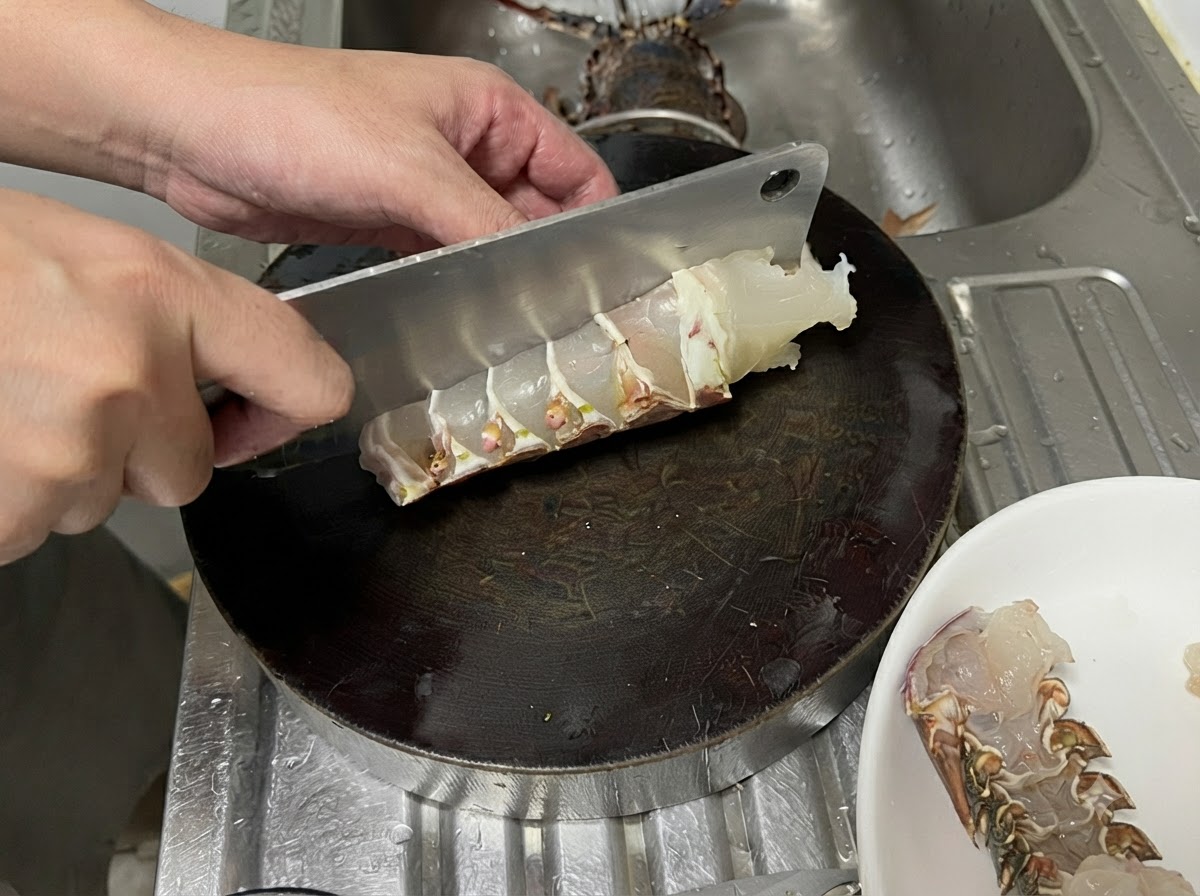
Place the prepared lobster tail on a cutting board. Using a sharp, heavy cleaver, chop crosswise through both the meat and the shell to portion the tail into thick, evenly sized pieces.
Tip: Leaving the shell attached helps protect the tender meat during high-heat frying and infuses the final sauce with rich seafood flavor. - 4Trim the lobster head
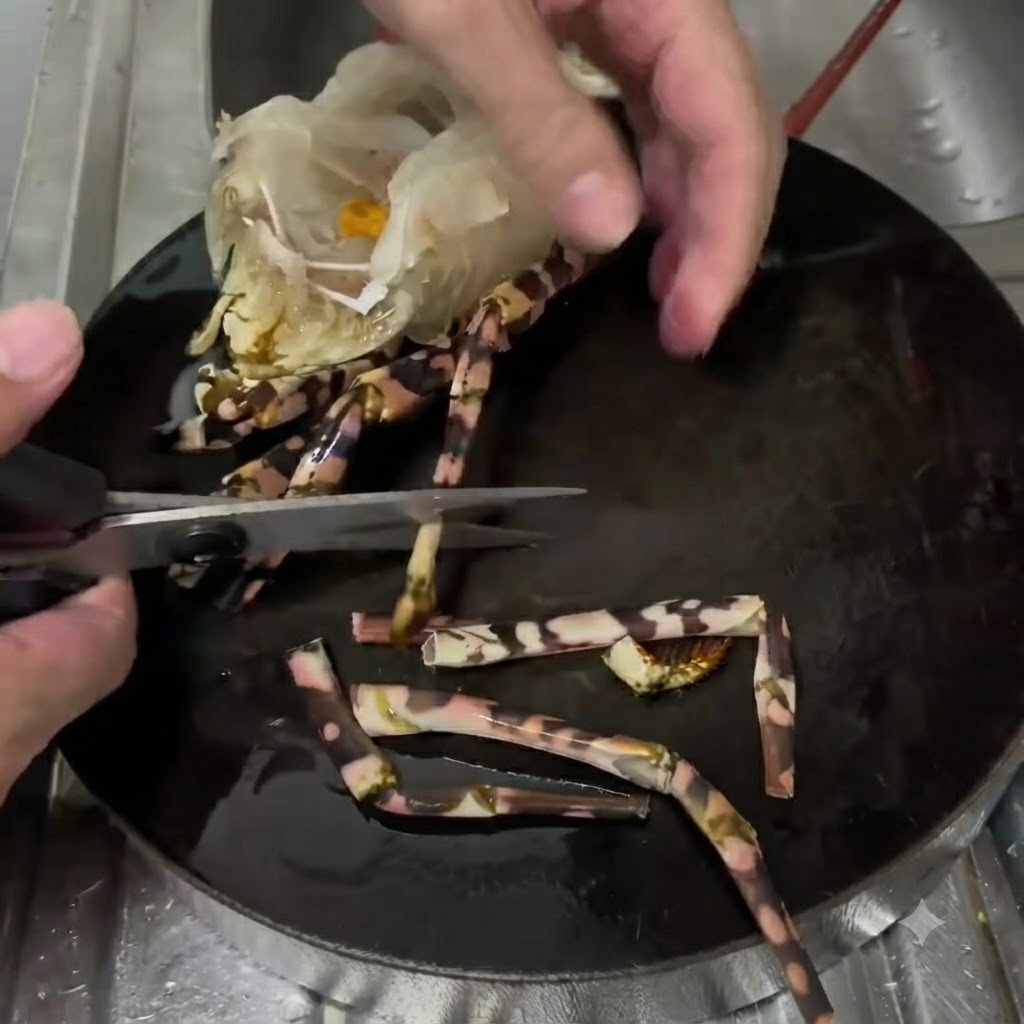
Use kitchen shears to carefully trim off the legs from the raw lobster head section to prepare it for cooking.
Tip: Keep the shears sharp for precise cuts around the shell joints. - 5Extract the lobster paste
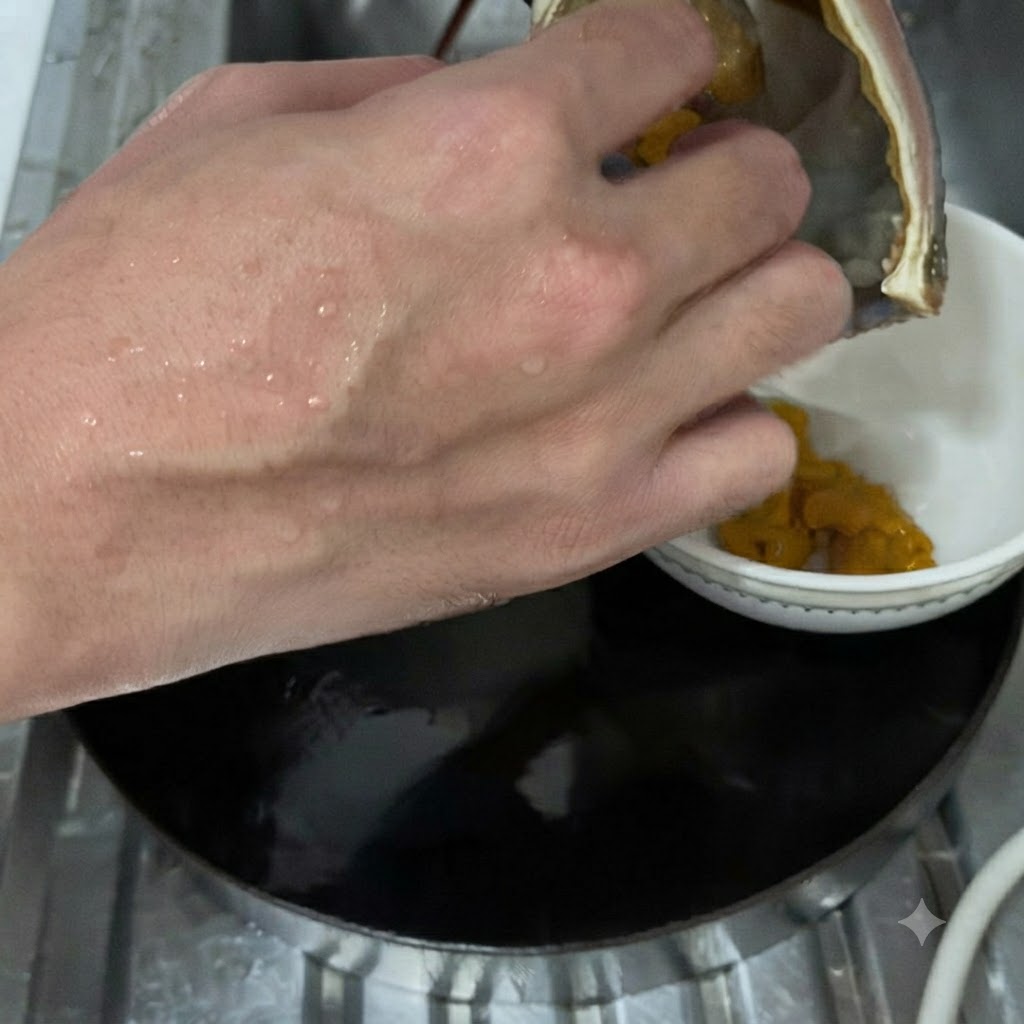
Use your hands to gently scoop and extract the rich yellow lobster paste (tomalley) from the head cavity, saving it in a small bowl for later use.
Tip: Be careful not to rupture the surrounding sac while extracting the paste to keep it clean. - 6Coat with cornstarch
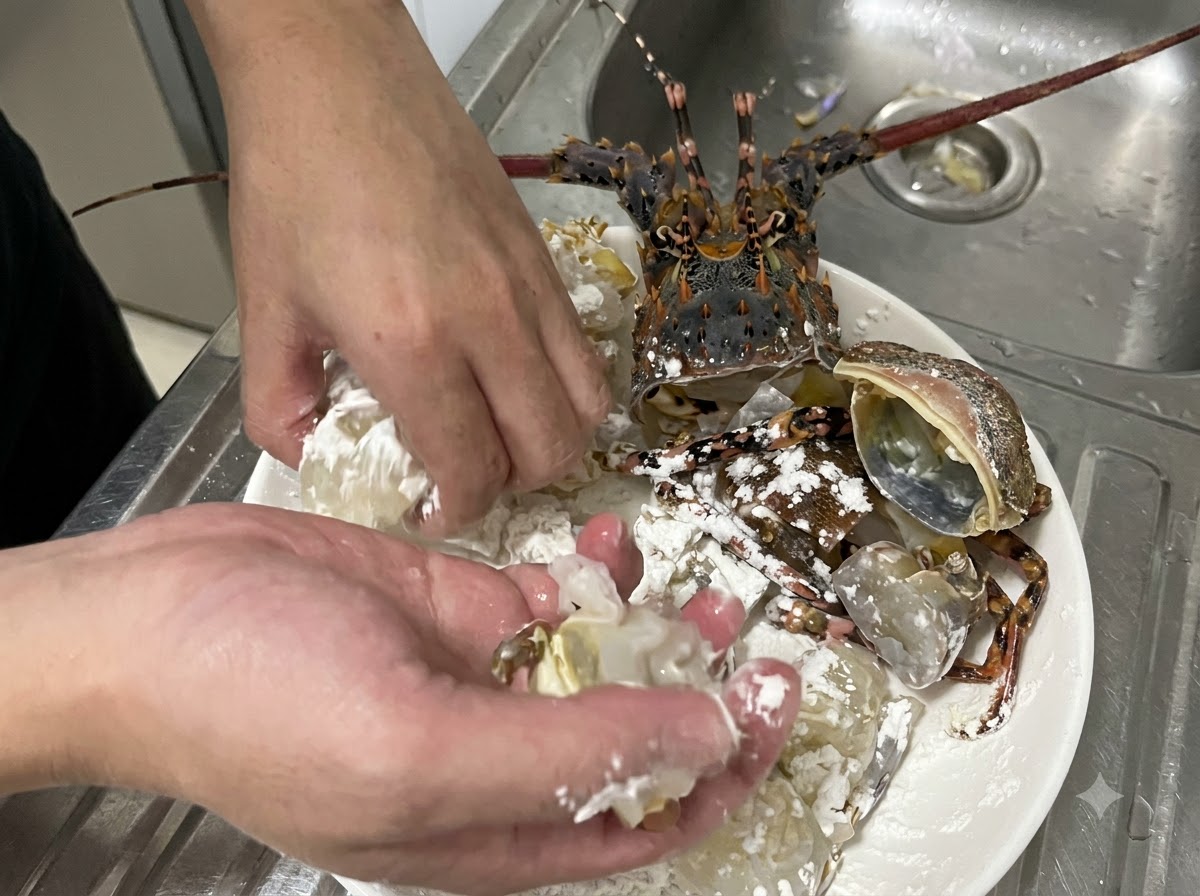
Transfer the chopped lobster pieces onto a plate and sprinkle a generous amount of white cornstarch over them. Use your hands to gently toss the pieces until both the meat and shell are evenly coated in the powder.
Tip: An even layer of cornstarch locks in the lobsters natural juices while frying and helps give the meat a slightly crispy exterior. - 7Boil the E-fu noodles
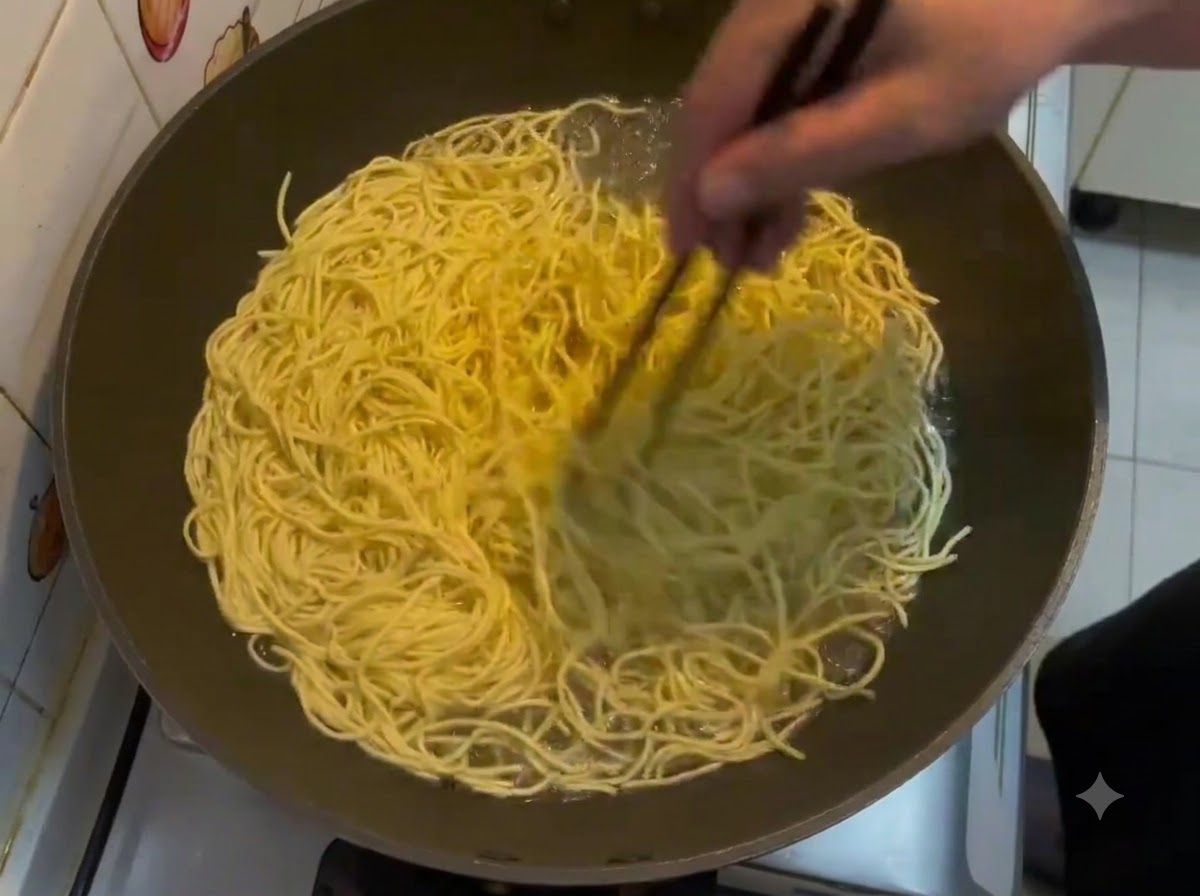
Place long yellow E-fu noodles into a large wok of boiling water and stir continuously with chopsticks for about two minutes until tender.
Tip: Do not overboil the noodles as they will be stir-fried later. - 8Dry-fry the noodles
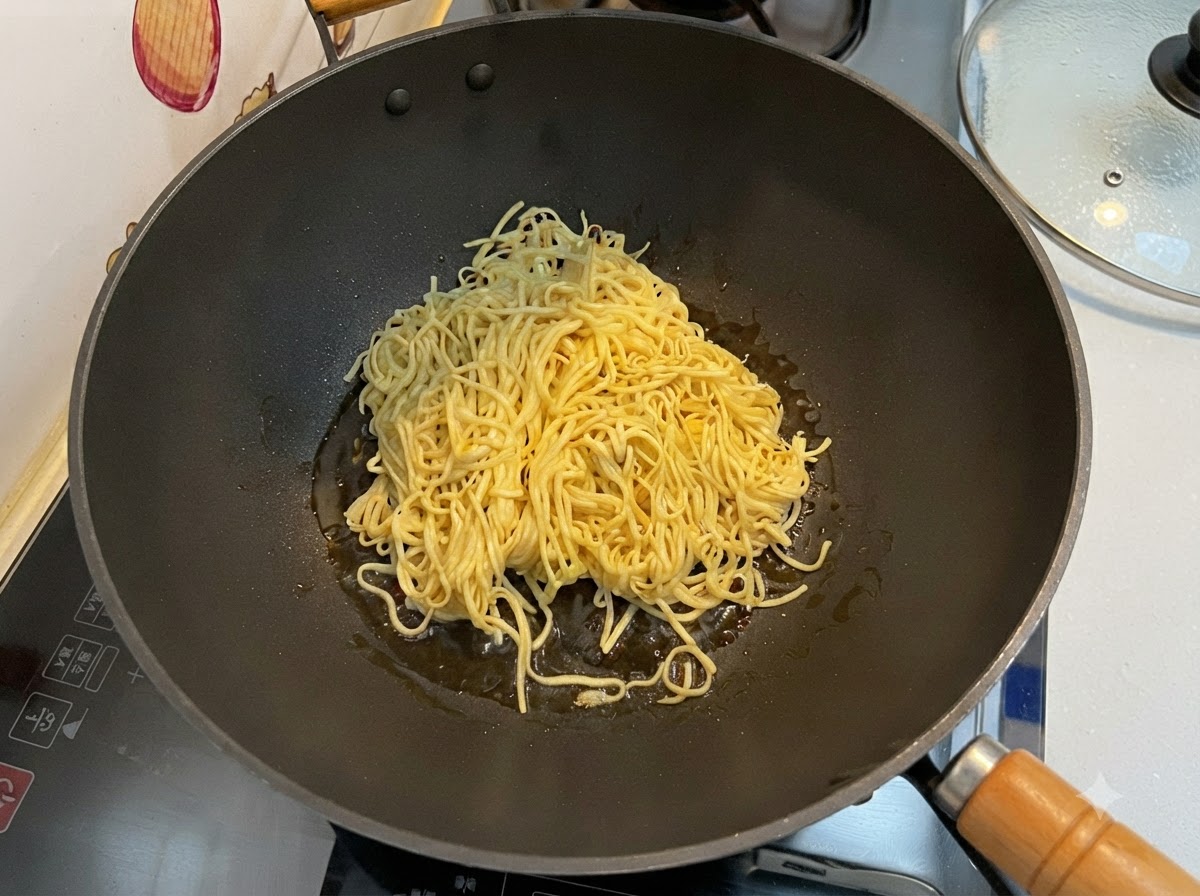
Briefly stir-fry the drained E-fu noodles in a dry wok to enhance their fragrance before plating them.
Tip: Keep the heat moderate to avoid burning the noodles while enhancing their aroma. - 9Blanch the broccoli
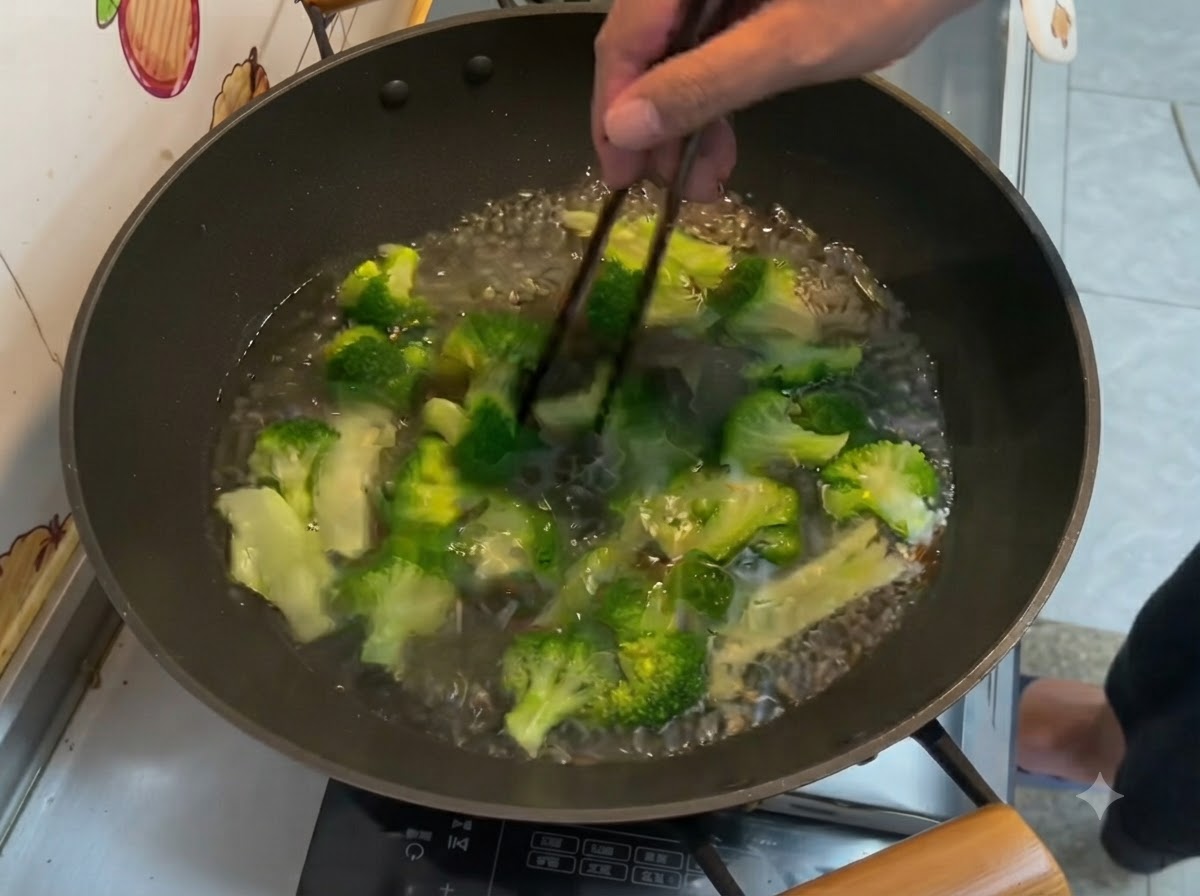
Blanch bright green broccoli florets in boiling water with a little oil and salt for two minutes to maintain their vibrant color and crisp-tender texture.
Tip: Adding a little oil and salt to the boiling water keeps the broccoli bright green. - 10Deep-fry the lobster
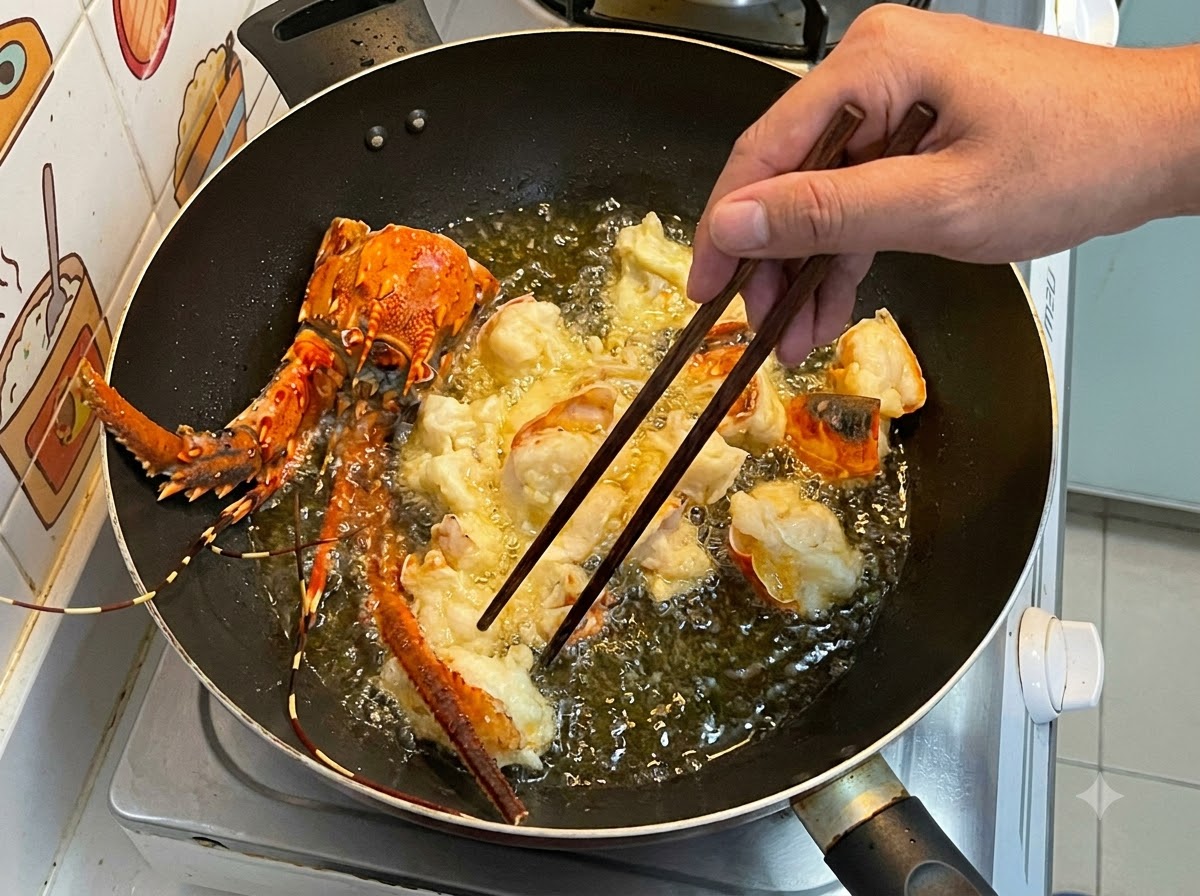
Heat a generous amount of oil in a wok and deep-fry the cornstarch-coated lobster pieces and shell for about three minutes until golden and cooked.
Tip: Ensure the oil is hot enough so the cornstarch coating seals tightly without absorbing too much grease. - 11Sauté the Aromatics
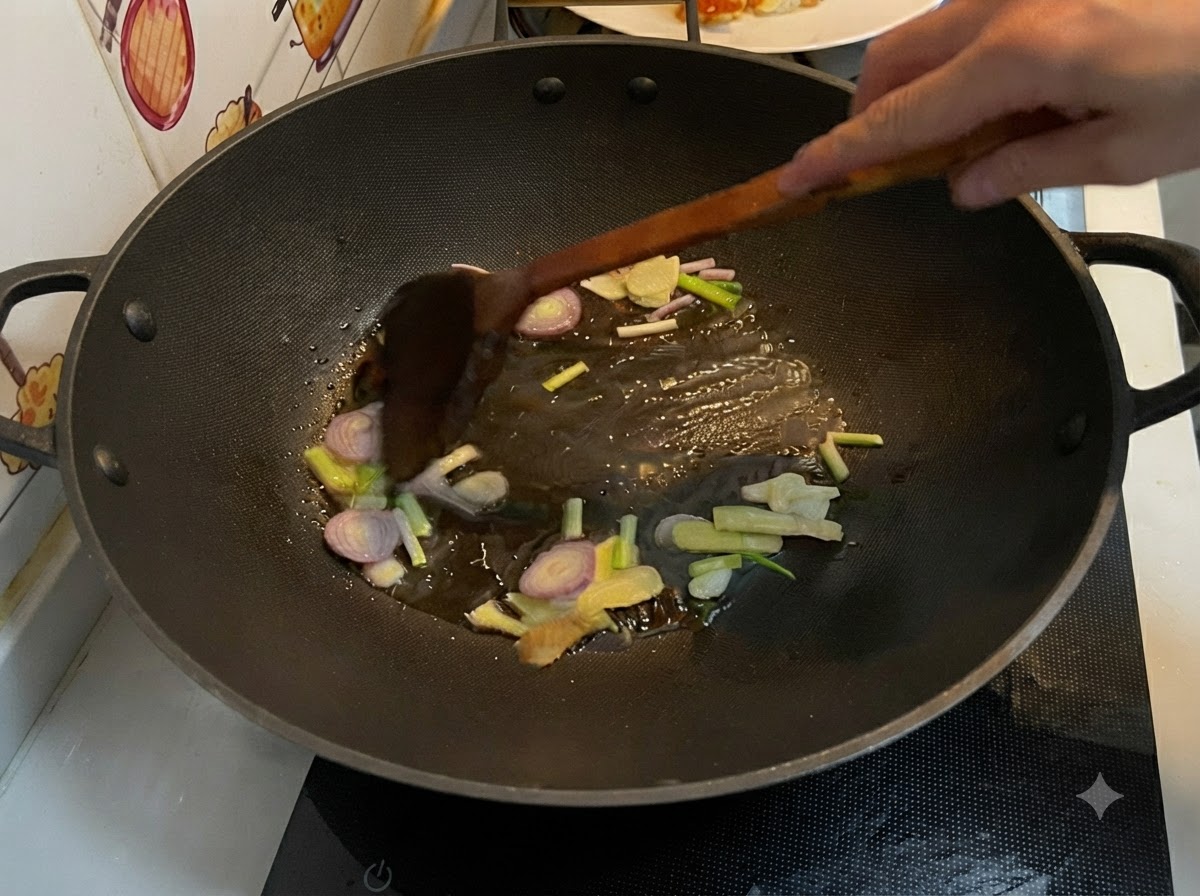
Heat a little oil in a wok and sauté the sliced ginger, garlic, shallot, and scallion segments until fragrant and aromatic.
Tip: Sauté on medium heat so the aromatics release their essential oils without burning. - 12Add Cheese Slices
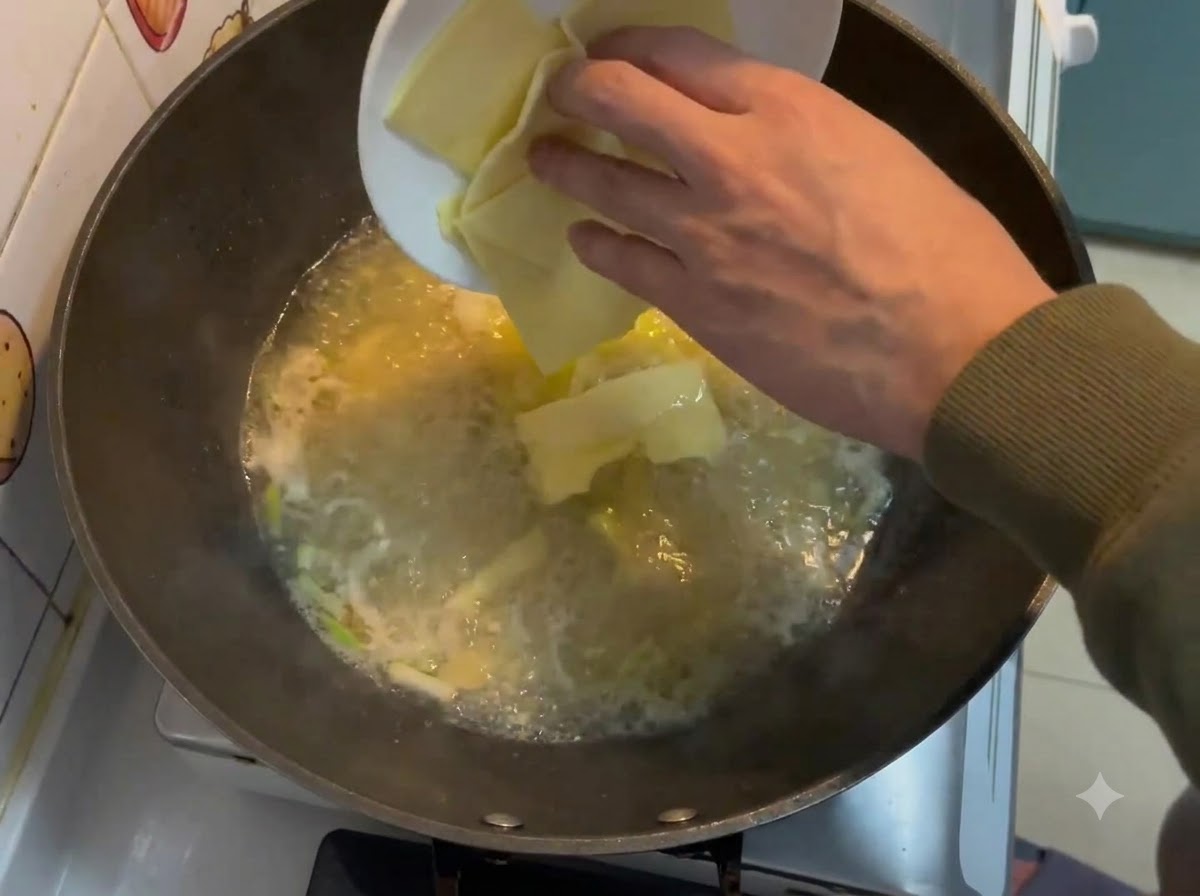
Add square cheese slices directly into the simmering creamy broth to melt and enrich the sauce.
Tip: Stir gently after adding the cheese to ensure it incorporates smoothly into the liquid. - 13Strain Out Aromatics
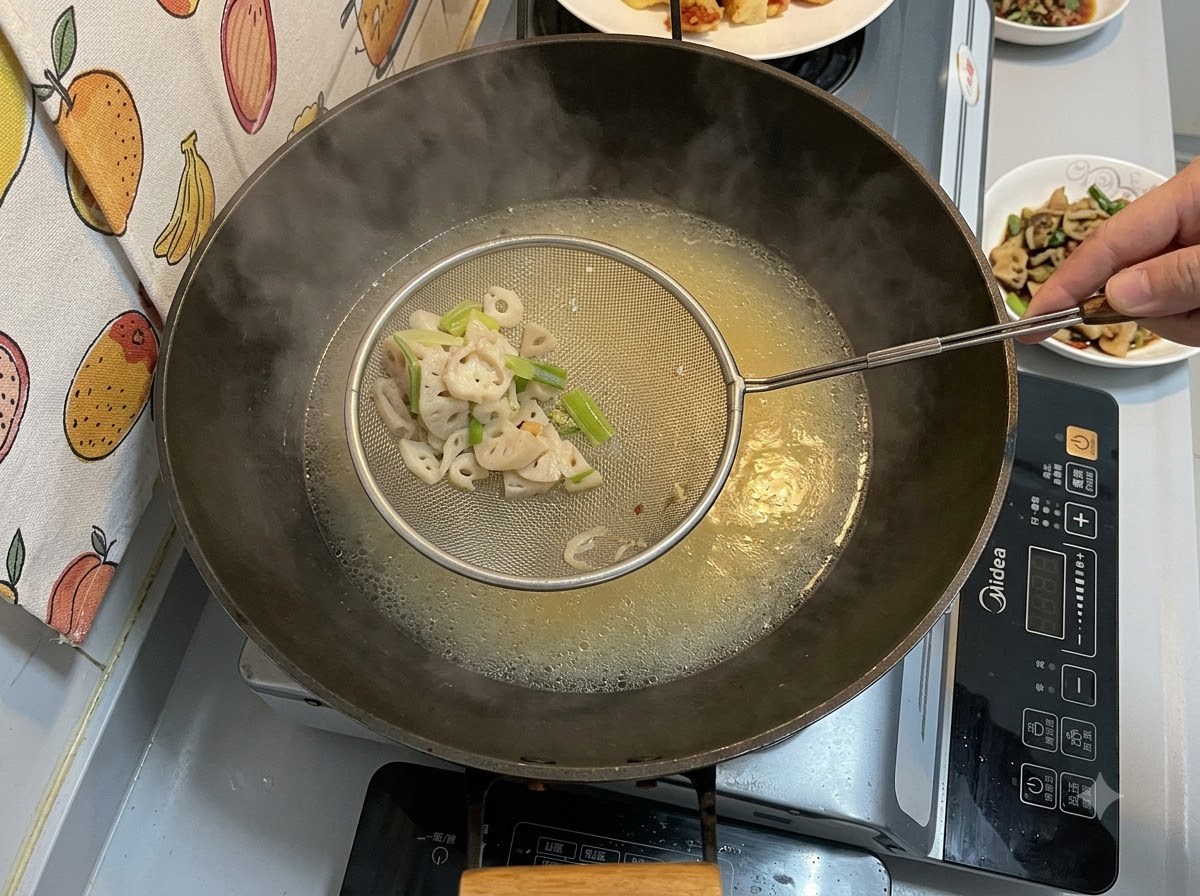
Use a fine-mesh skimmer to remove and discard all the solid aromatics from the simmering yellowish creamy sauce.
Tip: Removing the solids ensures a smooth, refined texture for the sauce. - 14Incorporate Lobster Paste
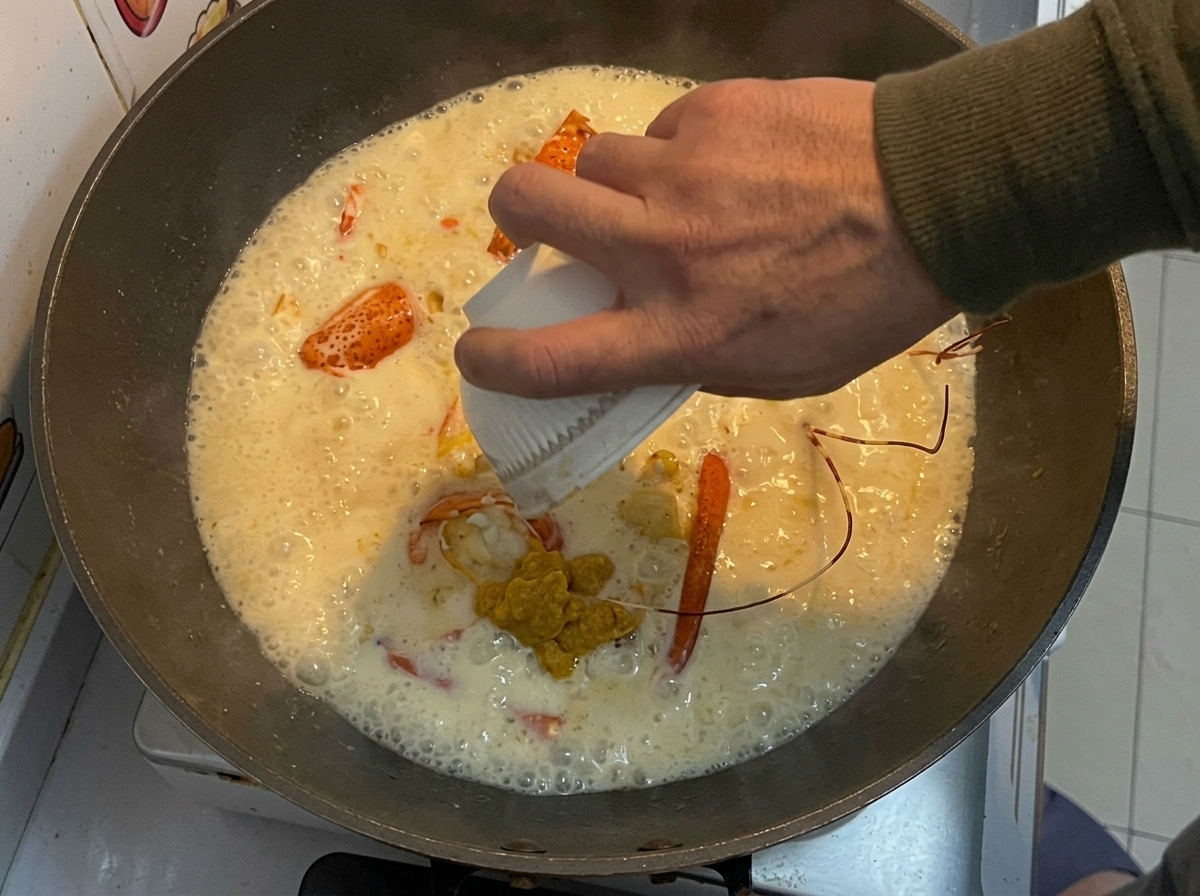
Stir the reserved yellow lobster paste into the pan containing the fried lobster pieces and creamy sauce, then simmer.
Tip: The lobster paste adds a deep, authentic seafood umami flavor to the cheese sauce. - 15Simmer and Thicken Sauce
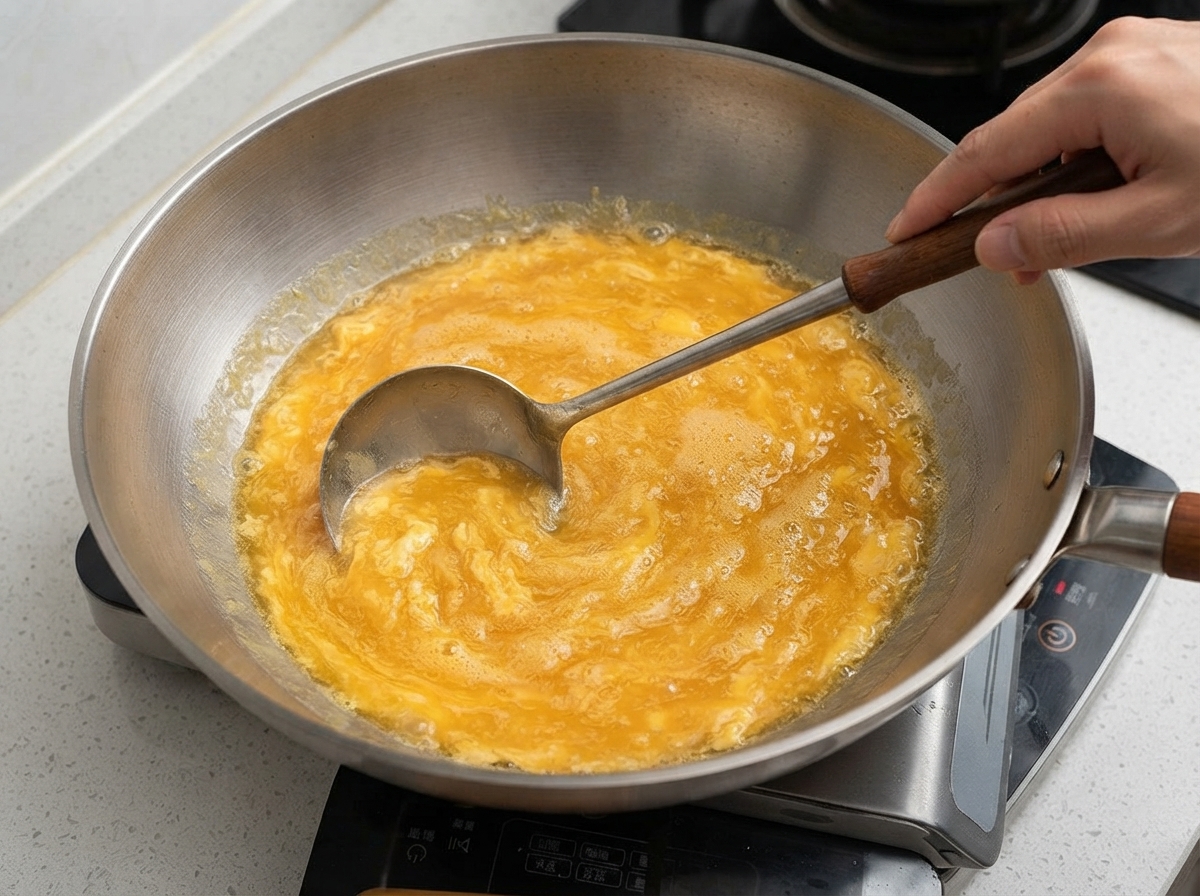
Stir the brightly colored cheese sauce with a ladle as it simmers and thickens in the wok.
Tip: Keep stirring to prevent the bottom from scorching as the sauce reduces and thickens.