Creamy Basil Pesto Spaghetti
Toasted Pine Nuts
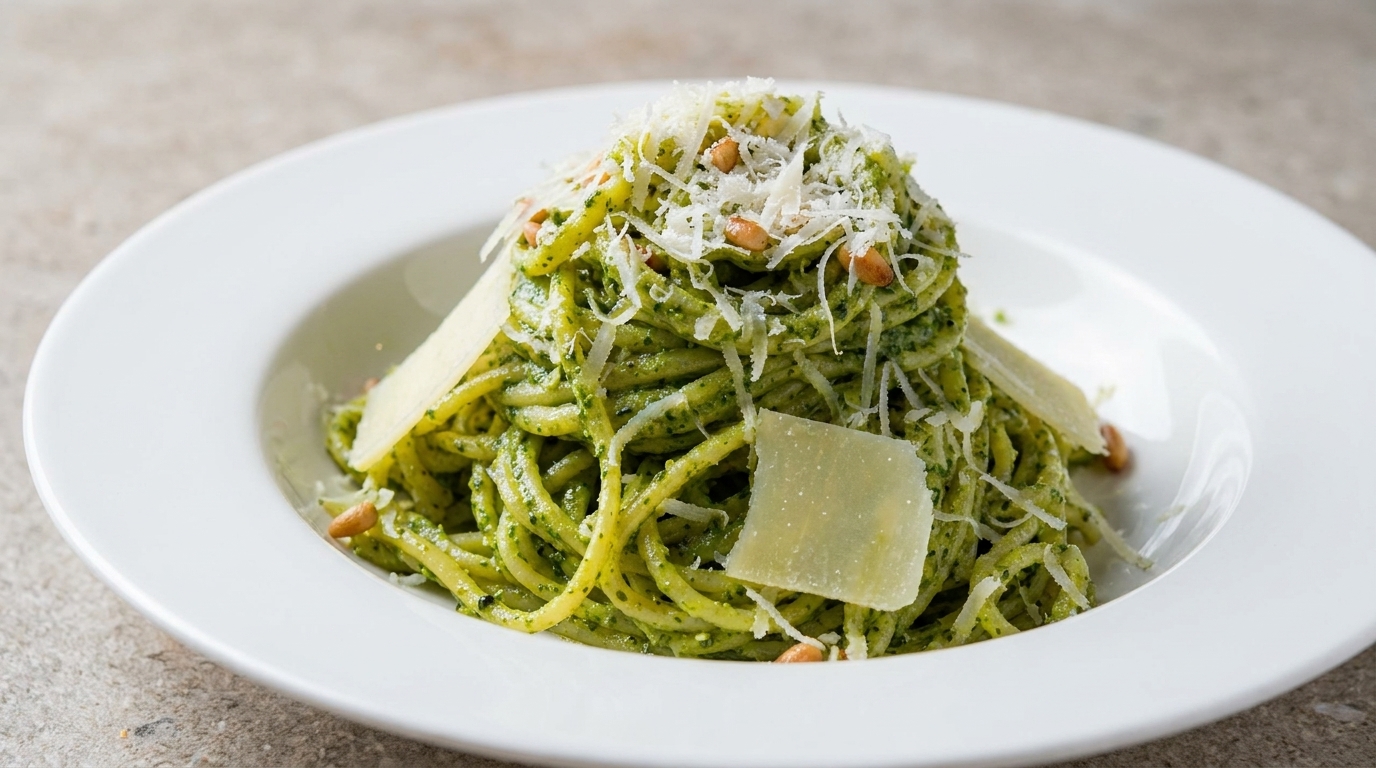
A luxurious twist on an Italian classic: al dente spaghetti tossed in handcrafted mortar-and-pestle pesto, finished with a silky cheese cream and buttery pine nuts.
Traditional Pesto alla Genovese is a masterpiece of raw emulsion, but this version adds a modern touch of richness. By using a mortar and pestle, you preserve the rustic character of the basil and garlic, while a hint of cream creates a velvety sauce that clings perfectly to every strand of pasta.
Ingredients
- 400 g spaghetti
- 2 cups fresh basil leaves
- 50 g pine nuts
- 2 cloves garlic
- 80 g Parmesan cheese
- 100 ml extra virgin olive oil
- 50 ml cheese-flavored cream or heavy cream
- to taste salt
- to taste black pepper
Instructions
- 1Toast the pine nuts
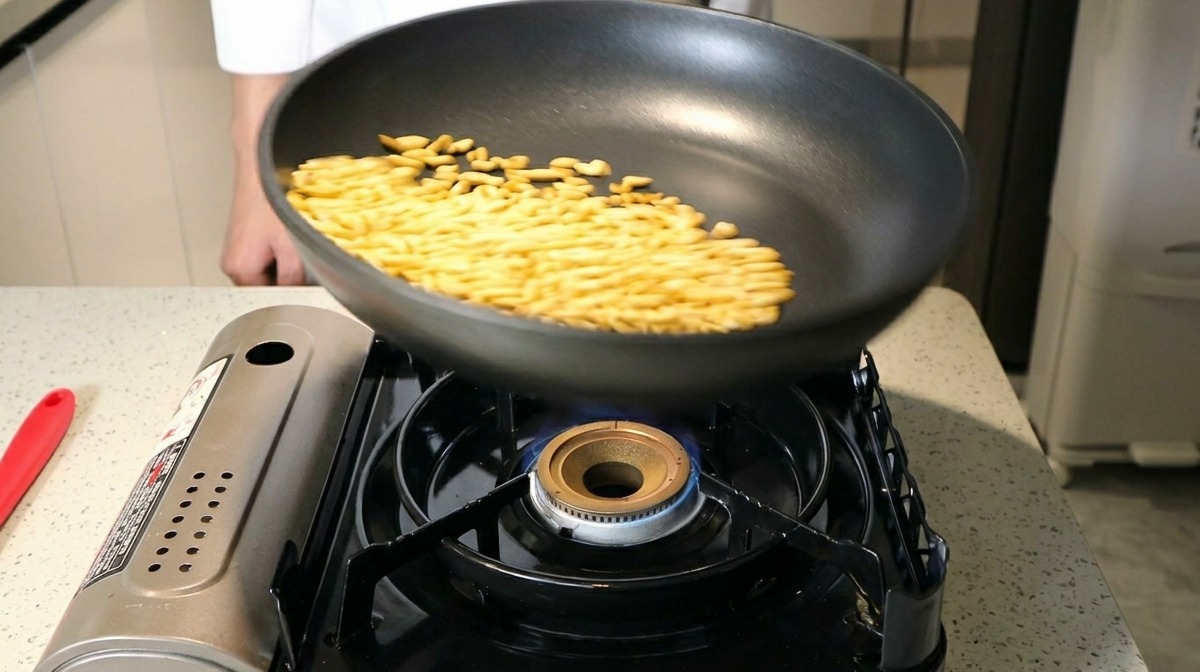
Place the pine nuts in a dry frying pan over medium heat. Shake the pan frequently to ensure even browning and to release their fragrant oils. Heat them until they turn a light golden color, then remove them from the pan immediately to prevent over-toasting.
Tip: Watch the pan closely; pine nuts have a high oil content and can go from golden to burnt in just a few seconds. - 2Prep the basil and garlic
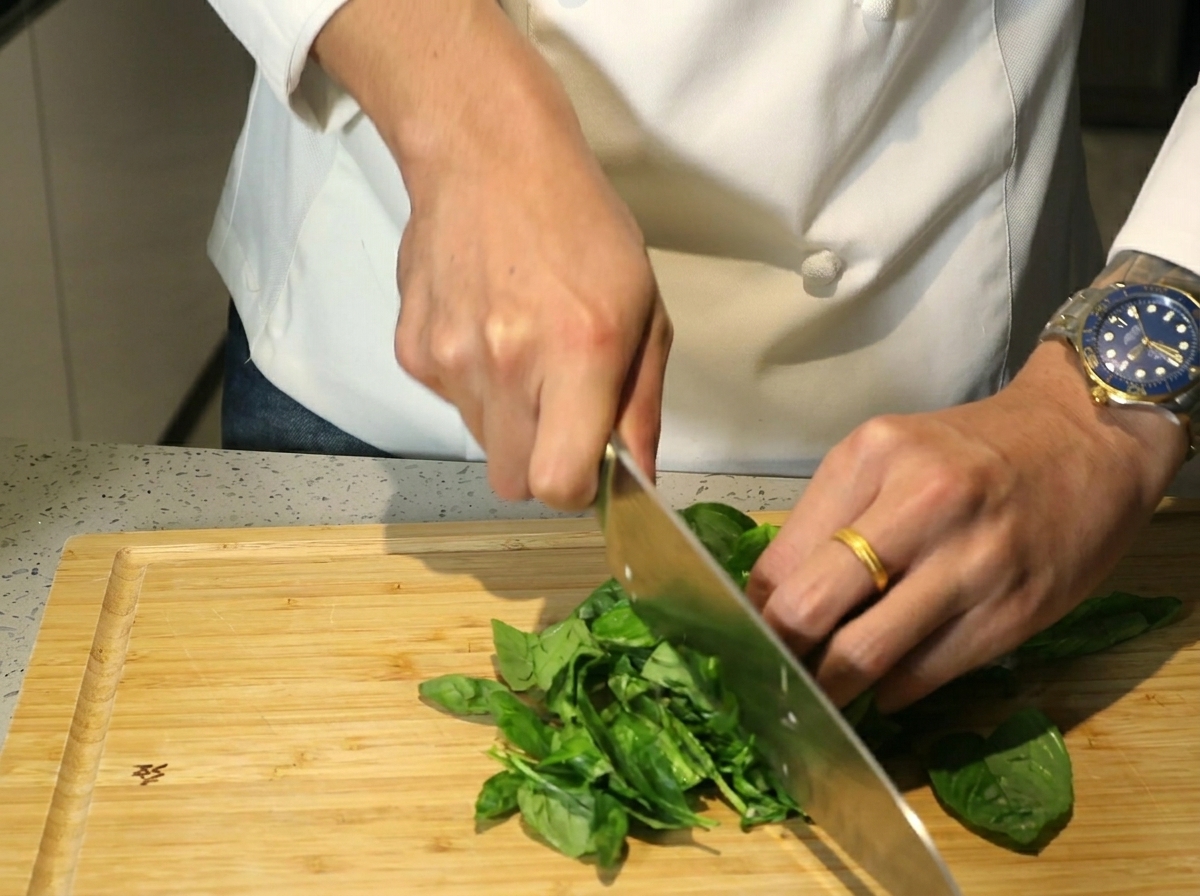
Wash and thoroughly dry the fresh basil leaves. Pile the leaves together on a wooden cutting board and roughly chop them along with the peeled garlic cloves. A coarse chop is sufficient as they will be further processed in the mortar.
Tip: Ensure the basil is completely dry before chopping to prevent the leaves from bruising and turning dark. - 3Grate the Parmesan
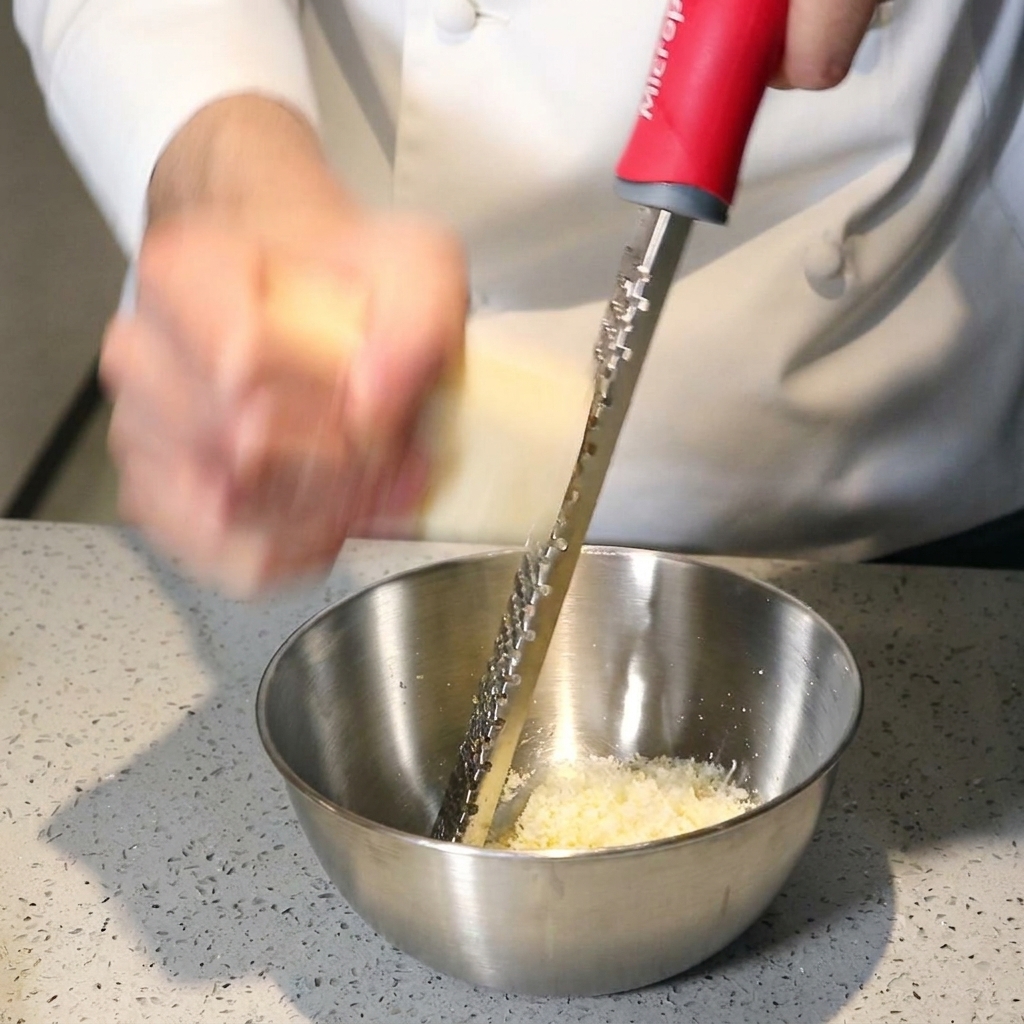
Grate a generous amount of fresh Parmesan cheese into a stainless steel bowl. Using a fine grater or Microplane creates a light, fluffy texture that will incorporate smoothly into the pesto sauce without leaving large clumps.
Tip: For the best flavor and creamy texture, always grate your cheese fresh from the block rather than using pre-grated varieties. - 4Combine the base ingredients
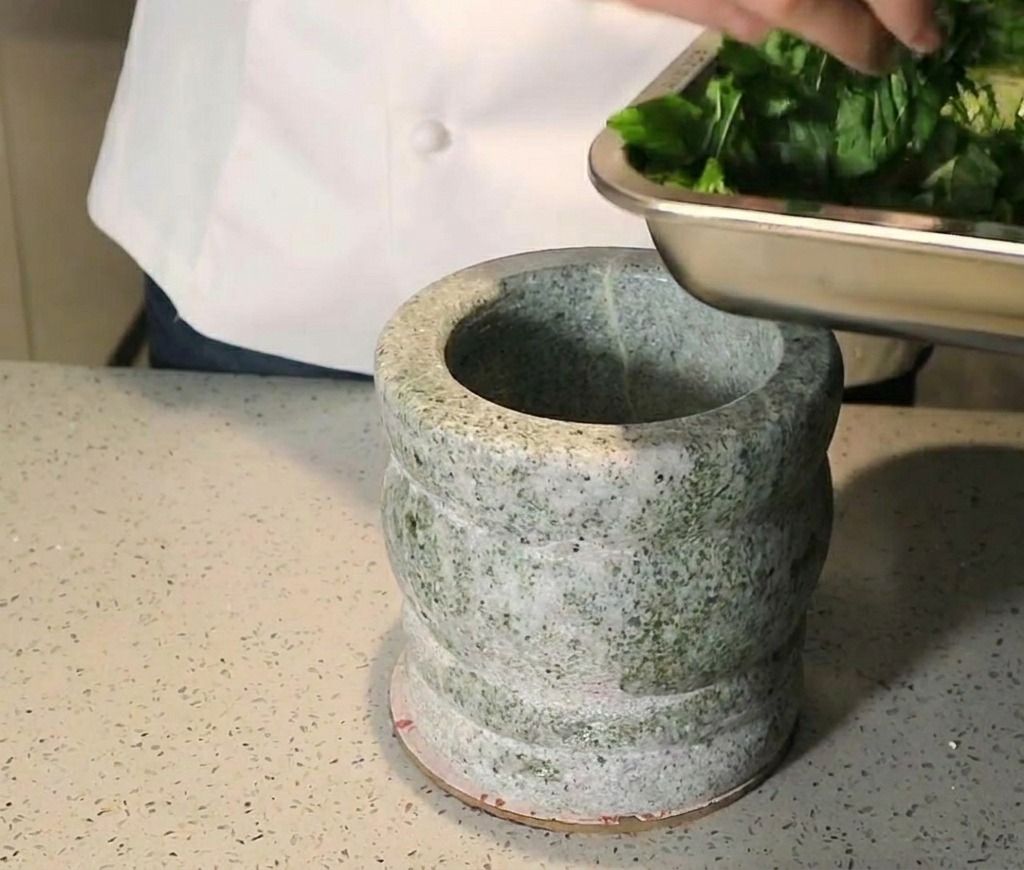
Transfer the roughly chopped basil leaves, garlic, and the toasted pine nuts into a stone mortar. Starting with these solid ingredients allows you to effectively break down the plant fibers and release the aromatic oils before adding liquids.
Tip: If your mortar is small, work in batches to ensure all ingredients are evenly crushed into a consistent paste. - 5Drizzle with olive oil
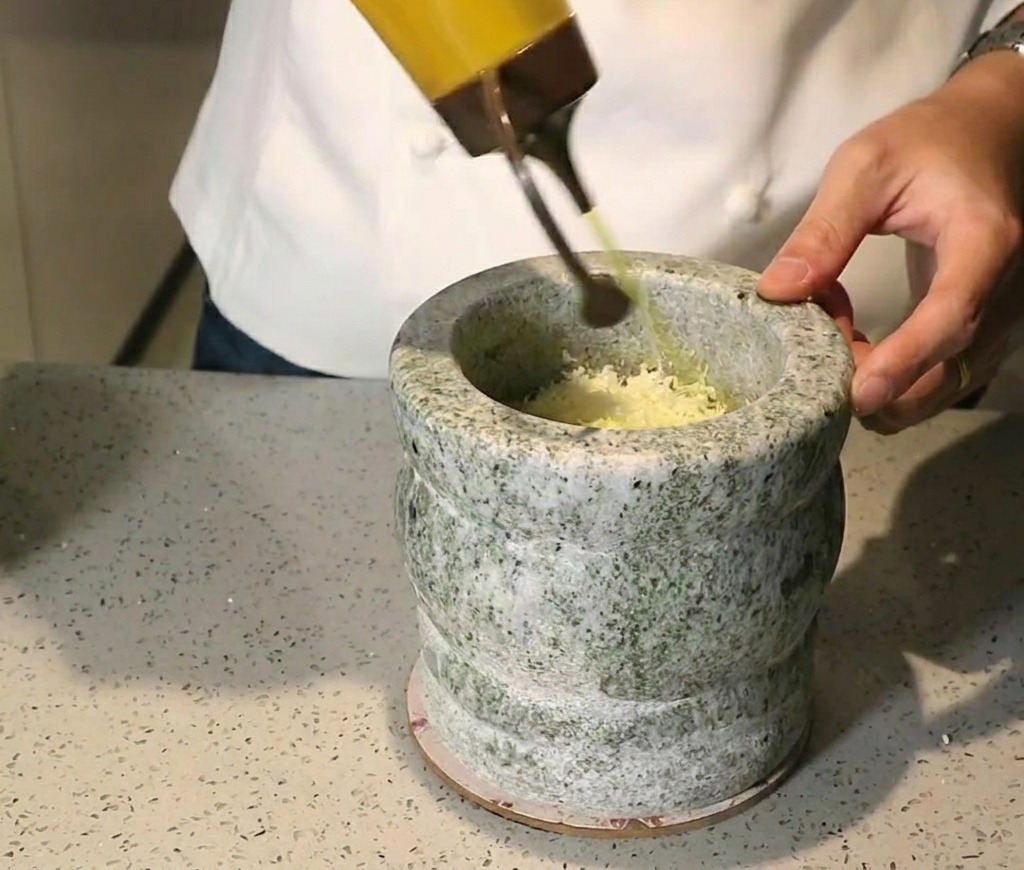
Pour high-quality extra virgin olive oil into the mortar over the crushed herbs and nuts. The oil acts as a lubricant to help the grinding process and creates the rich, emulsified base of the pesto sauce.
Tip: Use the best olive oil you have available, as its flavor will be very prominent in the finished, uncooked sauce. - 6Season and grind
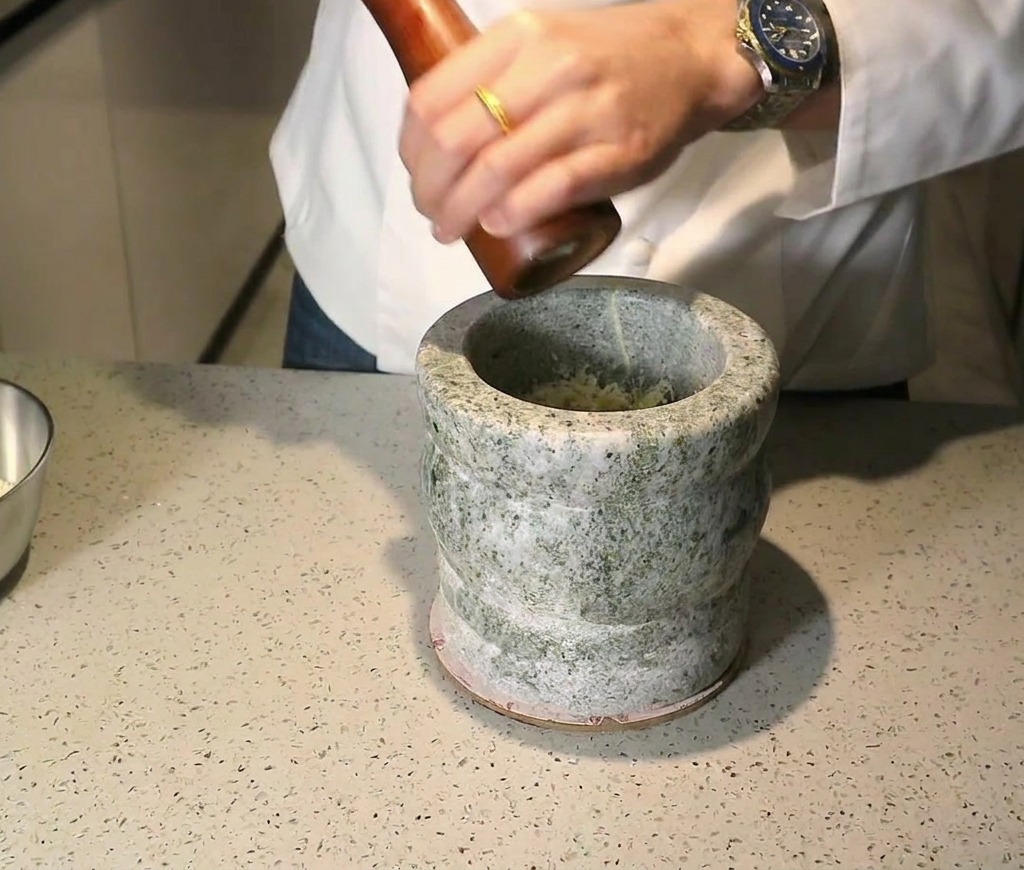
Add a pinch of salt and grind fresh black pepper directly into the mortar using a wooden mill. Once seasoned, use the pestle to pound and grind the mixture until it forms a thick, vibrant green paste.
Tip: Freshly ground black pepper provides a sharper, more aromatic heat that perfectly balances the richness of the cheese and oil. - 7Pound the pesto into a paste
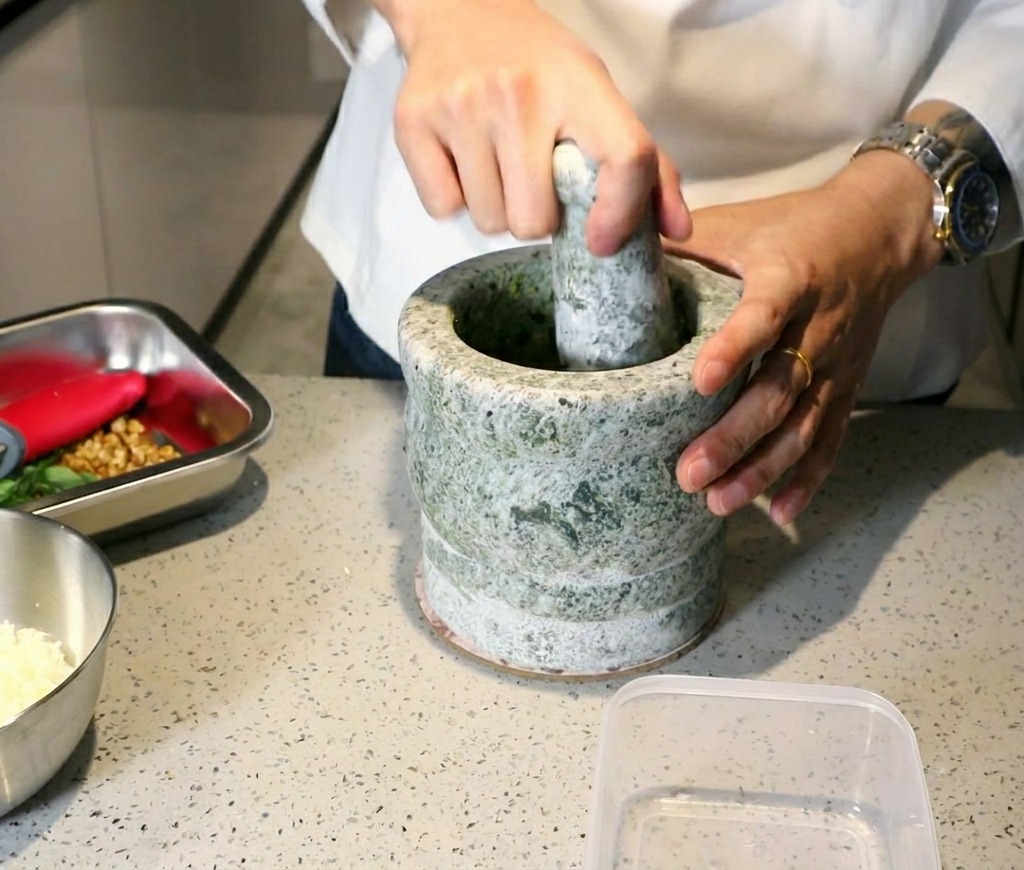
Using the stone pestle, pound the combined ingredients with a steady, circular rhythm. Work the mixture until the fibers of the basil and garlic break down completely, emulsifying with the oil and cheese to form a thick, rustic green paste.
Tip: If you prefer a perfectly smooth texture or are short on time, you can use a food processor, though the mortar and pestle method yields a superior rustic flavor. - 8Drain and transfer the pasta
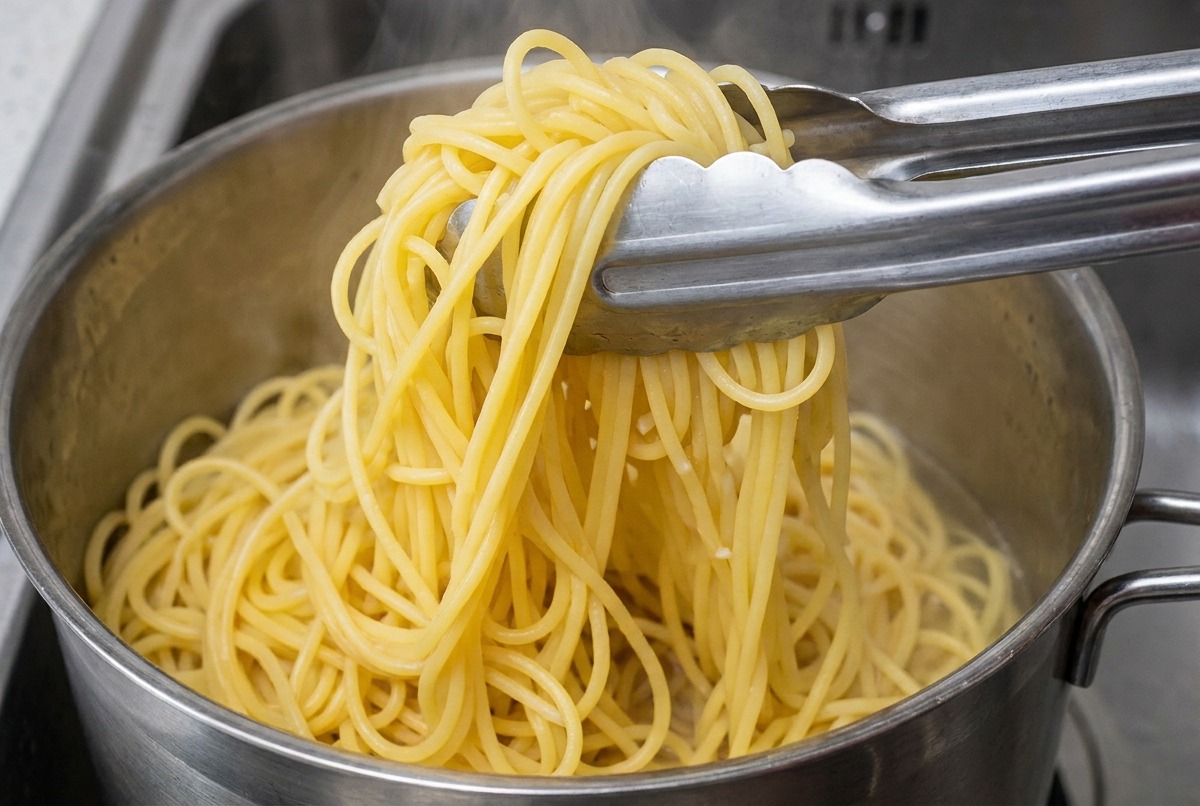
Once the spaghetti has reached an al dente texture, use metal tongs to lift it out of the boiling water. Allow the excess water to drip off for a second, then transfer the hot pasta directly into a clean metal tray or large mixing bowl.
Tip: Do not rinse the pasta; the natural starch remaining on the surface helps the pesto and cream sauces adhere better to each strand. - 9Add the fresh pesto sauce
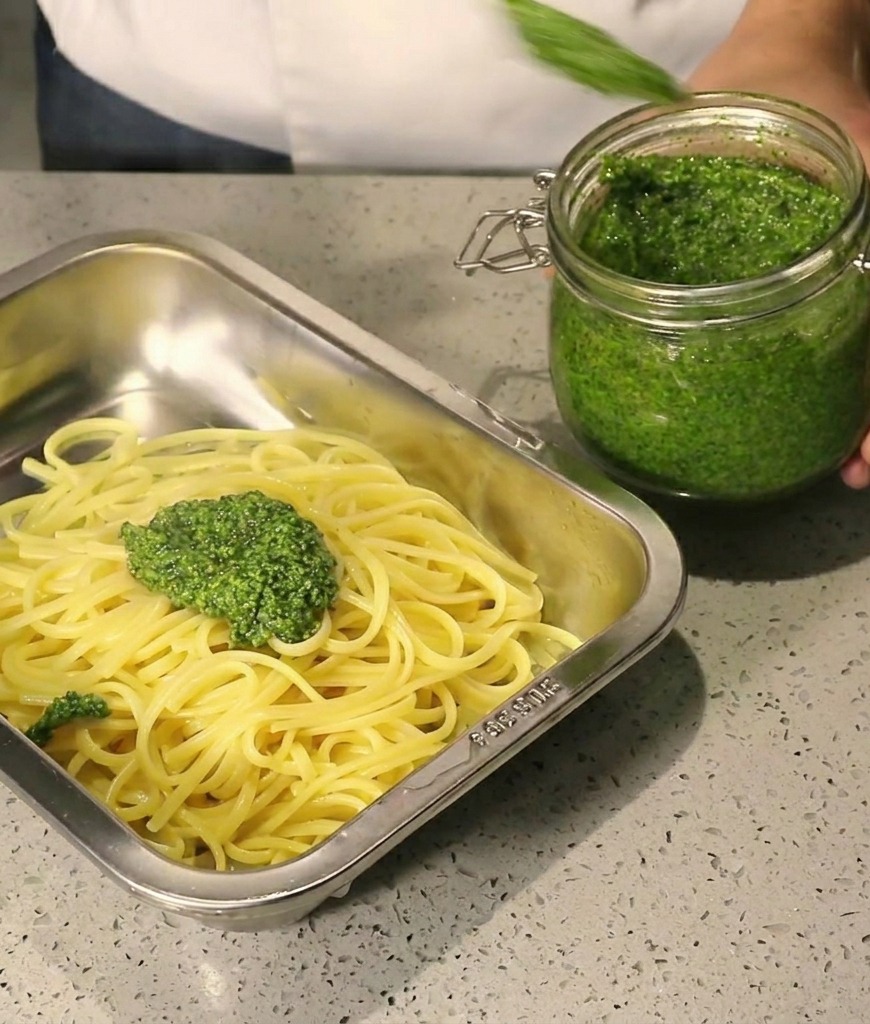
Spoon several generous dollops of the freshly made pesto directly onto the bed of hot spaghetti. The residual heat from the pasta will begin to melt the cheese and release the aromatic oils from the basil and garlic.
Tip: For a standard portion, two to three tablespoons of pesto are usually enough, but you can adjust this to suit your taste preference. - 10Incorporate creamy cheese sauce
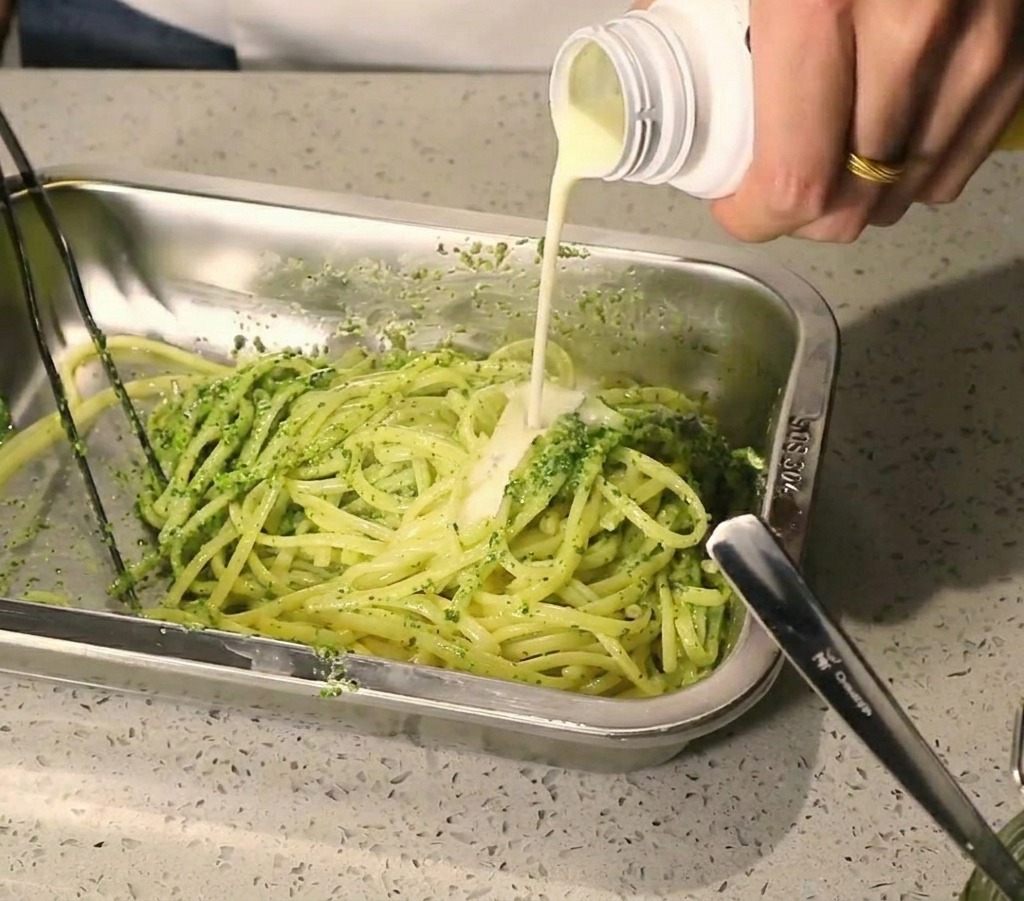
Pour a creamy white cheese sauce over the spaghetti and pesto. This addition introduces a rich, velvety texture that balances the sharp herbal notes of the basil and the pungency of the garlic.
Tip: Heavy cream mixed with extra grated Parmesan cheese is an excellent substitute for a professional finish. - 11Toss to coat the pasta
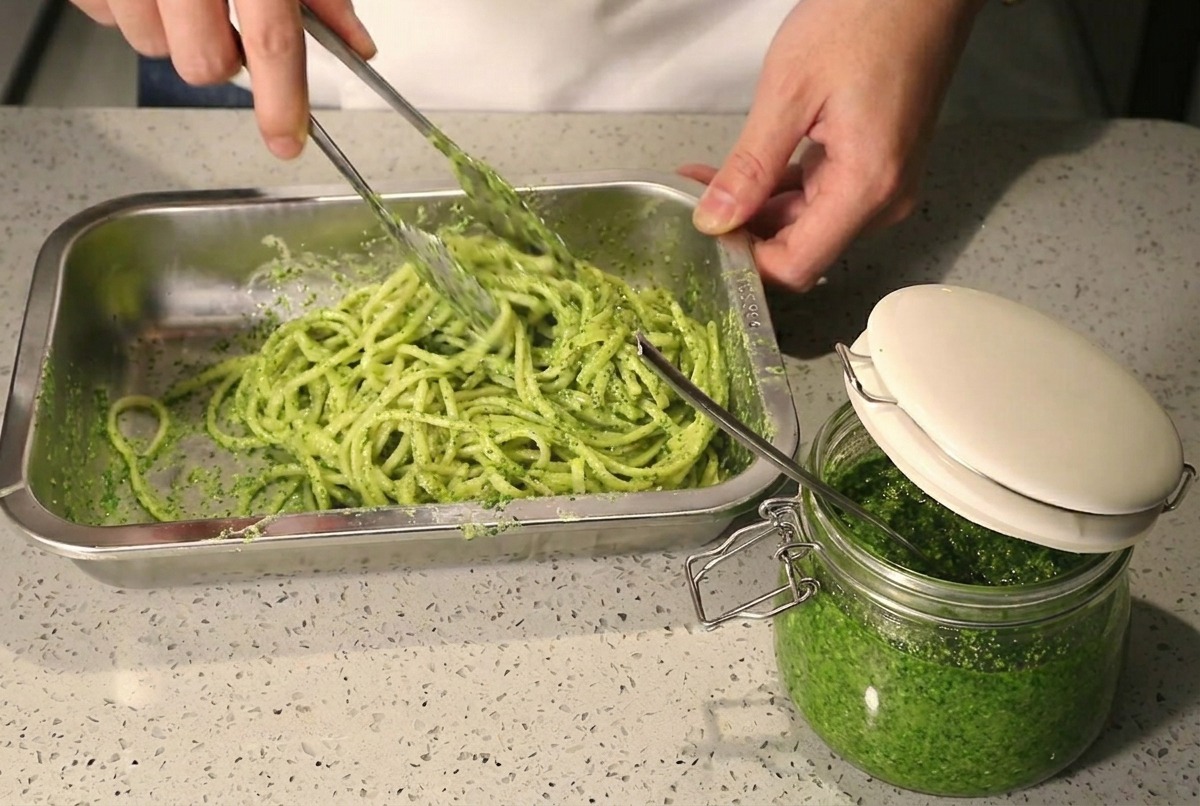
Use metal tongs to vigorously toss the spaghetti with the pesto and cream sauce. Continue mixing until the sauces emulsify and every strand of pasta is evenly coated in a glossy, light-green mixture.
Tip: Mixing while the pasta is still very hot is crucial for achieving a silky, restaurant-quality sauce consistency. - 12Garnish with pine nuts
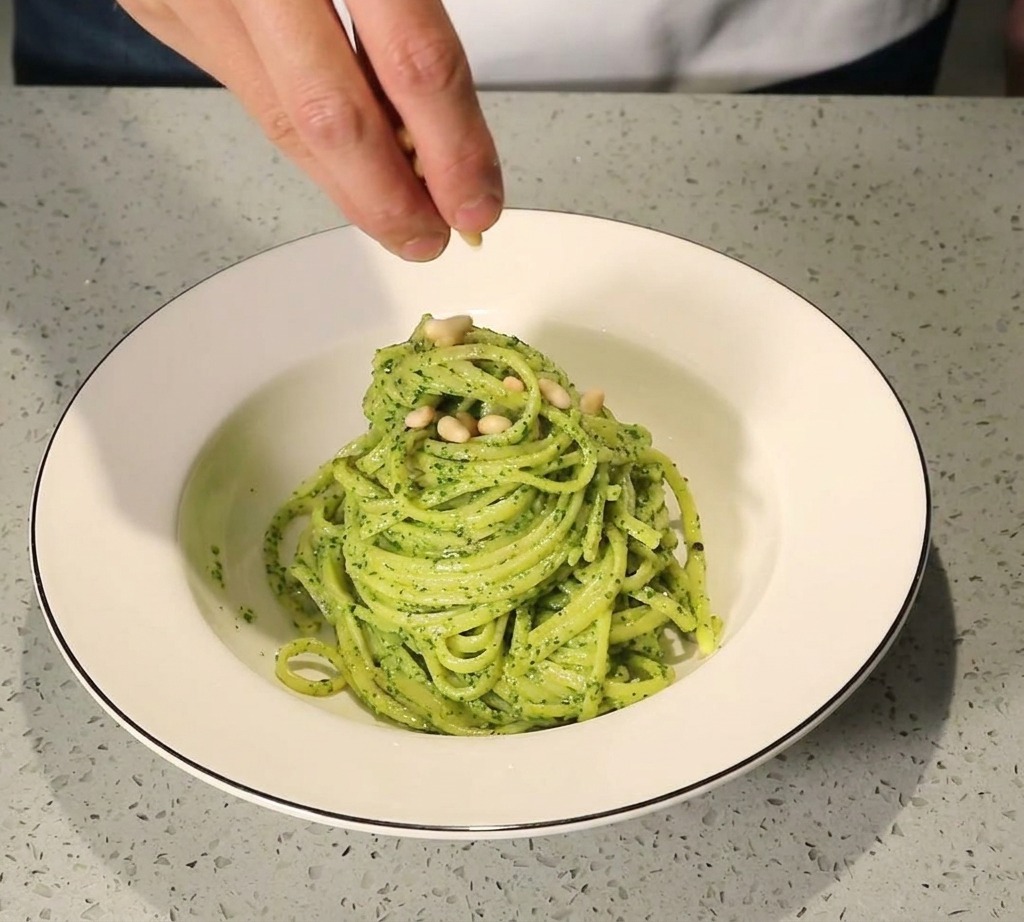
Twirl the pasta into a bowl for serving. Finish the dish by sprinkling the previously toasted pine nuts over the top, adding a buttery crunch and nutty depth to every bite.
Tip: For the best presentation, use a carving fork or tongs to create a high nest shape in the center of the plate before garnishing.