Velvety Lobster Bisque
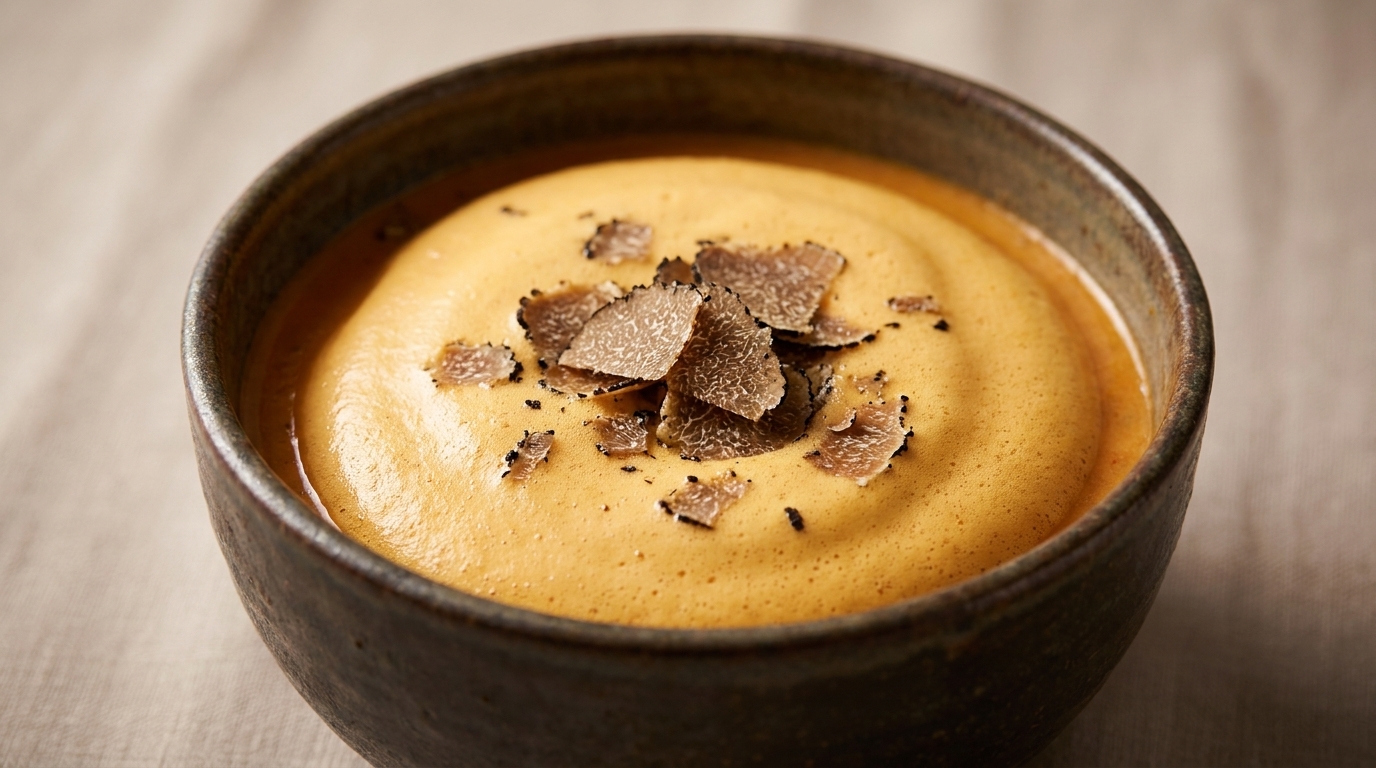
Black Truffle Foam
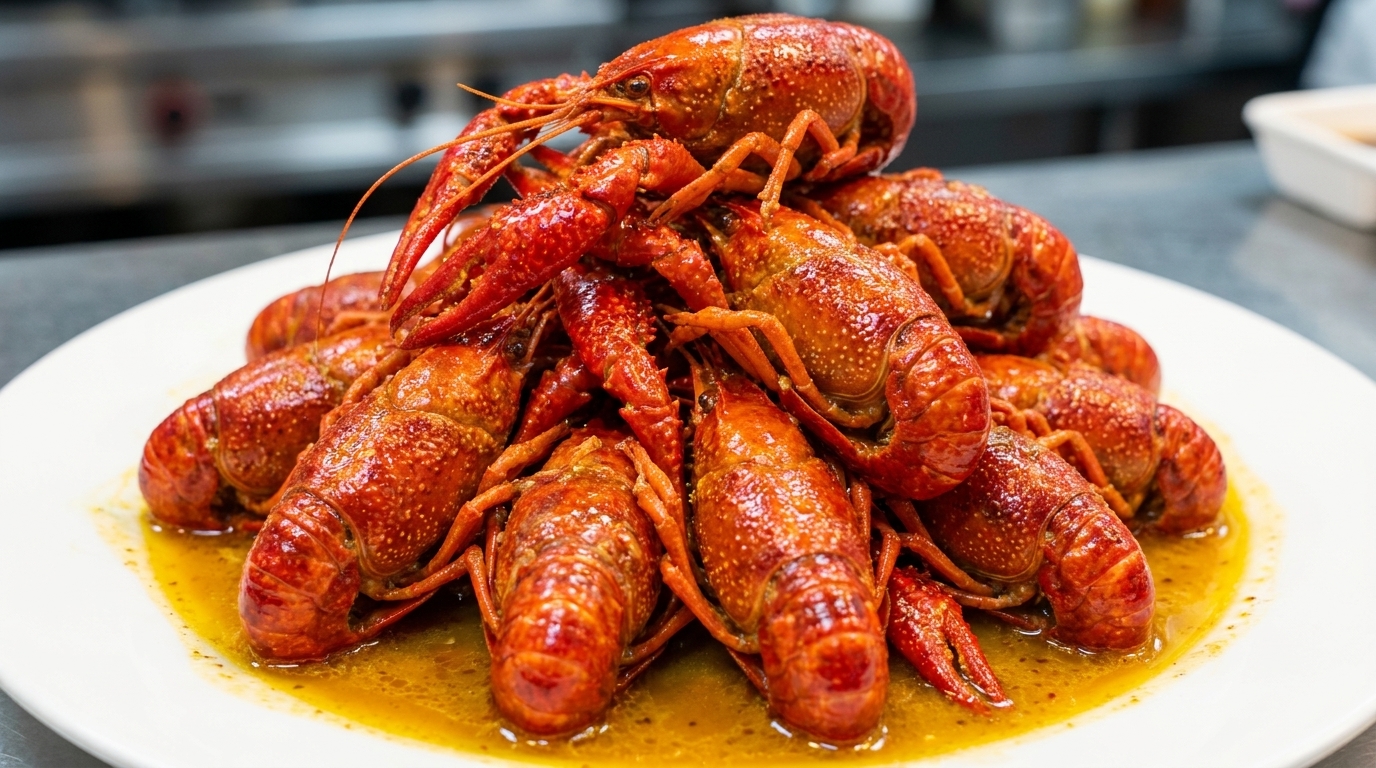
A luxurious and deeply flavorful lobster bisque, enriched with roasted shells, brandy, and heavy cream, served as an elegant foam topped with fresh black truffle.
Lobster bisque is the pinnacle of seafood soups, transforming humble shells into a deeply complex, umami-rich base. This version elevates the classic technique by using a culinary siphon to create an airy, ethereal foam, contrasted perfectly by the earthy, pungent aroma of freshly shaved black truffle. It is a sophisticated dish that balances the intense sweetness of lobster with a rich, velvety mouthfeel.
Ingredients
- 2 units lobster heads and shells
- 1 unit onion
- 1 unit carrot
- 1 stalk celery
- 50 ml brandy
- 500 ml fish stock
- 1 can tomato puree
- 500 ml heavy cream
- 1 unit steamed egg custard
- 100 g cooked lobster meat
- to taste chives
- to taste fresh black truffle
Instructions
- 1Roast the lobster shells
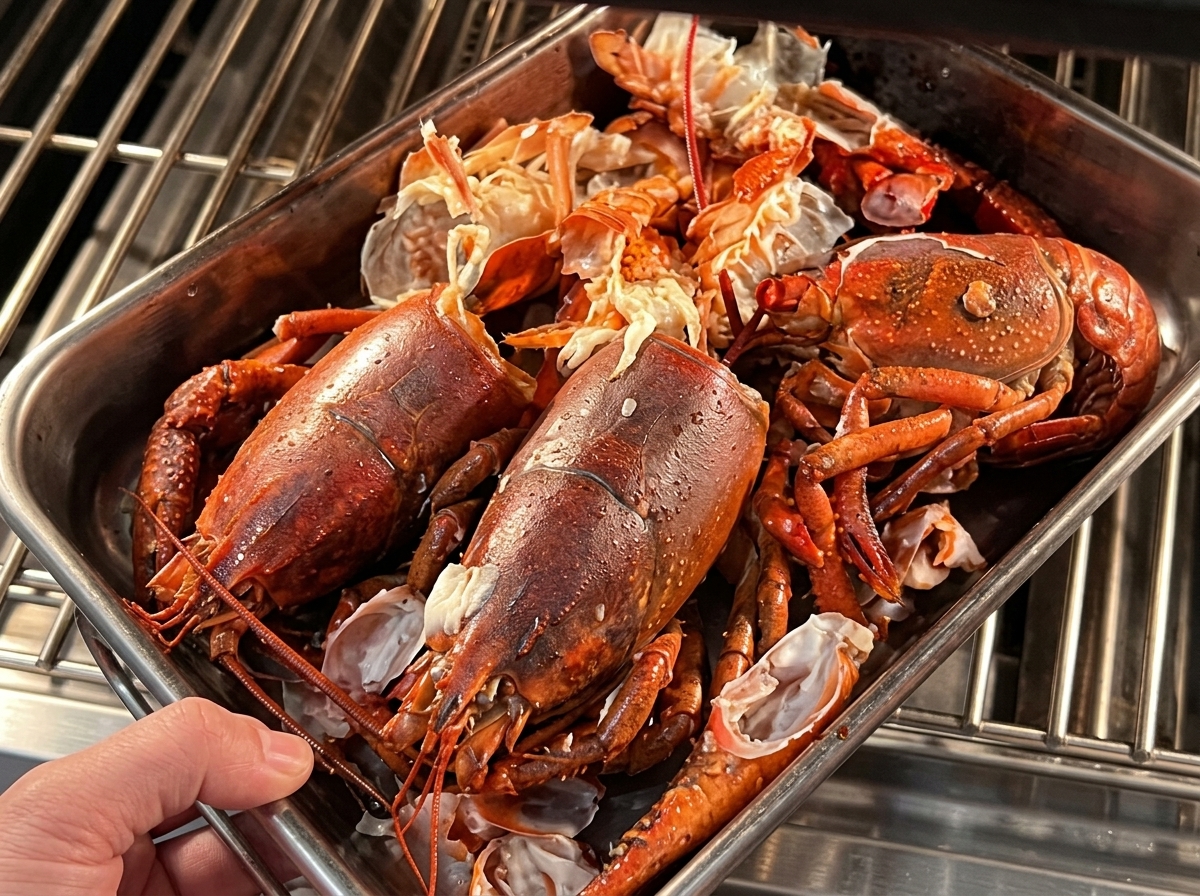
Place the leftover lobster heads and shells into a metal roasting pan. Roast them in a 400-degree oven for about 30 minutes to ensure they develop a deep, rich color and concentrated flavor.
Tip: Roasting the shells is a crucial step to deepen the umami flavor and extract the natural oils from the lobster. - 2Sauté the mirepoix
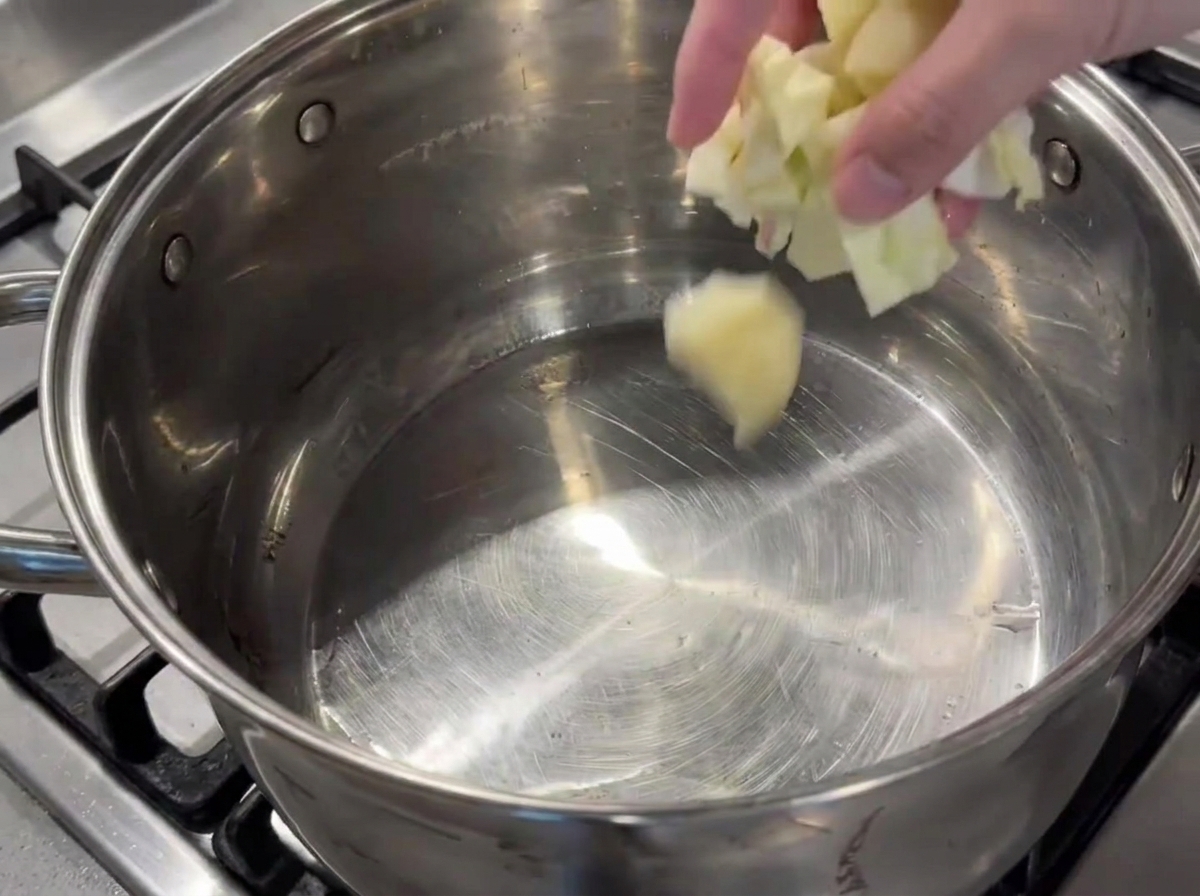
While the shells roast, prepare a large pot on the stove with a little oil. Add the mirepoix—diced onions, carrots, and celery—and sauté over medium heat to begin building the flavor base.
Tip: Sweat the vegetables slowly without browning them too much to create a sweet, aromatic foundation for the stock. - 3Combine shells and aromatics
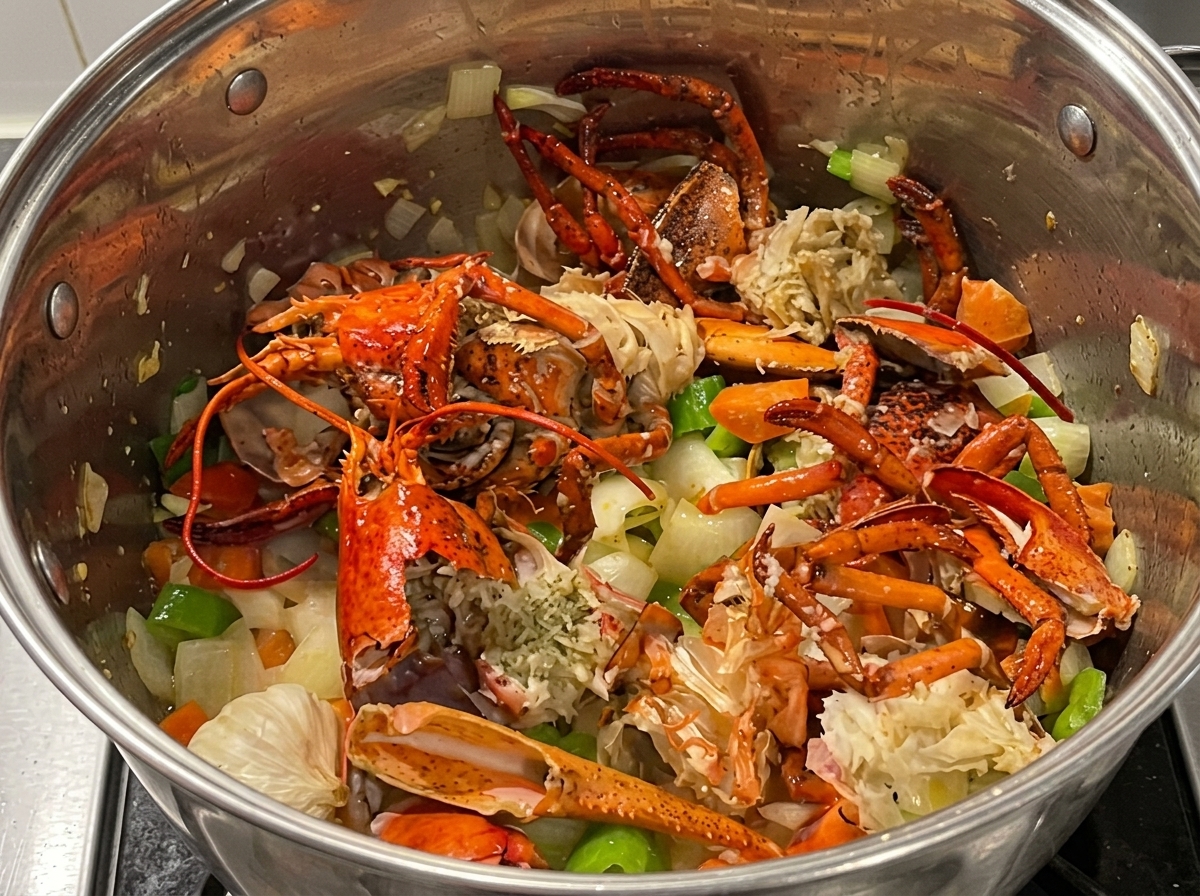
Once the lobster shells have achieved a good color in the oven, carefully add them into the pot with the sautéed mirepoix. Use a wooden spoon to crush the shells slightly, helping to release even more of their roasted flavor.
Tip: If you are using brandy, now is the time to pour in 50ml to deglaze the pot and add complexity. - 4Add liquids and tomato puree
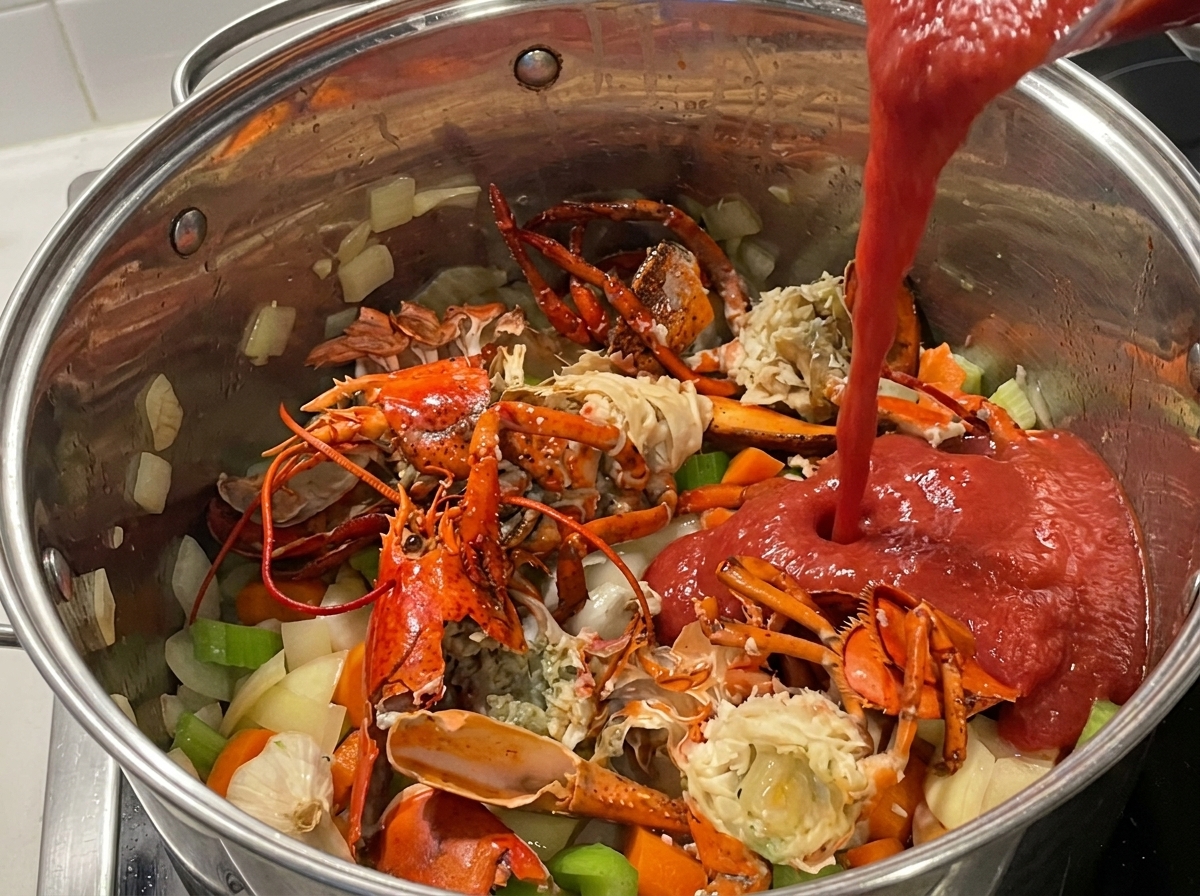
Pour 500ml of fish stock into the pot, followed by a can of tomato puree. Stir the mixture well to incorporate the puree, then add enough water to just cover the lobster shells.
Tip: The tomato puree not only provides acidity to balance the richness but also gives the bisque its signature red hue. - 5Simmer and skim the stock
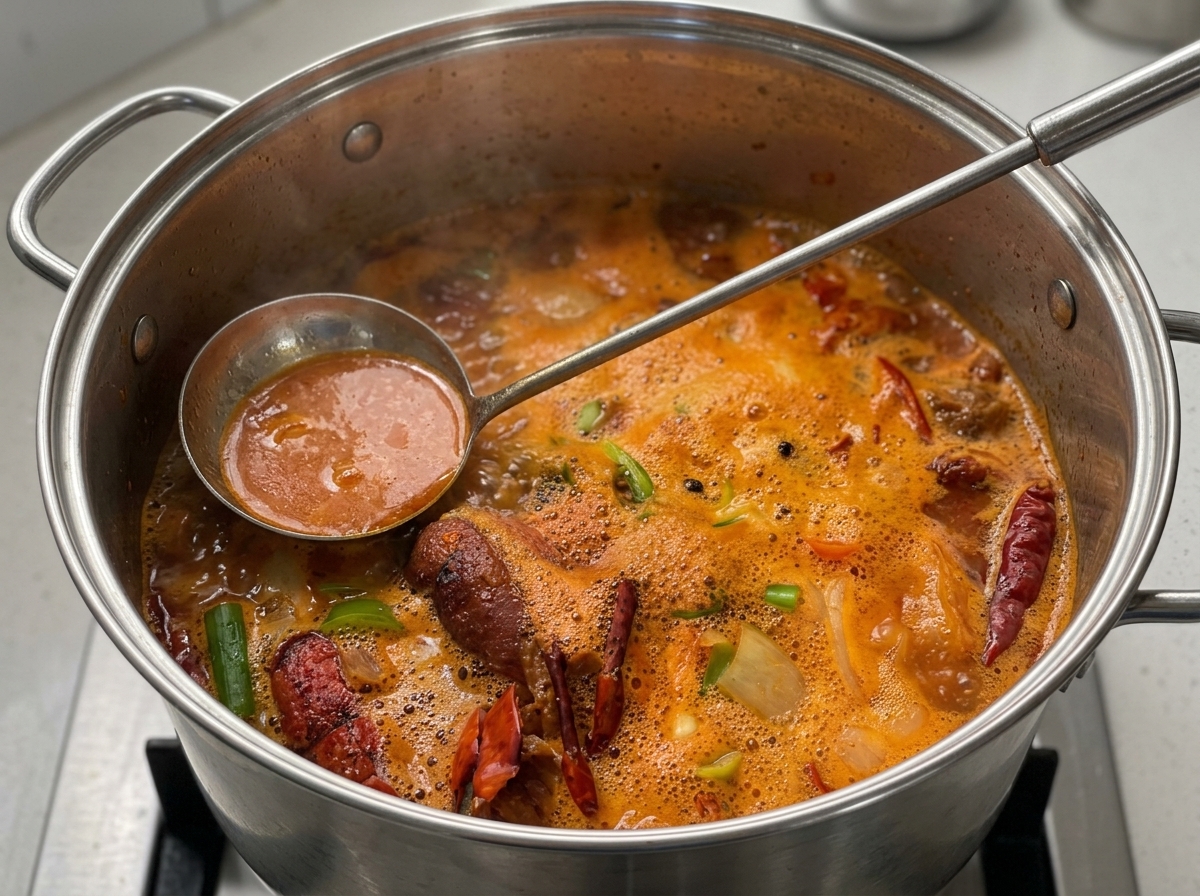
Bring the pot to a steady simmer over medium heat and let it cook for about two hours. As it cooks, use a ladle to continuously skim off any foam or impurities that rise to the surface.
Tip: Frequent skimming is essential for achieving a clean-tasting and refined stock without any bitterness. - 6Strain the lobster stock
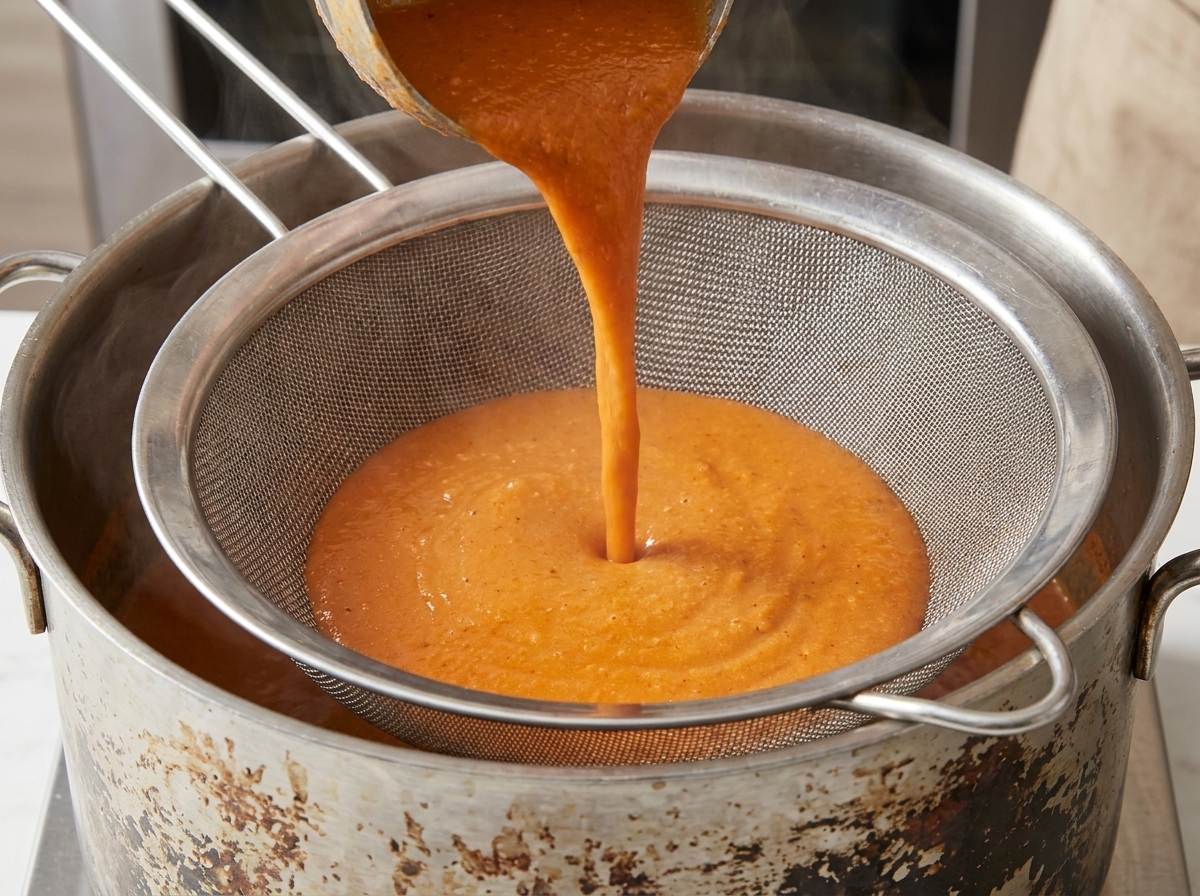
After two hours of simmering, remove the pot from the heat. Carefully strain the rich, infused stock through a fine-mesh sieve into a clean pot, leaving the solid shells and aromatics behind.
Tip: Press down firmly on the shells and vegetables in the strainer to extract every last drop of flavorful liquid before discarding them. - 7Add heavy cream
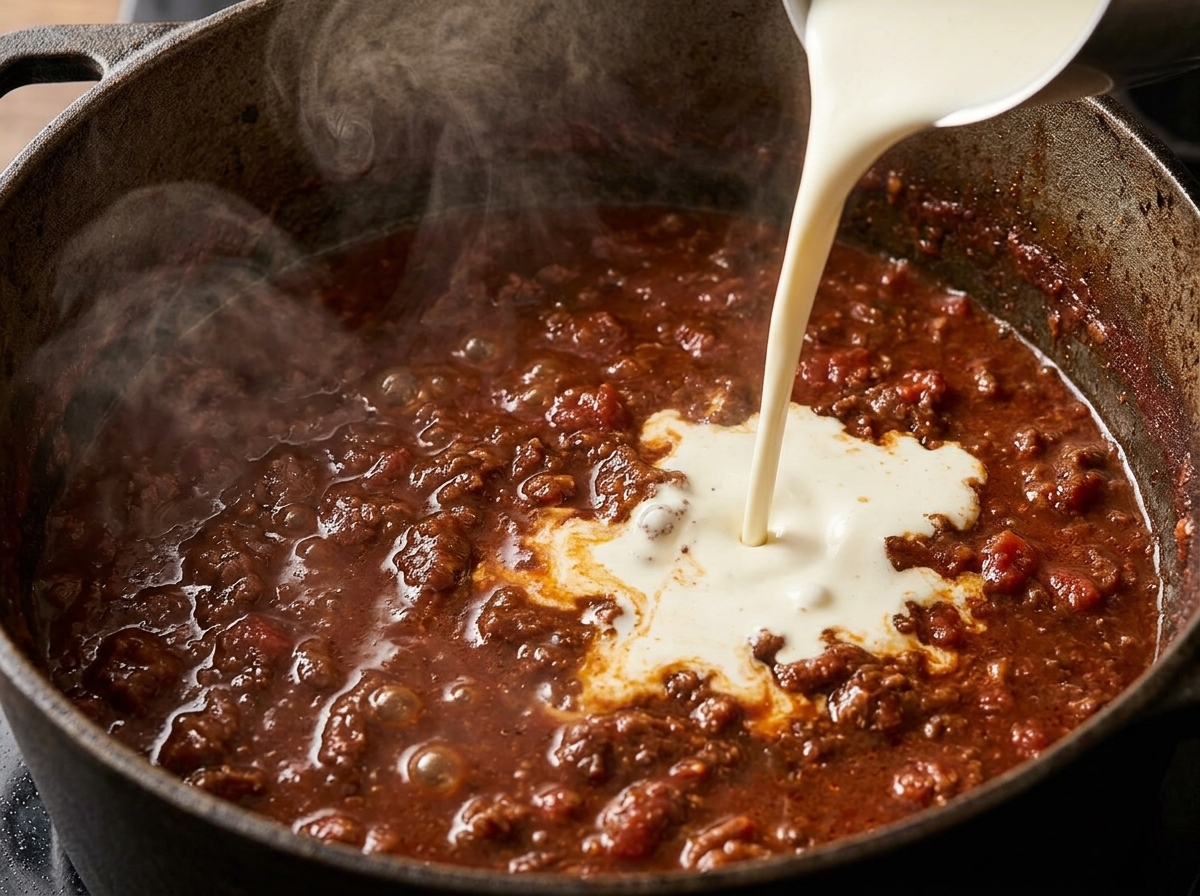
Add 500ml of heavy cream to the reduced lobster stock. Continue to simmer the mixture until it reduces once more to one-third of its volume, creating a rich and velvety base.
Tip: Simmer gently to avoid scorching the cream; a thick, nappant consistency is ideal. - 8Plate and garnish the bisque
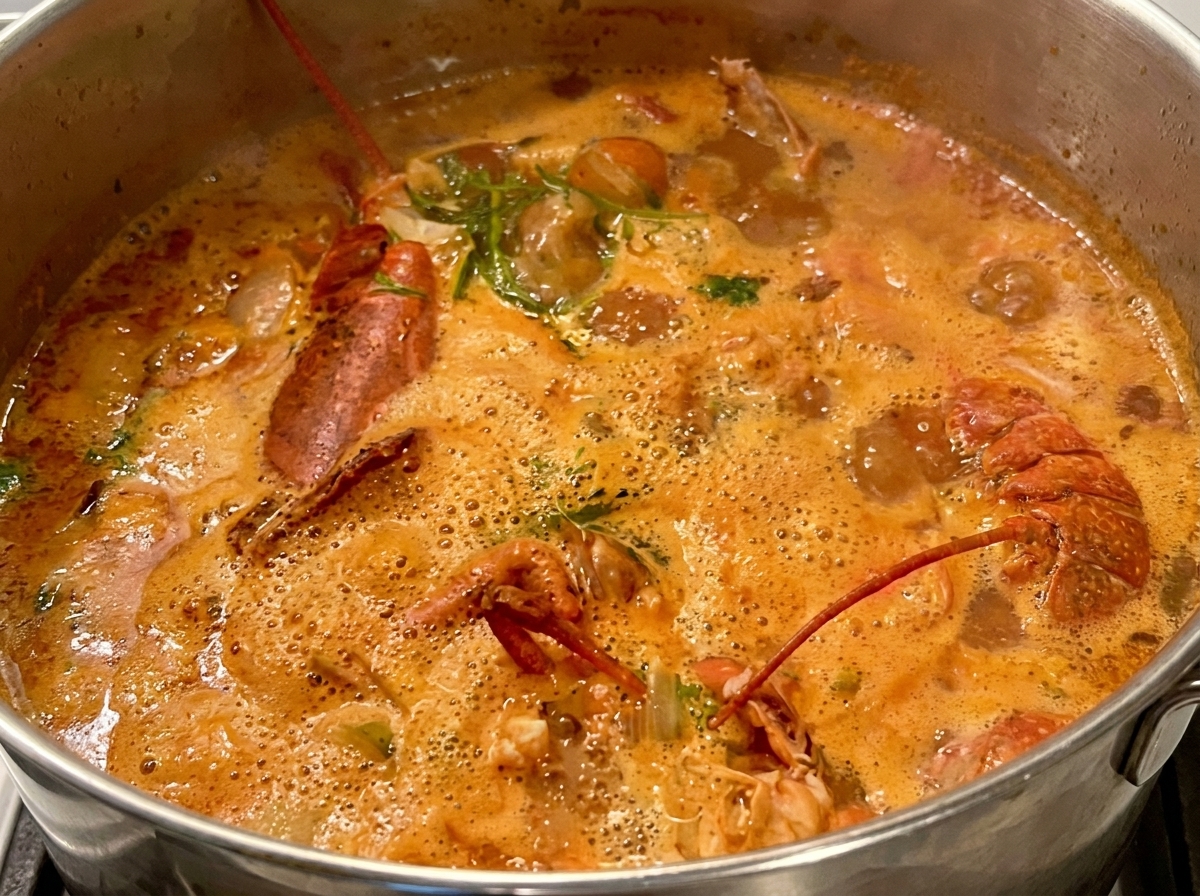
Ladle the hot bisque into warmed serving bowls then carefully dispense the freshly prepared foam over the surface and finish with freshly shaved black truffle.
Tip: Serve immediately while the foam is still airy and the earthy truffle aroma is most potent from the heat.