Classic Free-Range Chicken Noodle Soup
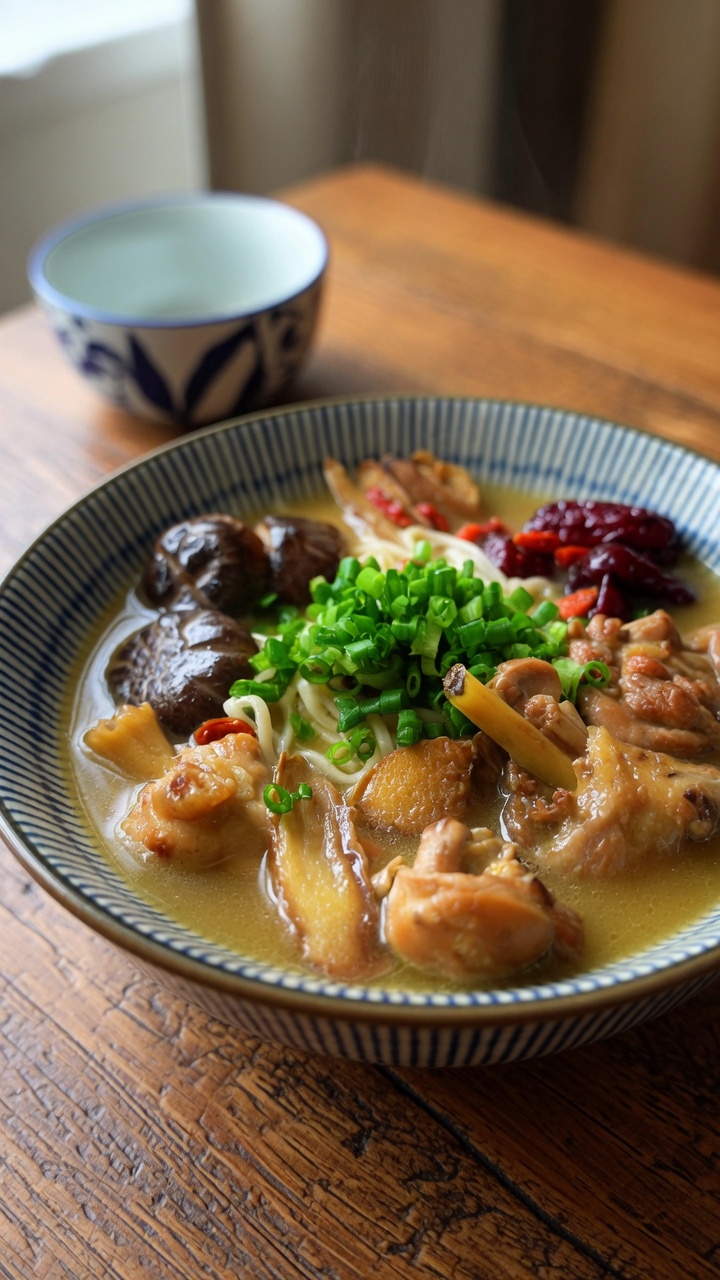
Master the art of perfectly tender chicken and a rich, golden broth with this simple, authentic clay-pot recipe that guarantees exceptional texture and flavor.
This chicken noodle soup focuses on the quality of the ingredients and precise technique to elevate a simple meal. By using a 220-day-old free-range hen and a clay pot, you achieve a depth of umami and a tenderness that cannot be matched by standard methods. The quick-scalding technique ensures the chicken remains crisp and succulent, perfectly complementing the rich, herbal broth.
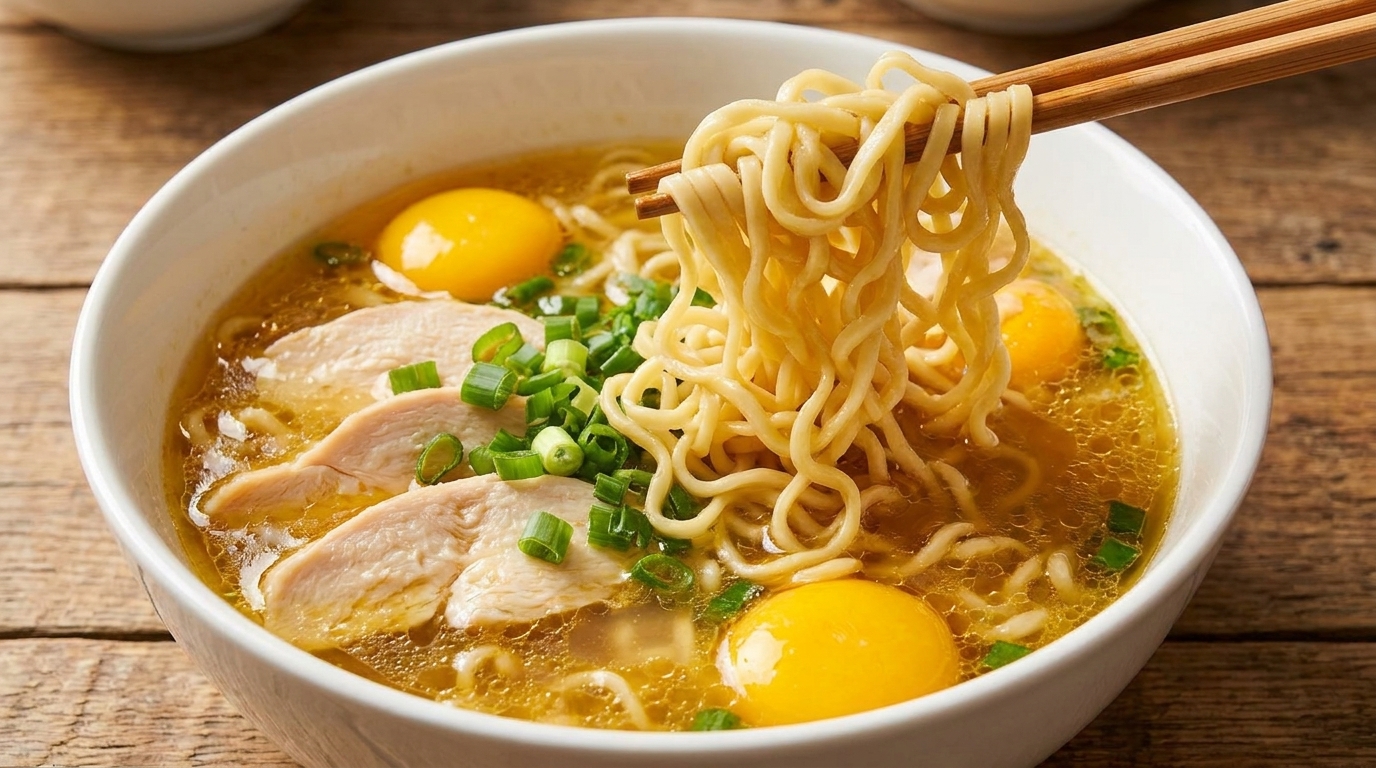
Ingredients
- 1/2 220-day-old free-range hen
- 3 slices ginger
- 5 red dates
- 10 g astragalus root
- 10 g codonopsis root
- 1 tsp salt
- 1 handful fresh egg noodles
- 2 tbsp chopped green onions
Instructions
- 1Score the giblets
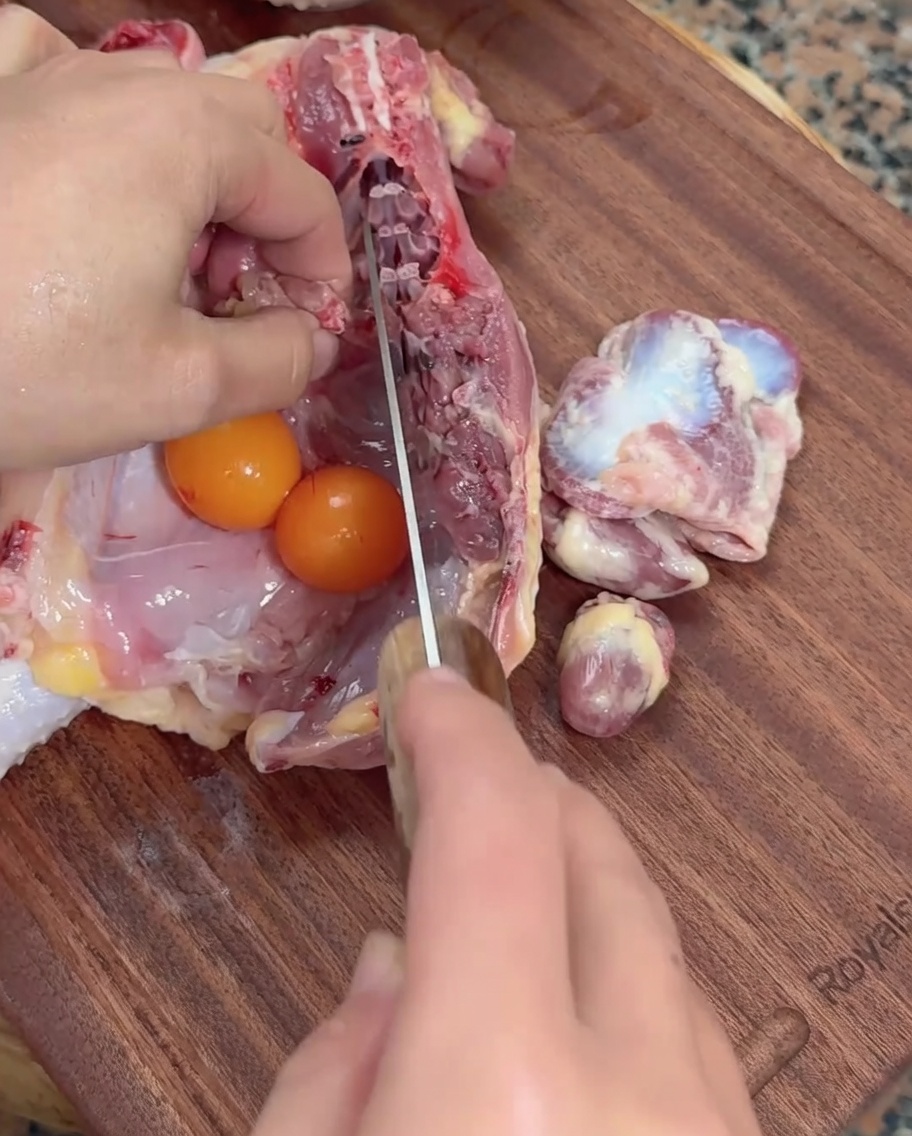
Begin by preparing the chicken giblets. Use a sharp cleaver to carefully score them on a wooden cutting board. If you enjoy organ meats, feel free to add more to enhance the flavor and texture of your dish.
Tip: Scoring helps the giblets cook more evenly and prevents them from curling up too much during the cooking process. - 2Debone the raw chicken
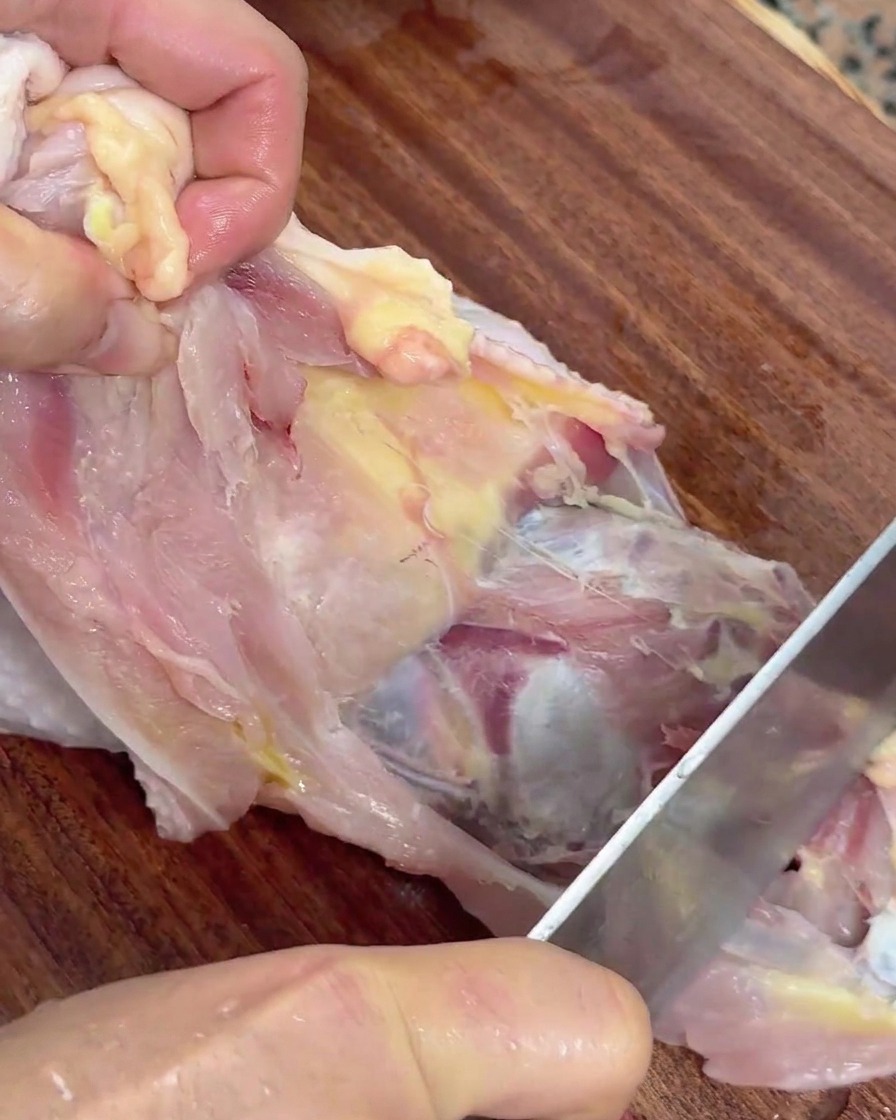
Carefully separate the raw chicken meat from the carcass using a sharp knife. Keeping the meat raw for the scalding step later is crucial for preserving the chickens natural, savory flavor and maintaining a tender texture.
Tip: Work slowly and angle the knife against the bone to maximize the amount of meat you yield. - 3Slice the chicken meat

Place the deboned chicken meat on the cutting board with the skin side facing down to prevent it from slipping. Slice the meat as thinly as possible so that it cooks quickly and evenly when scalded in the hot broth later.
Tip: Slicing with the skin side down makes cutting much easier and safer, as the skin can be slippery. - 4Chop the chicken carcass
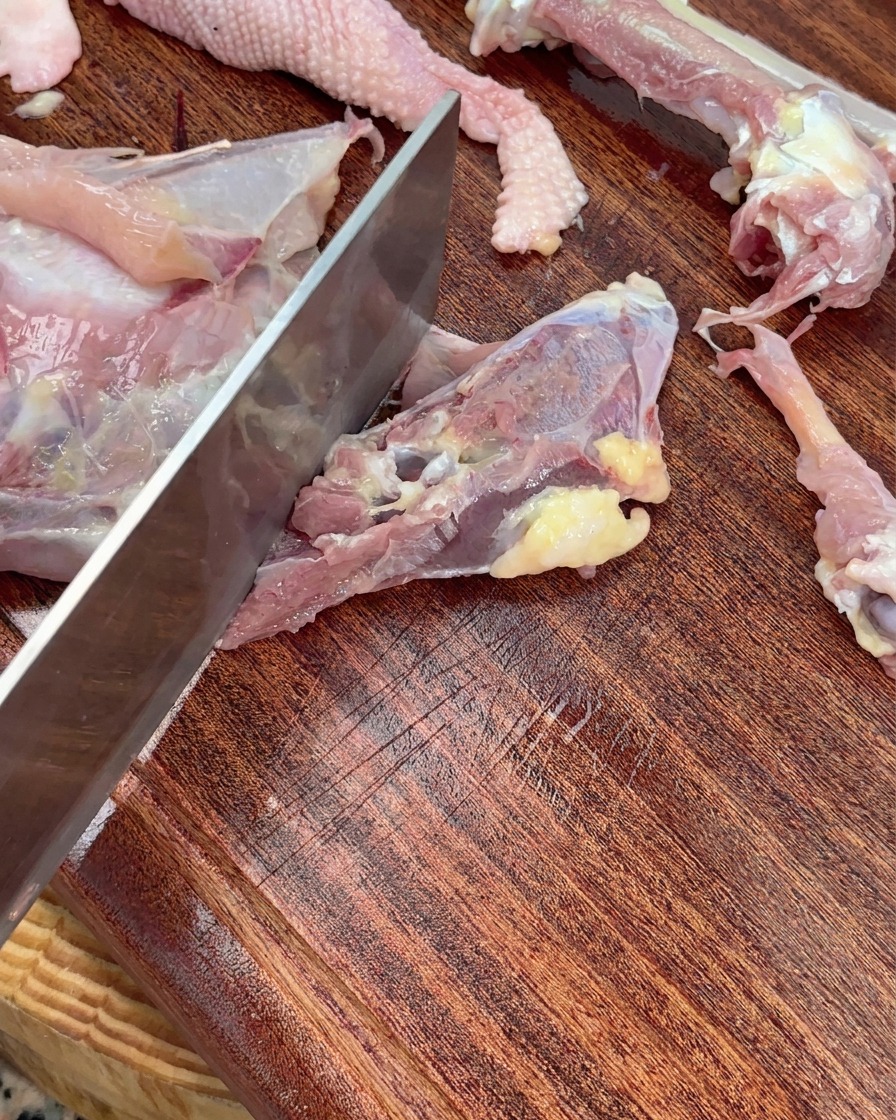
Take the remaining raw chicken skeleton and chop it into large chunks using a cleaver. These bones are essential for creating a rich, flavorful, and umami-packed broth for the noodle soup.
Tip: Chopping the bones exposes the marrow and increases the surface area, which helps release more flavor into the soup. - 5Blanch the chicken bones
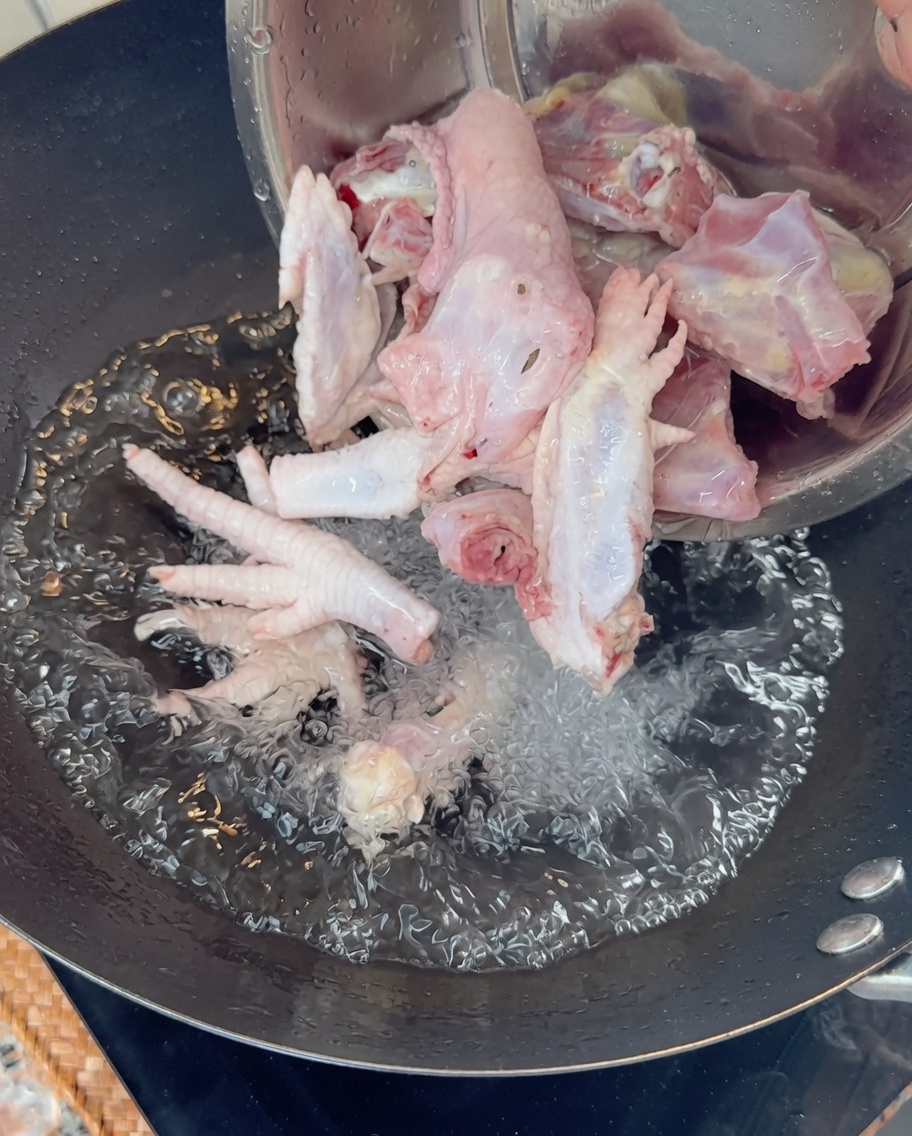
Place the chopped chicken carcass and bones into a wok filled with water. Bring it to a rolling boil over high heat to draw out the impurities. This essential first step ensures the final soup will have a clean, savory flavor.
Tip: Starting with cold water helps gradually extract the blood and impurities from the bones for a clearer broth. - 6Skim the blanched bones
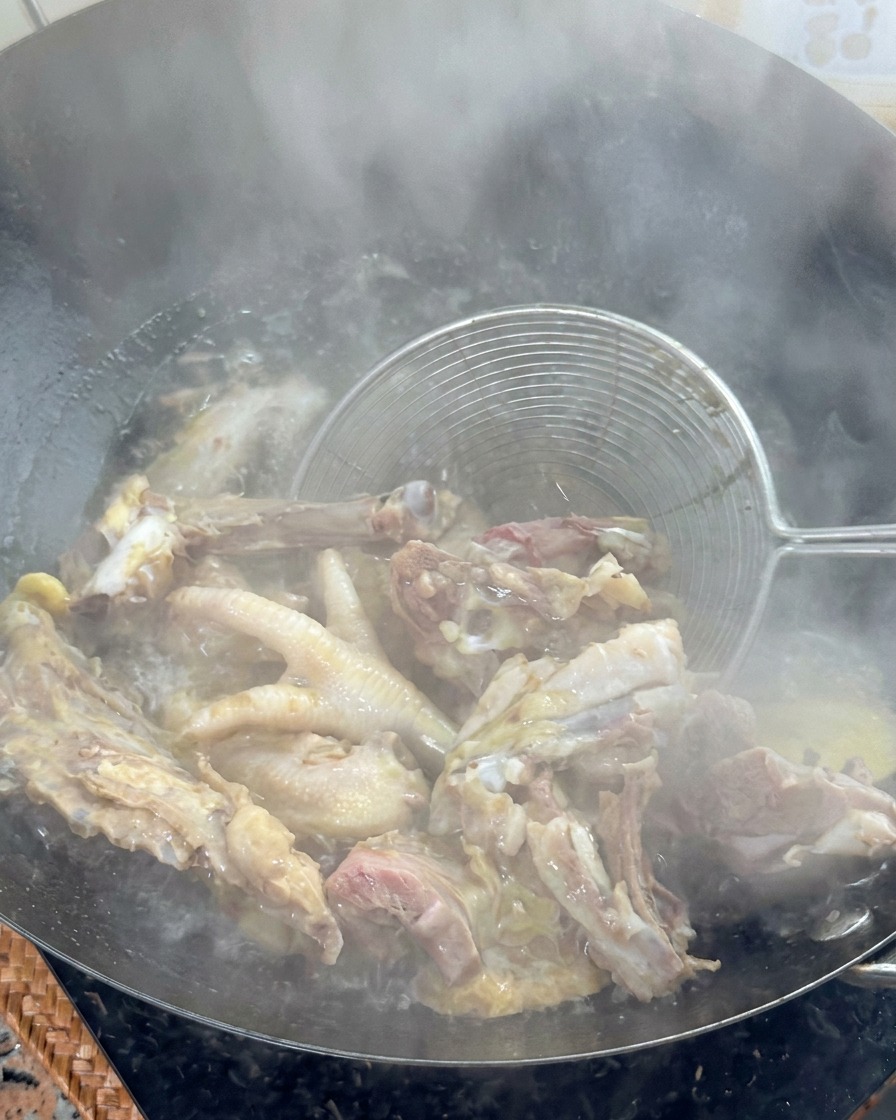
Bring the water in the wok to a rolling boil over high heat to blanch the bones. Once boiled, use a wire strainer to carefully scoop all the blanched chicken bones out of the water.
Tip: Drain the bones well before adding them to your clay pot for the next simmering step. - 7Transfer to a clay pot
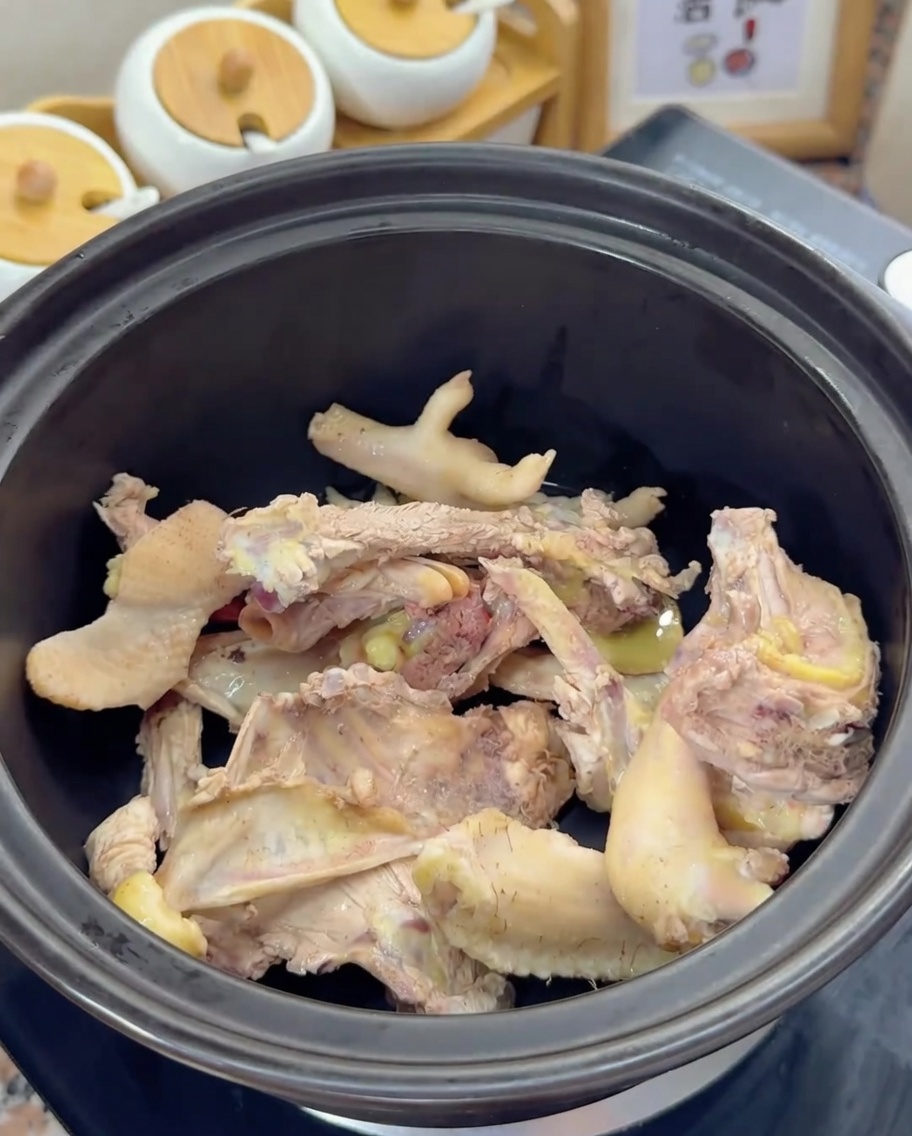
After scooping out the blanched chicken bones, transfer them directly into a deep black clay pot. Using a clay pot is highly recommended as it excels at locking in flavor and retaining heat, resulting in a much richer chicken soup than a standard iron pot.
Tip: Ensure the clay pot is large enough to hold all the bones and leave room for the water to simmer without boiling over. - 8Add herbs and water
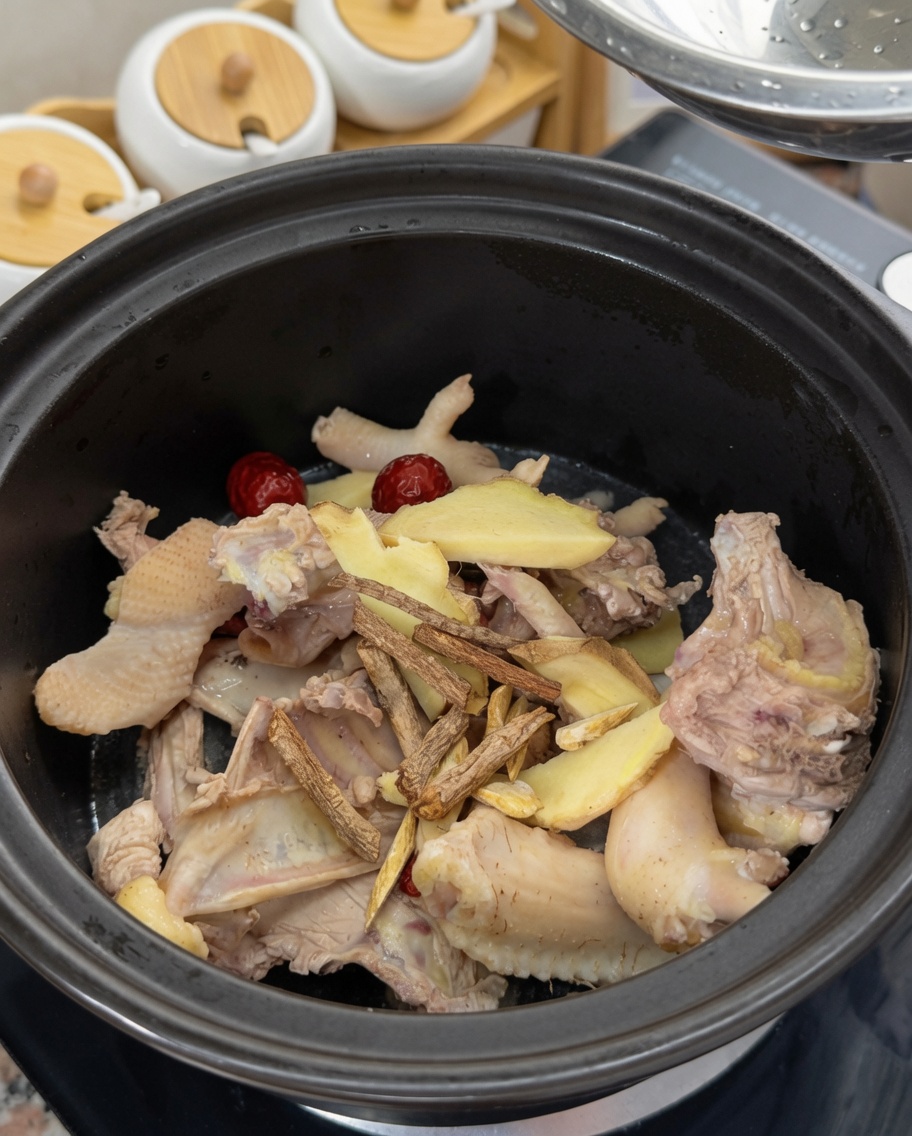
Add the sliced ginger, red dates, astragalus root, and codonopsis root on top of the chicken bones. Pour enough clean water into the clay pot to submerge all the ingredients. Cover with a lid and let it simmer gently over low heat for 40 minutes.
Tip: These traditional herbs impart a natural sweetness and earthiness to the broth, enhancing its nutritional profile. - 9Season the broth
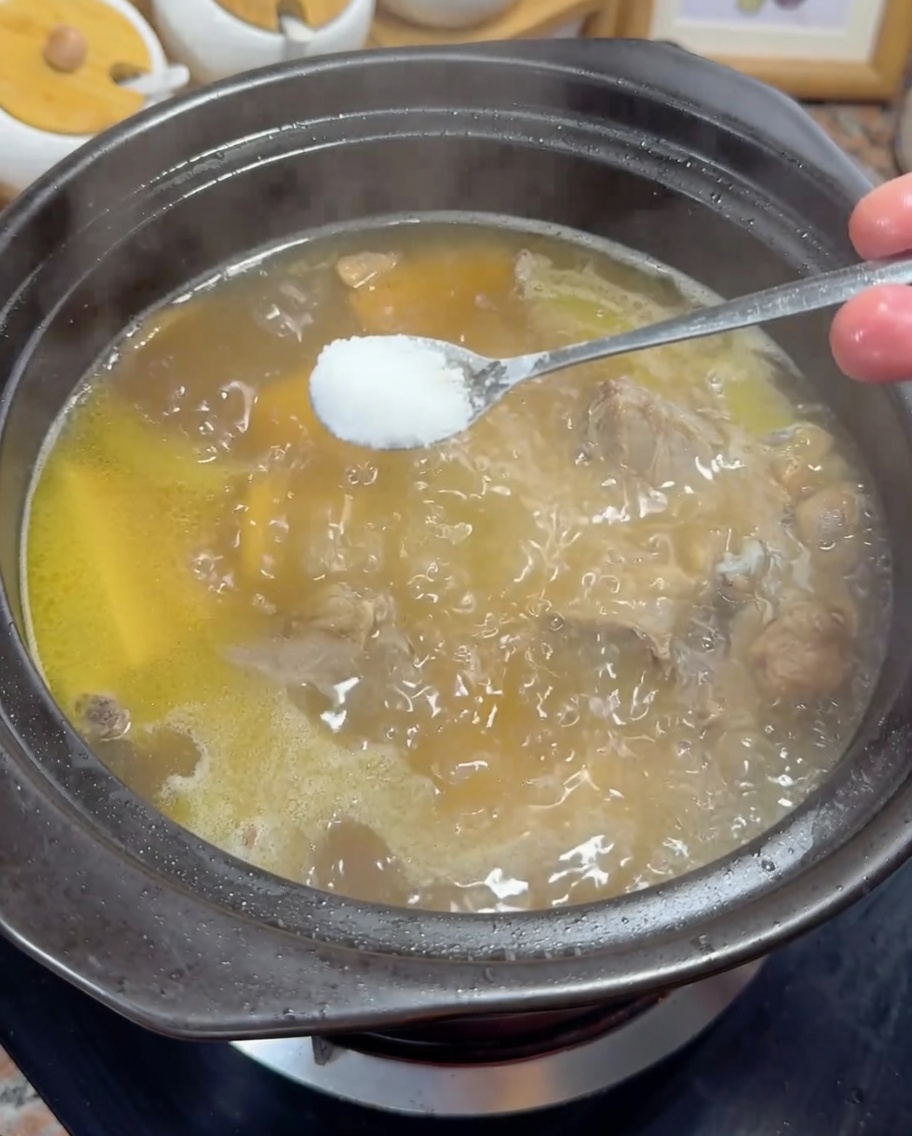
Once the broth has simmered and taken on a rich, golden color, uncover the pot. Add a small spoonful of salt to season the soup. The extensive simmering process naturally builds up a deep umami flavor, so minimal seasoning is needed.
Tip: Always taste the broth before adding more salt, as the concentrated chicken flavor provides a lot of natural savoriness. - 10Remove the bones
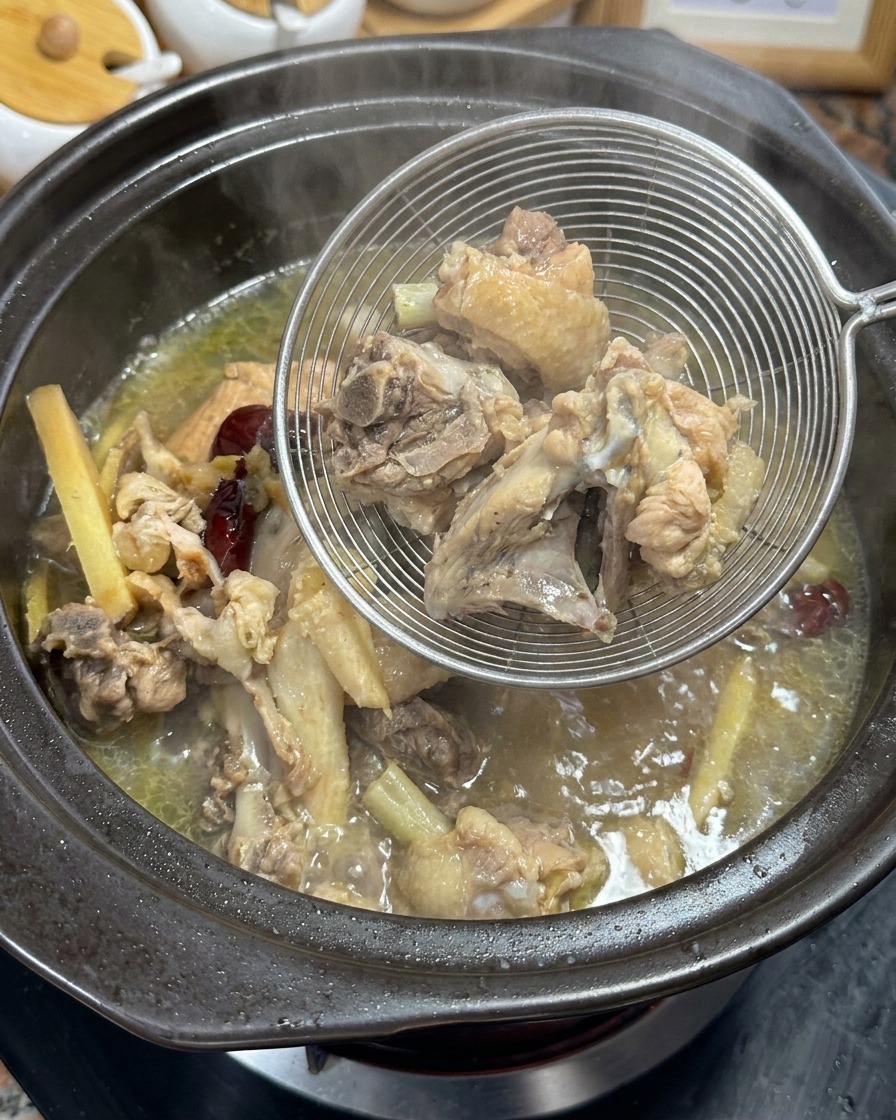
Use a wire strainer to carefully fish out all the large chicken bones and herbs from the clay pot. You want to leave behind only the clear, flavorful, golden chicken broth as the base for the noodles and fresh meat.
Tip: Removing the bones makes the soup much easier to eat and clears the pot for the quick-blanching step. - 11Scald the chicken meat
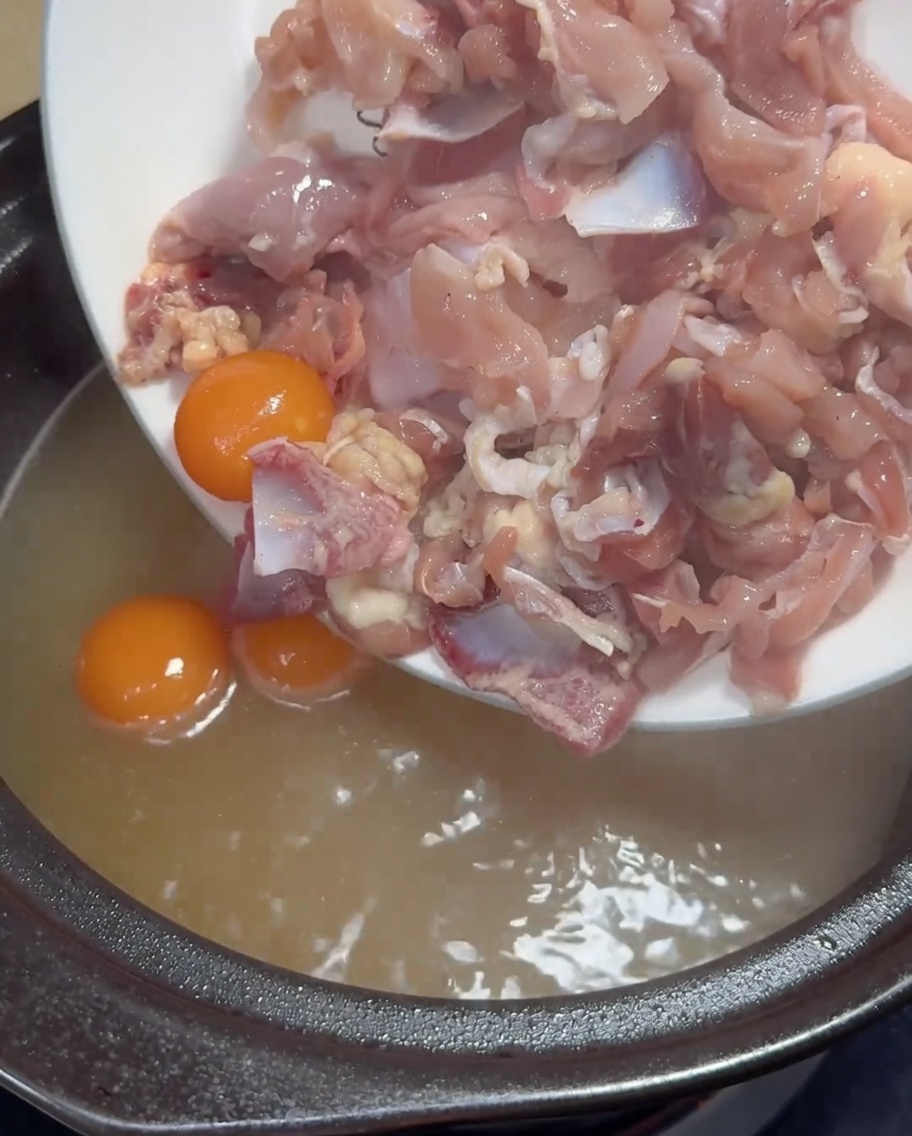
Add the thinly sliced raw chicken and fresh yellow yolks into the simmering clay pot of bone broth. The high heat of the broth will cook the chicken quickly, ensuring it stays tender and succulent.
Tip: Blanching the chicken for only 30 seconds keeps the meat crisp and prevents it from becoming tough. - 12Stir to cook evenly
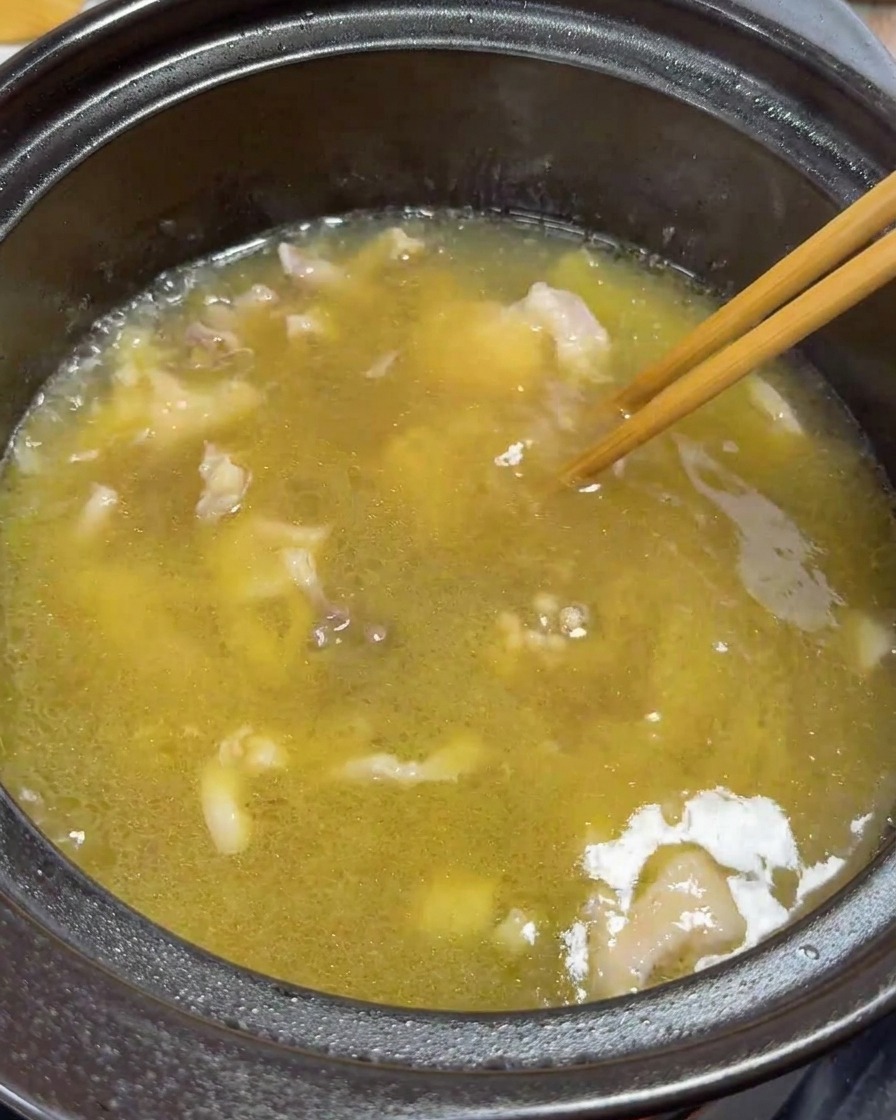
Gently stir the chicken slices and yolks in the boiling soup using chopsticks to ensure even cooking. This technique helps lock in the natural juices and maintains the perfect texture.
Tip: Keep the stirring gentle to avoid breaking the delicate chicken slices or the yolks. - 13Transfer meat to noodles
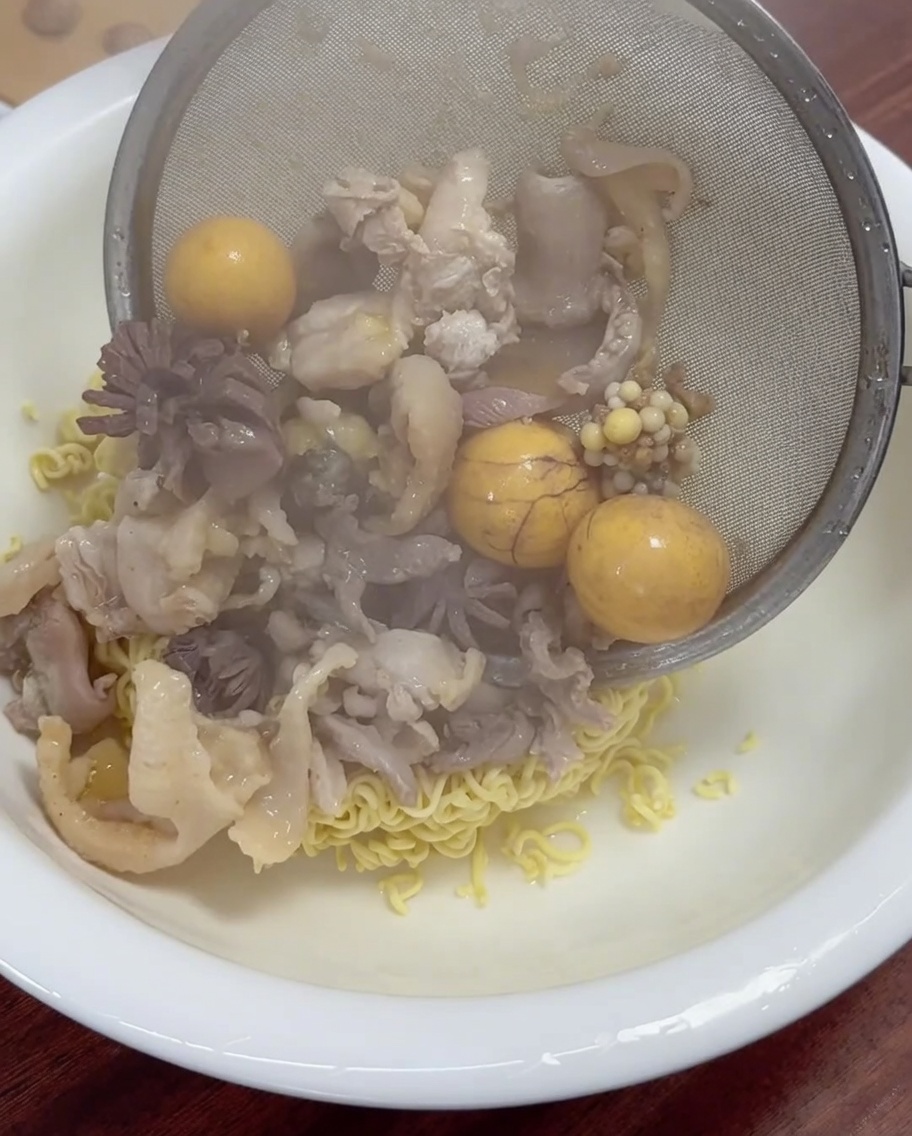
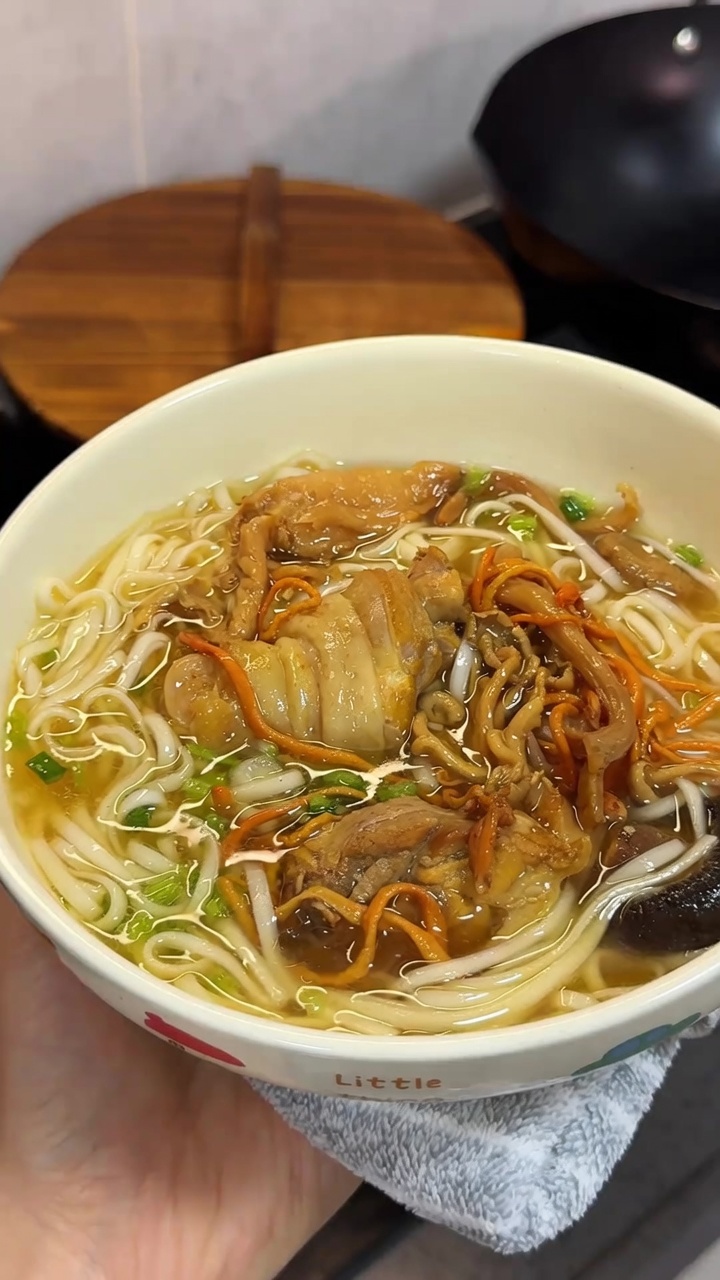
Using a fine-mesh strainer, carefully scoop the freshly cooked chicken meat and yolks from the pot and arrange them over the bowl of prepared noodles.
Tip: Ensure the meat is placed neatly on top of the noodles for an appealing presentation. - 14Ladle the hot broth
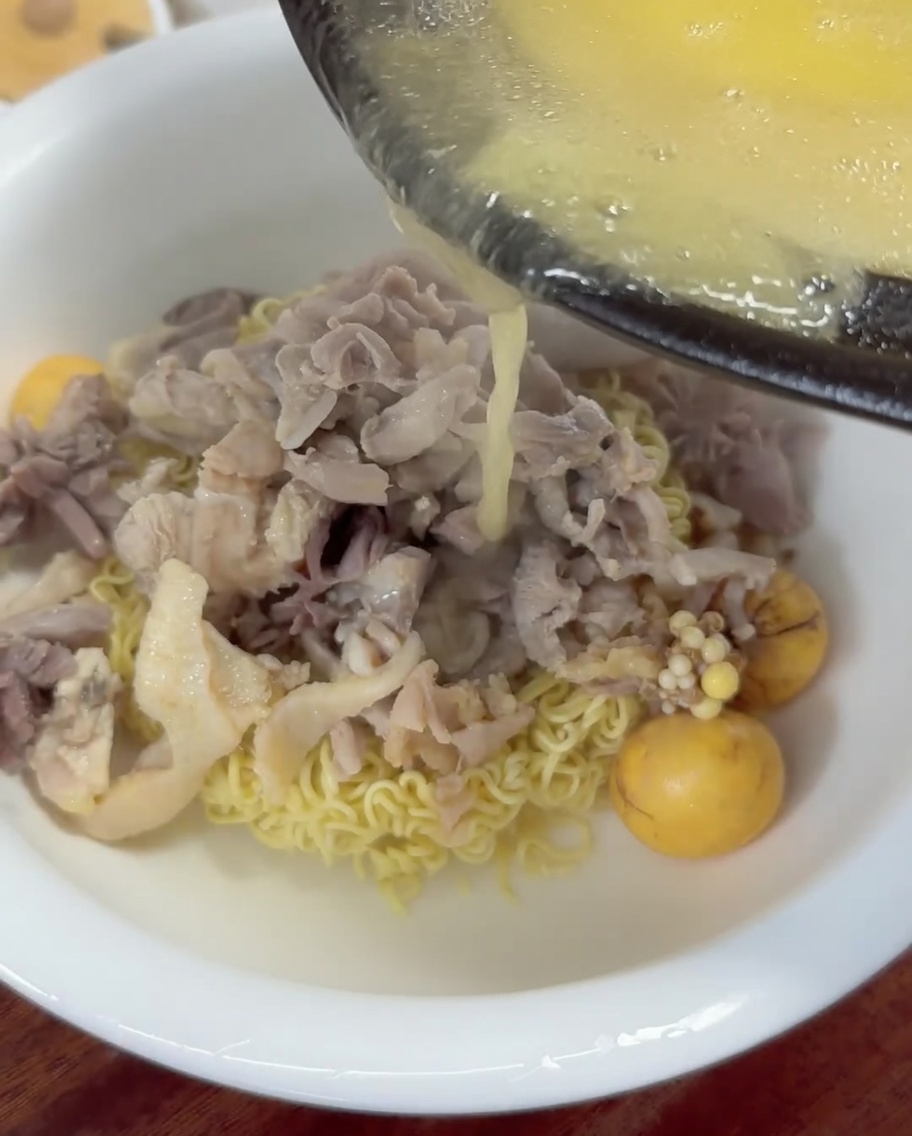
Ladle the hot, rich, golden chicken broth over the noodles and meat. The clay pot cooking method has infused the broth with deep umami flavor.
Tip: Pour slowly to distribute the broth evenly throughout the bowl. - 15Garnish and serve
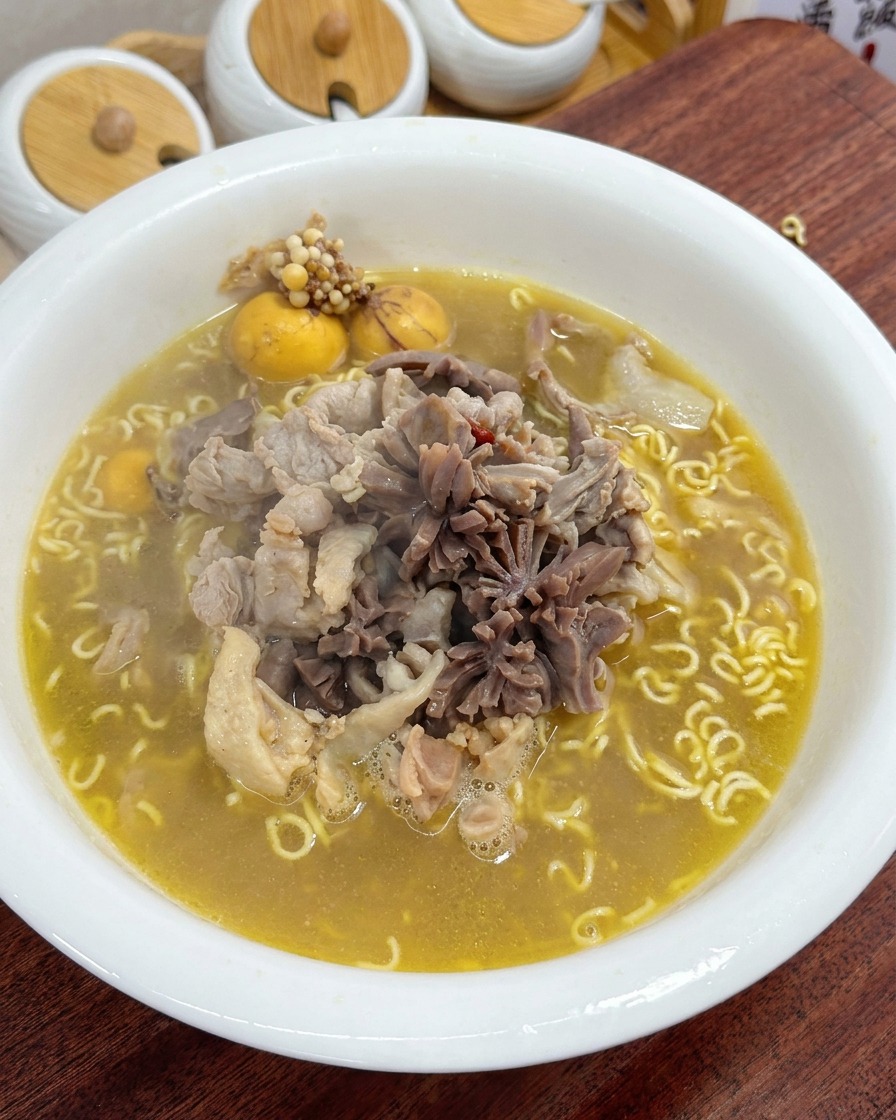
Complete the dish by sprinkling fresh chopped green onions and small red garnishes over the soup. The vibrant colors and aroma add the final touch to this delicious homemade meal.
Tip: Fresh green onions are essential for adding a crisp, aromatic finish.