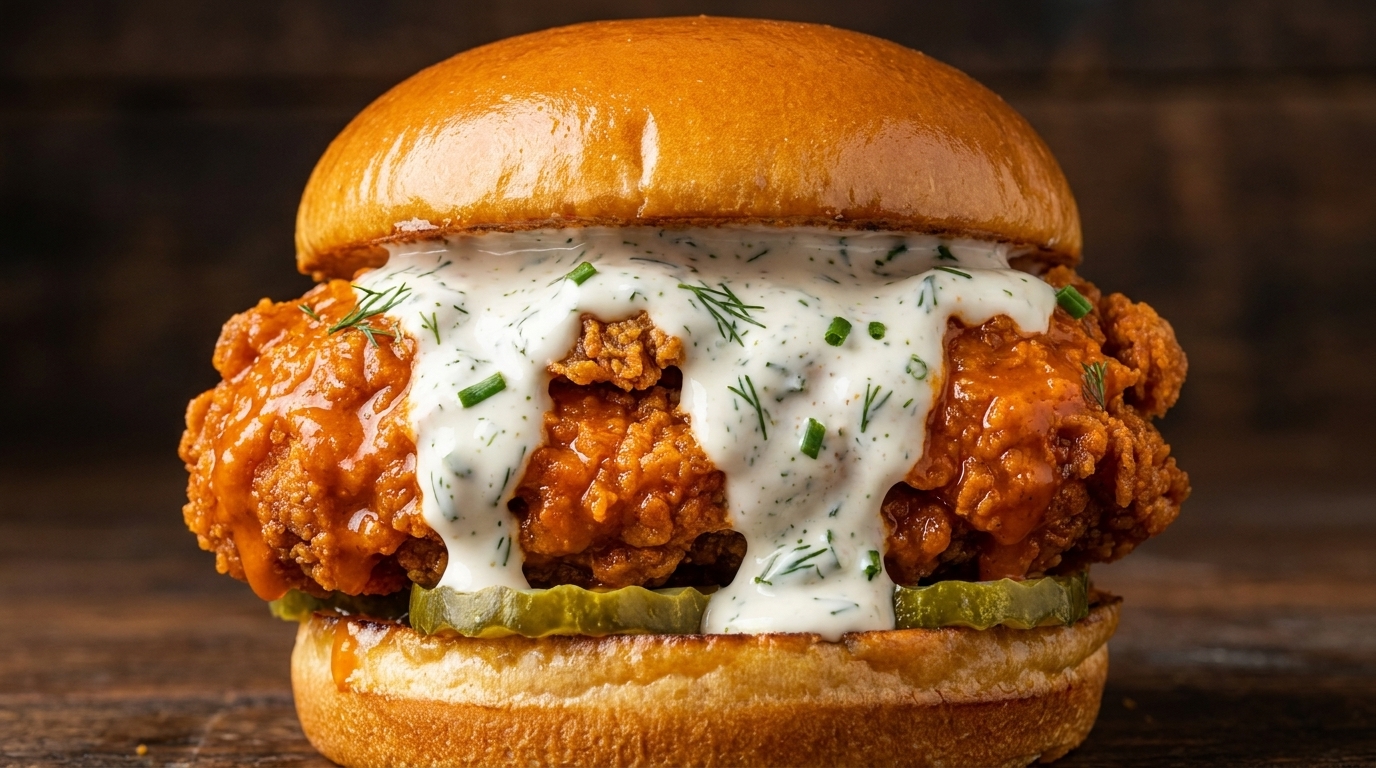
Gourmet Buffalo Fried Chicken Burger
Homemade Mango Ranch
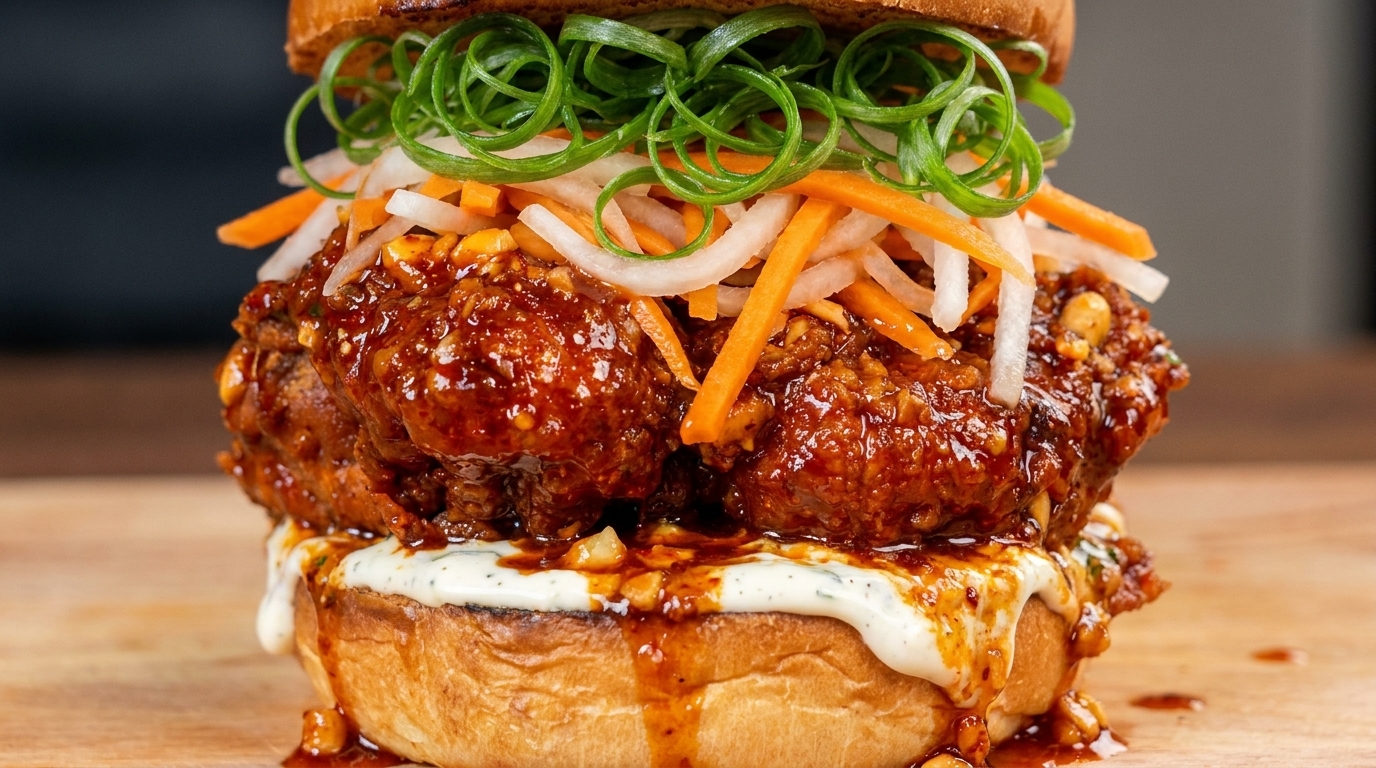
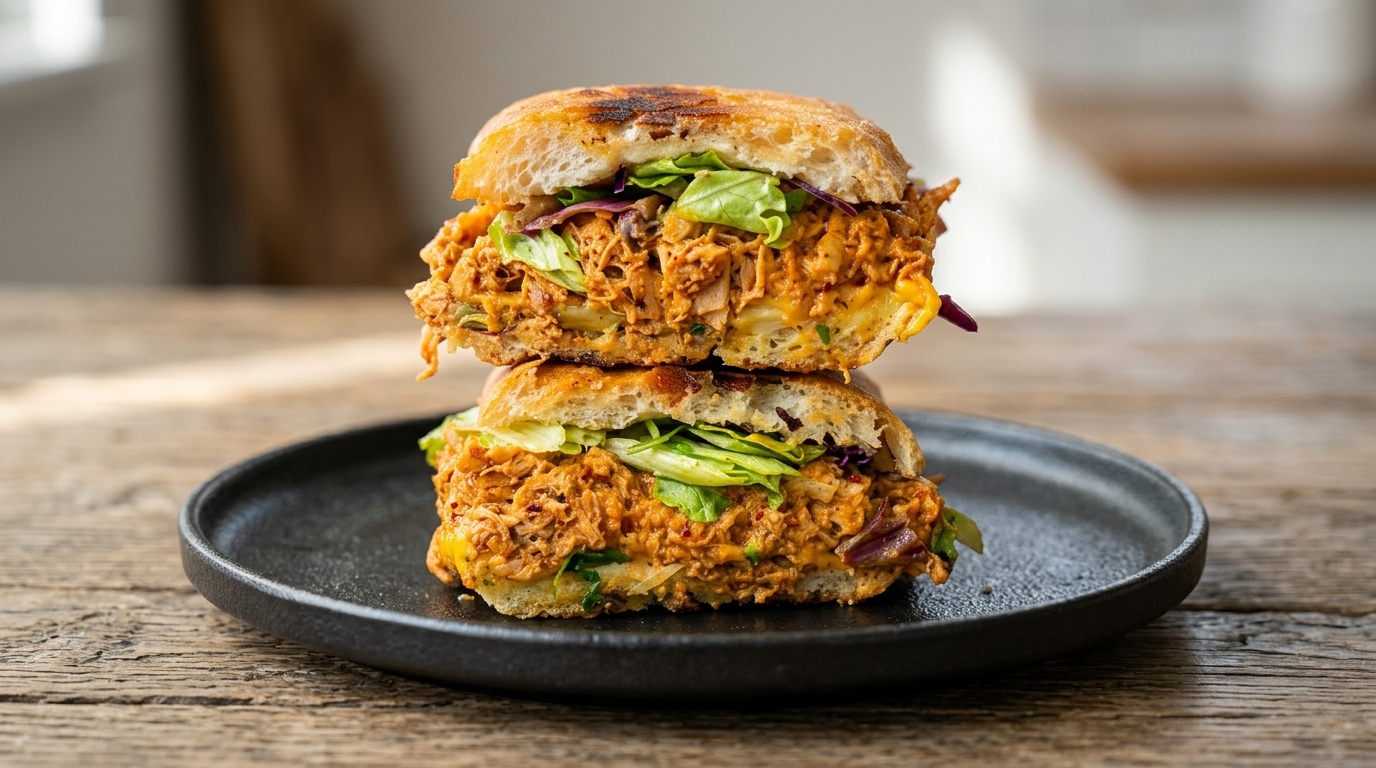
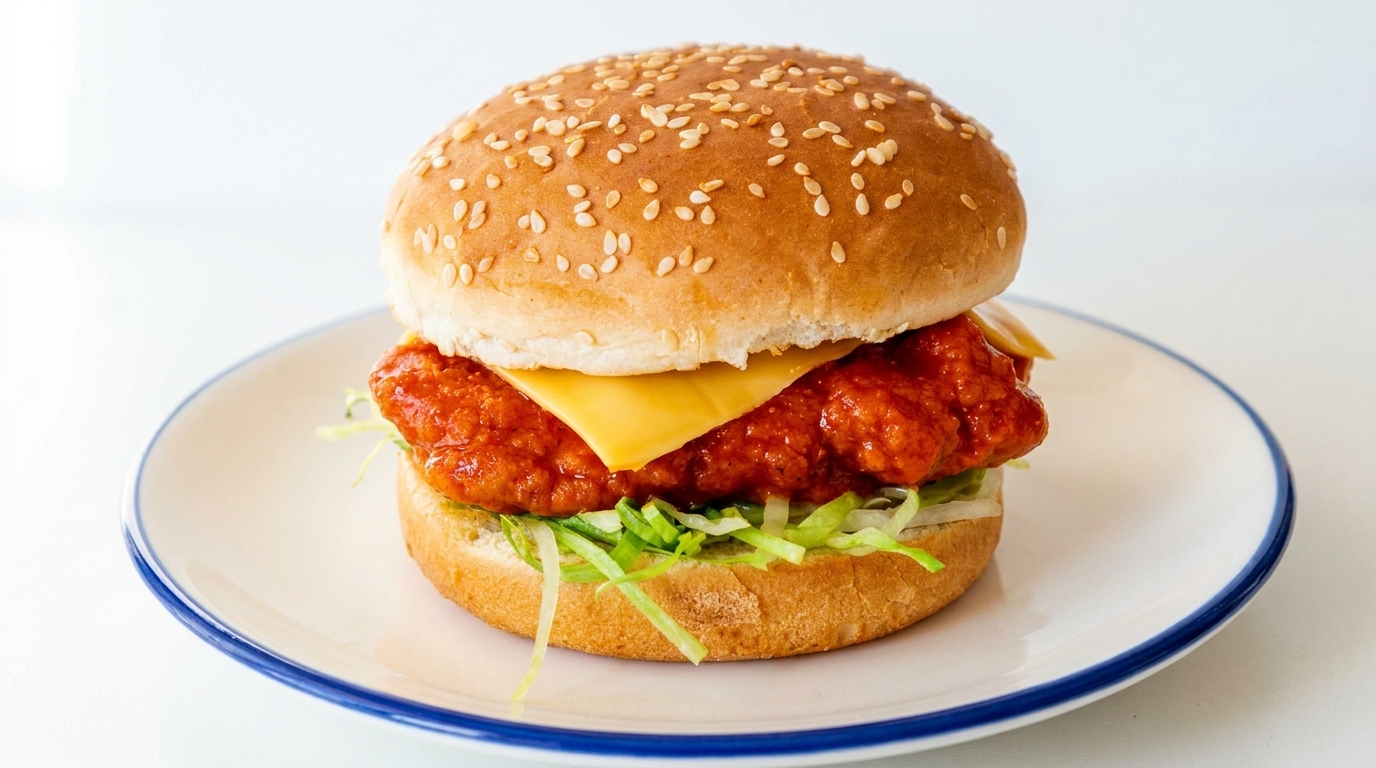
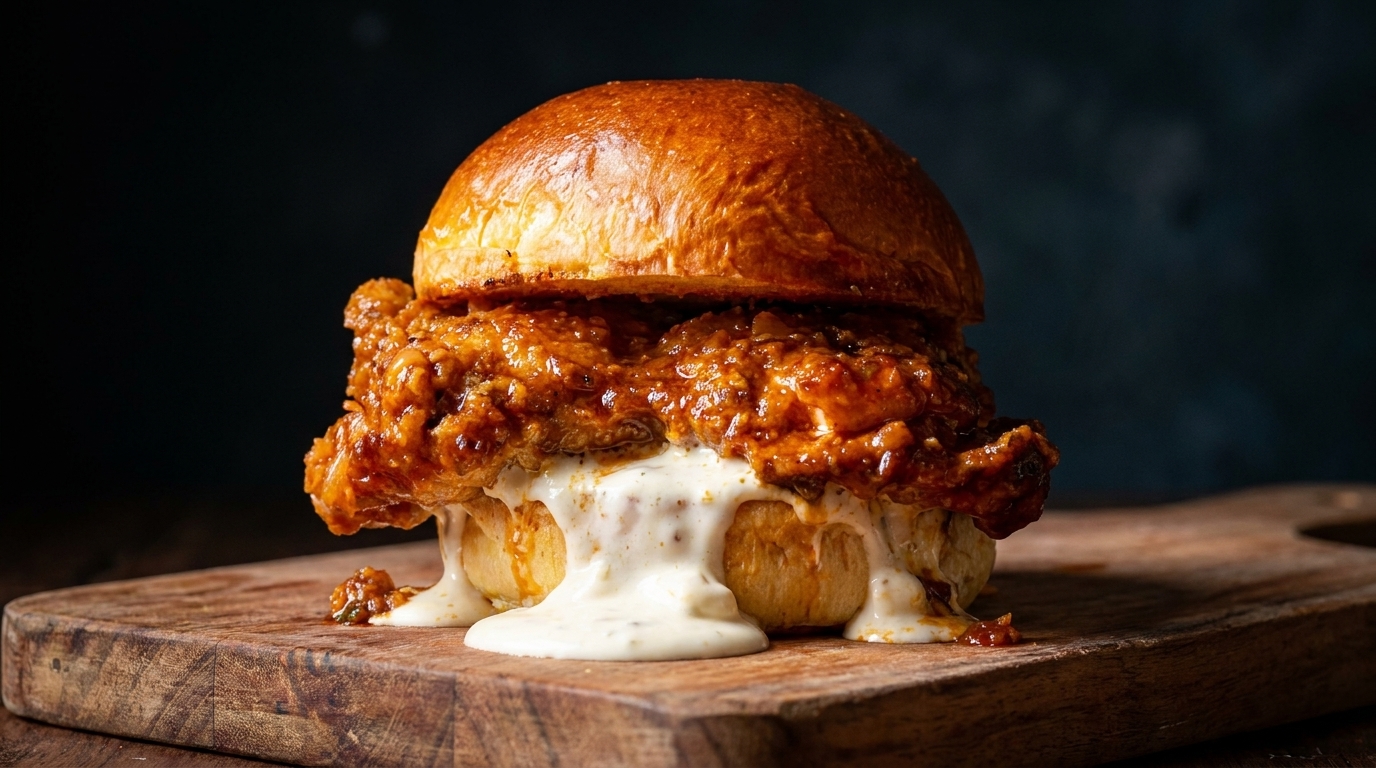
The ultimate chicken sandwich featuring buttermilk-marinated chicken thighs fried to a shatteringly crisp crunch, drenched in a fiery fermented Scotch bonnet buffalo glaze, and balanced with cooling homemade dill ranch.
This recipe elevates the classic American buffalo chicken sandwich by layering it with complex artisanal components. Instead of a standard store-bought hot sauce, the base relies on a ten-day fermented Scotch bonnet and mango reduction emulsified with rich butter. Paired with an ultra-crispy rice-flour double dredge and a refreshing, herbaceous Japanese mayo ranch, it offers an incredible balance of intense heat, sweet tang, and deep savory crunch.
Ingredients
- 4 whole boneless skinless chicken thighs
- 500 ml buttermilk
- 60 ml pickle juice
- 3 tbsp hot sauce (for marinade)
- 2 tbsp garlic powder
- 2 tbsp onion powder
- 1 tbsp cayenne pepper
- 2 tbsp smoked paprika
- 1.5 tsp MSG
- 2 tbsp sea salt
- 1 tbsp freshly cracked black pepper
- 150 g fresh Scotch bonnet peppers
- 100 g sweet bell peppers
- 6 cloves garlic
- 500 ml 3% concentration salt brine water
- 1 whole ripe mango
- 60 ml apple cider vinegar
- 2 tbsp mirin
- 1 tbsp fresh lime juice
- 2 tbsp olive oil
- 1 tsp Worcestershire sauce
- 2 tbsp honey
- 60 g unsalted butter
- 1 bunch fresh chives
- 200 g rice flour
- 200 g all-purpose flour
- 1 l vegetable oil for deep frying
- 4 slices brioche buns
- 200 g Japanese mayonnaise (Kewpie)
- 1 tbsp red wine vinegar
- 1 small bunch fresh dill
- to taste sliced dill pickles
Instructions
- 1Prepare the chicken
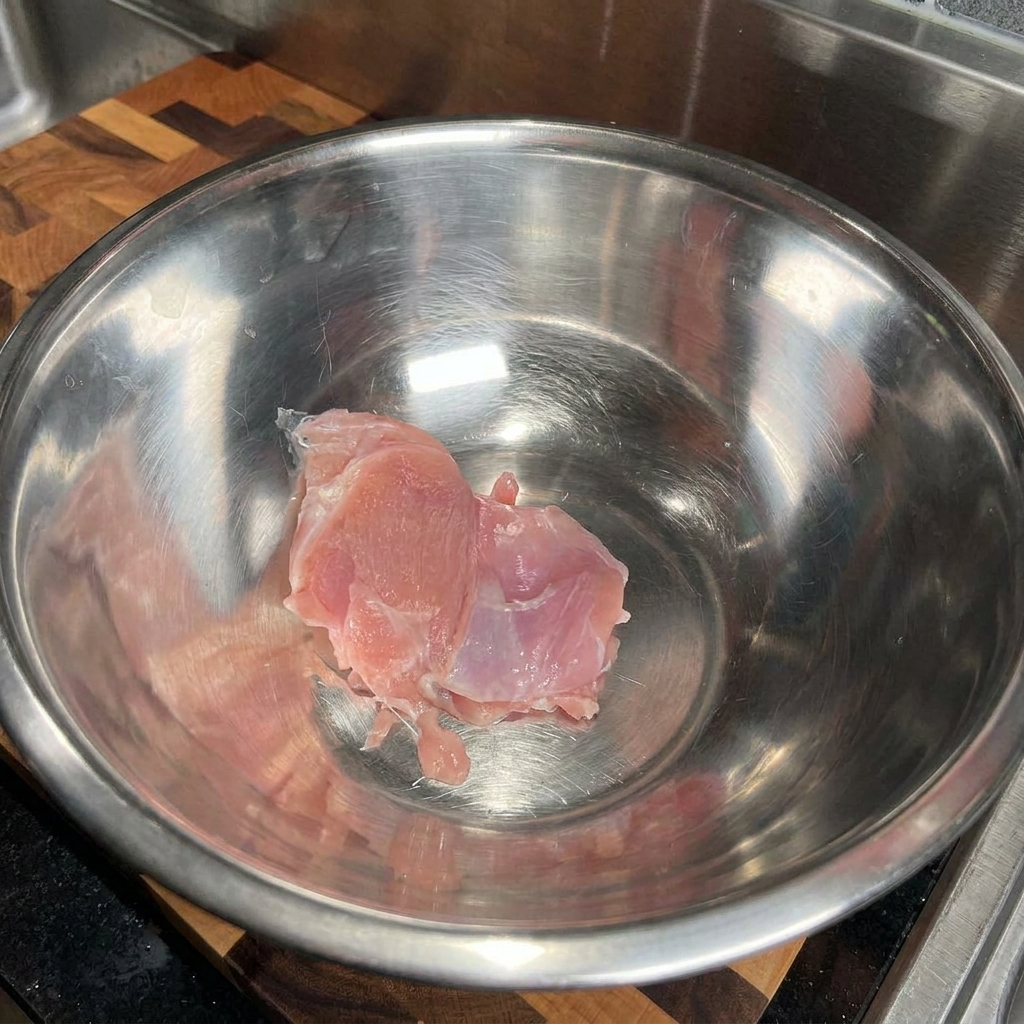
Begin by getting the chicken thighs ready for their marinade. Place the raw chicken pieces into a clean, large stainless steel mixing bowl, ensuring there is enough room for the buttermilk and dry seasonings to follow.
Tip: Using boneless, skinless chicken thighs yields a juicier, more tender fried chicken sandwich compared to using white meat. - 2Add the buttermilk
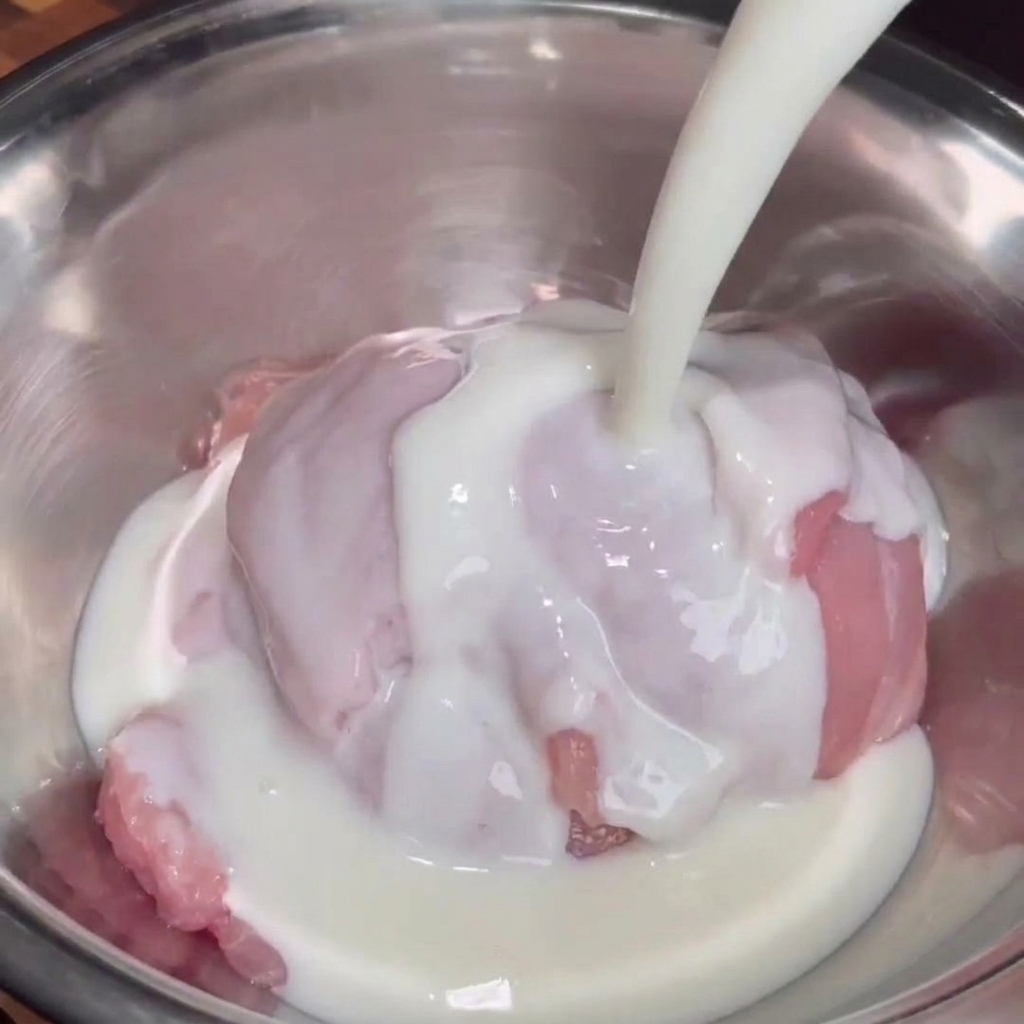
Place the raw chicken thighs into a large stainless steel bowl and pour a generous amount of fresh buttermilk over them until they are completely submerged. The natural acidity in the buttermilk will work to tenderize the chicken meat, ensuring it stays succulent and juicy during the deep-frying stage.
Tip: If you do not have buttermilk on hand, you can make a quick substitute by adding one tablespoon of lemon juice or white vinegar to a cup of whole milk and letting it stand for five minutes. - 3Mix the marinade
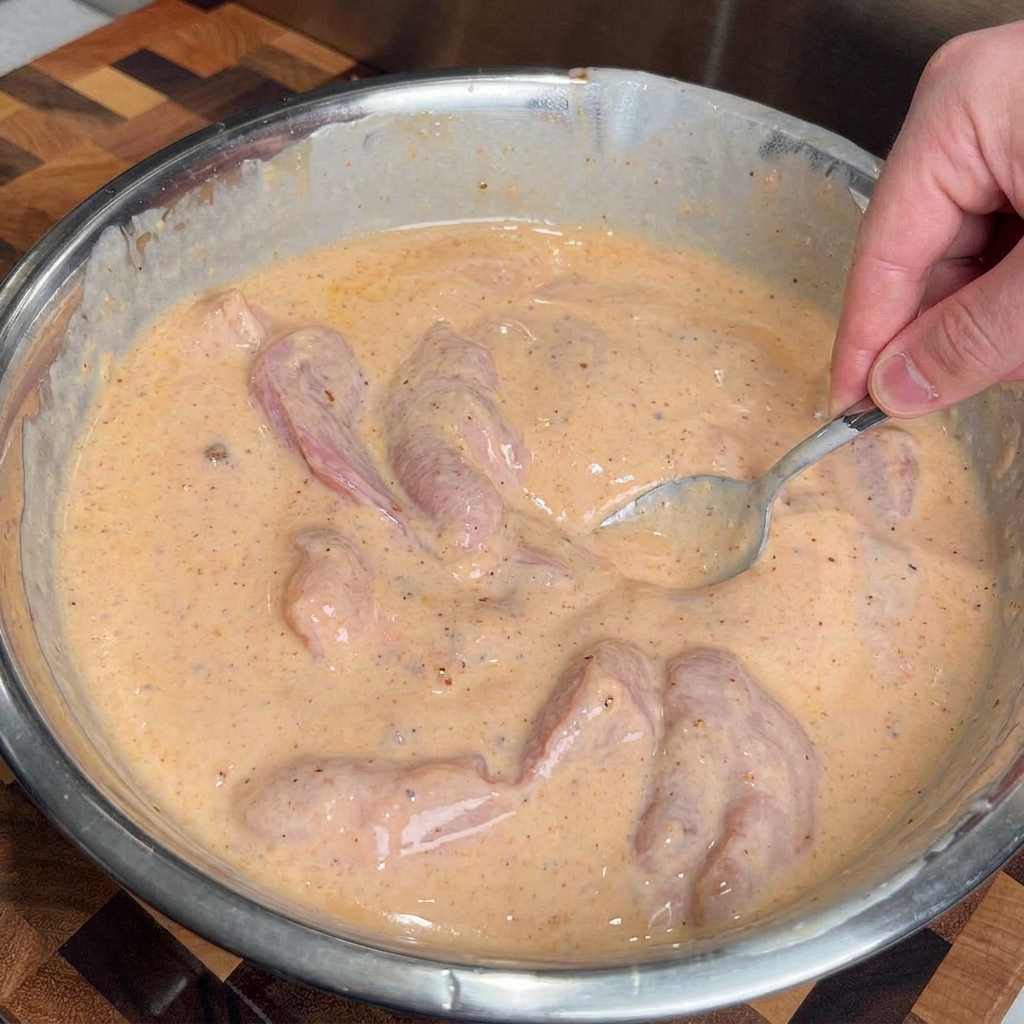
Combine the buttermilk with pickle juice, hot sauce, garlic powder, onion powder, cayenne pepper, paprika, MSG, sea salt, and freshly cracked black pepper. Use a large spoon to thoroughly stir the chicken thighs within the seasoned liquid, making sure every surface of the meat is well coated in the aromatic spice mixture.
Tip: For the absolute best influx of flavor, cover the bowl tightly with plastic wrap and leave it to marinate in the refrigerator overnight. - 4Slice the peppers
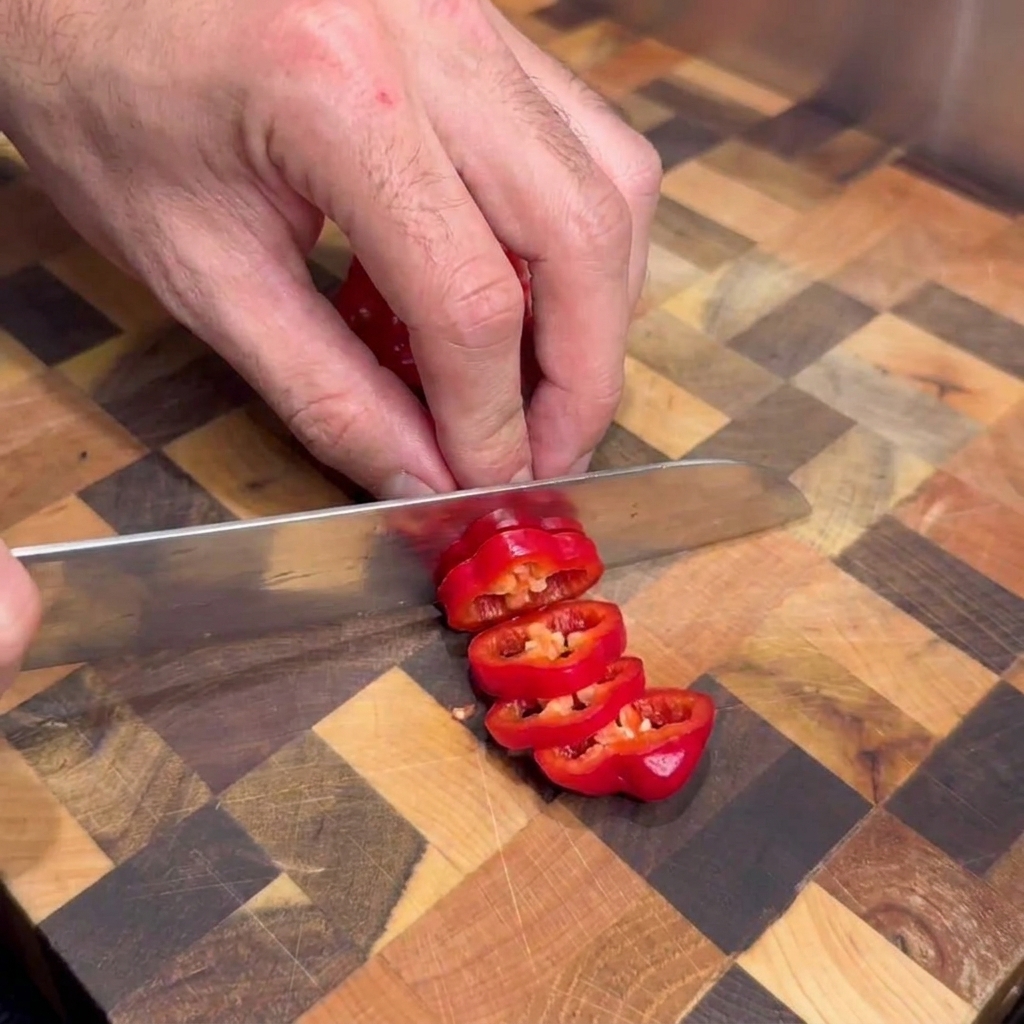
Prepare the fresh ingredients for your fermented hot sauce base. Carefully stabilize the hot peppers on a sturdy wooden cutting board and use a sharp chefs knife to roughly slice through them into uniform rounds, making sure to handle the spicy pieces with extreme care.
Tip: When working with highly spicy varieties like Scotch bonnets, wearing disposable food-safe gloves is highly recommended to protect your skin from the volatile capsaicin oils. - 5Prep the peppers and garlic
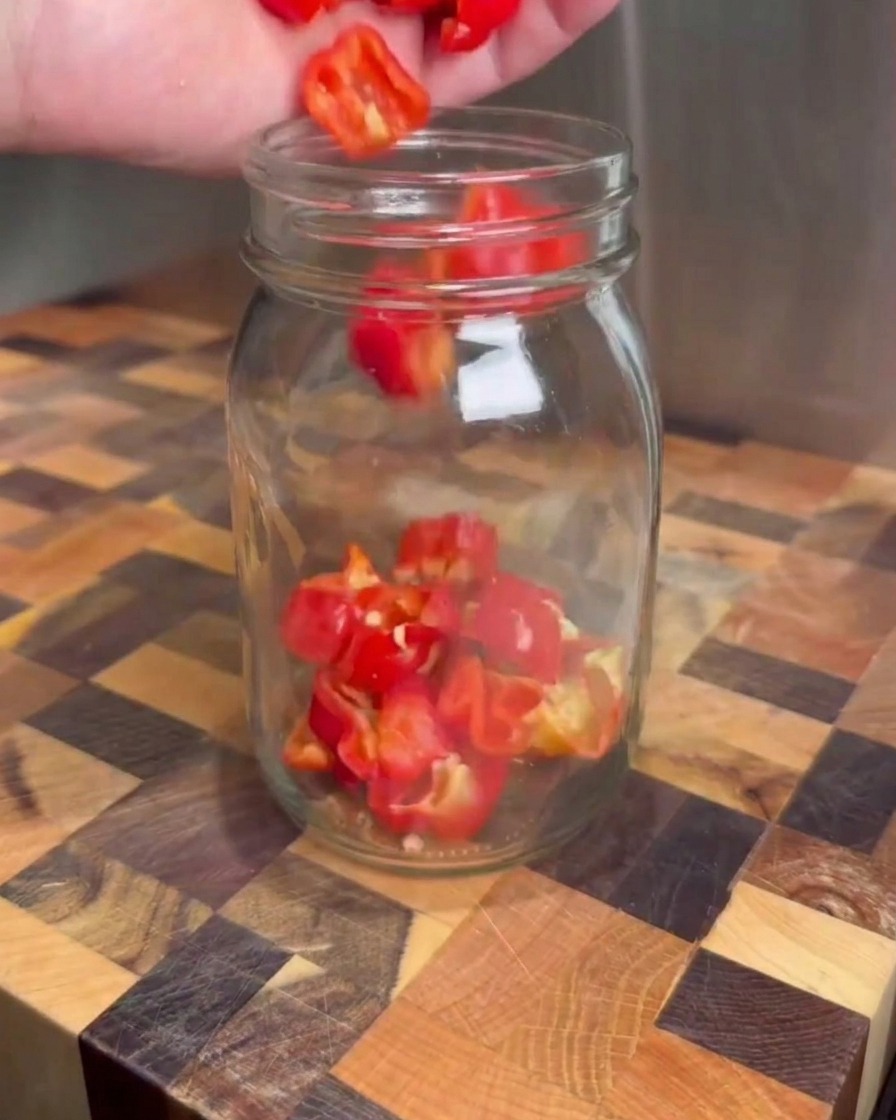
Roughly chop the Scotch bonnet peppers, sweet peppers, and peel the garlic cloves. Carefully place them into a clean glass jar to prepare for the fermentation process.
Tip: Wear gloves when handling Scotch bonnet peppers to protect your skin from the intense capsaicin heat. - 6Add the salt brine
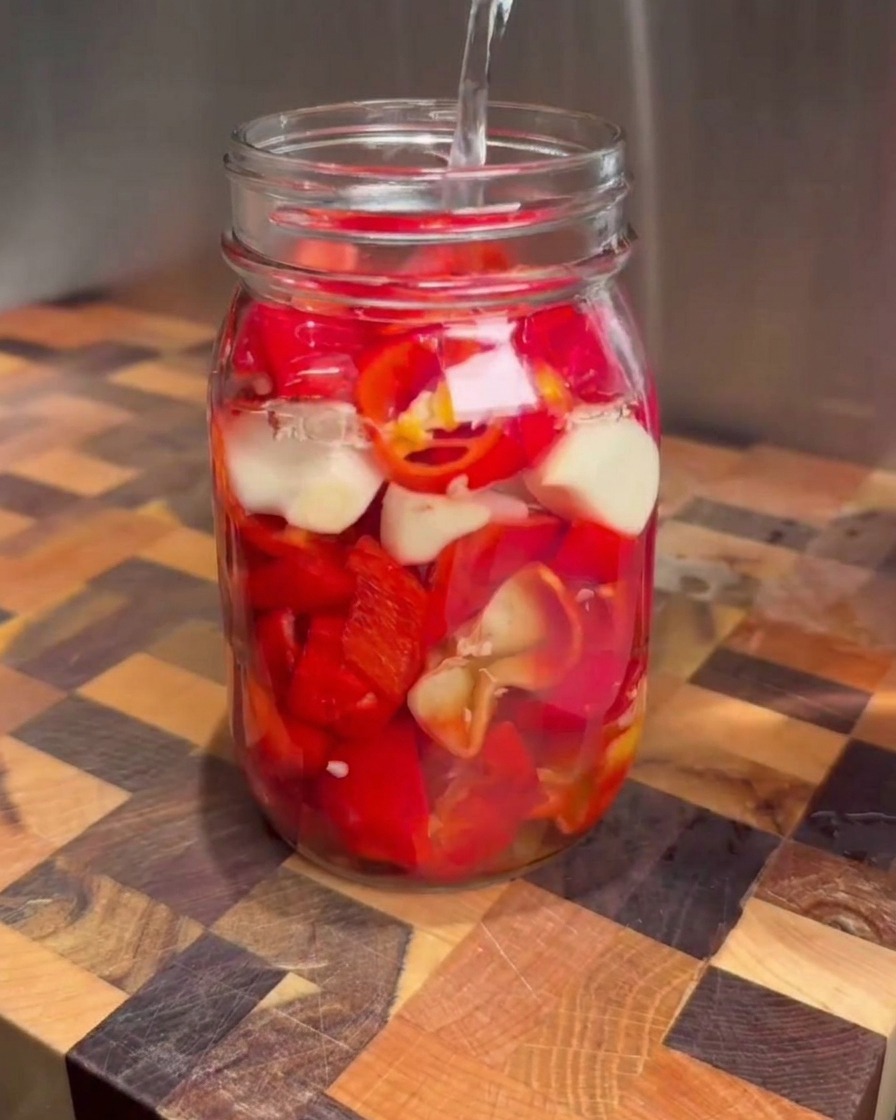
After roughly chopping the Scotch bonnet peppers, sweet peppers, and garlic cloves, pack them tightly into a glass jar. Pour a clear three percent salt brine over the top, making sure the liquid completely submerges the pepper mixture to create a safe environment for fermentation.
Tip: Keeping the vegetables fully submerged beneath the brine is crucial to prevent unwanted mold growth during the ten-day fermentation process. - 7Season the buttermilk marinade
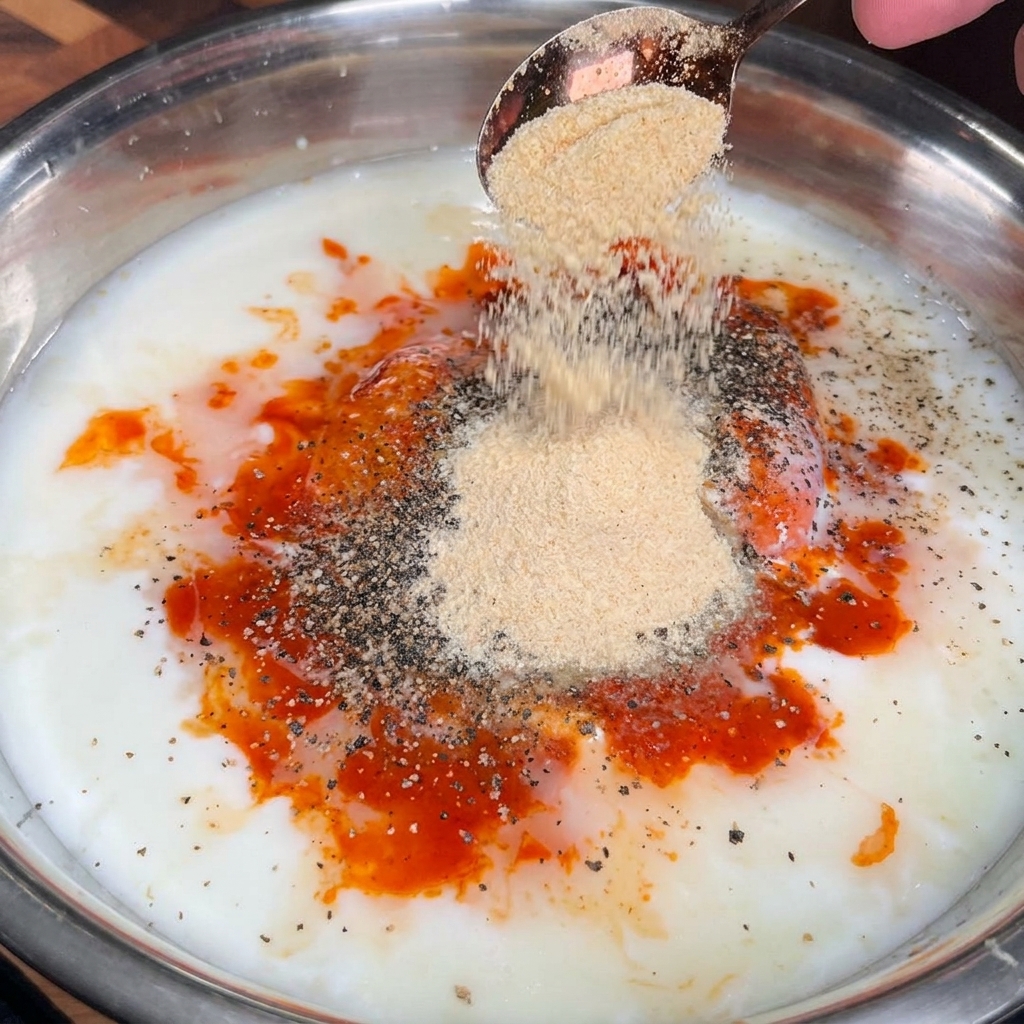
Pour buttermilk into a bowl with the chicken thighs, then add hot sauce, pickle juice, and a generous seasoning of garlic powder, onion powder, cayenne pepper, paprika, MSG, sea salt, and freshly cracked black pepper. Thoroughly stir the mixture to ensure the seasonings are evenly distributed and the chicken is fully coated.
Tip: For the absolute best flavor and tenderness, cover the bowl tightly and leave it to marinate in the refrigerator overnight. - 8Blend the fermented peppers
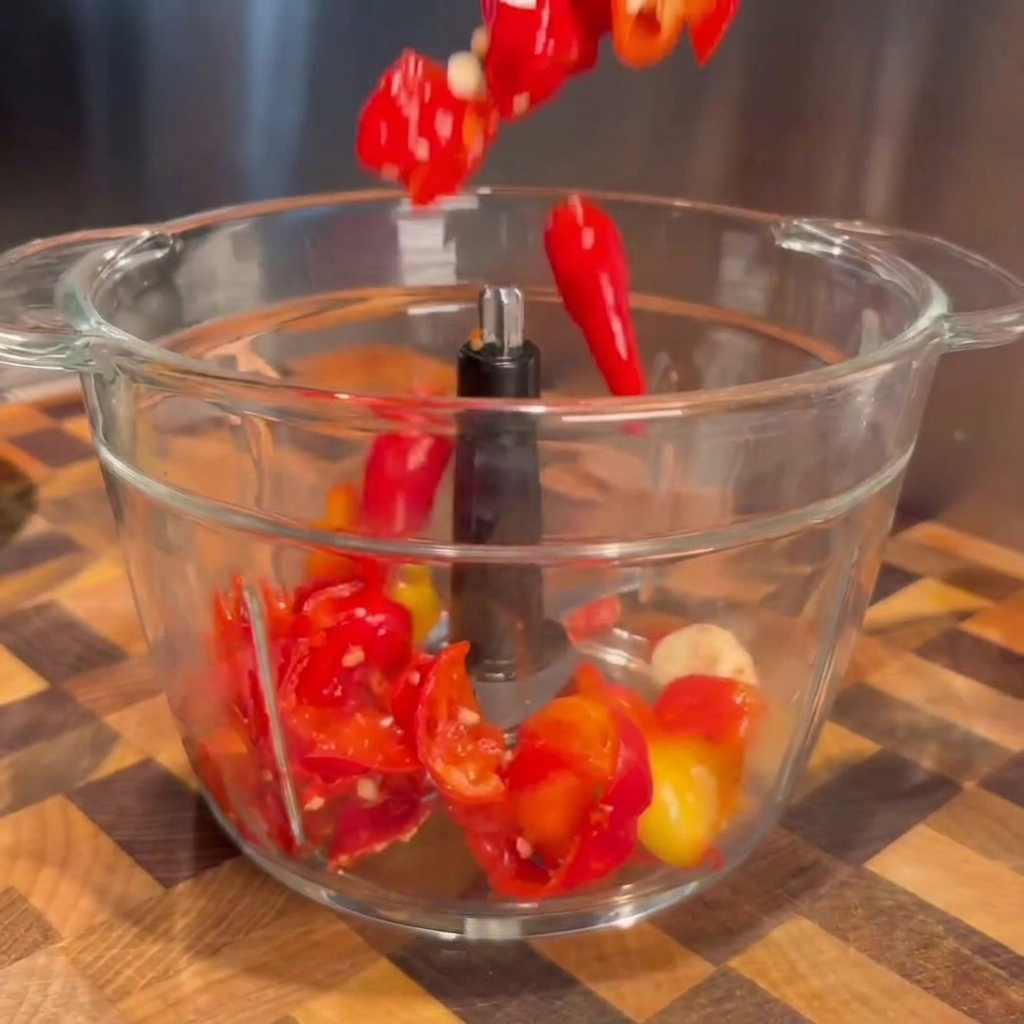
After ten days of fermentation, drain the Scotch bonnet and sweet peppers, making sure to reserve some of the brine. Transfer the fermented peppers and garlic into a food processor and pulse until they form a coarse paste.
Tip: Dont throw away all the brine; its packed with flavor and beneficial bacteria, and you might need a splash of it to adjust the sauces consistency later. - 9Add fresh mango
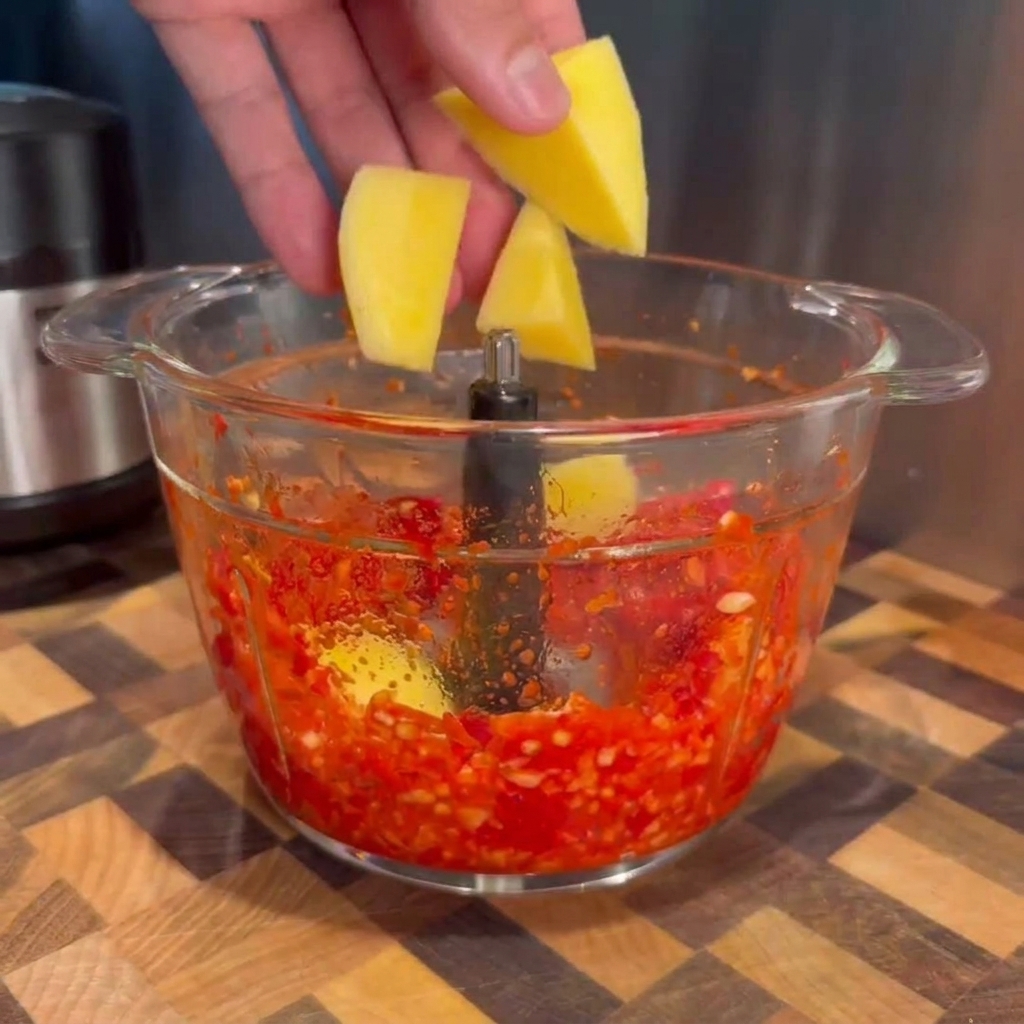
Add the fresh diced yellow mango pieces directly into the food processor with the blended pepper paste. This adds a vibrant sweetness to balance the fiery heat of the Scotch bonnet peppers.
Tip: Use a ripe, juicy mango for the best flavor and natural sweetness to counteract the heat of the hot sauce. - 10Add the liquid ingredients
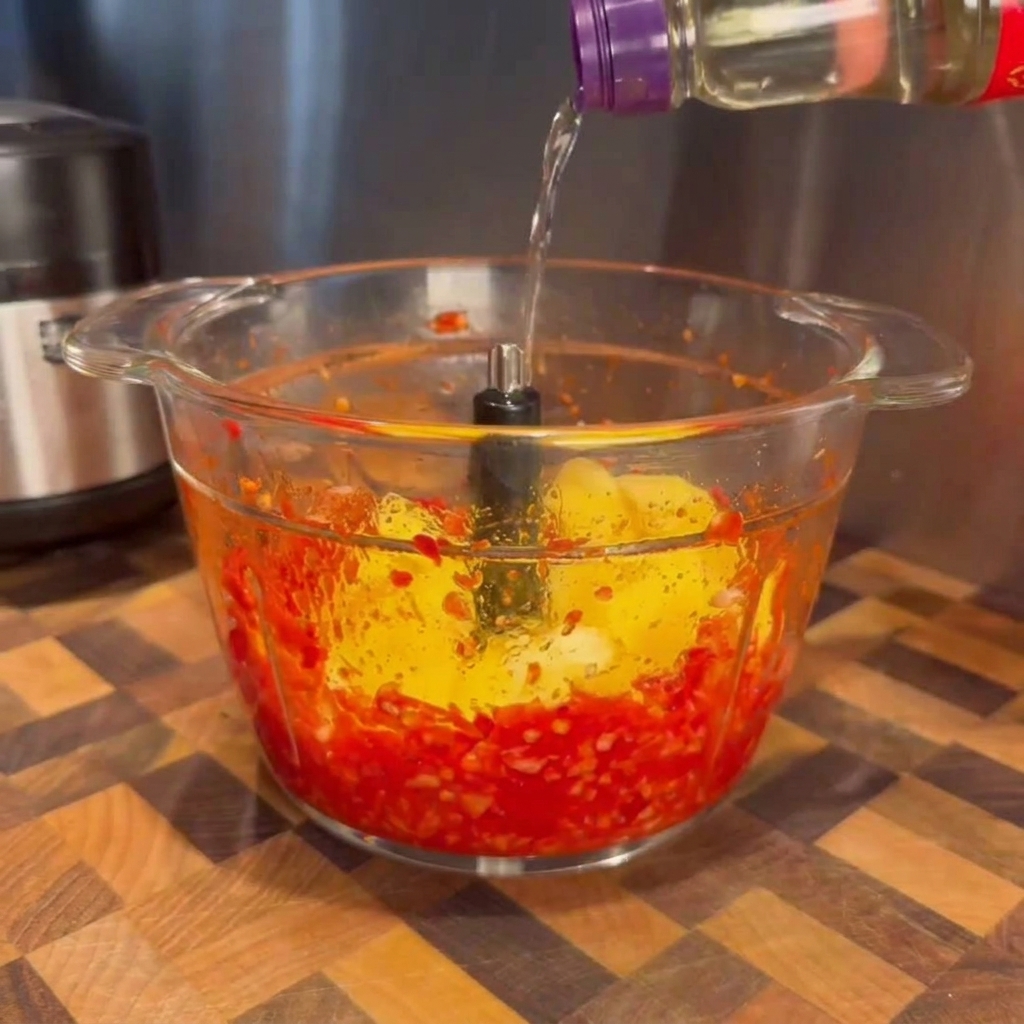
Pour the apple cider vinegar, mirin, lime juice, and a generous splash of olive oil directly into the food processor with the blended peppers and fresh diced mango. These liquid components add the necessary acidity, brightness, and emulsification base to balance the intense heat of the fermented peppers.
Tip: Pour carefully to keep the liquid volume balanced; too much vinegar can overpower the subtle fruitiness of the mango. - 11Strain the hot sauce
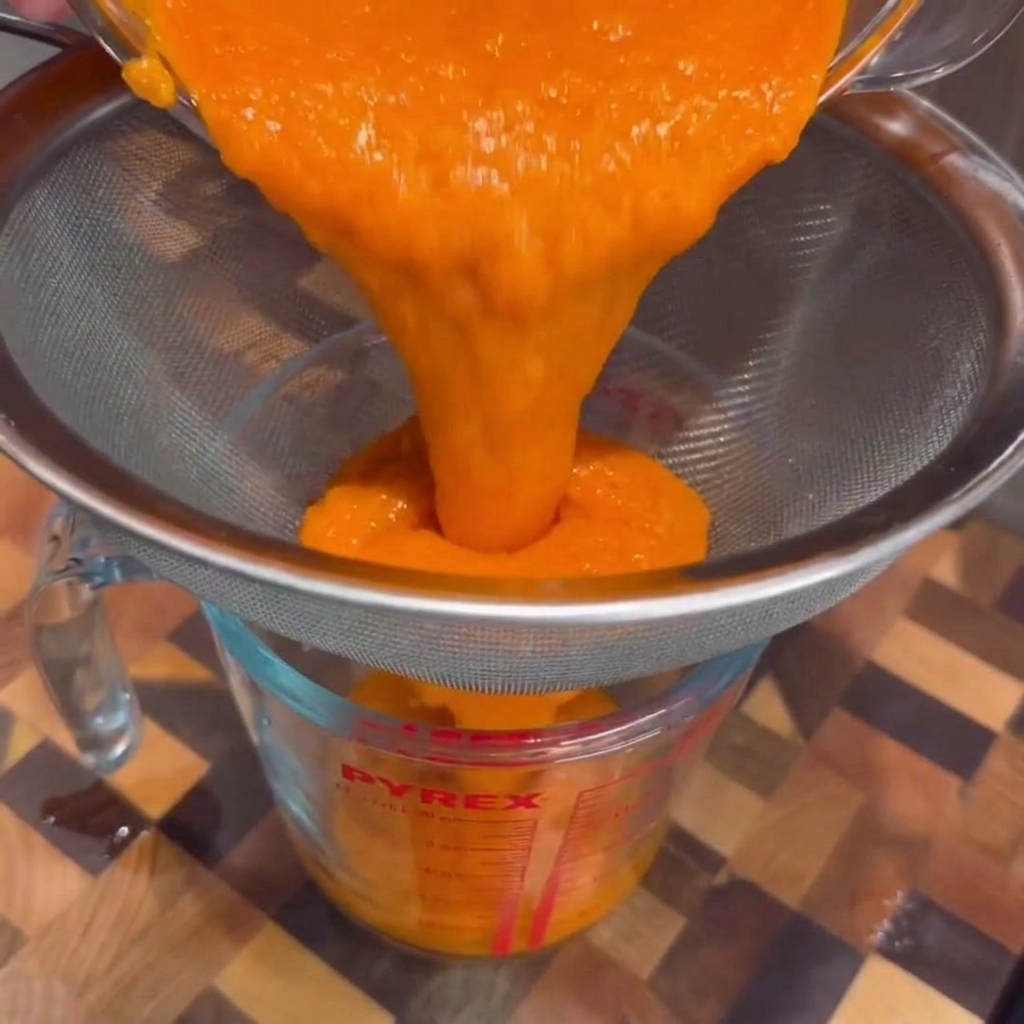
After blending the peppers, mango, vinegar, mirin, lime juice, and olive oil into a paste, pour the mixture through a fine mesh sieve. Straining it into a measuring cup removes any lingering seeds or tough skins, yielding a silky, professional-quality hot sauce.
Tip: Use a spoon or rubber spatula to press the puree firmly against the mesh, extracting maximum liquid and flavor from the pulp. - 12Simmer the buffalo sauce
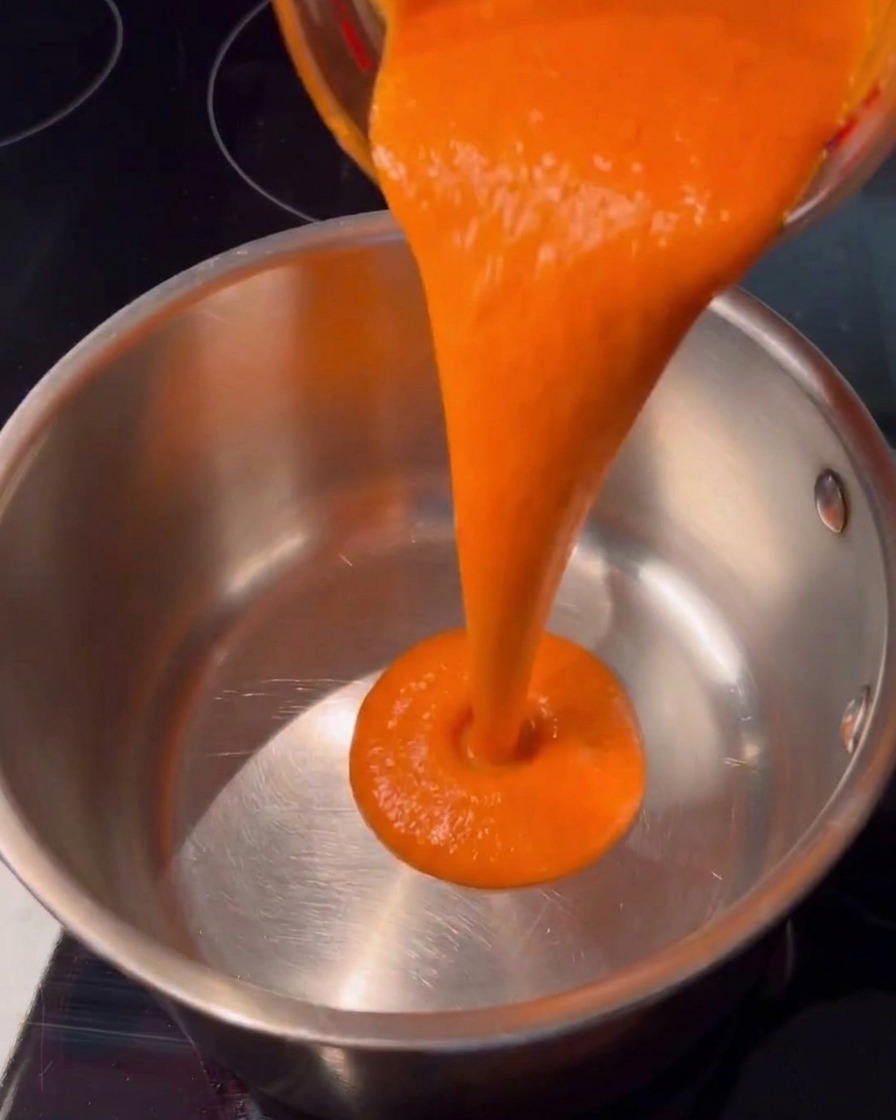
Transfer the freshly strained, vibrant orange hot sauce into a small stainless steel saucepan set over medium heat. Allow it to come to a gentle simmer for a few minutes so the flavors can concentrate before you finish it with Worcestershire sauce, honey, and butter.
Tip: Maintain a gentle simmer rather than a rapid boil to preserve the bright, fresh notes of the mango and lime juice. - 13Enrich the hot sauce with butter
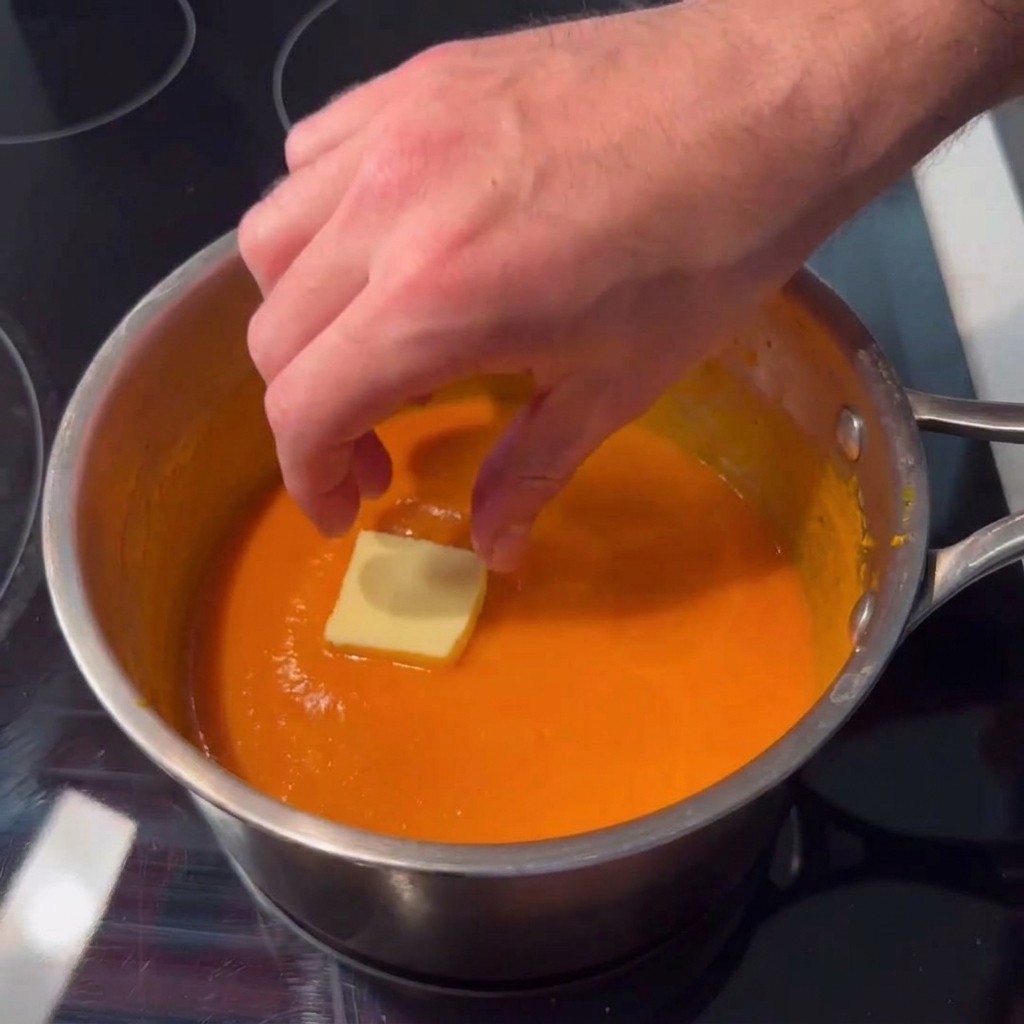
Transfer the blended hot sauce and mango mixture into a saucepan over medium heat and bring it to a gentle simmer. Add Worcestershire sauce, honey, MSG, and a large slab of unsalted butter into the warm liquid, whisking continuously to emulsify the fat into the sauce.
Tip: Keep the heat low and gentle while adding the butter; rushing this step can cause the sauce to split instead of creating a velvety emulsion. - 14Finish the buffalo sauce with chives
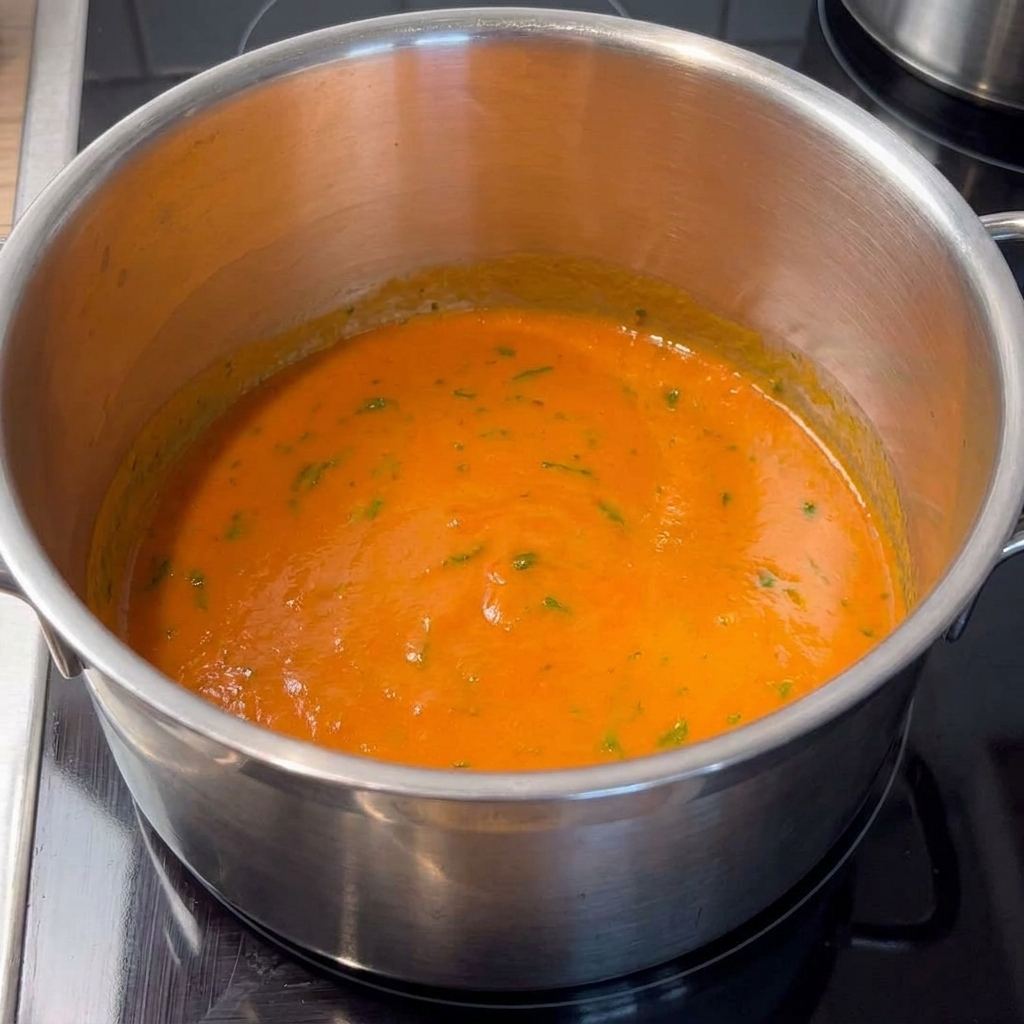
Continue stirring the simmering buffalo sauce as the butter melts entirely, uniting the rich fats with the sweet and spicy elements. Toss in a handful of finely chopped fresh chives, folding them evenly throughout the thickened, vibrant orange sauce before turning off the heat.
Tip: Finishing the sauce with fresh herbs right at the end helps preserve their bright color and clean, aromatic punch. - 15Combine the dry flour dredge
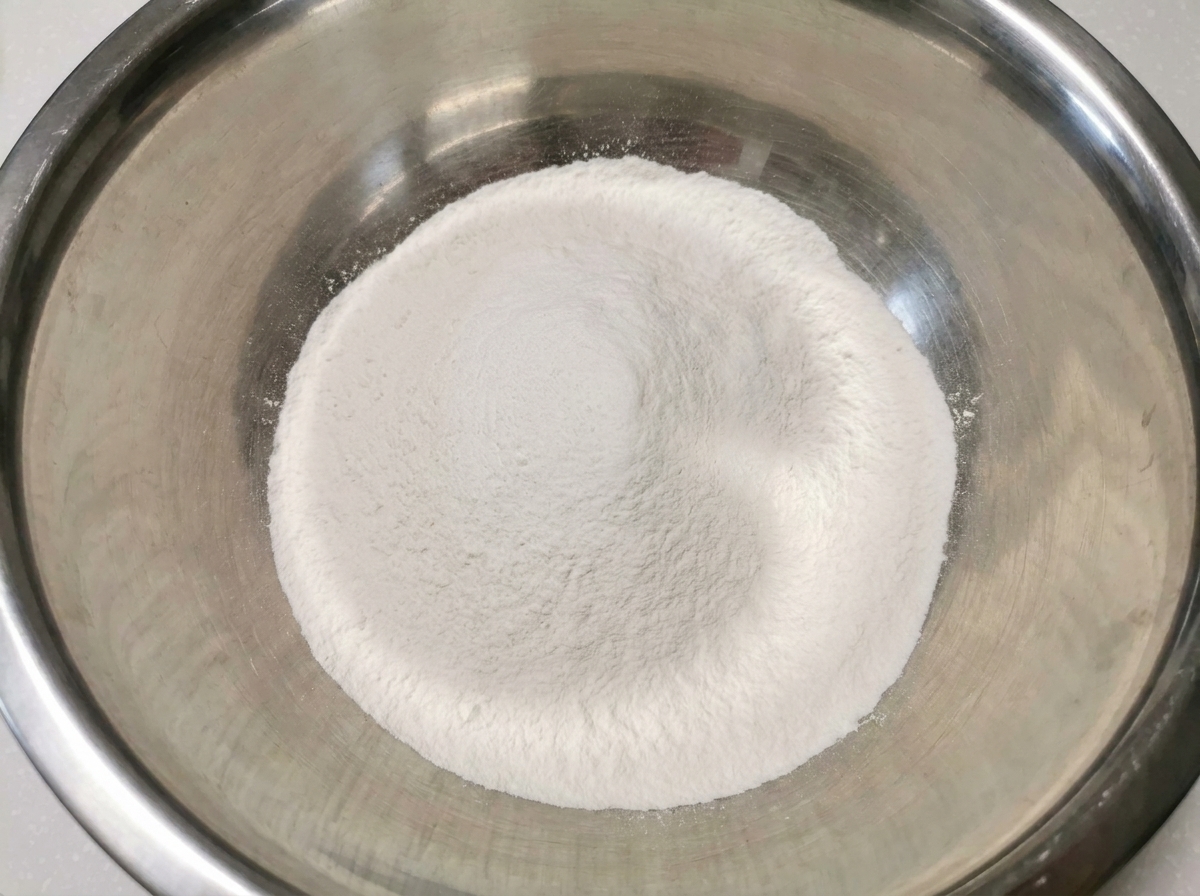
Prepare the coating mixture for the fried chicken by adding equal parts rice flour and all-purpose flour into a large clean metal bowl. Toss in seasoned onion powder, garlic powder, cayenne pepper, paprika, sea salt, and black pepper, then whisk thoroughly to distribute the spices.
Tip: Blending rice flour with all-purpose flour is the secret to a lighter, shatteringly crisp crust that stays crunchy longer. - 16Create crispy flour flakes
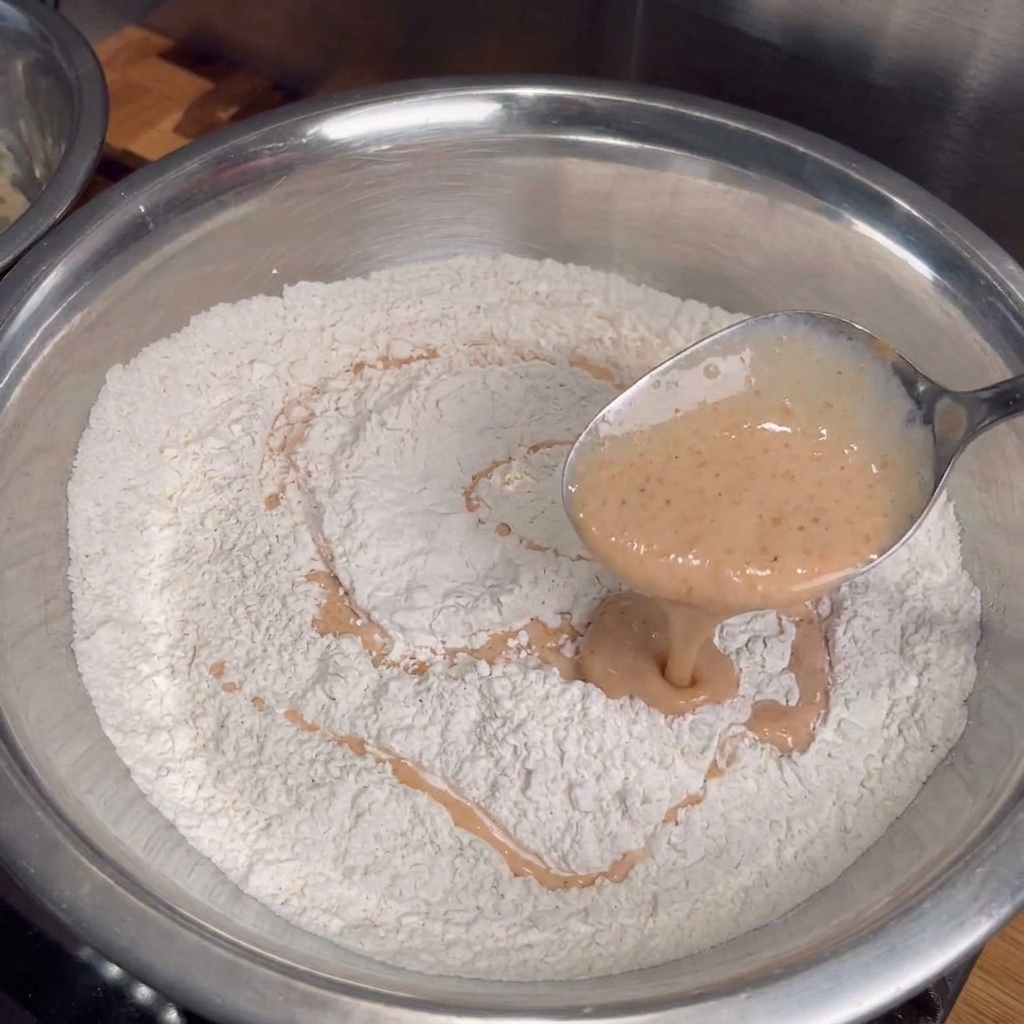
Take a large spoon and drizzle a small amount of the liquid chicken buttermilk marinade directly into the seasoned flour mixture. Gently toss and rub the flour together to incorporate the wet spots, creating small flour crumbles and shaggy bits that will cling to the chicken.
Tip: These little flour clumps are what create those dramatic, extra-crispy ridges and flakes on the fried chicken crust.