Classic Mediterranean Seafood Soup
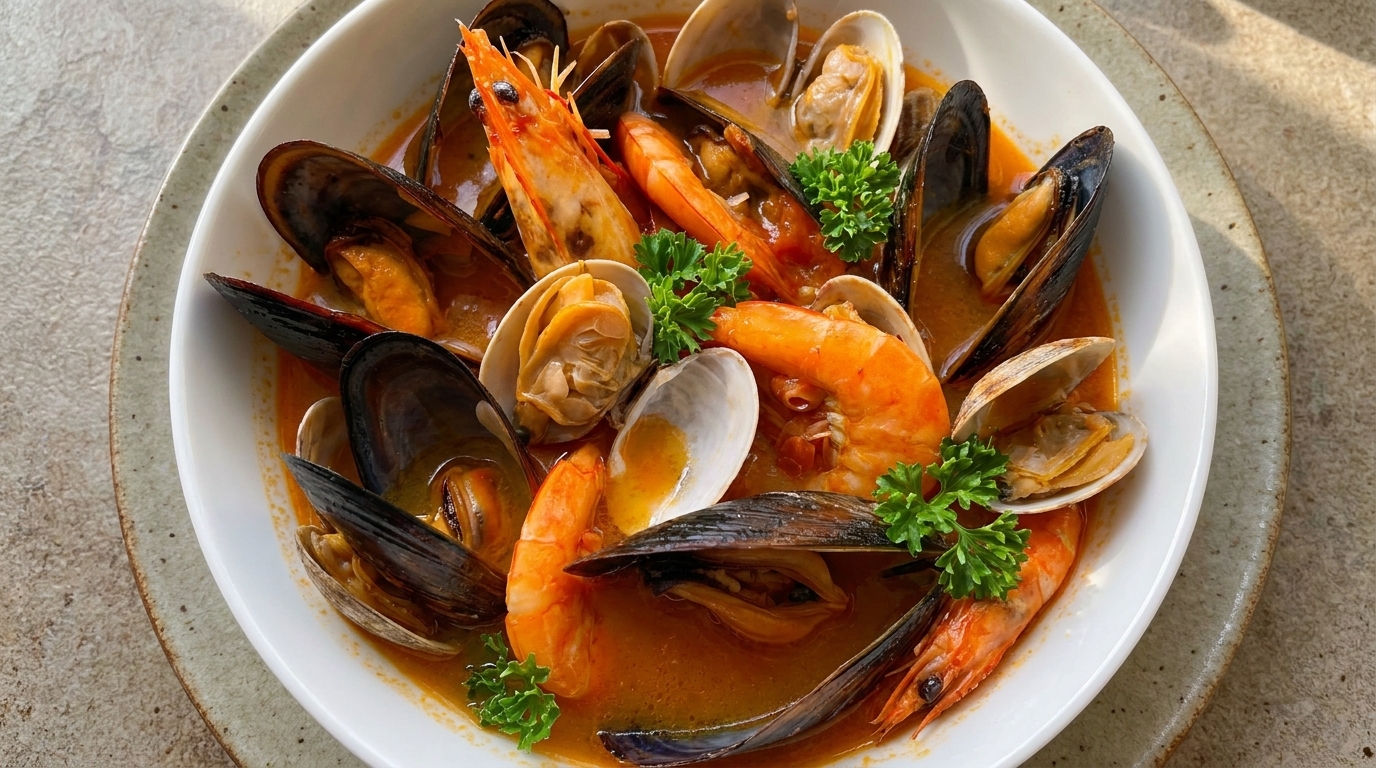
A vibrant Mediterranean seafood soup featuring plump shrimp, mussels, and clams simmered in a rich, aromatic tomato and dry white wine broth.
This classic Mediterranean seafood soup relies on a foundational coastal technique: frying shrimp heads in olive oil to build a deeply savory, aromatic base. Layered with fresh tomatoes, dry white wine, and fragrant rosemary, it captures the essence of Mediterranean cooking. The exotic, bright flavors are perfect when served with crusty bread or simply enjoyed on their own.
Ingredients
- 4 cloves fresh garlic
- 1 white onion
- 3 fresh red tomatoes
- 4 tbsp extra virgin olive oil
- 500 g fresh whole shrimp (heads detached and reserved)
- 500 g whole mussels
- 500 g fresh clams
- 300 ml dry white wine
- 1 sprig fresh rosemary
- 1 tbsp butter
- to taste sea salt
- to taste black pepper
- optional fresh curly parsley
Instructions
- 1Mince the garlic
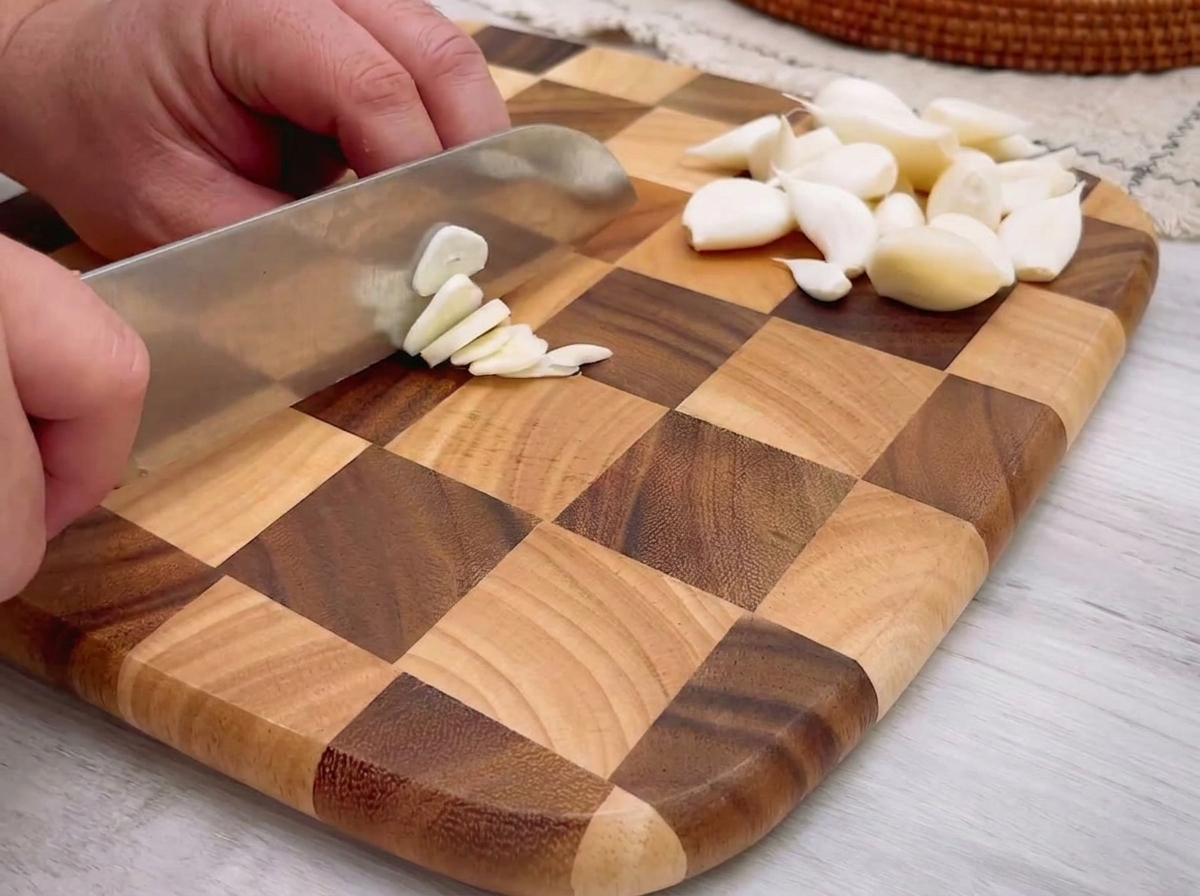
Begin by finely mincing the fresh garlic cloves using a sharp knife on a cutting board. Preparing the aromatics first ensures they are ready to be sautéed, releasing their essential oils for maximum flavor in the base of the soup.
Tip: Keep your fingers tucked while mincing to ensure a safe and efficient chop. - 2Dice the onion
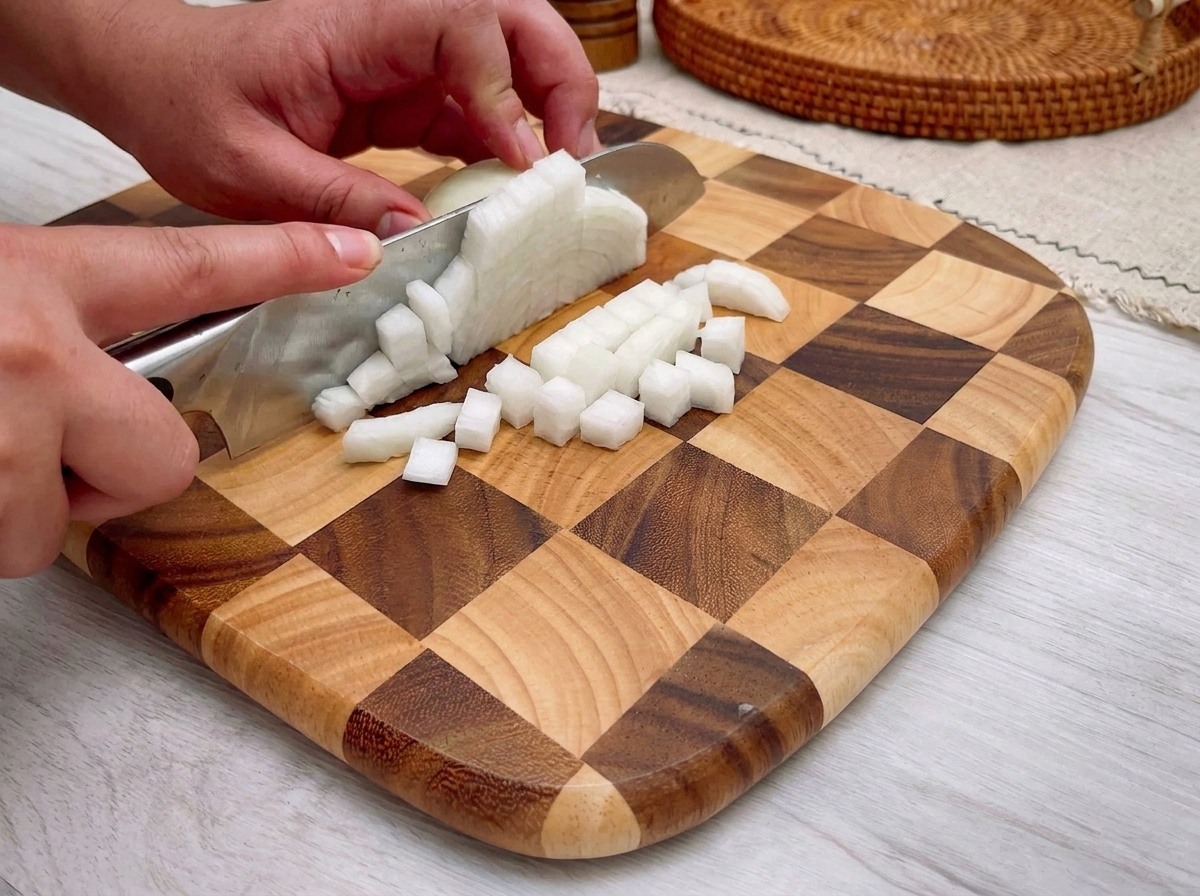
Dice the white onion into small, uniform pieces on the cutting board. Uniform dicing allows the onion to cook evenly and break down efficiently once added to the hot oil, building a flavorful foundation for the dish.
Tip: Use a sharp knife to dice the onion cleanly without crushing the layers. - 3Slice the tomatoes
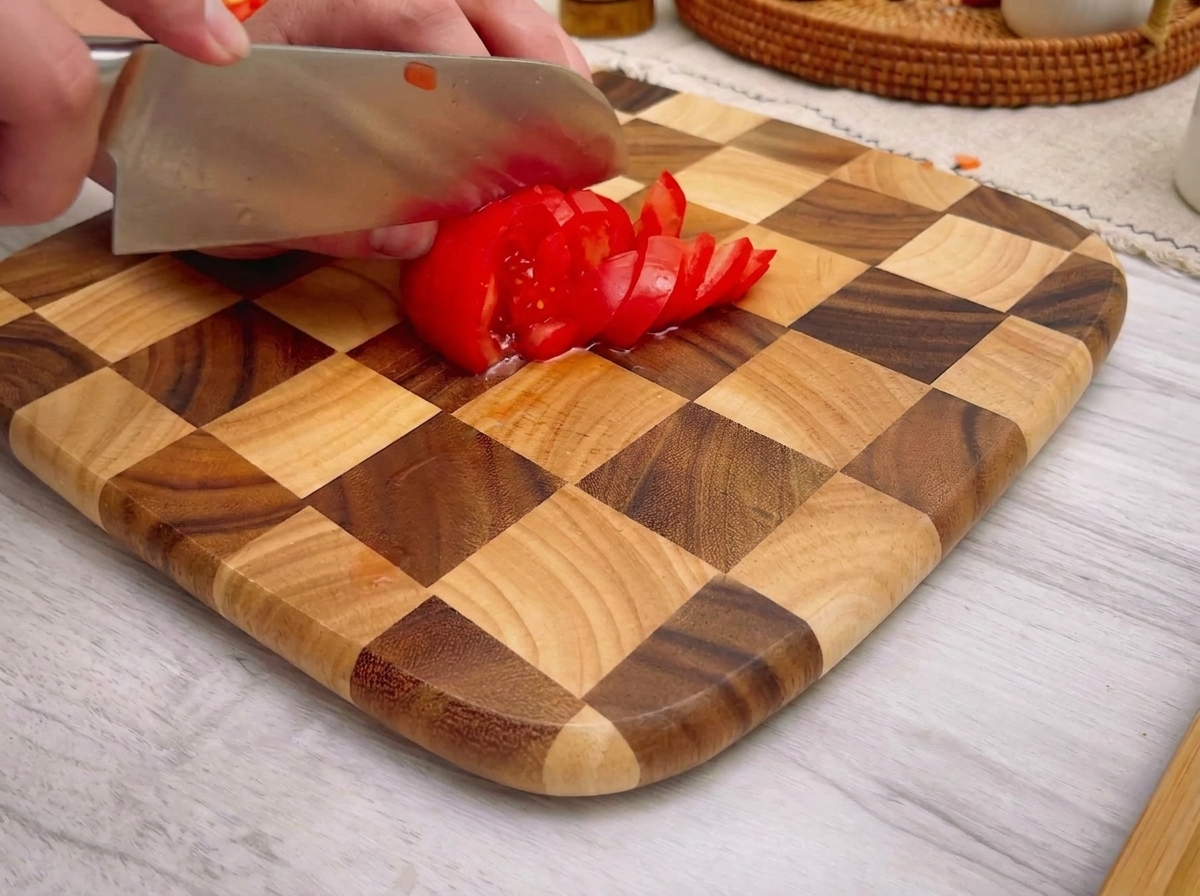
Slice the fresh red tomatoes into strips. Tomatoes are a key component of this Mediterranean dish, providing acidity, moisture, and a rich color to the seafood soup.
Tip: Use a serrated knife if needed to slice through tomato skins easily without squashing them. - 4Prepare the pot with oil
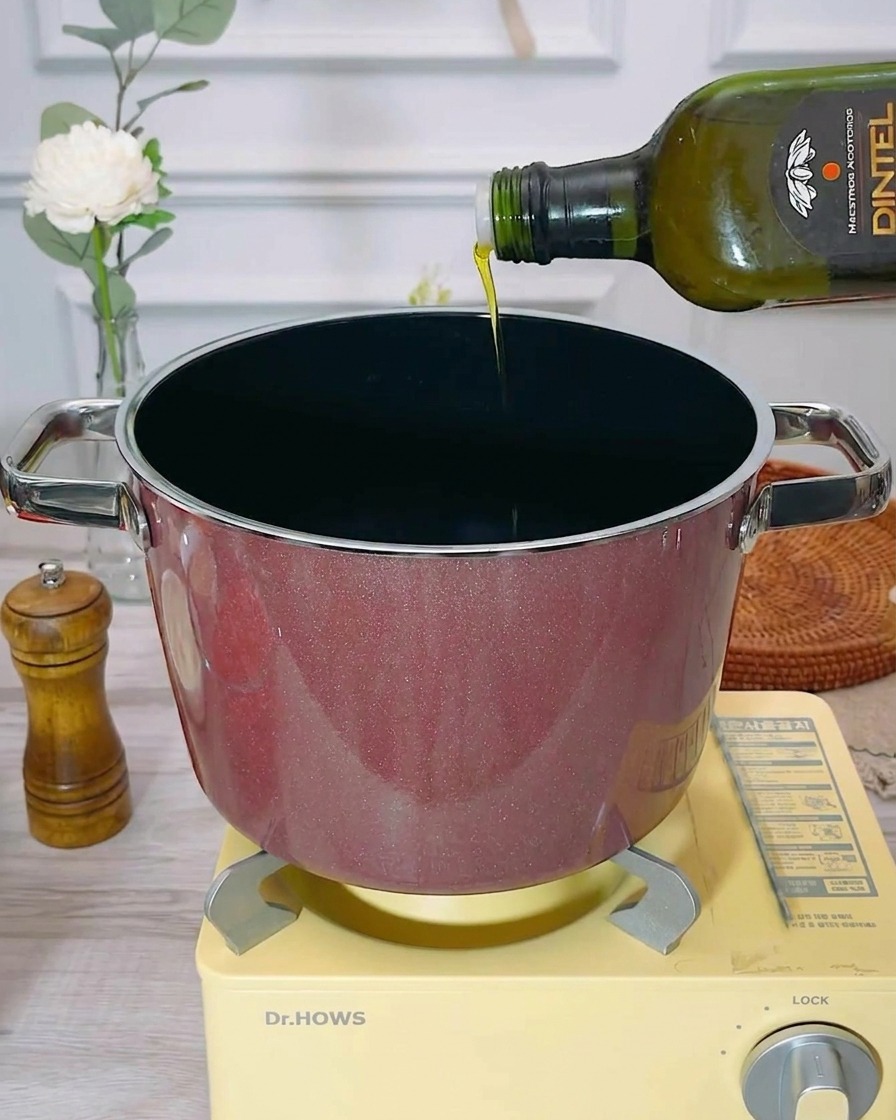
Pour a generous amount of extra virgin olive oil into your cooking pot. Heating the oil correctly is essential for extracting maximum flavor from the seafood aromatics in the next steps.
Tip: Extra virgin olive oil adds a distinct Mediterranean richness, so use a high-quality variety. - 5Fry the shrimp heads
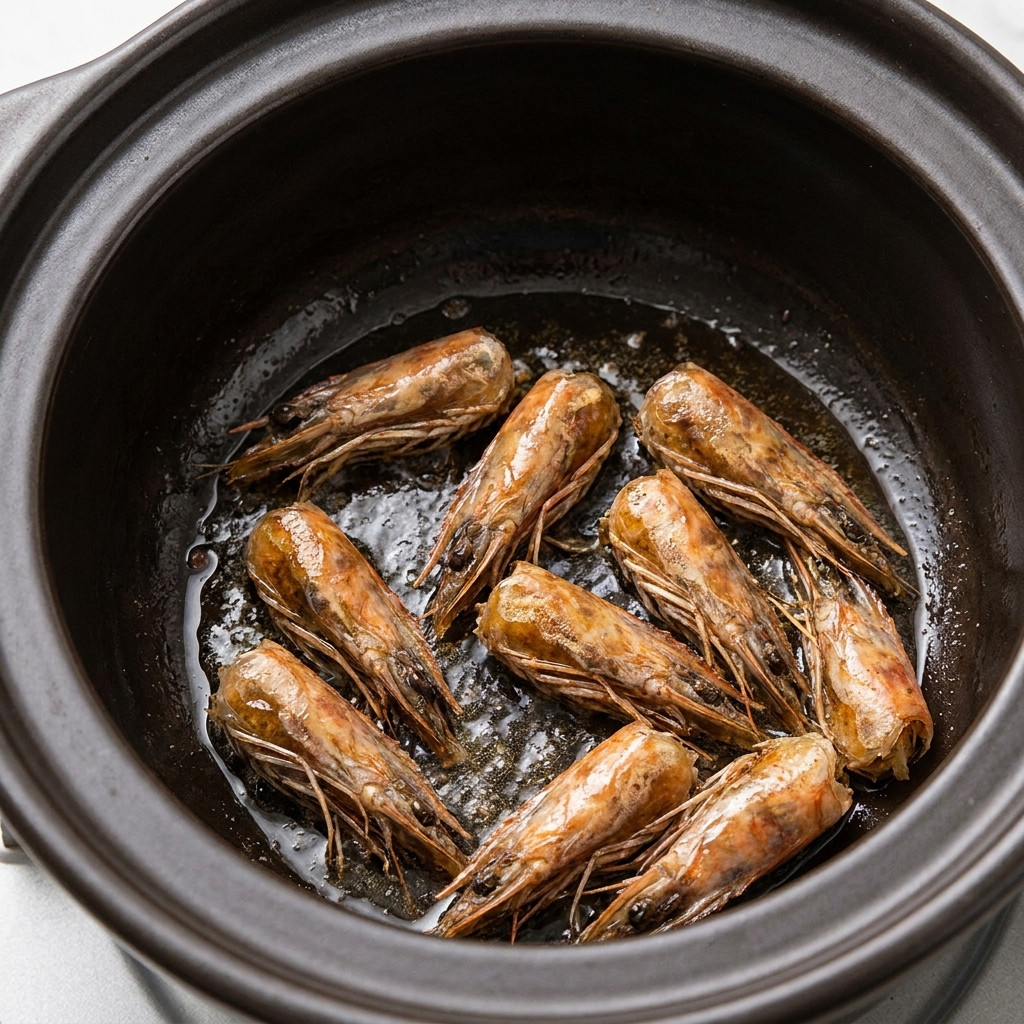
Add the shrimp heads into the hot oil and fry them until they change color and release their juices into the oil. This infuses the oil with an intense, savory seafood flavor that serves as the base for the soup.
Tip: Fry until the heads are deeply colored to extract the most flavor. - 6Remove shrimp heads
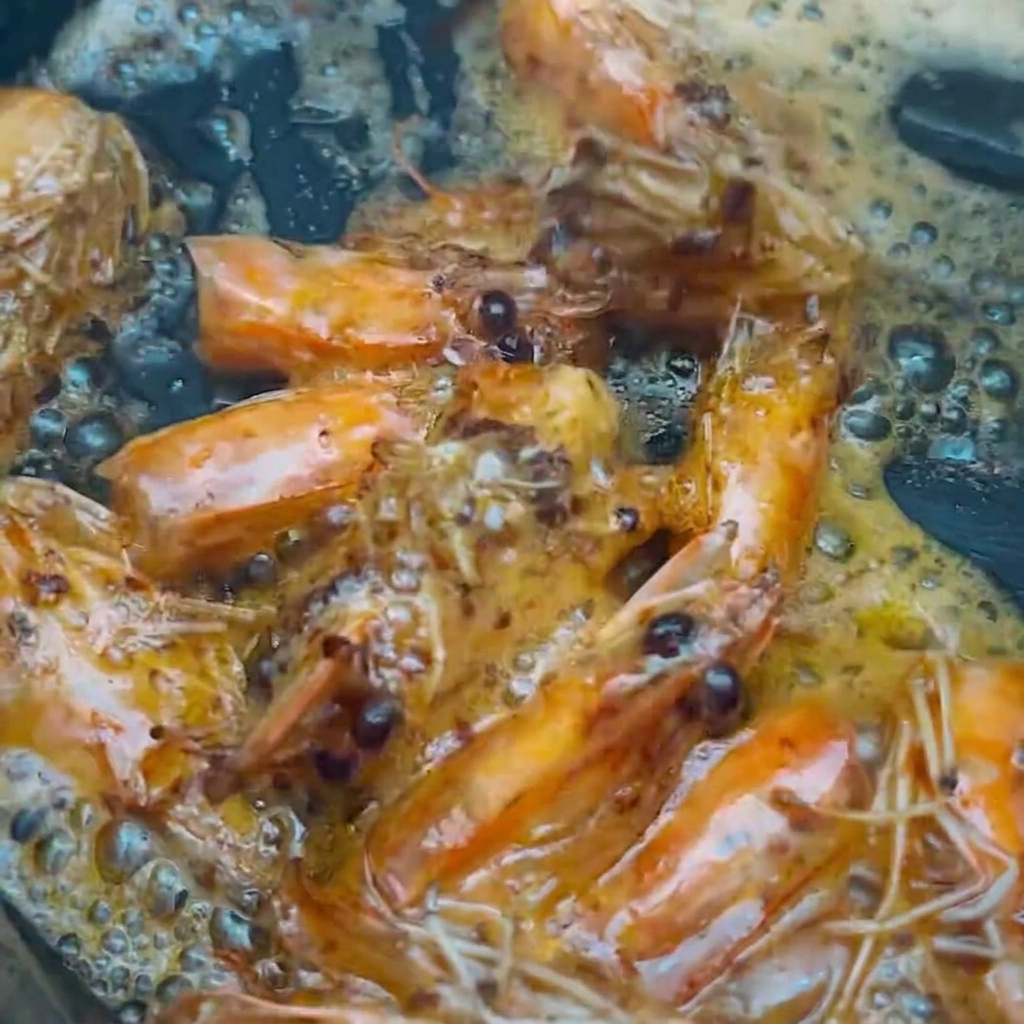
Once the shrimp oil has been fully extracted and the heads are cooked, use chopsticks to carefully remove them from the pot. The remaining oil is now concentrated with shrimp flavor and ready for the next ingredients.
Tip: Ensure all shrimp head pieces are removed to maintain a smooth texture in the final broth. - 7Sauté the aromatics
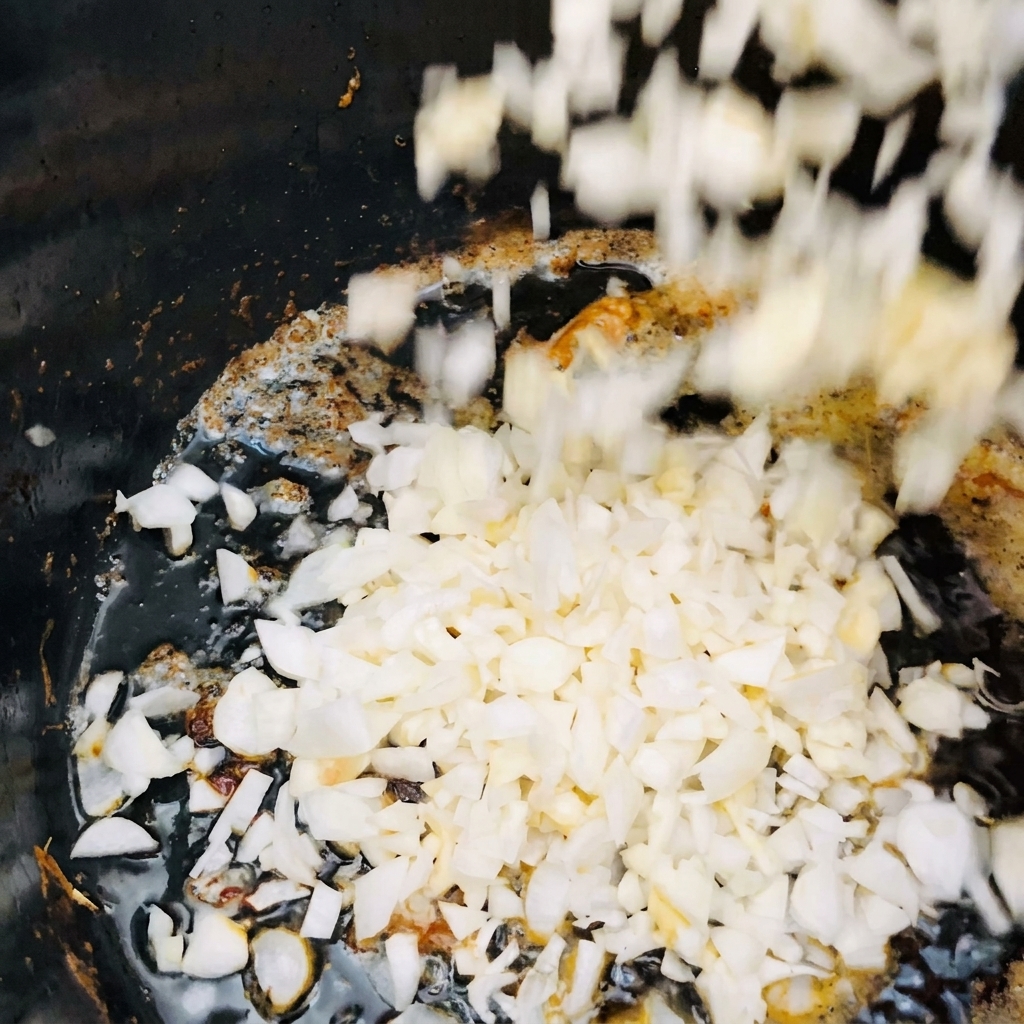
Add the diced white onions and minced garlic directly into the pot with the fragrant shrimp oil. Sauté the aromatics gently over medium heat until the onions soften, become translucent, and release their flavor.
Tip: If the pot seems too dry after extracting the shrimp oil, you can add an extra splash of olive oil to help sweat the onions evenly without burning them. - 8Add the fresh shrimp
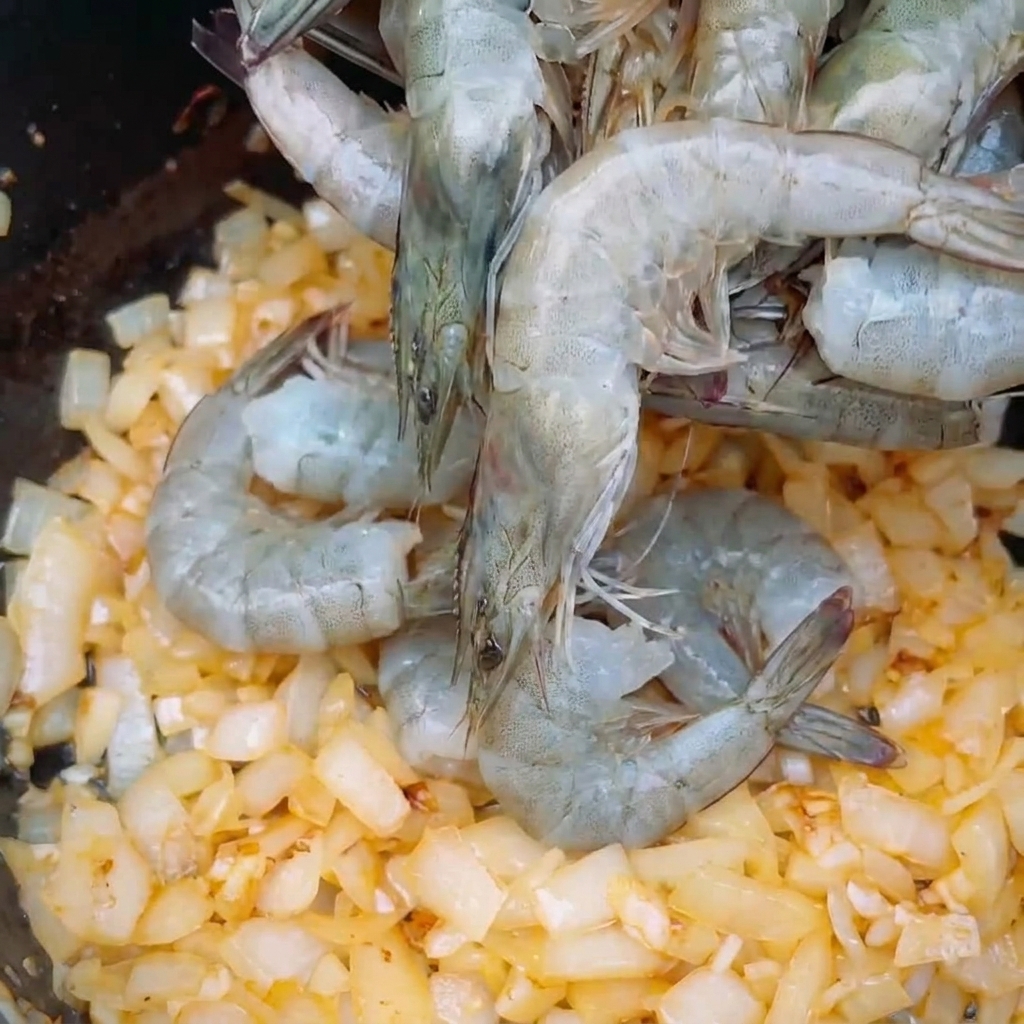
Once the onions are soft and translucent, introduce the fresh, raw whole shrimp into the pot. Gently stir them into the aromatic garlic and onion mixture to begin building the savory seafood base.
Tip: Leaving the shells and heads on the fresh shrimp contributes a tremendous amount of natural sweetness and depth to the Mediterranean broth. - 9Add tomatoes and shrimp
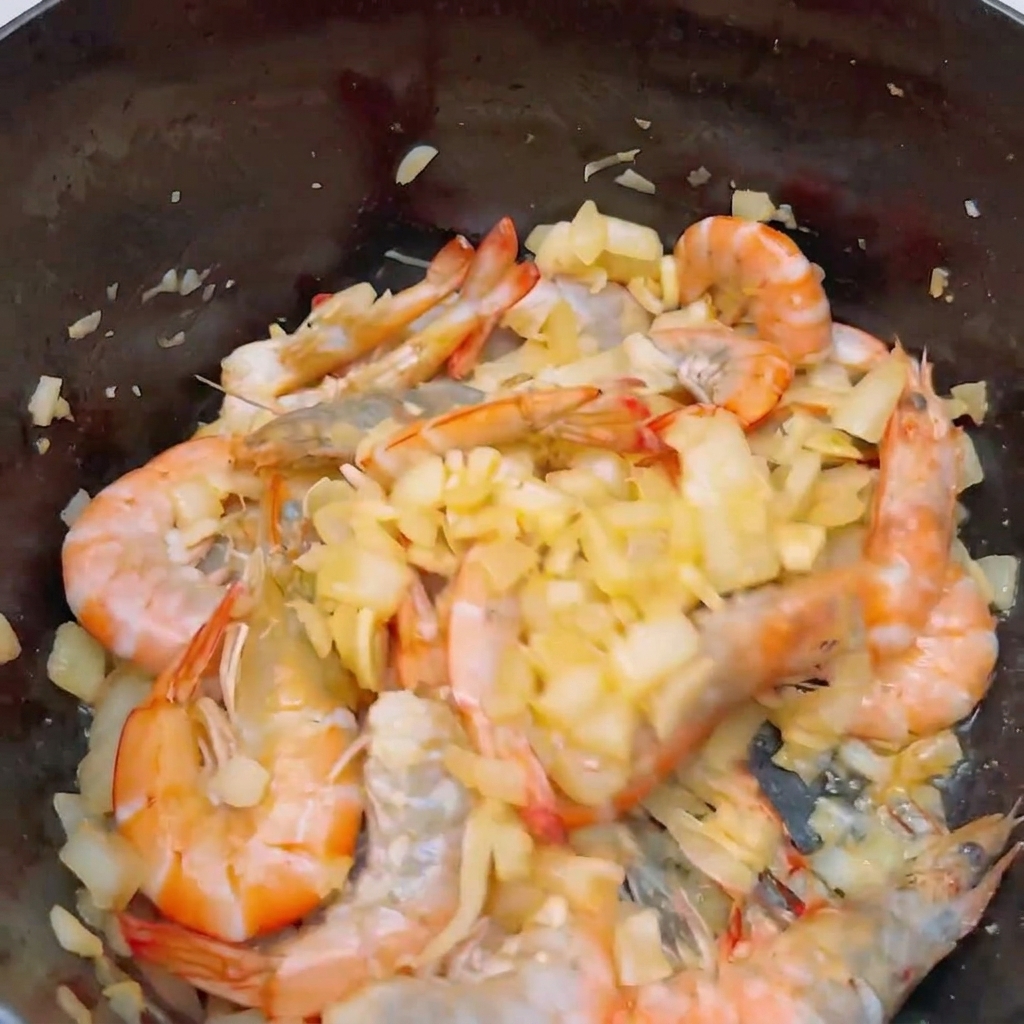
Incorporate the sliced tomatoes into the pot with the partially cooked shrimp. Tomatoes provide essential moisture and acidity, which forms the base of the flavorful Mediterranean broth.
Tip: If the tomatoes are very ripe, they will break down faster and create a richer, more flavorful soup base. - 10Introduce the mussels
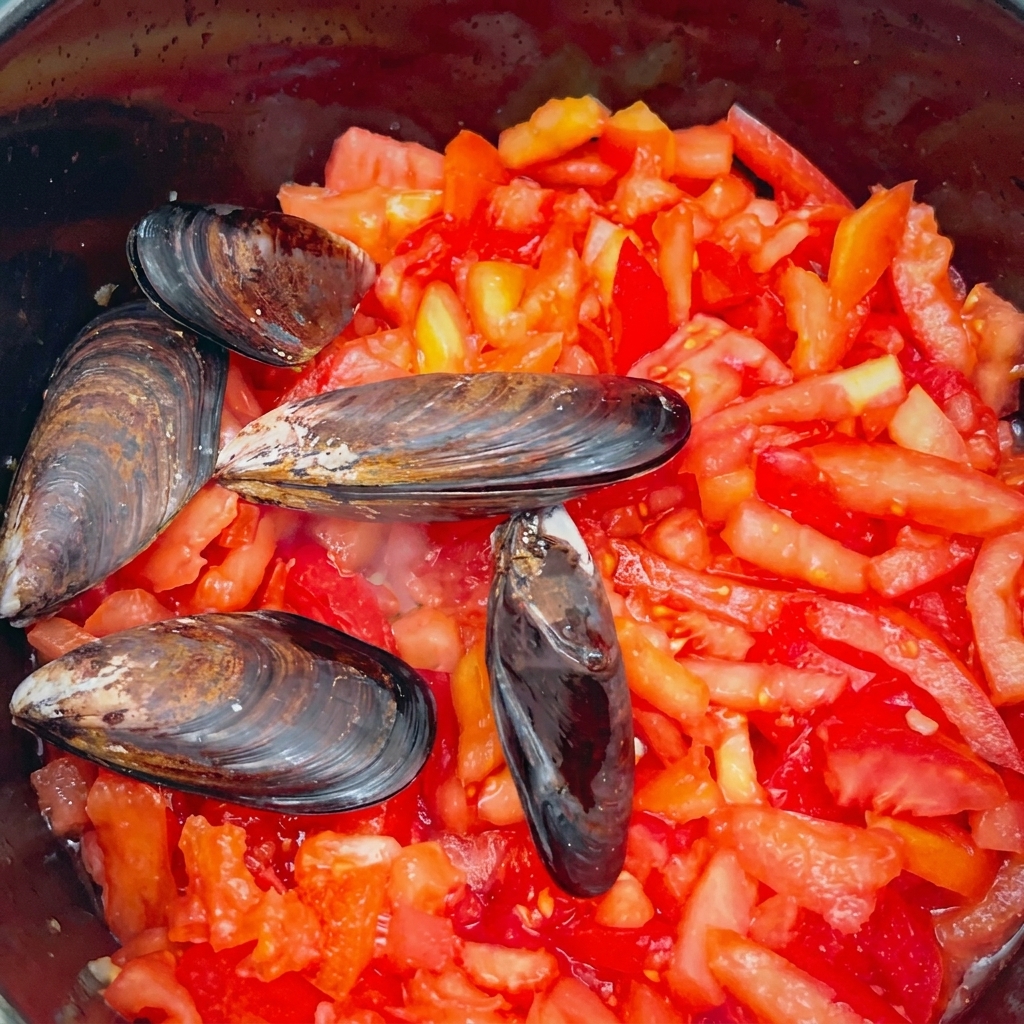
Place the whole, clean mussels in their shells directly over the layer of fresh chopped tomatoes. The natural moisture released by the tomatoes will help steam the mussels beautifully as the soup simmers.
Tip: Ensure your mussels are tightly closed before cooking. Discard any mussels with broken shells or those that refuse to close when lightly tapped. - 11Pour in the white wine
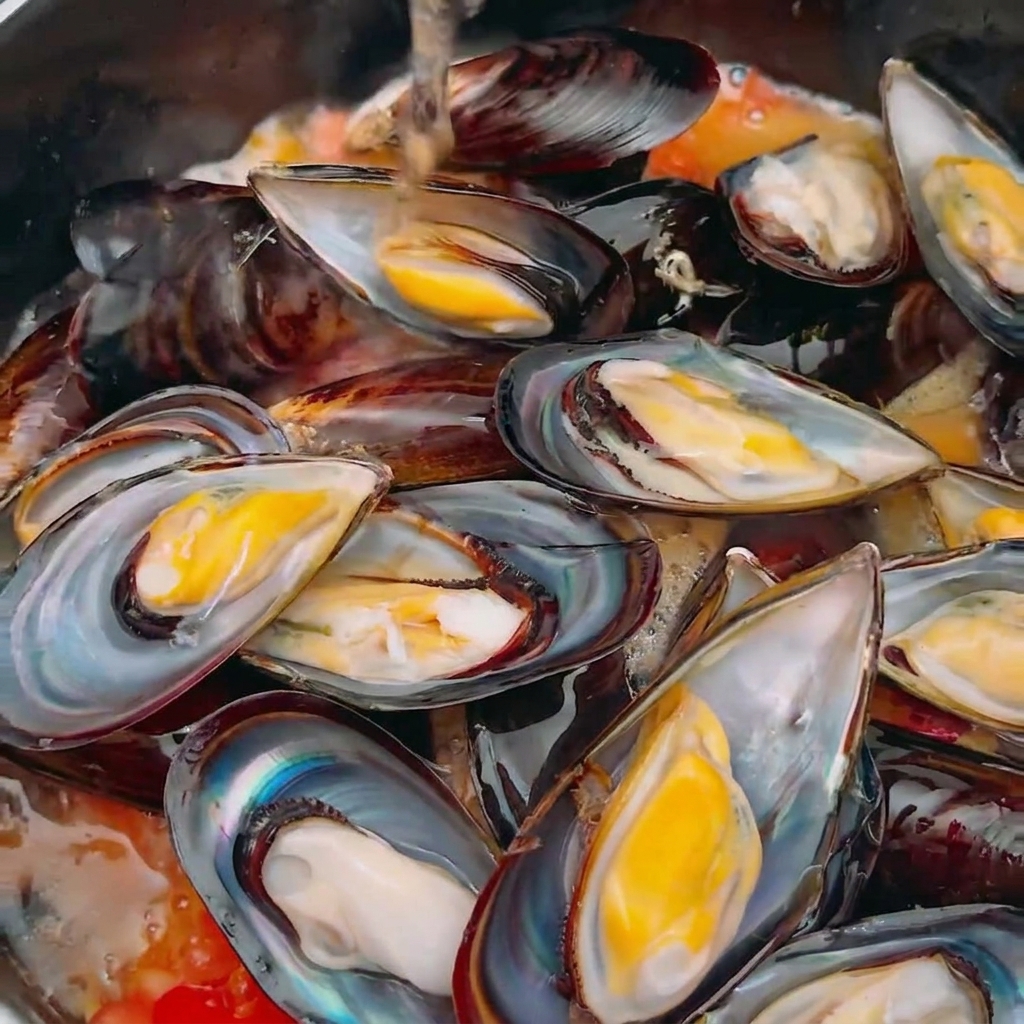
Pour 300 milliliters of dry white wine generously over the mussels and tomatoes in the pot. Cover the pot and let it simmer for about 7 to 8 minutes. The crisp acidity of the wine beautifully balances the richness of the olive oil while gently steaming the mussels.
Tip: Use a crisp, dry white wine that you would also enjoy drinking, such as a Pinot Grigio or Sauvignon Blanc, for the best culinary results. - 12Add fresh clams
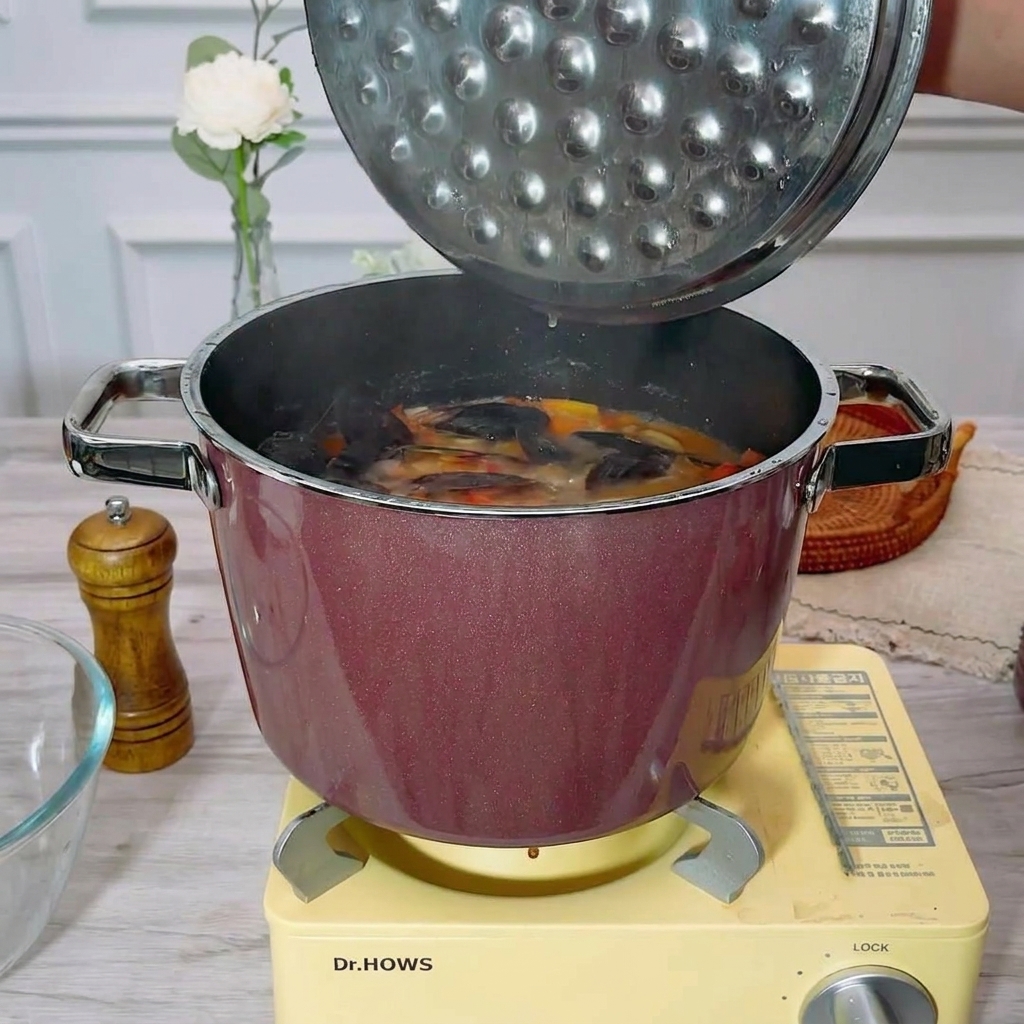
Gently add the fresh, closed clams into the simmering reddish seafood broth. Cover the pot and boil over high heat for about 3 minutes until the clams open up, releasing their savory juices into the soup.
Tip: Ensure the clams are thoroughly cleaned and purged of sand before adding them to the pot to prevent any grit in your final dish. - 13Garnish with rosemary
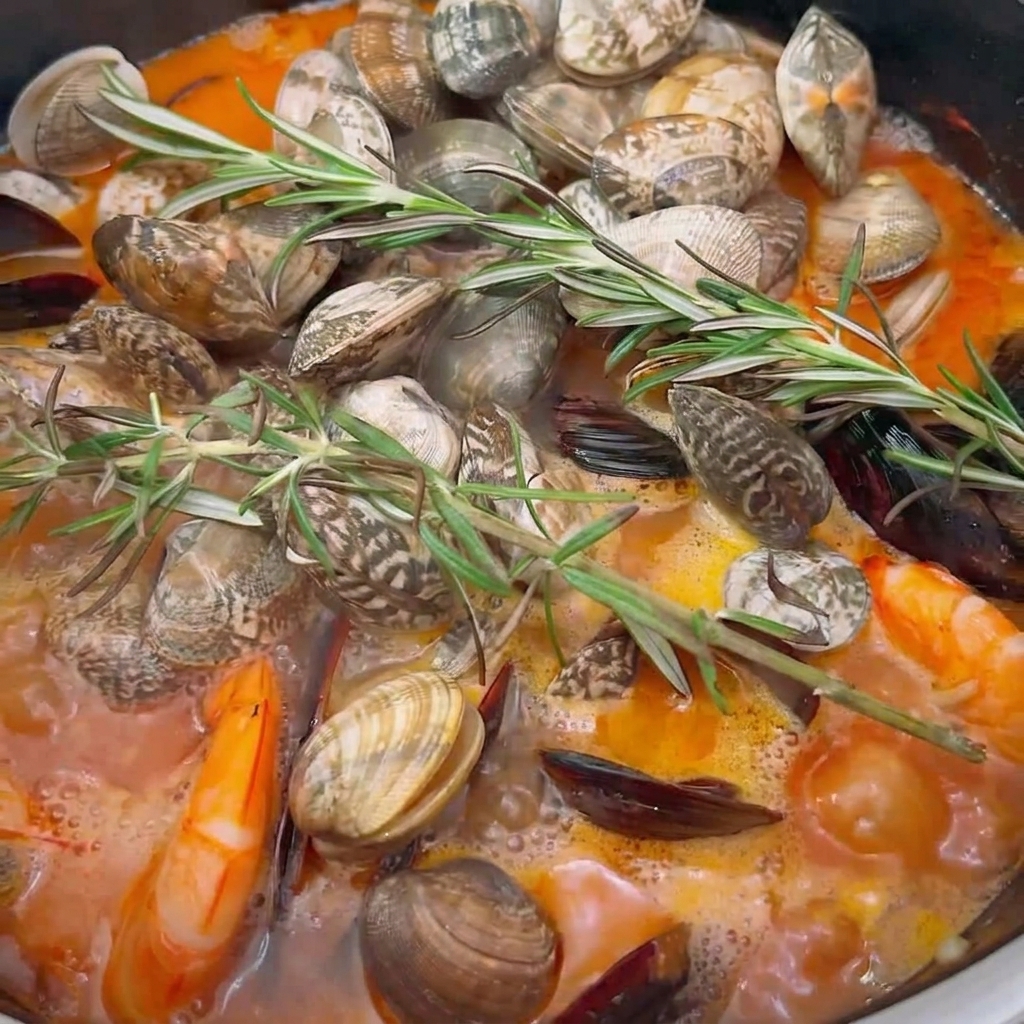
Place fresh sprigs of rosemary on top of the clams and simmering broth. The heat will release the herbs aromatic essential oils, infusing the Mediterranean flavors throughout the soup.
Tip: Remove the woody rosemary stems before serving to ensure the texture remains pleasant. - 14Finish with butter
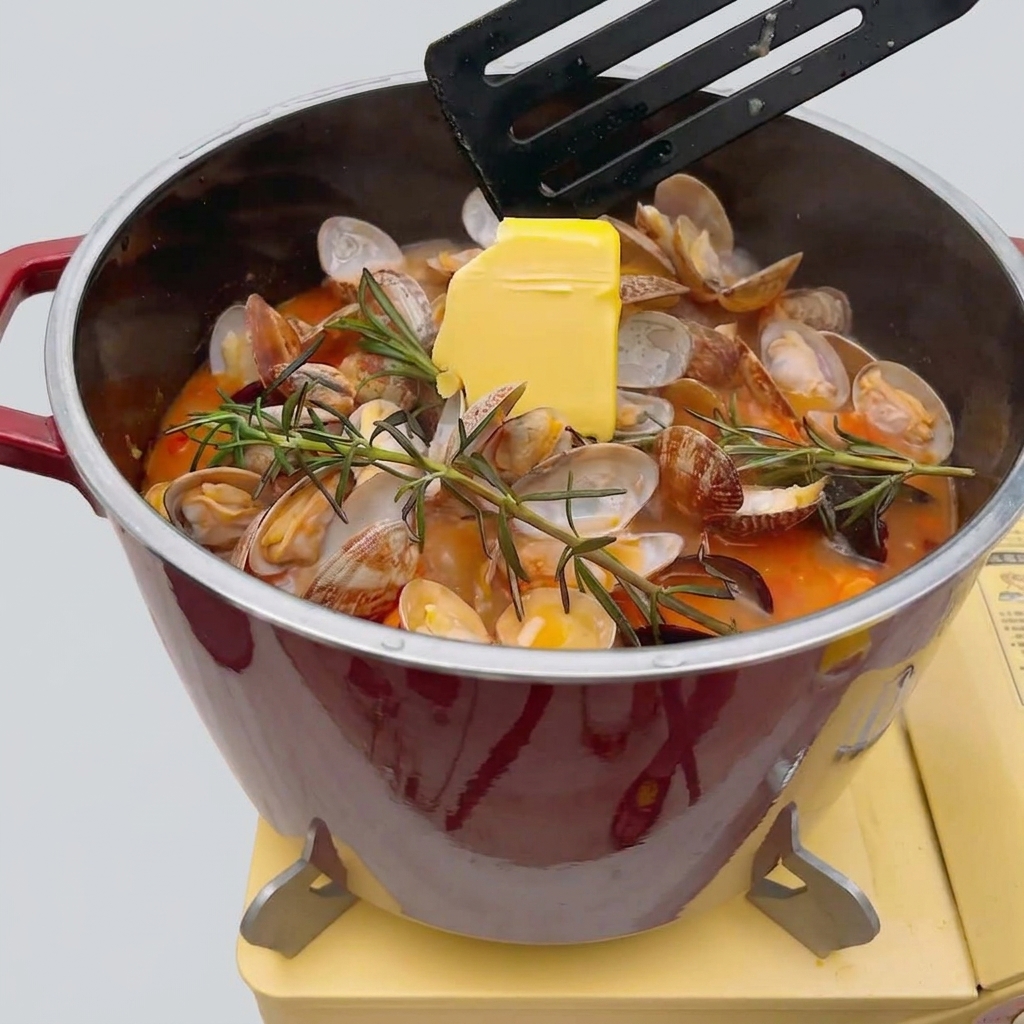
Add a square of cold butter into the actively boiling seafood stew. Stirring it in at the end will create a smoother, glossy, and more luxurious texture for the broth.
Tip: Use high-quality unsalted butter to achieve the best flavor and velvety consistency. - 15Final seasoning
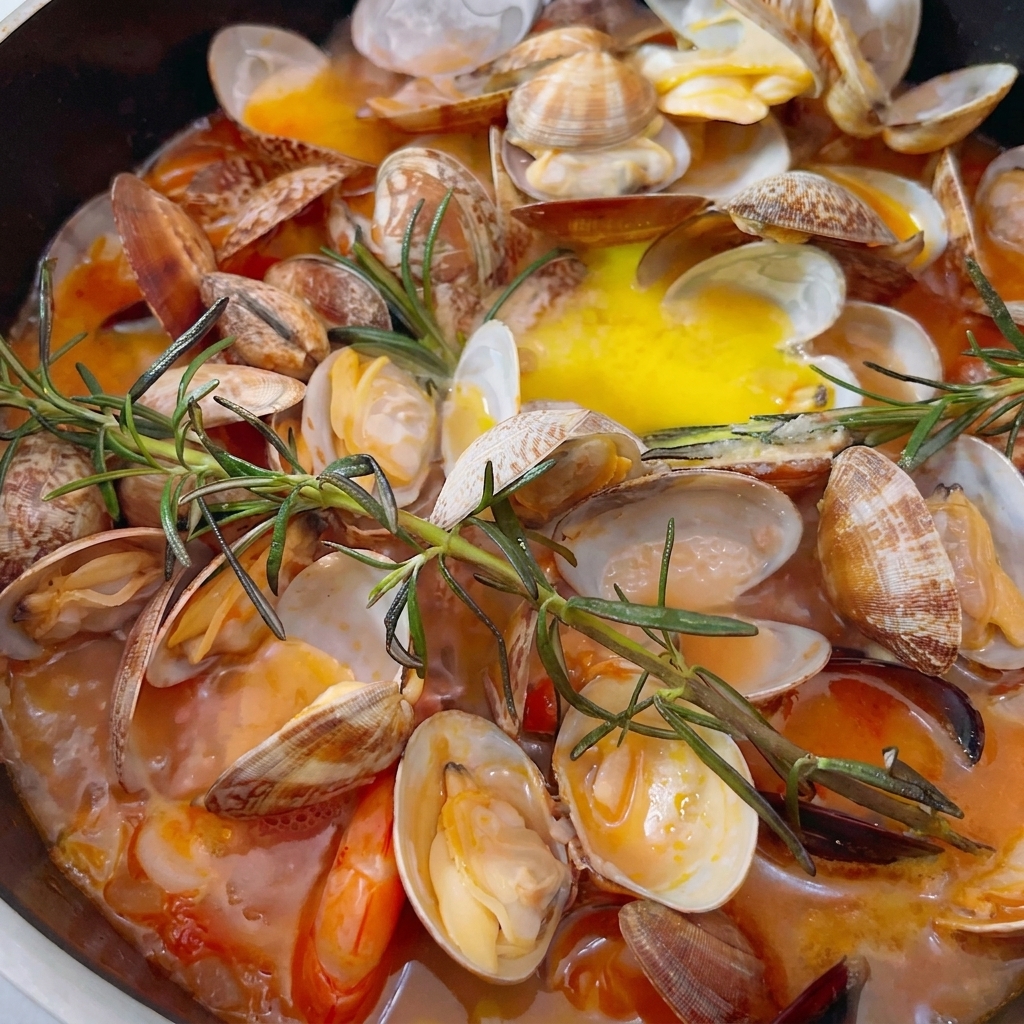
Sprinkle sea salt and freshly cracked black pepper over the bubbling seafood stew to enhance the natural flavors of the ingredients. Give the pot a final gentle stir before serving.
Tip: Season to taste, keeping in mind that the seafood and mussels already provide a natural saltiness.