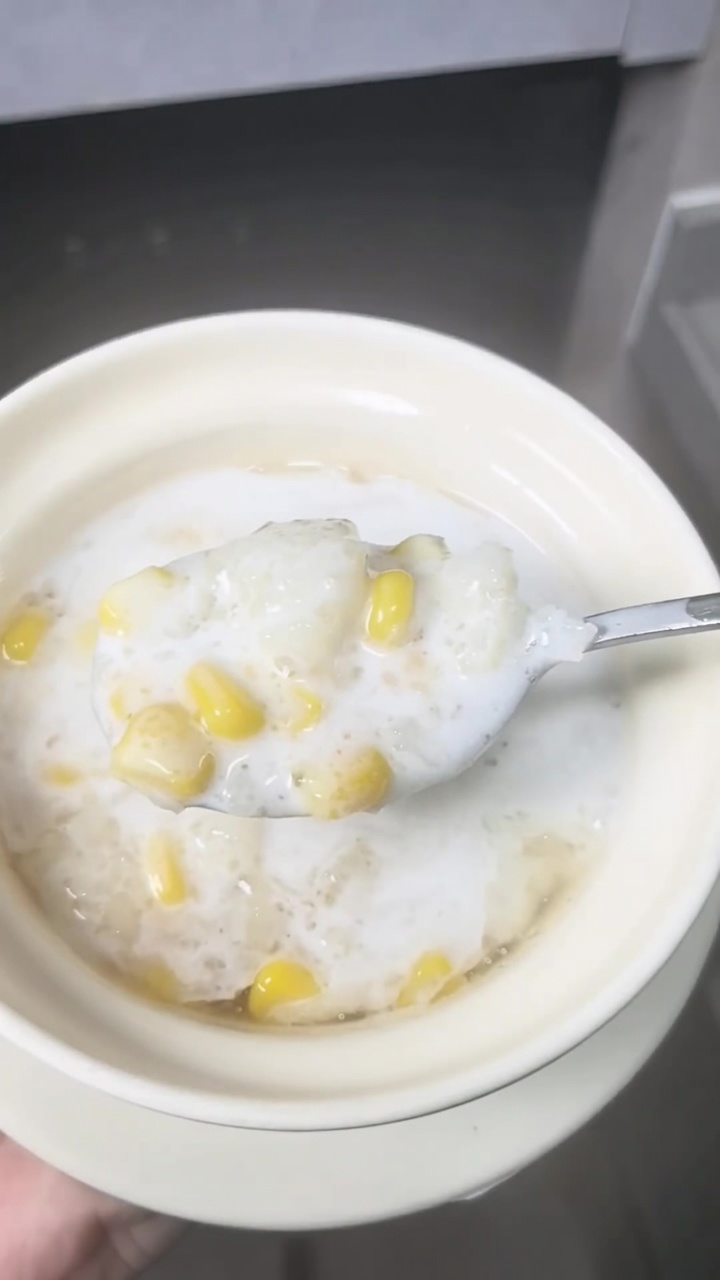
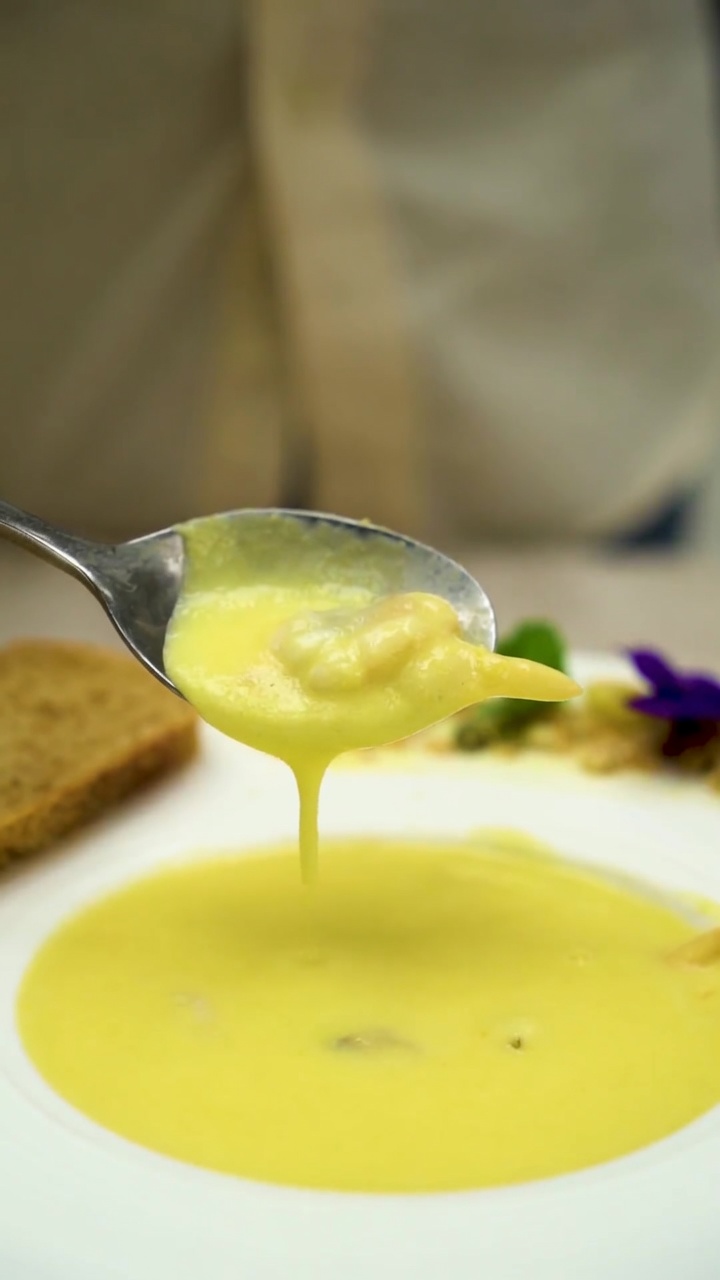
Creamy Coconut Corn Soup
A velvet-smooth, naturally sweet corn soup infused with fragrant aromatics like galangal and lemongrass, finished with rich, silky coconut milk.
This creamy coconut corn soup is a comforting bowl of warmth that highlights the natural sweetness of fresh corn. By simmering the corn cobs right in the broth, we extract deep, earthy flavor that pairs perfectly with the citrus notes of galangal and lemongrass. It is a labor of love that rewards you with a silky, velvety texture and a comforting, aromatic finish.

Ingredients
- 4 ears fresh corn
- 400 ml canned corn
- 400 ml coconut milk
- 30 g galangal
- 4 cloves garlic
- 2 stalks lemongrass
- to taste water
- optional red coral tuiles
- optional microgreens
Instructions
- 1Prepare the corn
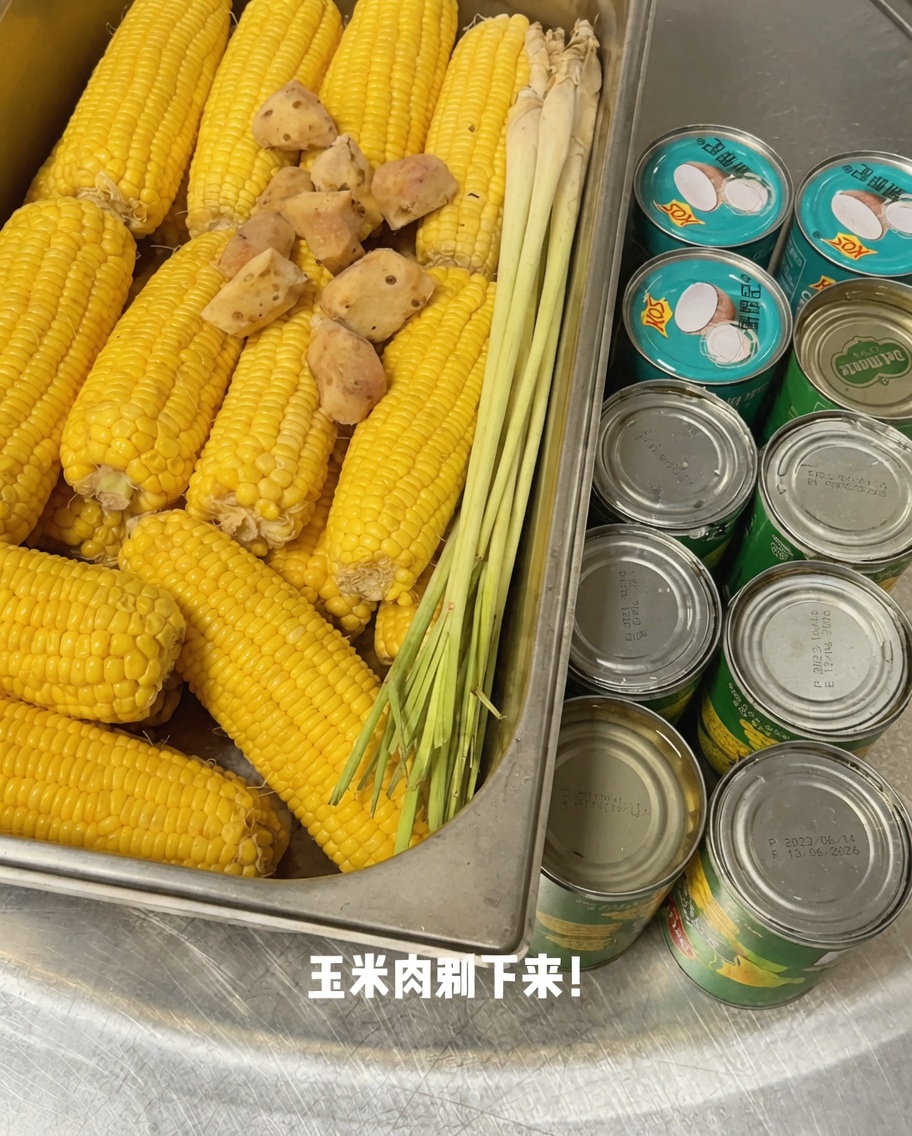
Carefully cut the corn kernels off the fresh cobs. Save the bare cobs, as they will be added to the pot later to infuse the soup with extra sweetness and corn flavor.
Tip: Be careful when cutting; place the cob flat on a cutting board to keep it stable. - 2Combine the corn
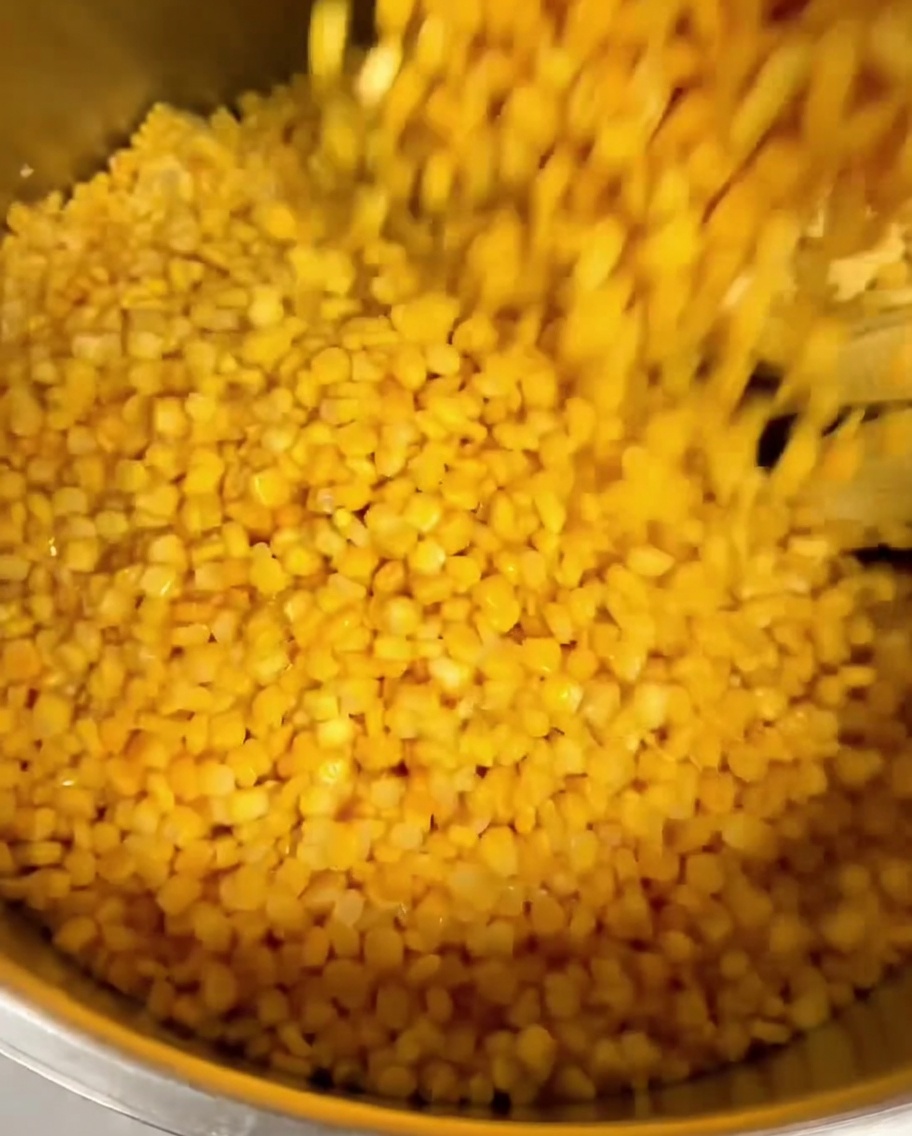
Add the freshly cut raw corn kernels to a large metal pot, then pour in the canned corn. Mixing fresh and canned corn adds an extra layer of sweetness and texture to the soup base.
Tip: Drain the canned corn before adding it if you want to strictly control the liquid and sweetness levels of the soup. - 3Add the aromatics
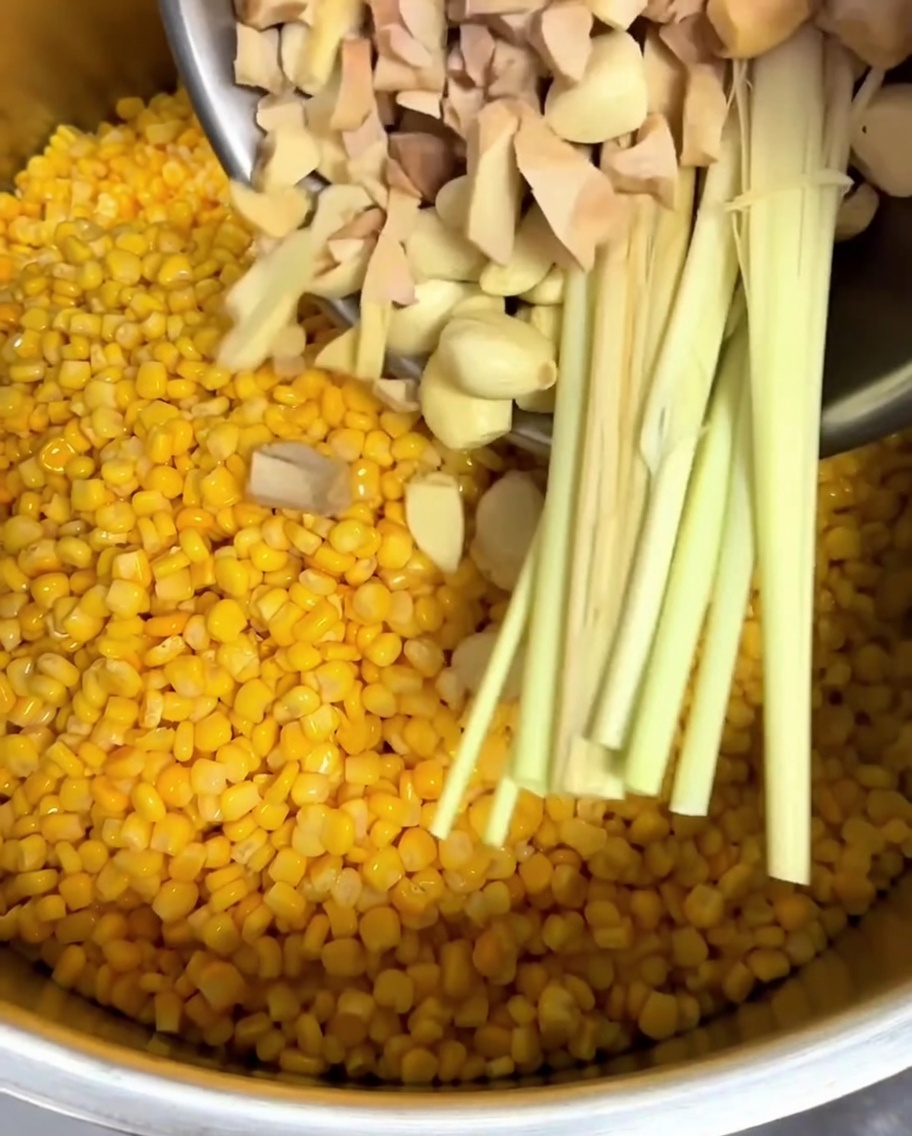
Toss in the chopped galangal, whole peeled garlic cloves, and fresh lemongrass stalks. These aromatics will infuse the broth with a deep, earthy, and fragrant citrus aroma as it cooks.
Tip: Lightly bruise the lemongrass stalks with the back of a knife before adding them to help release more of their essential oils. - 4Add coconut milk and cobs
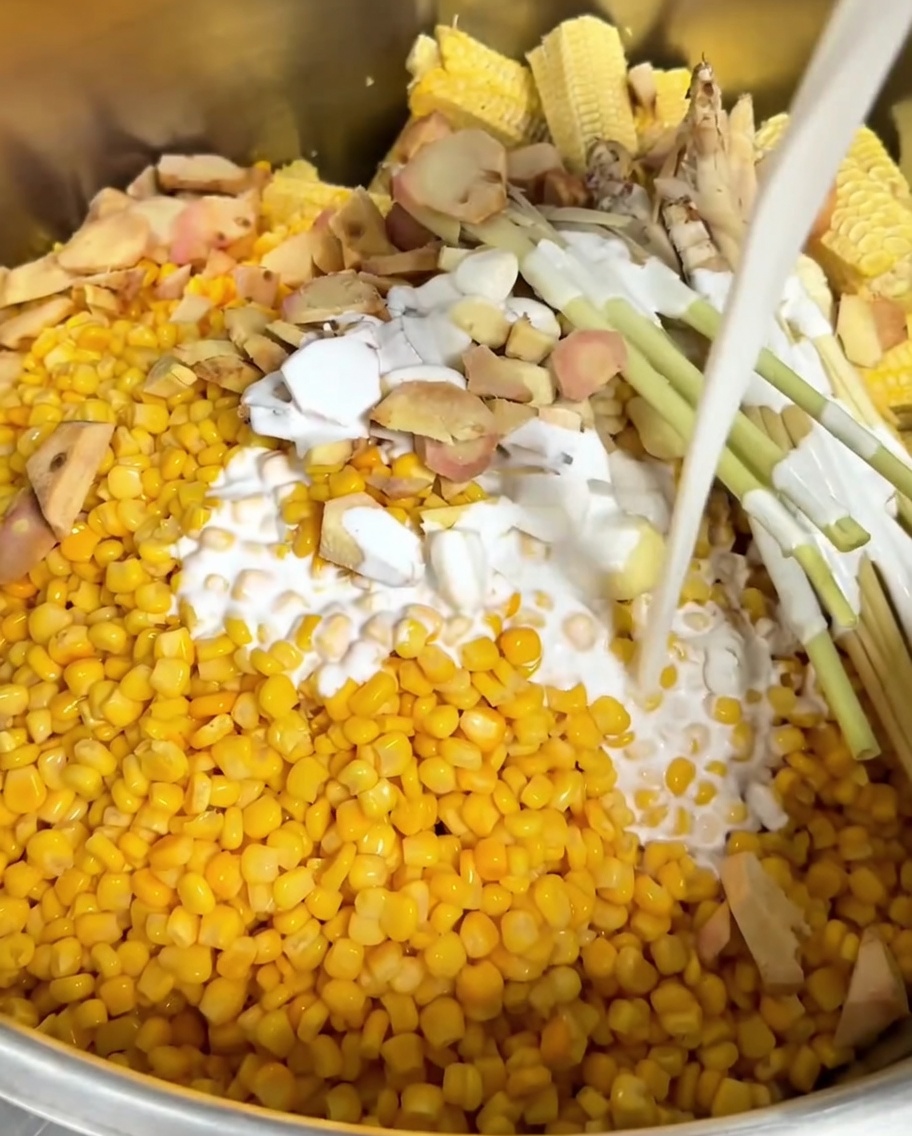
Place the bare corn cobs into the pot along with the other ingredients, then pour in the canned coconut milk. The bare cobs are packed with flavor and will naturally sweeten and enrich the soup as it simmers.
Tip: Never throw away your bare corn cobs when making soups or stocks! They hold incredible amounts of natural sweetness. - 5Add water to cover
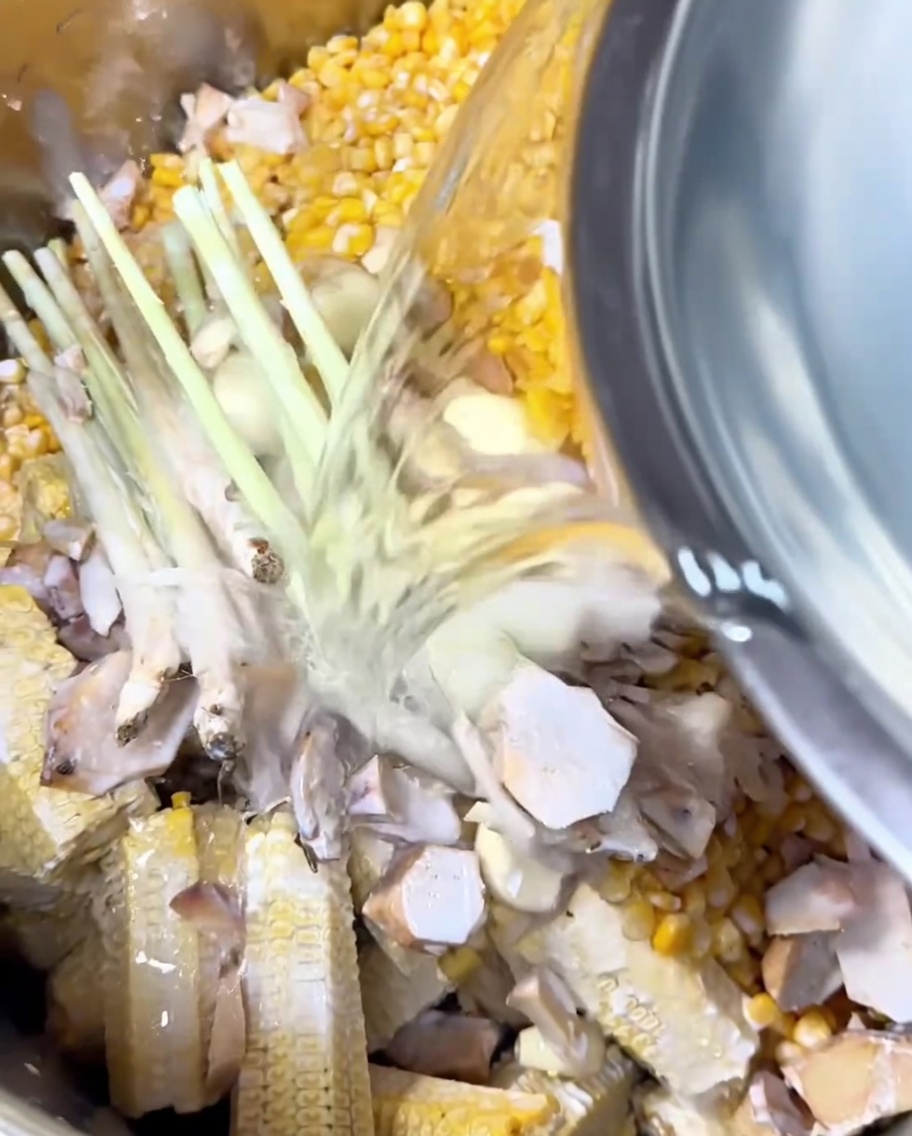
Pour enough water into the pot so that all the raw ingredients and corn cobs are completely submerged. This ensures everything cooks evenly and creates the right volume of broth.
Tip: Use just enough water to barely cover the ingredients; adding too much will dilute the rich coconut and corn flavors. - 6Simmer the soup
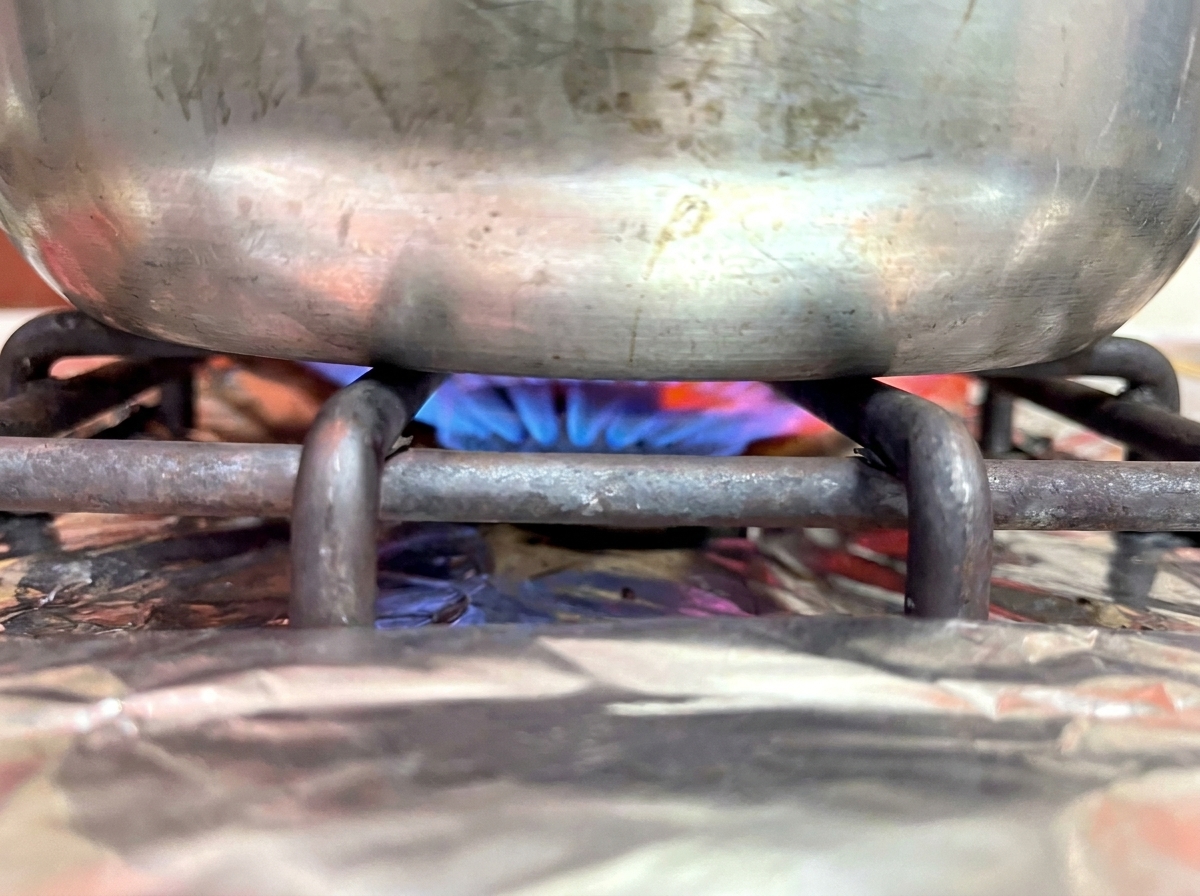
Place the pot on the stove over medium heat and bring it to a gentle simmer. Allow it to cook slowly for about 3 hours until the corn kernels become completely soft and tender.
Tip: Maintain a gentle simmer rather than a rapid boil to prevent the coconut milk from separating or burning at the bottom of the pot. - 7Remove aromatics
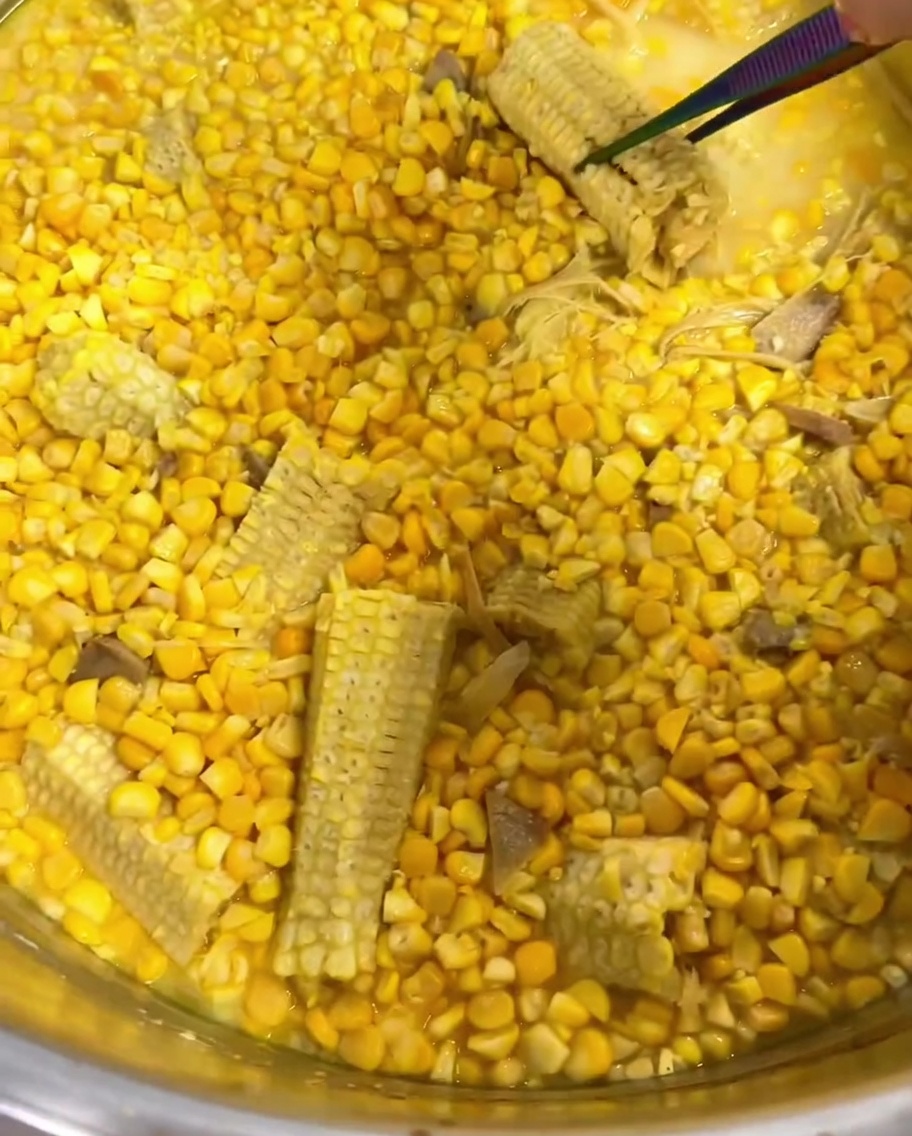
Once the soup has simmered for 3 hours and the corn is completely soft, use tongs to remove the lemongrass stalks and the bare corn cobs from the pot. These were used for flavoring and should be discarded before blending.
Tip: Check the pot thoroughly to ensure all lemongrass pieces are removed to keep the texture smooth. - 8Scoop the corn
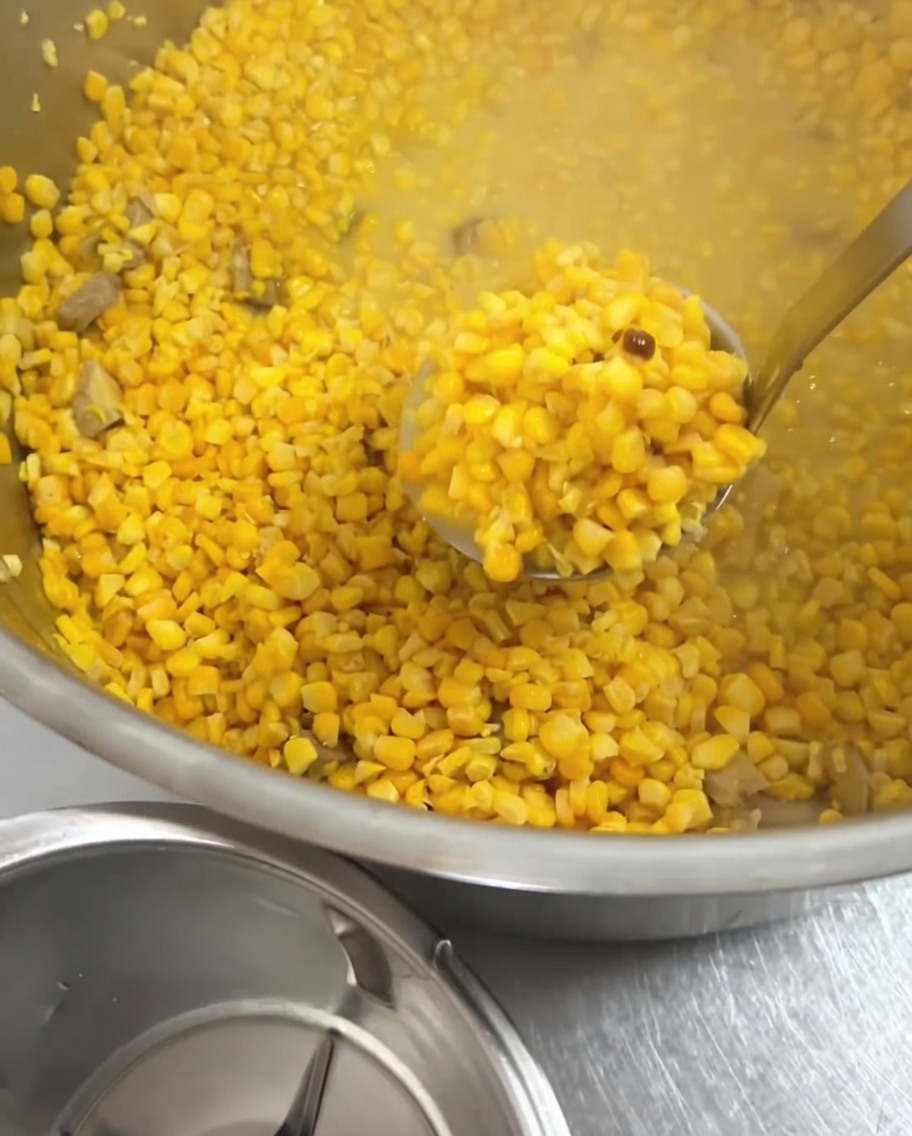
Using a large metal ladle, carefully scoop the cooked corn kernels out of the pot. These kernels will be transferred to a blender to be pureed into a smooth soup base.
Tip: Include some of the cooking liquid in the ladle to help facilitate the blending process. - 9Transfer to blender
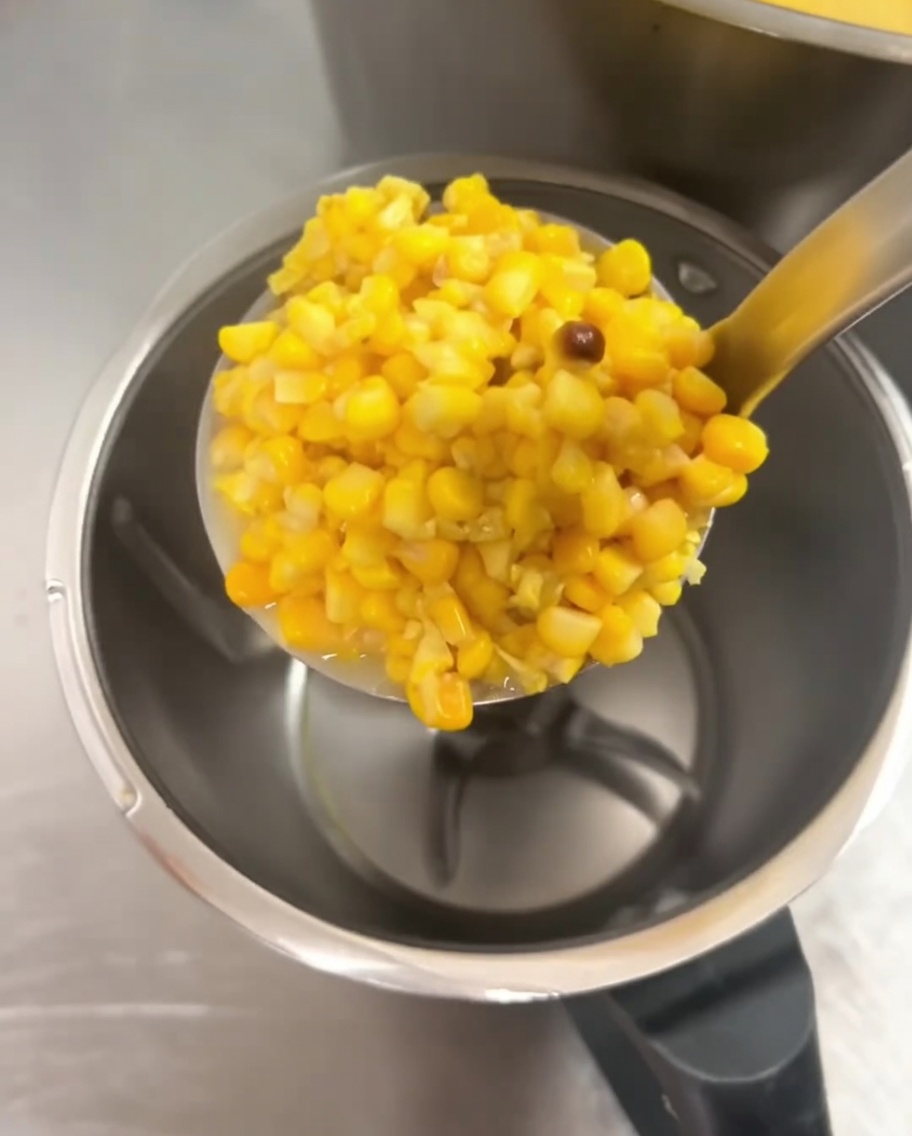
Place the ladled corn kernels into a large blender container. Ensure you have enough liquid in the blender to help achieve a smooth consistency.
Tip: If the mixture is too thick, add a little extra coconut milk to the blender. - 10Blend the soup
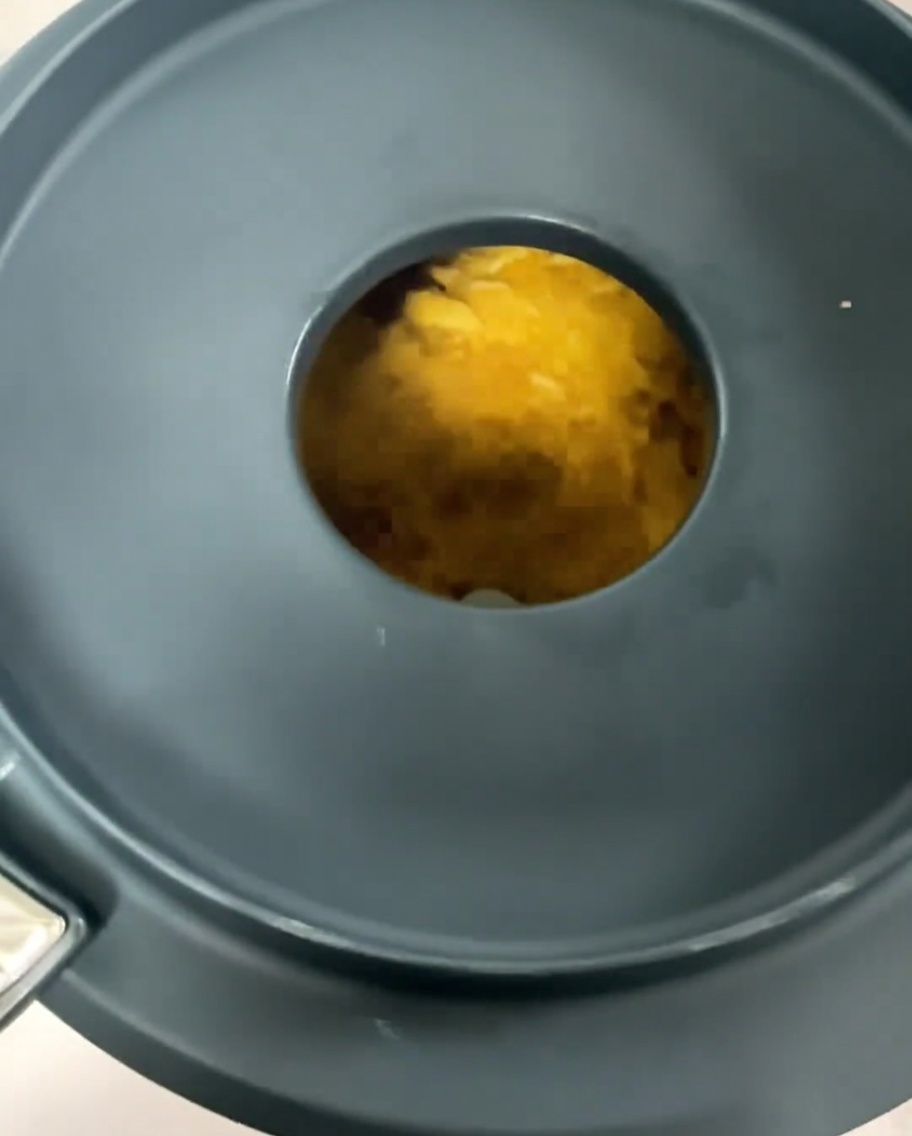
Blend the corn mixture on high speed until it becomes a thick puree. Because corn fiber is very tough, you may need to blend it a second time to ensure it is completely broken down.
Tip: Blend in batches if your container is too full, and ensure the lid is secure before starting. - 11Strain the soup
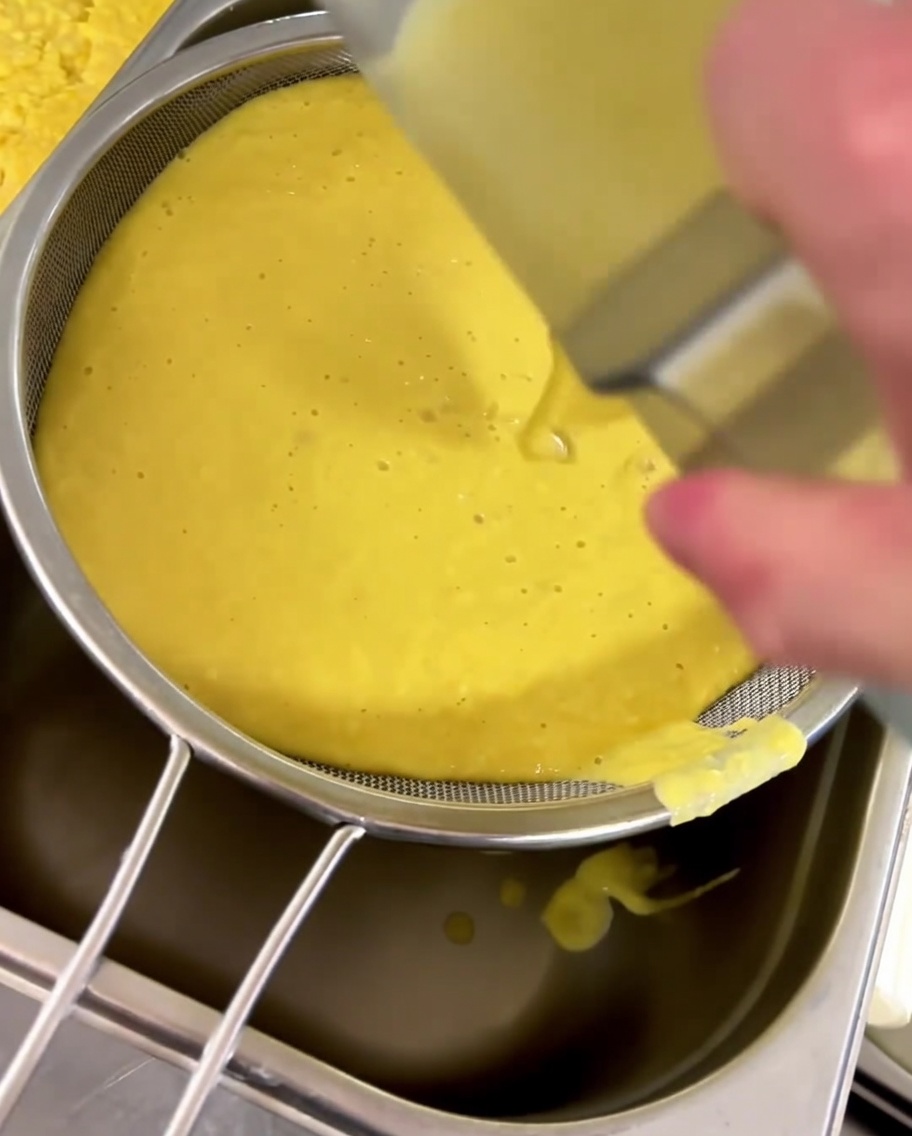
Pour the blended corn mixture through a fine mesh sieve. Use a spoon or spatula to press the liquid through, ensuring a perfectly smooth, velvety texture. Repeat this straining process twice for the best results.
Tip: Straining twice is essential to remove the tough corn fibers and create a silky soup.