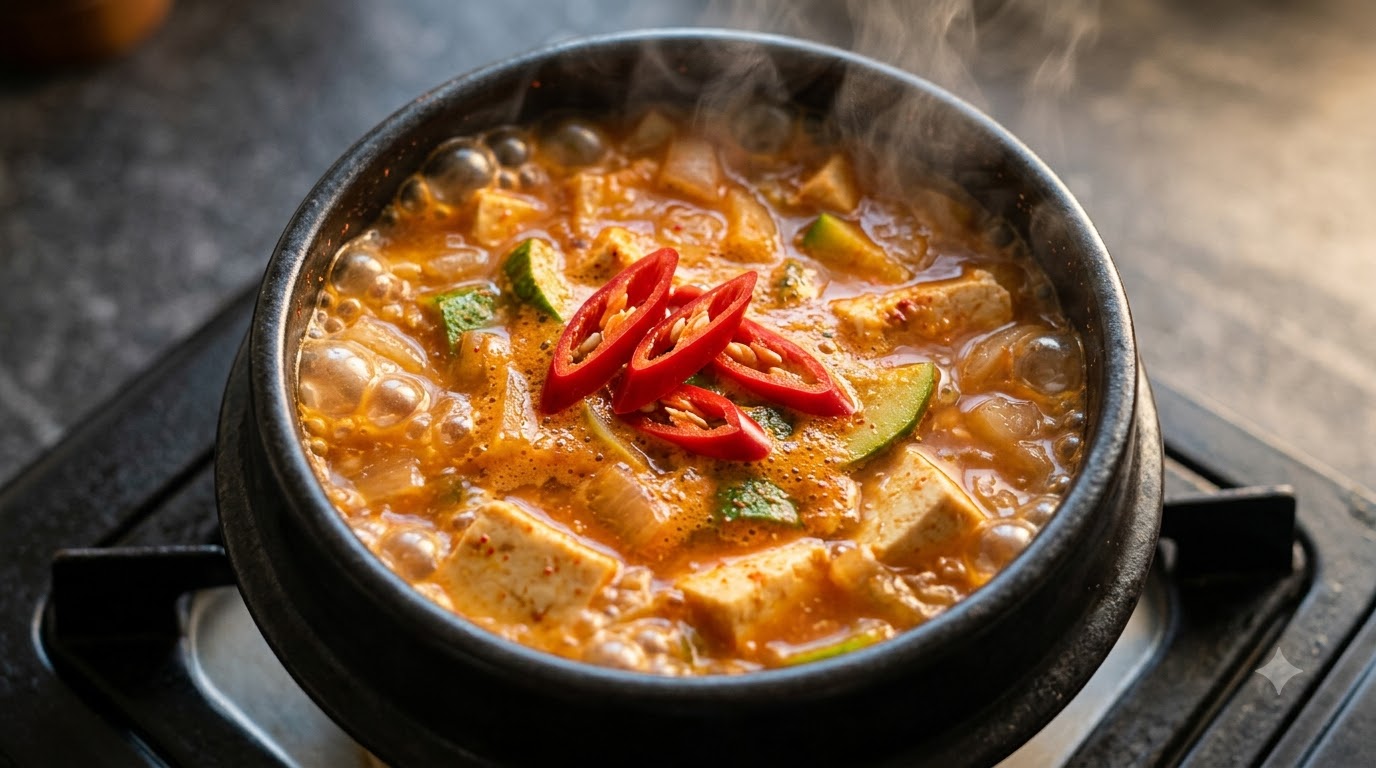
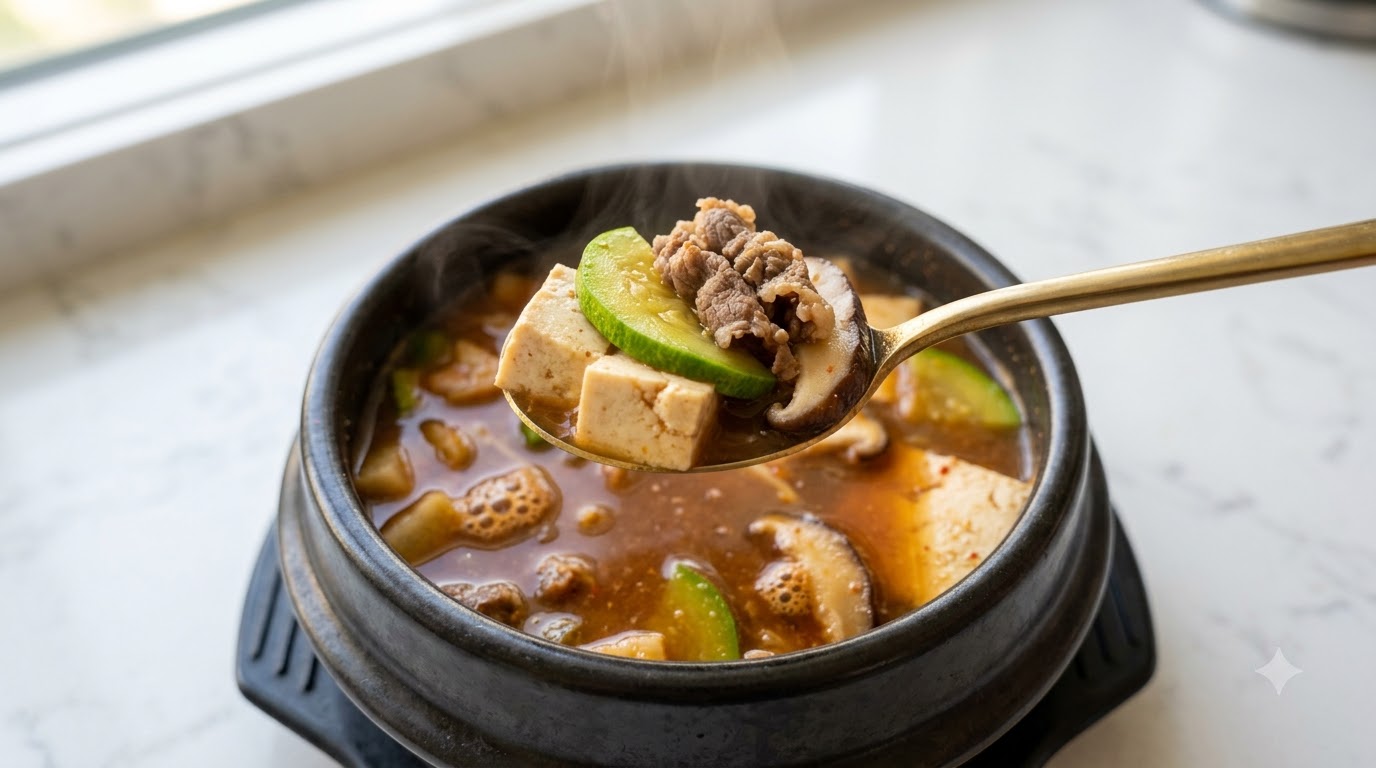
Traditional Korean Doenjang Jjigae (Soybean Paste Stew)
A comforting and savory Korean staple made with a rich soybean paste broth, tender beef, fresh vegetables, and silken tofu. Using rice water adds a subtle depth to this home-style classic.
Doenjang Jjigae is a cornerstone of Korean home cooking, deeply rooted in the daily rhythms of traditional meals. The foundation relies on fermented soybean paste (doenjang), which imparts a deeply savory, earthy umami flavor. Utilizing the milky water saved from washing rice is a classic technique to enrich the broth, providing a slight starchiness that helps bind the distinct flavors of the pastes, meats, and vegetables together into a warming, satisfying stew.
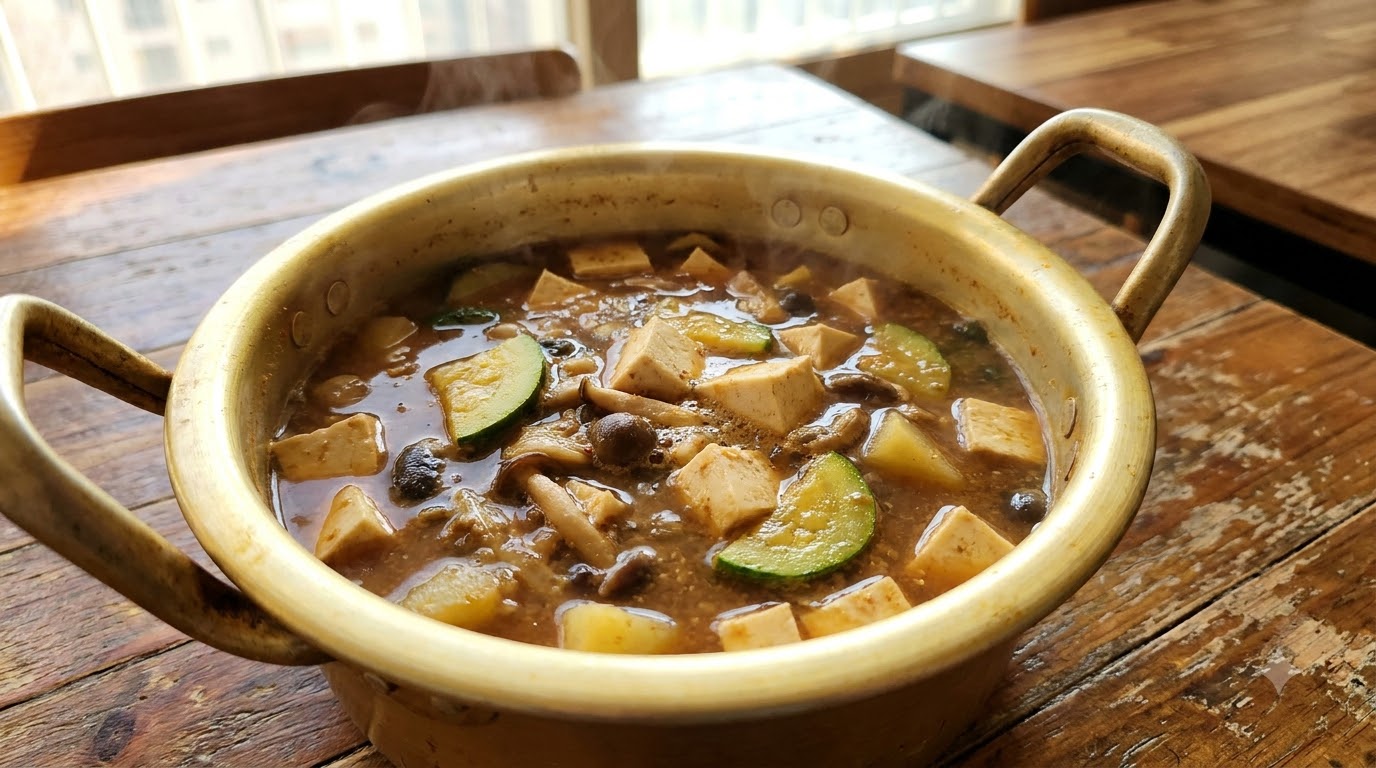
Ingredients
- 150 g beef (cut into bite-sized pieces)
- 500 ml rice water (water from washing rice) or regular water
- 1 large tbsp doenjang (Korean soybean paste)
- 1/3 tbsp gochujang (Korean chili paste)
- 1/2 medium zucchini (sliced)
- 1/2 medium onion (sliced)
- 1 medium potato (cubed)
- 100 g mushrooms (sliced)
- 1-2 green chili peppers (sliced)
- 1 block tofu (cubed)
- to taste gochugaru (Korean chili powder)
Instructions
- 1Prepare the ingredients
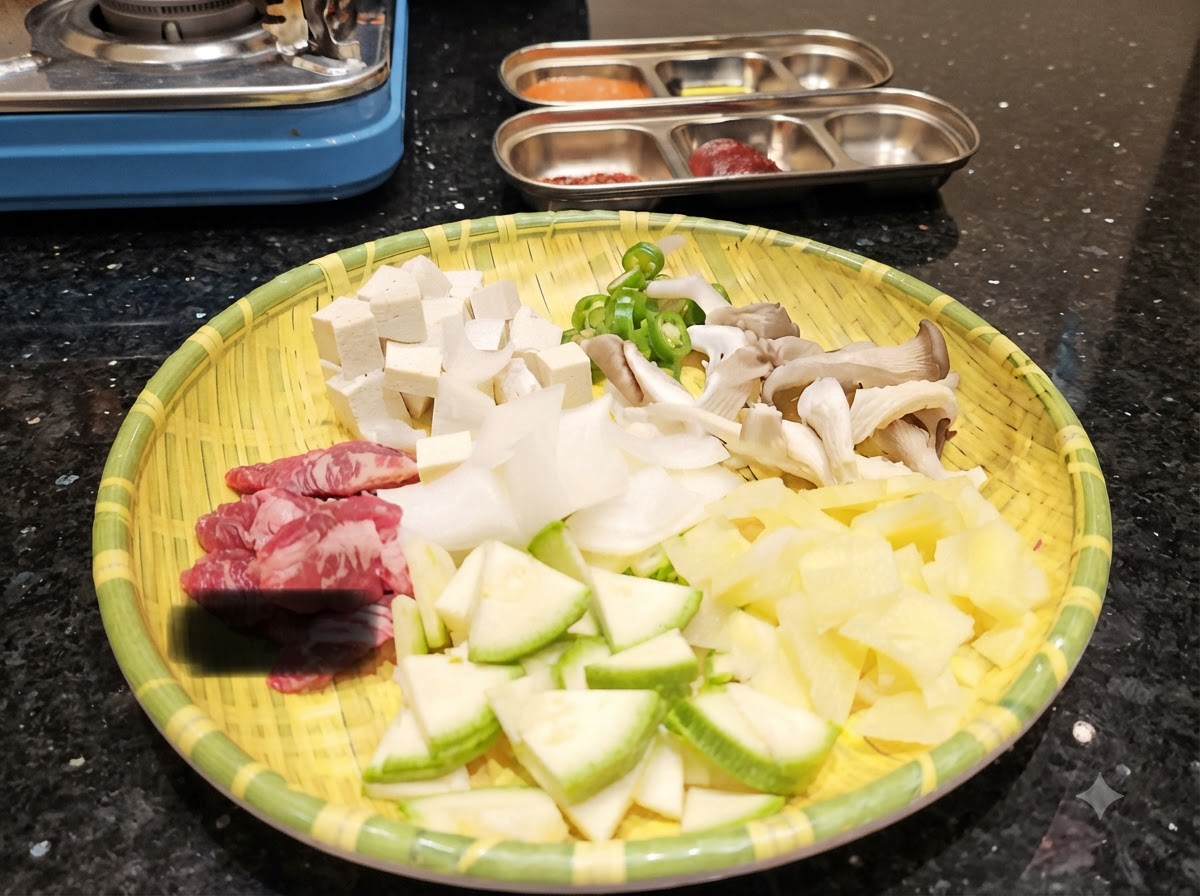
Gather and prep all your ingredients. Slice the zucchini, onions, mushrooms, potatoes, and green chili peppers into bite-sized pieces. Cut the tofu into small cubes and prepare the beef. Arrange everything on a tray or cutting board so it is ready for cooking.
Tip: Having all your ingredients chopped and portioned before turning on the stove (mise en place) ensures a smooth and stress-free cooking process. - 2Stir-fry the beef
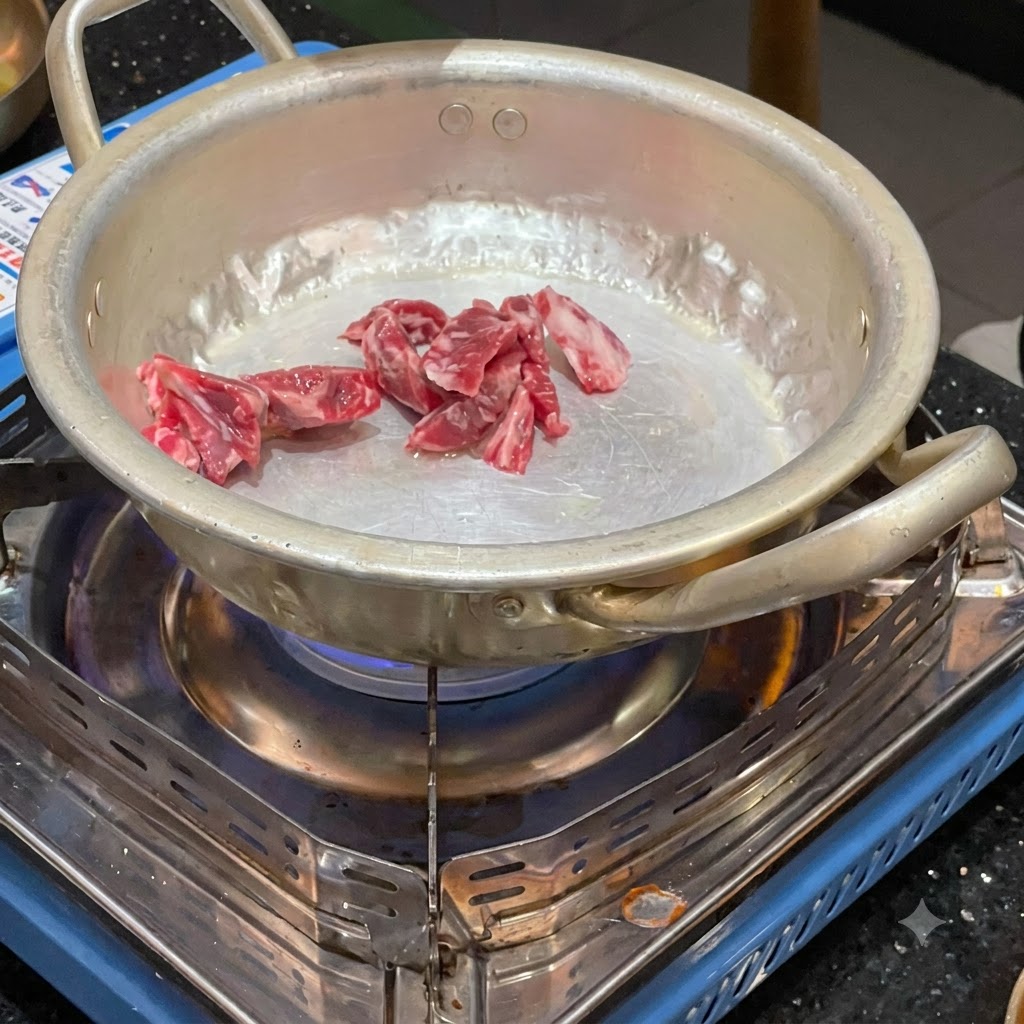
Place a small pot over a gas burner or stove and begin by stir-frying the beef pieces. Cook them gently until they are lightly browned. Cooking the beef first helps release its natural fats and creates a savory flavor base for the jiggae.
Tip: You dont need to cook the beef completely through at this stage, as it will continue to tenderize while simmering in the broth. - 3Add the rice water
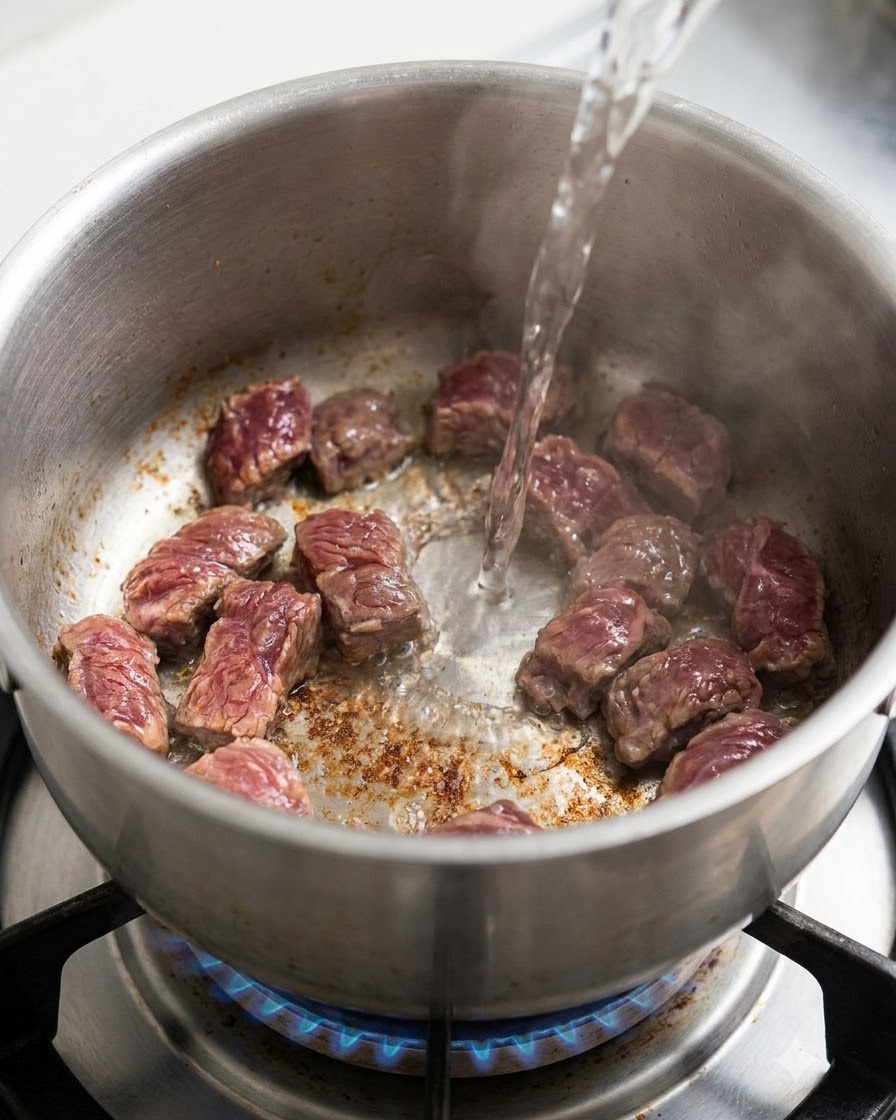
Once the beef is partially cooked and browned, pour in about 500ml of rice water. Using rice water instead of plain water adds a subtle starchiness that gives the broth a richer, more comforting texture.
Tip: If you dont have rice water saved from washing rice, regular water or a light vegetable stock will work perfectly fine. - 4Mix in the pastes
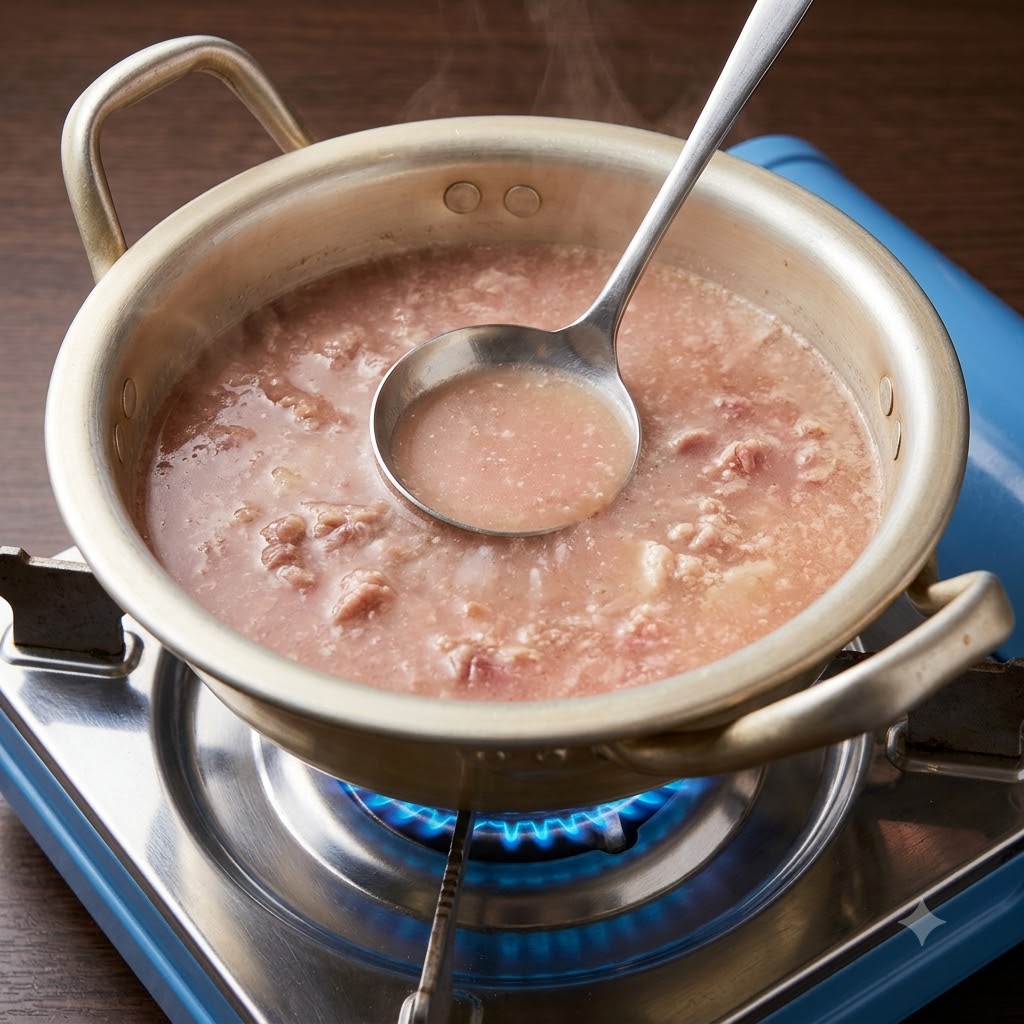
Add one large spoonful of Doenjang (soybean paste) and a third of a spoonful of gochujang (chili paste) into the hot liquid. Stir well until both pastes are fully dissolved and incorporated into the boiling broth.
Tip: Using the water left over from washing rice adds a slight starchiness to the broth, making it richer and helping to bind the flavors together. - 5Add the vegetables
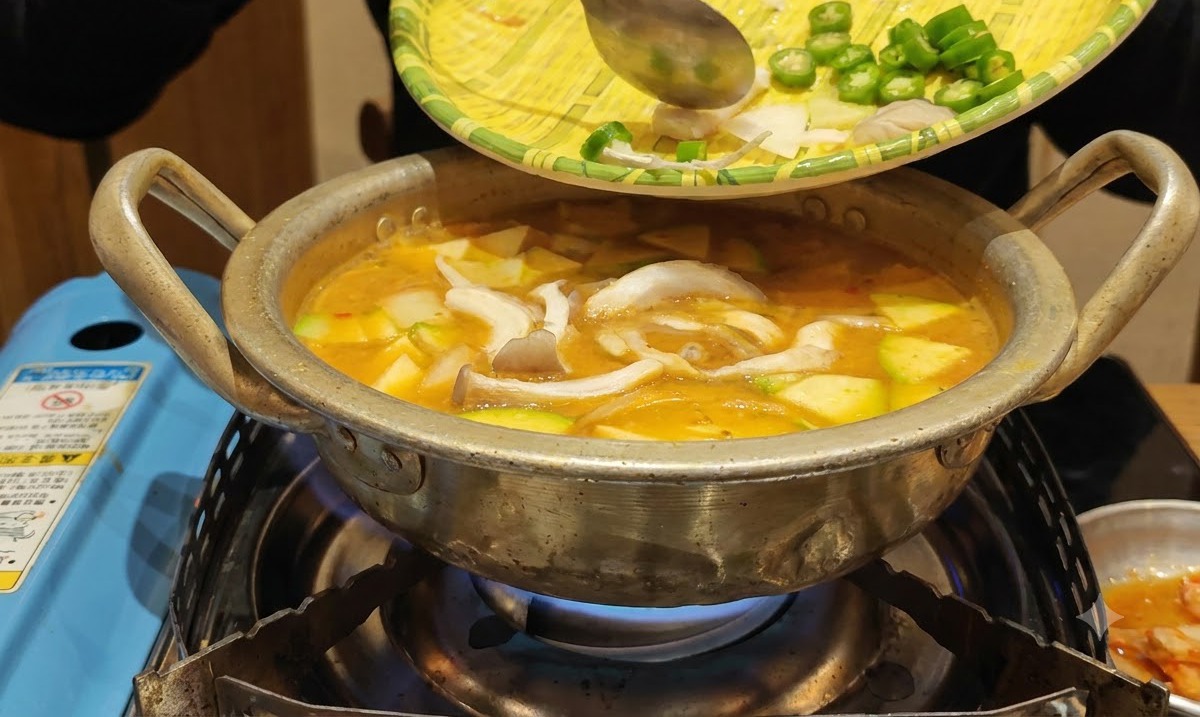
Slide all the prepared vegetables—potatoes, zucchini, onions, mushrooms, and green chili peppers—into the boiling broth. Reserve the tofu for later, as it cooks quickly and is very delicate.
Tip: Adding the potatoes first ensures they have enough time to cook through and become tender without turning mushy. - 6Season with chili powder
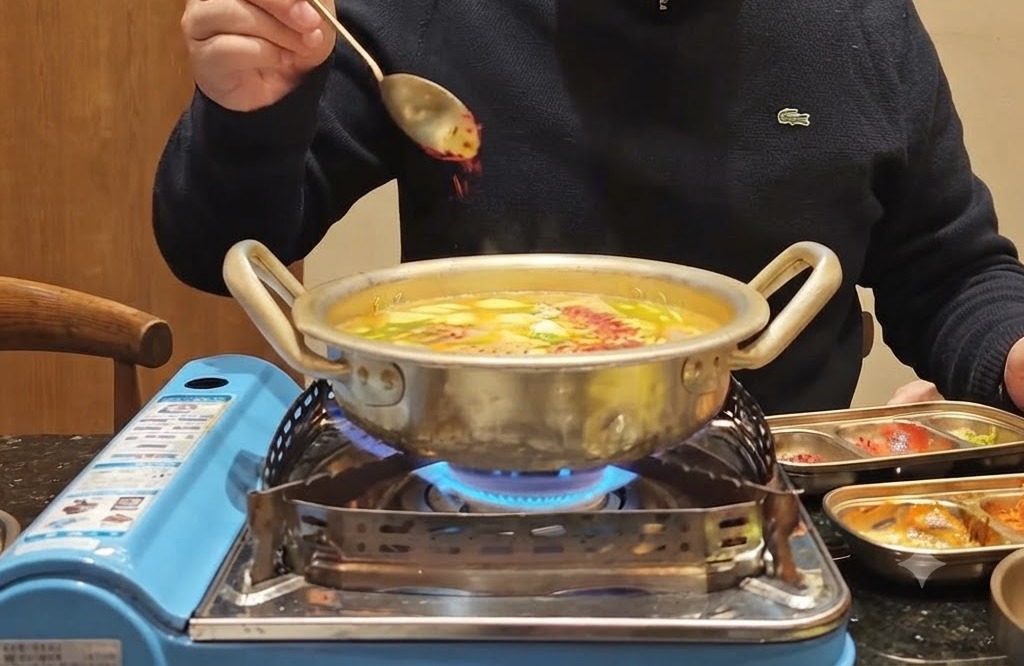
With the hearty vegetables simmering in the pot, sprinkle in a little chili powder (gochugaru) to taste. Give everything a gentle stir and let the stew continue to boil until the potatoes and zucchini become tender.
Tip: Adjust the amount of chili powder based on your personal heat preference; you can always add more later if needed. - 7Add tofu and finish simmering
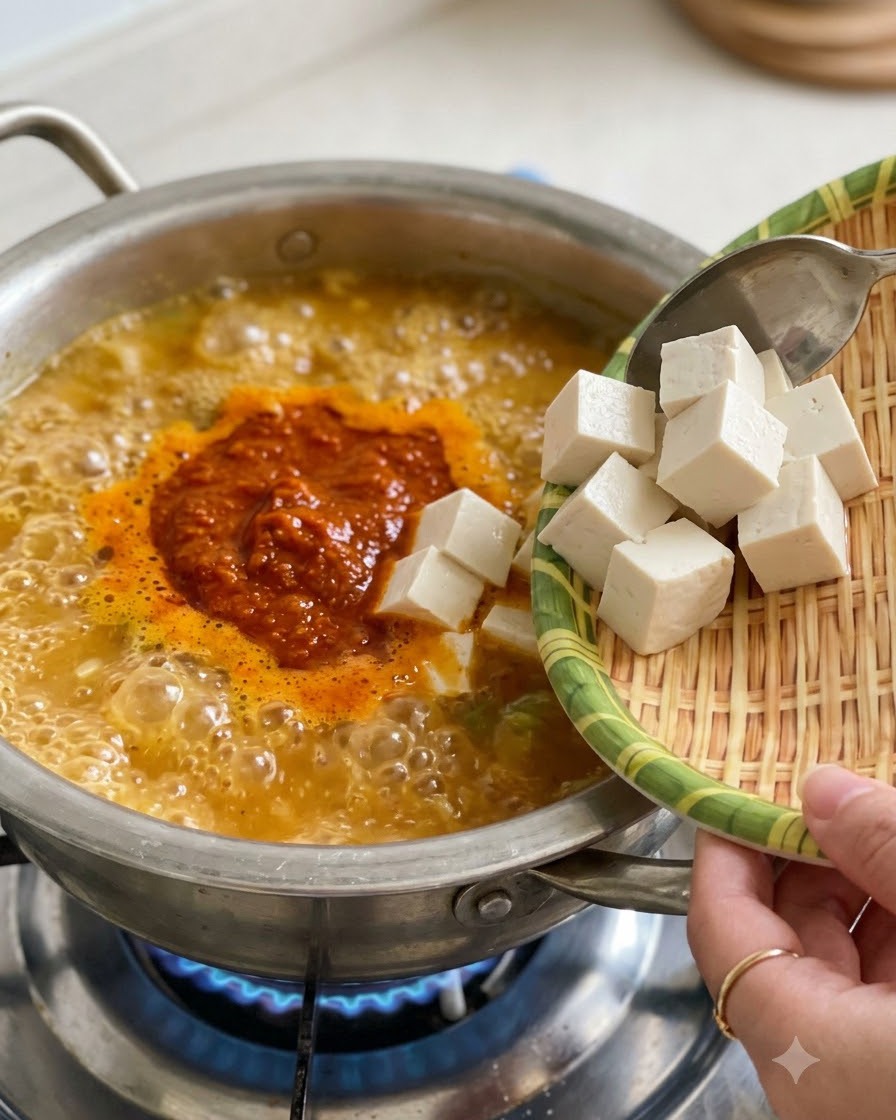
When the hearty vegetables, especially the potatoes and zucchini, are fully cooked and tender, gently add the cubed tofu. Let the stew simmer for about 10 more minutes until everything is piping hot and the tofu has absorbed the broths flavor. Serve immediately while warm.
Tip: Adding the tofu at the very end prevents it from breaking apart and becoming mushy during the long boiling process.