Classic Korean Doenjang Jjigae (Soybean Paste Stew)
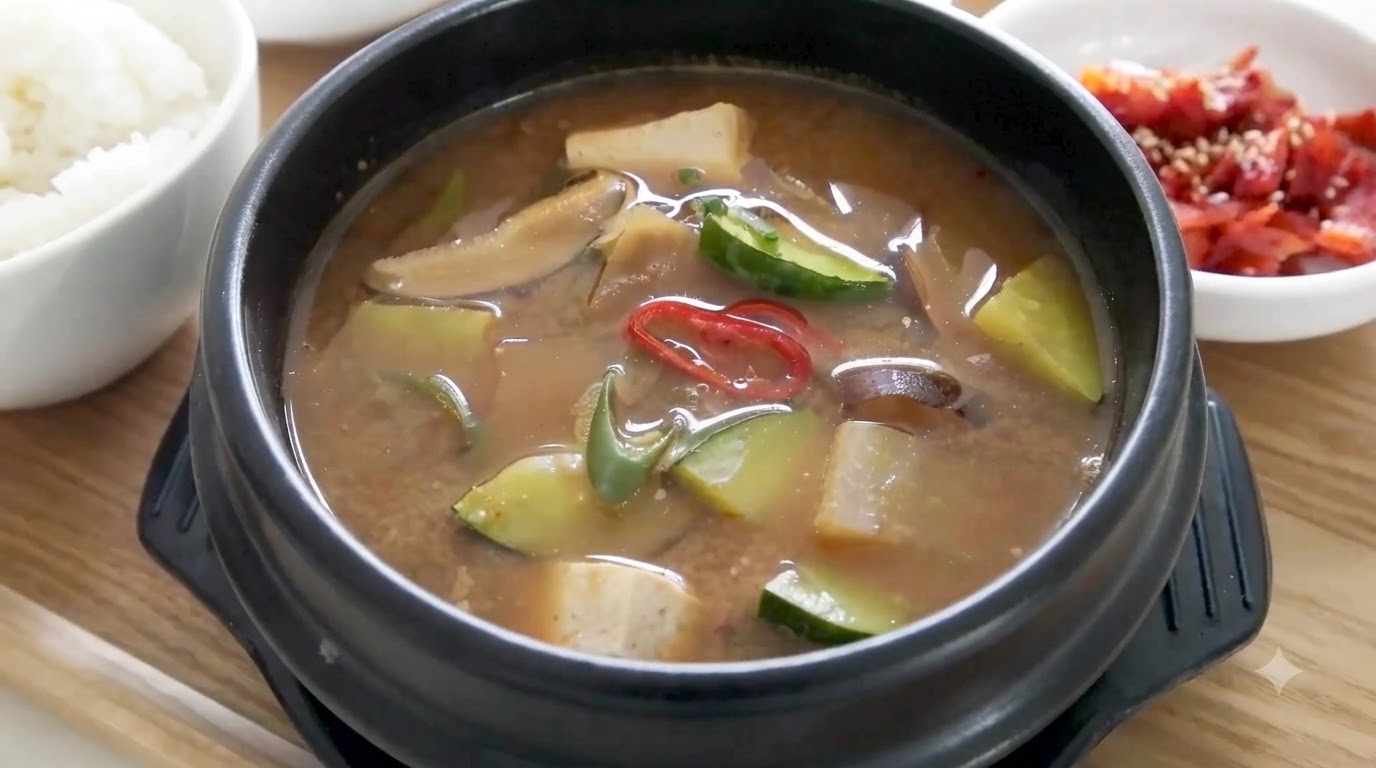
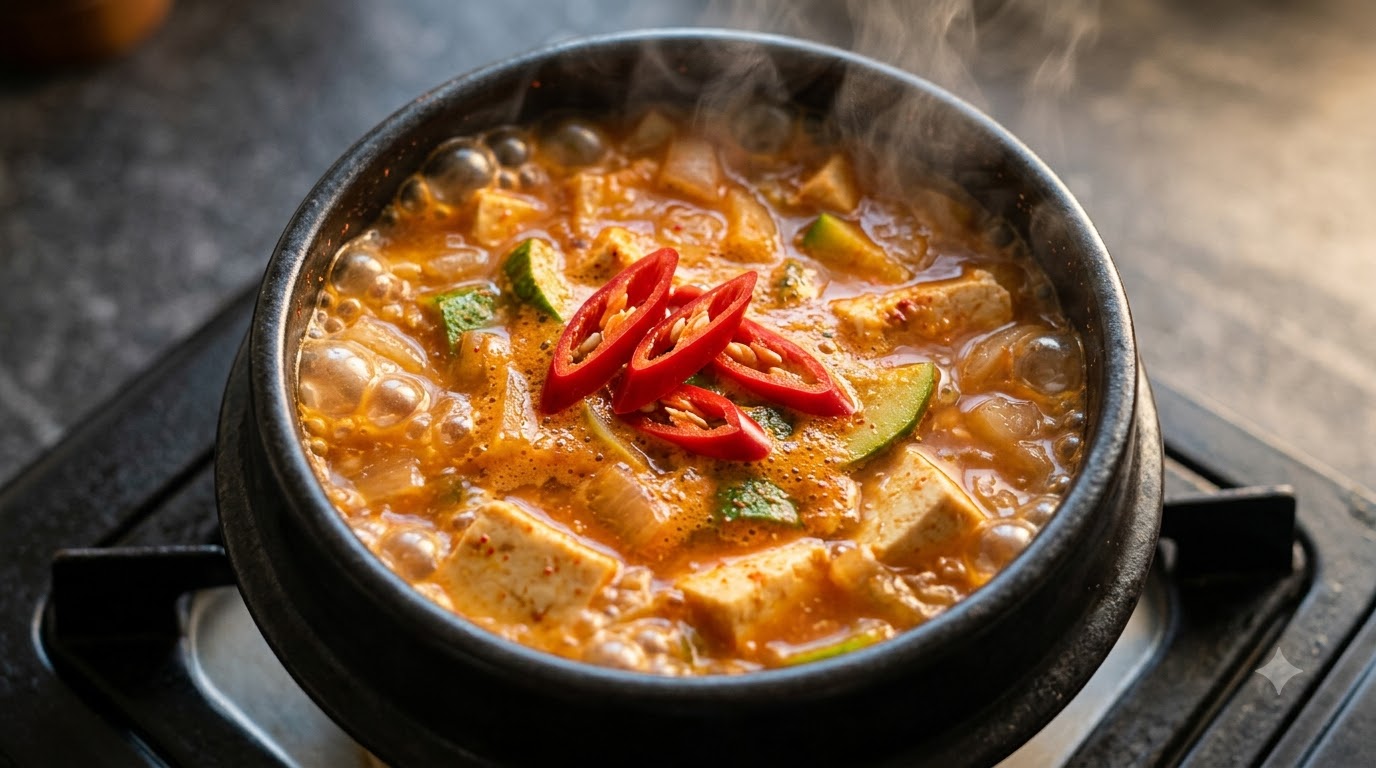
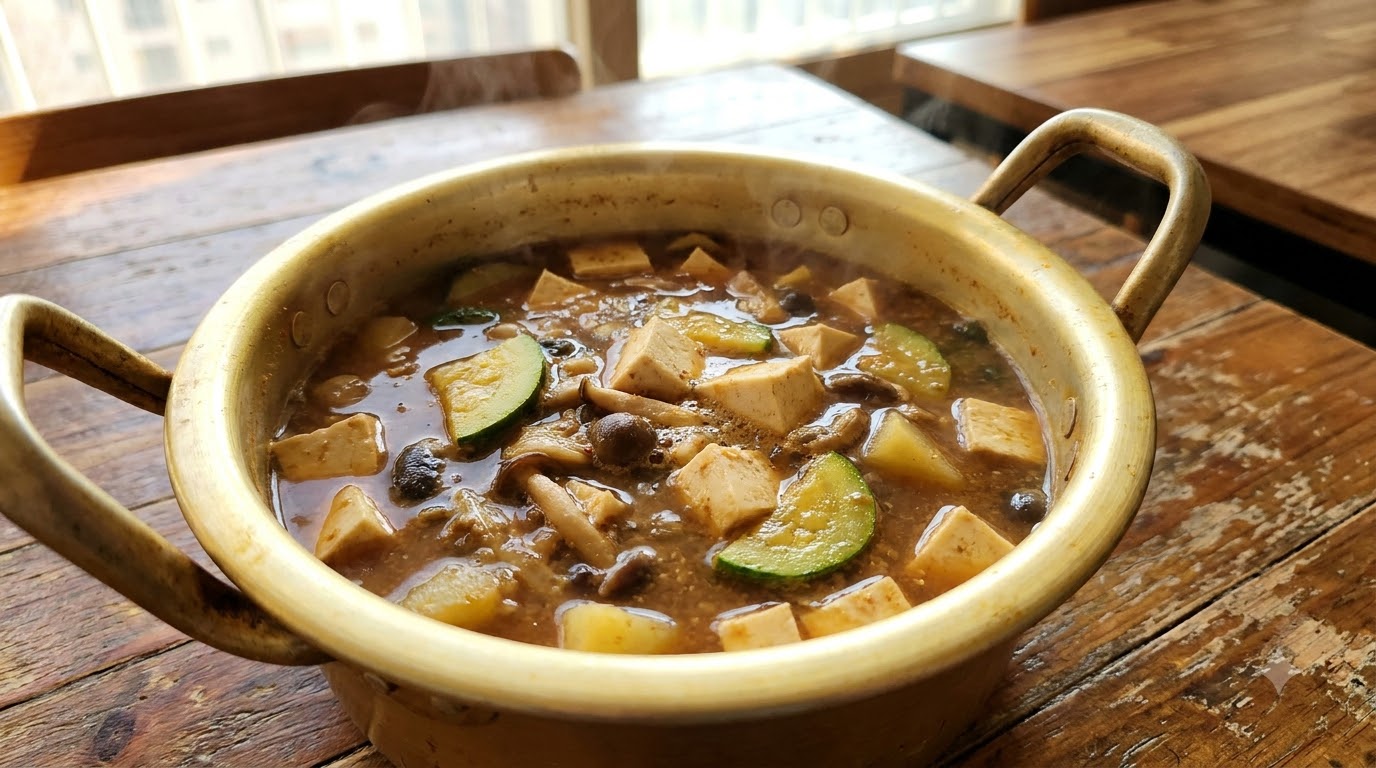
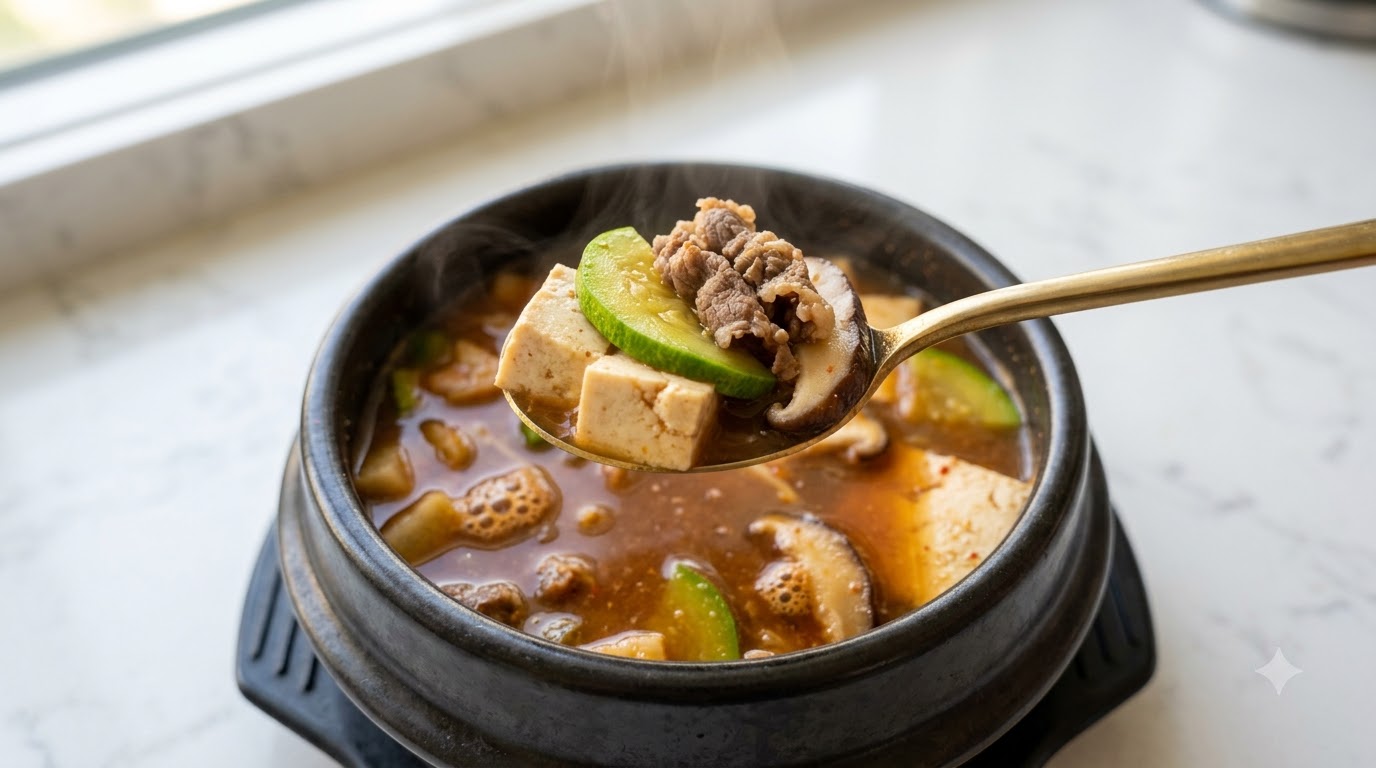
A comforting, umami-rich Korean soybean paste stew packed with tender beef, silken tofu, and fresh vegetables, all simmered to perfection in a traditional clay pot.
Doenjang Jjigae is a quintessential Korean comfort food, frequently enjoyed on rainy days or as a warming daily staple. The earthy, deep flavors of fermented soybean paste create a robust broth that perfectly unites the hearty potatoes, delicate mushrooms, and savory beef.
Ingredients
- 1 tbsp Korean soybean paste (doenjang)
- 400 ml clear water
- 1/2 potato
- 2 shiitake mushrooms
- 1/4 onion
- 1/2 block tofu
- 1/4 zucchini
- 1/2 bunch enoki mushrooms
- 100 g sliced beef rolls
- 1 tsp minced garlic
- 1 tsp Korean chili powder (gochugaru)
- 1/2 tsp beef powder (dashida)
- to taste green and red chili peppers
Instructions
- 1Add soybean paste
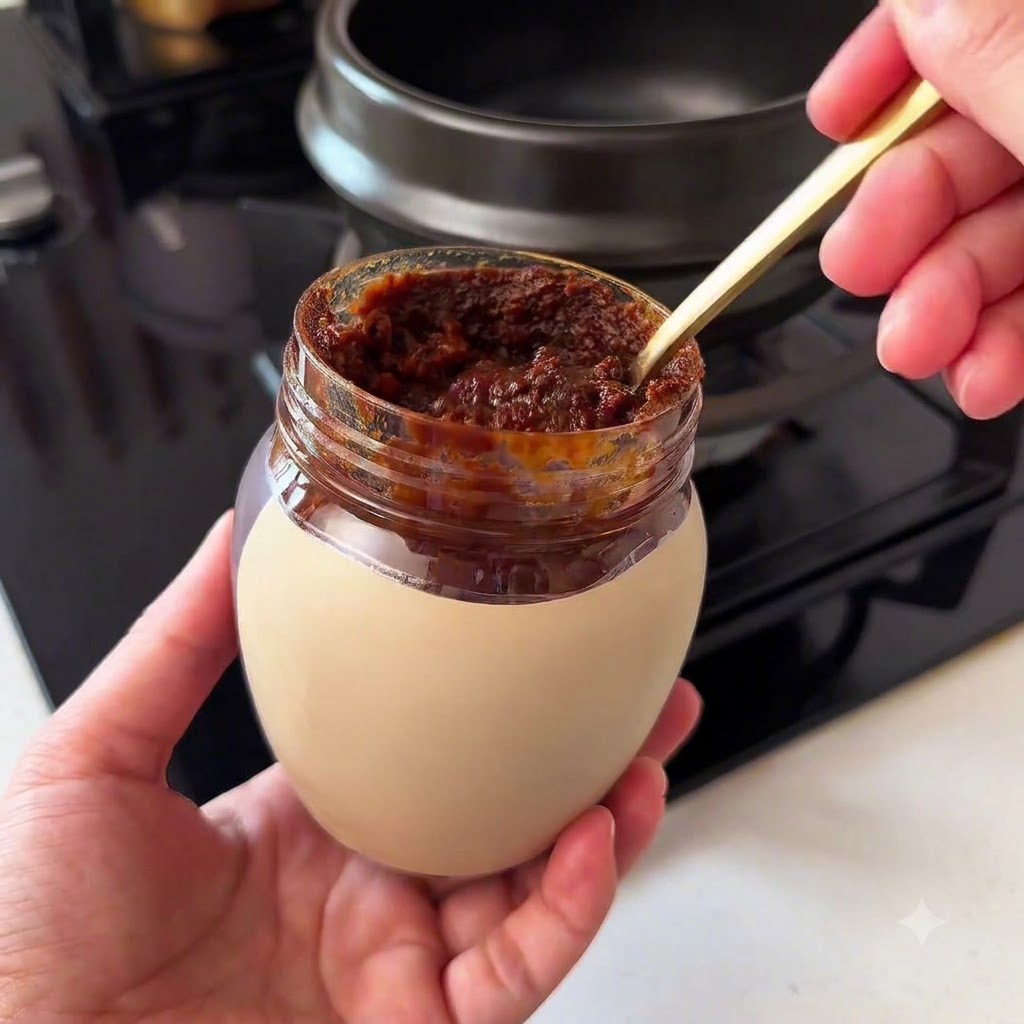
Add one spoonful of soybean paste into a black ceramic pot. This forms the rich base flavor for the soybean soup.
Tip: Ensure the ceramic pot is clean and dry before adding the paste. - 2Pour water into the pot
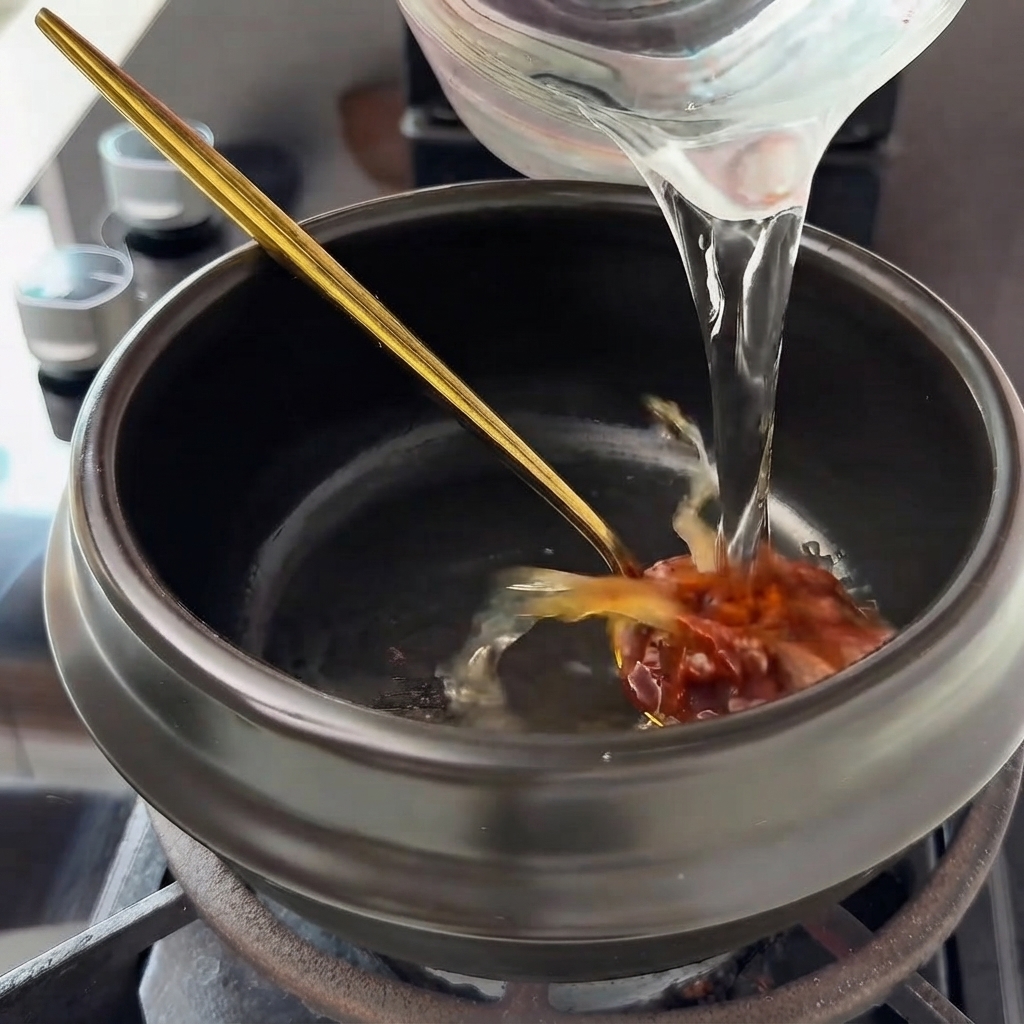
Pour an appropriate amount of clear water from a measuring cup directly into the pot containing the soybean paste.
Tip: Pour the water slowly to avoid splashing the paste onto the sides of the pot. - 3Dissolve the soybean paste
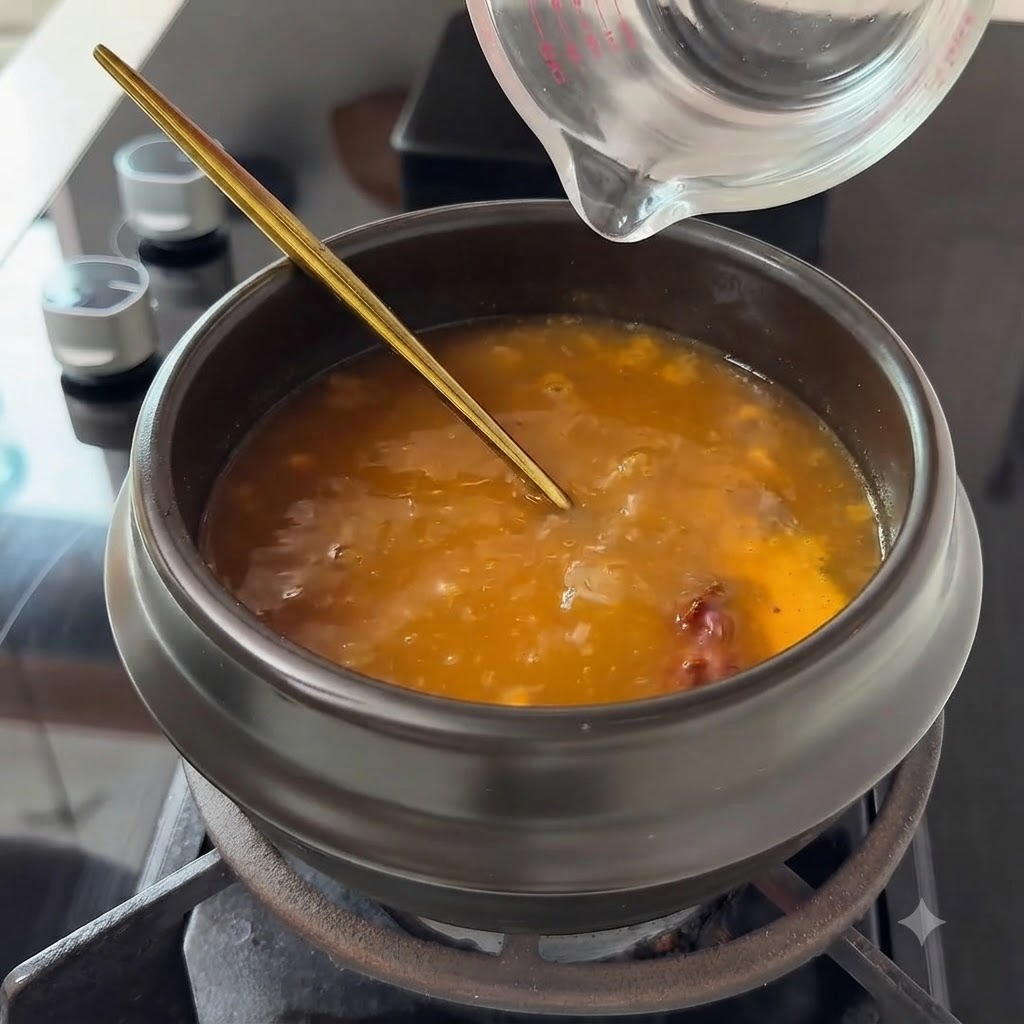
Use chopsticks to stir and thoroughly dissolve the soybean paste into the water, creating a uniform broth base.
Tip: Stir continuously until no lumps of paste remain in the liquid. - 4Add potatoes and shiitake mushrooms
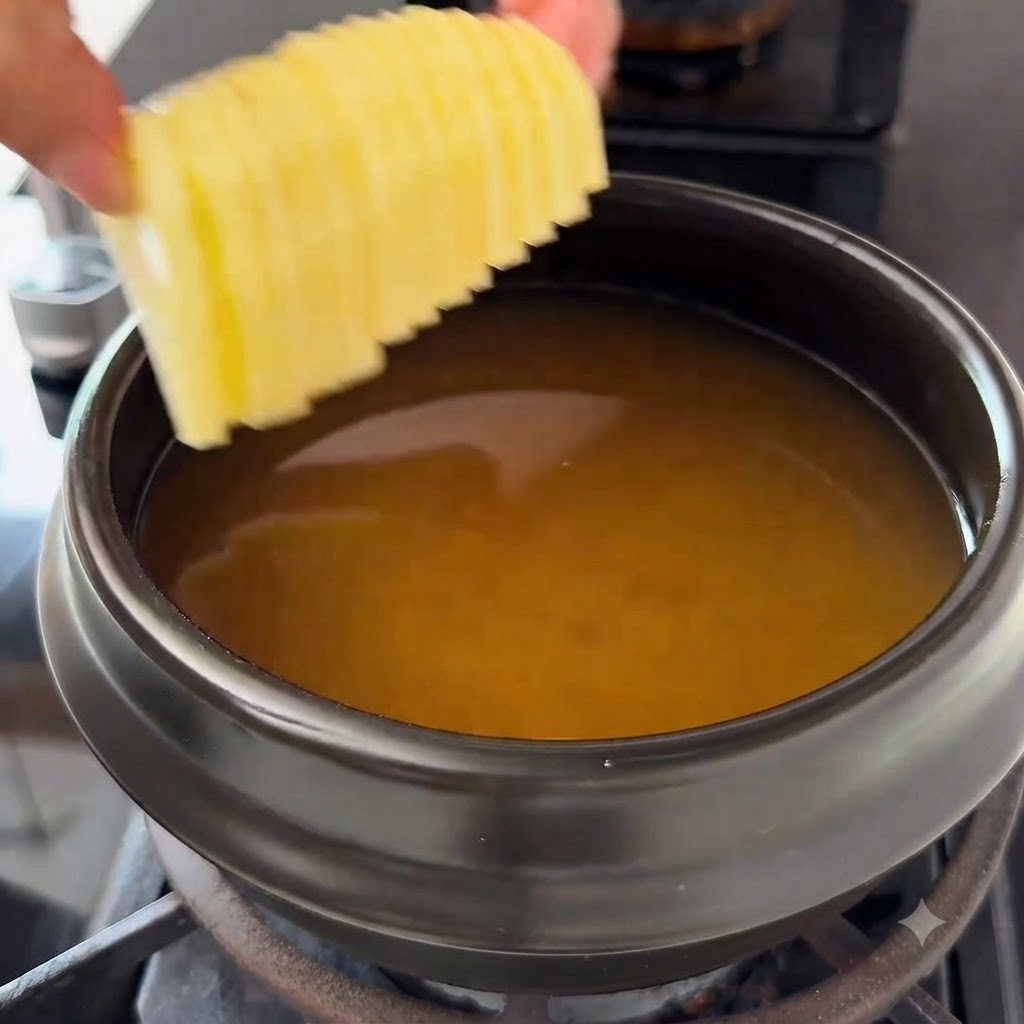
Place the sliced potatoes and shiitake mushrooms into the pot containing the dissolved soybean paste broth.
Tip: Add ingredients that take longer to cook first. - 5Add diced onions
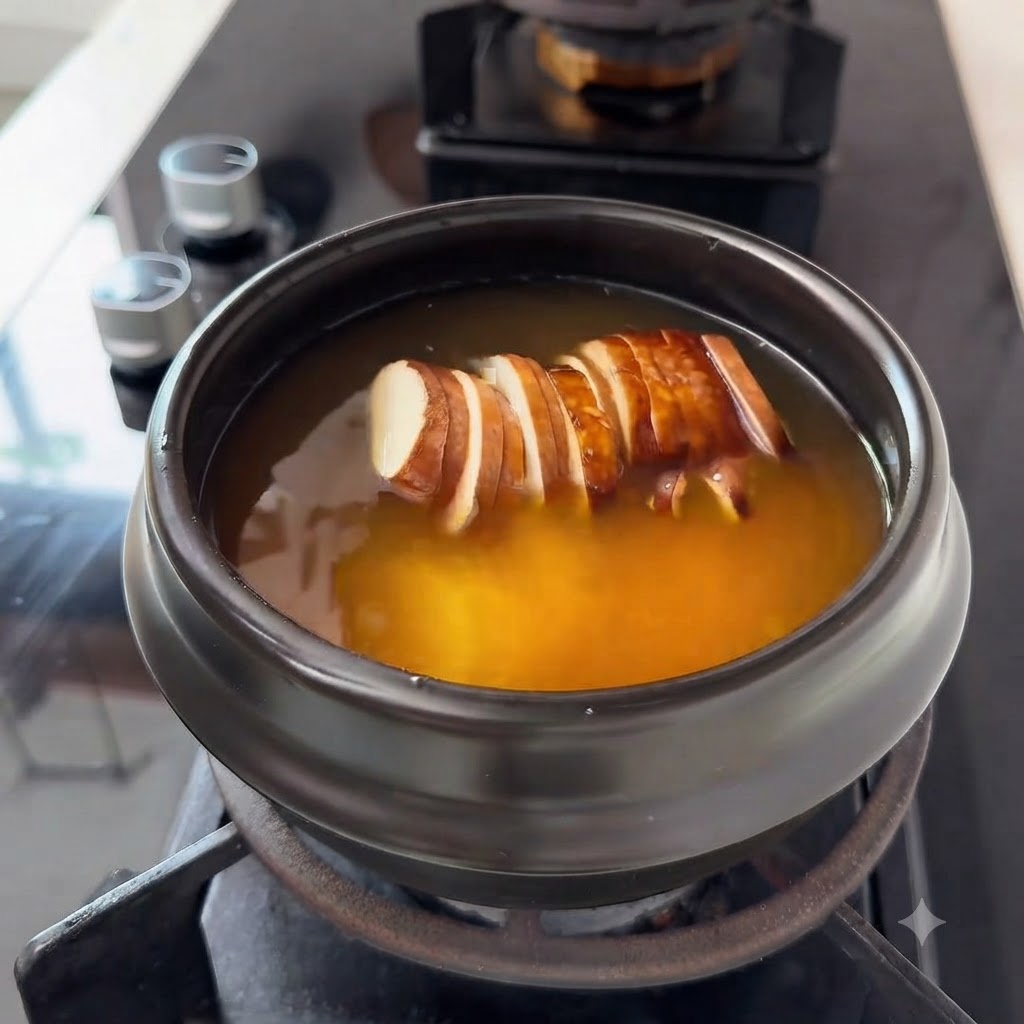
Add diced onions into the pot along with the potatoes and shiitake mushrooms.
- 6Add tofu, zucchini, and enoki mushrooms
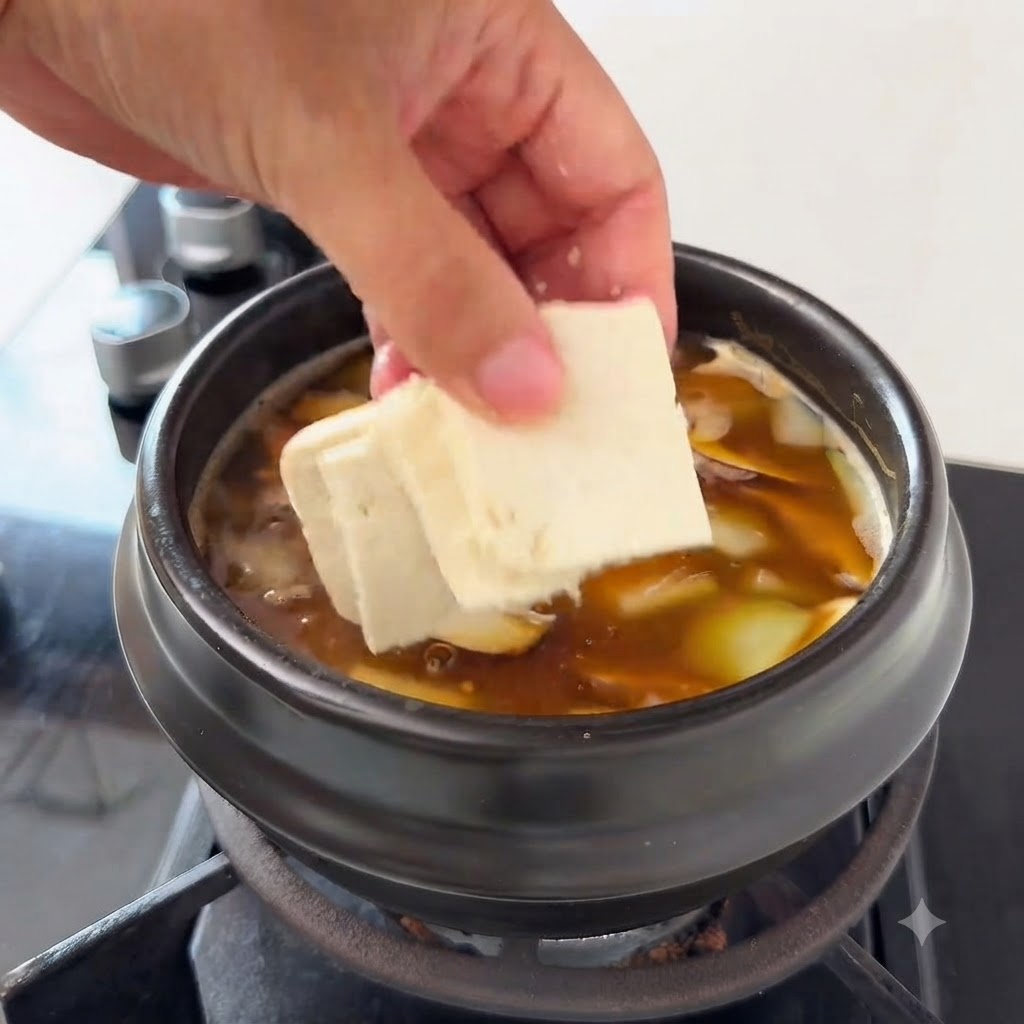
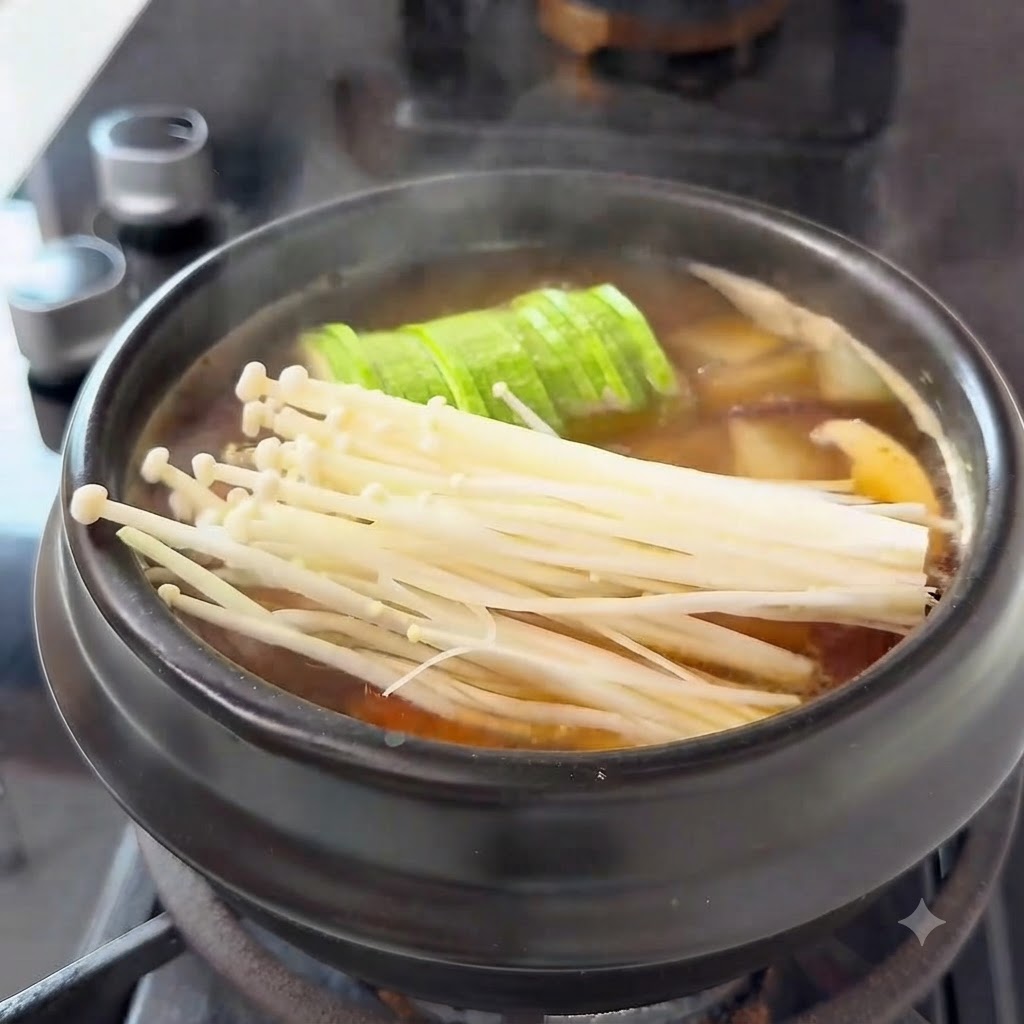
After simmering the initial hard ingredients, add pieces of tofu, zucchini slices, and enoki mushrooms to the soup.
Tip: Add these ingredients that cook easily after the harder components have cooked for a while. - 7Add sliced beef rolls
Place sliced beef rolls on top of the vegetables and ingredients in the pot.
- 8Season with garlic, chili powder, and beef powder
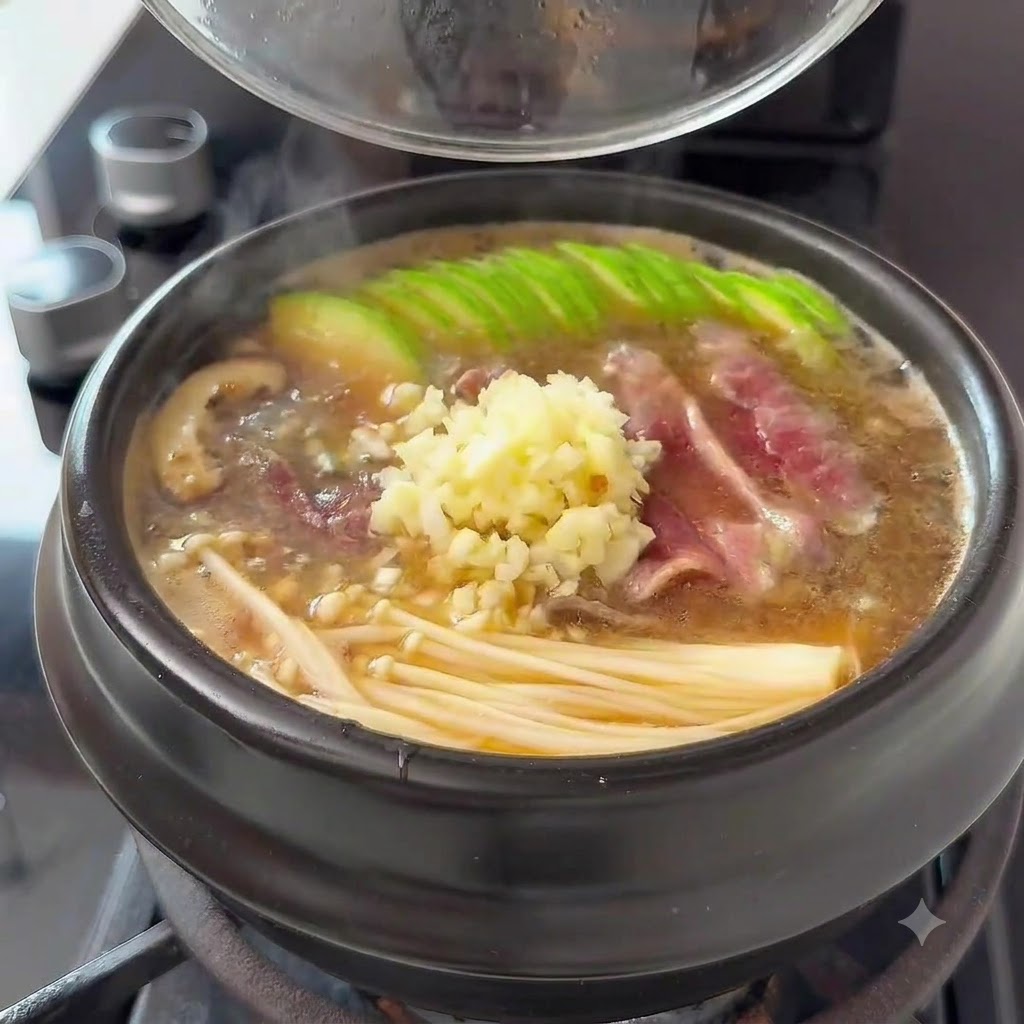
Add minced garlic, chili powder, and beef powder into the boiling pot to enhance the flavor of the soup.
- 9Add green and red chili peppers
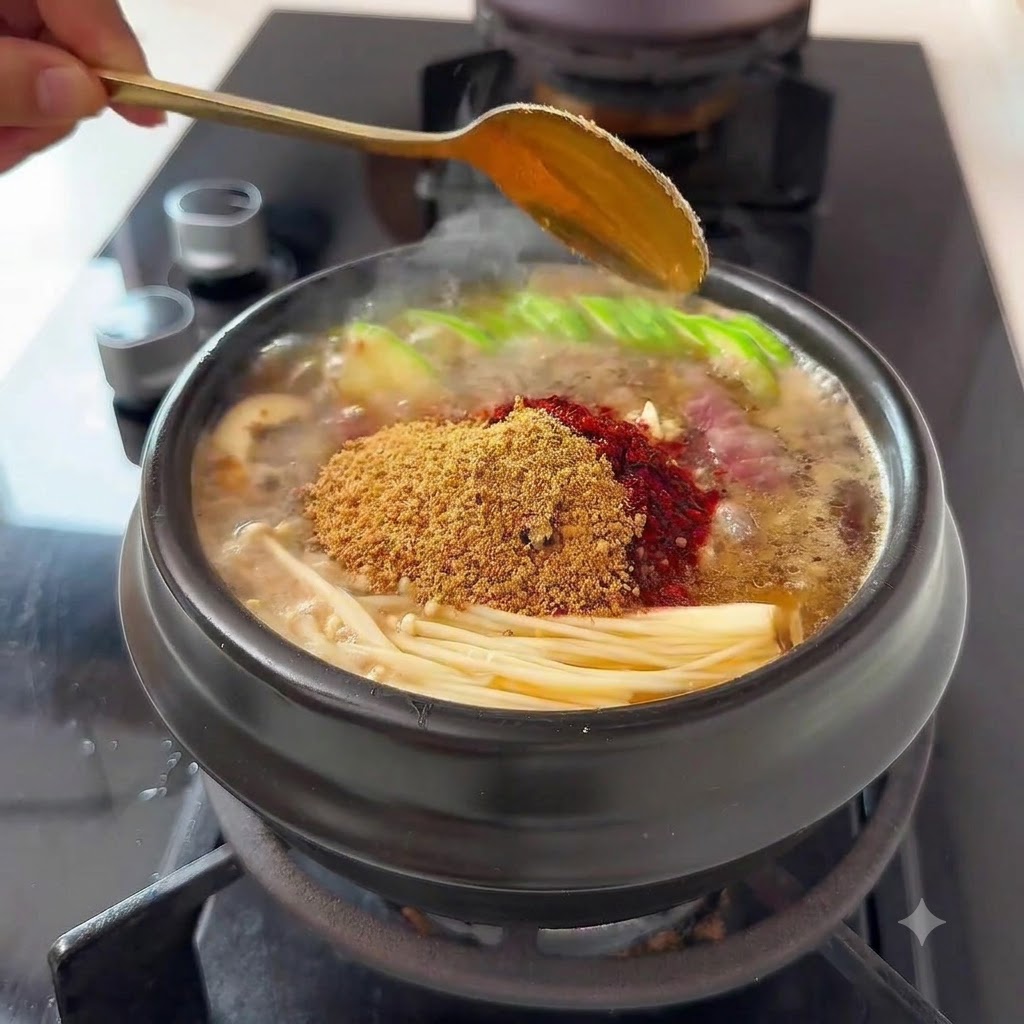
Add sliced green and red chili peppers into the simmering stew, then simmer on low heat for 3 minutes.
Tip: Simmer on low heat to let all the flavors blend together completely. - 10Simmer and stir the stew
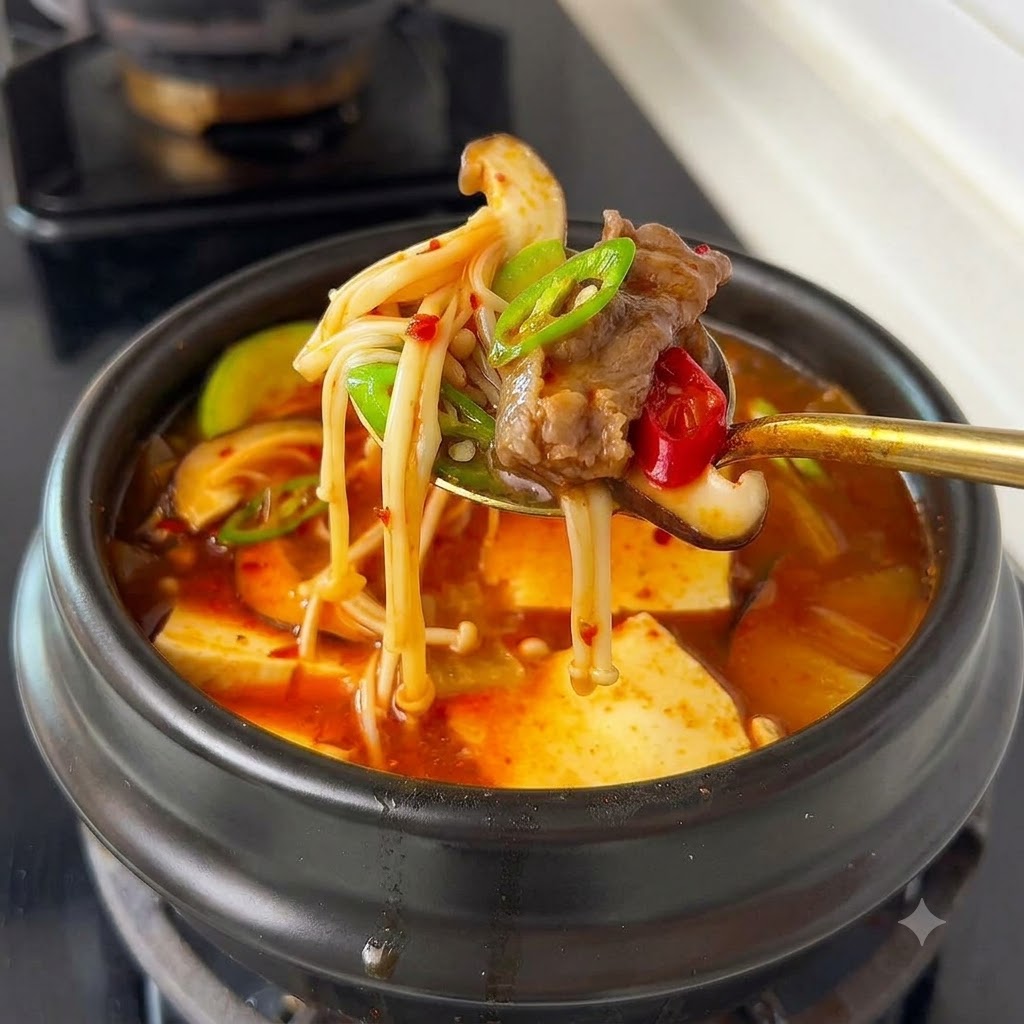
Stir the stew gently on low heat to allow the ingredients to absorb the rich flavors. Simmering slowly ensures the broth thickens harmoniously and the beef becomes tender.
Tip: Keeping the heat low prevents the bottom from burning and releases the full depth of the soybean paste.