Spicy Korean Pork Spine Soup (Gamjatang)
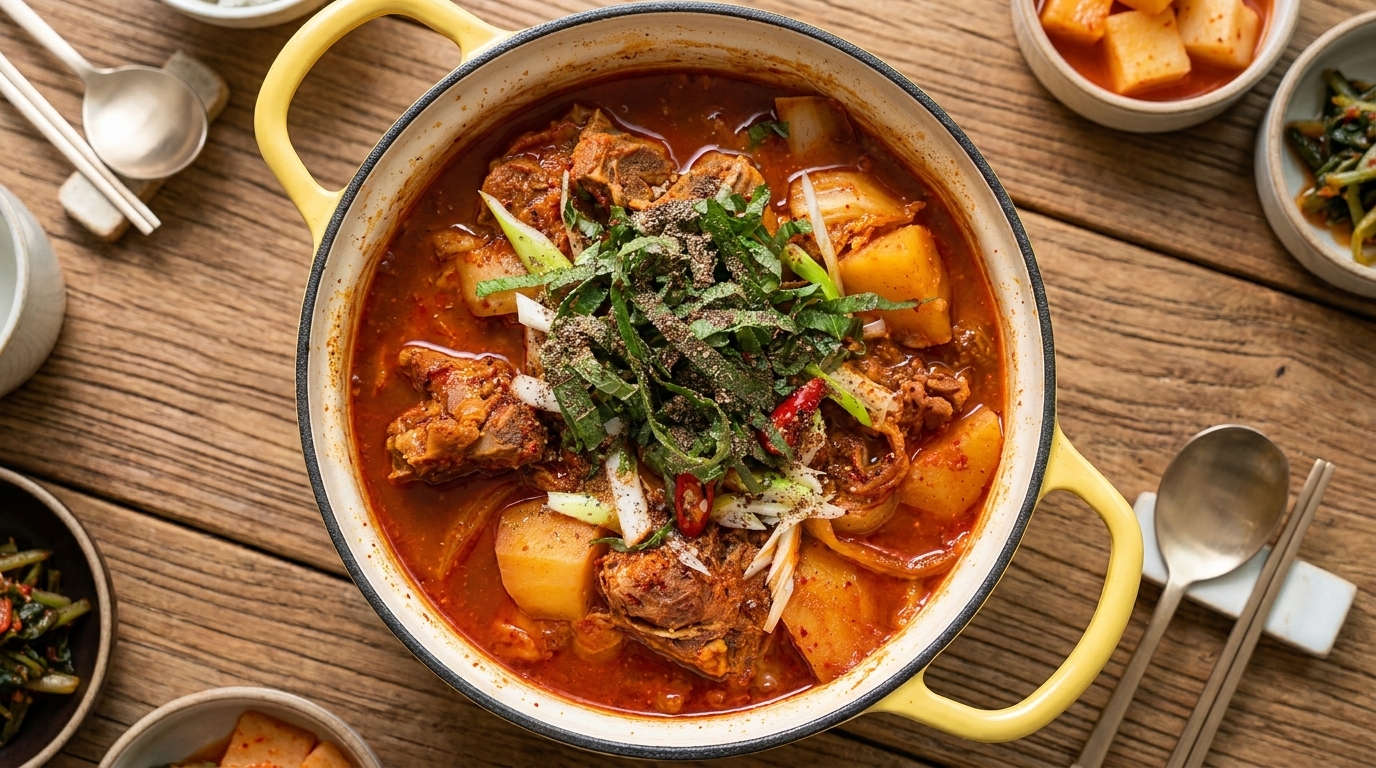
A rich and fiery Korean pork spine soup featuring tender meat, hearty potatoes, and flavorful napa cabbage infused with aromatic soybean paste and chili paste.
Gamjatang is a deeply comforting Korean soup known for its rich broth and tender pork spine meat. This version combines traditional aromatics with a spiced cabbage and potato mixture, creating a deeply satisfying meal that rivals any restaurant dish.
Ingredients
- 800 g pork spine
- 2 spoons Korean soybean paste
- 1/2 onion
- 4 cloves garlic
- 3 slices ginger
- 2 stalks scallions
- 3 bay leaves
- 300 g napa cabbage
- 2 potatoes
- 1 tbsp cooking wine
- to taste chili powder and chili paste
- to taste Hangzhou chili peppers
- to taste birds eye chillies
- to taste perilla leaves
- to taste perilla powder
Instructions
- 1Blanch the pork spine
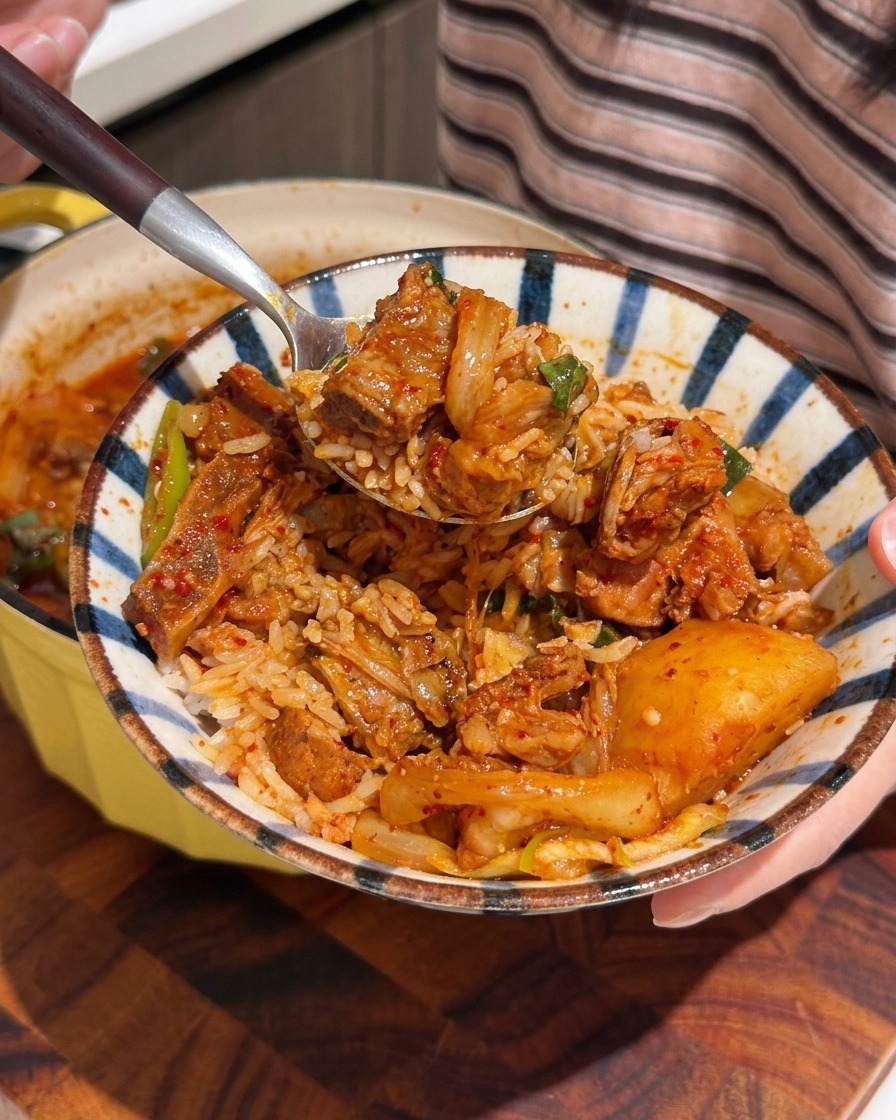
Place 800 grams of pork spine into a pot of cold water. Add scallions, ginger, and a splash of cooking wine to the pot. Bring the water to a boil to blanch the meat, effectively removing impurities.
Tip: Blanching in cold water helps draw out blood and impurities from the bones for a cleaner-tasting soup. - 2Prepare the blanching aromatics
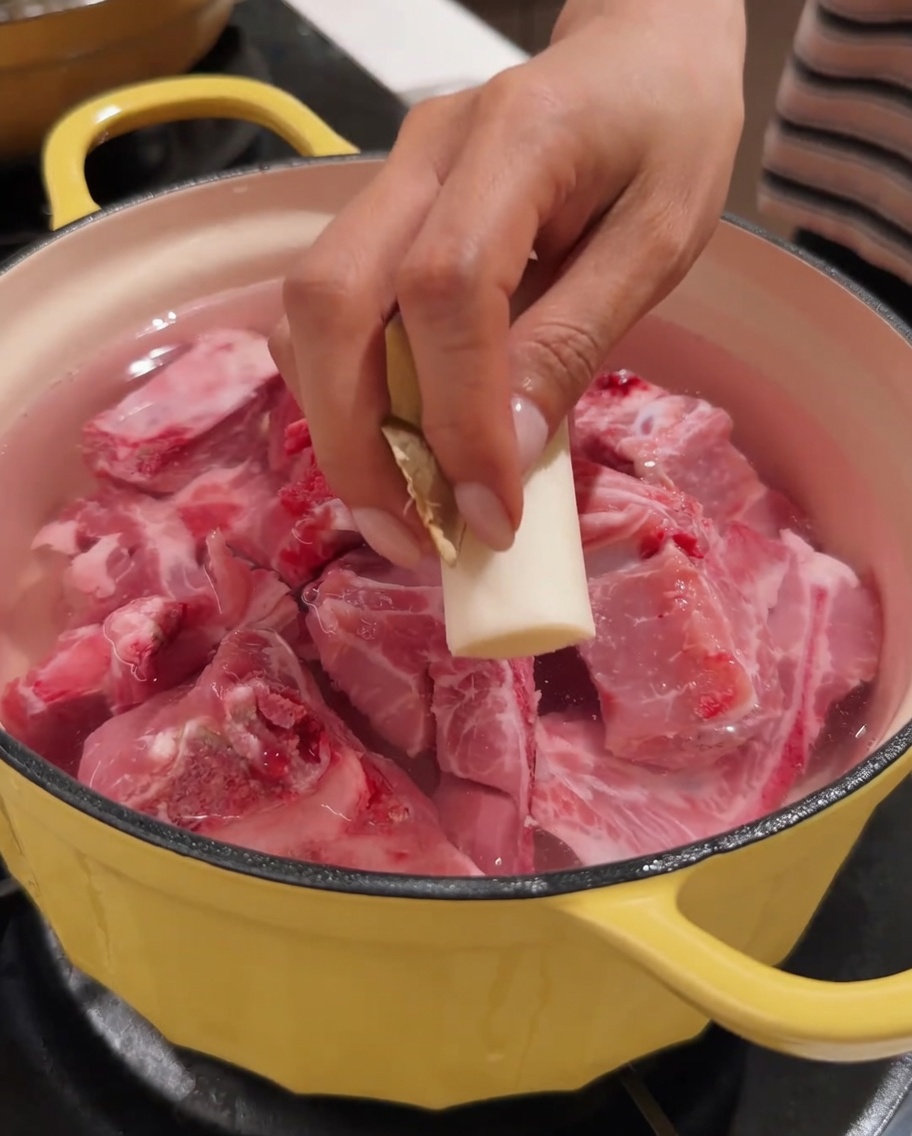
While the pork spine is in the cold water, add fresh scallions, ginger slices, and cooking wine. These aromatics help neutralize any gamey odors during the initial boil.
Tip: Ensure the water covers the pork spine completely before adding the aromatics. - 3Remove and rinse the pork
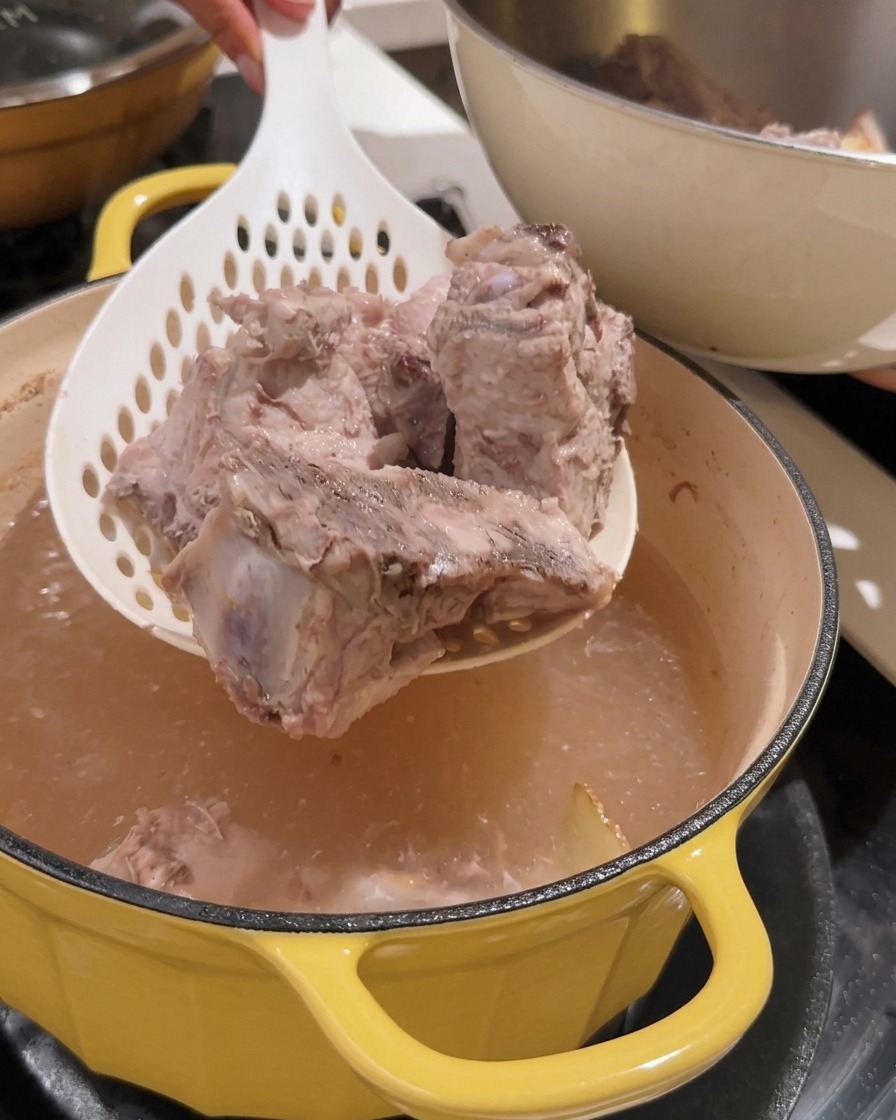
Once the water has reached a boil and the pork has been blanched, use a strainer to remove the pieces from the pot. Rinse the pork spine thoroughly with warm water to remove any remaining scum.
Tip: Always use warm water for rinsing so the meat doesnt contract or toughen up due to a sudden temperature change. - 4Prepare the braising pot
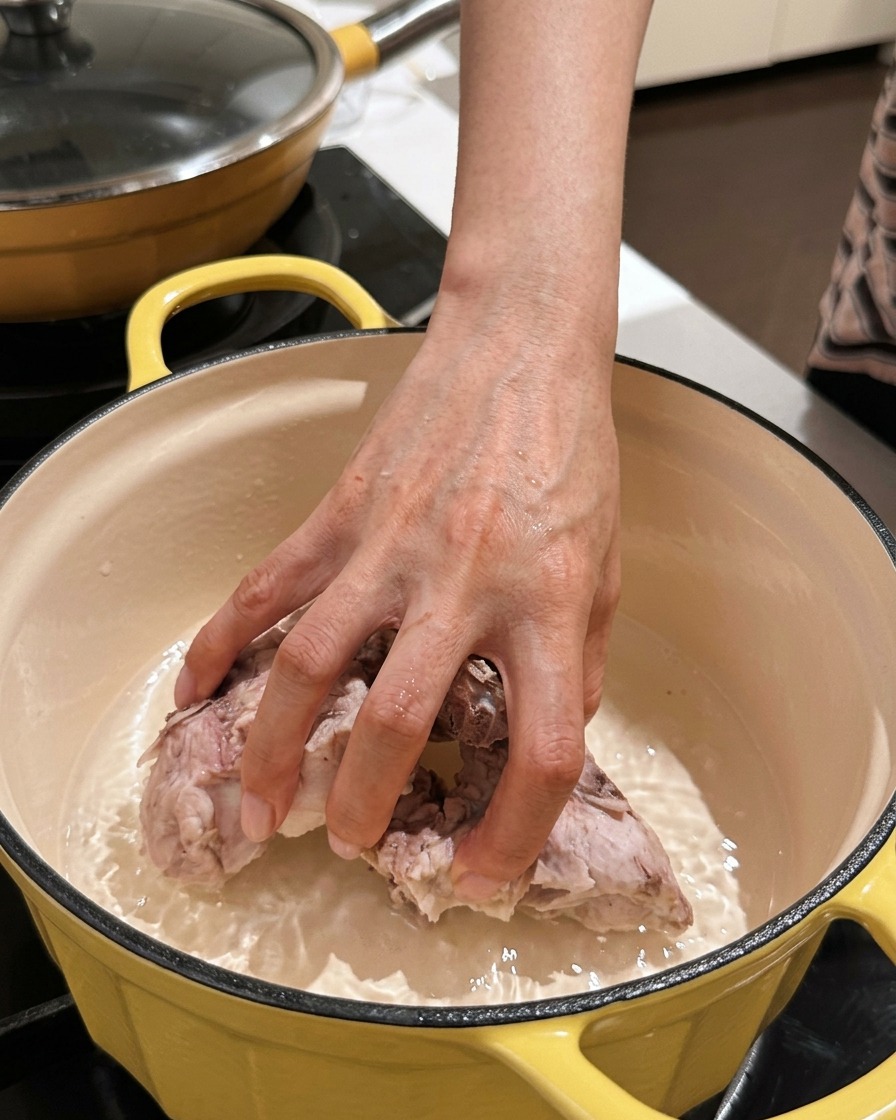
After rinsing the pork spine clean, place the pieces back into a clean braising pot. This is now ready for the main simmering process.
Tip: Ensure your pot is deep enough to accommodate the spine and the broth ingredients. - 5Add aromatics and seasoning
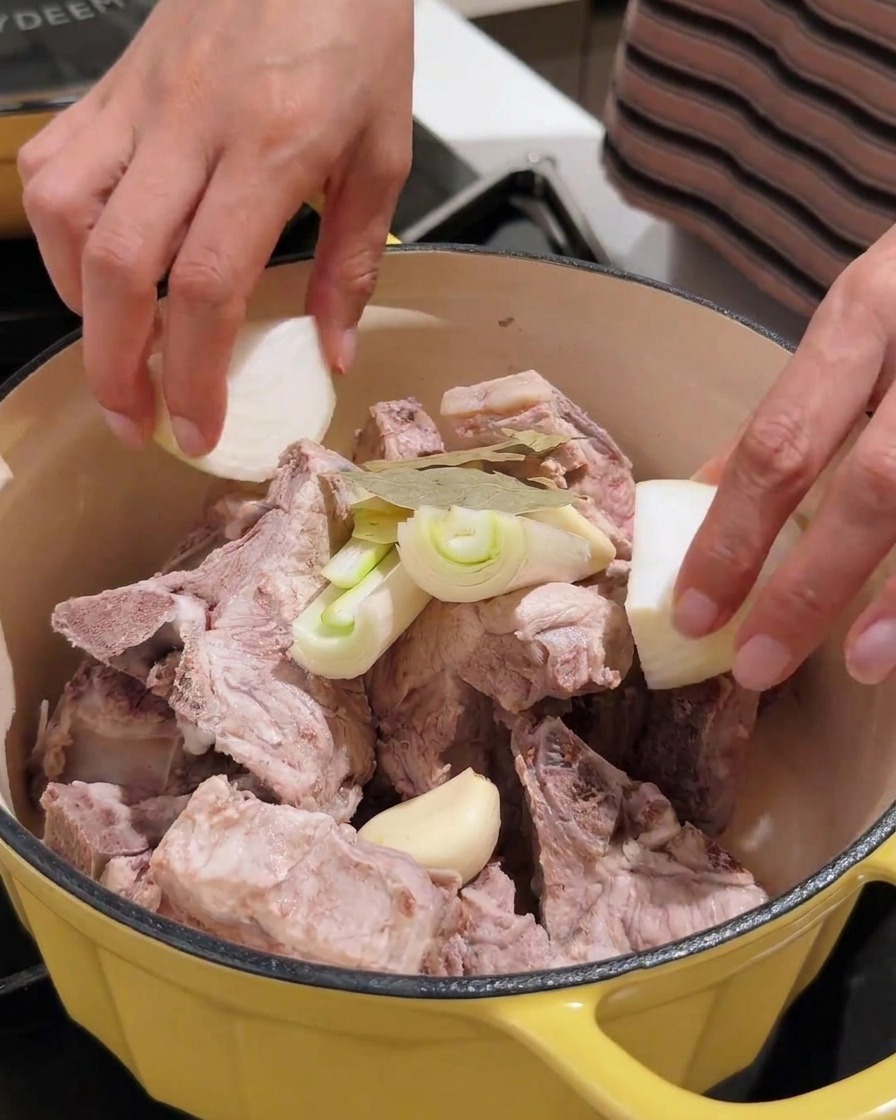
To the pot with the cleaned pork, add garlic cloves, onion sections, ginger slices, bay leaves, and two generous spoons of Korean soybean paste. These ingredients form the foundation of the soups rich flavor.
Tip: The Korean soybean paste provides the essential savory depth for this style of soup. - 6Add water and simmer
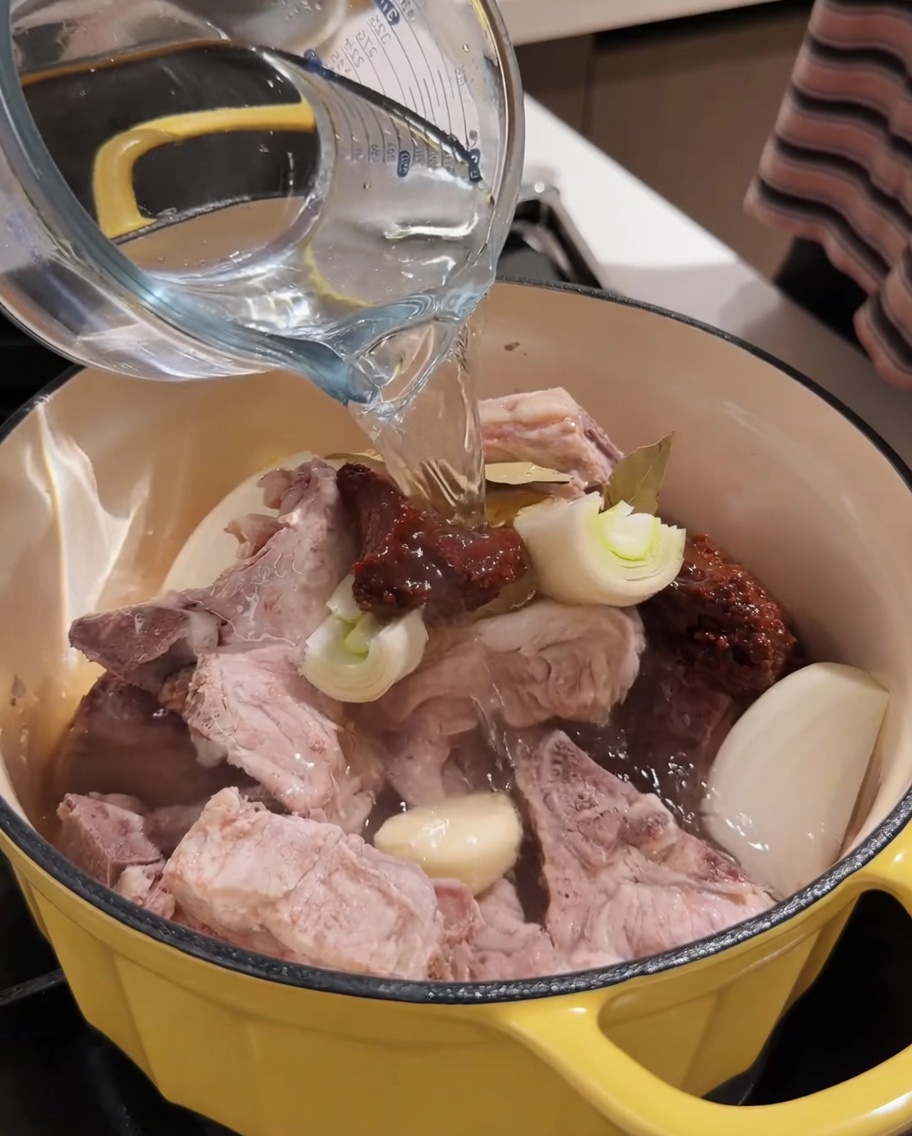
Pour boiling water into the pot until it just covers the pork spine and aromatics. Bring the mixture to a simmer on low heat for 60 to 90 minutes to ensure the meat becomes tender.
Tip: Using boiling water instead of cold water helps maintain the cooking temperature and creates a more flavorful broth. - 7Blanch the fresh napa cabbage
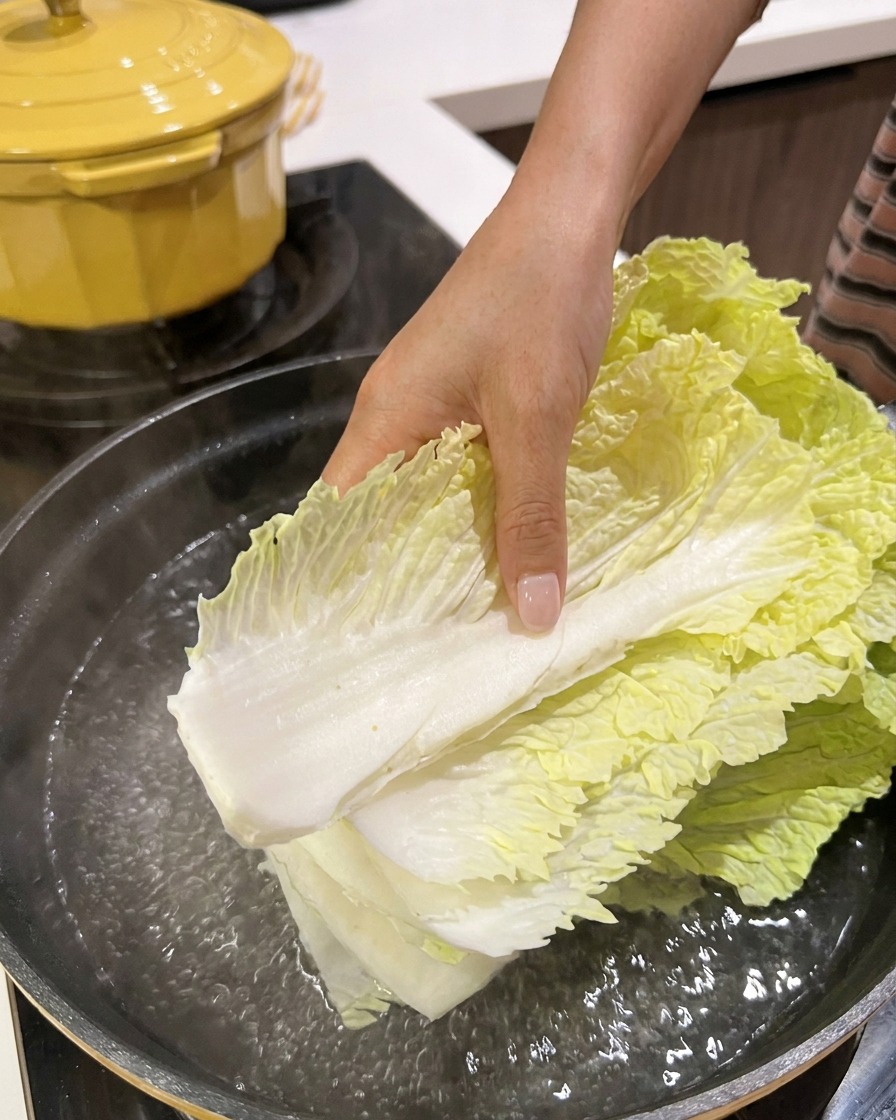
Take fresh napa cabbage and place it into a pot of boiling water, blanching it until fully cooked. This softens the leaves so they can effectively absorb the seasonings and flavors during the braising process.
Tip: If dried napa cabbage is unavailable, fresh napa cabbage is a great alternative as long as it is thoroughly blanched first. - 8Prepare the seasoning sauce
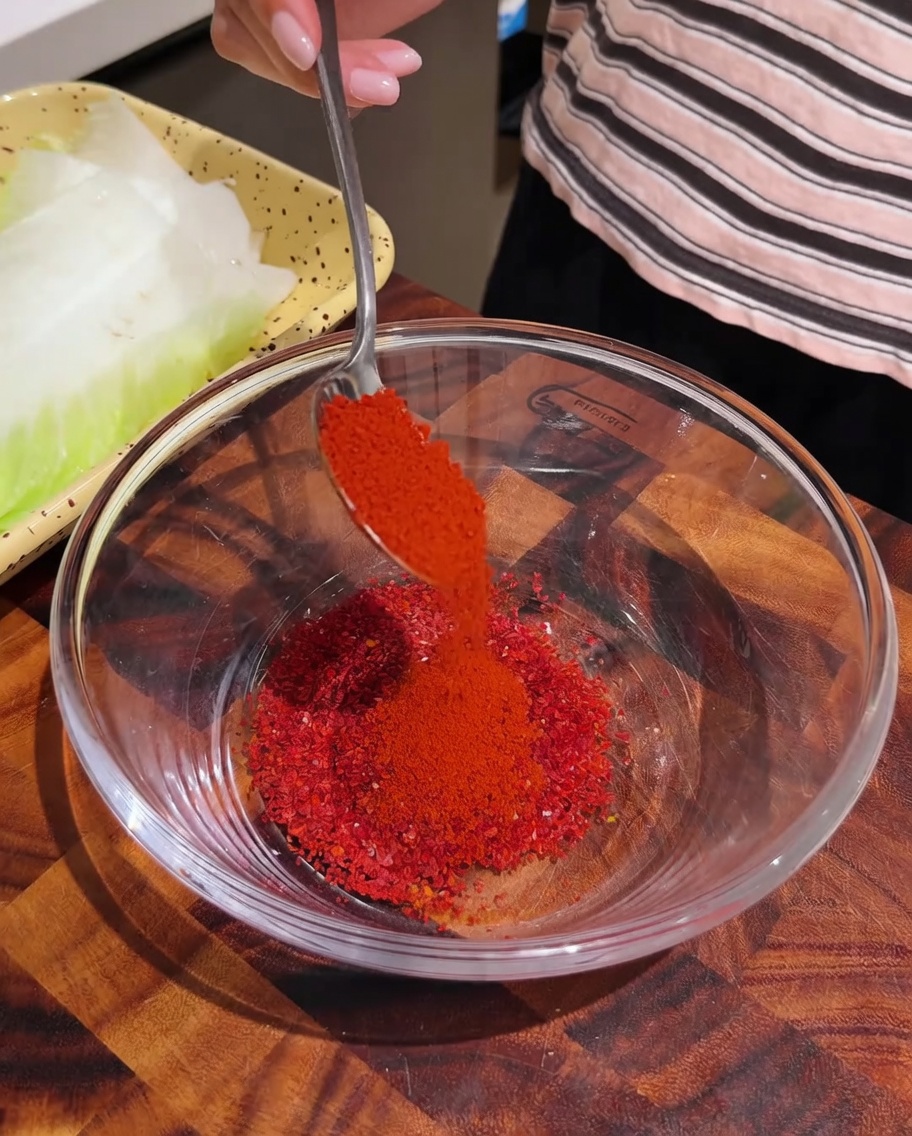
Add various chili powders, chili paste, and the specified seasonings into a clean glass mixing bowl to form the rich base for the napa cabbage and soup.
Tip: Measure out the chili powders carefully to achieve your preferred level of spicy heat. - 9Prepare the cabbage
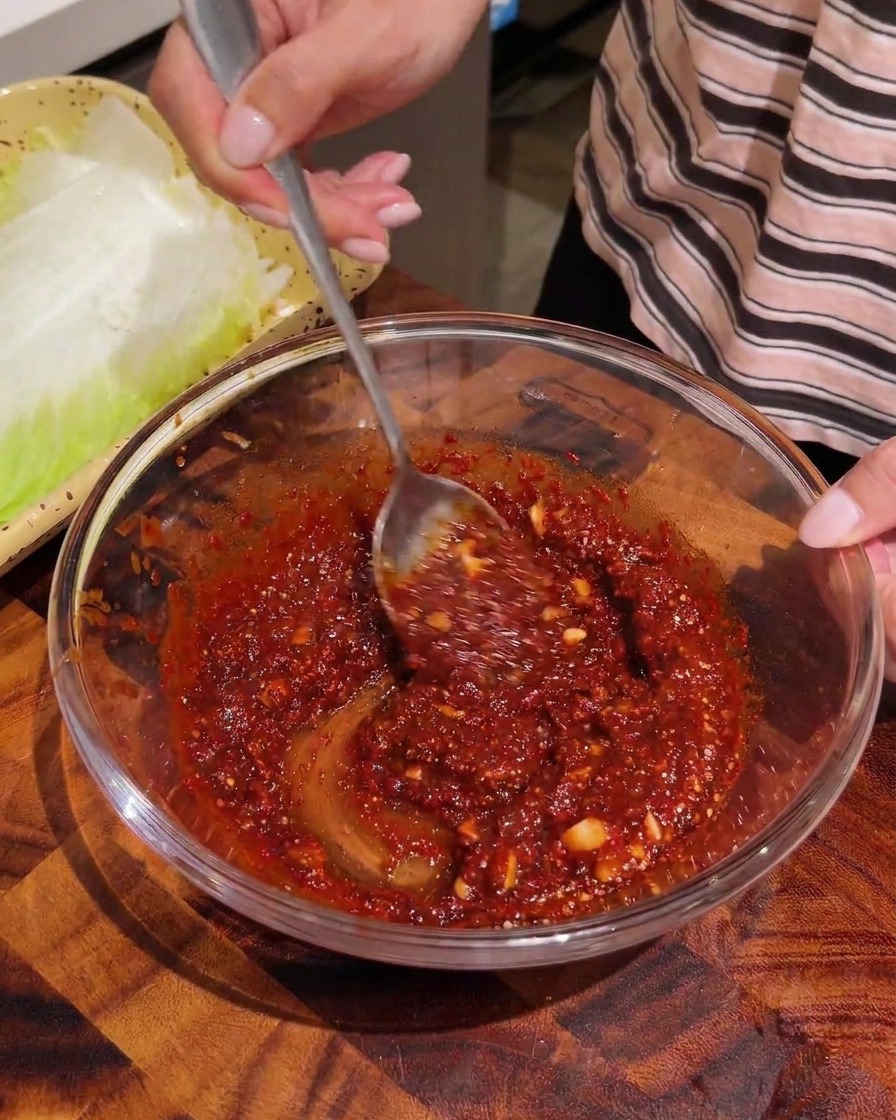
Take the cooked napa cabbage and tear it into manageable strips. In a mixing bowl, combine one-third of your prepared seasoning sauce with the cabbage, mixing well so the flavors can marinate into the leaves while the pork continues to cook.
Tip: Tearing the cabbage by hand instead of cutting it with a knife helps the leaves better absorb the savory sauce. - 10Marinate the cabbage strips
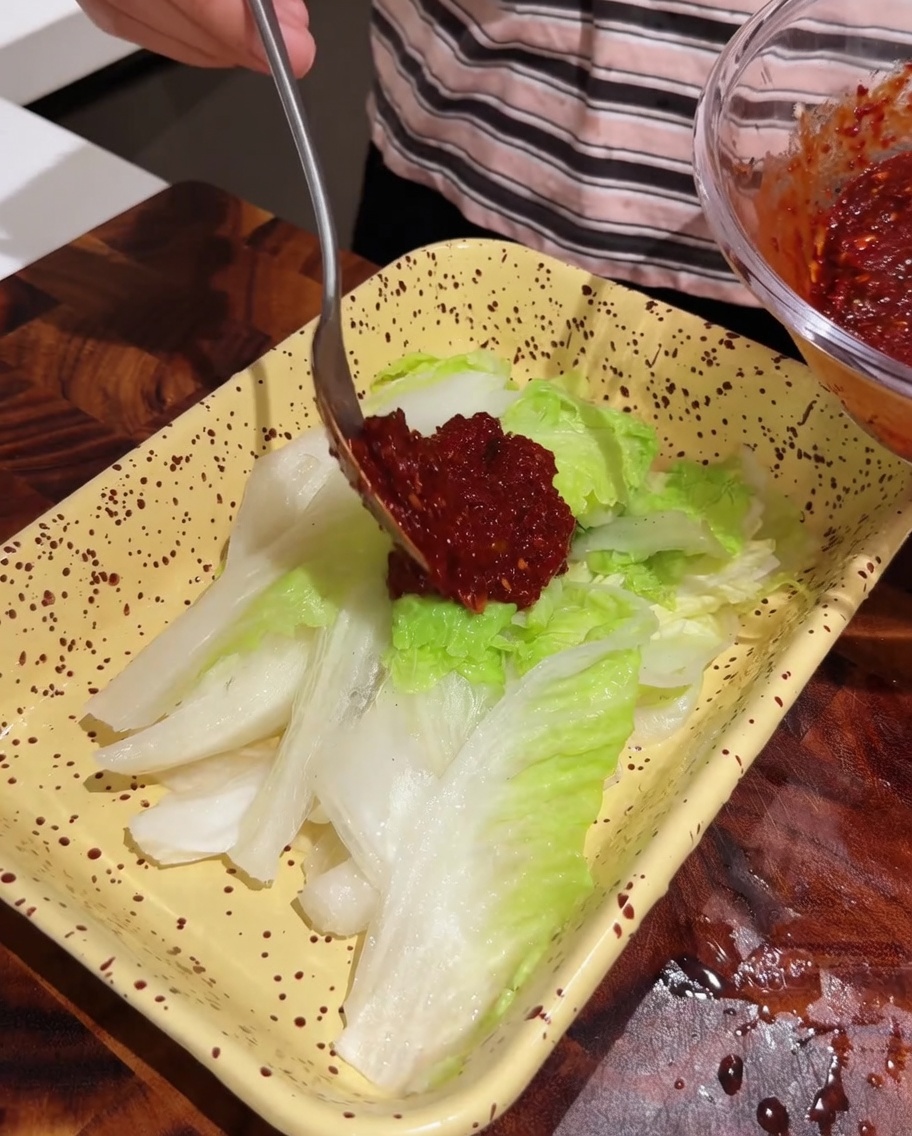
Take one-third of the prepared seasoning sauce and apply it evenly onto the torn cabbage strips. Rub the sauce thoroughly into the leaves and let it marinate for a while to absorb the flavor.
Tip: Reserving two-thirds of the sauce ensures you have enough to mix directly into the main soup pot later. - 11Add marinated cabbage to the pork ribs
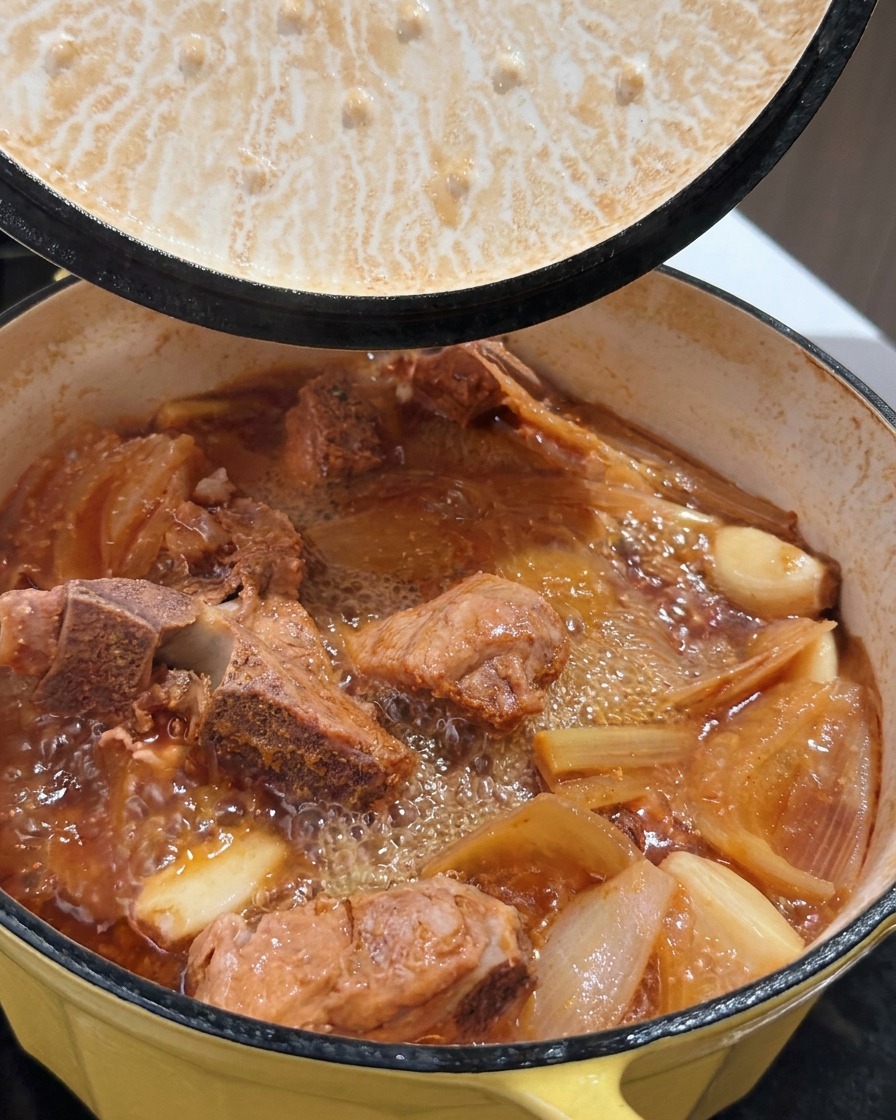
Once the pork spine has simmered and cooked thoroughly, open the pot and add the marinated napa cabbage along with the remaining sauce to infuse rich flavors into the meat.
Tip: Ensure the heat is well distributed so the cabbage melds seamlessly with the existing broth. - 12Add potatoes and simmer
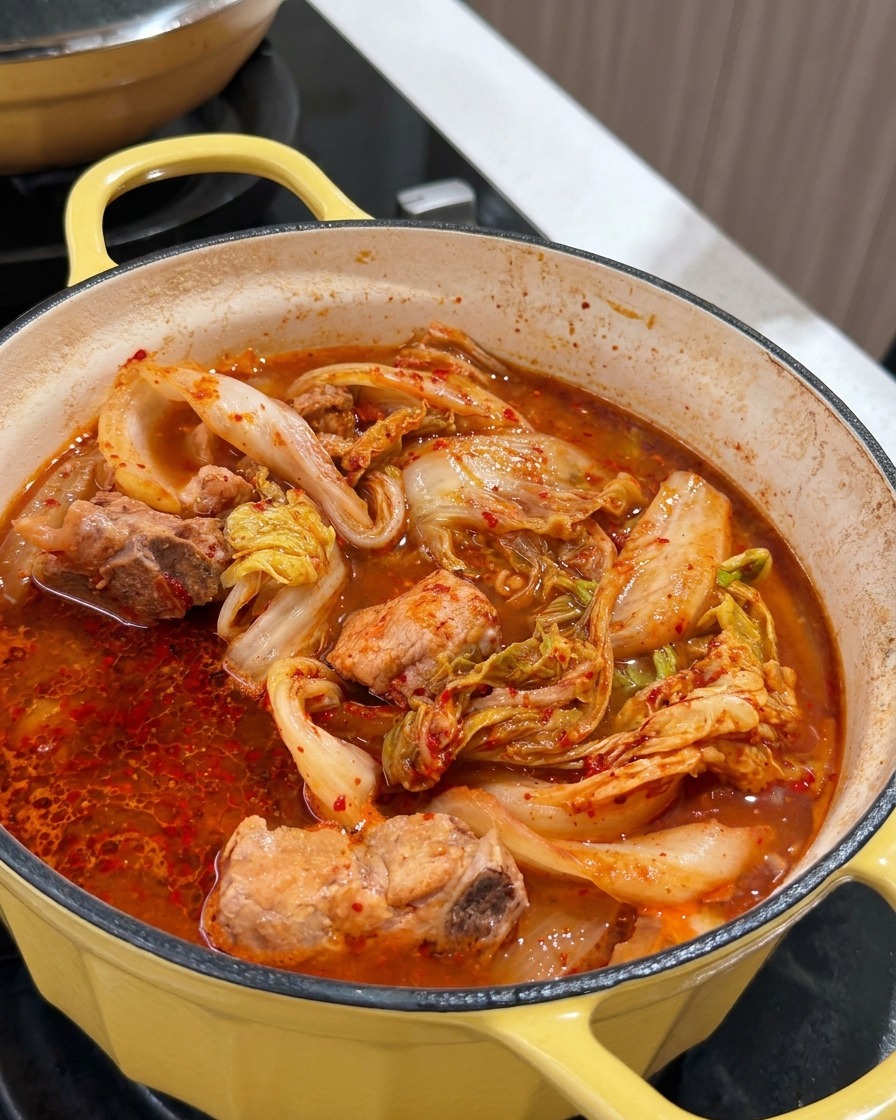
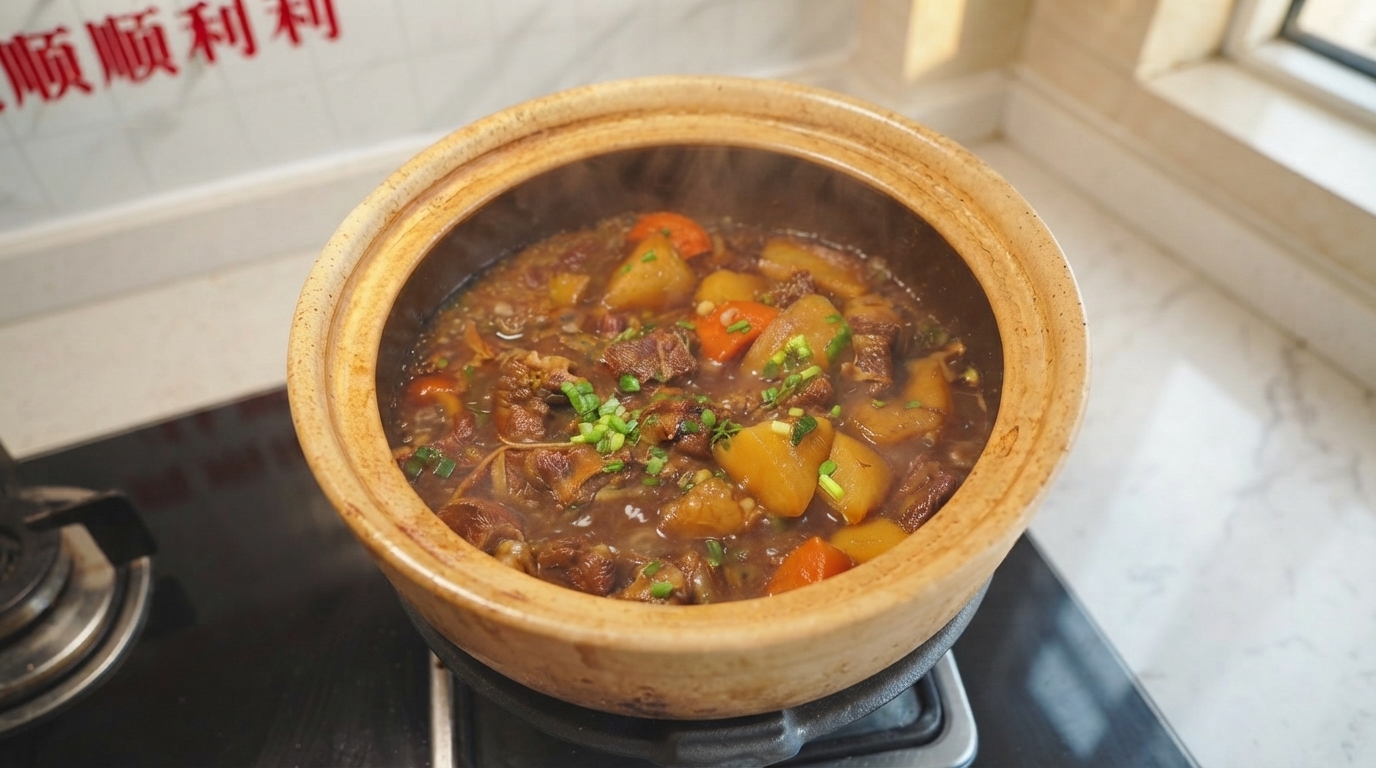
Add potato chunks into the pot along with the cabbage and remaining sauce, then cover and simmer everything together for another half an hour until tender.
Tip: Simmering on low heat allows the potatoes to absorb the spicy broth and become soft and flavorful. - 13Garnish and serve
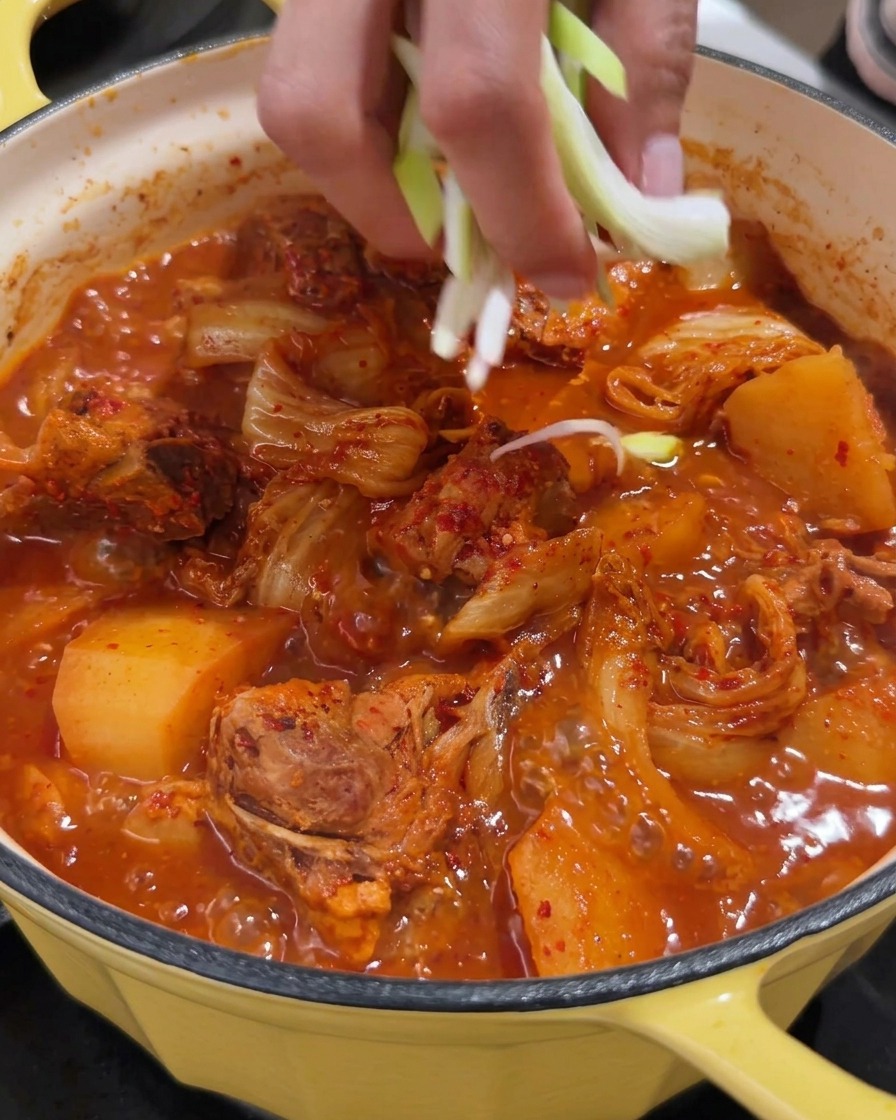
Once the soup has reduced and the pork spine is tender, finish the dish by sprinkling fresh scallion flowers, Hangzhou chili peppers, birds eye chillies, perilla leaves, and a dusting of perilla powder over the top before serving.
Tip: Adding the perilla powder at the very end ensures the aroma remains fresh and vibrant in the finished soup.