Korean Spicy Braised Pork Spine
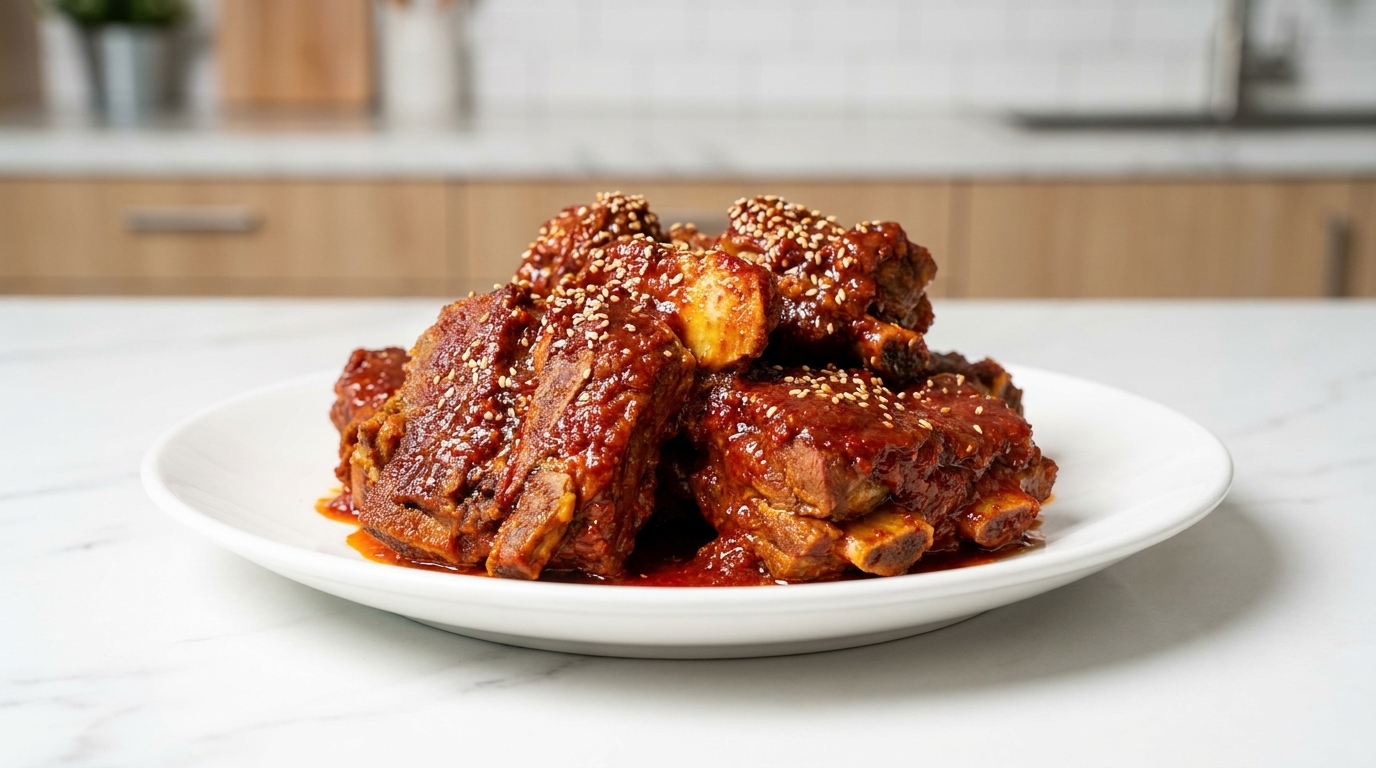
A bold, soul-satisfying dish featuring succulent pork spine simmered in a rich, fermented Korean chili sauce that falls right off the bone.
Move over delicate braises; this Korean-inspired pork spine dish is designed for those who appreciate the primal satisfaction of a hearty, hands-on meal. The key lies in the perfect marriage of a long, gentle simmer that renders the meat tender and a vibrant, fermented spicy sauce that provides a deep, complex flavor profile. It is the ultimate dish to share with good company, where the rules of etiquette take a backseat to pure, savory indulgence.
Ingredients
- 1 kg pork spine
- 2 stalks scallions
- 30 g ginger
- 3 tbsp cooking wine
- 1 red onion
- 5 dried chili peppers
- 5 cloves garlic
- 1 star anise
- 1 stick cinnamon
- 20 g rock sugar
- 2 tbsp dark soy sauce
- 1 tbsp fermented soybean paste
- 1 tbsp minced garlic
- 2 tbsp fine chili powder
- 1 tbsp red sugar
- 1 tbsp maltose syrup
- 1 tbsp light soy sauce
- 1 tsp plum juice
- 1 tsp sesame oil
- 2 tbsp Korean chili paste
- optional sesame seeds
Instructions
- 1Soak the pork spine
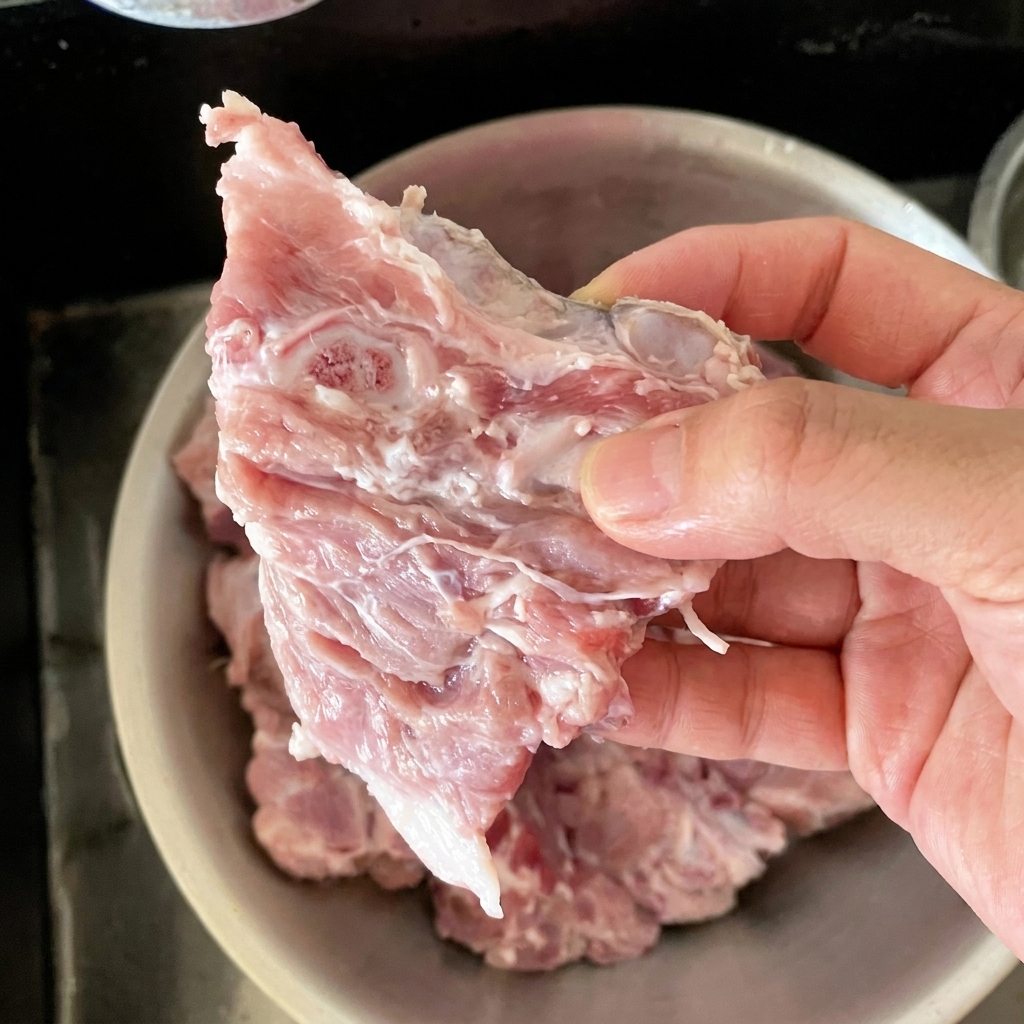
Place the raw pork spine pieces into a large metal bowl and cover them with water. Let them soak to draw out any remaining blood and impurities, which helps ensure a clean flavor for the final dish.
Tip: Change the water at least once during the soaking process for the best results. - 2Blanch the pork spine
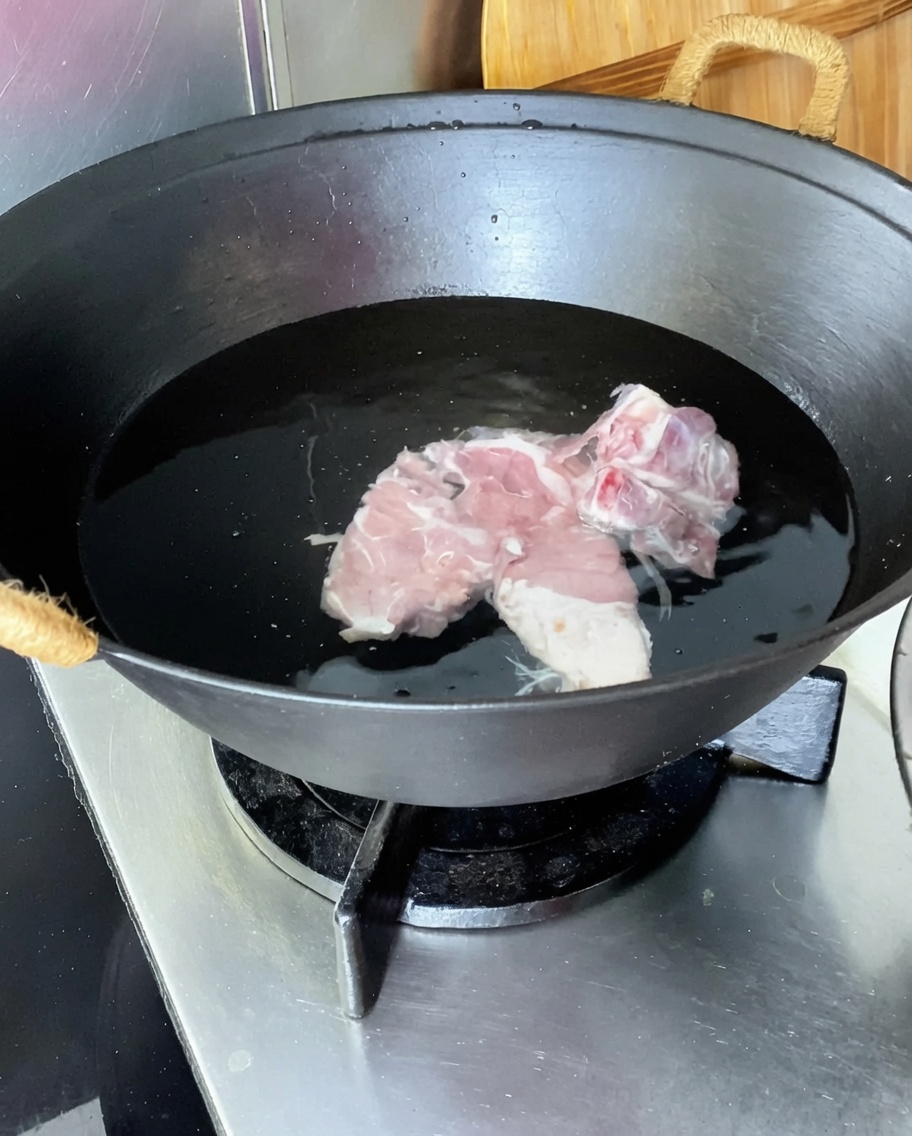
Add the soaked pork spine into a wok filled with cold water. Include sliced scallions, ginger, and a generous splash of cooking wine to draw out impurities and remove gamy odors as the water slowly heats up.
Tip: Starting with cold water is essential for drawing out impurities thoroughly. - 3Remove and rinse the blanched pork
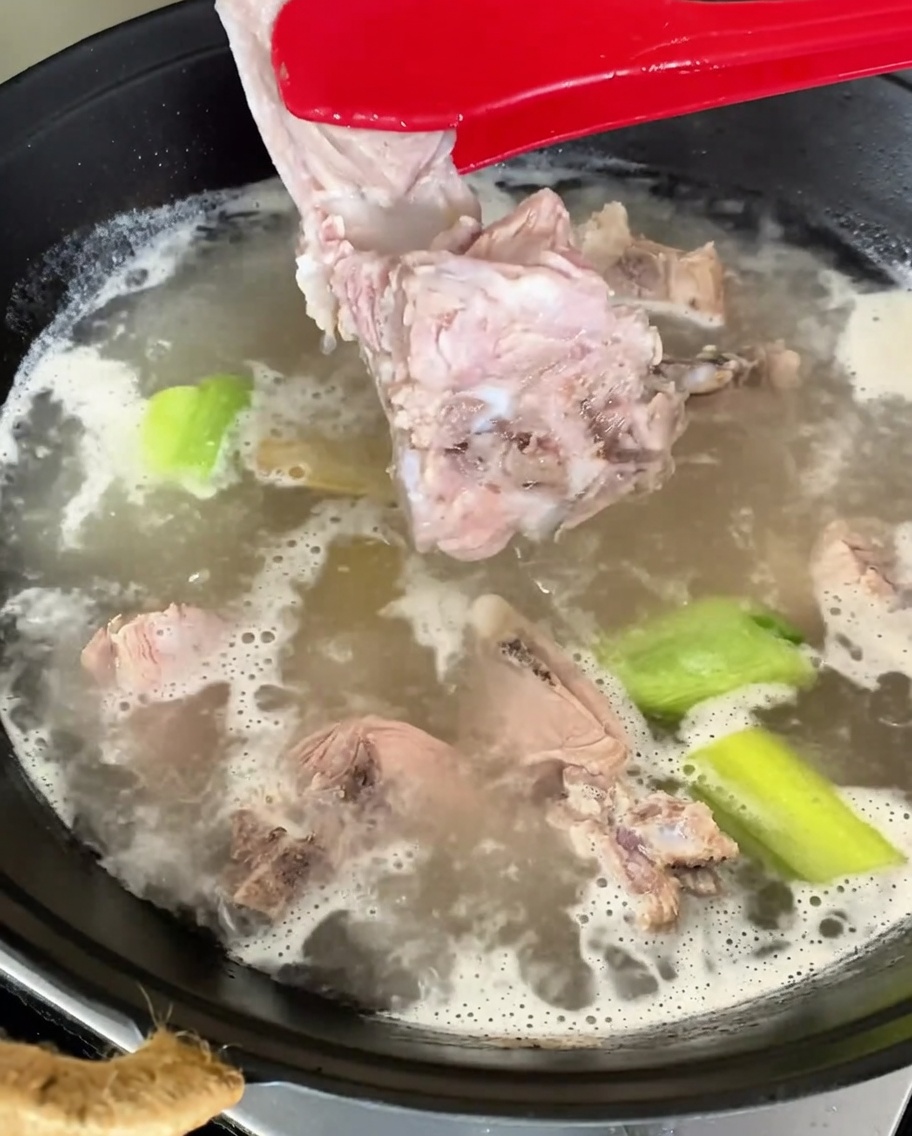
Once the water has come to a boil and impurities have surfaced, use tongs to remove the blanched pork spine pieces from the wok. Rinse the pieces thoroughly under clean running water to wash away any remaining foam.
Tip: Ensure the pork is well-rinsed to keep the subsequent braising sauce clean and flavorful. - 4Add aromatics and water
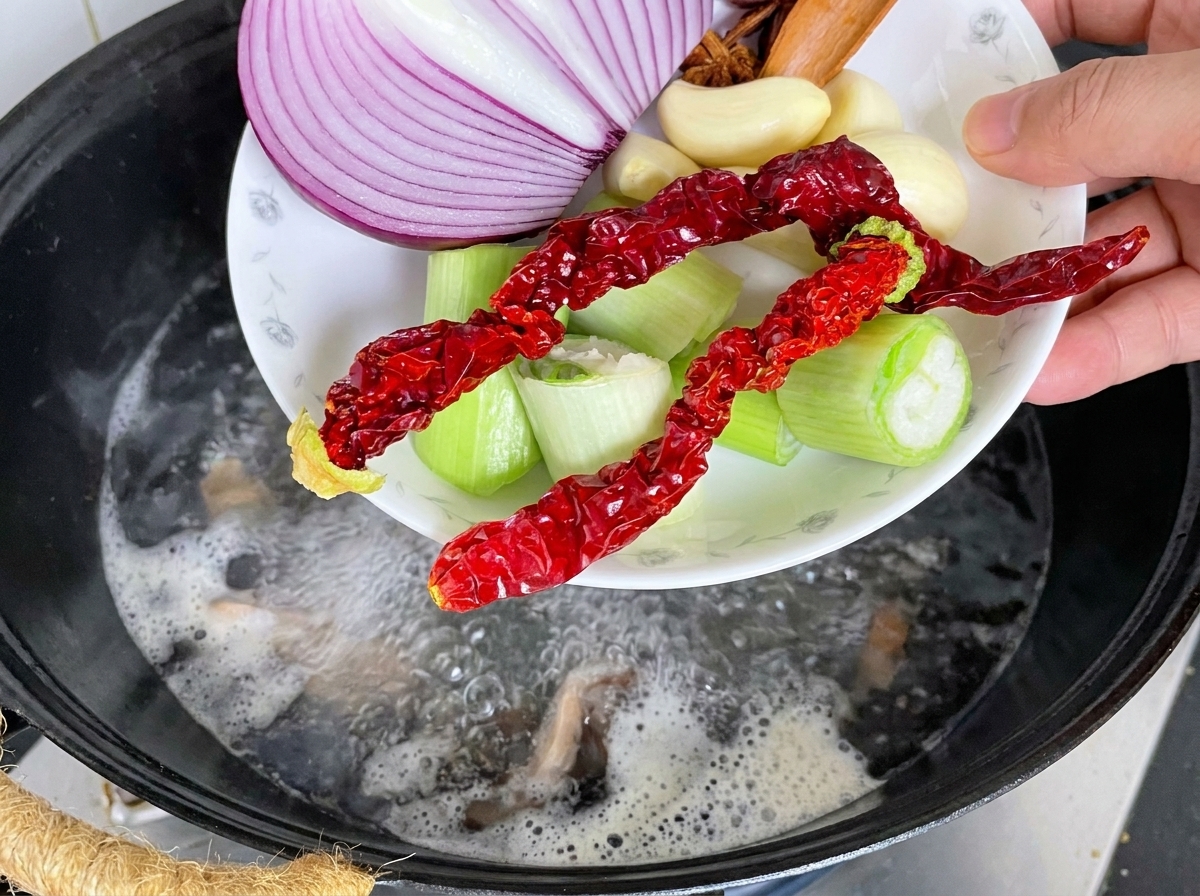
Return the clean, blanched pork to the wok and pour in boiling water. Add the red onion, dried chili peppers, garlic cloves, star anise, cinnamon stick, and rock sugar to build a flavorful base.
Tip: Using boiling water helps maintain the cooking temperature and texture of the meat. - 5Season the braising liquid
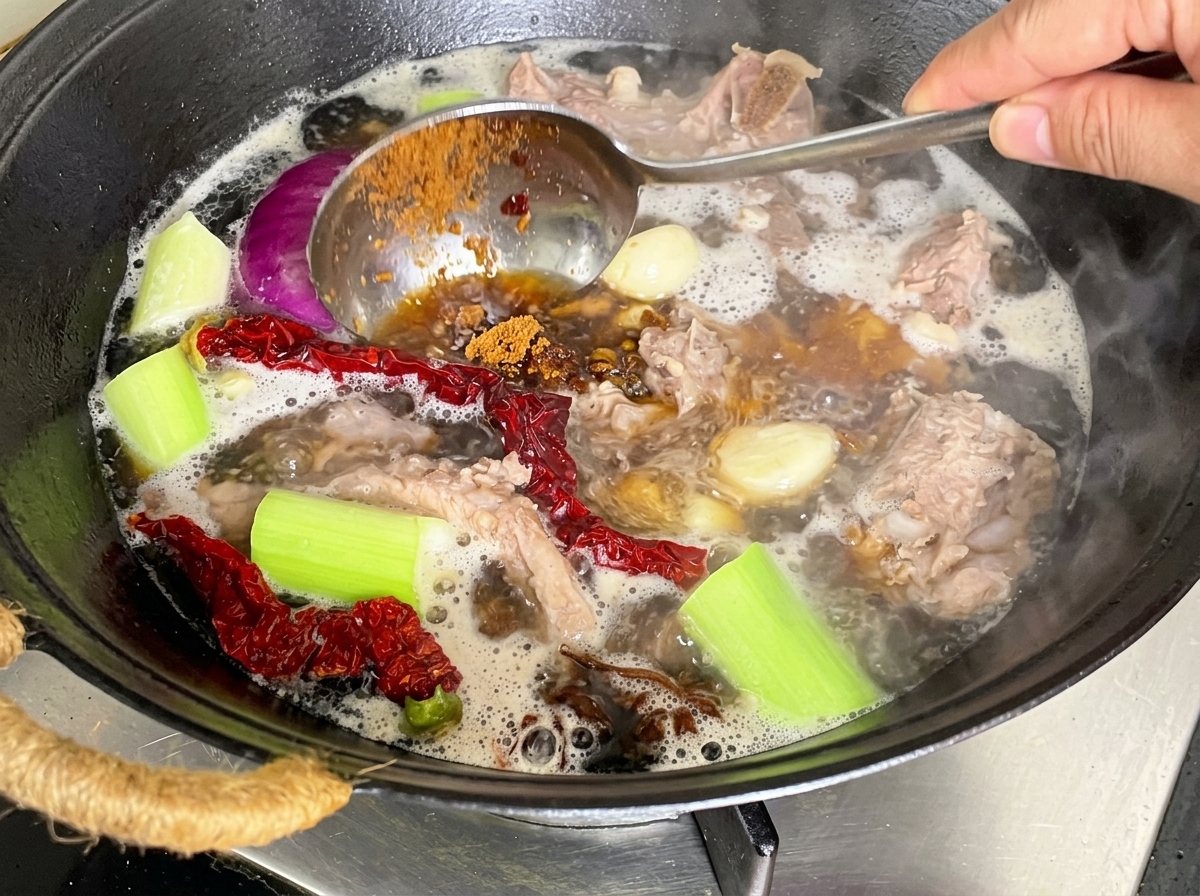
Stir in the dark soy sauce and fermented soybean paste. Ensure the paste is well-incorporated into the broth to provide the signature savory, fermented depth required for this dish.
Tip: The fermented soybean paste is key to the distinct aroma and richness of this dish. - 6Simmer until tender
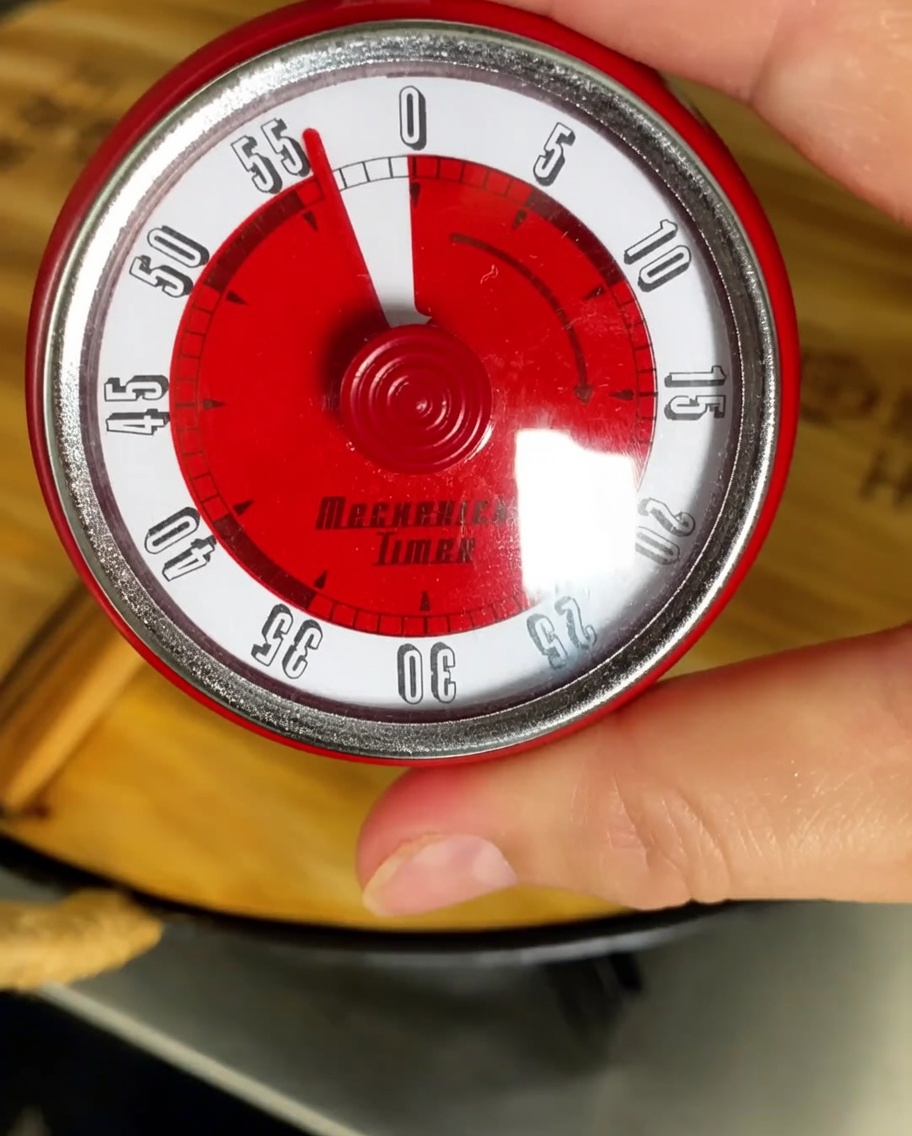
Cover the wok with a lid and set a timer for one hour. Let the pork spine simmer on low heat until the meat is succulent and falls right off the bone.
Tip: Do not lift the lid too often; let the braising process happen steadily to ensure the meat becomes tender. - 7Mix the spicy sauce
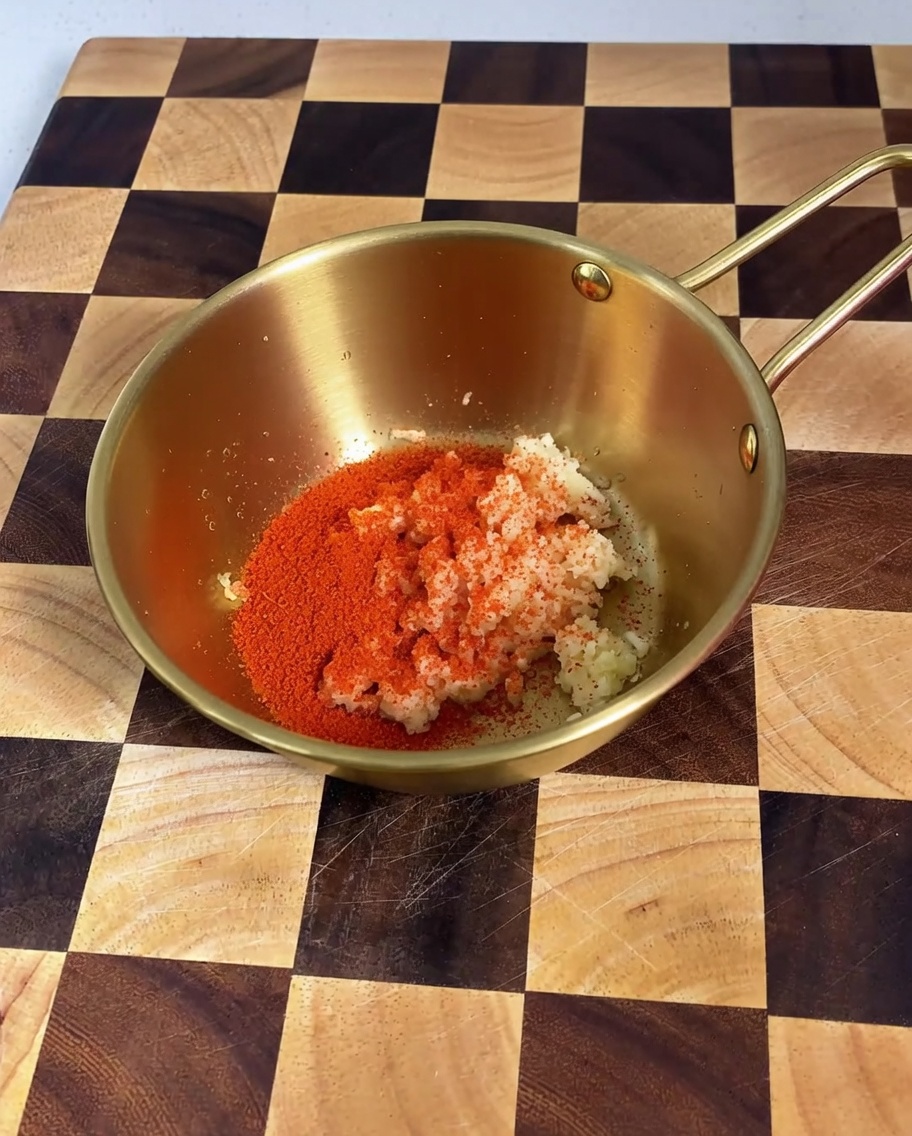
In a separate golden bowl, combine the minced garlic, fine chili powder, red sugar, maltose syrup, light soy sauce, plum juice, sesame oil, and Korean chili paste, stirring until the mixture is uniform and smooth.
Tip: Make sure the red sugar and maltose syrup are fully incorporated into the liquid components for an even glaze. - 8Check the braised pork spine
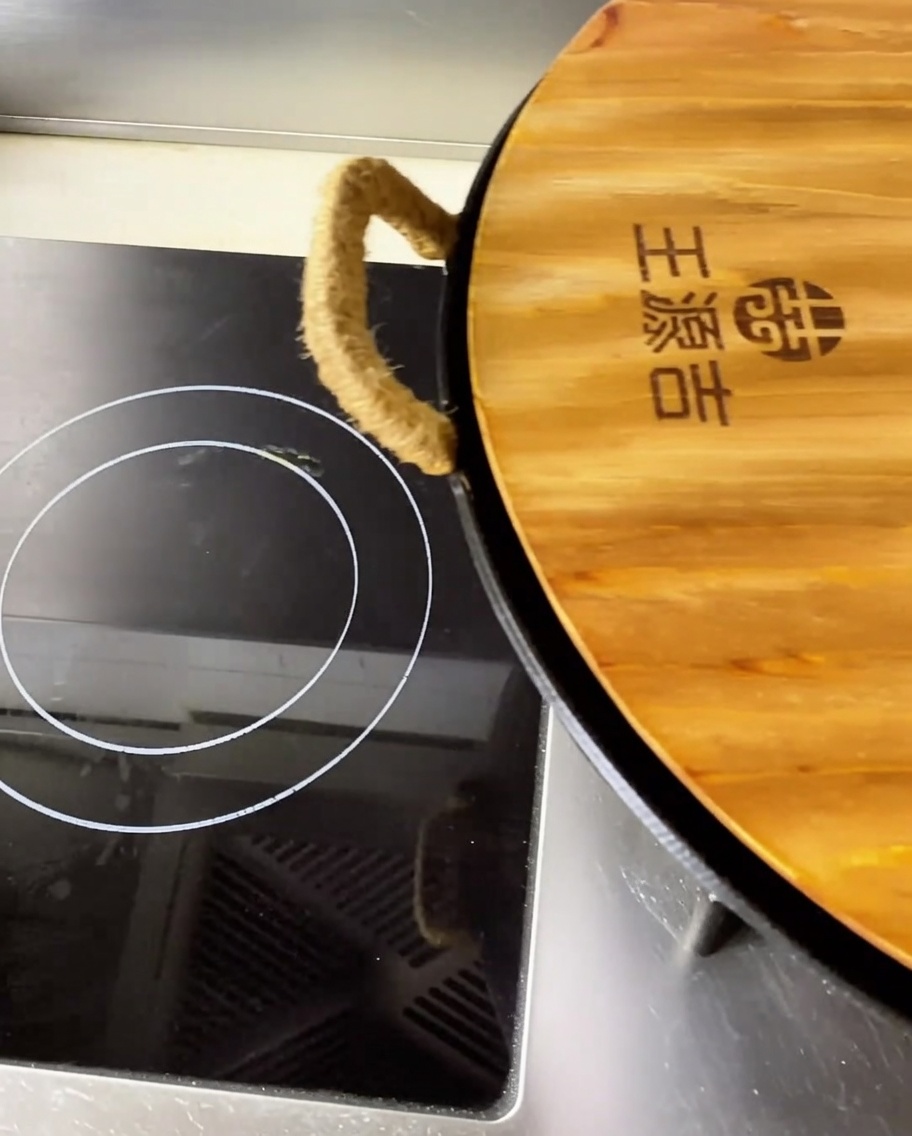
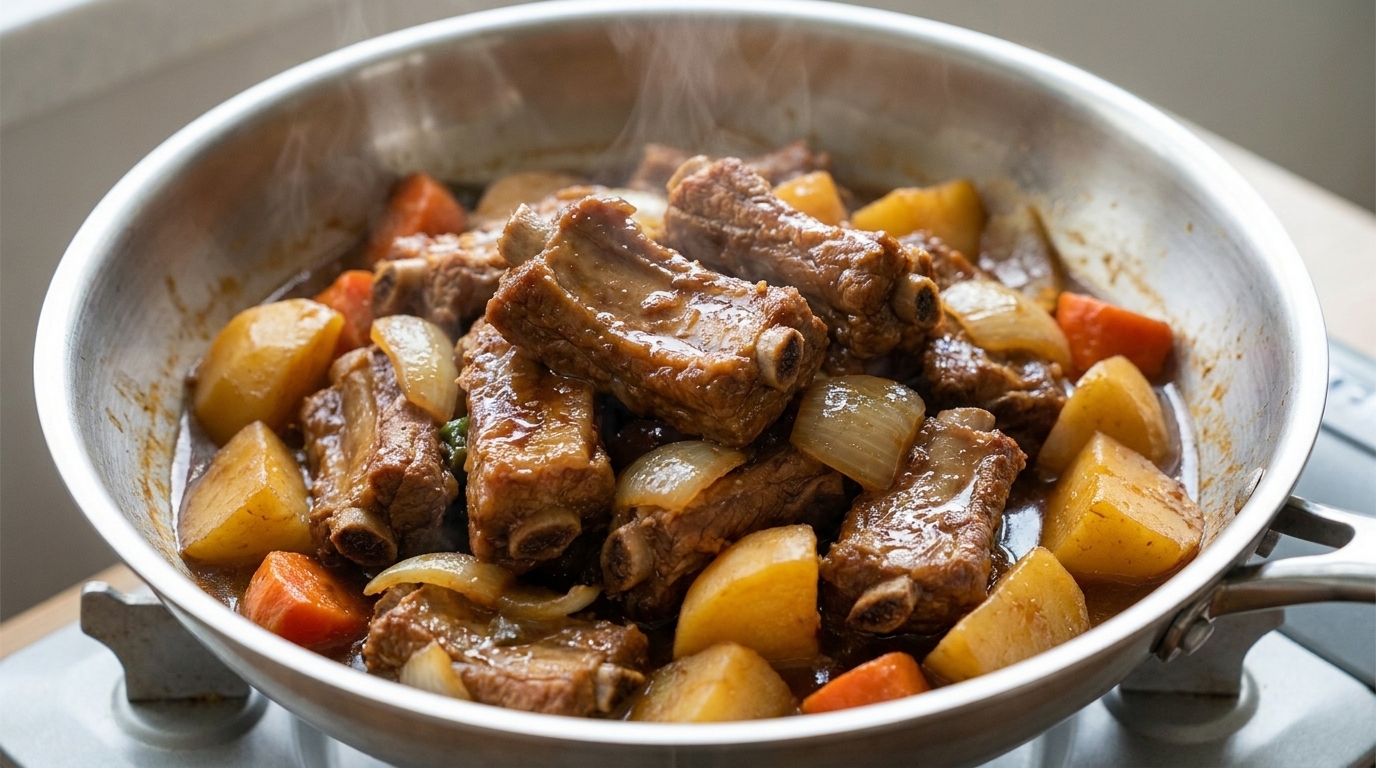
Remove the lid from the wok to reveal the pork spine, which has been simmering in the spicy broth. The meat should now be tender and infused with the deep, fermented aromas of the Korean sauce.
Tip: Check that the liquid has reduced to a rich, flavorful consistency that coats the bones well. - 9Transfer the cooked pork spine
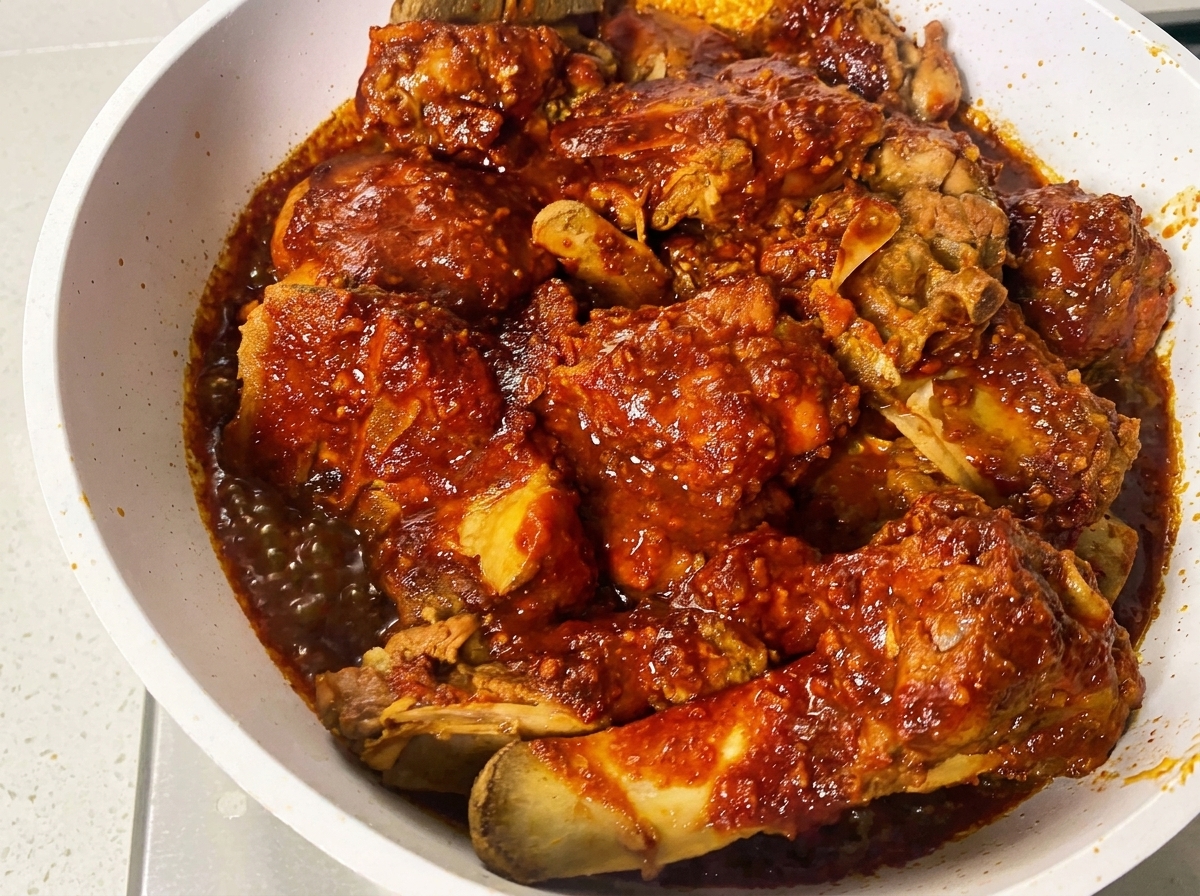
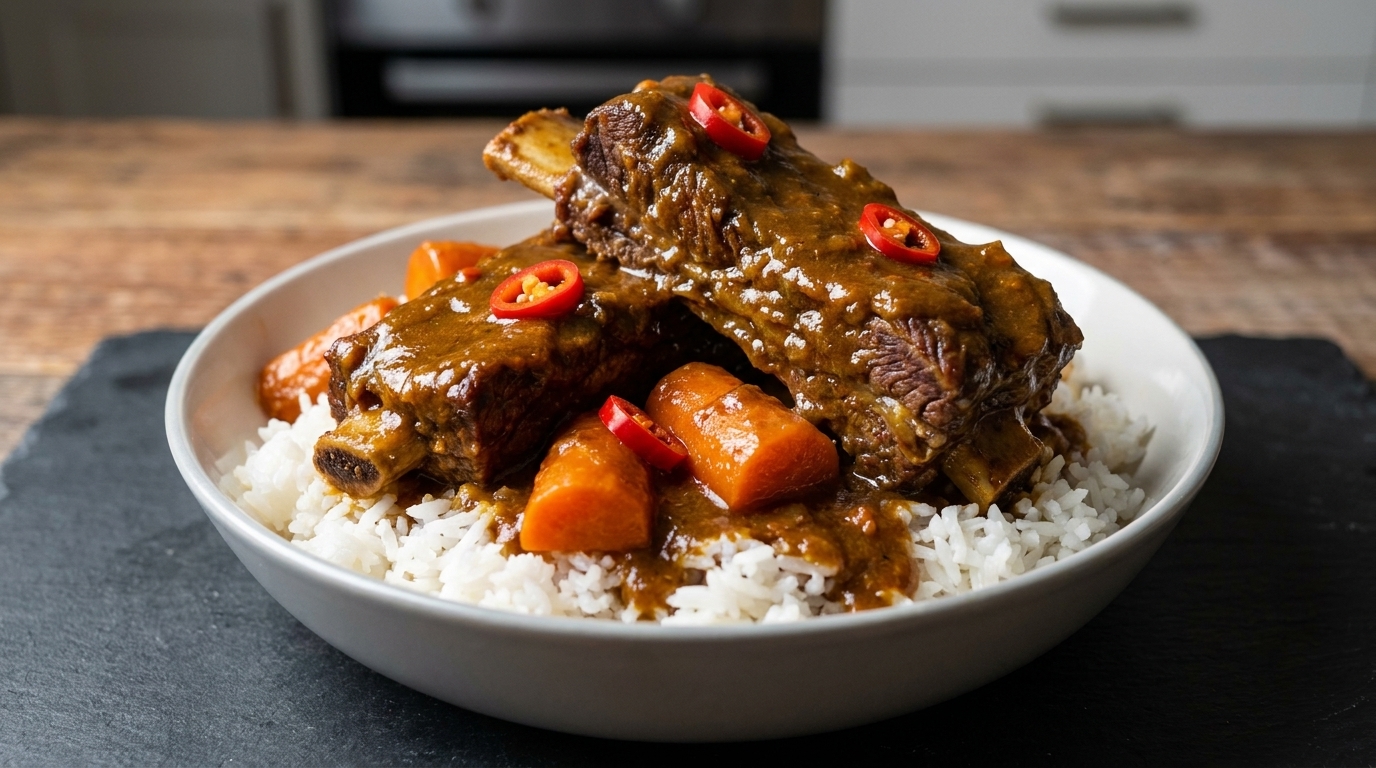
Carefully transfer the tender, cooked pieces of pork spine out of the wok and arrange them neatly into a white serving dish.
Tip: Handle the pieces gently since the meat is fully tender and ready to fall off the bone. - 10Coat with Korean spicy sauce
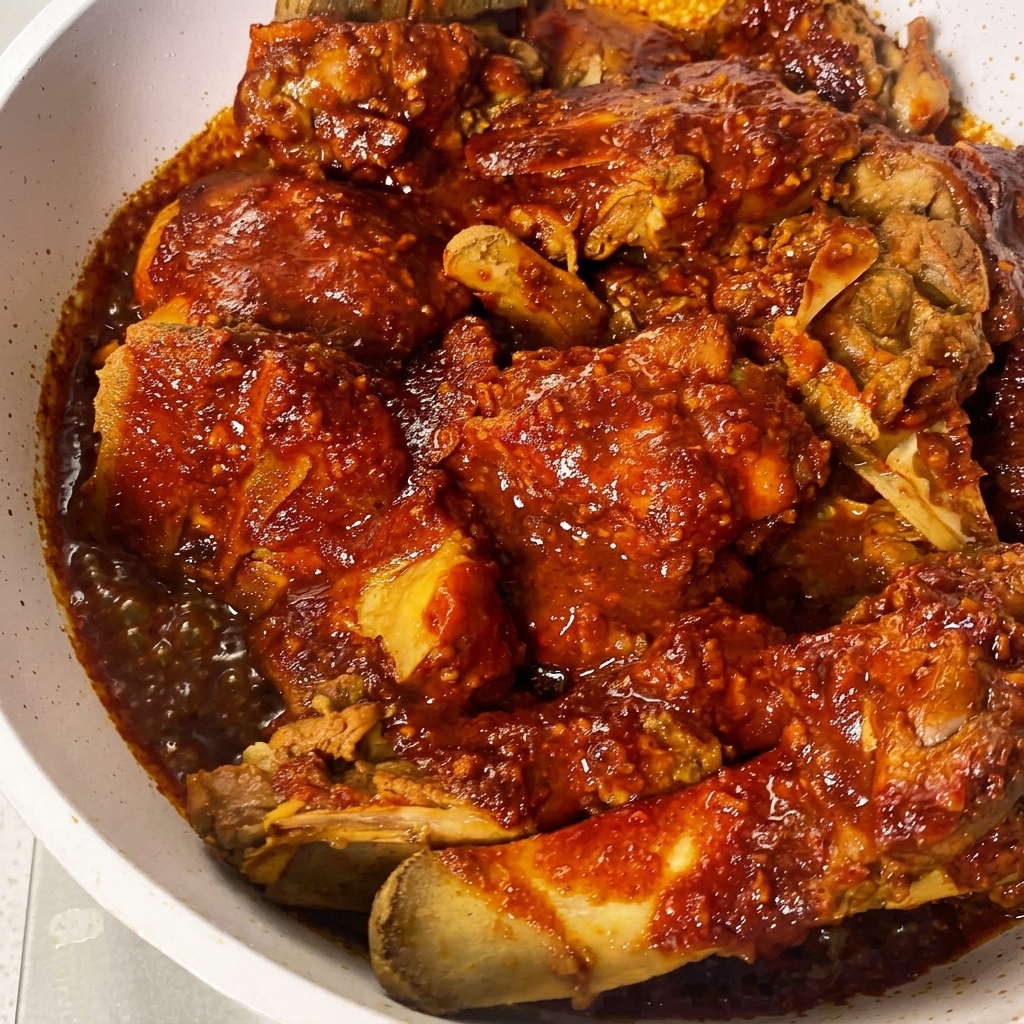
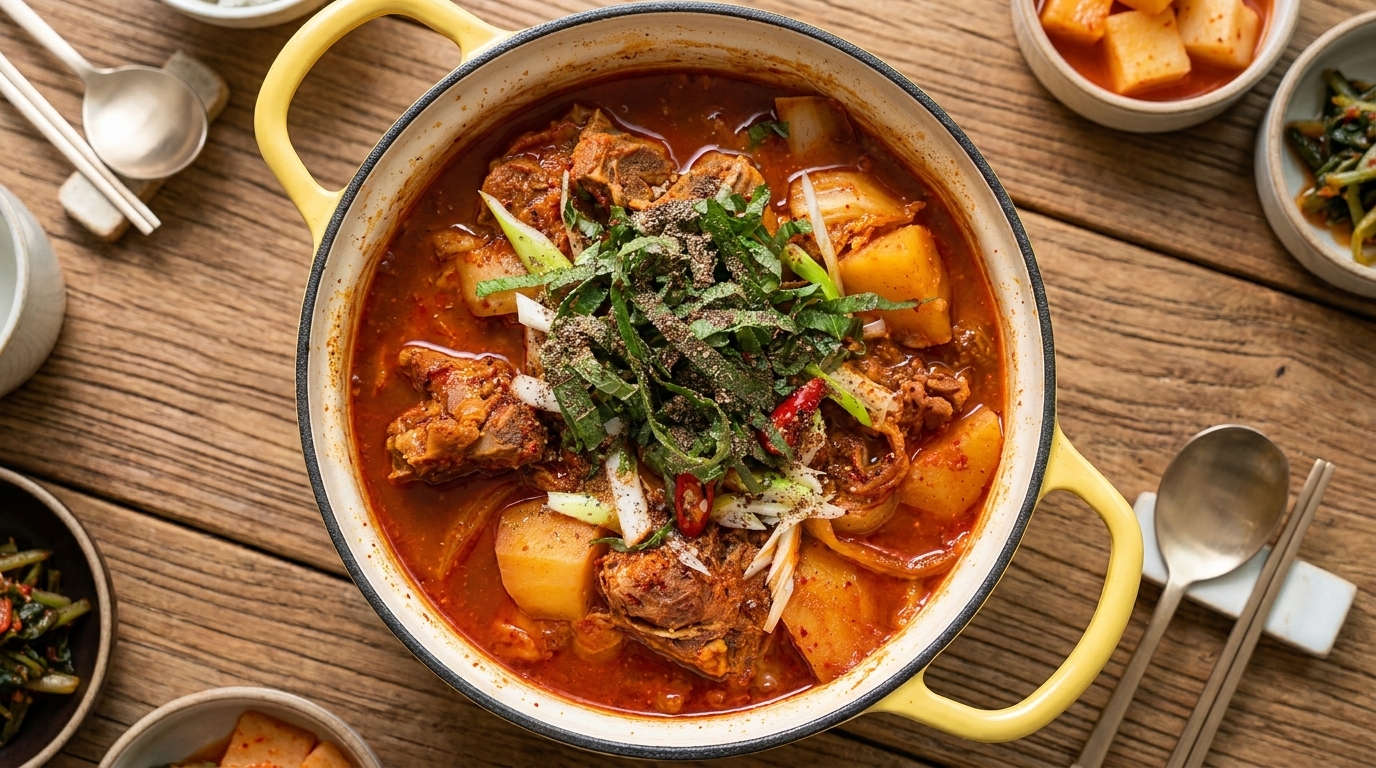
Spoon the thick red Korean spicy sauce evenly over the top of the arranged pork spine pieces, ensuring every piece is well coated.
Tip: Distribute the sauce evenly so that all parts absorb the rich flavor during the final simmer. - 11Final glaze and simmer
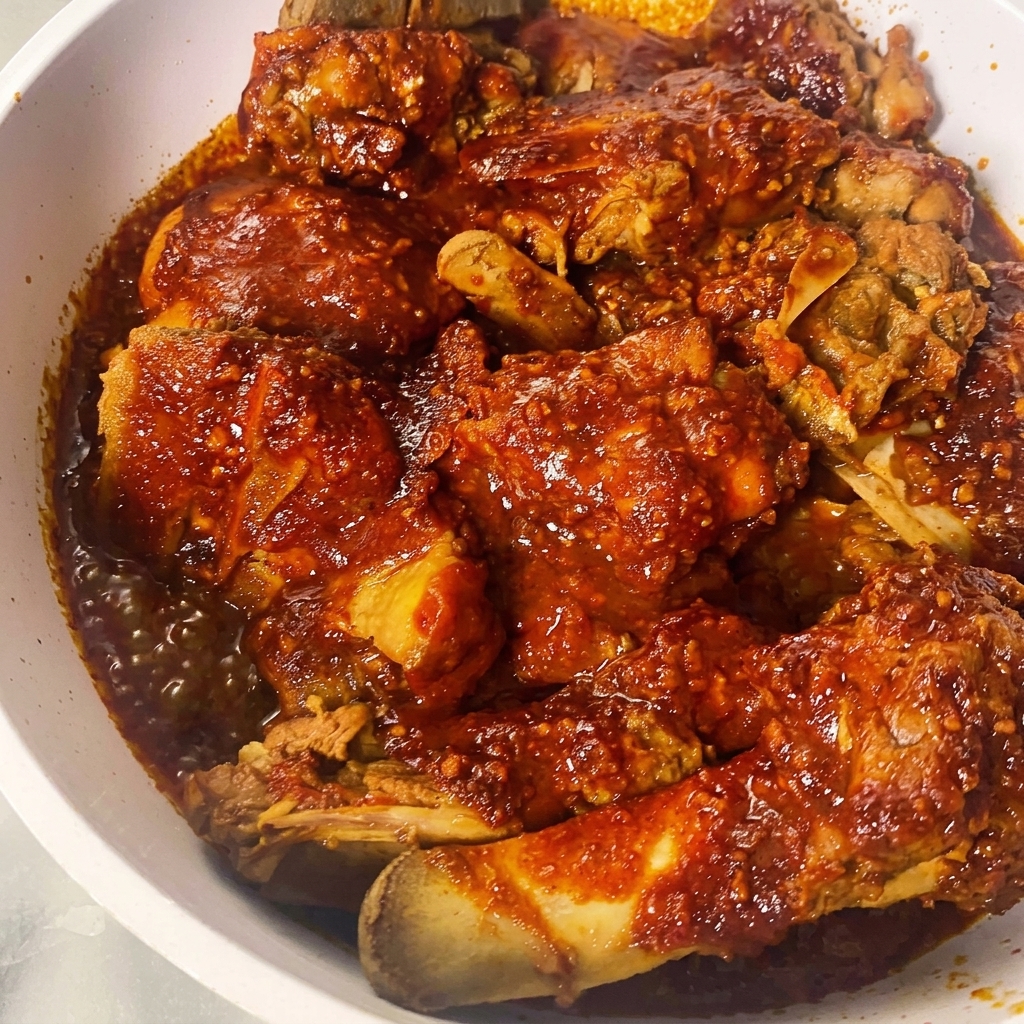
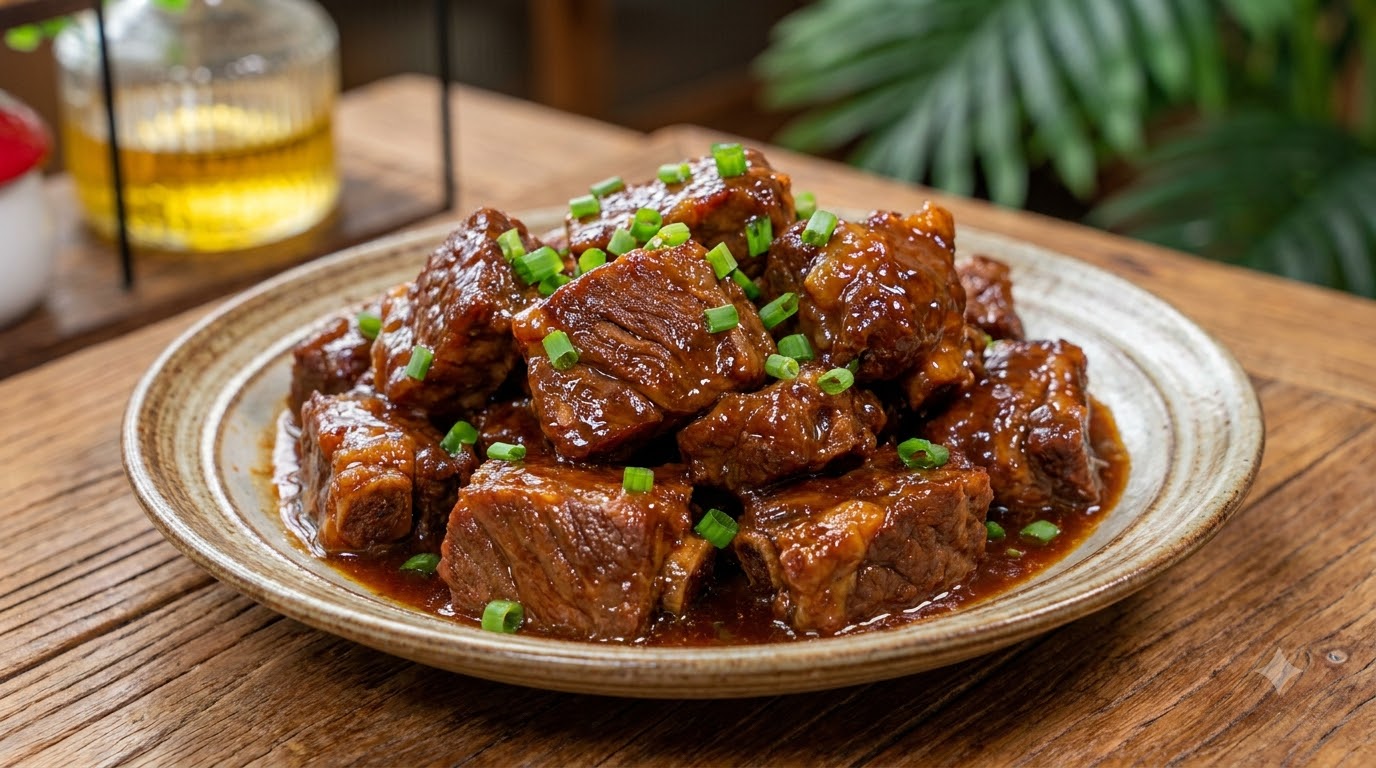
After coating the pork with the prepared spicy sauce, ladle some of the original cooking broth over the top. Cover and simmer on high heat for three to five minutes to thicken the glaze and fuse the flavors.
Tip: Keep a close eye on the heat during this final simmer to prevent scorching while the sauce thickens.