Classic Edomae Chirashi Sushi Bowl
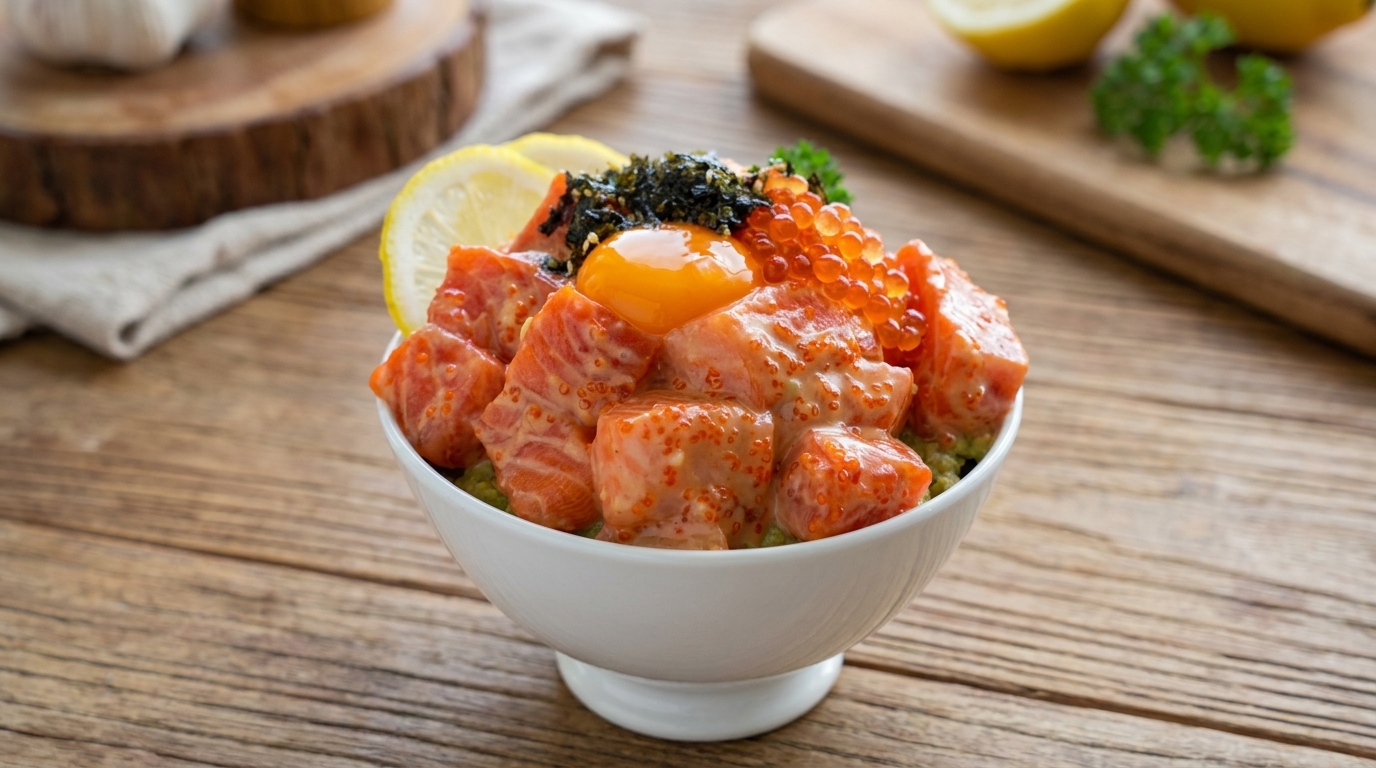
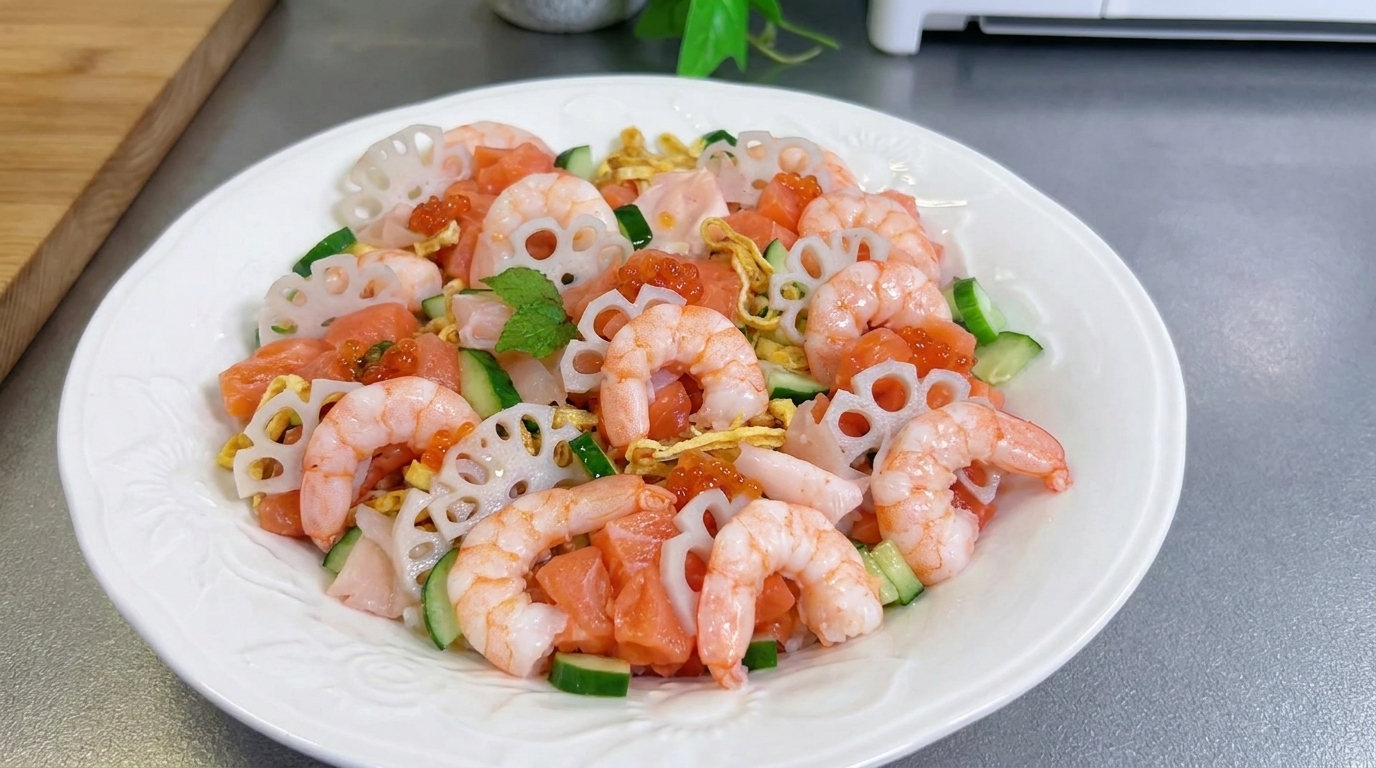
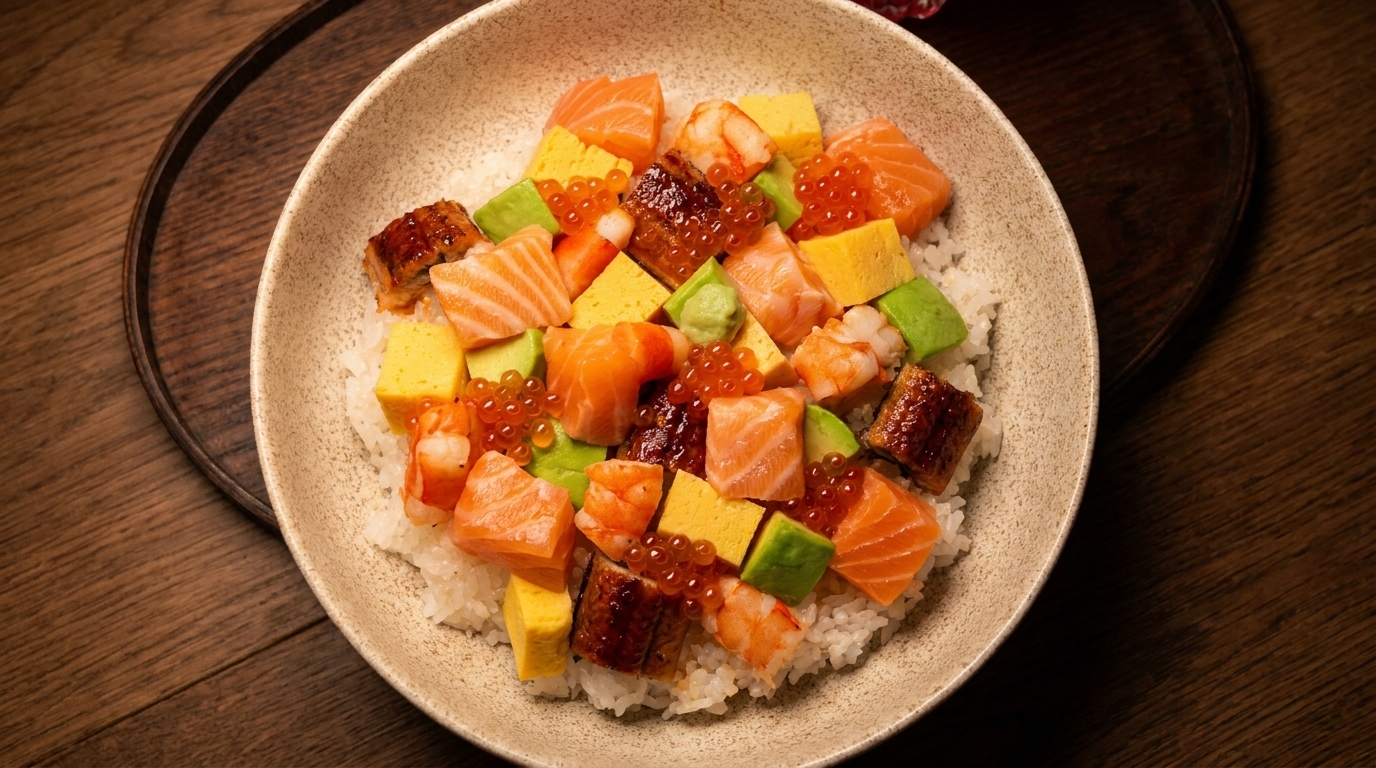
A stunning bowl of Edomae Chirashi sushi featuring fresh salmon, grilled eel, tamagoyaki, and creamy avocado scattered over perfectly seasoned vinegar rice.
Chirashi sushi, meaning scattered sushi, is a vibrant and celebratory Japanese dish where beautifully prepared ingredients are arranged over seasoned rice. Inspired by the Japanese drama What Did You Eat Yesterday?, this Edomae-style version balances the tangy sweetness of sushi rice with the rich flavors of fresh seafood, grilled eel, and fluffy tamagoyaki.
Ingredients
- 1 cup uncooked white rice
- 1.1 cups water
- 1 tbsp clear sake
- 1 piece kombu (dried kelp)
- 2 tbsp sushi vinegar
- 1 tbsp sugar
- 0.5 tsp salt
- 1 small block tamagoyaki
- 1/2 avocado
- 1 small piece raw salmon fillet
- 1 small fillet grilled eel
- to taste cooked shrimp
- generous amount salmon roe
Instructions
- 1Measure the rice
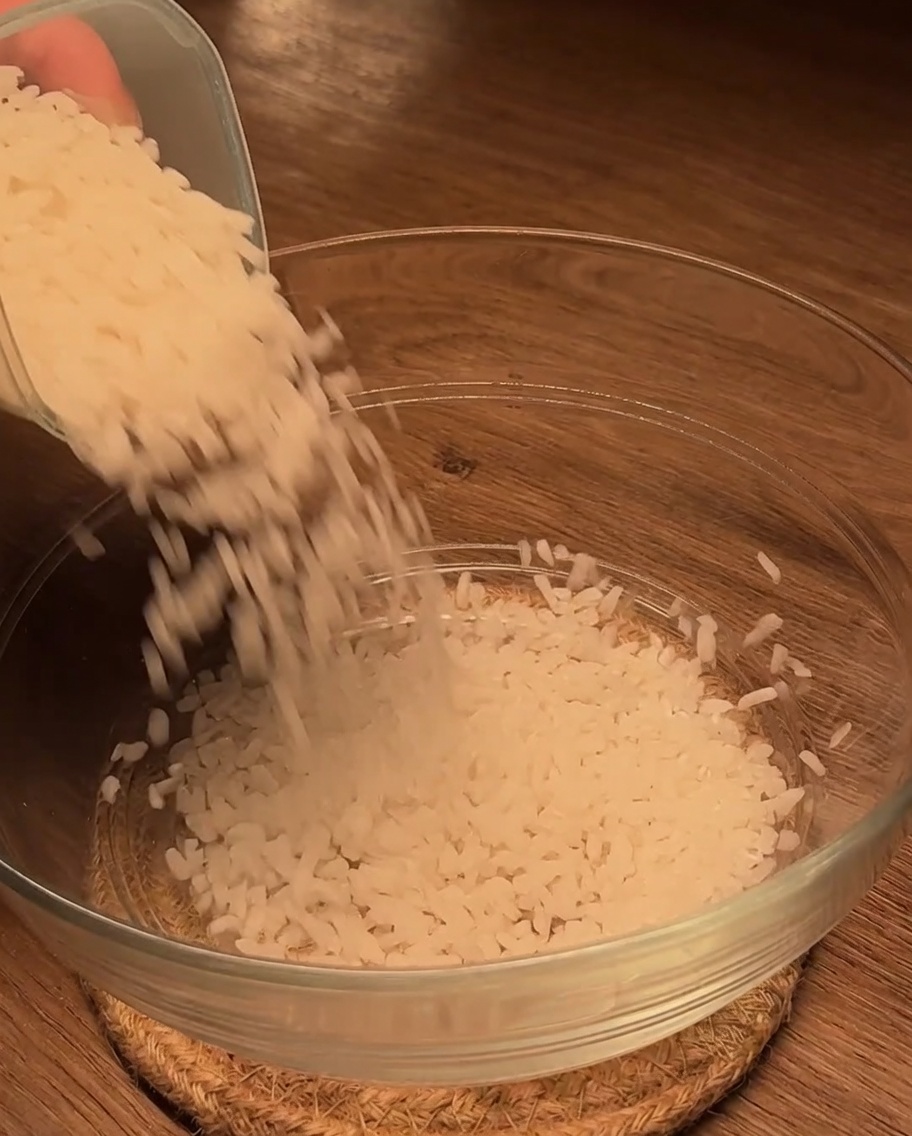
Measure the desired amount of uncooked white rice and pour it into a glass mixing bowl to prepare for washing.
Tip: Using a clear bowl helps you see when the water runs clear during the washing process. - 2Wash and soak the rice
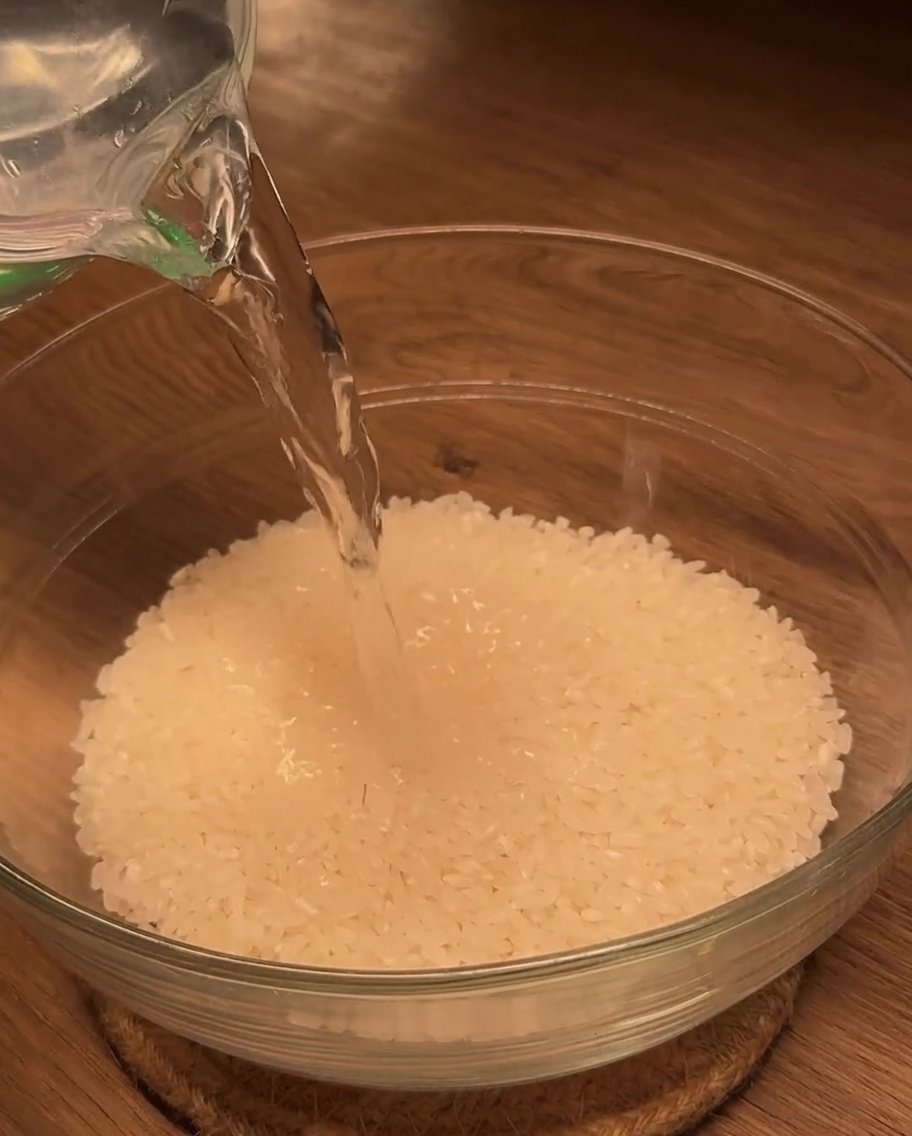
Pour water into the bowl with the rice. Gently agitate the rice to wash away excess starch, then allow it to soak briefly.
Tip: Washing the rice until the water is mostly clear results in better texture for your sushi rice. - 3Transfer to clay pot
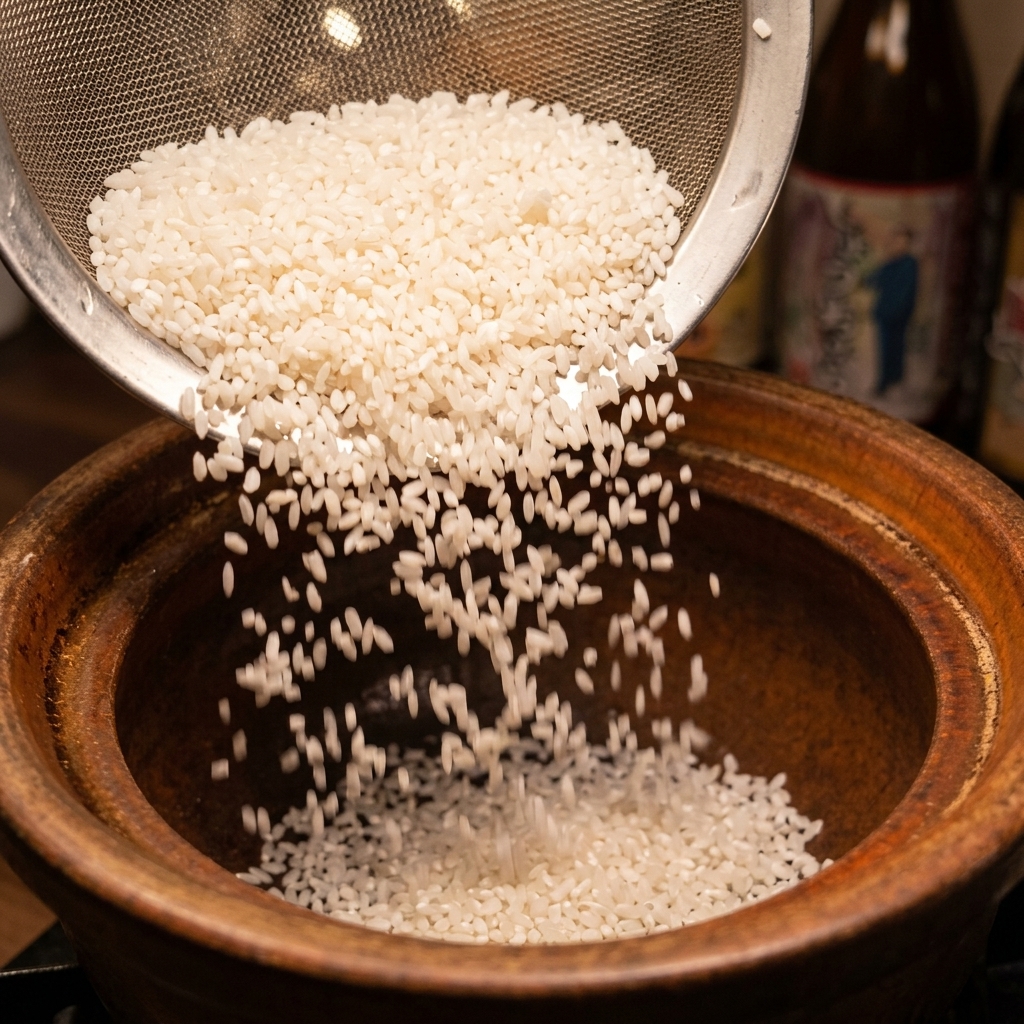
Carefully transfer the soaked rice into a traditional clay pot. This type of pot is ideal for achieving the perfect steam and a subtle scorched crust.
Tip: Ensure the rice is spread evenly in the pot to allow for uniform cooking. - 4Add water
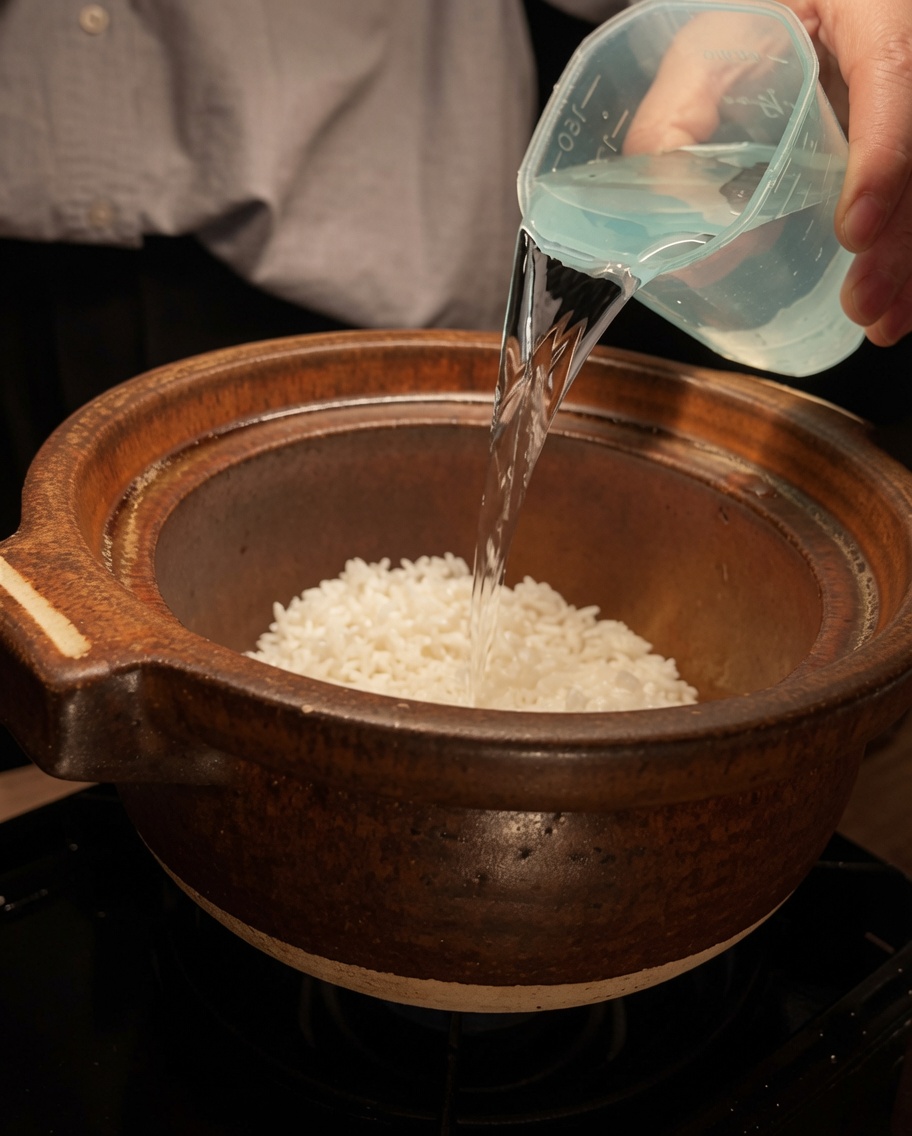
Add fresh water to the rice in the clay pot. A rice-to-water ratio of 1:1.1 is recommended for optimal results in a clay pot.
Tip: Use filtered water for the best flavor in your sushi rice. - 5Add sake
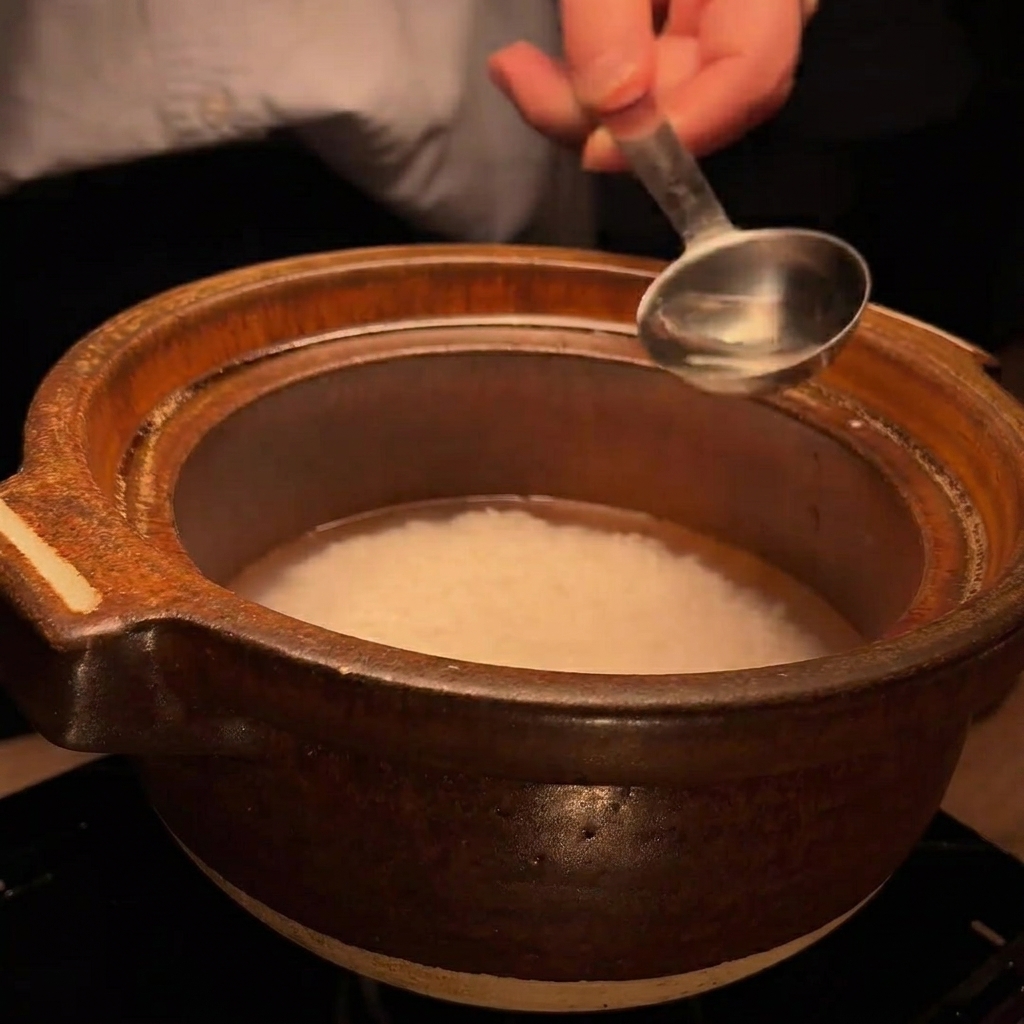
Add a spoonful of clear sake into the clay pot with the rice and water. Sake helps to enhance the natural sweetness of the rice.
Tip: Adding a small amount of alcohol helps improve the aroma and finish of the cooked rice. - 6Add kombu
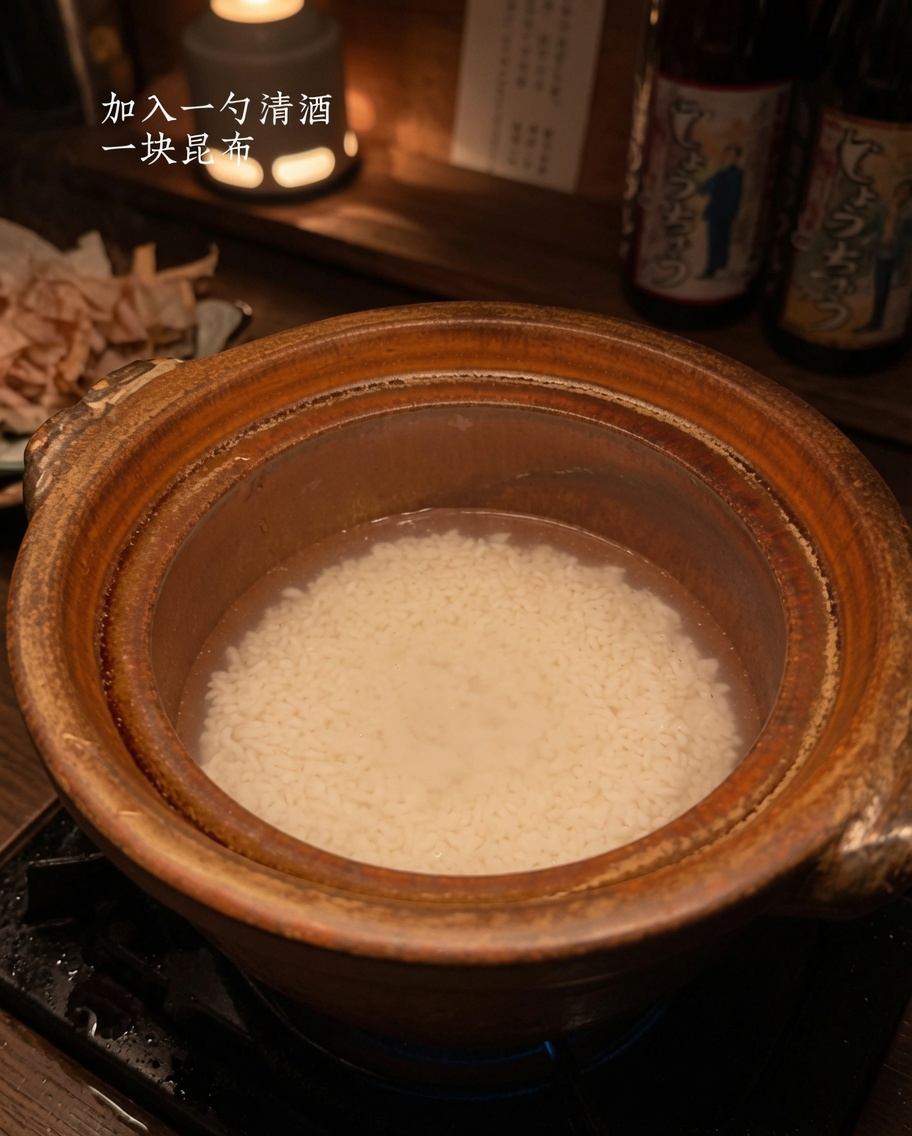
Place a square piece of kombu (dried kelp) onto the rice in the clay pot. The kombu will infuse the rice with umami during the cooking process.
Tip: Wipe the kombu gently with a damp cloth if necessary, but do not wash off the white powdery substance as it is rich in flavor. - 7Prepare the tamagoyaki
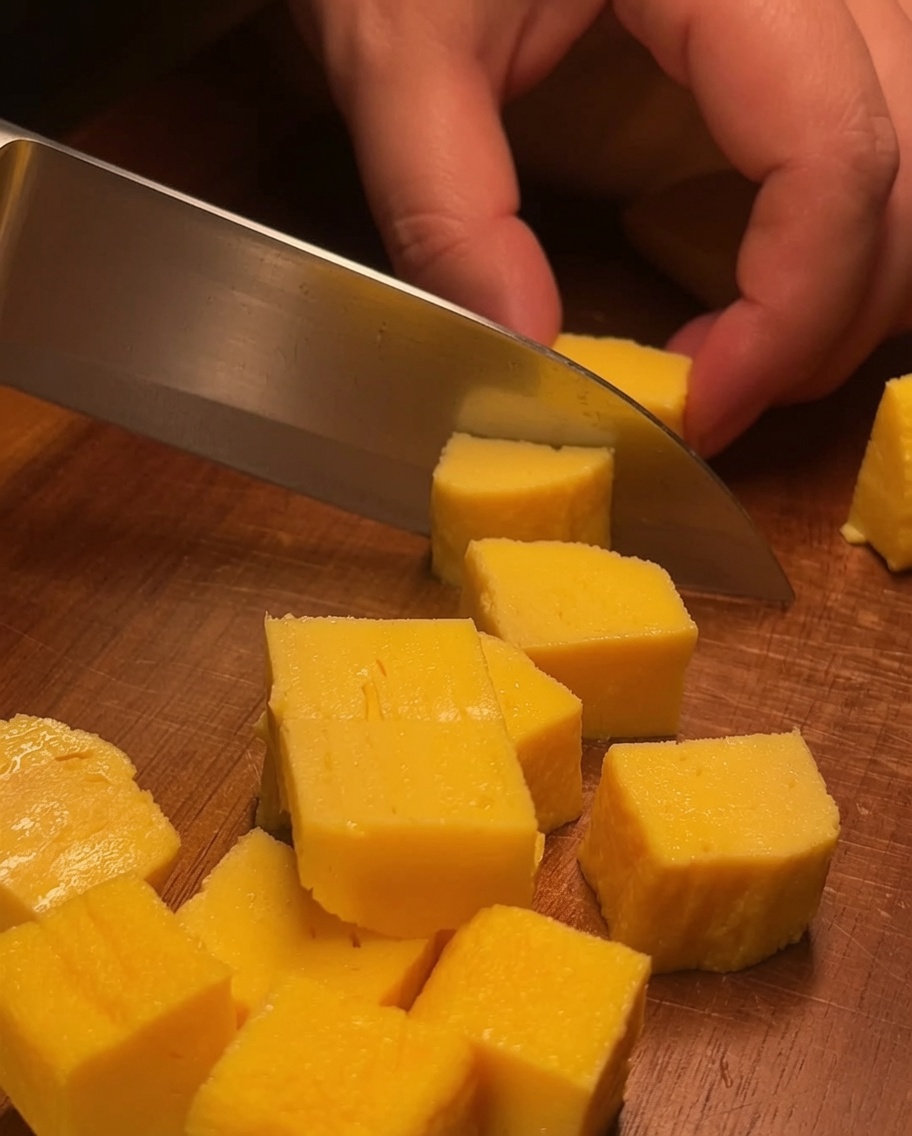
Take the cooked tamagoyaki and carefully slice it into uniform, small cubes on a wooden cutting board. These cubes add a sweet, fluffy texture and vibrant color to the finished dish.
Tip: Make sure your knife is sharp to get clean cuts through the soft omelet. - 8Slice the avocado
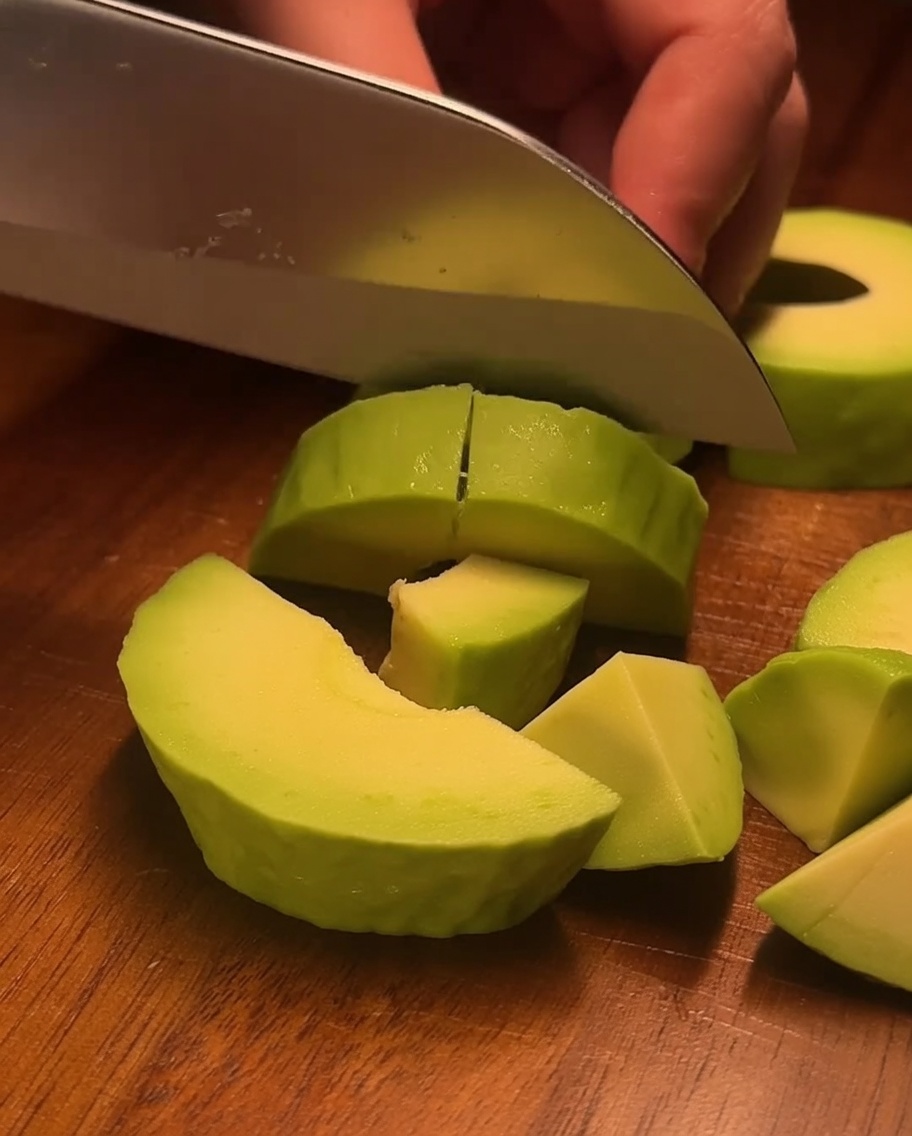
Take the ripe avocado and slice it into thick, even segments on a wooden cutting board. The creamy avocado provides a rich, buttery contrast to the tangy sushi rice and fresh seafood.
Tip: Rub the avocado slices with a little lemon juice if you are not assembling the dish immediately to prevent browning. - 9Prepare the shrimp
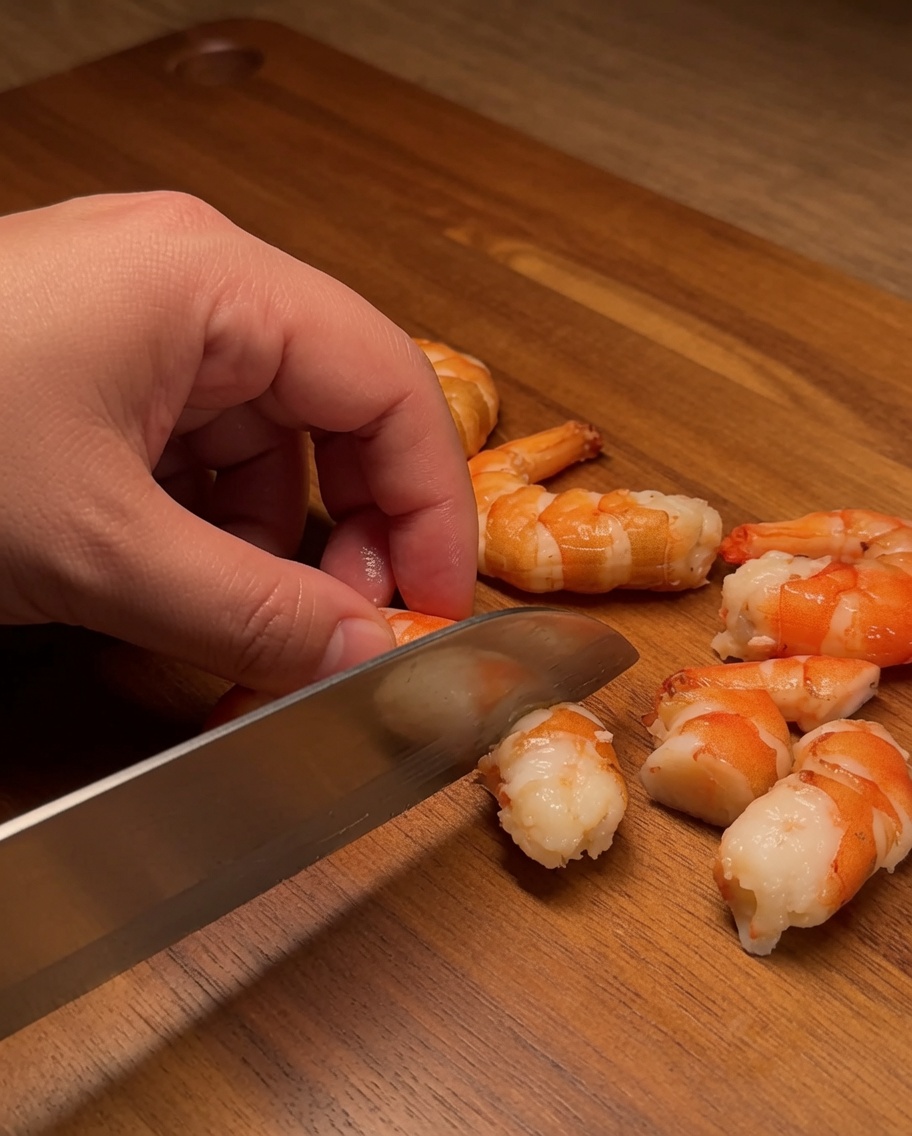
Take the cooked shrimp and slice them into smaller, bite-sized pieces on a wooden cutting board. These pieces will be scattered over the sushi rice for a balanced bite of seafood.
Tip: Ensure the shrimp are deveined and fully cooled before cutting to maintain their texture. - 10Dice the salmon
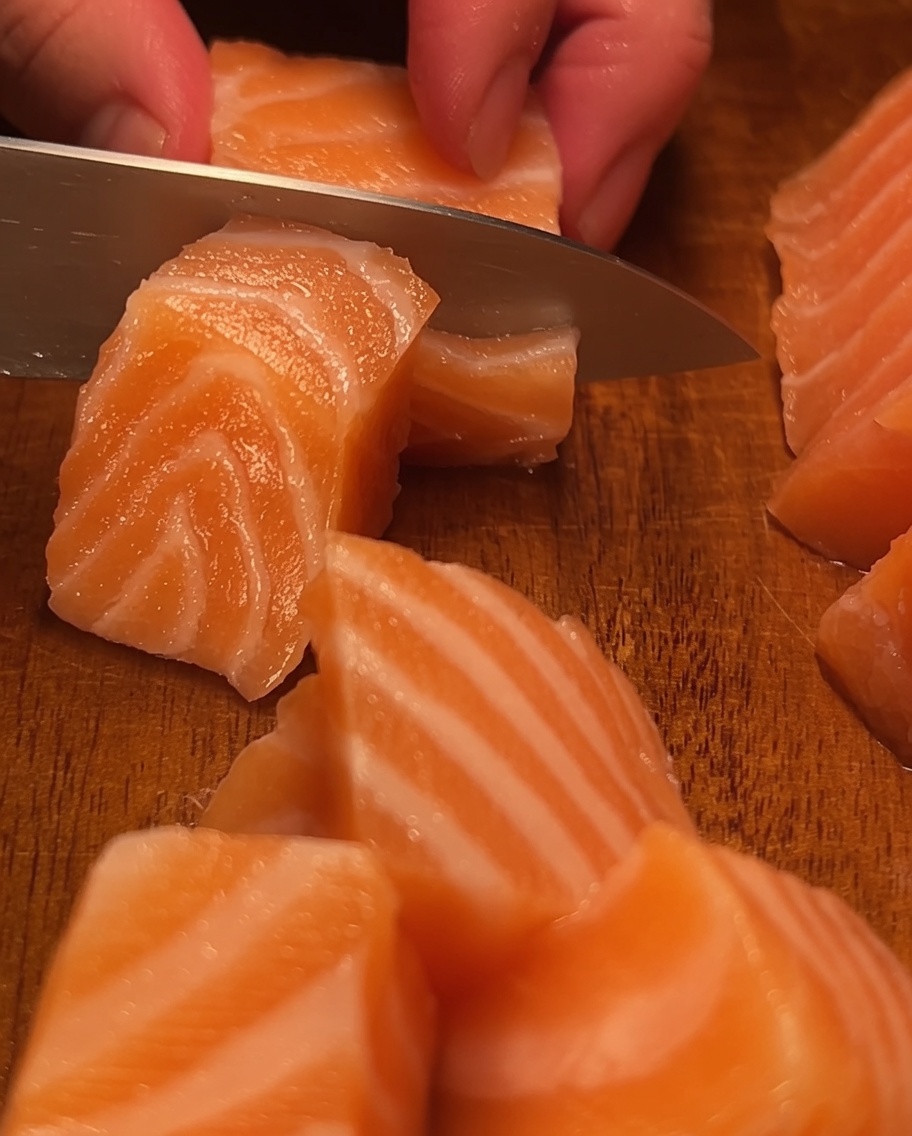
Place the raw salmon fillet on a wooden cutting board and slice it into uniform, bite-sized cubes. Fresh, high-quality salmon is essential for the best flavor in your Chirashi sushi.
Tip: Keep the salmon chilled until you are ready to assemble the final dish. - 11Cut the grilled eel
Place the grilled eel fillet on a wooden cutting board and cut it into bite-sized pieces. The sweet and smoky flavor of the eel is a highlight of the Edomae style Chirashi.
Tip: Handle the eel gently, as it is often quite tender and can break apart easily. - 12Remove the kombu
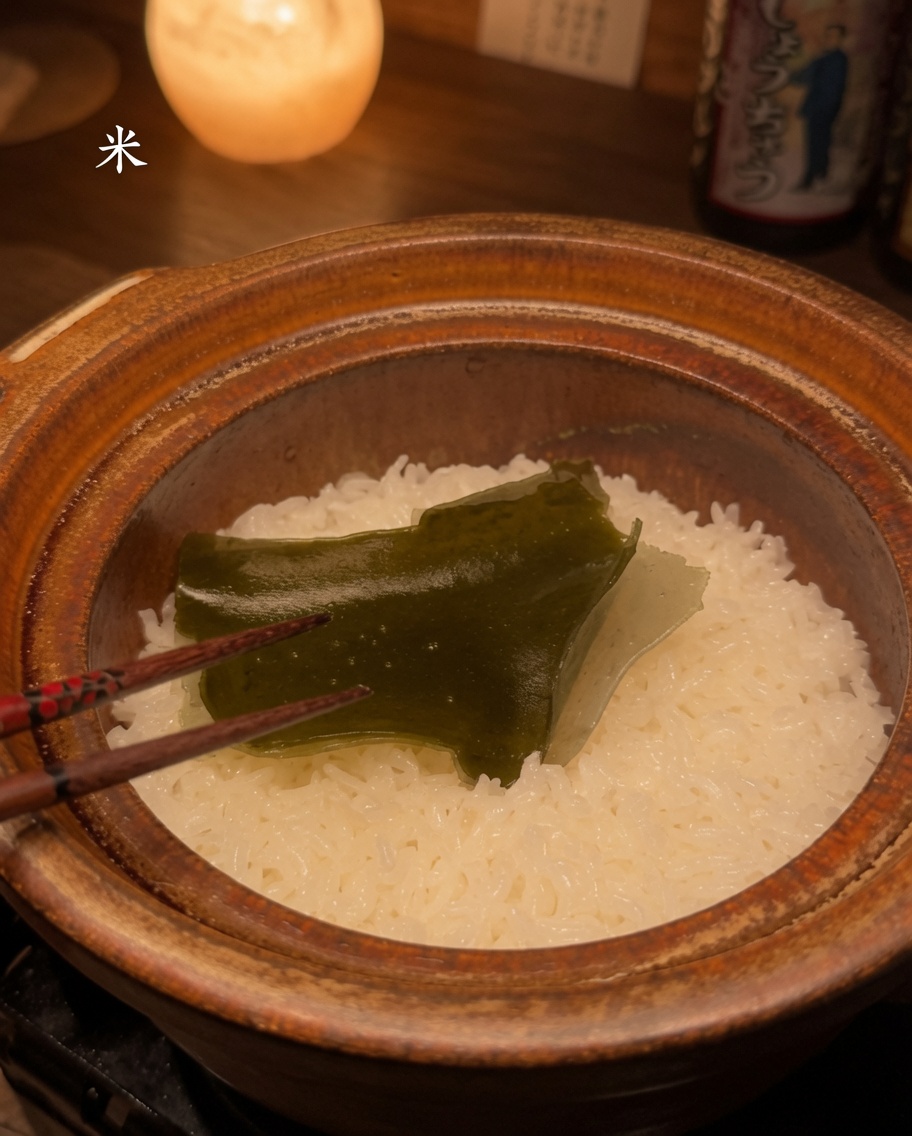
Once the rice is cooked, use a pair of chopsticks to carefully lift and remove the piece of kombu from the clay pot. The kombu has infused the rice with deep umami flavor during the cooking process.
Tip: Dont discard the kombu; it can be sliced thinly and used in other dishes like salads or stir-fries. - 13Season the sushi rice
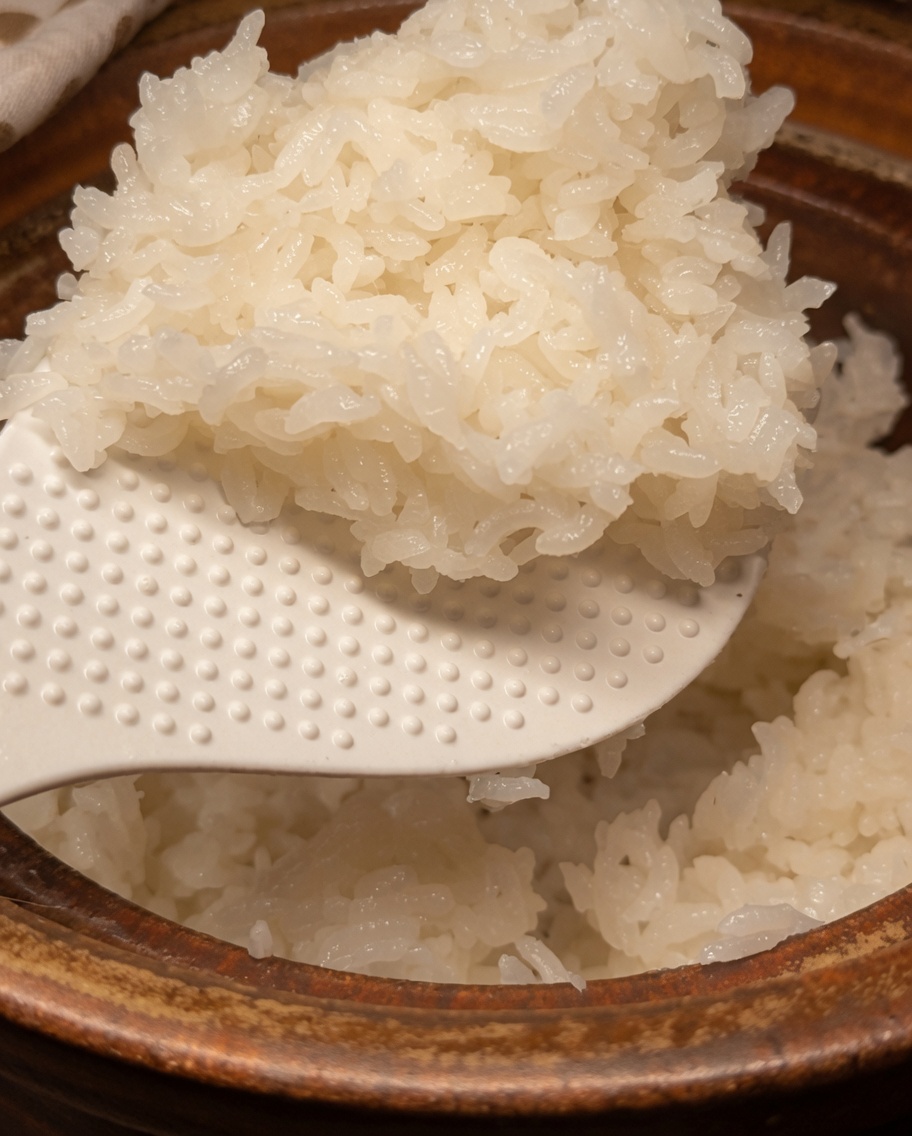
Once the rice is cooked and scooped out of the clay pot, allow it to cool to room temperature. Pour the mixture of rice vinegar, sugar, and salt over the rice and gently fold it in using a rice paddle to combine the flavors without mashing the grains.
Tip: Folding the vinegar in gently is key to keeping the rice texture light and distinct rather than sticky. - 14Start with tamagoyakicite: 1
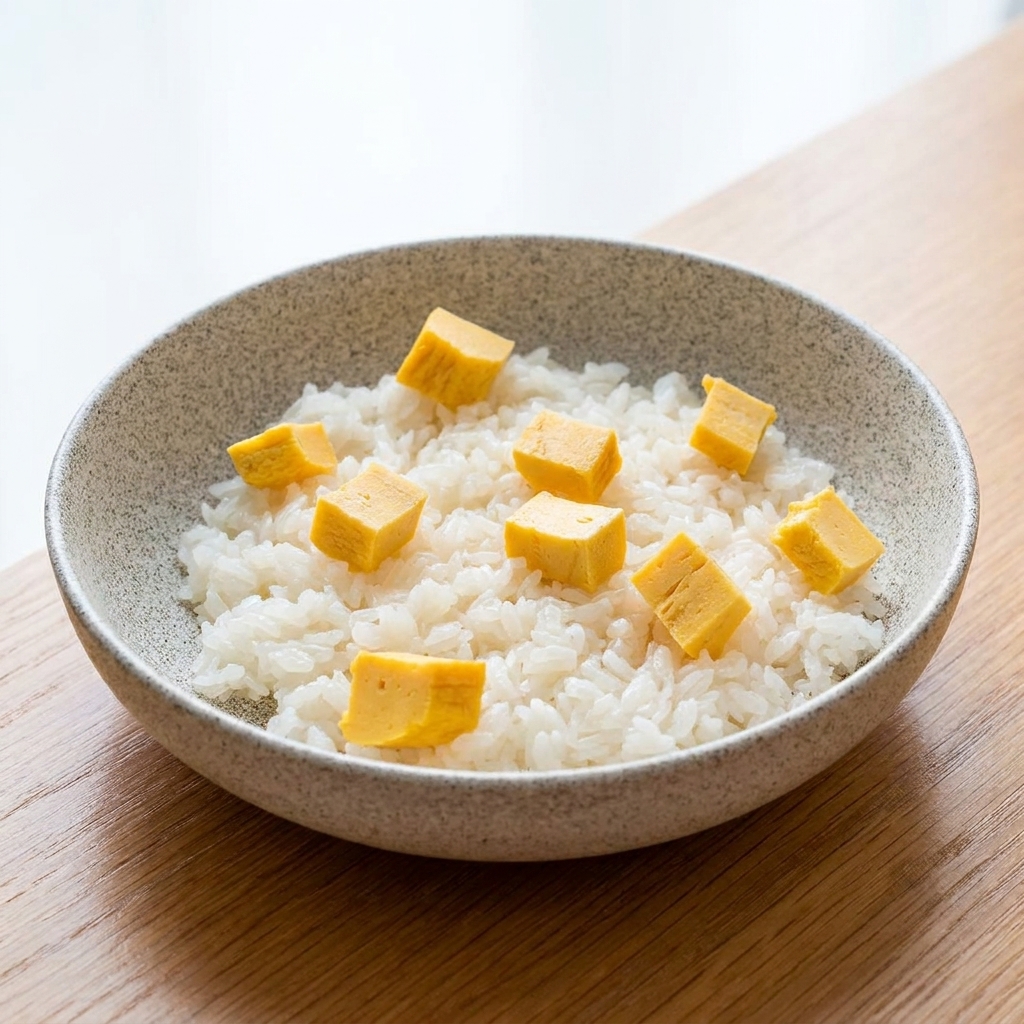
Spread a layer of the seasoned sushi rice evenly into a shallow serving bowlcite: 1. Begin assembling the chirashi by scattering small, uniform cubes of sweet, yellow tamagoyaki over the bed of ricecite: 1.
Tip: Space the ingredients evenly so that every bite contains a balanced mix of flavors and textures. - 15Add avocado and grilled eelcite: 1
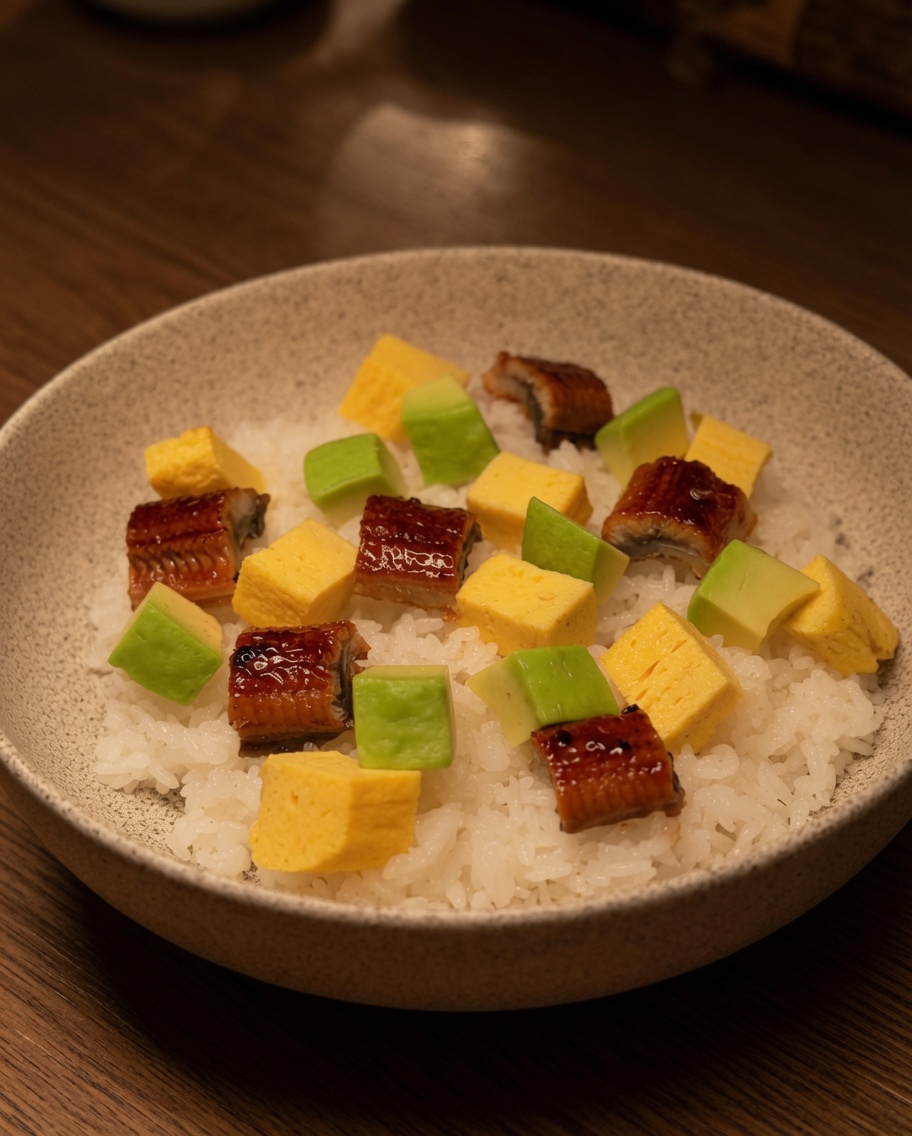
Continue building the beautiful toppings by adding vibrant green cubes of fresh avocado and pieces of glazed, grilled eel alongside the tamagoyakicite: 1. The variety of ingredients begins to create a visually stunning and flavorful dishcite: 1.
Tip: Handling the avocado gently prevents it from mashing, keeping the cubes neat and appetizing for the final presentation. - 16Add salmon and shrimpcite: 1
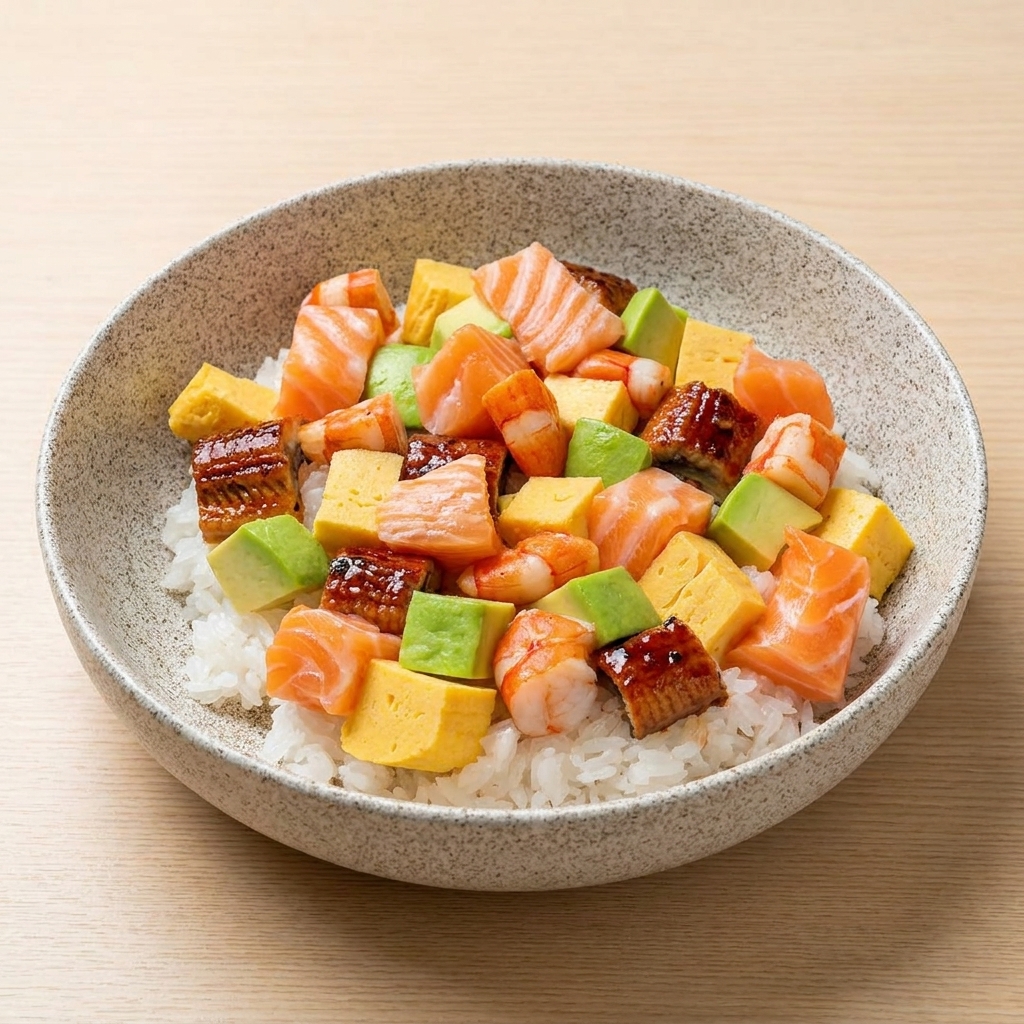
Complete the colorful arrangement by adding fresh, bright orange cubes of raw salmon and pieces of cooked shrimp to the bowlcite: 1. Scatter them evenly among the other toppings to create a vibrant mosaic of seafoodcite: 1.
Tip: As a final touch before serving, top the dish with a generous amount of salmon roe for a burst of salty, oceanic flavor.