Japanese Tuna
Yam Rice Bowl (Maguro Yamakake Don)
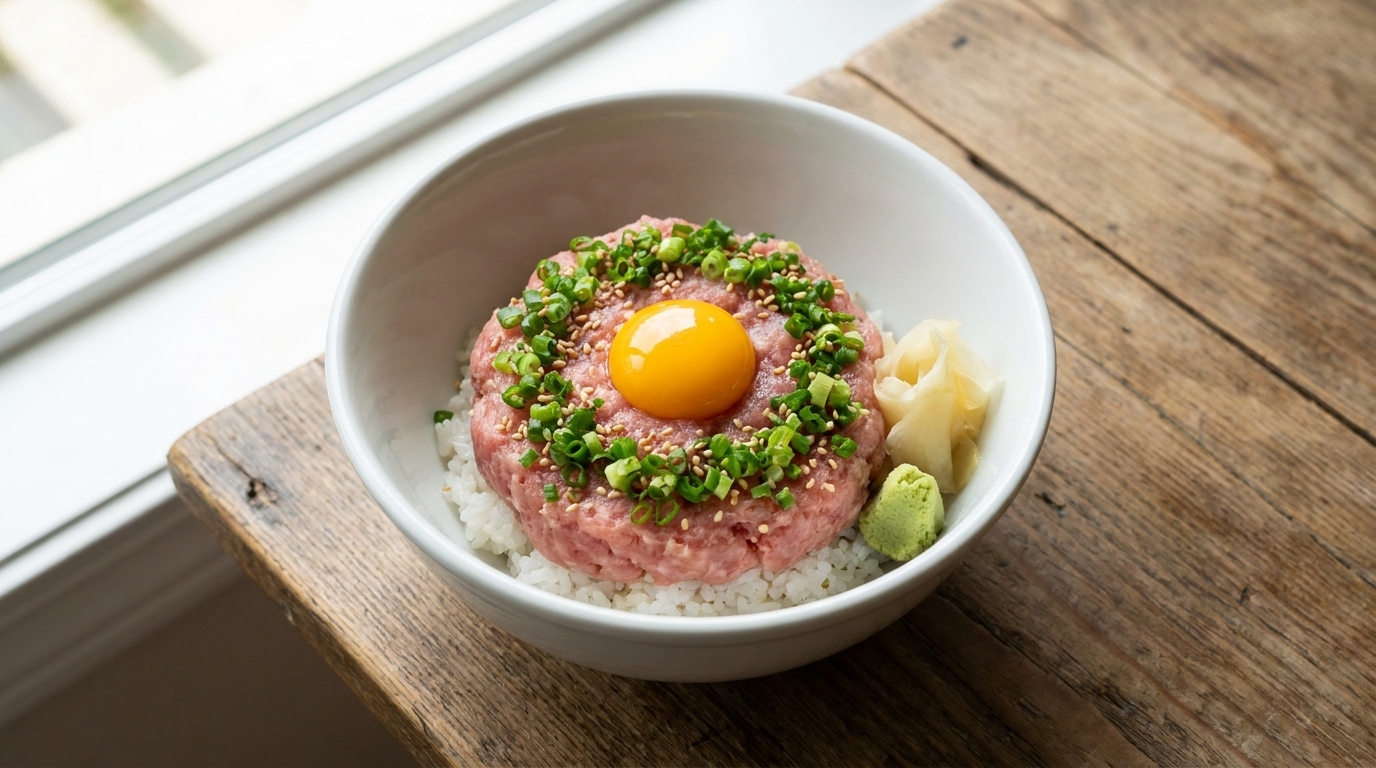
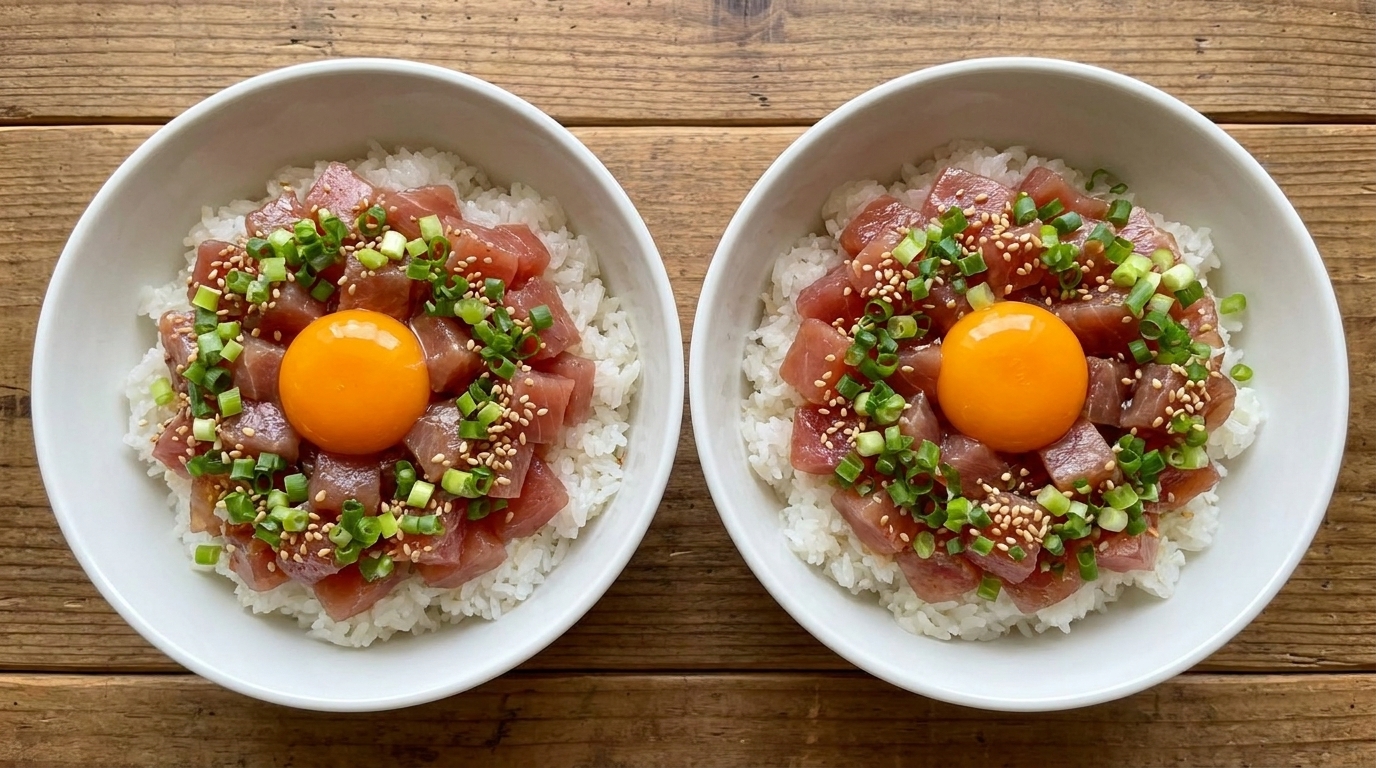
Experience the perfect harmony of textures with this classic Maguro Yamakake Don. Fresh ruby-red tuna, creamy grated mountain yam, and a rich egg yolk come together over warm rice.
Known as Maguro Yamakake Don in Japan, this comforting dish highlights the contrast between lean, fresh raw tuna and the viscous, earthy texture of grated mountain yam. It is a beloved staple that is both refreshing and deeply satisfying, finished with a raw egg yolk for a touch of luxurious richness.
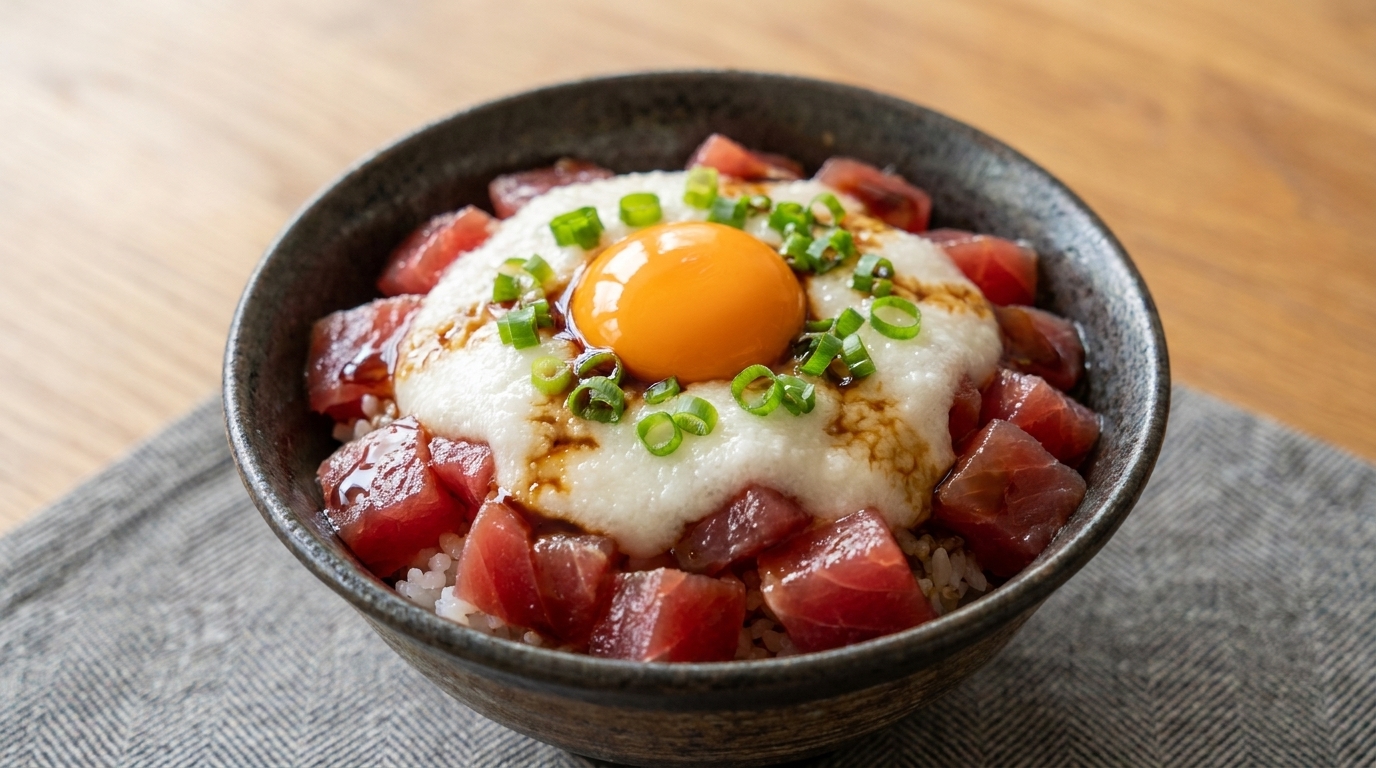
Ingredients
- 200 g sashimi-grade red tuna (maguro)
- 150 g Chinese yam (nagaimo or yamaimo)
- 2 tbsp dashi or meat broth
- 1 tbsp soy sauce
- 1/2 tsp wasabi
- 1 portion cooked short-grain white rice
- 1 fresh egg yolk (pasteurized)
- 1 tbsp chopped scallions (green onions)
Instructions
- 1Cube the raw tuna
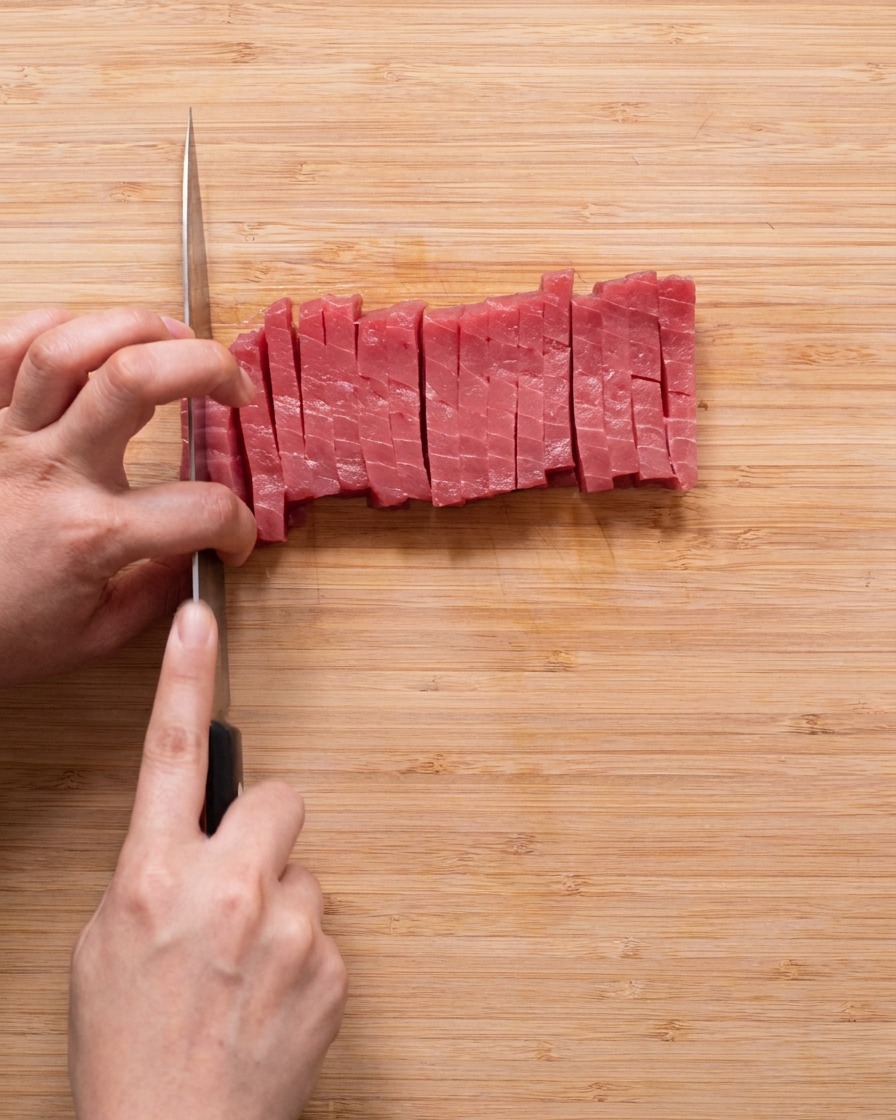
Place the block of raw red tuna on a wooden cutting board. Using a sharp knife, carefully slice the tuna into uniform, bite-sized cubes suitable for a rice bowl.
Tip: Keep the tuna chilled until you are ready to cut it to ensure clean, firm slices. - 2Grate the Chinese yam
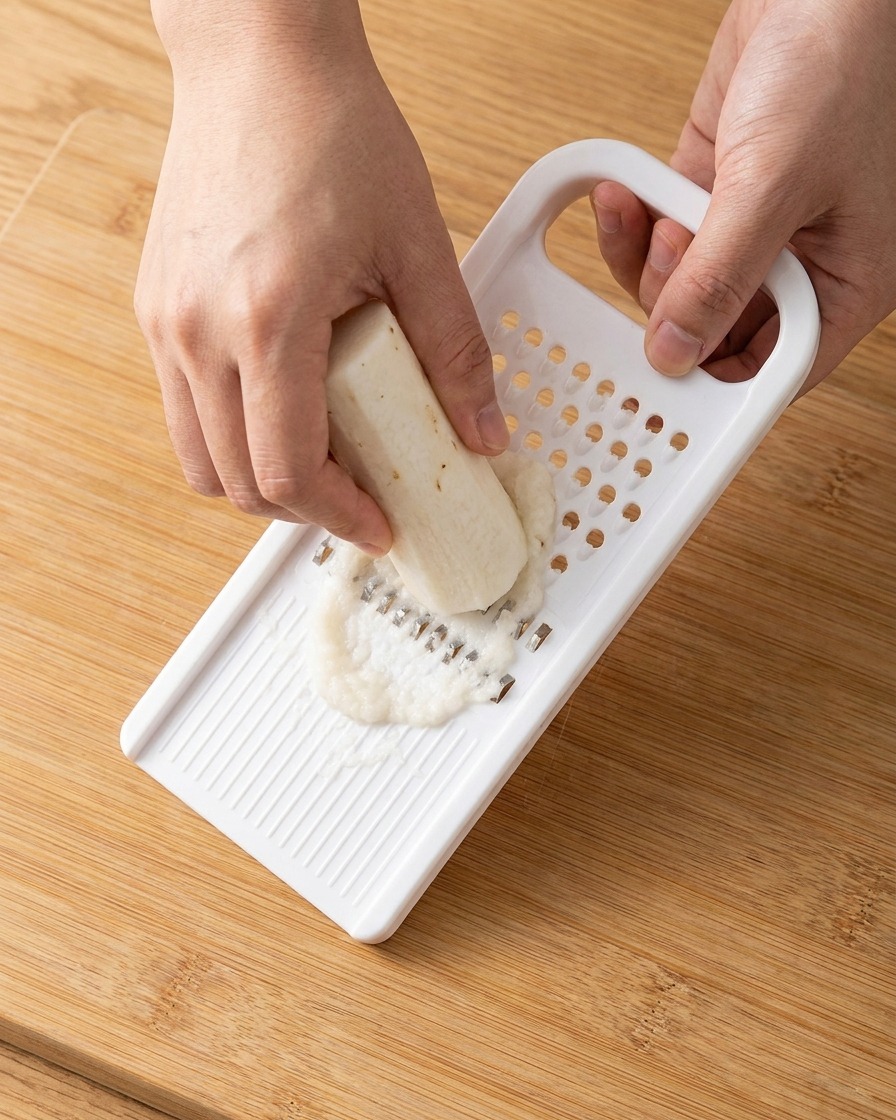
Peel the white Chinese yam and use a specialized plastic grater to process it into a smooth, thick paste. Grating the yam breaks down its fibrous structure, creating a unique, slightly viscous texture essential for this topping.
Tip: Chinese yam can be slippery when peeled; hold it firmly with a towel if needed for better grip. - 3Mix yam paste with broth
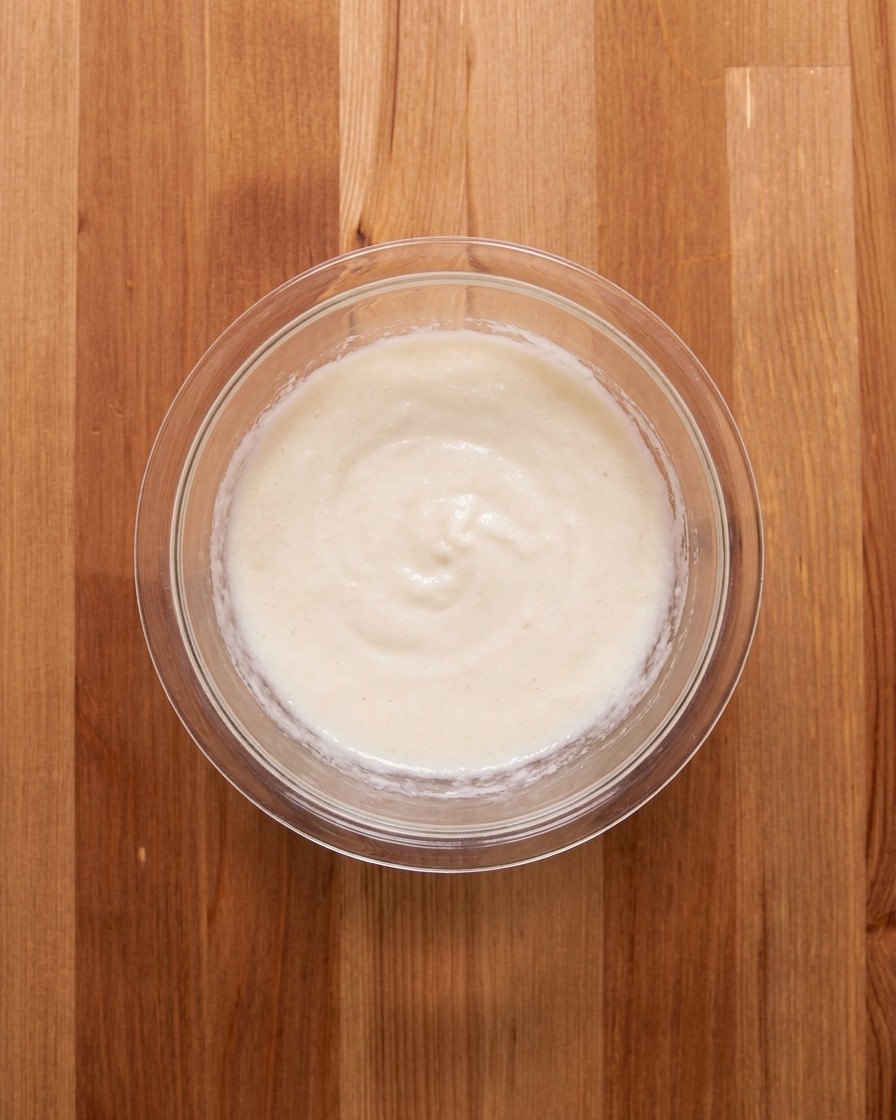
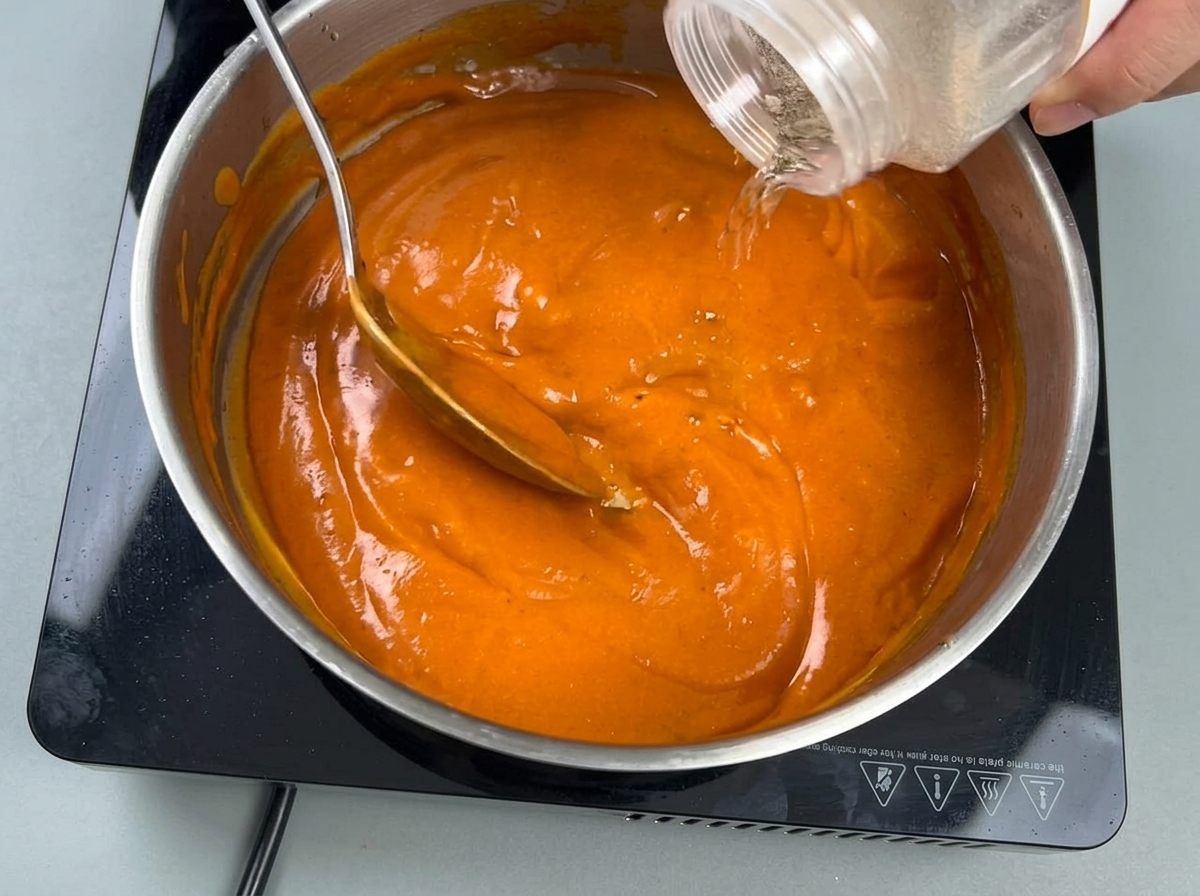
Add the prepared meat broth to the grated yam paste in a clear glass bowl. Stir the mixture thoroughly using chopsticks until the yam and broth are fully combined into a cohesive, smooth sauce.
Tip: Add the broth gradually to achieve your preferred consistency for the sauce. - 4Assemble the tuna bowl
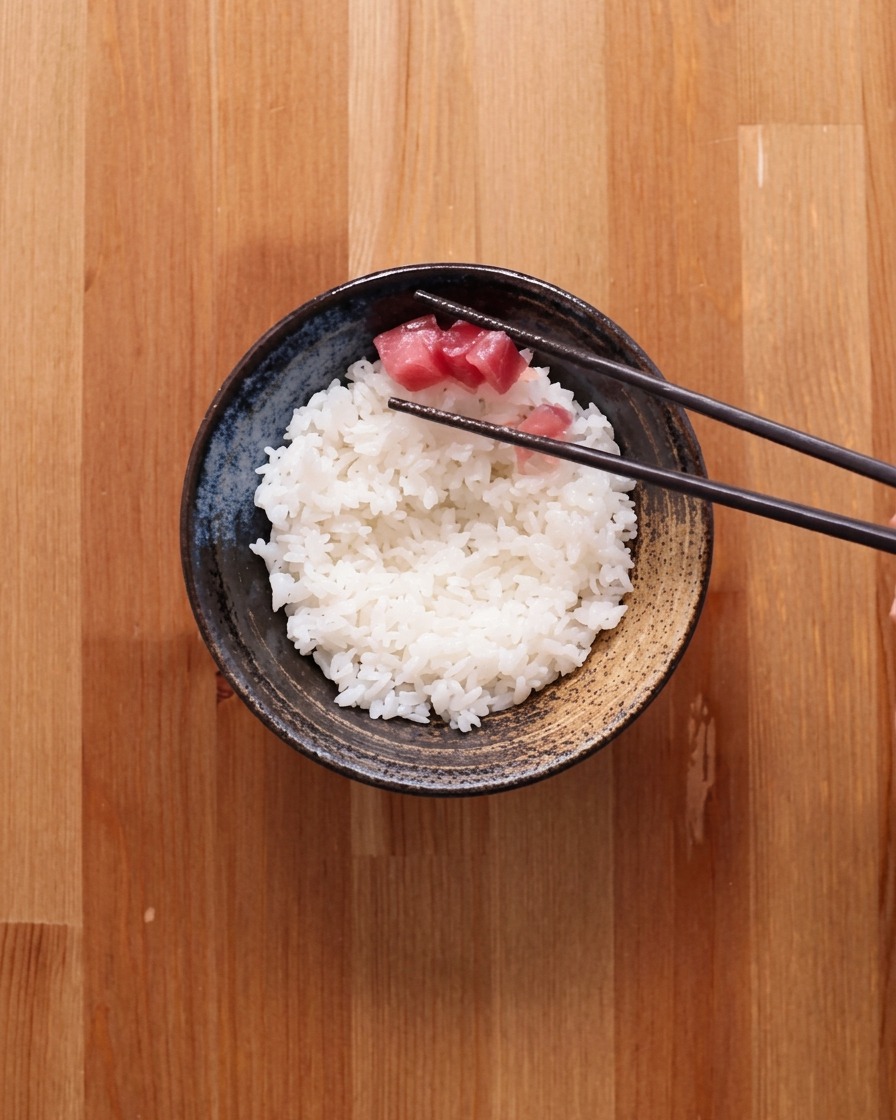
Arrange the freshly cut raw tuna cubes in an even, single layer over the top of a bowl filled with cooked white rice. Use chopsticks to distribute the tuna evenly across the surface for a balanced presentation.
Tip: Ensure the rice is slightly warm or at room temperature, but not hot, to maintain the freshness of the raw tuna. - 5Pour the yam sauce
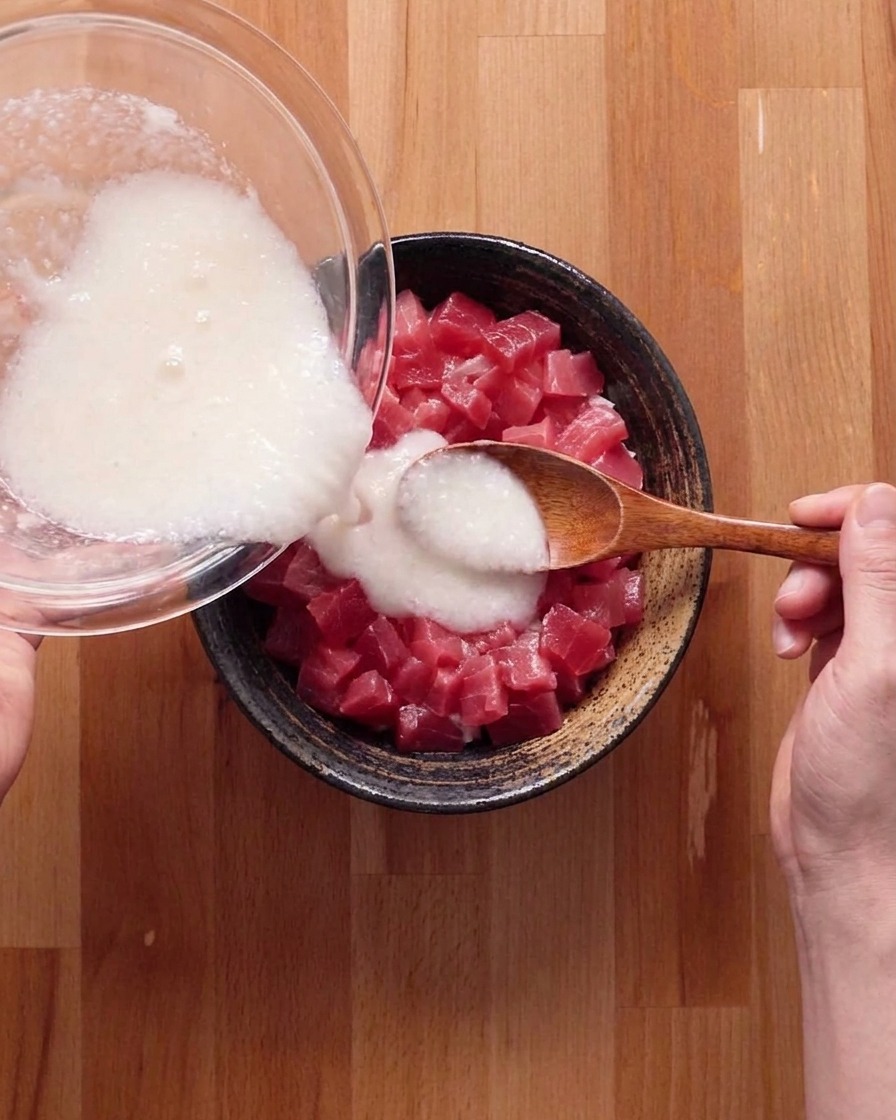
Slowly and smoothly pour the yam and broth mixture over the tuna and rice bowl. Ensure the sauce covers the tuna evenly to impart flavor and provide the signature texture.
Tip: Pour slowly to prevent the sauce from splashing and to maintain an attractive layer over the tuna. - 6Drizzle the finishing sauce
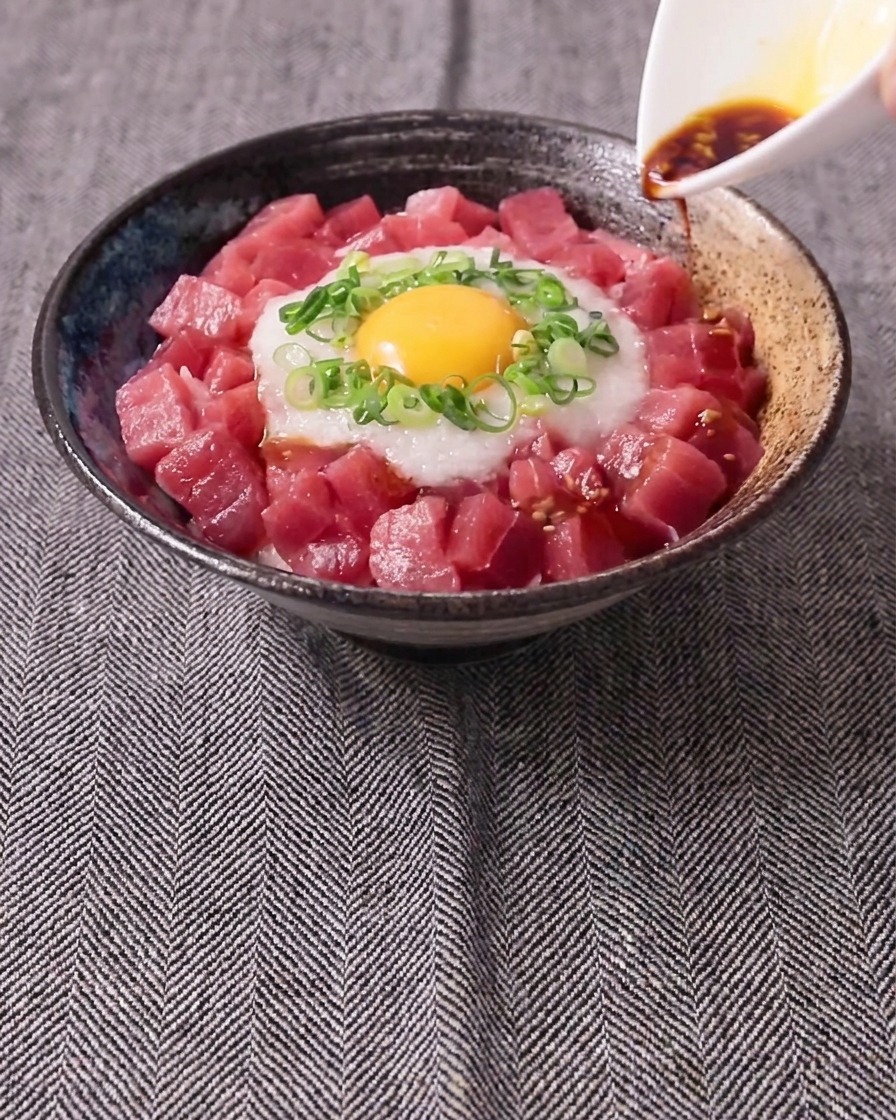
Take the small white pitcher containing the soy sauce and wasabi mixture and drizzle it evenly over the assembled bowl. Ensure the dark sauce lightly coats the fresh tuna cubes, grated yam, and raw egg yolk to beautifully integrate all the flavors of the dish.
Tip: Pour the sauce over the bowl just before serving to keep the ingredients fresh and prevent the salt from breaking down the delicate raw tuna.