Spicy Korean Tuna
Cabbage Rice Bowl
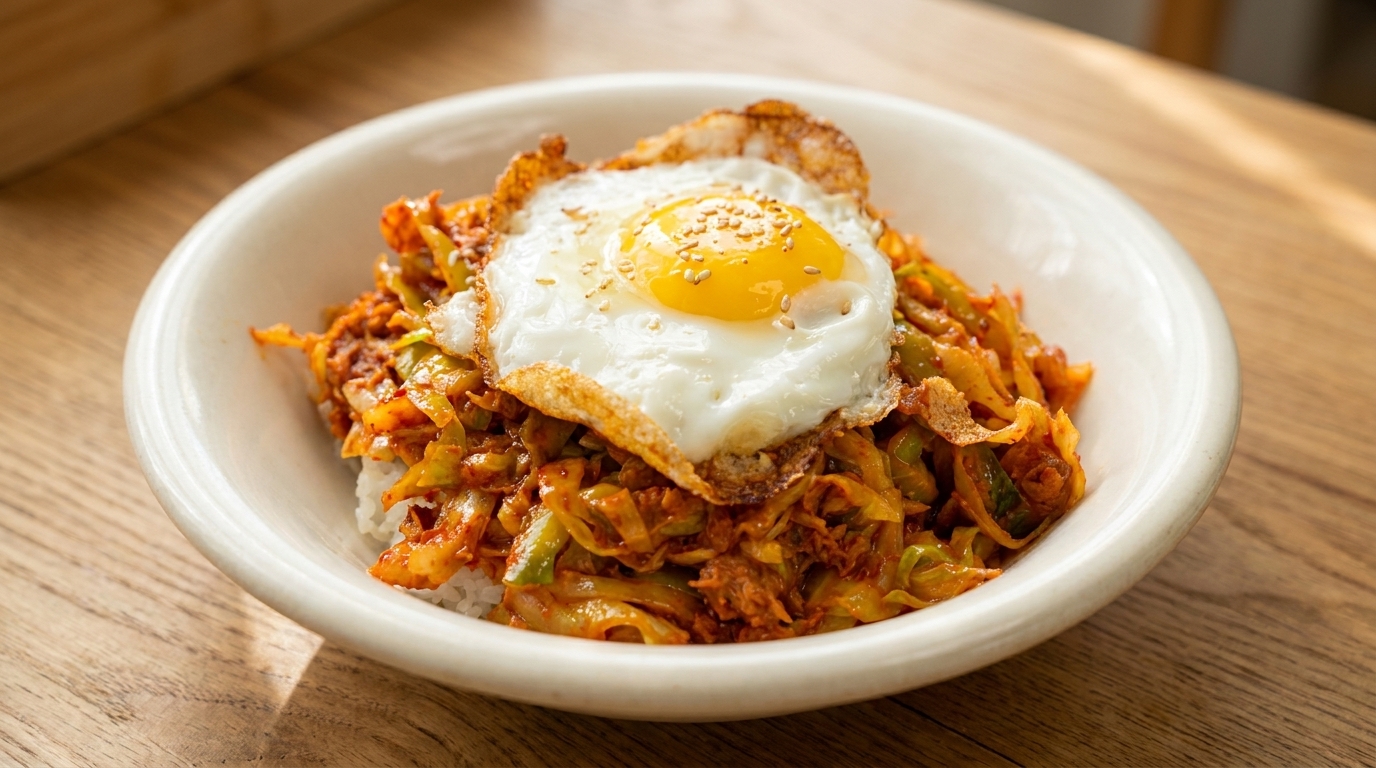
Transform a simple can of tuna and crisp cabbage into a deeply savory, gochujang-laced rice bowl. This quick and comforting meal comes together in minutes.
This simple yet incredibly flavorful rice bowl relies on everyday pantry staples to create something extraordinary. By combining canned tuna with a savory, spicy blend of gochujang and doenjang, it elevates humble ingredients into a satisfying, umami-rich meal. It is a perfect example of quick, resource-savvy home cooking that does not compromise on taste or texture.
Ingredients
- 1 can canned tuna
- 1/5 whole green cabbage
- 1/2 whole white onion
- 1 stalk green onion
- 1 tbsp red pepper powder (gochugaru)
- 1 tbsp tuna extract or fish sauce
- 1 tbsp allulose or liquid sweetener
- 1/2 tbsp gochujang (Korean chili paste)
- 1/2 tbsp doenjang (Korean soybean paste)
- 2 tbsp water
- 1 tbsp cooking oil
- 1 portion cooked white rice
- 1 whole egg (optional garnish)
Instructions
- 1Chop the green onions
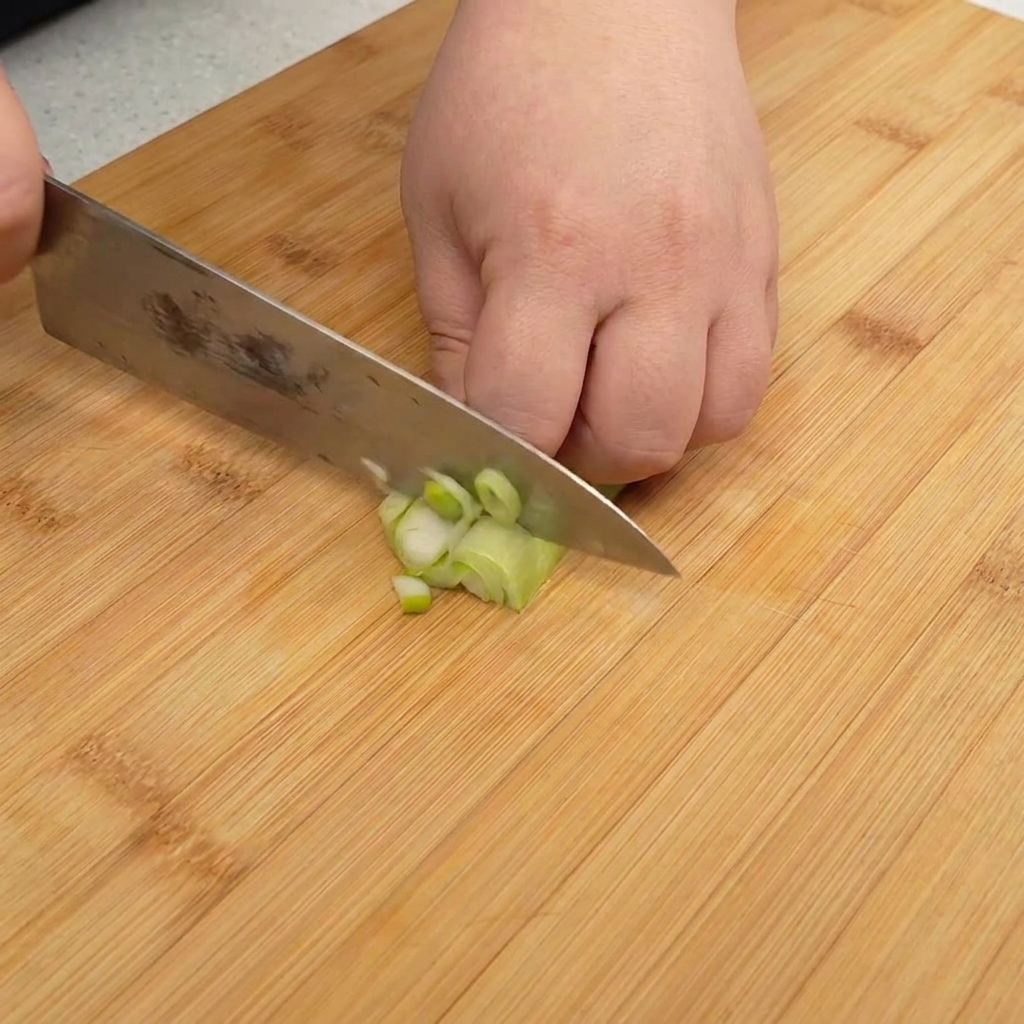
Take fresh green onions and chop them into fine, uniform pieces on your cutting board. These will be added later for freshness and a mild aromatic crunch.
Tip: Keep your fingers tucked in when chopping to ensure a safe and steady rhythm. - 2Slice the onion
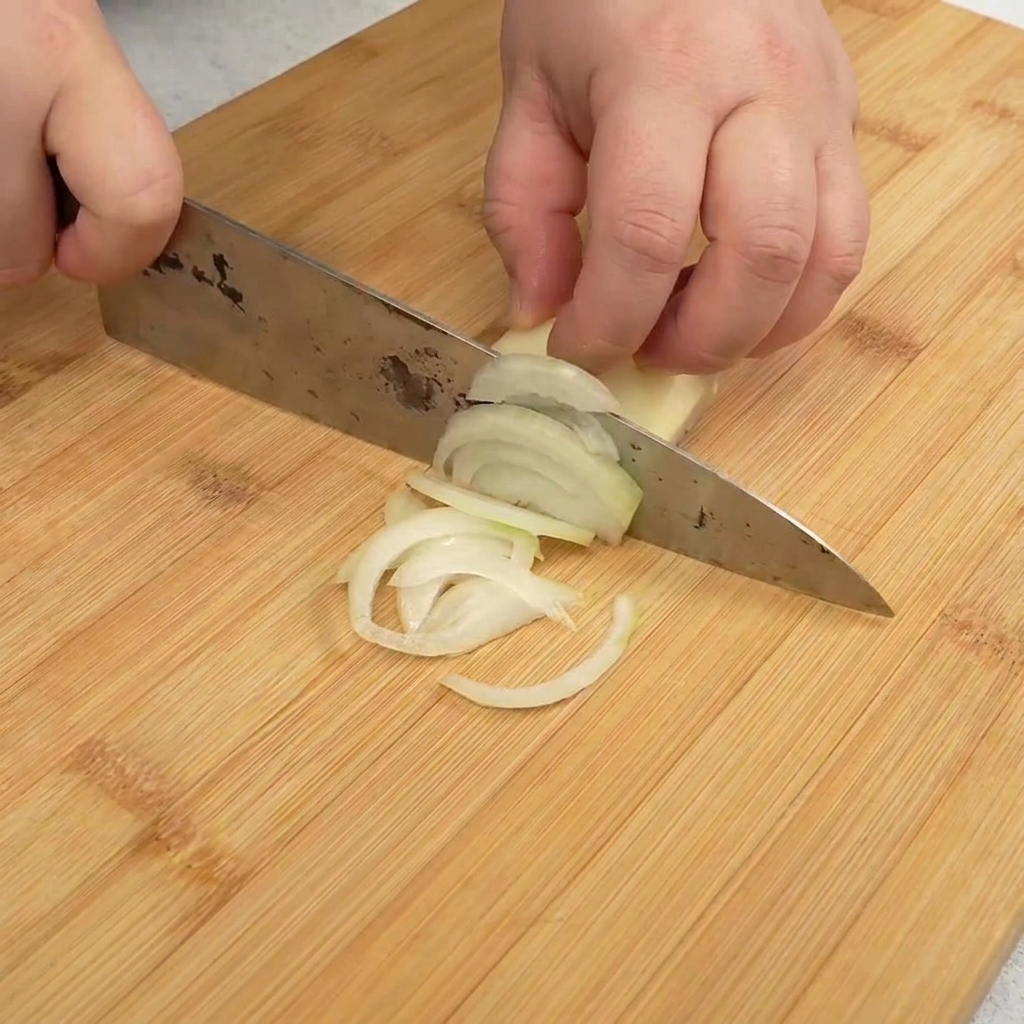
Take half of a white onion and slice it into thin, even strips. These will be stir-fried first to build the aromatic base of the dish.
Tip: Slicing against the grain makes the onion strips tenderize faster during cooking. - 3Shred the cabbage
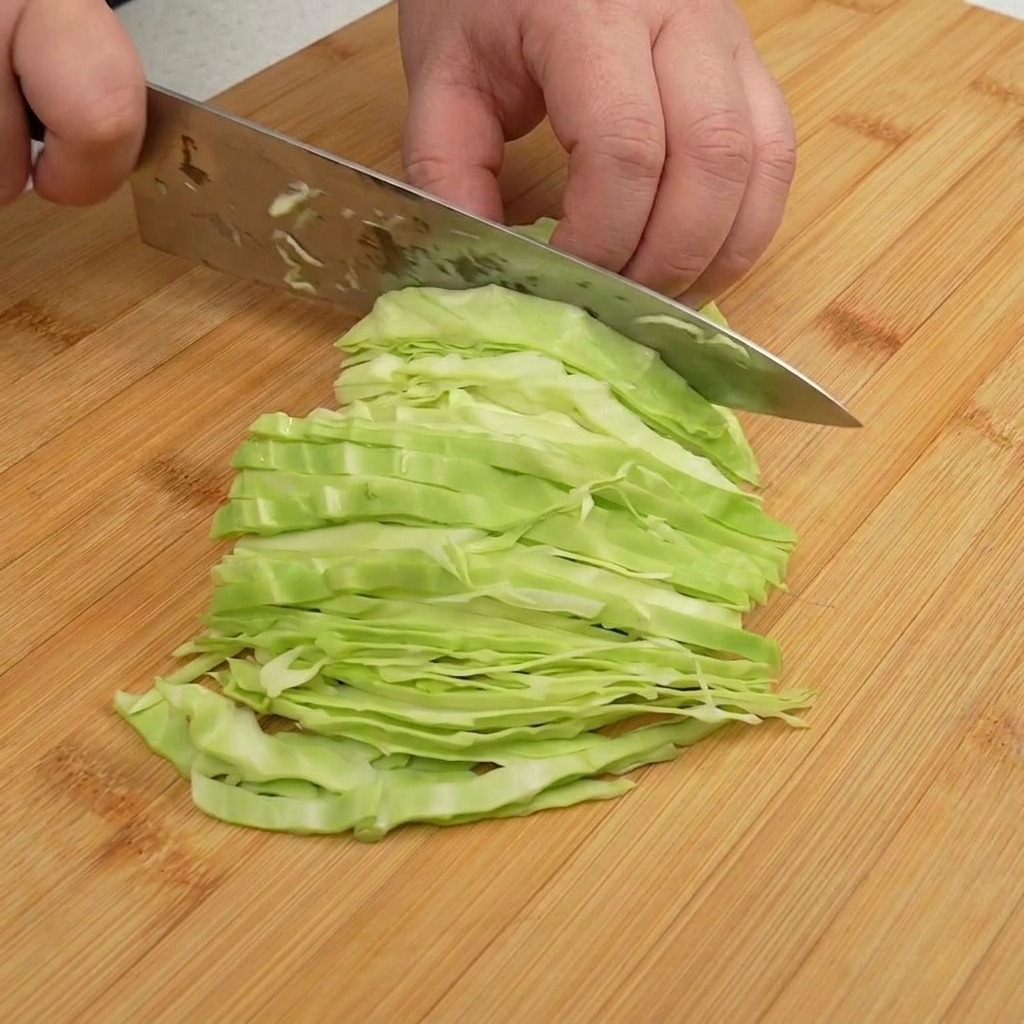
Cut a fifth of a fresh cabbage wedge into fine, thin shreds. Shredding the cabbage thinly ensures it softens quickly and absorbs the savory sauce perfectly.
Tip: Removing the hard core before shredding will result in a more uniform texture. - 4Drain the canned tuna
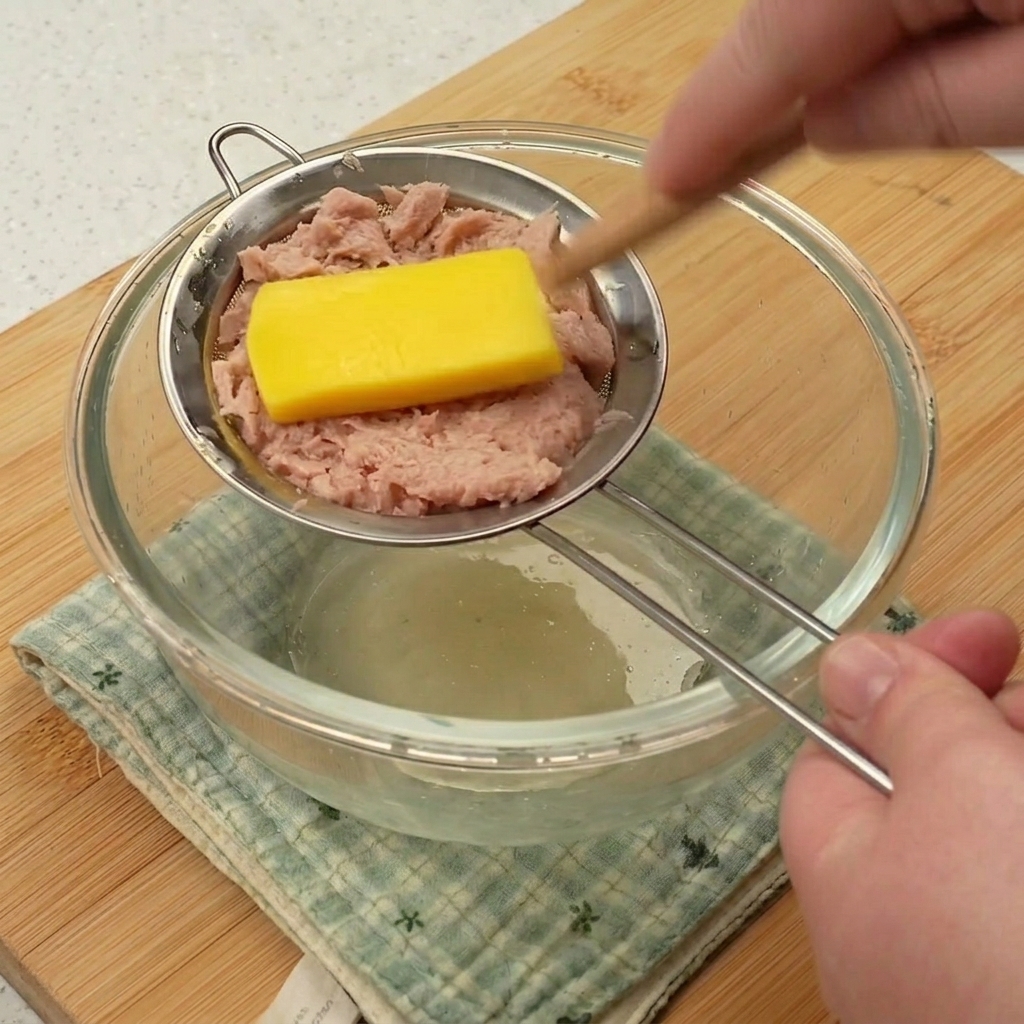
Place the canned tuna into a small strainer held over a bowl. Use a spatula or spoon to press down on the tuna to thoroughly drain away the excess oil.
Tip: Draining the oil helps prevent the finished dish from becoming overly greasy. - 5Prepare the sauce
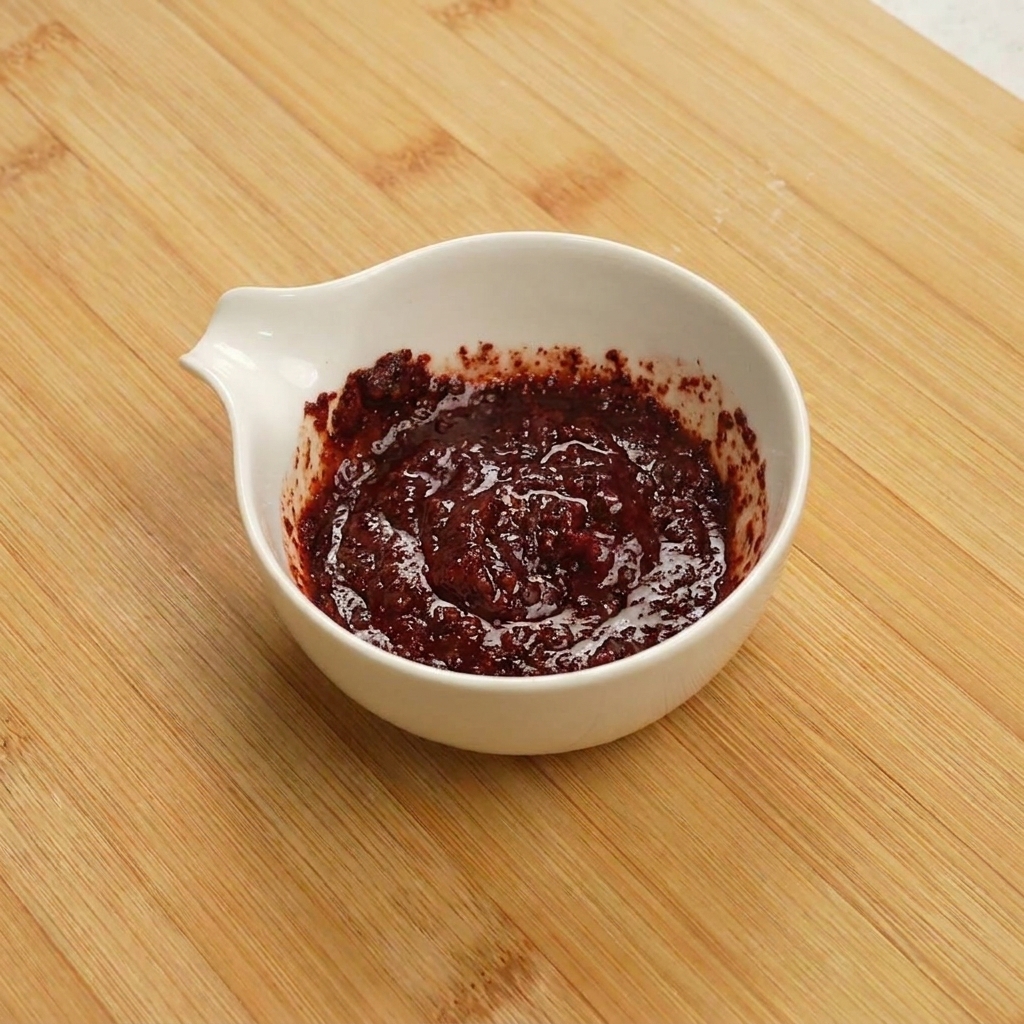
In a small bowl, combine 1 tablespoon of red pepper powder, 1 tablespoon of tuna extract, 1 tablespoon of allulose, half a tablespoon of gochujang, and half a tablespoon of doenjang. Mix everything together until the seasoning is well-incorporated into a smooth paste.
Tip: Ensure the powders are fully dissolved into the liquid ingredients for a balanced flavor. - 6Heat the pan
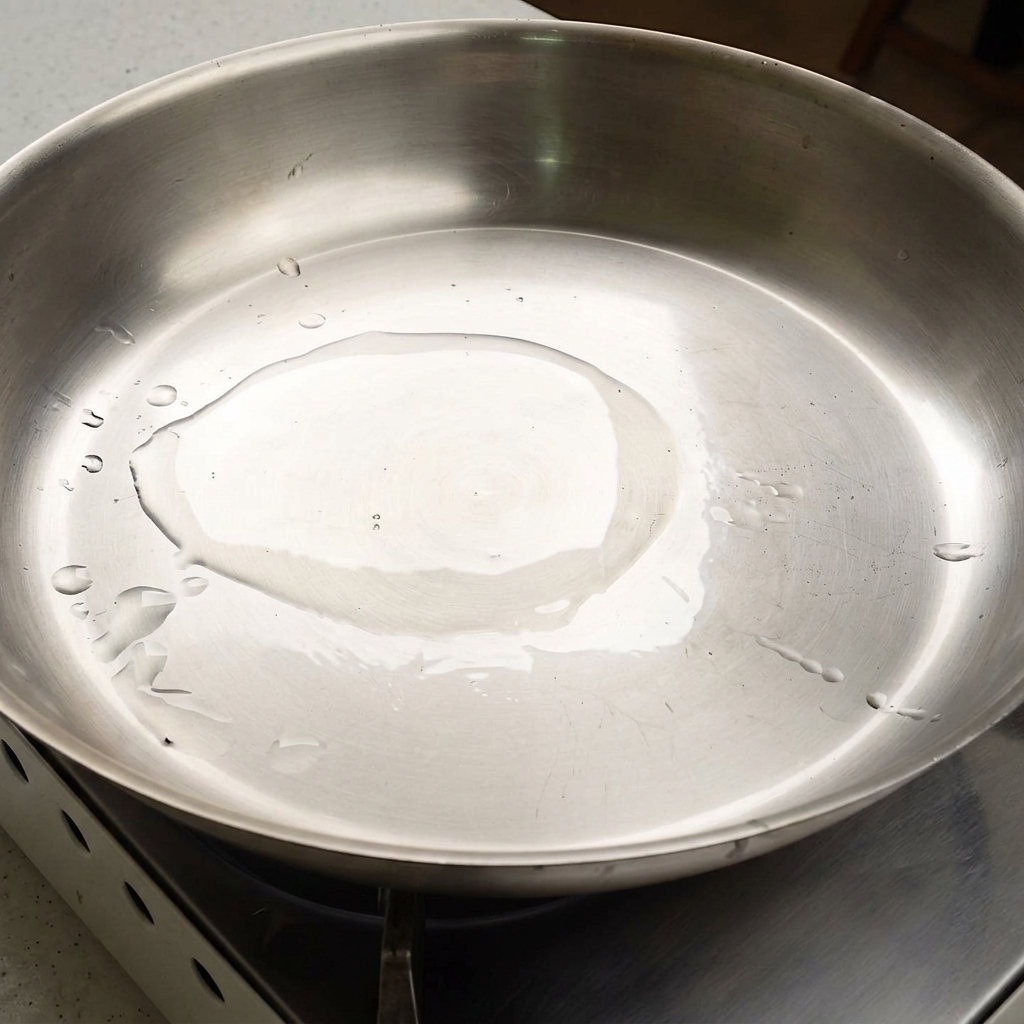
Place a stainless steel skillet over medium heat and allow it to preheat. Once hot, drizzle in a light layer of cooking oil to coat the bottom of the pan, preparing it for the aromatics.
Tip: Wait for the oil to shimmer slightly before adding the onions to ensure they fry properly. - 7Sauté the onions
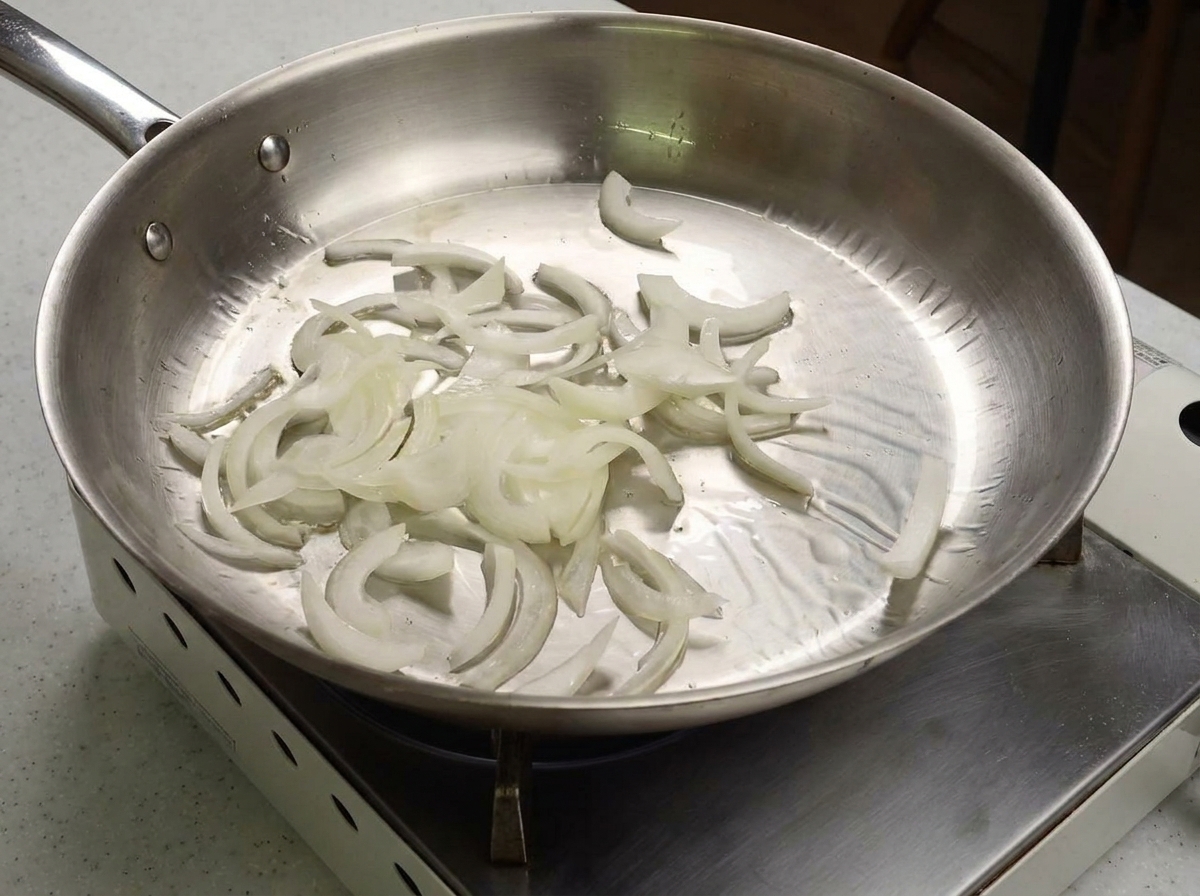
Drizzle cooking oil into a preheated stainless steel pan. Add the sliced white onions and stir-fry them over medium heat until they become aromatic and slightly translucent.
Tip: Sautéing the onions first builds a sweet, flavorful base for the rest of the ingredients. - 8Add the cabbage
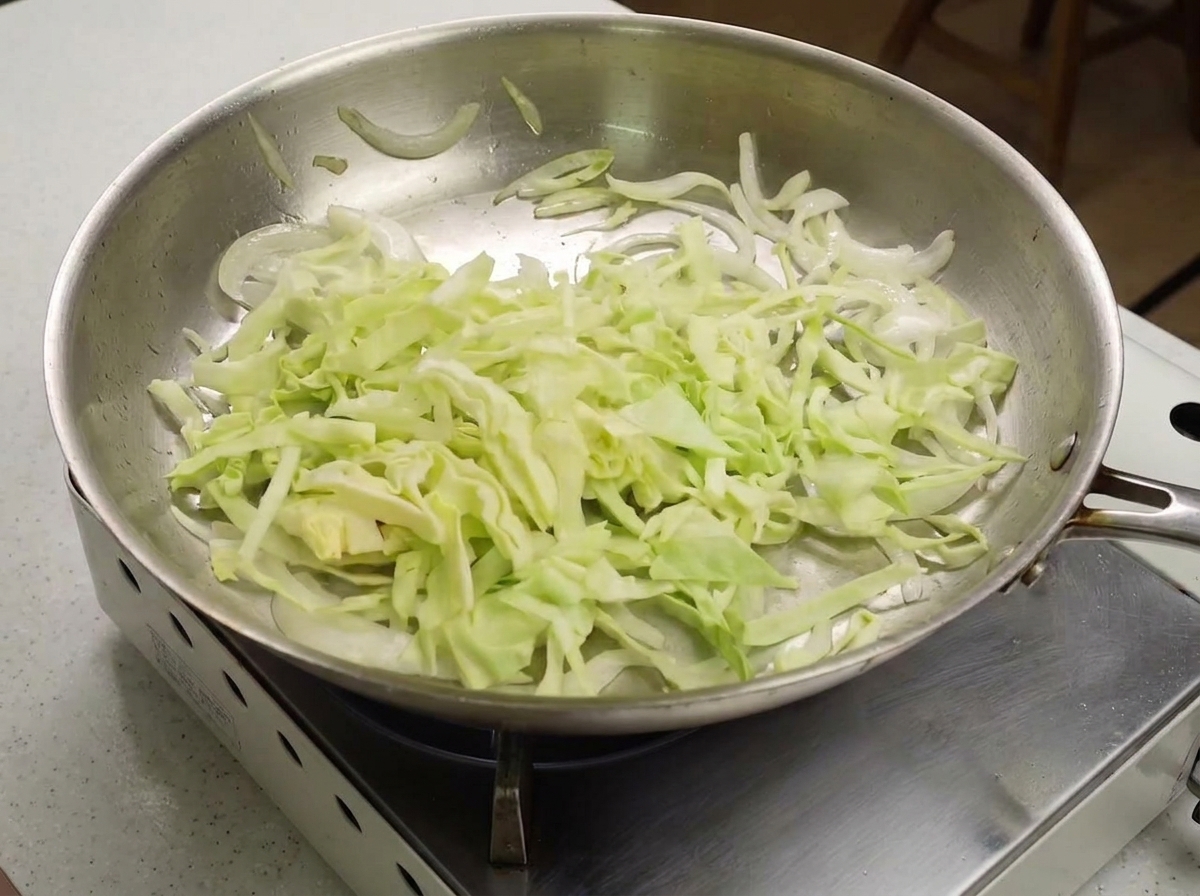
Once the onions are fragrant, add the finely shredded green cabbage to the pan. Continue to stir-fry the vegetables together over medium heat until the cabbage begins to soften and reduce in volume.
Tip: Slicing the cabbage thinly ensures it cooks quickly and evenly alongside the onions without burning. - 9Add the spicy mixed sauce
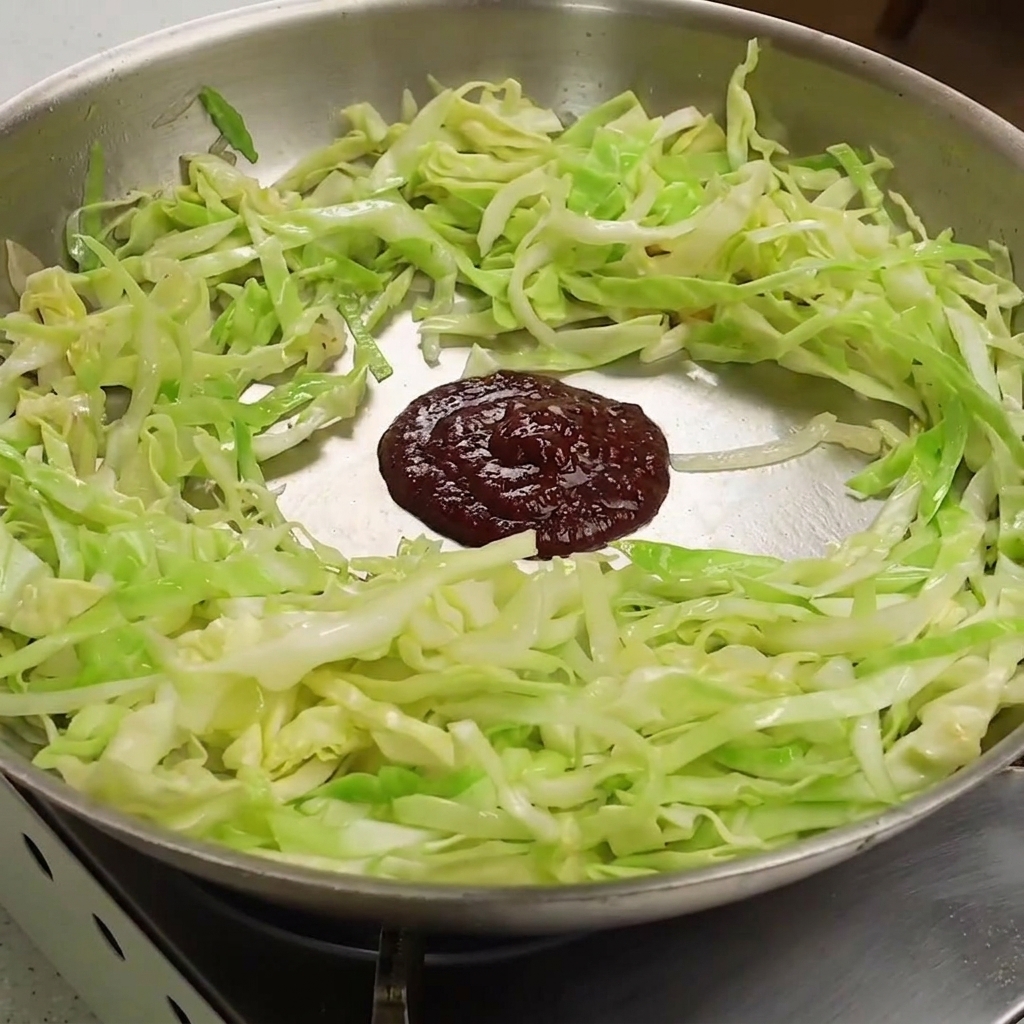
When the cabbage has softened nicely, add the prepared sauce—a mixture of red pepper powder, tuna extract, allulose, gochujang, and doenjang—directly into the center of the pan.
Tip: Waiting until the cabbage is softened before adding the sauce prevents the gochujang and doenjang from sticking and burning on the bottom of the pan. - 10Simmer the mixture
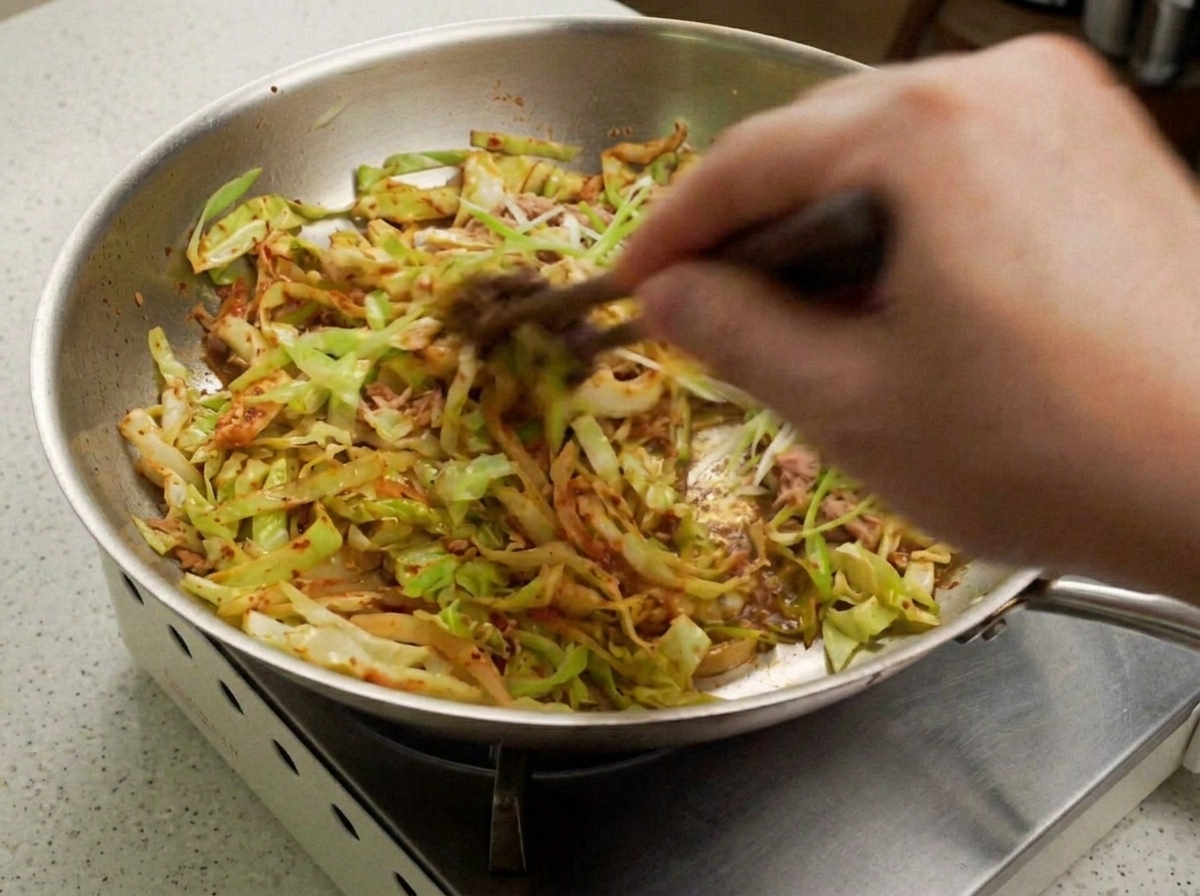
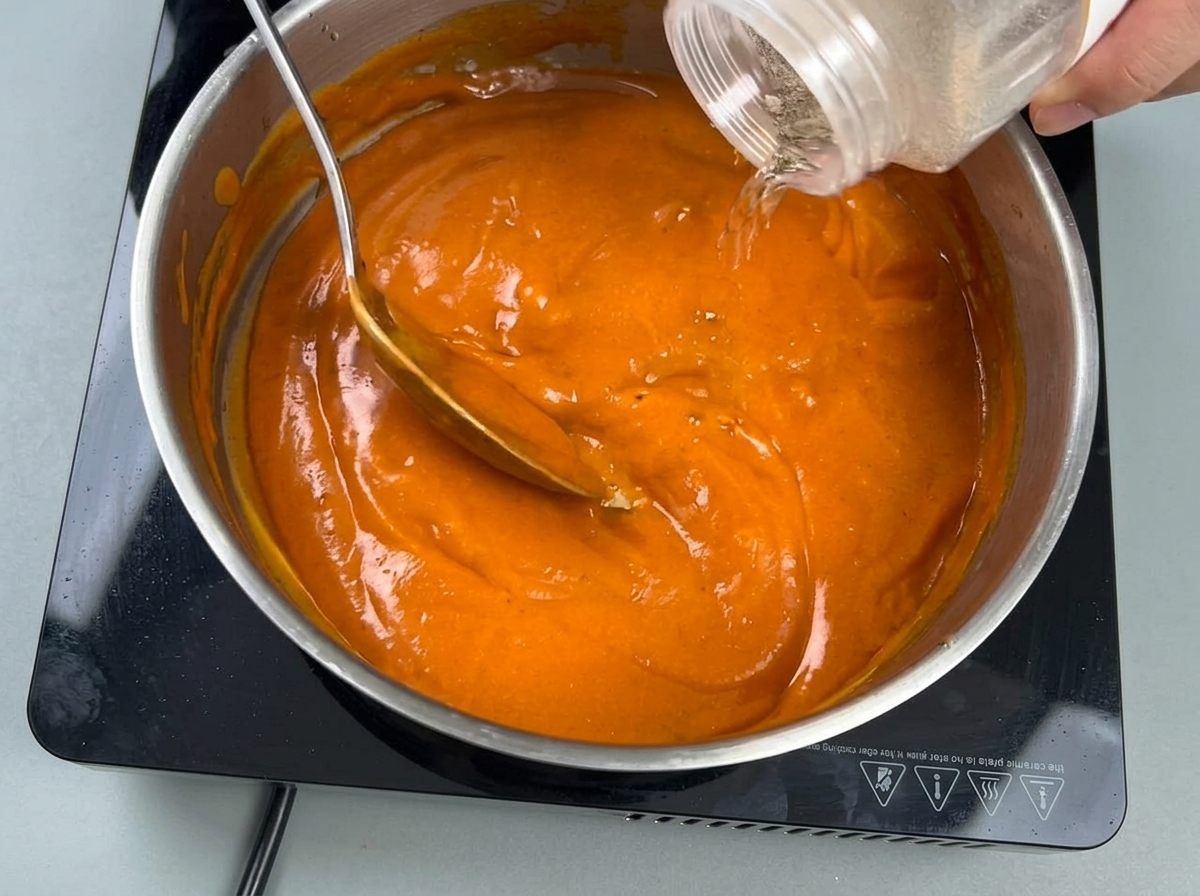
Once the cabbage has softened, pour the prepared sauce into the pan. Add 2 tablespoons of water and allow the mixture to simmer briefly to combine the flavors.
Tip: Adding a little water helps to deglaze the pan and creates a light, flavorful sauce that coats the vegetables. - 11Add the tuna and green onions
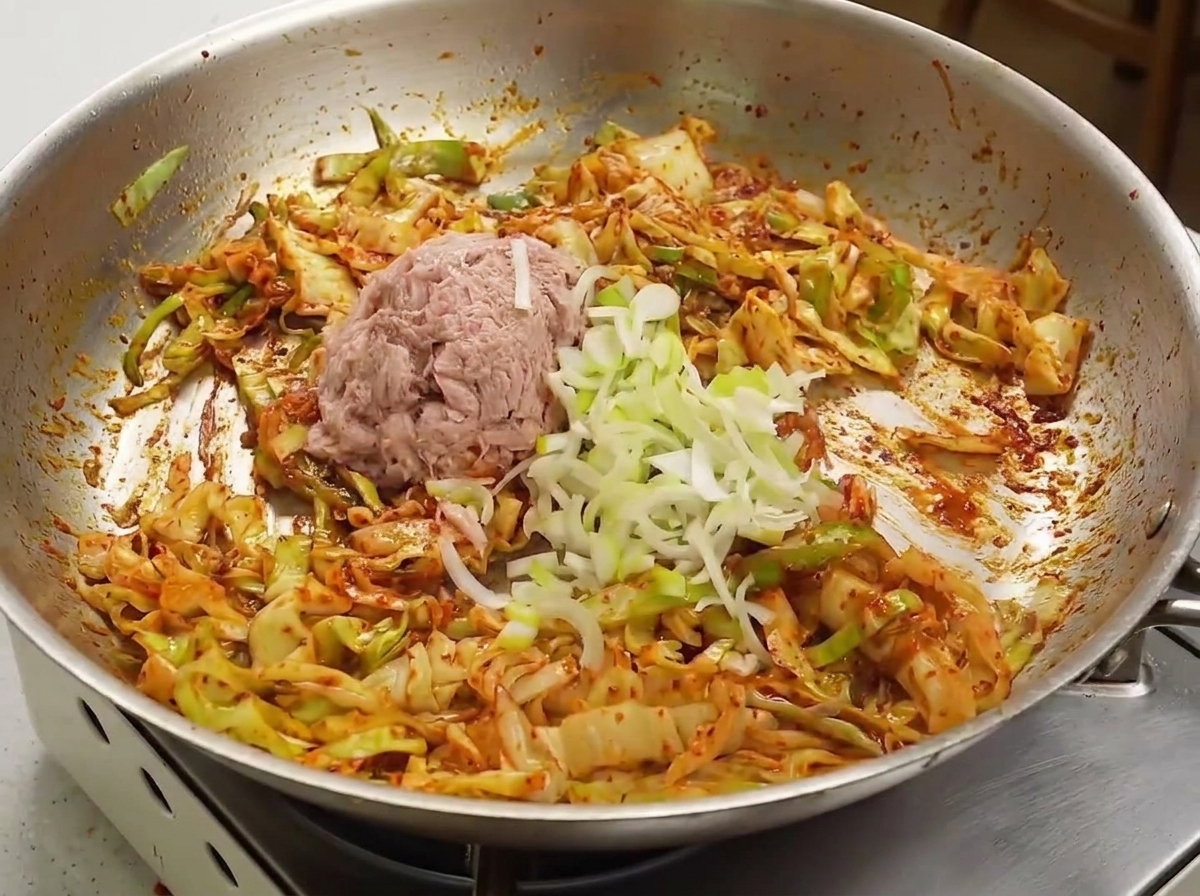
After simmering the sauce and vegetables briefly, add the drained canned tuna and the finely chopped green onions right on top of the mixture.
Tip: Make sure to thoroughly drain the oil from the canned tuna beforehand so the final dish doesnt become overly greasy. - 12Stir-fry until fully coated
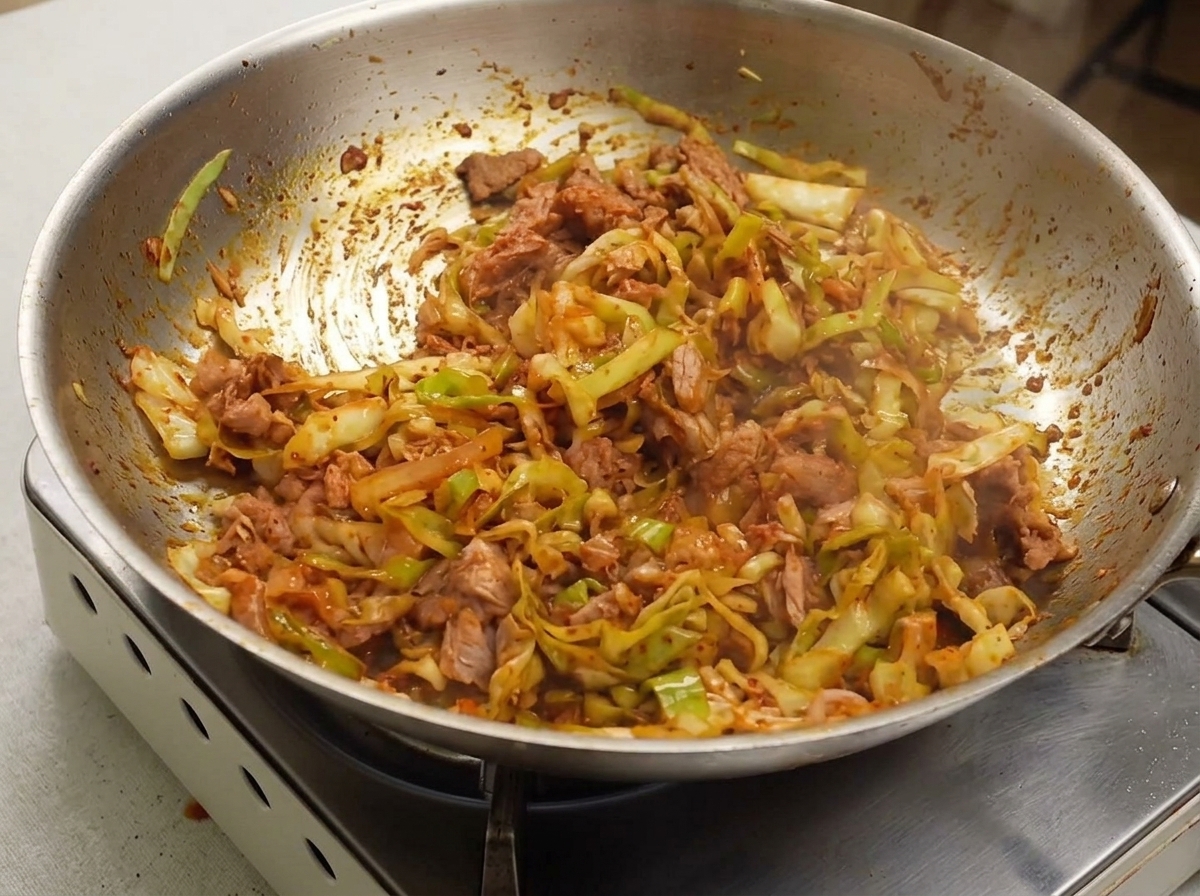
Gently mix the tuna and green onions into the spicy cabbage base, tossing everything together. Continue cooking just until all the ingredients are fully coated in the vibrant red sauce and warmed through.
Tip: Stir gently so you dont completely mash the tuna; leaving some chunks intact provides a much better texture for the final dish. - 13Serve over rice
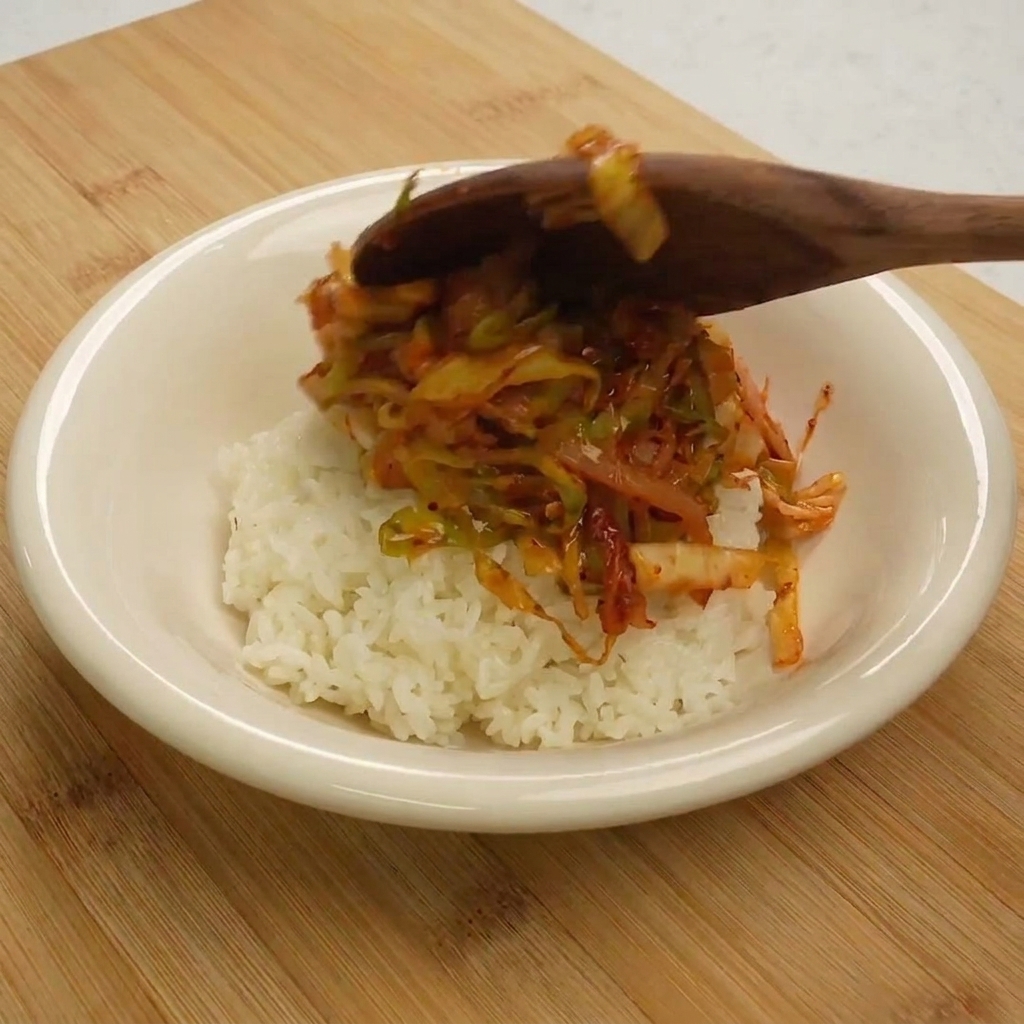
Prepare a bowl of warm white rice. Gently spoon the finished stir-fried tuna and cabbage mixture generously over the rice, ensuring all the flavors are distributed evenly. For the perfect finishing touch, top the bowl with a freshly fried sunny-side-up egg.
Tip: For the best flavor, make sure the mixture is served hot directly over the freshly cooked rice.