Classic Korean Tuna Kimchi Soup (Tuna Kimchi Jjigae)
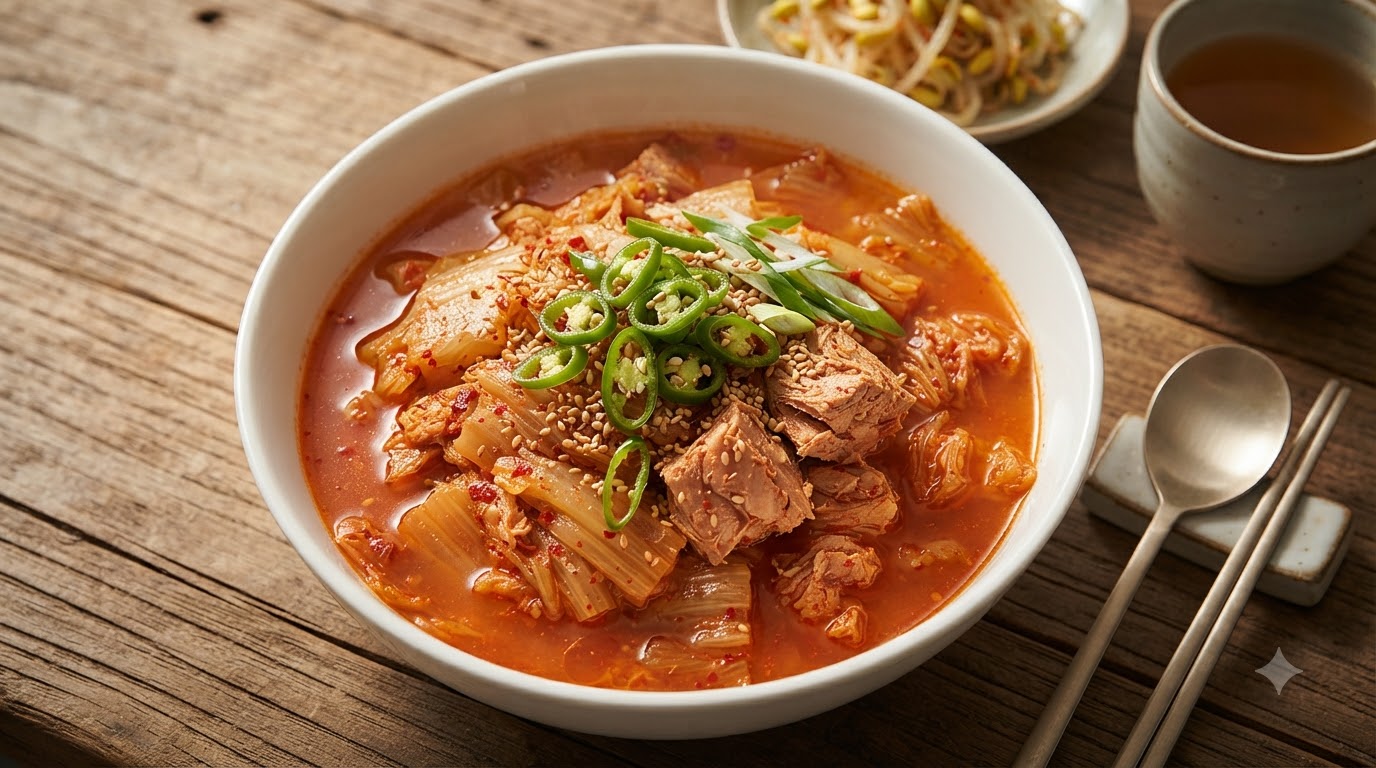
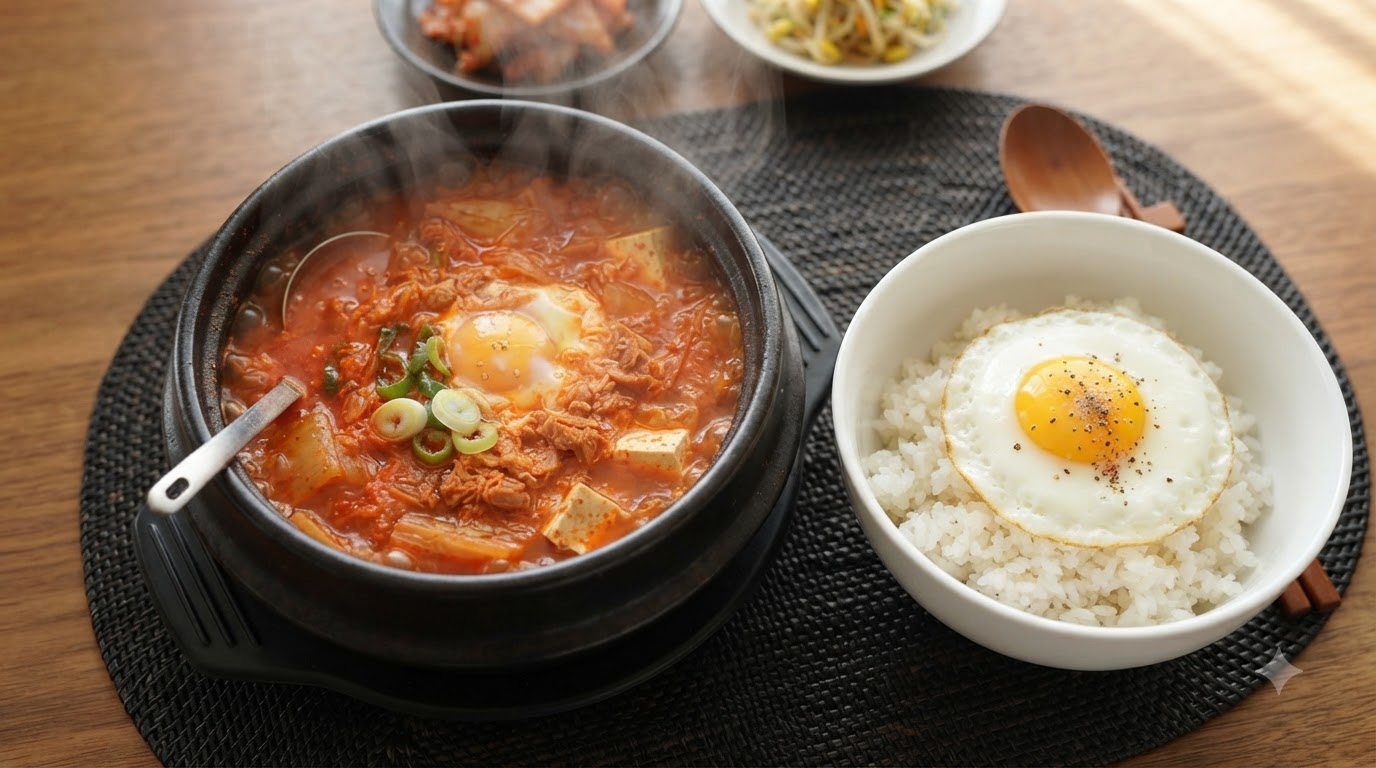
A comforting, spicy Korean stew made with aged kimchi, savory canned tuna, onions, and chili powder, perfectly served with a fried egg over warm white rice.
Tuna kimchi jjigae is a beloved staple of Korean home cooking, combining the deep umami of well-fermented kimchi with the rich, savory broth of canned tuna. Utilizing the oil from the tuna adds a unique depth of flavor to the base before simmering with water and kimchi juice. Balanced with a hint of sugar and heat from chili powder, this quick and satisfying stew comes together in minutes in a traditional clay pot.
Ingredients
- 1 bowl seasoned spicy kimchi
- 1 can tuna
- 1 onion
- 1 green onion
- 0.5 tbsp white sugar
- 0.5 tbsp chili powder
- 1 cup pure water
- 1 spoonful kimchi juice
- 1 egg
- 1 bowl white rice
Instructions
- 1Pour tuna oil into the pot

Place a black clay pot on the gas stove and pour the oil extracted directly from the canned tuna into the bottom of the pot to prepare for stir-frying.
Tip: Using the oil from the tuna adds an extra layer of savory flavor to the base of the soup. - 2Add kimchi to the pot
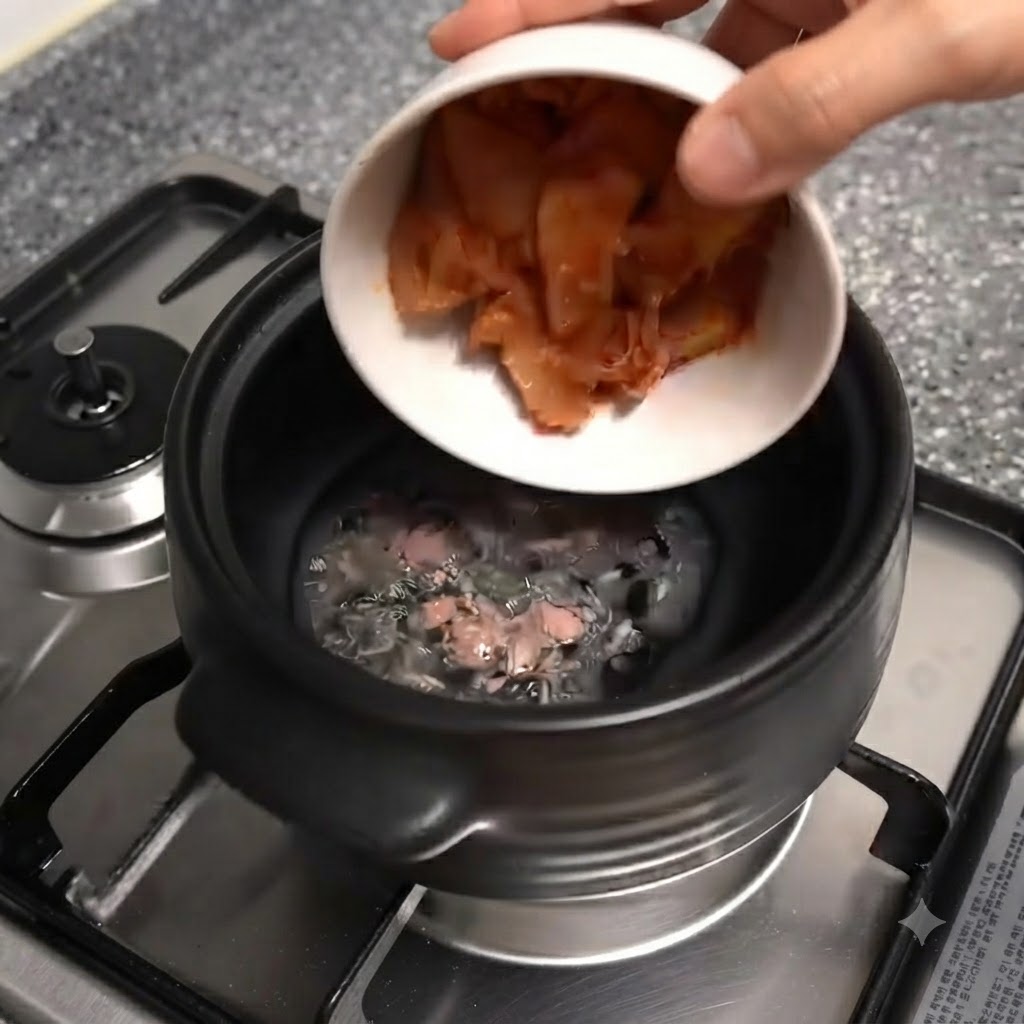
Take a bowl of seasoned spicy cabbage kimchi and pour it directly into the clay pot containing the tuna oil.
Tip: Well-fermented, mature kimchi works best for making rich and flavorful soup. - 3Stir-fry the kimchi
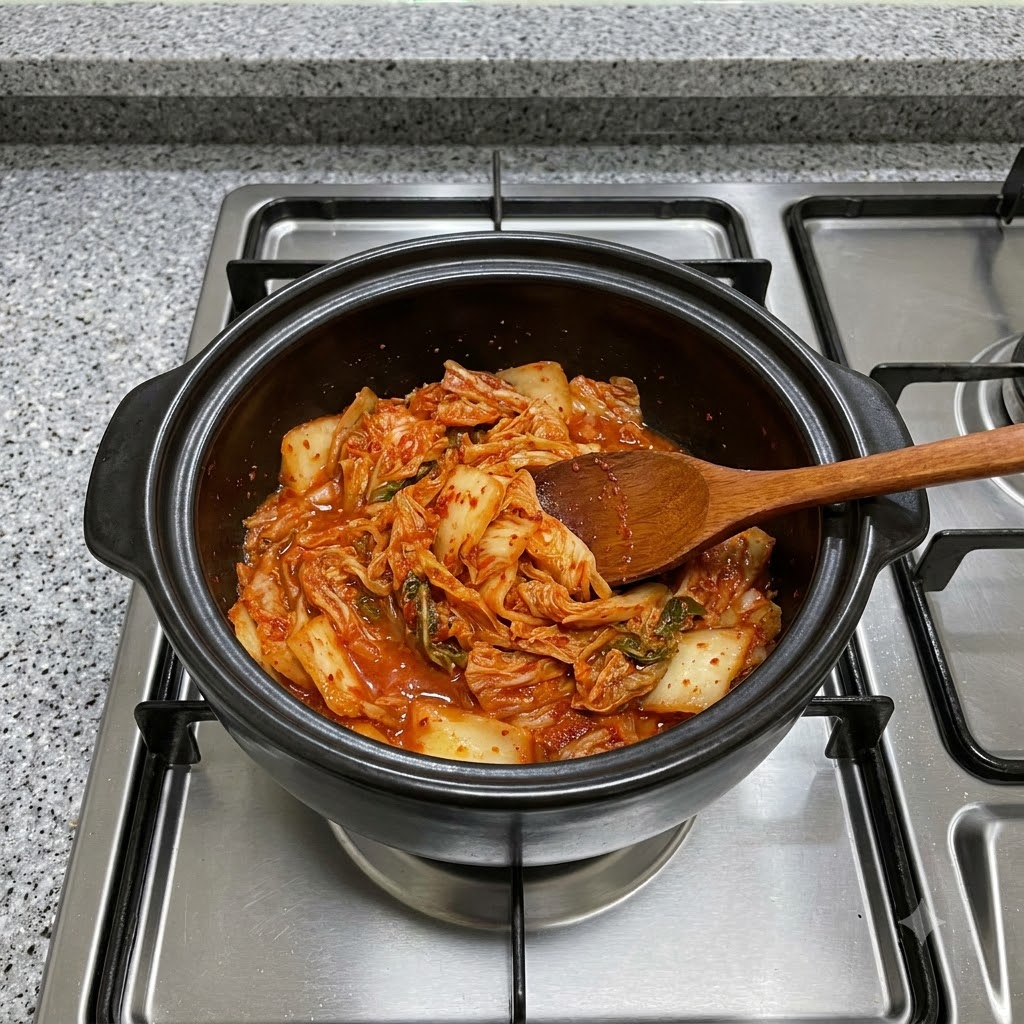
Use a wooden spoon to stir-fry the kimchi in the pot over medium heat until it softens and absorbs the oil.
Tip: Stir-frying the kimchi beforehand helps release its depth of flavor before adding liquids. - 4Season with sugar
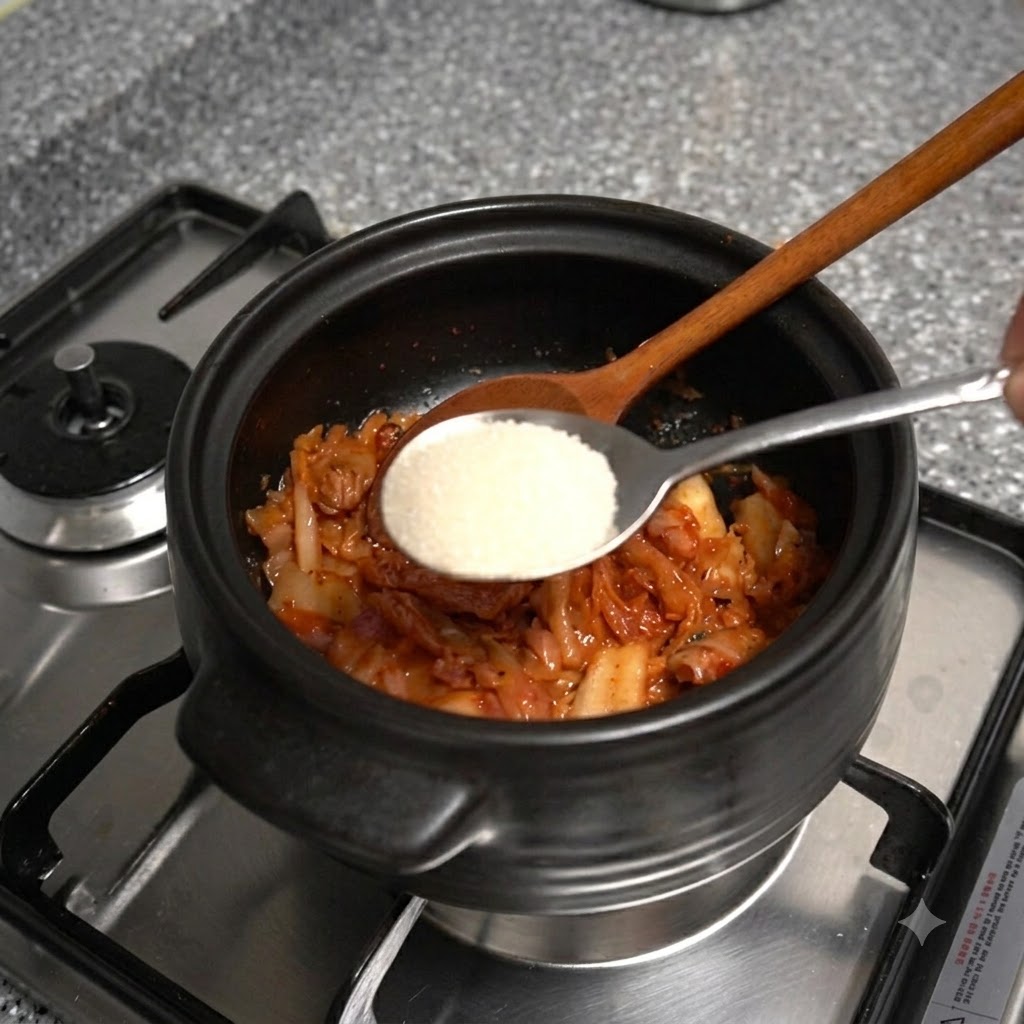
Add half a tablespoon of white sugar into the frying kimchi to balance out the sourness and enhance the savory taste.
Tip: Sugar is a secret key when cooking aged kimchi to cut through excessive sourness. - 5Add chopped onions
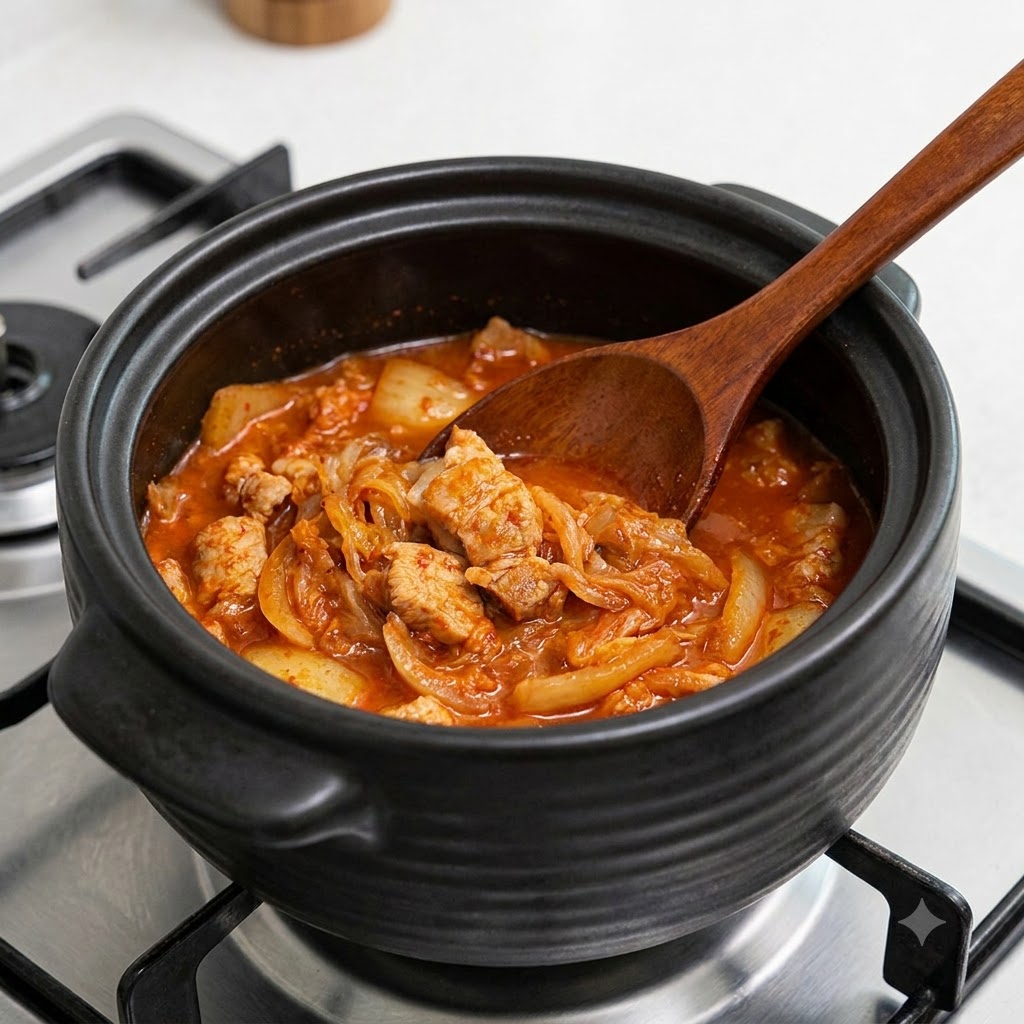
Add chopped onion pieces into the pot with the kimchi and continue stir-frying until the onions become translucent.
Tip: Make sure to cook the onions until they turn clear to release their natural sweetness. - 6Pour in water
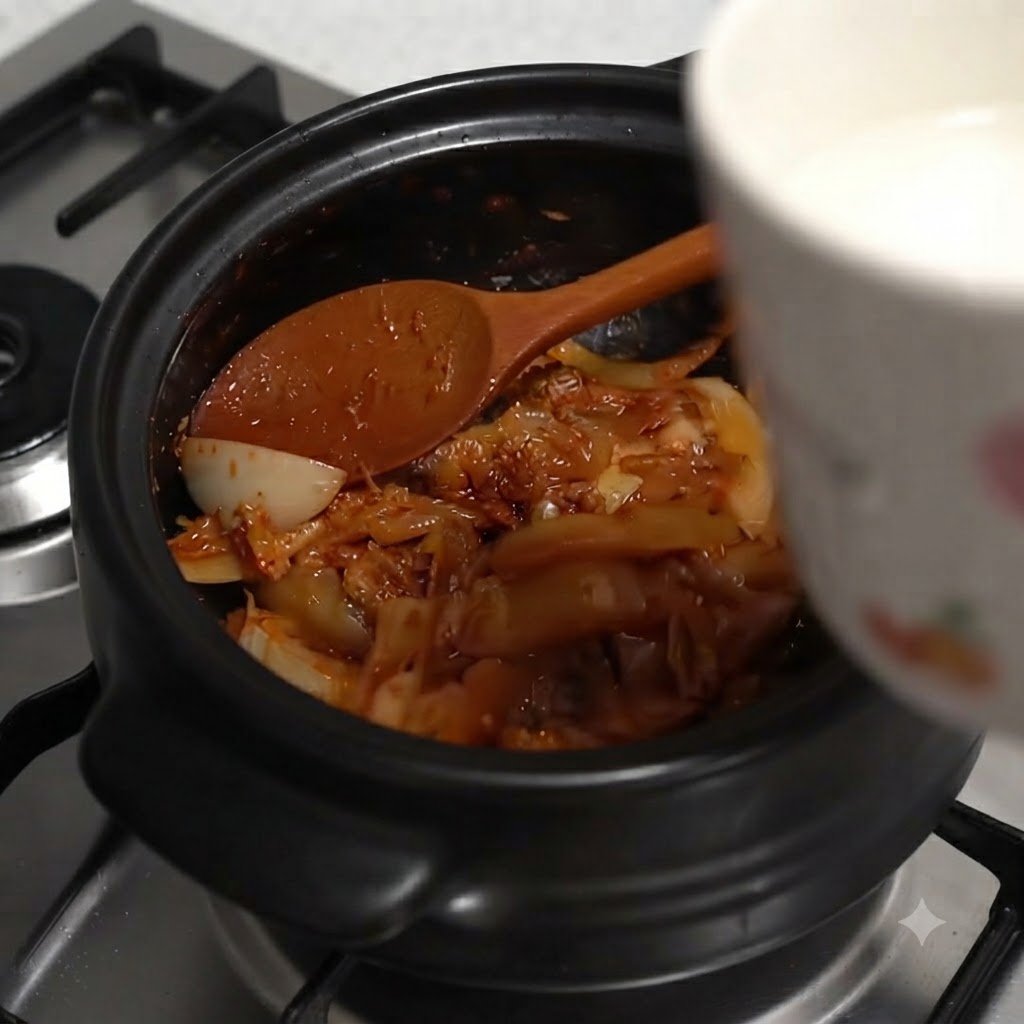
Pour a full cup of pure water into the pot to create the base broth for the soup.
Tip: Use clean water or vegetable broth for a clean background flavor. - 7Add Kimchi Juice
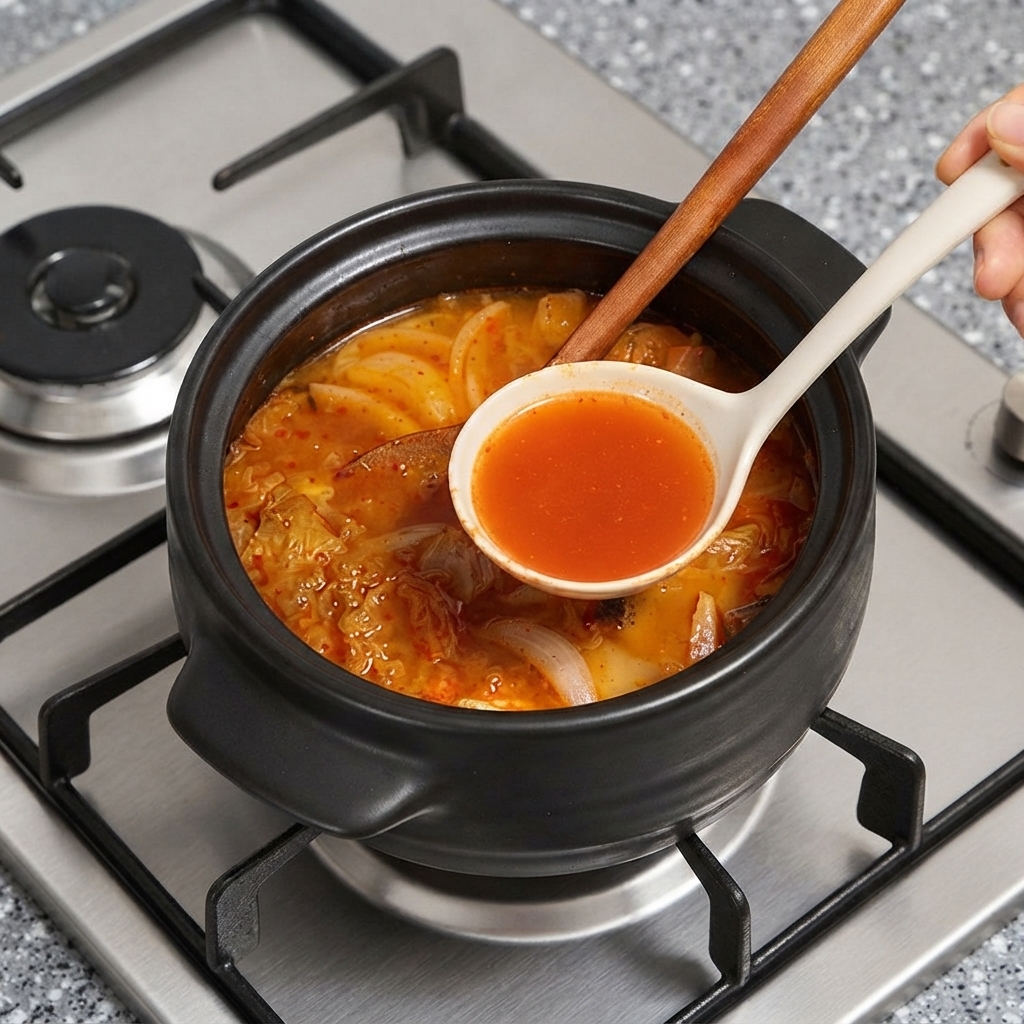
Pour a spoonful of the flavorful kimchi juice directly into the simmering pot to deepen the savory and spicy base of the soup.
Tip: Kimchi juice adds natural umami and acidity, reducing the need for extra salt. - 8Sprinkle Chili Powder

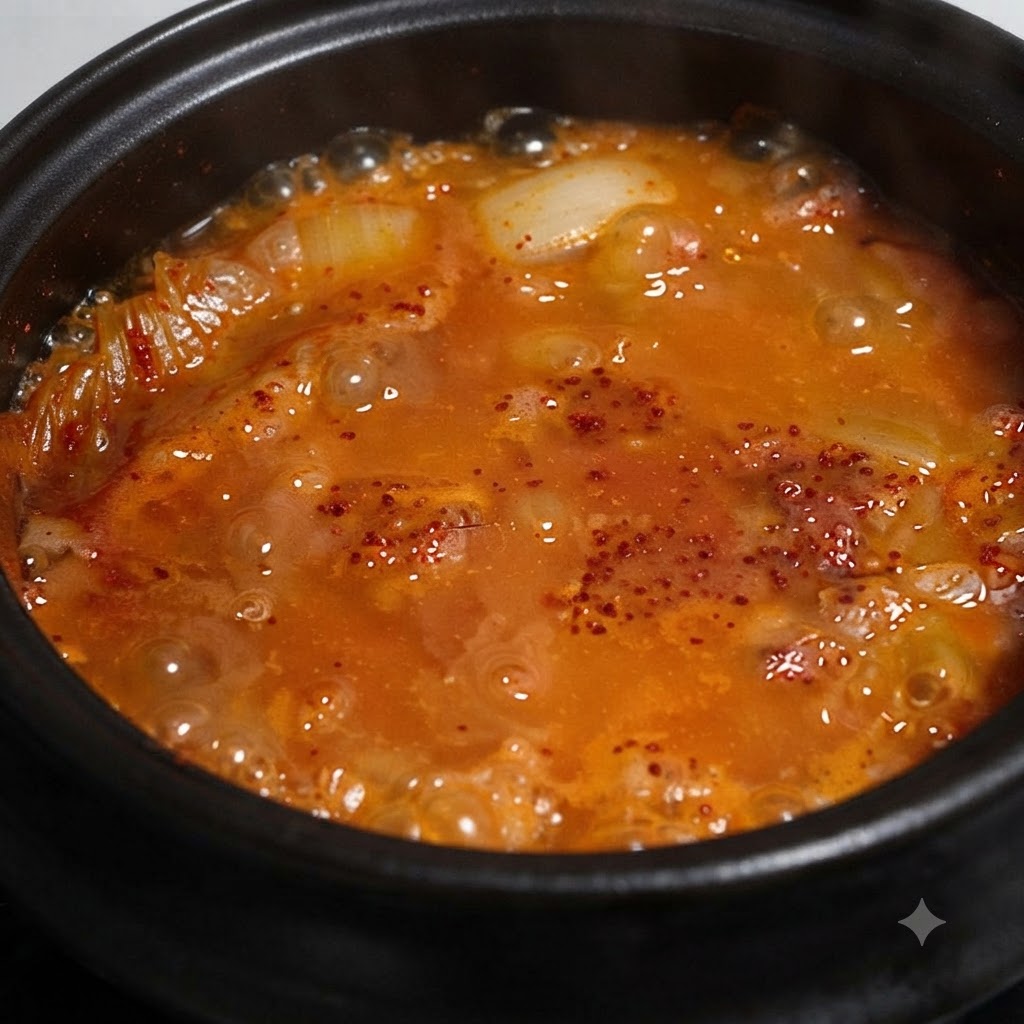
Add half a tablespoon of red chili powder into the simmering broth to give the soup a vibrant red color and an extra kick of heat.
Tip: Adjust the amount of chili powder depending on your preference for heat. - 9Add Canned Tuna
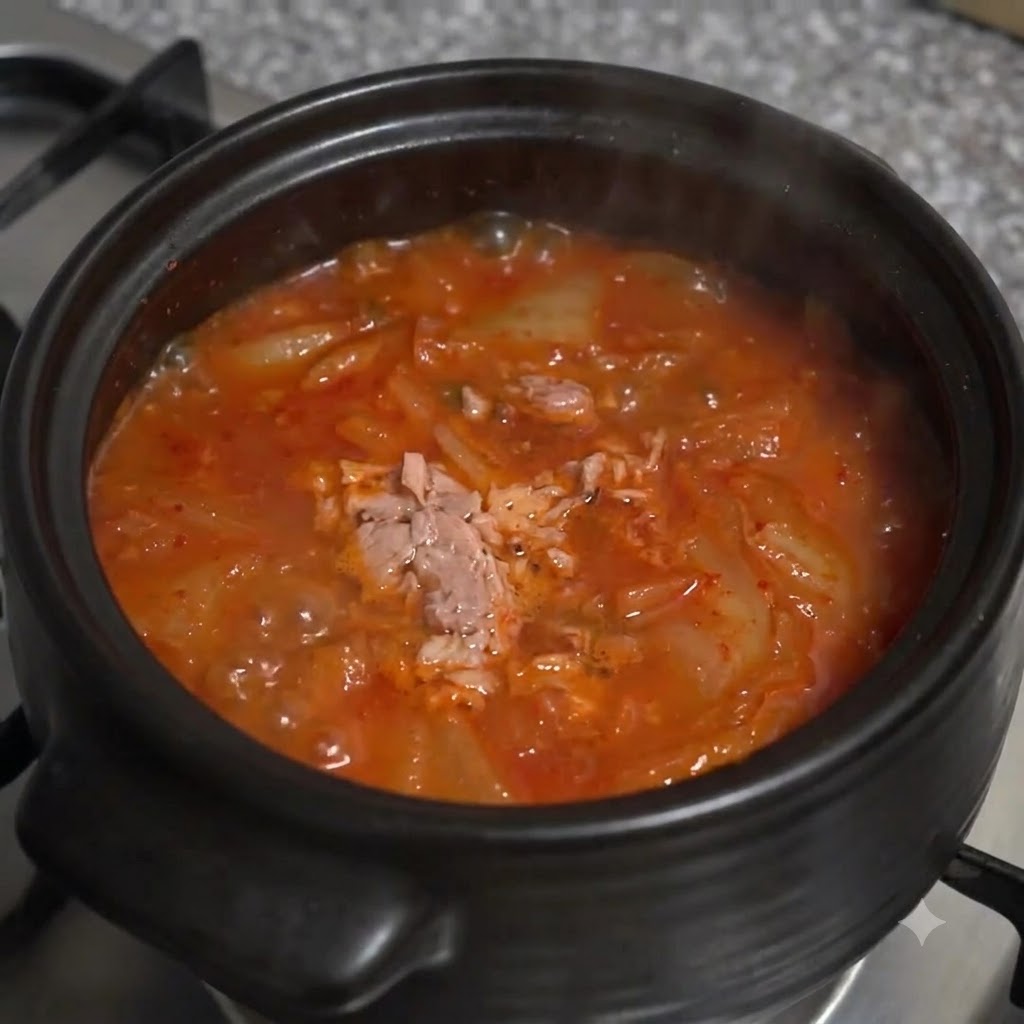
Place the canned tuna meat directly into the bubbling soup without stirring, allowing it to cook gently in the broth.
Tip: Keeping the tuna chunks intact prevents the fish from breaking down into mush too quickly. - 10Garnish with Green Onions
Scatter freshly sliced green onions on top of the simmering soup, cover the pot with its lid, and finish cooking.
Tip: Adding green onions at the very end preserves their fresh aroma and bright color.