Korean Kimchi Pork Rib Stew (Dwaeji-Galbi-Kimchi-Jjim)
A hearty, soul-warming Korean stew featuring tender, fall-off-the-bone pork ribs simmered with aged sour kimchi and daikon radish in a rich, spicy broth.
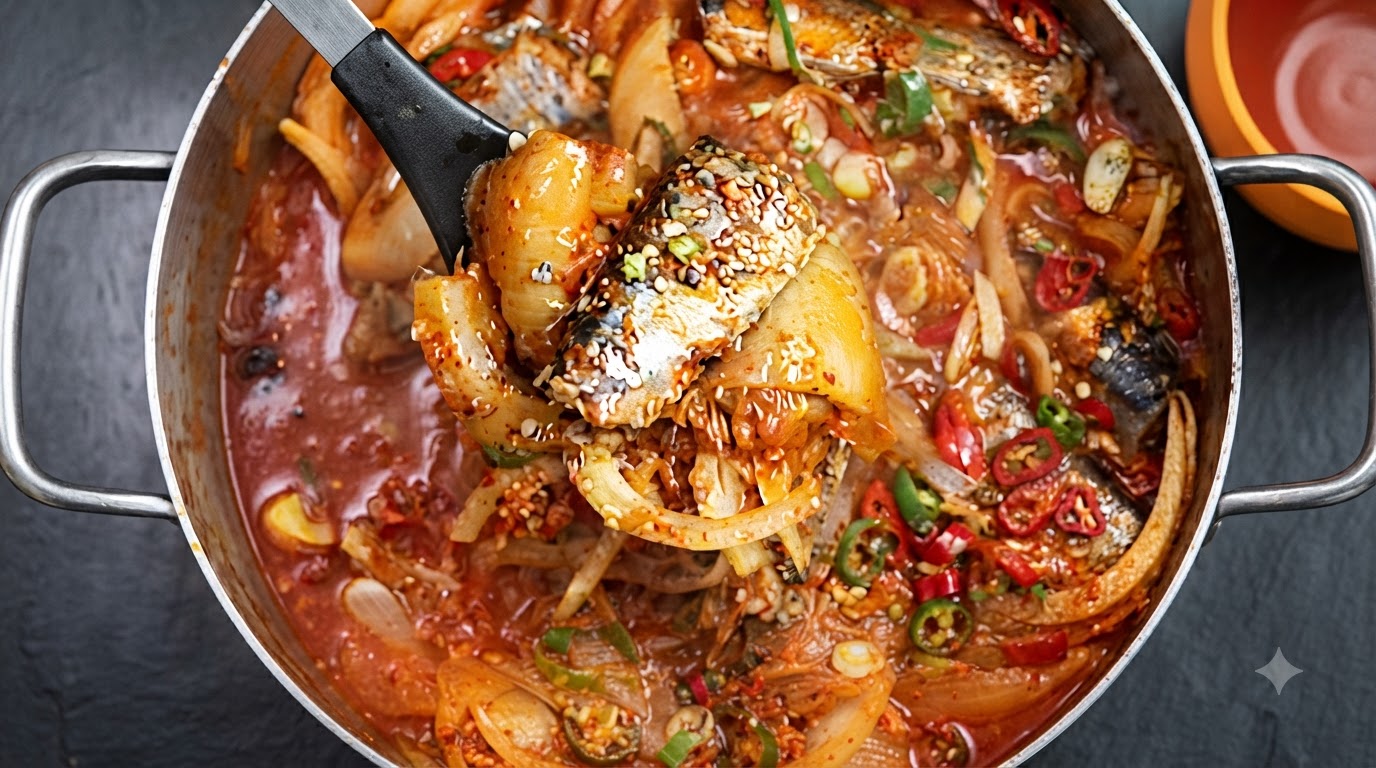
Kimchi pork rib stew is a beloved comfort food in Korean households, marrying the deep, savory richness of pork ribs with the sharp, fermented tang of aged kimchi. Slow-simmered to tender perfection, the pork absorbs the fiery, aromatic broth while the daikon radish balances the dish with its natural sweetness. It is traditionally served piping hot alongside a bowl of steamed white rice.
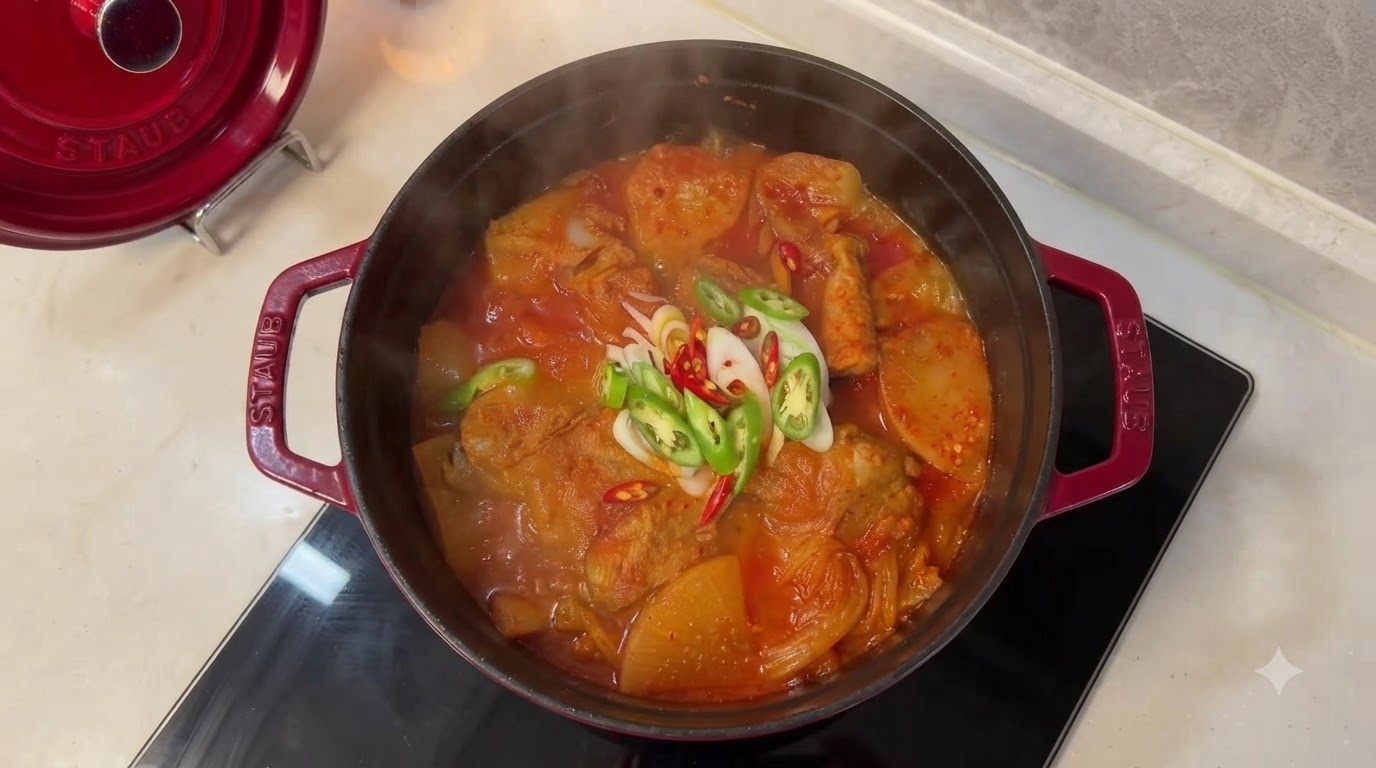
Ingredients
- 1 kg pork ribs
- 500 g fermented kimchi
- 1 white onion
- 1 white daikon radish
- 3 cloves garlic
- 1 tbsp chili powder
- 2 tbsp soy sauce
- 1 tbsp Korean chili paste gochujang
- 1 tbsp cooking wine
- 3 slices fresh ginger
- 2 stalks green onion
- to taste black pepper
- to taste fresh green and red chilies
Instructions
- 1Cut the pork ribs
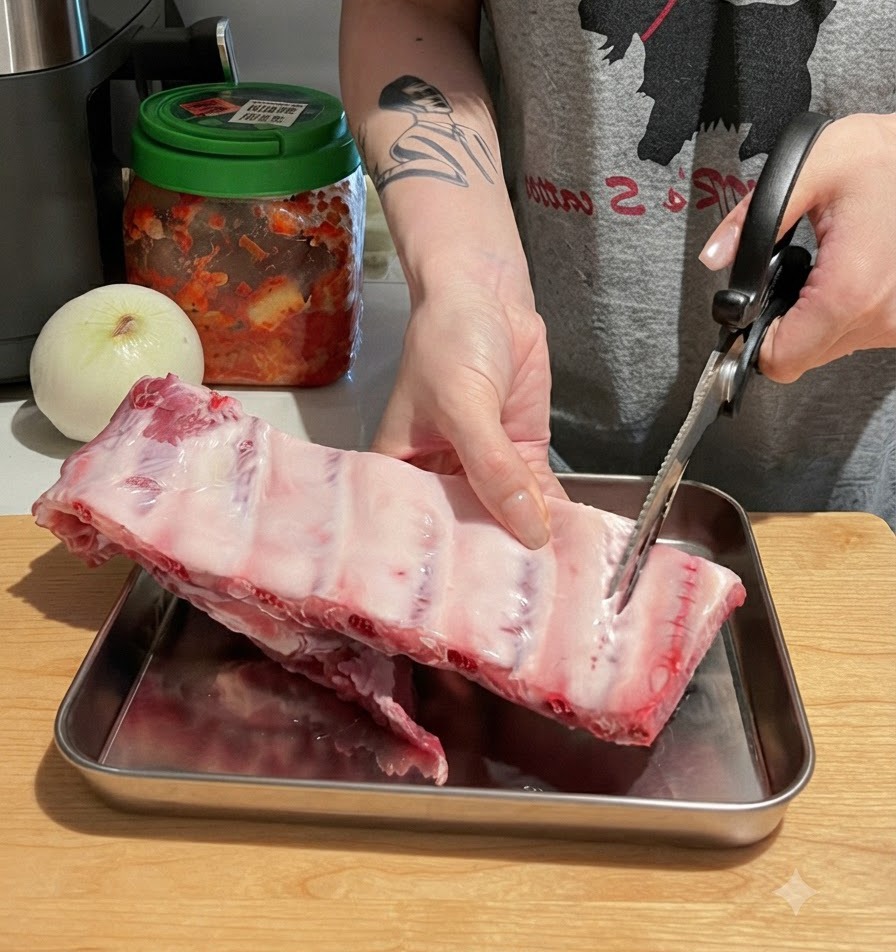
Start by cutting the rack of raw pork ribs into individual, smaller pieces using kitchen scissors or a sharp knife. This allows the ribs to cook evenly and absorb the savory flavors of the stew.
Tip: Using heavy-duty kitchen shears can make cutting between the ribs much easier and safer than using a knife. - 2Slice the onion
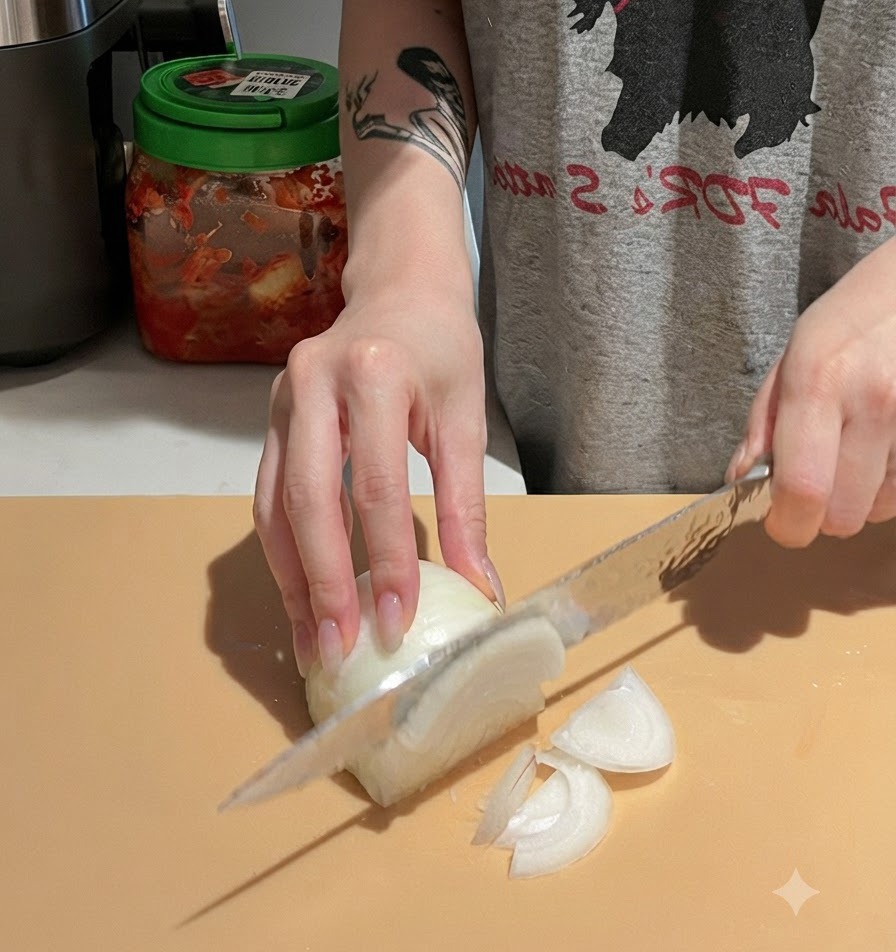
Peel and thinly slice a white onion on a cutting board. The onion will provide a sweet, aromatic base for the stew when it is stir-fried later in the cooking process.
Tip: Keep the root end of the onion intact while slicing to hold the layers together and make chopping easier. - 3Chop the white radish

Peel the white radish and chop it into thick, irregular chunks. The radish adds a refreshing sweetness to the broth and will absorb the rich flavors of the pork and kimchi during the long simmering process.
Tip: Cut the radish pieces into relatively uniform sizes so they cook evenly alongside the ribs. - 4Prepare ribs for blanching
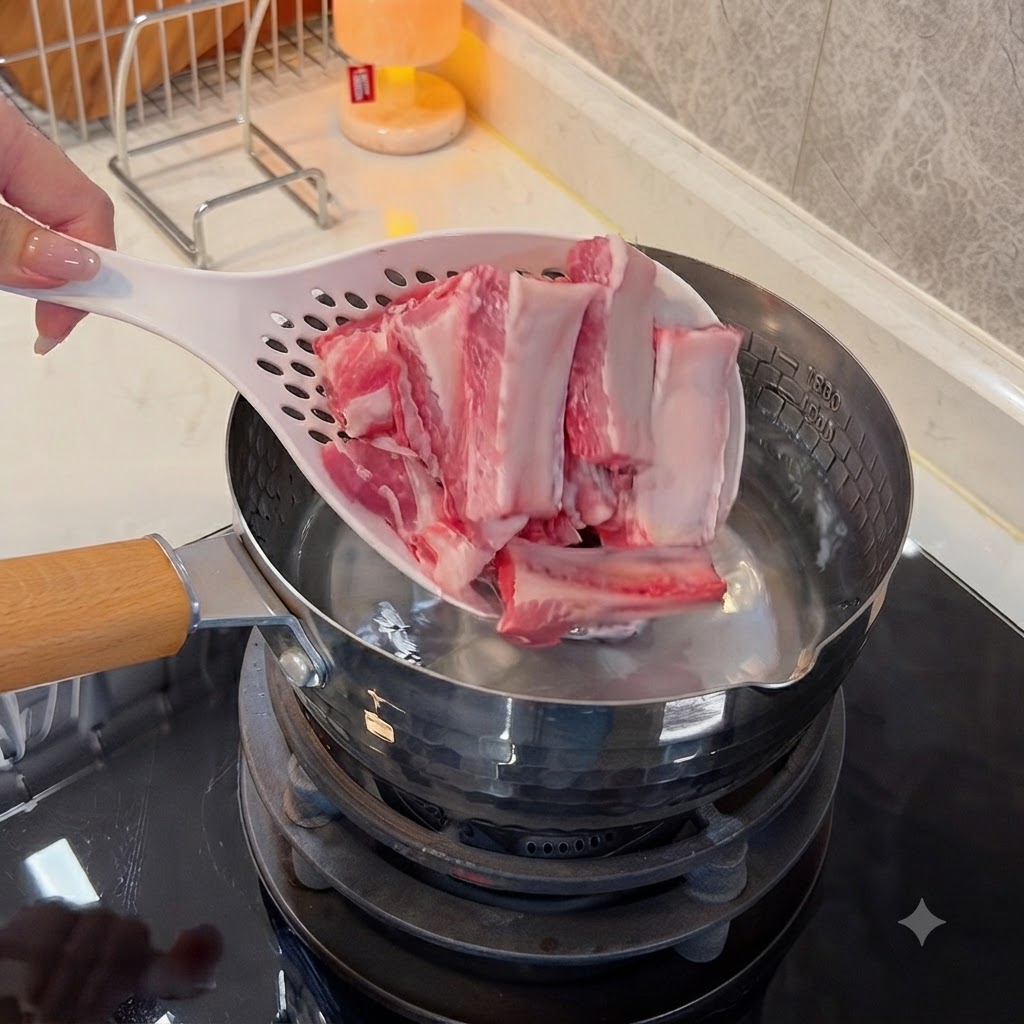
Place the cut raw pork ribs into a pot and fill it with cold water. Starting with cold water helps to gradually draw out the blood and impurities from the bones as the water heats up, resulting in a cleaner tasting broth.
Tip: Always start the blanching process with cold water rather than boiling water for the clearest results. - 5Add aromatics for blanching
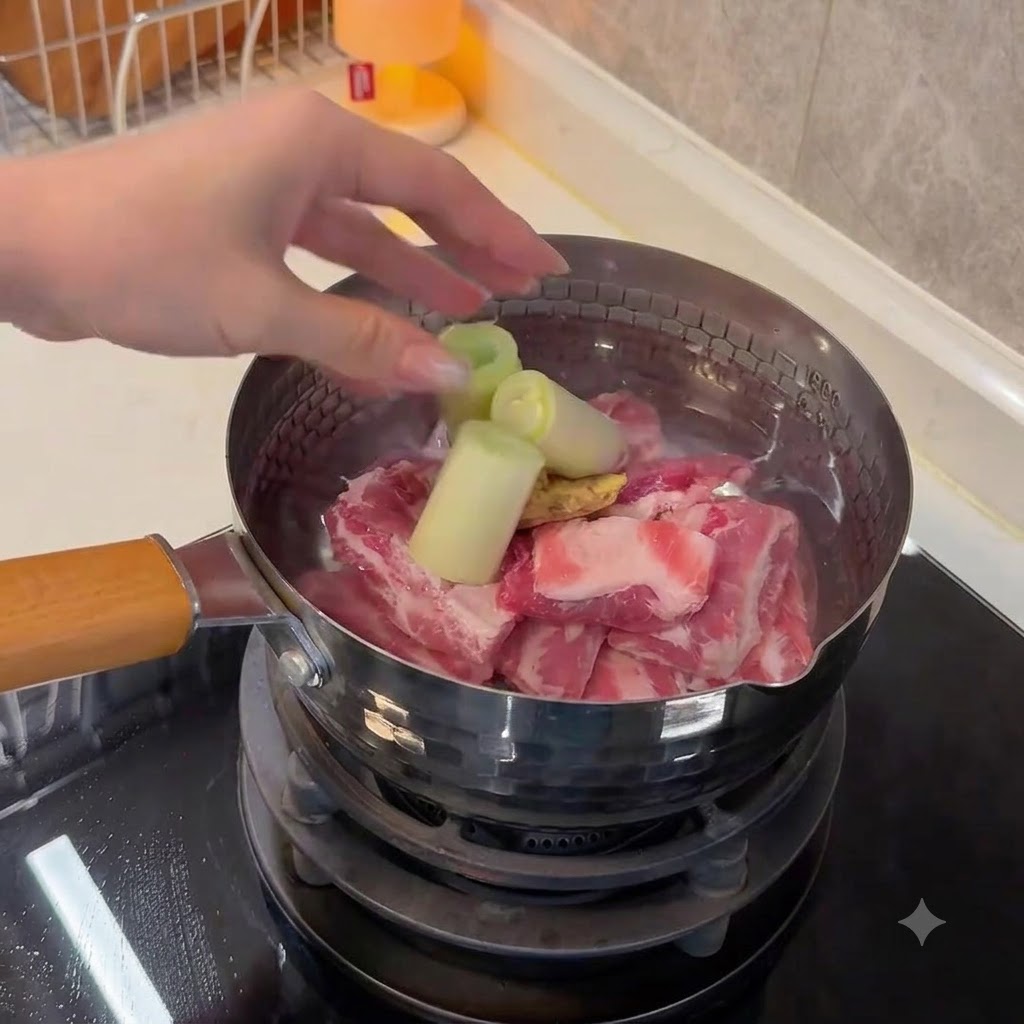
Add ginger slices, large chunks of green onion, and a splash of cooking wine to the pot with the ribs and water. These aromatics are essential for neutralizing any strong pork odors during the blanching process.
Tip: You can lightly smash the ginger slices with the back of your knife to release more of their natural oils into the water. - 6Remove the blanched ribs
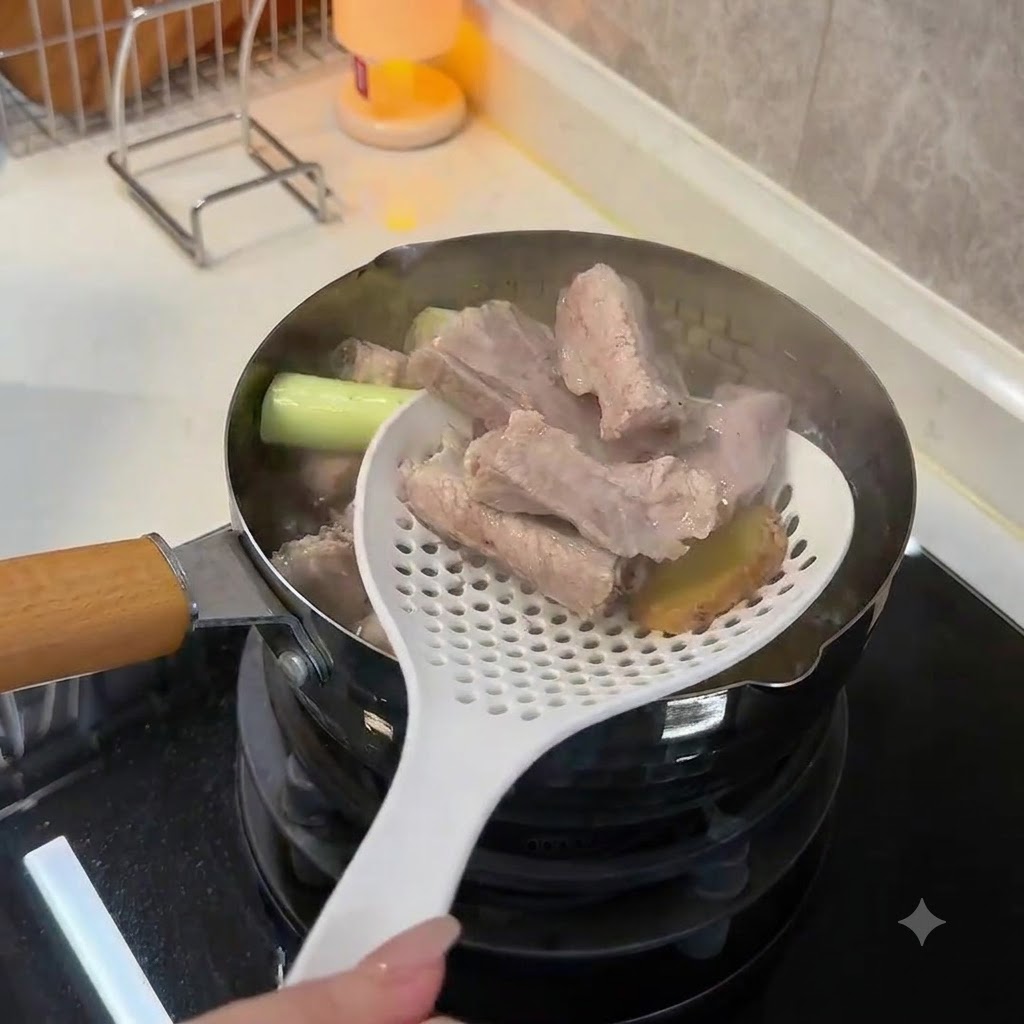
Bring the pot to a boil and let the ribs blanch for about ten minutes. You will see foam and impurities float to the surface. Carefully remove the blanched ribs from the boiling water using a slotted spoon and set them aside for the stew.
Tip: Rinse the blanched ribs briefly under warm water to wash off any remaining scum sticking to the meat. - 7Combine seasonings in mortar
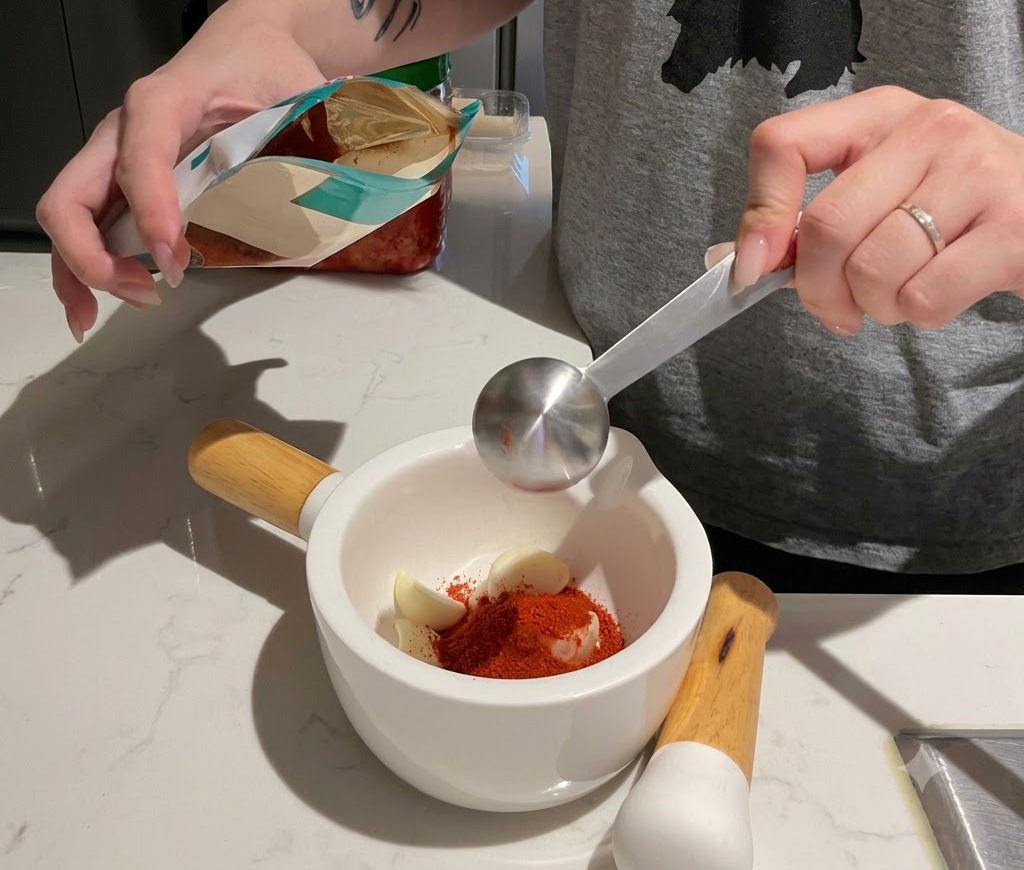
Begin preparing the flavorful paste by placing peeled garlic cloves into a white mortar. Add the black pepper, bright red chili powder, and soy sauce. These bold aromatics will form the foundational heat and savory notes for the stew.
Tip: You can adjust the amount of chili powder to suit your preferred spice tolerance. - 8Prepare the spice paste
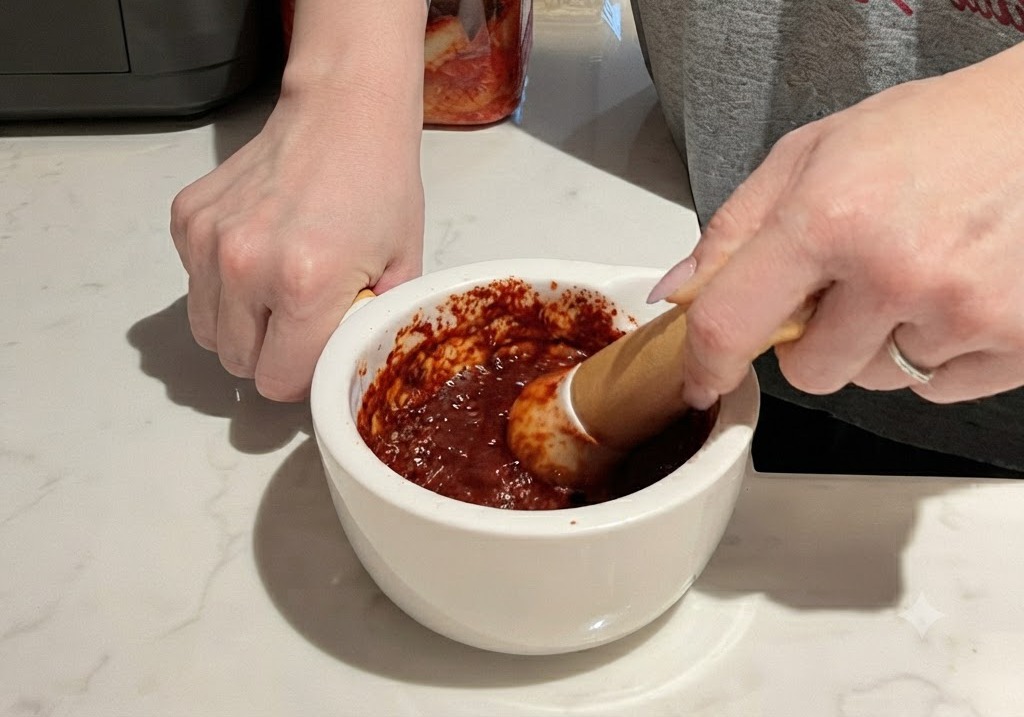
Pound the garlic, black pepper, chili powder, and soy sauce together in a mortar until it forms a thick, uniform paste.
Tip: Using a mortar and pestle releases more natural oils and flavors from the garlic compared to simply mincing it. - 9Sauté the sliced onions
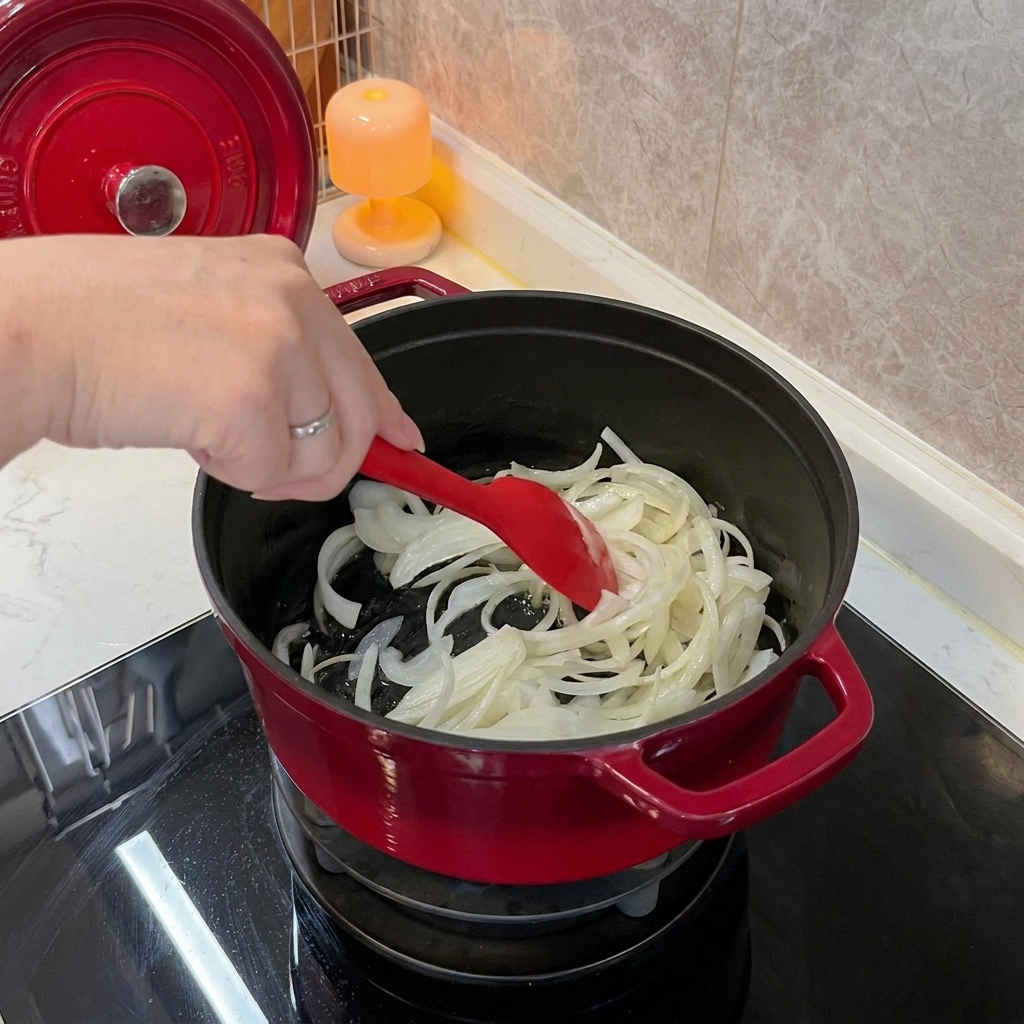
Heat a small amount of oil in a large, heavy-bottomed pot, such as a red cast-iron Dutch oven, over medium heat. Add the sliced onions and stir-fry them gently until they begin to soften and turn translucent. This creates a sweet and savory base layer for the ribs.
Tip: Avoid browning the onions too quickly; a gentle sauté brings out their natural sweetness. - 10Add ribs to the onions
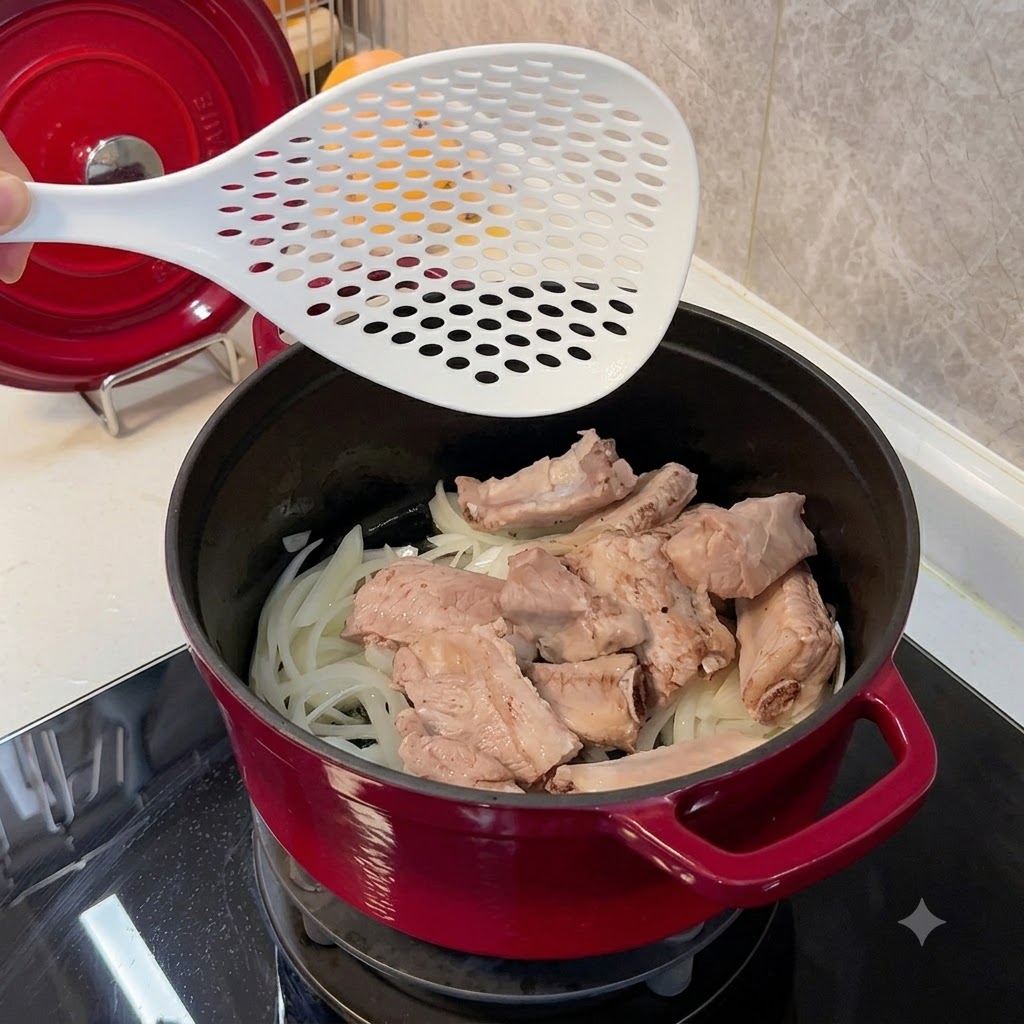
In a separate large pot, stir-fry the sliced onions until they are softened. Then, add the blanched pork ribs into the pot over the onions.
Tip: Make sure the ribs are well-drained after blanching so you dont introduce excess water into the sautéing onions. - 11Coat the ribs with sauce
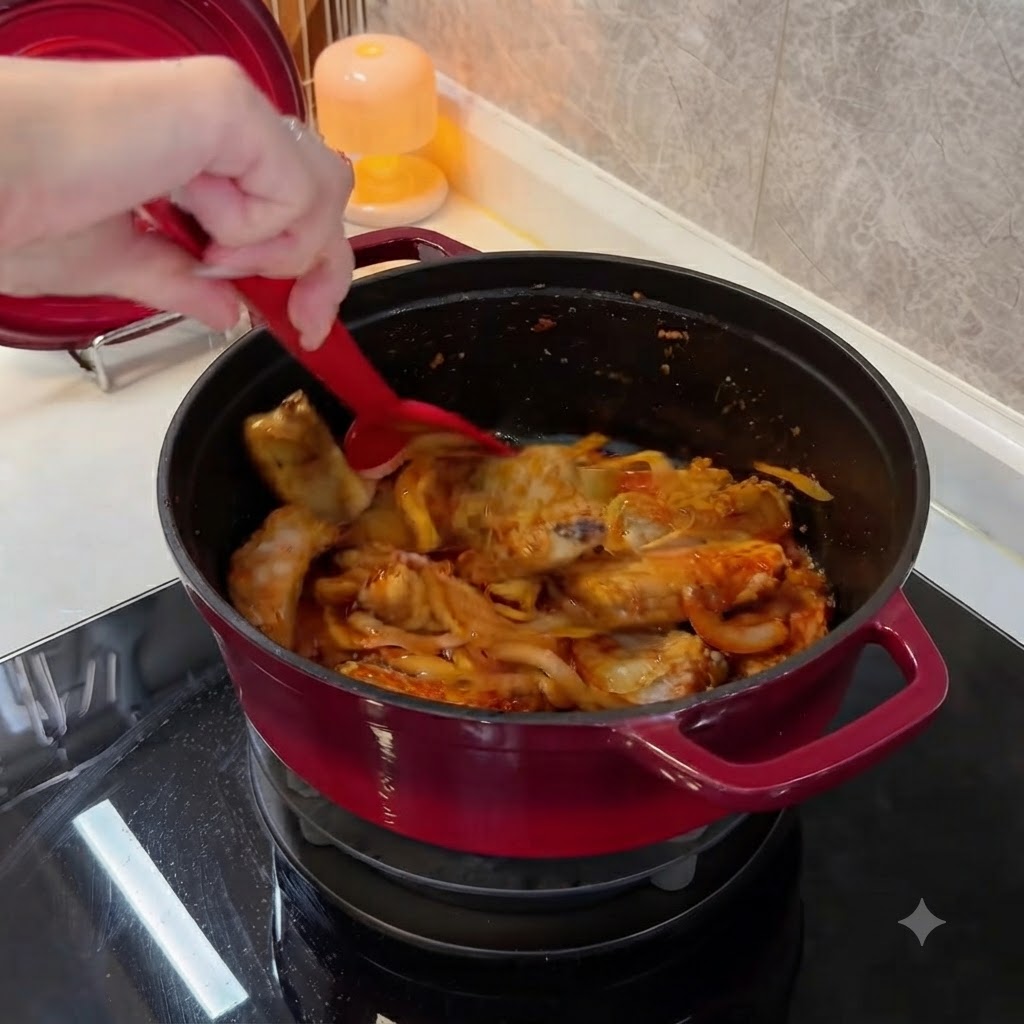
Stir the blanched pork ribs and sliced onions together with the prepared paste until every piece of meat is thoroughly coated in the vibrant red sauce.
Tip: Ensure the heat is set appropriately so the aromatics and sauce begin to release their flavors without burning. - 12Layer the kimchi
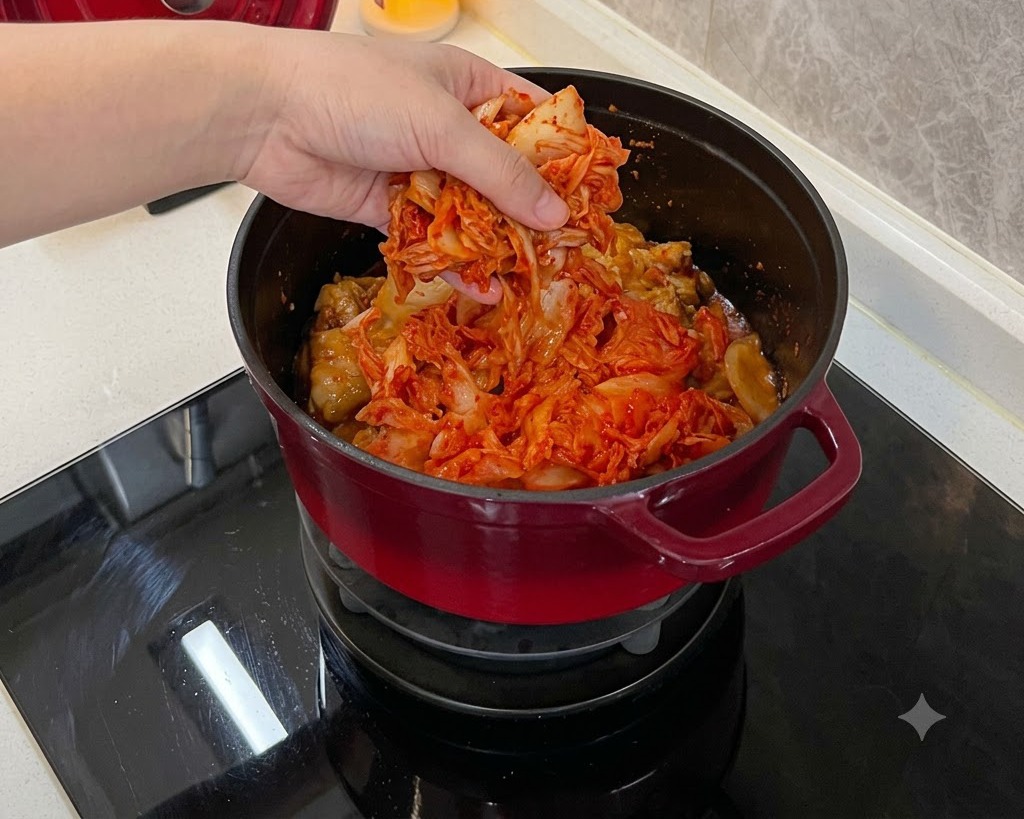
Spread a generous layer of fermented kimchi evenly over the seasoned ribs, covering them completely.
Tip: Well-fermented, sour kimchi is highly recommended for stews, as its tanginess perfectly balances the rich, fatty flavors of the pork ribs. - 13Pour in hot water
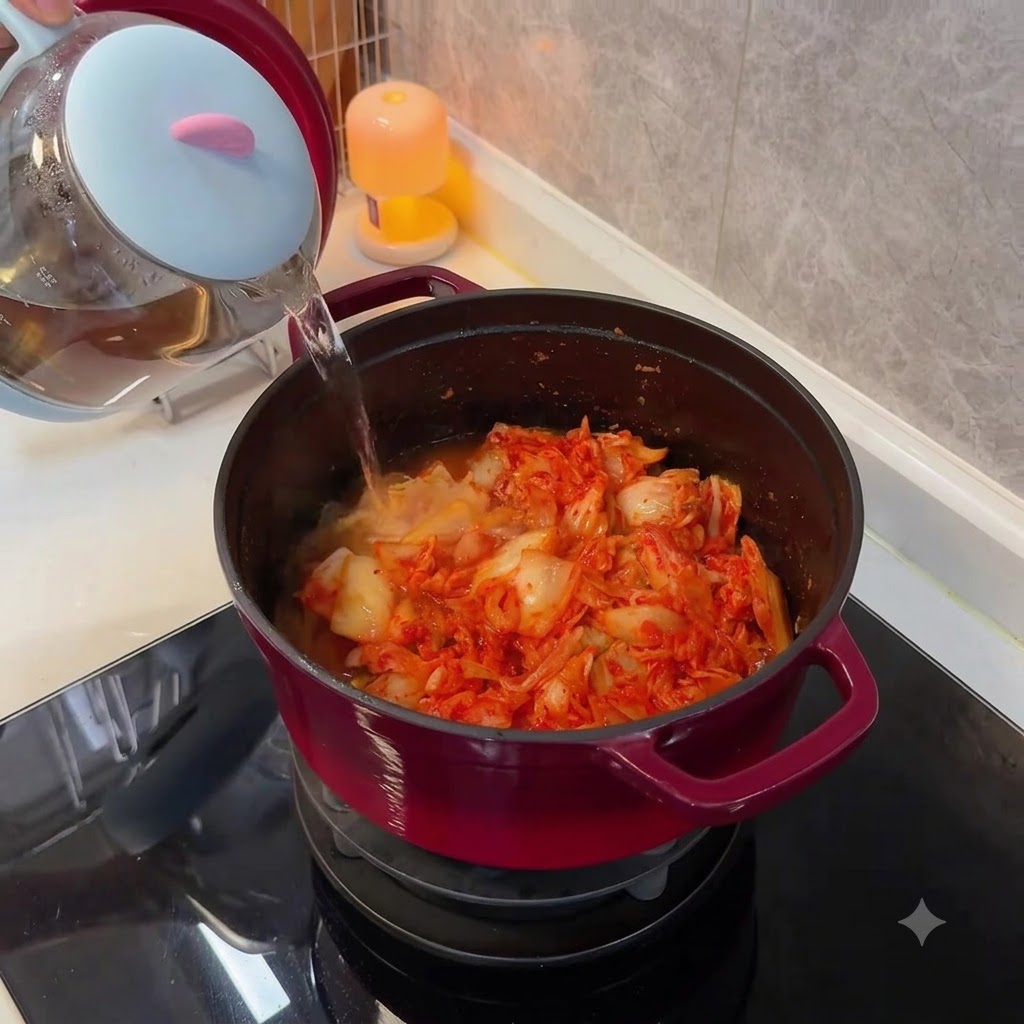
Pour hot water directly into the pot over the kimchi and ribs to create the soup base for the stew.
Tip: Using hot water instead of cold water helps maintain the temperature of the pot, bringing the stew to a simmer much faster. - 14Add Korean chili paste
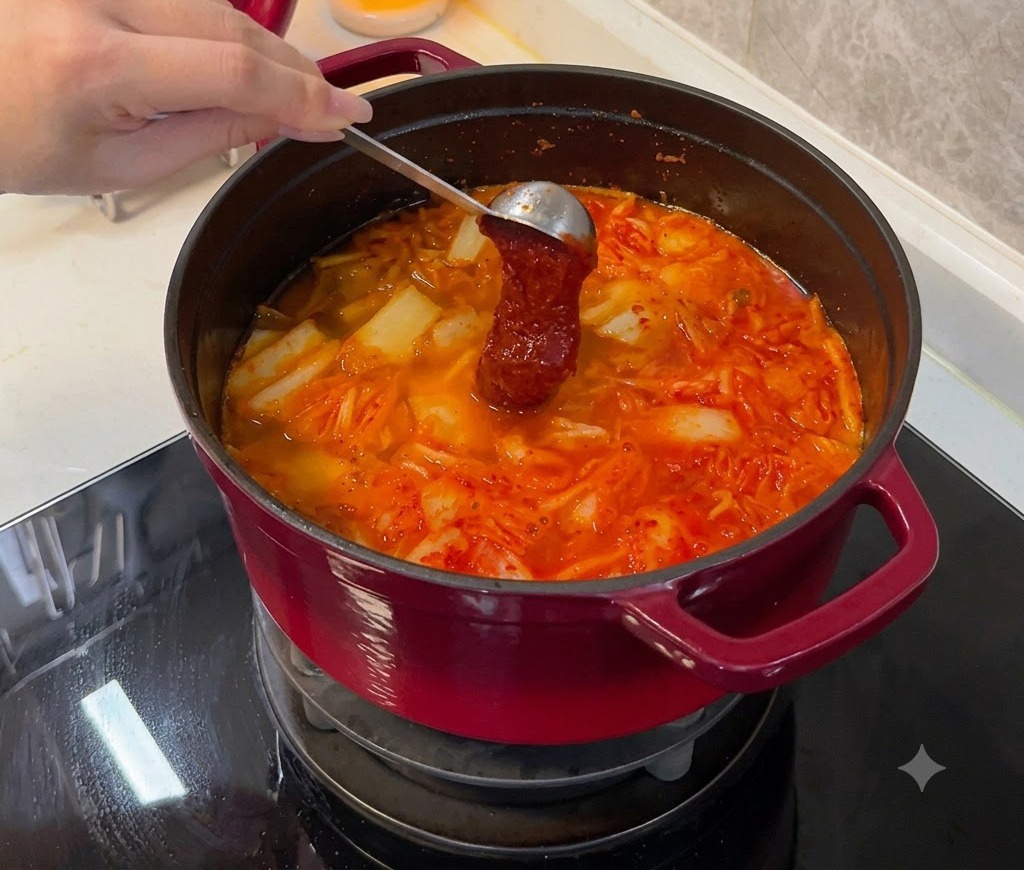
Add a spoonful of Korean chili paste (gochujang) into the hot broth. Cover the pot and let the stew simmer over medium heat for 30 minutes.
Tip: Gently dissolve the chili paste into the liquid with your spoon so it incorporates evenly into the broth without leaving clumps. - 15Simmer the ribs
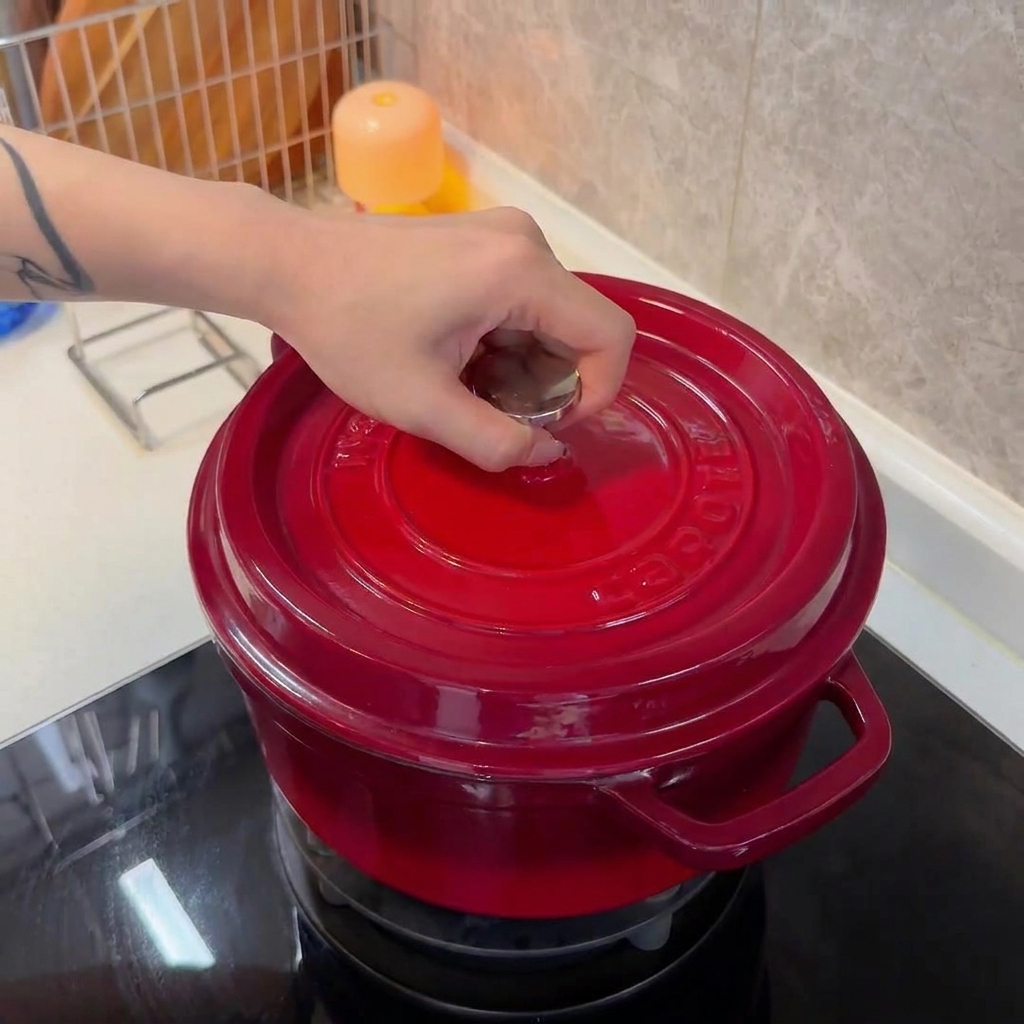
Place the lid securely onto the pot after adding hot water, kimchi, and Korean chili paste to allow the ribs to simmer and tenderize over medium heat.
Tip: Using hot water maintains the cooking temperature inside the pot and keeps the meat tender. - 16Add white radish chunks
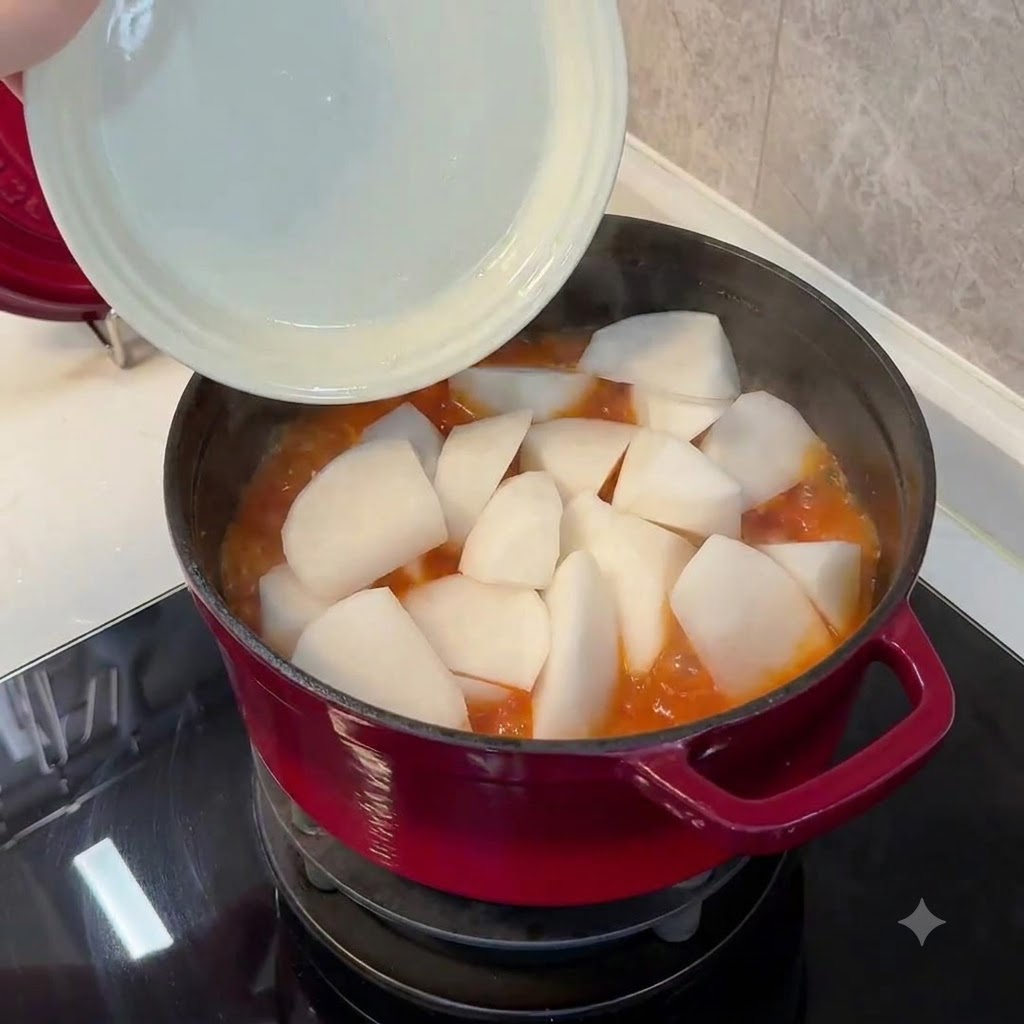
Uncover the pot after the initial simmer and add the freshly chopped white radish chunks directly into the bubbling red stew.
Tip: Cut the radish into uniform chunks so they cook evenly and absorb the savory broth flavors. - 17Cover to cook radish
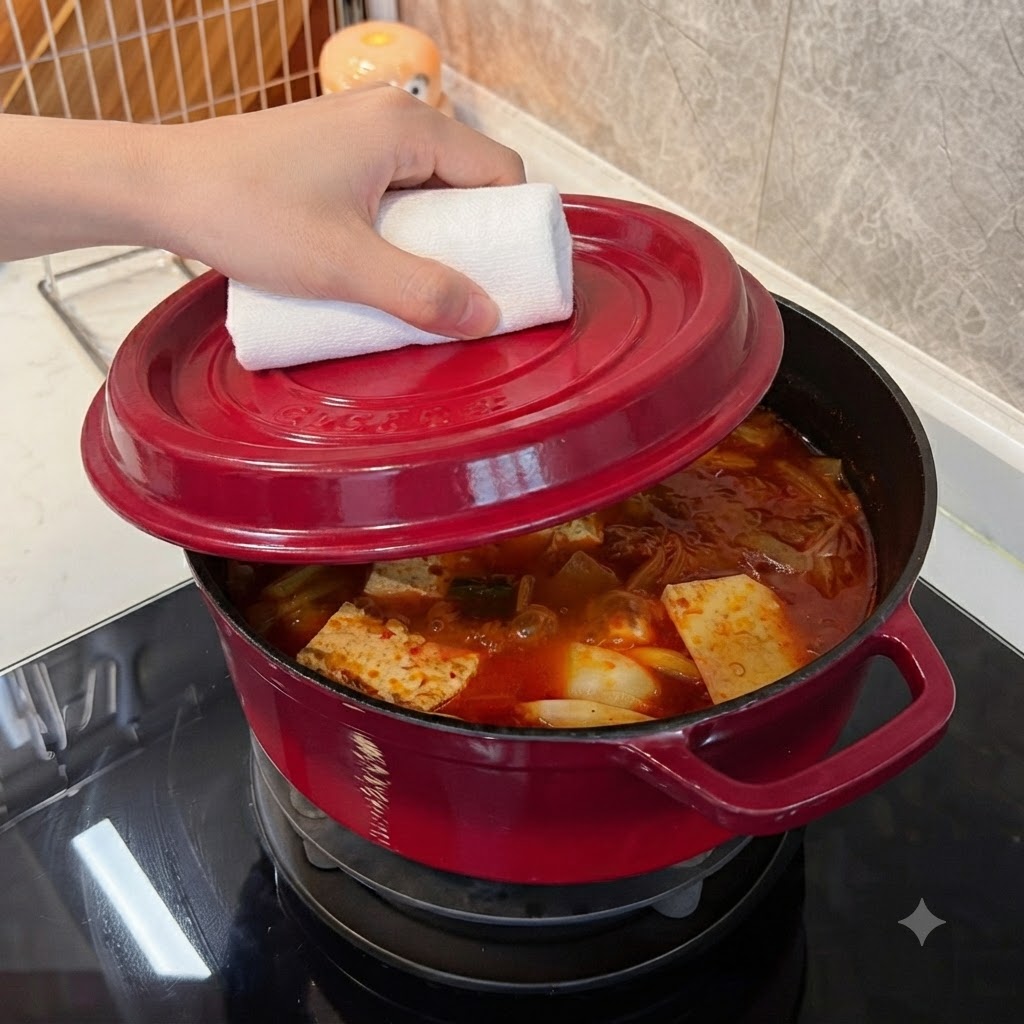
Place the lid back onto the pot using a kitchen towel for grip, and continue simmering for another 30 minutes to let the white radish soften completely.
Tip: Simmering with the lid on traps the steam, ensuring the radish cooks through and becomes tender.