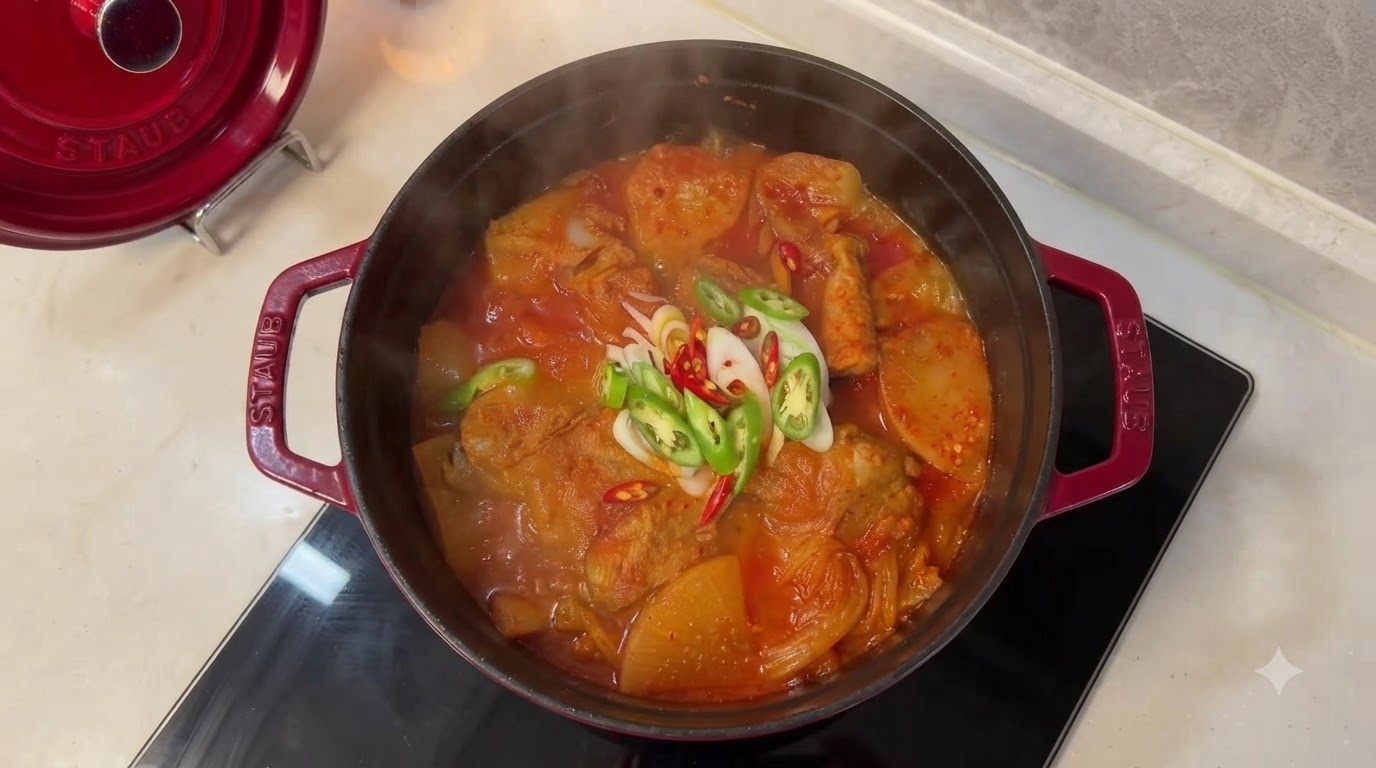
Kimchi Tuna Tofu Soup (Kimchi Jjigae)
A comforting Korean-style Kimchi Tuna Tofu Soup featuring savory canned tuna, aged kimchi, soft tofu, and crisp bean sprouts simmered in a rich, spicy broth.
Kimchi jjigae is a staple in Korean home cooking, celebrated for its bold, spicy, and deeply comforting flavors. This variation incorporates canned tuna and its flavorful oil to build an instant savory depth, combined with tangy fermented kimchi, tender tofu, and a final flourish of crisp bean sprouts. Served piping hot in a traditional clay pot, it makes for a soul-warming solo meal that tastes even better when poured generously over steamed white rice.

Ingredients
- 1 can tuna in oil
- 1 tbsp cooking oil
- 2 stalks green onions
- 1/2 cup sliced red onions
- 1 cup fermented kimchi
- 1 tsp red chili powder
- 2 cups clean water
- 1 tbsp light soy sauce
- 200 g firm or soft tofu
- 1/2 cup fresh bean sprouts
- to taste green and red chili rings
- 1 tsp white sesame seeds
Instructions
- 1Pour tuna oil into pot

Pour the oil extracted from the canned tuna directly into a heated dark clay pot sitting on the stove to prepare for stir-frying.
Tip: Using tuna oil adds an extra savory depth of flavor to the base of the soup. - 2Add sliced onions
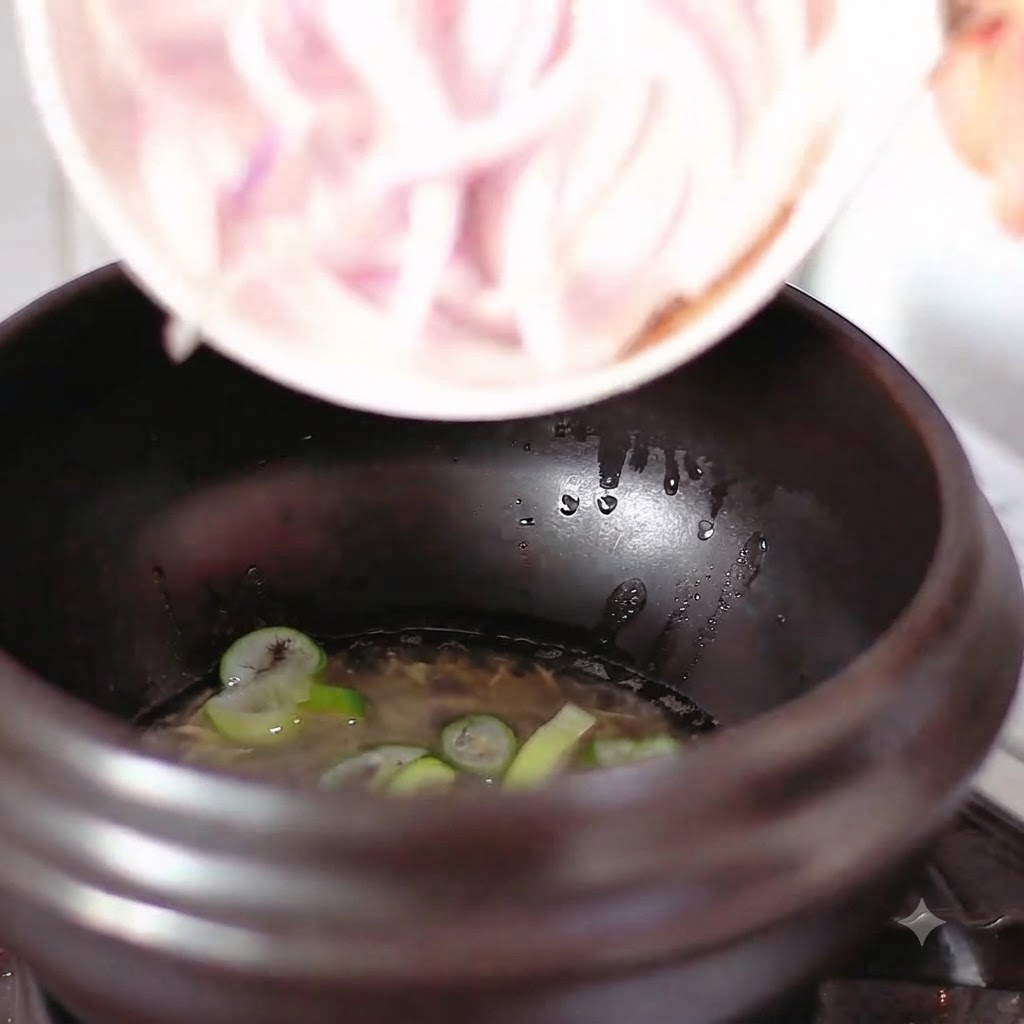
Add sliced red onions into the clay pot containing the warm oil and previously sautéed green onions, then stir-fry until fragrant.
Tip: Sauté the green onions first to build an aromatic foundation before adding the onions. - 3Add kimchi and chili powder
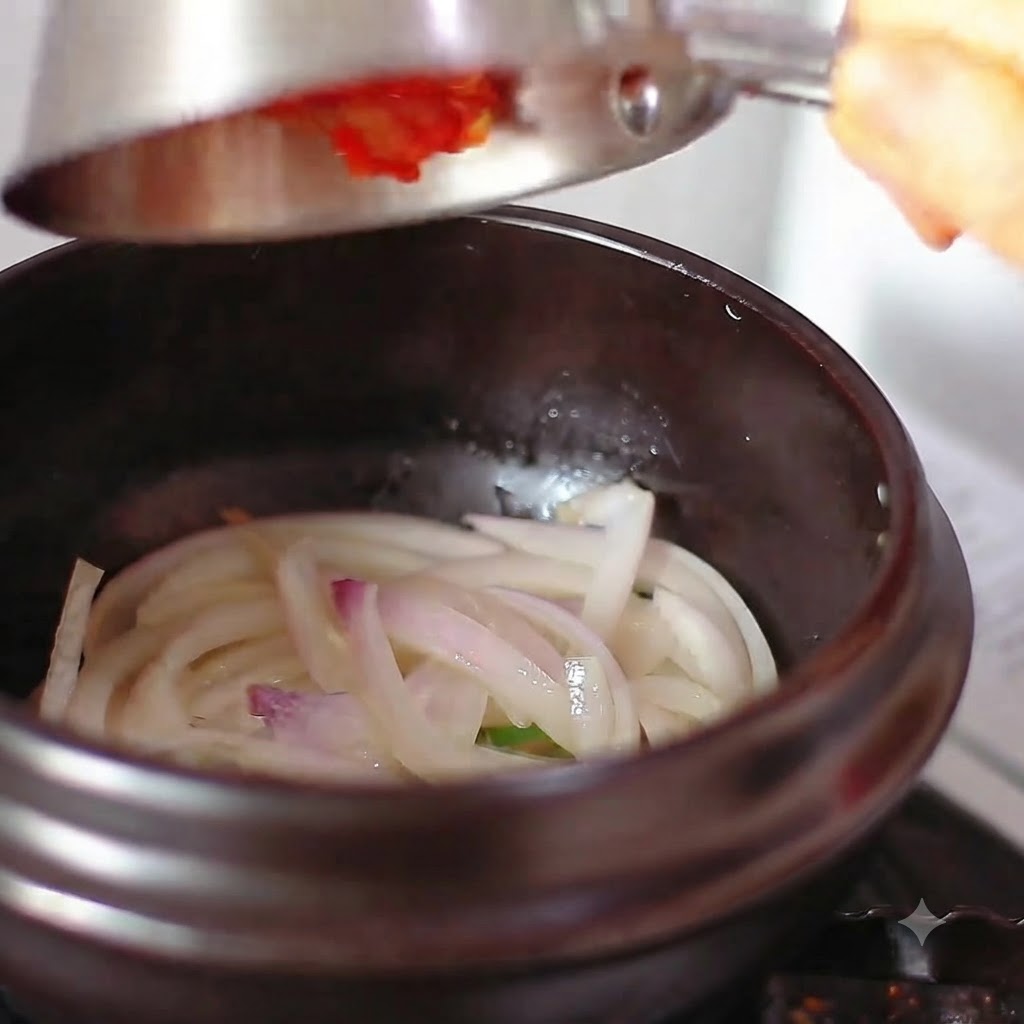
Place kimchi and red chili powder into the pot with the sautéed onions and mix everything together thoroughly, stir-frying well.
Tip: Stir-frying the kimchi helps release its flavors before adding the liquids. - 4Pour water and soy sauce
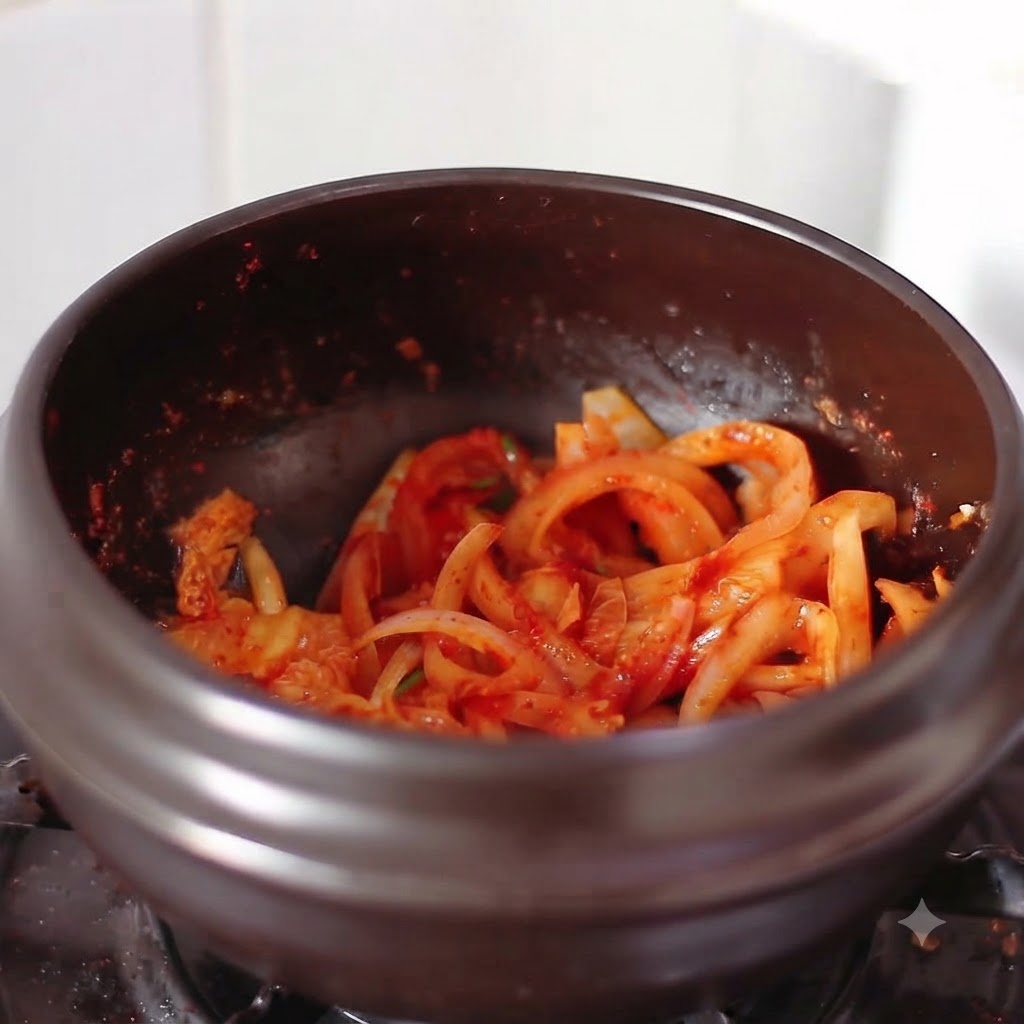
Pour clean water and a small amount of light soy sauce into the stir-fried kimchi and onion mixture.
Tip: Add light soy sauce for a balanced umami flavor profile. - 5Add tuna chunks
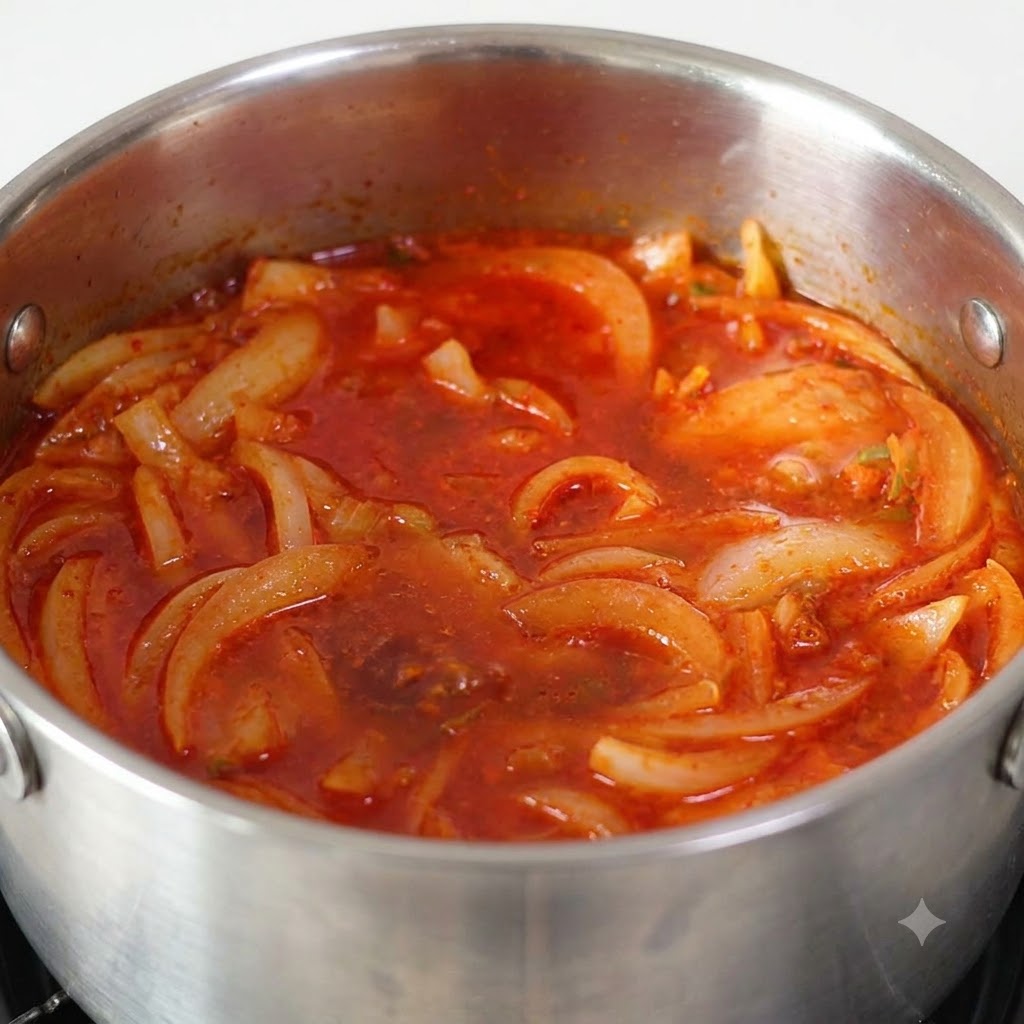
Add the canned tuna pieces into the soup mixture inside the pot and mix gently to combine.
Tip: Break the tuna up slightly so the flavors distribute evenly throughout the soup. - 6Add tofu cubes
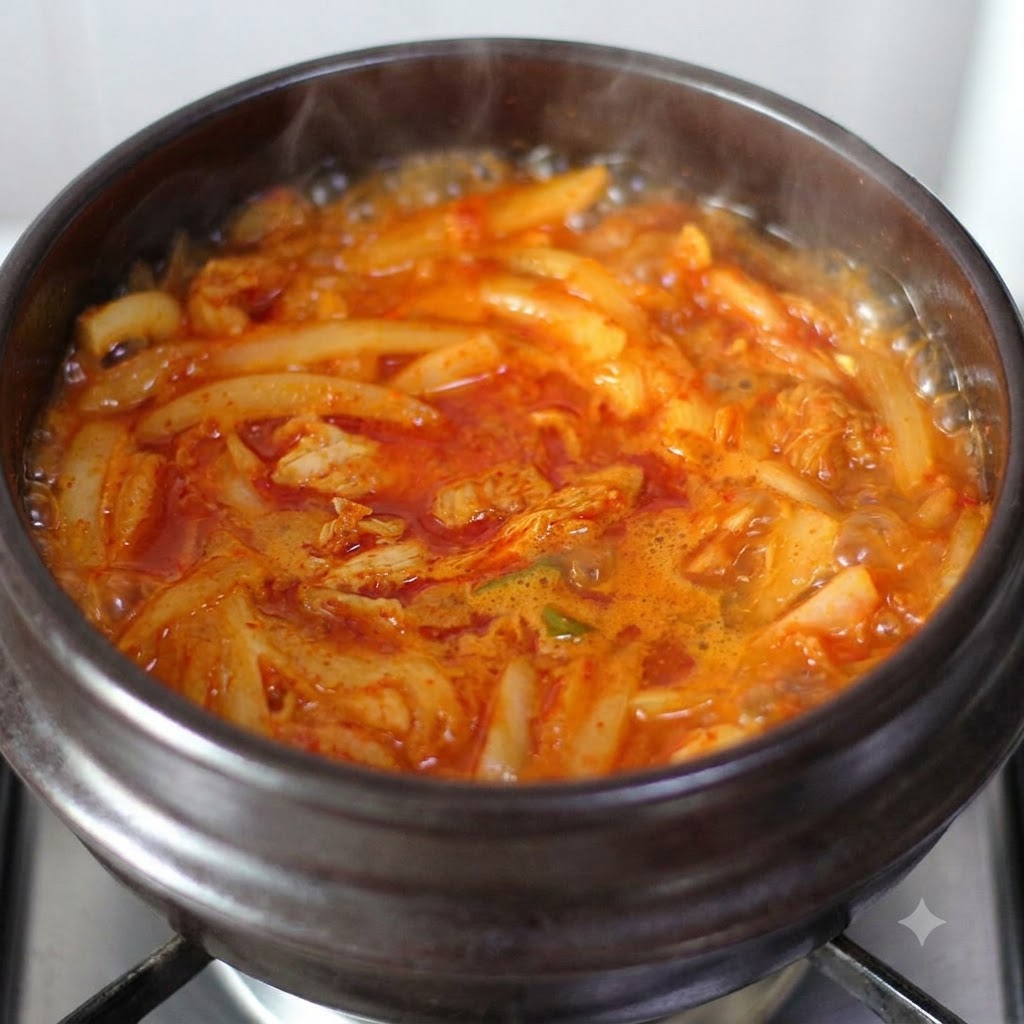
Bring the soup to a boil, then carefully add cubes of white tofu into the bubbling broth.
Tip: Add the tofu gently to prevent it from breaking apart in the hot soup. - 7Add bean sprouts
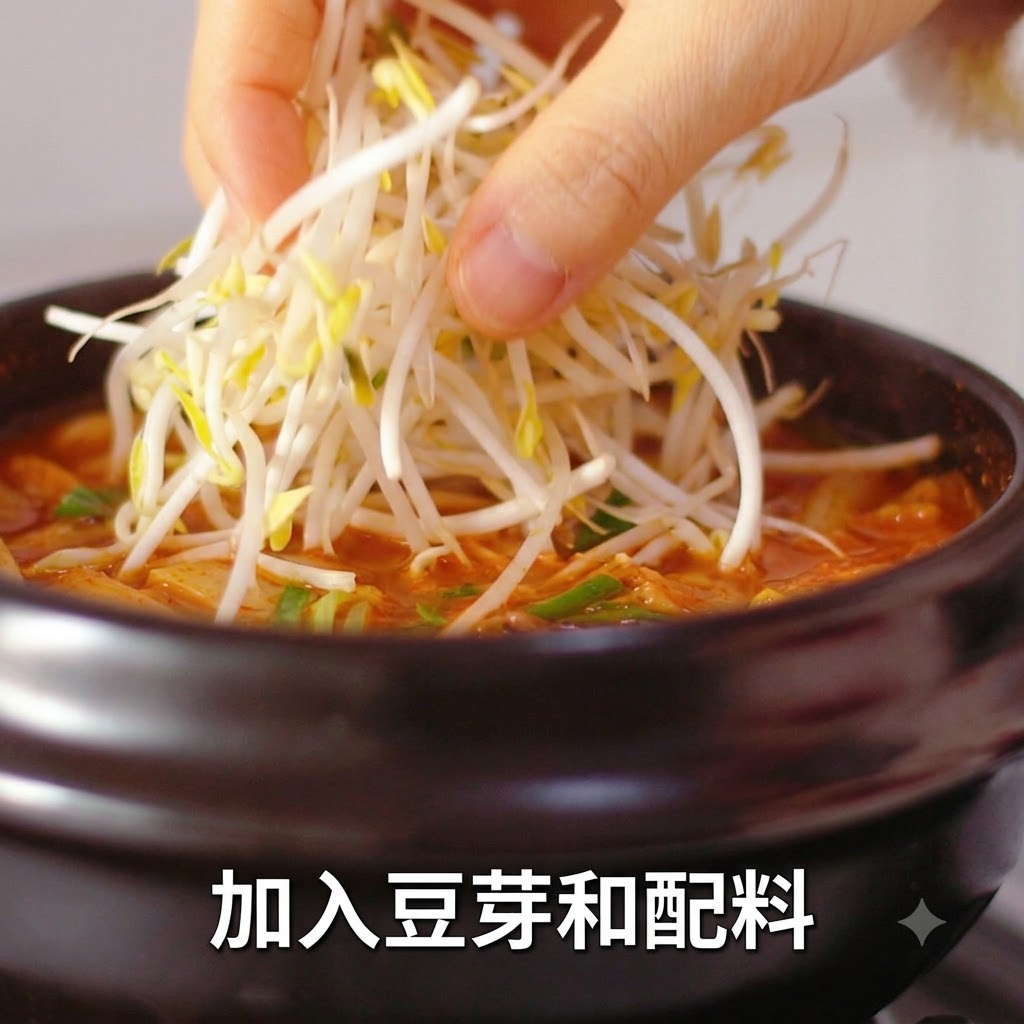
Add fresh bean sprouts into the simmering pot on top of the tofu and soup, then let everything cook together.
Tip: Add bean sprouts towards the end to retain their crisp texture. - 8Garnish the soup
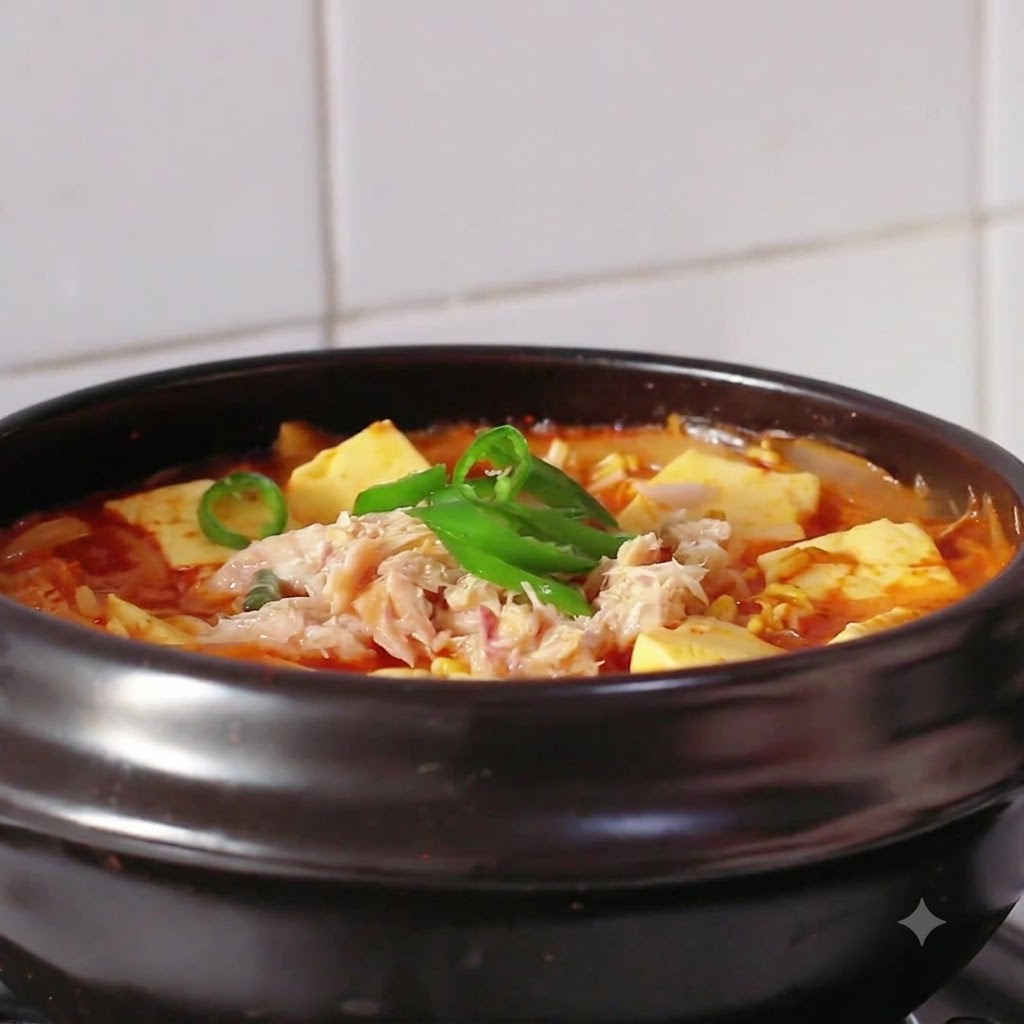
Sprinkle green and red chili rings along with white sesame seeds on top of the finished soup to add color and aroma.
Tip: Chili rings add a nice spicy kick and a vibrant presentation.