Ultimate Unagi Don
Tamagoyaki & Avocado
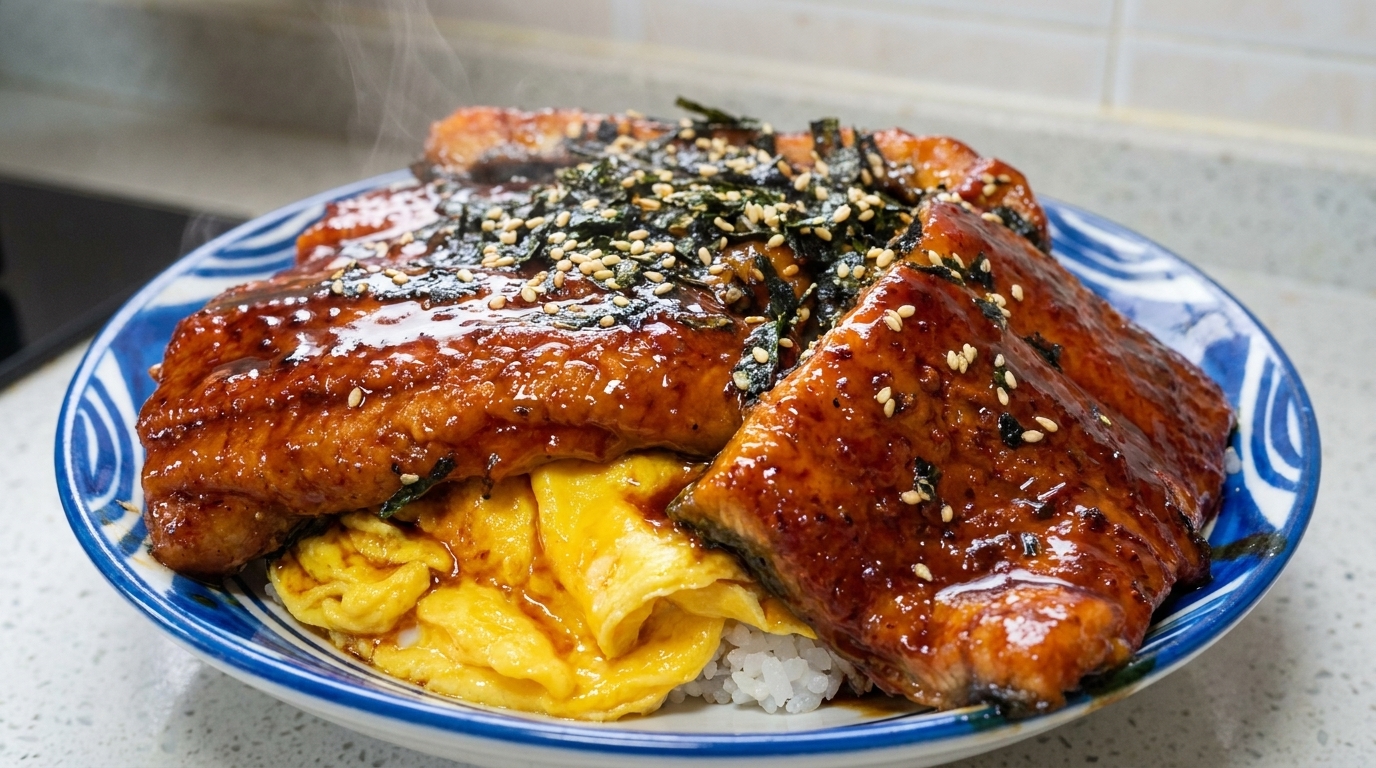
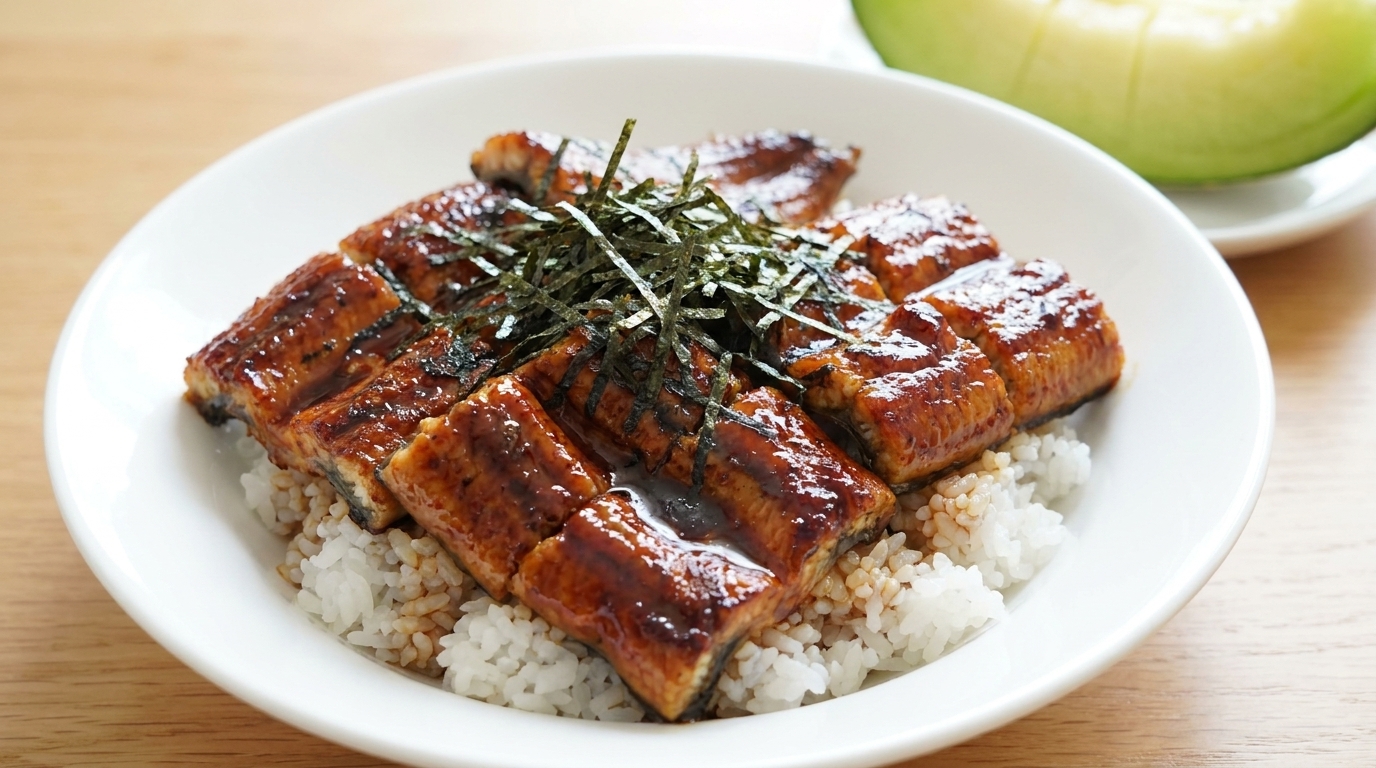
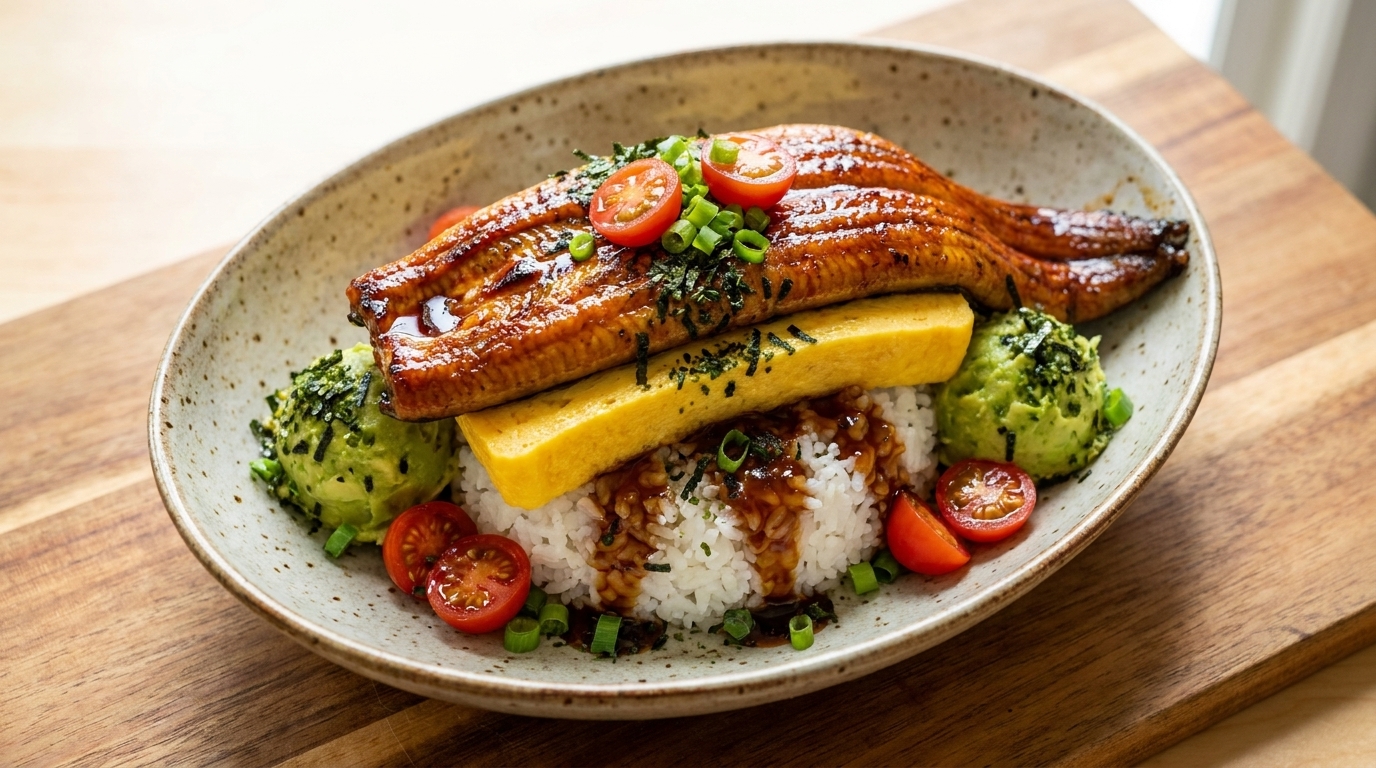
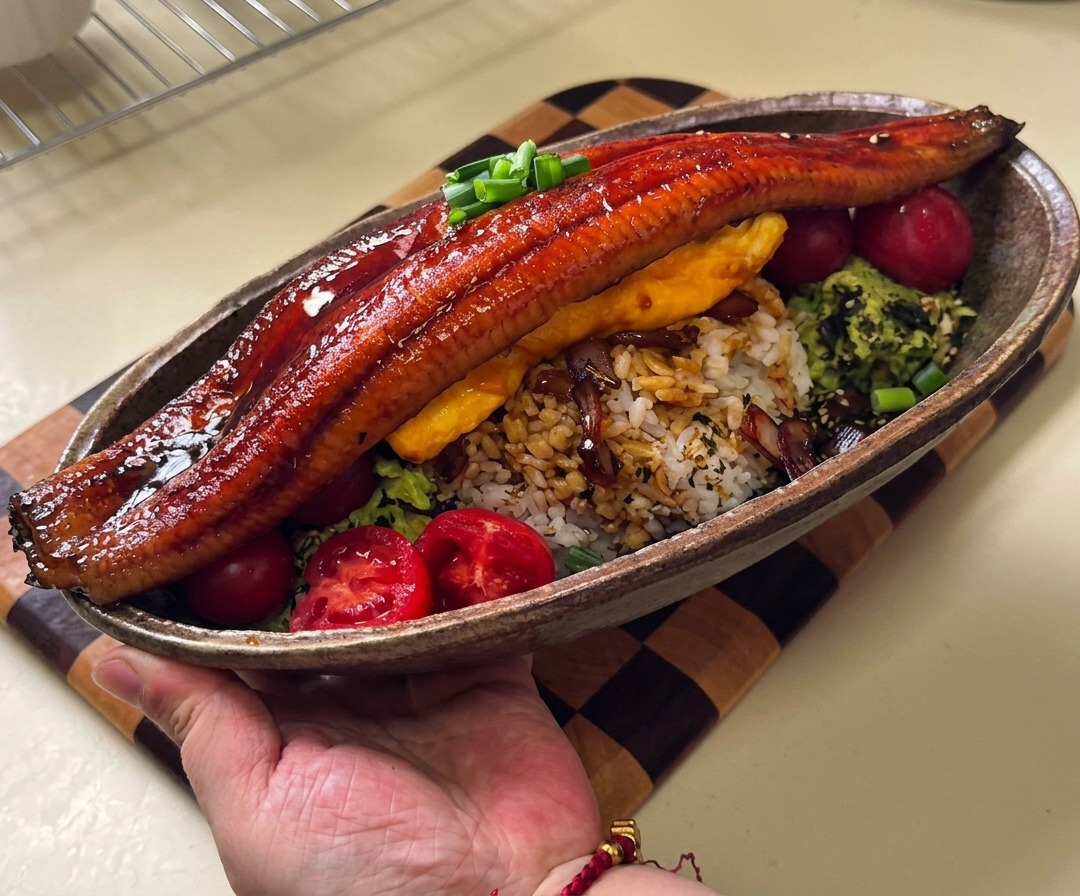
Elevate your Japanese rice bowl with this luxurious Unagi Don. Featuring a perfectly caramelized roasted eel over a thick, fluffy tamagoyaki, served with creamy avocado and homemade teriyaki onion sauce.
The classic Unagi Don is a beloved Japanese dish traditionally enjoyed for stamina during the warm months. This modern rendition elevates the classic by introducing a thick, slightly sweet tamagoyaki (Japanese rolled omelet) and fresh, creamy mashed avocado. The rich, savory-sweet flavors of the caramelized eel are beautifully balanced by the brightness of the avocado and the comforting, bouncy texture of the egg.
Ingredients
- 1 whole glazed roasted unagi (eel) fillet
- 2 large eggs
- 1 tbsp milk
- 1 pinch salt
- 1 pinch sugar
- 1 ripe avocado
- 1 tsp fresh lemon juice
- 1/2 red onion
- 1 tbsp light soy sauce
- 1 tbsp dark soy sauce
- 1 tsp oyster sauce
- 2 tbsp water
- 1 tbsp honey
- 1 large bowl cooked short-grain white rice
- to taste seaweed flakes
- to taste black pepper
- optional cherry tomatoes
- optional chopped green onions
Instructions
- 1Roast the eel
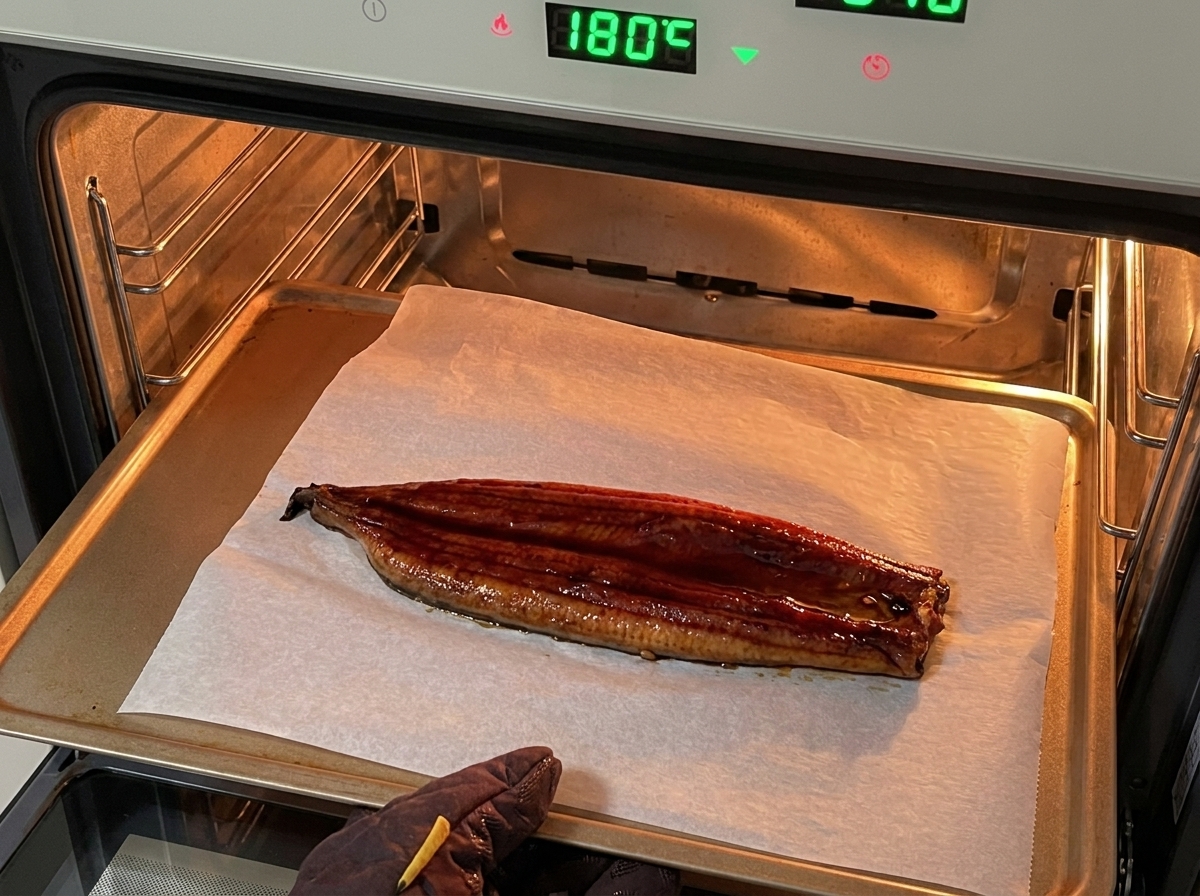
Place the unagi fillet onto a parchment-lined baking sheet. Bake in a preheated oven at 180°C for 10 minutes to heat through and ensure it is tender.
Tip: Check your packaging instructions, as cooking times can vary depending on the specific appliance used. - 2Dice the red onion
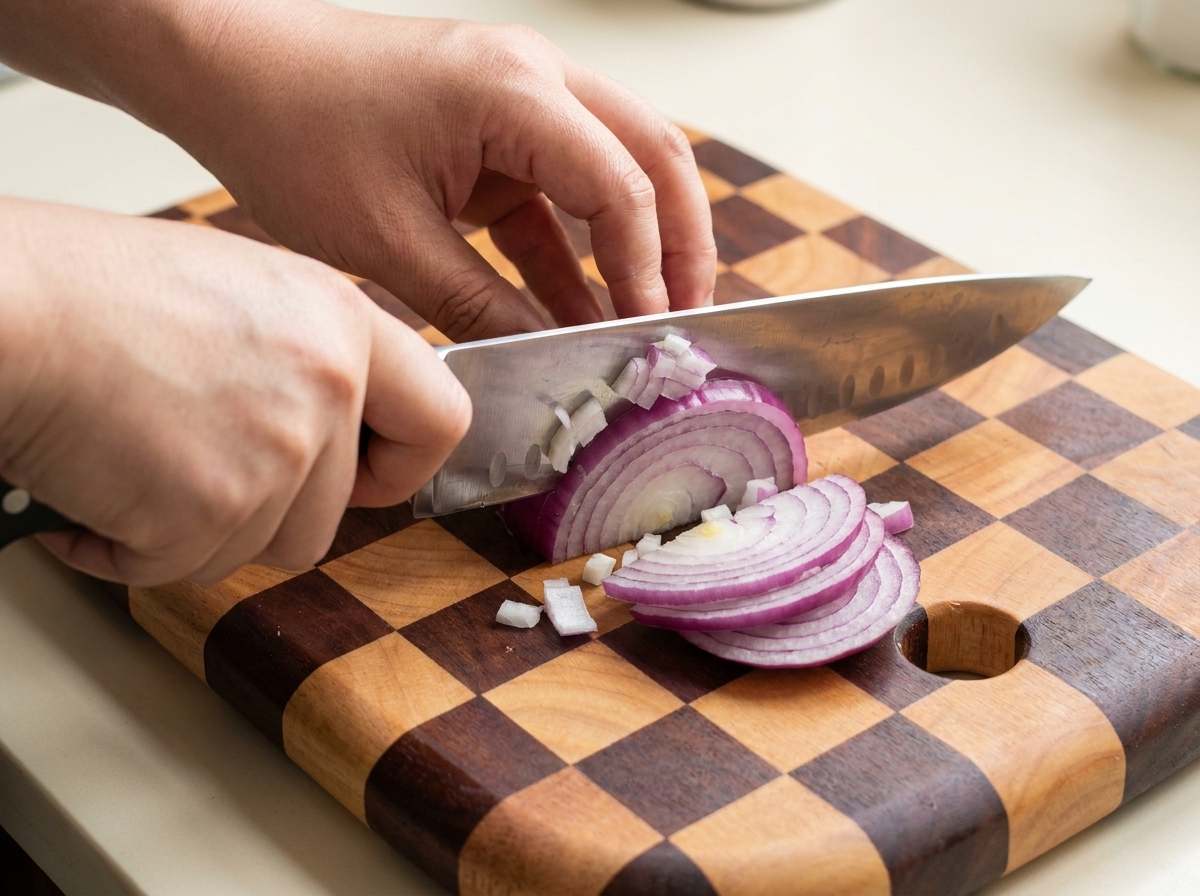
Place half of a red onion on a cutting board and dice it into small, uniform pieces. These will be used to create the teriyaki onion sauce later.
Tip: Keep the pieces relatively small so they soften quickly and integrate well into the sauce. - 3Prepare the avocado
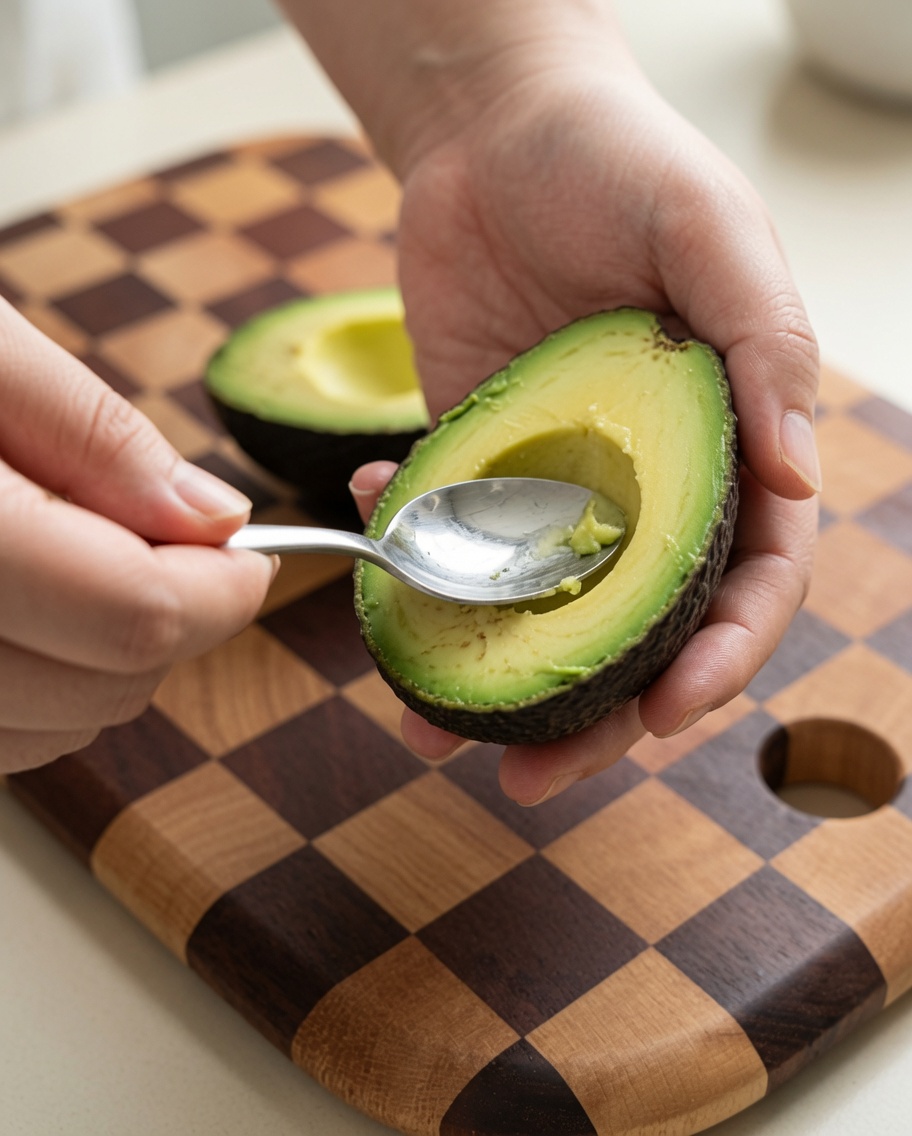
Take a ripe avocado, cut it in half, and remove the pit. Use a spoon to carefully scoop the green flesh out of the peel and into a mixing bowl.
Tip: Ensure the avocado is fully ripe to achieve a smooth and creamy consistency when mashed. - 4Mash the avocado
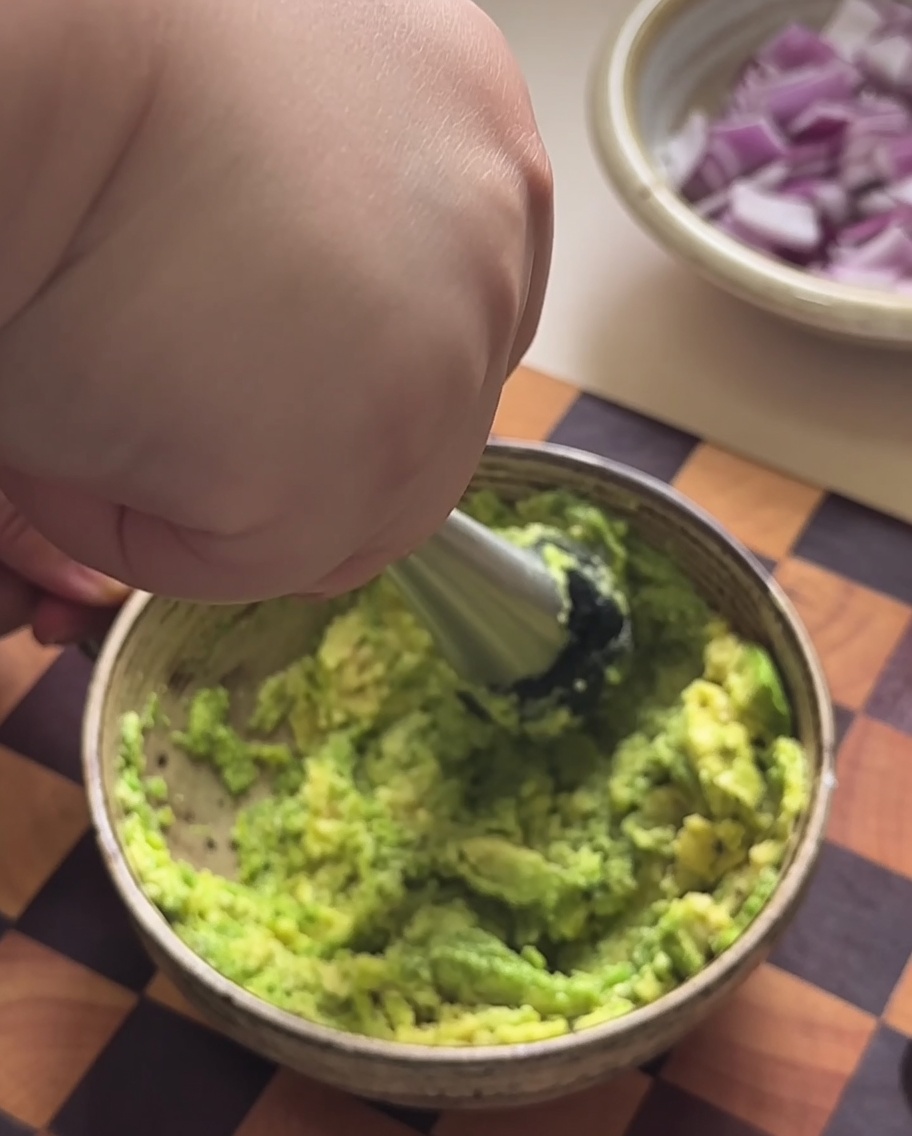
Add a small amount of sea salt, black pepper, and a squeeze of fresh lemon juice to the avocado flesh. Use a muddler or fork to mash it until it reaches a smooth, consistent paste.
Tip: The lemon juice is key here—it adds brightness and prevents the avocado from oxidizing and turning brown. - 5Prepare the egg mixture
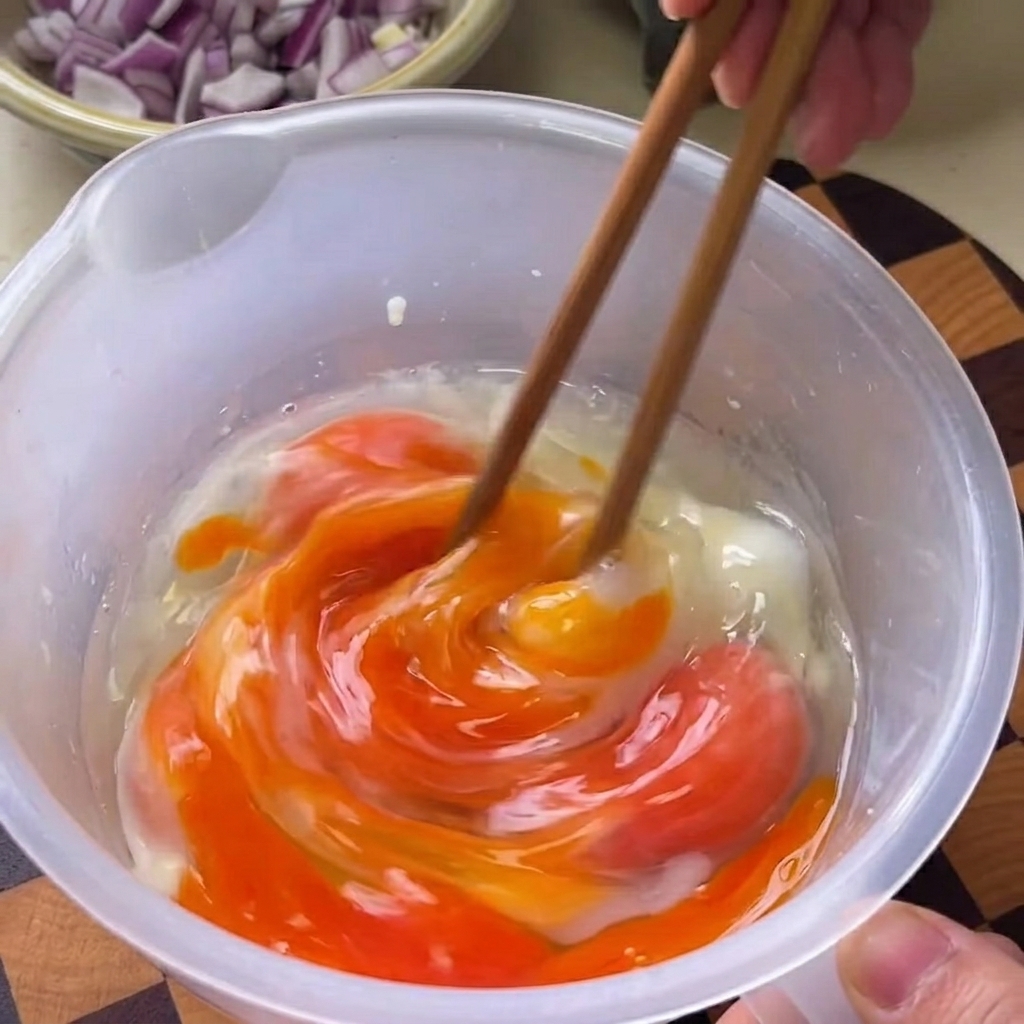
In a clear mixing bowl, combine the eggs with a splash of milk, a pinch of salt, and a little sugar. Use chopsticks to stir and whisk everything together until thoroughly combined.
Tip: Whisking well ensures the egg mixture is uniform, which makes for a smoother, better-textured tamagoyaki. - 6Cook the tamagoyaki
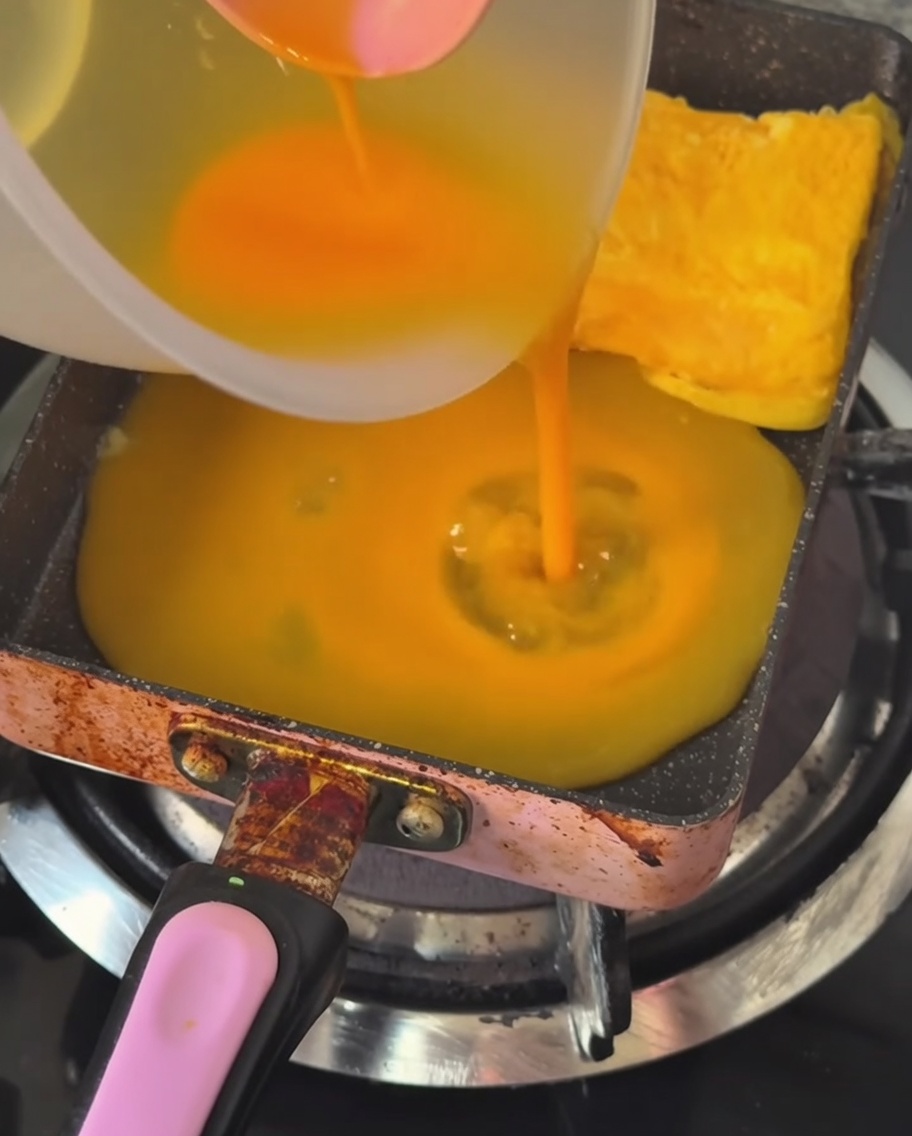
Lightly grease a rectangular tamagoyaki pan with a bit of oil. Pour in a thin layer of the egg mixture, just enough to coat the bottom. As it begins to coagulate, fold it over, then continue adding thin layers and rolling until the egg roll is formed.
Tip: Patience is essential; pour the liquid in small amounts and push the roll forward as you add new layers to ensure even cooking. - 7Form the Japanese omelet
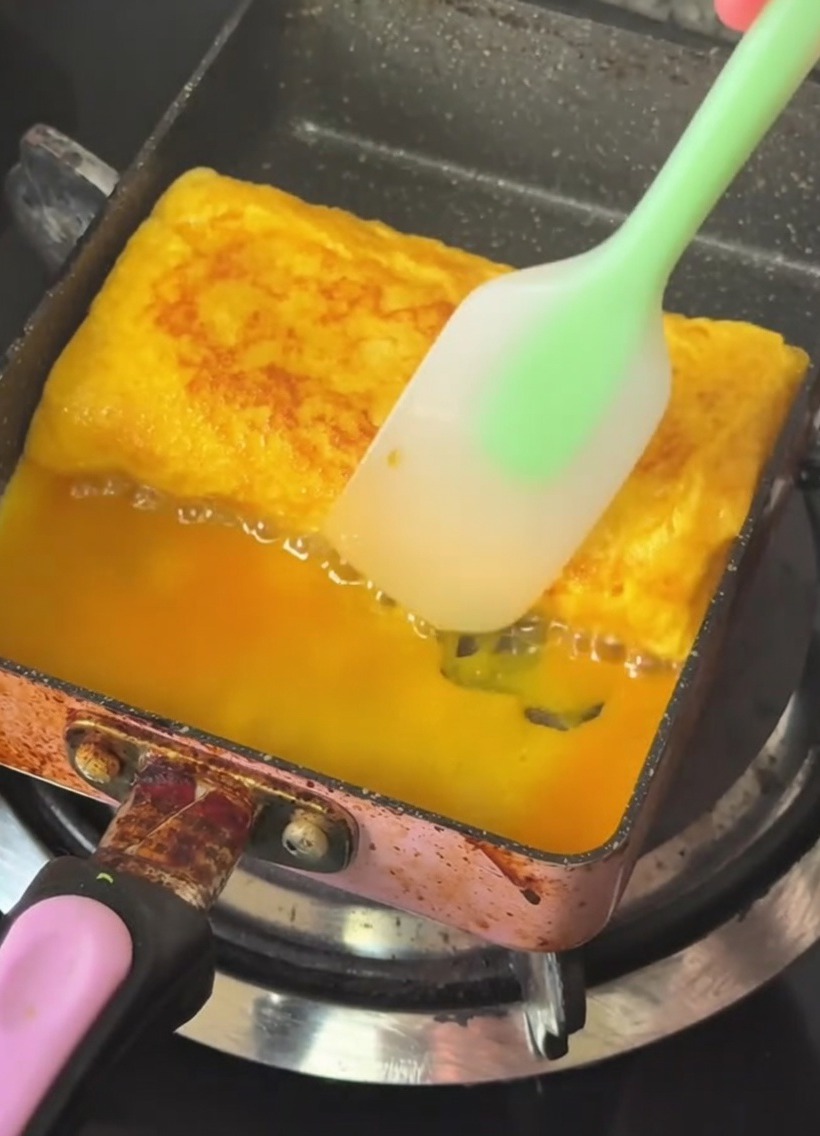
Pour a small amount of egg mixture into a pre-heated, lightly oiled tamagoyaki pan. Once the base begins to set, use a silicone spatula to gently fold and roll the egg layer onto itself. Continue adding small amounts of egg liquid, lifting the cooked portion to let the raw mixture flow underneath, and rolling it until you achieve a thick, layered omelet.
Tip: Keep the heat low to prevent the eggs from browning too quickly; patience is key to achieving a clean, layered look. - 8Prepare the teriyaki sauce base
In a pan over medium-low heat, combine light soy sauce, dark soy sauce, oyster sauce, and water. Slowly drizzle in honey while stirring, adjusting the amount to taste to balance the savory notes with a hint of natural sweetness.
Tip: The honey can caramelize quickly, so keep the heat steady and taste frequently to achieve the perfect balance of flavors. - 9Simmer the onion sauce
Add the diced red onions to the prepared teriyaki sauce base. Continue to simmer over low heat, allowing the onions to soften and absorb the savory glaze. Cook until the sauce reduces and thickens, coating the back of a spoon.
Tip: Slow simmering ensures the onions become tender and fully infused with the teriyaki flavors. - 10Plate the rice mound
Pack cooked white rice into a bowl, then carefully invert it onto an oval serving plate to create a neat, rounded mound. Use a spoon to gently shape the rice if needed, ensuring a stable base for the remaining toppings.
Tip: Using a bowl to mold the rice creates a cleaner presentation and a perfect foundation for the eel and other components. - 11Glaze the rice
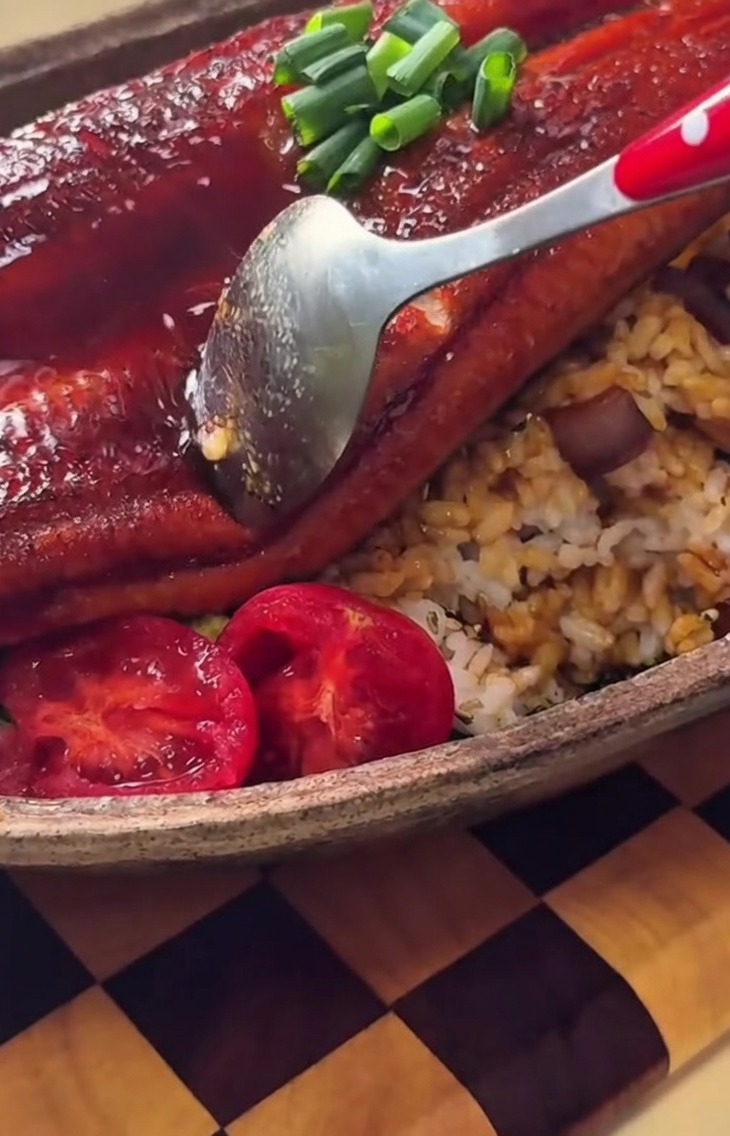
Carefully spoon the thickened teriyaki onion sauce over the molded rice mound. Focus the sauce on the rice to add flavor, but be careful not to over-saturate the plate to maintain a clean presentation.
Tip: Applying the sauce sparingly helps keep the dish from becoming overly salty while ensuring every bite of rice is well-seasoned. - 12Add creamy avocado
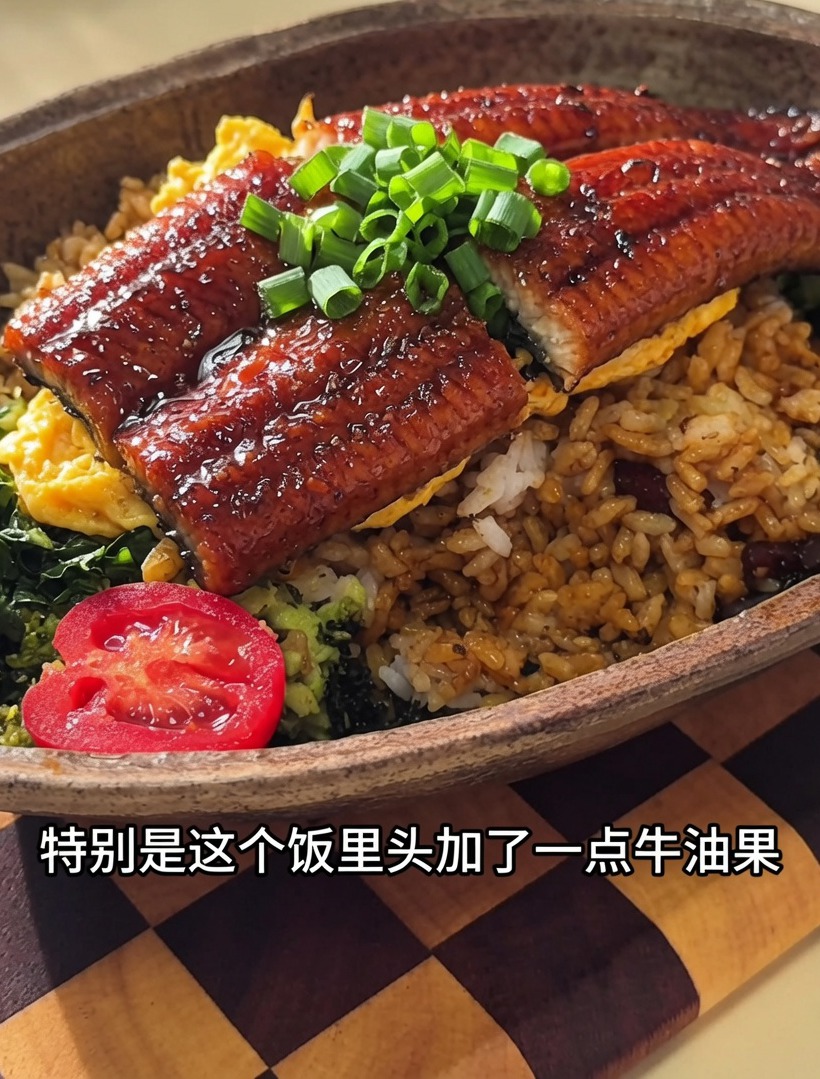
Place dollops of the prepared mashed avocado along the sides of the seasoned rice mound. The creamy texture of the avocado provides a beautiful contrast and adds a rich, mellow flavor that balances the savory eel and sauce.
Tip: Adding avocado right before serving prevents oxidation and ensures the best color and texture. - 13Season with seaweed
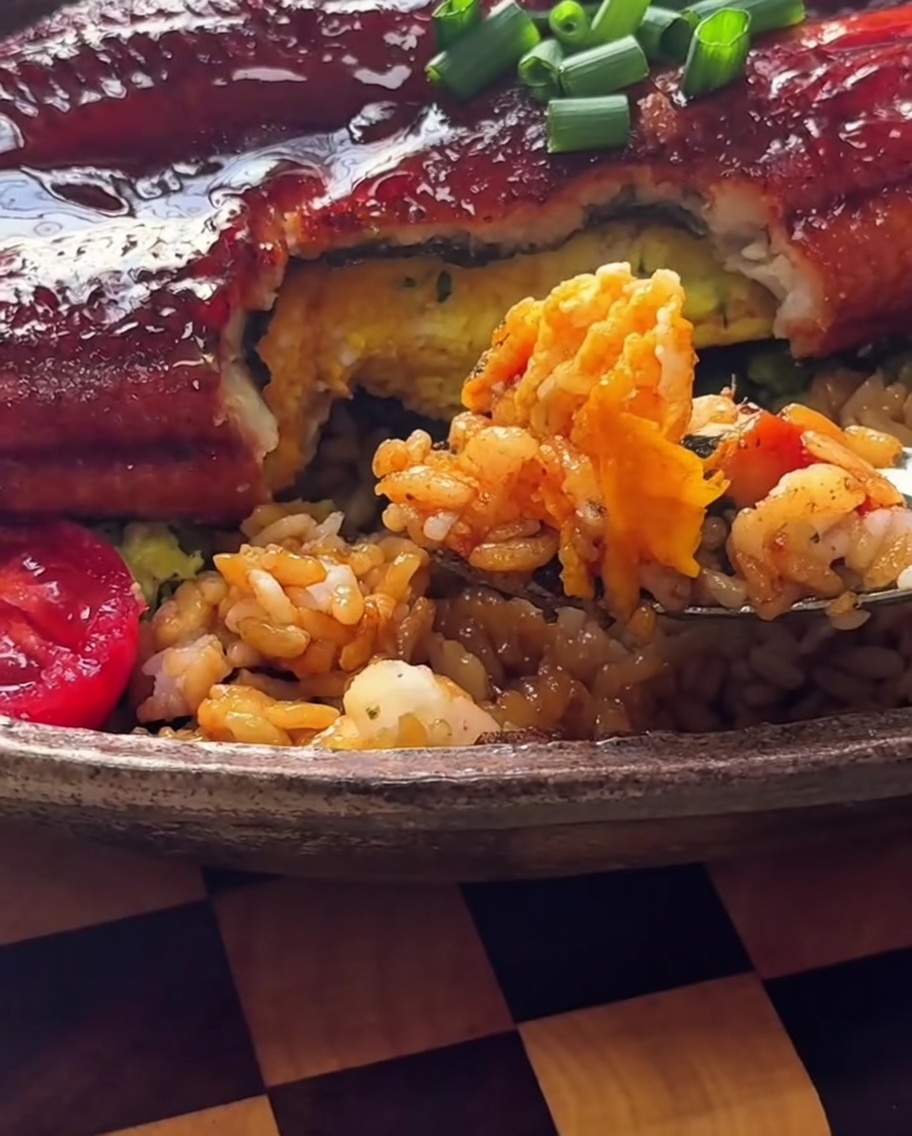
Take a generous amount of seaweed flakes and sesame seeds and sprinkle them evenly over the bowl of rice and avocado mash. This adds a savory, umami-rich layer and a pleasant crunch to the dish.
Tip: If you like extra texture, you can lightly toast your seaweed flakes in a dry pan before sprinkling them. - 14Add the tamagoyaki
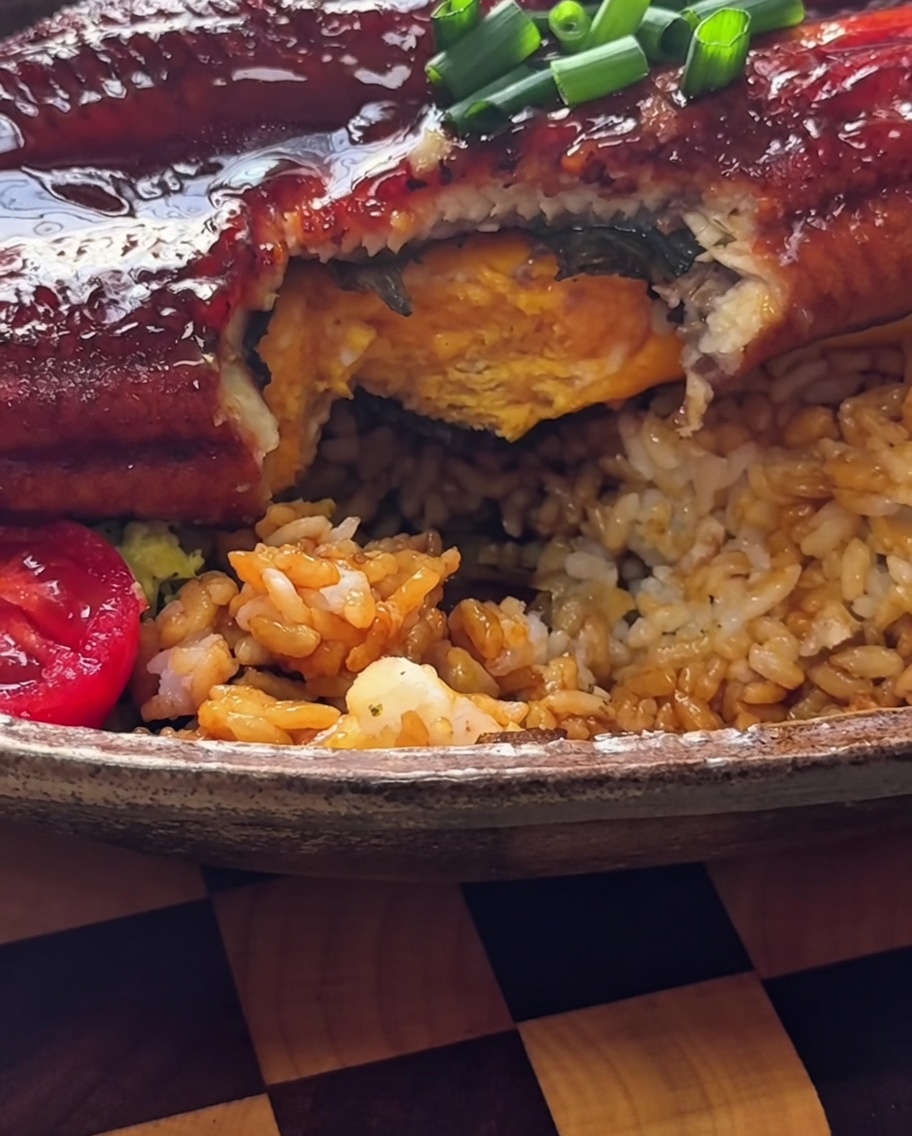
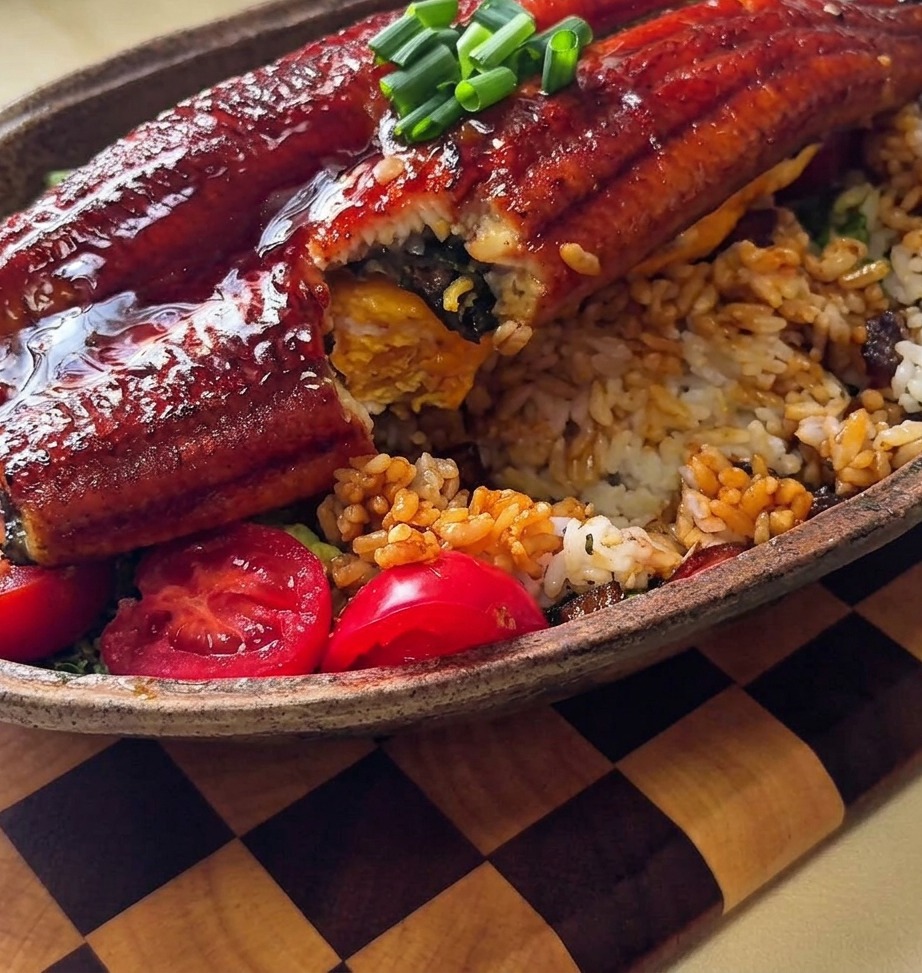
Carefully lift the prepared thick tamagoyaki (Japanese egg roll) and place it gently over the bed of seasoned rice and avocado. The soft, bouncy texture of the egg provides a perfect contrast to the other ingredients.
Tip: Ensure your tamagoyaki is at a manageable temperature before placing it so it doesnt melt the avocado too quickly. - 15Top with roasted eel
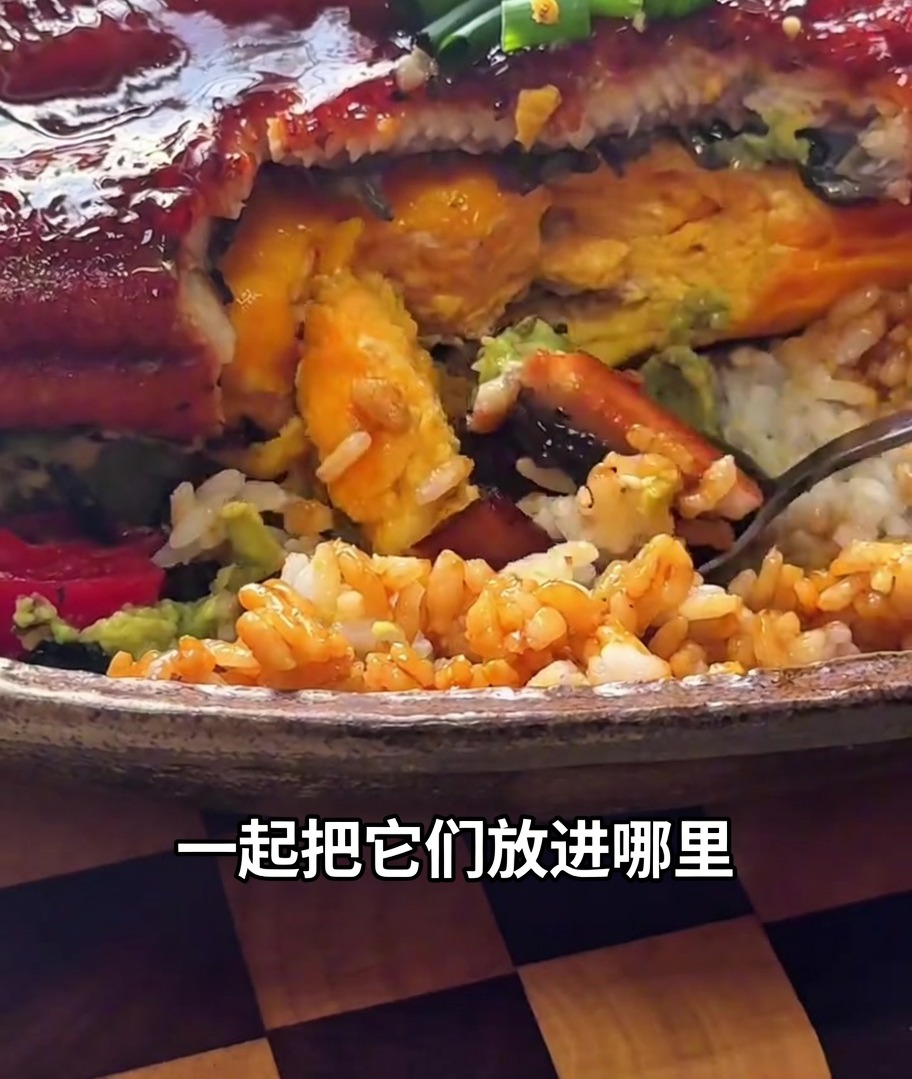
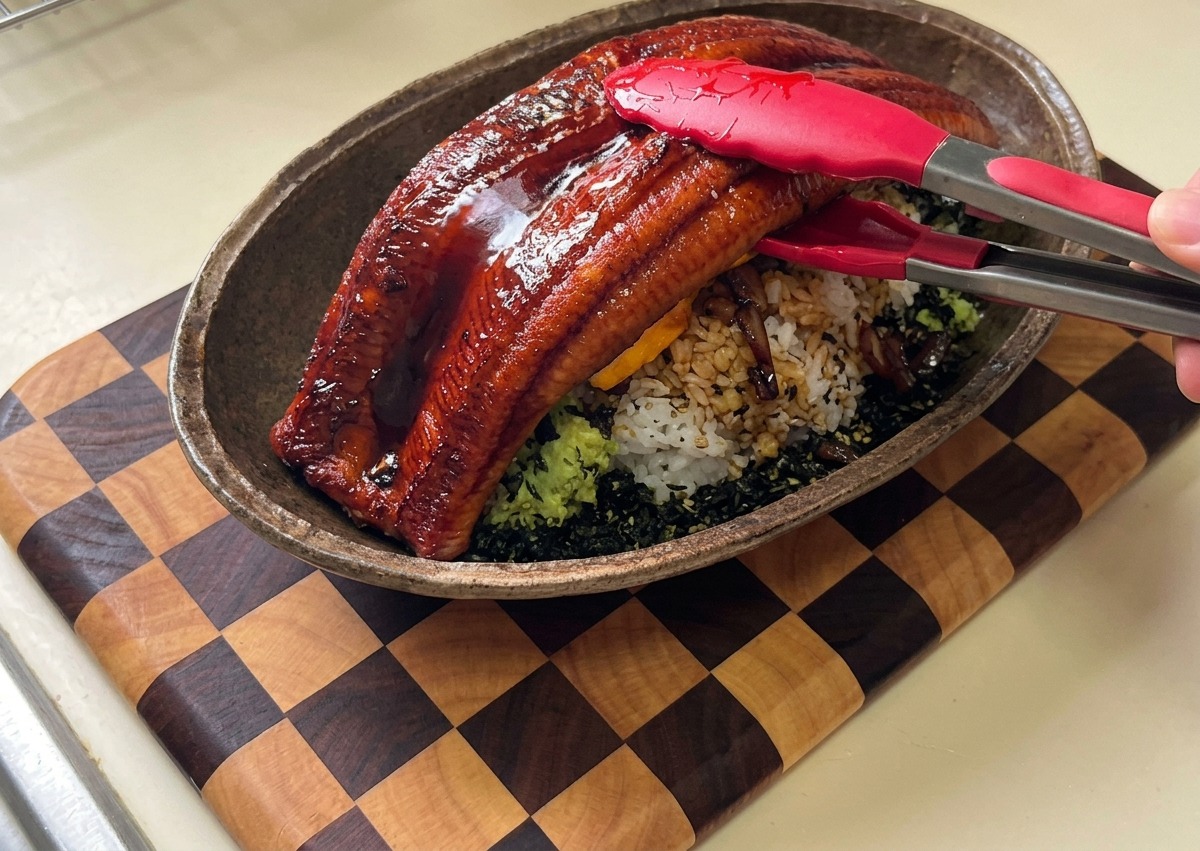
Using a pair of tongs, lift the whole, beautifully glazed roasted eel and lay it carefully over the tamagoyaki omelet. Ensure it is centered to make the final presentation look appealing.
Tip: Use a wide spatula alongside your tongs if the eel is very soft to prevent it from breaking during the transfer.