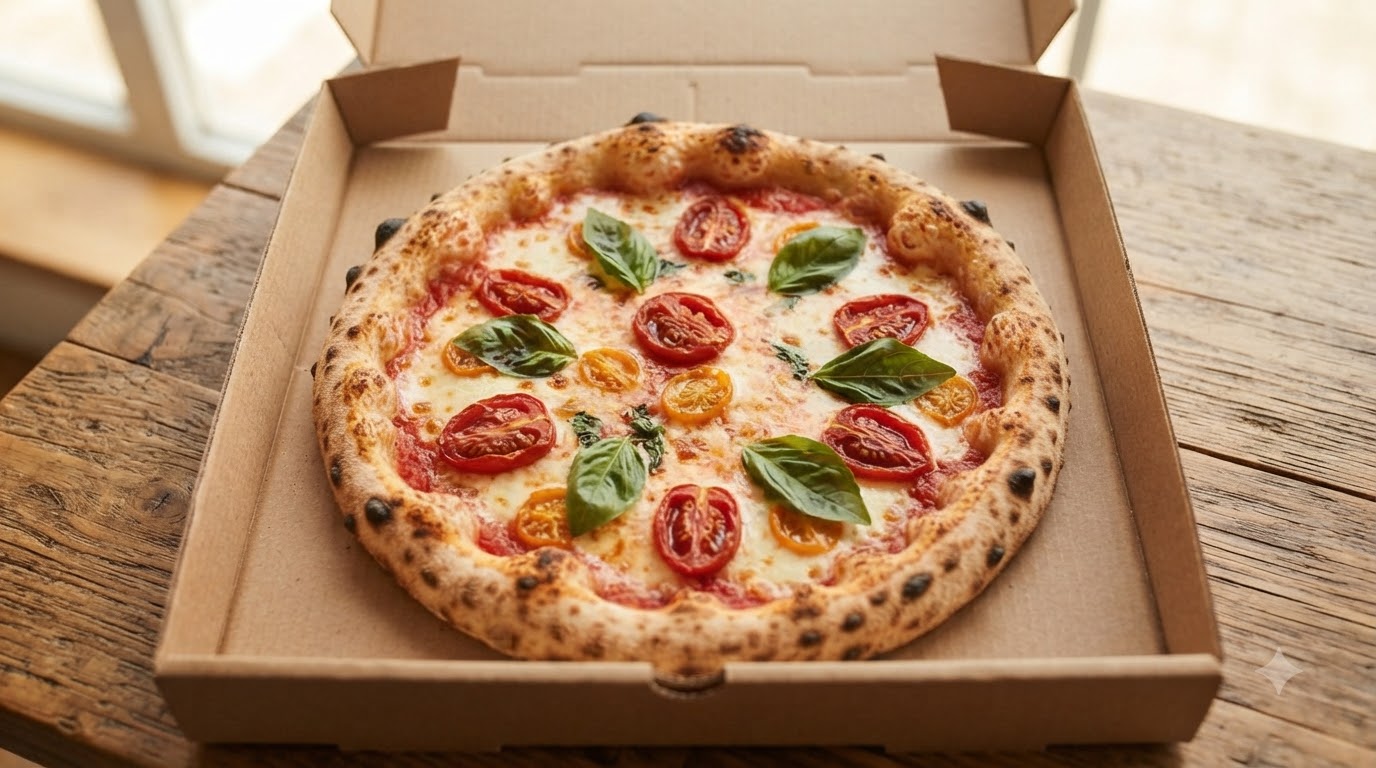
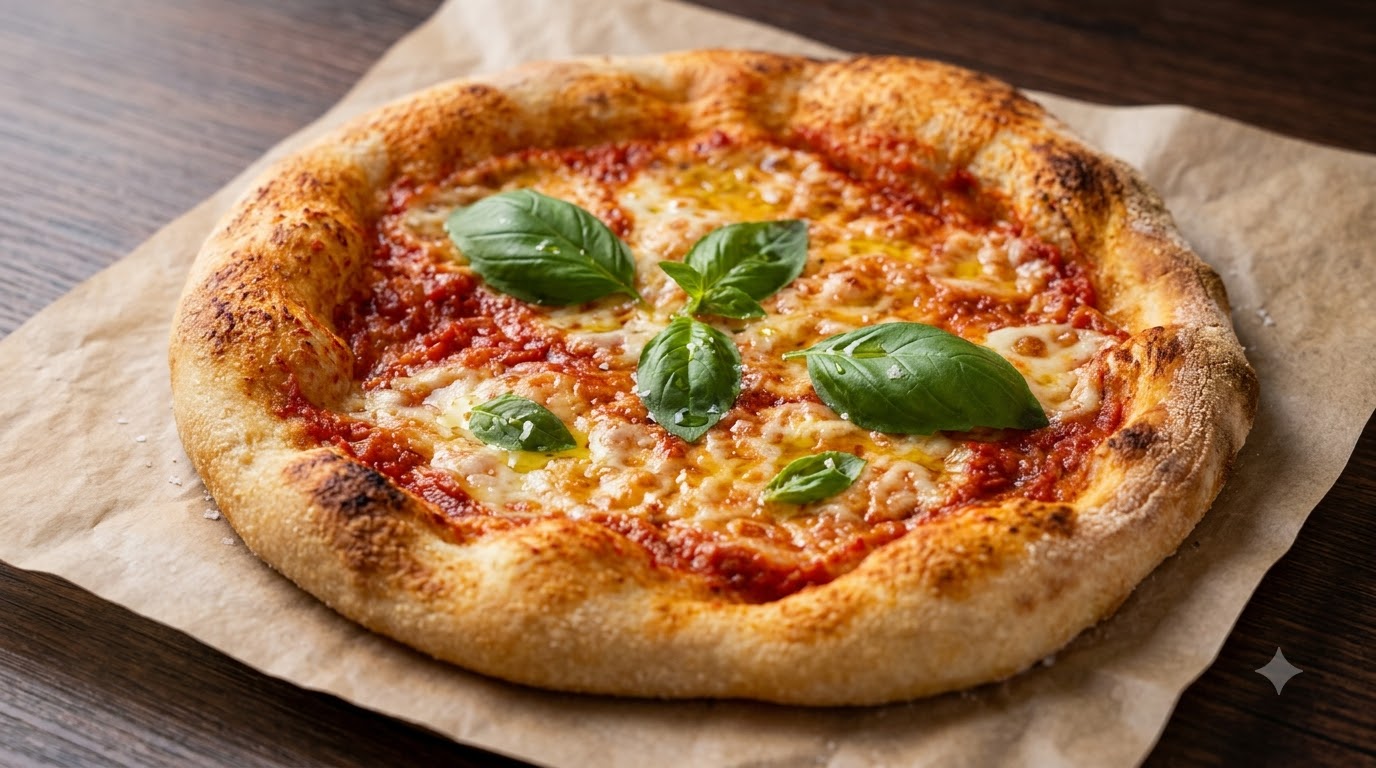
Classic Italian Margherita
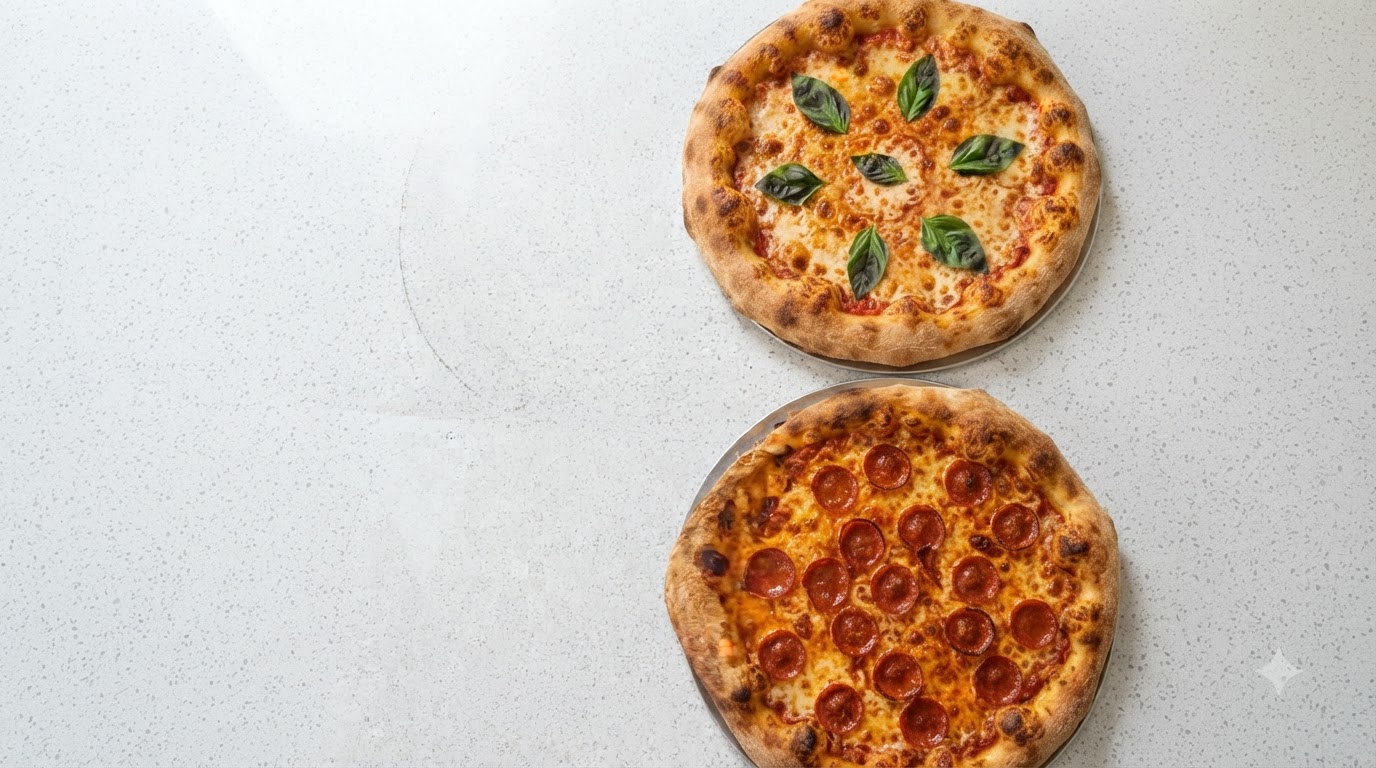
Salami Pizza
Master two iconic Italian pizzas from a single overnight cold-fermented dough — crispy on the outside, airy and chewy inside, featuring a leopard-spotted cornicione.
Great homemade pizza relies on patience rather than heavy equipment. By using a slow overnight cold fermentation method, this recipe develops complex sourdough-like flavors and a remarkably airy crust without any kneading required. Whether you prefer the fresh simplicity of a classic Margherita or the savory richness of a salami pizza, this method delivers authentic pizzeria quality straight from a standard or high-temperature home oven.
Ingredients
- 360 g bread flour
- 252 ml water
- 3 g dry yeast
- 6 g salt
- 20 ml olive oil
- to taste Italian tomato sauce
- to taste shredded mozzarella cheese
- to taste salami slices
- to taste basil leaves
- to taste sea salt
- to taste black pepper
- to taste cornmeal
Instructions
- 1Dissolve Yeast in Water
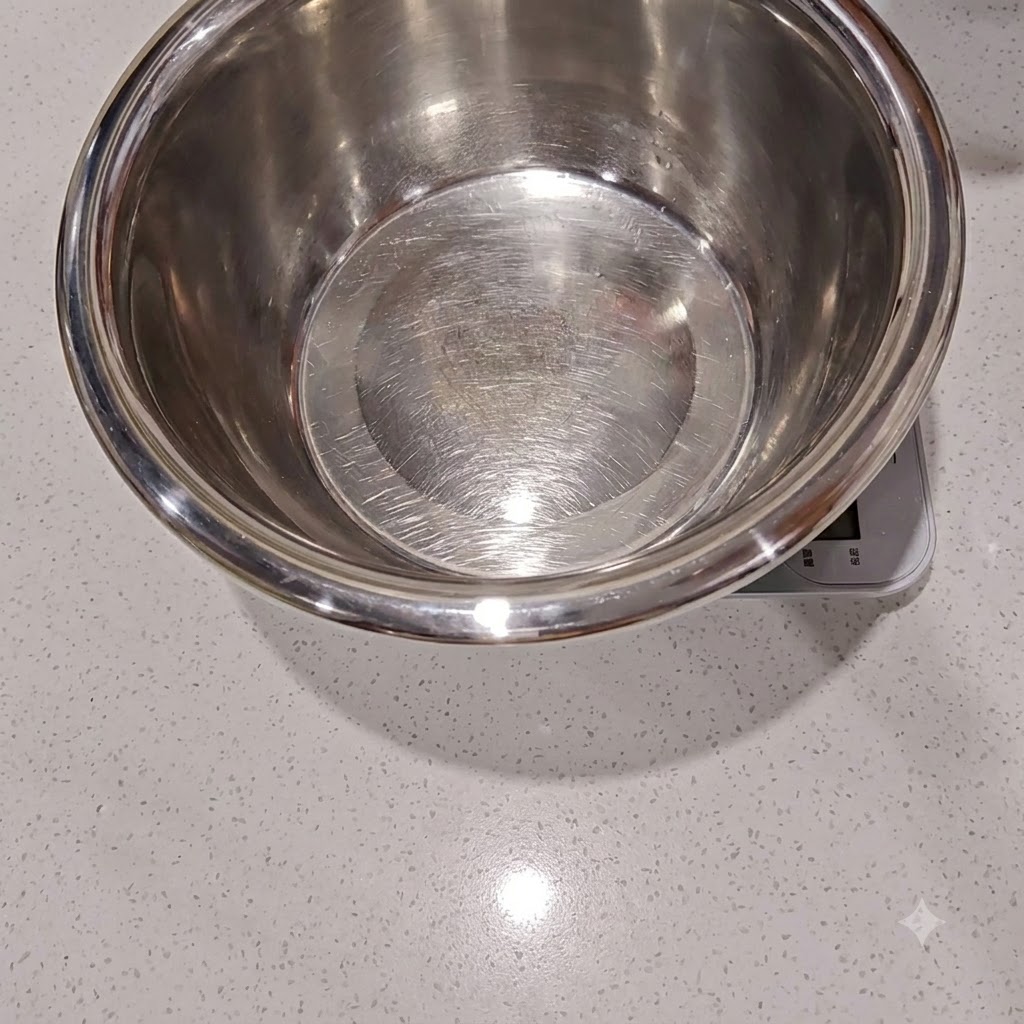
Pour the water and dry yeast into a clean mixing bowl and stir thoroughly to completely dissolve the yeast.
Tip: Ensure the water is at room temperature so it doesnt kill the yeast active cultures. - 2Add Flour, Salt, and Olive Oil
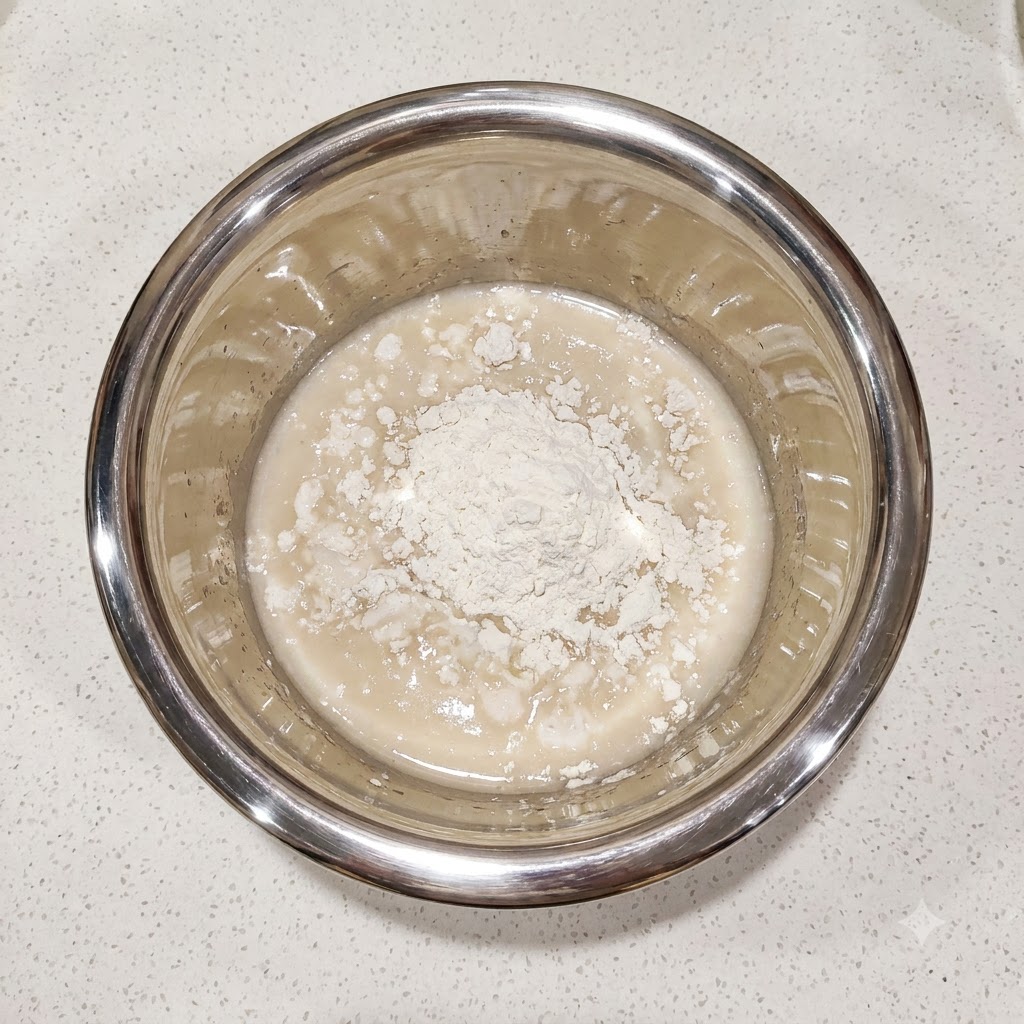
Add the bread flour, salt, and olive oil directly into the bowl containing the dissolved yeast mixture.
Tip: Keep the salt from directly touching the dry yeast initially to protect yeast activity. - 3Mix into a Shaggy Dough
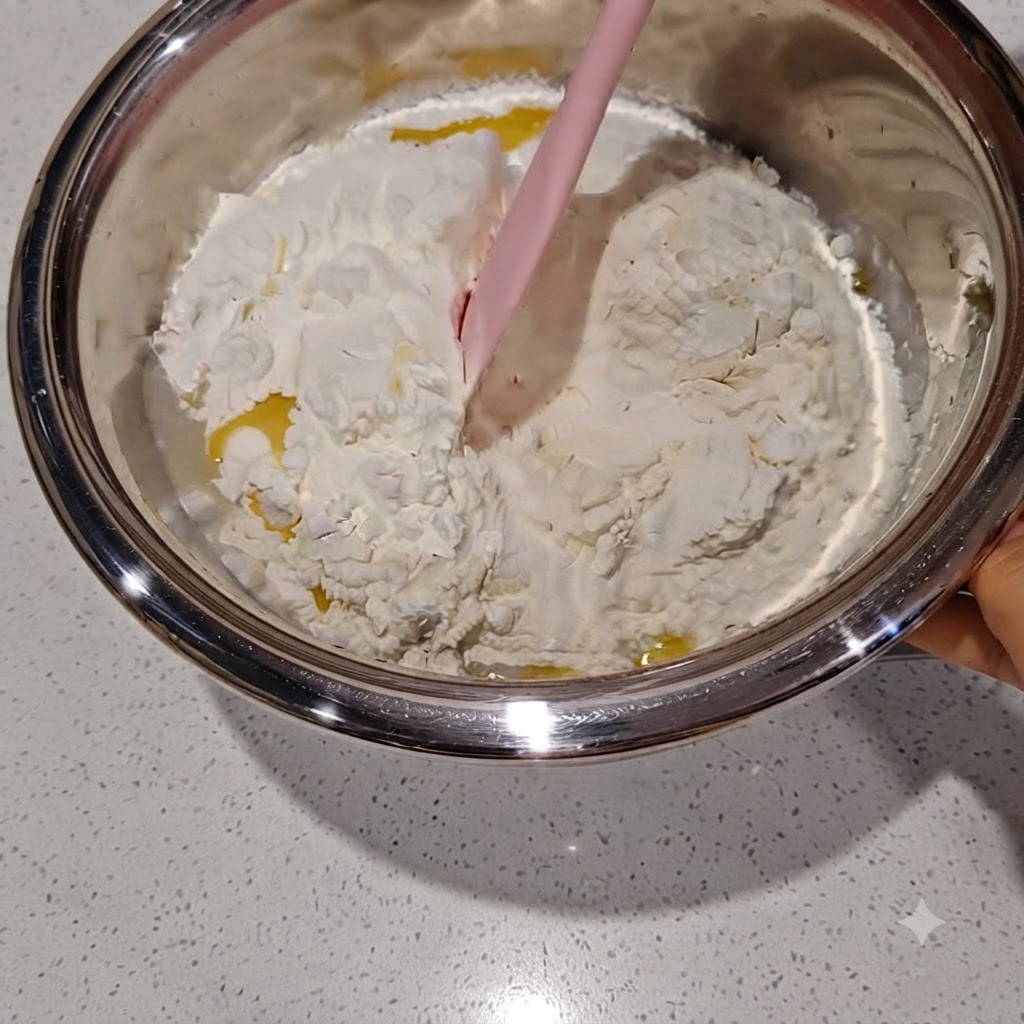
Using a spatula, mix all the ingredients together inside the bowl until they combine into a rough, shaggy dough.
Tip: Make sure no pockets of dry flour remain on the bottom or sides of the bowl. - 4Knead the Dough
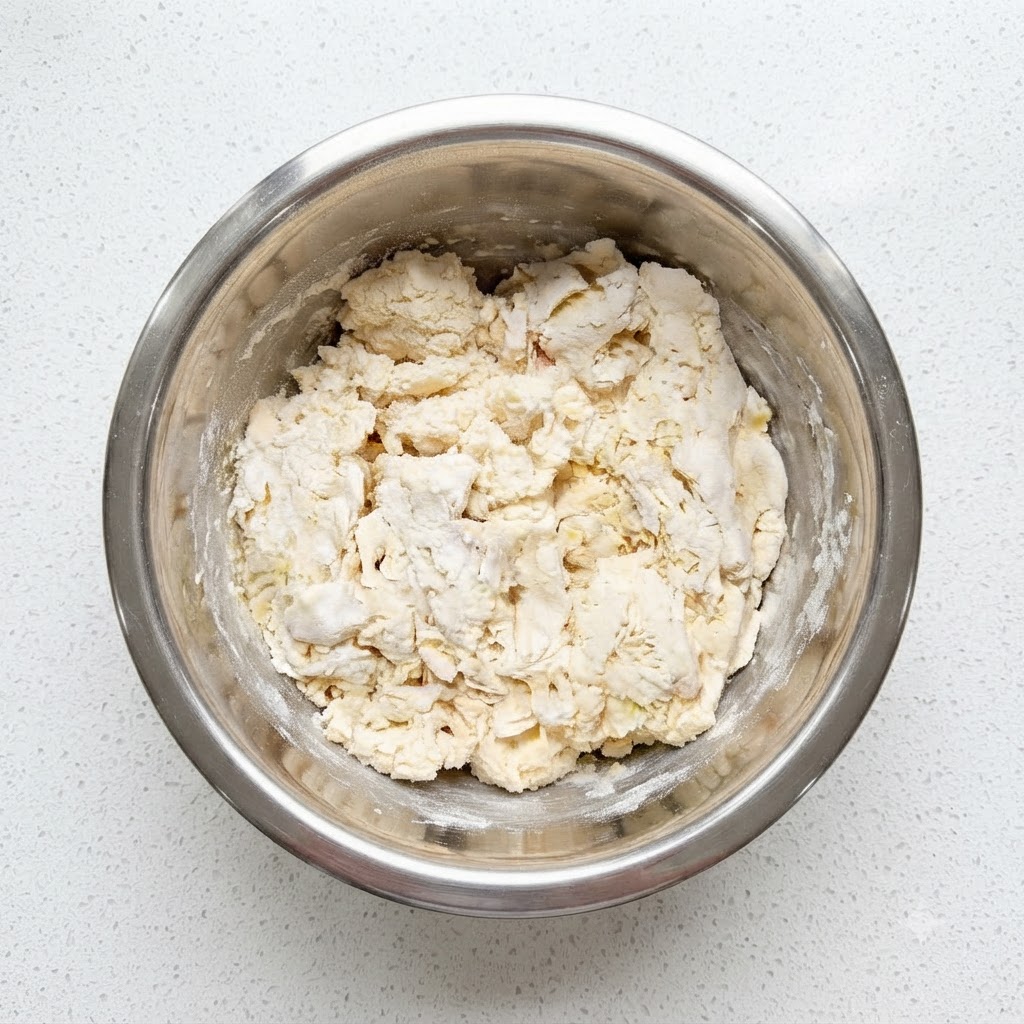
Use your hands to gently knead and massage the dough together directly inside the bowl until it comes together cohesively.
Tip: Work the dough uniformly to begin developing the gluten structure. - 5First Stretch and Fold
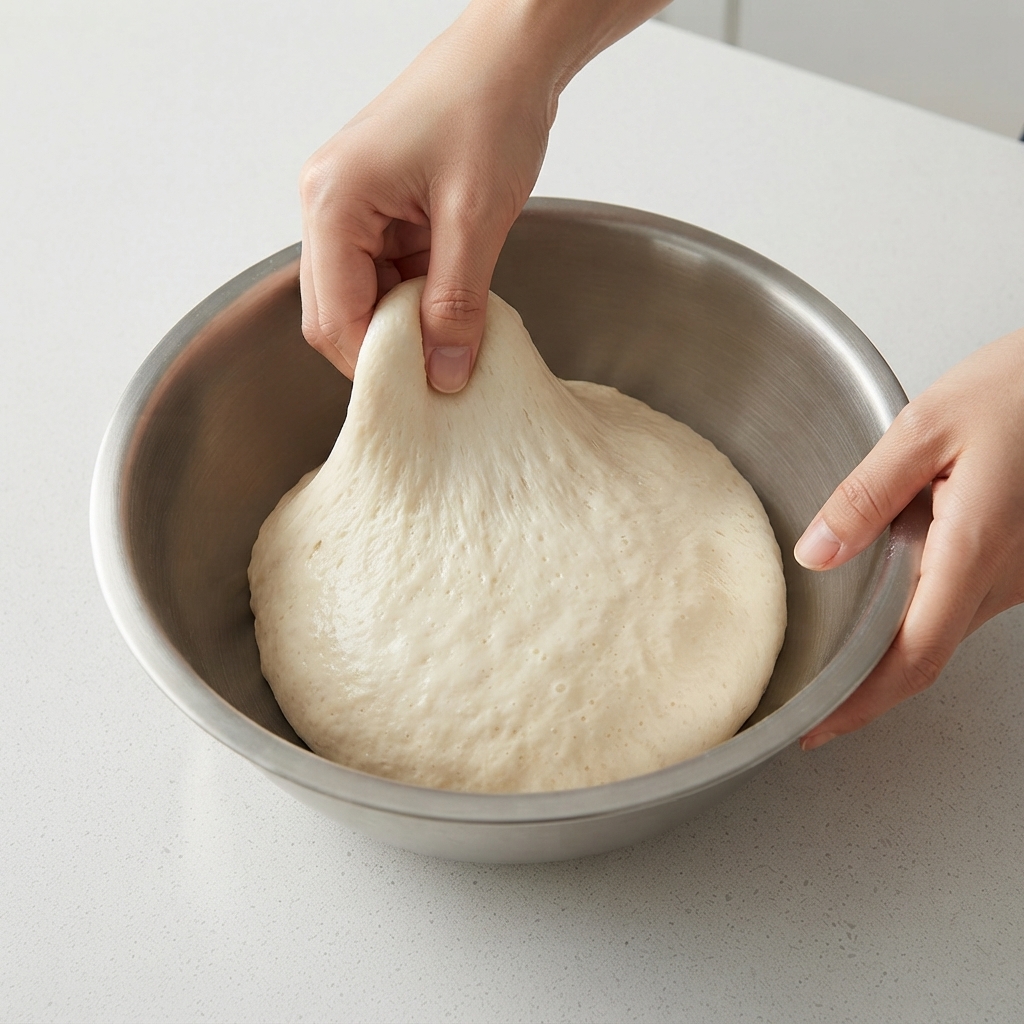
Perform the first stretch and fold on the dough by pulling up a section from the edge and folding it over the center.
Tip: Stretching helps build structural strength without requiring traditional intensive kneading. - 6Test Gluten Development
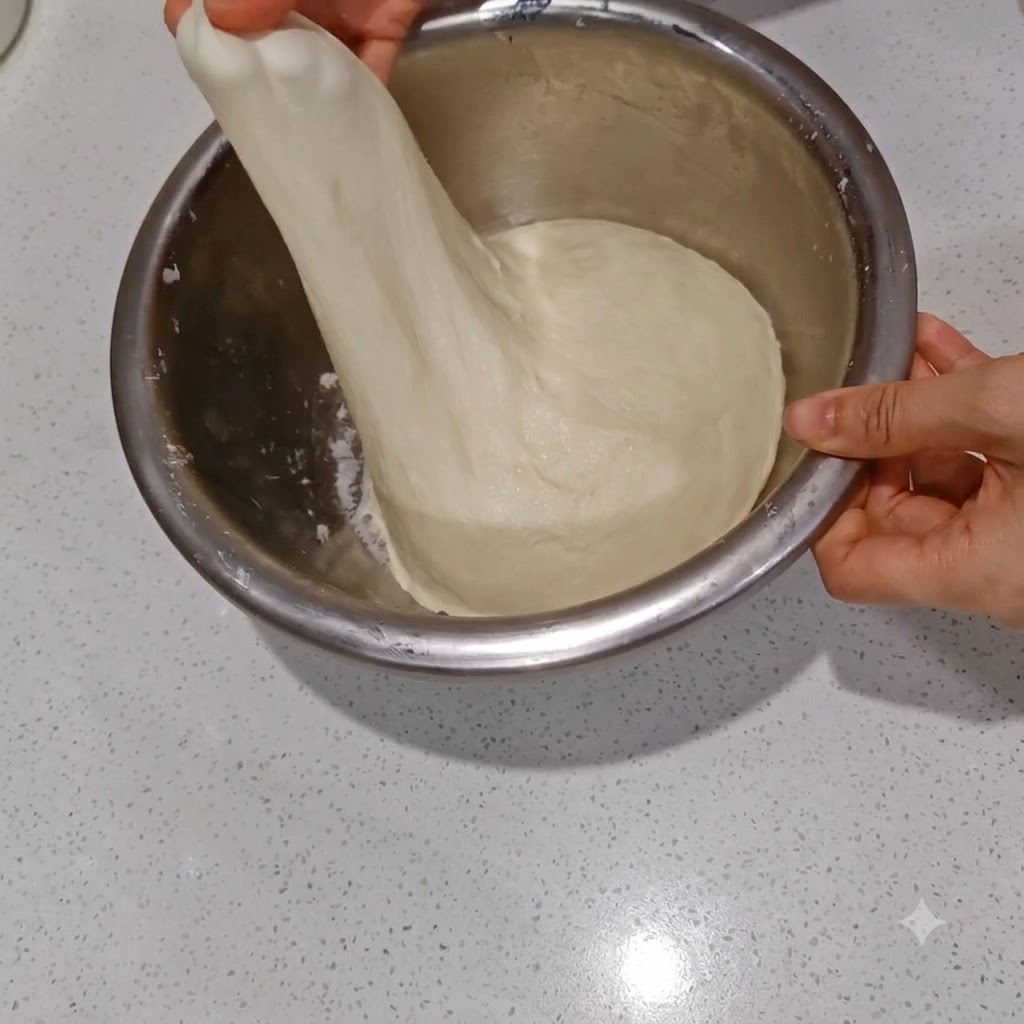
Gently stretch a small section of the water-infused dough to reveal a thin, translucent windowpane membrane layer.
Tip: If the dough tears too easily, let it rest for a few minutes before trying again. - 7Divide the dough
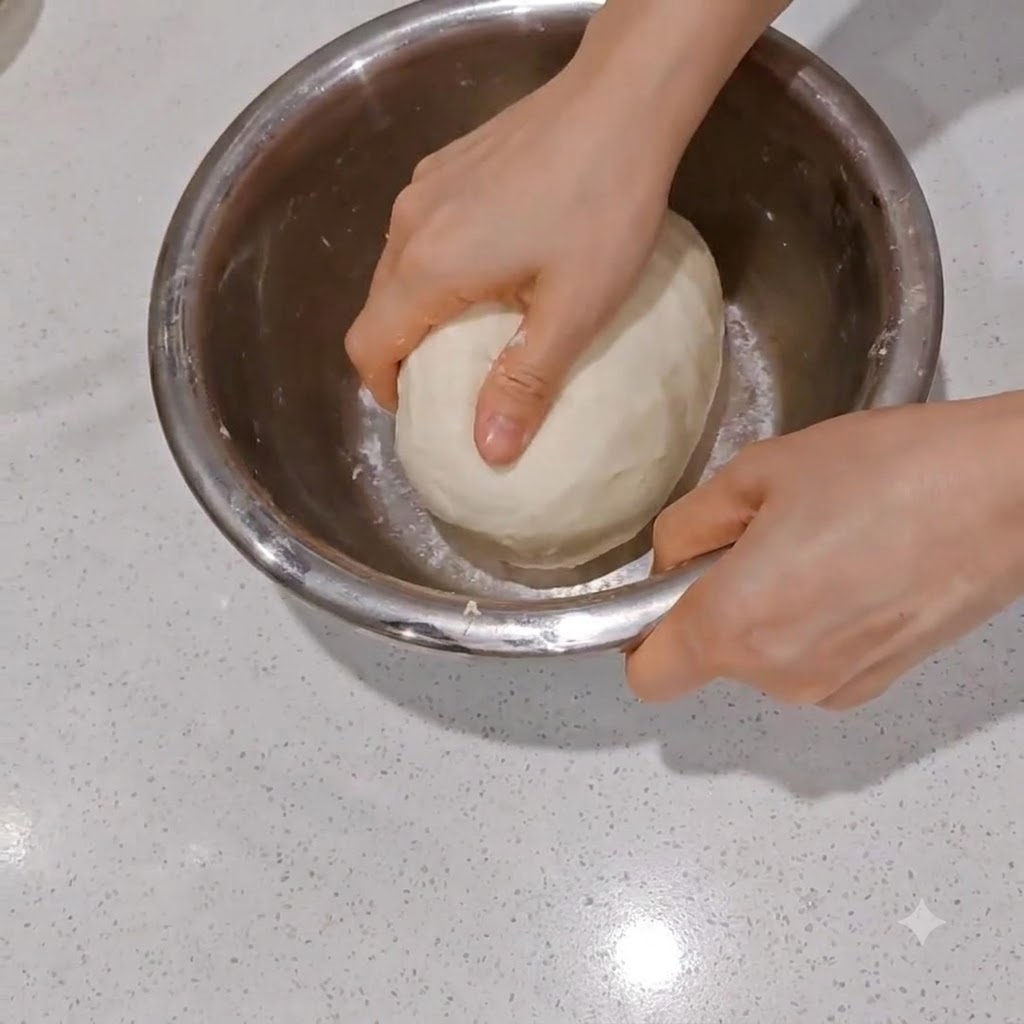
Take the fermented dough ball and use a dough scraper to cut and divide it into two equal portions for shaping individual pizzas.
Tip: Make sure your cuts are clean to keep each dough portion uniform in size. - 8Place dough in container
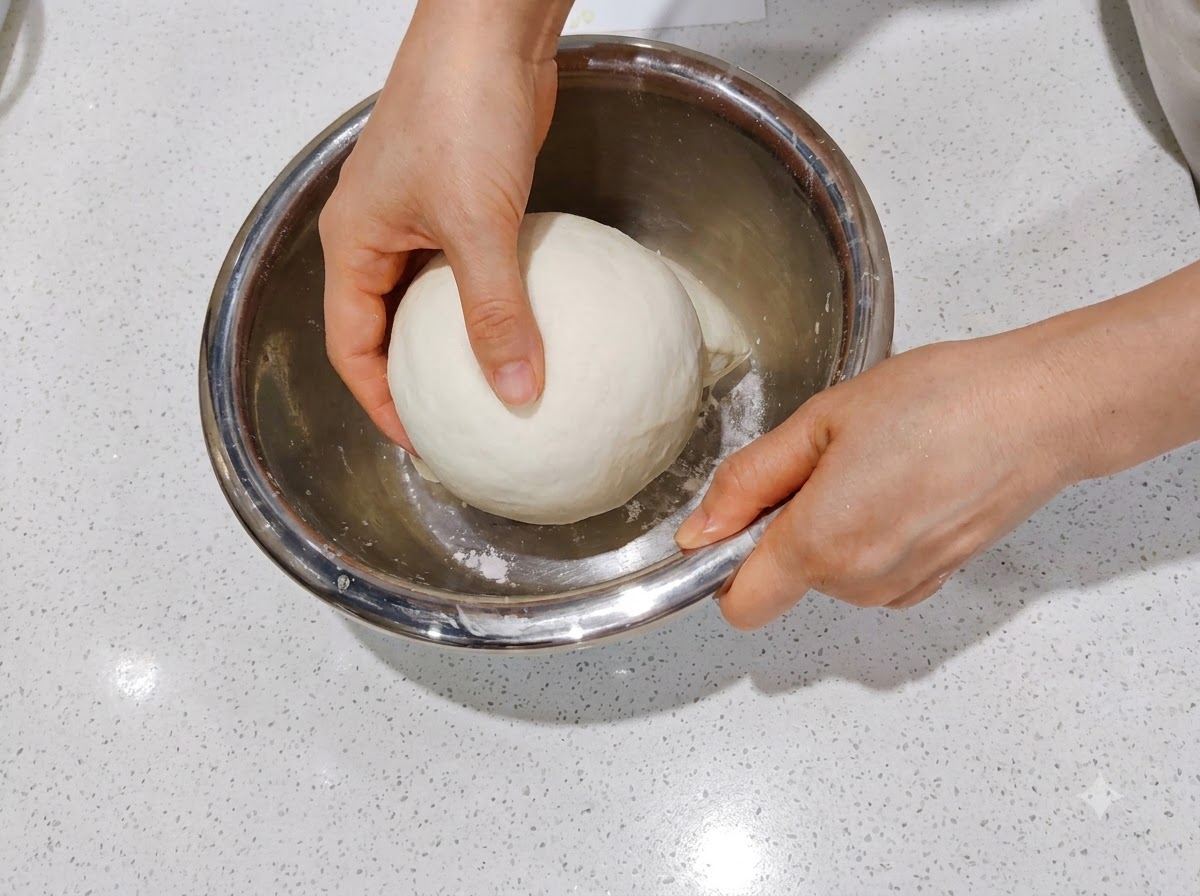
Arrange the newly shaped dough portions inside a clear rectangular fermentation container, leaving enough space between them for expansion.
Tip: Lightly oil the container interior to prevent the dough from sticking during the fermentation process. - 9Dust fermented dough with cornmeal
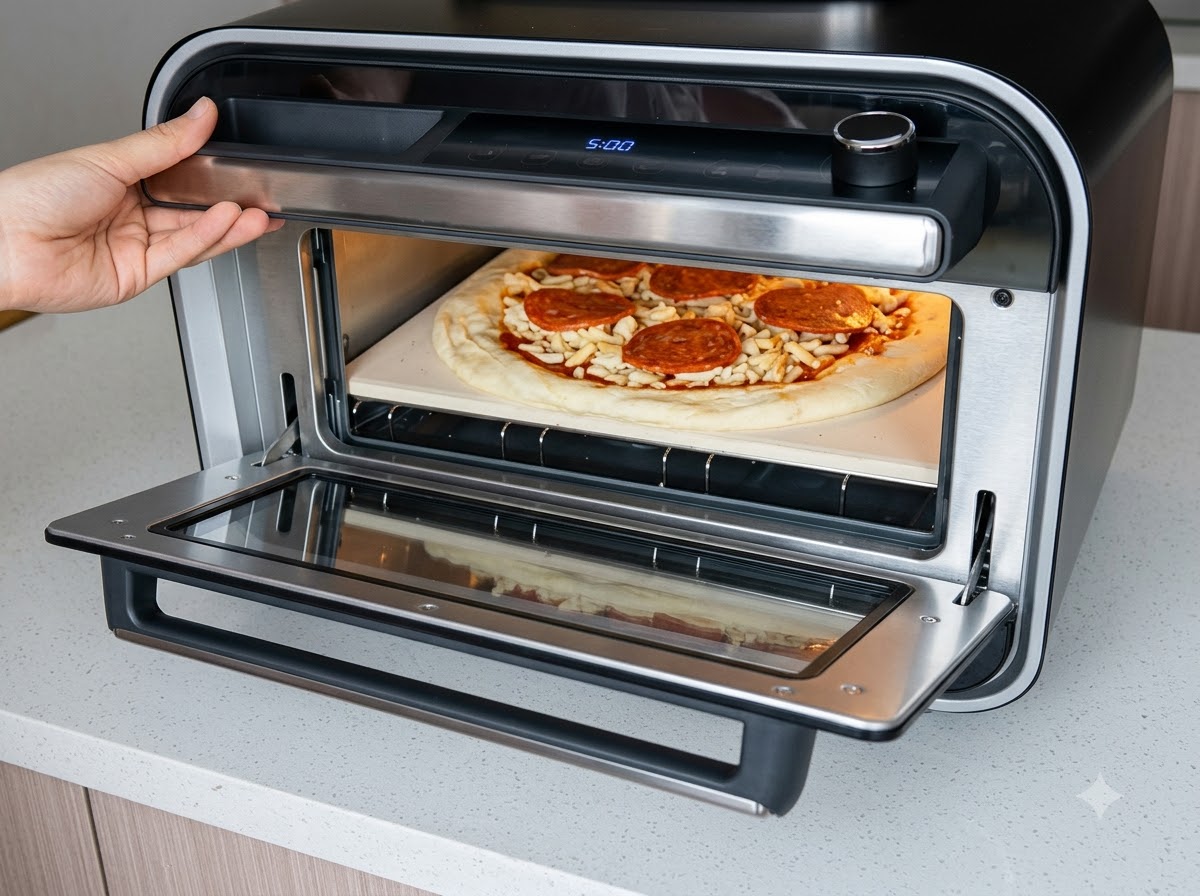
Take the fermented dough pieces out from the refrigerator and sprinkle cornmeal generously over them to prevent sticking.
Tip: Cornmeal adds a nice rustic crunch and makes it easier to slide the pizza onto the peel. - 10Shape the dough into rounds
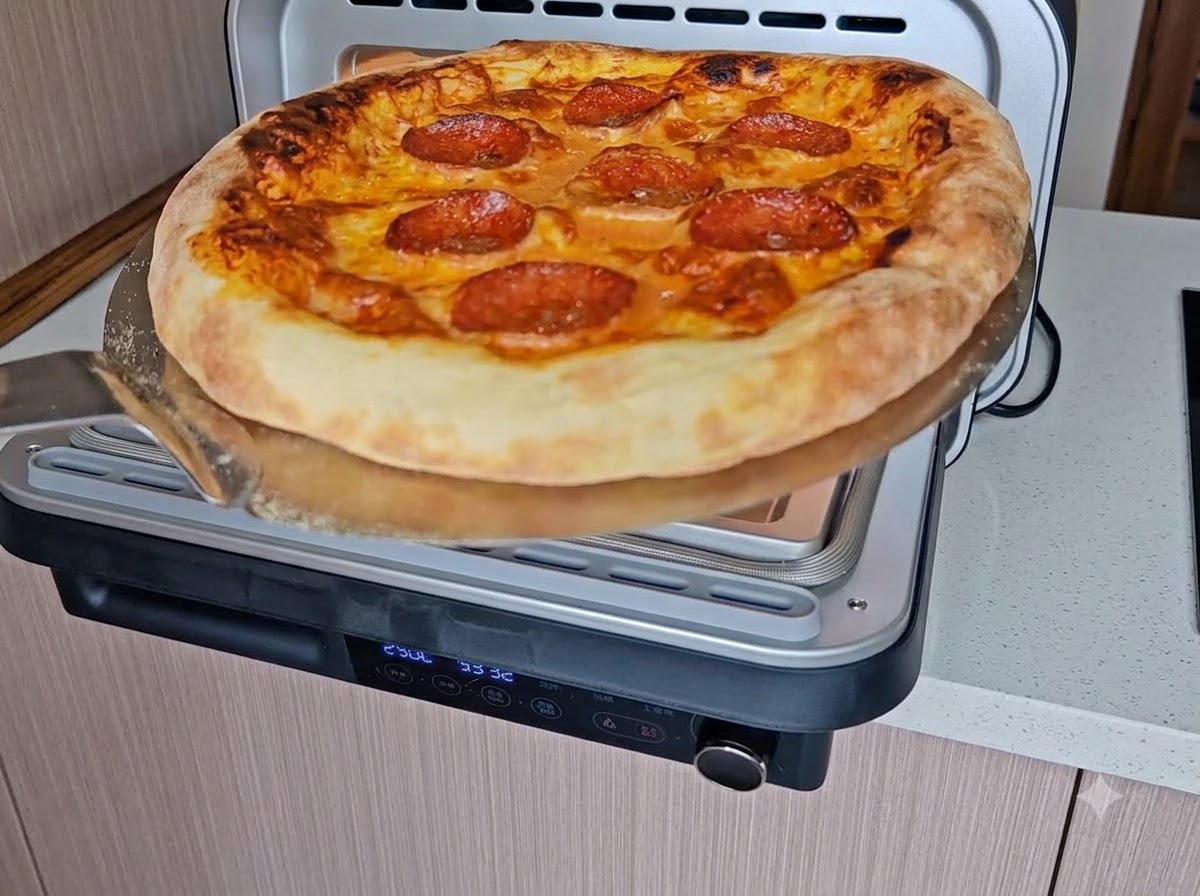
Transfer the dough pieces onto a cornmeal-dusted kneading mat and carefully shape them into smooth rounds.
Tip: Handle the dough gently to avoid deflating the air bubbles accumulated during fermentation. - 11Stretch the pizza base
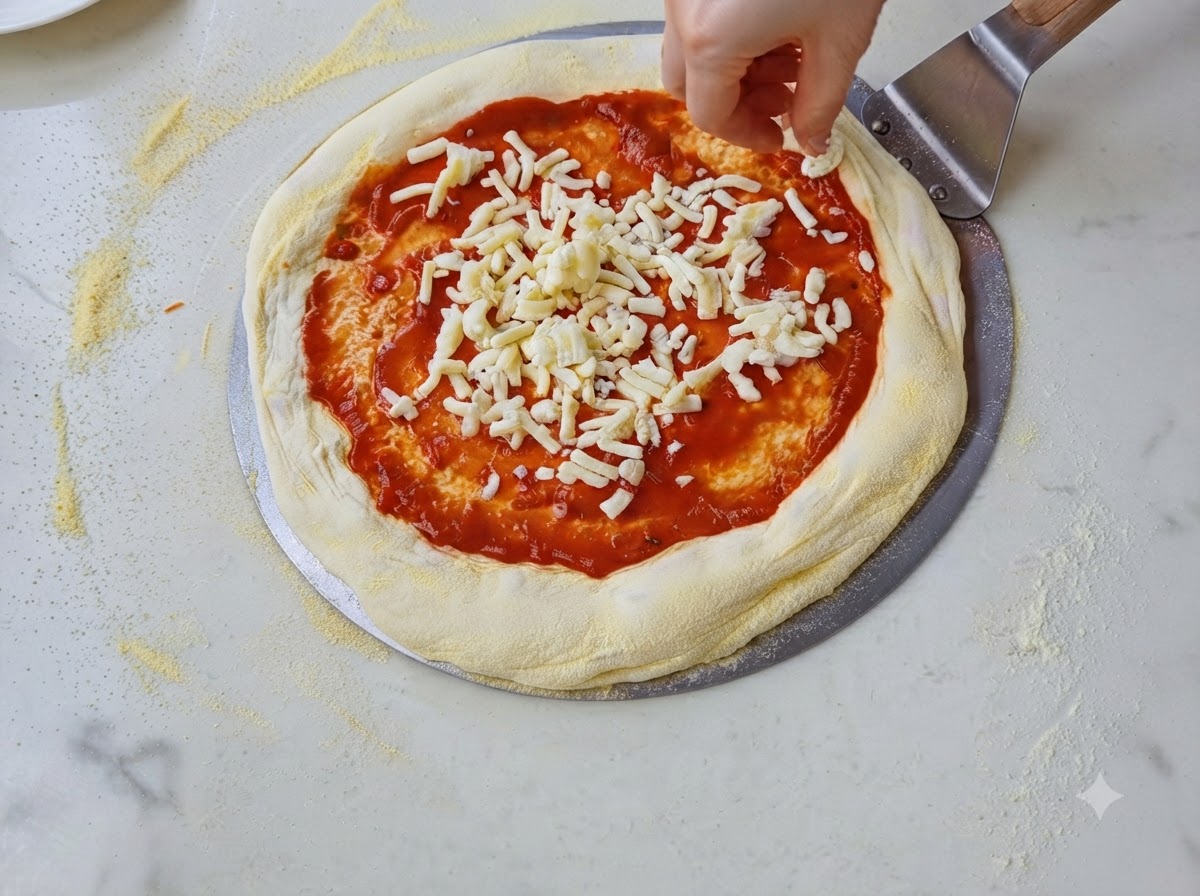
Press the relaxed dough outward from the center toward the edges using your fingertips, making sure to preserve the outer rim for a fluffy cornicione.
Tip: Do not press down on the outer rim, as those trapped gases are what create the airy crust. - 12Spread Italian tomato sauce
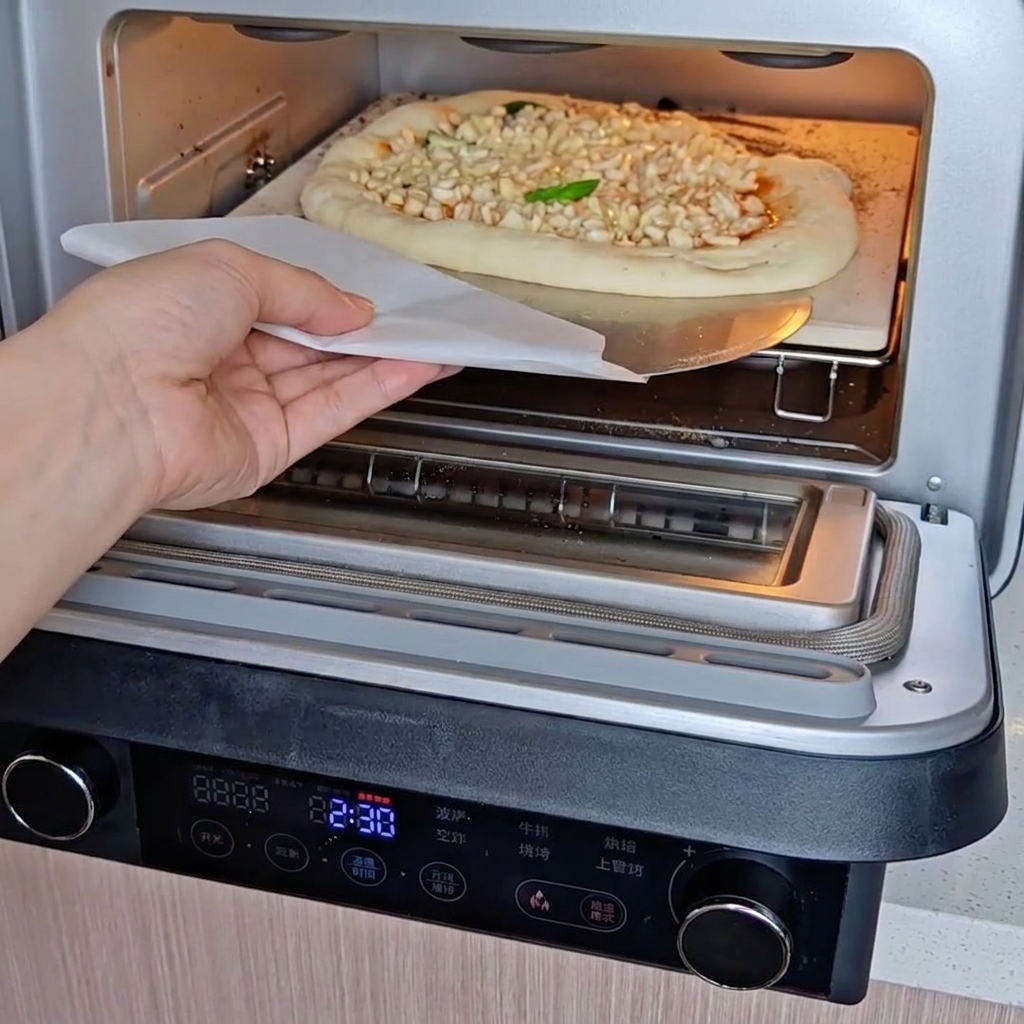
Squeeze and spread Italian tomato sauce evenly across the stretched pizza dough base, leaving a clean border for the crust.
Tip: Use the back of a spoon in a circular motion to distribute the sauce evenly without tearing the dough. - 13Add mozzarella cheese
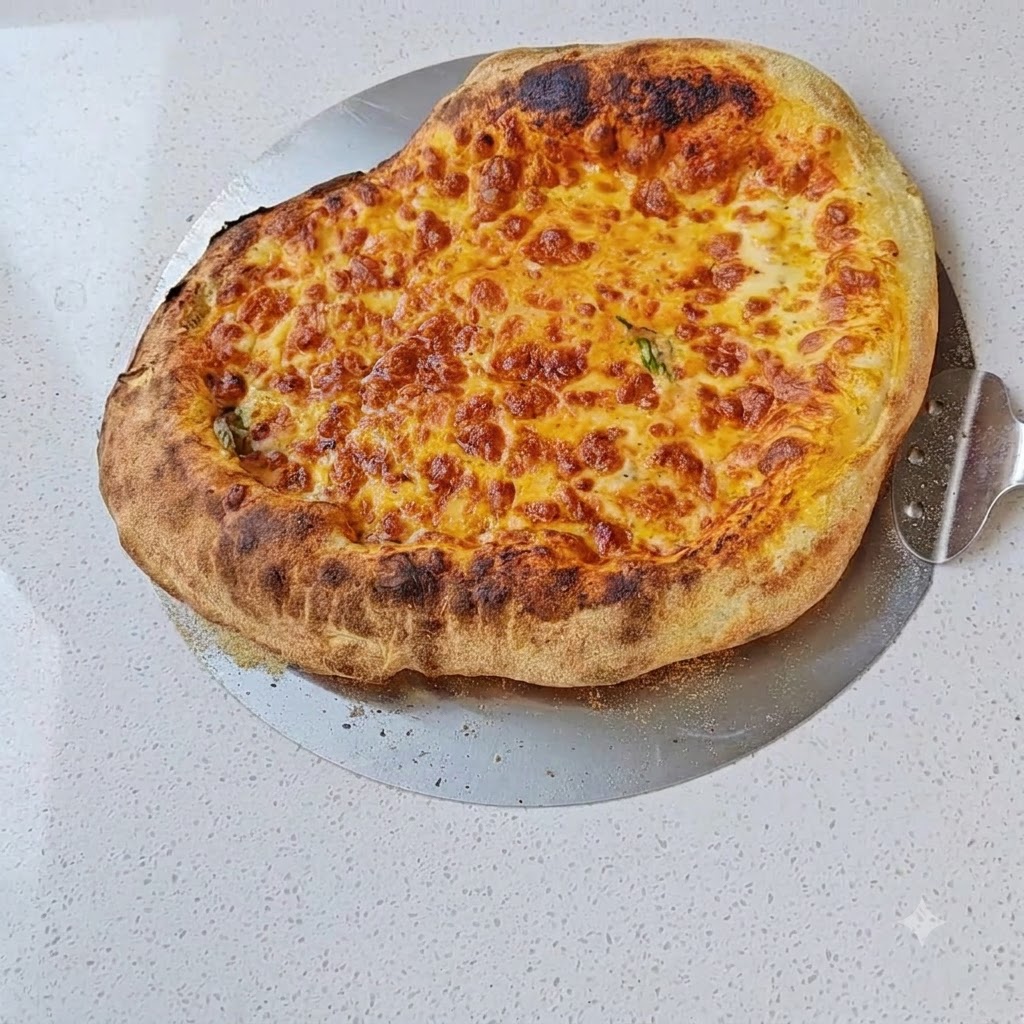
Scatter shredded mozzarella cheese thickly over the tomato sauce base to ensure a rich, gooey covering.
Tip: Distribute the cheese evenly so it melts uniformly during high-temperature baking. - 14Top with salami and olive oil
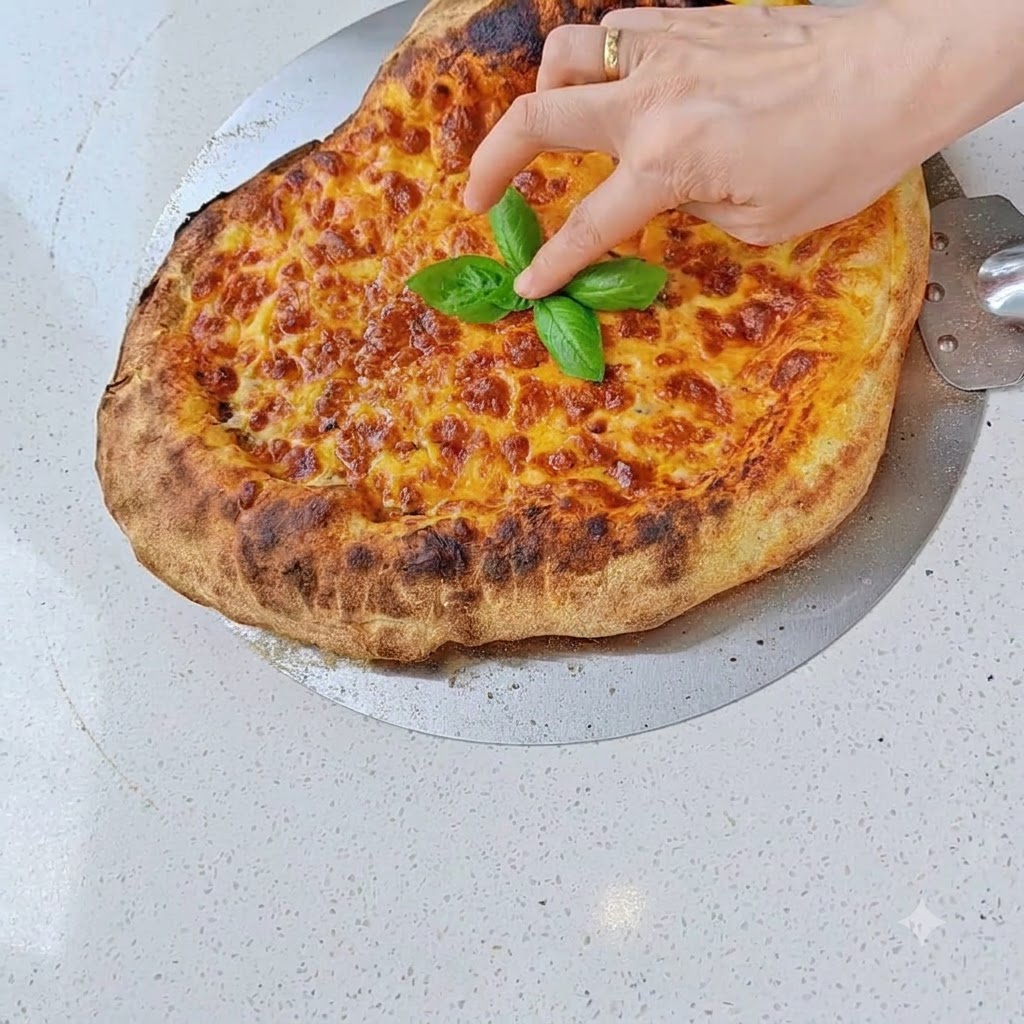
Arrange salami slices evenly on top of the pizza assembly and drizzle with a little olive oil before baking.
Tip: A light drizzle of olive oil helps the crust brown beautifully and enhances the aroma.