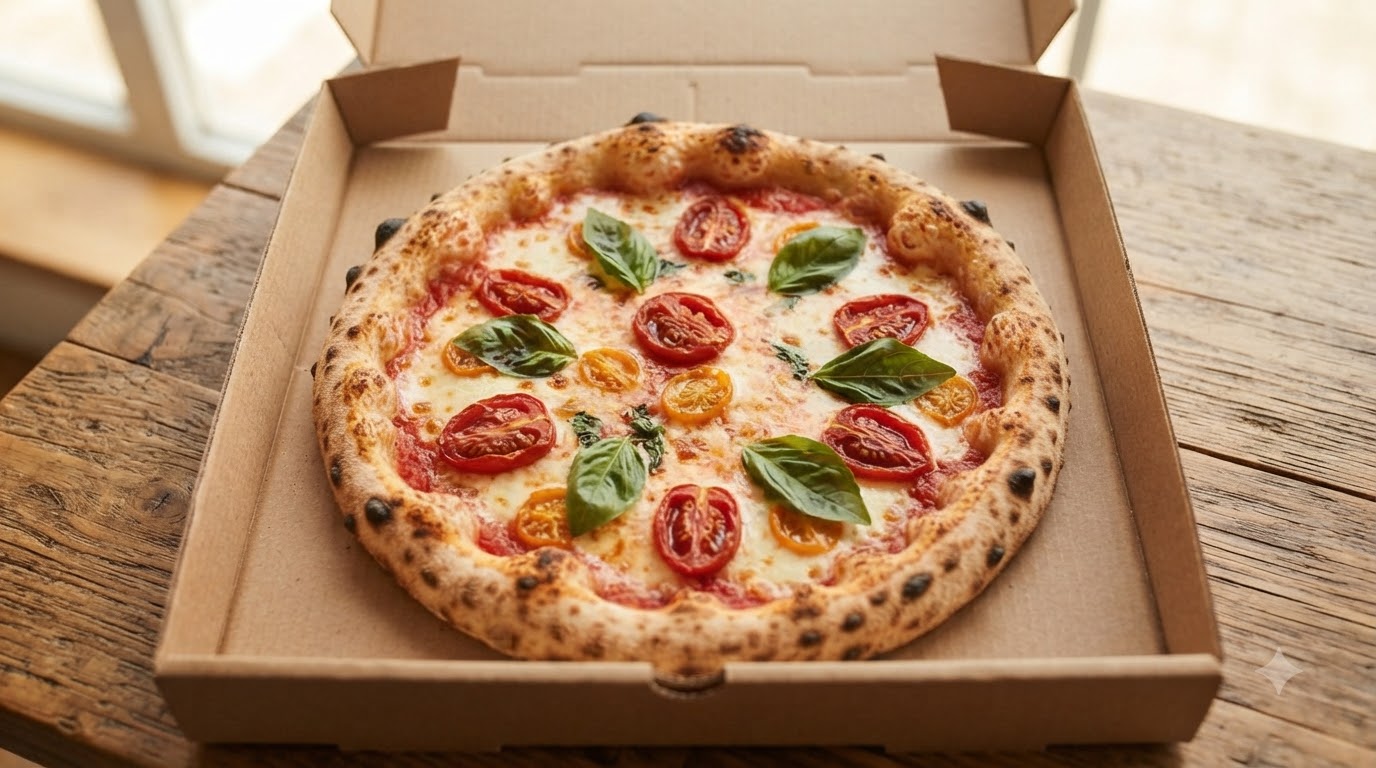
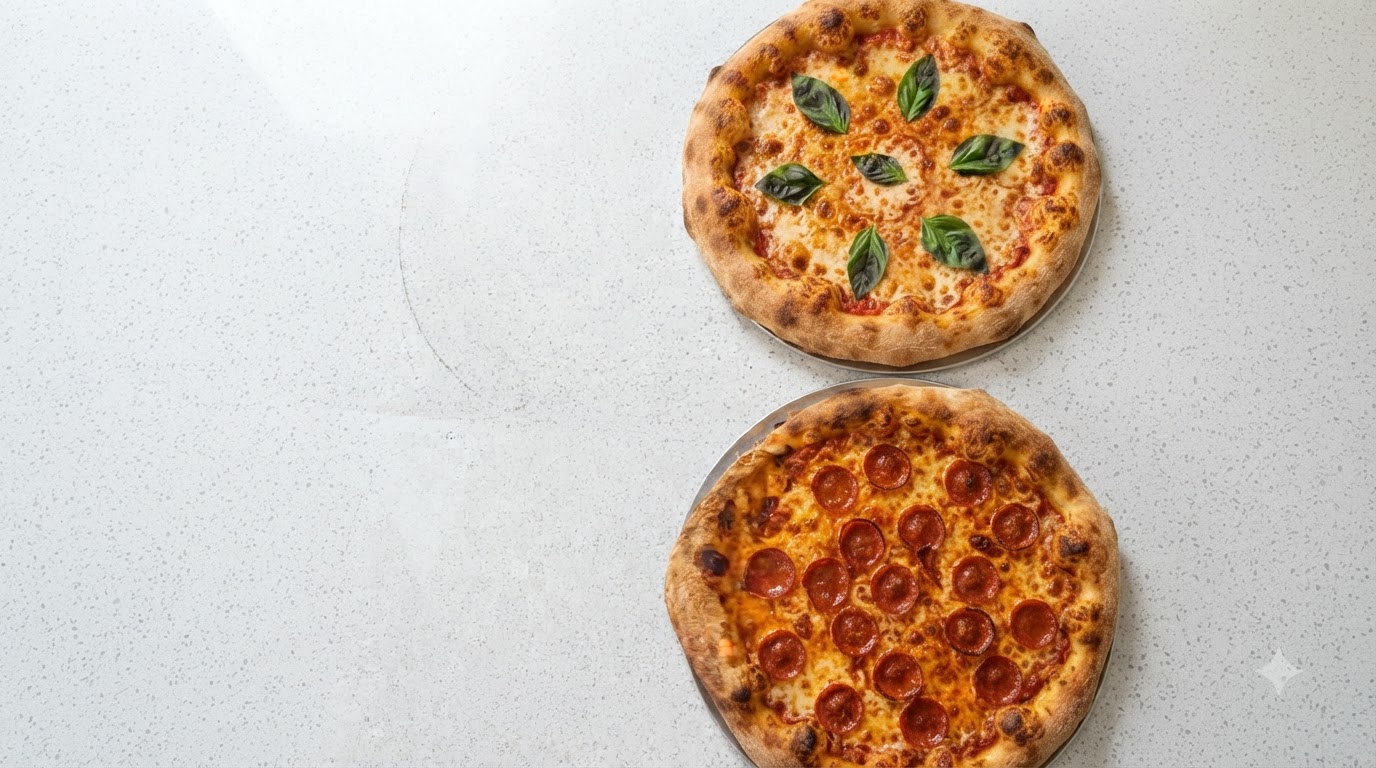
Quick Homemade Margherita Pizza
A crisp on the outside, soft on the inside 1-hour pizza dough that delivers pizzeria-quality Margherita at home without overnight fermentation.
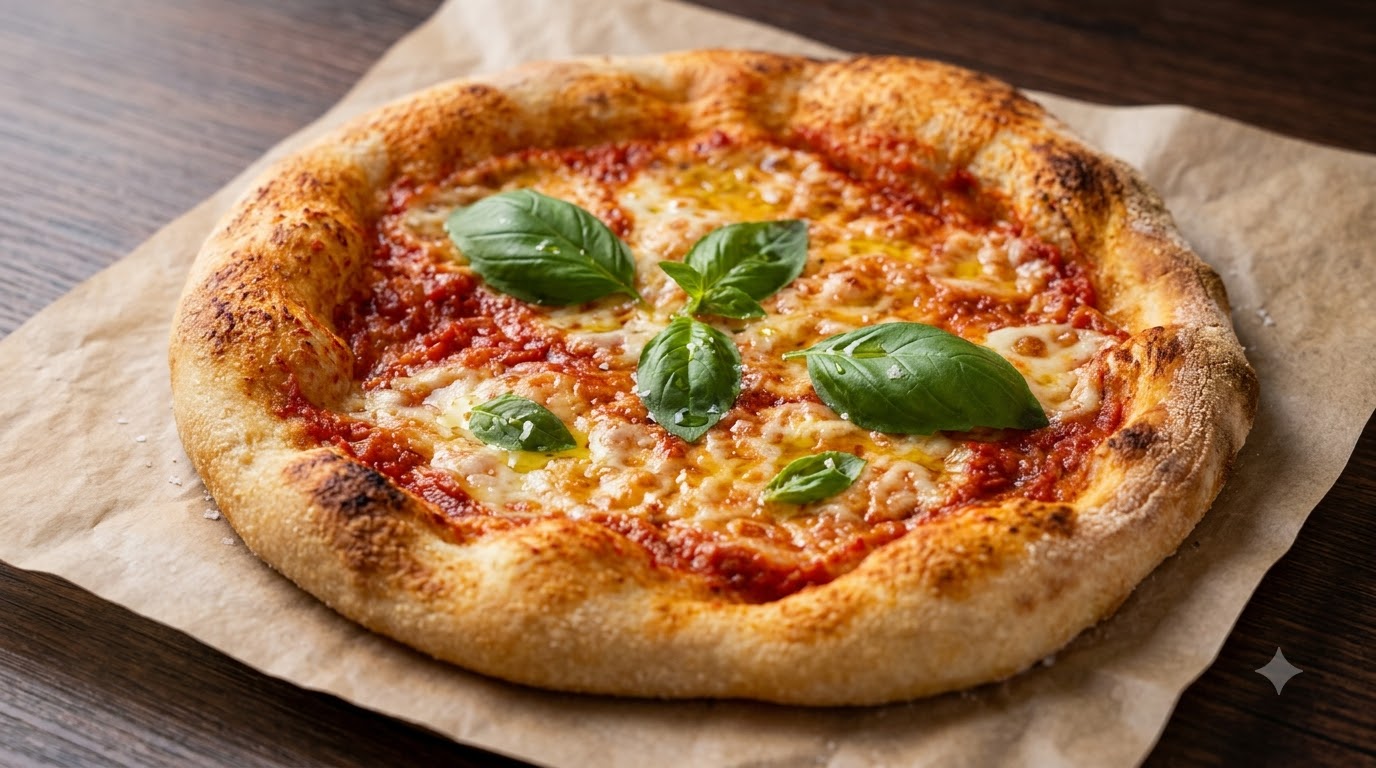
Making great pizza at home usually requires a long, slow fermentation, but this streamlined method delivers incredible texture and flavor in just one hour. By combining active dry yeast with a touch of sugar and warm water, the dough develops a wonderful elasticity that stretches easily for beginners. Topped with rich tomato sauce, melted mozzarella, and fresh basil, it proves that delicious pizza is well within reach on a busy weeknight.
Ingredients
- 500 g all-purpose flour
- 320 ml warm water
- 1 tsp dry active yeast
- 1 tsp white sugar
- 1.5 tsp salt
- 2 tbsp extra virgin olive oil
- 150 ml tomato sauce
- 200 g fresh mozzarella cheese
- to taste fresh basil leaves
Instructions
- 1Measure warm water
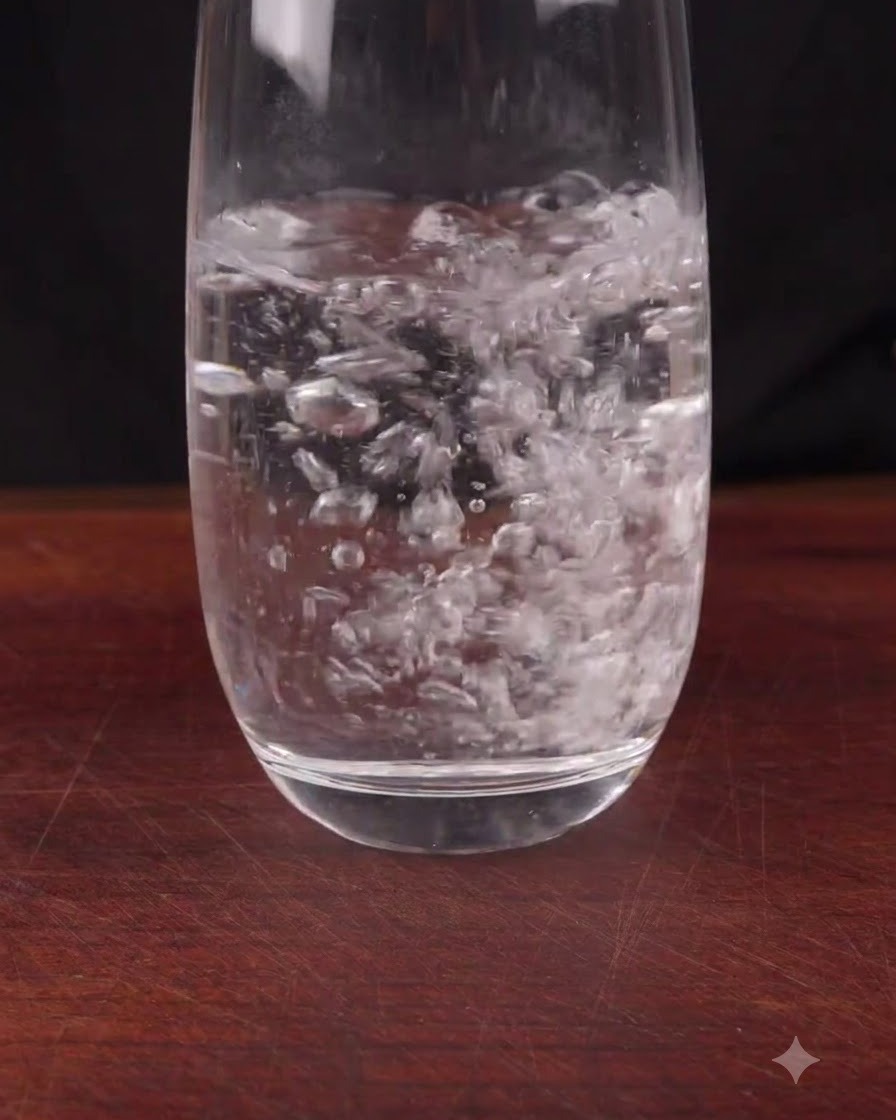
Pour measured warm water into a clear glass to establish the ideal temperature and hydration base for the yeast activation.
Tip: Ensure the water is lukewarm, around 38 to 40 degrees Celsius, so it activates the yeast without killing it. - 2Add sugar and yeast
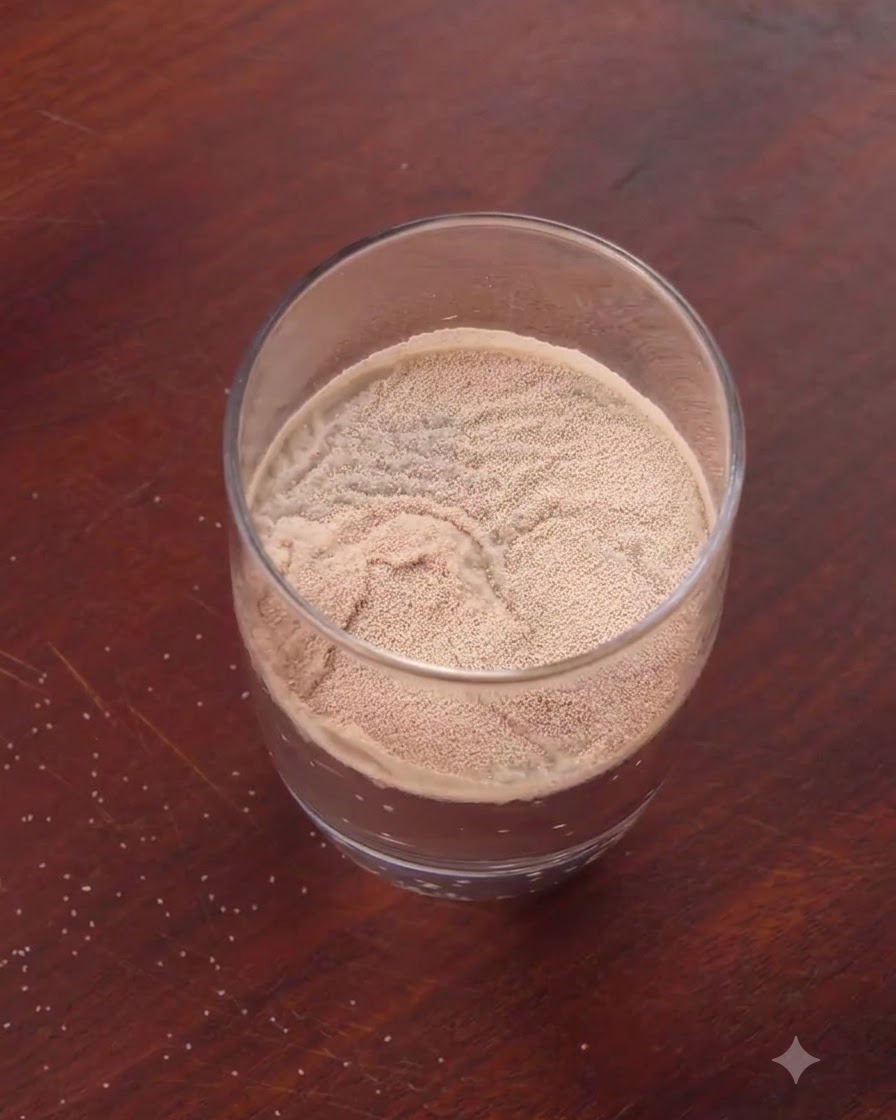
White sugar and dry yeast are added into the glass of warm water and gently mixed with a spoon to feed and activate the yeast culture.
Tip: Sugar acts as food for the yeast, speeding up the fermentation process for the 1-hour dough. - 3Mix active yeast
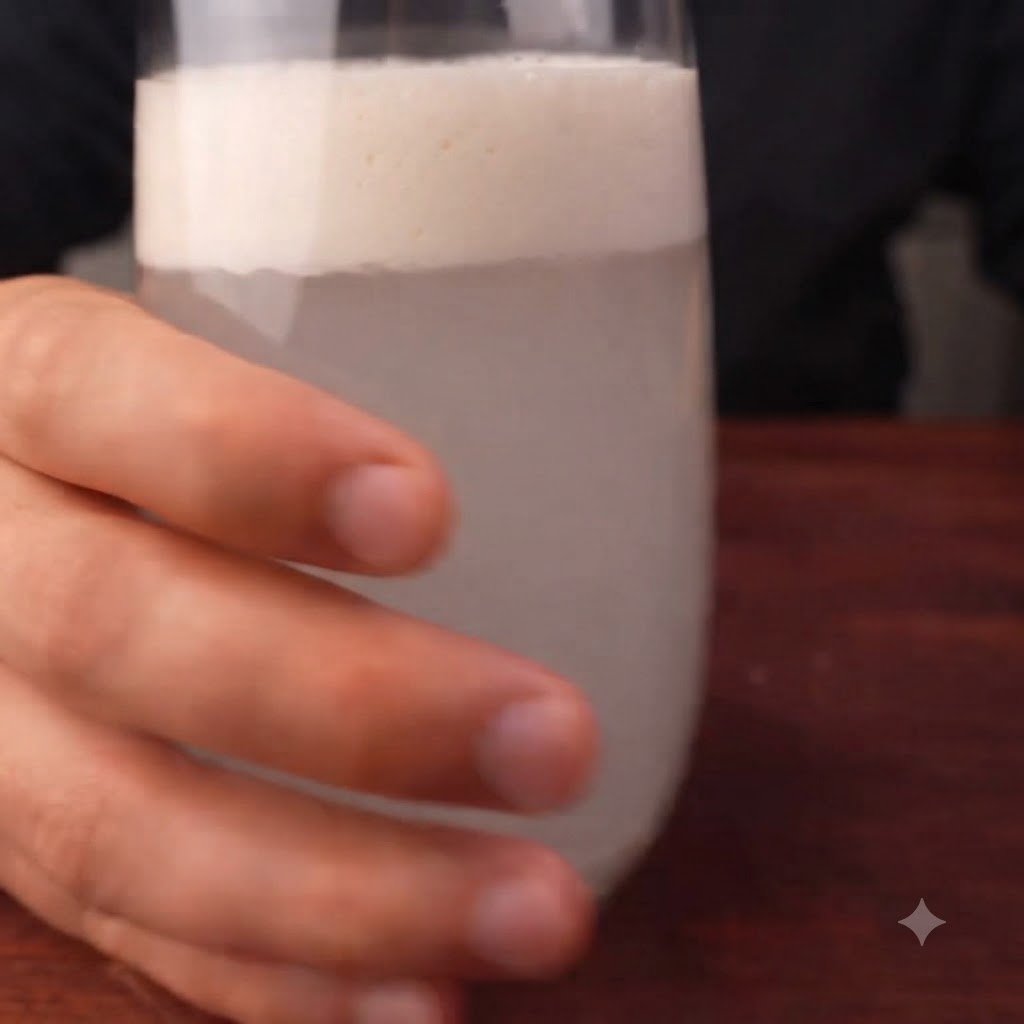
Pour the foamy, activated yeast and sugar mixture directly from the glass into a large mixing bowl filled with white flour to form the foundation of the dough.
Tip: Look for a thick, foamy layer on top of the liquid before pouring, confirming the yeast is active. - 4Add salt
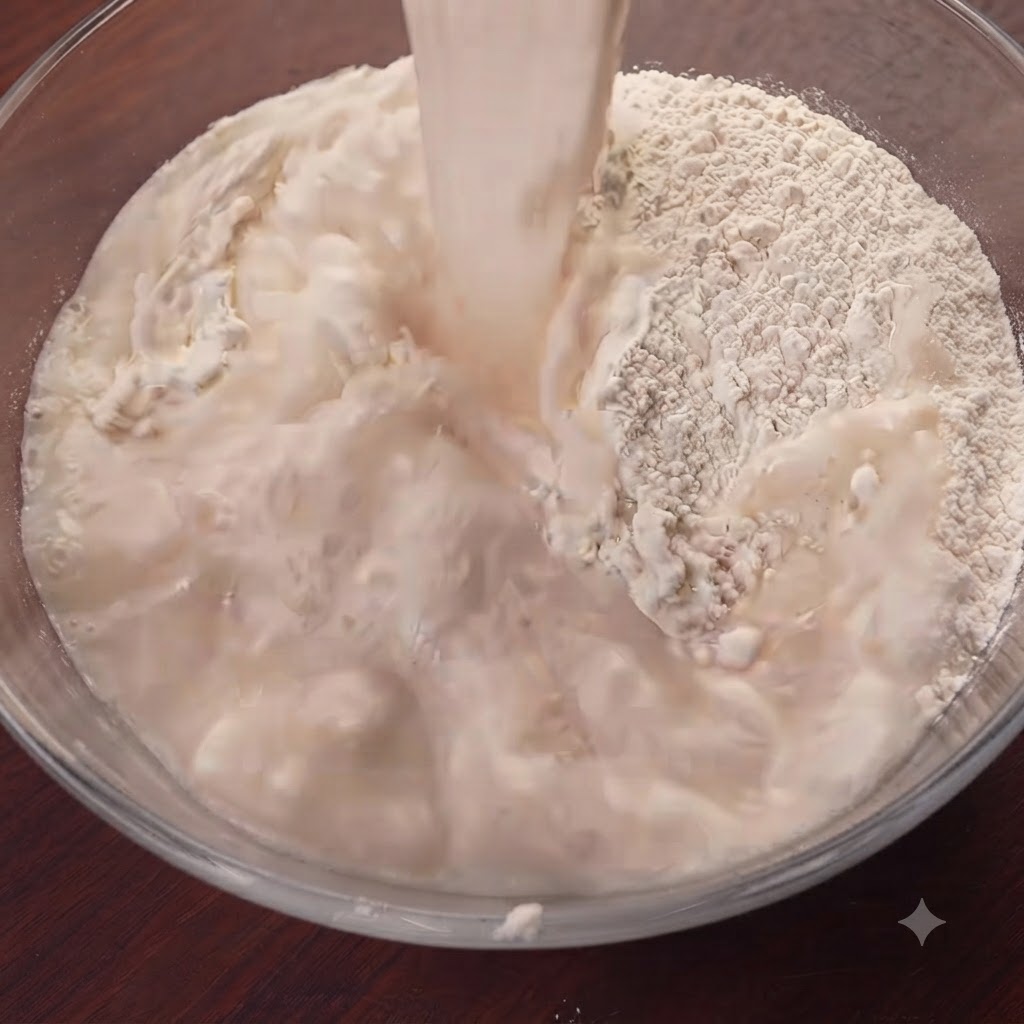
Salt is added directly into the bowl containing the flour and liquid ingredients to enhance the flavor and strengthen the gluten structure.
Tip: Keep salt from directly touching the concentrated yeast pocket initially to avoid inhibiting yeast activity. - 5Drizzle olive oil
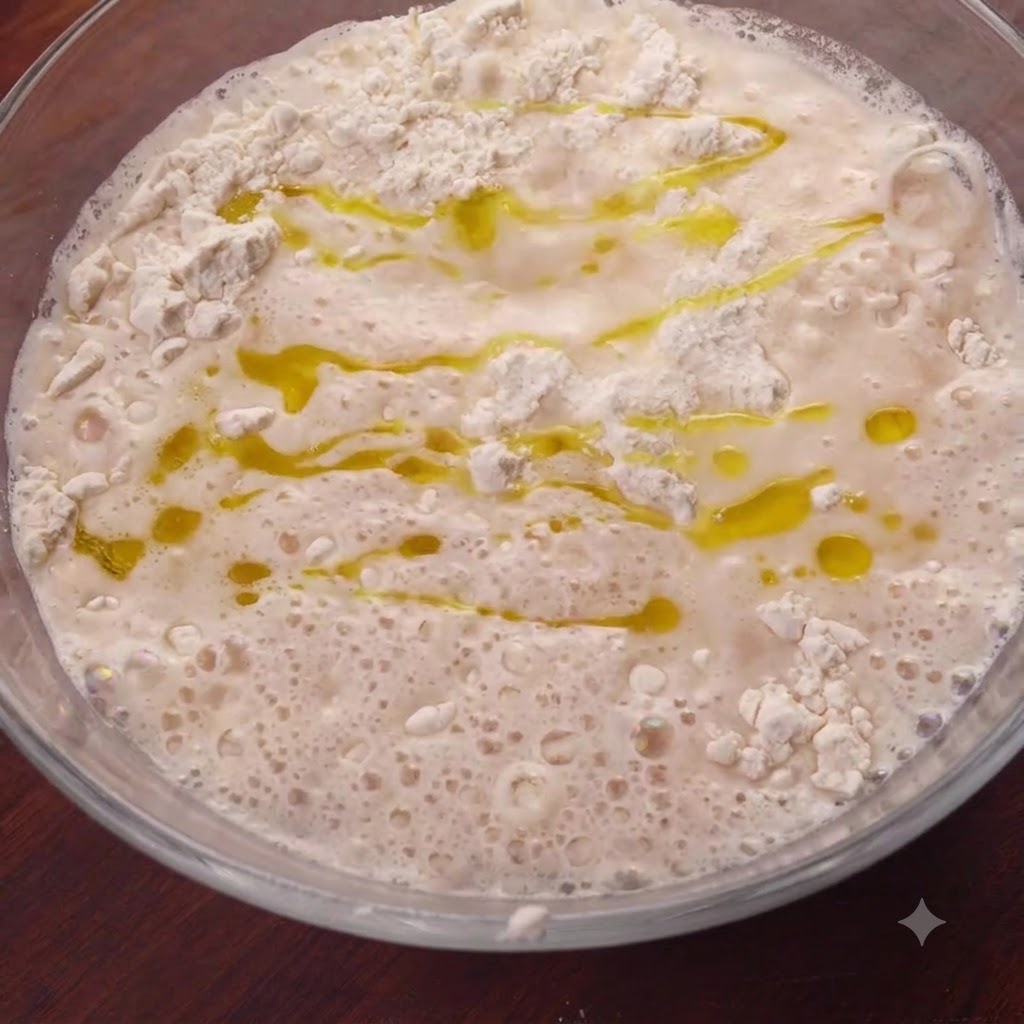
Olive oil is drizzled evenly across the mixture in the bowl and stirred with a spoon to add richness and improve dough elasticity.
Tip: Olive oil helps create a tender crumb and a crispy outer crust during baking. - 6Spread the tomato sauce
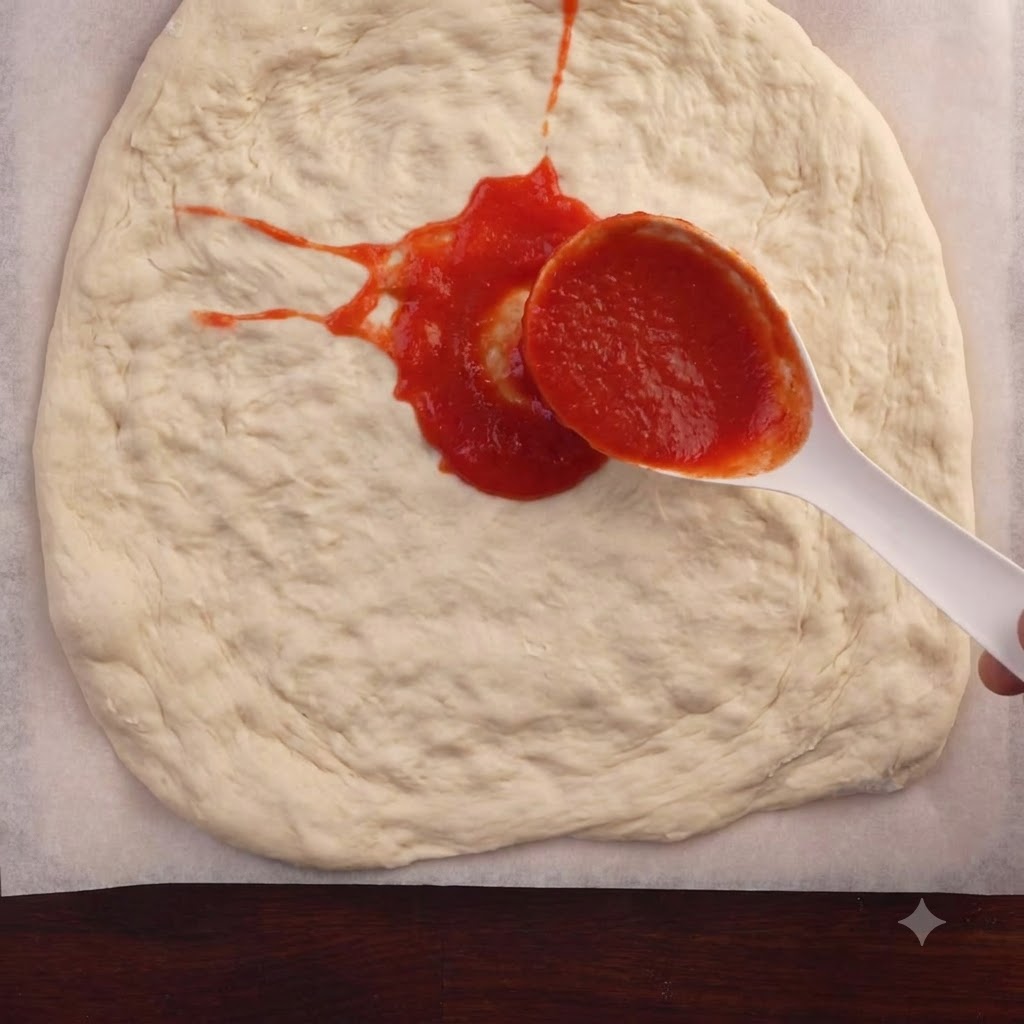
Spoon the tomato sauce directly onto the center of the stretched pizza dough base. Using the back of the spoon, evenly spread the sauce outward in circular motions, leaving a small clean border around the edges for the crust.
Tip: Keep the sauce layer thin and even to prevent the pizza base from becoming soggy during baking. - 7Add mozzarella cheese
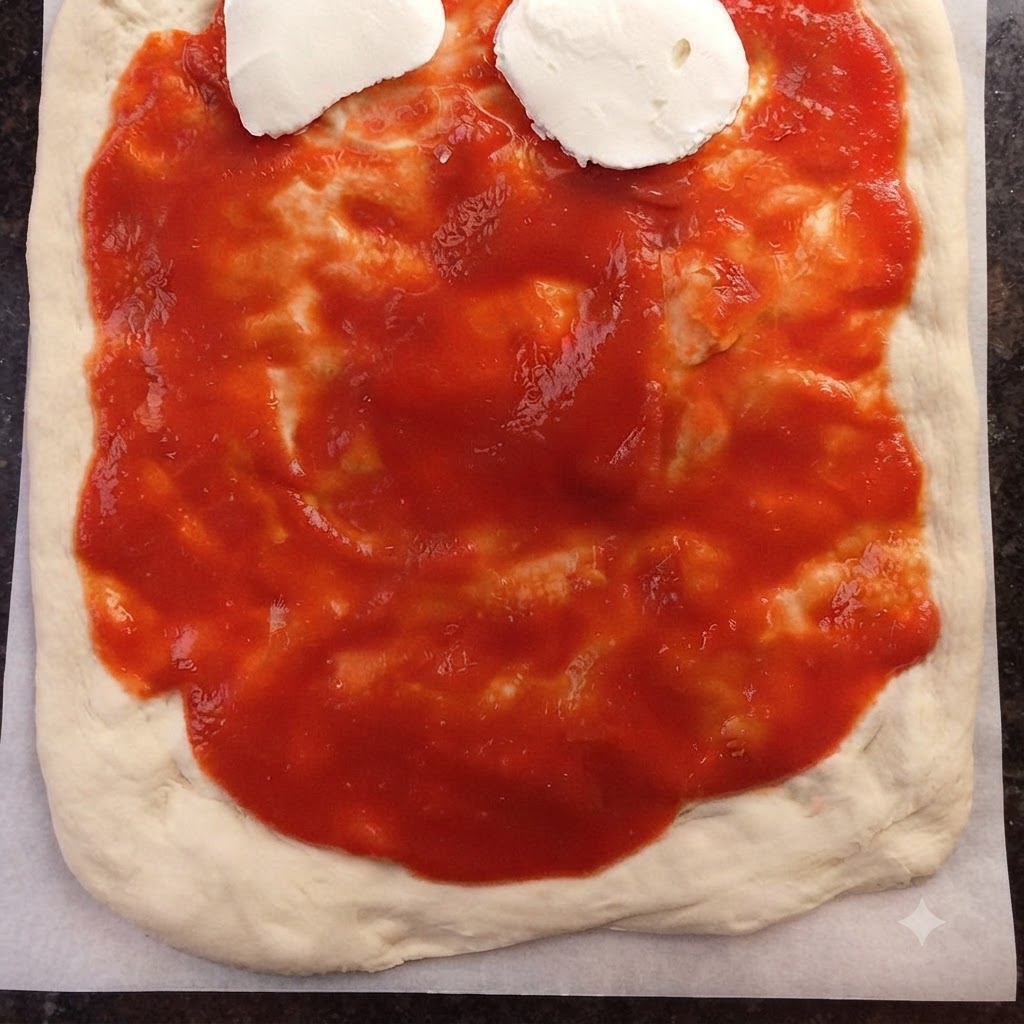
Place slices of fresh mozzarella cheese evenly across the pizza base that has been coated with tomato sauce. Ensure the cheese is distributed so that every slice will have a balanced amount of melted cheese.
Tip: Pat the fresh mozzarella dry with a paper towel before placing it on the pizza to prevent the crust from becoming soggy. - 8Drizzle with olive oil
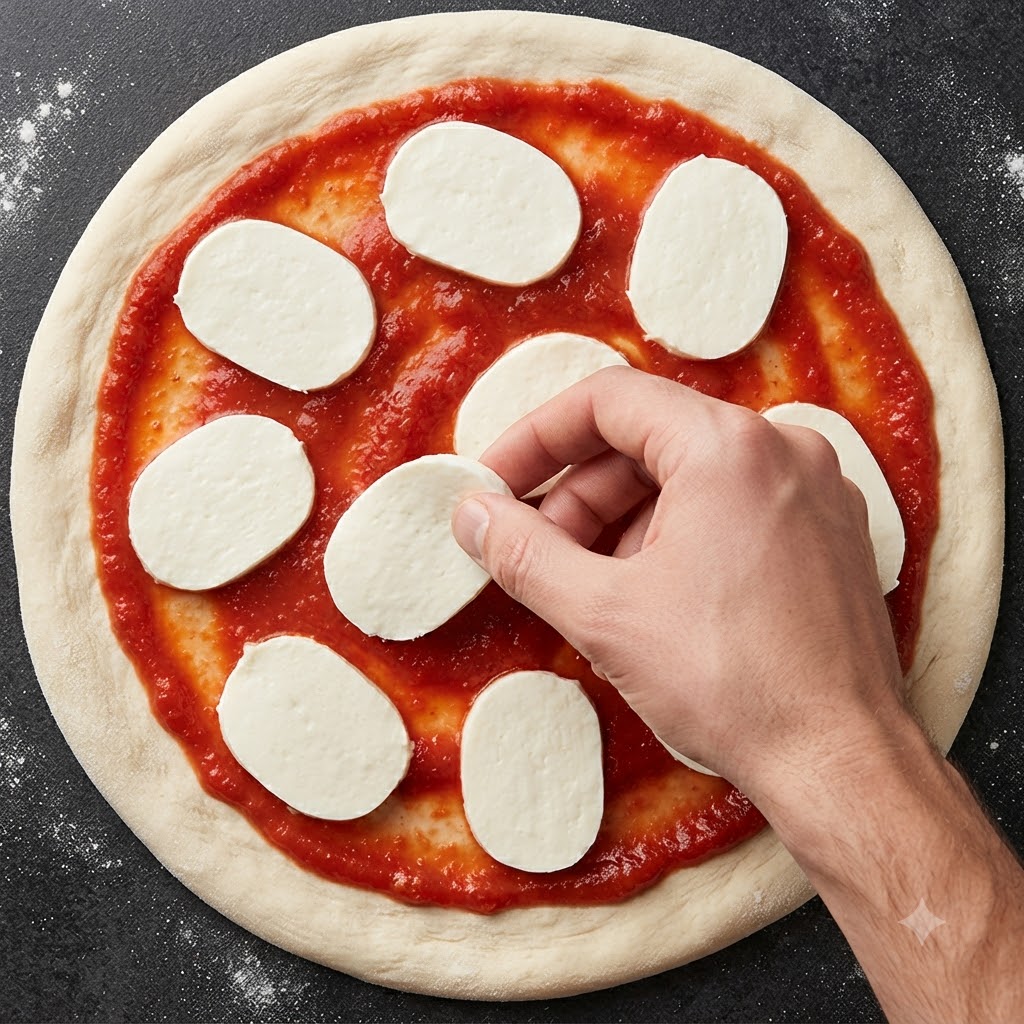
Drizzle a small amount of extra virgin olive oil evenly over the assembled pizza before baking. This enhances the flavor and helps achieve a golden, crispy crust.
Tip: Use a high-quality extra virgin olive oil for the best flavor profile.