Homemade Margherita Pizza
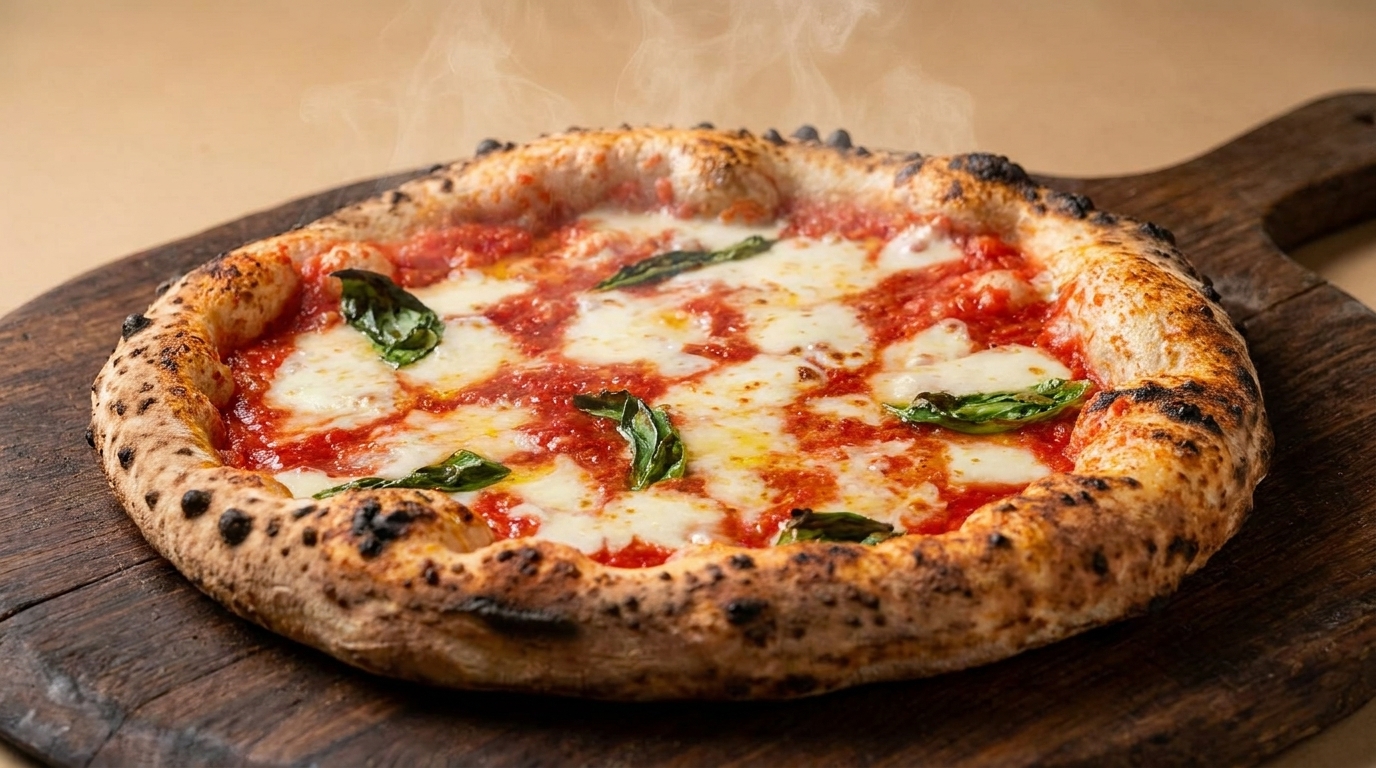
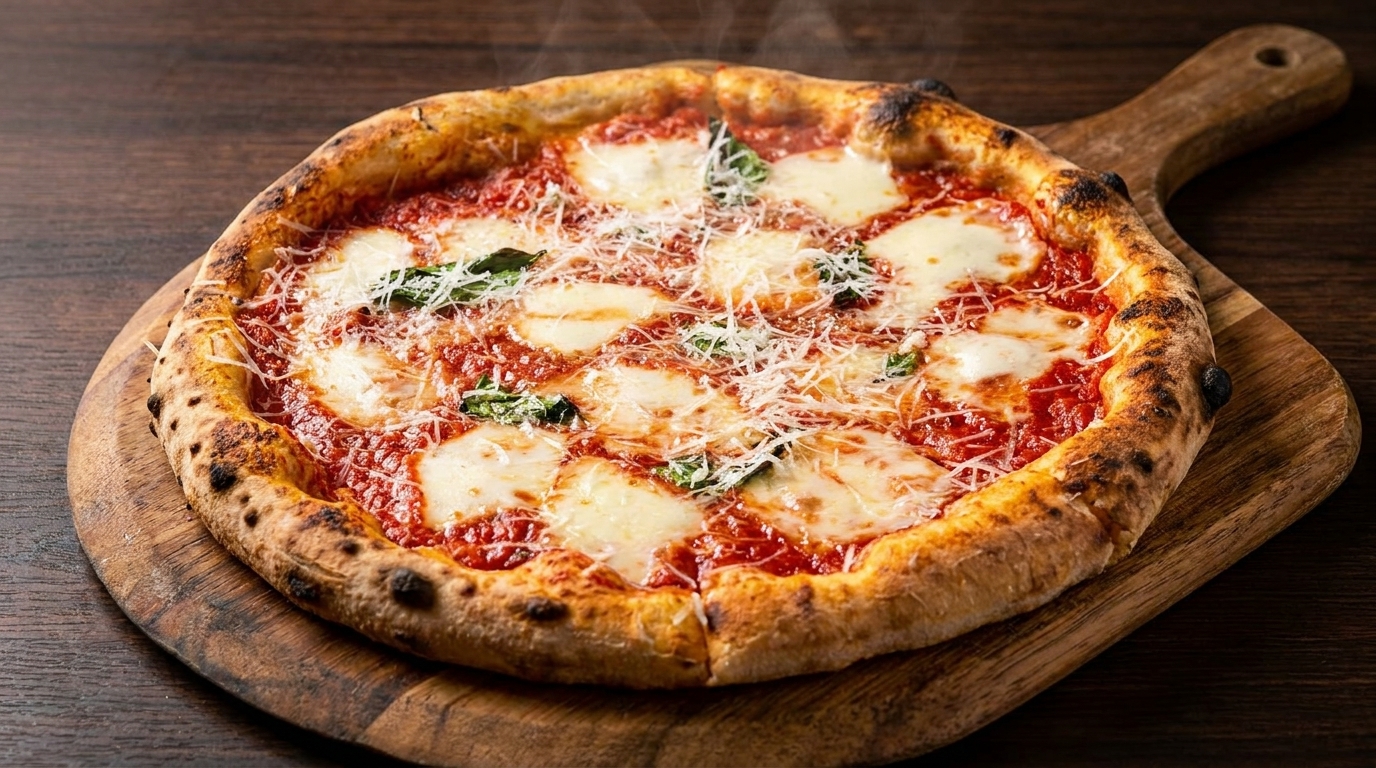
Leopard-Spotted Crust
Master the art of Neapolitan-style Margherita pizza at home using high-heat techniques and a cast-iron hack to achieve a blistered, airy crust in just 30 seconds.
A true Margherita pizza is a masterpiece of minimalism relying on the vibrant harmony of San Marzano style sauce creamy buffalo mozzarella and fresh basil. This recipe utilizes a professional high heat method to replicate the intense environment of a wood fired oven resulting in the iconic leopard spotting on a crust that is simultaneously crispy and cloud like.
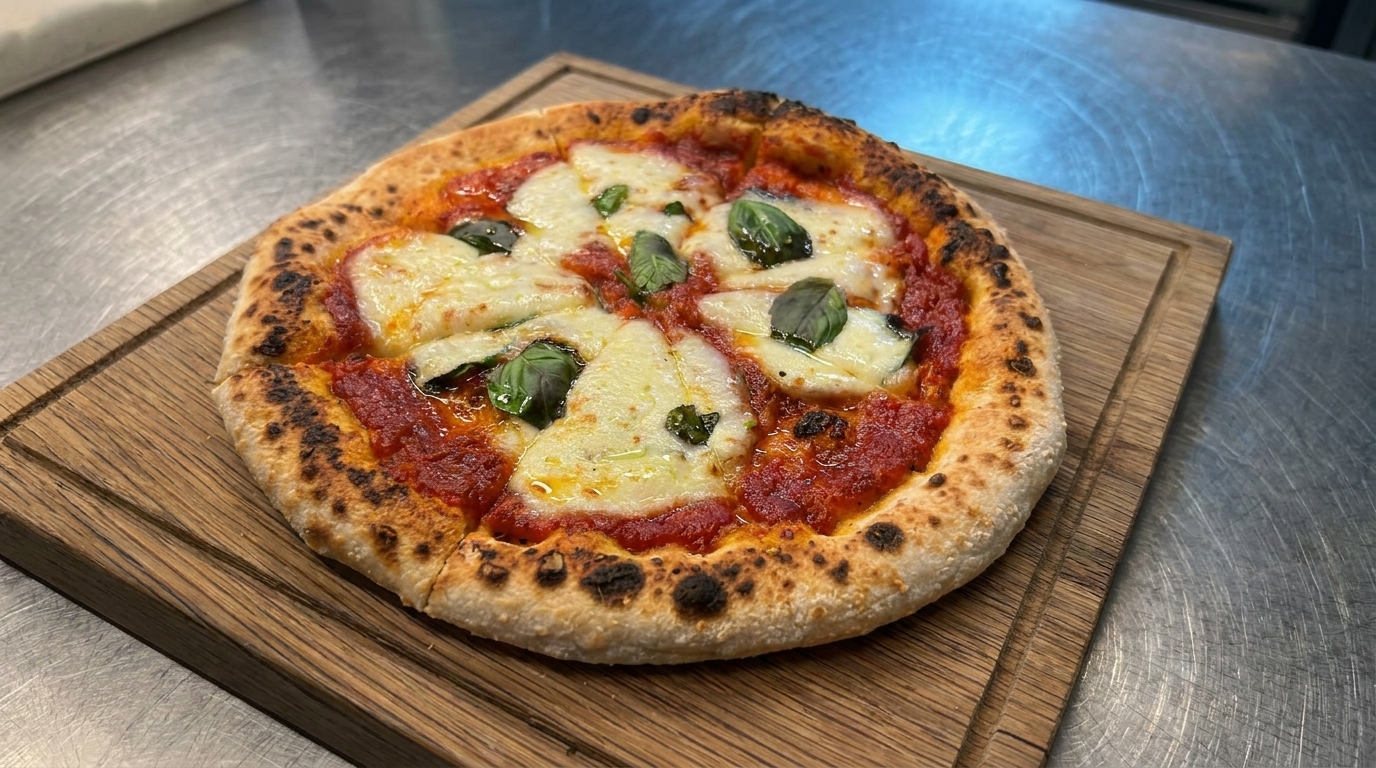
Ingredients
- 250 g professional pizza flour (Tipo 00)
- 165 ml room temperature water
- 7 g fine sea salt
- 2 g active dry yeast
- 80 g concentrated pizza sauce
- 125 g fresh buffalo mozzarella
- 10–12 fresh basil leaves
- 2 tbsp extra virgin olive oil
Instructions
- 1Preheat the high-heat oven
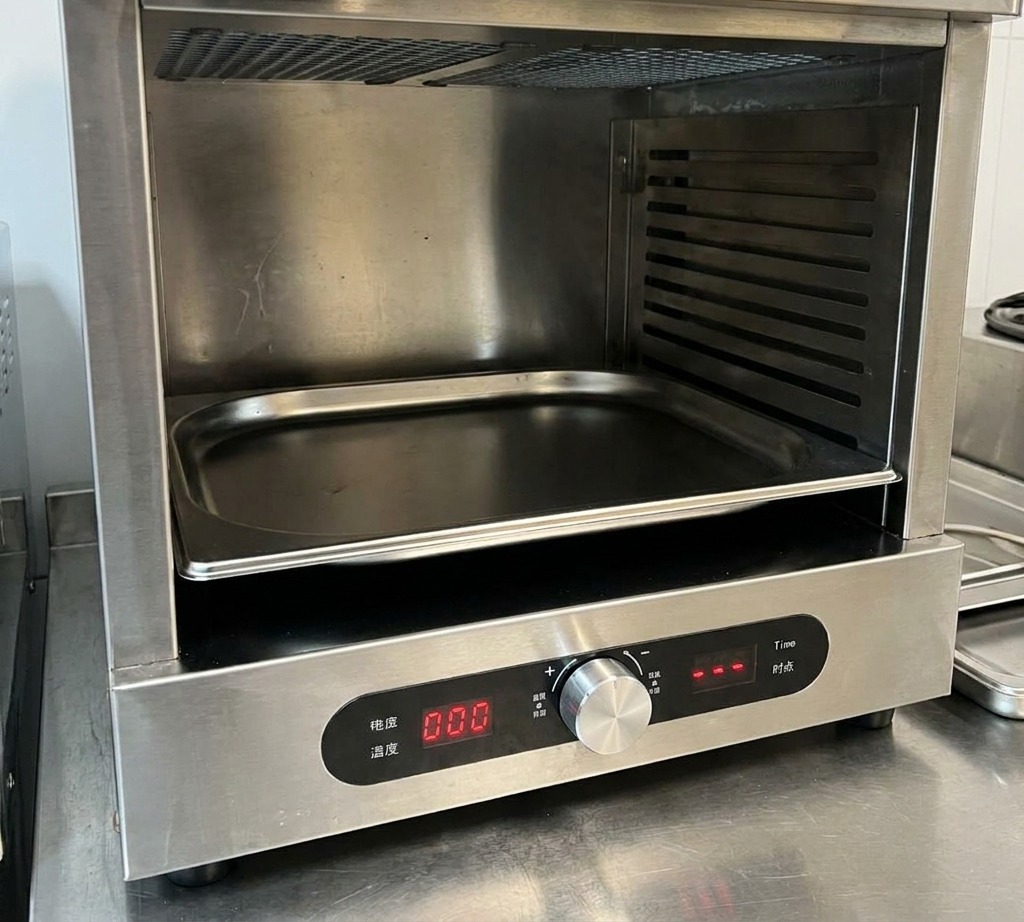
Begin by setting your professional high-temperature oven to 800°F. High heat is the secret to a perfect pizza crust, allowing it to rise instantly and develop those characteristic charred spots. Ensure the oven is fully preheated before you begin the bake.
Tip: If your oven has separate top and bottom heating controls, ensure both are set to maximize the ambient temperature for an even cook. - 2Create a steam environment
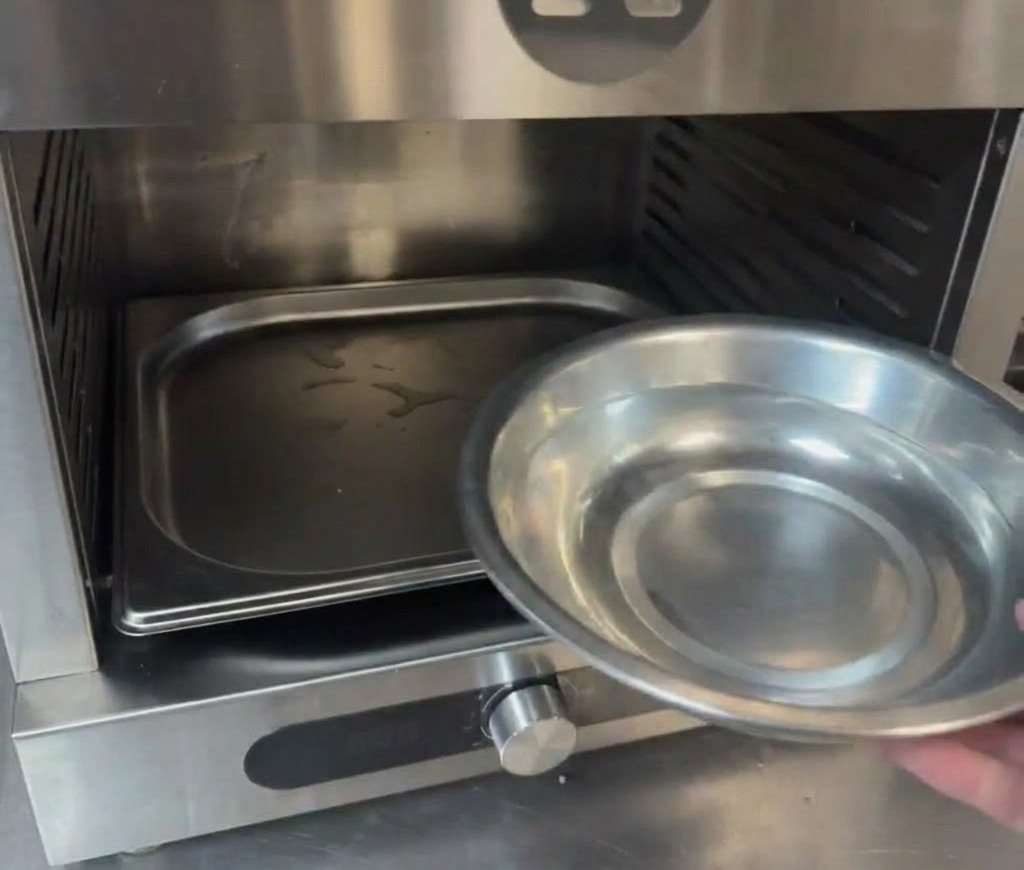
Carefully pour water into the metal tray at the base of the oven. This generates steam, which keeps the surface of the dough moist during the first few seconds of baking, allowing for maximum oven spring and a lighter, airier crust texture.
Tip: Use a long-necked vessel or be very careful when pouring to avoid steam burns as the water hits the hot tray. - 3Prepare the baking surface
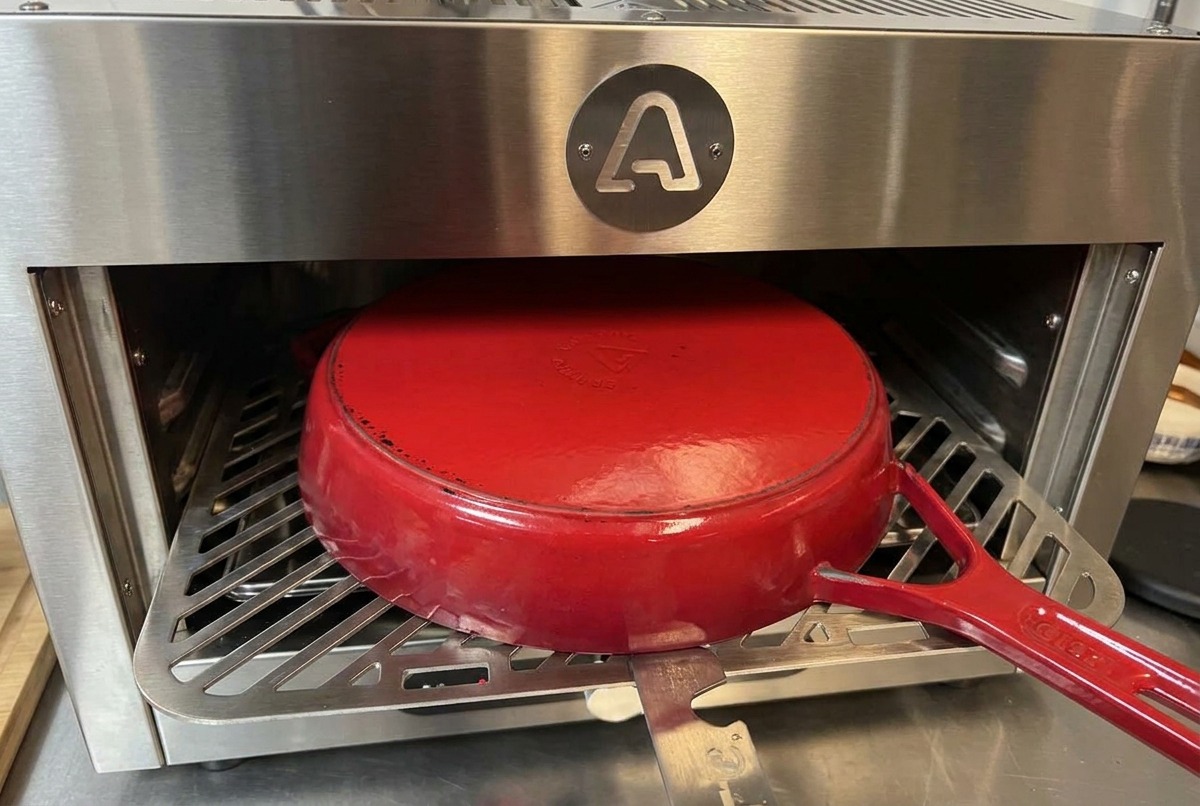
Since we are not using a pizza stone, place a red cast iron pot upside down on the oven rack. Cast iron is excellent at retaining heat, providing a scorching hot surface that will crisp up the bottom of the pizza dough immediately upon contact.
Tip: Place the pot in the oven while its preheating so the metal has ample time to absorb and hold the high heat. - 4Flatten the dough ball
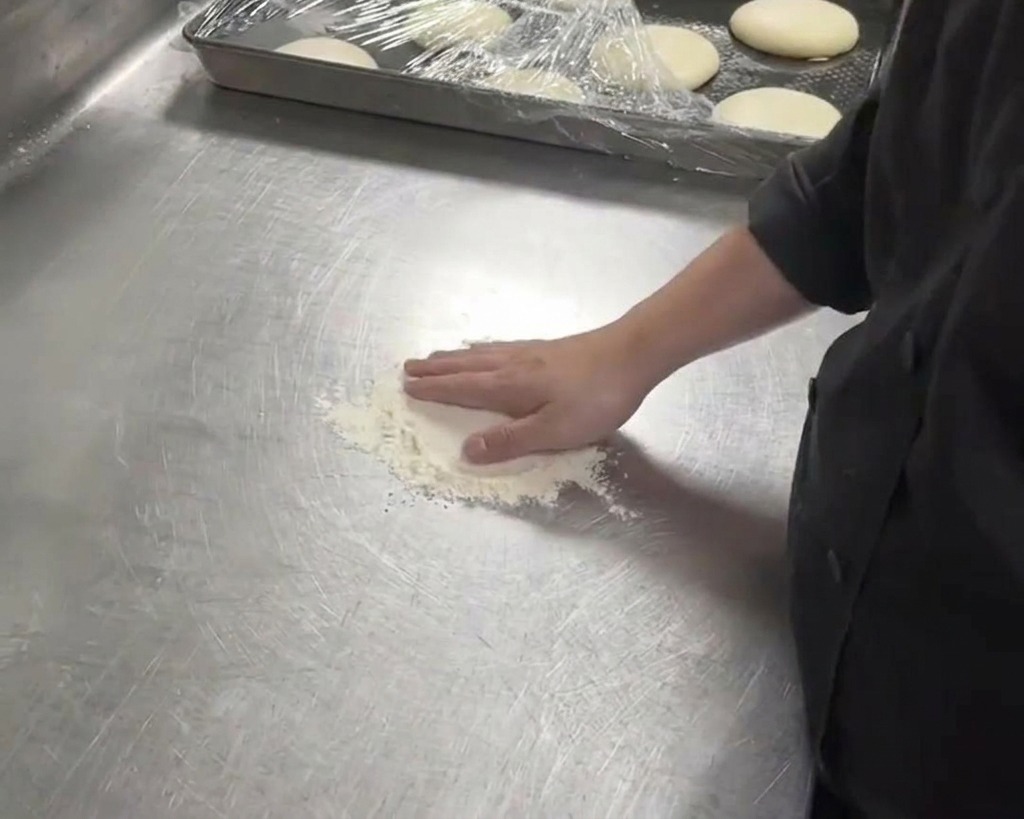
Place a fresh ball of pizza dough onto a floured stainless steel work surface. Gently press down on the center with your palm and fingers to begin flattening it into a disc, being careful to maintain a circular shape.
Tip: Always use room-temperature dough; cold dough is elastic and will keep snapping back when you try to flatten it. - 5Stretch the dough into a base
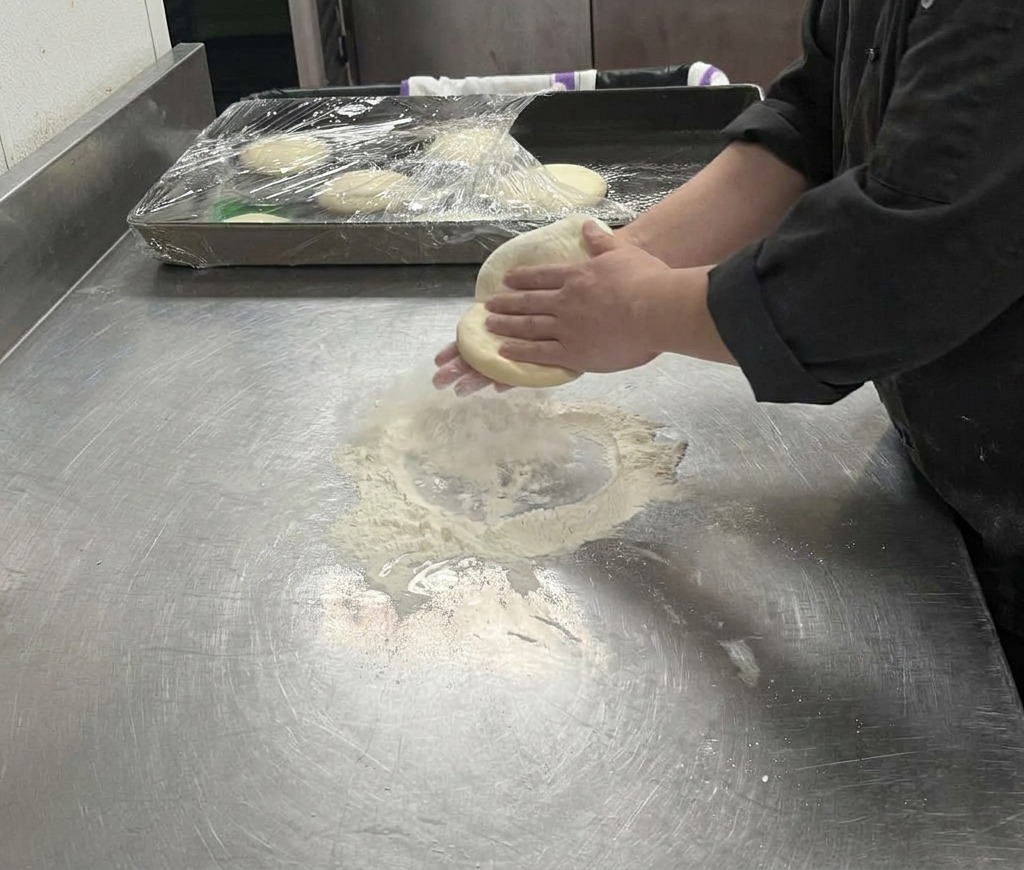
Lift the dough and use your hands to gently stretch it outward. Rotate the dough as you pull to ensure it thins out evenly. Aim for a wide, thin circular base that is translucent in the center but remains thicker toward the edges.
Tip: Use the backs of your knuckles to stretch the dough to avoid poking holes in it with your fingertips. - 6Form the crust rim
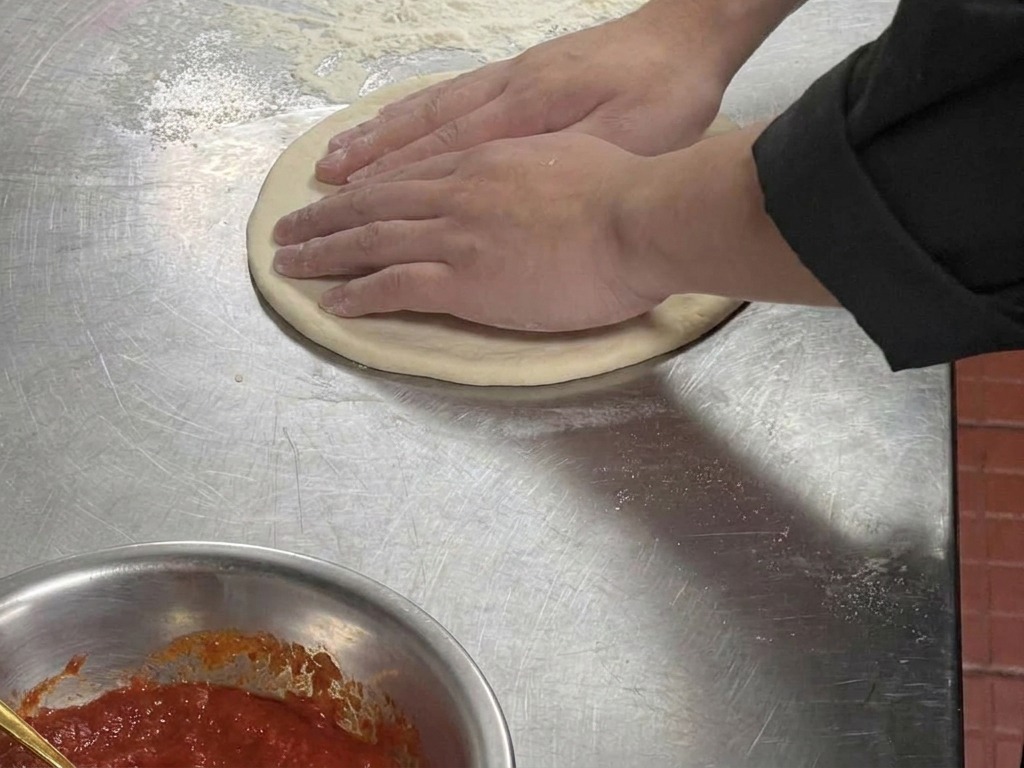
Use your fingers to press a defined rim into the edge of the dough, about a thumbs width from the outside. This border, or cornicione, captures air and will puff up significantly in the oven to create a light, bread-like crust.
Tip: Do not press too hard on the very edge; you want to keep the air bubbles inside the rim for the best rise. - 7Add sauce and fresh basil
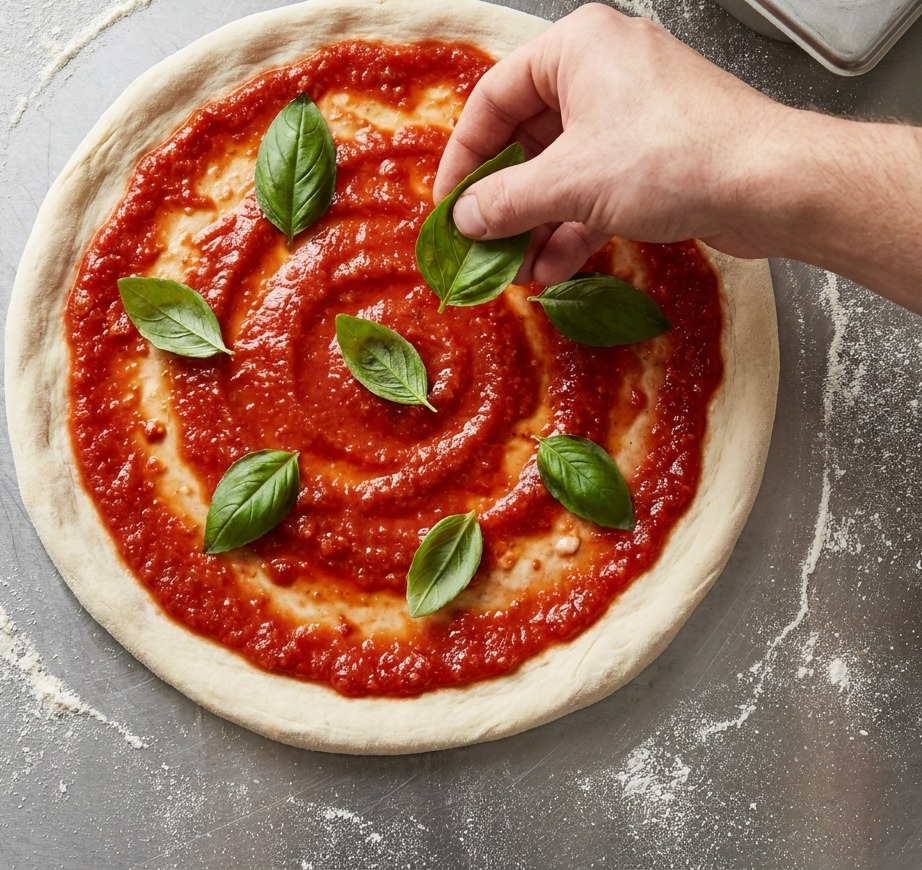
Spread a thin layer of concentrated tomato sauce over the dough leaving the rim bare then distribute fresh basil leaves evenly across the surface. Placing the herbs beneath the cheese and oil helps the flavors meld and prevents the delicate leaves from burning in the high heat.
Tip: Use a thick sauce to prevent a soggy base and tear large basil leaves into smaller pieces for better flavor distribution. - 8Top with buffalo mozzarella
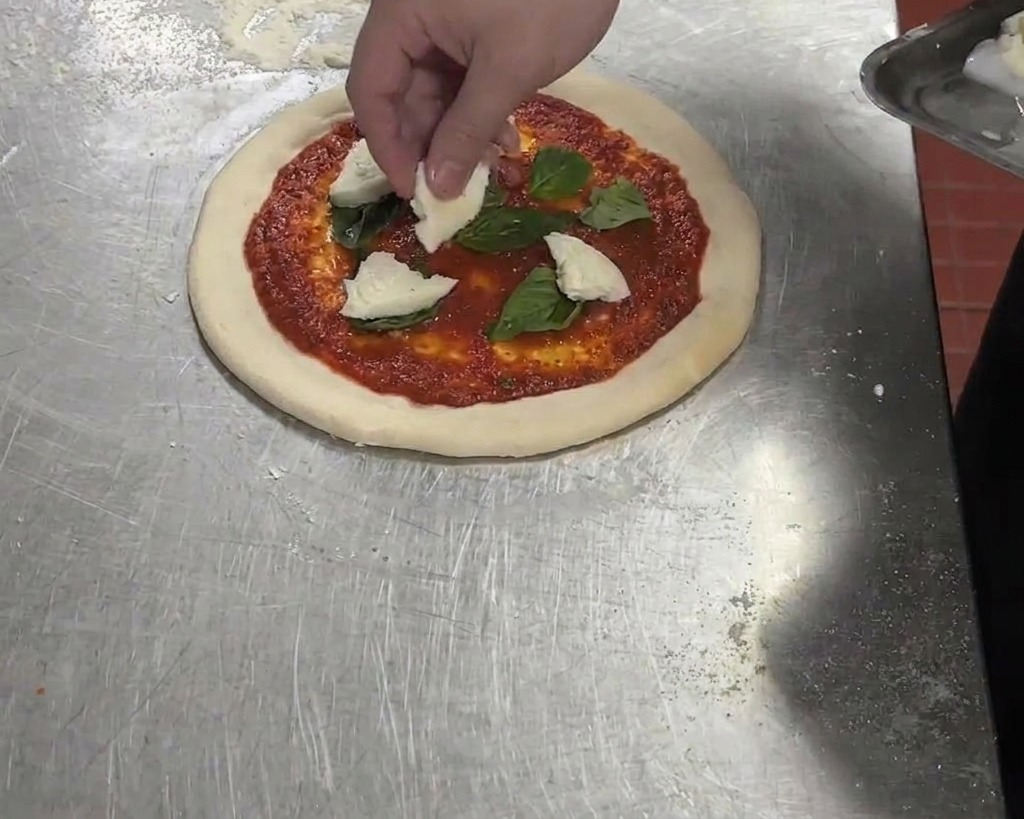
Tear pieces of fresh buffalo mozzarella and place them across the pizza surface. Buffalo mozzarella is preferred for its rich, creamy texture and superior melting properties compared to standard mozzarella, which makes for a better mouthfeel.
Tip: Drain the mozzarella well before using. If its too wet, it can release excess moisture in the oven, potentially making the crust soggy. - 9Drizzle with olive oil
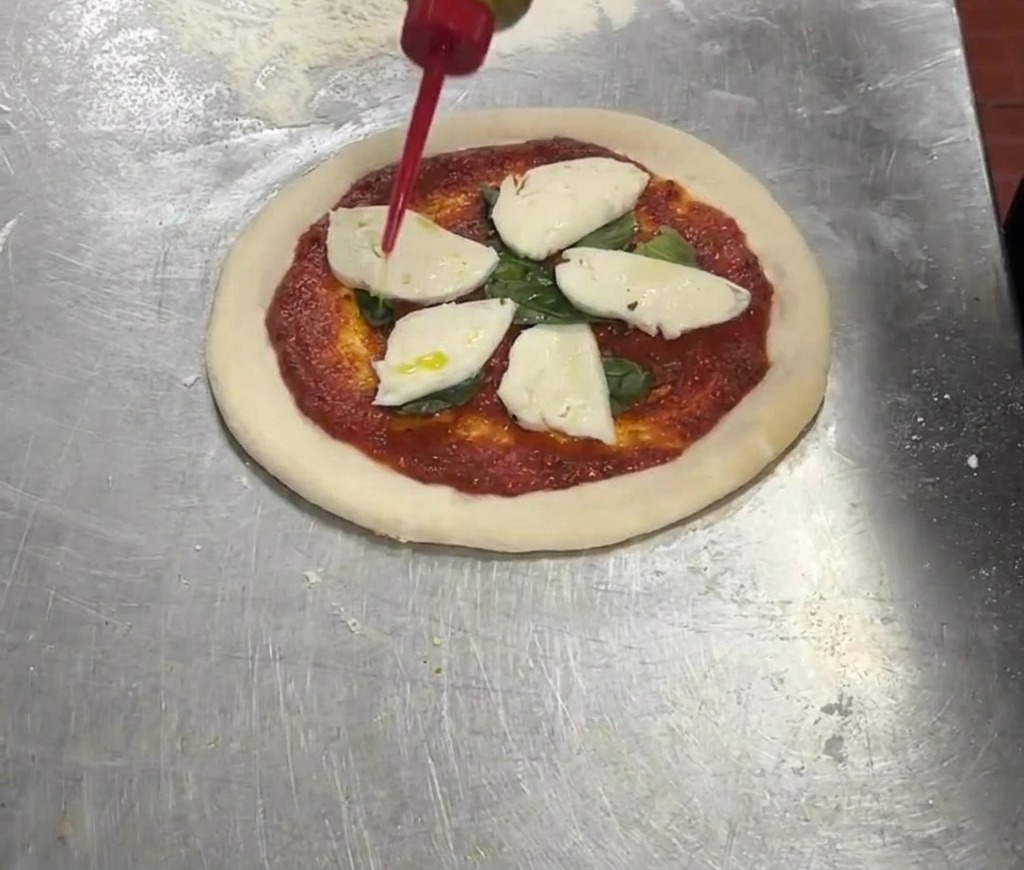
Finish the topping preparation with a generous drizzle of extra virgin olive oil. This adds a rich silkiness to the sauce and helps both the cheese and the crust achieve a beautiful, professional golden-brown finish in the oven.
Tip: Using a squeeze bottle gives you much better control. A thin, circular drizzle ensures even coverage without over-saturating the dough. - 10Load the pizza into the oven
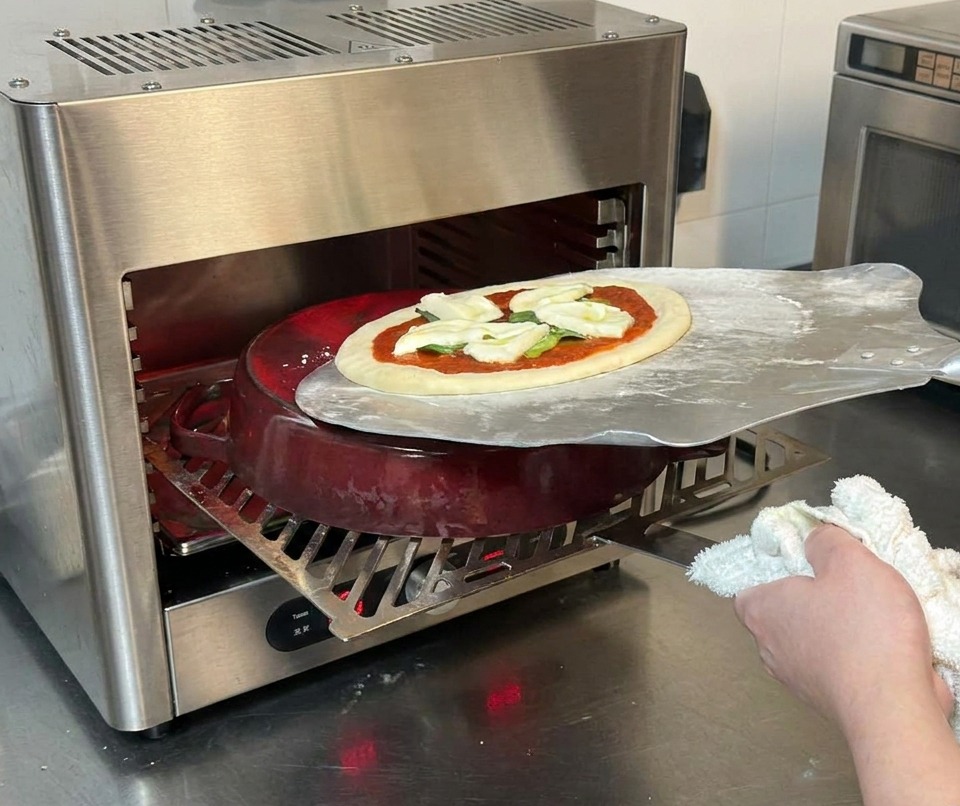
Use a metal pizza peel to carefully slide the prepared dough onto the preheated cast iron pot inside the high temperature oven. The preheated pot mimics the effects of a pizza stone providing immediate heat to the bottom of the crust for a crispy finish.
Tip: Give the peel a quick gentle shake to ensure the pizza is not sticking before you try to slide it into the oven. - 11Bake in high heat
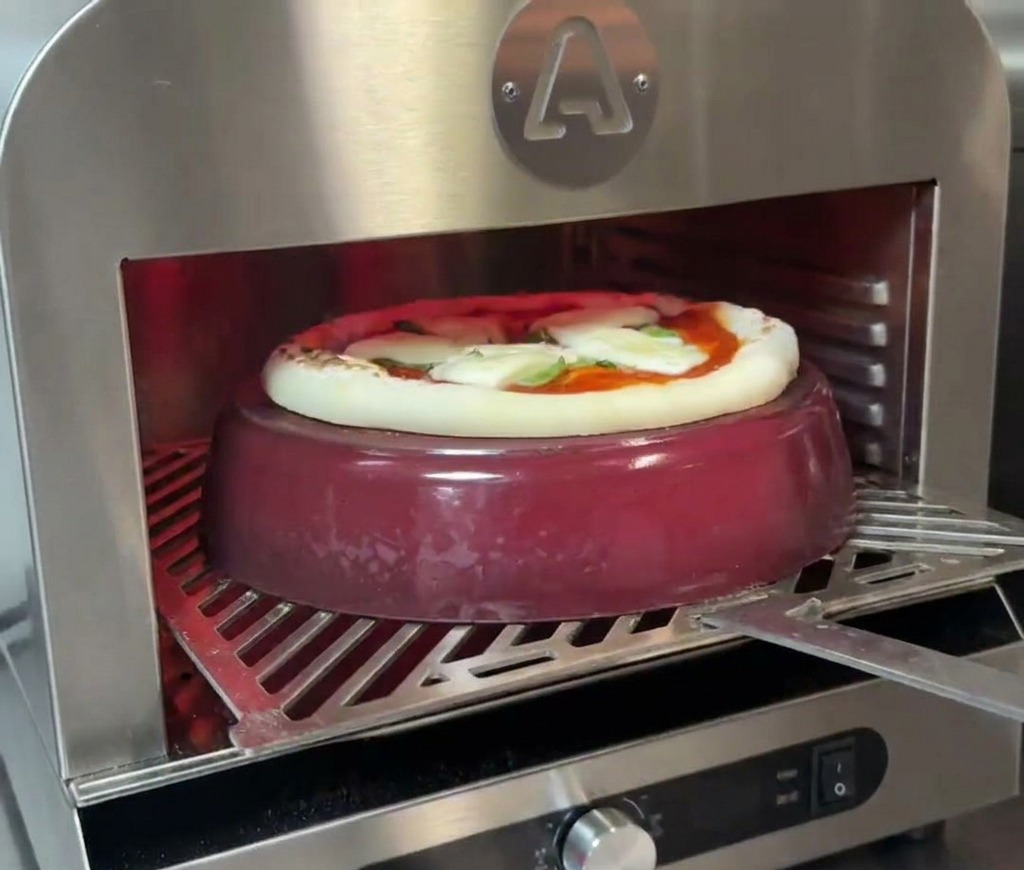
Let the pizza bake in the intense heat for about 30 seconds. Watch closely as the crust bubbles and the cheese melts rapidly. The extreme temperature is essential for achieving the characteristic light, airy texture and charred spots of a Neapolitan-style pizza.
Tip: Keep the oven door closed as much as possible to maintain the high temperature required for this quick, high-speed bake. - 12Rotate for an even bake
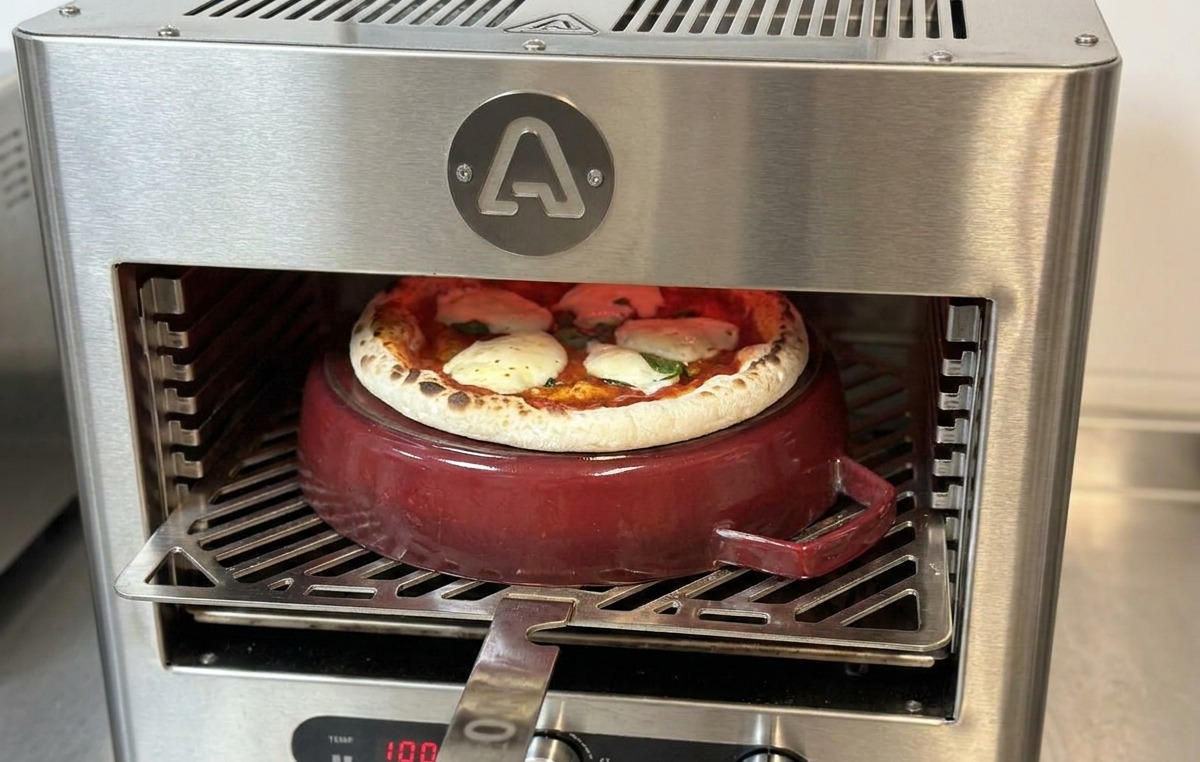
About halfway through the short baking time, use the metal peel to rotate the pizza. This ensures that the intense heat is distributed evenly and prevents one side of the crust from burning while the other remains undercooked.
Tip: Speed is key here. Work quickly to minimize the amount of heat that escapes from the oven while you are rotating the pizza. - 13Garnish with fresh basil
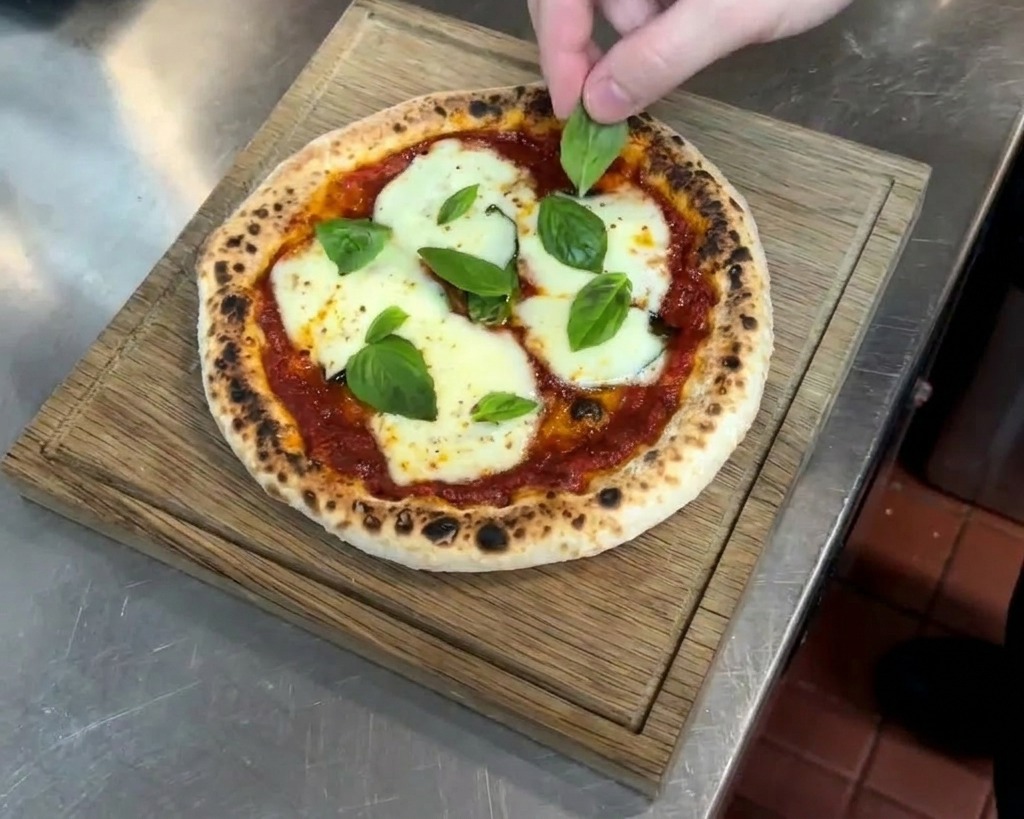
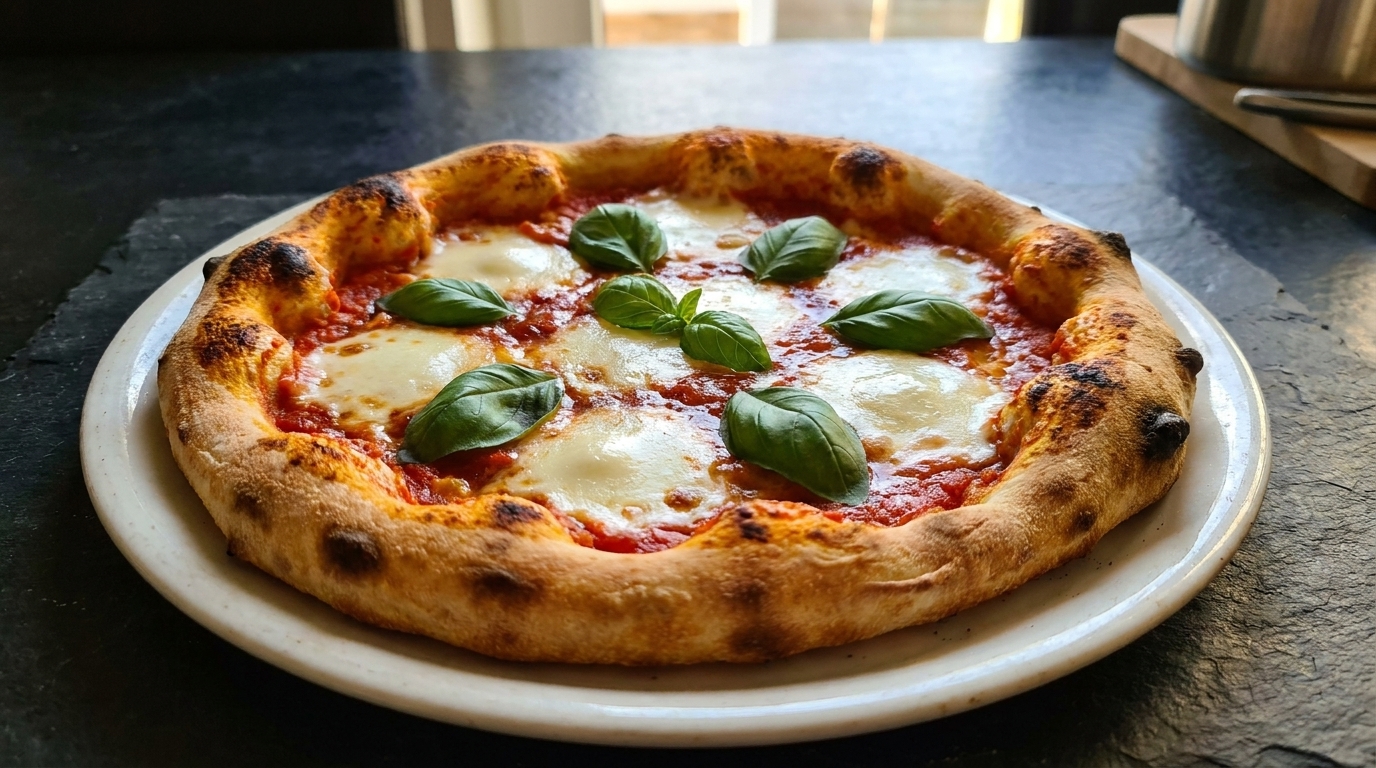
Once the pizza is removed from the high-temperature oven, immediately scatter several fresh basil leaves over the top. The residual heat from the melted mozzarella and the charred crust will gently warm the leaves, releasing their aromatic oils and creating the classic fragrant profile of a Margherita pizza.
Tip: Adding basil after baking ensures the leaves remain vibrant green. If added before going into an 800-degree oven, the delicate leaves would likely burn and turn bitter. - 14Finish with olive oil
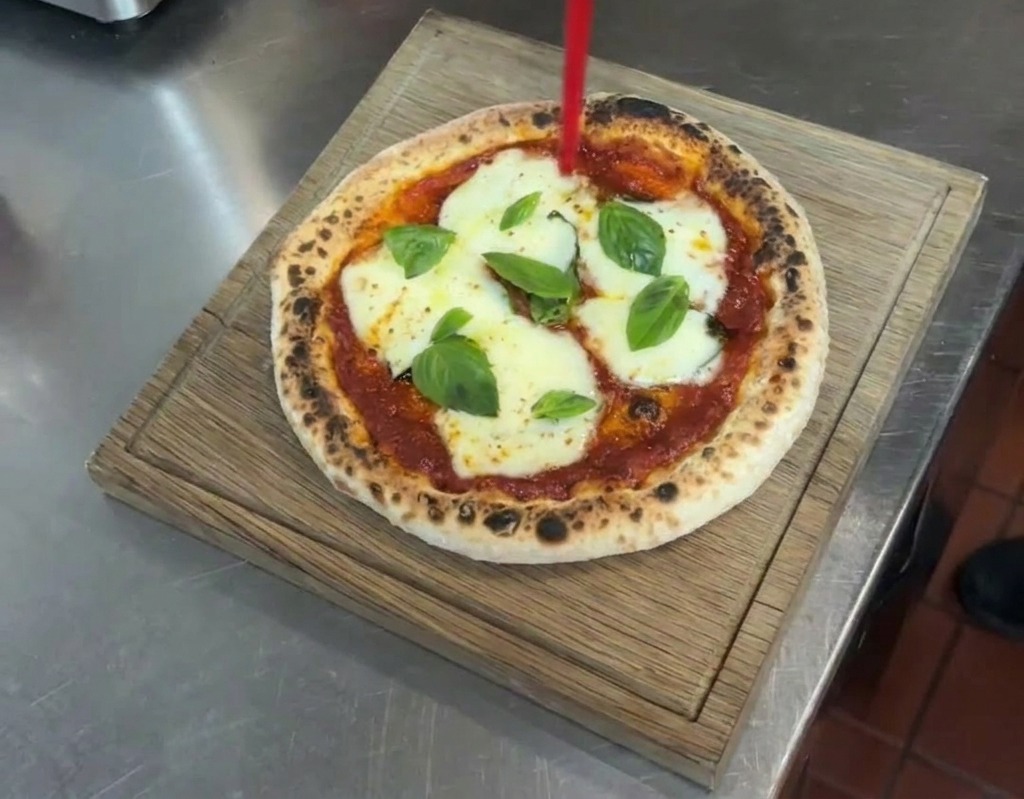
Apply a final light drizzle of high quality extra virgin olive oil over the finished pizza. If you do not have a pizza wheel use a sharp chef knife to cut the pizza preserving the airy bread like texture of the crust.
Tip: A final drizzle of raw oil after baking adds a fresh fruity aroma that complements the charred flavor of the dough.