Japanese-Style Neapolitan Pasta (Naporitan)
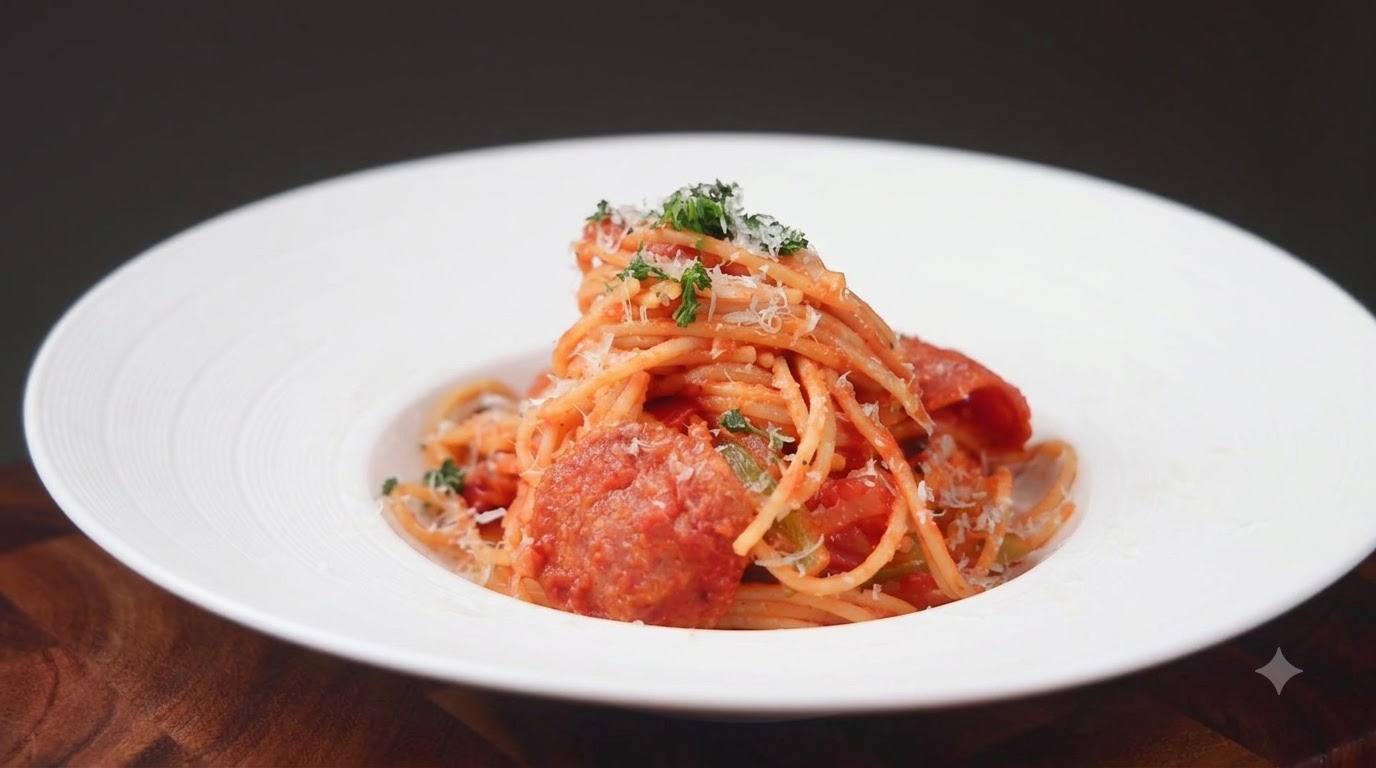
Experience the nostalgic flavors of a classic Japanese kissaten with this easy Naporitan pasta. Sweet, savory, and packed with tender vegetables and salami, all coated in a rich tomato sauce.
Naporitan is a beloved yōshoku (Western-influenced Japanese dish) born in Yokohama shortly after World War II. Often featured in Japanese dramas and served at retro cafes, its signature appeal comes from a sweet and tangy tomato-based sauce that perfectly glazes every strand of spaghetti.
Ingredients
- 200 g dry spaghetti
- 100 g pre-sliced salami
- 1/2 red onion
- 2 cloves garlic
- 1 green bell pepper
- 100 g cherry tomatoes
- 100 g button mushrooms
- 2 tbsp olive oil
- 2 tbsp tomato paste
- 1 can (400 g) chopped tomatoes
- to taste sea salt
- to taste black pepper
- optional chopped parsley
- optional parmesan cheese
Instructions
- 1Slice the Red Onion
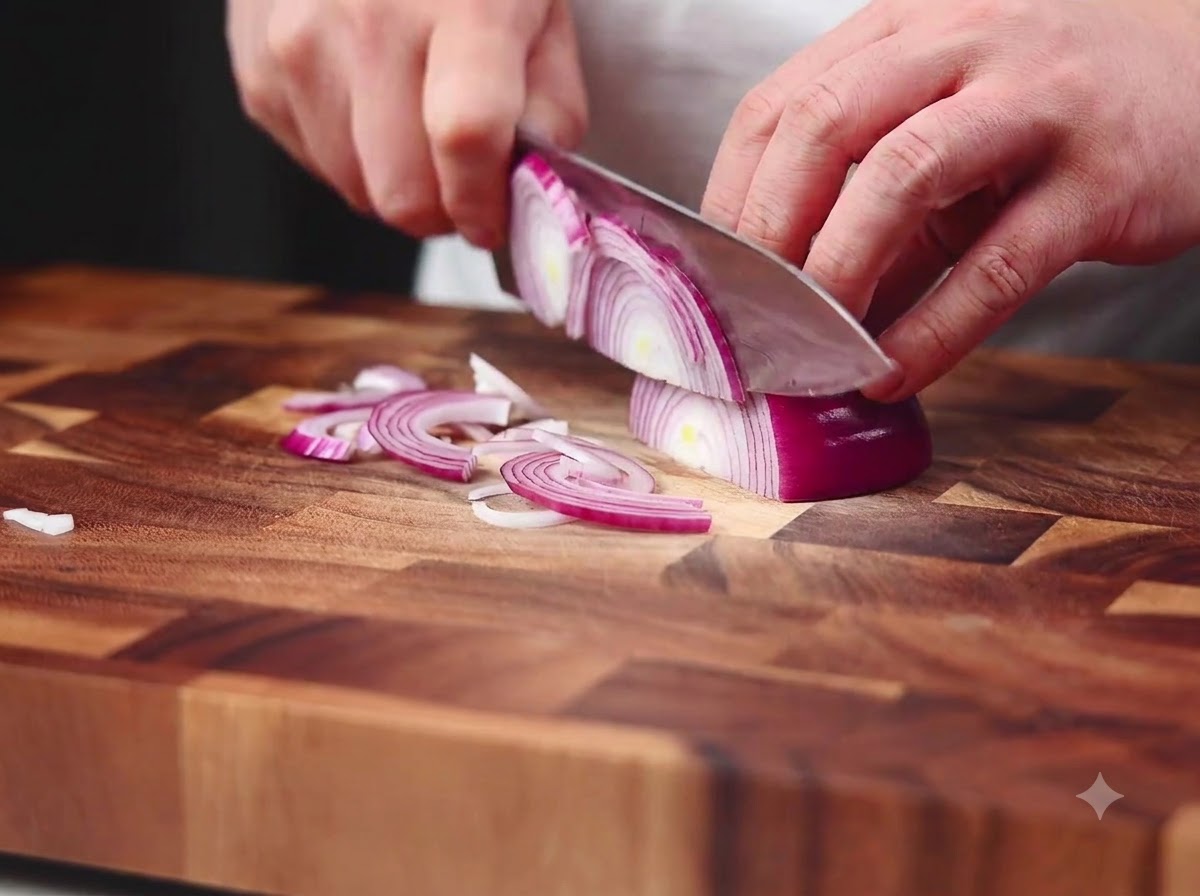
Place a red onion on a wooden cutting board and use a chefs knife to slice it evenly into thin, crescent-shaped pieces. This foundational ingredient provides sweetness and depth to the Neapolitan pasta sauce.
Tip: Keep your fingertips tucked inward like a claw to protect your fingers while slicing onions. - 2Mince the Garlic
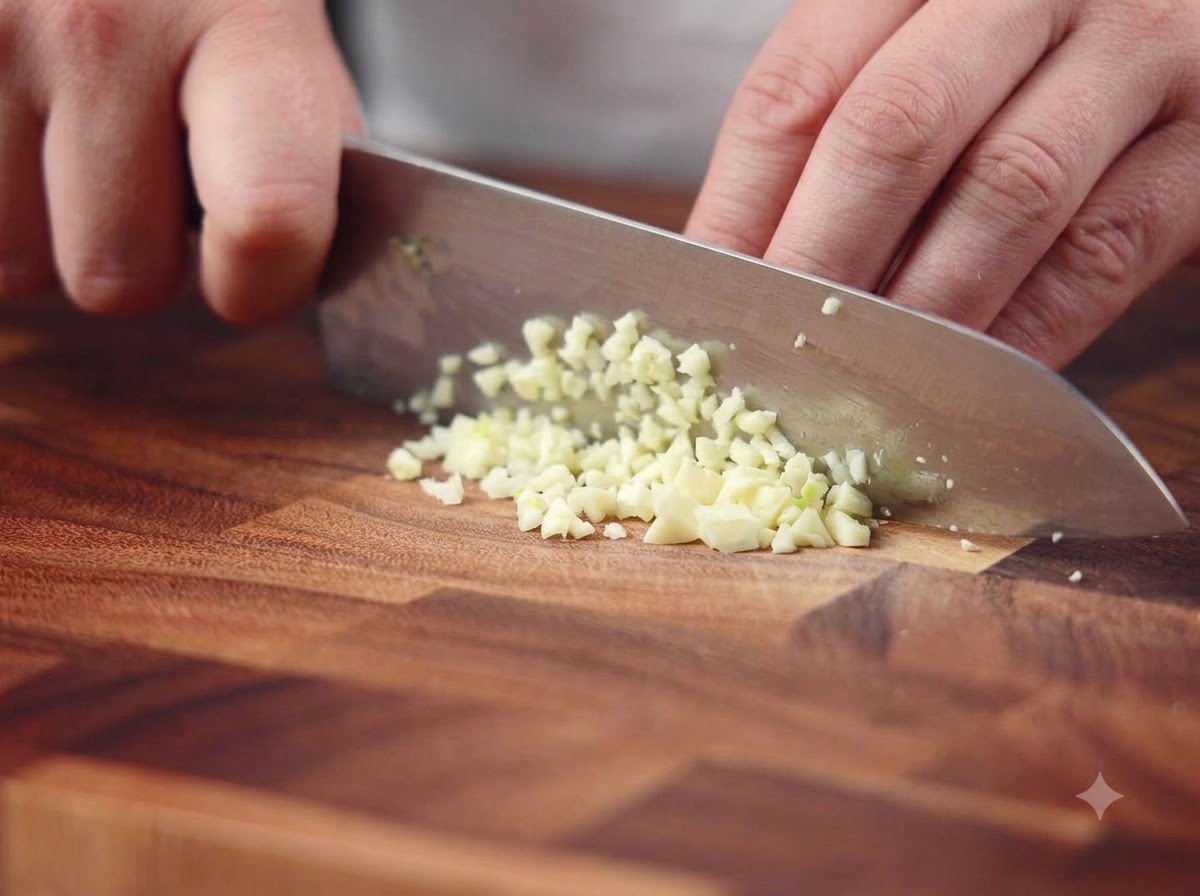
Take peeled garlic cloves and mince them finely using a chefs knife on the wooden cutting board. Fine mincing allows the garlic flavor to evenly distribute and release into the olive oil during frying.
Tip: Crush the garlic slightly with the flat side of the knife first to make peeling and mincing much easier. - 3Slice the Green Peppers
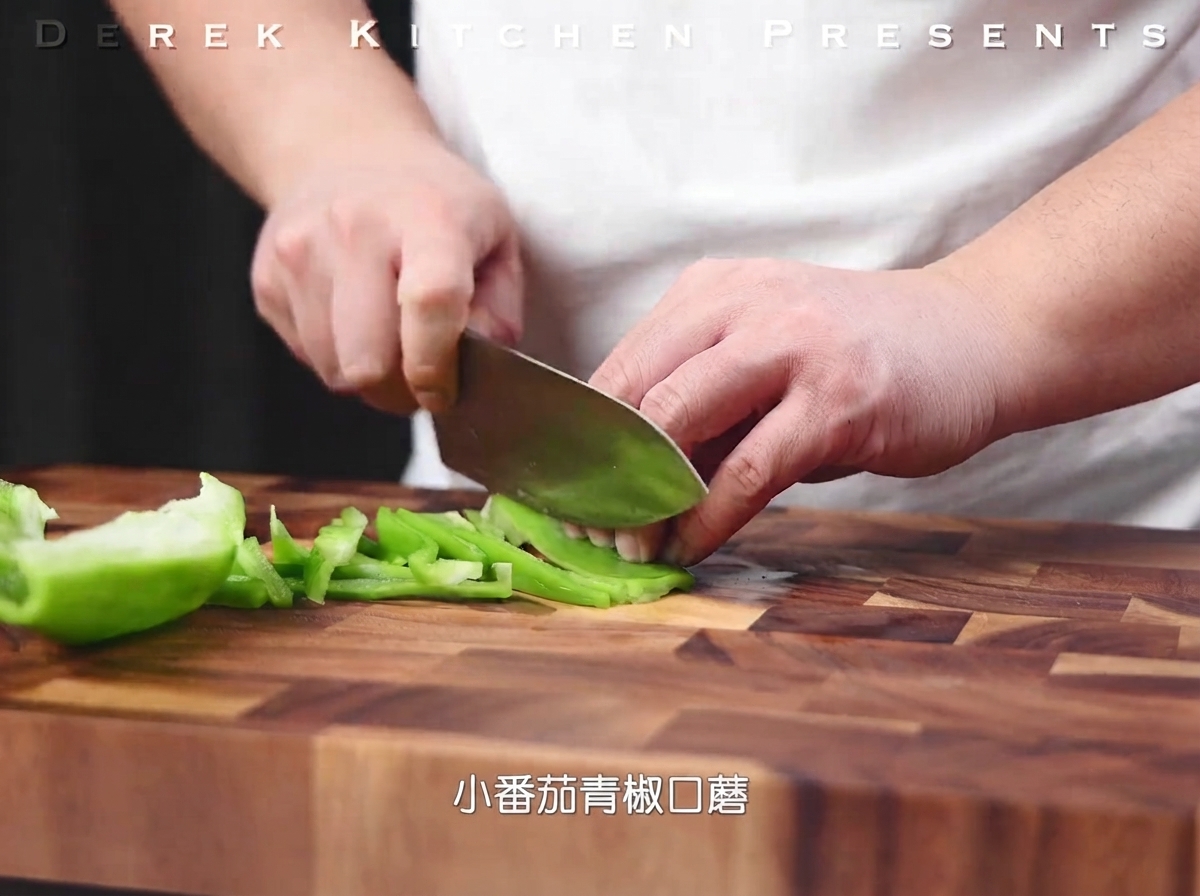
Prepare the green bell peppers by slicing them into thin, uniform strips on the cutting board. These peppers add a classic vibrant color and fresh vegetable aroma typical of Japanese-style Neapolitan pasta.
Tip: Remove the core and white pith completely to avoid any bitter taste in the sauce. - 4Prepare the Salami
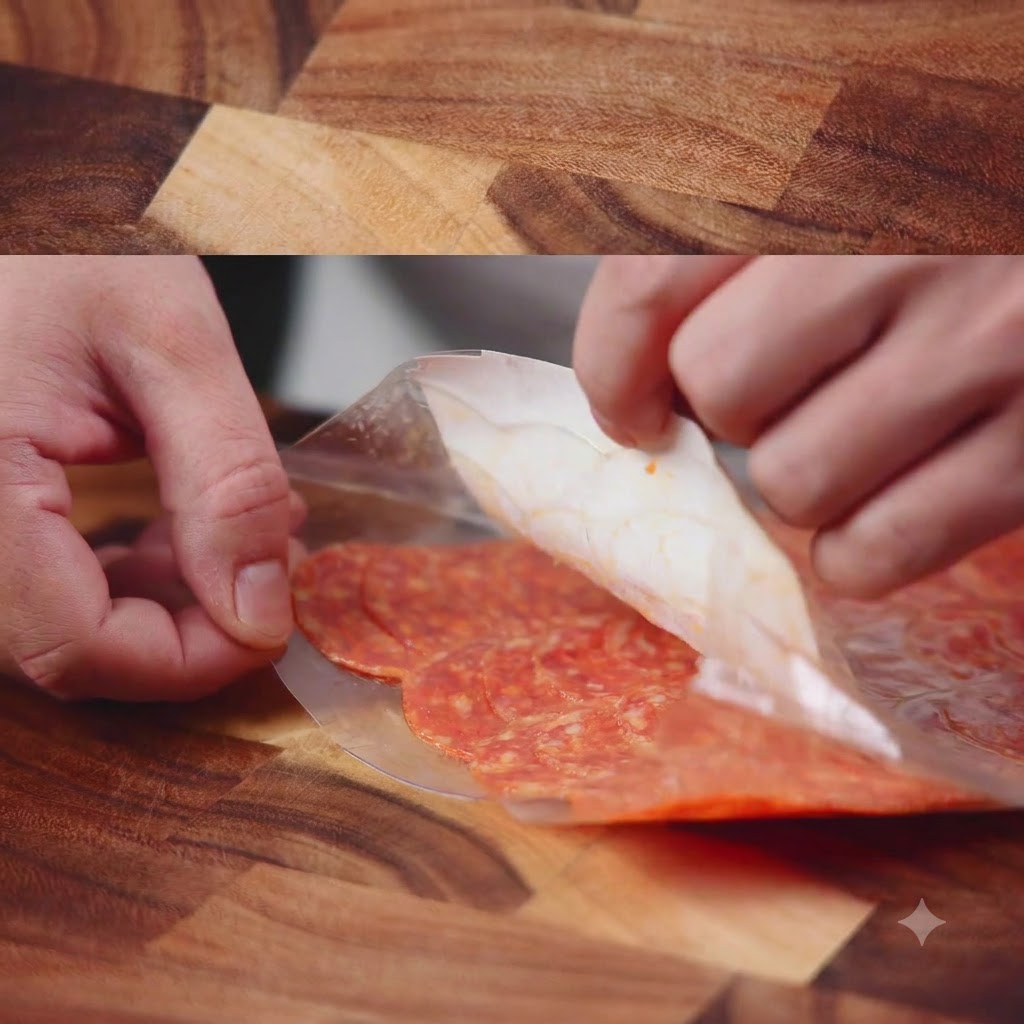
Take the pre-sliced salami out of its packaging to prepare it for cooking. Salami introduces a rich, savory, and slightly smoky flavor profile that enhances the dish beautifully.
Tip: Pre-sliced salami saves preparation time, but you can also use thick-cut ham or regular sausage if preferred. - 5Boil the Spaghetti
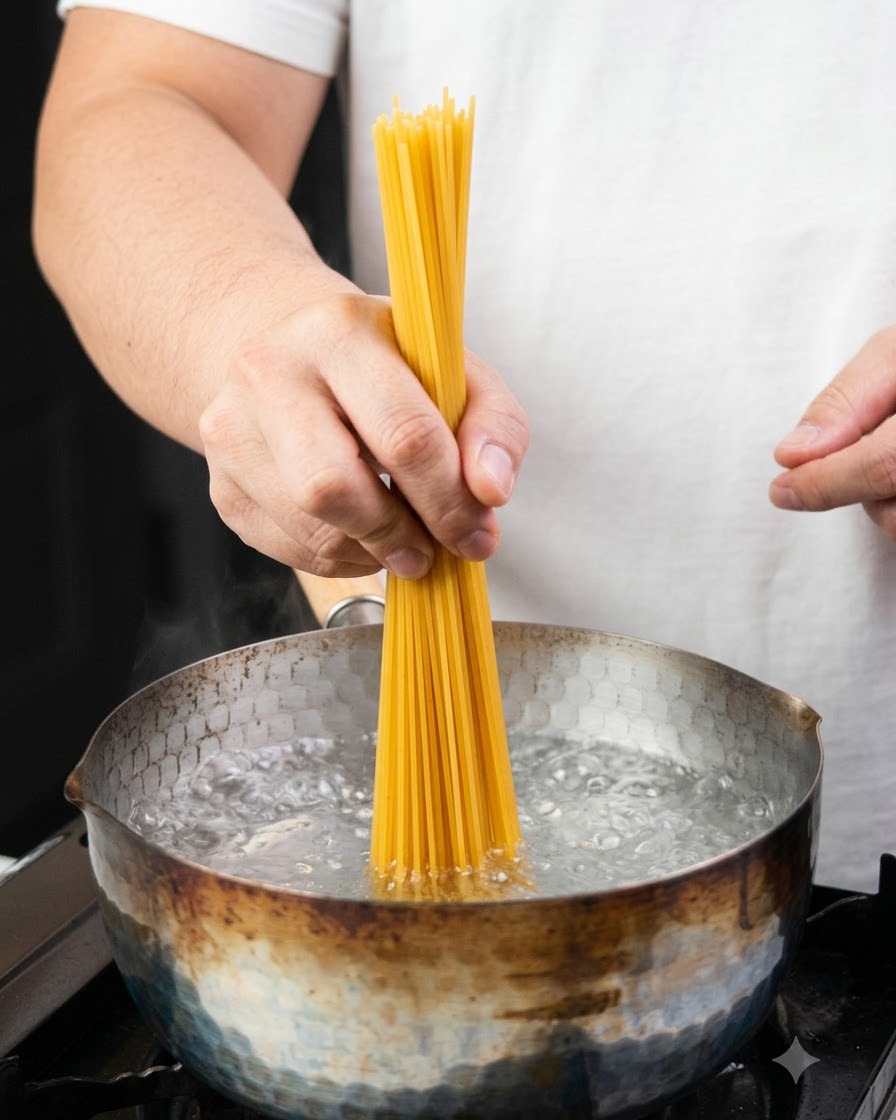
Drop a generous handful of dry spaghetti straight into a pot of salted boiling water. Cook the pasta for the recommended duration, typically around 9 minutes, until it reaches an al dente texture.
Tip: Always salt the boiling water generously so the pasta absorbs flavor as it cooks from the inside out. - 6Fry the Salami Slices

Pour olive oil into a heated black frying pan and add the sliced salami. Fry the slices briefly to render their fat and release their rich aroma into the oil before adding the other aromatics.
Tip: Fry over medium heat to prevent the salami from burning while allowing the oils to render out fully. - 7Add Onions and Garlic
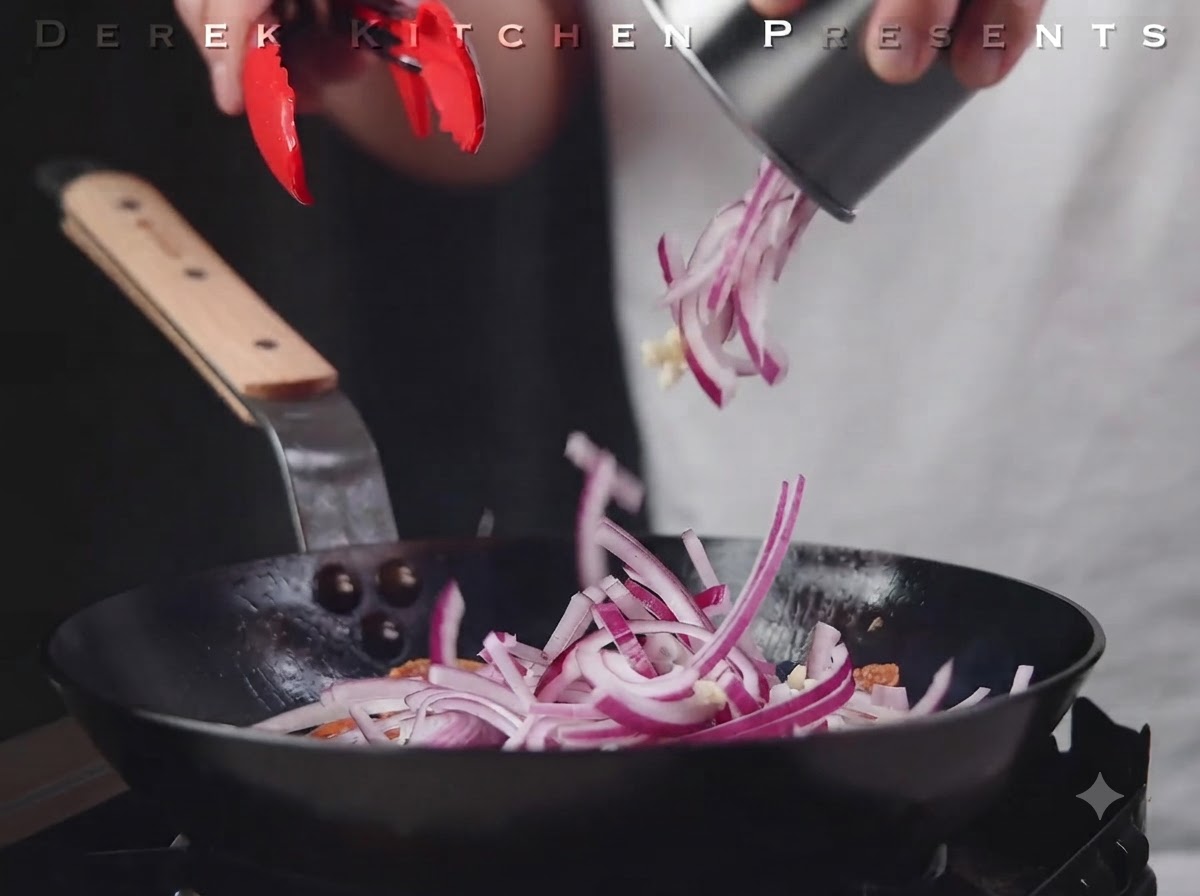
Toss the sliced red onions and minced garlic directly into the pan with the sizzling salami, stirring continuously until the aromatics soften and become fragrant.
Tip: Ensure the heat is well-regulated so the garlic doesnt burn instantly. - 8Squeeze Tomato Paste
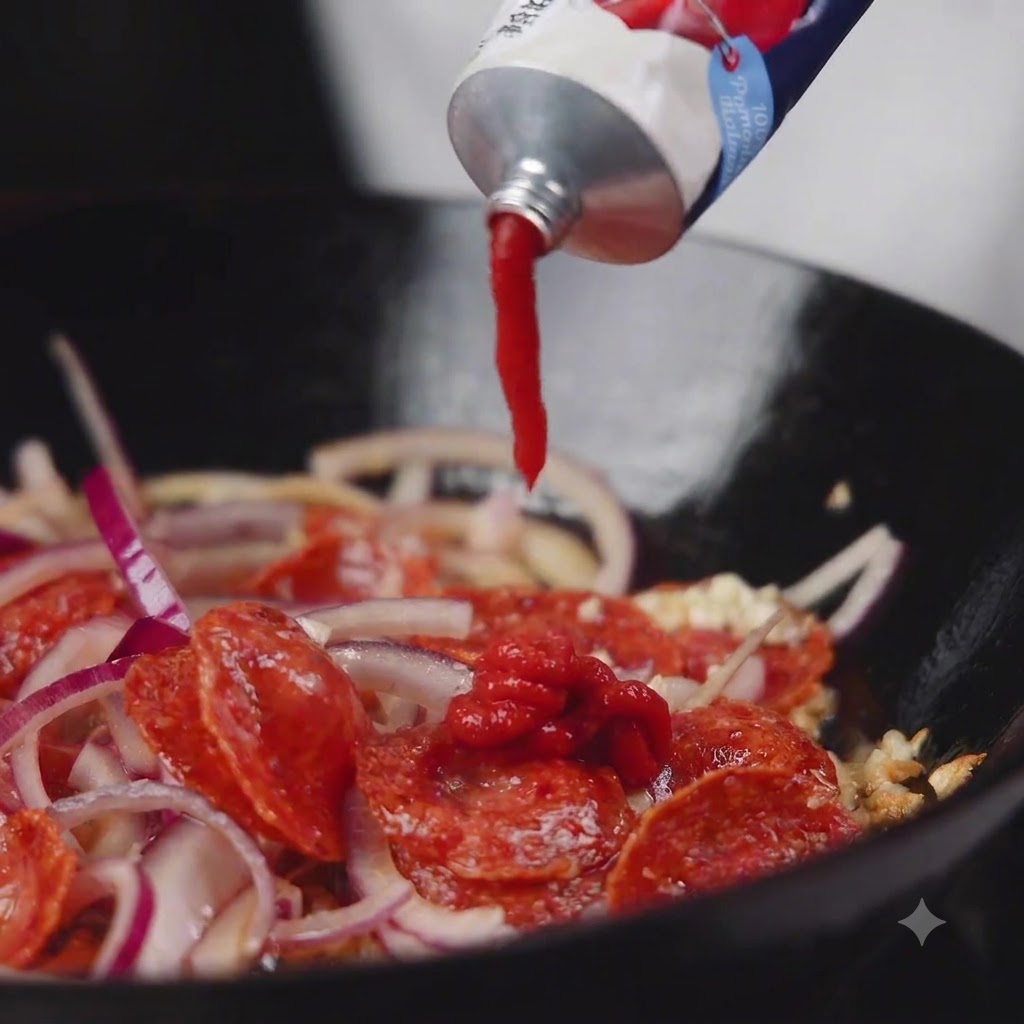
Squeeze the tomato paste directly into the pan. Stir and fry the paste for about a minute to remove its raw edge and release a rich, caramelized aroma.
Tip: Fry the tomato paste slightly after adding to bring out its rich aroma. - 9Add the Vegetables
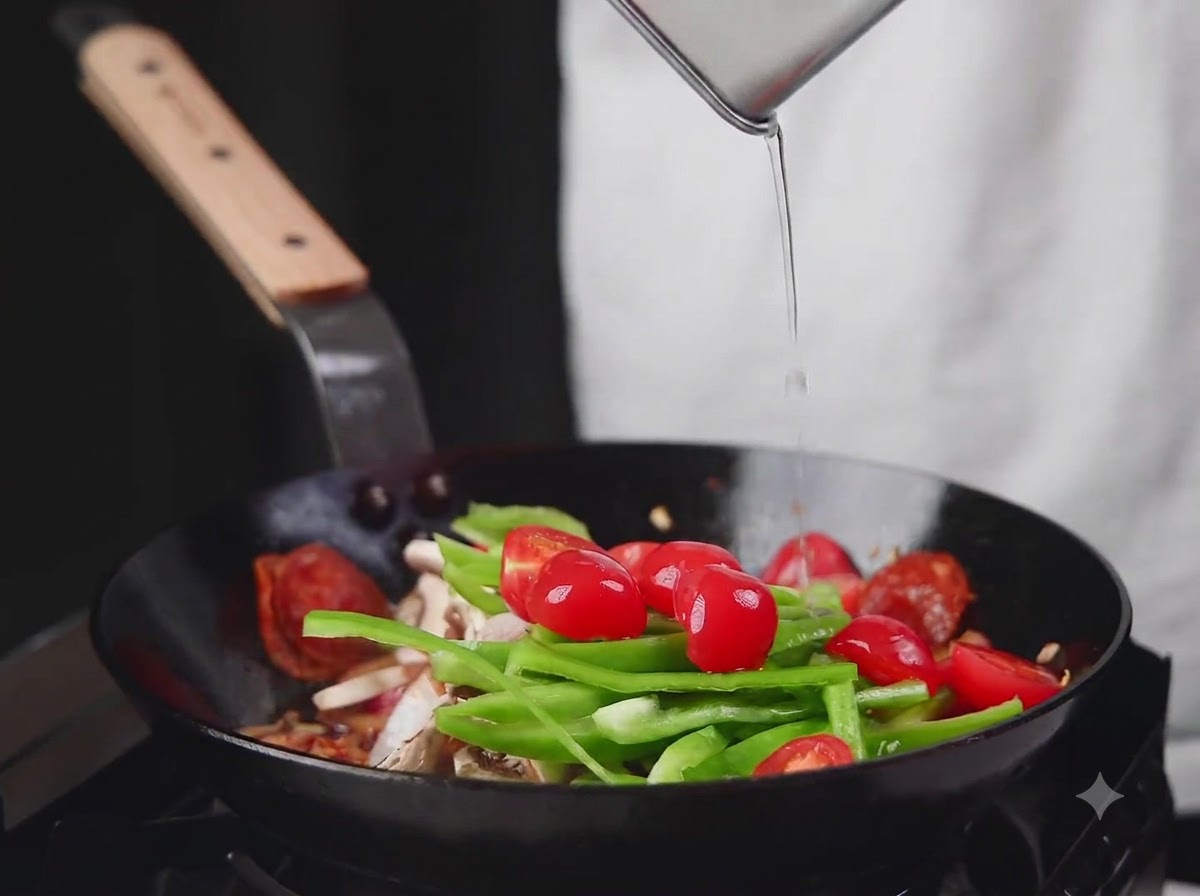
Add the freshly chopped green peppers, cherry tomatoes, and mushrooms into the pan to stir-fry with the savory base.
Tip: Chop the vegetables uniformly to ensure even cooking. - 10Pour Canned Tomatoes
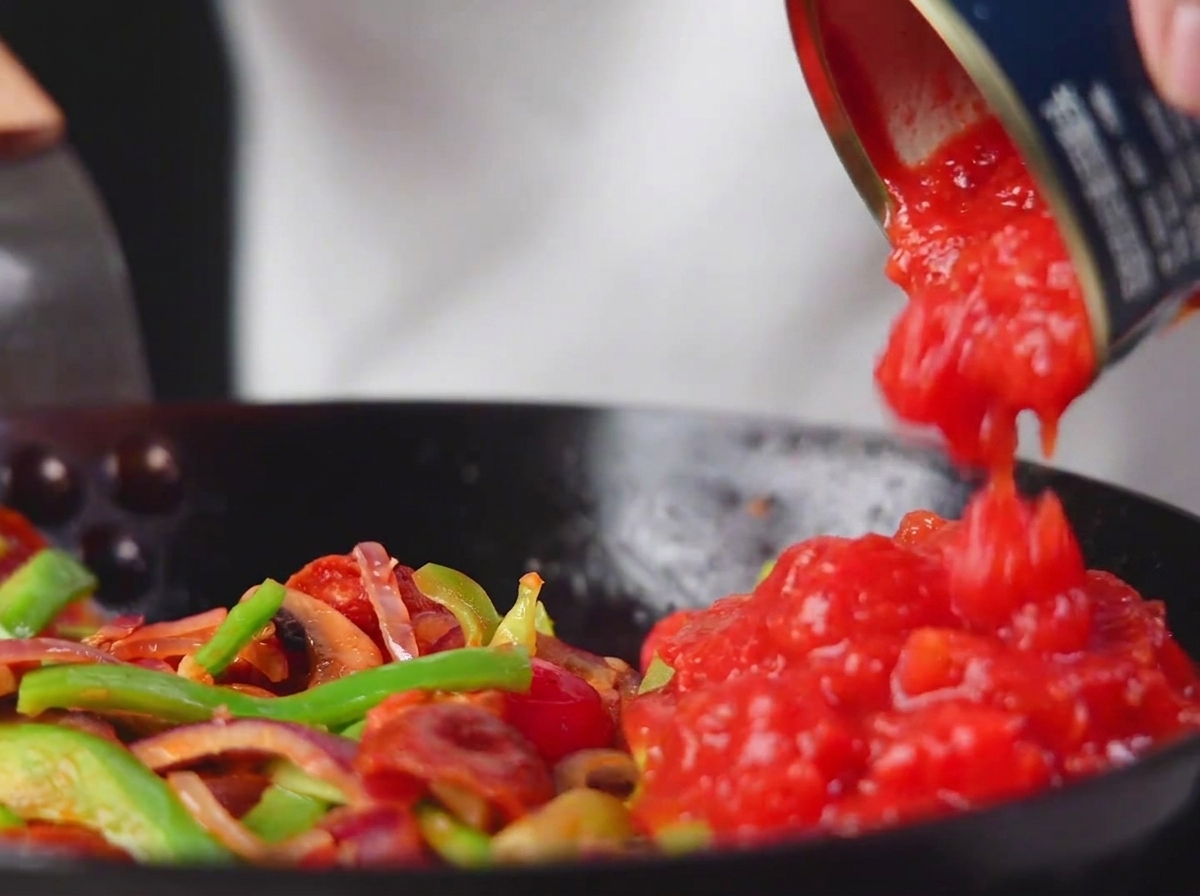
Pour a can of chopped tomatoes directly into the vegetable and salami mixture. Stir well to combine, then lower the heat, cover with a lid, and let it simmer for about 5 minutes to meld the flavors before tossing in your cooked pasta.
Tip: Stir well to combine all the ingredients before covering and simmering.