Authentic Neapolitan Pizza Dough From Scratch
Master the art of authentic Neapolitan pizza dough with a long, slow fermentation process, utilizing high-grade Caputo 00 flour for a light, airy, and supple crust.
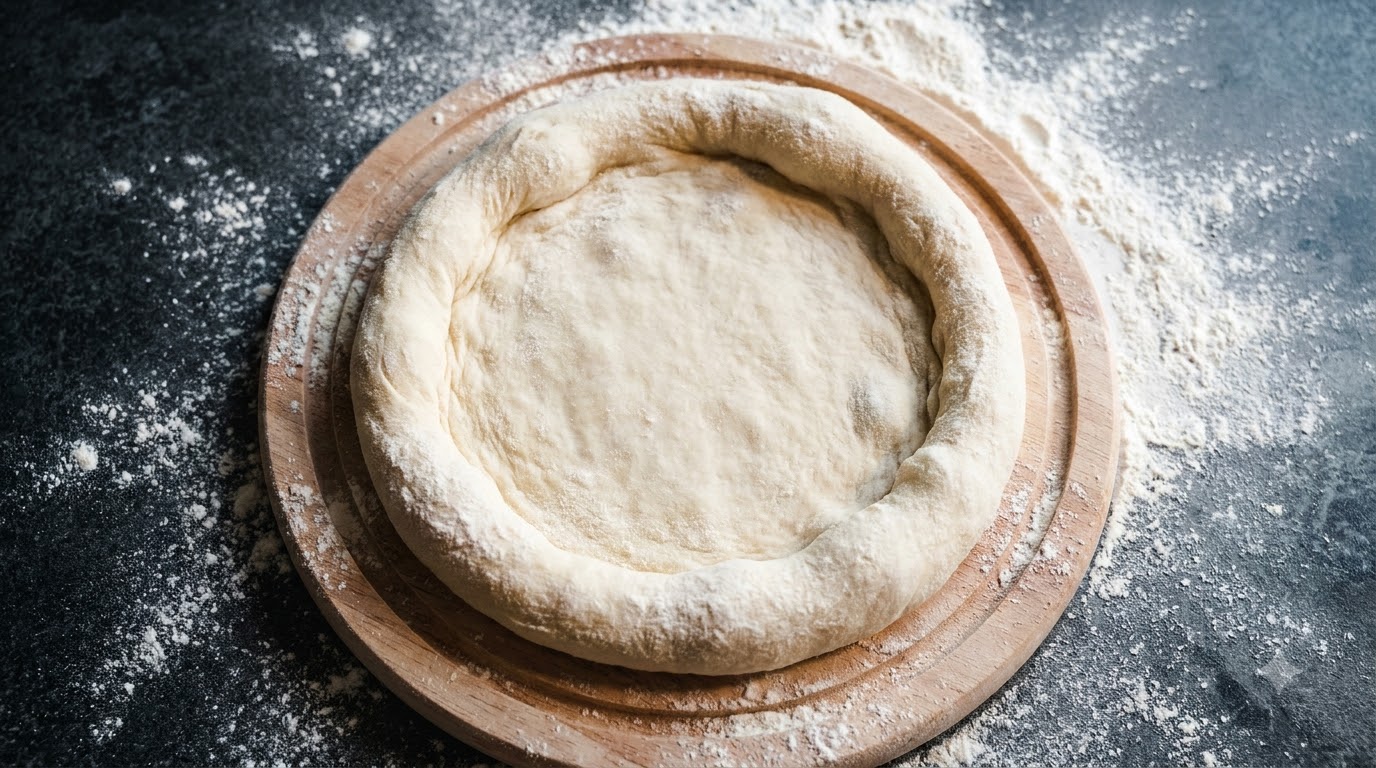
Neapolitan pizza dough is never a quick product; it relies on time, precise hydration, and a slow fermentation process to develop its characteristic texture and flavor. Using high-grade Caputo flour and careful temperature control allows the gluten structure to develop naturally, resulting in an exceptionally light and digestible crust.
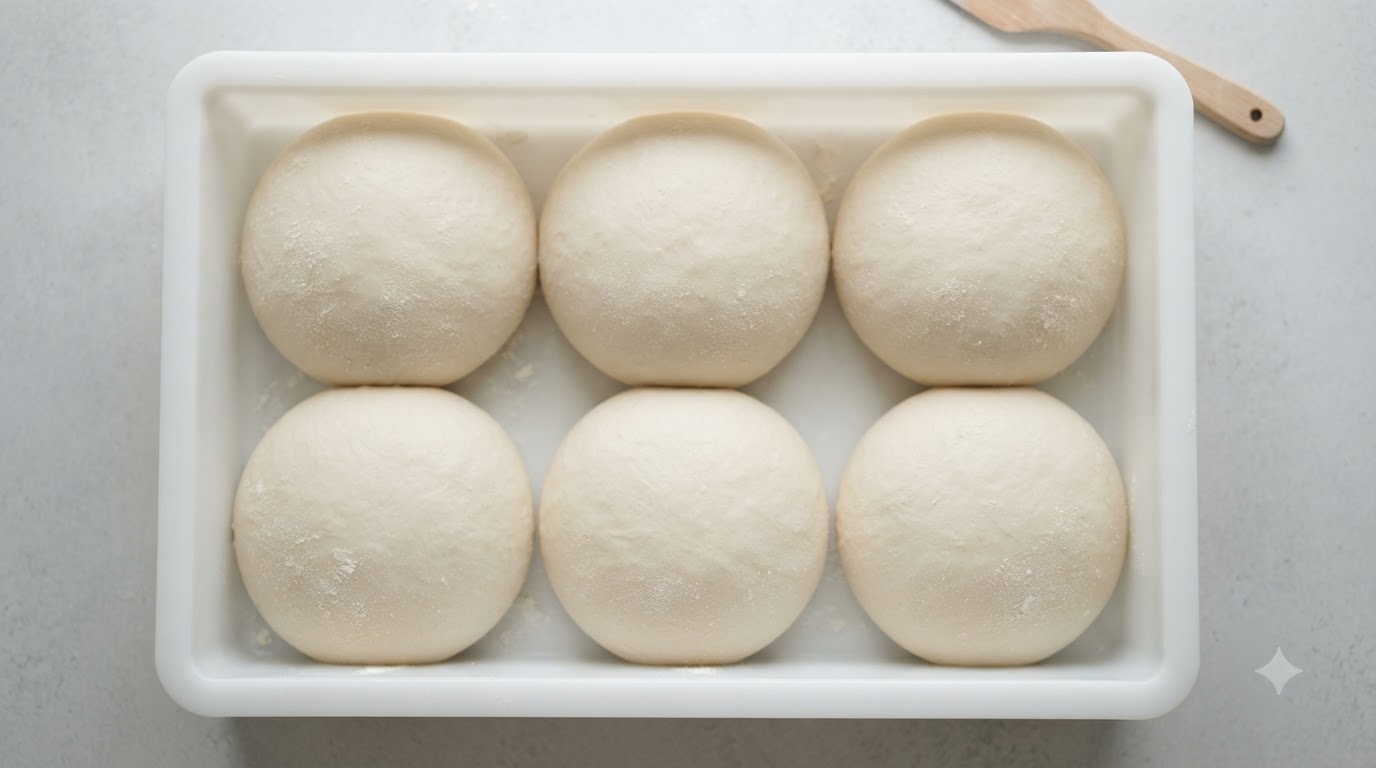
Ingredients
- 1 kg Caputo 00 flour
- 600 ml water
- 2 g active dry yeast
- 30 g salt
- 1 tsp olive oil
Instructions
- 1Measure the flour
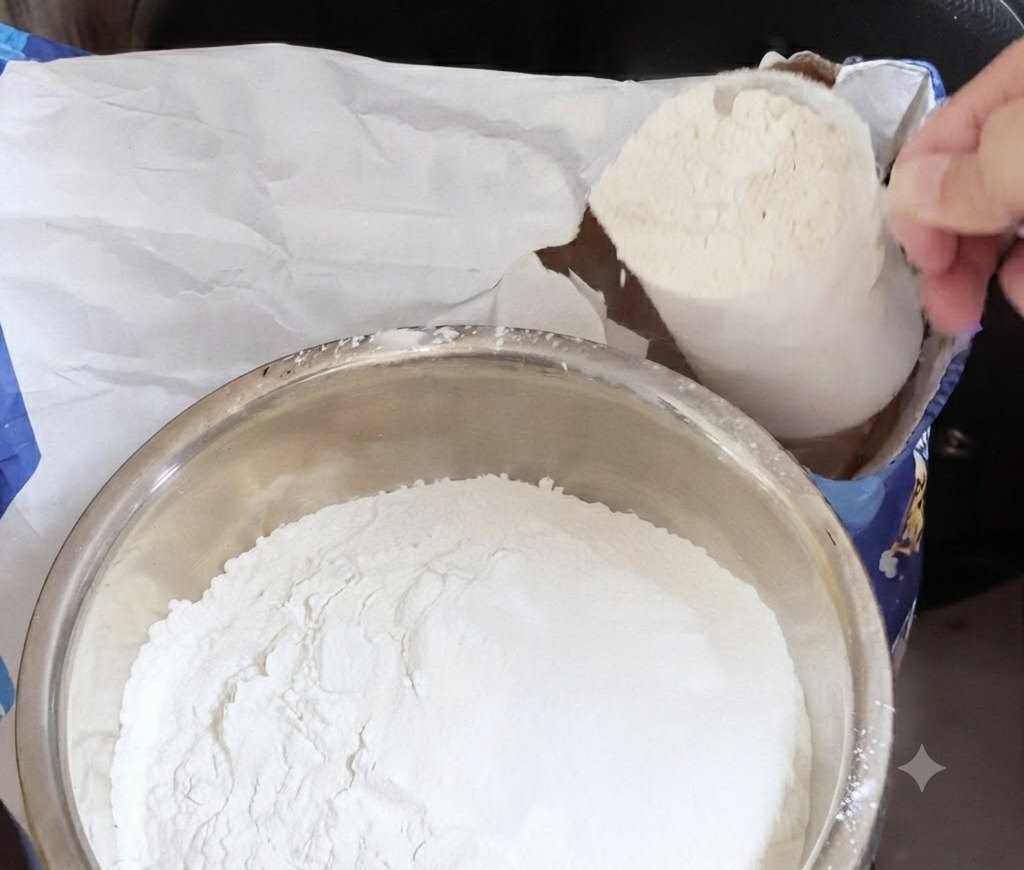
Begin by carefully weighing out the Caputo 00 flour into a large mixing bowl. Using a high-quality, finely milled flour is essential for achieving the soft, airy crust characteristic of authentic Neapolitan pizza.
Tip: Always weigh your flour with a digital scale rather than using measuring cups to ensure a consistent hydration ratio for your dough. - 2Weigh the water
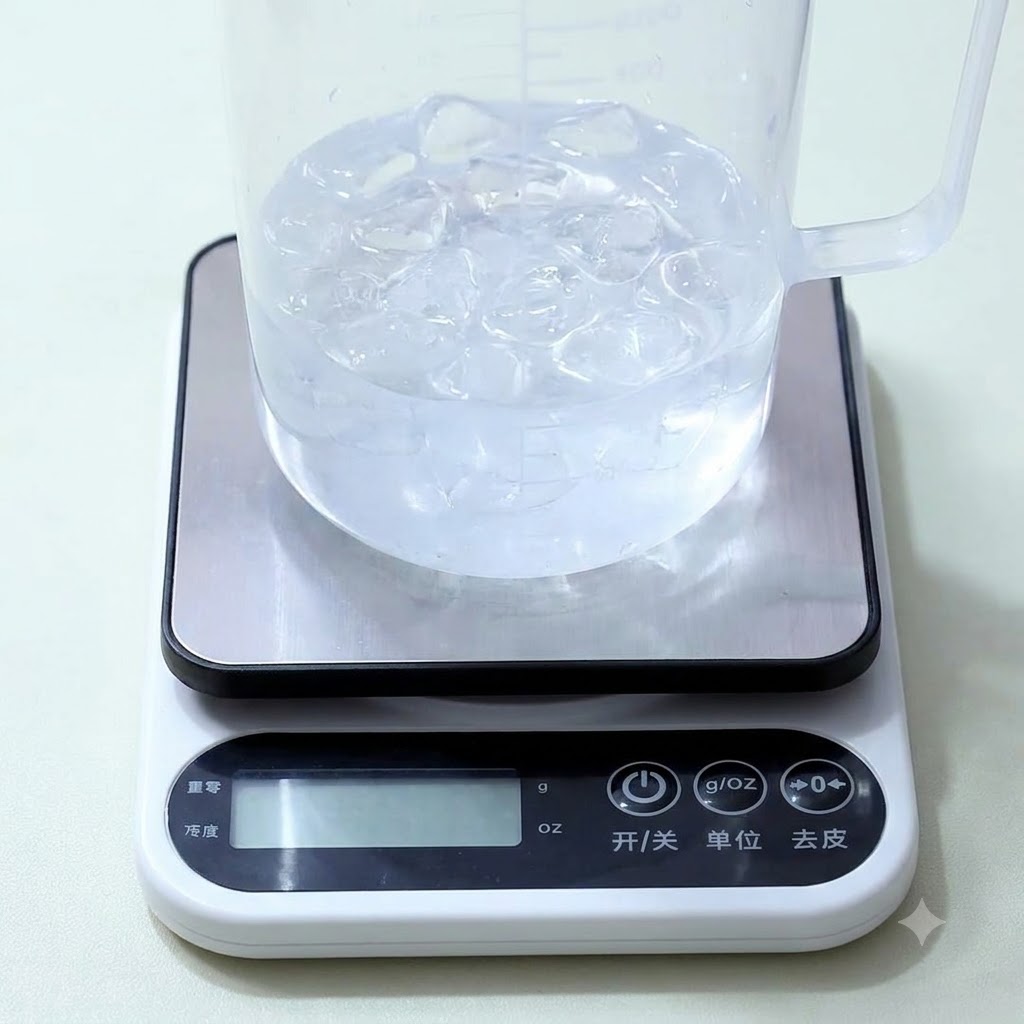
Place a measuring pitcher onto the digital scale, tare it to zero, and pour in the water. Precise water measurement dictates the doughs hydration, which directly impacts the texture and rise of the pizza crust.
Tip: Adding ice to the water helps keep the dough cool during the mixing and kneading process, preventing the yeast from fermenting too quickly. - 3Check the water temperature
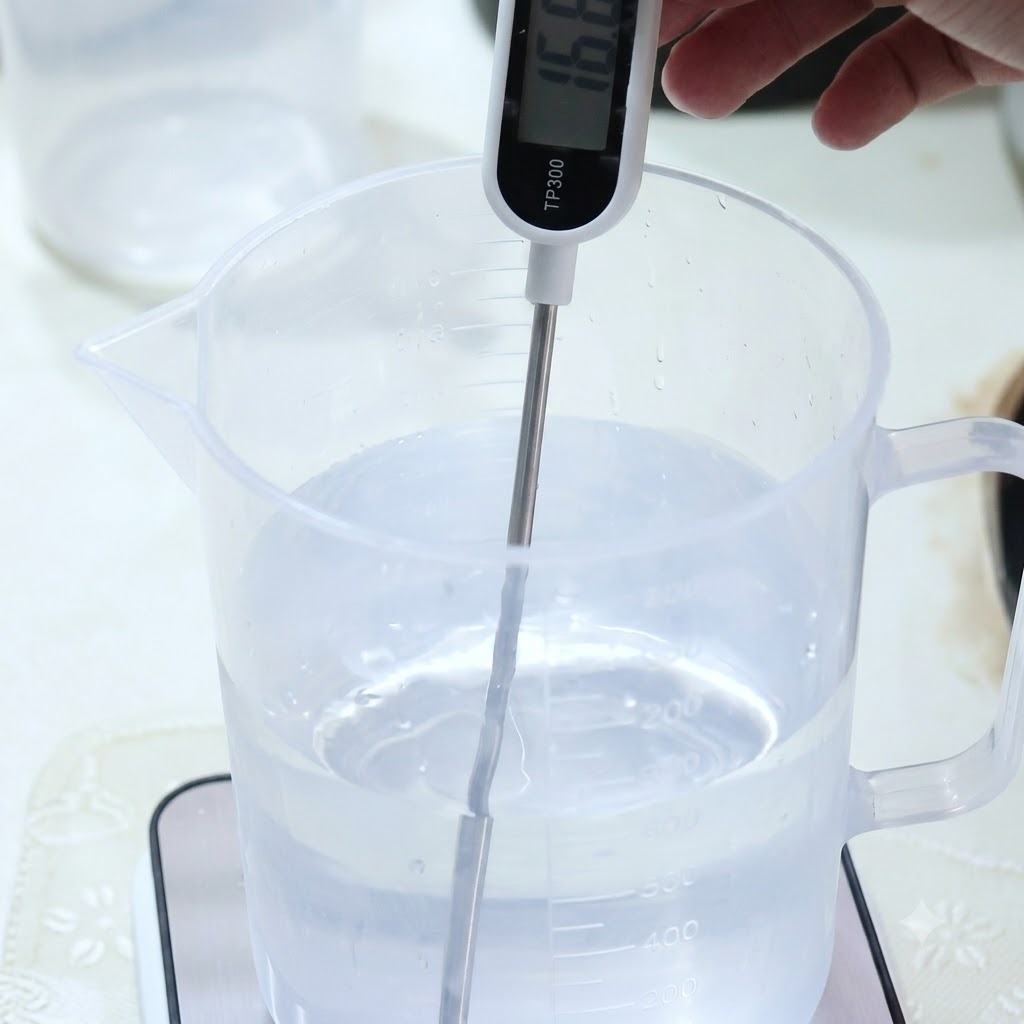
Insert a digital probe thermometer into the pitcher of ice water to verify its temperature. You want the water to be cold—around 16 degrees Celsius—to control the fermentation rate and ensure the dough matures slowly and evenly over time.
Tip: Controlling the initial temperature of your ingredients is the key to managing a long, slow dough fermentation. - 4Measure the yeast
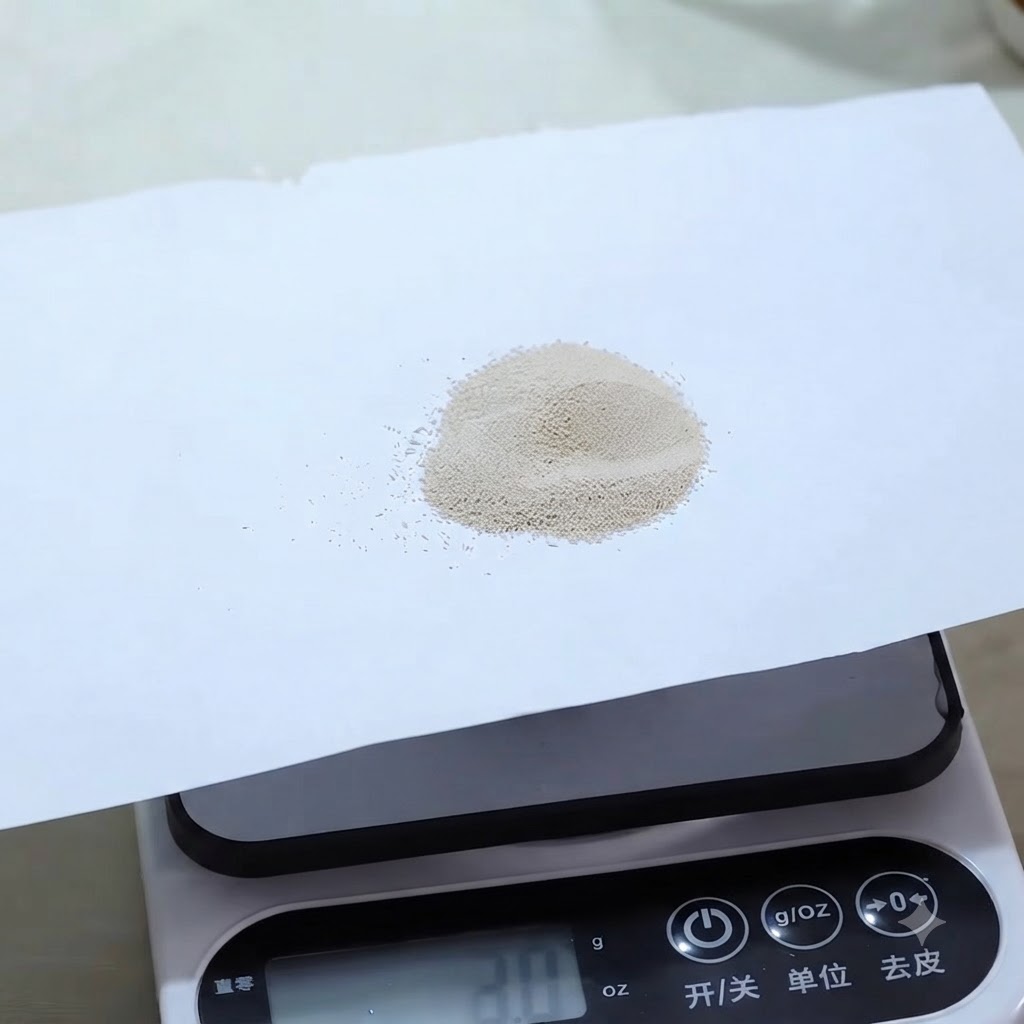
Place a small piece of paper on your scale, tare it, and measure out the active dry yeast. Because Neapolitan pizza dough is designed to ferment slowly, you only need a very small amount of yeast to achieve the perfect rise.
Tip: Using a small piece of paper makes it much easier to slide tiny amounts of yeast directly into the water without spilling. - 5Weigh the salt
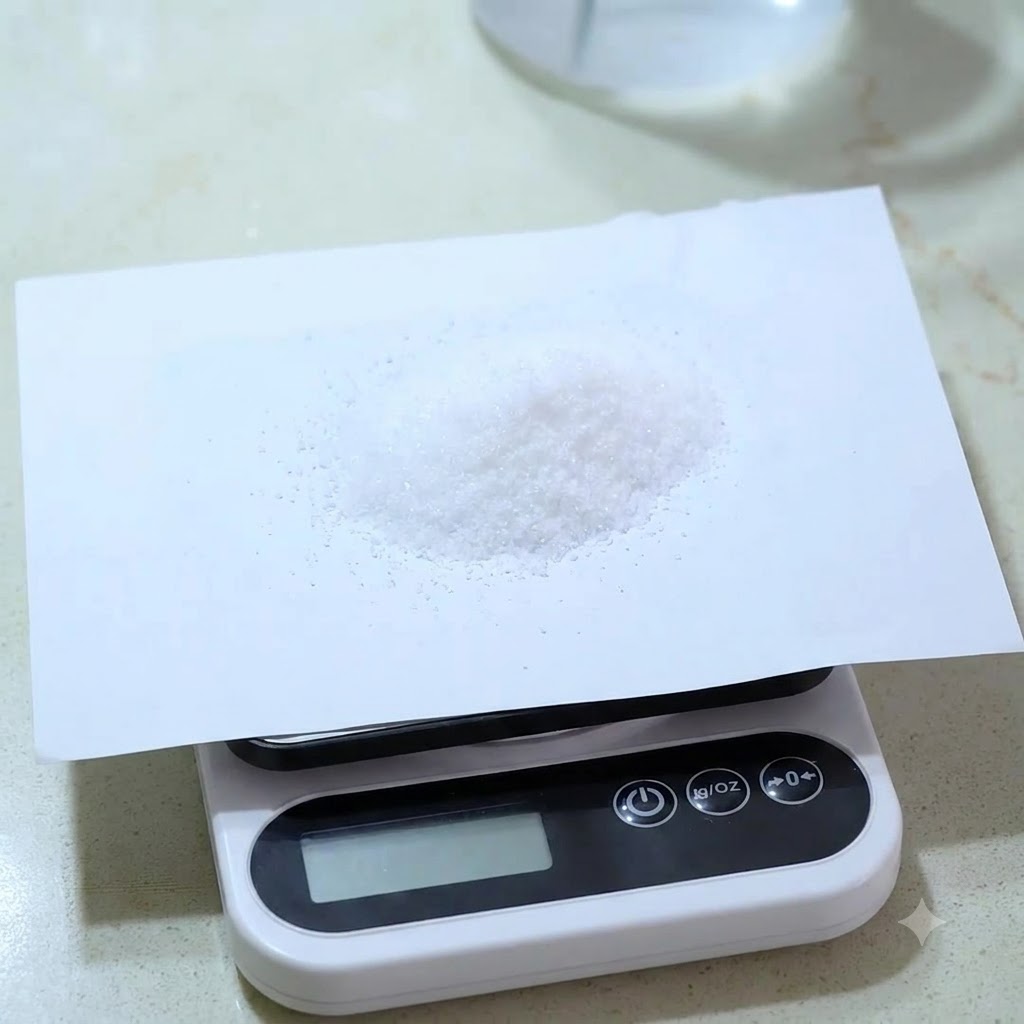
Accurately weigh the salt using the digital scale. Salt is a crucial ingredient; it not only seasons the crust but also tightens the gluten structure and naturally slows down yeast activity for a controlled fermentation.
Tip: Keep the salt separate from the yeast until you are ready to mix the dough, as direct contact can inhibit the yeast. - 6Dissolve yeast in water
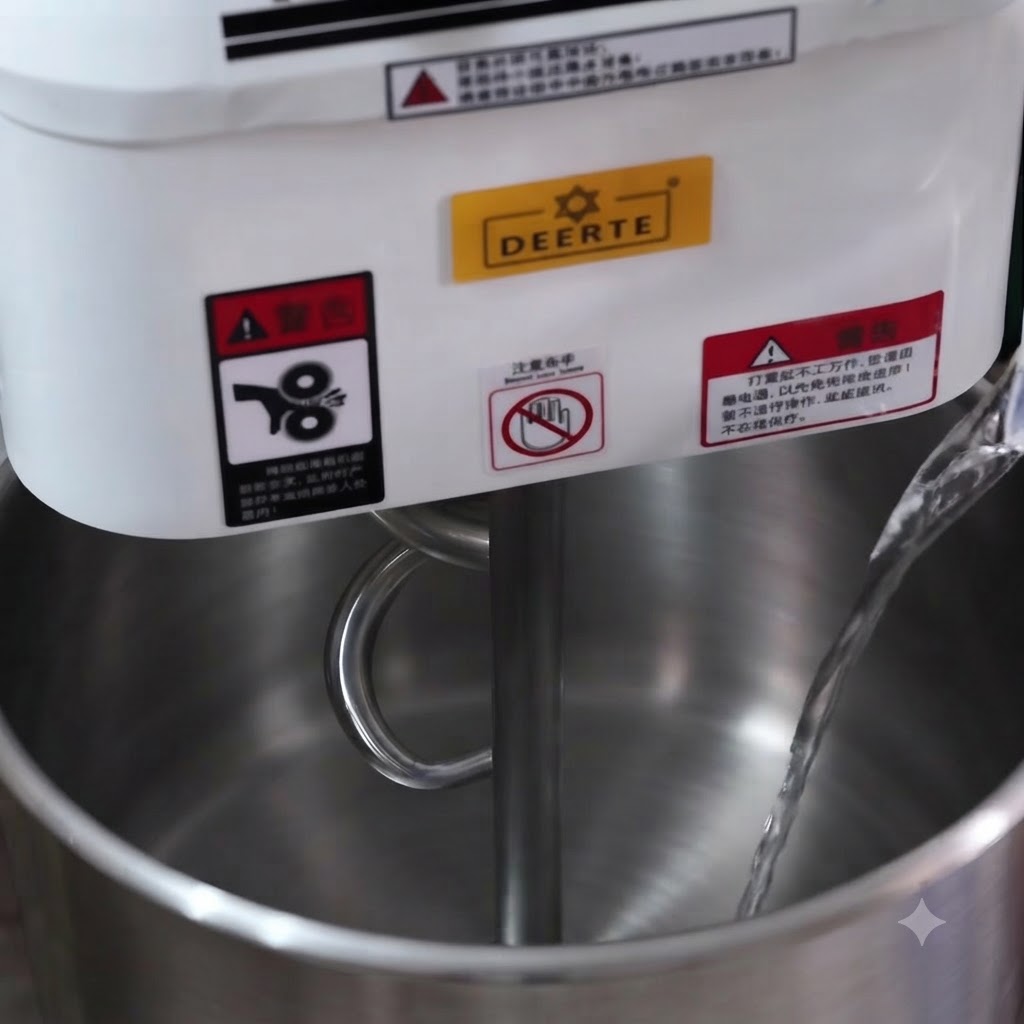
Pour the measured water and yeast into the mixer bowl to allow the yeast to properly dissolve before adding other dry ingredients. This ensures even distribution of the yeast throughout the dough for consistent fermentation.
Tip: Make sure the water is at room temperature to avoid killing the active yeast. - 7Add weighed flour
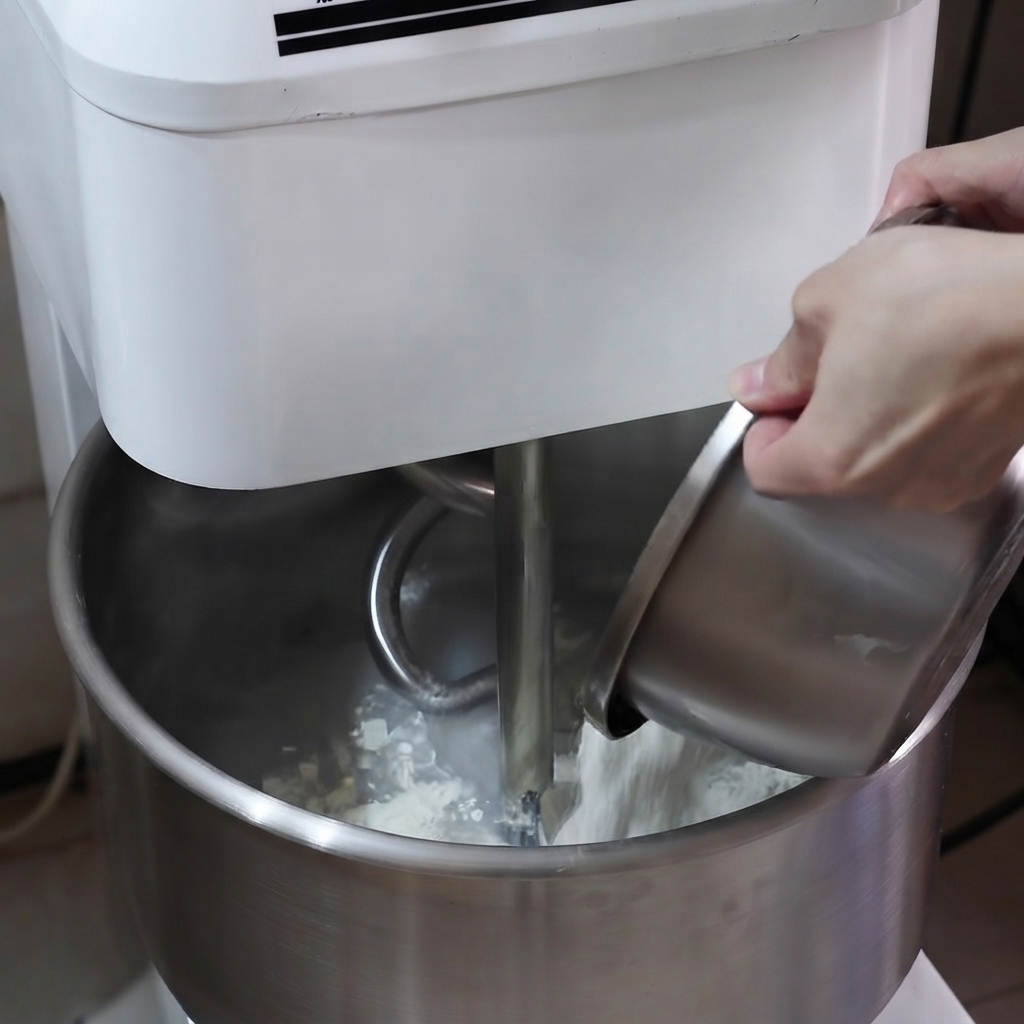
Carefully pour the accurately weighed Caputo flour into the mixer bowl containing the dissolved yeast and water mixture. Gradual addition helps prevent clumping and allows the flour to hydrate evenly.
Tip: Use high-quality Italian flour like Caputo for authentic Neapolitan pizza texture. - 8Operate dough mixer
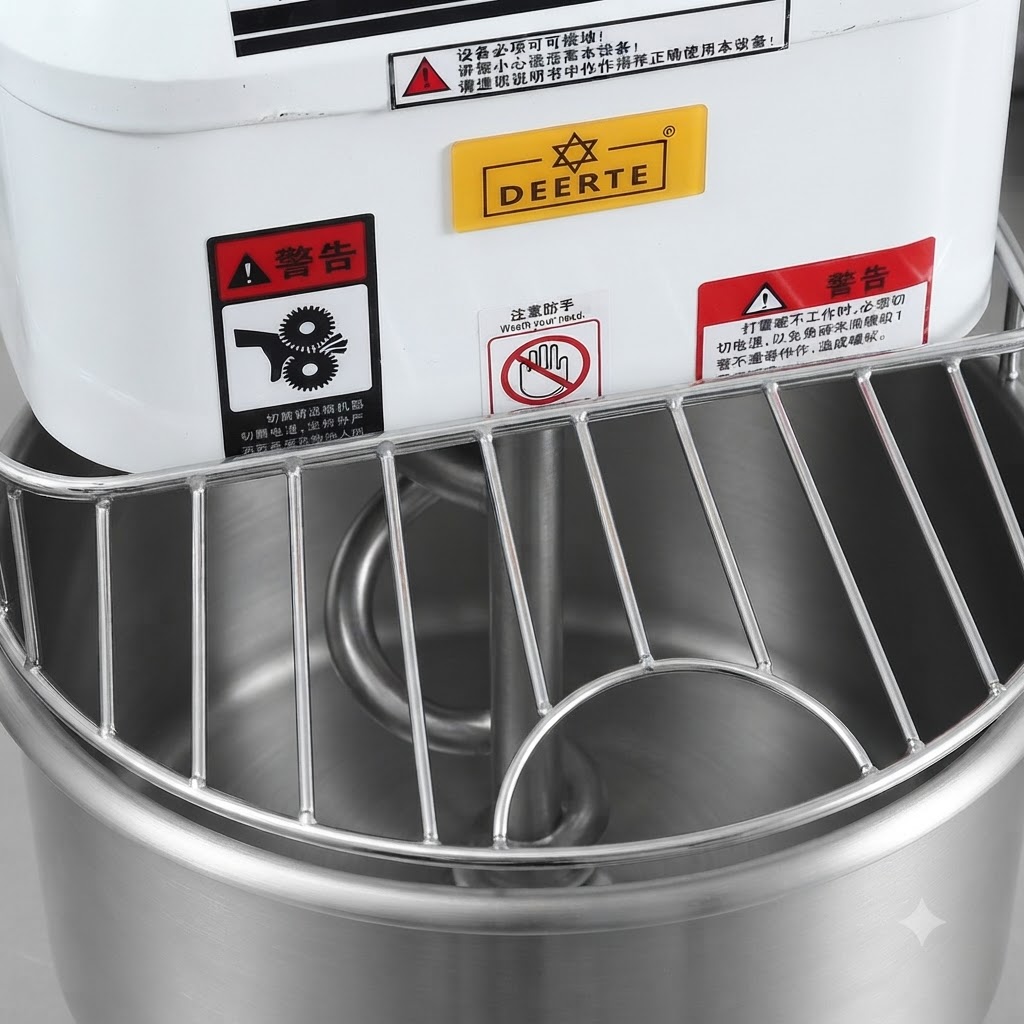
Turn on the dough mixer machine to combine all the ingredients together. Let the machine run to develop the gluten structure of the dough until it begins to pull away smoothly from the sides of the bowl.
Tip: Monitor the mixing time closely to prevent overworking the dough. - 9Add salt at the right time
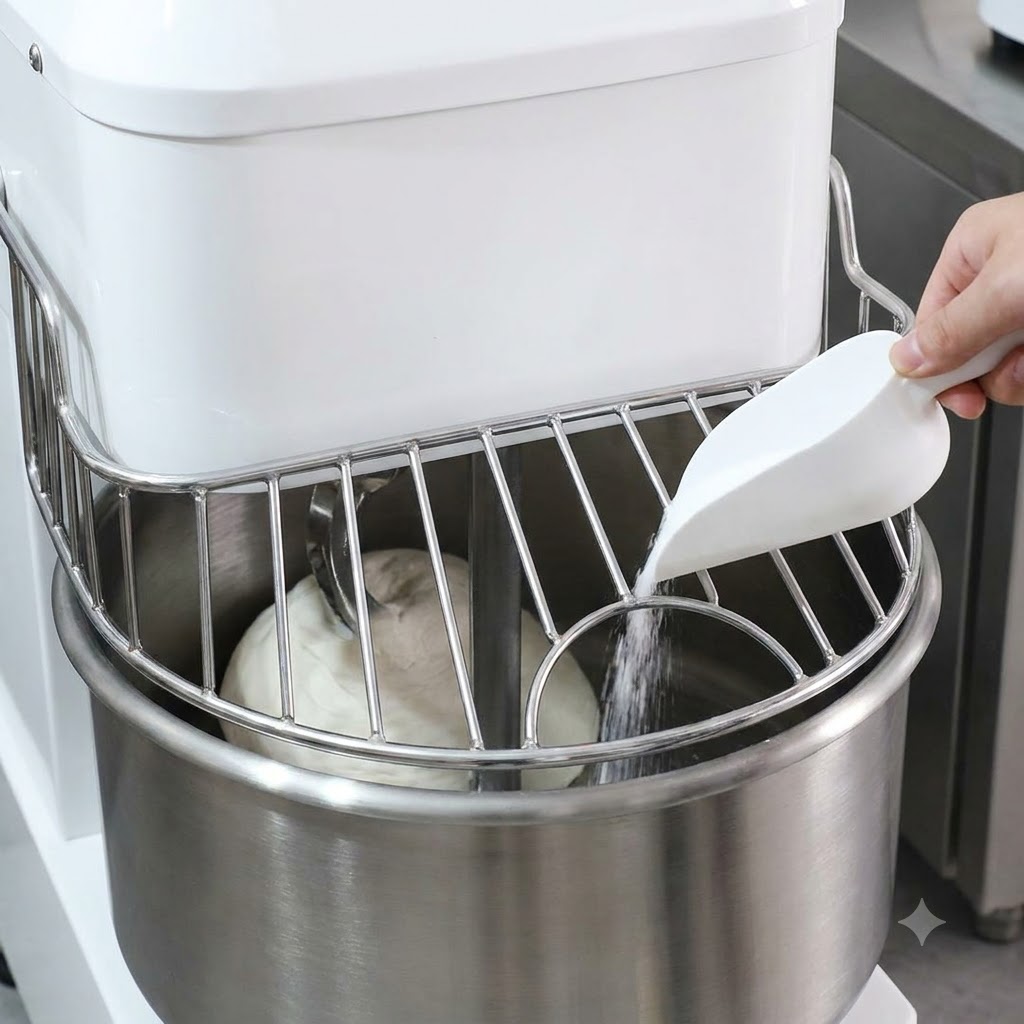
Add the measured salt into the mixing bowl through the safety guard at the designated stage of mixing. Adding salt at the correct time ensures it does not directly inhibit the initial yeast activation while still strengthening the gluten network.
Tip: Add salt incrementally or after the flour and water have partially formed a dough matrix. - 10Knead dough by hand
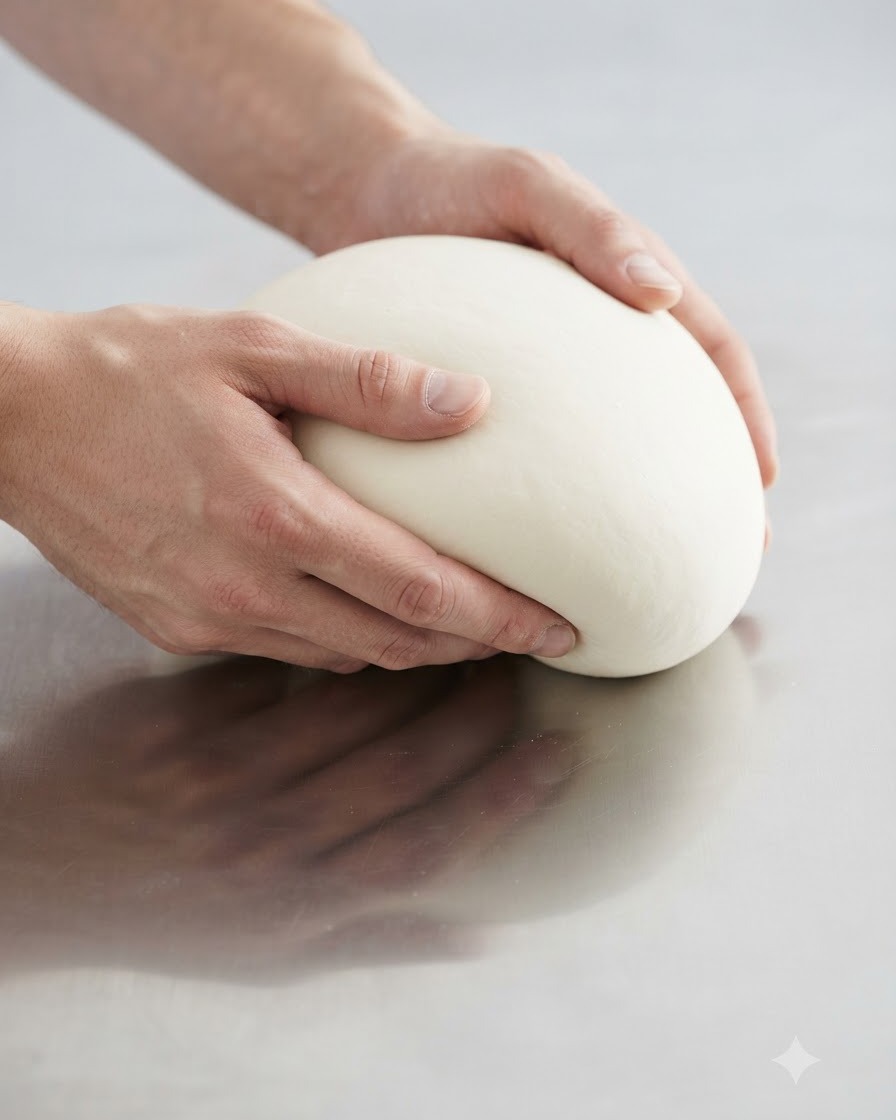
Take the dough out of the machine and continue kneading it by hand on a clean stainless steel work surface. Work the dough firmly to refine its texture, smooth out the exterior, and achieve a uniform elastic ball.
Tip: Keep your hands lightly dusted or oiled if necessary, but try to work with the natural tackiness of the dough. - 11Apply olive oil coating
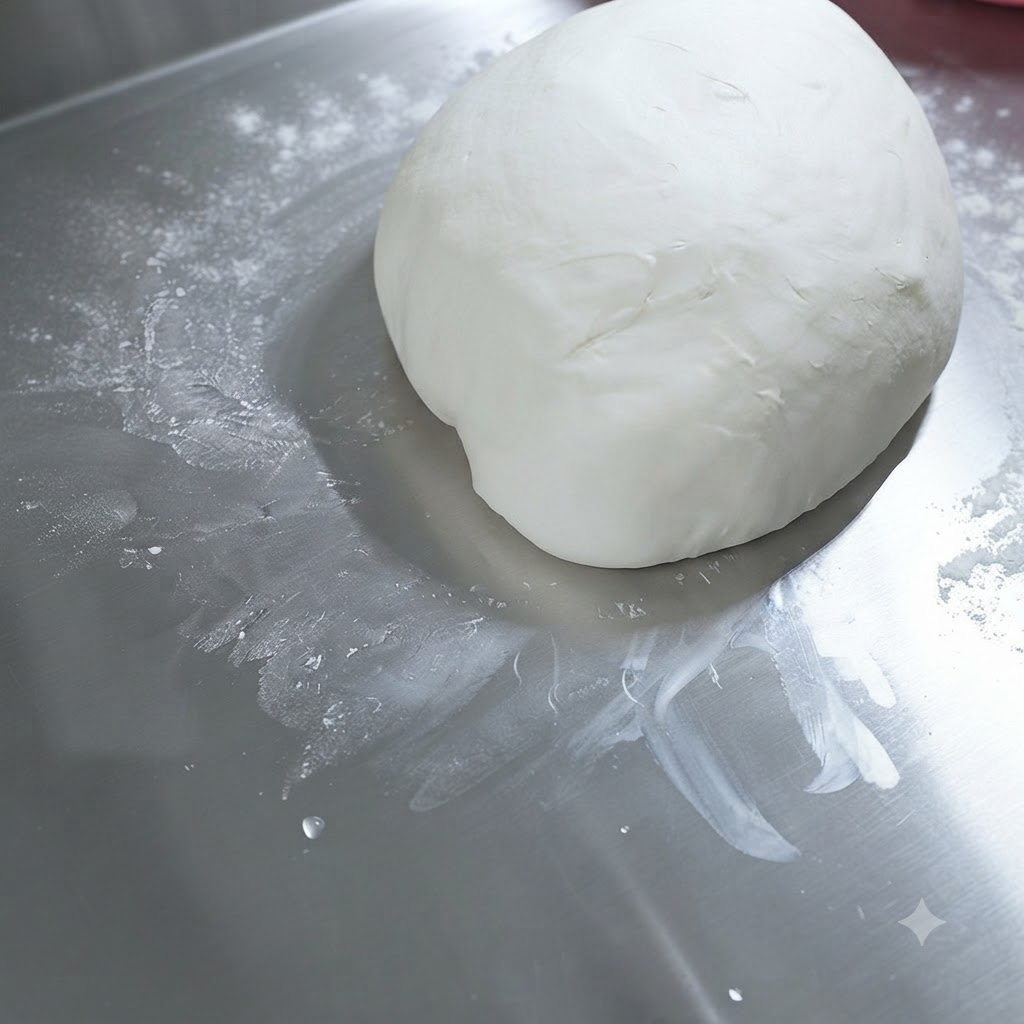
Gently apply a thin layer of olive oil over the surface of the shaped dough ball. This protective coating prevents the outer layer from drying out and cracking during the initial resting and fermentation phases.
Tip: A very small amount of oil is enough; spread it evenly across the entire surface. - 12Check dough temperature
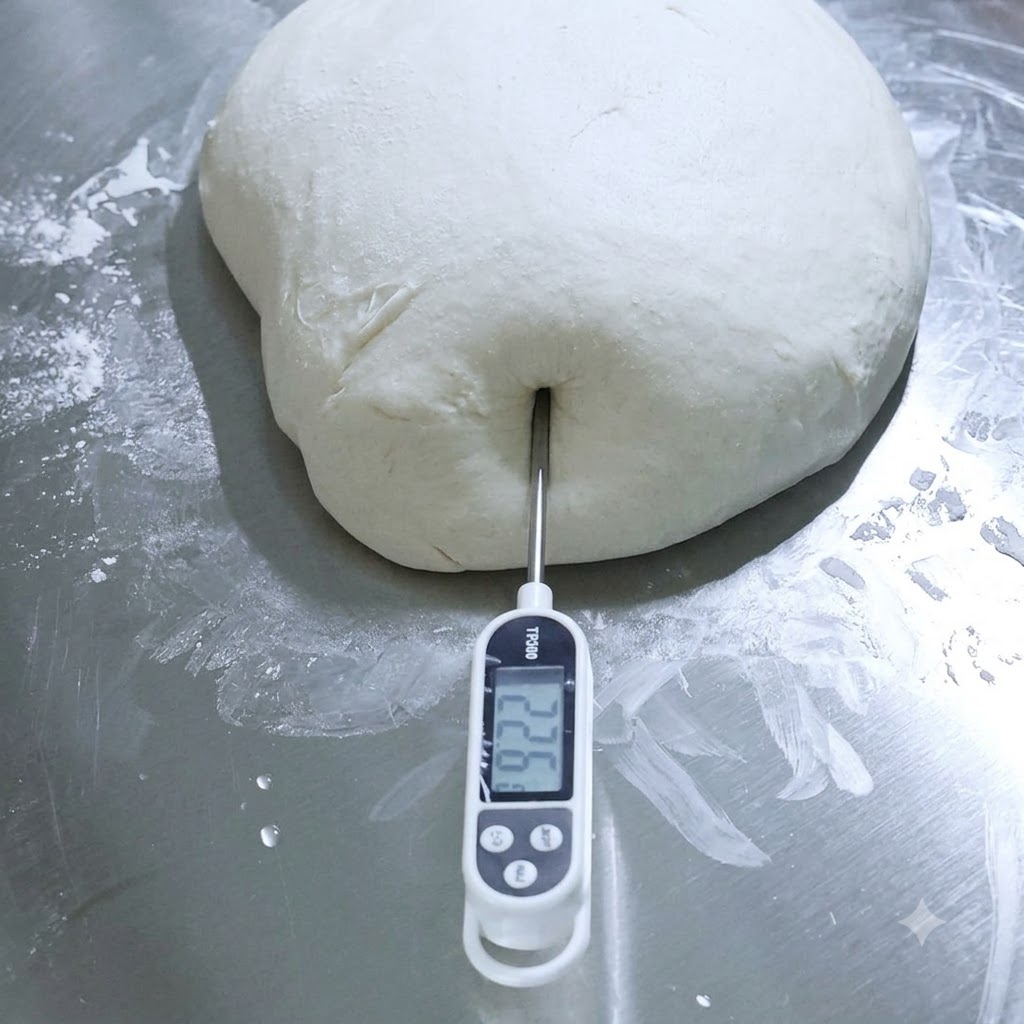
Insert a digital probe thermometer directly into the center of the dough ball to measure its internal temperature accurately.
Tip: Monitoring dough temperature helps control fermentation speed and yeast activity effectively. - 13Wrap and seal dough
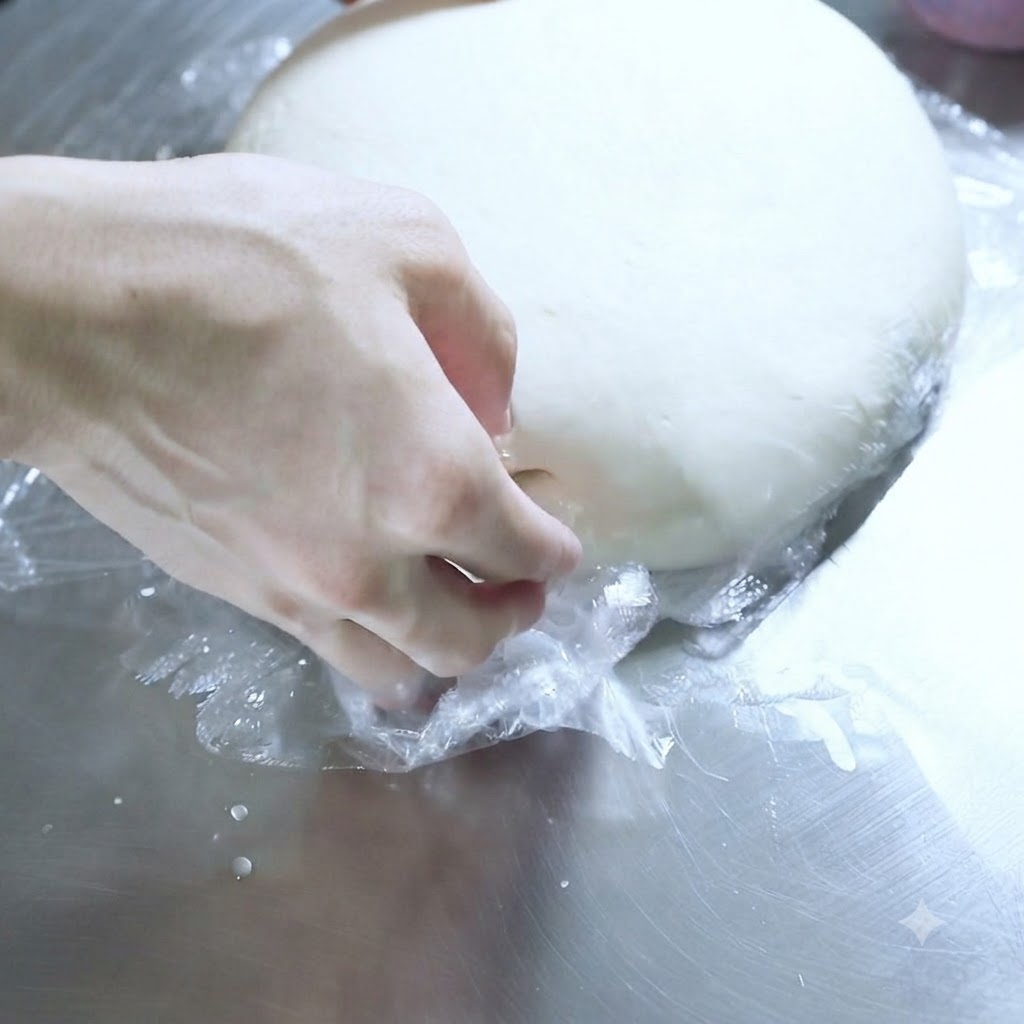
Cover and wrap the dough tightly with plastic wrap to completely seal out air, preventing the surface from drying out during resting.
Tip: Ensure the plastic wrap is pressed close to the dough to eliminate air pockets. - 14Measure resting dough temperature
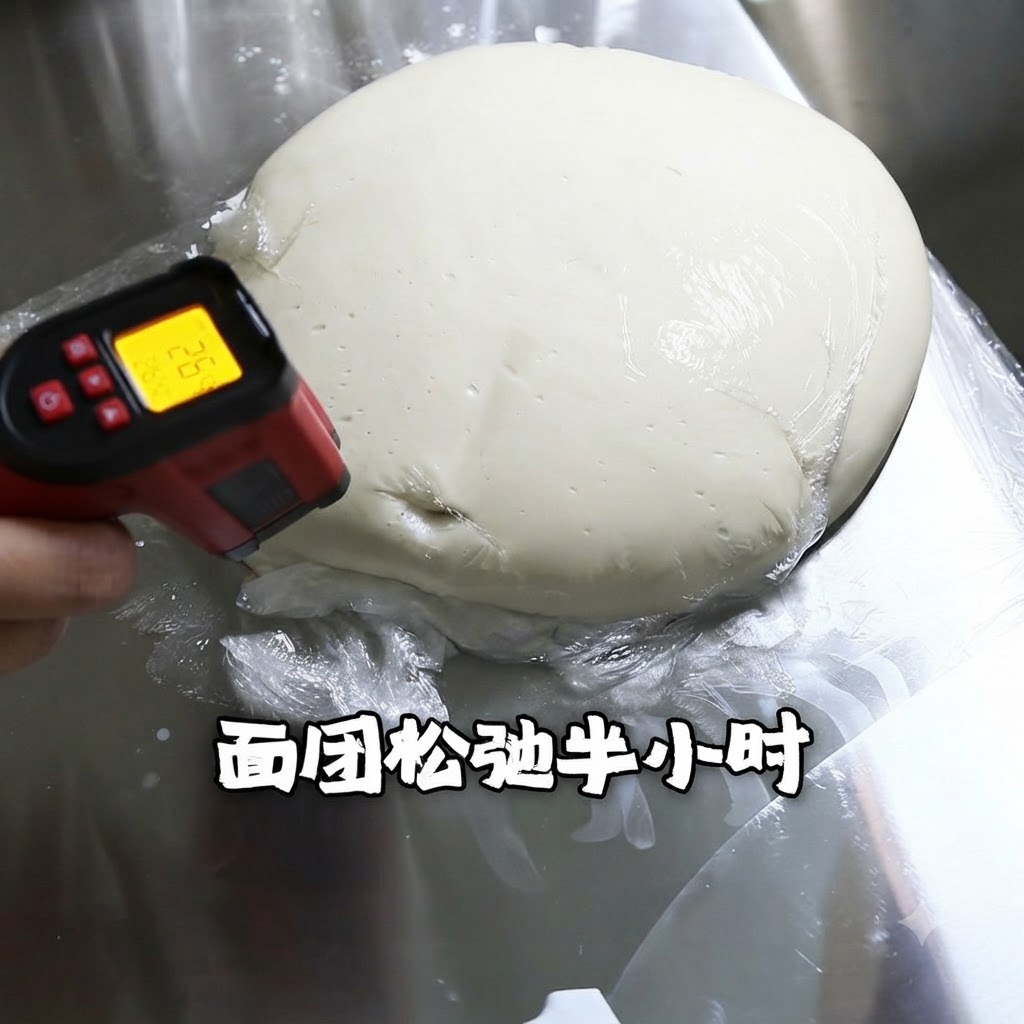
Use an infrared thermometer to check the surface temperature of the dough after it has rested for half an hour.
Tip: Infrared thermometers give a quick non-contact surface reading without puncturing the dough. - 15Divide dough portions
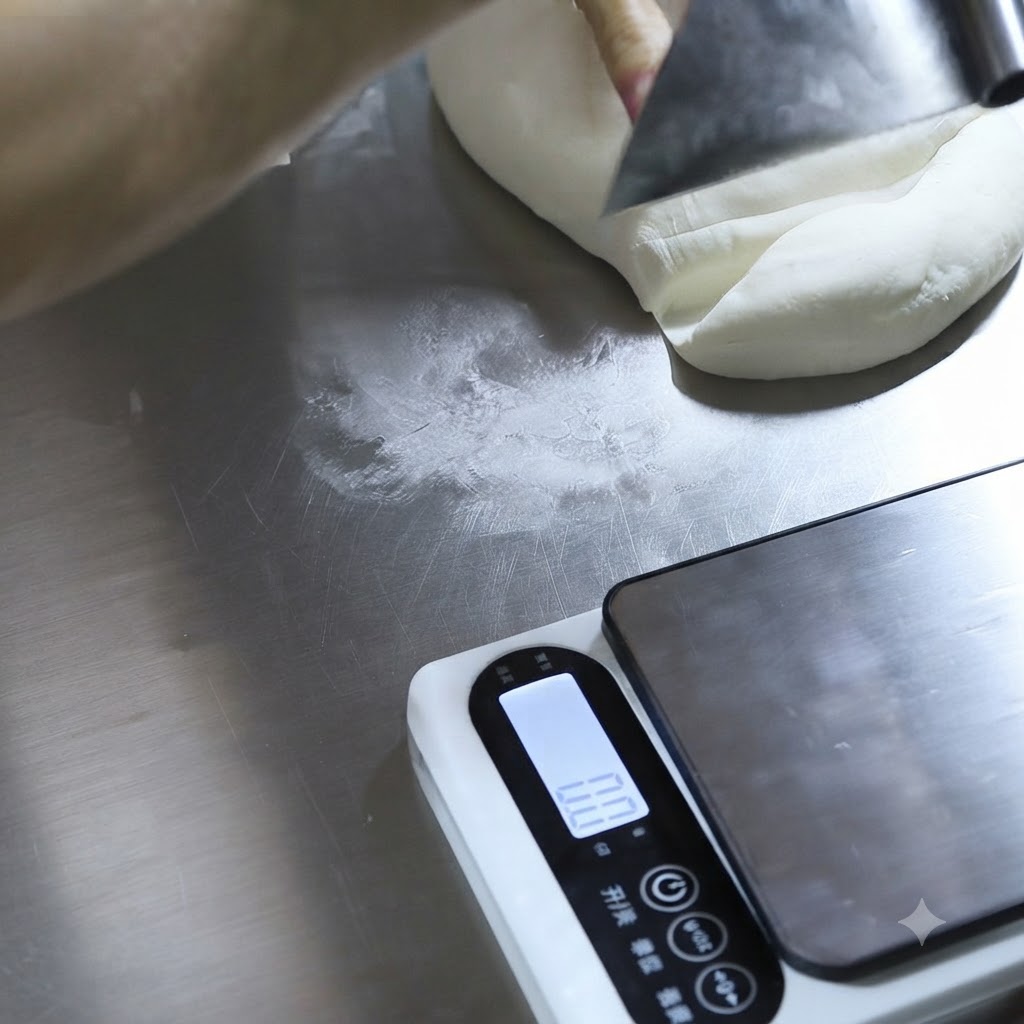
Use a bench scraper to cut and divide the resting dough into precise individual portions using a digital kitchen scale.
Tip: Weigh each portion carefully to ensure uniform pizza crust sizes after baking.