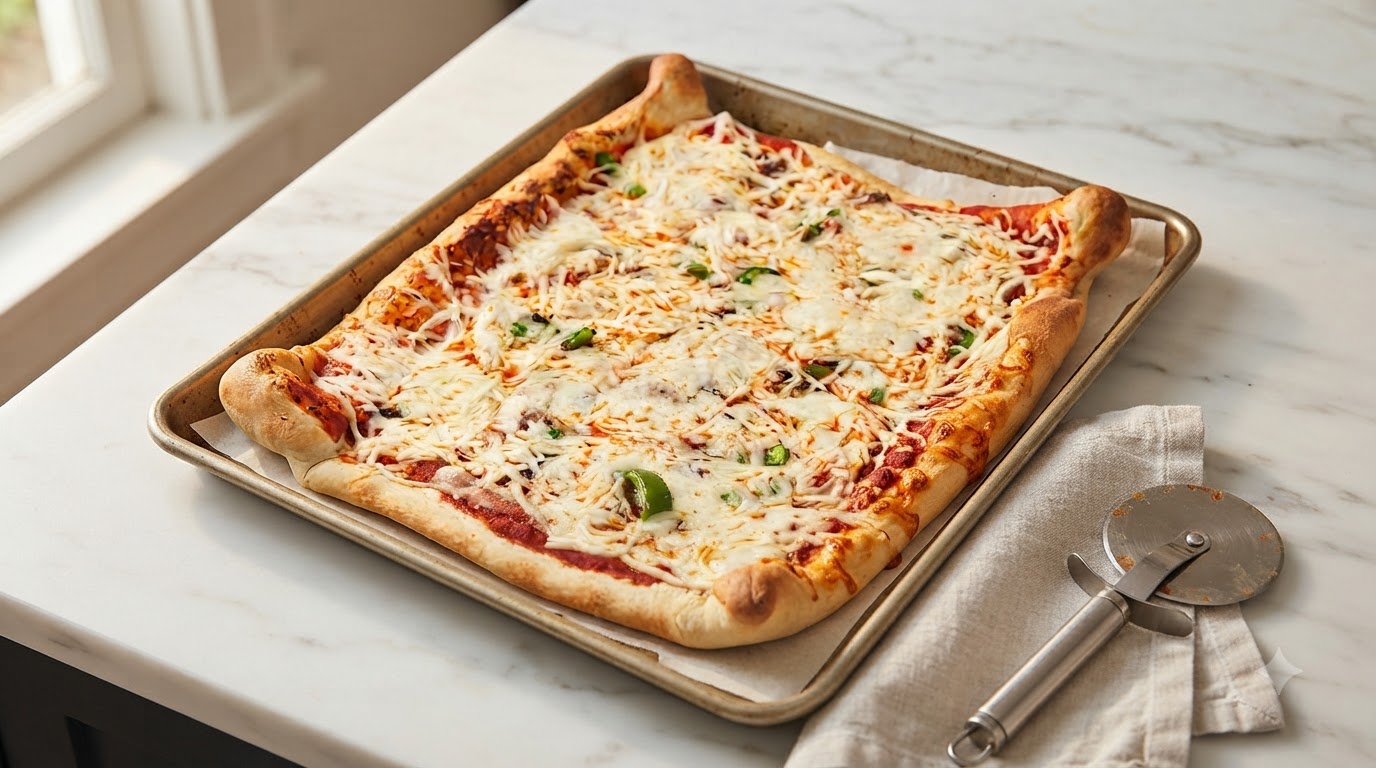
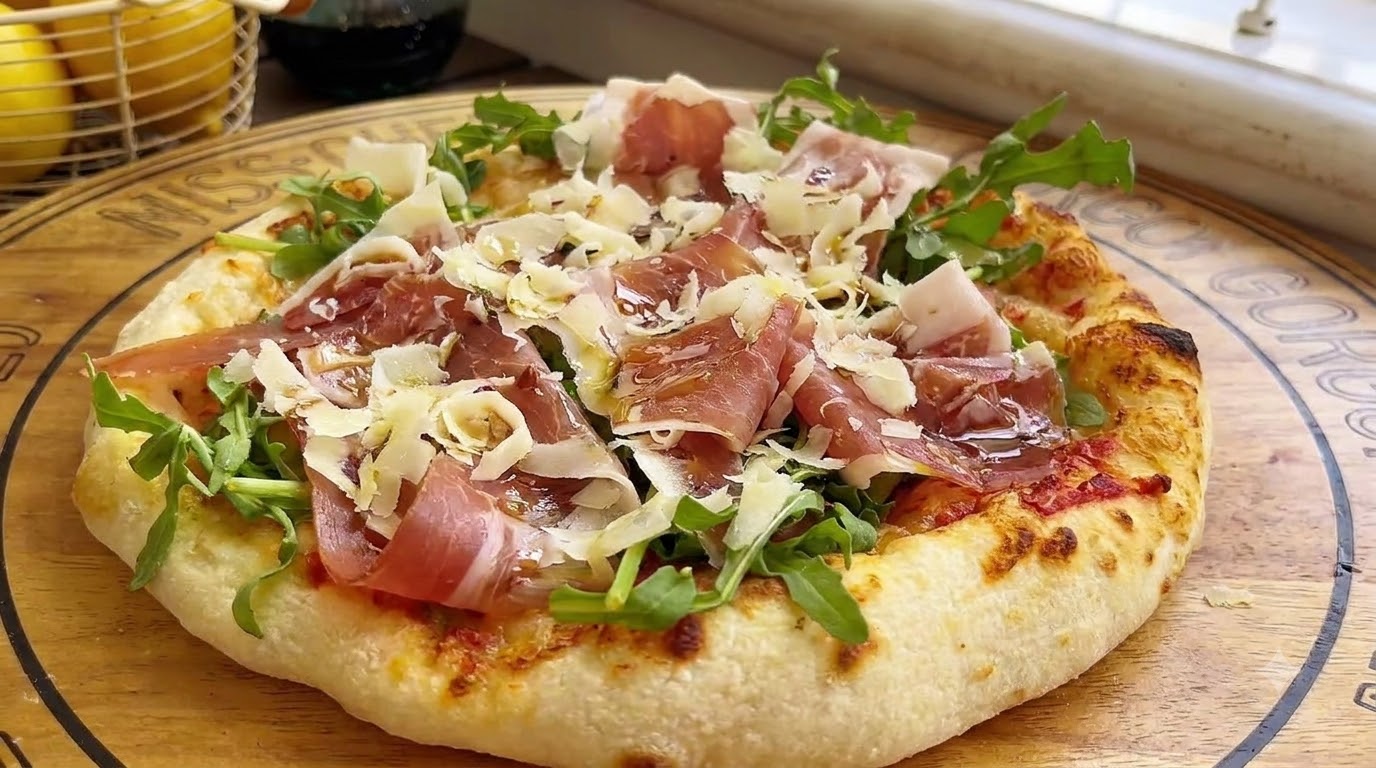
No-Knead Neapolitan Thin Crust Pizza
A foolproof, high-hydration Neapolitan thin crust pizza with zero kneading required. Cold-fermented for deep flavor and topped with bubbling mozzarella, ham, and fresh vegetables.
Making authentic thin crust pizza at home often feels intimidating, but this no-knead, high-hydration method makes it remarkably accessible. By utilizing a combination of cold fermentation and room-temperature resting, the dough develops fantastic gluten structure and rich flavor without traditional physical exertion. It is an ideal approach for home cooks looking to achieve a professional, pizzeria-style crust with minimal fuss.

Ingredients
- 300 g wheat flour
- 50 g whole wheat flour
- 4 g salt
- 15 ml olive oil
- 220 ml ice water
- 100 g mozzarella cheese
- 80 g ham
- 30 g fresh spinach
- 40 g red onion
- 50 g cherry tomatoes
- 40 g sweet corn
- to taste dry flour for dusting
Instructions
- 1Weigh and combine ingredients
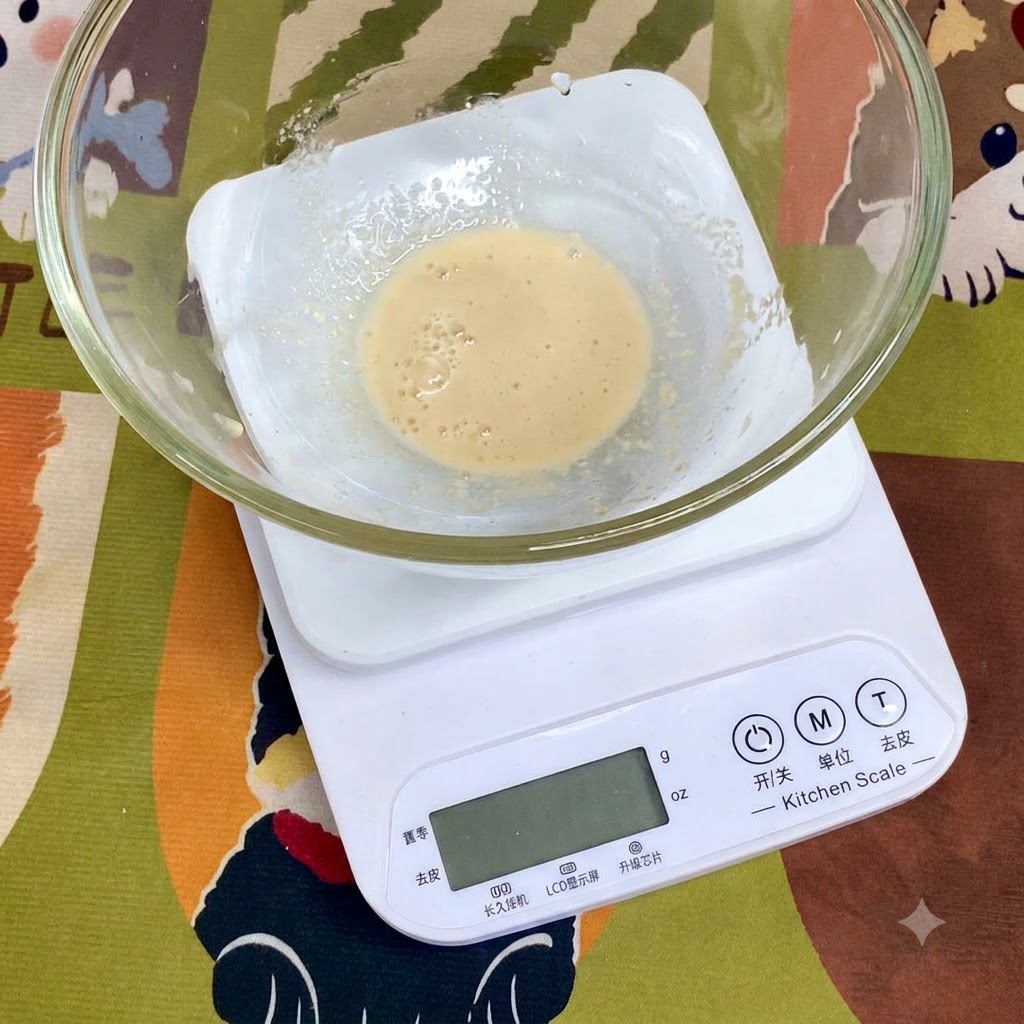
Place a glass bowl on a kitchen scale and carefully weigh and pour in the dry and liquid ingredients, including wheat flour, salt, and olive oil.
Tip: Ensure the scale is tared with the bowl on top before adding any ingredients for accurate measurements. - 2Add ice water and mix
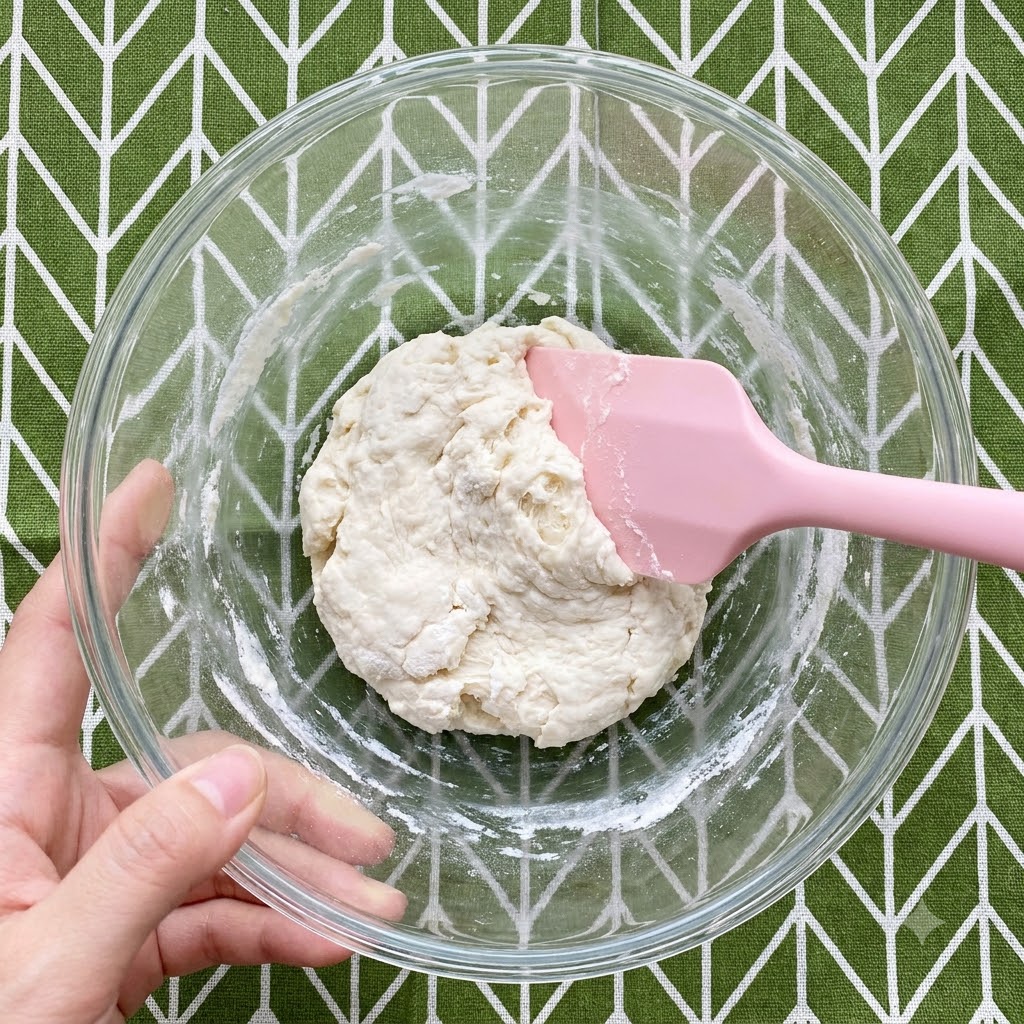
Pour measured ice water into the bowl containing the ingredients and use a pink silicone spatula to stir and combine everything into a sticky dough.
Tip: Using ice water helps control the dough temperature and prevents premature gluten activation during mixing. - 3Stretch and fold the dough
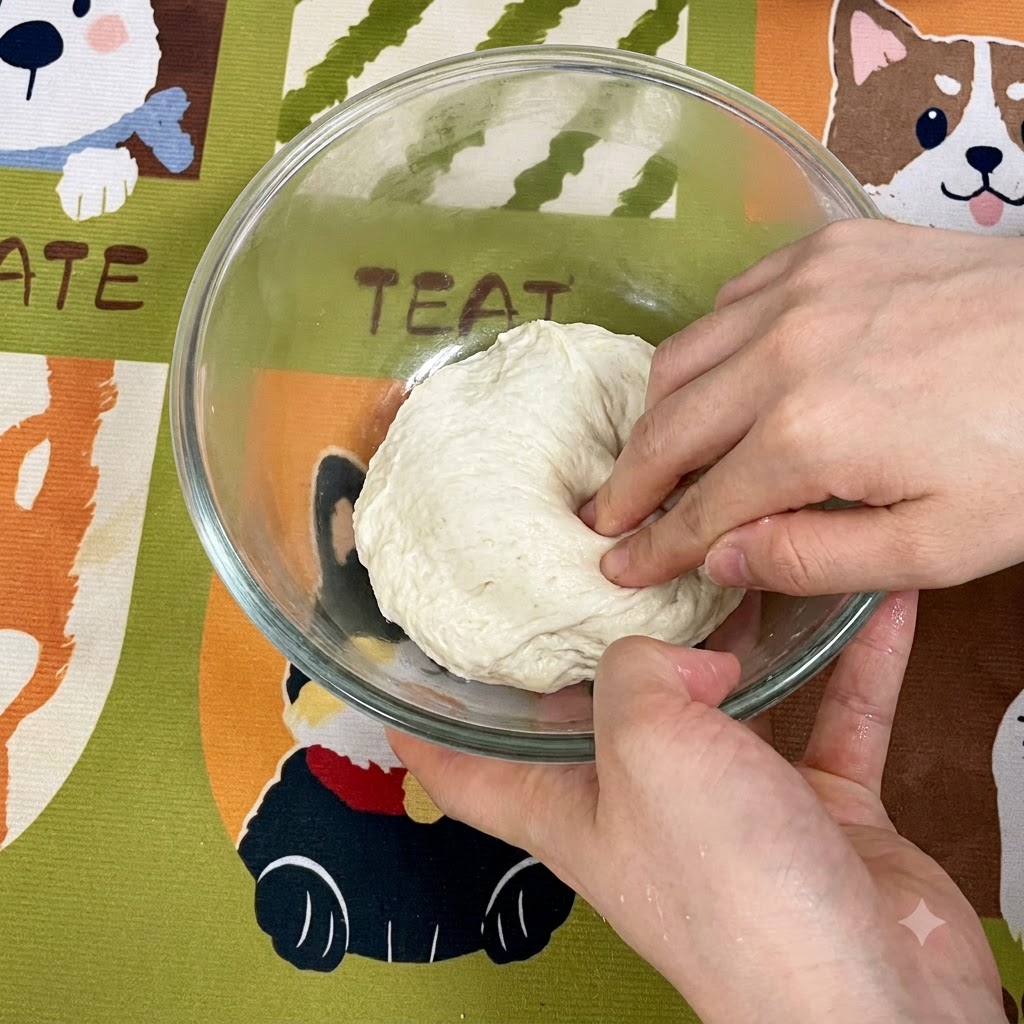
Reach into the glass bowl and perform initial stretches and folds, pulling the outer edges of the dough toward the center to build structure.
Tip: Wetting your hands slightly with water can prevent the high-hydration dough from sticking to your fingers. - 4Check dough elasticity
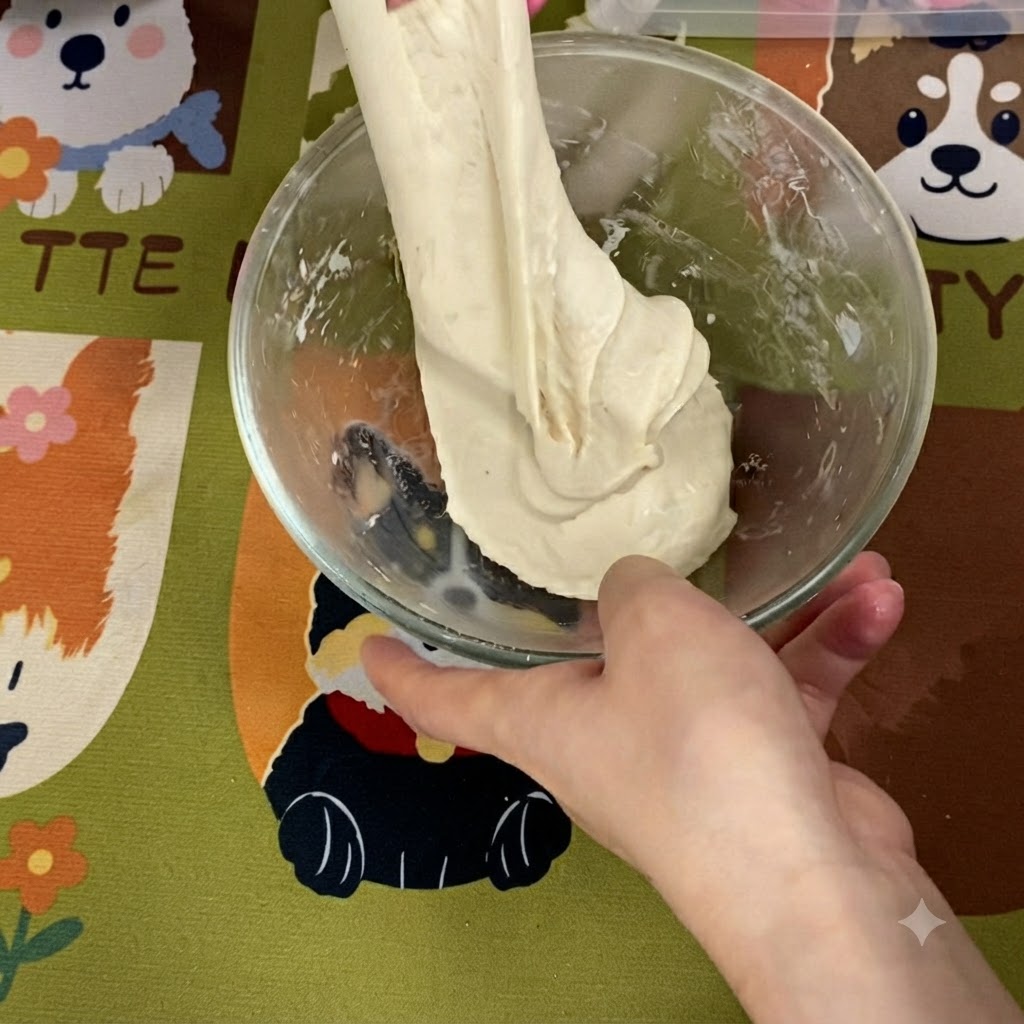
Lift a portion of the fermented dough to showcase its high hydration level, smooth texture, and strong elasticity developed during resting.
Tip: A stretchy, smooth dough indicates proper gluten development without the need for traditional kneading. - 5Transfer to crisper box
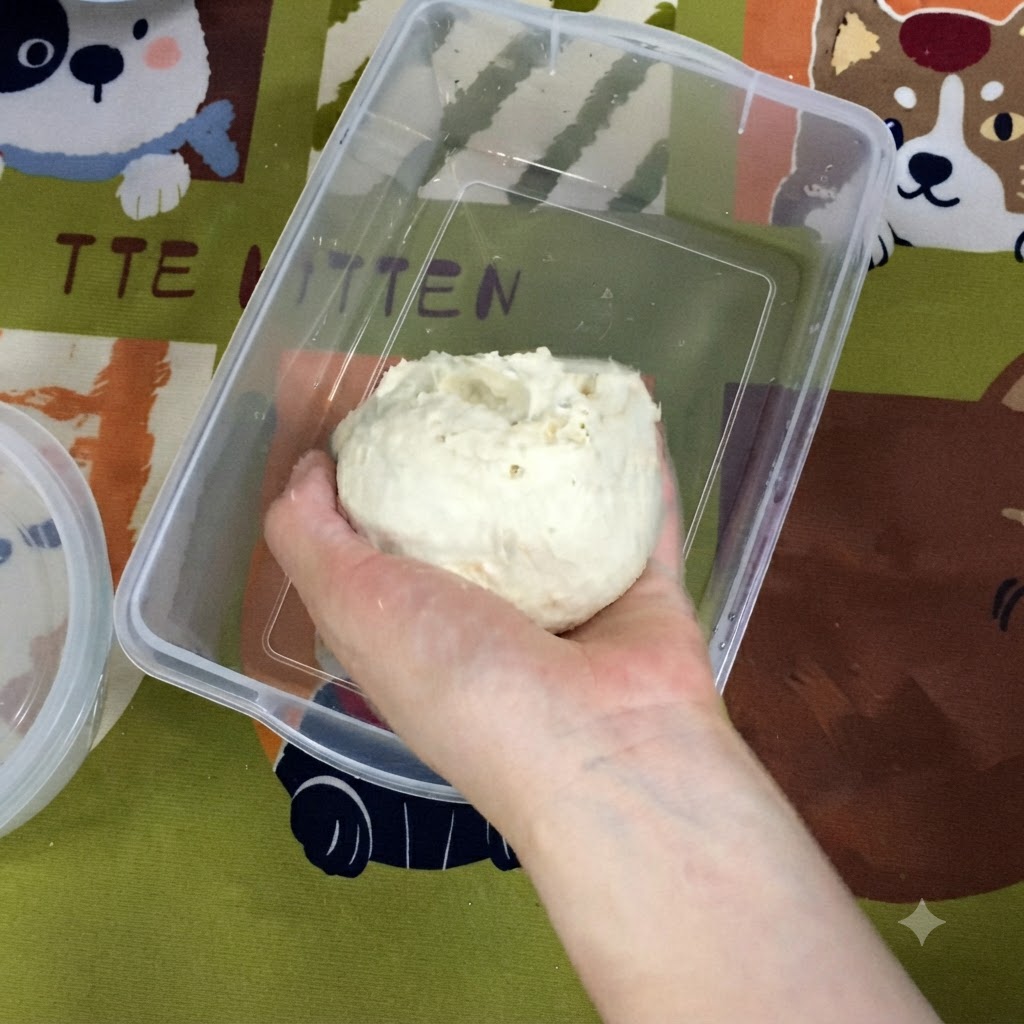
Take the rounded dough ball and place it gently inside a clean plastic crisper box to begin room-temperature fermentation.
Tip: Make sure the crisper box is clean and lightly oiled if necessary to prevent the dough from sticking during fermentation. - 6Dust and dump dough
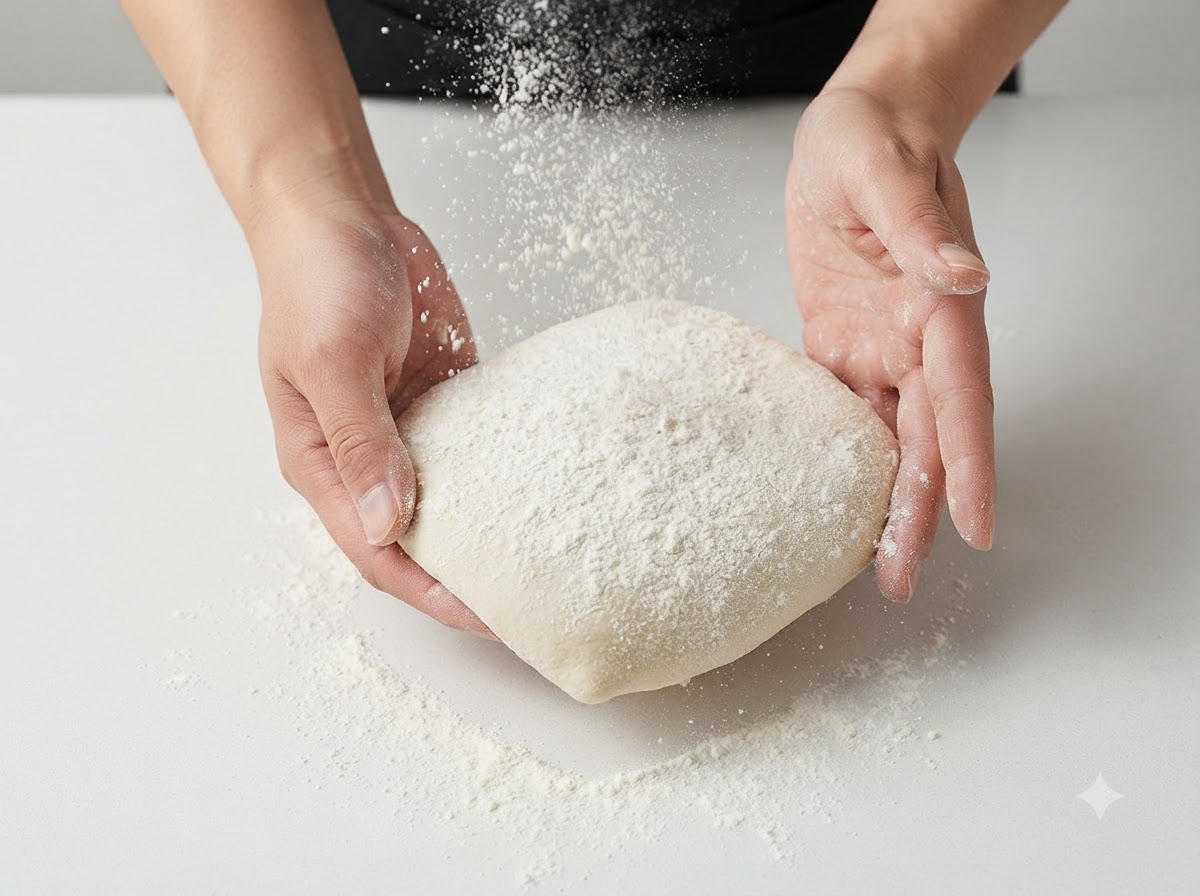
Sprinkle a generous layer of dry flour onto a clean countertop surface and gently turn out the fermented dough from its container.
Tip: Dusting the surface thoroughly ensures the sticky dough will not adhere to the counter when you begin shaping.