Authentic Old Beijing Fried Sauce Noodles (Zhajiangmian)
Experience the classic Beijing comfort dish featuring thick hand-pulled noodles coated in rich, caramelized minced pork bean sauce, accompanied by vibrant seasonal fresh vegetable garnishes.
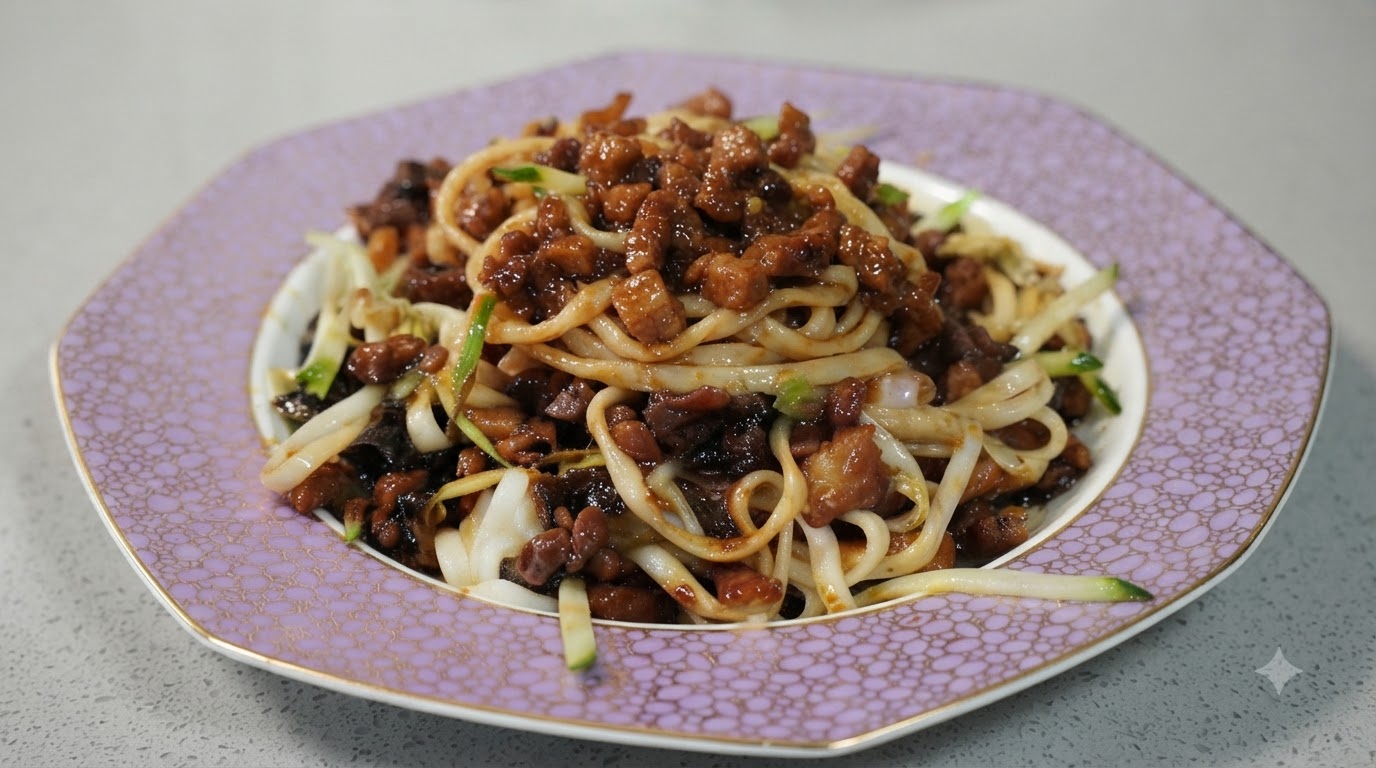
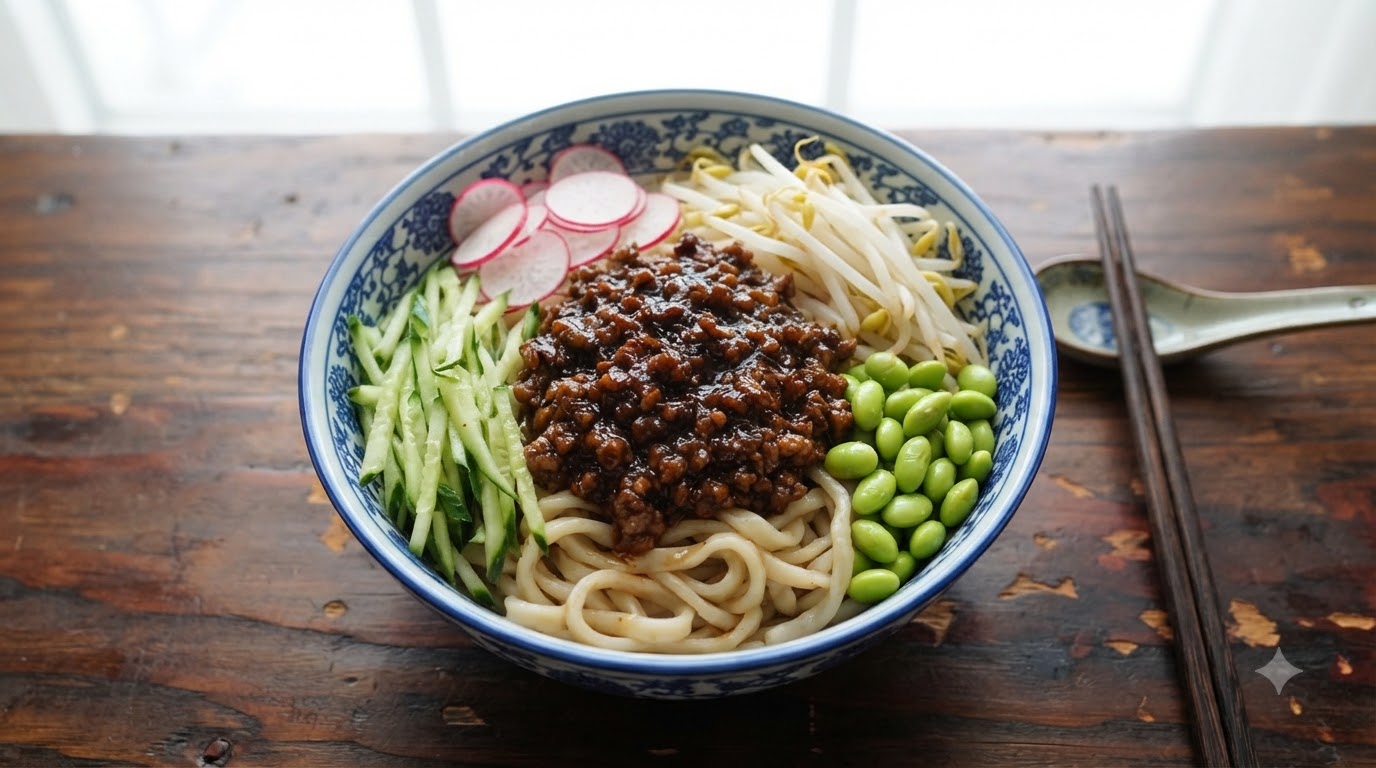
Old Beijing fried sauce noodles, or Zhajiangmian, is a legendary staple of northern Chinese home cooking. It marries a deeply savory, slow-simmered fermented soybean and pork paste with the crisp, refreshing crunch of traditional seasonal vegetable toppings known locally as the eight treasures. Eaten traditionally by mixing everything together in a single bowl, it represents the heart of rustic Beijing culinary culture.
Ingredients
- 400 g thick wheat noodles
- 200 g pork belly
- 100 g dry yellow bean paste
- 3 tbsp flower wine
- 2 cloves garlic
- 1 stalk scallion
- 1 slice ginger
- 1 pc star anise
- 2 tbsp cooking oil
- to taste cucumber shreds
- to taste bean sprouts
- to taste sliced radish
- to taste green soybeans
Instructions
- 1Mix the yellow bean paste
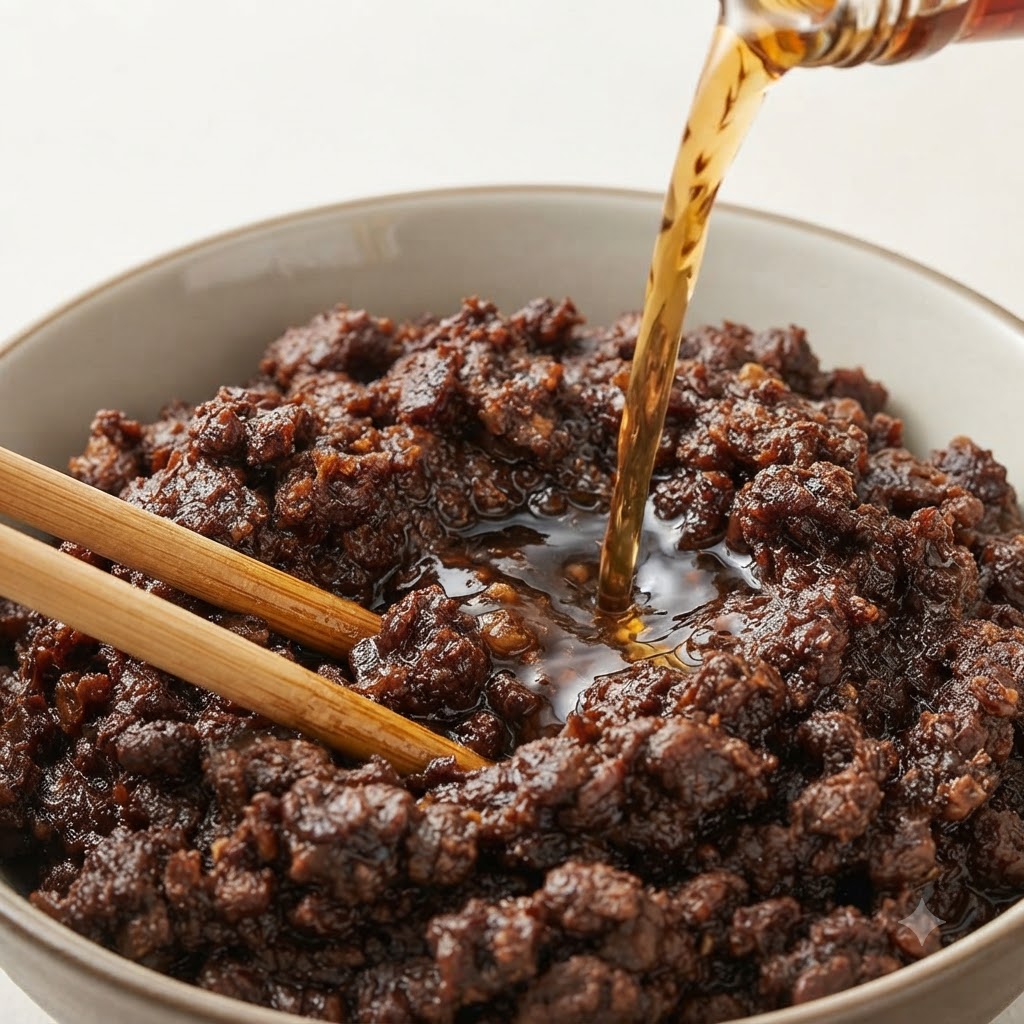
Place dry yellow bean paste into a bowl and mix thoroughly with flower wine using chopsticks to loosen the paste. This helps break up clumps and enhances the aroma before cooking.
Tip: Make sure to mix the paste evenly with the wine so it dissolves smoothly when heated. - 2Chop the aromatics
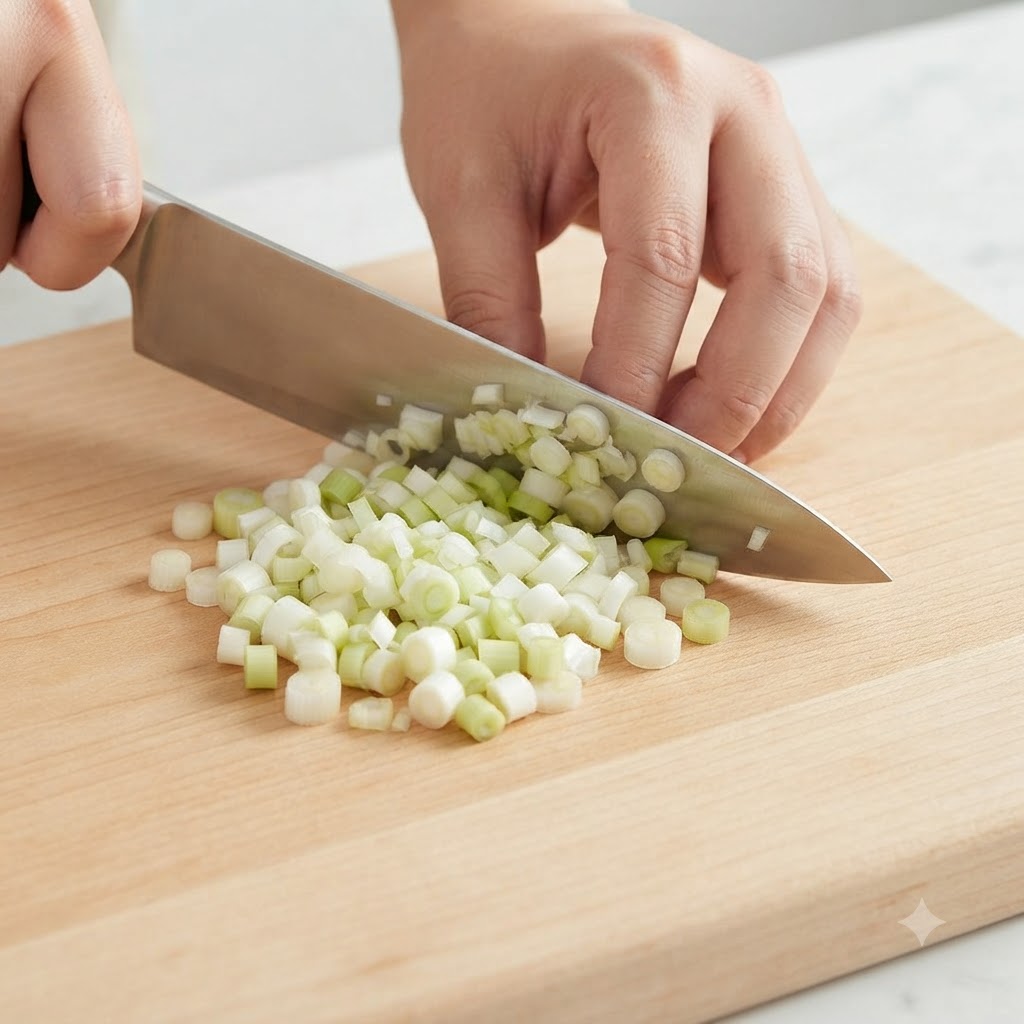
Finely chop scallions, garlic, and ginger on a wooden cutting board using a sharp kitchen knife. These aromatics form the essential flavor base for the fried sauce.
Tip: Chop them into uniform small pieces so they release their flavors evenly during frying. - 3Cook the pork belly cubes
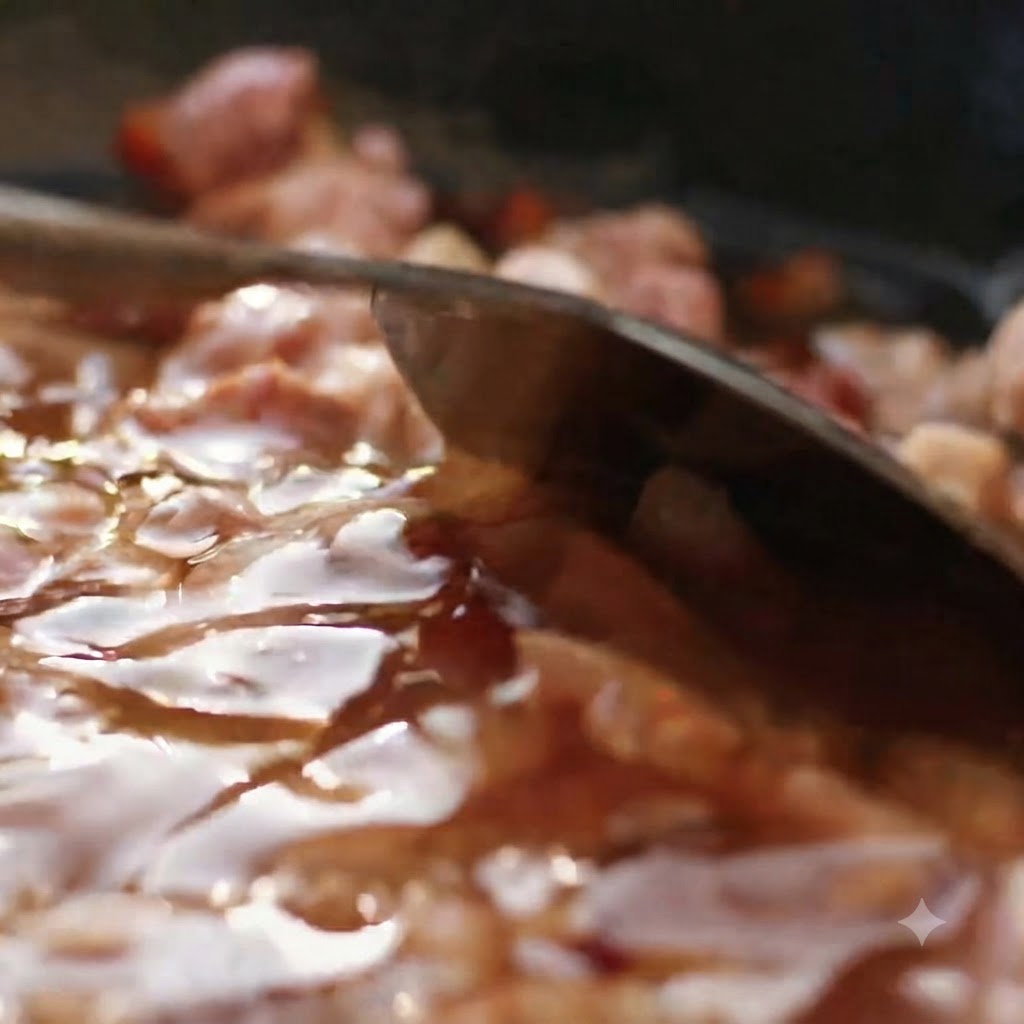
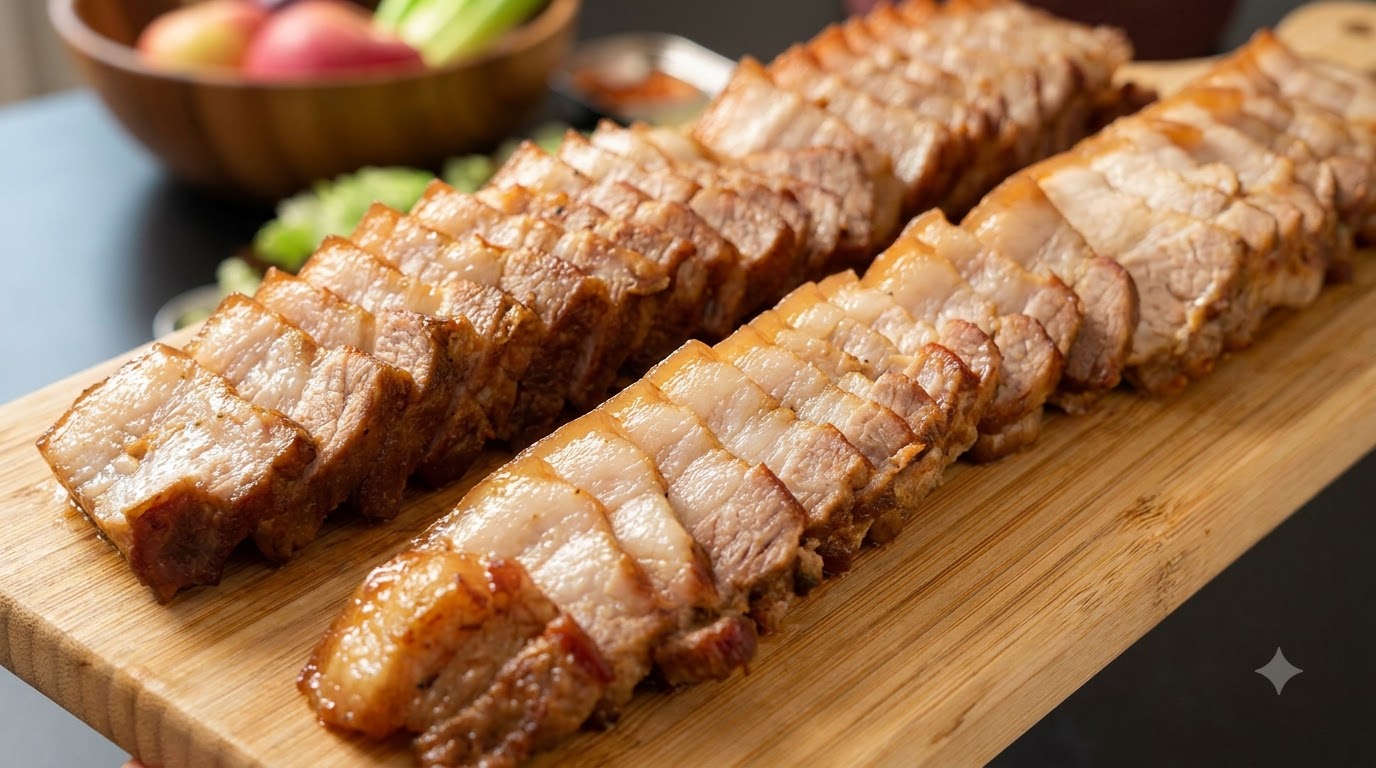
Add small cubes of pork belly—containing a balanced mix of fat and lean meat—into a pan with oil and star anise. Sauté over heat until the pork begins to render its fat.
Tip: Using a mix of fat and lean meat gives the sauce its signature rich texture and flavor. - 4Simmer the fried sauce
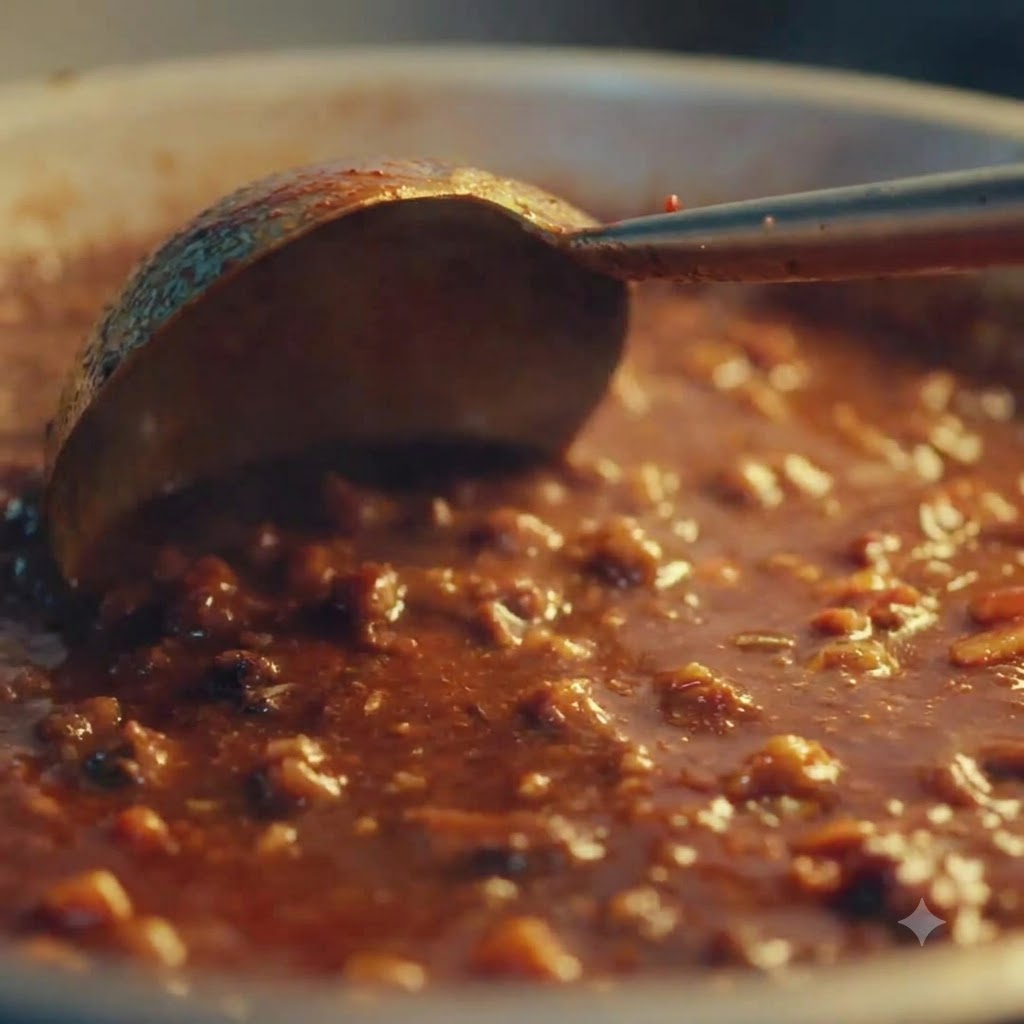
Turn the heat to low and stir the sauce continuously in one direction with a spatula until the sauce and oil naturally separate. This slow simmering process concentrates the rich savory flavor.
Tip: Stir constantly in a single direction to prevent the thick paste from sticking to the bottom of the pan. - 5Boil the noodles
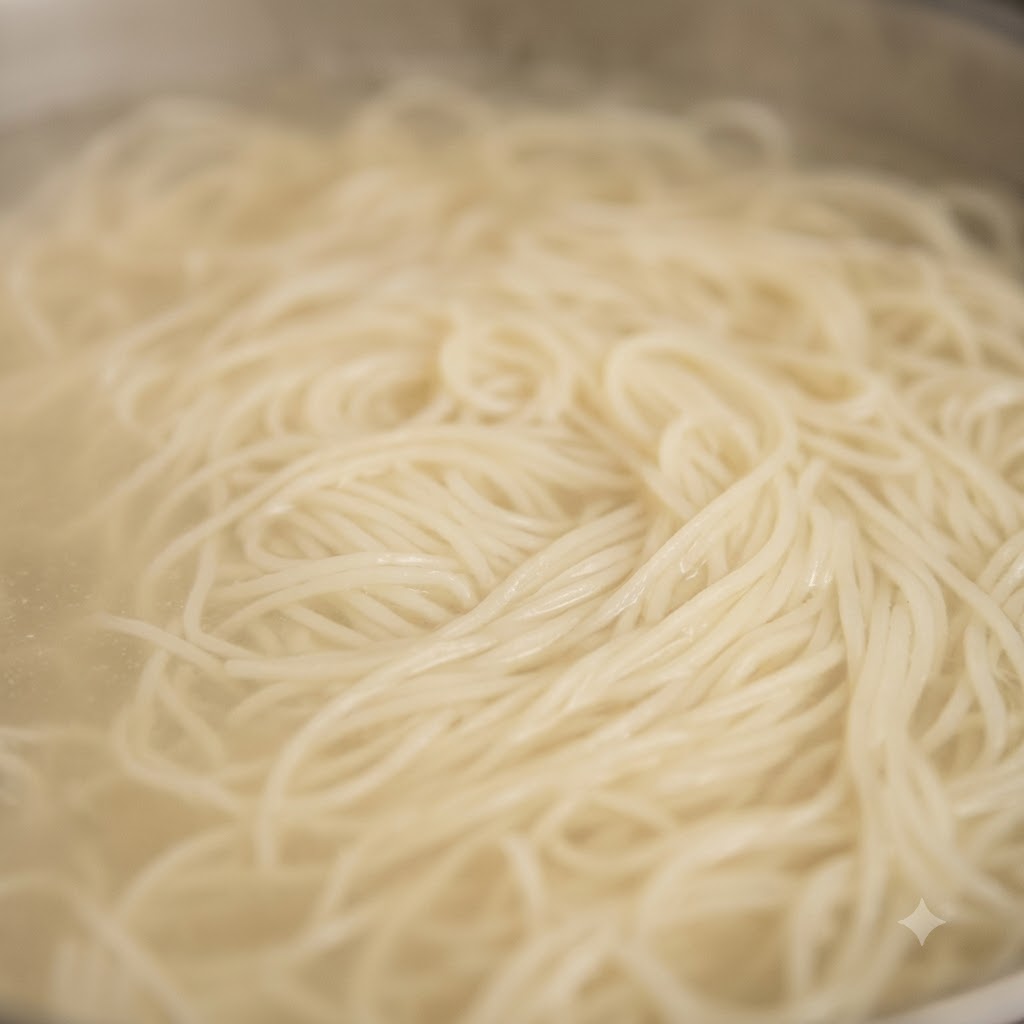
Drop the noodles into a large pot of boiling water and cook until tender. Ensure there is plenty of water so the noodles cook evenly without sticking together.
Tip: Stir gently after adding the noodles to prevent them from clumping at the bottom. - 6Rinse the cooked noodles
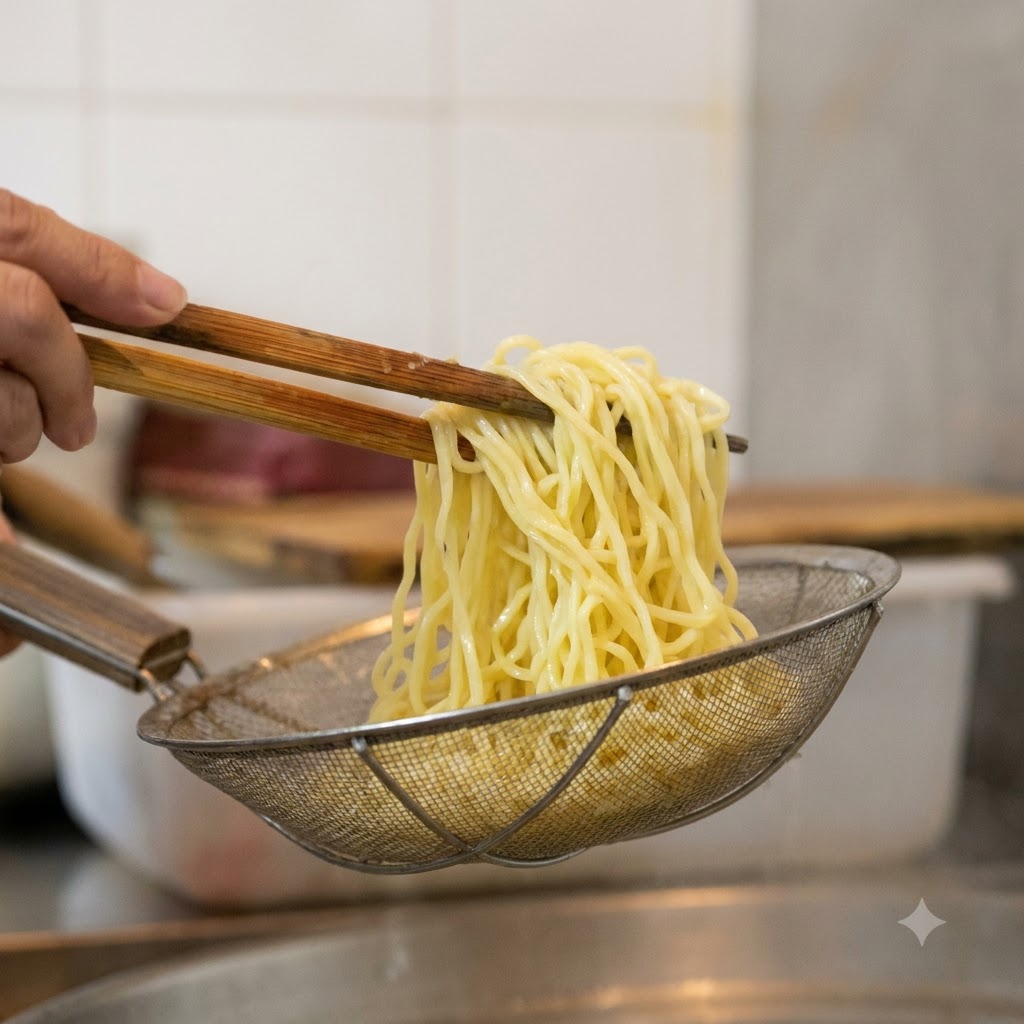
Take the cooked noodles out of the pot and rinse them thoroughly with cold water using a metal sieve to make them firmer and chewier. Drain well before serving.
Tip: Rinsing with cold water removes excess starch and stops the cooking process instantly for a better bite. - 7Arrange the vegetable garnishes
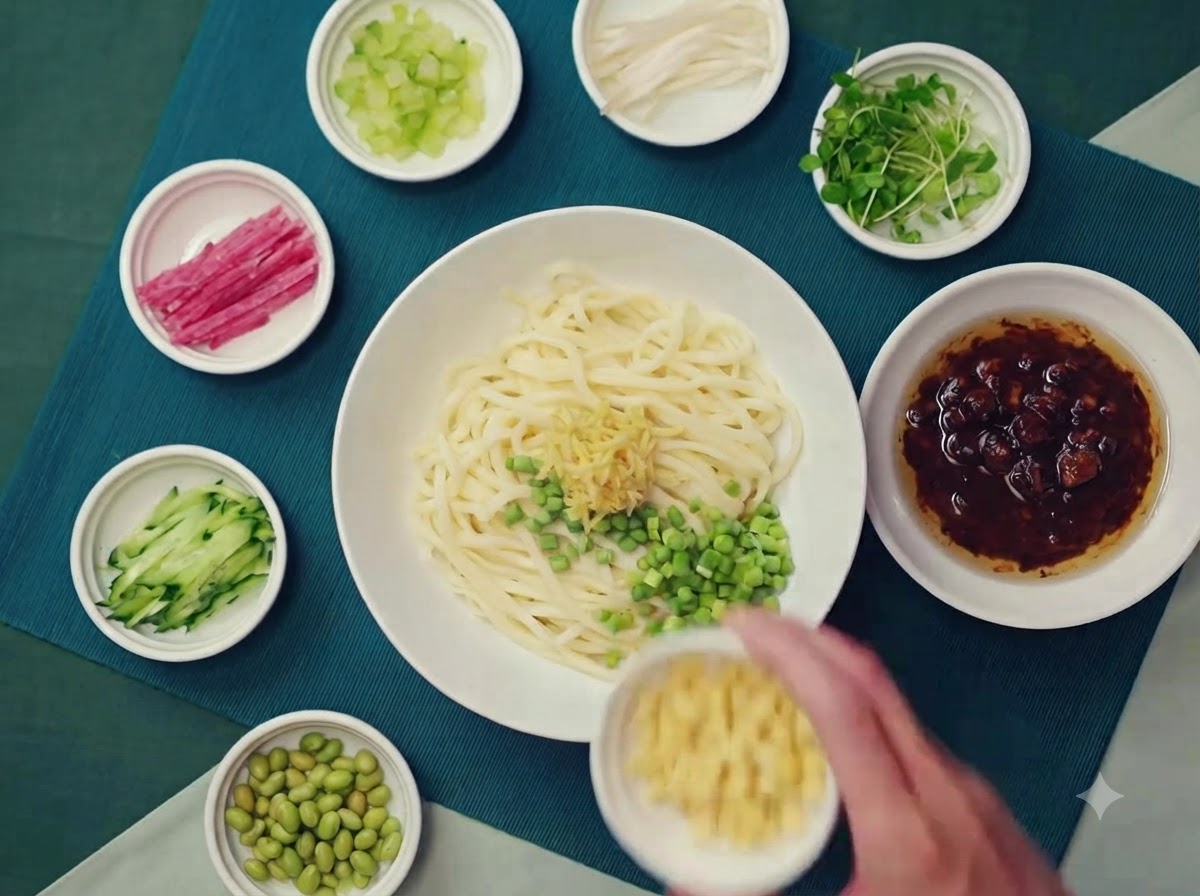
Surround the central bowl of noodles with small white dishes containing the traditional Old Beijing eight treasure garnishes, including fresh cucumber shreds, bean sprouts, and various finely chopped greens.
Tip: Keep each garnish separated in its own small bowl for an organized and visually striking presentation. - 8Pour the fried meat sauce over noodles
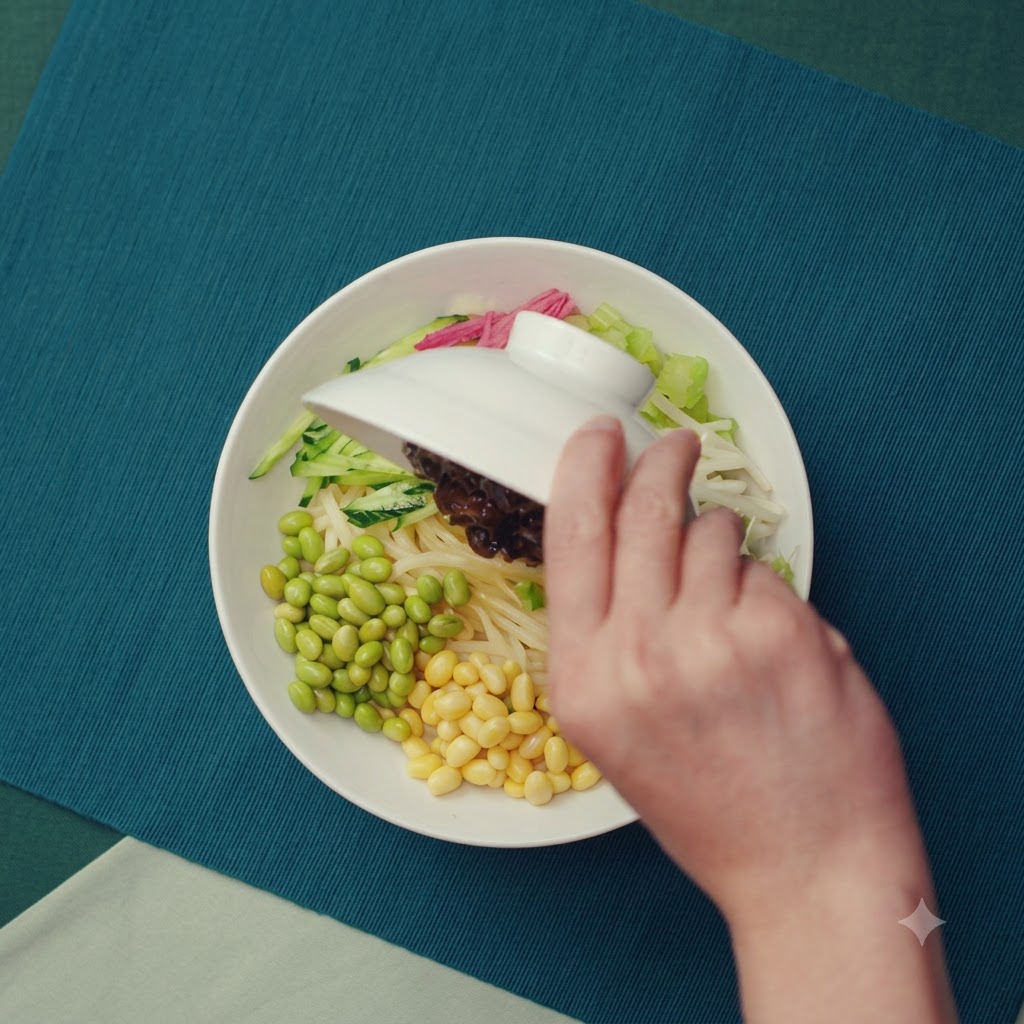
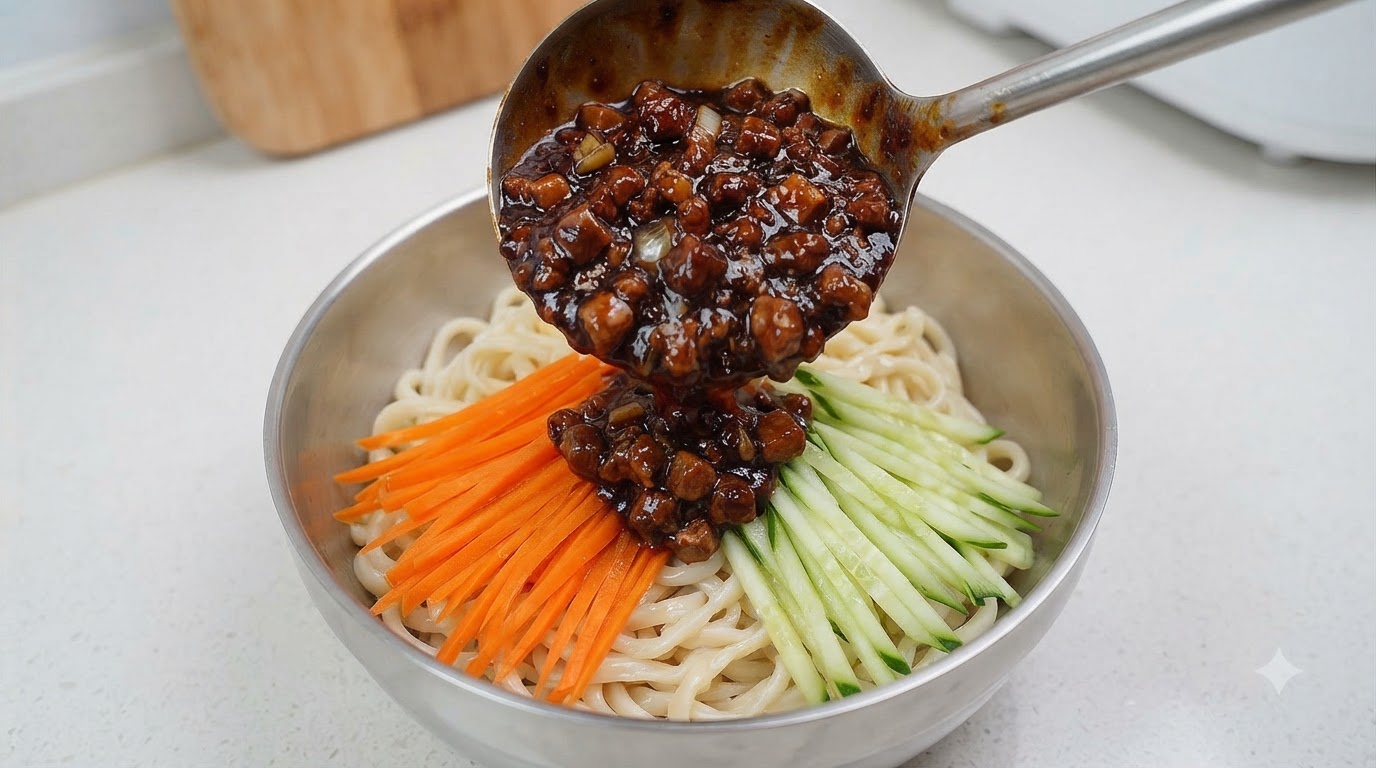
Take a small white bowl filled with rich, bubbling dark meat sauce and pour it directly over the center of the noodles and arranged vegetable garnishes.
Tip: Pour the sauce right into the middle so it evenly coats both the noodles and the surrounding toppings as you mix.